

Navigating the Path to CyberPeace: Insights and Strategies
Featured #factCheck Blogs

Executive Summary
An image is being widely shared on social media with the claim that Iranian missile forces targeted an LPG tanker heading towards India, causing a massive fire onboard. CyberPeace Research Wing ’s research found the claim to be misleading. The research revealed that the viral image is not related to any recent Iran-India development or any missile attack. The image actually shows a fire incident involving the Cameroon-flagged LPG tanker MV Falcon near the coast of Aden, Yemen, in October 2025, and is being circulated with a false context.
Claim
A Facebook user shared the viral image on July 8, 2026, claiming: “Iranian missile force has struck an LPG tanker going to India.” The post link, archive link, and screenshot are provided below.

Fact Check
To verify the viral claim, we conducted a keyword-based search on Google. However, we did not find any credible media report confirming that an India-bound LPG tanker was targeted by Iranian missile forces. During the research, we extracted keyframes from the viral image and conducted a reverse image search using Google Lens. The search led us to a report published by NDTV on October 20, 2025, which contained the same visuals as the viral image. The report link and screenshot are provided below.

According to the NDTV report, a fire broke out onboard the Cameroon-flagged LPG tanker MV Falcon following an explosion near the coast of Aden, Yemen. The incident involved 23 Indian crew members, who were rescued safely. The incident occurred on October 18, 2025, at around 07:00 UTC, when the vessel was sailing approximately 113 nautical miles southeast of Aden while heading towards Djibouti. Following the explosion, the vessel went adrift and around 15% of the ship was engulfed in flames. Further verification through keyword searches led us to an India Today report published on October 20, 2025, which also confirmed that the MV Falcon caught fire after an explosion off the coast of Aden, Yemen. The report stated that all 23 Indian crew members onboard were rescued. The report also mentioned that authorities had initiated an research into the incident and ruled out speculation that the explosion was caused by a Houthi attack. The report link and screenshot are provided below.

Conclusion
Our research found that the viral claim is misleading. The image being shared as proof of an Iranian missile strike on an India-bound LPG tanker is actually from an unrelated incident that occurred in October 2025. The image shows the fire that broke out onboard the Cameroon-flagged LPG tanker MV Falcon near Aden, Yemen, following an explosion. The old image is being circulated with a false narrative linking it to Iran and India.

Executive Summary
A video is being widely shared on social media claiming to show a helicopter's thermal camera capturing hundreds of crocodiles hidden along the Amazon River at night. The footage appears to show a thermal imaging view of a river and its banks, where hundreds of crocodiles can allegedly be seen. Users claim the video was recorded using night-vision/thermal imaging technology over the Amazon River. CyberPeace Research Wing’s research found the claim to be false. The research revealed that the viral video is not authentic but has been generated using artificial intelligence (AI) and is being circulated with a fabricated claim.
Claim
Social media users are sharing the video claiming that it shows a thermal camera recording of hundreds of crocodiles in and around the Amazon River at night. The post link and screenshot are provided below.
https://www.instagram.com/reel/DalJ41bIezV/?utm_source=ig_web_button_share_sheet
https://www.instagram.com/reel/DalJ41bIezV/?utm_source=ig_web_button_share_sheet
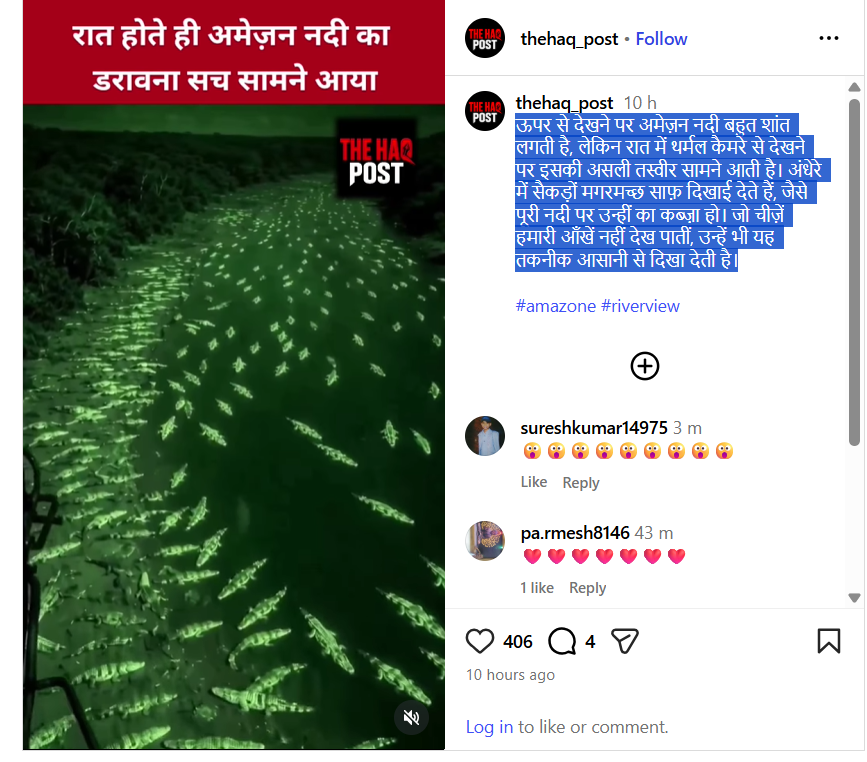
Fact Check
To verify the claim, we extracted several keyframes from the viral video and conducted a reverse image search using Google Lens. However, we found no credible news reports, authentic videos, or reliable sources confirming that the footage was recorded over the Amazon River.
We then conducted a detailed visual analysis of the video. The footage exclusively shows crocodile-like figures spread across the river and its banks, while no other aquatic animals or natural environmental activity—normally expected in a river ecosystem of that scale—are visible. These inconsistencies raised further doubts about the video's authenticity.
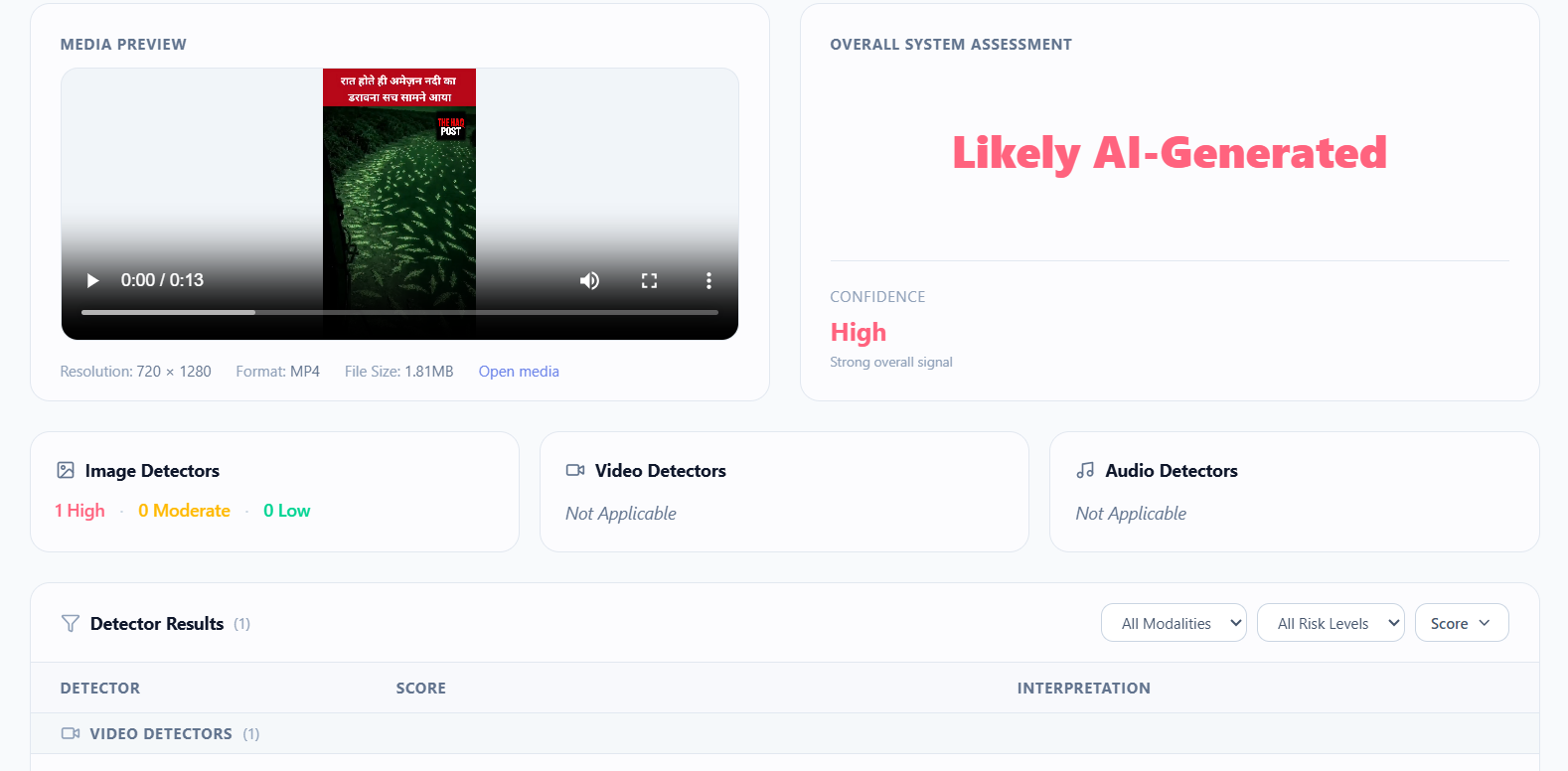
As part of our verification, we analysed the video using the AI detection tool Hive Moderation. The analysis indicated a 95.7% probability that the video was AI-generated.
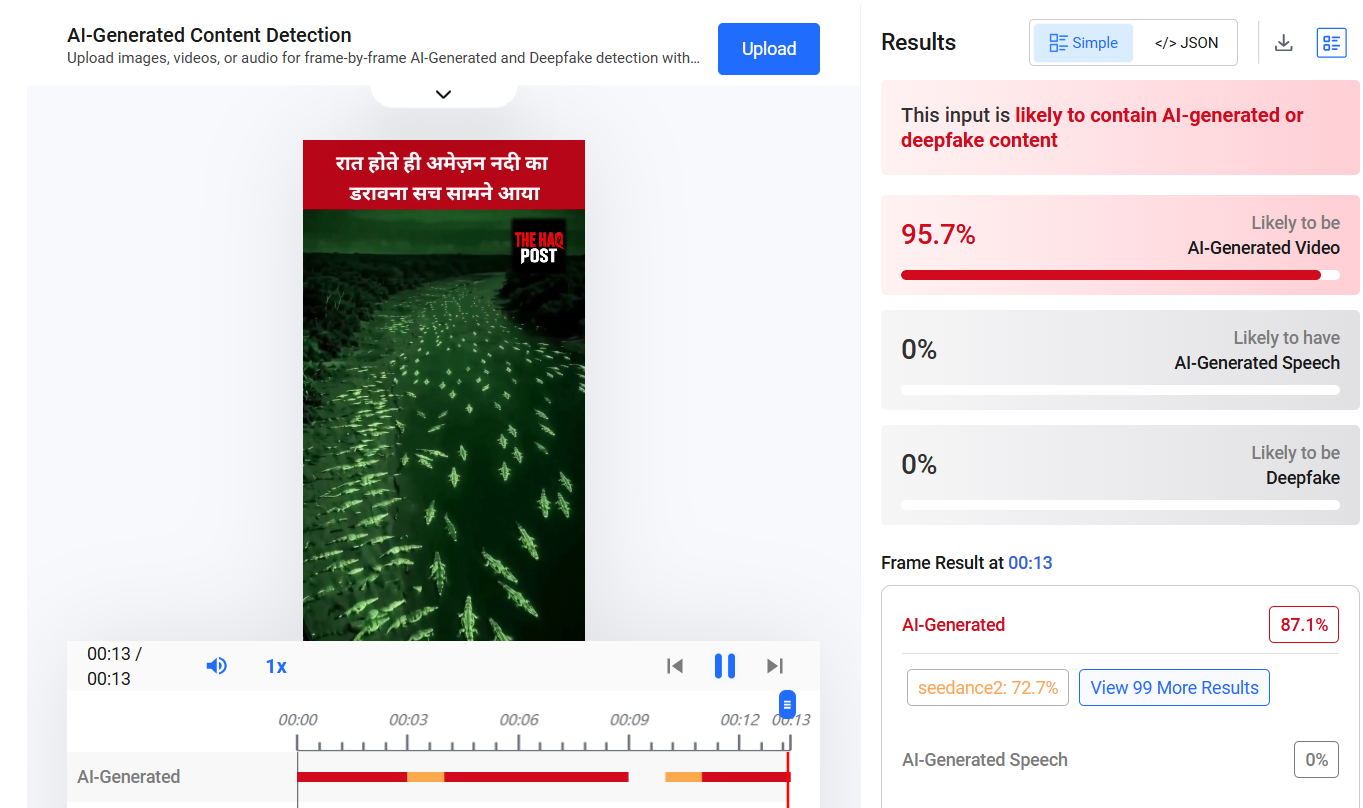
As part of our verification, we analysed the video using the AI detection tool Hive Moderation. The analysis indicated a 95.7% probability that the video was AI-generated.
Conclusion
Our research found that the viral video does not show a genuine thermal-camera recording of the Amazon River. The footage was created using artificial intelligence and is being circulated online with a false and misleading claim.
Executive Summary
A video widely circulated on social media claims to show a confrontation between a Zee News journalist and Chief of Army Staff (COAS) General Upendra Dwivedi during the Indian Army’s Annual Press Briefing 2026. The video alleges that General Dwivedi made sensitive remarks regarding ‘Operation Sindoor’, including claims that the operation was still ongoing and that diplomatic intervention by former US President Donald Trump had restricted India’s military response. Several social media users shared the clip while questioning the Indian Army’s operational decisions and demanding accountability over the alleged remarks. The CyberPeace concludes that the viral video claiming to show a discussion between a Zee News journalist and Chief of Army Staff General Upendra Dwivedi on ‘Operation Sindoor’ is misleading and digitally manipulated. Although the visuals were sourced from the Indian Army’s Annual Press Briefing 2026, the audio was artificially created and added later to misinform viewers. The Army Chief did not make any remarks regarding diplomatic interference or limitations on military action during the briefing.
Claim:
An X (formerly Twitter) user, Abbas Chandio (@AbbasChandio__), shared the video on January 14, asserting that it showed a Zee News journalist questioning the Army Chief about the status and outcomes of ‘Operation Sindoor’ during a recent press conference. In the clip, the journalist is purportedly heard challenging the Army Chief over his earlier statement that the operation was “still ongoing,” while the COAS is allegedly heard responding that diplomatic intervention during the conflict limited the Army’s ability to pursue further military action. Here is the link and archive link to the post, along with a screenshot.
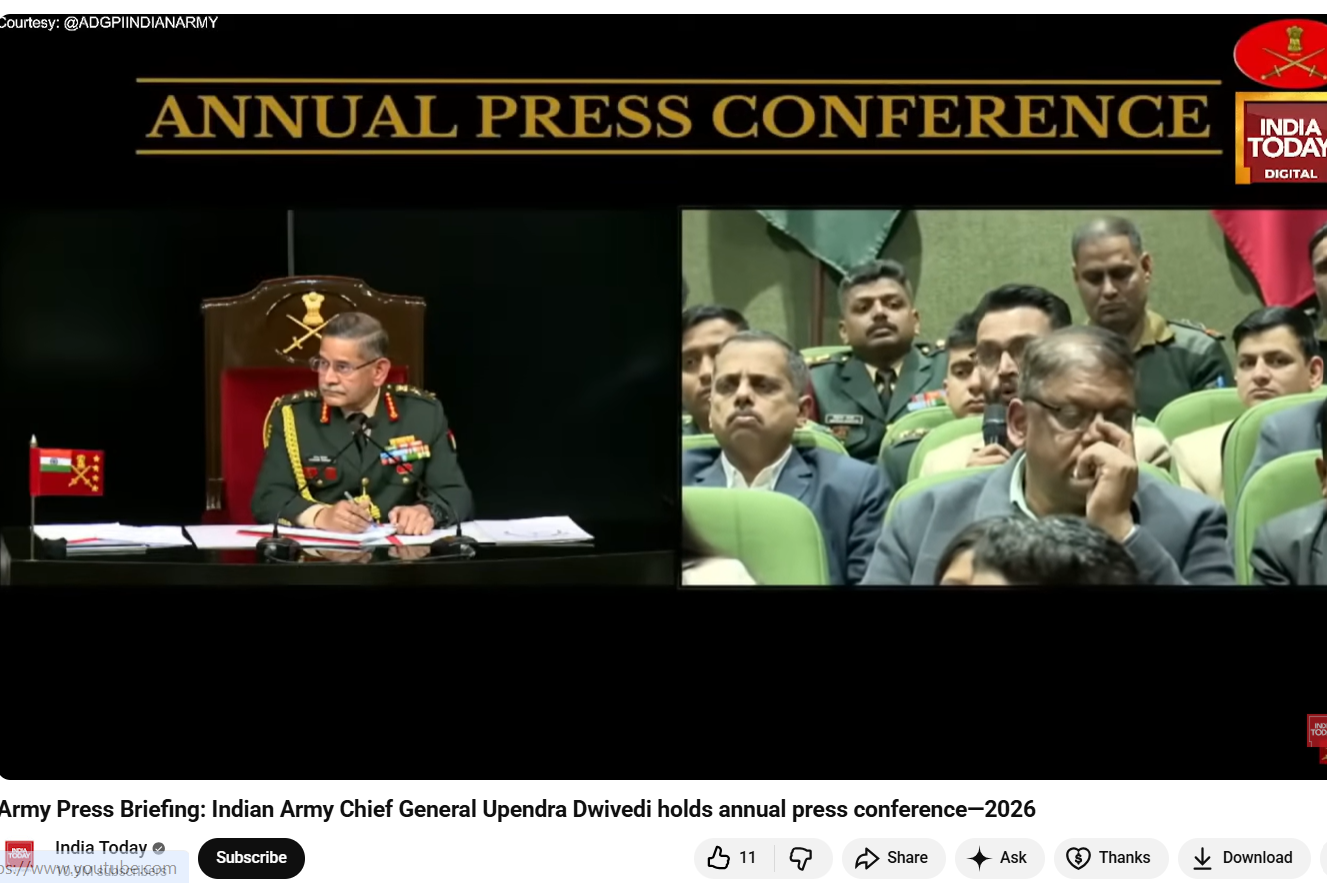
The reverse image search also directed to an extended version of the footage uploaded on the official YouTube channel of India Today. The original video was identified as coverage from the Indian Army’s Annual Press Conference 2026, held on January 13 in New Delhi and addressed by COAS General Upendra Dwivedi. Upon reviewing the original press briefing footage, CyberPeace found no instance where a Zee News journalist questioned the Army Chief about ‘Operation Sindoor’. There was also no mention of the statements attributed to General Dwivedi in the viral clip.
In the authentic footage, journalist Anuvesh Rath was seen raising questions related to defence procurement and modernization, not military operations or diplomatic interventions. Here is the link to the original video, along with a screenshot.
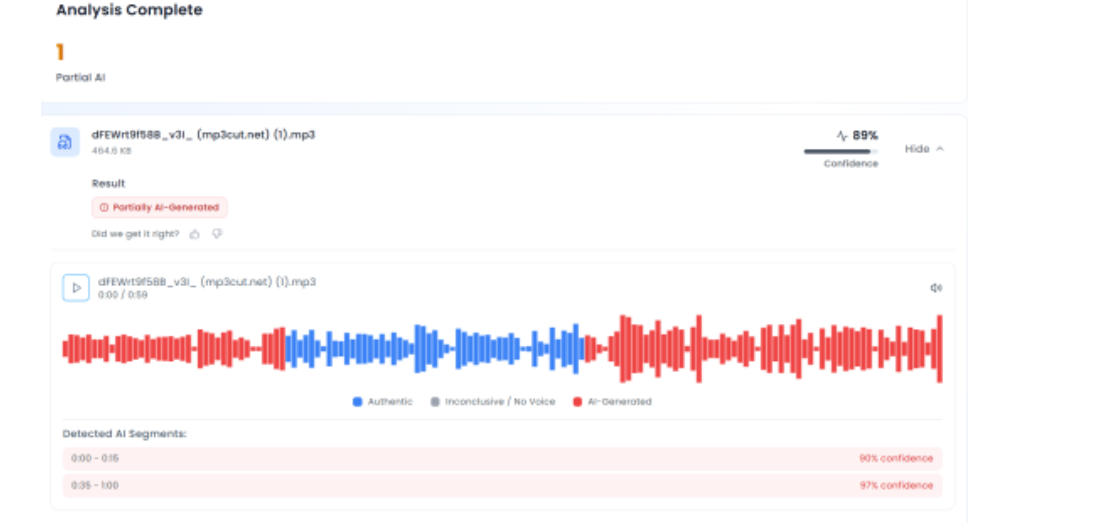
To further verify the claim, CyberPeace extracted the audio track from the viral video and analysed it using the AI-based voice detection tool Aurigin. The analysis revealed that the voice heard in the clip was artificially generated, indicating the use of synthetic or manipulated audio. This confirmed that while genuine visuals from the Army’s official press briefing were used, a fabricated audio track had been overlaid to falsely attribute controversial statements to the Army Chief and a Zee News journalist.
Conclusion
The CyberPeace concludes that the viral video claiming to show a discussion between a Zee News journalist and Chief of Army Staff General Upendra Dwivedi on ‘Operation Sindoor’ is misleading and digitally manipulated. Although the visuals were sourced from the Indian Army’s Annual Press Briefing 2026, the audio was artificially created and added later to misinform viewers. The Army Chief did not make any remarks regarding diplomatic interference or limitations on military action during the briefing. The video is a clear case of digital manipulation and misinformation, aimed at creating confusion and casting doubts over the Indian Army’s official position.

Executive Summary
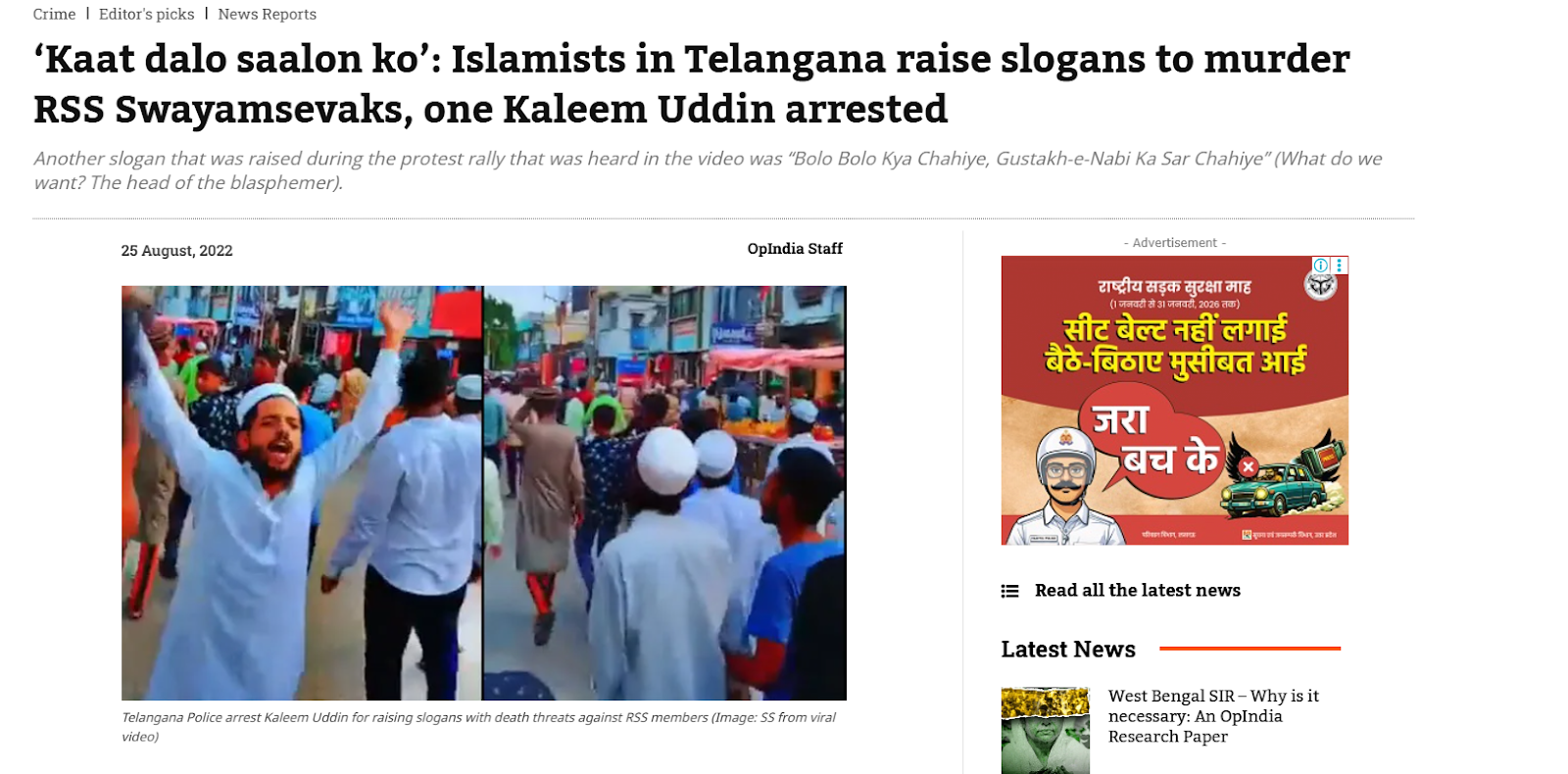
A video showing a group of people wearing Muslim caps raising provocative slogans against the Rashtriya Swayamsevak Sangh (RSS) is being widely shared on social media. Users sharing the clip claim that the incident took place recently in Uttar Pradesh. However, CyberPeace research found the claim to be false. The probe established that the video is neither recent nor related to Uttar Pradesh. In fact, the footage dates back to 2022 and is from Telangana. The slogans heard in the video were raised during a protest against Goshamahal MLA T. Raja Singh, and the clip is now being circulated with a misleading claim.
Claim
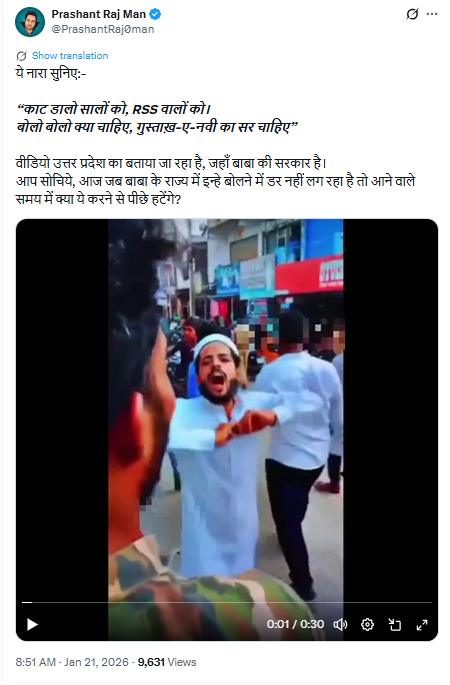
On January 21, 2026, a user on social media platform X (formerly Twitter) shared the video claiming it showed people in Uttar Pradesh chanting slogans such as, “Kaat daalo saalon ko, RSS walon ko” and “Gustakh-e-Nabi ka sar chahiye.” The post suggested that such slogans were being raised openly in Uttar Pradesh despite strict law enforcement. Links to the post and its archive are provided below.
Fact Check:
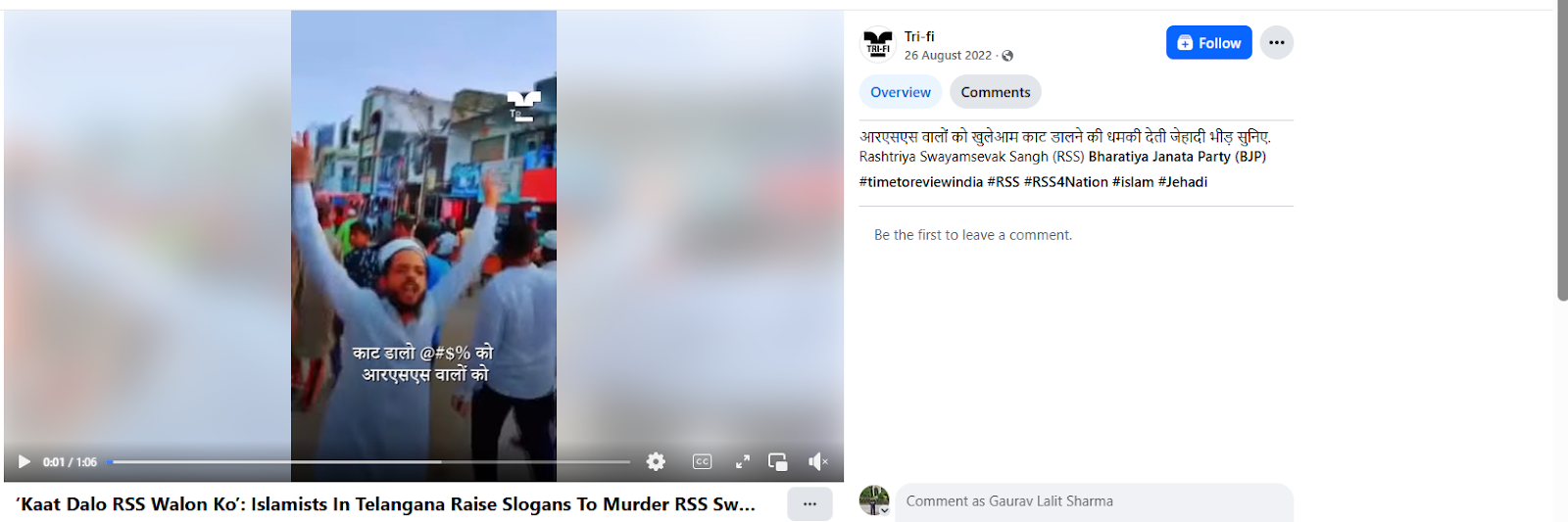
To verify the claim, CyberPeace research conducted a reverse image search using keyframes from the viral video. The same footage was found on a Facebook account where it had been uploaded on August 26, 2022, indicating that the video is not recent.
Further verification led the team to a report published by news portal OpIndia on August 25, 2022, which featured identical visuals from the viral clip. According to the report, the video showed a protest march organised against BJP MLA T. Raja Singh following his alleged controversial remarks about Prophet Muhammad. The report identified one of the individuals in the video as Kaleem Uddin, who was allegedly heard raising the slogan “Kaat daalo saalon ko,” to which the crowd responded “RSS walon ko.” The slogan was linked to incitement against RSS members.
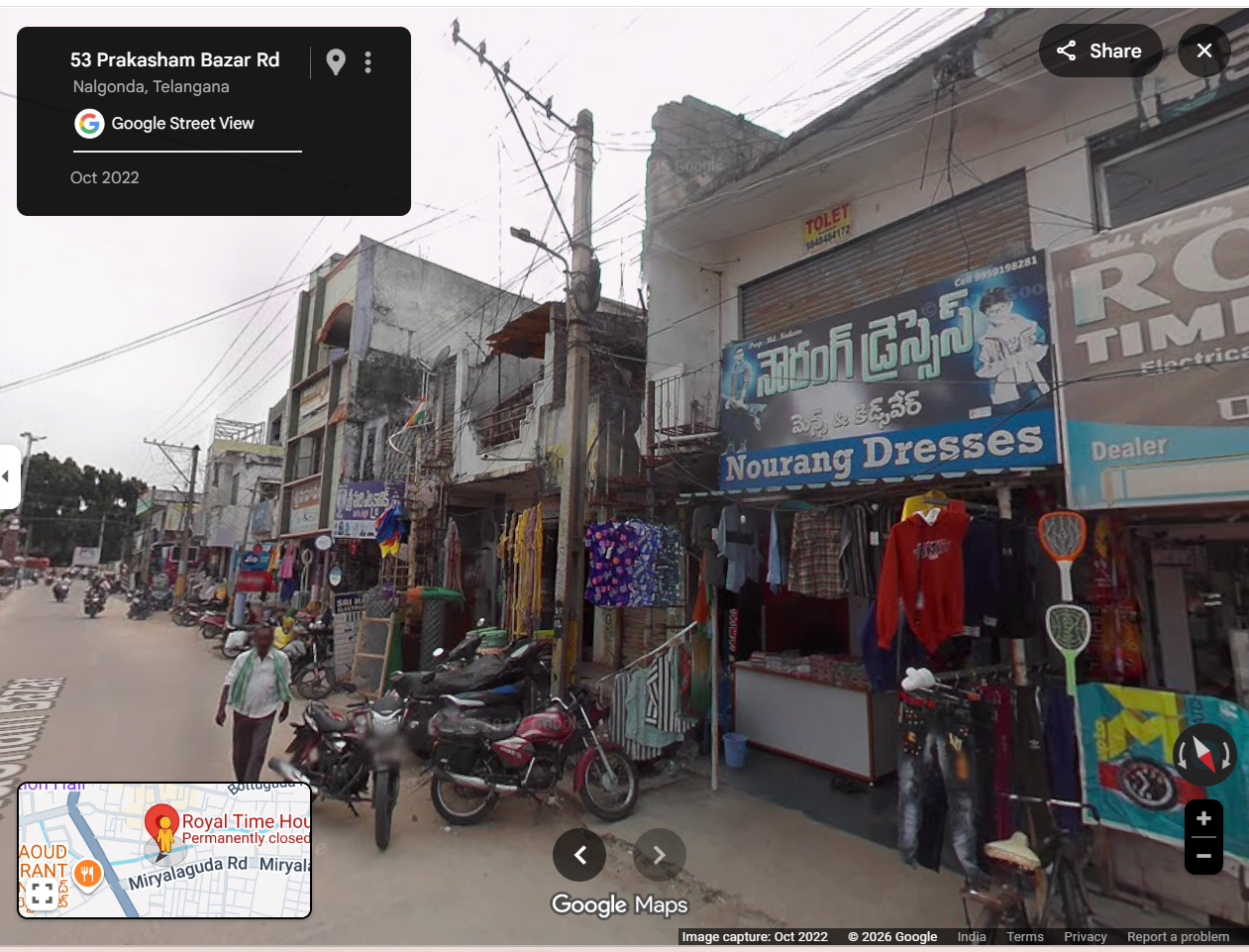
To confirm the location, the video was examined closely. A shop sign reading “Royal Time House” was visible in the footage. Using Google Street View, the same shop was located in Nalgonda, Telangana, conclusively establishing that the video was filmed there and not in Uttar Pradesh.
Conclusion
CyberPeace research confirmed that the viral video is from 2022 and was recorded in Telangana, not Uttar Pradesh. The clip is being falsely circulated with a misleading claim to give it a communal and political angle.

Executive Summary
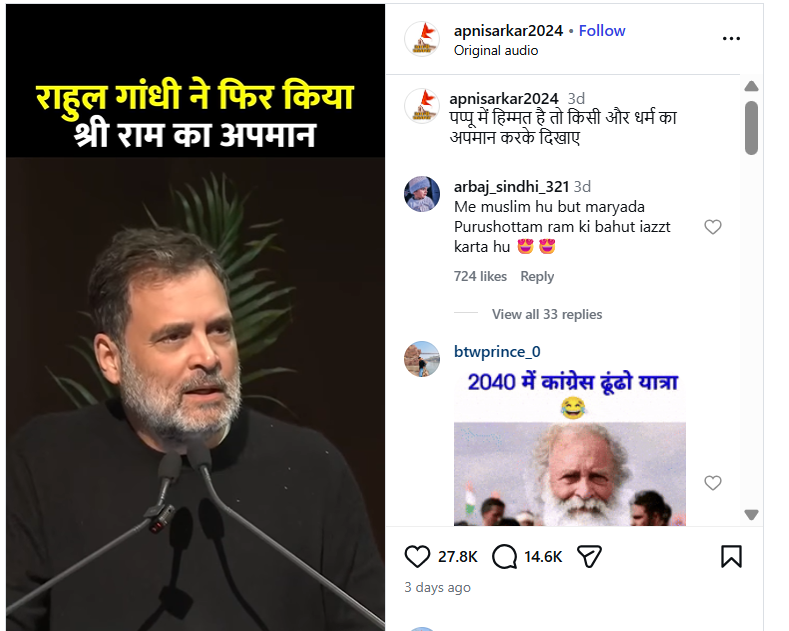
A video of the Leader of the Opposition in the Lok Sabha and Congress MP Rahul Gandhi is being widely shared on social media. In the clip, Gandhi is seen saying that he does not know what “G Gram G” is. Several users are sharing the video with the claim that Rahul Gandhi insulted Lord Ram. However, CyberPeace research found that the claim is misleading. Rahul Gandhi was not referring to Lord Ram in the video. Instead, he was speaking about a newly introduced law titled Viksit Bharat–G RAM G (VB–G RAM G), which has been brought in to replace the Mahatma Gandhi National Rural Employment Guarantee Act (MGNREGA). The viral clip has been shared with a false narrative.
Claim
On January 22, 2026, an Instagram user apnisarkar2024 shared the video claiming, “Rahul Gandhi once again insulted Shri Ram.” (Link, archive link, and screenshot available above)
- https://www.instagram.com/reel/DTzeiy0k3l5
- https://perma.cc/J3A3-NGBM?type=standard
Research
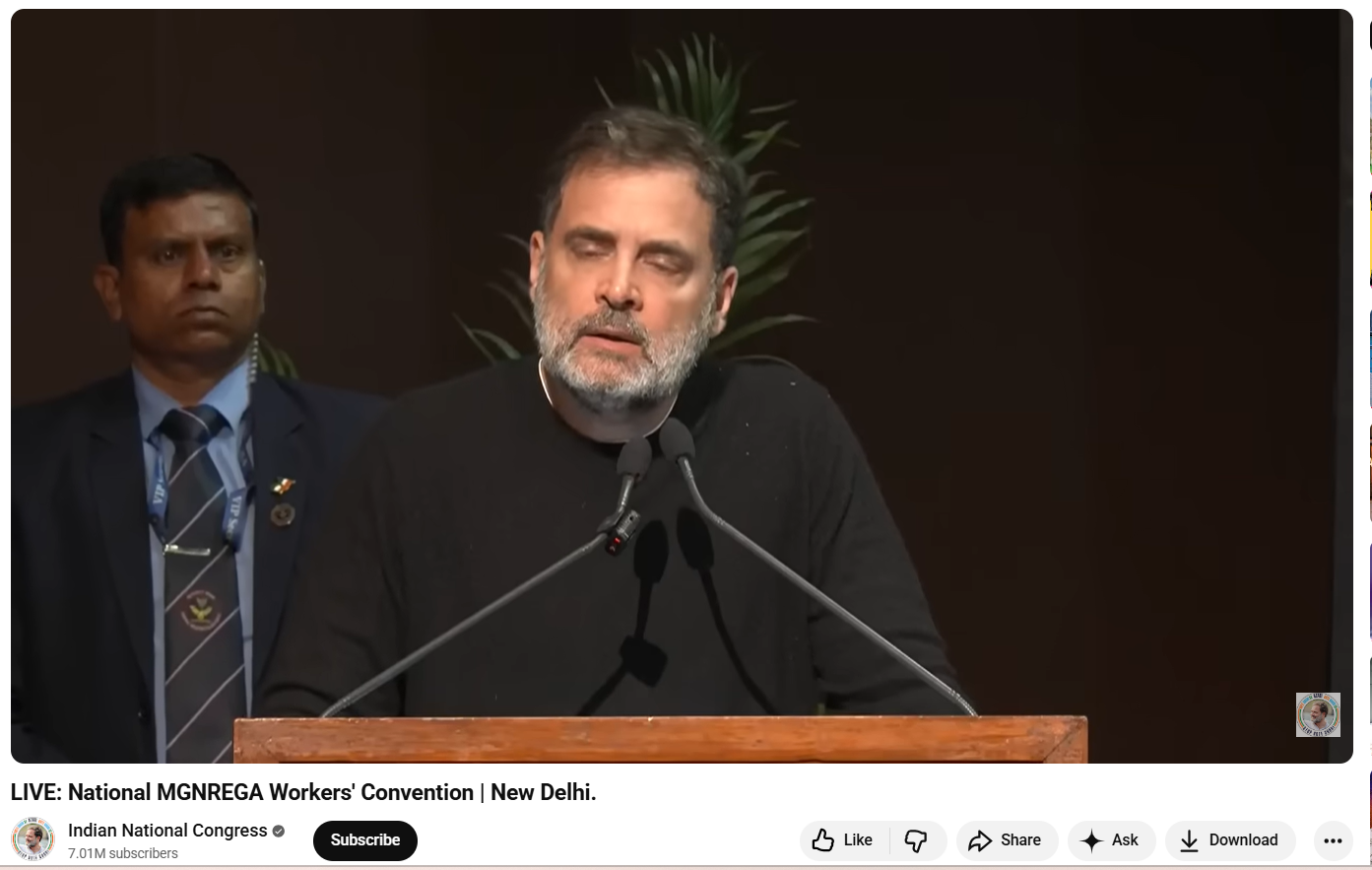
As part of the Research, we first closely examined the viral video. In the clip, Rahul Gandhi is heard saying: “I don’t know what Gram G is. I don’t even know the name of this new law… what is G Gram G…” At no point in the video does Rahul Gandhi mention Lord Ram or make any comment related to religion. To verify the context, we extracted keyframes from the viral clip and conducted a Google Lens search. This led us to a longer version of the same speech uploaded on the official YouTube channel of the Indian National Congress on January 22, 2026. The viral segment appears after the 39:50-minute mark.
The video is from the National MGNREGA Convention held in New Delhi, where Rahul Gandhi criticised the central government over the replacement of MGNREGA with the new VB–G RAM G law. During his speech, he expressed his opposition to the new legislation and stated that he was unfamiliar with its details. Throughout the address, he did not mention or refer to Lord Ram in any manner.
Conclusion
Rahul Gandhi’s remarks in the viral video were related to the newly introduced VB–G RAM G law and were part of his criticism of the central government’s policy decisions. He did not insult Lord Ram. The video is being shared on social media with a misleading and false claim.
Executive Summary:
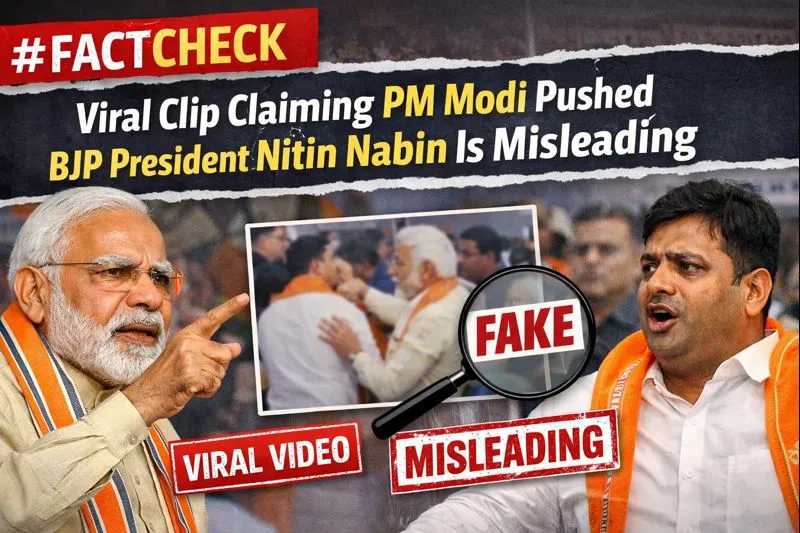
A video clip featuring Prime Minister Narendra Modi and the newly elected Bharatiya Janata Party (BJP) national president, Nitin Nabin, is going viral on social media. In the clip, PM Modi is seen apparently pushing Nitin Nabin, prompting claims that Nabin had accidentally stepped between the Prime Minister and the camera, after which Modi allegedly pushed him out of the frame. CyberPeace’s research found that the viral clip is misleading and cropped. The original, unedited video shows Prime Minister Modi gesturing for Nitin Nabin to move ahead and offer floral tributes to the statues of Bharatiya Jana Sangh founder Syama Prasad Mukherjee and Pandit Deendayal Upadhyaya at the BJP headquarters in Delhi. It is pertinent to note that on 20 January 2026, BJP leader Nitin Nabin was elected as the party’s national president. Several senior BJP leaders, including Prime Minister Narendra Modi, were present at the event. During his address, PM Modi remarked, “Nitin Nabin ji is my boss, and I am a party worker.” The statement received widespread attention, following which multiple videos linking to the remark began circulating on social media. A Facebook user shared the viral clip with a Hindi caption alleging that despite calling himself a “party worker,” PM Modi pushed his “boss” out of the camera frame. The post further mocked the position of BJP president, claiming it to be merely ceremonial. (Archived link)
To verify the claim, we conducted a reverse image and video search, which led us to a longer version of the video uploaded on news agency INS’s official X handle on 20 January 2026. The caption stated that PM Modi, BJP president Nitin Nabin, Defence Minister Rajnath Singh, Home Minister Amit Shah, Union Minister Nitin Gadkari and senior leader J.P. Nadda paid tributes to Syama Prasad Mukherjee and Pandit Deendayal Upadhyaya at the BJP headquarters.
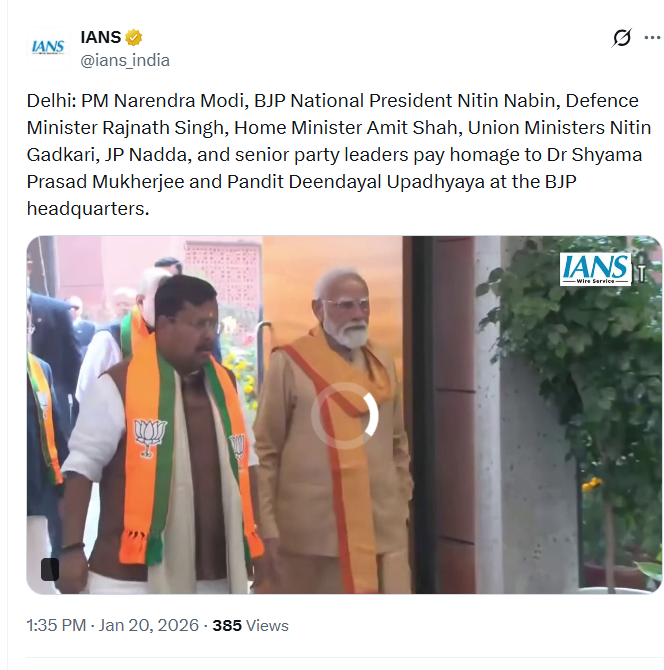
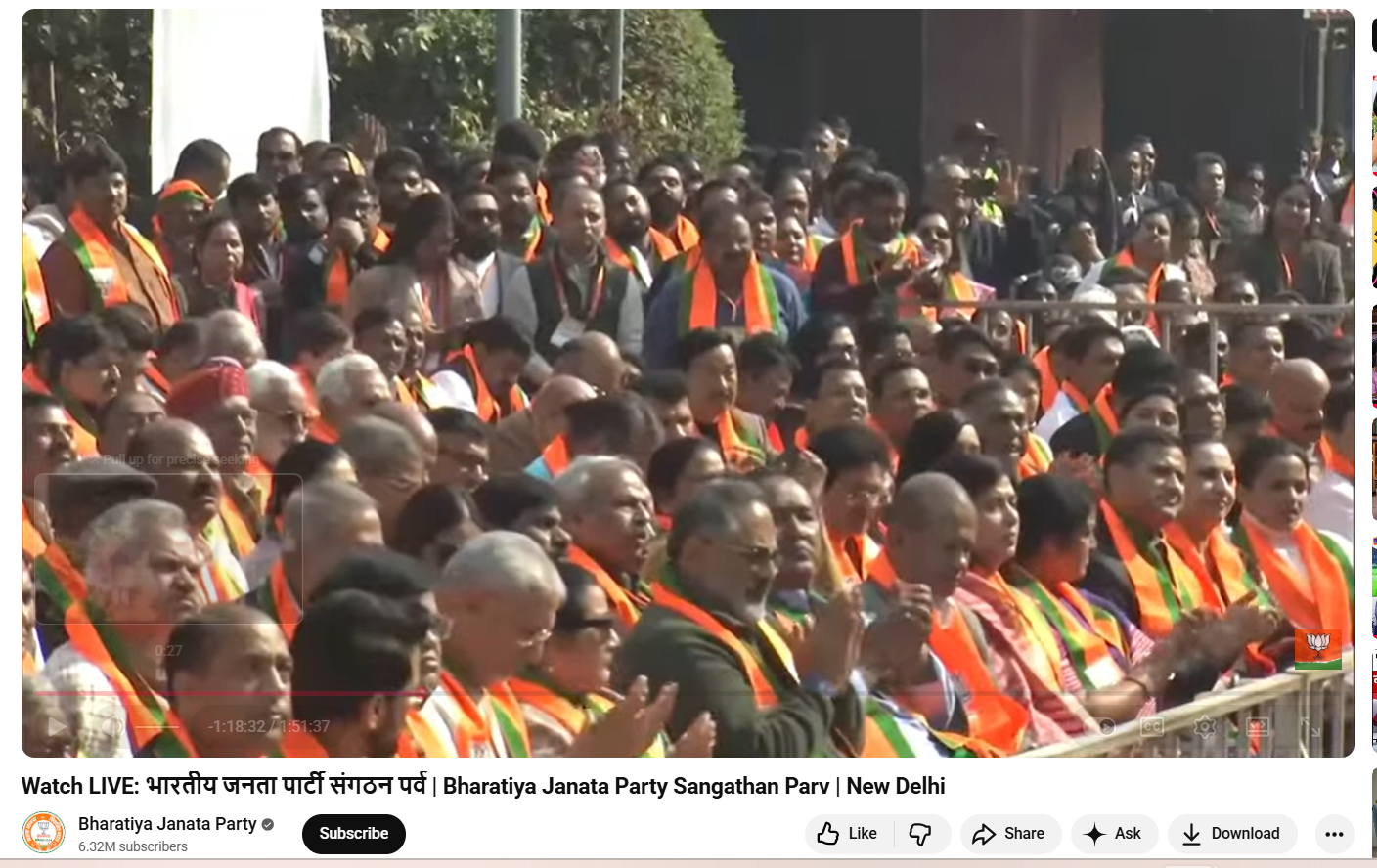
In the full video, PM Modi and Nitin Nabin are seen walking together. PM Modi then requests Nitin Nabin to proceed first for the floral tribute, placing his hand on Nabin’s back as a gesture to move forward. The viral clip selectively cuts this moment out of context and loops it to create a misleading impression. The complete footage clearly shows that PM Modi asked Nitin Nabin to offer tributes first, after which other leaders followed. There is no indication whatsoever that Nitin Nabin was pushed out of the camera frame, as claimed in the viral posts. We also found the live broadcast of the ‘Bharatiya Janata Party Sangathan Parv’ on BJP’s official YouTube channel. The same visuals appear at the end of the live stream, further confirming that PM Modi was merely gesturing for Nitin Nabin to proceed first.
Additionally, photographs available on Nitin Nabin’s official X handle show him offering floral tributes ahead of PM Modi, who is seen standing behind and waiting.
Conclusion:
CyberPeace research confirms that the viral clip has been cropped and shared with a false narrative. In the original context, Prime Minister Narendra Modi was respectfully inviting BJP national president Nitin Nabin to move ahead and pay tributes, not pushing him out of the camera frame.

Executive Summary
A video circulating on social media claims that Jammu and Kashmir Deputy Chief Minister Surinder Choudhary described Prime Minister Narendra Modi as an agent of Pakistan’s Inter-Services Intelligence (ISI). In the viral clip, Choudhary is allegedly heard accusing the Prime Minister of pushing Kashmir towards Pakistan and claiming that even pro-India Kashmiris are disillusioned with Modi’s policies.
However, research by the CyberPeace research wing has found that the video is digitally manipulated. While the visuals are genuine and taken from a real media interaction, the audio has been fabricated and falsely overlaid to misattribute inflammatory remarks to the Deputy Chief Minister.
Claim
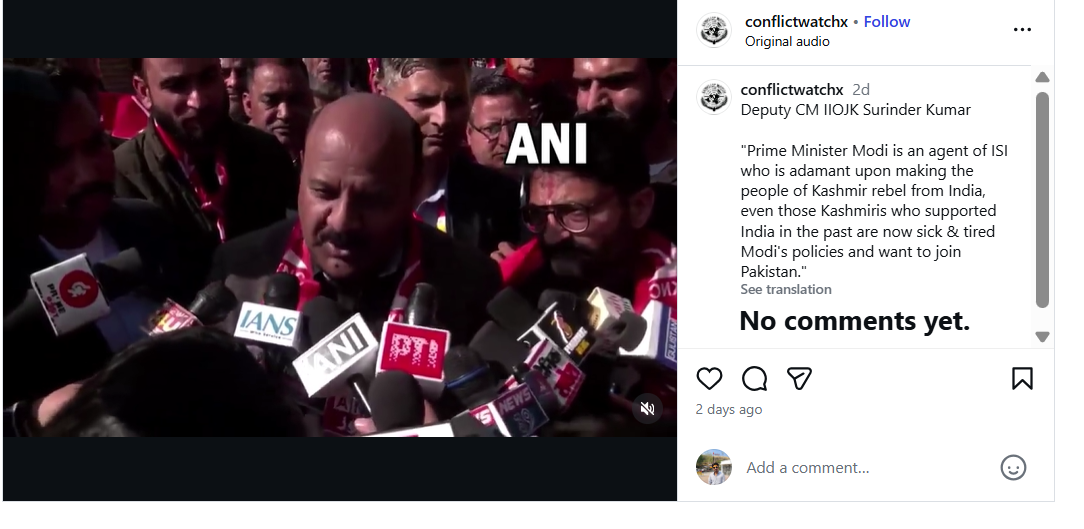
An Instagram account named Conflict Watch shared the video on January 20, claiming that J&K Deputy Chief Minister Surinder Choudhary had called Prime Minister Modi an ISI agent. The video purportedly quoted Choudhary as saying that Modi was elected with Pakistan’s support and that Kashmir would soon become part of Pakistan due to his policies.
Here is the link and archive link to the post, along with a screenshot.
Fact Check:
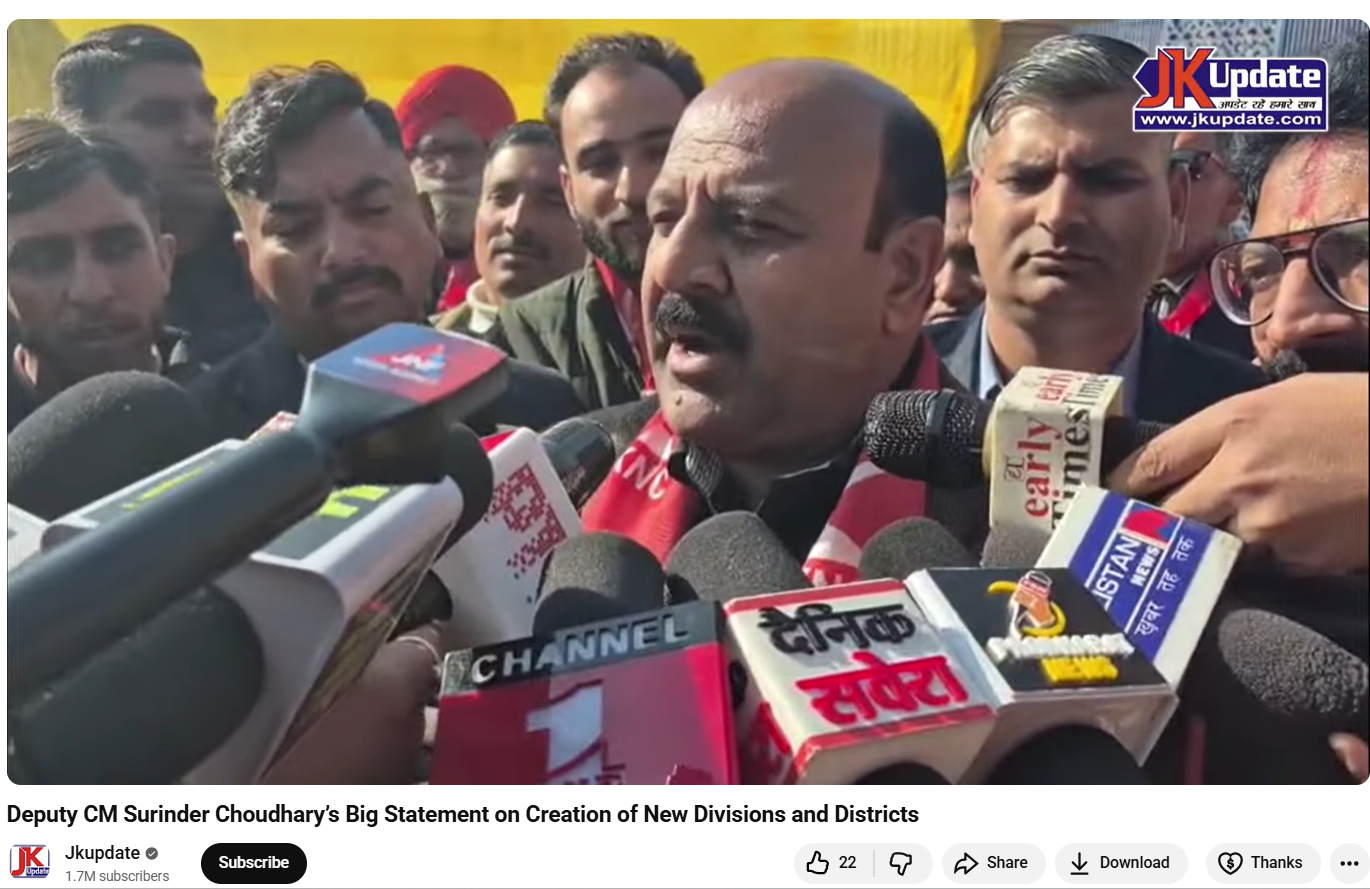
To verify the claim, the Desk conducted a Google Lens search, which led to a video uploaded on January 20, 2026, on the official YouTube channel of Jammu and Kashmir–based news outlet JKUpdate. The footage was an extended version of the viral clip and featured identical visuals. The original video showed Surinder Choudhary addressing the media on the sidelines of the inaugural two-day JKNC Convention of Block Presidents and Secretaries in the Jammu province. A review of the full media interaction revealed that Choudhary did not make any statements calling Prime Minister Modi an ISI agent or suggesting that Kashmir should join Pakistan.
Instead, in the original footage, Choudhary was seen criticising former Jammu and Kashmir Chief Minister and PDP leader Mehbooba Mufti for supporting the BJP during the bifurcation of Jammu and Kashmir and Ladakh into two Union Territories. He also spoke about the challenges faced by the region after the abrogation of Article 370 and demanded the restoration of full statehood for Jammu and Kashmir. During the interaction, Choudhary said that anyone attempting to divide Jammu and Kashmir at the state or regional level was effectively following Pakistan’s agenda and Jinnah’s two-nation theory. He added that such individuals could not be considered patriots.
Here is the link to the video, along with a screenshot.
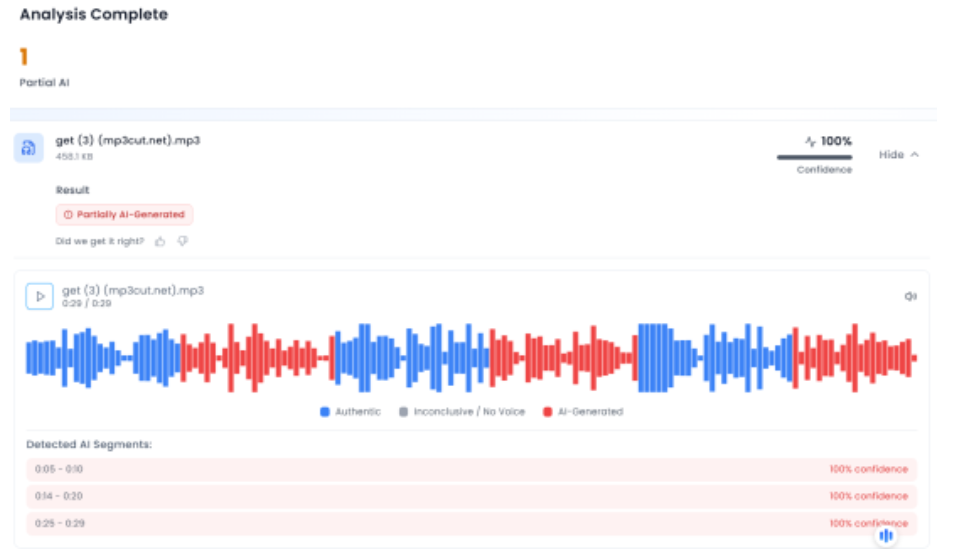
In the next phase of the research , the Desk extracted the audio from the viral clip and analysed it using the AI-based audio detection tool Aurigin. The analysis indicated that the voice in the viral video was partially AI-generated, further confirming that the clip had been tampered with.
Below is a screenshot of the result.
Conclusion
Multiple social media users shared a video claiming it showed Jammu and Kashmir Deputy Chief Minister Surinder Choudhary calling Prime Minister Narendra Modi an agent of the ISI. However, the CyberPeace found that the viral video was digitally manipulated. While the visuals were taken from a genuine media interaction with the leader, a fabricated audio track was overlaid to attribute the statements to him falsely.

Executive Summary
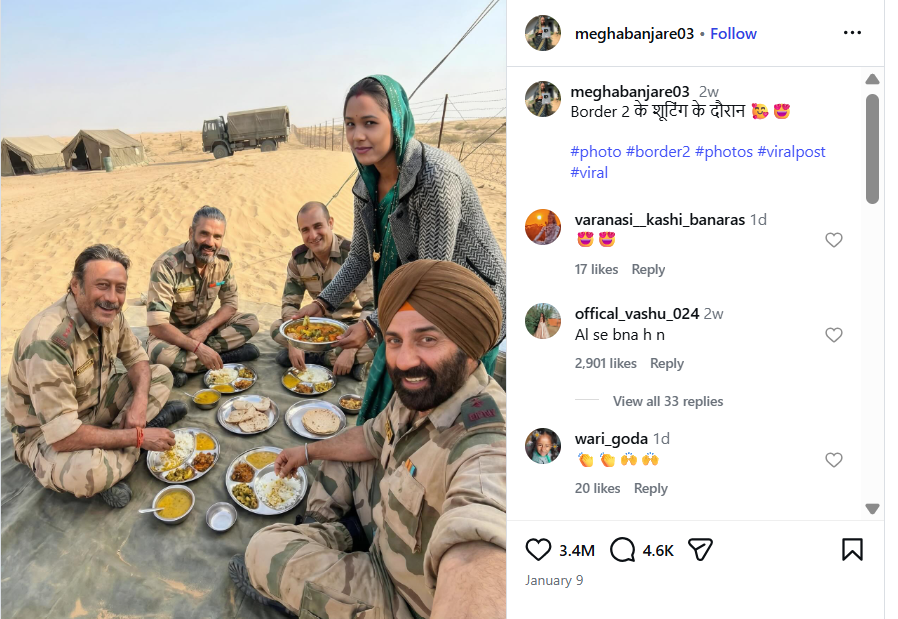
Border 2 is set to hit theatres today, January 23. Meanwhile, a photograph is going viral on social media showing actors Sunny Deol, Suniel Shetty, Akshaye Khanna and Jackie Shroff sitting together and having a meal, while a woman is seen serving food to them. Social media users are sharing this image claiming that it was taken during the shooting of Border 2. It is being alleged that the photograph shows a moment from the film’s set, where the actors were having food during a break in shooting. However, Cyber Peace research has found the viral claim to be false. Our investigation revealed that users are sharing an AI-generated image with a misleading claim.
Claim
On Instagram, a user shared the viral image on January 9, 2026, with the caption: “During the shooting of Border 2.” The link to the post, its archive link and screenshots can be seen below.
Fact Check:
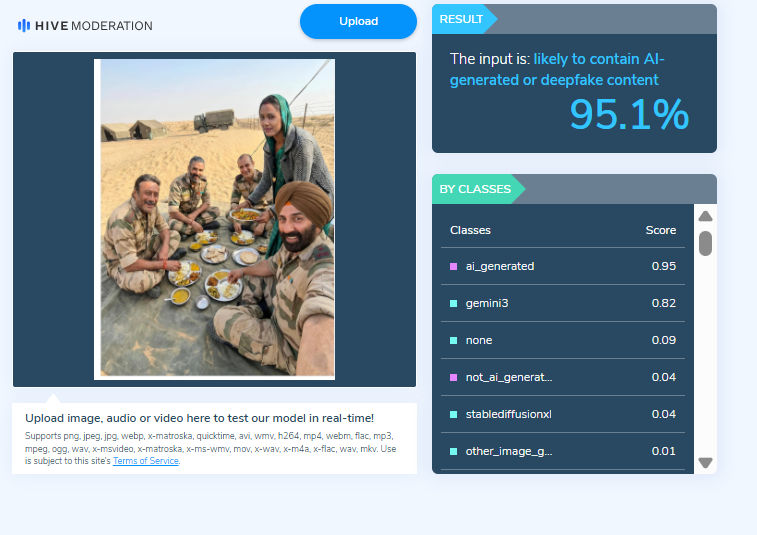
To verify the claim, we first checked Google for the official star cast of the film Border 2. Our search showed that the names of the actors seen in the viral image are not part of the film’s officially announced cast. Next, upon closely examining the image, we noticed that the facial structure and expressions of the actors appeared unnatural and distorted. The facial features did not look realistic, raising suspicion that the image might have been created using Artificial Intelligence (AI). We then scanned the viral image using the AI-generated content detection tool HIVE Moderation. The results indicated that the image is 95 per cent AI-generated.
In the final step of our investigation, we analysed the image using another AI-detection tool, Undetectable AI. According to the results, the viral image was confirmed to be AI-generated.
Conclusion:
Our research confirms that social media users are sharing an AI-generated image while falsely claiming that it is from the shooting of Border 2. The viral claim is misleading and false.
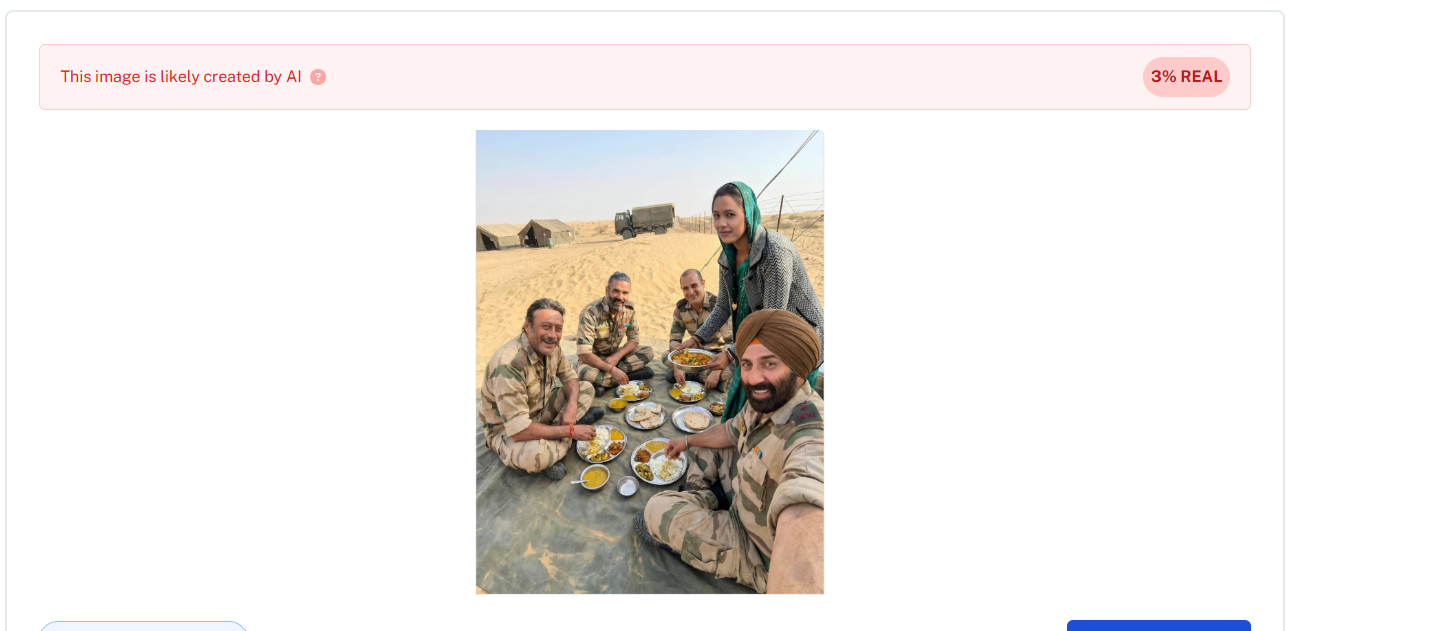
Our research revealed that users are sharing an AI-generated image along with misleading claims
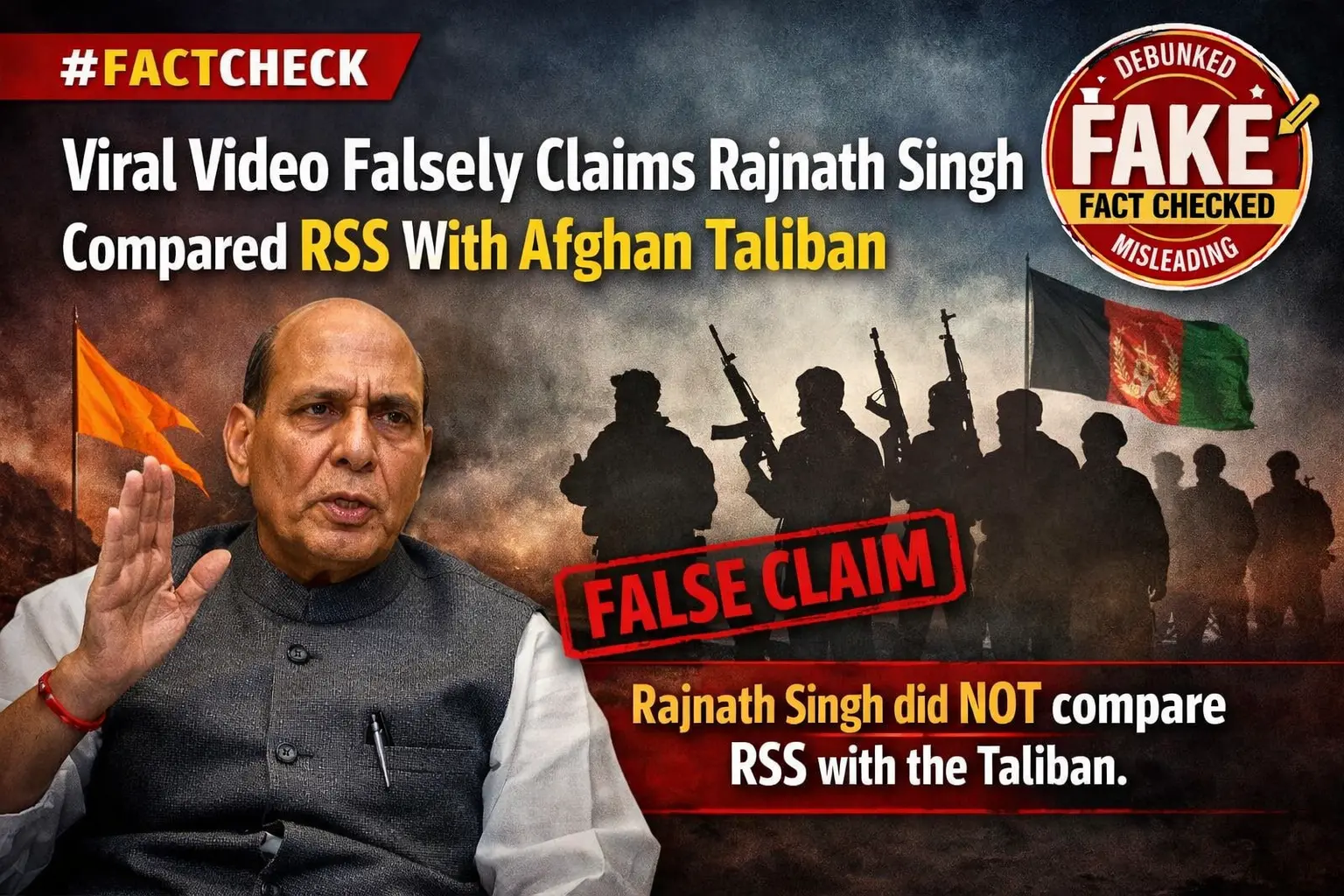
A video circulating widely on social media claims that Defence Minister Rajnath Singh compared the Rashtriya Swayamsevak Sangh (RSS) with the Afghan Taliban. The clip allegedly shows Singh stating that both organisations share a common ideology and belief system and therefore “must walk together.” However, a research by the CyberPeace found that the video is digitally manipulated, and the audio attributed to Rajnath Singh has been fabricated using artificial intelligence.
Claim
An X user, Aamir Ali Khan (@Aamir_Aali), on January 20 shared a video of Defence Minister Rajnath Singh, claiming that he drew parallels between the Rashtriya Swayamsevak Sangh (RSS) and the Afghan Taliban. The user alleged that Singh stated both organisations follow a similar ideology and belief system and therefore must “walk together.” The post further quoted Singh as allegedly saying: “Indian RSS & Afghan Taliban have one ideology, we have one faith, we have one alliance, our mutual enemy is Pakistan. Israel is a strategic partner of India & Afghan Taliban are Israeli friends. We must join hands to destroy the enemy Pakistan.” Here is the link and archive link to the post, along with a screenshot.
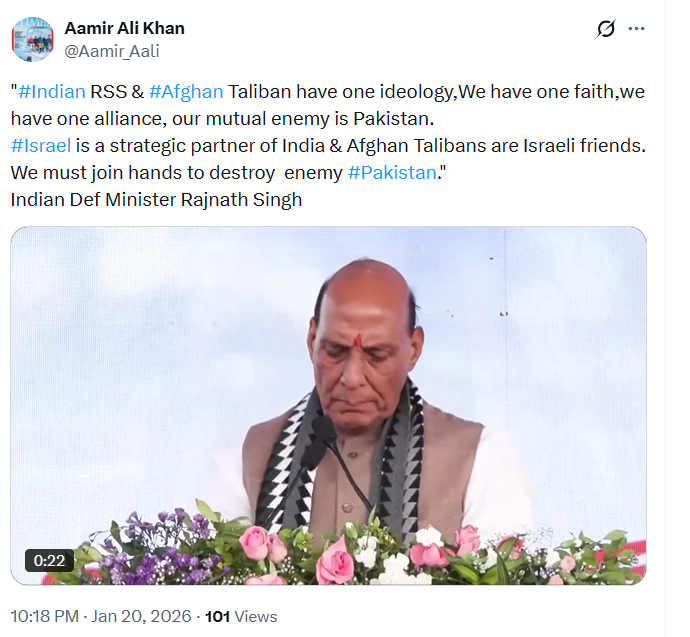
Fact Check:
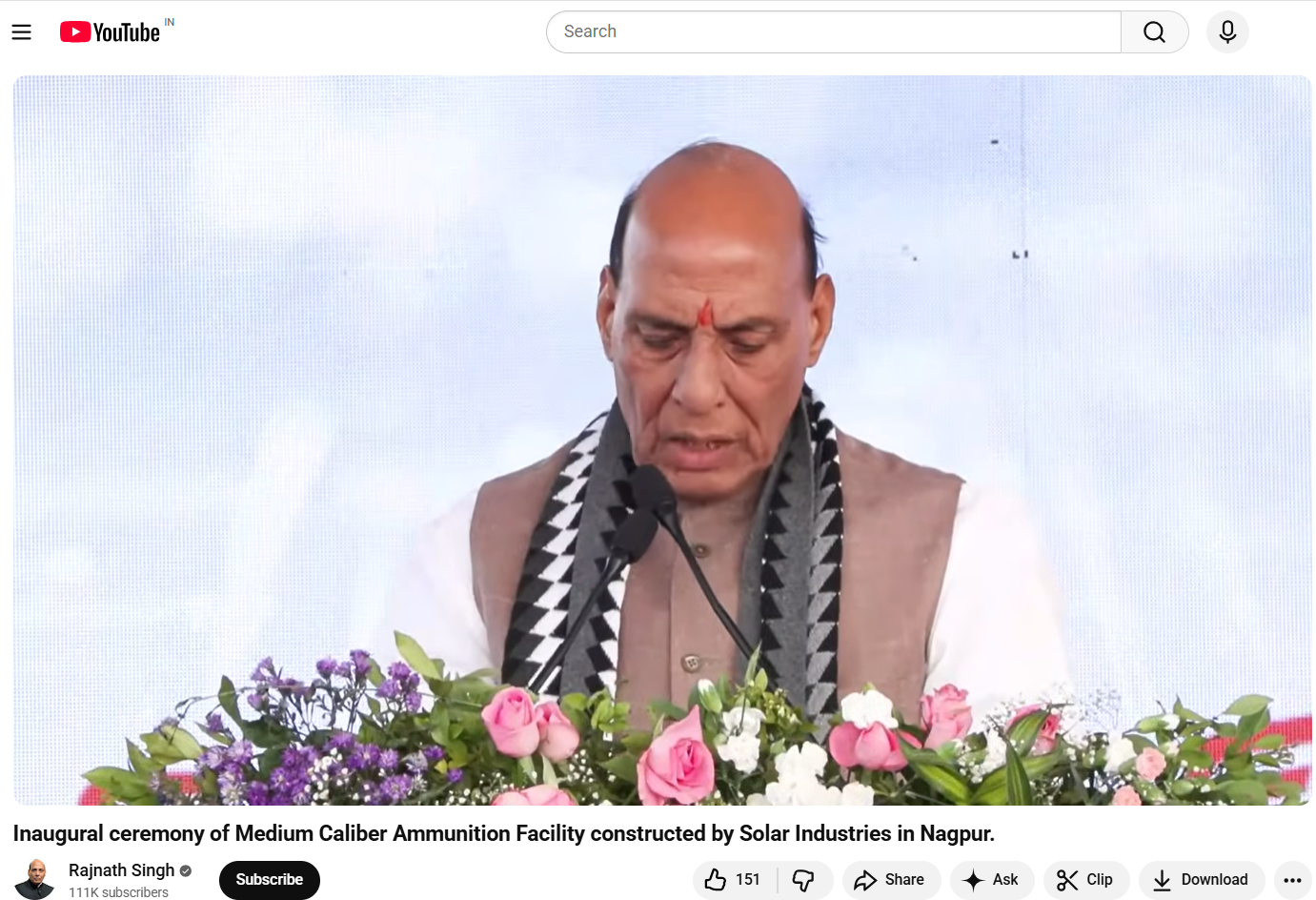
To verify the claim, the CyberPeace conducted a Google Lens search using keyframes extracted from the viral video. This search led to an extended version of the same footage uploaded on the official YouTube channel of Rajnath Singh. The original video was traced back to the inaugural ceremony of the Medium Calibre Ammunition Facility, constructed by Solar Industries in Nagpur. Upon reviewing the complete, unedited speech, the Desk found no instance where Rajnath Singh made any remarks comparing the RSS with the Afghan Taliban or spoke about shared ideology, alliances, or Pakistan in the manner claimed.
In the authentic footage, the Defence Minister spoke about:
" India’s push for Aatmanirbharta (self-reliance) in defence manufacturing
Strengthening domestic ammunition production
Positioning India as a global hub for defence exports "
The statements attributed to him in the viral clip were entirely absent from the original speech.
Here is the link to the original video, along with a screenshot.
In the next stage of the research , the audio track from the viral video was extracted and analysed using the AI voice detection tool Aurigin. This confirmed that the original visuals were misused and overlaid with a synthetic voice track to create a misleading narrative.
Conclusion
The CyberPeace concluded that the viral video claiming Defence Minister Rajnath Singh compared the RSS with the Afghan Taliban is false and misleading. The video has been digitally manipulated, with an AI-generated audio track falsely attributed to Singh. The Defence Minister made no such remarks during the Nagpur event, and the claim circulating online is fabricated.

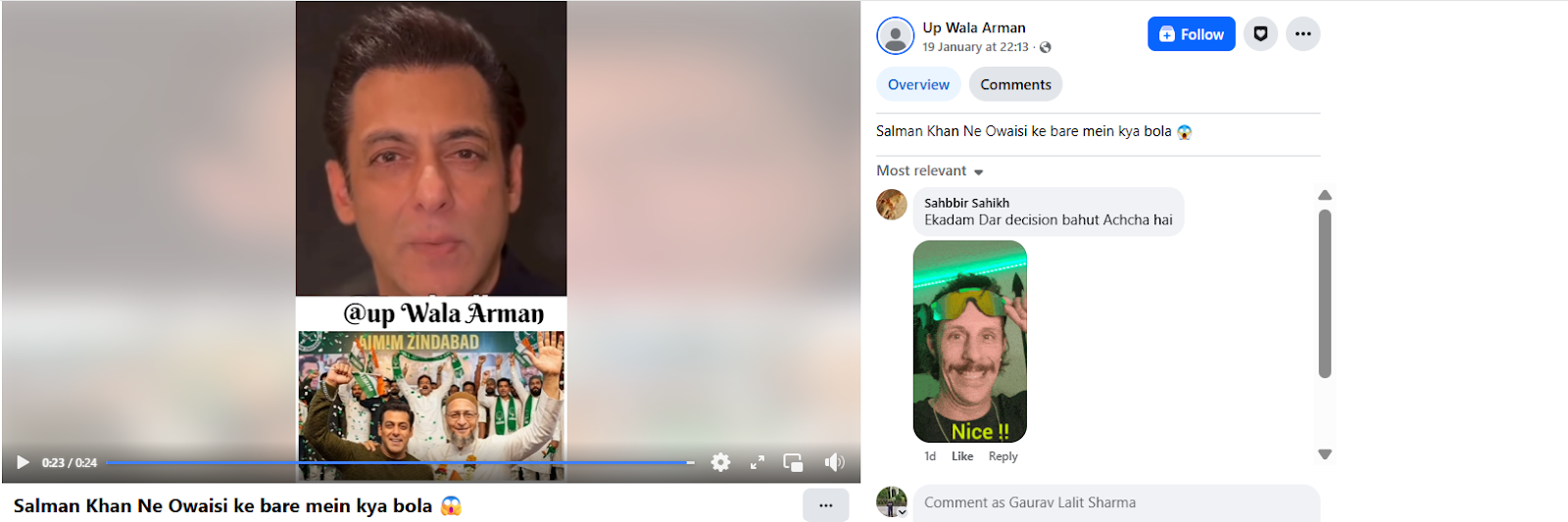
A video of Bollywood actor Salman Khan is being widely circulated on social media, in which he can allegedly be heard saying that he will soon join Asaduddin Owaisi’s party, the All India Majlis-e-Ittehadul Muslimeen (AIMIM). Along with the video, a purported image of Salman Khan with Asaduddin Owaisi is also being shared. Social media users are claiming that Salman Khan is set to join the AIMIM party.
CyberPeace research found the viral claim to be false. Our research revealed that Salman Khan has not made any such statement, and that both the viral video and the accompanying image are AI-generated.
Claim
Social media users claim that Salman Khan has announced his decision to join AIMIM.On 19 January 2026, a Facebook user shared the viral video with the caption, “What did Salman say about Owaisi?” In the video, Salman Khan can allegedly be heard saying that he is going to join Owaisi’s party. (The link to the post, its archived version, and screenshots are available.)
Fact Check:
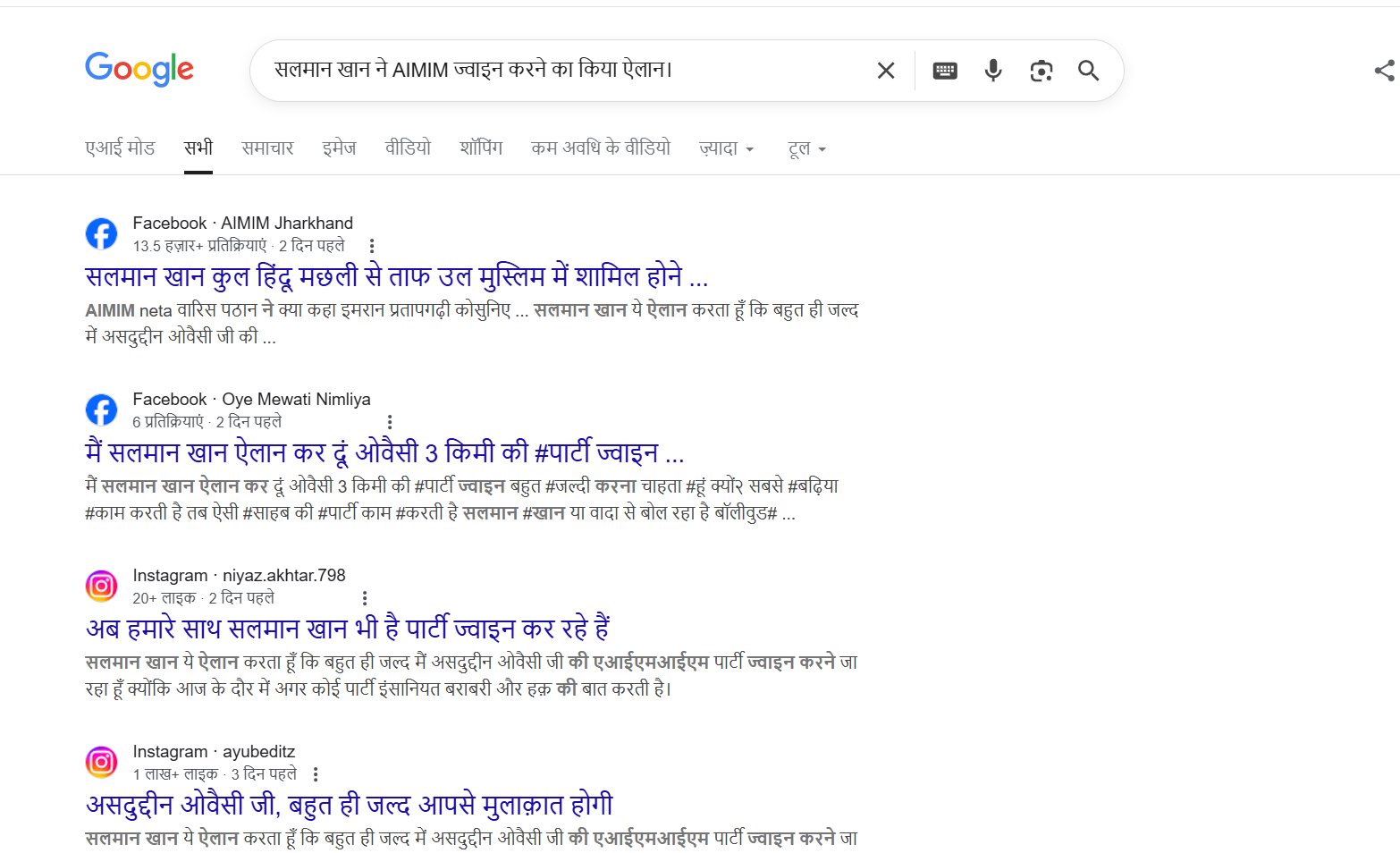
To verify the claim, we first searched Google using relevant keywords. However, no credible or reliable media reports were found supporting the claim that Salman Khan is joining AIMIM.
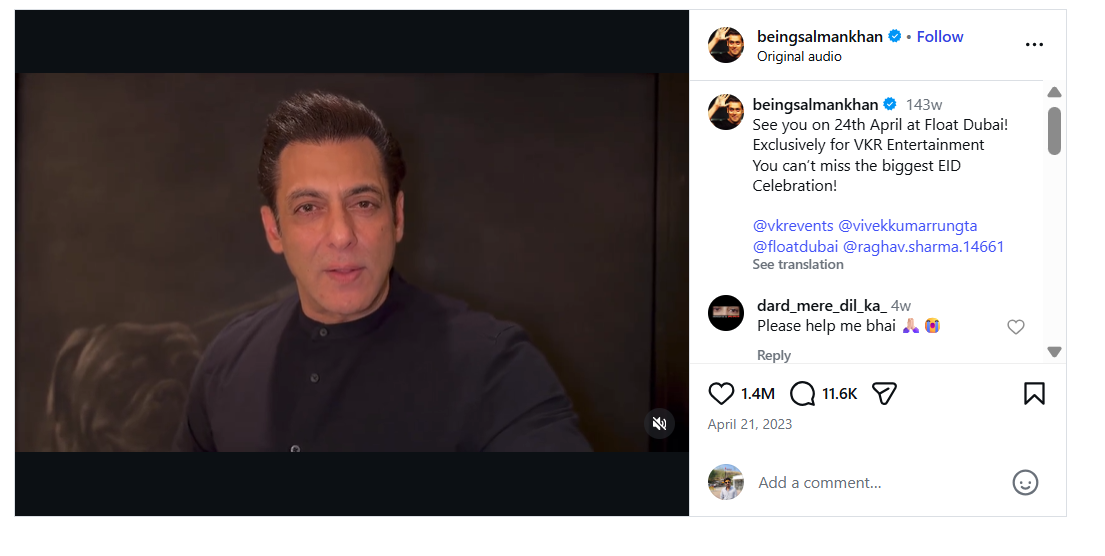
In the next step of verification, we extracted key frames from the viral video and conducted a reverse image search using Google Lens. This led us to a video posted on Salman Khan’s official Instagram account on 21 April 2023. In the original video, Salman Khan is seen talking about an event scheduled to take place in Dubai. A careful review of the full video confirmed that no statement related to AIMIM or Asaduddin Owaisi is made.
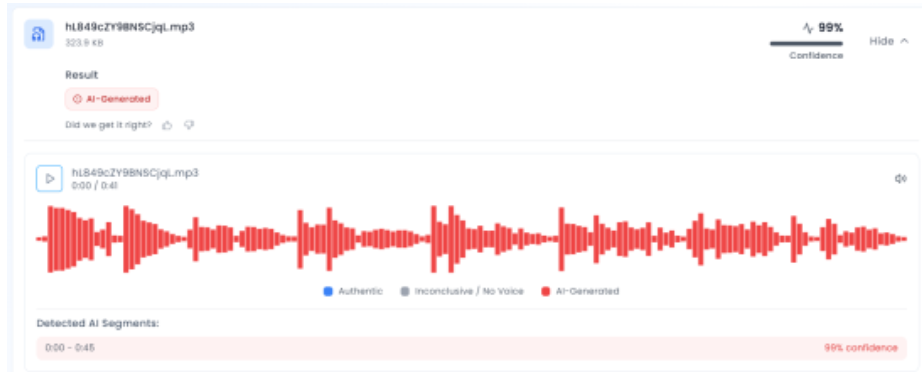
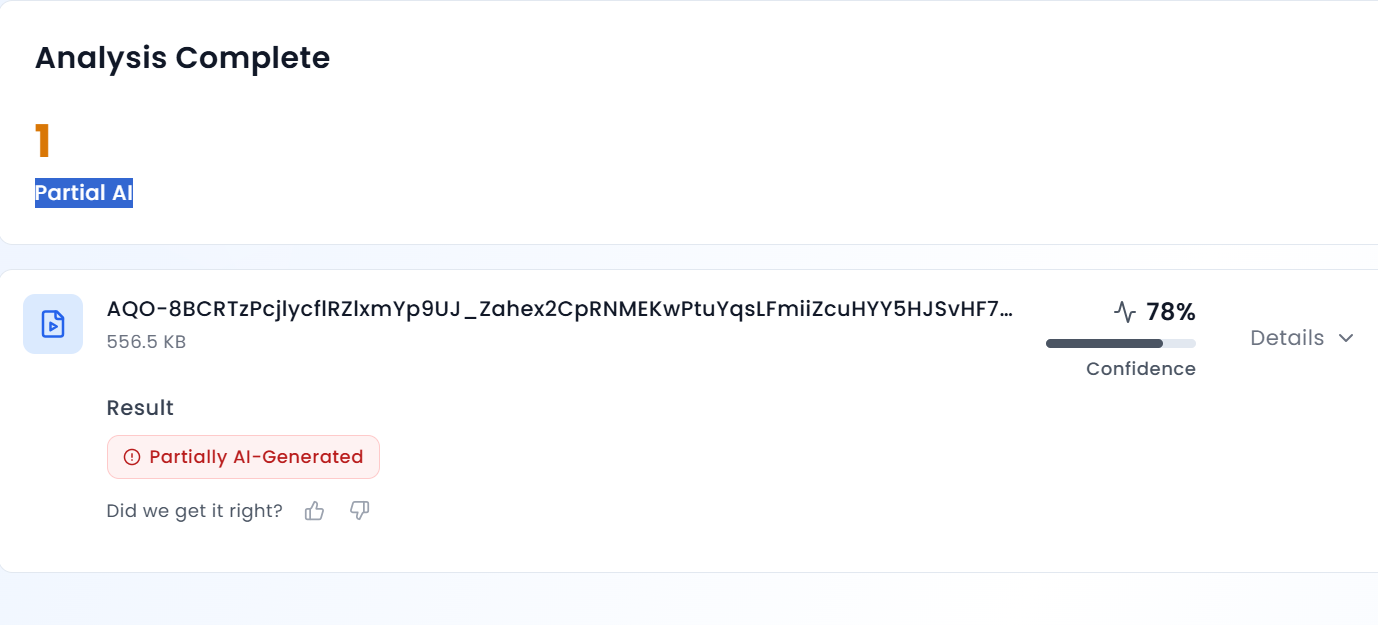
Further analysis of the viral clip revealed that Salman Khan’s voice sounds unnatural and robotic. To verify this, we scanned the video using AURGIN AI, an AI-generated content detection tool. According to the tool’s analysis, the viral video was generated using artificial intelligence.
Conclusion
Salman Khan has not announced that he is joining the AIMIM party. The viral video and the image circulating on social media are AI-generated and manipulated.
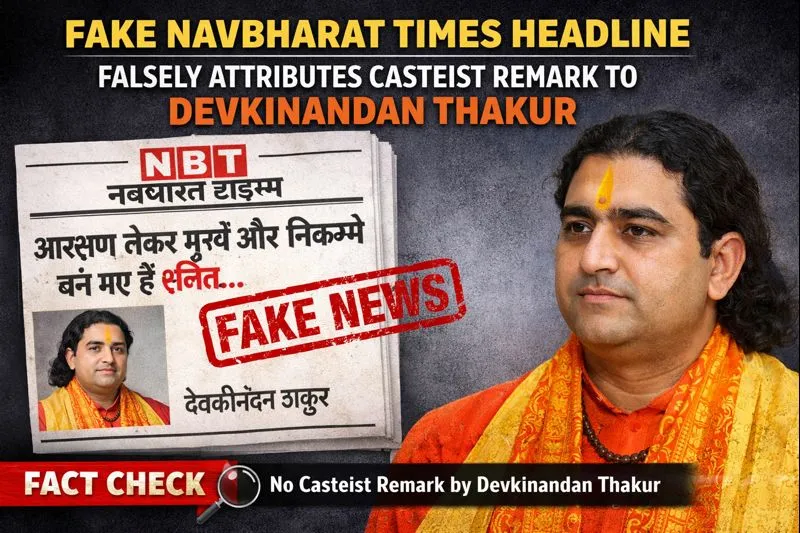
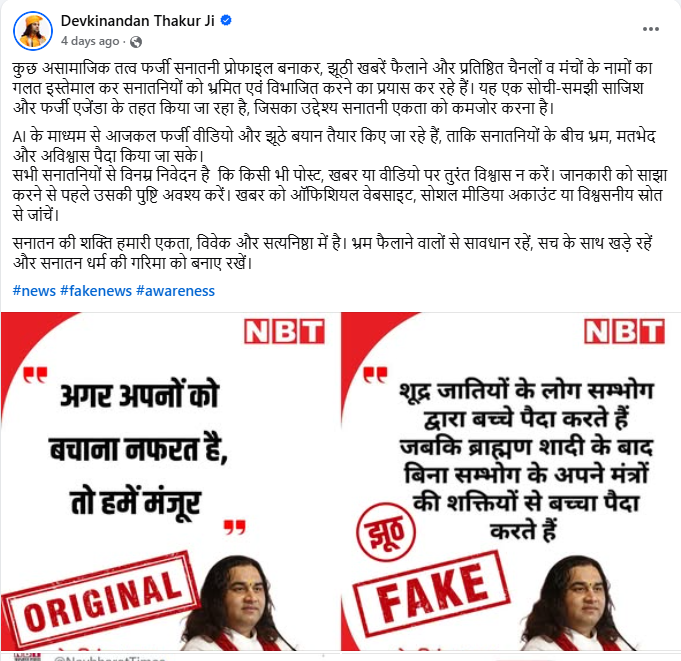
A news graphic bearing the Navbharat Times logo is being widely circulated on social media. The graphic claims that religious preacher Devkinandan Thakur made an extremely offensive and casteist remark targeting the ‘Shudra’ community. Social media users are sharing the graphic and claiming that the statement was actually made by Devkinandan Thakur. Cyber Peace Foundation’s research and verification found that the claim being shared online is misleading. Our research found that the viral news graphic is completely fake and that Devkinandan Thakur did not make any such casteist statement.
Claim
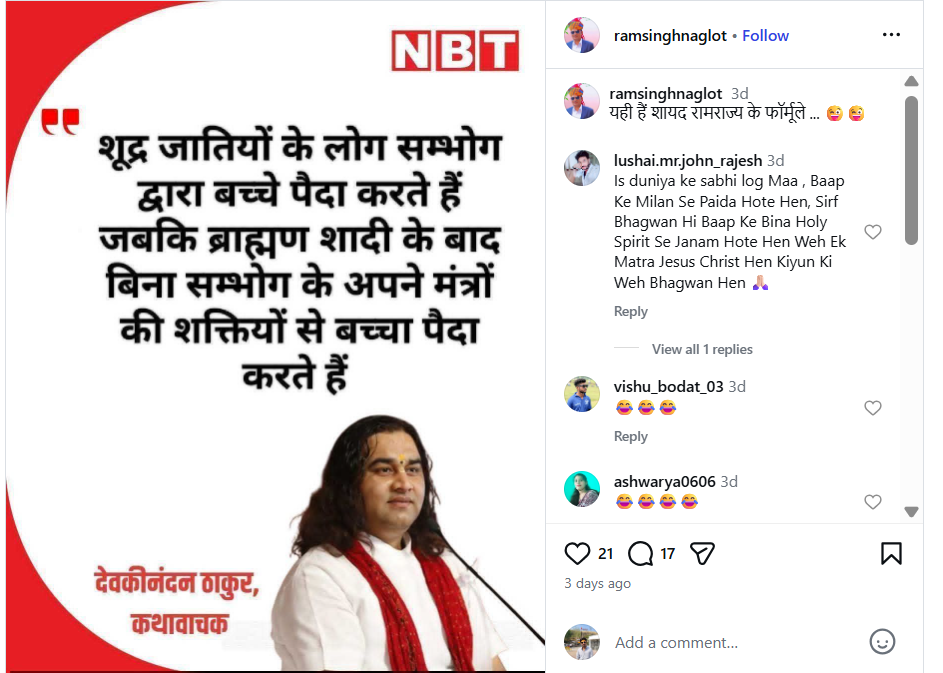
A viral news graphic claims that Devkinandan Thakur made a derogatory and caste-based statement about Shudras.On 17 January 2026, an Instagram user shared the viral graphic with the caption, “This is probably the formula of Ram Rajya.”The text on the graphic reads: “People of Shudra castes reproduce through sexual intercourse, whereas Brahmins give birth to children after marriage through the power of their mantras, without intercourse.” The graphic also carries Devkinandan Thakur’s photograph and identifies him as a ‘Kathavachak’ (religious storyteller).
Fact Check:
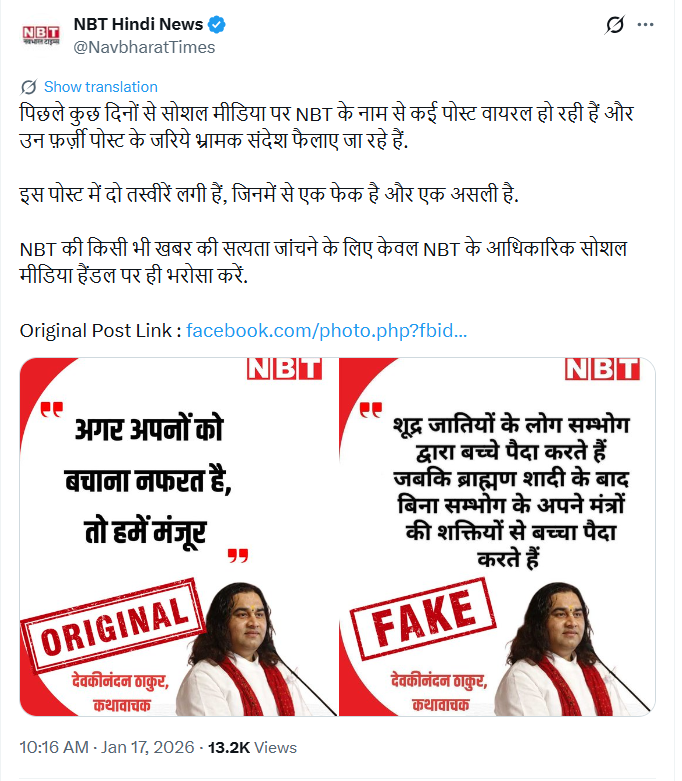
To verify the claim, we first searched for relevant keywords on Google. However, no credible or verified media reports were found supporting the claim. In the next stage of verification, we found a post published by NBT Hindi News (Navbharat Times) on X (formerly Twitter) on 17 January 2026, in which the organisation explicitly debunked the viral graphic. Navbharat Times clarified that the graphic circulating online was fake and also shared the original and authentic post related to the news.
Further research led us to Devkinandan Thakur’s official Facebook account, where he posted a clarification on 17 January 2026. In his post, he stated that anti-social elements are creating fake ‘Sanatani’ profiles and spreading false news, misusing the names of reputed media houses and platforms to mislead and divide people. He described the viral content as part of a deliberate conspiracy and fake agenda aimed at weakening unity. He also warned that AI-generated fake videos and fabricated statements are increasingly being used to create confusion, mistrust and division.
Devkinandan Thakur urged people not to believe or share any post, news or video without verification, and advised checking information through official websites, verified social media accounts or trusted sources.
Conclusion
The viral news graphic attributing a casteist statement to Devkinandan Thakur is completely fake.Devkinandan Thakur did not make the alleged remark, and the graphic circulating with the Navbharat Times logo is fabricated.
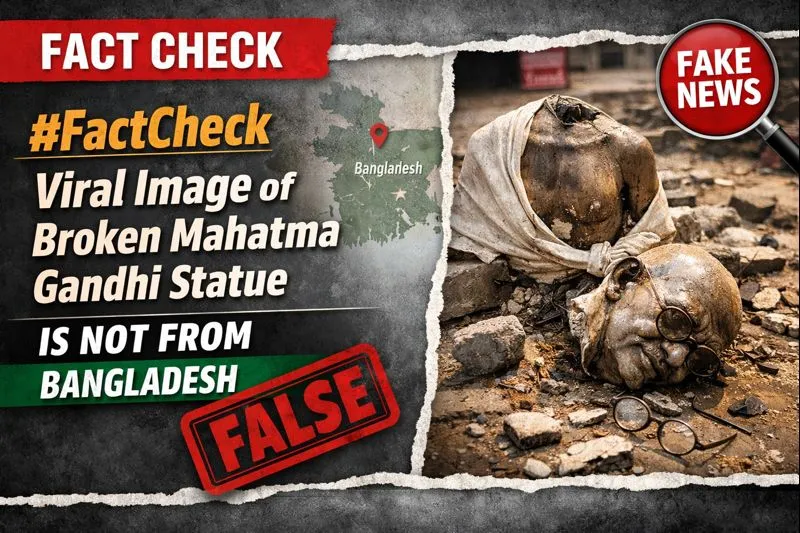
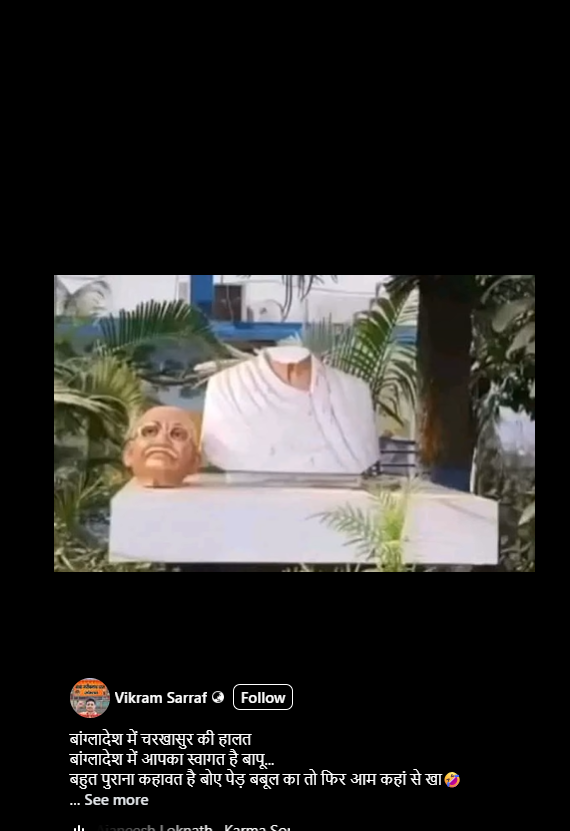
An image showing a damaged statue of Mahatma Gandhi, broken into two pieces, is being widely shared on social media. The image shows Gandhi’s statue with its head separated from the body, prompting strong reactions online.
Social media users are claiming that the incident occurred in Bangladesh, alleging that Mahatma Gandhi’s statue was deliberately vandalised there. The image is being described as a recent incident and is being circulated across platforms with provocative and inflammatory captions.
Cyber Peace Foundation’s research and verification found that the claim being shared online is misleading. Our rsearch revealed that the viral image is not from Bangladesh. The image is actually from Chakulia in Uttar Dinajpur district of West Bengal, India
Claim:
Social media users claim that Mahatma Gandhi’s statue was vandalised in Bangladesh, and that the viral image shows a recent incident from the country.One Facebook user shared the video on 19 January 2026, making derogatory remarks and falsely linking the incident to Bangladesh. The post has since been widely shared on social media platforms. (Archived links and screenshots are available.)
Fact Check:
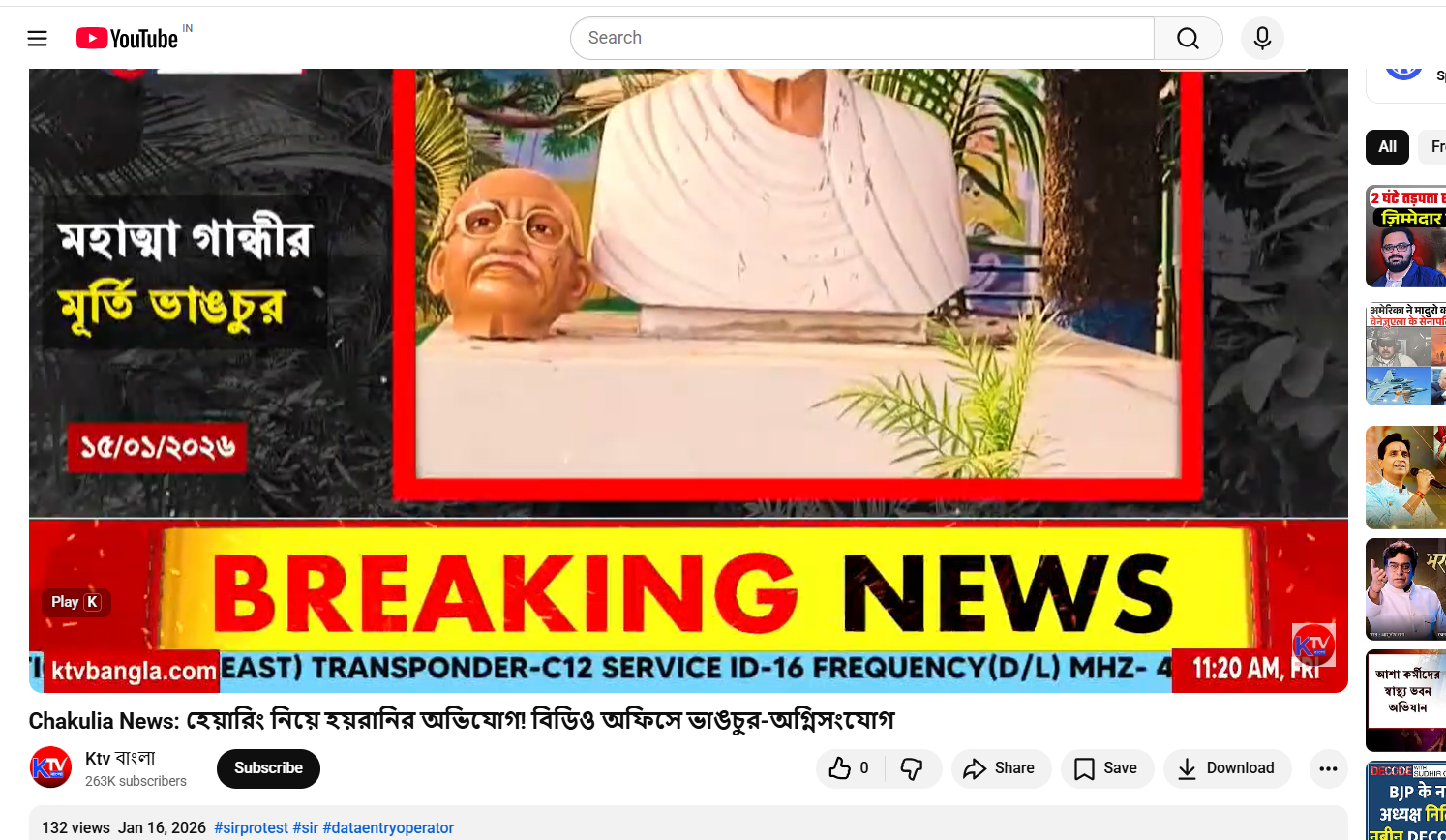
Our research revealed that the viral image is not from Bangladesh. The image is actually from Chakulia in Uttar Dinajpur district of West Bengal, India. To verify the claim, we conducted a reverse image search using Google Lens on key frames from the viral video. This led us to a report published by ABP Live Bangla on 16 January 2026, which featured the same visuals. Link and screenshot
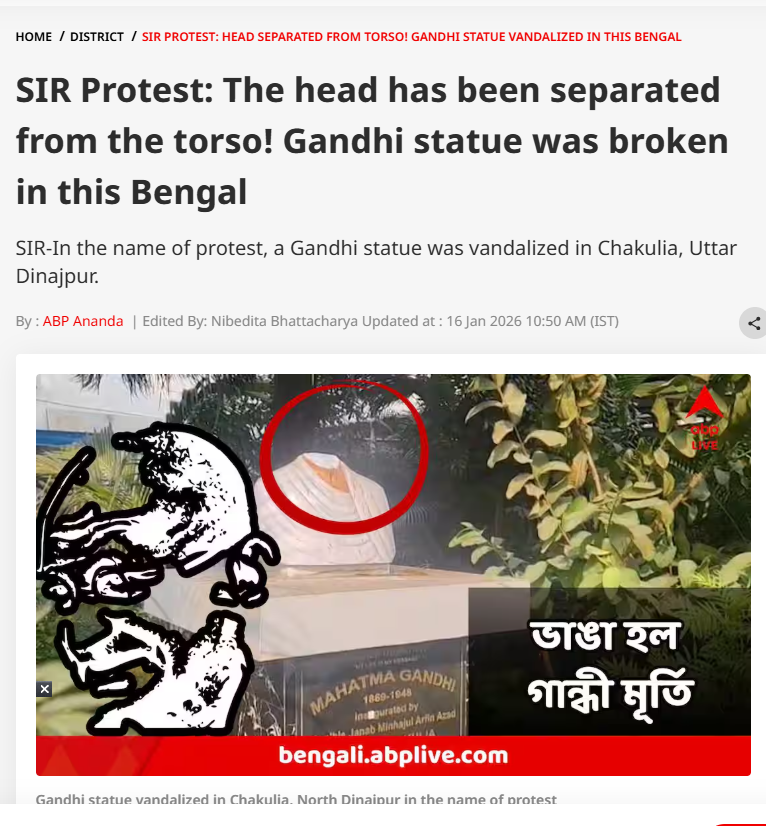
According to ABP Live Bangla, the statue of Mahatma Gandhi was damaged during a protest in Chakulia. The statue’s head was found separated from the body. While a portion of the broken statue remained at the site on Thursday night, it was reported missing by Friday morning. The report further stated that extensive damage was observed at BDO Office No. 2 in Golpokhar. Gandhi’s statue, located at the entrance of the administrative building, was found broken, and ashes were discovered near the premises. Government staff were seen clearing scattered debris from the site.
The incident reportedly occurred during a SIR (Special Intensive Revision) hearing at the BDO office, which was disrupted due to vandalism. In connection with the violence and damage to government property, 21 people have been arrested so far. In the next stage of verification, we found the same footage in a 16 January 2026 report by local Bengali news channel K TV, which also showed clear visuals of the damaged Mahatma Gandhi statue. Link and screenshot.
Conclusion:
The viral image of Mahatma Gandhi’s broken statue does not depict an incident from Bangladesh. The image is from Chakulia in West Bengal’s Uttar Dinajpur district, where the statue was damaged during a protest.
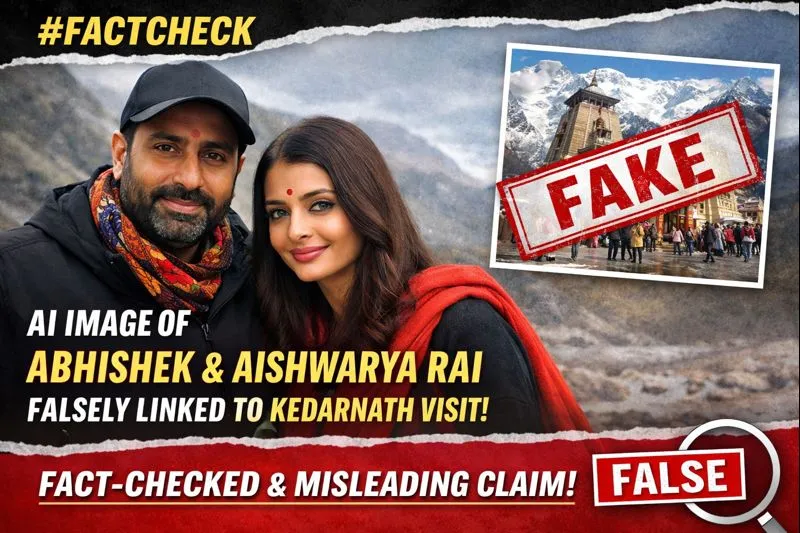
A photo featuring Bollywood actor Abhishek Bachchan and actress Aishwarya Rai is being widely shared on social media. In the image, the Kedarnath Temple is clearly visible in the background. Users are claiming that the couple recently visited the Kedarnath shrine for darshan.
Cyber Peace Foundation’s research found the viral claim to be false. Our research revealed that the image of Abhishek Bachchan and Aishwarya Rai is not real, but AI-generated, and is being misleadingly shared as a genuine photograph.
Claim
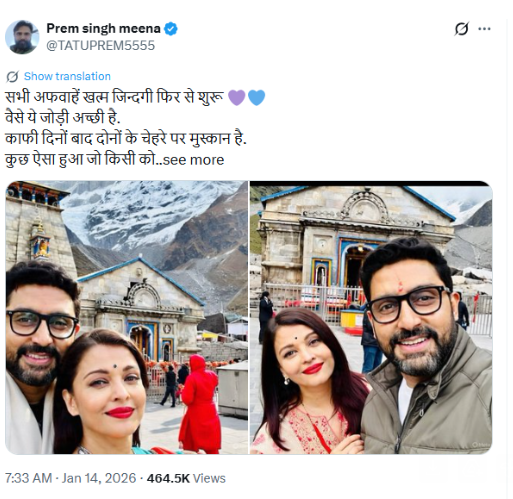
On January 14, 2026, a user on X (formerly Twitter) shared the viral image with a caption suggesting that all rumours had ended and that the couple had restarted their life together. The post further claimed that both actors were seen smiling after a long time, implying that the image was taken during their visit to Kedarnath Temple.
The post has since been widely circulated on social media platforms
Fact Check:
To verify the claim, we first conducted a keyword search on Google related to Abhishek Bachchan, Aishwarya Rai, and a Kedarnath visit. However, we did not find any credible media reports confirming such a visit.
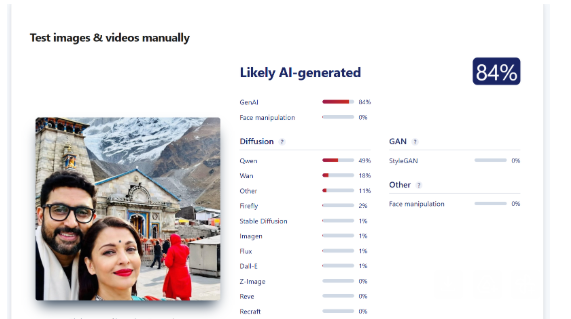
On closely examining the viral image, several visual inconsistencies raised suspicion about it being artificially generated. To confirm this, we scanned the image using the AI detection tool Sightengine. According to the tool’s analysis, the image was found to be 84 percent AI-generated.
Additionally, we scanned the same image using another AI detection tool, HIVE Moderation. The results showed an even stronger indication, classifying the image as 99 percent AI-generated.
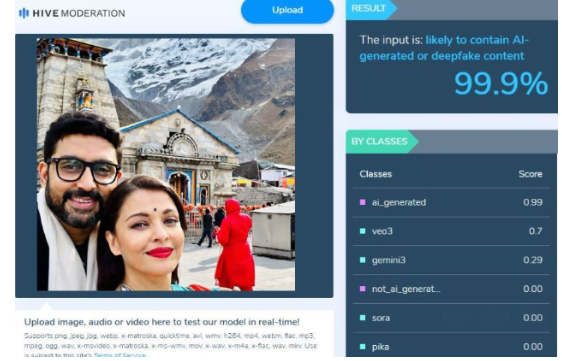
Conclusion
Our research confirms that the viral image showing Abhishek Bachchan and Aishwarya Rai at Kedarnath Temple is not authentic. The picture is AI-generated and is being falsely shared on social media to mislead users.

A video circulating widely on social media shows a child throwing stones at a moving train, while a few other children can also be seen climbing onto the engine. The video is being shared with a communal narrative, with claims that the incident took place in India.
Cyber Peace Foundation’s research found the viral claim to be misleading. Our research revealed that the video is not from India, but from Bangladesh, and is being falsely linked to India on social media.
Claim:
On January 15, 2026, a Facebook user shared the viral video claiming it depicted an incident from India. The post carried a provocative caption stating, “We are not afraid of Pakistan outside our borders. We are afraid of the thousands of mini-Pakistans within India.” The post has been widely circulated, amplifying communal sentiments.
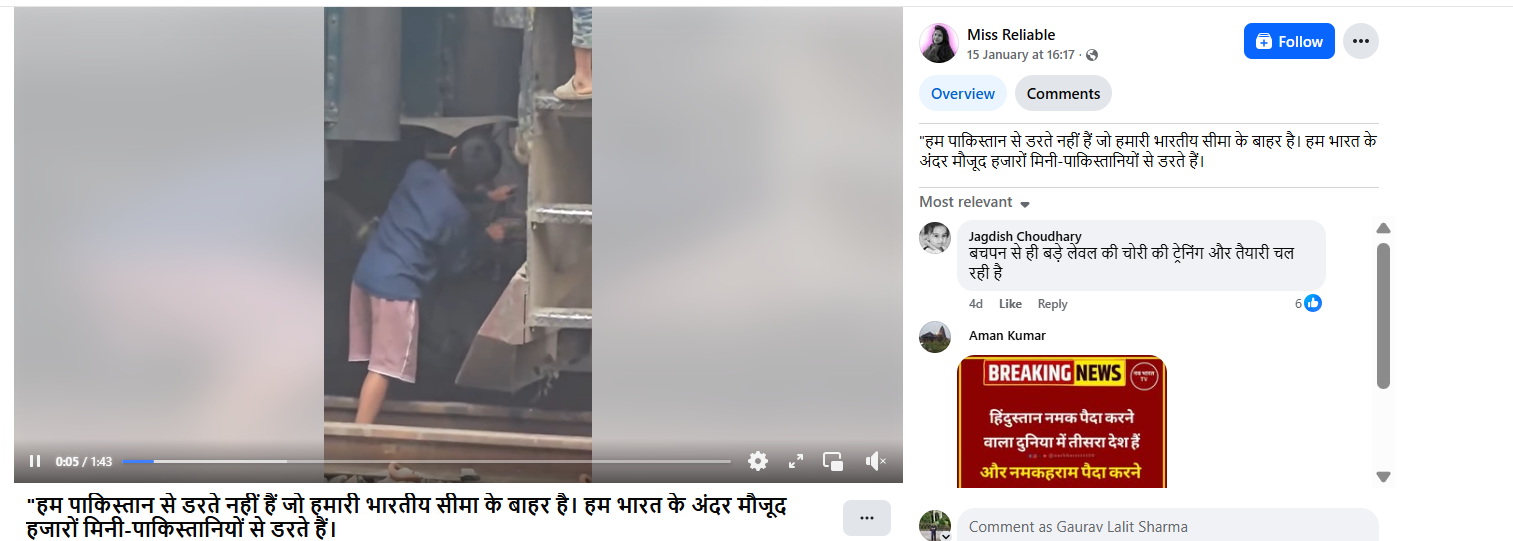
Fact Check:
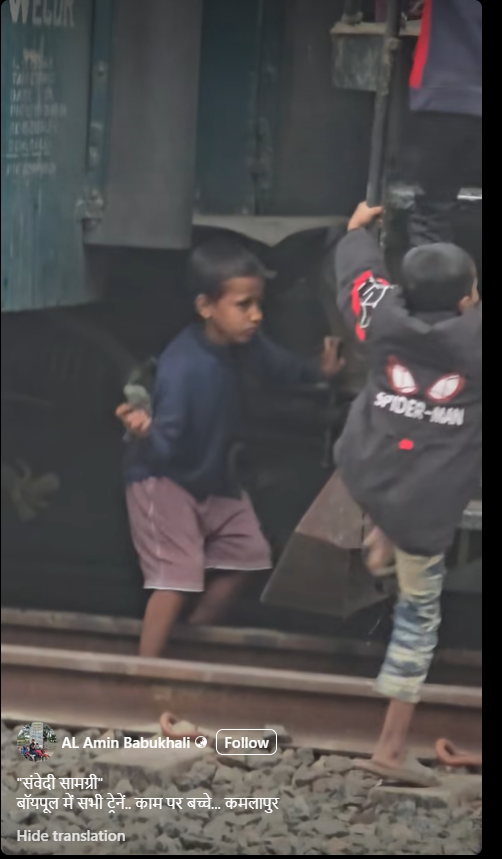
To verify the authenticity of the video, we conducted a reverse image search using Google Lens by extracting keyframes from the viral clip. During this process, we found the same video uploaded on a Bangladeshi Facebook account named AL Amin Babukhali on December 28, 2025. The caption of the original post mentions Kamalapur, which is a well-known railway station in Bangladesh. This strongly indicates that the incident did not occur in India.
Further analysis of the video shows that the train engine carries the marking “BR”, along with text written in the Bengali language. “BR” stands for Bangladesh Railways, confirming the origin of the train. To corroborate this further, we searched for images related to Bangladesh Railways using Google’s open tools. We found multiple images on Getty Images showing train engines with the same design and markings as seen in the viral video. The visual match clearly establishes that the train belongs to Bangladesh Railways.
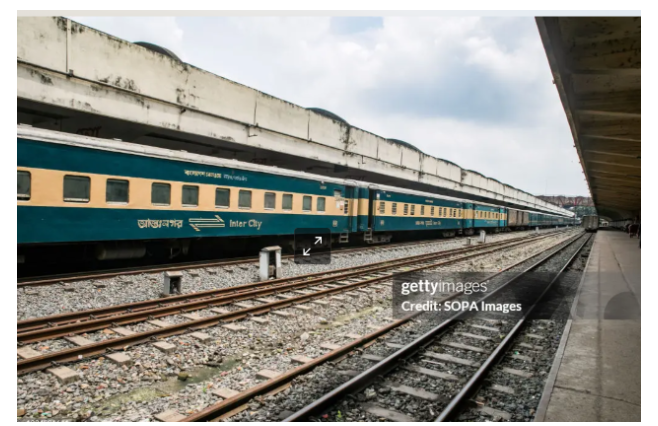
Conclusion
Our research confirms that the viral video is from Bangladesh, not India. It is being shared on social media with a false and misleading claim to give it a communal angle and link it to India.
