
#FactCheck -Edited Ravi Kishan Video Falsely Shared as Criticism of PM Modi; Original Remarks Were Aimed at Rahul Gandhi
Executive Summary
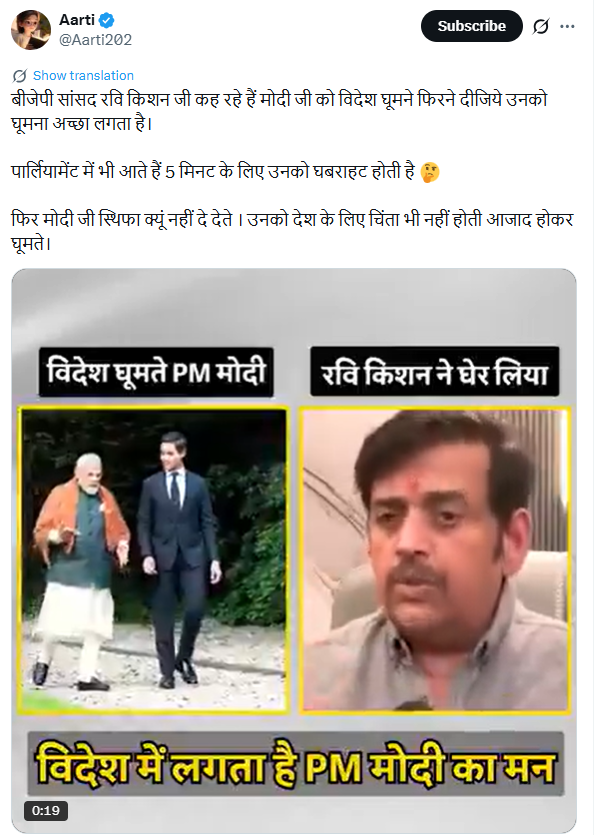
A video of BJP MP Ravi Kishan is being widely circulated on social media with the claim that the Gorakhpur MP was mocking Prime Minister Narendra Modi and criticizing his working style and frequent foreign visits.In the viral clip, Ravi Kishan can be heard saying that “he likes to travel,” “comes to Parliament only for a few minutes,” and does not like pressure or responsibility. The clip also features him using phrases such as “azad panchhi” (free bird) and “azad parinda.” However, CyberPeace Research Wingresearch found the claim to be misleading. The research revealed that in the original video, Ravi Kishan was actually criticizing Congress leader Rahul Gandhi. A cropped portion of his statement is being shared out of context with a false claim.
Claim
An X (formerly Twitter) user shared the viral clip and wrote that Ravi Kishan was referring to Prime Minister Narendra Modi, alleging that Modi enjoys travelling abroad, spends little time in Parliament, and feels uncomfortable under pressure.
- https://x.com/Aarti202/status/2058523226305900586
- https://archive.ph/j5MaV
Fact Check
To verify the viral claim, we performed a reverse search using key frames from the video. During the research, we found the original video uploaded on the Facebook page of ANI on May 13, 2026.
The caption of the post read:“War does not seem to be ending…” Ravi Kishan warns the country about the ongoing conflict in the Middle East.At around the 4-minute-40-second timestamp, an ANI reporter asks Ravi Kishan about Rahul Gandhi distancing himself from the CBI Director selection process. Responding to that question, Ravi Kishan makes the remarks that later went viral.
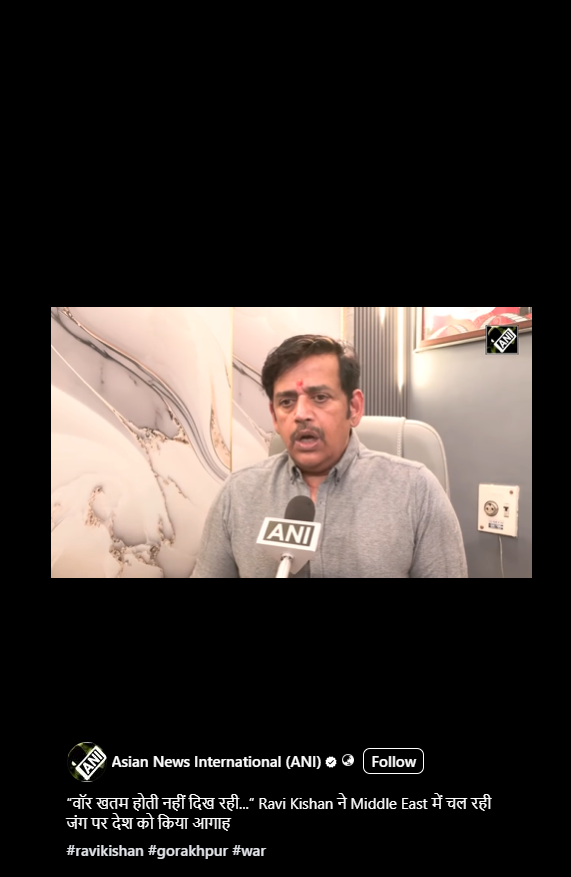
This clearly establishes that Ravi Kishan was not referring to Prime Minister Narendra Modi, but was commenting on Rahul Gandhi. In his response, he says that “it is good that he has freed himself” and refers to Rahul Gandhi as an “azad parinda” (free bird).
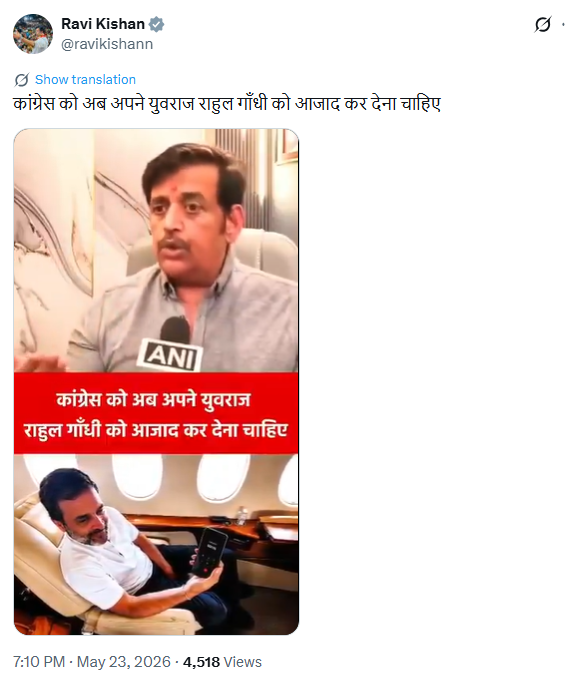
During the research, we also found the same video posted on Ravi Kishan’s official X account on May 23. The caption of the post stated:“Congress should now free its prince Rahul Gandhi.”This further confirms that the viral clip has been misleadingly edited and shared out of context
Conclusion
The research found that Ravi Kishan’s remarks in the original video were directed at Rahul Gandhi, not Prime Minister Narendra Modi. An edited portion of the video has been falsely shared with a misleading claim.

Related Blogs
.webp)
Misinformation spread has become a cause for concern for all stakeholders, be it the government, policymakers, business organisations or the citizens. The current push for combating misinformation is rooted in the growing awareness that misinformation leads to sentiment exploitation and can result in economic instability, personal risks, and a rise in political, regional, and religious tensions. The circulation of misinformation poses significant challenges for organisations, brands and administrators of all types. The spread of misinformation online poses a risk not only to the everyday content consumer, but also creates concerns for the sharer but the platforms themselves. Sharing misinformation in the digital realm, intentionally or not, can have real consequences.
Consequences for Platforms
Platforms have been scrutinised for the content they allow to be published and what they don't. It is important to understand not only how this misinformation affects platform users, but also its impact and consequences for the platforms themselves. These consequences highlight the complex environment that social media platforms operate in, where the stakes are high from the perspective of both business and societal impact. They are:
- Legal Consequences: Platforms can be fined by regulators if they fail to comply with content moderation or misinformation-related laws and a prime example of such a law is the Digital Services Act of the EU, which has been created for the regulation of digital services that act as intermediaries for consumers and goods, services, and content. They can face lawsuits by individuals, organisations or governments for any damages due to misinformation. Defamation suits are part of the standard practice when dealing with misinformation-causing vectors. In India, the Prohibition of Fake News on Social Media Bill of 2023 is in the pipeline and would establish a regulatory body for fake news on social media platforms.
- Reputational Consequences: Platforms employ a trust model where the user trusts it and its content. If a user loses trust in the platform because of misinformation, it can reduce engagement. This might even lead to negative coverage that affects the public opinion of the brand, its value and viability in the long run.
- Financial Consequences: Businesses that engage with the platform may end their engagement with platforms accused of misinformation, which can lead to a revenue drop. This can also have major consequences affecting the long-term financial health of the platform, such as a decline in stock prices.
- Operational Consequences: To counter the scrutiny from regulators, the platform might need to engage in stricter content moderation policies or other resource-intensive tasks, increasing operational costs for the platforms.
- Market Position Loss: If the reliability of a platform is under question, then, platform users can migrate to other platforms, leading to a loss in the market share in favour of those platforms that manage misinformation more effectively.
- Freedom of Expression vs. Censorship Debate: There needs to be a balance between freedom of expression and the prevention of misinformation. Censorship can become an accusation for the platform in case of stricter content moderation and if the users feel that their opinions are unfairly suppressed.
- Ethical and Moral Responsibilities: Accountability for platforms extends to moral accountability as they allow content that affects different spheres of the user's life such as public health, democracy etc. Misinformation can cause real-world harm like health misinformation or inciting violence, which leads to the fact that platforms have social responsibility too.
Misinformation has turned into a global issue and because of this, digital platforms need to be vigilant while they navigate the varying legal, cultural and social expectations across different jurisdictions. Efforts to create standardised practices and policies have been complicated by the diversity of approaches, leading platforms to adopt flexible strategies for managing misinformation that align with global and local standards.
Addressing the Consequences
These consequences can be addressed by undertaking the following measures:
- The implementation of a more robust content moderation system by the platforms using a combination of AI and human oversight for the identification and removal of misinformation in an effective manner.
- Enhancing the transparency in platform policies for content moderation and decision-making would build user trust and reduce the backlash associated with perceived censorship.
- Collaborations with fact checkers in the form of partnerships to help verify the accuracy of content and reduce the spread of misinformation.
- Engage with regulators proactively to stay ahead of legal and regulatory requirements and avoid punitive actions.
- Platforms should Invest in media literacy initiatives and help users critically evaluate the content available to them.
Final Takeaways
The accrual of misinformation on digital platforms has resulted in presenting significant challenges across legal, reputational, financial, and operational functions for all stakeholders. As a result, a critical need arises where the interlinked, but seemingly-exclusive priorities of preventing misinformation and upholding freedom of expression must be balanced. Platforms must invest in the creation and implementation of a robust content moderation system with in-built transparency, collaborating with fact-checkers, and media literacy efforts to mitigate the adverse effects of misinformation. In addition to this, adapting to diverse international standards is essential to maintaining their global presence and societal trust.
References
- https://pirg.org/edfund/articles/misinformation-on-social-media/
- https://www.mdpi.com/2076-0760/12/12/674
- https://scroll.in/article/1057626/israel-hamas-war-misinformation-is-being-spread-across-social-media-with-real-world-consequences
- https://www.who.int/europe/news/item/01-09-2022-infodemics-and-misinformation-negatively-affect-people-s-health-behaviours--new-who-review-finds
Executive Summary
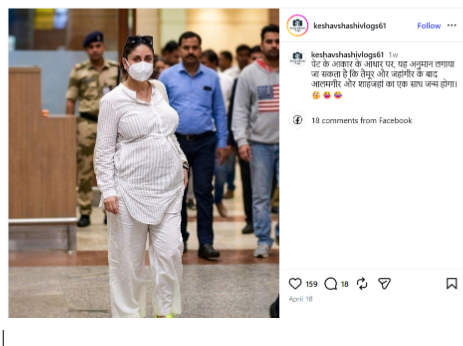
A photo of Bollywood actress Kareena Kapoor Khan is being widely shared on social media with the claim that she is pregnant again. In the viral image, Kareena appears with a visible baby bump, leading users to speculate about another pregnancy. However, research by the CyberPeace Research Wing found the claim to be misleading. The research revealed that the image is not recent and is actually from 2020, now being reshared with a false narrative.
Claim:
An Instagram user shared the viral image on April 18, 2026, and posted a caption jokingly suggesting that after Taimur and Jehangir, Kareena was expecting more children.
Fact Check:
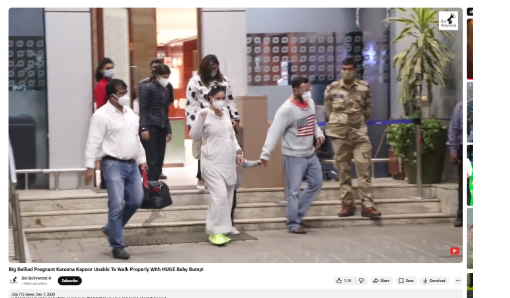
To verify the claim, relevant keyword searches were conducted online, but no credible media report was found supporting the claim that Kareena Kapoor Khan is currently pregnant. A reverse search of the viral visual led to an older video uploaded on the YouTube channel Bol Bollywood on December 7, 2020, where the same image was used.
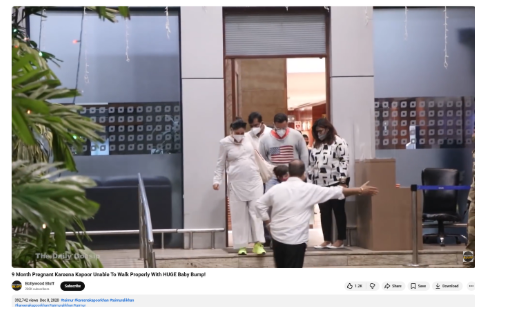
Further research also found a similar video report on the YouTube channel Bollywood Bluff, published on December 8, 2020, featuring the same visual and similar claims. These findings confirmed that the viral image is several years old and unrelated to any recent development.
Conclusion:
The claim that Kareena Kapoor Khan is pregnant again is misleading. The viral photo is not recent but an old image from 2020 that is being circulated with a false claim.
Executive Summary
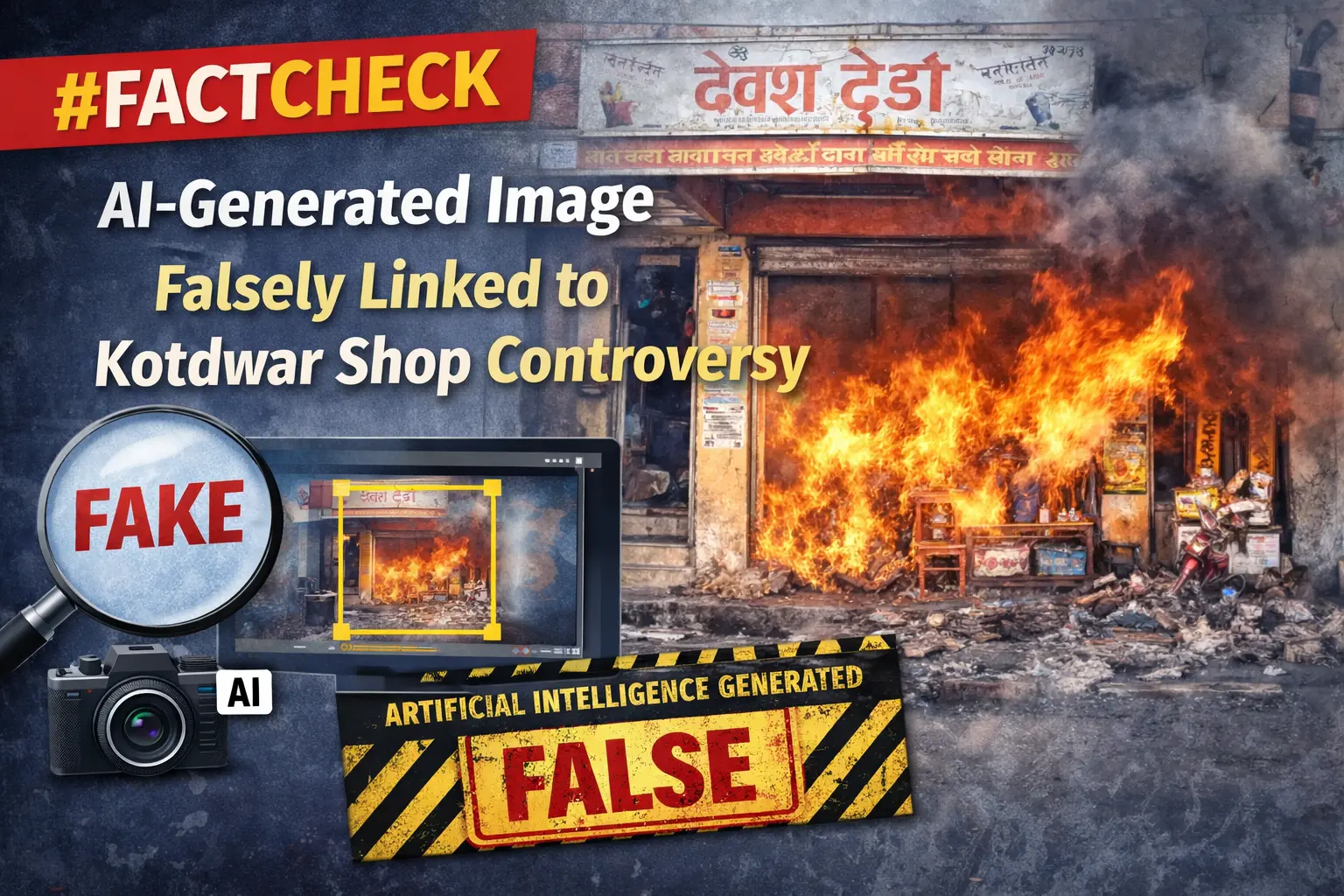
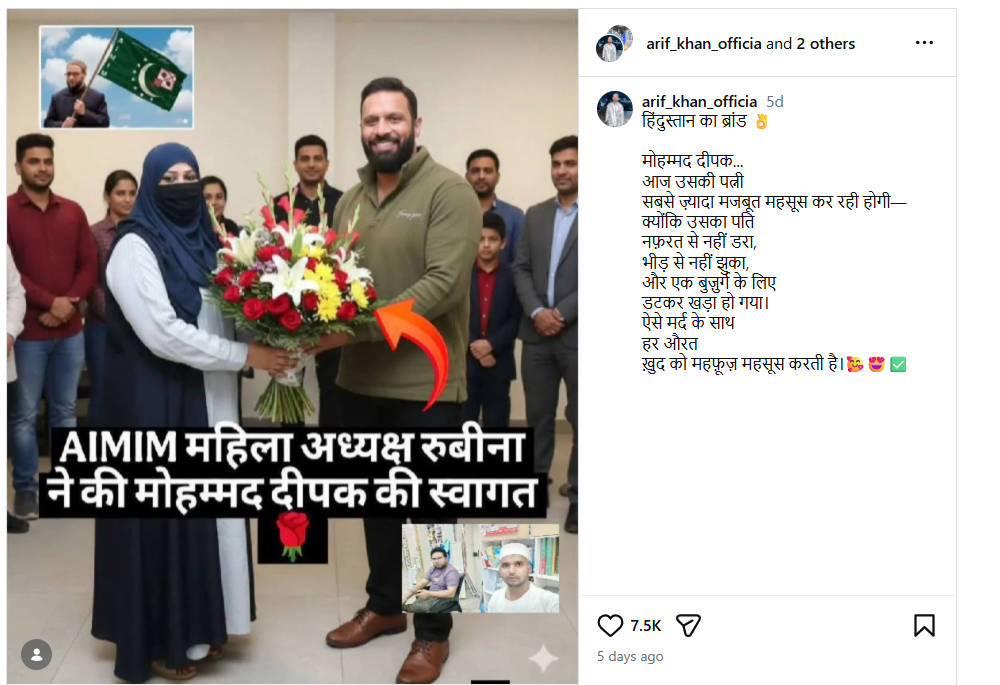
A dispute had recently emerged in Kotdwar, Uttarakhand, over the name of a shop. During the controversy, a local youth, Deepak Kumar, came forward in support of the shopkeeper. The incident subsequently became a subject of discussion on social media, with users expressing varied reactions. Meanwhile, a photo began circulating on social media showing a burqa-clad woman presenting a bouquet to Deepak Kumar. The image is being shared with the claim that All India Majlis-e-Ittehadul Muslimeen (AIMIM)’s women’s president, Rubina, welcomed “Mohammad Deepak Kumar” by presenting him with a bouquet. However, research conducted by the CyberPeace found the viral claim to be false. The research revealed that users are sharing an AI-generated image with a misleading claim.
Claim:
On social media platform Instagram, a user shared the viral image claiming that AIMIM’s women’s president Rubina welcomed “Mohammad Deepak Kumar” by presenting him with a bouquet. The link to the post, its archived version, and a screenshot are provided below.
Fact Check:
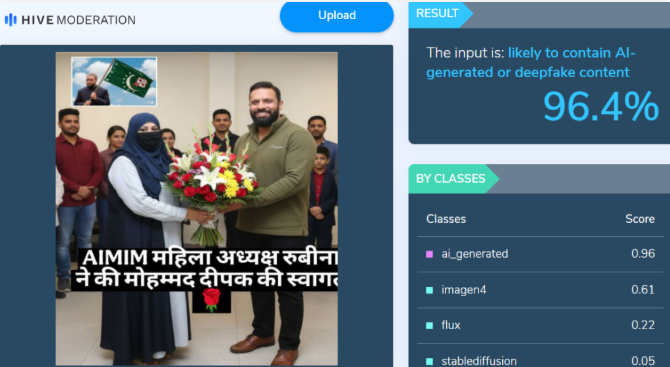
Upon closely examining the viral image, certain inconsistencies raised suspicion that it could be AI-generated. To verify its authenticity, the image was analysed using the AI detection tool Hive Moderation, which indicated a 96 percent probability that the image was AI-generated.
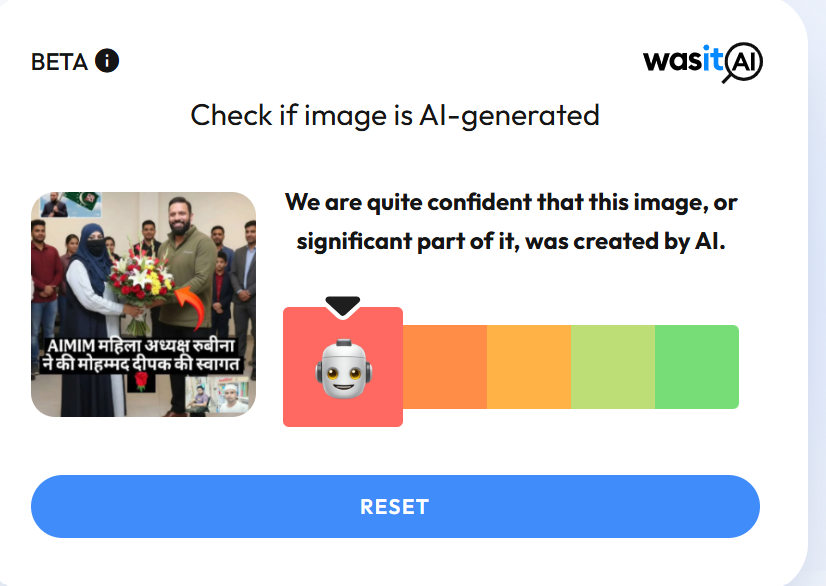
In the next stage of the research , the image was also analysed using another AI detection tool, Wasit AI, which likewise identified the image as AI-generated.
Conclusion
The research establishes that users are circulating an AI-generated image with a misleading claim linking it to the Kotdwar controversy.
