

Navigating the Path to CyberPeace: Insights and Strategies
Featured #factCheck Blogs

Executive Summary
Social media users are claiming that Indian Army Chief General Dhiraj Seth dances with soldiers’ wives and attended a dance competition organised by the Border Security Force Wives Welfare Association (BWWA). CyberPeace Research found no credible sources to substantiate the viral claim. Our research revealed that the viral image is related to his visit to Nepal. According to reports, he travelled to Nepal on his first foreign visit after taking charge of the Indian Army, where he was welcomed by senior Nepal Army officials. During the visit, he was also scheduled to receive the honorary rank of General of the Nepal Army. However, his photograph is being linked to a dance video from an event organised by the Central Armed Police Forces (CAPF), accompanied by objectionable claims about him. Our research found no credible evidence confirming that General Dhiraj Seth attended the event or was associated with the activities shown in the video. Therefore, linking his photograph from the Nepal visit to the dance video is misleading.
Claim:
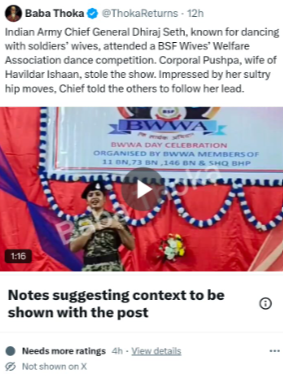
It is being claimed on social media that Indian Army Chief General Dhiraj Seth attended a dance competition organised by the BSF Wives Welfare Association (BWWA), where he was impressed by a woman’s dance performance and asked other participants to follow her lead.
https://x.com/ThokaReturns/status/2110854323760693485
Fact Check
To verify the viral claim, we conducted a reverse image search using keyframes from the video. During this process, we found the video on Instagram. The text “BSF Wives Welfare Association” was visible on the backdrop behind the stage. However, there was no mention of Army Chief General Dhiraj Seth anywhere in the video.
https://www.instagram.com/reels/Ddl7oTEgnf7/
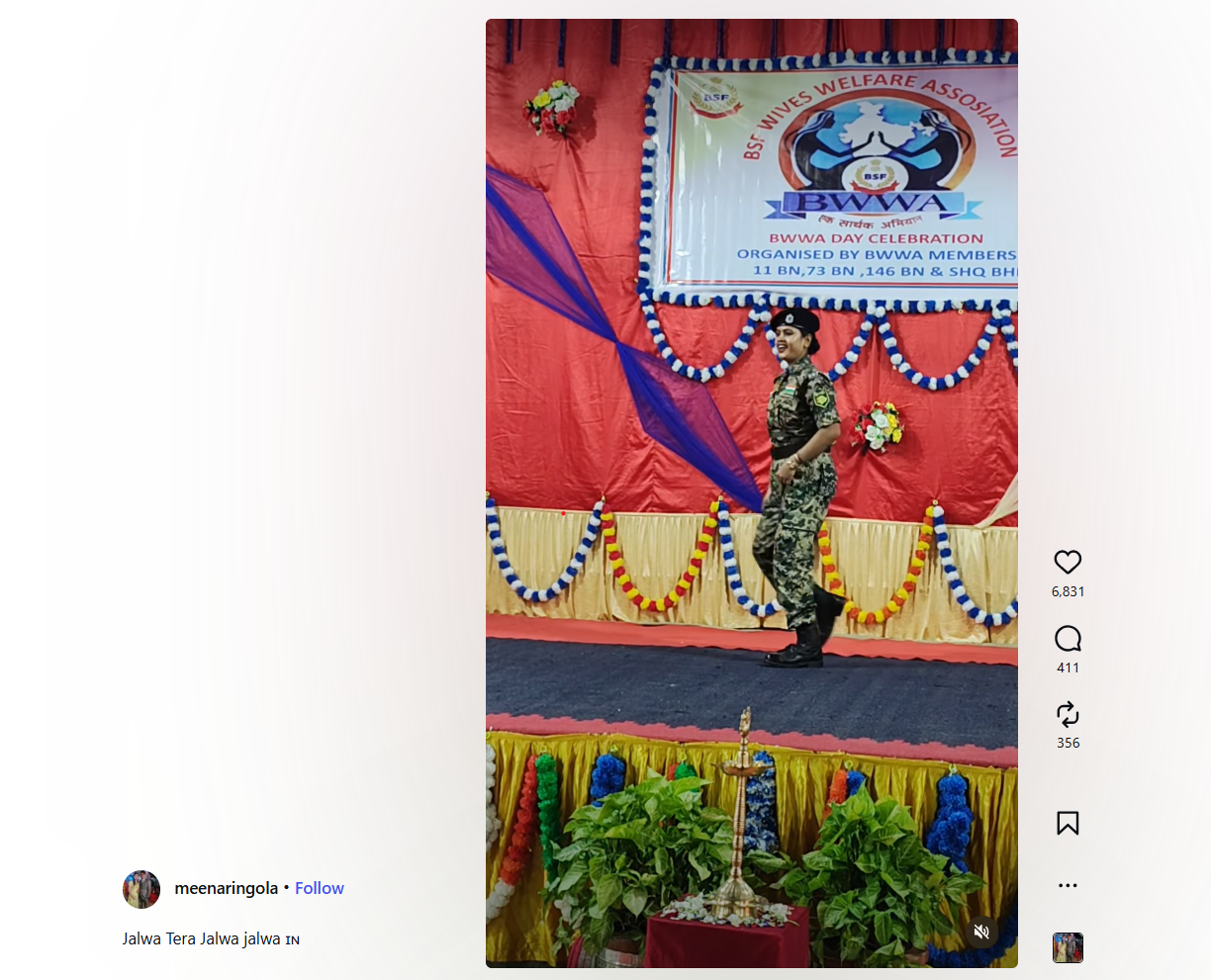
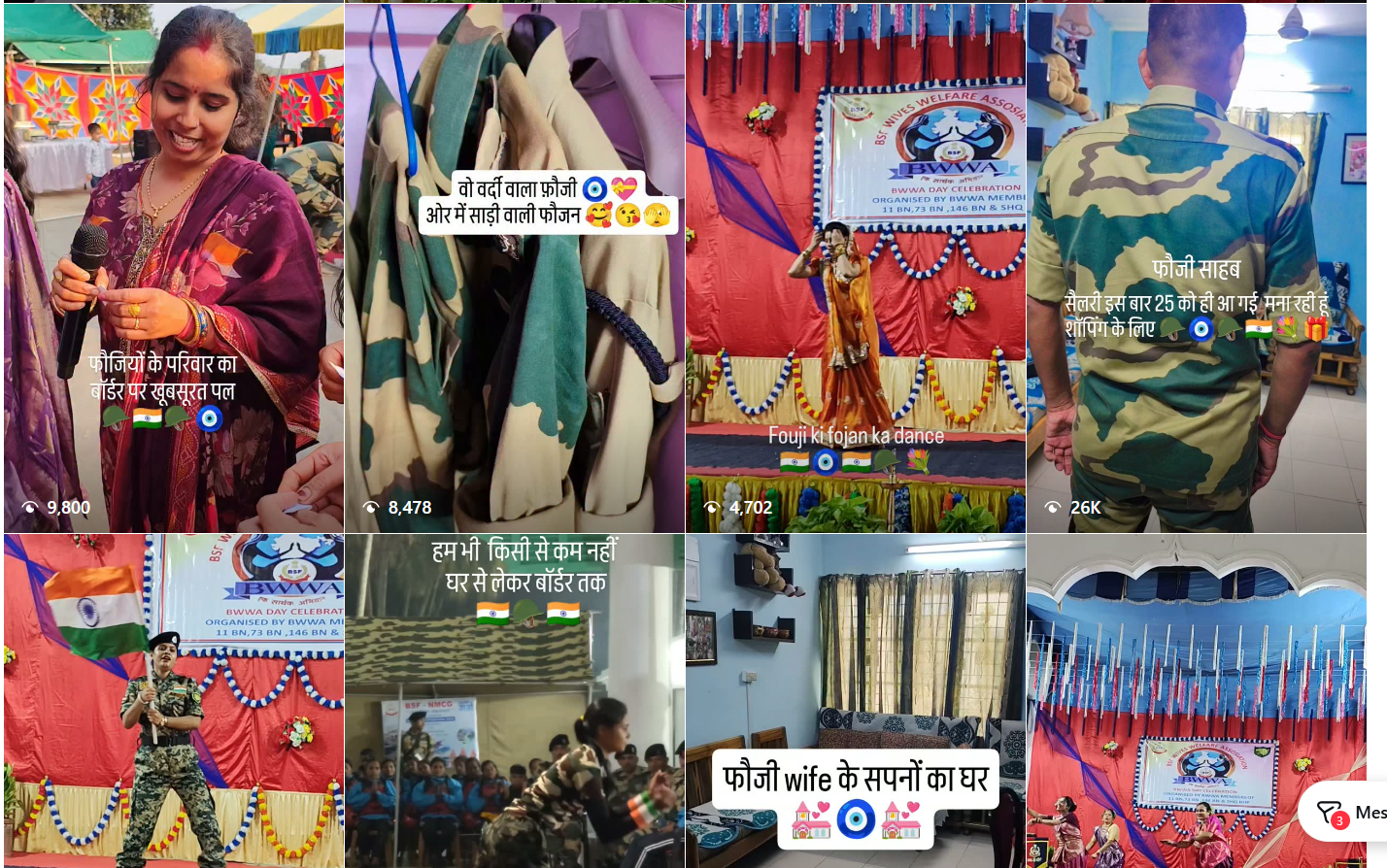
After reviewing these videos, our research found no evidence to substantiate the claim that General Dhiraj Seth attended an event organised by the BSF Wives Welfare Association or danced at the event. His photograph is being linked to the dance video, but no credible evidence supporting this claim was found.
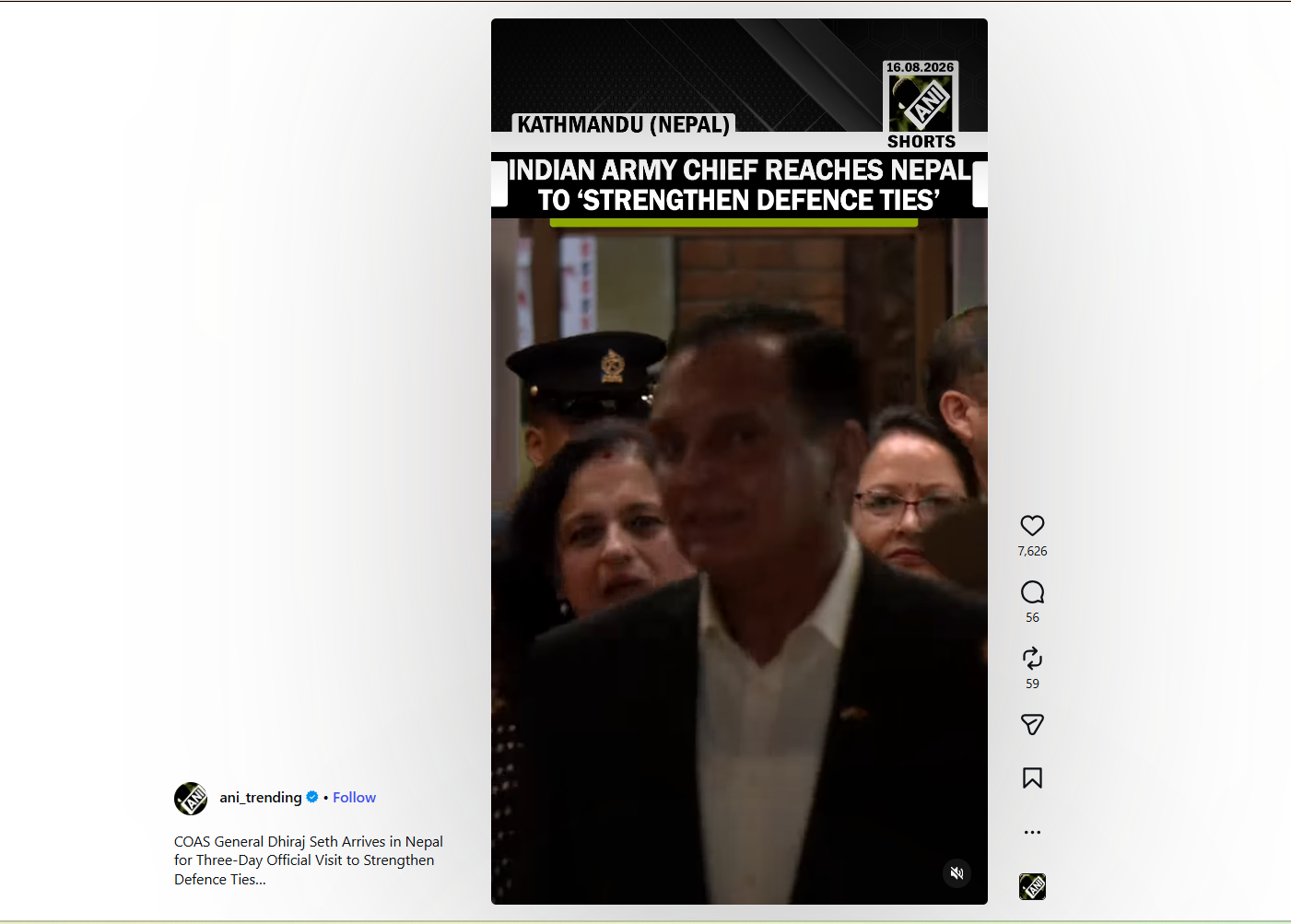
During our research, we found the original video of Army Chief General Dhiraj Seth shared by ANI. According to the report, General Dhiraj Seth arrived in Nepal on a three-day official visit aimed at strengthening defence ties between the two countries.
https://www.instagram.com/reels/DcGxzLPExR5/
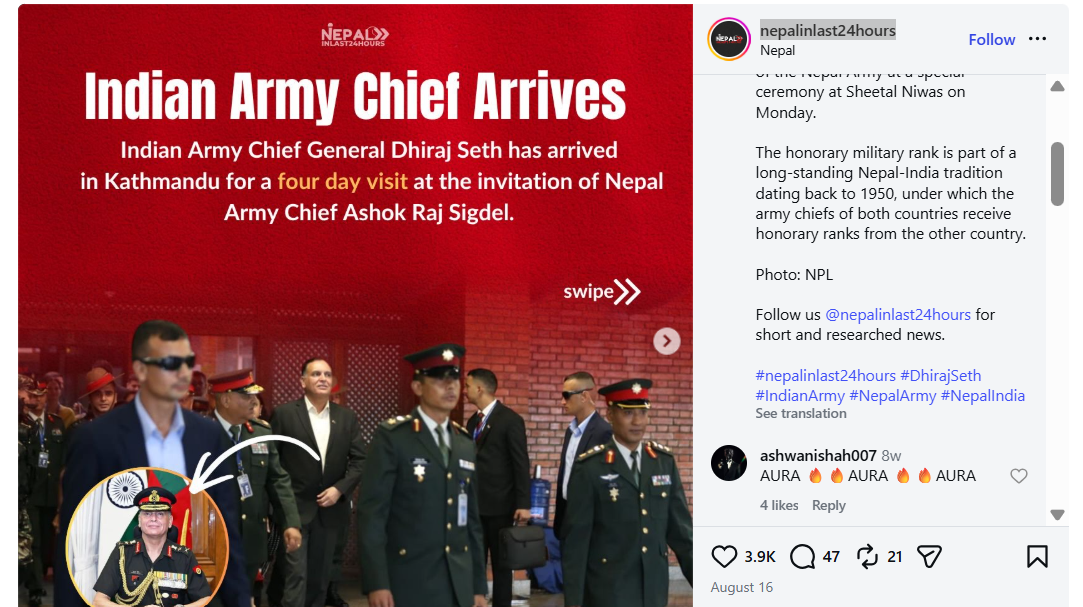
In the final stage of our research, we found a report on an Instagram account named ‘nepalinlast24hours’. According to the report, Indian Army Chief General Dhiraj Seth arrived in Kathmandu on his first foreign visit after taking command of the Indian Army on June 30, 2026. He was welcomed by senior Nepal Army officials at Tribhuvan International Airport.
The report stated that during his four-day visit, General Seth was scheduled to meet Nepal’s Prime Minister Balendra Shah and Nepal Army Chief Ashok Raj Sigdel. Additionally, he was scheduled to be conferred with the honorary rank of General of the Nepal Army at a special ceremony at Sheetal Niwas on Monday.This tradition between India and Nepal dates back to 1950. Under the arrangement, the army chiefs of both countries are conferred with honorary military ranks in each other’s armies.
https://www.instagram.com/p/DcGbgm0jUBH/?dlrf=MXFndzM5dGp4ZTh5OA%3D%3D
Conclusion
Our research found that the viral photograph of Indian Army Chief General Dhiraj Seth is related to his visit to Nepal. According to reports, he travelled to Nepal on his first foreign visit after taking command of the Indian Army, where he was welcomed by senior Nepal Army officials. During the visit, he was also scheduled to be conferred with the honorary rank of General of the Nepal Army.However, his photograph is being linked on social media to a dance video from an event organised by the Central Armed Police Forces (CAPF), accompanied by objectionable claims about him. Our research found no credible evidence confirming General Dhiraj Seth’s presence at the event or his association with the activities shown in the video. Therefore, linking his photograph from his Nepal visit to the dance video is misleading.

Executive Summary
A video is being shared on social media with the claim that a Bharatiya Janata Party (BJP) leader is doing sit-ups in front of the public. Some users are sharing the video as a recent incident, claiming that a BJP MLA performed sit-ups in front of the public. CyberPeace Research found the claim to be misleading. Our research revealed that the viral video is not recent but dates back to February 2022, when Bhupesh Chaubey, the BJP MLA from the Robertsganj Assembly constituency in Sonbhadra, apologised to disgruntled party workers during a party workers' convention.
Claim:
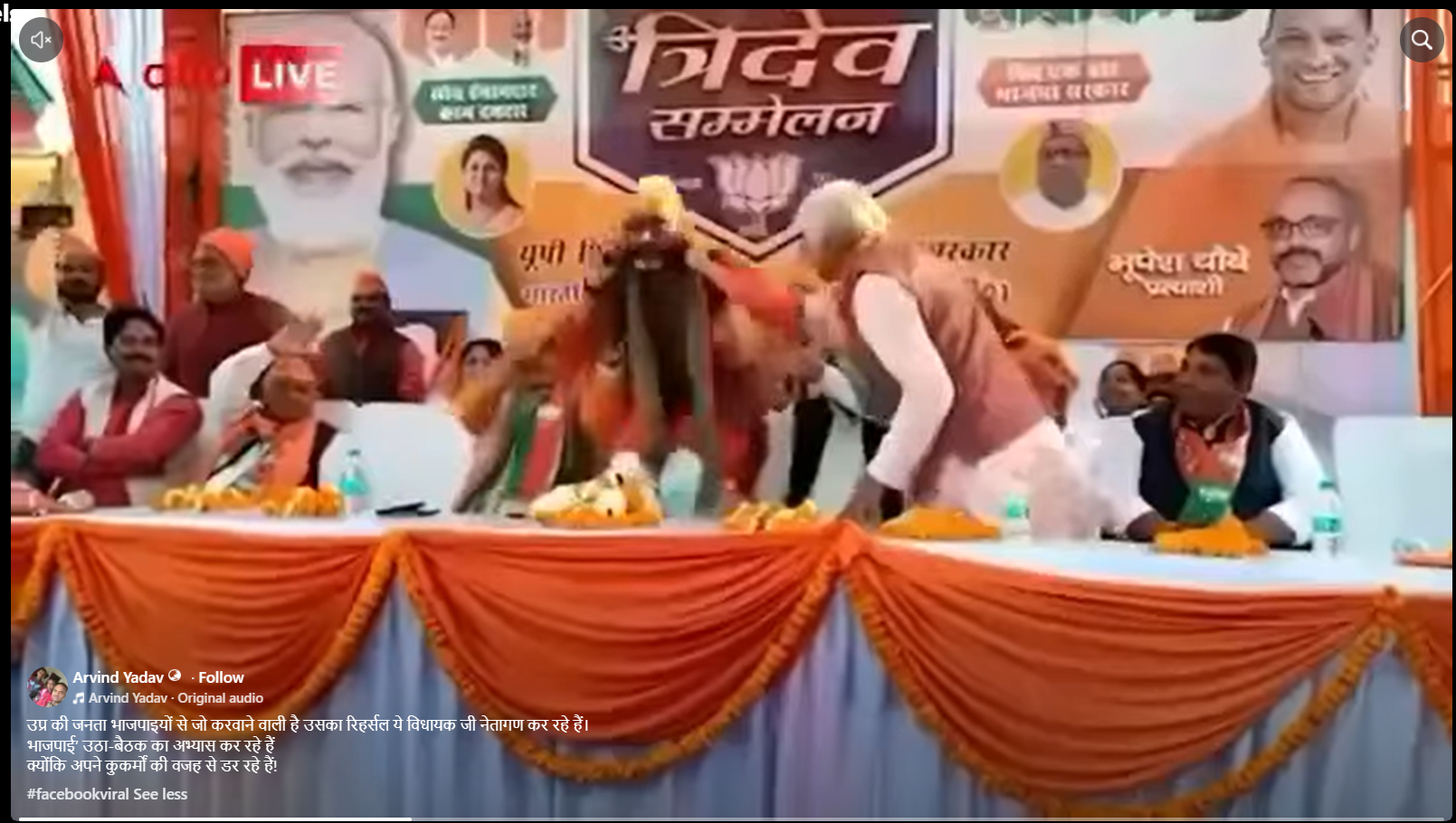
A user on Facebook shared the viral image on October 11, 2026, with the caption: “This is the bond submitted by coward Abhijeet Dipke in court for his release, and he says he will take to the streets again.” The link to the post, its archive link, and a screenshot are provided below.
https://www.facebook.com/reel/1806020163922780
Fact Check
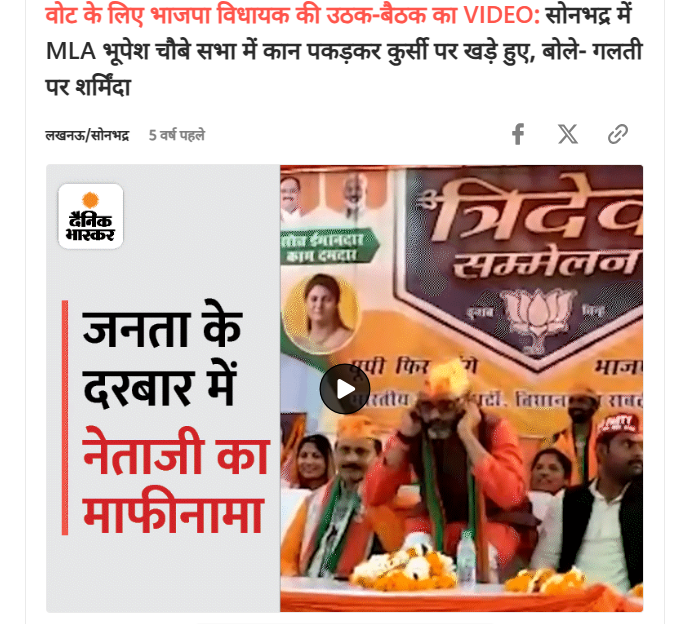
We conducted a reverse image search using keyframes from the viral video. During the search, we found a report published on the Dainik Bhaskar website on February 23, 2022, which featured the same video. According to the report, polling in Sonbhadra was scheduled for March 7 as part of the seventh phase of the Assembly elections. During the election campaign, Bhupesh Chaubey, the BJP MLA and candidate from the Robertsganj Assembly constituency, was seen adopting an unusual approach. He stood on a chair, held his ears and performed sit-ups on the chair, apologising to the public for the mistakes he had made over the previous five years.The link to the report and a screenshot are provided below.
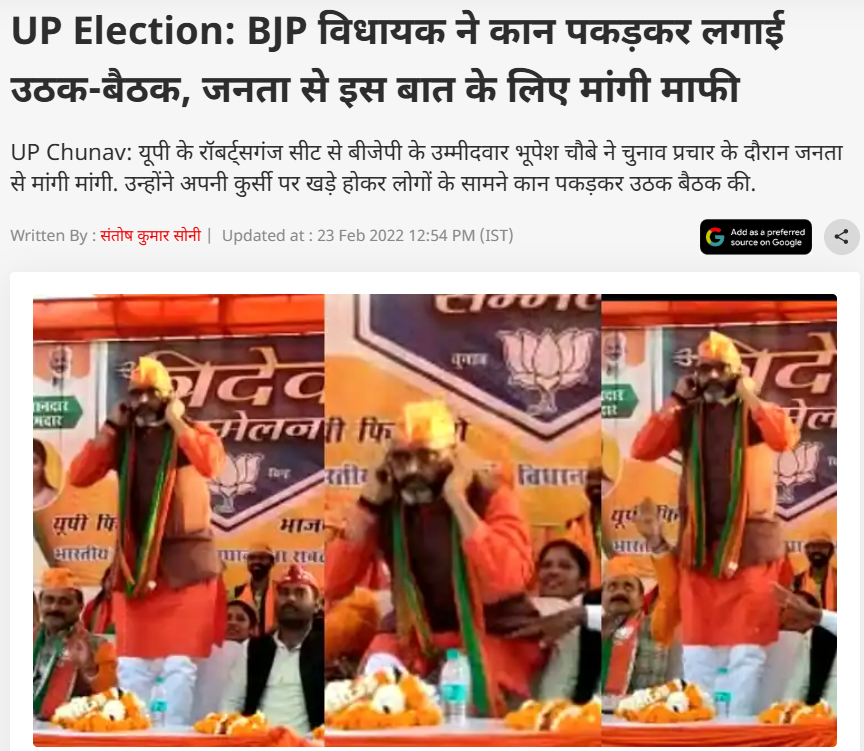
In the next stage of our research, we found a report published on ABP News’ Hindi website on February 25, 2022, which featured the viral video in a general context. We found the same video in this report as well. The link to the report and a screenshot are provided below.
Conclusion
Our research found that the viral video is not recent but dates back to February 2022, when Bhupesh Chaubey, the BJP MLA from the Robertsganj Assembly constituency in Sonbhadra, apologised to disgruntled party workers during a party workers' convention.
Executive Summary
Social media users are claiming that Indian Army Chief General Dhiraj Seth dances with soldiers’ wives and attended a dance competition organised by the Border Security Force Wives Welfare Association (BWWA). CyberPeace Research found no credible sources to substantiate the viral claim. Our research revealed that the viral image is related to his visit to Nepal. According to reports, he travelled to Nepal on his first foreign visit after taking charge of the Indian Army, where he was welcomed by senior Nepal Army officials. During the visit, he was also scheduled to receive the honorary rank of General of the Nepal Army. However, his photograph is being linked to a dance video from an event organised by the Central Armed Police Forces (CAPF), accompanied by objectionable claims about him. Our research found no credible evidence confirming that General Dhiraj Seth attended the event or was associated with the activities shown in the video. Therefore, linking his photograph from the Nepal visit to the dance video is misleading.
Claim:
It is being claimed on social media that Indian Army Chief General Dhiraj Seth attended a dance competition organised by the BSF Wives Welfare Association (BWWA), where he was impressed by a woman’s dance performance and asked other participants to follow her lead.
https://x.com/ThokaReturns/status/2110854323760693485
Fact Check
To verify the viral claim, we conducted a reverse image search using keyframes from the video. During this process, we found the video on Instagram. The text “BSF Wives Welfare Association” was visible on the backdrop behind the stage. However, there was no mention of Army Chief General Dhiraj Seth anywhere in the video.
https://www.instagram.com/reels/Ddl7oTEgnf7/
After reviewing these videos, our research found no evidence to substantiate the claim that General Dhiraj Seth attended an event organised by the BSF Wives Welfare Association or danced at the event. His photograph is being linked to the dance video, but no credible evidence supporting this claim was found.
During our research, we found the original video of Army Chief General Dhiraj Seth shared by ANI. According to the report, General Dhiraj Seth arrived in Nepal on a three-day official visit aimed at strengthening defence ties between the two countries.
https://www.instagram.com/reels/DcGxzLPExR5/
In the final stage of our research, we found a report on an Instagram account named ‘nepalinlast24hours’. According to the report, Indian Army Chief General Dhiraj Seth arrived in Kathmandu on his first foreign visit after taking command of the Indian Army on June 30, 2026. He was welcomed by senior Nepal Army officials at Tribhuvan International Airport.
The report stated that during his four-day visit, General Seth was scheduled to meet Nepal’s Prime Minister Balendra Shah and Nepal Army Chief Ashok Raj Sigdel. Additionally, he was scheduled to be conferred with the honorary rank of General of the Nepal Army at a special ceremony at Sheetal Niwas on Monday.This tradition between India and Nepal dates back to 1950. Under the arrangement, the army chiefs of both countries are conferred with honorary military ranks in each other’s armies.
https://www.instagram.com/p/DcGbgm0jUBH/?dlrf=MXFndzM5dGp4ZTh5OA%3D%3D
Conclusion
Our research found that the viral photograph of Indian Army Chief General Dhiraj Seth is related to his visit to Nepal. According to reports, he travelled to Nepal on his first foreign visit after taking command of the Indian Army, where he was welcomed by senior Nepal Army officials. During the visit, he was also scheduled to be conferred with the honorary rank of General of the Nepal Army.However, his photograph is being linked on social media to a dance video from an event organised by the Central Armed Police Forces (CAPF), accompanied by objectionable claims about him. Our research found no credible evidence confirming General Dhiraj Seth’s presence at the event or his association with the activities shown in the video. Therefore, linking his photograph from his Nepal visit to the dance video is misleading.
Executive Summary
A video is being shared on social media with the claim that a Bharatiya Janata Party (BJP) leader is doing sit-ups in front of the public. Some users are sharing the video as a recent incident, claiming that a BJP MLA performed sit-ups in front of the public. CyberPeace Research found the claim to be misleading. Our research revealed that the viral video is not recent but dates back to February 2022, when Bhupesh Chaubey, the BJP MLA from the Robertsganj Assembly constituency in Sonbhadra, apologised to disgruntled party workers during a party workers' convention.
Claim:
A user on Facebook shared the viral image on October 11, 2026, with the caption: “This is the bond submitted by coward Abhijeet Dipke in court for his release, and he says he will take to the streets again.” The link to the post, its archive link, and a screenshot are provided below.
https://www.facebook.com/reel/1806020163922780
Fact Check
We conducted a reverse image search using keyframes from the viral video. During the search, we found a report published on the Dainik Bhaskar website on February 23, 2022, which featured the same video. According to the report, polling in Sonbhadra was scheduled for March 7 as part of the seventh phase of the Assembly elections. During the election campaign, Bhupesh Chaubey, the BJP MLA and candidate from the Robertsganj Assembly constituency, was seen adopting an unusual approach. He stood on a chair, held his ears and performed sit-ups on the chair, apologising to the public for the mistakes he had made over the previous five years.The link to the report and a screenshot are provided below.
In the next stage of our research, we found a report published on ABP News’ Hindi website on February 25, 2022, which featured the viral video in a general context. We found the same video in this report as well. The link to the report and a screenshot are provided below.
Conclusion
Our research found that the viral video is not recent but dates back to February 2022, when Bhupesh Chaubey, the BJP MLA from the Robertsganj Assembly constituency in Sonbhadra, apologised to disgruntled party workers during a party workers' convention.

Executive Summary
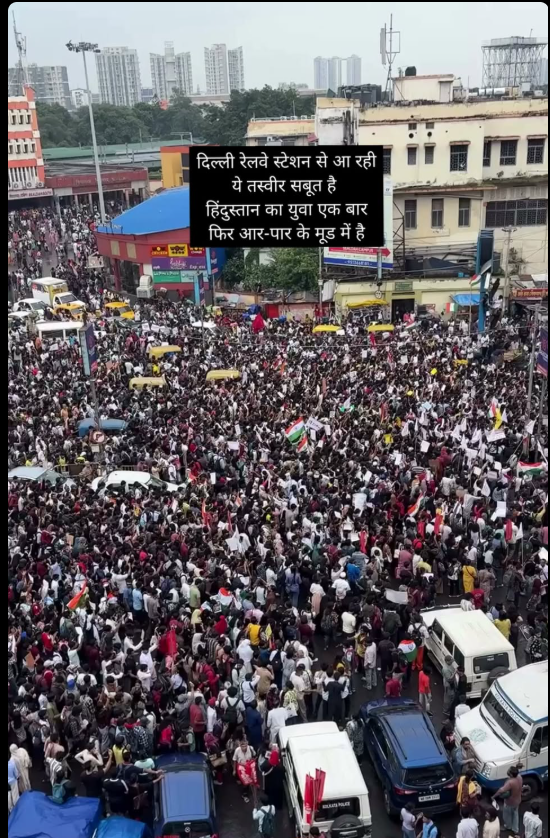
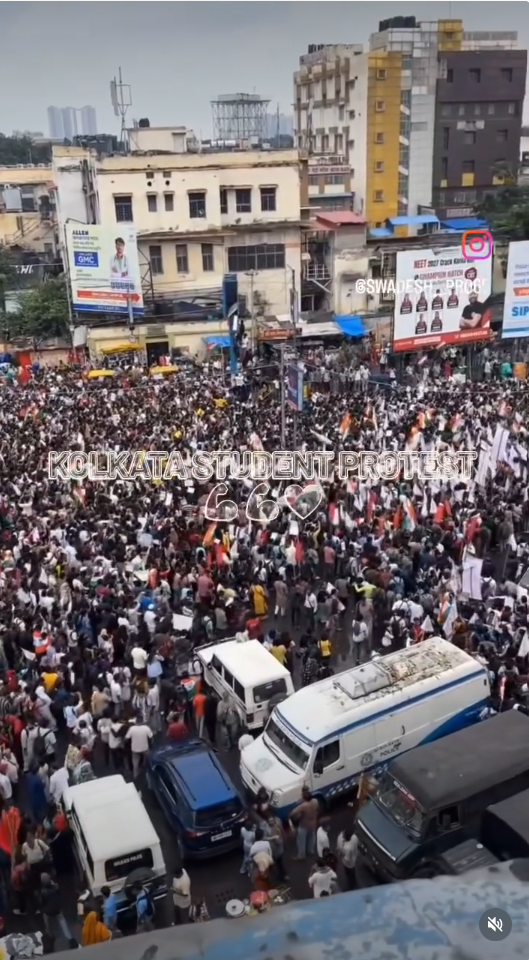
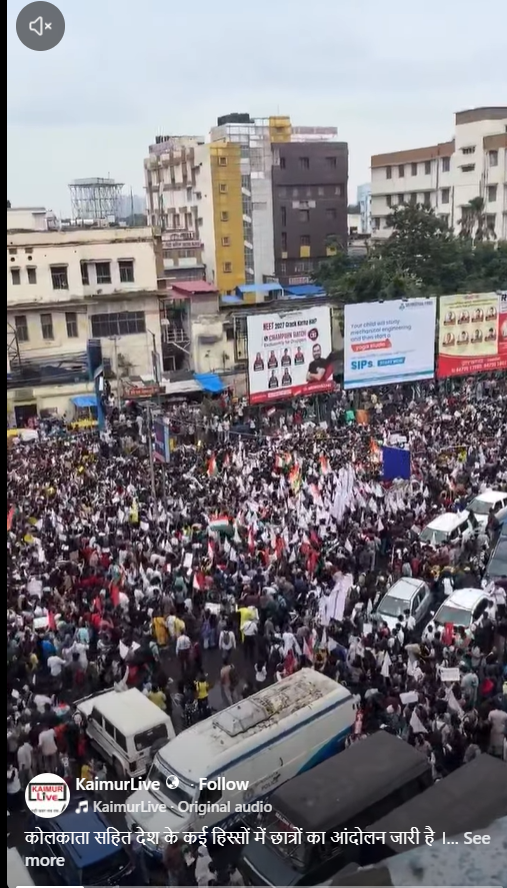
A video is going viral on social media in the name of the protests organised by the ‘Cockroach Janata Party’ (CJP) in Delhi on October 10 and 11. The video is being shared as footage from Delhi Railway Station, with the claim that the protests led to a massive traffic jam outside the station. CyberPeace Research conducted a detailed analysis of the viral video and found the claim to be misleading. The video is not from Delhi but from Sealdah Railway Station in Kolkata, where students held a protest in July 2026. The old video from that time is now being circulated in connection with the protests in Delhi, falsely linking the two events.
Claim
On October 10, 2026, the Facebook page ‘Atrangi Khabar’ shared a video with the following caption:“Massive Protest and Traffic Jam: Huge Crowd Gathers Outside Delhi Railway Station, Several Passengers Miss Their Trains! A massive traffic jam occurred outside Delhi Railway Station on Saturday due to a large-scale protest.
As a result, railway passengers faced severe difficulties reaching the station, and several passengers even missed their trains because of the traffic congestion. The video clearly shows a huge crowd filling the roads and an atmosphere of chaos all around.”
https://www.facebook.com/reel/2176543963241315/?s=single_unit
Fact Check
To verify the authenticity of the viral video, we first extracted several keyframes and searched them using Google Lens. We found that the video had been uploaded on multiple platforms on earlier dates. An Instagram account named ‘Faruk Biswas’ (faruk.biswas.581730) had shared the video on July 24, 2026, identifying it as footage of a student protest in Kolkata.
https://www.instagram.com/reels/DbLd3N3of7a/
During our search, we also found the same video on a Facebook page named ‘KaimurLive’. The caption accompanying the video read, “Student protests continue in Kolkata and several other parts of the country. Today, a massive gathering of students was seen on the streets of Kolkata. #NEETPaperLeak”
http://facebook.com/reel/2024661971511084
Conclusion
Our research found the viral post to be misleading. An old video from Sealdah Railway Station in Kolkata is being falsely shared as footage from Delhi Railway Station. The original video dates back to July 2026 and has no connection to the protests held in Delhi on October 10 and 11, 2026.

Executive Summary
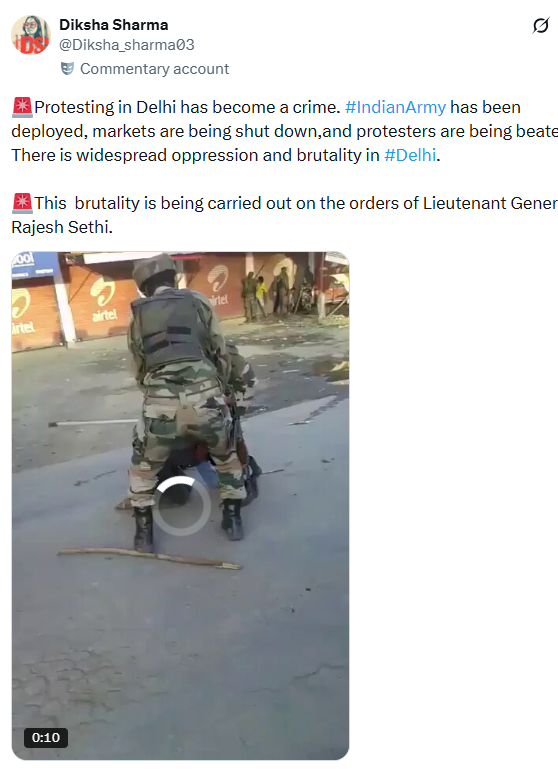
During the protests against Chief Election Commissioner (CEC) Gyanesh Kumar that began on October 10, the Delhi Police had detained thousands of people. Some of those detained alleged that the police assaulted them while they were in custody. CyberPeace Research found that the viral video dates back to 2017 and shows army personnel thrashing a student of Pulwama Degree College in Kashmir. The video has no connection with the protests held in Delhi.
Claim
A video is now going viral on social media showing two army personnel thrashing a man pinned to the ground. An X user shared the video with the caption, “Protesting in Delhi has become a crime. The Indian Army has been deployed, markets are being shut down, and protesters are being beaten. There is widespread oppression and brutality in Delhi. This brutality is being carried out on the orders of Lieutenant General Rajesh Sethi.”
https://x.com/Diksha_sharma03/status/2109891097283756401
Fact Check
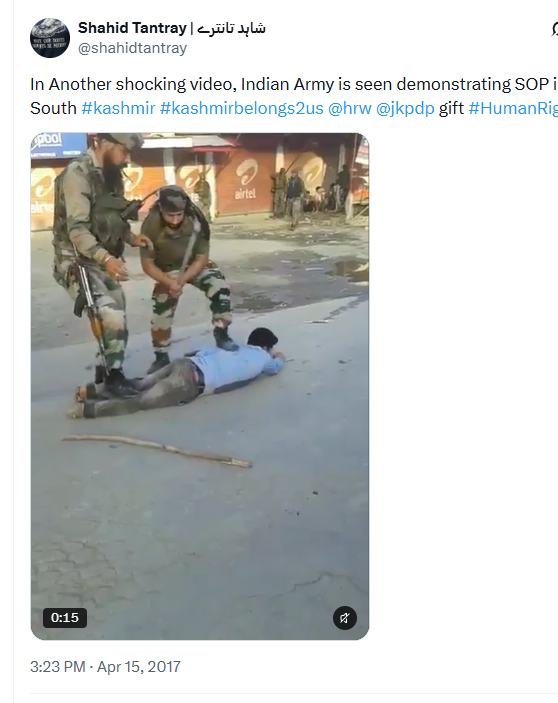
A reverse search of keyframes from the video led us to the account of journalist Shahid Tantray, who shared a longer version of the video on April 15, 2017. The video shows two more army personnel joining the two soldiers who were already thrashing the man. In his post, Tantray claimed that the man had been beaten by Indian Army personnel in South Kashmir.
https://x.com/shahidtantray/status/853184476272144384?s=20
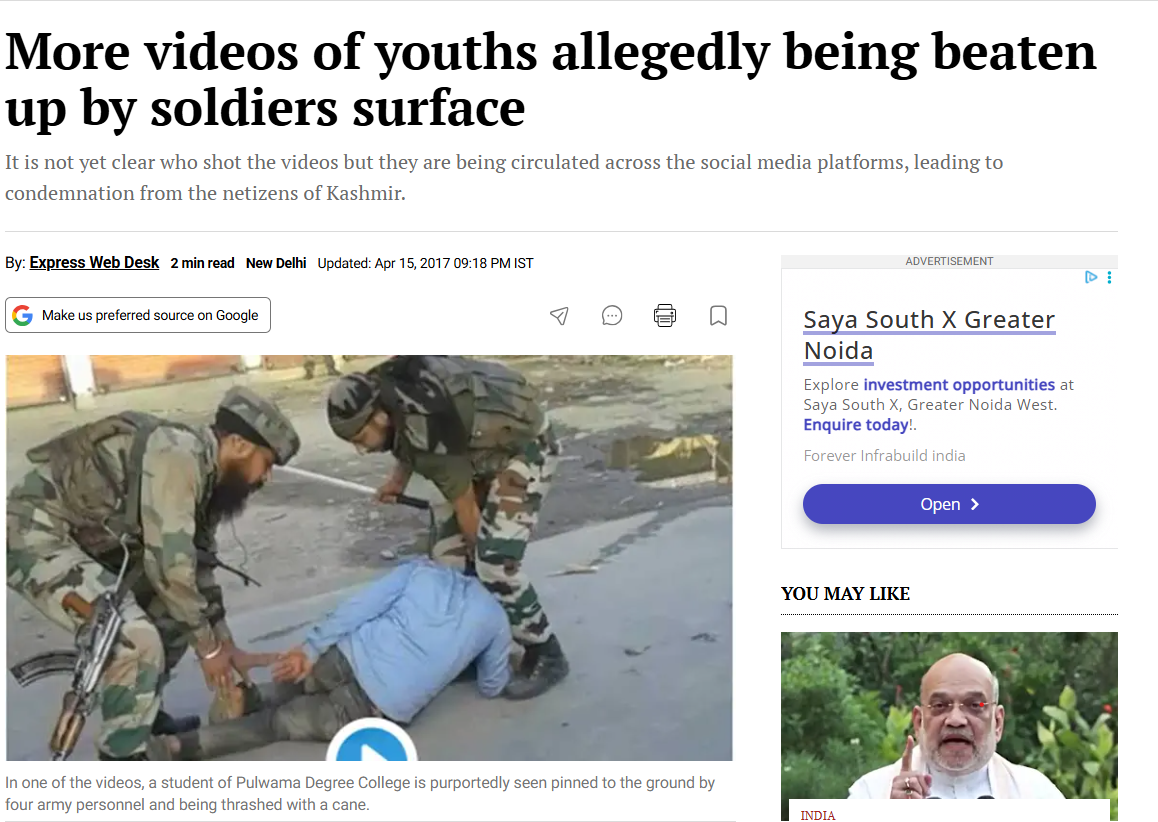
A report published by The Indian Express on April 15, 2017, featured a screenshot from the video. According to the report, four Indian Army personnel allegedly beat up a student of Pulwama Degree College in Jammu and Kashmir.
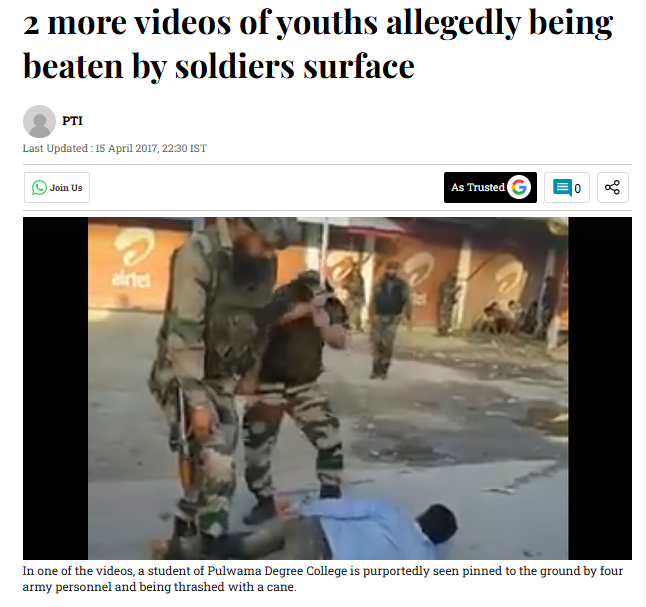
We also found a screenshot from the video in a report published by Deccan Herald on April 15, 2017. The report stated that the person beaten by the four army personnel was a student of Pulwama Degree College.
https://www.deccanherald.com/content/606516/2-more-videos-youths-allegedly.html
Conclusion
Our research found that the viral video dates back to 2017 and shows army personnel thrashing a student of Pulwama Degree College in Kashmir. The video has no connection with the protests held in Delhi.

Executive Summary
Amid reports of clashes between protesters and police at Jantar Mantar in Delhi, a video showing a car filled with khaki uniforms is going viral on social media. Several users have claimed that the video proves that goons were provided with khaki uniforms during the recent protests in Delhi. In one such video, a man claims that police personnel deployed on duty during the Jantar Mantar protests are not wearing nameplates. CyberPeace Research found that the video is from West Bengal and has no connection with the recent protests in Delhi.
Claim
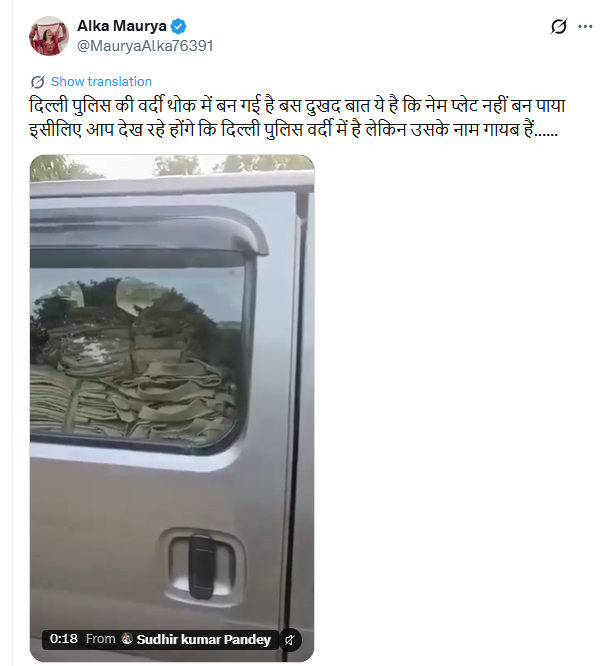
An X user shared the video with the caption, “Delhi Police uniforms have been manufactured in bulk. The only unfortunate thing is that the nameplates could not be made. That is why you may have noticed that the personnel are wearing Delhi Police uniforms but their names are missing.” Online magazine Saamna also shared the video, claiming it was from Delhi.
https://x.com/MauryaAlka76391/status/2109322470411128921
https://ghostarchive.org/archive/hWCjI
Fact Check
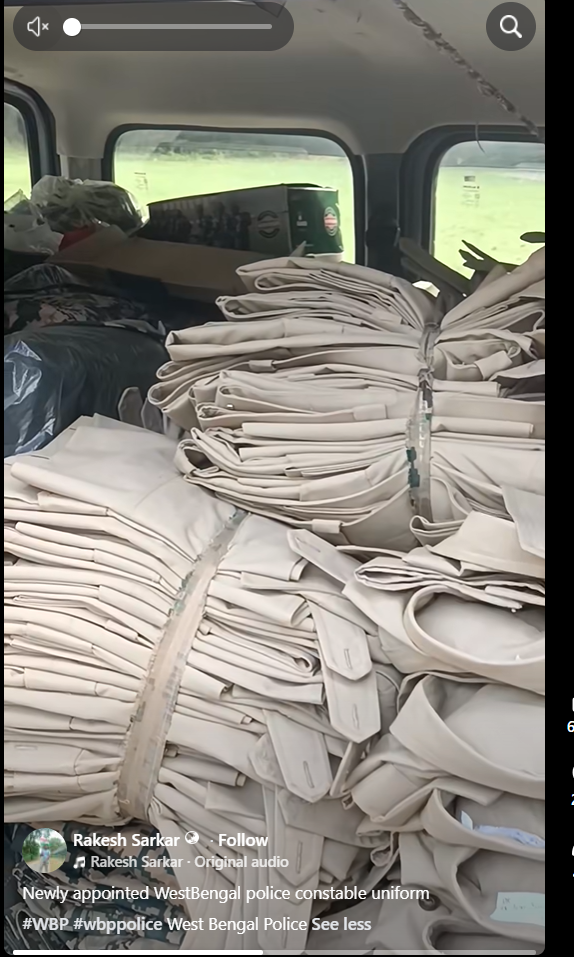
We noticed that people in the viral video could be heard speaking Bengali, which led us to suspect that the footage might be from West Bengal. A reverse search of its keyframes led us to a post shared by a Facebook user named Rakesh Sarkar on October 9. The post identified the location as Bagdah in West Bengal’s North 24 Parganas district. The post included hashtags such as ‘#WBP’, ‘#wbppolice’ and ‘West Bengal Police’. In the comments section, Sarkar stated that the uniforms shown in the video were meant for newly recruited personnel in the West Bengal Police.
https://www.facebook.com/reel/1681910233366141
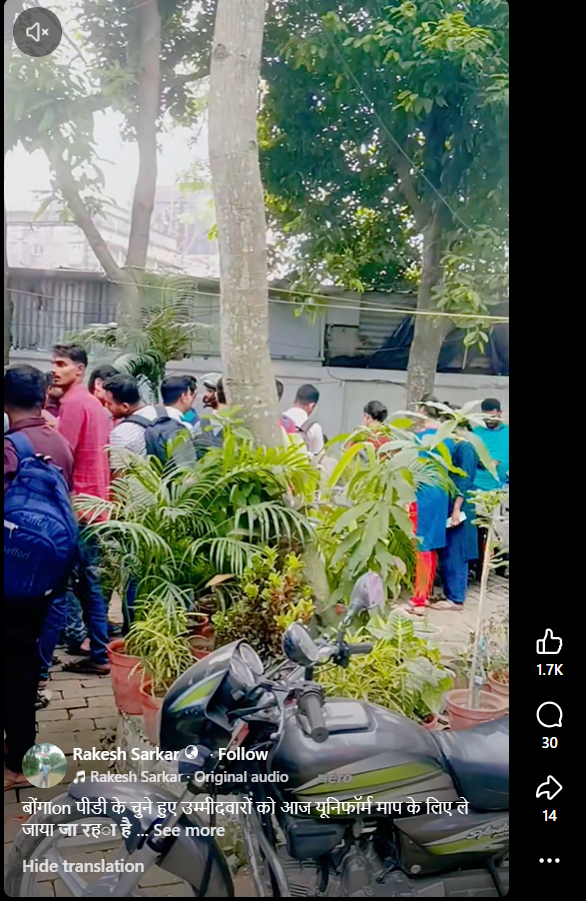
The cover photo on Rakesh Sarkar’s Facebook timeline features the West Bengal Police logo. According to the information provided in his bio, Sarkar lives in Bangaon, a town in the North 24 Parganas district. On October 1, 2026, he shared a video showing several people standing in a queue while a man asked them to write something in a register one by one. The Bengali caption accompanying the post translates to: “Today, uniform measurements were taken for the selected candidates of the Bangaon Police Department.”
https://www.facebook.com/reel/1399250945143485
Conclusion
Our research found that the viral video is from West Bengal and has no connection with the recent protests in Delhi.

Executive Summary
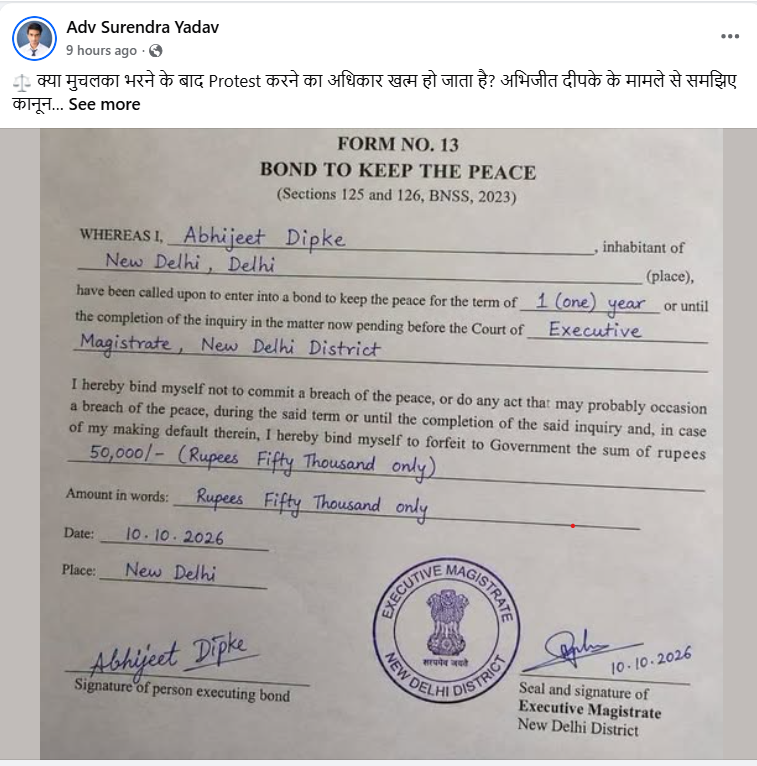
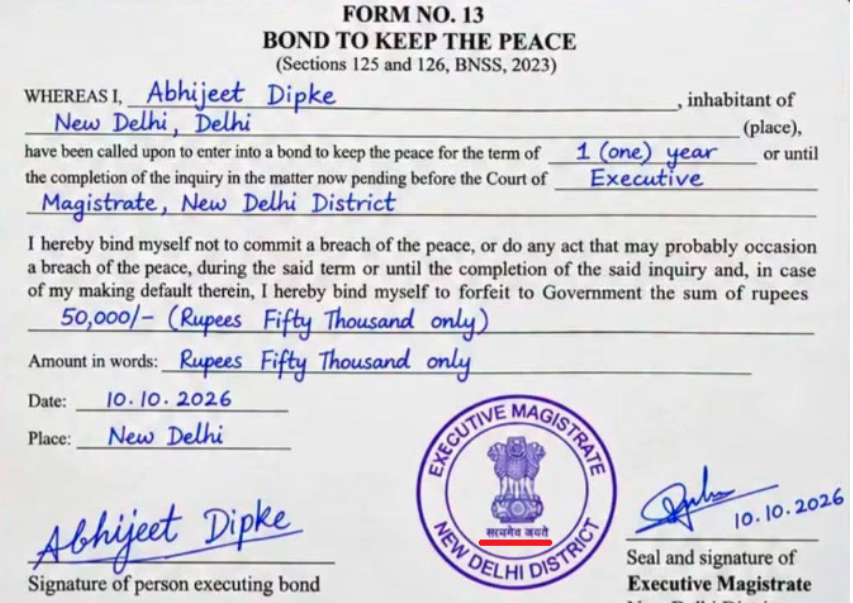
Amid the ongoing protests in Delhi, an image of a bond paper is being widely shared on social media. The image is being shared with the claim that it shows the bond allegedly submitted in court by Cockroach Janata Party (CJP) founder Abhijeet Dipke for his release. The purported bond mentions that Abhijeet Dipke would not participate in any protest in the future and that he had furnished a bail bond of Rs 50,000. CyberPeace Research found that the image of the bond paper being shared in connection with Abhijeet Dipke is not genuine, but was created using AI.
Claim
Amid the ongoing protests in Delhi, an image of a bond paper is being widely shared on social media. It is being claimed that the image shows the bond allegedly submitted in court by Cockroach Janata Party (CJP) founder Abhijeet Dipke for his release. The purported bond mentions that Abhijeet Dipke would not participate in any protest in the future and that he had furnished a bail bond of Rs 50,000.
https://www.facebook.com/photo/?fbid=122133387387390171&set=a.122113963941390171
https://ghostarchive.org/archive/C8SDb
Fact Check
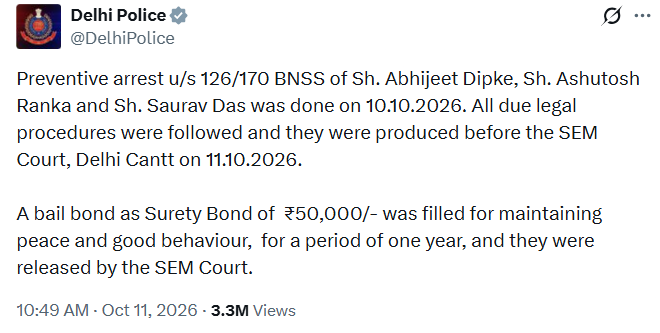
In a post shared on X, the Delhi Police stated that Abhijeet Dipke, Ashutosh Ranka and Saurav Das were taken into preventive custody on October 10, 2026, under Sections 126/170 of the Bharatiya Nagarik Suraksha Sanhita (BNSS). According to the police, all legal procedures were followed, and the three were produced before the SEM court at Delhi Cantt on October 11, 2026. In its post, the Delhi Police also stated that a bail bond (surety bond) of ₹50,000 was furnished for a period of one year to maintain peace and good behaviour.
https://x.com/DelhiPolice/status/2109151954438136069
To verify the viral image of the bond paper, we examined the Delhi Police’s social media handles and searched other media reports. However, we did not find the viral image of the bond paper in any article or X post published by a credible source. We then closely examined the viral bond paper. During our analysis, we noticed a clear error. The spelling of “Satyamev Jayate” on the seal affixed to the document is incorrect. Based on this error, we suspected that the purported image of the bond paper being circulated on social media may have been created using AI.
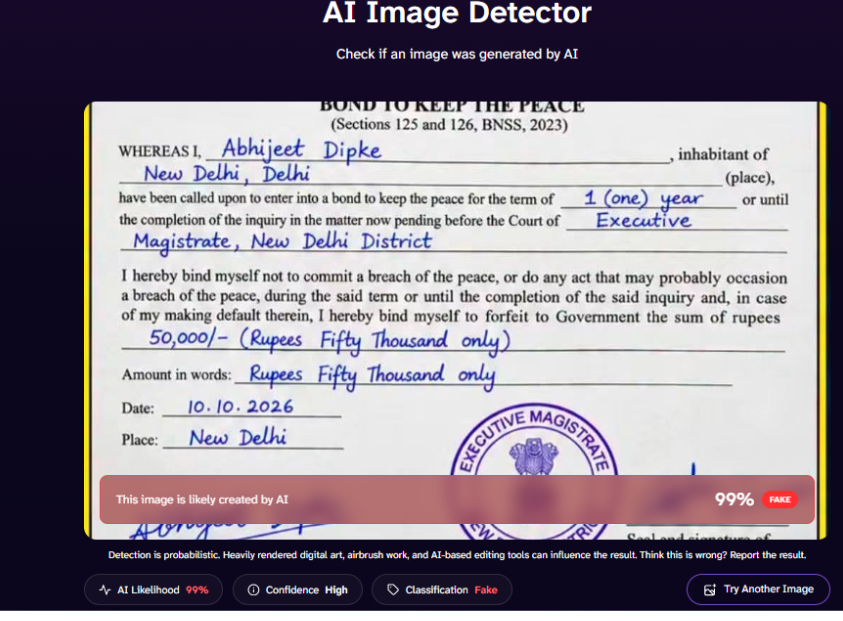
As the next step in our research, we used AI detection tools to analyse the viral image. We scanned the image using Sightengine, which indicated that the viral image is 99% likely to be AI-generated.

DeepAI, in its analysis, estimated a 99% likelihood that the viral bond paper was created using AI.
Conclusion
Our research found that the image of the bond paper being shared in connection with Abhijeet Dipke is not genuine but was created using AI.
Executive Summary
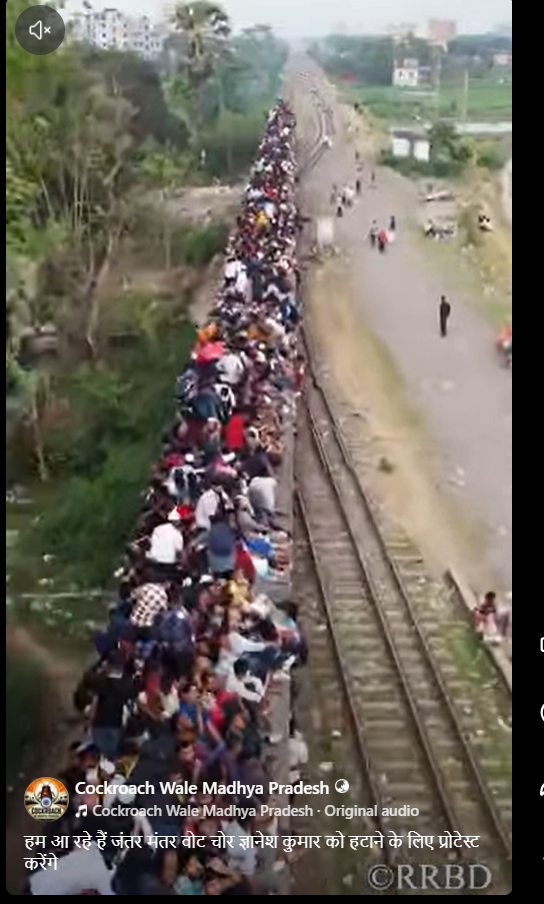
The Cockroach Janta Party (CJP) announced a protest at Jantar Mantar in Delhi on October 10, seeking the removal of Chief Election Commissioner Gyanesh Kumar. Media reports claimed that more than 250 trains, including local services bound for Delhi, had been cancelled. There were also claims that people planning to join the demonstration were being detained or kept under house arrest, while internet services at the protest venue had been suspended. However, CyberPeace Research found that the viral video was unrelated to the October 10 protest. Our research revealed that the footage had already been circulating on social media since September 5, well before the planned demonstration. Therefore, the video does not establish that it shows the October 10 protest.
Claim:
A Facebook user posted the video alongside a caption stating that they were heading to Jantar Mantar to demand the removal of Chief Election Commissioner Gyanesh Kumar, whom the post accused of stealing votes. The caption was originally written in Hindi. An archived version of the post is available below.
https://www.facebook.com/reel/1098834383046385
Fact-check
A reverse image search revealed that the viral video was shared on Facebook by a user named ‘RRBD’ on September 5. The account has more than 636,000 followers. The video was posted with the caption, “Roof status: FULL!”
https://www.facebook.com/reel/1720670926511274
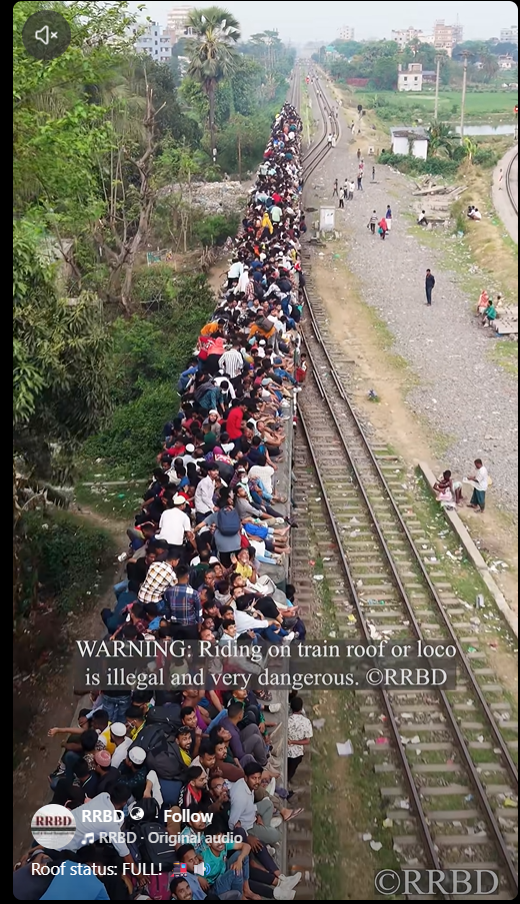
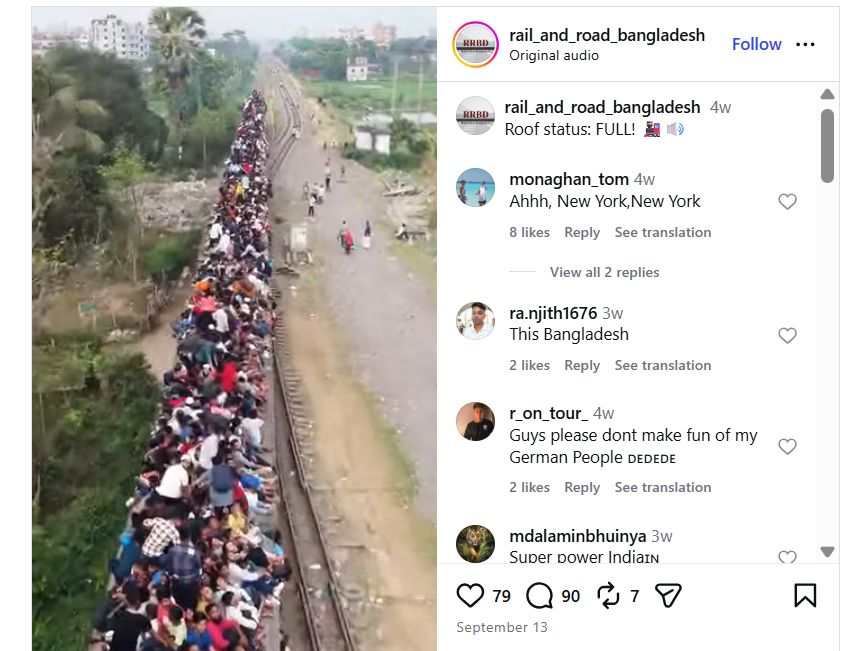
The Facebook account’s description also links to an Instagram account named ‘rail_and_road_bangladesh’, which has over 307,000 followers. The video was shared on this Instagram account on September 13 with the same caption as the Facebook post.
https://www.instagram.com/rail_and_road_bangladesh/reel/DdN6Dx9CVMH/
Conclusion
Our research found that the viral video is unrelated to the protest held at Jantar Mantar in Delhi on October 10. The video has been circulating on social media since September 5 and predates the protest. Therefore, the viral claim is false.

Executive Summary
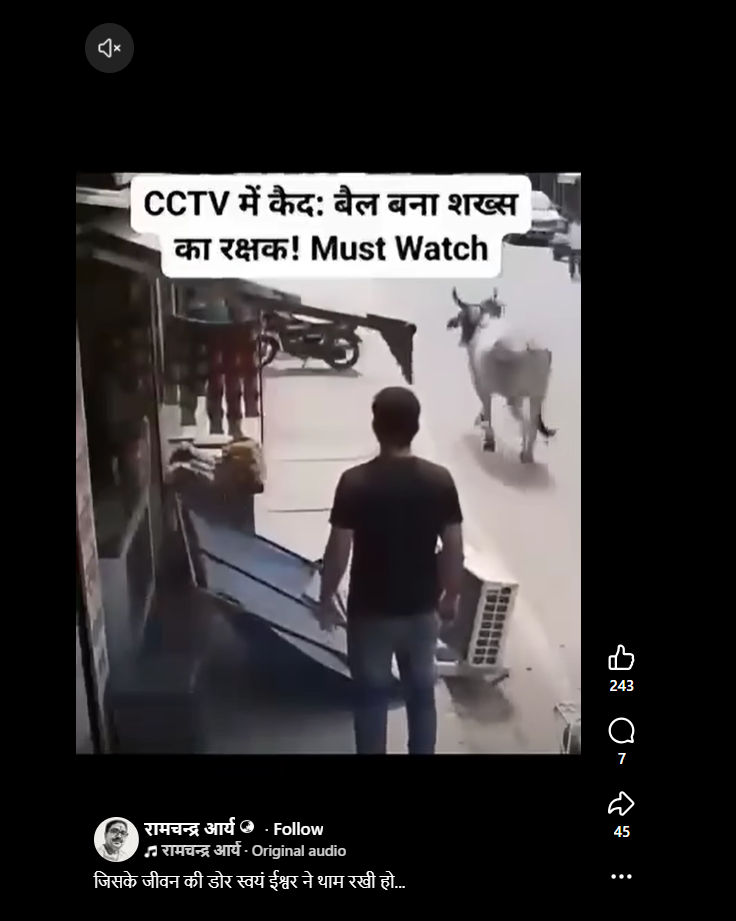
A video circulating on social media shows a bull pushing a young man who appears to be engrossed in looking at his mobile phone. Users sharing the video claim that the CCTV footage captured an incident in which the bull pushed the man and saved him from a mishap. CyberPeace Research found the viral claim to be false. Our research found that the viral video is AI-generated and is being shared with a misleading claim.
Claim
A Facebook user shared the viral video with the caption, “The one whose life is being protected by God Himself.” The post link, archive link and screenshot are provided below.
https://www.facebook.com/reel/2568861153629568
Fact-check
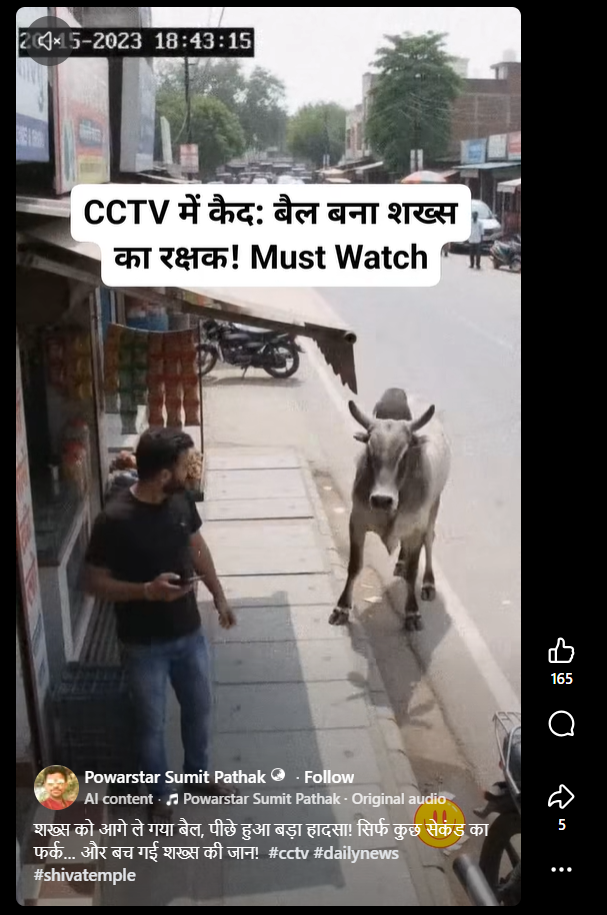
To verify the viral claim, we conducted a Google Lens search using keyframes from the video. During the search, we found the same video on the Facebook page of user ‘Powarstar Sumit Pathak’. The video, uploaded on October 4, 2026, carries an ‘AI content’ label.
https://www.facebook.com/reel/1473526454600527
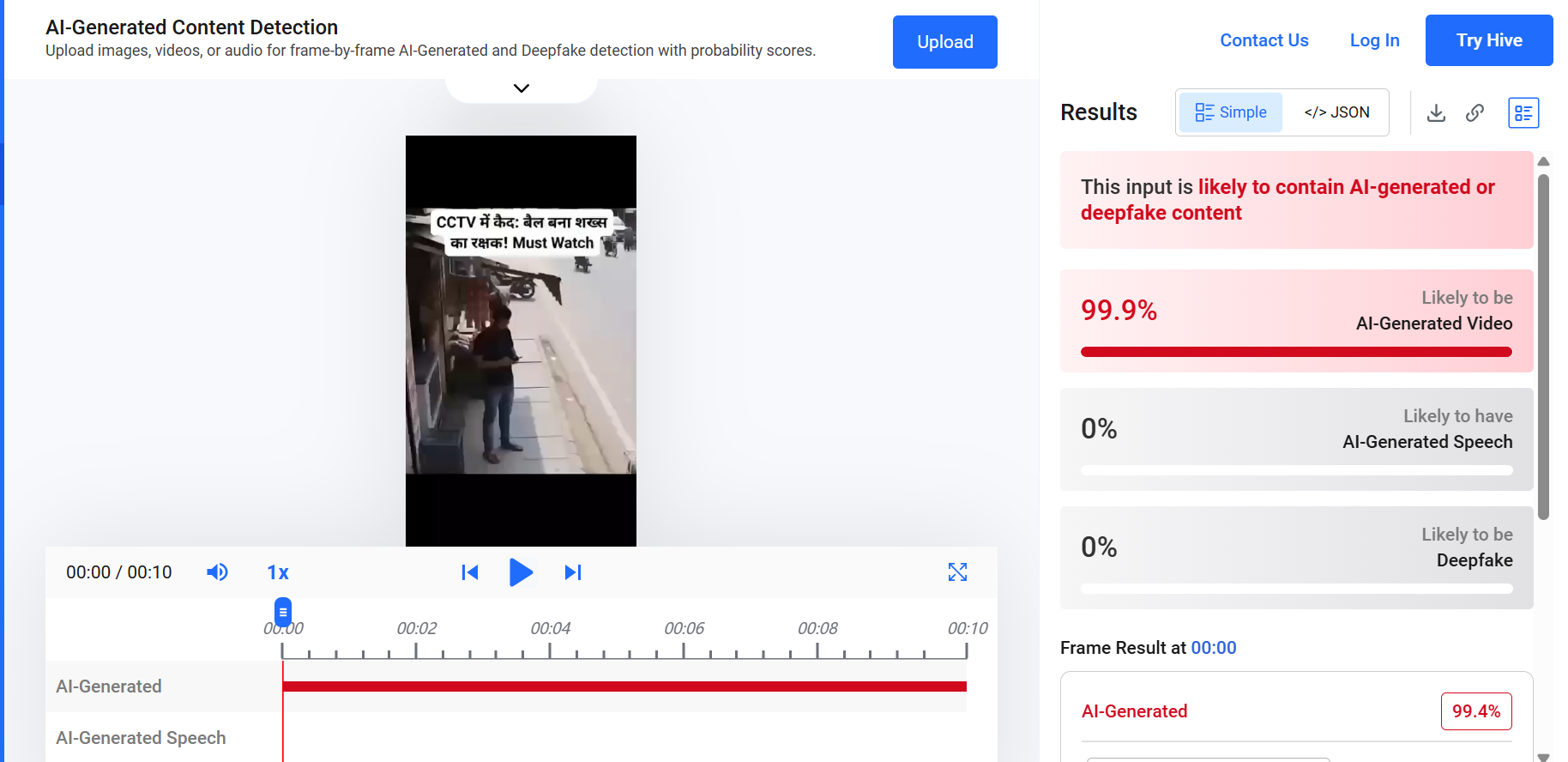
As part of our further research, we scanned the viral video using the AI detection tool Hive Moderation. The results indicated that the video is 99% likely to be AI-generated.
Conclusion
Our research found that the viral video is AI-generated and is being shared with a misleading claim. The video does not show an actual incident involving a bull saving a young man, as claimed in social media posts. The viral claim is therefore false.
Executive Summary:
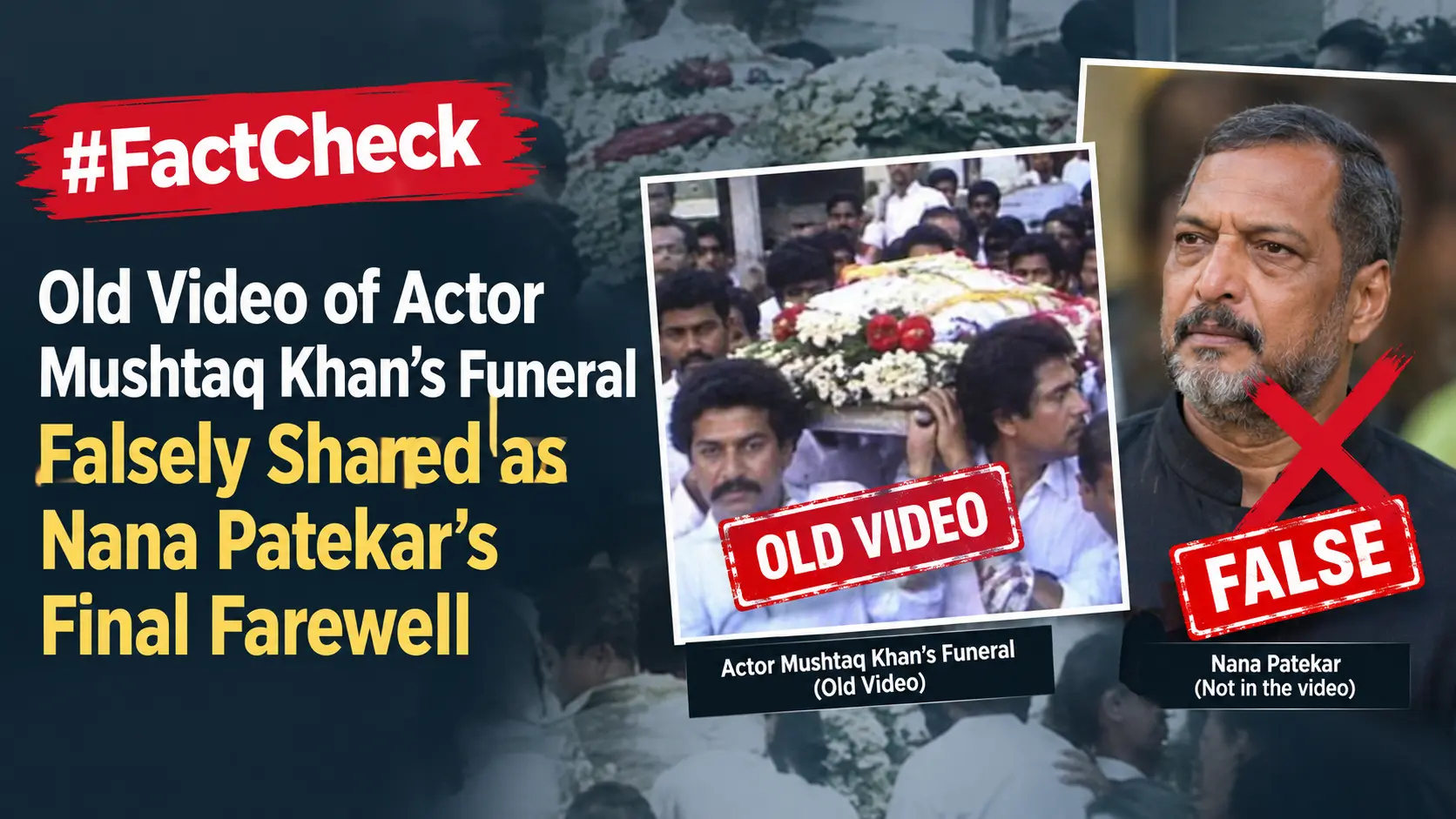
Veteran Indian actor Nana Patekar reportedly passed away early on October 8, 2026, at his residence in Goa. The 75-year-old actor allegedly suffered a sudden cardiac arrest at his home and was rushed to Manipal Hospital. According to reports, doctors attempted to revive him by administering CPR for around 45 minutes, but he was declared dead at 5:20 a.m. His family reportedly said that his last rites would be performed the same day at his farmhouse near Pune. Meanwhile, a social media post is circulating with the claim that the video shows Nana Patekar’s final farewell. CyberPeace Research found that the video actually shows the funeral of actor Mushtaq Khan.
Claim:
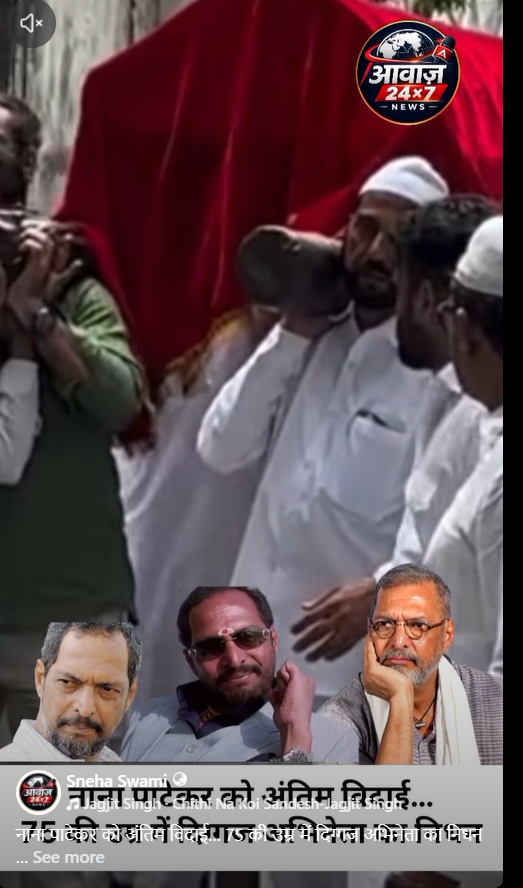
A Facebook user shared the viral video with the caption: “Final farewell to Nana Patekar… Veteran actor passes away at the age of 75.”
https://www.facebook.com/reel/1848305192964558
Fact Check:
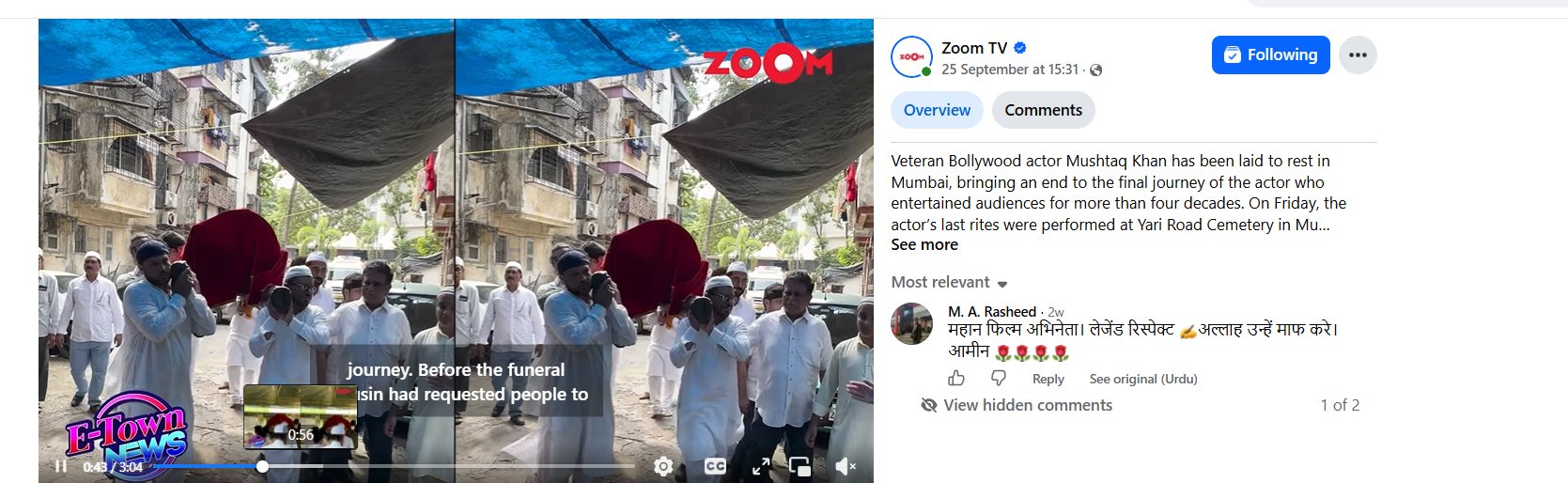
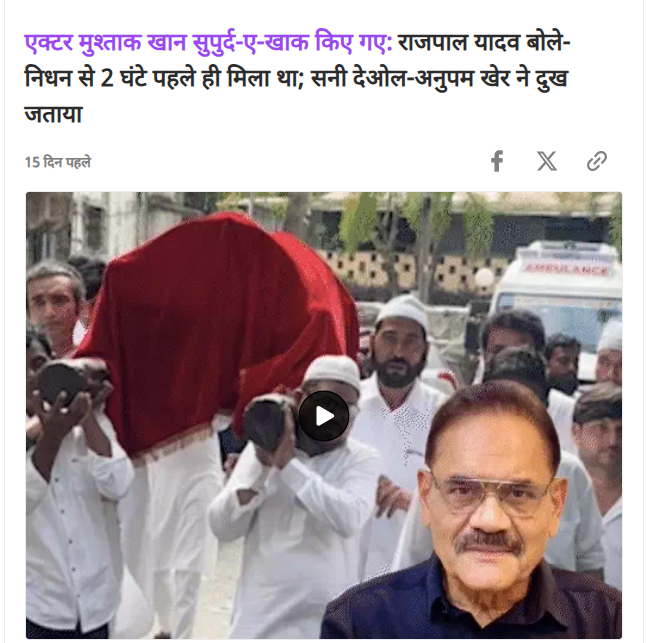
To verify the authenticity of the video, we conducted a reverse image search of its keyframes using Google Lens. During the search, we found a video report uploaded to Zoom TV’s Facebook page on September 25, 2026, which contained visuals from the viral clip.The report stated that veteran Bollywood actor Mushtaq Khan had been laid to rest in Mumbai, marking the end of the final journey of an actor who had entertained audiences for more than four decades. According to the report, the actor’s funeral rites were performed at the Yari Road cemetery in Mumbai after Friday prayers. During the funeral procession, his son and other family members were seen carrying his mortal remains.It is worth noting that actor Mushtaq Khan passed away on September 24 following a prolonged illness.
https://www.facebook.com/watch/?v=1922049222512573
During a search using relevant keywords, we found a report published on the Dainik Bhaskar website on September 25, 2026. The report also featured visuals from the video being shared with the claim that it shows Nana Patekar’s final farewell.The report stated that the video shows the funeral of actor Mushtaq Khan, who was laid to rest at the Yari Road cemetery after Friday prayers on September 25.
Conclusion:
The evidence gathered during our research establishes that the viral video does not show the final farewell of actor Nana Patekar. Instead, the video shows the funeral procession of actor Mushtaq Khan, who passed away on September 24, 2026.

Executive Summary:
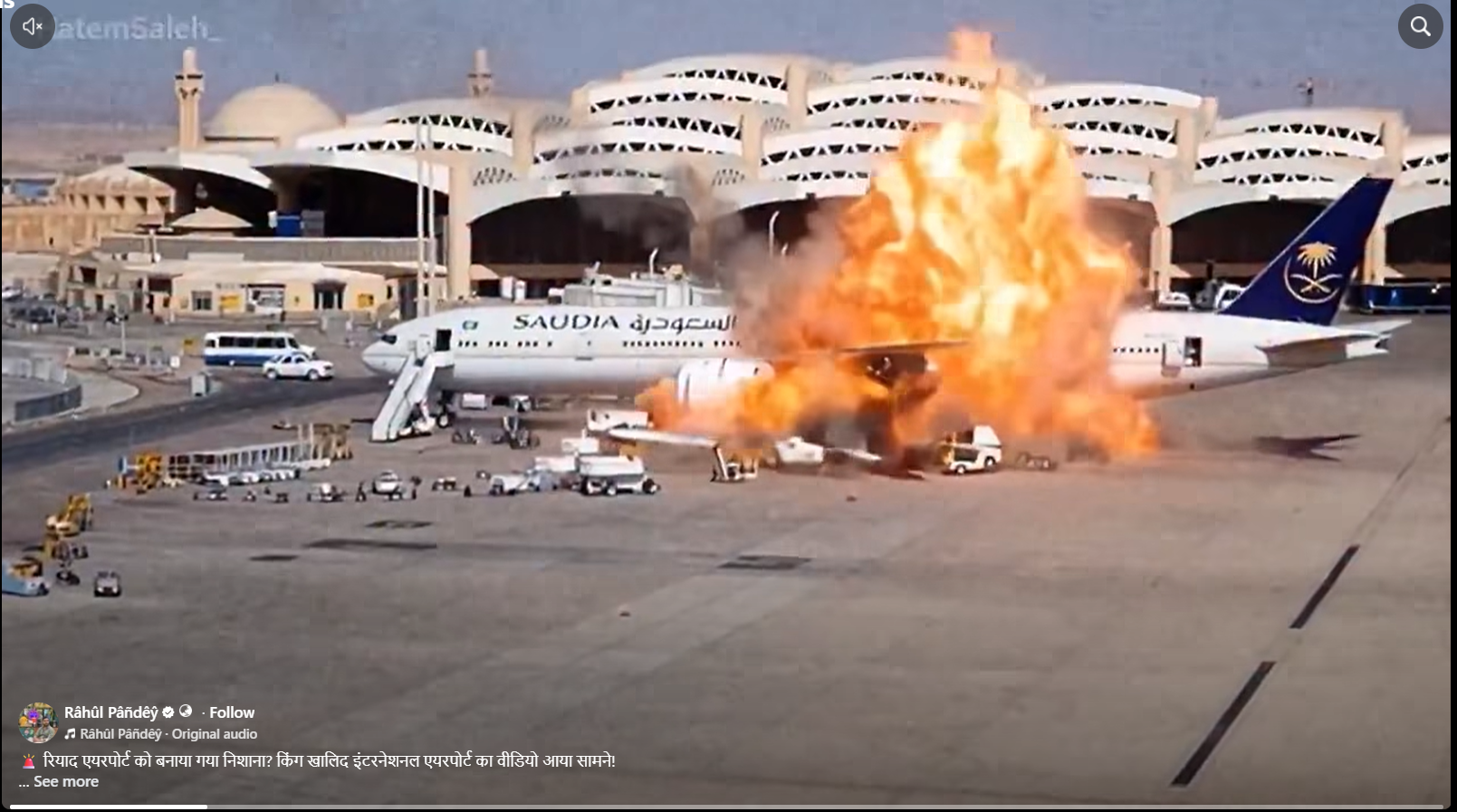
A missile attack was reportedly carried out by Yemen-based Houthi militants at King Khalid International Airport in Riyadh, the capital of Saudi Arabia, on October 8, damaging an aircraft at the airport. Following the attack, a video has gone viral on social media. The video is being shared with the claim that it shows footage from the time of the Houthi attack. CyberPeace Research found that the video is not authentic. It was created using AI with the help of an image from 2016.
Claim:
A Facebook user shared the video with the caption: “New video footage has emerged showing the moments when King Khalid International Airport in Riyadh, the capital of Saudi Arabia, was targeted.”
https://www.facebook.com/reel/1482618257069151
Fact Check:
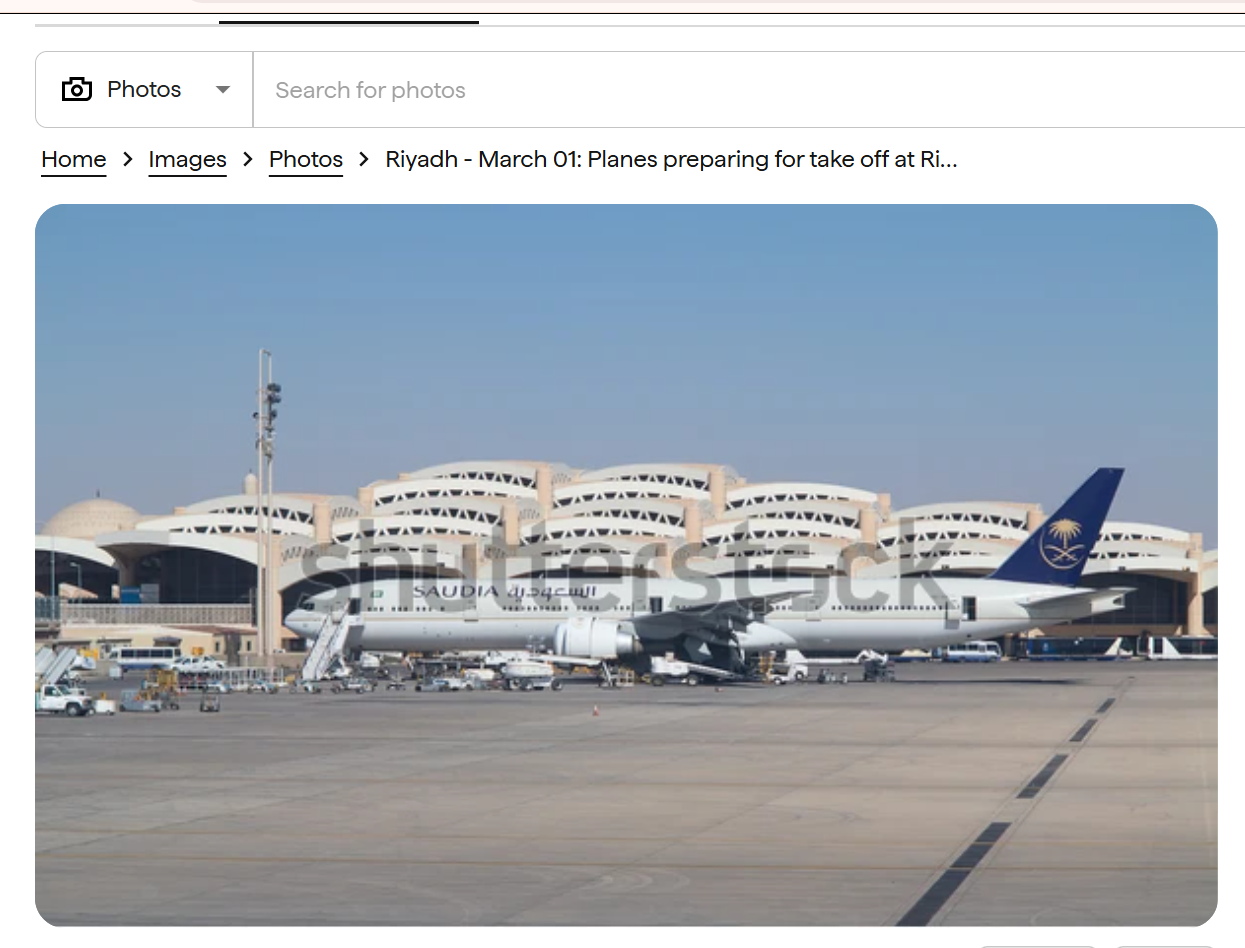
To verify the viral claim, we conducted a Google keyword search using relevant terms. However, we did not find any credible media reports corroborating the claim.A reverse image search led us to a similar image on the stock photo website Shutterstock. According to the listing, the image was taken on March 1, 2016, at King Khalid International Airport in Riyadh, showing an aircraft preparing for takeoff. A close examination of the viral video makes it clear that the same image was used to create the viral video.
Upon closely examining the viral video, we suspected that it could be AI-generated. We then scanned the viral video using the AI detection tool Undetectable AI. According to the results, the video was found to be 85% AI-generated.

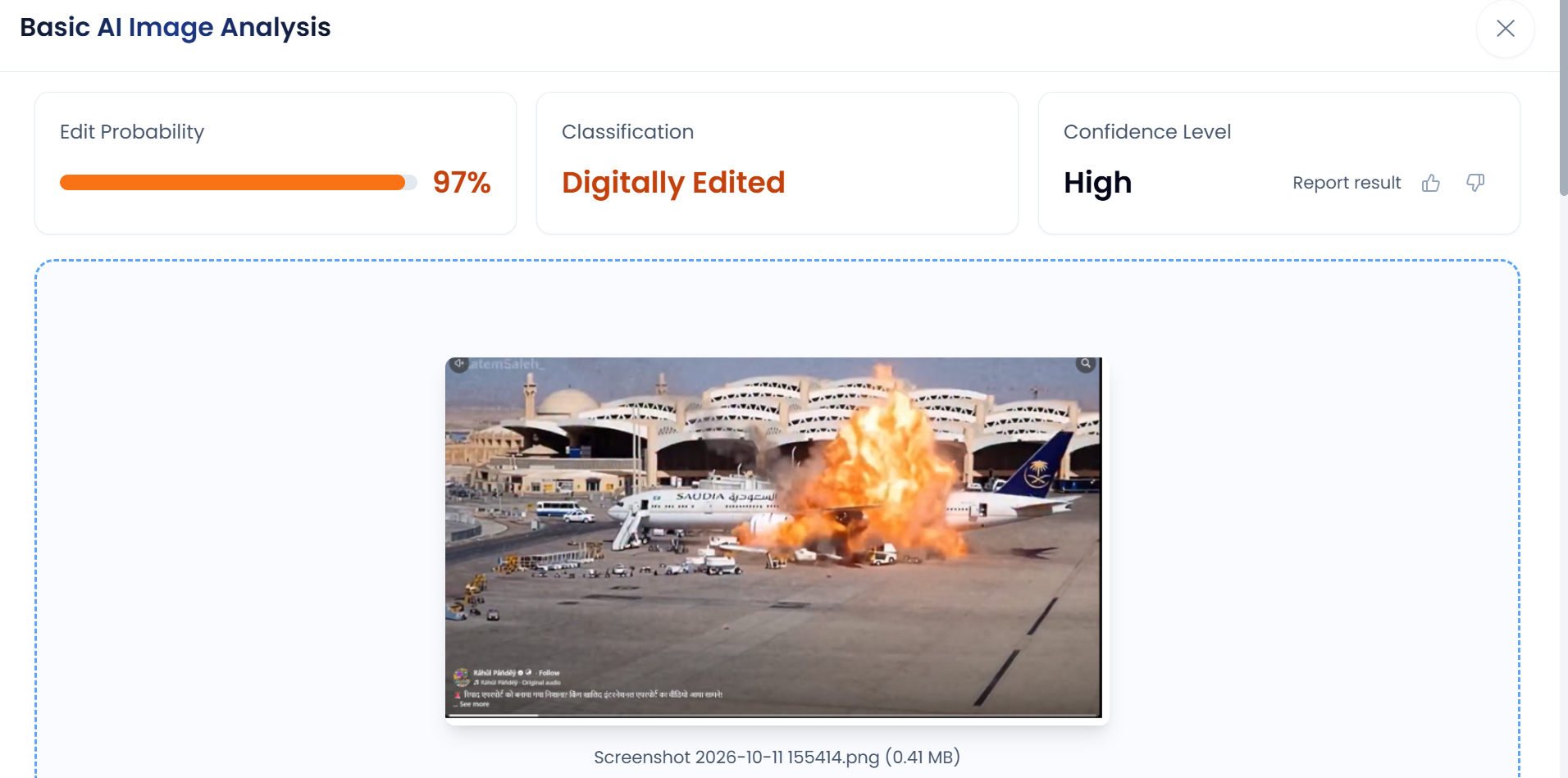
As part of our further research, we scanned the viral image using TruthScan. According to the results, the image was found to be 97% AI-generated.
Conclusion:
CyberPeace Research found the viral claim to be misleading. The video being shared as footage of the alleged Houthi missile attack on King Khalid International Airport in Riyadh is not authentic. Our research revealed that the video was AI-generated using a photograph taken at the airport on March 1, 2016. AI detection tools further indicated that the video and the image showed strong signs of being AI-generated.

Executive Summary
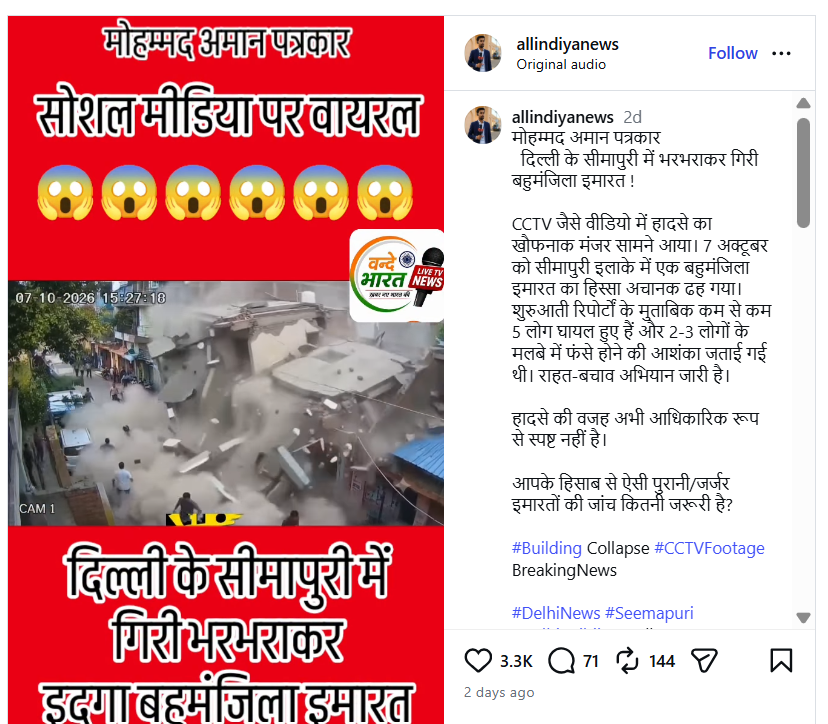
A four-storey building collapsed in Seemapuri, Delhi, on October 7, 2026, killing five people. A video of a building collapsing is being widely shared on social media as CCTV footage of the incident. Some users are claiming that the video shows the building collapse in Seemapuri. CyberPeace Research found that the viral video was AI-generated. However, it is true that five people died after a building collapsed in Seemapuri, Delhi.
Claim
On October 8, 2026, Instagram user ‘allindiyanews’ posted a video (archive link) with the caption: “A multi-storey building collapsed in Seemapuri, Delhi. The horrifying moment of the accident has emerged in a CCTV-like video. On October 7, a portion of a multi-storey building suddenly collapsed in the Seemapuri area. According to initial reports, at least five people were injured, while two to three people were feared trapped under the debris. Rescue operations are underway. The cause of the incident has not yet been officially established. In your opinion, how important is it to inspect old and dilapidated buildings?”
https://www.instagram.com/allindiyanews/reel/DePIdTApNZw
Fact Check:
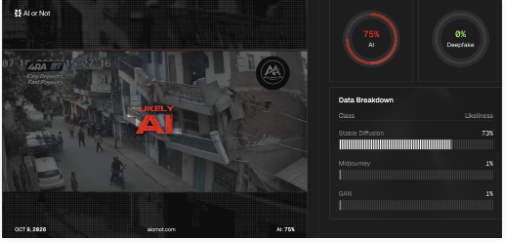
During our research, we closely examined the visuals and movements in the viral video and noticed several inconsistencies. The timer displayed in the video jumps from 15:27:16 to 15:27:12 and then changes to 15:27:18. Additionally, a motorcyclist who appears to be moving forward suddenly starts moving backward as the building collapses. These visual inconsistencies raised suspicions that the video could be AI-generated. We subsequently scanned the viral video using the AI detection tool AI or Not. According to the results, the video was identified as AI-generated.
Conclusion:
CyberPeace Research found that the viral video is AI-generated and does not show the actual building collapse in Seemapuri, Delhi. While the video is fabricated, the incident itself is real, as five people lost their lives in the collapse of a four-storey building in the area.
Executive Summary
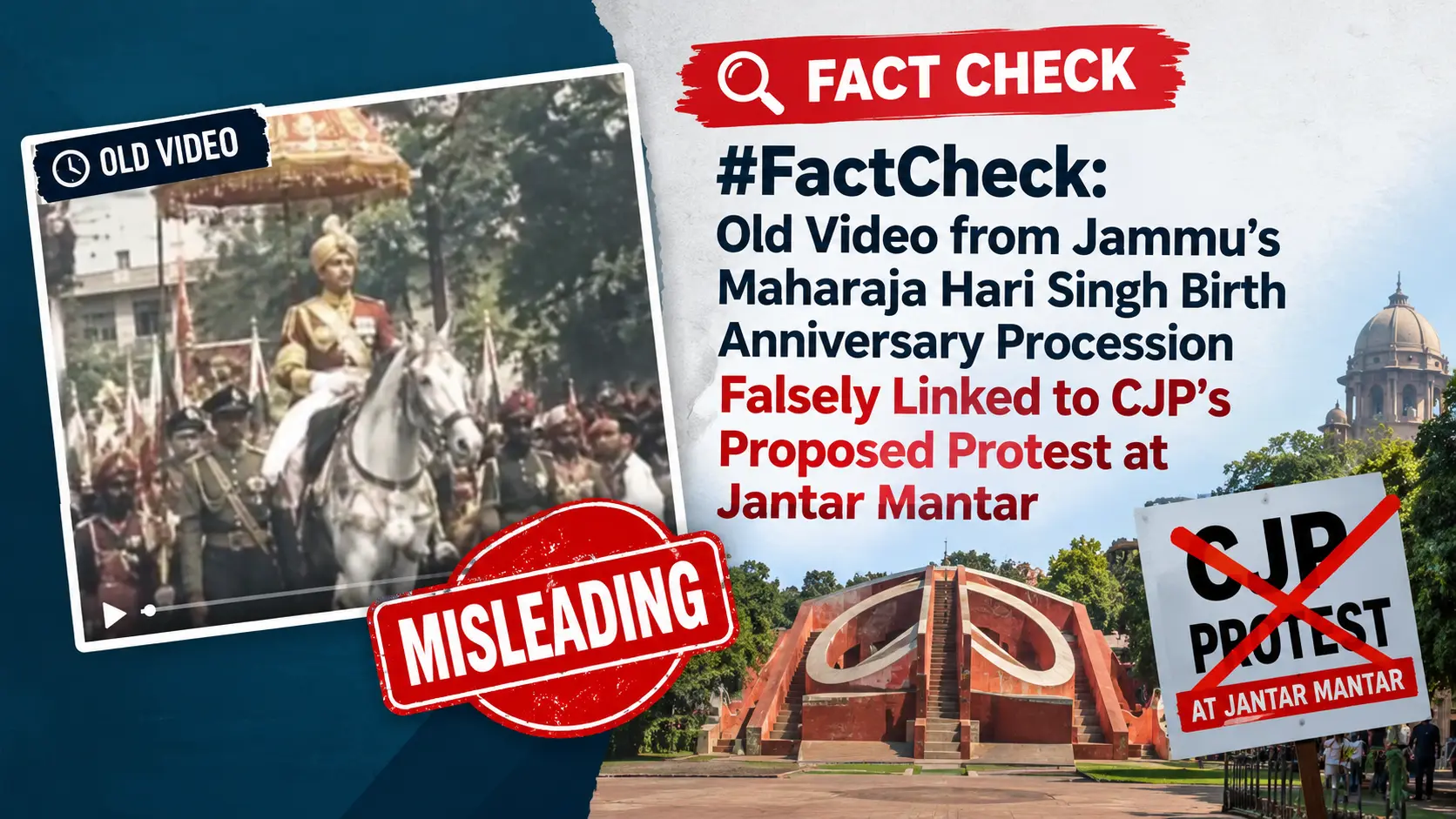
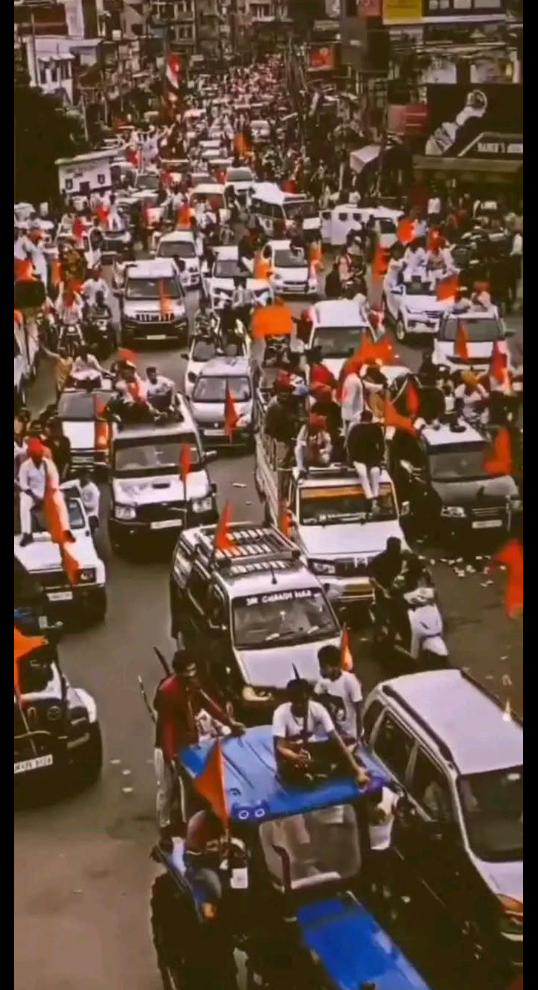
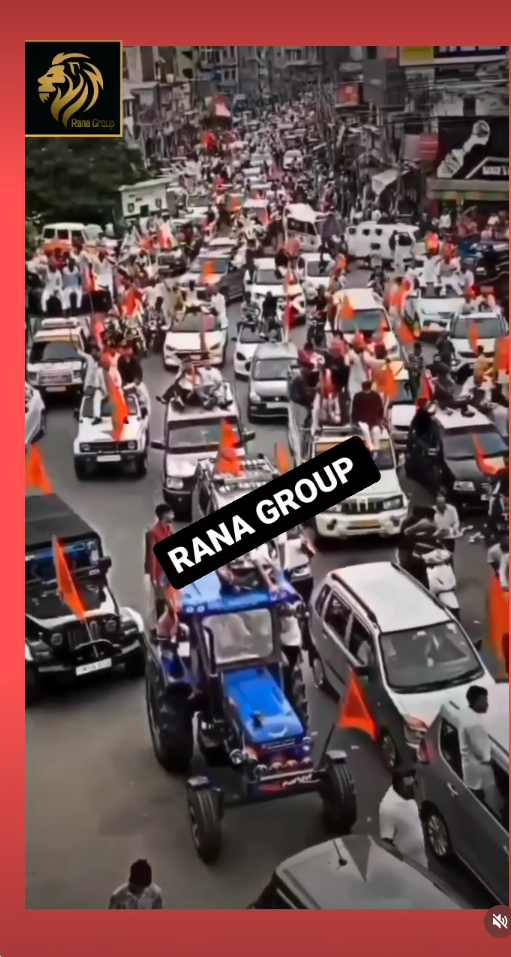
The Cockroach Janata Party (CJP) has called for a protest against Chief Election Commissioner Gyanesh Kumar and a “Chalo Delhi” campaign at Jantar Mantar in New Delhi on Saturday, October 10. Meanwhile, a video is being widely shared on social media showing a large number of people carrying saffron flags and walking on a road. The video is being shared with the claim that the people seen in it are members of Hindu organisations marching towards Jantar Mantar in large numbers to oppose the CJP’s proposed protest. CyberPeace Research found that the viral video is old and shows a procession held at Dogra Chowk in Jammu on the occasion of Maharaja Hari Singh’s birth anniversary.
Claim
A Facebook user shared the viral video with the caption,“News is coming that Hindu organisations have started a movement called the ‘Catch Cockroach Campaign’. Yes, they have given the campaign this name. A large number of people from Hindu organisations are leaving for Jantar Mantar. Brother Deepak... my free advice is... leave for America, because these are very ‘cruel people’ who can change 500 years of history in five hours... Jai Bhawani, Jai Shivaji, now it’s your turn.”The post link, archive link and screenshot are provided below.
https://www.facebook.com/photo/?fbid=1660133012350967&set=a.536762061354740
Fact Check
To verify the claim, we first conducted a reverse image search of a frame from the viral video using Google Lens. Through this search, we found the same video posted on an Instagram page named Rana Ashish Singh on February 21, 2023. However, the post did not provide any information that could help verify the actual origin or context of the video.
https://www.instagram.com/reels/Co61z_zMQr6/
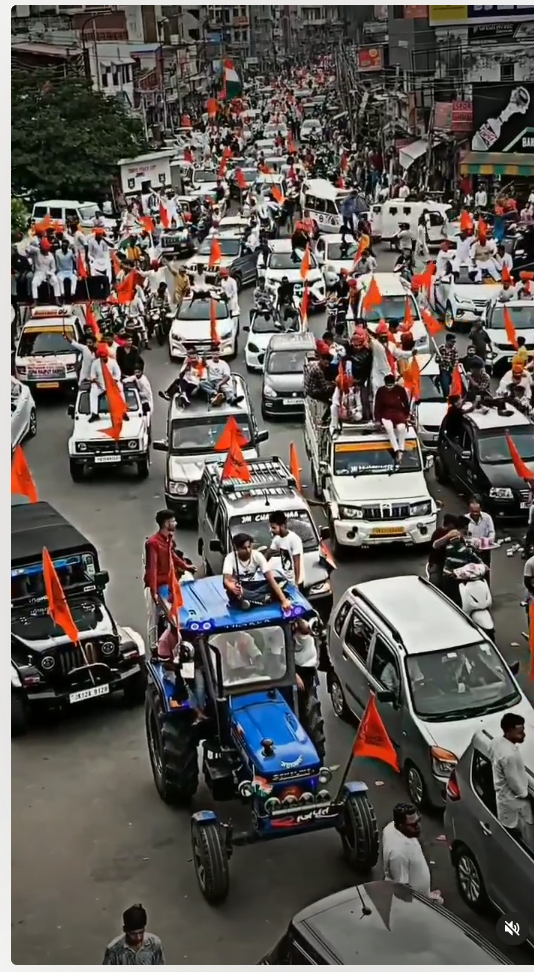
In our further research, we found a higher-quality version of the viral video on the Instagram account ‘@anilgiri4659’, posted in February 2023. On closely analysing the video, we noticed the words “Jai Chandi Maa” written on one of the vehicles, while the number plate of another black vehicle displayed “JK” followed by some digits. We also noticed “Baker’s Avenue” written on the roof of a shop, with a signboard next to it bearing the words “Sport Music” in red. A white building with some black designs painted on it was also visible on the left side of the video. Further into the video, a red-coloured building could be seen. Based on these visual clues, we suspected that the video could be from Jammu and Kashmir.
https://www.instagram.com/reels/CpKOrGkv6SV/
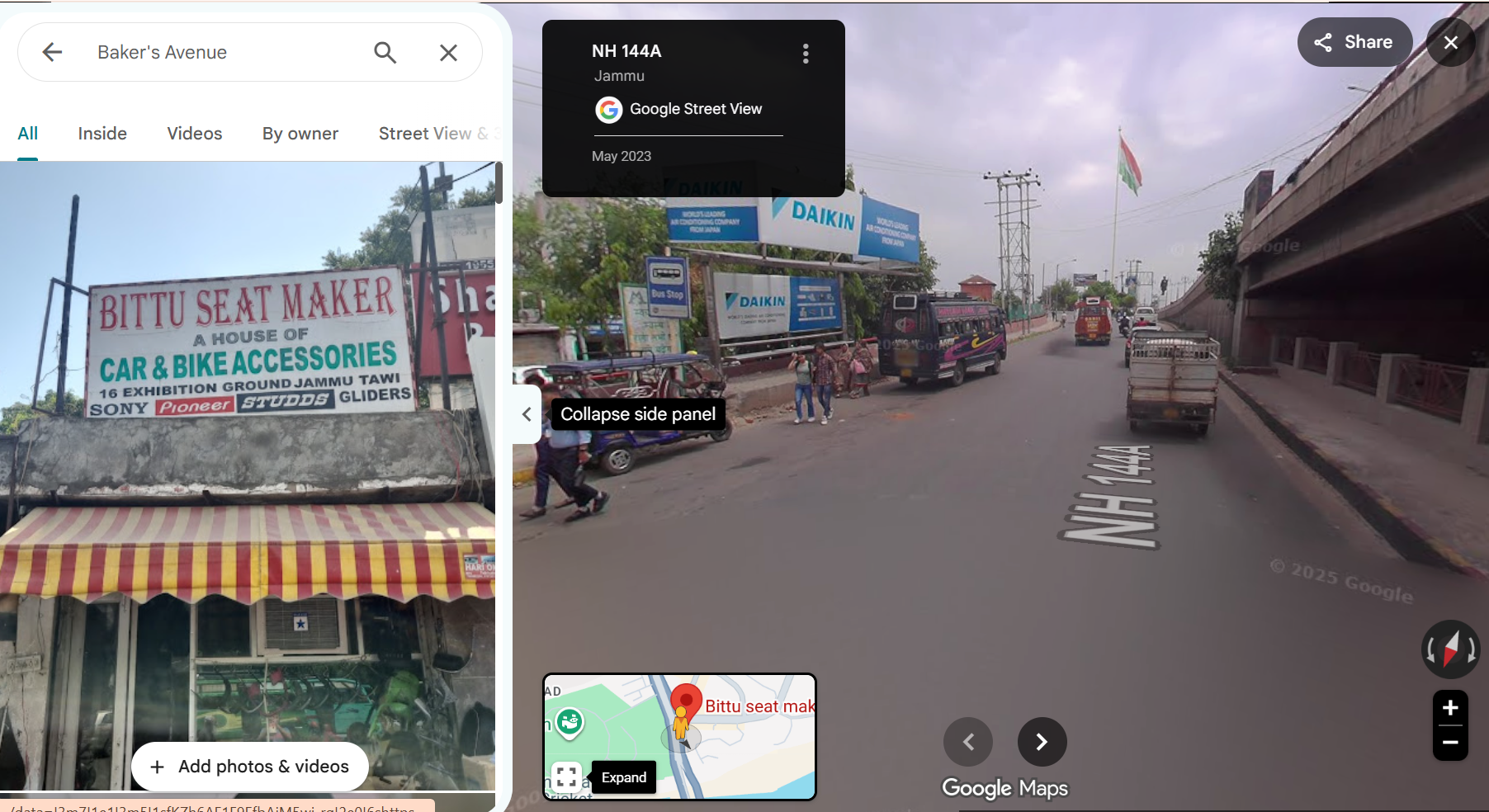
Using these clues, we carried out a geolocation analysis to identify the location and road visible in the viral video. Our research found that the location shown in the viral video is Dogra Chowk in Prem Nagar, Jammu. To further verify this, a comparative analysis of the visuals from the viral video and the corresponding location can be seen in the graphics below.
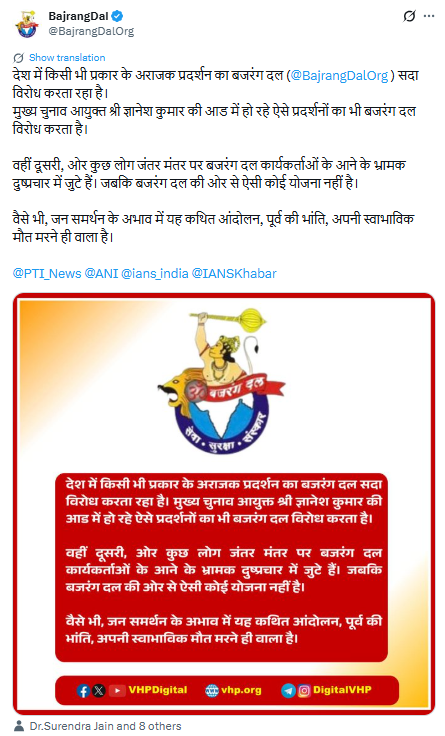
We also found a clarification issued by the official X account of Bajrang Dal regarding the claim that its workers would gather at Jantar Mantar. The post also described the viral claim as misleading and clarified that there is no such plan from Bajrang Dal.
https://x.com/BajrangDalOrg/status/2108059565753536897
Conclusion
CyberPeace Research found that the viral video does not show a protest against Chief Election Commissioner Gyanesh Kumar in Delhi. Instead, it shows a procession at Dogra Chowk in Prem Nagar, Jammu, held in September 2022 on the occasion of Maharaja Hari Singh’s birth anniversary. Therefore, the claim that members of Hindu organisations are marching towards Jantar Mantar to oppose the CJP’s proposed protest is misleading.
