
#FactCheck: Video of Muslim Lawmakers Offering Namaz Inside Jordanian Parliament Falsely Shared as Israeli Parliament
Executive Summary
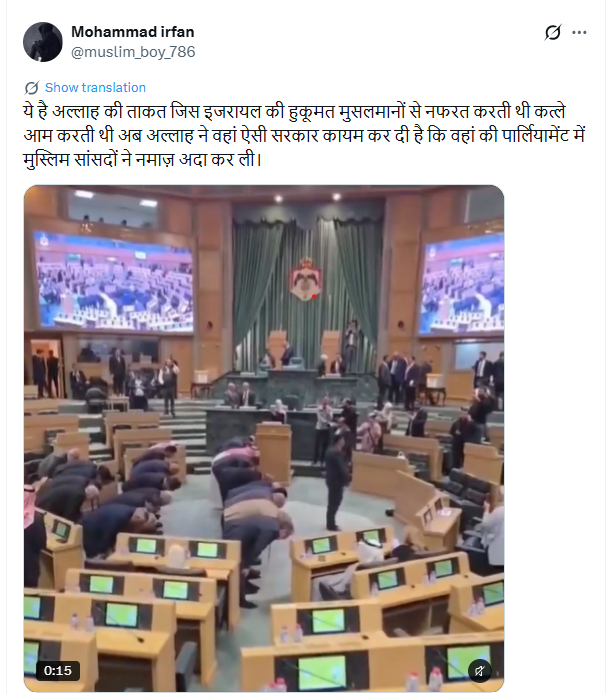
A video is going viral on social media with the claim that Muslim lawmakers offered namaz inside the Israeli Parliament. CyberPeace Research found that the video is not from Israel but from Jordan, where lawmakers offered namaz inside the parliamentary hall on November 3.
Claim:
The viral video is 22 seconds long and shows several people offering namaz inside a parliamentary hall. The video is being shared on X with a caption claiming that Muslim lawmakers offered namaz inside the Israeli Parliament. The caption reads: “This is the power of Allah. The Israeli government, which once hated Muslims and carried out massacres, has now been given such a government by Allah that Muslim lawmakers have offered namaz inside its Parliament.”
https://x.com/muslim_boy_786/status/2117935219126710778
Fact Check
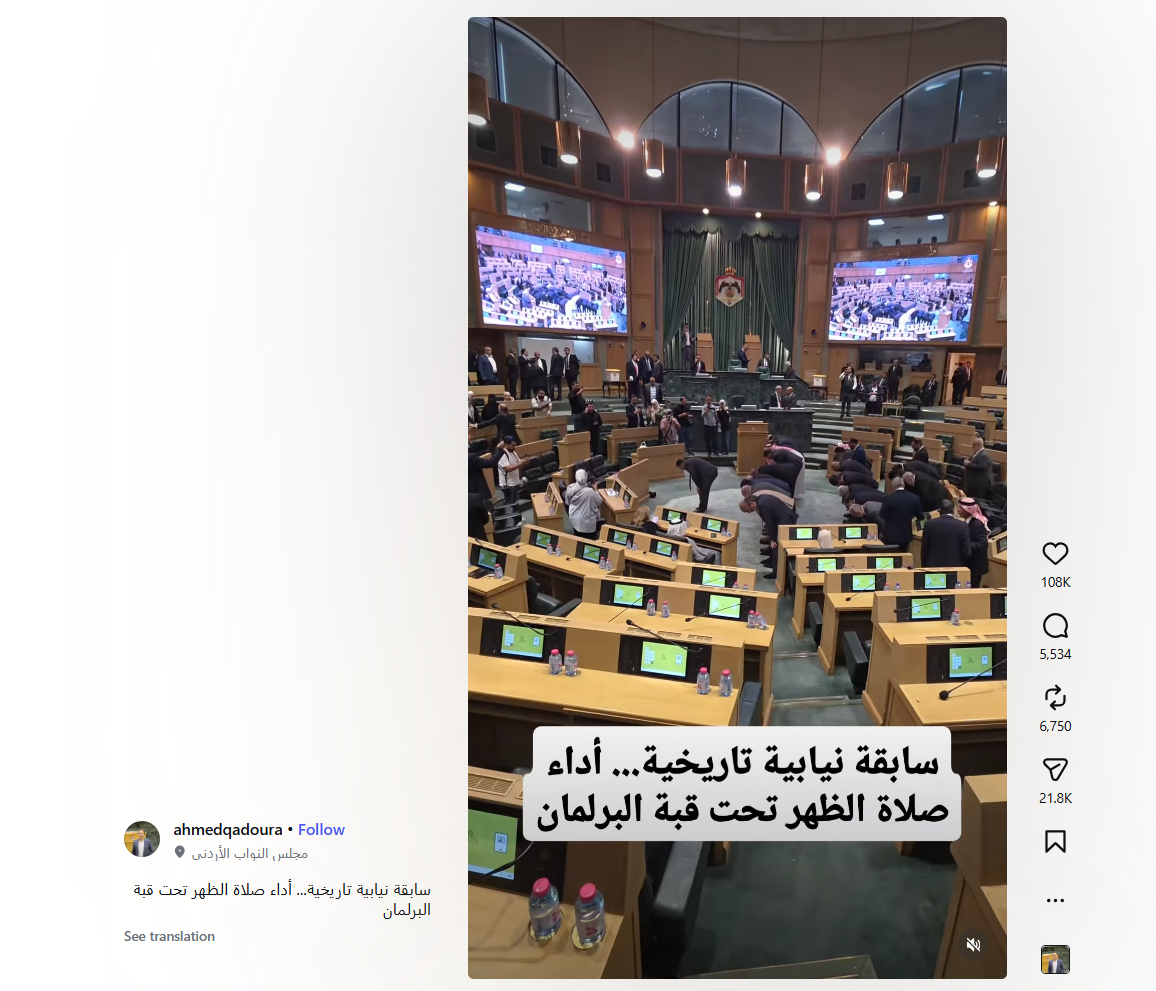
To verify the viral video claiming that Muslim lawmakers offered namaz inside the Israeli Parliament, we conducted a reverse image search using keyframes from the video. During the search, we found the same video posted on November 3, 2026, on the Instagram account of Ahmed Qadou ra, a journalist from Jordan.
https://www.instagram.com/reels/DfRtS33MWUT/
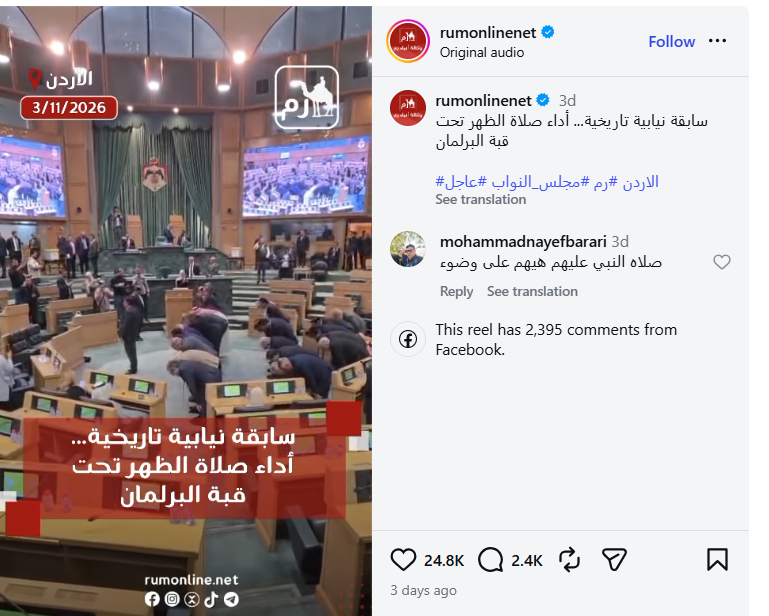
Additionally, we found the same video uploaded on November 3, 2026, on the Instagram account of another Jordanian media outlet. The accompanying caption also stated that the video showed lawmakers offering the Dhuhr (afternoon) prayer inside the Jordanian Parliament.
https://www.instagram.com/p/DfRlL_dopuc/
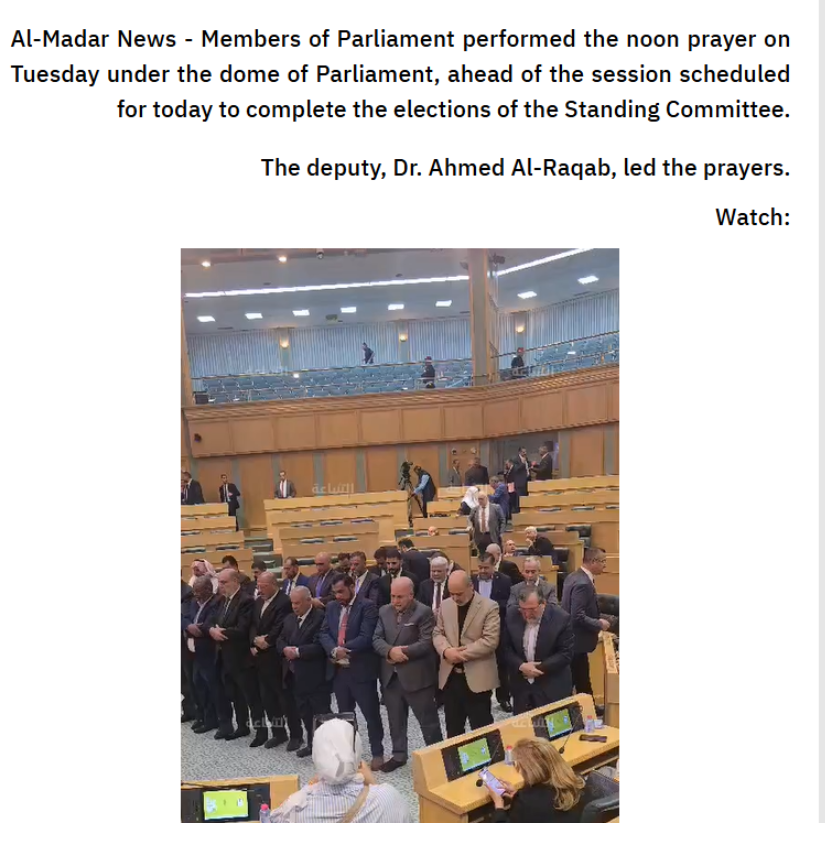
During our research, we also found a report published on another Jordanian media website featuring additional photographs of the incident. The report stated that on November 3, before the parliamentary session, lawmakers offered namaz inside the Jordanian Parliament under the leadership of Dr Ahmed Al-Raqab, a member of the Jordanian Parliament.
Conclusion
The evidence gathered during our research establishes that the viral video being shared with the claim that Muslim lawmakers offered namaz inside the Israeli Parliament is actually from Jordan and shows lawmakers offering prayers inside the Jordanian Parliament.

Related Blogs

Executive Summary
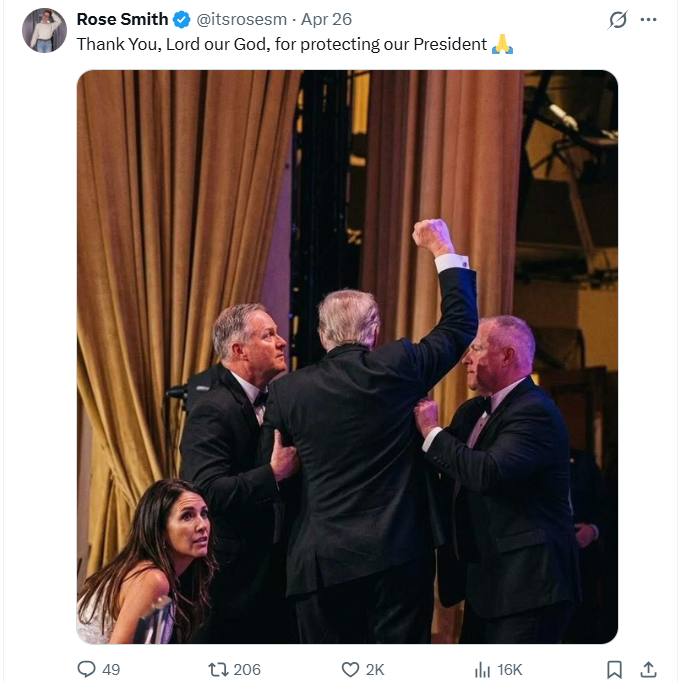
A photo of Donald Trump is going viral on social media, showing him raising his fist. Users claim the image was taken during a press event in Washington, when security personnel were escorting him out amid reports of gunfire. Research by CyberPeace Research Wing found that the viral image is AI-generated and is being shared with misleading claims.
Claim
On April 26, 2026, an X user shared the image with the caption: “Thank You, Lord our God, for protecting our President.” The post suggests that Trump made the gesture during a chaotic evacuation at a Washington event.
Fact Check
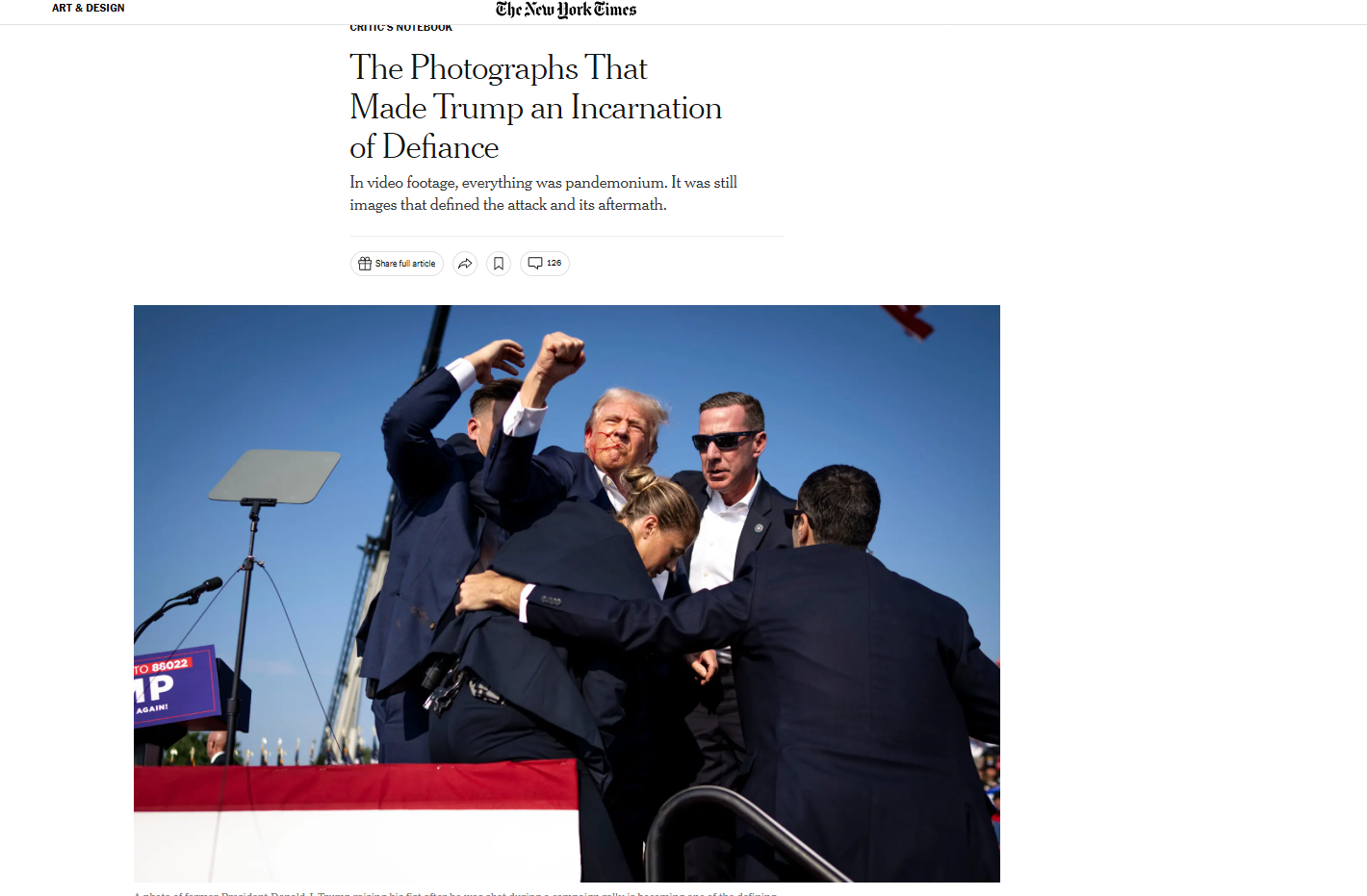
Reports confirm that Trump and senior officials were hurried away from the White House Correspondents’ Association dinner on April 25 after gunshots were reportedly heard from a floor above the ballroom. However, no authentic visuals show Trump raising his fist during the evacuation.
- https://www.nytimes.com/2024/07/14/arts/design/trump-photo-raised-fist.html
- https://edition.cnn.com/2025/04/11/politics/trump-obama-portrait-white-house

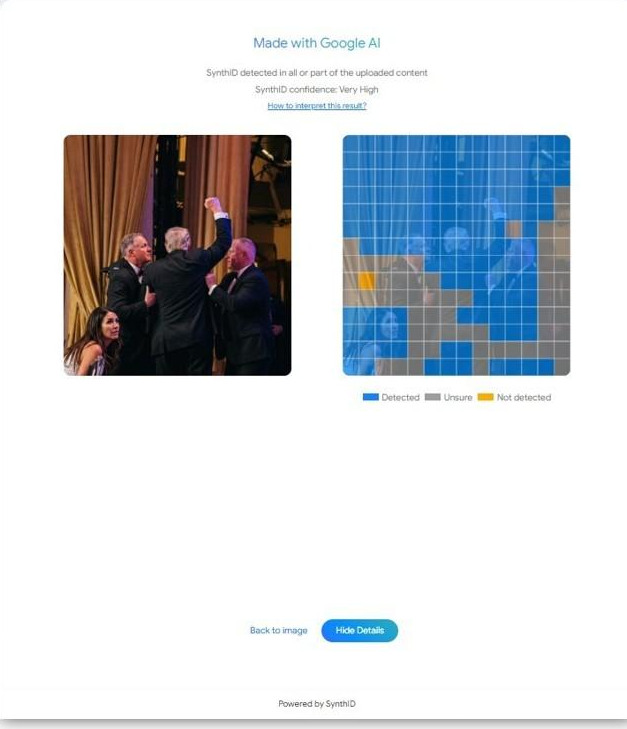
Further analysis of the viral image indicates signs of digital manipulation. Google’s SynthID detection tool flagged the file as containing SynthID—an invisible watermark embedded in content generated using Google’s AI tools.
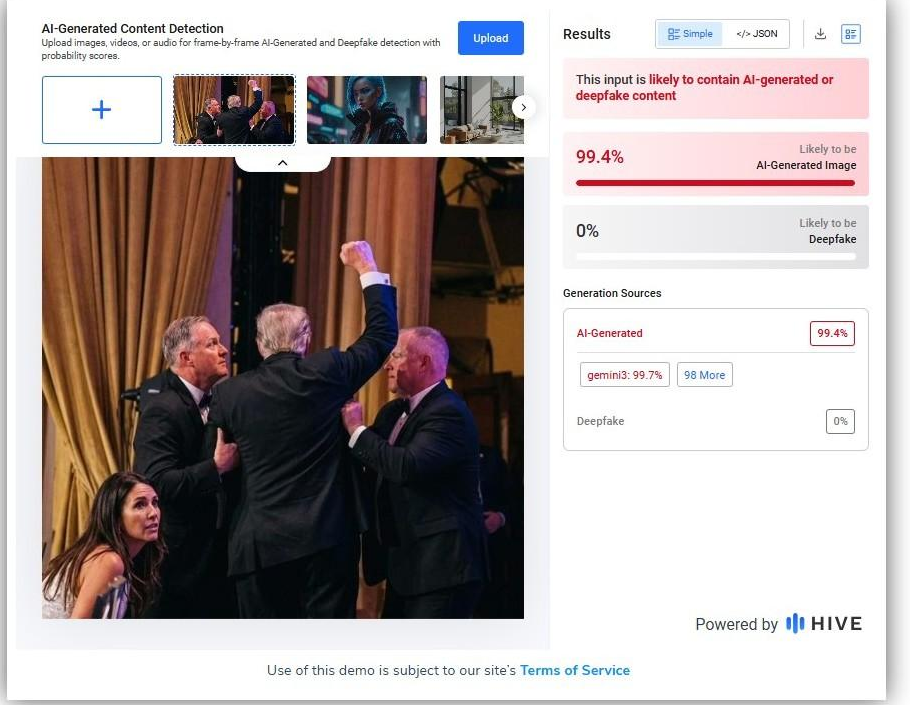
Additionally, AI detection platform Hive Moderation assessed that the image is likely AI-generated or a deepfake.
Conclusion
The research confirms that the viral image of Donald Trump raising his fist during a Washington incident is not real. It was created using AI and is being circulated with a misleading narrative.

Introduction
The United Nations General Assembly (UNGA) has unanimously adopted the first global resolution on Artificial Intelligence (AI), encouraging countries to take into consideration human rights, keeping personal data safe, and further monitoring the threats associated with AI. This non-binding resolution proposed by the United States and co-sponsored by China and over 120 other nations advocates the strengthening of privacy policies. This step is crucial for governments across the world to shape how AI grows because of the dangers it carries that could undermine the protection, promotion, and right to human dignity and fundamental freedoms. The resolution emphasizes the importance of respecting human rights and fundamental freedoms throughout the life cycle of AI systems, highlighting the benefits of digital transformation and safe AI systems.
Key highlights
● This is indeed a landmark move by the UNGA, which adopted the first global resolution on AI. This resolution encourages member countries to safeguard human rights, protect personal data, and monitor AI for risks.
● Global leaders have shown their consensus for safe, secure, trustworthy AI systems that advance sustainable development and respect fundamental freedom.
● Resolution is the latest in a series of initiatives by governments around the world to shape AI. Therefore, AI will have to be created and deployed through the lens of humanity and dignity, Safety and Security, human rights and fundamental freedoms throughout the life cycle of AI systems.
● UN resolution encourages global cooperation, warns against improper AI use, and emphasizes the issues of human rights.
● The resolution aims to protect from potential harm and ensure that everyone can enjoy its benefits. The United States has worked with over 120 countries at the United Nations, including Russia, China, and Cuba, to negotiate the text of the resolution adopted.
Brief Analysis
AI has become increasingly prevalent in recent years, with chatbots such as the Chat GPT taking the world by storm. AI has been steadily attempting to replicate human-like thinking and solve problems. Furthermore, machine learning, a key aspect of AI, involves learning from experience and identifying patterns to solve problems autonomously. The contemporary emergence of AI has, however, raised questions about its ethical implications, potential negative impact on society, and whether it is too late to control it.
While AI is capable of solving problems quickly and performing various tasks with ease, it also has its own set of problems. As AI continues to grow, global leaders have called for regulations to prevent significant harm due to the unregulated AI landscape to the world and encourage the use of trustworthy AI. The European Union (EU) has come up with an AI act called the “European AI Act”. Recently, a Senate bill called “The AI Consent Bill” was introduced in the US. Similarly, India is also proactively working towards setting the stage for a more regulated Al landscape by fostering dialogues and taking significant measures. Recently, the Ministry of Electronics and Information Technology (MeitY) issued an advisory on AI, which requires explicit permission to deploy under-testing or unreliable AI models related to India's Internet. The following advisory also indicates measures advocating to combat deepfakes or misinformation.
AI has thus become a powerful tool that has raised concerns about its ethical implications and the potential negative influence on society. Governments worldwide are taking action to regulate AI and ensure that it remains safe and effective. Now, the groundbreaking move of the UNGA, which adopted the global resolution on AI, with the support of all 193 U.N. member nations, shows the true potential of efforts by countries to regulate AI and promote safe and responsible use globally.
New AI tools have emerged in the public sphere, which may threaten humanity in an unexpected direction. AI is able to learn by itself through machine learning to improve itself, and developers often are surprised by the emergent abilities and qualities of these tools. The ability to manipulate and generate language, whether with words, images, or sounds, is the most important aspect of the current phase of the ongoing AI Revolution. In the future, AI can have several implications. Hence, it is high time to regulate AI and promote the safe, secure and responsible use of it.
Conclusion
The UNGA has approved its global resolution on AI, marking significant progress towards creating global standards for the responsible development and employment of AI. The resolution underscores the critical need to protect human rights, safeguard personal data, and closely monitor AI technologies for potential hazards. It calls for more robust privacy regulations and recognises the dangers associated with improper AI systems. This profound resolution reflects a unified stance among UN member countries on overseeing AI to prevent possible negative effects and promote safe, secure and trustworthy AI.
References

Introduction
Misinformation has the potential to impact people, communities and institutions alike, and the ramifications can be far-ranging. From influencing voter behaviours and consumer choices to shaping personal beliefs and community dynamics, the information we consume in our daily lives affects every aspect of our existence. And so, when this very information is flawed or incomplete, whether accidentally or deliberately so, it has the potential to confuse and mislead people.
‘Debunking’ is the process of exposing false information or countering inaccuracies and manipulation by presenting actual facts. The goal is to minimise the harmful effects of misinformation by informing and educating people. Debunking initiatives work hard to expose false information and cut down conspiracies, catalogue evidence of false information, clearly identify sources of misinformation vs. accurate information, and assert the truth. Debunking looks at building capacity and educating people both as a strategy and goal.
Debunking is most effective when it comes from trusted sources, provides detailed explanations, and offers guidance and verifiable advice. Debunking is reactive in nature and it focuses on specific instances of misinformation and is closely tied to fact-checking. Debunking aims to mitigate the impact of misinformation that has already spread. As such, the approach is to contain and correct, post-occurrence. The most common method of debunking is collaboration between fact-checking groups and social media companies. When journalists or other fact-checkers identify false or misleading content, social media sites flag or label it such, so that audiences are alerted. Debunking is an essential method for reducing the impact and incidence of misinformation by providing real facts and increasing overall accuracy of content in the digital information ecosystem.
Role of Debunking the Misinformation
Debunking fights against false or misleading information by correcting false claims, myths, and misinformation with evidence-based rebuttals. It combats untruths and the spread of misinformation by providing and disseminating debunked evidence to the public. Debunking by presenting evidence that contradicts misleading facts and encourages individuals to develop fact-checking habits and proactively check for authenticated sources. Debunking plays a vital role in boosting trust in credible sources by offering evidence-based corrections and enhancing the credibility of online information. By exposing falsehoods and endorsing qualities like information completeness and evidence-backed data and logic, debunking efforts help create a culture of well-informed and constructive public conversations and analytical exchanges. Effectively dispelling myths and misinformation can help create communities and societies that are more educated, resilient, and goal-oriented.
Debunking as a tailoring Strategy to counter Misinformation
Understanding the information environment and source trustworthiness is critical for developing effective debunking techniques. Successful debunking efforts use clear messages, appealing forms, and targeted distribution to reach a wide range of netizens. Debunking as an effective method for combating misinformation includes analysing successful efforts, using fact-checking, relying on reputable sources for corrections, and using scientific communication. Fact-checking plays a critical role in ensuring information accuracy and holding people accountable for making misleading claims. Collaborative efforts and transparent techniques can boost the credibility and efficacy of fact-checking activities and boost the legitimacy and effectiveness of debunking initiatives at a larger scale. Scientific communication is also critical for debunking myths about different topics/concerns by giving evidence-based information. Clear and understandable framing of scientific knowledge is critical for engaging broad audiences and effectively refuting misinformation.
CyberPeace Policy Recommendations
- It is recommended that debunking initiatives must highlight core facts, emphasising what is true over what is wrong and establishing a clear contrast between the two. This is crucial as people are more likely to believe familiar information even if they learn later that it is incorrect. Debunking must provide a comprehensive explanation, filling the ‘information gap’ created by the myth. This can be done by explaining things as clearly as possible, as people may stop paying attention if they are faced with an overload of competing information. The use of visuals to illustrate core facts is an effective way to help people understand the issue and clearly tell the difference between information and misinformation.
- Individuals can play a role in debunking misinformation on social media by highlighting inconsistencies, recommending related articles with corrections or sharing trusted sources and debunking reports in their communities.
- Governments and regulatory agencies can improve information openness by demanding explicit source labelling and technical measures to be implemented on platforms. This can increase confidence in information sources and equip people to practice discernment when they consume content online. Governments should also support and encourage independent fact-checking organisations that are working to disprove misinformation. Digital literacy programmes may teach the public how to critically assess information online and spot any misinformation.
- Tech businesses may enhance algorithms for detecting and flagging misinformation, therefore reducing the propagation of misleading information. Offering options for people to report suspicious/doubtful information and misinformation can empower them and help them play an active role in identifying and rectifying inaccurate information online and foster a more responsible information environment on the platforms.
Conclusion
Debunking is an effective strategy to counter widespread misinformation through a combination of fact-checking, scientific evidence, factual explanations, verified facts and corrections. Debunking can play an important role in fostering a culture where people look for authenticity while consuming the information and place a high value on trusted and verified information. A collaborative strategy can increase the legitimacy and reach of debunking efforts, making them more effective in reaching larger audiences and being easy-to-understand for a wide range of demographics. In a complex and ever-evolving digital ecosystem, it is important to build information resilience both at the macro level for the ecosystem as a whole and at the micro level, with the individual consumer. Only then can we ensure a culture of mindful, responsible content creation and consumption.
References
