
#FactCheck -Ravi Kishan’s Viral Postcard Claim Debunked; Original Navbharat Times Post Shows Different Statement
Executive Summary
A social media post featuring a graphic attributed to Navbharat Times and BJP MP Ravi Kishan is being widely circulated. The post falsely claims that Ravi Kishan made a controversial statement saying, “Narendra Modi should be ashamed, Meloni is of his granddaughter’s age.” CyberPeace Research Wing investigation found that the claim is false. In the original Navbharat Times postcard, Ravi Kishan is seen saying that people should stop criticising the Prime Minister, otherwise they may have to face consequences.
Claim
An X (formerly Twitter) user named “Prem Jai Moolnivasi Paswan” shared the viral post and alleged that Ravi Kishan made objectionable remarks targeting Prime Minister Narendra Modi.
- https://www.facebook.com/premjaymulnivasi.paswan/posts/pfbid02Drv387K2ugesnP9vvbJXgqU7yTZkrUhVAB5y9euzHuxpigWa8uDEnu3E2T6oox8Wl?rdid=4VbtbVi1G8bgo12d
- https://archive.ph/NHBXP
Fact Check
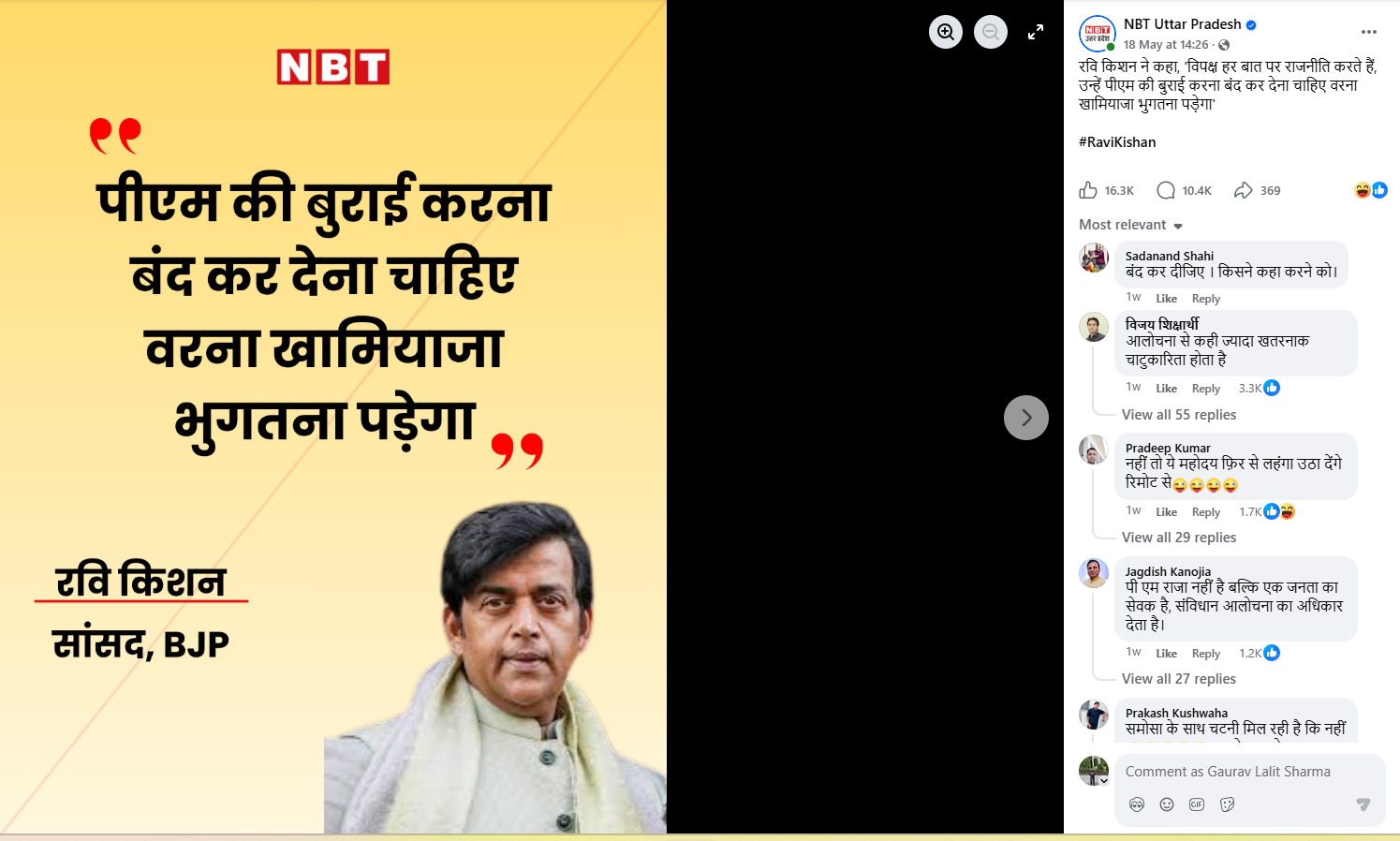
During the investigation, we searched for the alleged statement using relevant keywords but found no credible reports or evidence supporting the claim. We then examined Navbharat Times’ official social media handles. A similar-looking but authentic postcard was found on the official Facebook page of Navbharat Times (Uttar Pradesh) dated May 18, 2026.
The original post quoted Ravi Kishan differently, stating that criticism of the Prime Minister should be avoided, or else consequences may follow. Nowhere in the authentic post is the viral controversial remark mentioned.
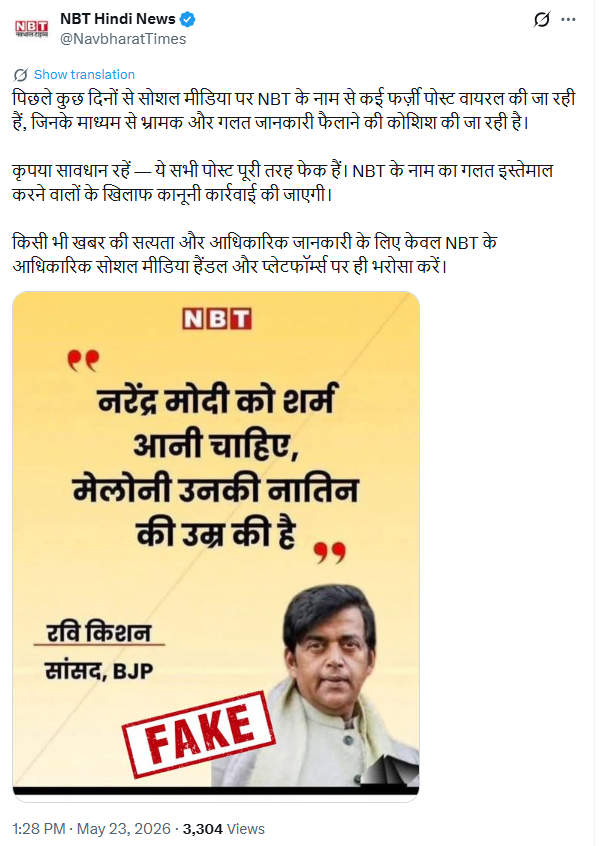
Further investigation revealed that Navbharat Times itself issued a clarification on its official X handle, stating that the viral post is fake and that legal action would be taken against misuse of its name.
Conclusion
The viral claim is false. The authentic Navbharat Times postcard shows Ravi Kishan saying that criticism of the Prime Minister should be stopped, or there would be consequences. The viral graphic has been altered to spread misinformation.

Related Blogs
Executive Summary
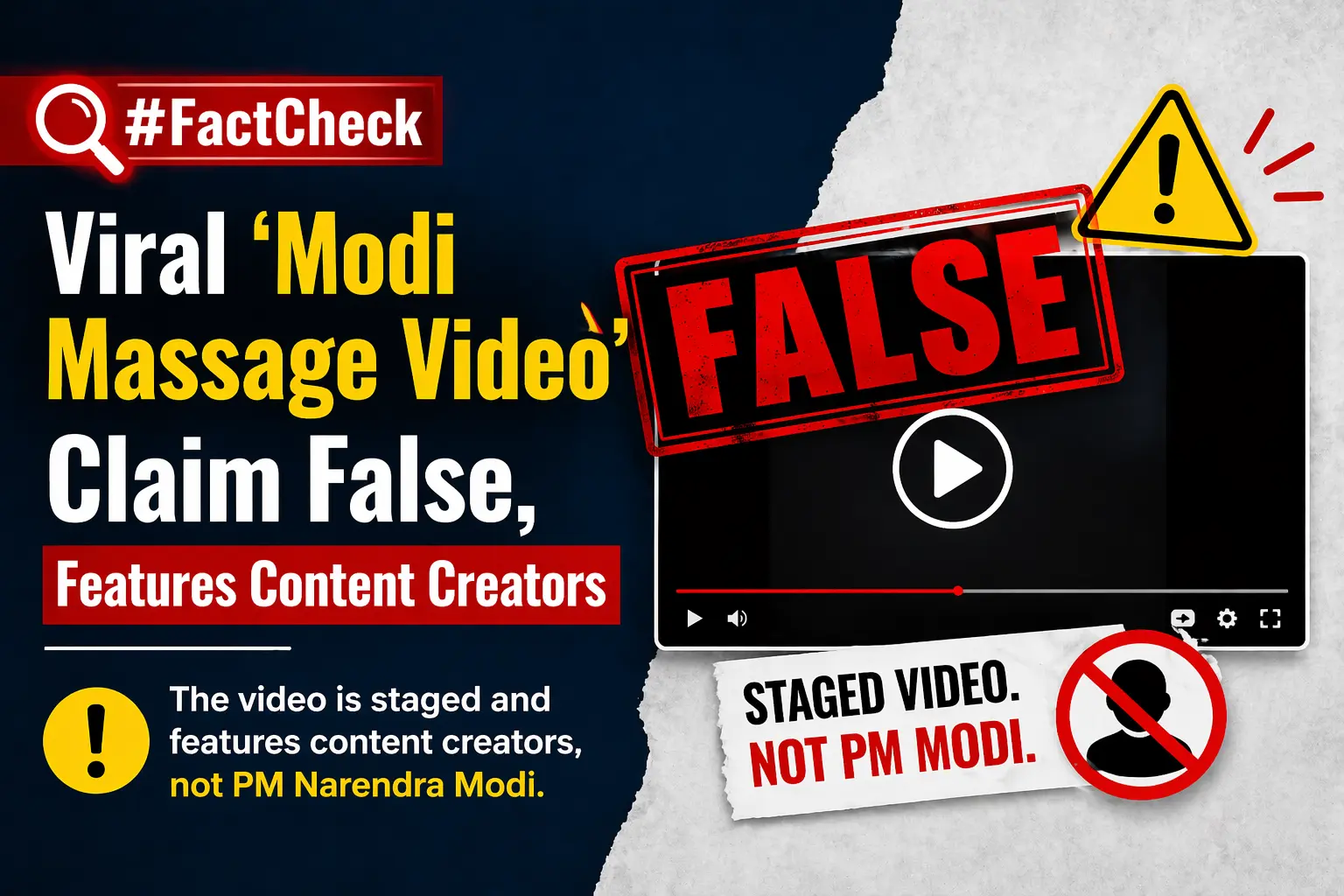
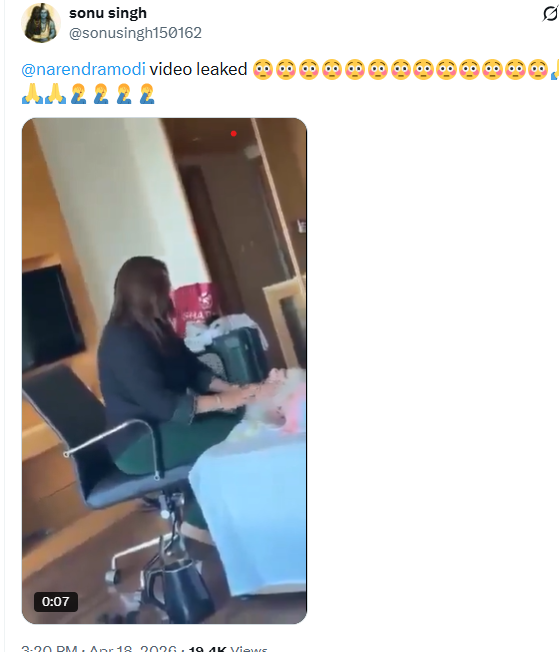
A video showing a woman giving a facial massage to an elderly man with a white beard is going viral on social media, with users claiming that the man is Prime Minister Narendra Modi. Some posts describe it as a “leaked massage video” of the Prime Minister, while others sarcastically link it to the glow on his face. However, research by the CyberPeace Research Wing found that the claim is false. The viral video has no connection to Narendra Modi and is being shared with a misleading narrative.
Claim
An X user named Sonu Singh shared the video with the caption: “Narendra Modi video leaked.”
Fact Check
To verify the claim, we extracted keyframes from the viral video and conducted a reverse image search. This led us to the same video uploaded on April 12, 2026, on the Instagram and Facebook pages of content creator Pradeep Kaur Dhillon, where it was captioned “Massage time.”
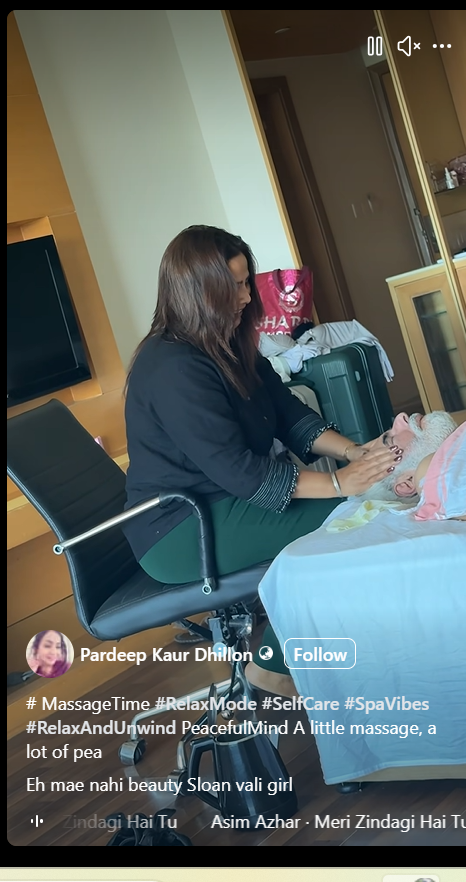
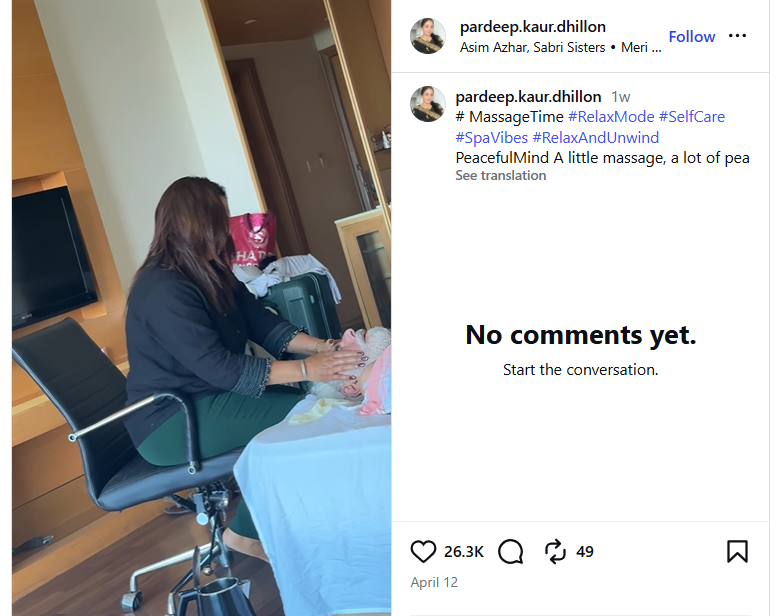
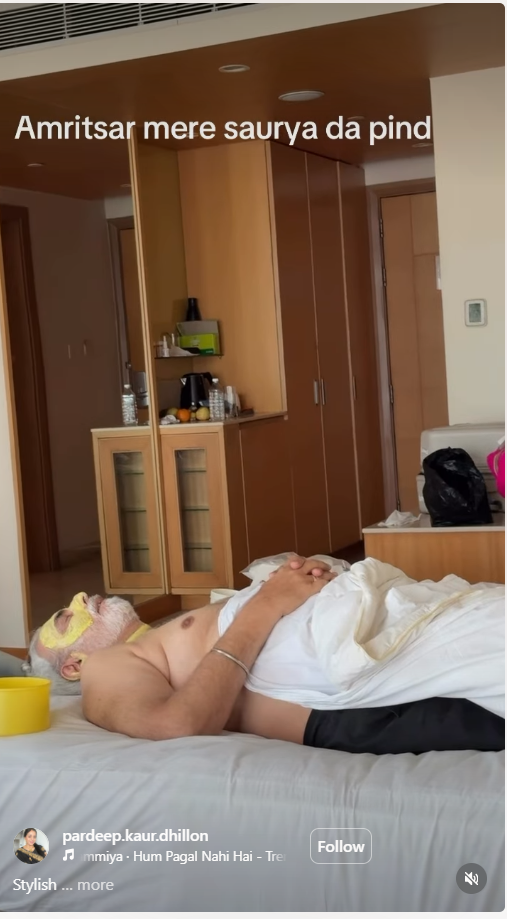
Further checks revealed another similar video posted on March 28, 2026, on the same social media accounts, with the caption: “Stylish, Spa day for him… kyunki self-care sirf ladies layi nahi.”
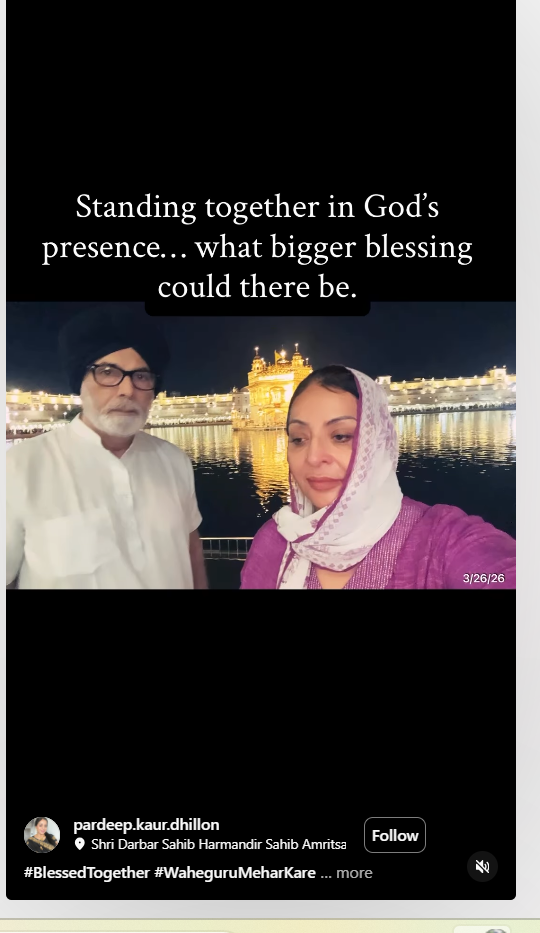
During the research, we also found that the man seen in the video is Jaspal Singh, Dhillon’s partner, who frequently appears in her social media posts. According to publicly available profile details, the duo resides in New Jersey, USA, and originally belongs to Amritsar, Punjab, India.
Conclusion
The viral claim is false. The video does not show Prime Minister Narendra Modi. It features content creators Pradeep Kaur Dhillon and Jaspal Singh and is being circulated online with a false and misleading claim.

Executive Summary
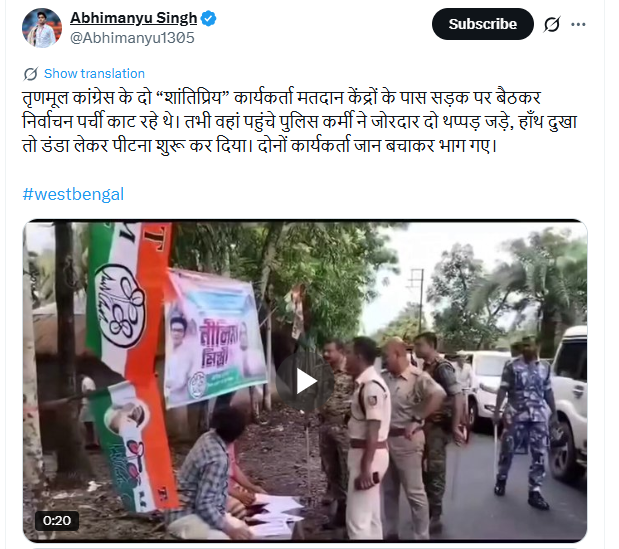
A video is being widely shared on social media showing two men seated on chairs when police personnel arrive and begin assaulting them. A flag of West Bengal Chief Minister Mamata Banerjee’s party, the Trinamool Congress (TMC), can also be seen in the footage. The video is being circulated with the claim that during the first phase of polling held on April 23, 2026, two TMC workers were issuing voter slips near a polling booth when security forces reached the spot and beat them. However, research by the CyberPeace Research Wing found the claim to be false. The footage is not recent and has no connection to the 2026 West Bengal Assembly elections.
Claim:
Social media users alleged that police assaulted TMC workers during the 2026 West Bengal Assembly elections. An X user, Abhimanyu Singh, shared the clip claiming that two “peaceful” TMC workers were sitting near polling stations issuing voter slips when a policeman slapped and beat them with a baton, forcing them to flee.
- https://x.com/Abhimanyu1305/status/2047317736825790549
- https://archive.ph/0ceXH
Fact Check:
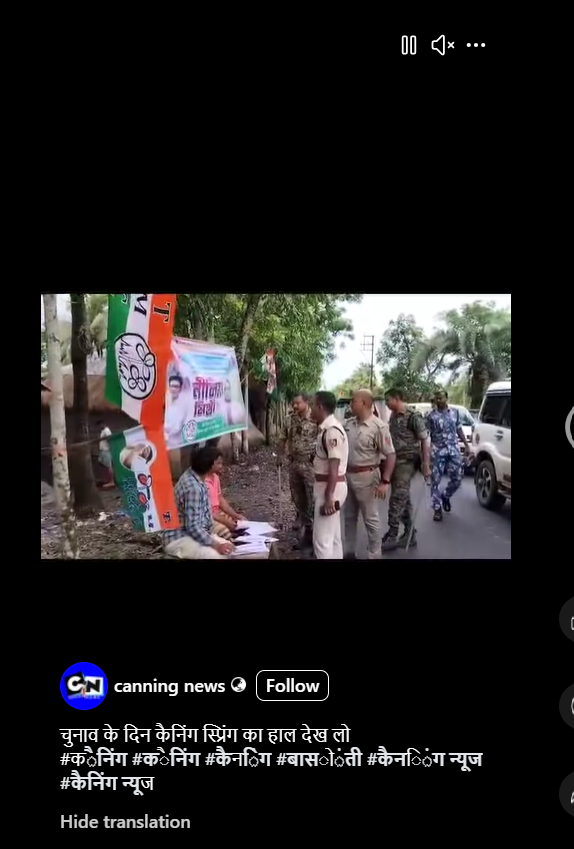
To verify the claim, keyframes from the viral video were subjected to a reverse image search. This led to the same video being found on a Facebook page named Canning News, where it had been uploaded in 2023. The caption stated: “Take a look at the situation in Basanti, Canning, on election day.”
Further searches found the clip published by News18 Bangla on July 6, 2023. The report described unrest during the 2023 Panchayat elections, stating that allegations of bomb throwing had surfaced in Basanti the previous night. On the morning of polling, a bomb was reportedly recovered from the roadside, creating panic in the area.

According to the report, police intervened to control the situation and took action wherever crowds had gathered. The footage showed police dispersing people with batons and, at times, physically confronting individuals.
Conclusion:
The viral claim is misleading. The video is from the 2023 Panchayat elections in West Bengal and is being falsely linked to the recent 2026 Assembly elections.
Executive Summary
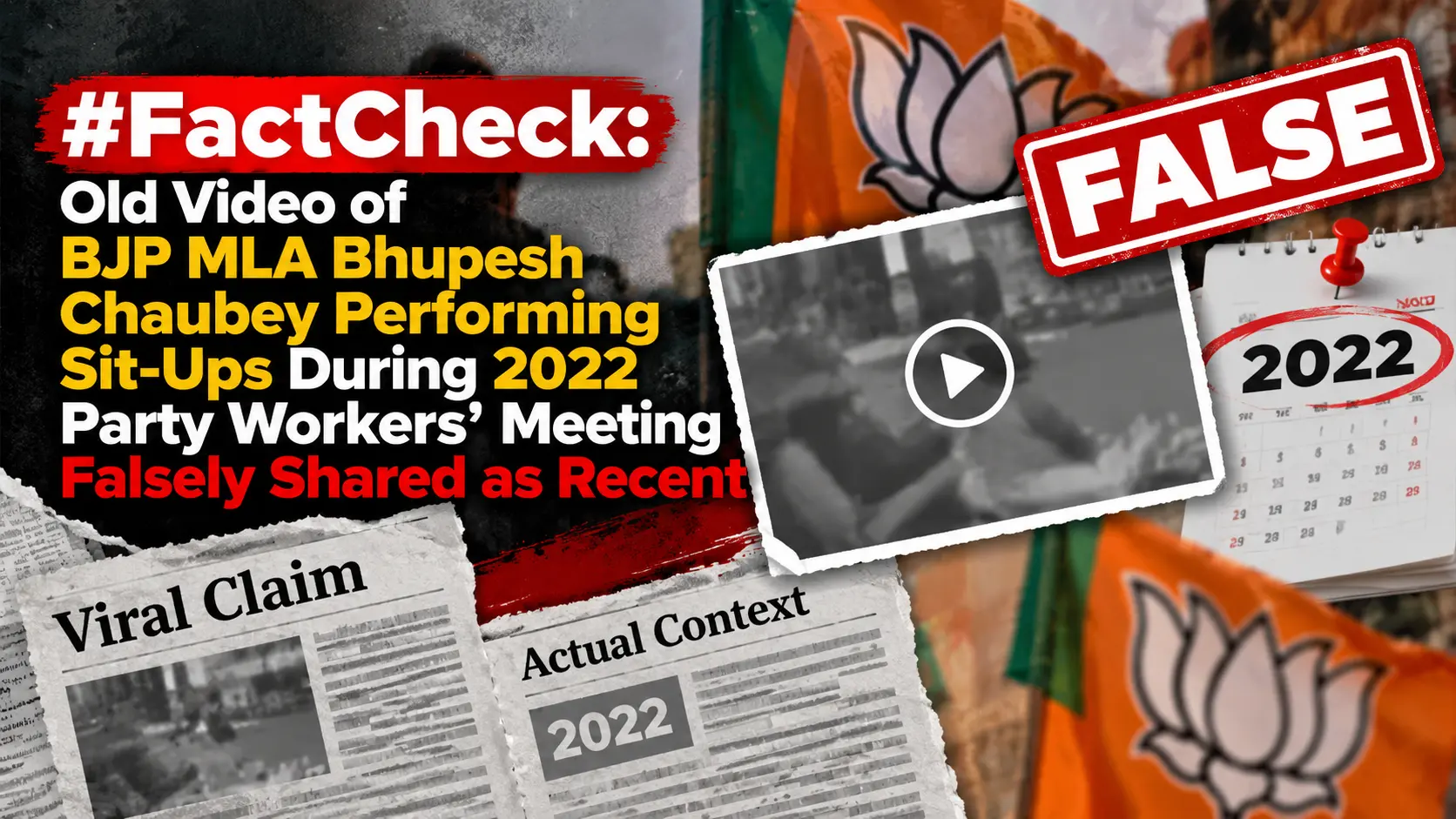
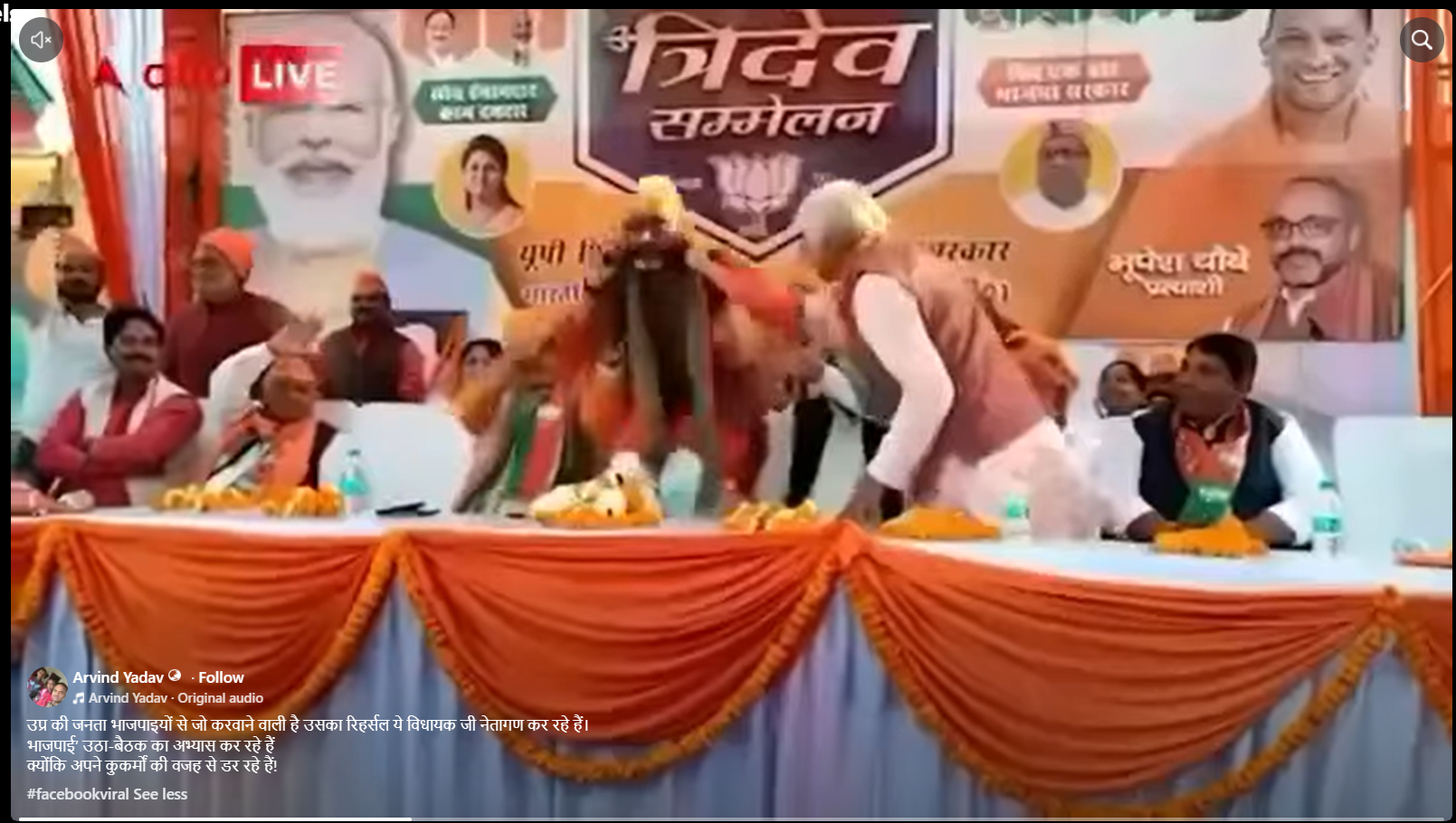
A video is being shared on social media with the claim that a Bharatiya Janata Party (BJP) leader is doing sit-ups in front of the public. Some users are sharing the video as a recent incident, claiming that a BJP MLA performed sit-ups in front of the public. CyberPeace Research found the claim to be misleading. Our research revealed that the viral video is not recent but dates back to February 2022, when Bhupesh Chaubey, the BJP MLA from the Robertsganj Assembly constituency in Sonbhadra, apologised to disgruntled party workers during a party workers' convention.
Claim:
A user on Facebook shared the viral image on October 11, 2026, with the caption: “This is the bond submitted by coward Abhijeet Dipke in court for his release, and he says he will take to the streets again.” The link to the post, its archive link, and a screenshot are provided below.
https://www.facebook.com/reel/1806020163922780
Fact Check
We conducted a reverse image search using keyframes from the viral video. During the search, we found a report published on the Dainik Bhaskar website on February 23, 2022, which featured the same video. According to the report, polling in Sonbhadra was scheduled for March 7 as part of the seventh phase of the Assembly elections. During the election campaign, Bhupesh Chaubey, the BJP MLA and candidate from the Robertsganj Assembly constituency, was seen adopting an unusual approach. He stood on a chair, held his ears and performed sit-ups on the chair, apologising to the public for the mistakes he had made over the previous five years.The link to the report and a screenshot are provided below.
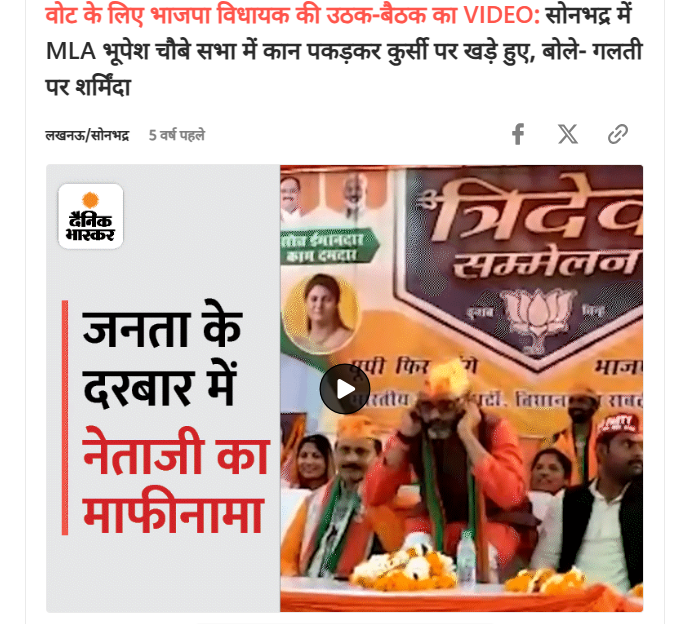
In the next stage of our research, we found a report published on ABP News’ Hindi website on February 25, 2022, which featured the viral video in a general context. We found the same video in this report as well. The link to the report and a screenshot are provided below.
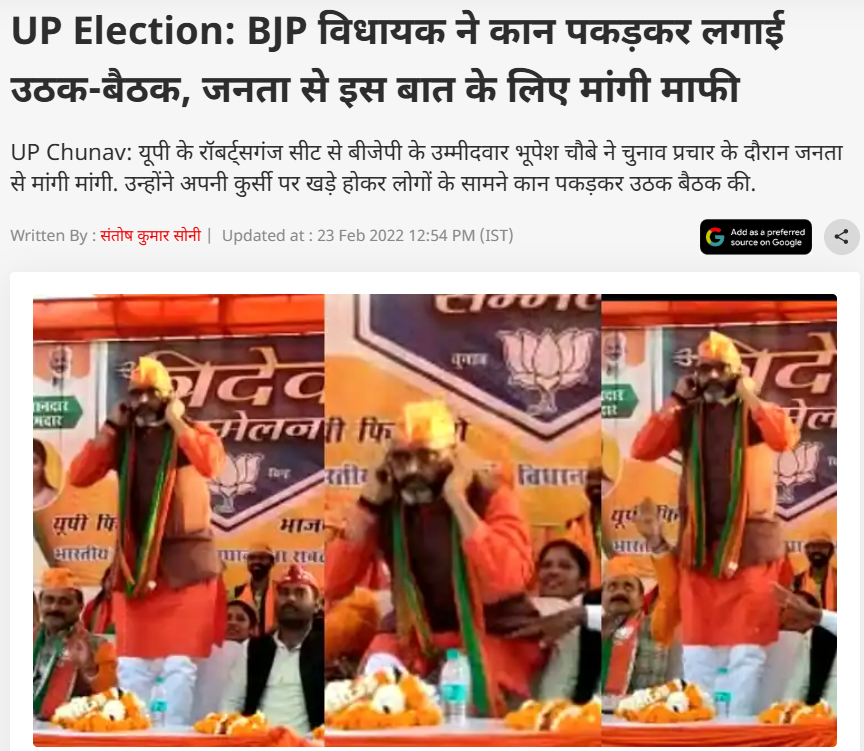
Conclusion
Our research found that the viral video is not recent but dates back to February 2022, when Bhupesh Chaubey, the BJP MLA from the Robertsganj Assembly constituency in Sonbhadra, apologised to disgruntled party workers during a party workers' convention.
