
#FactCheck -AI-Generated Video Falsely Shows Giorgia Meloni Storming Out After Ending Agreements With Israel
Executive Summary
A video purportedly showing Italian Prime Minister Giorgia Meloni angrily addressing a room full of delegates before throwing a bundle of papers and storming out has gone viral on social media. The clip is being shared alongside claims that Meloni terminated all agreements with Israel following growing tensions over the conflict in the Middle East. However, CyberPeace Research Wing research found that the viral video is not authentic. The clip was generated using Artificial Intelligence (AI).
Claim
On April 24, 2026, an X user shared the viral video with the caption:“Italy's woman Prime Minister has terminated all agreements with Israel!! Italy's woman Prime Minister is far more courageous and fearless than the leaders of 56 Islamic nations.”
- https://x.com/middle_East_up/status/2047597154257297878?s=20
- https://perma.cc/4EM9-5GS4

Fact Check
To verify the claim, we examined official records related to agreements between Italy and Israel. Data available from the Italian Ministry of Foreign Affairs and International Cooperation shows that multiple bilateral agreements between the two countries remain in force in 2026.
- https://atrio.esteri.it/Home/Search
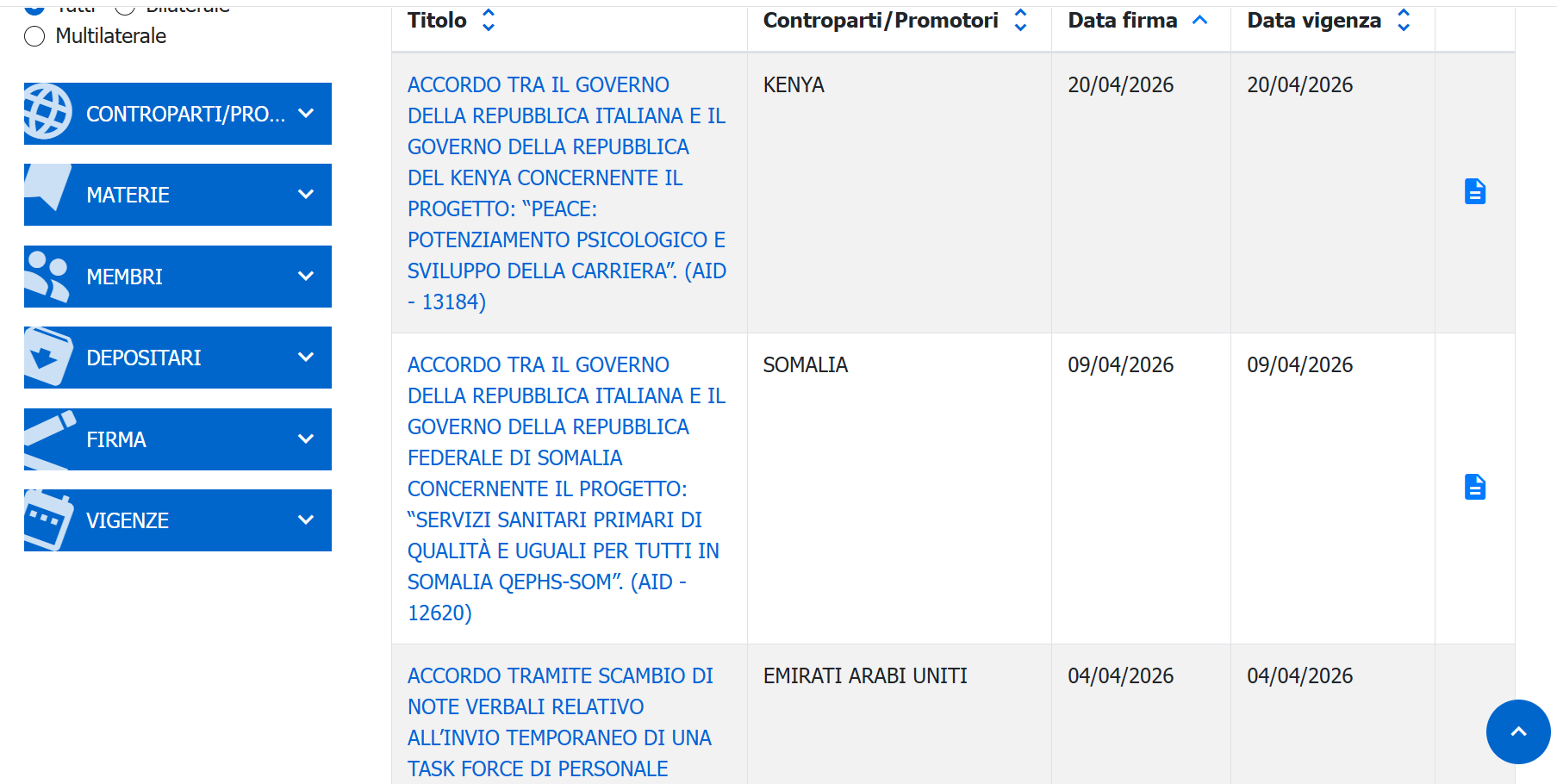
Further research found reports related to discussions within the European Union regarding the suspension of certain cooperation arrangements with Israel. During a meeting of EU foreign ministers in Luxembourg, Spain and Ireland renewed calls to review the EU-Israel Association Agreement. However, Italian Foreign Minister Antonio Tajani reportedly stated that no decision would be taken that day. A closer examination of the viral clip revealed several visual inconsistencies commonly associated with AI-generated content, including unnatural facial movements, irregular body gestures, and unrealistic scene transitions.
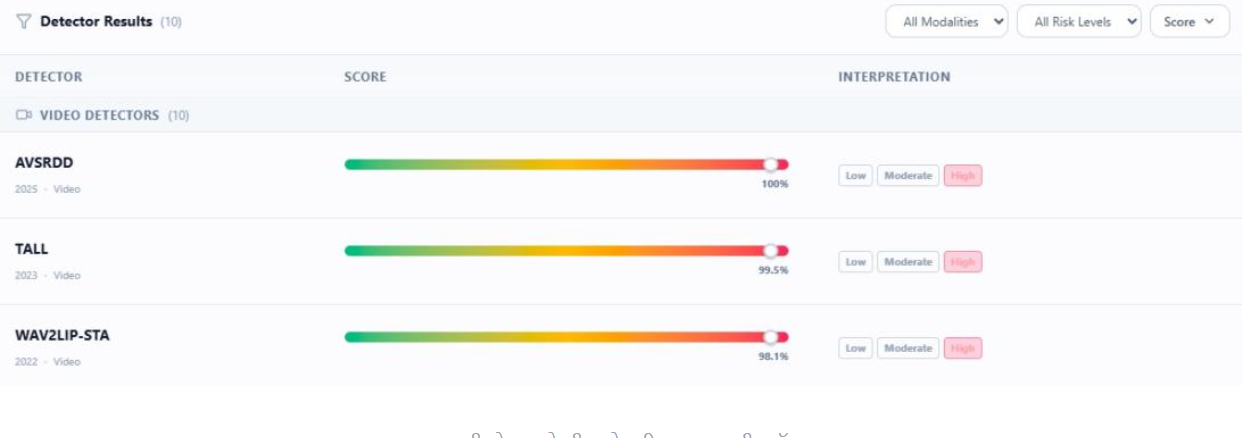
To further verify the footage, we analysed it using the DeepFake-o-Meter tool. Results from three separate detection models indicated that the video was likely generated using artificial intelligence.
Conclusion
CyberPeace Research Wing research found that the viral video allegedly showing Italian Prime Minister Giorgia Meloni angrily terminating agreements with Israel is AI-generated. There is no evidence that the incident shown in the clip actually occurred.

Related Blogs
Introduction
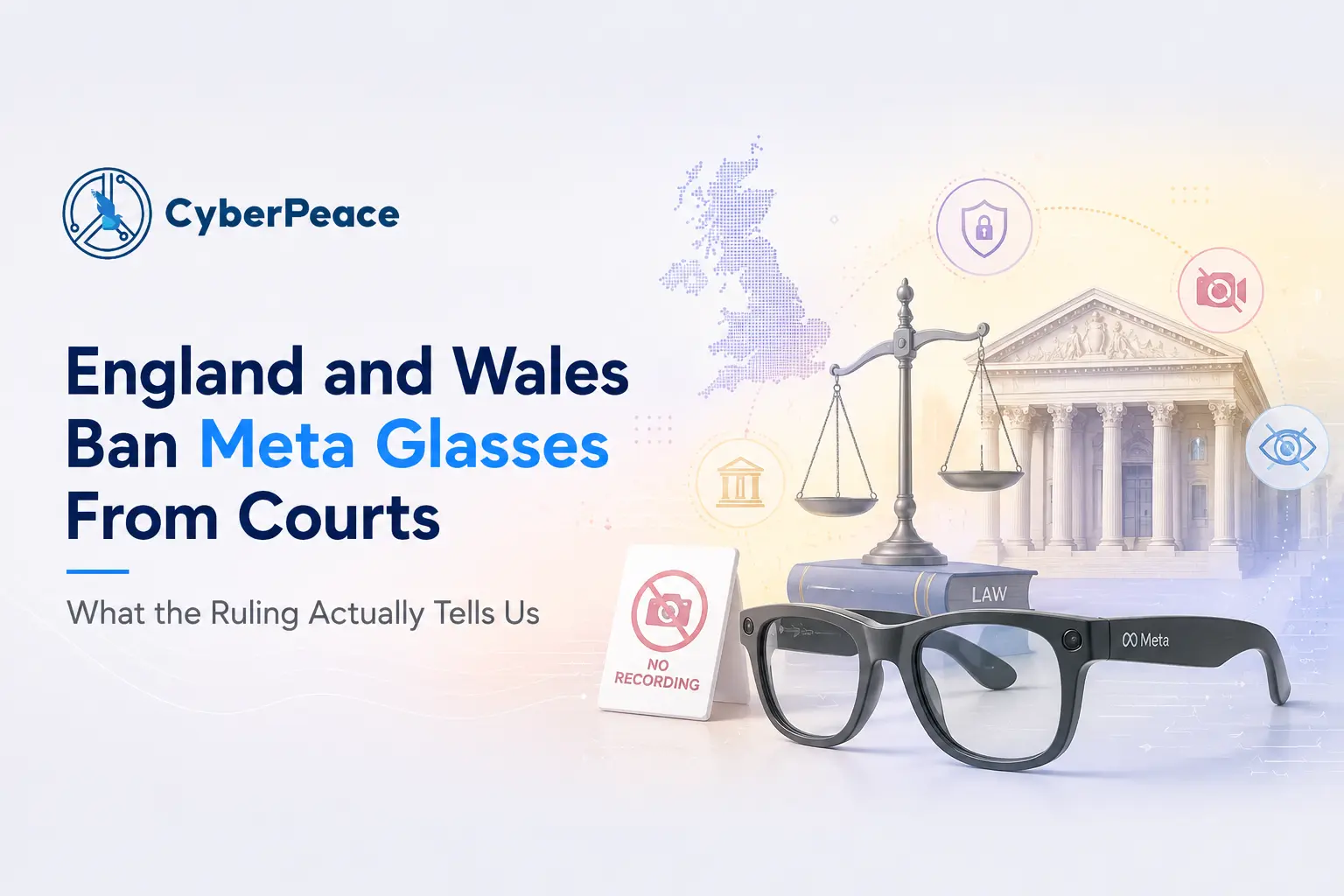
Meta smart glasses are now banned from courts across England and Wales. His Majesty's Courts and Tribunals Service (HMCTS), the body responsible for criminal, civil, and family courts throughout the jurisdiction, has confirmed that anyone entering a court building wearing the devices will have them confiscated at the door and returned only when they leave. The decision follows a comparable restriction introduced by New York's court system weeks earlier, and it lands at a moment when Meta's artificial intelligence (AI) powered eyewear, now sold in more than seven million pairs worldwide, has already been turned away from a wide range of British venues, from pubs and restaurants to theatres and members' clubs, over the same underlying worry: that a camera built into an ordinary looking pair of glasses can record people who have no way of knowing it is happening. Courts occupy a category of their own in this debate. Photography and recording inside a courtroom have been prohibited for the better part of a century, precisely because the integrity of witness testimony, jury deliberation, and the dignity of the proceedings depend on people being able to speak and be observed only by those the law intends. Smart glasses do not just test that rule. They expose a gap in how it was ever meant to be enforced.
What actually changed, and why smartphones were never the real problem
Unauthorised filming inside a courtroom can be prosecuted as contempt of court. Smartphones, despite carrying multiple cameras, have always been let through security on a kind of implicit social contract: everyone understands that the device could record, everyone understands that using it to do so is a punishable offence, and the visible act of holding a phone up to film someone is itself a signal that can be seen and stopped. As per reports citing an HMCTS spokesperson, "There are clear restrictions on taking images or videos within courts and tribunals which is why the use of Meta glasses is prohibited."
Smart glasses dissolve that social contract. A person wearing them looks, to everyone around them, exactly like a person not recording anything at all.
The wider pattern this fits into
England and Wales did not act in isolation. New York's court system introduced a comparable restriction weeks earlier, following an incident during a trial in which a presiding judge warned Meta's own legal team, present in court wearing the company's glasses, that recording proceedings would be treated as contempt. Reports note that the same device has already been shut out of a striking range of everyday venues across Britain, including a major pub chain, high end restaurants, private members' clubs, theatres, music venues, and comic book conventions, with critics giving the product the unflattering nickname "pervert glasses" well before any court got involved.
That pattern matters analytically because it shows this is not really a story about courts distrusting one particular gadget. It is a story about physical spaces everywhere recalibrating what "no recording" can plausibly mean once recording no longer requires a visible object pointed at someone. Meta, for its part, has said the glasses carry a pulsing light-emitting diode (LED) indicator that activates during recording and tamper detection technology intended to stop wearers covering the light, and the company has shipped more than seven million pairs, commanding, according to reports, more than 80 percent of the global AI eyewear market. None of that changes how the device is experienced by the person being recorded, who typically has no reliable way of noticing a small light on the side of someone's face across a room.
There is a genuine innovation story sitting underneath this controversy, and it deserves to be told honestly rather than dismissed. Wearable AI devices that layer translation, navigation, accessibility support, and hands free computing onto ordinary looking eyewear represent one of the more interesting consumer hardware categories to emerge in years, and the underlying engineering, fitting a camera, microphones, speakers, and AI processing into frames that look like Ray-Bans, is a legitimate technical achievement. The court ban is not a verdict on that achievement. It is a verdict on a specific gap between what the hardware makes physically possible and what existing social and legal norms were designed to detect and police. Those are two different conversations, and collapsing them into one tends to produce worse policy on both sides.
Reading the legal architecture underneath the ban
What HMCTS has effectively done is draw a bright line around function rather than form. Smartphones stay in because the courts are relying on deterrence, the near certainty of visible detection and prosecution if someone is caught filming, to manage the risk they pose. Smart glasses are excluded because that deterrence model breaks down when the recording apparatus is invisible by design. Clara Westbrook, a privacy law partner quoted in coverage of the decision, framed the underlying issue as a gap between the technology and the rules meant to govern it, rather than a simple case of institutional overreaction. That framing holds up under scrutiny. Courtroom rules were written for an era in which recording devices announced themselves. Smart glasses were engineered, whatever the stated intent, to do the opposite.
The view from India
Photography and videography are already prohibited inside Indian court premises as a general rule. Filming inside courtrooms has long been treated as a threat to witness candour, judicial dignity, and the orderly conduct of proceedings, and the principle has been reinforced recently. The Supreme Court, in a circular issued in September 2025, imposed a strict ban on photography, videography, and the creation of social media content within its High Security Zone, prohibiting mobile phones, cameras, tripods, and similar equipment except for official use. More recently, in an interim order passed in 2026, the Court went further, restricting the extraction, editing, and re-dissemination of audio-video recordings of judicial proceedings on social media or digital platforms without prior written permission from the Registrar General of the concerned High Court or the Secretary General of the Supreme Court.
Read together, these rules already prohibit the underlying act that smart glasses would enable inside a courtroom, unauthorized capture and circulation of what happens during a hearing. In that sense, Meta glasses are indirectly covered the moment someone wears a pair inside an Indian court, since using them to record would fall squarely within conduct the existing circulars already forbid. What has not happened, and this distinction matters, is any explicit order naming smart glasses as a class of device to be confiscated or barred at entry, the way HMCTS has now done in England and Wales. Indian courts have regulated the act of recording. They have not yet regulated the device that makes covert recording structurally easier to commit without detection.
It remains to be seen whether Indian courts will explicitly name and ban Meta glasses, rather than relying on existing photography rules to cover them indirectly. If that happens, the reasoning will be drawn on constitutional privacy jurisprudence or courtroom security concerns already in play.
Conclusion
What courts owe the people who appear before them is not hostility toward innovation, but a firm defence of the trust a courtroom is built on, that witnesses can speak freely, that proceedings remain what they are meant to be, and that privacy inside those walls is not negotiable. The question worth asking is not what smart glasses can see, but what courts must protect. Innovation earns its place by respecting the spaces it enters, not by outrunning their rules.
References
- The Guardian, "Meta glasses banned from courts in England and Wales," 11 August 2026 https://www.theguardian.com/technology/2026/aug/11/meta-glasses-banned-from-courts-in-england-and-wales
- Engadget, "England and Wales ban Meta Glasses from courtrooms.” https://www.engadget.com/2234606/england-and-wales-ban-meta-glasses-from-courtrooms/
- TechRepublic, "England and Wales Courts Ban Meta Smart Glasses Over Recording Risks." https://www.techrepublic.com/article/news-meta-smart-glasses-ban-england-wales-courts/
- BM Magazine, "Meta glasses banned from courts across England and Wales." https://bmmagazine.co.uk/legal/meta-glasses-banned-courts-england-wales/
- IBTimes UK" UK Court Service Bans Meta Smart Glasses After Restaurants, Theatres and Pubs Lead 'Spyware' Privacy Push." https://www.ibtimes.co.uk/uk-courts-ban-meta-smart-glasses-privacy-concerns-18141
- 97 Boing Boing, "English courts ban Meta glasses and other spyware." https://boingboing.net/2026/08/11/english-courts-ban-meta-glasses-and-other-spywear.html
- MediaPost, "Meta Smart Glasses Banned In England, Wales Courtrooms." https://www.mediapost.com/publications/article/417180/meta-smart-glasses-banned-in-england-wales-courtr.html
- LiveLaw, "When Seeing Becomes Recording: Invisible Bystander And Limits Of Indian Privacy Law." https://www.livelaw.in/lawschool/articles/invisible-bystander-limits-indian-privacy-law-545517
- PCQuest "B by Lenskart AI Glasses: India's Privacy Laws May Not Be Ready." https://www.pcquest.com/tech-trends/b-by-lenskart-ai-smart-glasses-india-privacy-dpdp-act-12141827
- MediaNama, "Meta tightens AI glasses security as questions over bystander privacy persist." https://www.medianama.com/2026/07/223-meta-tightens-ai-glasses-security-questions-bystander-privacy-persist/
- India Legal, "The State Of Surveillance." https://indialegallive.com/cover-story-articles/il-feature-news/surveillance-jantar-mantar-protests-delhi-police-wearable-recording-devices/
- Feminism In India, "AI Glasses: Is India Ready To Handle The Privacy Implications?" https://feminisminindia.com/2026/07/29/is-india-ready-to-handle-ai-glasses-social-ethical-and-regulatory-governance/
- LiveLaw, "Supreme Court Bans Photography, Videography In Court's High Security Zone." https://www.livelaw.in/top-stories/supreme-court-bans-photography-videography-in-courts-high-security-zone-after-bars-concerns-over-reels-selfies-in-court-premises-303682
- LiveLaw, "Supreme Court Bans Uploading and Sharing Of Audio-Video Recordings Of Court Hearings Without Prior Permission." https://www.livelaw.in/amp/top-stories/breaking-supreme-court-bans-uploading-sharing-of-audio-video-recordings-of-court-hearings-without-prior-permission-542719
- Deccan Herald, "SC bans clicking photos, making reels in its high security zone." https://www.deccanherald.com/amp/story/india%2Fdelhi%2Fsc-bans-clicking-photos-making-reels-in-its-high-security-zone-3724668

Executive Summary:
A viral video circulating on social media that appears to be deliberately misleading and manipulative is shown to have been done by comedian Samay Raina casually making a lighthearted joke about actress Rekha in the presence of host Amitabh Bachchan which left him visibly unsettled while shooting for an episode of Kaun Banega Crorepati (KBC) Influencer Special. The joke pointed to the gossip and rumors of unspoken tensions between the two Bollywood Legends. Our research has ruled out that the video is artificially manipulated and reflects a non genuine content. However, the specific joke in the video does not appear in the original KBC episode. This incident highlights the growing misuse of AI technology in creating and spreading misinformation, emphasizing the need for increased public vigilance and awareness in verifying online information.

Claim:
The claim in the video suggests that during a recent "Influencer Special" episode of KBC, Samay Raina humorously asked Amitabh Bachchan, "What do you and a circle have in common?" and then delivered the punchline, "Neither of you and circle have Rekha (line)," playing on the Hindi word "rekha," which means 'line'.ervicing routes between Amritsar, Chandigarh, Delhi, and Jaipur. This assertion is accompanied by images of a futuristic aircraft, implying that such technology is currently being used to transport commercial passengers.

Fact Check:
To check the genuineness of the claim, the whole Influencer Special episode of Kaun Banega Crorepati (KBC) which can also be found on the Sony Set India YouTube channel was carefully reviewed. Our analysis proved that no part of the episode had comedian Samay Raina cracking a joke on actress Rekha. The technical analysis using Hive moderator further found that the viral clip is AI-made.

Conclusion:
A viral video on the Internet that shows Samay Raina making a joke about Rekha during KBC was released and completely AI-generated and false. This poses a serious threat to manipulation online and that makes it all the more important to place a fact-check for any news from credible sources before putting it out. Promoting media literacy is going to be key to combating misinformation at this time, with the danger of misuse of AI-generated content.
- Claim: Fake AI Video: Samay Raina’s Rekha Joke Goes Viral
- Claimed On: X (Formally known as Twitter)
- Fact Check: False and Misleading

Introduction
Social media platforms serve as an ideal breeding ground for cybercrime. A new fraud called ‘WhatsApp Pink’ has emerged, promising new features and an improved UI. Several law enforcement and government agencies have already issued severe caution against the program, which is used to hack mobile phones and steal personal information.
What is a pink WhatsApp Scam?
WhatsApp is on a roll with new features, but the messaging app is also experiencing an increase in a new type of scam. The WhatsApp Pink scam, as it is known, is gaining steam. Police and government organisations in several states, including Mumbai, Kerala, and Karnataka, have warned about the scam. A North Region cybercrime wing tweet warned, “WHATSAPP PINK – A Red Alert for Android Users.” The government’s cybersecurity organisations have warned about the rise in pink WhatsApp scams.
Scammers and hackers target WhatsApp users with fake messages via the network in this scam. According to reports, the message contains a link directing users to download WhatsApp Pink, a bogus messaging program. According to sources, scammers are targeting many people with the promise that the next version will have a better interface and additional features.
The application also steals critical financial information such as OTP, bank account information, and contact information. When people open the link, harmful software is installed on their mobile phones, and scammers get access to the phones. The user may even lose access to their phone by downloading the app.
According to the advisory
The news about ‘New Pink Look WhatsApp with extra features’ recently circulating among WhatsApp users is a hoax that can lead to hacking of your mobile through malicious software.” It is uncommon for fraudsters to devise new tricks and methods to entice naive consumers into falling into their trap and committing cyber fraud. It is the users’ responsibility to be Aware, Alert, and Attentive to these types of frauds in order to be safe and secure in the digital world.”
The link that is present in the message, according to a notice from the police, is a phishing effort. By clicking the link, the user runs the risk of having their device compromised, which might allow scammers to steal their device information or use it without their permission.
Users run the possibility of suffering negative outcomes if they click the Pink WhatsApp link, as the Mumbai Police have warned. These dangers include financial loss, identity theft, spam attacks, unauthorised access to contact information and saved images, and even total loss of control over mobile devices.
Guidelines against the Scam
- If a user has installed the fake WhatsApp, the authorities have instructed that they uninstall it immediately by going into the mobile settings, selecting WhatsApp with the pink logo in Apps, and then uninstalling it.
- Users have been advised to exercise caution when clicking links from untrustworthy websites unless they have previously verified their legitimacy. Users are advised to only download and update software from reliable sites such as the official Google Play Store, the iOS App Store, and so on.
- individuals using the site have been told not to send any links or communications to other persons until they have received proper authentication or verification.
- To avoid misuse, users are advised not to disclose any personal or financial information, including passwords, login information, and credit or debit card information, to anybody online. Furthermore, in order to defend themselves against fraud attempts, users are encouraged to stay up to date on the most recent news and changes in order to be informed and careful about cybercriminal activities.
Why do Scammer target WhatsApp
WhatsApp is the world’s most popular messaging service; it can reach out to considerably more prospective victims than it could with another tool. A scammer’s victims are almost certainly using WhatsApp. If all their victims are in one app, the criminal can easily handle their activities.
Conclusion
WhatsApp users may reduce their chances of being victims of the pink WhatsApp scam significantly by following the guidelines issued by the advisory. WhatsApp has become the primary target for scams, as there is a large number of the population using WhatsApp so it will be easy for the Scammer to steal critical personal information and target another victim through WhatsApp. The pink WhatsApp Scam is exactly like it.
