
#FactCheck -AI-Generated Audio Falsely Shows Shah Rukh Khan Supporting ‘Cockroach Janta Party’
Executive Summary
A video allegedly showing Bollywood actor Shah Rukh Khan supporting and expressing his intention to join the so-called ‘Cockroach Janta Party’ (CJP) is being widely shared on social media.In the viral clip, Shah Rukh Khan can allegedly be heard saying:“Friends, the common people of this country are now fully awakened, and the storm of Cockroach Janta Party on social media has become so huge that its name is echoing everywhere… In just a few days, it has gained more than 15 million followers on Instagram… and honestly, I too will soon join the Cockroach Janta Party…”
However, CyberPeace Research Wing investigation found the claim to be false. The voice heard in the viral clip is AI-generated.
Claim
The viral video is being shared with the claim that actor Shah Rukh Khan publicly endorsed the ‘Cockroach Janta Party’ (CJP) and announced that he would soon join the movement.
- https://archive.is/wWueV

Fact Check
To verify the authenticity of the viral video, we first searched the internet using relevant keywords. However, we found no credible media reports, interviews, or posts from Shah Rukh Khan’s official social media accounts mentioning any support for the ‘Cockroach Janta Party’. Notably, if a major actor like Shah Rukh Khan had publicly supported any political or social media movement, it would have received widespread media coverage.
We then analysed key frames from the viral clip using Google Lens. During the investigation, we found an original video uploaded on September 10, 2023, on the YouTube channel of Sri Gokulam Movies. The footage was from the audio launch event of the film Jawan, where Shah Rukh Khan appeared in the same outfit seen in the viral clip.
वीडियो के डिस्क्रिप्शन में लिखा गया है, “शाहरुख़ In the original video, Shah Rukh Khan is seen speaking about the film, its cast, music, and his experience during the event. At no point does he mention the ‘Cockroach Janta Party’. The video description states that Shah Rukh Khan and the film’s team attended the audio launch event of Jawan in Chennai, where he praised music composer Anirudh Ravichander and thanked artists from the Tamil film industry. Additionally, the online trend related to the ‘Cockroach Janta Party’ emerged only in May 2026, whereas the original video is nearly three years old.
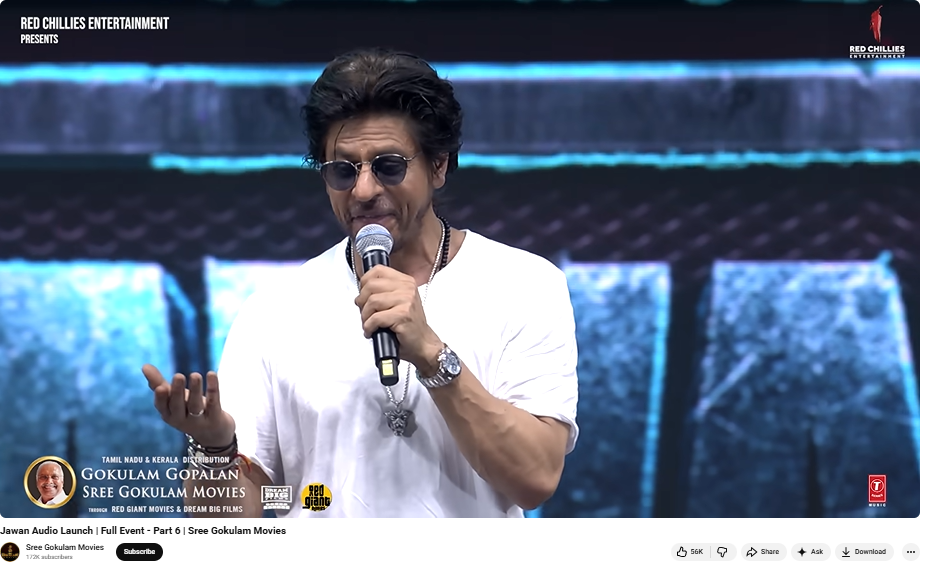
During the investigation, we also found several media reports covering the Jawan audio launch event, showing Shah Rukh Khan in the same attire as seen in the viral clip. For instance, a report published by Hindustan Times extensively covered the Chennai event, confirming that the viral footage was taken from the promotional event of the film.

To further examine the audio in the viral clip, we analysed it using the AI detection tool Resemble AI. The tool flagged the voice in the video as likely fake and AI-generated.

Conclusion
The investigation clearly shows that the claim about Shah Rukh Khan supporting or joining the ‘Cockroach Janta Party’ (CJP) is false. The viral video is actually from the 2023 audio launch event of the film Jawan, while the audio added to the clip has been generated using AI.

Related Blogs

Introduction
The Pahalgam terror attack, which took place on April 22, 2025, was a tragic incident that shook the nation. The National Investigation Agency (NIA) formally took over the Pahalgam terrorist attack case on Sunday, April 27, 2025. Following India's strikes on Pakistan, tensions between the two countries have heightened, leading to concerns about potential escalation, including the risk of cyber attacks and the spread of misinformation that could further complicate the situation. It is crucial for corporations, critical sectors, and all netizens in India to stay proactive and vigilant against cyber attacks, while also being cautious of the risks of misinformation. This includes protecting themselves from being affected and avoiding the inadvertent or deliberate spread of false information.
Be Careful with the Information You Consume and Share
It is crucial to note that the Press Information Bureau (PIB) has alerted citizens to stay cautious of fake narratives being circulated by Pakistani handles. Through an official fact check, PIB debunked several misleading claims aimed at undermining India’s internal stability and security forces. Citizens are urged to verify any suspicious content via PIB Fact Check before sharing it further. As social media becomes a hub for viral content, netizens must be cautious about the information they consume and share. Misleading information, old videos, false claims, and misinformation flood the platform, making it essential to be mindful of the content you consume and share, as spreading unverified content can have severe consequences.
CyberPeace Recommends Following Crucial Cyber Safety Tips to Stay Vigilant Against Potential Digital Threats:
- Do not open/download any video file you receive in social media groups or from unknown sources.
- As per several media reports, a video file named "Dance of the Hilary" is being circulated, which may be intended for a cyber attack on India. Please refrain from clicking, downloading, or sharing any such file. Additionally, there are reports of suspicious files circulating on WhatsApp, including tasksche.exe, OperationSindoor.ppt, and OperationSindhu.pptx. Do not download or open any of these files, as they may pose a serious cyber threat.
- To receive accurate alerts, you can enable government notifications on your iPhone. Go to Settings > Notifications and scroll down to Government Alerts. Make sure all the toggles under Government Alerts are turned on. This will allow you to receive timely information and important alerts from government agencies, and your device will display critical notifications to keep you informed and safe.
- Turn off automatic media download in WhatsApp to reduce the risk of downloading potentially harmful files.
- To protect your privacy, disable location services on apps like WhatsApp, Instagram, Snapchat, and X unless absolutely necessary.
- Refrain from sharing sensitive information like government data, confidential details, or personal records on unsecured devices or networks.
- To avoid misinformation and manipulation during conflict, verifying and cross-checking the news before sharing it with anyone is crucial. Stay updated with official news updates, and be cautious while sharing information.
Conclusion
In times of heightened tensions, all of us need to stay vigilant, protect our digital spaces, and verify the information we encounter. Together, we can safeguard ourselves from cyber threats and misinformation, ensuring the safety, stability, and digital security of our nation. As proud citizens, let us unite to protect both our physical and digital well-being.
References
- https://www.thehindu.com/news/national/pakistan-has-unleashed-propaganda-machine-in-response-to-successful-operation-sindoor-ib-ministry/article69549084.ece
- https://sambadenglish.com/national-international-news/india/centre-asks-people-to-stay-alert-against-misinformation-in-social-media-9048169
- https://www.youtube.com/watch?v=gLHo_Vd1_H0&t=19s

Introduction
The digital expanse of the metaverse has recently come under scrutiny following a gruesome incident. In a digital realm crafted for connection and exploration, a 16-year-old girl’s avatar falls victim to an agonising assault that kindled the fire of ethno-legal and societal discourse. The incident is a stark reminder that the cyberverse, offering endless possibilities and experiences, also has glaring challenges that require serious consideration. The incident involves a sixteen-year-old teen girl being raped through her digital avatar by a few members of Metaverse.
This incident has sparked a critical question of genuine psychological trauma inflicted by virtual experiences. The incident with a 16-year-old girl highlights the strong emotional repercussions caused by illicit virtual actions. While the physical realm remains unharmed, the digital assault can leave permanent scars on the psyche of the girl. This issue raises a critical question about the ethical implications of virtual interactions and the responsibilities of service providers to protect users' well-being on their platforms.
The Judicial Quagmire
The digital nature of these assaults gives impetus to complex jurisdictions which are profound in cyber offences. We are still novices in navigating the digital labyrinth where avatars have the ability to transcend borders with just a click of a mouse. The current legal structure is not equipped to tackle virtual crimes, calling for urgent reforms in critical legal structure. The Policymakers and legal Professionals must define virtual offenses first with clear and defined jurisdictional boundaries ensuring justice isn’t hampered due to geographical restrictions.
Meta’s Accountability
Meta, a platform where this gruesome incident occurred, finds itself at the crossroads of ethical dilemma. The company implemented plenty of safeguards that proved futile in preventing such harrowing acts. The incident has raised several questions about the broader role and responsibilities of tech juggernauts. Some of the questions demanding immediate answers as how a company can strike a balance between innovation and the protection of its users.
The Tightrope of Ethics
Metaverse is the epitome of innovation, yet this harrowing incident highlights a fundamental ethical contention. The real challenge is to harness the power of virtual reality while addressing the risks of digital hostilities. Society is still facing this conundrum, stakeholders must work in tandem to formulate robust and effective legal structures to protect the rights and well-being of users. This also includes balancing technological development and ethical challenges which require collective effort.
Reflections of Society
Beyond legal and ethical considerations, this act calls for wider societal reflections. It emphasises the pressing need for a cultural shift fostering empathy, digital civility and respect. As we tread deeper into the virtual realm, we must strive to cultivate ethos upholding dignity in both the digital and real world. This shift is only possible through awareness campaigns, educational initiatives and strong community engagement to foster a culture of respect and responsibility.
Safer and Ethical Way Forward
A multidimensional approach is essential to address the complicated challenges cyber violence poses. Several measures can pave the way for safer cyberspace for netizens.
- Legislative Reforms - There’s an urgent need to revamp legislative frameworks to mitigate and effectively address the complexities of these new and emerging virtual offences. The tech companies must collaborate with the government on formulating best practices and help develop standard security measures prioritising user protection.
- Public Awareness and Engagement - Initiating public awareness campaigns to educate users on crucial issues such as cyber resilience, ethics, digital detox and responsible online behaviour play a critical role in making netizens vigilant to avoid cyber hostilities and help fellow netizens in distress. Civil society organisations and think tanks such as CyberPeace Foundation are the pioneers of cyber safety campaigns in the country, working in tandem with governments across the globe to curb the evil of cyber hostilities.
- Interdisciplinary Research: The policymakers should delve deeper into the ethical, psychological and societal ramifications of digital interactions. The multidisciplinary approach in research is crucial for formulating policy based on evidence.
Conclusion
The digital Gang Rape is a wake-up call, demanding the bold measure to confront the intricate legal, societal and ethical pitfalls of the metaverse. As we navigate digital labyrinth, our collective decisions will help shape the metaverse's future. By nurturing the culture of empathy, responsibility and innovation, we can forge a path honouring the dignity of netizens, upholding ethical principles and fostering a vibrant and safe cyberverse. In this significant movement, ethical vigilance, diligence and active collaboration are indispensable.
References:
- https://www.thehindu.com/sci-tech/technology/virtual-gang-rape-reported-in-the-metaverse-probe-underway/article67705164.ece
- https://thesouthfirst.com/news/teen-uk-girl-virtually-gang-raped-in-metaverse-are-indian-laws-equipped-to-handle-similar-cases/

Executive Summary:
Recent reports circulating on various social media platforms have falsely claimed that an air taxi prototype is operational and providing services between Amritsar, Chandigarh, Delhi, and Jaipur. These claims, accompanied by images and videos, have been widely shared, leading to significant public attention. However, upon conducting a thorough examination using reverse image search, it has been determined that the information is misleading and inaccurate. These assertions do not reflect the current reality and are not substantiated by credible sources

Claim:
The claim suggests that an air taxi prototype is already operational, servicing routes between Amritsar, Chandigarh, Delhi, and Jaipur. This assertion is accompanied by images of a futuristic aircraft, implying that such technology is currently being used to transport commercial passengers.

Fact Check:
The claim of air taxi and routes between Amritsar, Chandigarh, Delhi, and Jaipur has been found to be misleading. Also, so far, neither the Indian government nor the respective aviation authorities have issued any sort of public declarations nor industry insiders to claim any launch of any air taxi service. Further research followed a keyword-based search that directed us to a news report published in The Times of India on January 20, 2025. A similar post to the one seen in the viral video accompanied the report. It stated that Bengaluru-based aerospace startup Sarla Aviation launched its prototype air taxi called “Shunya” during the Bharat Mobility Global Expo. Under this plan, it looks to initiate electric flying taxis in Bangalore by 2028. This urban air transport program for India will be similar to what they are posting in this regard.

Conclusion:
The viral claim saying that there is an air taxi service in India between Amritsar, Chandigarh, Delhi, and Jaipur is entirely false. The pictures and information going viral are misleading and do not relate to any progress or implementation of air taxi technology in India. To date, there is no official confirmation or credible evidence that supports such a service. Information must be verified from reliable sources before it is believed or shared in order to prevent the spread of misinformation.
- Claim: A viral post claims an air taxi is operational between Amritsar, Chandigarh, Delhi, and Jaipur.
- Claimed On: Social Media
- Fact Check: False and Misleading
