

Navigating the Path to CyberPeace: Insights and Strategies
Featured #factCheck Blogs

Executive Summary
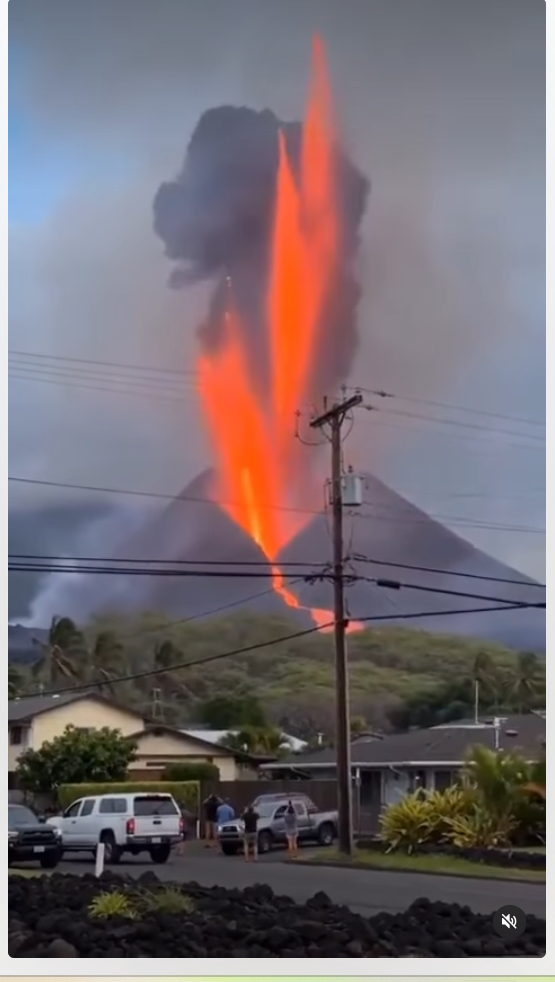
A volcano erupted at Indonesia’s Anak Krakatau on the night of September 4, 2026. A video is being shared on social media in connection with the eruption. The video shows lava rising high into the air following a volcanic eruption, with people seen fleeing the area. Some social media users are sharing the video claiming that it shows the eruption of Indonesia’s Anak Krakatau volcano. Research by CyberPeace found that the viral video is AI-generated. The video was created with the help of AI tools. However, four volcanoes, including Anak Krakatau, have erupted in Indonesia.
Claim
An Instagram user shared the viral video with the caption: “Indonesia’s Anak Krakatau volcano erupted Friday night. According to MAGMA Indonesia, lava fountains were seen rising from the volcano’s crater, while ash plumes reached a height of up to 400 metres. The volcano remains at Level III, with authorities enforcing a 3-kilometre exclusion zone around the crater.”
https://www.instagram.com/reels/DdBfQprThPA/
Fact Check
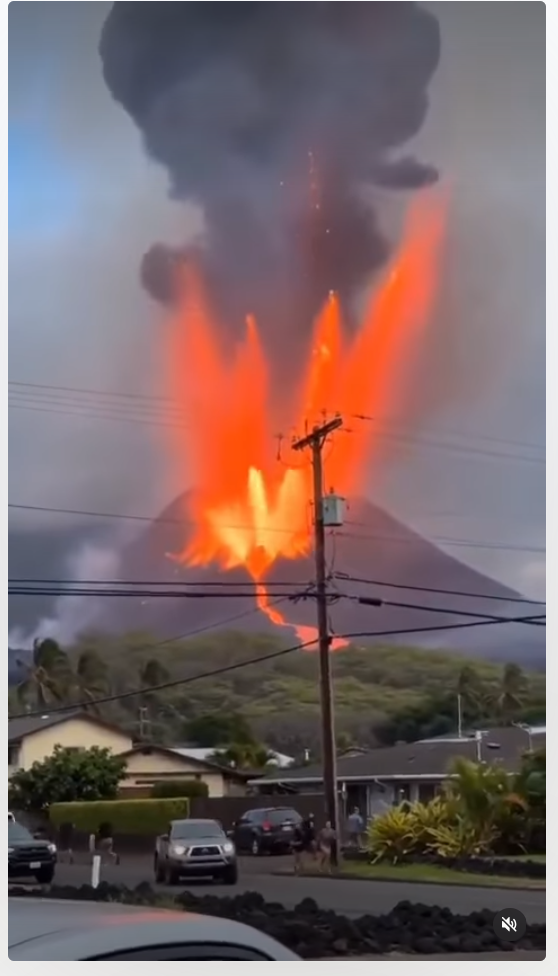
To investigate the viral video, we examined it closely and noticed several inconsistencies. At the beginning of the video, people can be seen standing calmly as the volcanic eruption takes place. Shortly afterward, the vehicles parked there suddenly begin moving. In one of the cars, no driver is visible. Meanwhile, the legs of a person running on the road disappear, and the person appears to merge into the background. These visual inconsistencies raised suspicions that the viral video had been created using AI tools.
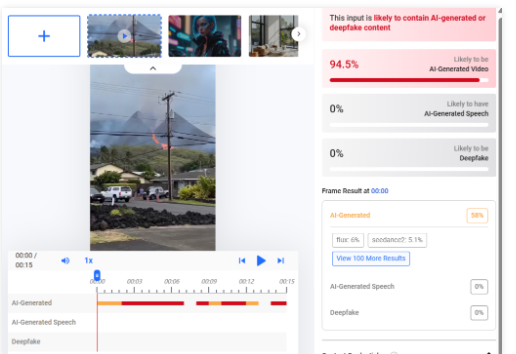
We checked the video using the AI detection tool Hive Moderation, which indicated that there was a more than 94 percent likelihood that the video was AI-generated.
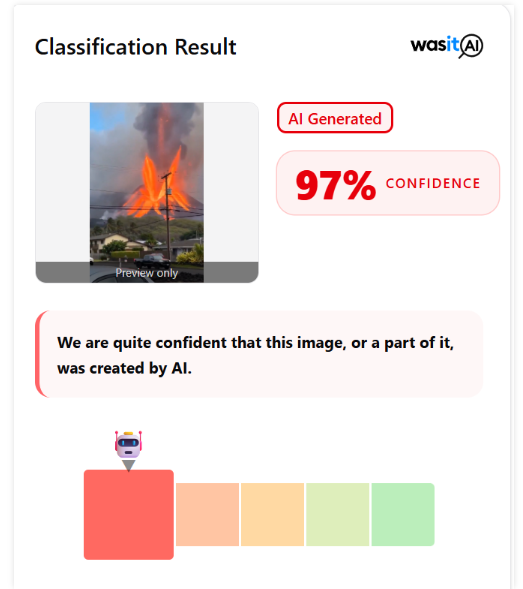
We checked the keyframes of the video using the AI detection tool Was It AI, which identified the video as 97 percent likely to be AI-generated.
Conclusion
The Anak Krakatau volcano in Indonesia erupted on the night of September 4, 2026. However, our research found that the video being shared in connection with the eruption was created using AI tools. Visual inconsistencies in the footage, along with the results of AI detection tools, indicate that the video is AI-generated and does not show genuine footage of the Anak Krakatau eruption. Therefore, the claim that the viral video shows the September 4 eruption of Indonesia’s Anak Krakatau volcano is false.

Executive Summary
A video is being shared on social media showing a female cricket player seemingly making an impressive catch in the air after rotating 360 degrees. The video is being shared with claims that the player pulled off the extraordinary catch in an incredible feat on the cricket field. Research by CyberPeace found the viral claim to be false. Our research revealed that the viral video was edited with the help of AI. The video uses actual broadcast footage from the 2024 Women’s T20 World Cup match between India and New Zealand, but the 360-degree catch shown in the video was not part of the actual match.
Claim:
A video of a female cricketer making an incredible 360-degree catch is being shared on social media as a real incident from a cricket match.
https://www.instagram.com/reels/DdEca3LNT00/

Fact Check
To verify the authenticity of the viral claim, we conducted a Google search using relevant keywords. However, we did not find any credible media reports confirming the claim.

As part of the next step in our research, we conducted a reverse image search of the keyframes from the video. During the search, we found the same video on a YouTube channel, where it was identified as AI-generated.
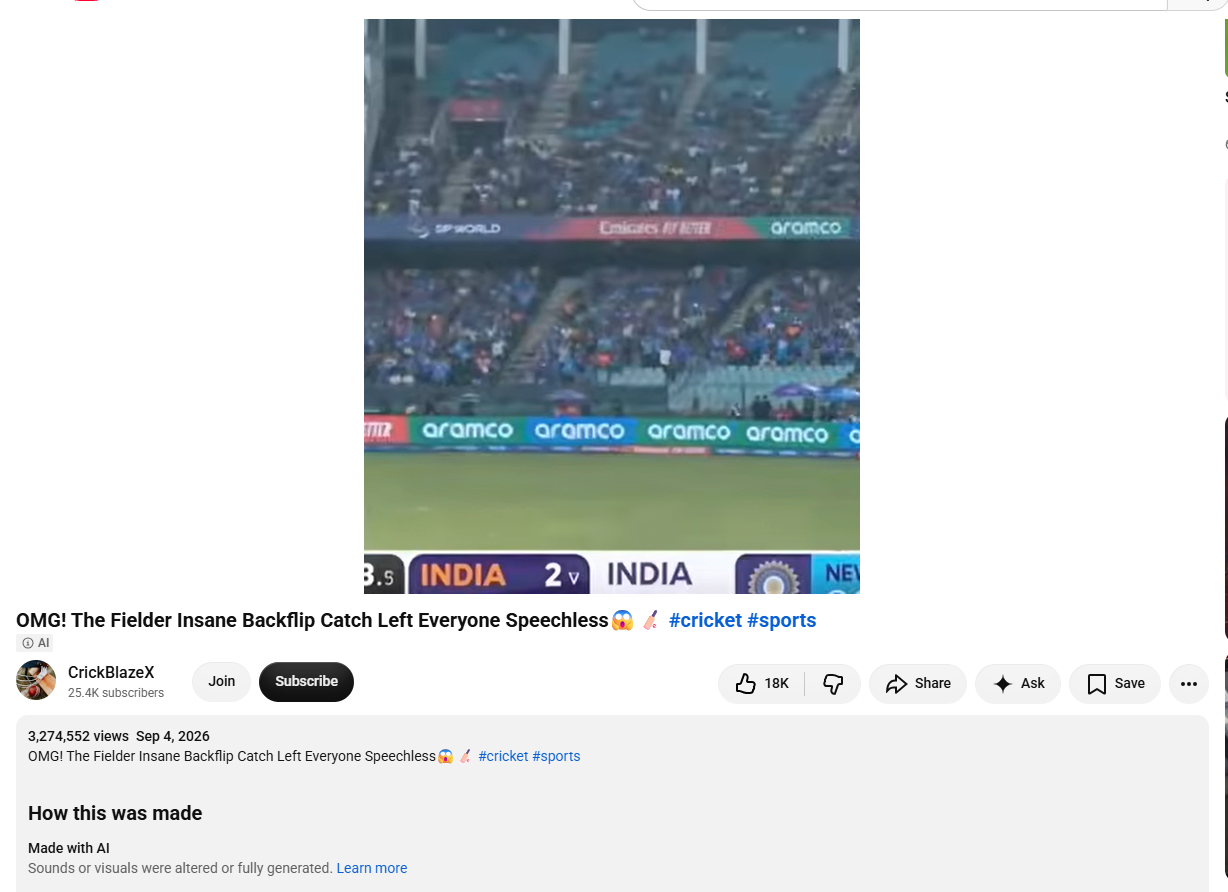
As the next step, we scanned the viral video using the AI detection tool Hive Moderation. According to the tool’s results, there is a 70 percent probability that the video is AI-generated.

As part of the next step in our research, we scanned the viral video using an AI detection tool. According to the results, the viral video is AI-generated.

Conclusion
Our research found that the viral video was edited with the help of AI. The video uses actual broadcast footage from the 2024 Women’s T20 World Cup match between India and New Zealand. However, the 360-degree catch shown in the video was not part of the actual match.

Executive Summary
A video showing a monkey dramatically rescuing a child hanging from a balcony is being widely shared on social media. In the clip, a small child appears to be on the verge of falling when a monkey suddenly arrives, grabs the child, and saves them from falling. Many users praised the monkey’s bravery, while some even described it as a miracle. Research by CyberPeace Research Wing found that the viral video is not real and was created using AI technology before being shared with misleading claims.
Claim
An X user shared the video claiming that a monkey saved a child from falling off a balcony just in time, astonishing onlookers with its intelligence and quick action. The post described the monkey’s act as heroic and compassionate.

Fact Check
To verify the claim, we extracted keyframes from the viral video and conducted a reverse image search using Google Lens. During this process, we found the same video uploaded on April 16, 2026 by an Instagram account named Instagram user mojilo_vandro. The caption described the scene as a “miracle of God.”
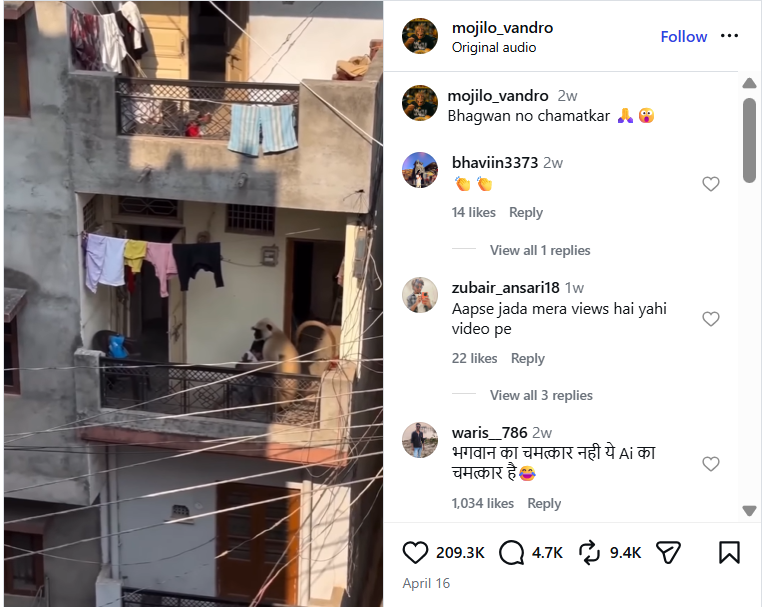
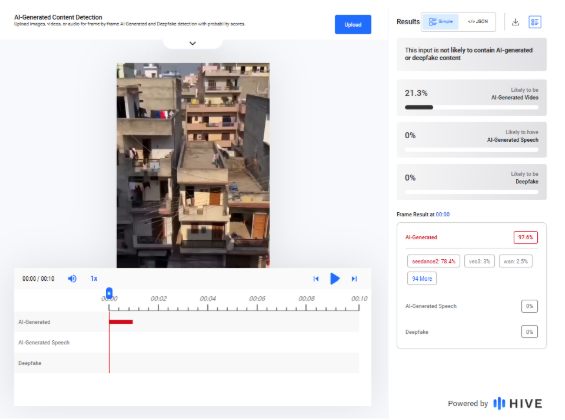
A closer review of the account revealed several similar monkey-themed videos. More importantly, the account bio clearly states that it creates AI-based fictional content. We also analyzed the clip using AI detection tool Hive Moderation, which assessed the video as having a 97.6% probability of being AI-generated
Conclusion
Our research confirms that the viral video of a monkey saving a child hanging from a balcony does not depict a real incident. It was digitally created using AI and shared online with misleading claims.

Executive Summary
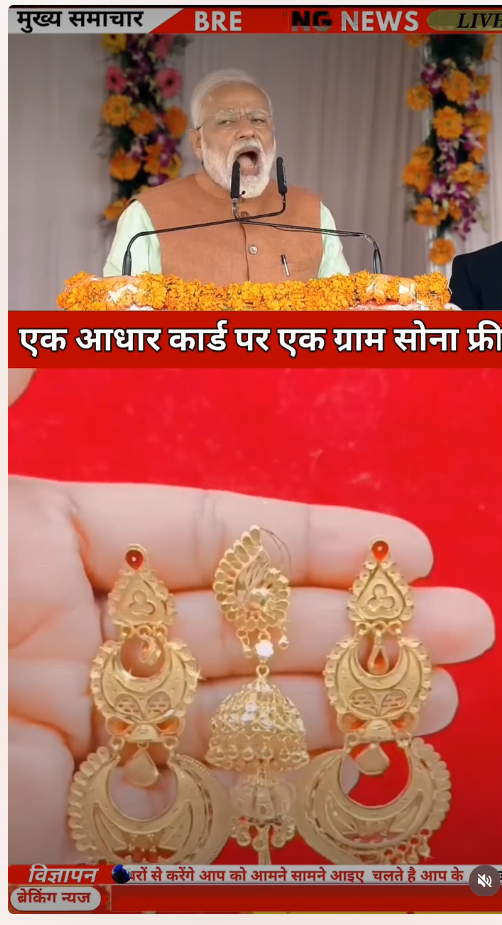
A video of Prime Minister Narendra Modi is being widely shared on social media, in which he appears to say that every woman would receive 1 gram of gold free against one Aadhaar card. The clip is being circulated with misleading claims suggesting a government scheme. Research by CyberPeace Research Wing found that the audio of Prime Minister Modi’s 2019 video was manipulated using AI technology and shared with a misleading claim.
Claim
An Instagram user shared the viral video claiming that PM Modi announced free gold for women.
Fact Check
To verify the claim, we conducted a keyword search on Google but found no credible media reports or official announcements supporting such a scheme. We then extracted keyframes from the viral clip and performed a reverse image search. This led us to the original video uploaded by DD News on February 24, 2019. In the authentic footage, PM Modi was addressing a public rally in Gorakhpur. At no point did he mention distributing gold to women.

Further examination of the viral clip raised suspicions of audio manipulation. We analyzed the speech using AI detection tool Hive Moderation, which indicated a 99% probability that the speech was AI-generated.

Conclusion
Our research found that the viral claim is false. The video uses footage from PM Modi’s 2019 speech, while the original audio appears to have been replaced using AI-generated voice technology to spread a misleading claim about free gold distribution.

Executive Summary
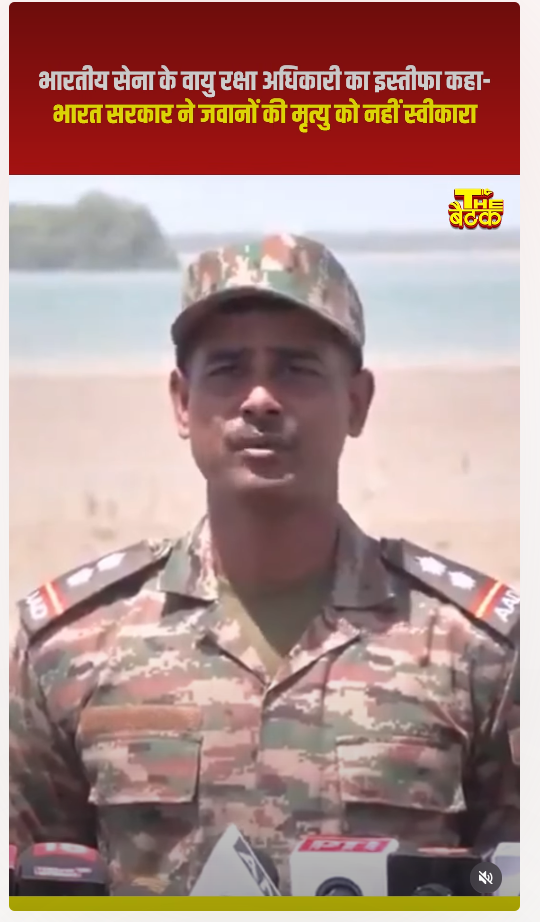
A video of a soldier is being widely circulated on social media with the claim that an Indian Army Air Defence officer named Anurag Thakur resigned, alleging that soldiers martyred during “Operation Sindoor” were ignored by the government. However, research by the CyberPeace Research Wing found the claim to be false. The viral video has been manipulated with AI-generated audio and is being shared with a misleading narrative.
Claim:
Instagram users shared the clip claiming: “Indian Army Air Defence officer Anurag Thakur has resigned. He said the Government of India did not even acknowledge the deaths of soldiers.”
Fact Check:
The research began with keyword searches related to the alleged resignation of an “Indian Army Air Defence JCO Anurag Thakur.” No credible or reputed media report was found supporting such a claim. A reverse image search of a frame from the viral video led to the original footage posted by news agency ANI on its official X account on March 22, 2026. The original video runs for 1 minute and 42 seconds A comparison of both videos showed that in the viral clip, the soldier appears to be speaking in English, whereas in ANI’s authentic video, the same soldier is speaking in Hindi while addressing the media.
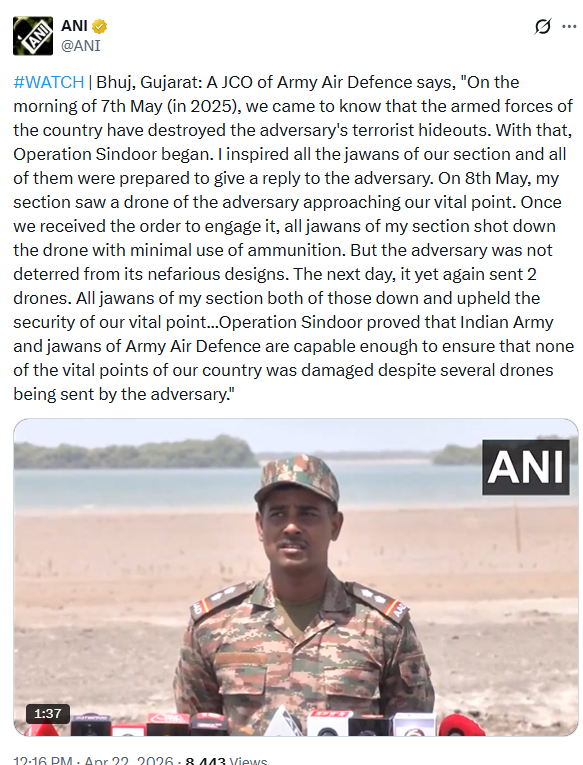
In the original video, shared by ANI from Bhuj, Gujarat, the JCO explained that on the morning of May 7, 2025, they learned that Indian armed forces had destroyed enemy terror launch pads, marking the beginning of “Operation Sindoor.” He said he motivated his unit and they were prepared to respond. He further stated that on May 8, an enemy drone heading toward a vital location was detected and shot down using minimal ammunition. Two more drones were sent the following day and were also neutralised. He added that “Operation Sindoor” demonstrated the capability of the Indian Army and Air Defence units.
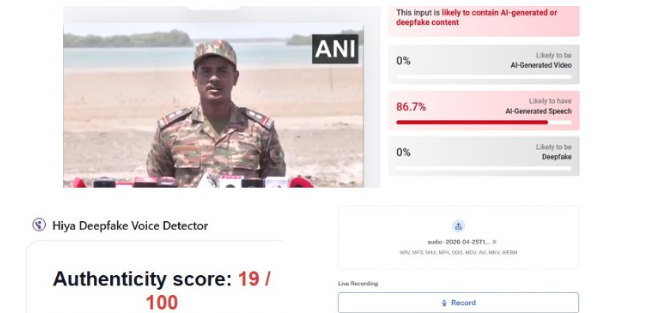
ANI had also summarised the same remarks in English in its post, which further confirmed that the viral version had been tampered with. For additional verification, the audio from the viral clip was examined using AI-based detection tools. Hiya Deepfake Voice Detector flagged it as likely fake, while Resemble AI also identified the audio as manipulated.

Conclusion:
The viral video claiming that an Indian Army Air Defence JCO resigned over ignored martyrs of “Operation Sindoor” is false. The original footage has been altered and artificial AI-generated audio was added to create a misleading narrative.

Executive Summary
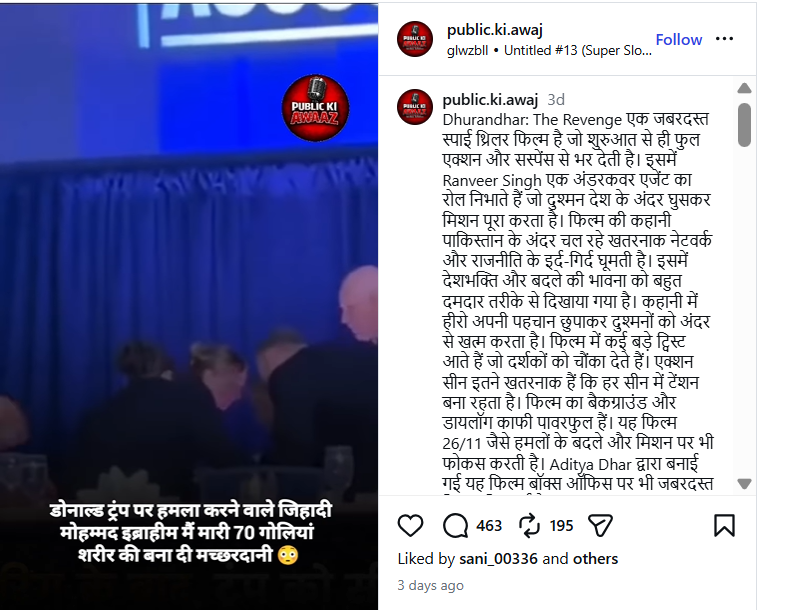
A social media post about the shooting incident during a dinner event for journalists covering the White House is going viral with the claim that the attacker was a Muslim man who was shot dead by security personnel. The accompanying video shows panic inside a hall and alert security officials responding to the situation. wHowever, research by the CyberPeace Research Wing found that the claim is false and misleading. The video is being shared with incorrect information about the identity and fate of the suspect.
Claim:
An Instagram user shared the video on April 26, 2026, claiming that the attacker who targeted Donald Trump was a “jihadi” named Mohammad Ibrahim and that he was killed after being shot multiple times.
Fact Check:
To verify the claim, relevant keyword searches were conducted online.
A report published by BBC on April 28, 2026, stated that the suspect accused of attempting to assassinate President Donald Trump during the Washington dinner event was identified as Cole Thomas Allen. The report said Allen lived with his parents in Los Angeles and was produced in court on April 28.
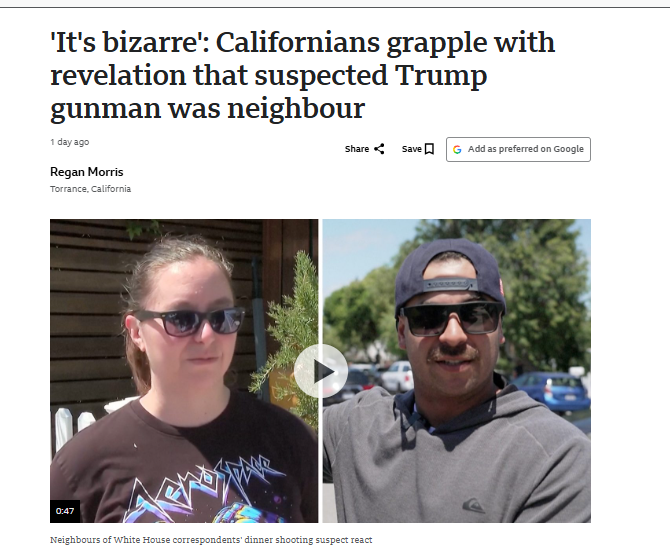
According to court documents cited in the report, Allen rushed past a security checkpoint carrying a semi-automatic handgun, a pump-action shotgun, and three knives. Authorities said one Secret Service agent was injured during the incident before Allen was subdued and taken into custody. A separate report published by NBC News on April 26, 2026, also identified the accused as Cole Thomas Allen and included visuals from the incident, showing the suspect after his arrest.

Conclusion:
The claim that the White House dinner party attacker was a Muslim man named Mohammad Ibrahim is false. The accused has been identified as Cole Thomas Allen, and he was arrested after the incident. Claims that he was killed are also incorrect.
.webp)
Executive Summary
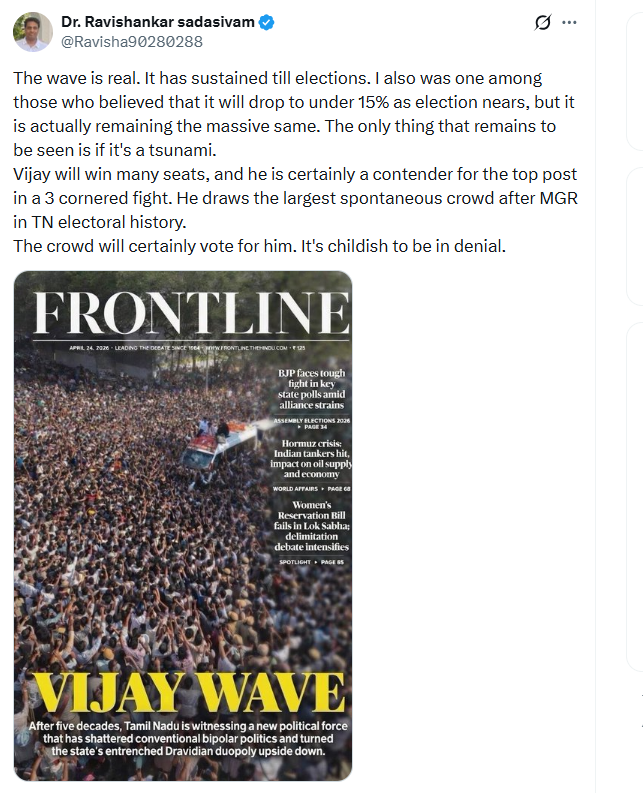
As Tamil Nadu voted in the 2026 Assembly elections, with 84.69 percent polling recorded on April 23, a purported cover page of Frontline magazine began circulating on social media. The viral image featured a massive rally crowd of South Indian actor and Tamilaga Vetri Kazhagam (TVK) chief Joseph Vijay, claiming that a “Vijay Wave” had emerged in the state. The alleged cover also stated that Tamil Nadu was witnessing a new political force after five decades, one that had challenged the dominance of Dravida Munnetra Kazhagam (DMK) and All India Anna Dravida Munnetra Kazhagam (AIADMK).
However, research by the CyberPeace Research Wing found that the viral cover page is fake. Frontline magazine has not published any such edition, and its latest issue is related to health.
Claim:
X user “Dr. Ravishankar Sadasivam” shared the viral image on April 22, 2026, claiming the “wave is real” and suggesting that Vijay could emerge as a top contender in a three-cornered contest. The post further claimed that after MGR, Vijay was drawing the largest spontaneous crowds in Tamil Nadu politics.
Fact Check:
To verify the claim, relevant keyword searches were conducted online. During the research, a clarification post from Frontline magazine’s official X account, shared on April 22, 2026, was found. In the post, the publication clearly stated that the viral cover page was fake and had not been published by the magazine. It further said that the fabricated cover was being circulated online by supporters of TVK.
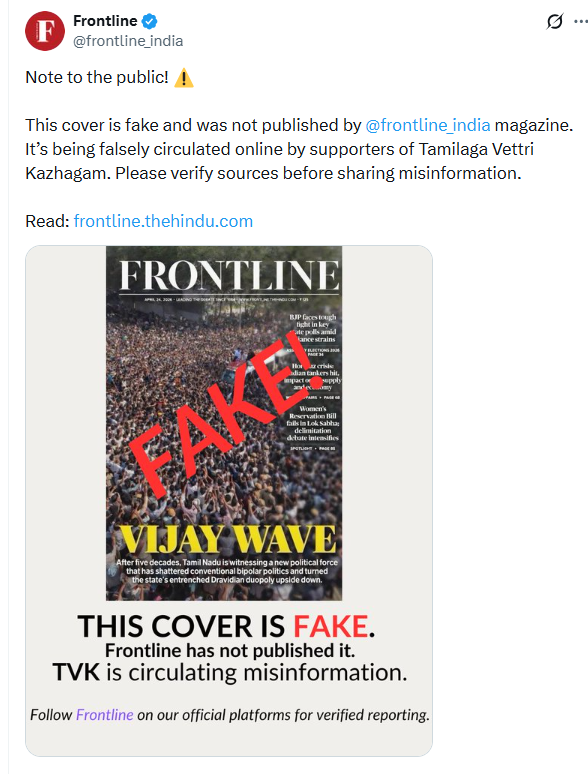
A review of the official Frontline website also found no edition carrying such a cover page.

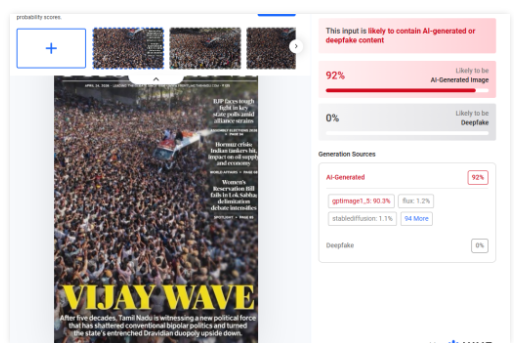
Additionally, the viral image was analyzed using the AI detection tool Hive Moderation, which rated it as 92 percent likely to be AI-generated.
Conclusion:
The claim that Frontline magazine published a cover story on a “Vijay Wave” during the Tamil Nadu Assembly elections is false. The viral cover page is fake and is being circulated online to mislead people.

Executive Summary
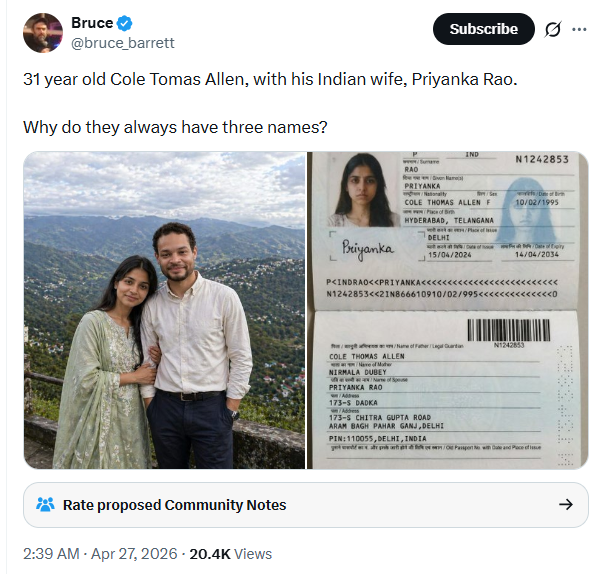
After reports identifying Cole Thomas Allen as the accused in the shooting incident at the White House Correspondents’ Association (WHCA) dinner, several Pakistani propaganda-linked social media accounts began circulating a new claim alleging that the suspect’s wife is an Indian woman named Priyanka Rao. Users shared a photo purportedly showing Cole Thomas Allen with Priyanka Rao, along with an alleged Indian passport in her name. One user posted the image with the caption: “31-year-old Cole Thomas Allen with his Indian wife Priyanka Rao. Why do they always have three names?”
However, research by the CyberPeace Research Wing found the claim to be fake. The viral passport and accompanying image appear to be AI-generated.
Claim:
Social media users claimed that Cole Thomas Allen, accused in the WHCA dinner shooting, is married to an Indian woman named Priyanka Rao.
Fact Check:
During the research, multiple inconsistencies were found in the viral passport image, strongly indicating it is fabricated. A close review of the document revealed several obvious errors commonly seen in AI-generated content. For instance, in the “Nationality” field, the name “Cole Thomas Allen” was written instead of a country name. Such a basic mistake would not appear in any genuine government-issued passport.
The Hindi text on the document was also highly inaccurate and unnatural. Examples included:
- “राष्ट्रीयता” misspelled as “राष्ट्रीयाय”
- “जन्मतिथि” replaced with meaningless text
- “जन्म स्थान” incorrectly written
- “Issue” mistranslated as unrelated wording
- “Date of Expiry” left untranslated in Hindi format
Further analysis using an AI detection tool indicated that the viral passport image had a 69 percent probability of being AI-generated.

Conclusion:
The claim that WHCA dinner shooting accused Cole Thomas Allen has an Indian wife named Priyanka Rao is fake. The viral passport and image being shared online are likely AI-generated and part of a misinformation campaign.

Executive Summary
A video showing uniformed personnel removing street vendors and damaging roadside stalls is being circulated on social media with the false claim that the Nepal government has started expelling Bangladeshis from the country. The viral clip is around 49 seconds long and shows authorities clearing vendors from a public area. Nepali audio can also be heard in the background, which appears to have added to the misleading narrative.
However, an research by the CyberPeace Research Wing found that the claim is false. The video is not from Nepal, but from Bangladesh’s capital Dhaka, where authorities were carrying out an anti-encroachment operation near the National Stadium.
Claim:
The video was shared on X with a caption claiming that a Hindu-led government in Nepal had begun driving Bangladeshis out of the country.
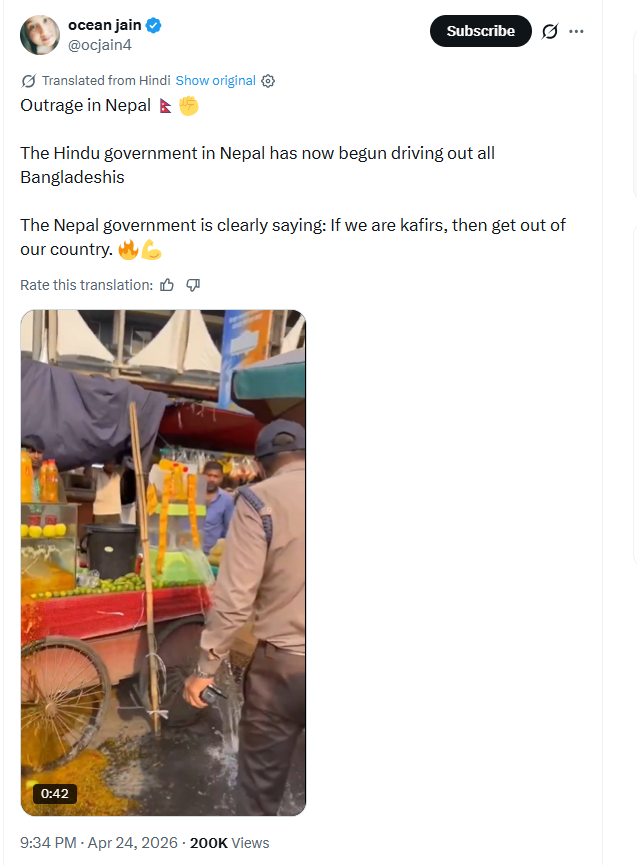
Fact Check:
A close examination of the video revealed several signs contradicting the claim. Text written in Bengali can be seen at multiple places in the footage. The caps worn by uniformed personnel also appear to display “Bangladesh Police.” Investigators also noticed a stadium-like structure in the background. Comparing the visuals with street-view imagery available on Google Maps led to a match near the National Stadium area in Dhaka, Bangladesh.


Further verification found a video uploaded on March 18, 2025, by a Bangladeshi news portal on YouTube containing scenes matching the viral clip. The caption described it as footage from an anti-encroachment drive in the Gulistan area of Dhaka.

A similar version of the video was also found on a Bangladeshi Instagram account uploaded on March 17, where it was again described as police action against illegal encroachments. The video credit was attributed to a person named Zahir Rehan.
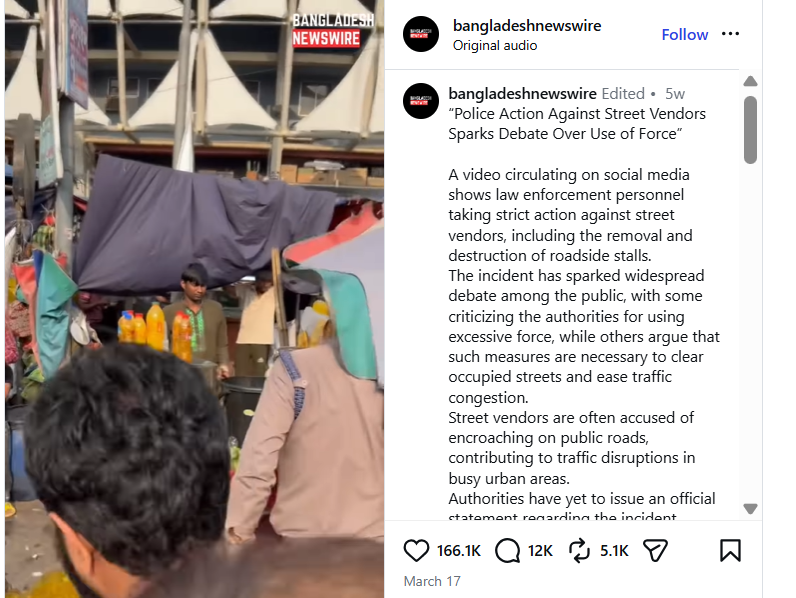
While the exact date of the original footage could not be independently confirmed, available evidence clearly links the video to Bangladesh and not Nepal.
Conclusion:
The viral claim that Nepal has begun expelling Bangladeshis is false. The video actually shows an anti-encroachment drive carried out by authorities in Dhaka, Bangladesh.

Executive Summary
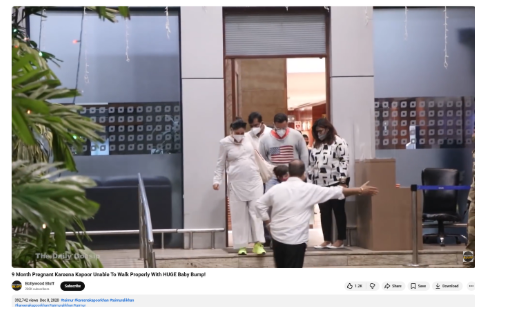
A photo of Bollywood actress Kareena Kapoor Khan is being widely shared on social media with the claim that she is pregnant again. In the viral image, Kareena appears with a visible baby bump, leading users to speculate about another pregnancy. However, research by the CyberPeace Research Wing found the claim to be misleading. The research revealed that the image is not recent and is actually from 2020, now being reshared with a false narrative.
Claim:
An Instagram user shared the viral image on April 18, 2026, and posted a caption jokingly suggesting that after Taimur and Jehangir, Kareena was expecting more children.
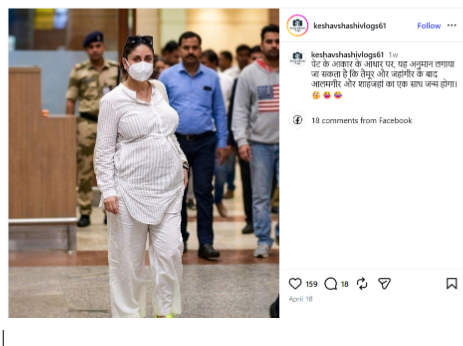
Fact Check:
To verify the claim, relevant keyword searches were conducted online, but no credible media report was found supporting the claim that Kareena Kapoor Khan is currently pregnant. A reverse search of the viral visual led to an older video uploaded on the YouTube channel Bol Bollywood on December 7, 2020, where the same image was used.
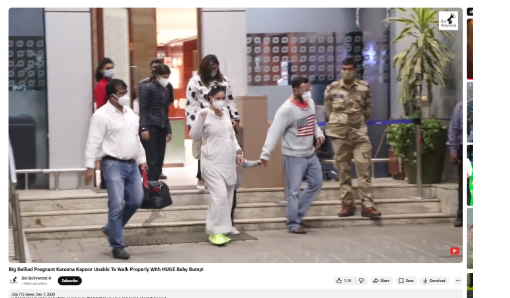
Further research also found a similar video report on the YouTube channel Bollywood Bluff, published on December 8, 2020, featuring the same visual and similar claims. These findings confirmed that the viral image is several years old and unrelated to any recent development.
Conclusion:
The claim that Kareena Kapoor Khan is pregnant again is misleading. The viral photo is not recent but an old image from 2020 that is being circulated with a false claim.
Executive Summary
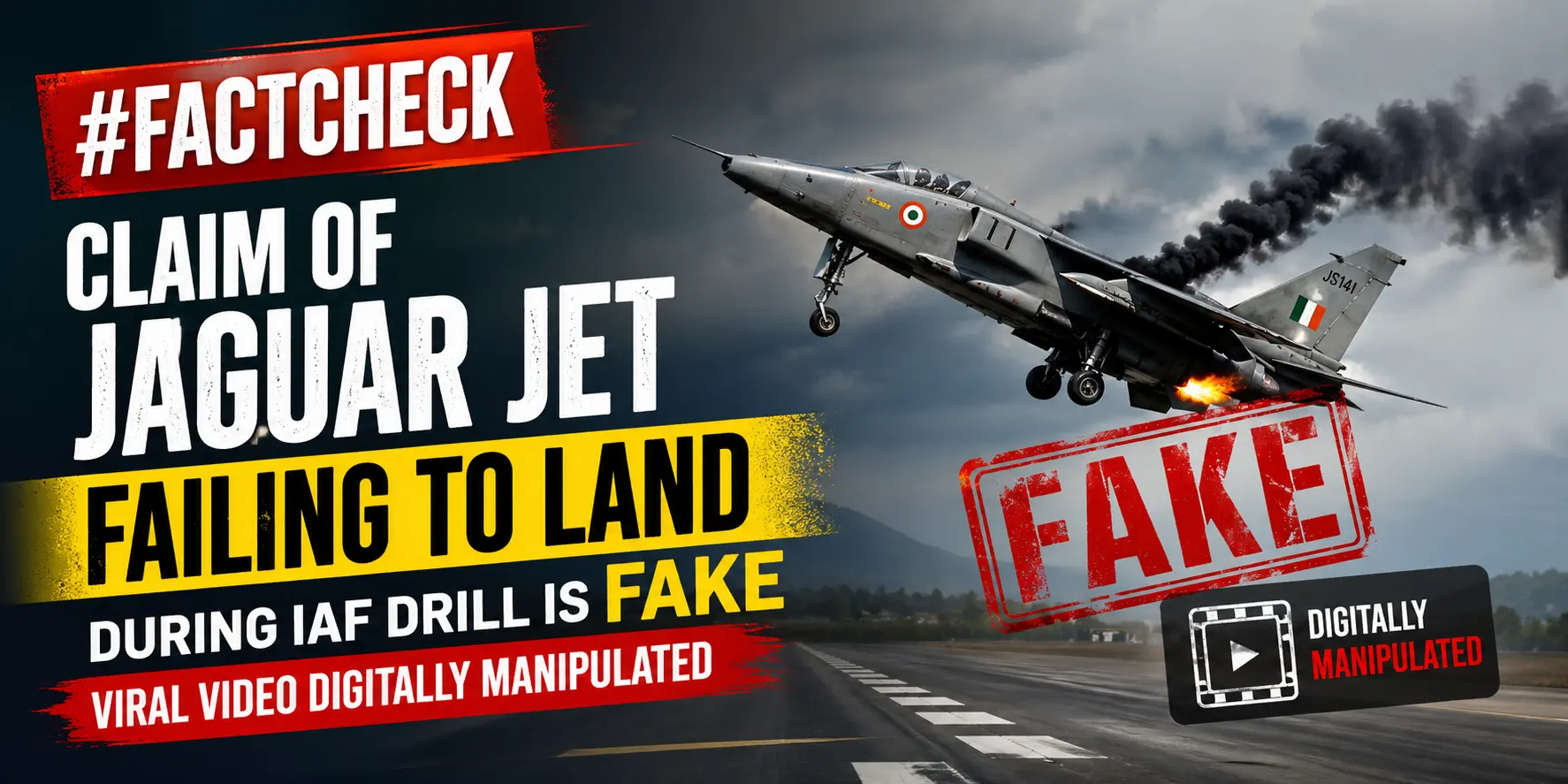
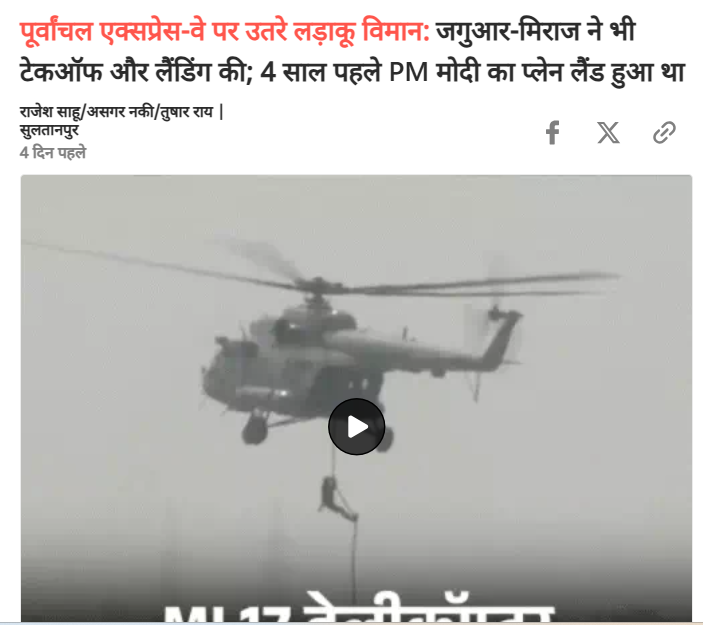
A video circulating on social media claims that a Jaguar fighter jet of the Indian Air Force (IAF) failed to land during a takeoff and landing exercise held on April 22, 2026, at the Purvanchal Expressway in Uttar Pradesh. The claim suggests that the incident disrupted preparations for “Operation Sindoor.” However, an research by the CyberPeace Research Wing has found the claim to be false.
Claim
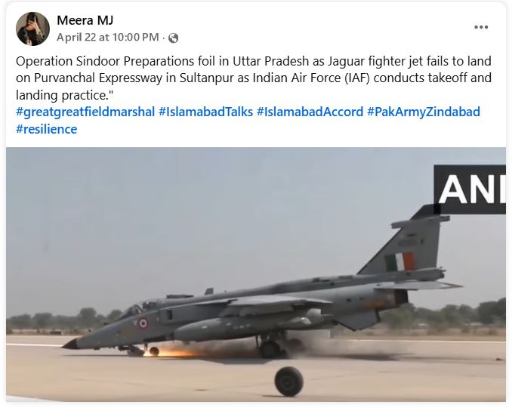
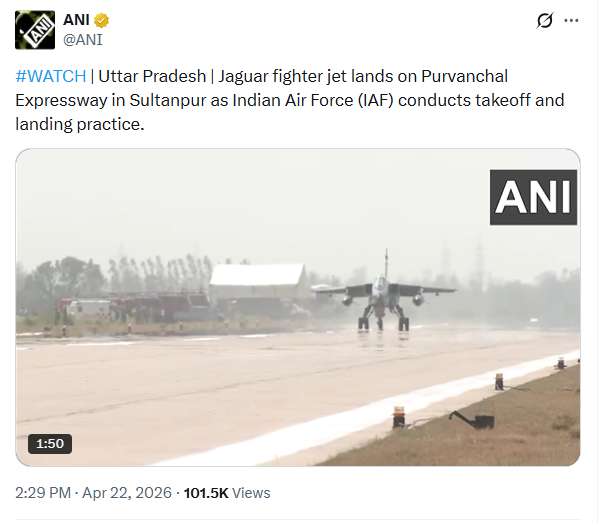
The video was shared by a Facebook user, ‘Meera MJ,’ alleging that the Jaguar aircraft could not land during the exercise conducted near Sultanpur. To verify the authenticity of the video, multiple keyframes were extracted and analyzed using reverse image search tools. This led to the original footage shared by ANI on its official X (formerly Twitter) handle on April 22, 2026. The authentic video of the air show does not show any such incident of a failed landing.
Fact Check
A detailed review of ANI’s social media posts also revealed no evidence supporting the viral claim. This strongly indicates that the circulating clip has been digitally manipulated by altering the original footage.
Further corroboration came from a report published by Bhaskar.com, which extensively covered the air show. According to the report, the event featured successful operations by multiple aircraft, including the C-295 transport aircraft landing on the expressway airstrip, followed by Jaguar jets taking off. Sukhoi and Mirage fighter jets also performed takeoff and landing drills, while M17 helicopters carried out commando mock operations. Additionally, the M32 Bhishma aircraft conducted ‘touch and go’
Conclusion:
The viral claim that a Jaguar fighter jet failed to land during the Indian Air Force drill is baseless. The video being circulated is digitally manipulated and does not reflect any real incident.

Executive Summary
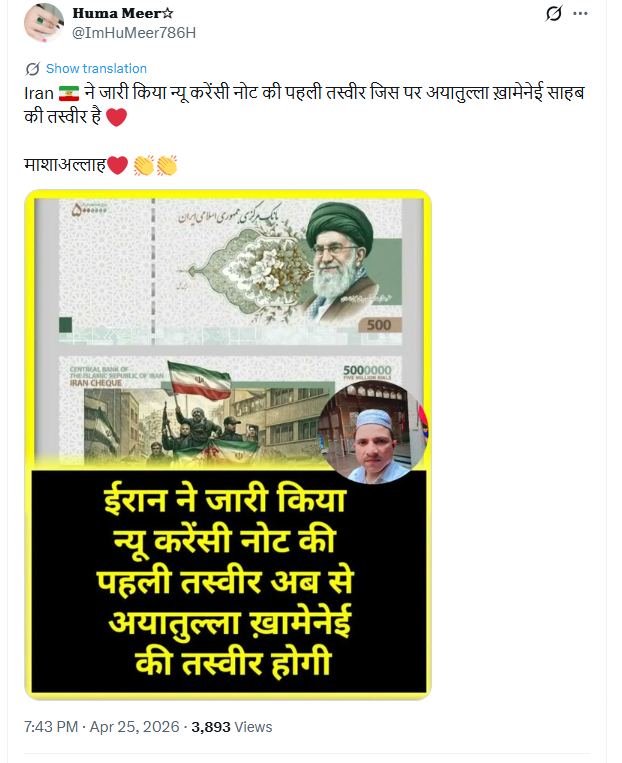
An image of a banknote featuring Iran’s Supreme Leader Ayatollah Khamenei is going viral on social media, with claims that Iran’s central bank has issued a newly designed 5 million rial note bearing his portrait. However, a fact-check by the CyberPeace Research Wing has found the claim to be misleading.
Claim
The image was shared by a verified user, “Sprinter Press Agency,” on X (formerly Twitter), claiming that the Central Bank had introduced a new banknote design featuring the leader of the Islamic Revolution.
Fact Check
To verify the claim, relevant keywords were searched across multiple credible sources. No reports were found from any reputable international media outlet, Iranian government platform, or the Central Bank of Iran confirming the release of such a banknote. A technical analysis of the viral image was also conducted. According to the AI detection tool Zhuque AI Detection Assistant, there is a 63.8% probability that the image is AI-generated, raising further doubts about its authenticity.

Conclusion:
The claim that Iran’s central bank has issued a new 5 million rial banknote featuring Ayatollah Khamenei is misleading. There is no official confirmation of such a release, and available evidence suggests that the viral image is either edited or AI-generated.

Executive Summary
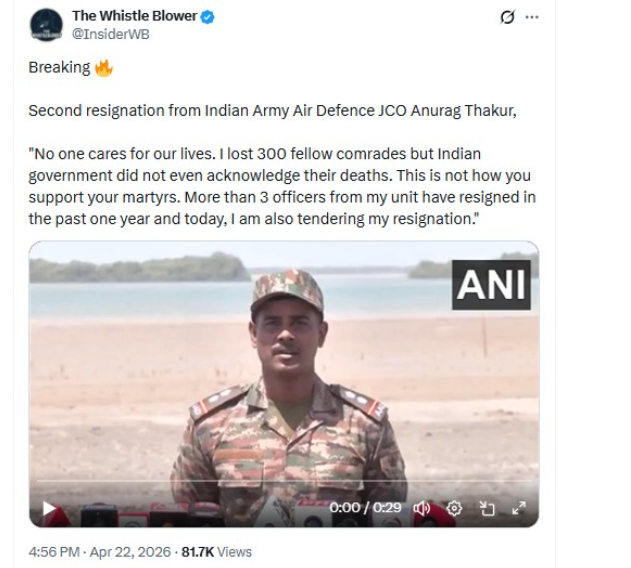
A video circulating on social media allegedly shows an Indian Army Air Defence JCO, identified as “Anurag Thakur,” criticising the Central government and announcing his resignation. In the clip, the individual is purportedly heard expressing disappointment with the government’s support for soldiers and claiming heavy casualties within his unit. However, an investigation by the CyberPeace Research Wing has found the claim to be false and the video manipulated.
Claim:
The viral post alleges that an Indian Army Air Defence JCO criticised the Centre and resigned, citing lack of support for soldiers and unacknowledged casualties.
Fact Check:
A keyword search using terms such as “Indian Army Air Defence JCO,” “Anurag Thakur,” and “resignation” did not yield any credible news reports supporting the claim. A reverse image search of the viral clip led to an original video posted by ANI on April 22, 2026. The ANI watermark is also visible in the viral footage, confirming that the clip has been sourced from this original video.
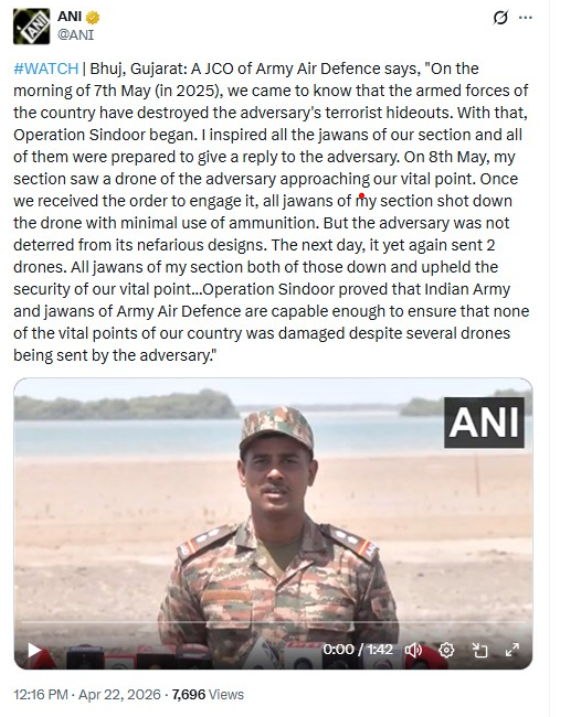
In the authentic version, the same personnel appears in the same setting, but he is speaking in Hindi about operations against adversary drones during “Operation Sindoor” in May 2025. He explains how his unit detected and neutralised multiple drones, successfully safeguarding a critical installation. Importantly, the original video does not identify the individual as Anurag Thakur, nor does it contain any reference to resignation, casualties, or criticism of the government.
Further technical analysis using the AI detection tool Hive Moderation indicated that the audio in the viral clip has an 86 percent likelihood of being artificially generated.
Conclusion:
The viral video has been altered with fabricated audio to falsely claim that an Indian Army officer criticised the government and resigned. The claim is baseless and the clip is a clear case of a deepfake created to mislead viewers.

Executive Summary
A video showing a massive blaze is going viral on social media with the claim that it captures an “attack” in Lucknow, Uttar Pradesh, suggesting that the city is witnessing a civil war-like situation. However, a fact-check by the CyberPeace Research Wing has found the claim to be false and misleading.
Claim
The viral post was shared by an X (formerly Twitter) user ‘@hitorisenshi142’ on April 15, 2026, with an English caption alleging unrest and violence in Lucknow.
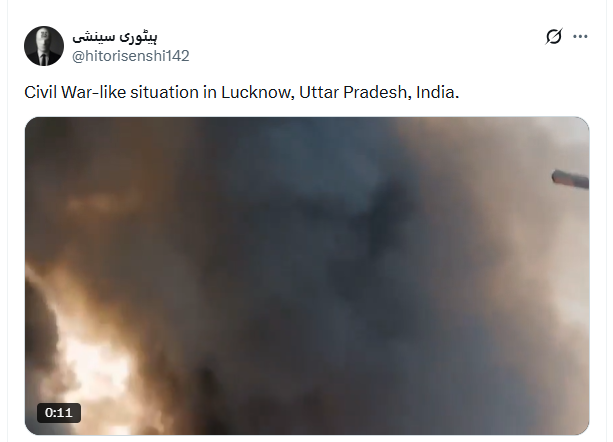
To verify the claim, keyframes from the video were extracted and subjected to a reverse image search. This led to a report published by News18 on April 16, 2026, which featured visuals matching the viral clip.
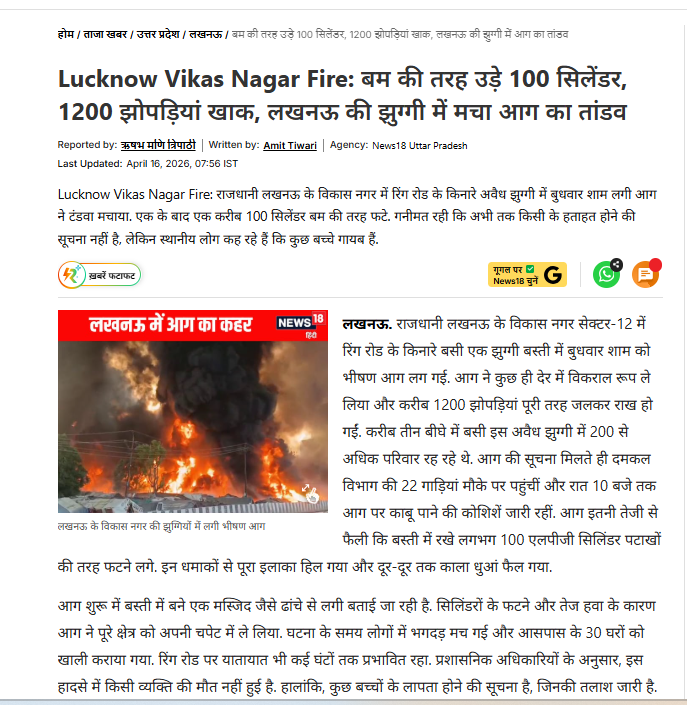
According to the report, the video actually shows a devastating fire that broke out in a slum settlement near Ring Road in Sector-12 of Vikas Nagar, Lucknow. The fire rapidly escalated, engulfing around 1,200 huts and leaving over 200 families affected in the nearly three-bigha area. Firefighting operations were extensive, with 22 fire tenders deployed to control the blaze. The situation was further aggravated as nearly 100 LPG cylinders stored in the huts exploded one after another, intensifying the fire and sending thick black smoke across the area.
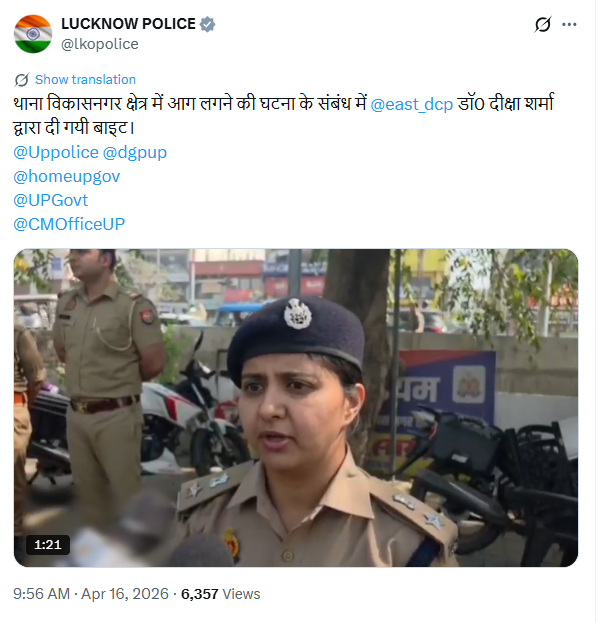
Further confirmation came from the official X account of Lucknow Police, which shared an update on April 16, 2026. The police clarified that the incident was a fire outbreak in the Vikas Nagar area and that the situation had been brought under control.
- https://x.com/lkopolice/status/2044633511584567415?s=20
Conclusion:
The viral claim suggesting that the video depicts an attack or civil war-like situation in Lucknow is false. The footage is from a fire incident in a slum area and is being circulated with misleading context to spread misinformation.
