
#FactCheck- Viral video of burning ship falsely linked to US attack on vessel carrying Indian nationals in Oman waters
Executive Summary
Amid rising tensions in West Asia and concerns over the safety of Indian seafarers, a video showing a vessel engulfed in flames and thick black smoke is being widely circulated on social media. The clip is being shared with the claim that it depicts a US attack on a ship carrying Indian nationals in Omani waters. CyberPeace Research Wing research found the claim to be misleading. The viral video predates the incident it is being linked to and is not related to any recent attack.
Claim:
A Facebook user shared the video alleging that the United States attacked a ship carrying Indian citizens in the maritime region near Oman. The post has been widely circulated as part of the ongoing West Asia tensions. Facebook link: https://www.facebook.com/reel/3031094270427837, https://www.facebook.com/reel/3031094270427837

Fact Check:
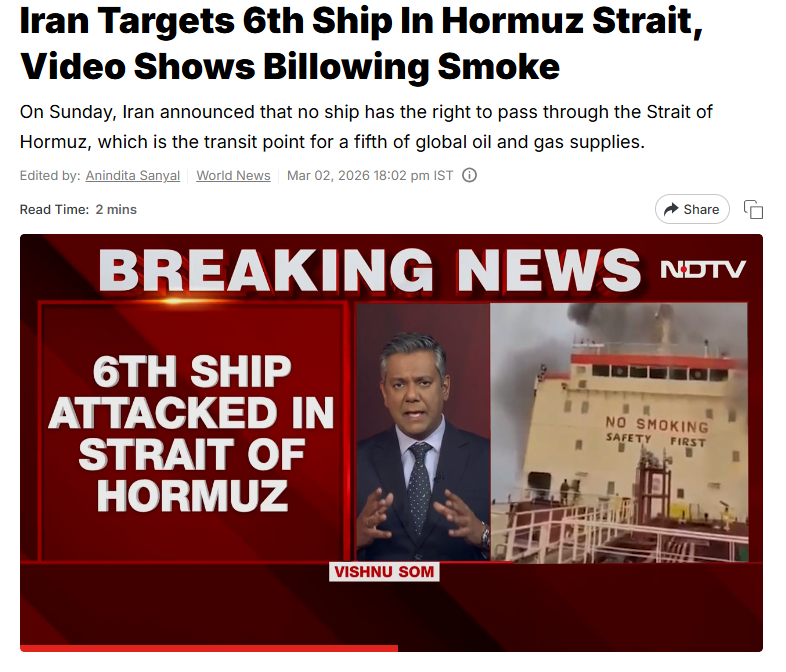
A reverse image search of keyframes from the viral video led to several media reports published on 2 March 2026, which carried the same visuals seen in the circulating clip. The reports indicated that the footage showed a vessel targeted amid escalating tensions in the Strait of Hormuz, following restrictions on maritime movement in the region. https://www.ndtv.com/world-news/iran-targets-6th-ship-in-hormuz-strait-video-shows-billowing-smoke-11159019
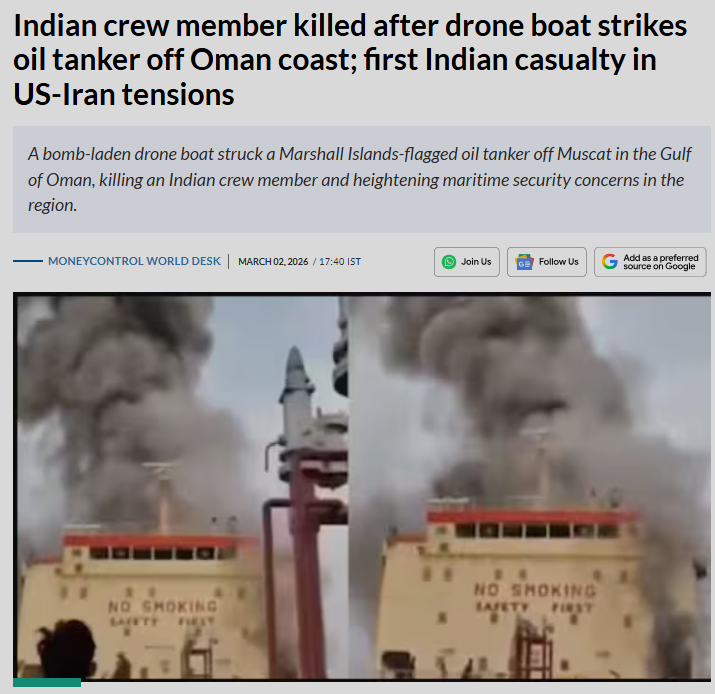
Further research also found the same visuals in a Moneycontrol report published on 2 March 2026. The report clearly established that the footage is from an earlier incident and not linked to any recent developments. https://www.moneycontrol.com/world/indian-crew-member-killed-after-drone-boat-strikes-oil-tanker-off-oman-coast-first-indian-casualty-in-us-iran-tensions-article-13848303.html
Conclusion:
The research confirms that the viral video is not related to any recent US attack on a vessel carrying Indian nationals. The footage has been online since at least March 2026 and shows an earlier incident involving the oil tanker Skylight during tensions in the Strait of Hormuz. Hence, the claim being circulated on social media is misleading.

Related Blogs

Executive Summary
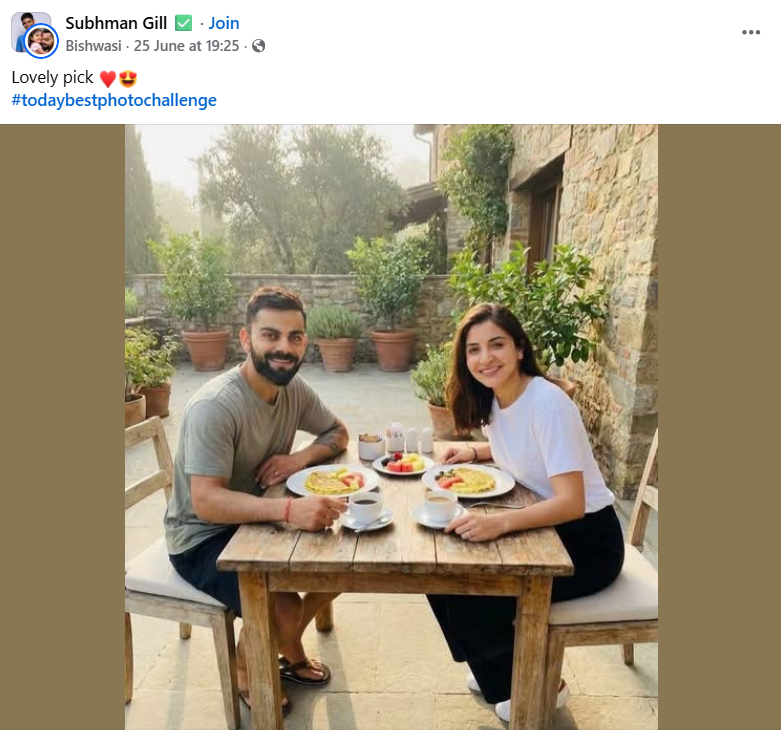
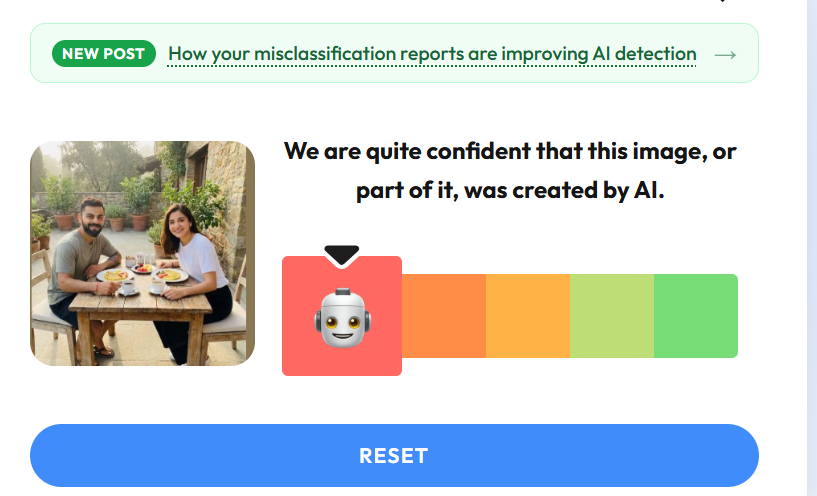
A picture is rapidly going viral on social media, showing Indian cricketer Virat Kohli and actor Anushka Sharma having breakfast together. Users are sharing this photo, presenting it as a "candid" (real) moment. Research by the CyberPeace Research Wing revealed that the photo of Virat Kohli and Anushka Sharma having breakfast is completely fake. This image does not depict a real moment, but has been created using Artificial Intelligence (AI).
Claim
A picture is rapidly going viral on social media, showing Indian cricketer Virat Kohli and actor Anushka Sharma having breakfast together. Users are sharing this photo, presenting it as a "candid" (real) moment.
https://www.facebook.com/groups/1132434027856845/posts/1677540760012833/
Fact Check
In our research, this image was found to be 'AI-generated'. When a reverse image search and keyword scan were conducted to verify this viral photo, no credible media reports, official photographs, or any such posts on the celebrity couple's official social media handles were found.
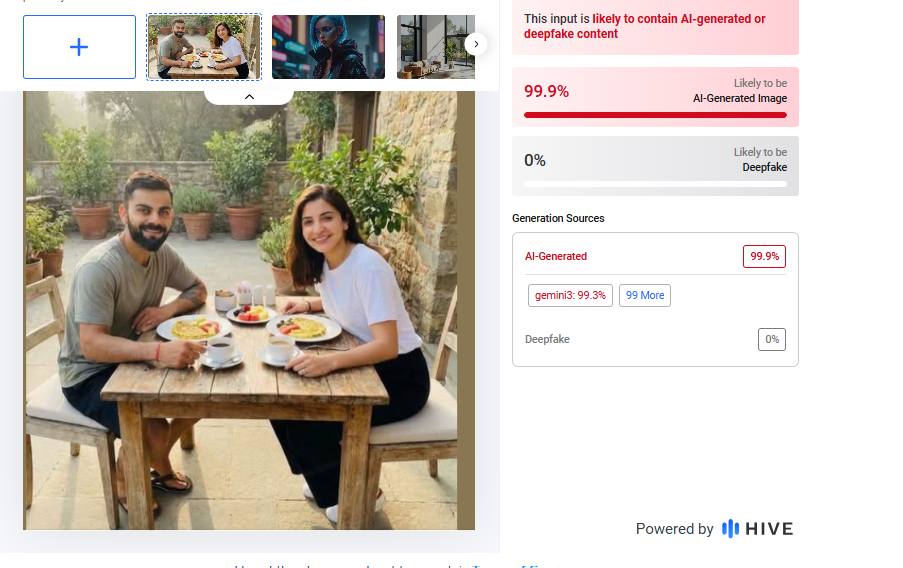
WASIT also confirmed that the image is 'AI-generated'.
Conclusion
Our research revealed that the photo of Virat Kohli and Anushka Sharma having breakfast is completely fake. This image does not depict a real moment, but has been created using Artificial Intelligence (AI).
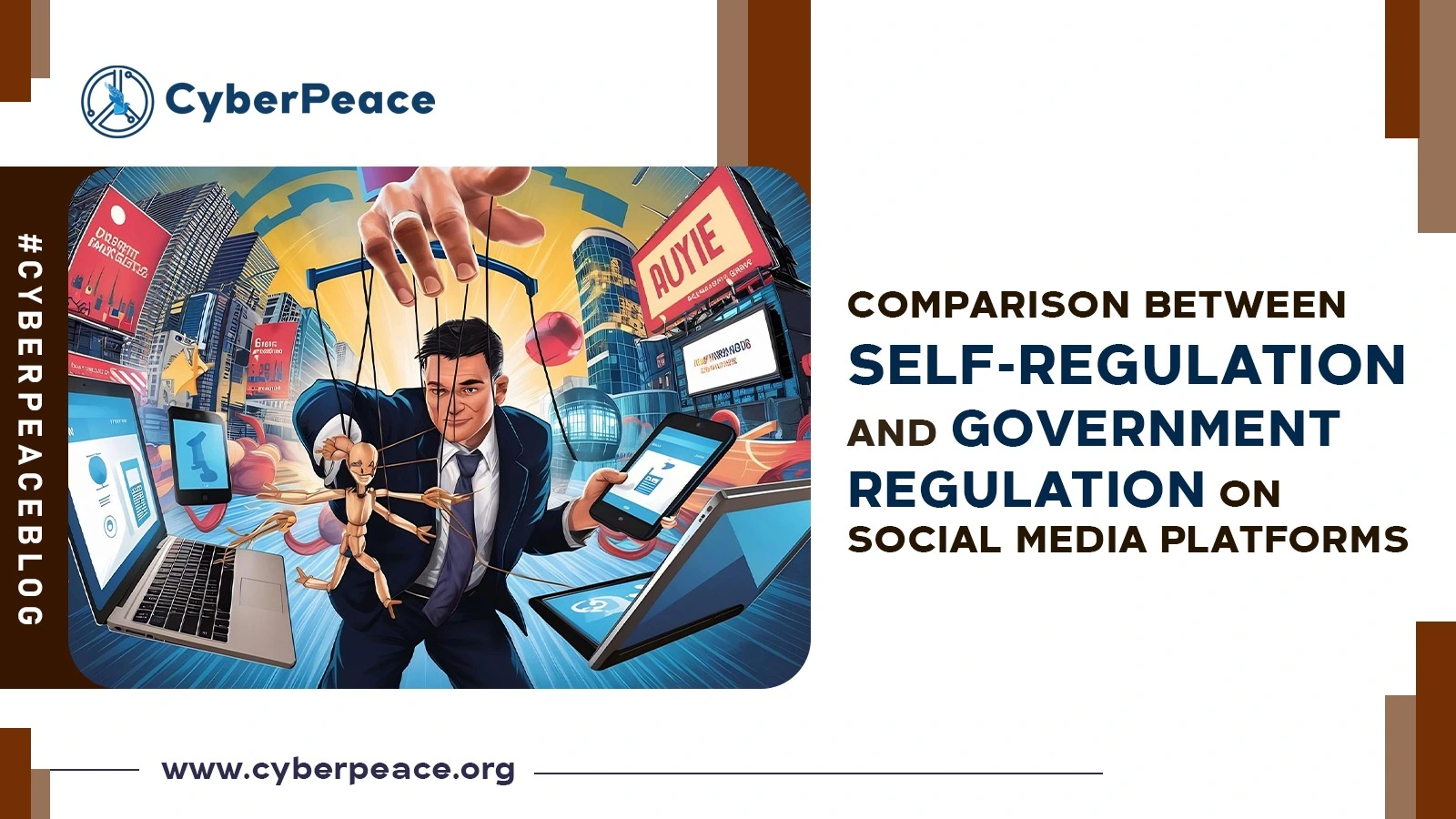
Social media has become far more than a tool of communication, engagement and entertainment. It shapes politics, community identity, and even shapes agendas. When misused, the consequences can be grave: communal disharmony, riots, false rumours, harassment or worse. Emphasising the need for digital Atmanirbhar, Prime Minister Narendra Modi recently urged India’s youth to develop the country’s own social media platforms, like Facebook, Instagram and X, to ensure that the nation’s technological ecosystems remain secure and independent, reinforcing digital autonomy. This growing influence of platforms has sharpened the tussle between government regulation, the independence of social media companies, and the protection of freedom of expression in most countries.
Why Government Regulation Is Especially Needed
While self-regulation has its advantages, ‘real-world harms’ show why state oversight cannot be optional:
- Incitement to violence and communal unrest: Misinformation and hate speech can inflame tensions. In Manipur (May 2023), false posts, including unverified sexual-violence claims, spread online, worsening clashes. Authorities shut down mobile internet on 3 May 2023 to curb “disinformation and false rumours,” showing how quickly harmful content can escalate and why enforceable moderation rules matter.
- Fake news and misinformation: False content about health, elections or individuals spreads far faster than corrections. During COVID-19, an “infodemic” of fake cures, conspiracy theories and religious discrimination went viral on WhatsApp and Facebook, starting with false claims that the virus came from eating bats. The WHO warned of serious knock-on effects, and a Reuters Institute study found that although such claims by public figures were fewer, they gained the highest engagement, showing why self-regulation alone often fails to stop it.
Nepal’s Example:
Nepal provides a clear example of the tension between government regulation and the self-regulation tussle of social media. In 2023, the government issued rules requiring all social media platforms, whether local or foreign, to register with the Ministry of Communication and Information Technology, appoint a local contact person, and comply with Nepali law. By 2025, major platforms such as Facebook, Instagram, and YouTube had not met the registration deadline. In response, the Nepal Telecommunications Authority began blocking unregistered platforms until they complied. While journalists, civil-rights groups and Gen Z criticised the move as potentially limiting free speech and exposing corruption against the government. The government argued it was necessary to stop harmful content and misinformation. The case shows that without enforceable obligations, self-regulation can leave platforms unaccountable, but it must also balance with protecting free speech.
Self-Regulation: Strengths and Challenges
Most social-media companies prefer to self-regulate. They write community rules, trust & safety guidelines, and give users ways to flag harmful posts, and lean on a mix of staff, outside boards and AI filters to handle content that crosses the line. The big advantage here is speed: when something dangerous appears, a platform can react within minutes, far quicker than a court or lawmaker. Because they know their systems inside out, from user habits to algorithmic quirks, they can adapt fast.
But there’s a downside. These platforms thrive on engagement, hence sensational or hateful posts often keep people scrolling longer. That means the very content that makes money can also be the content that most needs moderating , a built-in conflict of interest.
Government Regulation: Strengths and Risks
Public rules make platforms answerable. Laws can require illegal content to be removed, force transparency and protect user rights. They can also stop serious harms such as fake news that might spark violence, and they often feel more legitimate when made through open, democratic processes.
Yet regulation can lag behind technology. Vague or heavy-handed rules may be misused to silence critics or curb free speech. Global enforcement is messy, and compliance can be costly for smaller firms.
Practical Implications & Hybrid Governance
For users, regulation brings clearer rights and safer spaces, but it must be carefully drafted to protect legitimate speech. For platforms, self-regulation gives flexibility but less certainty; government rules provide a level playing field but add compliance costs. For governments, regulation helps protect public safety, reduce communal disharmony, and fight misinformation, but it requires transparency and safeguards to avoid misuse.
Hybrid Approach
A combined model of self-regulation plus government regulation is likely to be most effective. Laws should establish baseline obligations: registration, local grievance officers, timely removal of illegal content, and transparency reporting. Platforms should retain flexibility in how they implement these obligations and innovate with tools for user safety. Independent audits, civil society oversight, and simple user appeals can help keep both governments and platforms accountable.
Conclusion
Social media has great power. It can bring people together, but it can also spread false stories, deepen divides and even stir violence. Acting on their own, platforms can move fast and try new ideas, but that alone rarely stops harmful content. Good government rules can fill the gap by holding companies to account and protecting people’s rights.
The best way forward is to mix both approaches, clear laws, outside checks, open reporting, easy complaint systems and support for local platforms, so the digital space stays safer and more trustworthy.
References
- https://timesofindia.indiatimes.com/india/need-desi-social-media-platforms-to-secure-digital-sovereignty-pm/articleshow/123327780.cms#
- https://www.bbc.com/news/world-asia-india-66255989
- https://nepallawsunshine.com/social-media-registration-in-nepal/ https://www.newsonair.gov.in/nepal-bans-26-unregistered-social-media-sites-including-facebook-whatsapp-instagram/
- https://hbr.org/2021/01/social-media-companies-should-self-regulate-now
- https://www.drishtiias.com/daily-updates/daily-news-analysis/social-media-regulation-in-india
Executive Summary
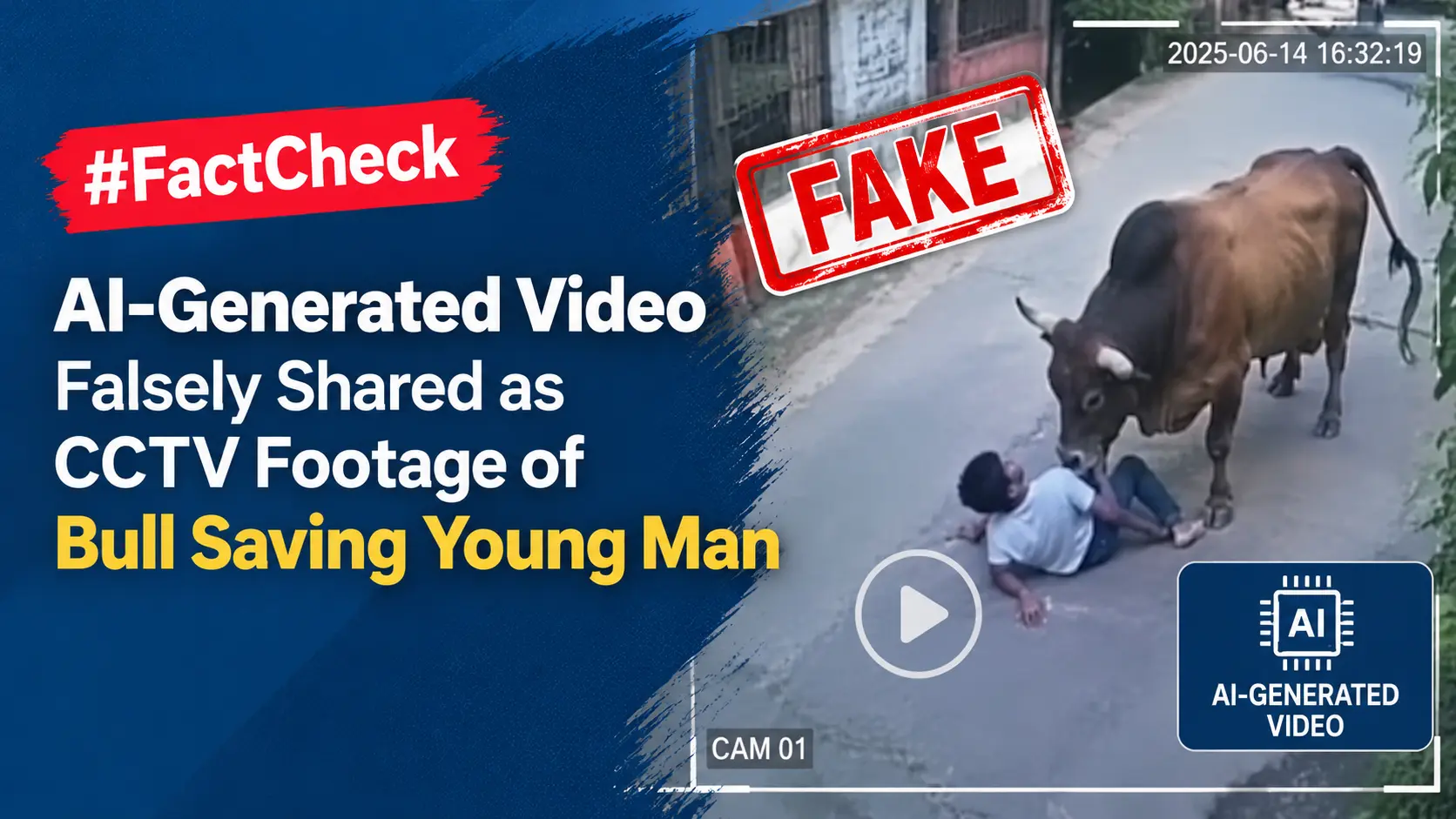
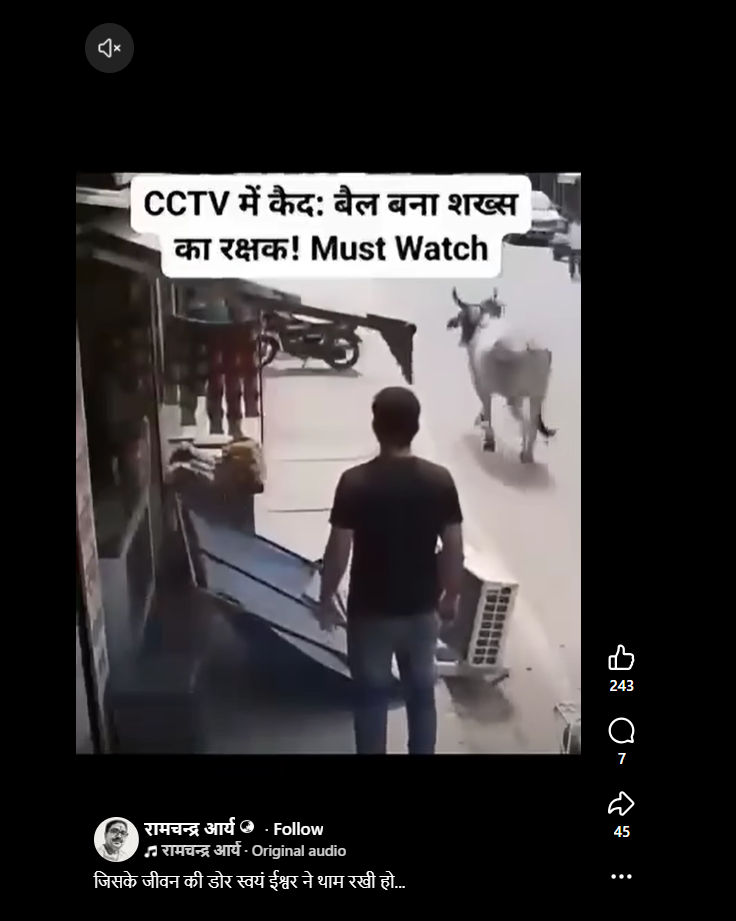
A video circulating on social media shows a bull pushing a young man who appears to be engrossed in looking at his mobile phone. Users sharing the video claim that the CCTV footage captured an incident in which the bull pushed the man and saved him from a mishap. CyberPeace Research found the viral claim to be false. Our research found that the viral video is AI-generated and is being shared with a misleading claim.
Claim
A Facebook user shared the viral video with the caption, “The one whose life is being protected by God Himself.” The post link, archive link and screenshot are provided below.
https://www.facebook.com/reel/2568861153629568
Fact-check
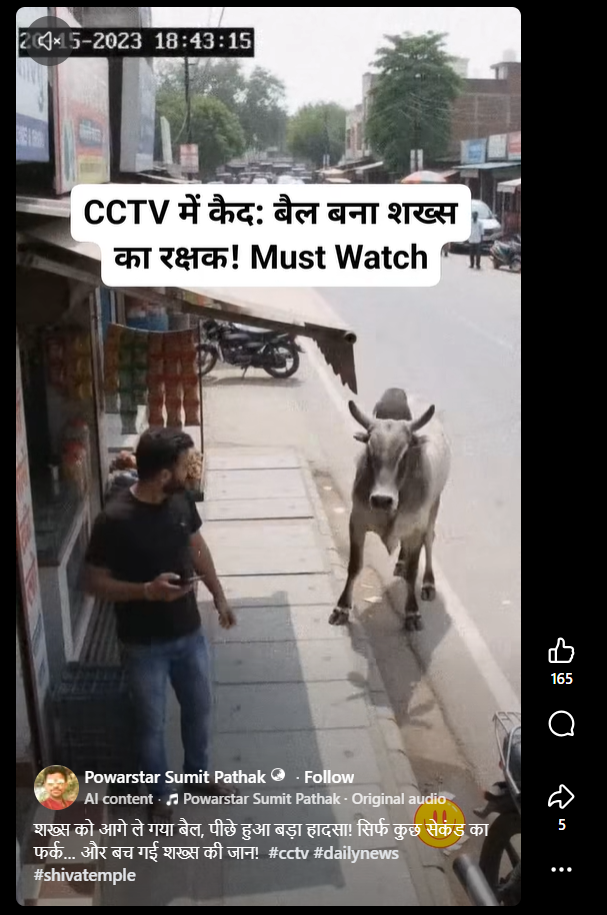
To verify the viral claim, we conducted a Google Lens search using keyframes from the video. During the search, we found the same video on the Facebook page of user ‘Powarstar Sumit Pathak’. The video, uploaded on October 4, 2026, carries an ‘AI content’ label.
https://www.facebook.com/reel/1473526454600527
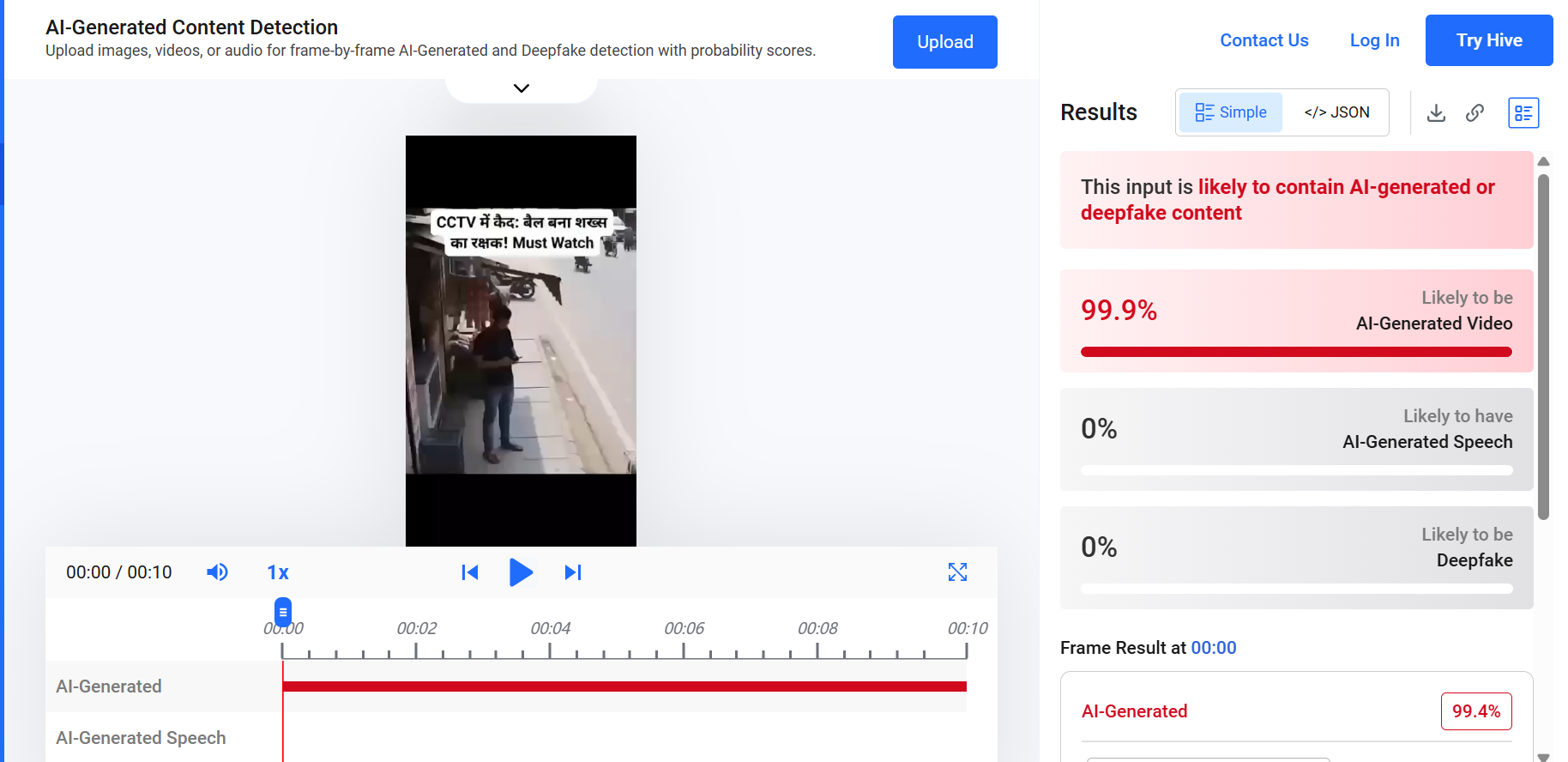
As part of our further research, we scanned the viral video using the AI detection tool Hive Moderation. The results indicated that the video is 99% likely to be AI-generated.
Conclusion
Our research found that the viral video is AI-generated and is being shared with a misleading claim. The video does not show an actual incident involving a bull saving a young man, as claimed in social media posts. The viral claim is therefore false.
