
#FactCheck- Viral video falsely linked to Bangladeshi infiltrator killed at Tripura border; actually shows militant killed in Kulgam encounter
Executive Summary
A video circulating on social media is being shared with the claim that the Border Security Force (BSF) shot dead a Bangladeshi national who was attempting to infiltrate India through the Tripura border. CyberPeace Research Wing research found the claim to be misleading. The viral video is not related to any recent incident on the Tripura border. It actually shows Haris Nazir Dar, a militant who was killed during an encounter in Jammu and Kashmir’s Kulgam district last year.
Claim:
The viral clip, which is around eight seconds long, shows a body lying on the ground. It is being shared on X with captions suggesting that the deceased was a Bangladeshi infiltrator who was killed while attempting to cross the India-Bangladesh border in Tripura.
https://x.com/ocjain4/status/2066210317265457298

Fact Check:
To verify the claim, we extracted keyframes from the viral video and conducted a reverse image search. During the research, we found matching visuals in a report published by Dainik Bhaskar on August 2, 2025. The report was related to an encounter between security forces and militants in the Akhal forest area of Kulgam district in Jammu and Kashmir. Visuals in the report matched those seen in the viral video.

We also found a report published by India Today on August 2, 2025, which carried photographs of slain militant Haris Nazir Dar taken from a different angle. The report stated that security forces had killed three militants during the operation in the Akhal forest area of Kulgam. https://www.indiatoday.in/india/story/gunfight-underway-with-3-lashkar-terrorists-in-jks-kulgam-2764971-2025-08-01

Conclusion:
The evidence gathered during our research makes it clear that the viral video does not show a Bangladeshi infiltrator killed at the Tripura border. The footage is actually from a security operation in Jammu and Kashmir and shows Haris Nazir Dar, a militant who was killed in an encounter in Kulgam last year.

Related Blogs

Introduction
India officially became part of the US-led Pax Silica project on February 20, 2026, at the India AI Impact Summit in New Delhi. This was a significant milestone in India’s involvement in global technology and supply chain cooperation. India joined a coalition of advanced economies by signing the Pax Silica Declaration in a move aimed at strengthening coordination over technology supply chains on which artificial intelligence, semiconductors, critical minerals and advanced manufacturing rely. The entry of India into the global technology landscape is indicative of India’s growing role in the global technology order and reflects broader shifts in how countries are responding to the geopolitics of silicon and AI infrastructure.
What Is Pax Silica and Why It Matters
The United States Department of State introduced Pax Silica as a strategic program launched in December 2025. It seeks to establish safe, resilient and innovation-driven supply chains for emerging technologies that are the foundations of the AI era. This encompasses activities ranging from mining and refining of rare earths, gallium and germanium to semiconductor manufacturing, the creation of advanced computing hardware and energy infrastructure. The project describes cooperation as a method of reducing what are termed as coercive dependencies on any one supplier or economy, thereby supporting sustained access to building blocks of state-of-the-art technology.
Pax Silica derives its name from the Latin terms for 'peace' and the substrate material of 'silicon', meaning that the coalition aims at achieving stability and prosperity by working together in supply chains of technology. Early signatories were the United States, Japan, South Korea, Australia, the United Kingdom, Israel, Singapore, the Netherlands, Greece, Qatar and the United Arab Emirates. India was the twelfth member to sign the declaration.
India’s Strategic Interests in Pax Silica
The move to join Pax Silica is both a diplomatic and economic decision. The incorporation of India into a network led ostensibly by the Western bloc and containing developed economy players in the technological supply chain creates the messaging that it wants to be more deeply integrated into the global high-tech ecosystems.
India currently relies on importing a large proportion of the chips for its electronics production sector, while its domestic manufacturing capacity remains limited. Pax Silica membership could provide Indian firms with advanced manufacturing equipment, process expertise and joint ventures with their partners, who have already developed the fabrication capabilities.
The signing of the declaration was done by the current Union Minister of Electronics and Information Technology (MeitY) , the Union Minister, who noted that India is expanding its technological capabilities and future ambitions. He observed that the Indian engineers already play a role in designing advanced semiconductor chips and that the increase in semiconductor capacity will demand a professional workforce. He also emphasised that the availability of international tools and alliances would help accelerate India’s growth in this sector.
Another strategic area is the critical minerals. India is estimated to have significant rare earth reserves, but the resources remain largely underdeveloped. The diversification strategy of Pax Silica in terms of supply and processing routes provides India with an opportunity to have joint ventures and infrastructure projects that could help unlock domestic mineral potential within the country.
Supply Chains, AI, and Geopolitical Context
Pax Silica has emerged within a broader geopolitical and supply chain context rather than as a purely economic initiative. The last few years have placed a strain on global technology supply chains with disruptions caused by pandemics, trade tensions, export controls, and the concentrated control of some components of the value chain. China currently dominates in the refinement of rare earths as well as in a variety of legacy semiconductor manufacturing. The concentration has raised concerns about resilience and strategic autonomy among the technology-producing democracies.
This initiative is based on the premise that a diversified and trusted supply chain will make the economic security of countries participating in Pax Silica more secure in case of a trade embargo or as a tool of political leverage. The voluntary and non-binding framework by the coalition only provides a guide to cooperation instead of a binding commitment, though it highlights an acknowledgement of risk and opportunity in global technology markets.
Such concerns as strategic autonomy and the extent of India’s involvement in the initiative have been expressed by those who criticise it, particularly because the coalition is perceived to be partially designed to respond to Chinese dominance in the most important technological sectors. Some analysts have also suggested that India will have to balance its participation in Pax Silica by taking special care of its own interests and alliances outside this coalition.
Economic and Industrial Implications for India
Joining Pax Silica offers India potential benefits on multiple fronts.
Strengthening Innovation and Manufacturing Ecosystems
India's membership will allow cooperation in semiconductor production, development of advanced computing infrastructure and implementation of AI. The government and industry players could attract investments through partnerships, technology transfer and joint R&D. India’s emerging design and fabrication projects could use a greater international integration in this venture.
Talent and Skills Development
A recurring theme among Indian policymakers is the issue of a skilled workforce. As the world semiconductor and AI sector is expected to need millions of specialists in the next 10 years, India’s large talent pool presents an opportunity to produce local talent that is capable of catering to local demands as well as international supply needs. Initiatives linked to Pax Silica have the potential to establish training pathways and institutional bridges that facilitate workforce preparedness.
Diversification of Supply Partnerships
In the case of India, the diversification of suppliers and partners goes beyond the availability of materials and technologies. It also implies reducing exposure to supply shocks and enhancing resilience in important industries such as consumer electronics, automotive manufacturing, defence systems and digital infrastructure, all of which rely on semiconductors and advanced computing hardware.
Broader Industrial Readiness and Domestic Challenges
India’s participation in Pax Silica highlights the domestic conditions required to support advanced technology manufacturing. A conducive environment will depend on reliable infrastructure, regulatory stability, specialised industrial clusters and sustained policy coordination across government and industry. Semiconductor and AI hardware production are resource-intensive, requiring significant energy, water and chemical management, making environmental safeguards and sustainable industrial planning essential to prevent long-term ecological strain.
At the same time, India faces gaps in its human resource development ecosystem. While engineering talent is abundant, specialised training in semiconductor fabrication, materials science and advanced manufacturing remains limited. Additionally, the relative lack of applied research and development initiatives aimed at reducing technological and financial risks may constrain large-scale industrial expansion, underscoring the need for stronger industry–academia collaboration and targeted innovation support.
Conclusion: A Strategic Step into the AI Era
India’s formal entry into the Pax Silica initiative at the 2026 India AI Impact Summit reflects a thoughtful recalibration of its global technology engagement. By aligning with a coalition aimed at securing the supply chains that make modern digital economies possible, India has signalled its intent to be more than just a consumer of technology. It seeks to help shape the infrastructure, partnerships and norms that will define the next generation of AI, semiconductors and critical technologies.
While questions around strategic autonomy and long-term dependencies remain important considerations, Pax Silica offers India access to networks, capabilities and collaborative frameworks that can accelerate its semiconductor ambitions and broaden its role in the global tech order. The move underscores how technology cooperation today increasingly interacts with geopolitics, economic strategy and national aspirations for growth and innovation.
Sources
- https://timesofindia.indiatimes.com/technology/tech-news/what-is-pax-silica-and-why-does-india-joining-the-ai-supply-chain-alliance-matter/articleshow/128594775.cms
- https://paxsilica.org/f/pax-silica-securing-the-foundations-of-the-ai-era
- https://www.businesstoday.in/india/story/ai-impact-summit-2026-india-set-to-join-us-led-pax-silica-today-517167-2026-02-20
- https://www.business-standard.com/india-news/pax-silica-india-joins-us-supply-chain-initiative-ai-impact-summit-2026-126022000339_1.html

In 2023, PIB reported that up to 22% of young women in India are affected by Polycystic Ovarian Syndrome (PCOS). However, access to reliable information regarding the condition and its treatment remains a challenge. A study by the PGIMER Chandigarh conducted in 2021 revealed that approximately 37% of affected women rely on the internet as their primary source of information for PCOS. However, it can be difficult to distinguish credible medical advice from misleading or inaccurate information online since the internet and social media are rife with misinformation. The uptake of misinformation can significantly delay the diagnosis and treatment of medical conditions, jeopardizing health outcomes for all.
The PCOS Misinformation Ecosystem Online
PCOS is one of the most common disorders diagnosed in the female endocrine system, characterized by the swelling of ovaries and the formation of small cysts on their outer edges. This may lead to irregular menstruation, weight gain, hirsutism, possible infertility, poor mental health, and other symptoms. However, there is limited research on its causes, leaving most medical practitioners in India ill-equipped to manage the issue effectively and pushing women to seek alternate remedies from various sources.
This creates space for the proliferation of rumours, unverified cures and superstitions, on social media, For example, content on YouTube, Facebook, and Instagram may promote “miracle cures” like detox teas or restrictive diets, or viral myths claiming PCOS can be “cured” through extreme weight loss or herbal remedies. Such misinformation not only creates false hope for women but also delays treatment, or may worsen symptoms.
How Tech Platforms Amplify Misinformation
- Engagement vs. Accuracy: Social media algorithms are designed to reward viral content, even if it’s misleading or incendiary since it generates advertisement revenue. Further, non-medical health influencers often dominate health conversations online and offer advice with promises of curing the condition.
- Lack of Verification: Although platforms like YouTube try to provide verified health-related videos through content shelves, and label unverified content, the sheer volume of content online means that a significant chunk of content escapes the net of content moderation.
- Cultural Context: In India, discussions around women’s health, especially reproductive health, are stigmatized, making social media the go-to source for private, albeit unreliable, information.
Way Forward
a. Regulating Health Content on Tech Platforms: Social media is a significant source of health information to millions who may otherwise lack access to affordable healthcare. Rather than rolling back content moderation practices as seen recently, platforms must dedicate more resources to identify and debunk misinformation, particularly health misinformation.
b. Public Awareness Campaigns: Governments and NGOs should run nationwide campaigns in digital literacy to educate on women’s health issues in vernacular languages and utilize online platforms for culturally sensitive messaging to reach rural and semi-urban populations. This is vital for countering the stigma and lack of awareness which enables misinformation to proliferate.
c. Empowering Healthcare Communication: Several studies suggest a widespread dissatisfaction among women in many parts of the world regarding the information and care they receive for PCOS. This is what drives them to social media for answers. Training PCOS specialists and healthcare workers to provide accurate details and counter misinformation during patient consultations can improve the communication gaps between healthcare professionals and patients.
d. Strengthening the Research for PCOS: The allocation of funding for research in PCOS is vital, especially in the face of its growing prevalence amongst Indian women. Academic and healthcare institutions must collaborate to produce culturally relevant, evidence-based interventions for PCOS. Information regarding this must be made available online since the internet is most often a primary source of information. An improvement in the research will inform improved communication, which will help reduce the trust deficit between women and healthcare professionals when it comes to women’s health concerns.
Conclusion
In India, the PCOS misinformation ecosystem is shaped by a mix of local and global factors such as health communication failures, cultural stigma, and tech platform design prioritizing engagement over accuracy. With millions of women turning to the internet for guidance regarding their conditions, they are increasingly vulnerable to unverified claims and pseudoscientific remedies which can lead to delayed diagnoses, ineffective treatments, and worsened health outcomes. The rising number of PCOS cases in the country warrants the bridging of health research and communications gaps so that women can be empowered with accurate, actionable information to make the best decisions regarding their health and well-being.
Sources
- https://pib.gov.in/PressReleasePage.aspx?PRID=1893279#:~:text=It%20is%20the%20most%20prevailing%20female%20endocrine,neuroendocrine%20system%2C%20sedentary%20lifestyle%2C%20diet%2C%20and%20obesity.
- https://www.thinkglobalhealth.org/article/india-unprepared-pcos-crisis?utm_source=chatgpt.com
- https://www.bbc.com/news/articles/ckgz2p0999yo
- https://pmc.ncbi.nlm.nih.gov/articles/PMC9092874/
Executive Summary
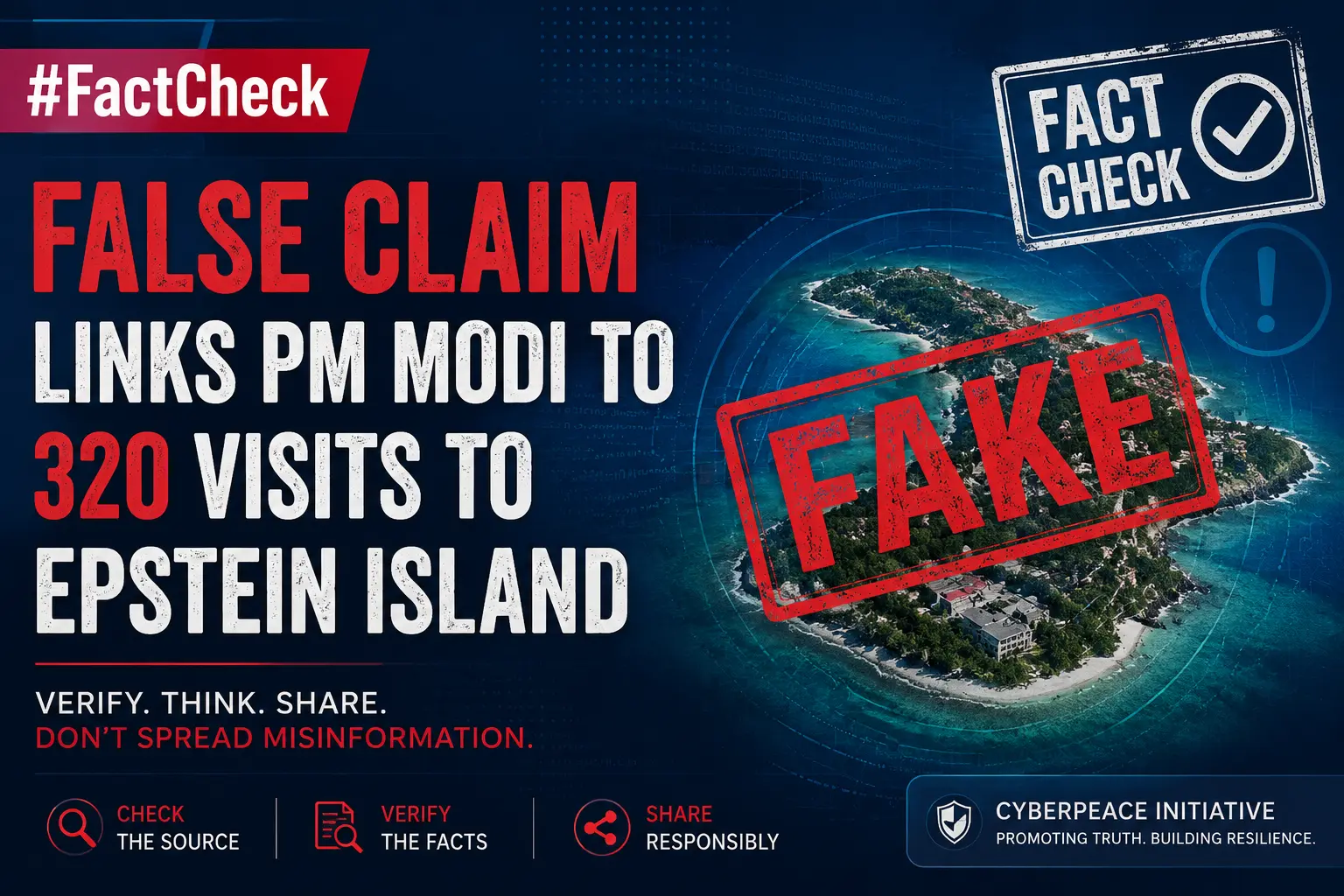
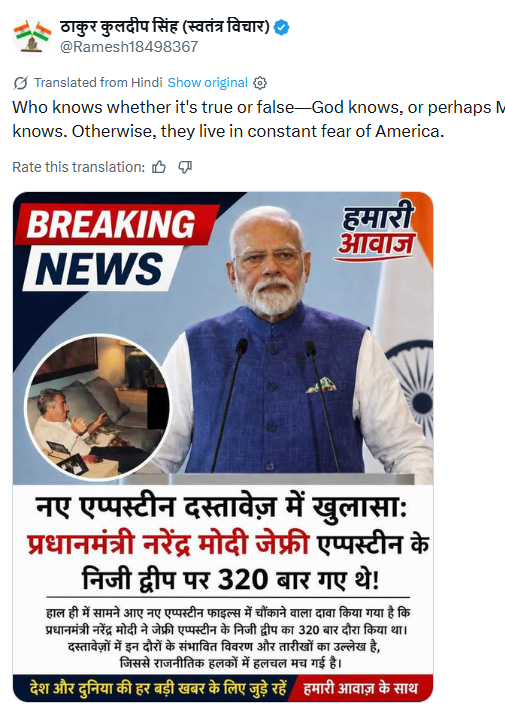
A viral social media post claims that the recently released Epstein files reveal that Prime Minister Narendra Modi visited Epstein Island more than 320 times. CyberPeace Research Wing research found that the claim is false. There is no evidence in the Epstein files suggesting that Prime Minister Modi visited Epstein Island over 320 times.
Claim:
An X user shared a viral graphic claiming that Prime Minister Narendra Modi had visited Epstein Island more than 320 times. https://x.com/Ramesh18498367/status/206501995913534715 , https://ghostarchive.org/archive/2V12W
Fact Check:
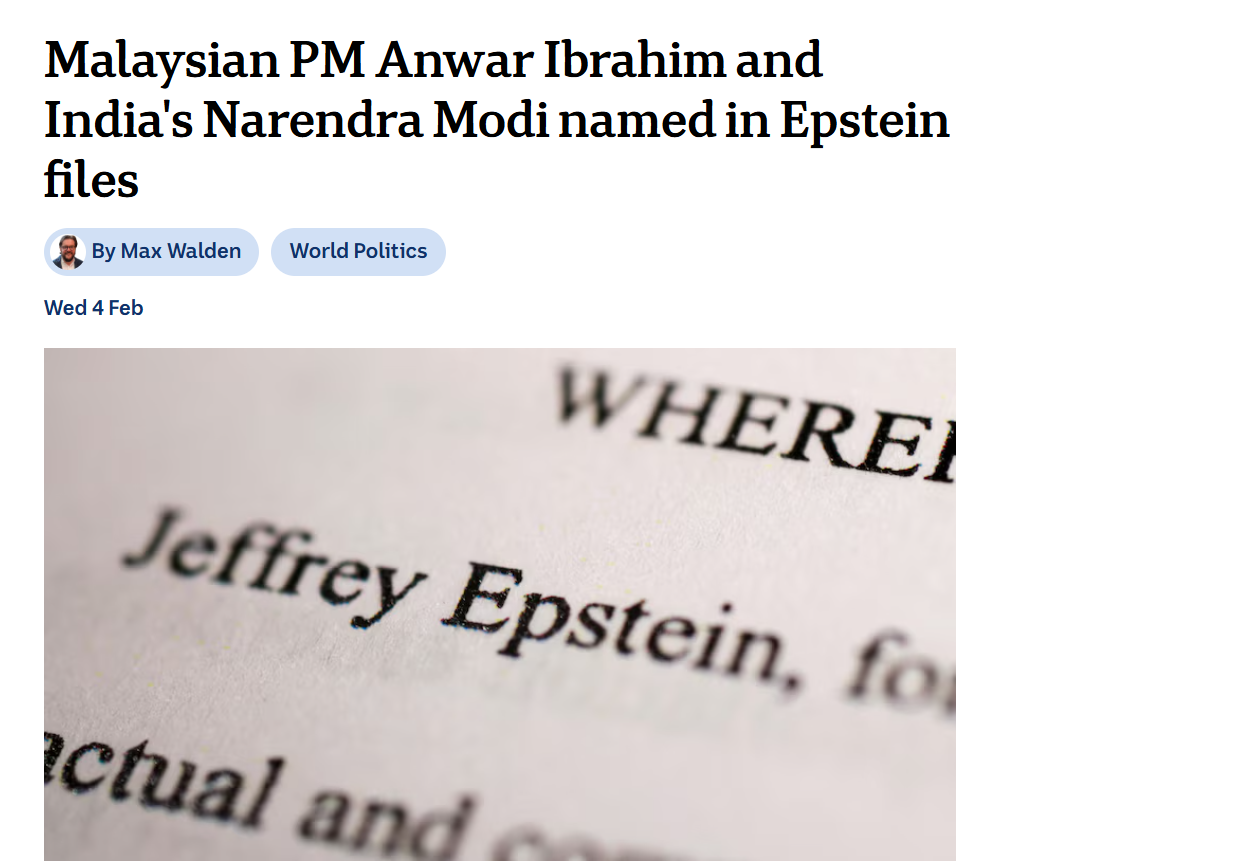
We first examined credible international media reports related to the Epstein files, particularly those mentioning Prime Minister Narendra Modi. During this process, we found a report published by the Australian Broadcasting Corporation (ABC) in February 2026. The report mentioned that the names of the Prime Ministers of India and Malaysia appeared in certain documents linked to the Epstein files. However, it clarified that references to Prime Minister Modi were limited to emails discussing his 2017 visit to Israel. The emails reportedly contained comments made by Jeffrey Epstein regarding the Prime Minister’s Israel visit. https://www.abc.net.au/news/2026-02-04/leaders-of-malaysia-india-named-in-epstein-files/106298458
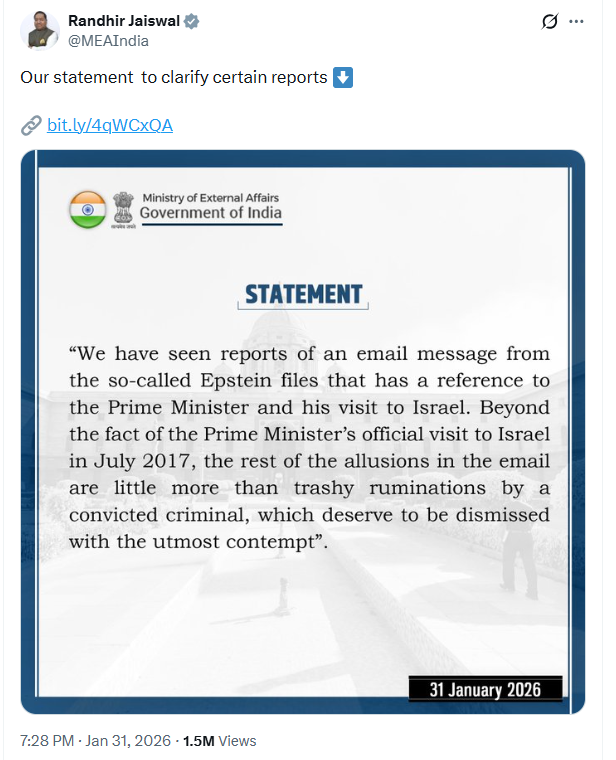
We also reviewed reports published by several other international media organizations. None of them contained any information supporting the viral claim that Prime Minister Modi visited Epstein Island more than 320 times. The Government of India also issued a clarification regarding references to Prime Minister Modi in the Epstein files. The clarification stated that, apart from references to his 2017 Israel visit, the files contain no other mention of the Prime Minister. The government further described subsequent claims and speculation on the matter as baseless.
https://x.com/MEAIndia/status/2017598414733840649?s=20
Conclusion:
The viral claim that the Epstein files reveal Prime Minister Narendra Modi visited Epstein Island more than 320 times is false. Available records, international media reports, and the Indian government's clarification do not support the claim.
