
#FactCheck-AI-generated image falsely shows Yusuf Pathan joining BJP with JP Nadda
Executive Summary
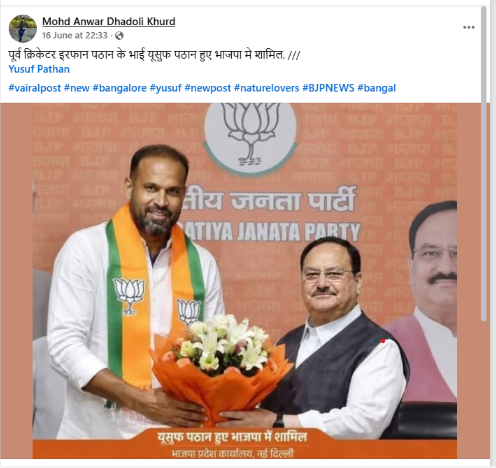
Amid political developments following the 2026 West Bengal Assembly elections, a photo is being widely circulated on social media claiming that former cricketer and Baharampur MP Yusuf Pathan has joined the Bharatiya Janata Party (BJP). The viral image shows Pathan wearing a BJP scarf and standing alongside Union Health Minister JP Nadda. CyberPeace Research Wing research found the claim to be false. The image in circulation is AI-generated and does not depict any real event.
Claim:
A Facebook user ‘Mohd Anwar Dhadoli Khurd’ shared the viral image on June 16, 2026, claiming that Yusuf Pathan has joined the BJP. The post has since been widely shared across platforms.
Post link: https://www.facebook.com/mohd.anwar.dhadoli.khurd/posts/pfbid02WAo4uXhhM1qEVTMbxTjKpTHkoeAbfEztwkX6tWLWpN8WBzNavgtJgKV8JoBGULSul
Archive link: https://perma.cc/4A3H-YTPL
Fact Check:
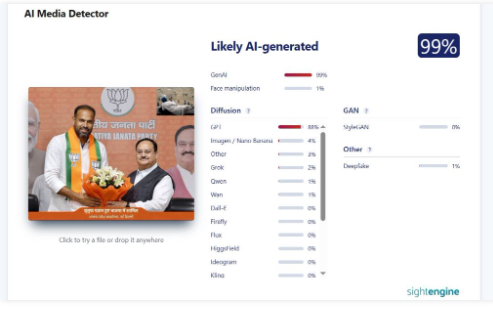
A reverse image search of the viral photo did not yield any credible news reports or authentic sources linking the image to any such political development. No related information was found on Yusuf Pathan’s official social media accounts either, raising suspicion about the authenticity of the image. The image was then analysed using AI detection tools. Sightengine reported a 99% probability of the image being AI-generated.
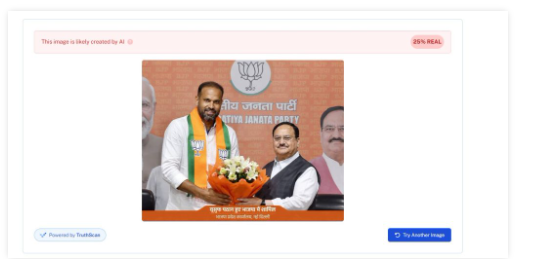
Additionally, analysis using “Undetectable.ai” also indicated a high likelihood of AI manipulation.
Conclusion:
The research confirms that the viral image claiming Yusuf Pathan’s entry into the BJP is AI-generated and does not reflect any real-world event.

Related Blogs
Executive Summary
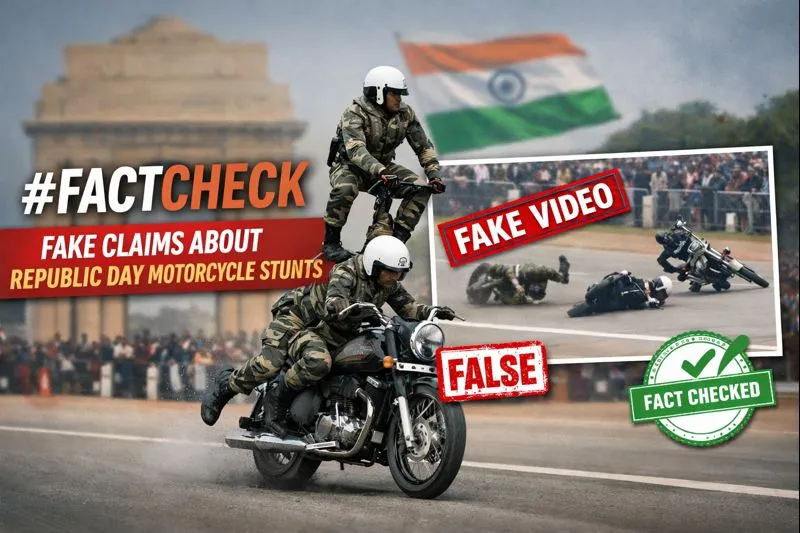
As India concluded its 77th Republic Day celebrations on January 26, 2026, with grandeur and patriotic enthusiasm along the iconic Kartavya Path, a video began circulating on social media claiming to show Indian security personnel failing to perform motorcycle stunts during the ceremonial parade. The short clip allegedly depicts soldiers attempting high-risk, synchronised motorcycle manoeuvres, only to lose balance and fall off their bikes. The visuals were widely shared online with mocking captions, suggesting incompetence during a nationally televised event. However, an research by the CyberPeace found that the video is not authentic and was digitally generated using artificial intelligence.
Claim
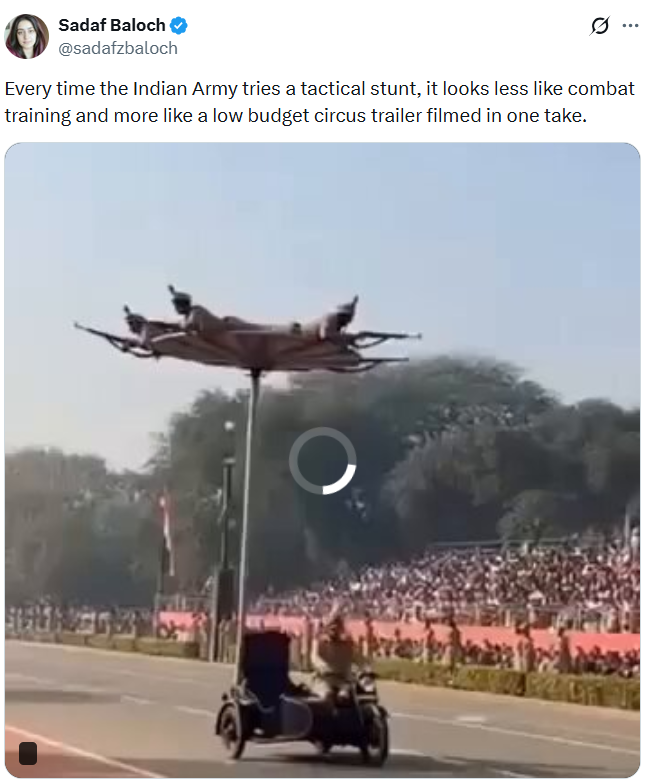
A Pakistan-based X user, Sadaf Baloch (@sadafzbaloch), shared the video on January 27, claiming it showed Indian security personnel failing to execute motorcycle stunts during the Republic Day parade held on January 26, 2026. While sharing the clip, the user wrote:“Every time the Indian Army tries a tactical stunt, it looks less like combat training and more like a low-budget circus trailer filmed in one take.”The post was widely circulated with similar narratives questioning the professionalism of Indian forces.
Here is the link and archive link to the post, along with a screenshot.
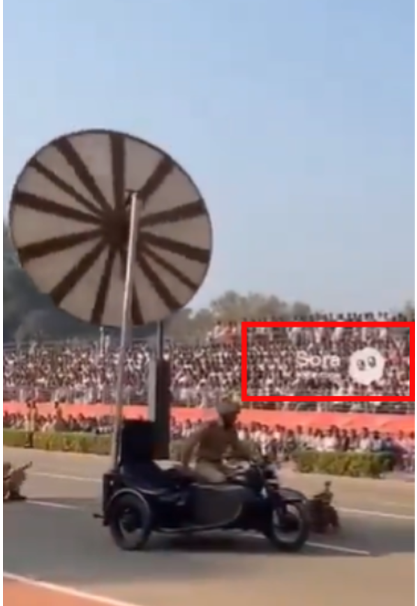
To verify the authenticity of the viral video, the Desk conducted a detailed frame-by-frame analysis. During the examination, a watermark linked to ‘Sora’—an AI text-to-video generation model was detected at the 00:05 timestamp. The presence of this watermark strongly indicated that the video was artificially generated and not recorded during a real-world event.
Fact Check:
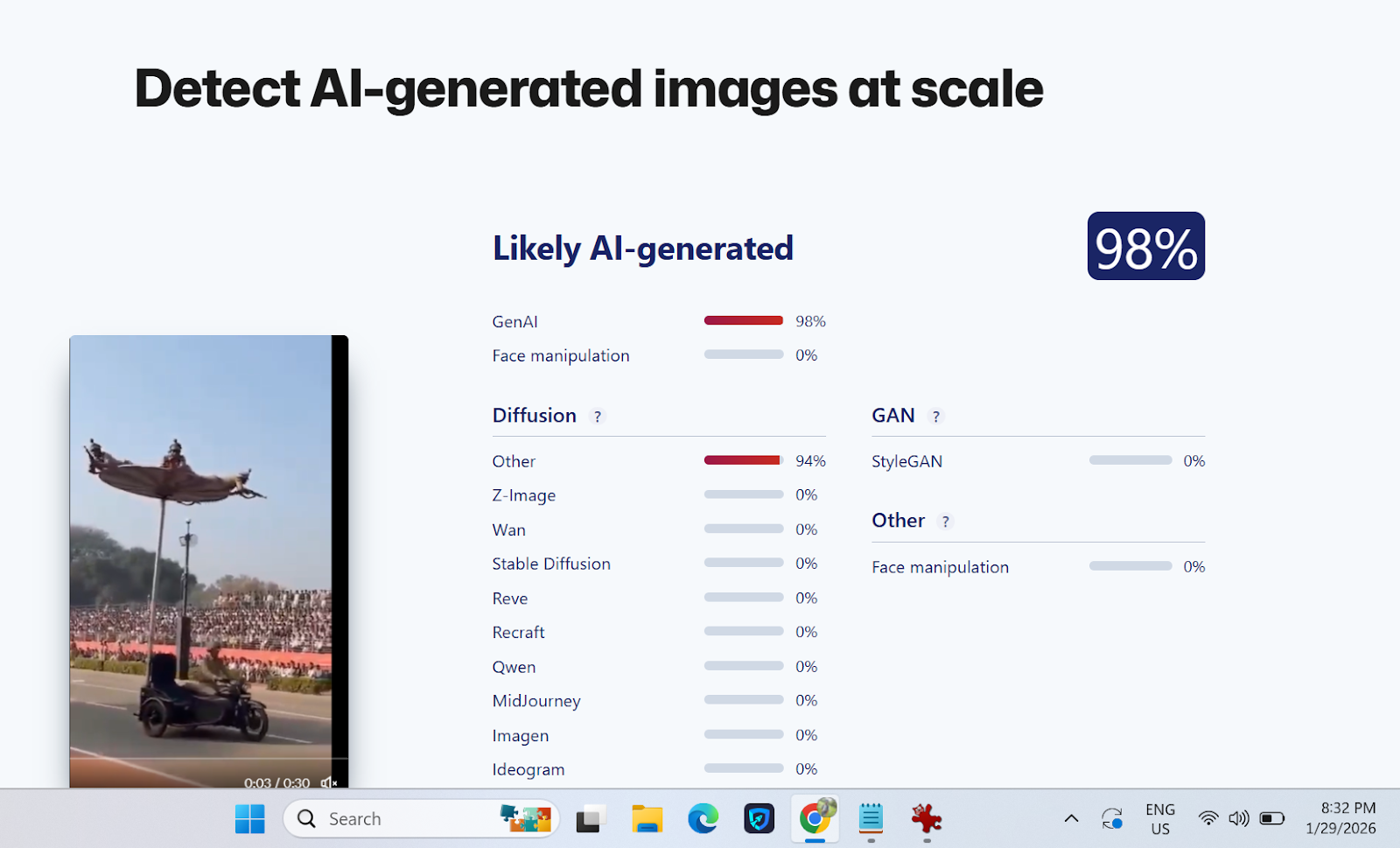
Further visual scrutiny revealed several inconsistencies commonly associated with AI-generated content. The background appeared unnatural and lacked realistic depth, while the movements and reactions of the security personnel looked mechanically exaggerated and inconsistent with real physics. Facial expressions and body motions during the alleged falls also appeared unrealistic. To strengthen the verification, the Desk analysed the clip using Sightengine, an AI-detection tool. The results showed a 98 per cent probability that the video contained AI-generated or deepfake elements.
Below is a screenshot of the result.
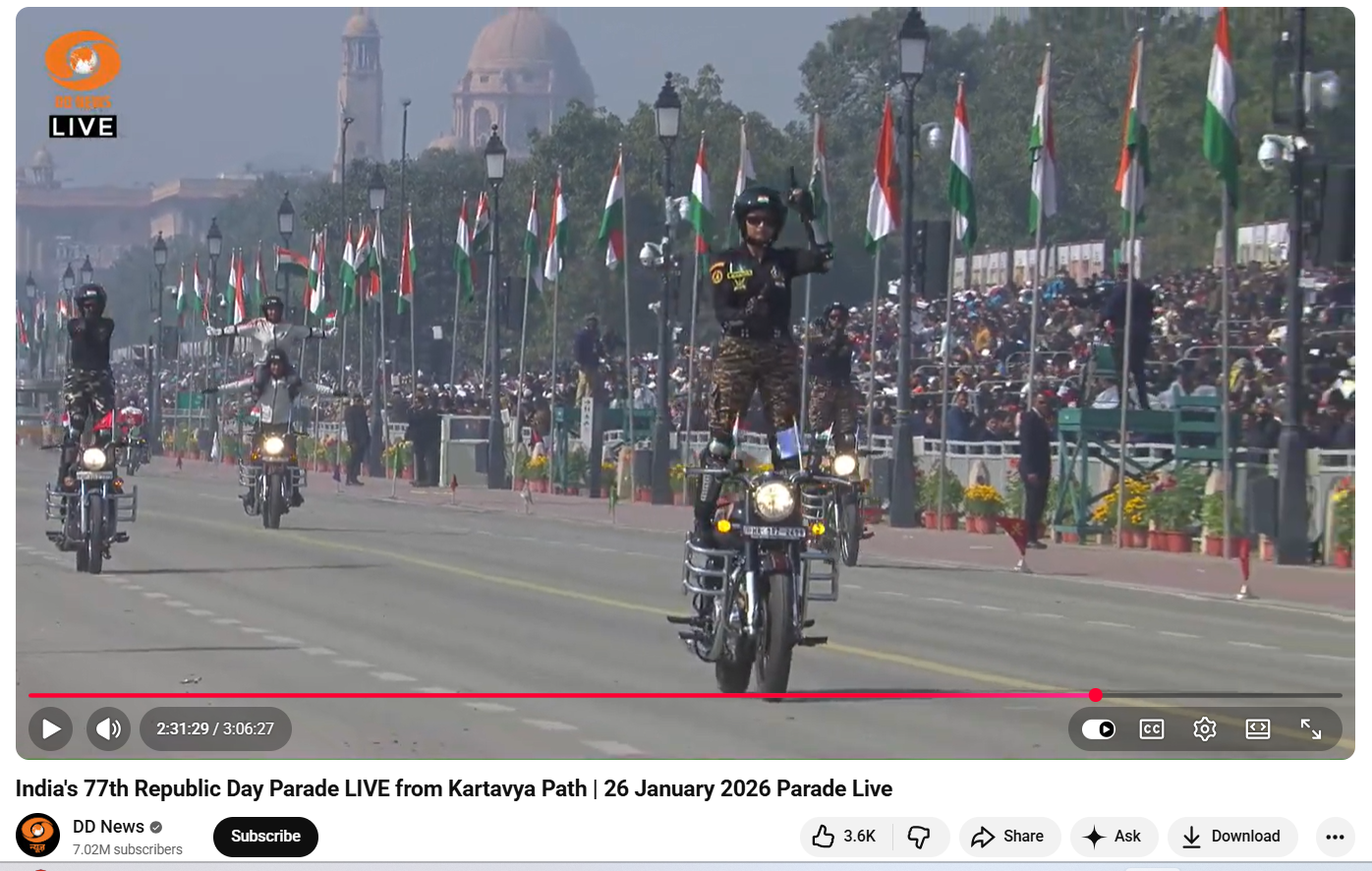
As part of the research , the Desk also conducted a customised keyword search and reviewed official coverage of the Republic Day parade. A full-length video broadcast by DD News on its official YouTube channel was examined. The footage showed joint CRPF and SSB motorcycle teams performing traditional daredevil stunts without any mishap. No incident resembling the viral claim was found in the official broadcast or in any credible media reports.
Here is the video link and a screenshot.
Conclusion
The CyberPeace research confirms that the viral video purportedly showing Indian security personnel failing to perform motorcycle stunts during the 77th Republic Day parade is AI-generated. The clip has been falsely circulated online as genuine content with the intent to mislead viewers and spread misinformation.

Executive Summary
A video circulating on social media shows a woman using abusive language in front of a camera. Users sharing the clip claim that the woman is a professor at Galgotias University and that the video exposes her alleged reality. However, an research by CyberPeace found the claim to be misleading. The probe revealed that the woman seen in the viral video has no connection with Galgotias University and is not a professor there.Fact-checking further showed that the video is not recent but around seven years old. The woman featured in the clip was identified as Shubhrastha, who is a political strategist by profession.
Claim:
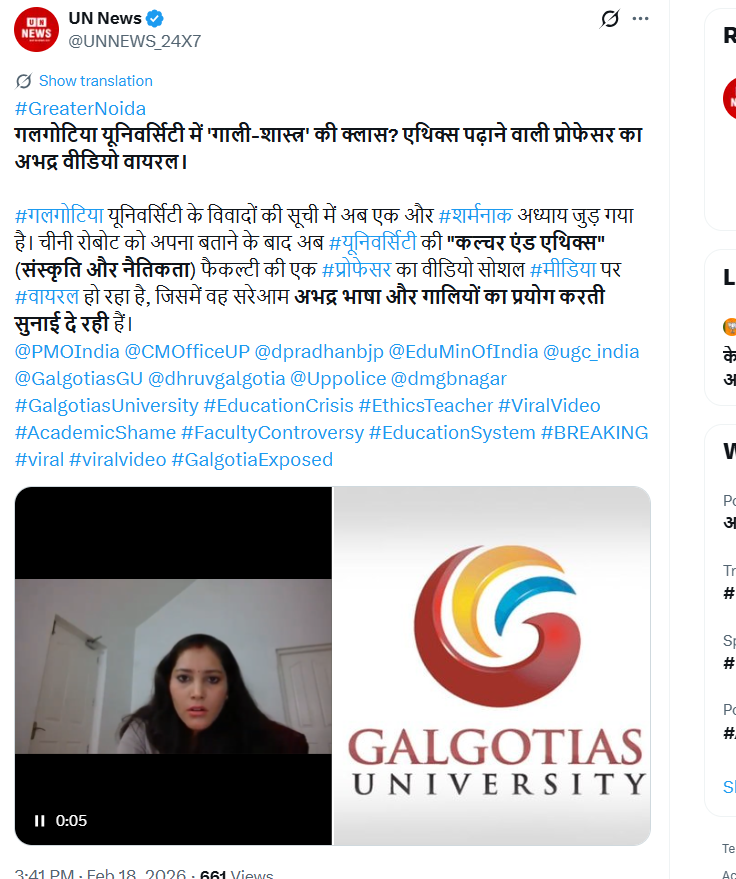
A user on X (formerly Twitter) shared the viral video on February 18, 2026, claiming: “A ‘class in abuse studies’ at Galgotias University? An obscene video of a professor teaching ethics has gone viral. Another shameful chapter has been added to the list of controversies surrounding Galgotias University.” The post further alleged that after falsely claiming a Chinese robot as its own, the university’s “Culture and Ethics” faculty member was seen publicly using abusive language in the viral clip. The post link and its archived version are provided below:
Fact Check:
To verify the authenticity of the viral claim, we extracted key frames from the video and conducted a reverse image search using Google Lens. During the research , we found the same video uploaded on the Indian Spectator’s YouTube channel on June 9, 2018
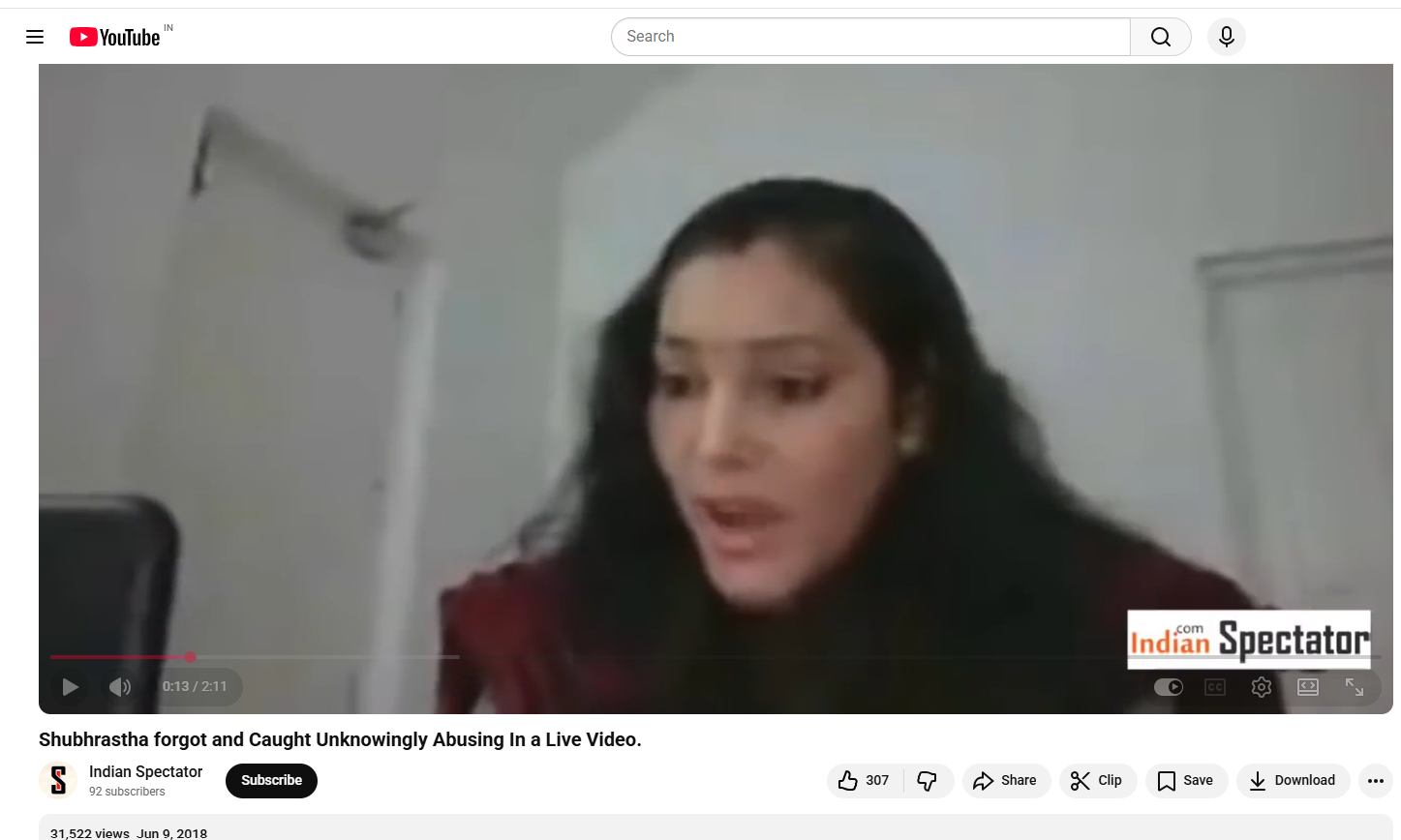
The video was also found on another YouTube channel, where it had been uploaded on June 12, 2018.

Conclusion
The research clearly establishes that the woman seen in the viral video has no association with Galgotias University and is not a professor there. The clip is also not recent but approximately seven years old. The woman in the video was identified as Shubhrastha, a political strategist.

Executive Summary
A video of Indian Army Chief General Dhiraj Seth is being shared on social media, allegedly showing him referring to an incident in which Major Rajendra Pratap Singh survived for 40 days by drinking cow urine during the 1965 India-Pakistan war and saying that Indian Army personnel should keep such a practice alive. The video is being shared with the claim that General Dhiraj Seth said that Major Rajendra Pratap Singh had consumed cow urine for 40 days to quench his thirst during the 1965 war and that serving Army personnel should also continue the practice. However, CyberPeace Research Wing found the claim to be false. The viral video has been digitally manipulated, with fabricated audio/remarks added to it. In the original video, General Dhiraj Seth did not make any such statement.
Claim:
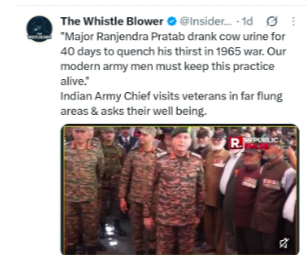
Indian Army Chief General Dhiraj Seth allegedly referred to an incident in which Major Rajendra Pratap Singh survived for 40 days by drinking cow urine during the 1965 India-Pakistan war and urged serving Army personnel to keep the practice alive.
https://x.com/InsiderWB/status/2104242428647727428
Fact Check
To verify the truth behind the viral claim, we conducted a Google search using relevant keywords. During the search, we did not find any credible media reports supporting the claim. As part of the next step in our research, we extracted keyframes from the video and conducted a reverse image search. During the research, we found the original video on Gulistan News, which was published on September 25, 2026.
https://x.com/GulistanNewsTV/status/2103461004374061389
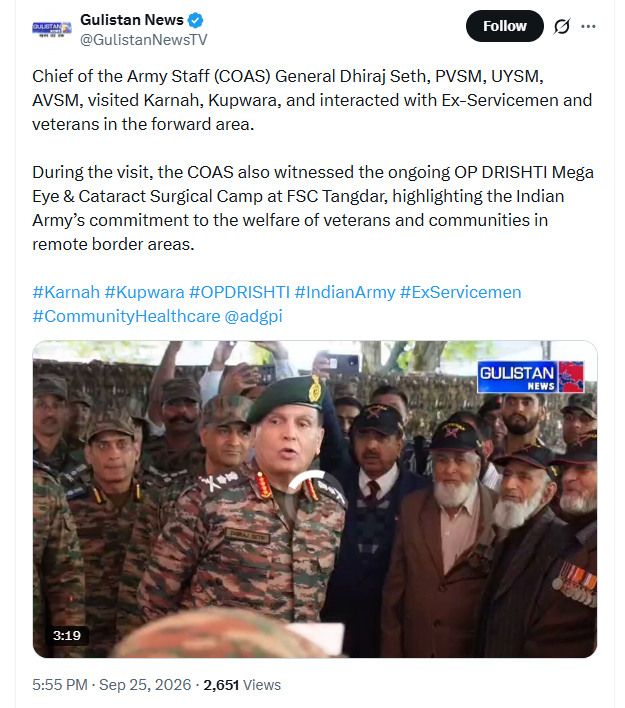
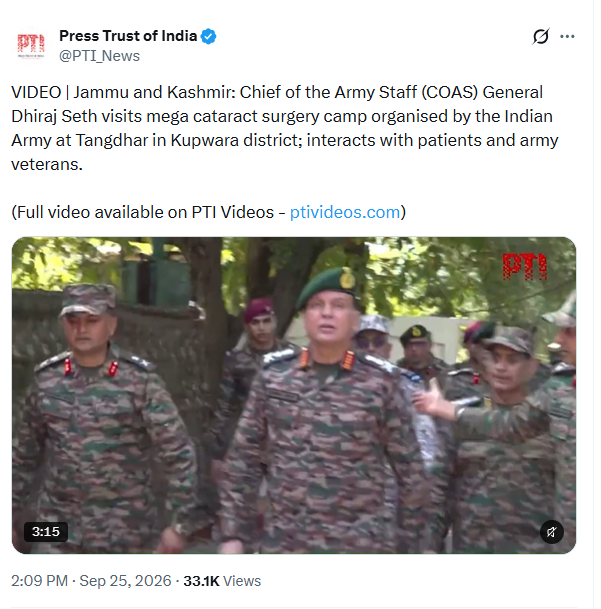
According to Gulistan News, Chief of the Army Staff (COAS) General Dhiraj Seth, PVSM, UYSM, AVSM, visited Karnah in Kupwara and interacted with ex-servicemen and veterans in the forward area. During the visit, the Army Chief also took stock of the ongoing ‘Operation Drishti’ Mega Eye and Cataract Surgical Camp at FSC Tangdhar. The initiative highlights the Indian Army’s commitment to the welfare of veterans and local communities in remote border areas. Further research led us to a video posted by the Press Trust of India (PTI) on X. According to its caption, Army Chief (COAS) General Dhiraj Seth visited the mega cataract surgery camp organised by the Indian Army at Tangdhar in Kupwara district and interacted with patients and army veterans.
https://x.com/PTI_News/status/2103404022279598579?s=20
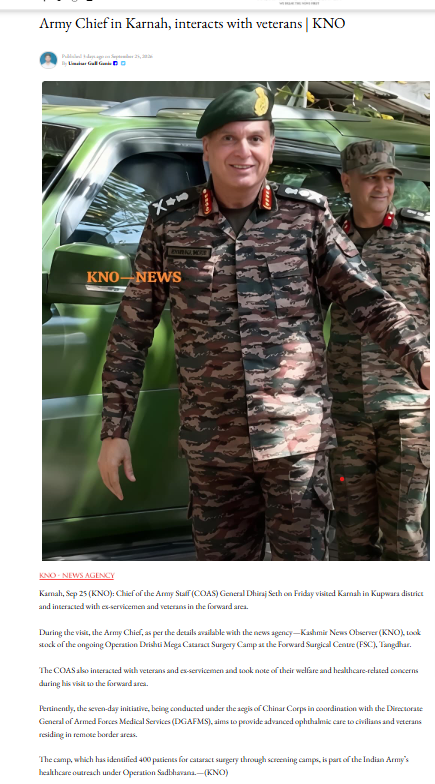
After verifying the viral video, we conducted a Google search using relevant keywords. During the search, we found a report by the news agency Kashmir News Observer (KNO). According to the report, Chief of the Army Staff (COAS) General Dhiraj Seth visited Karnah in Kupwara district on Friday and interacted with ex-servicemen and veterans in the forward area. During the visit, the Army Chief took stock of the ongoing ‘Operation Drishti’ Mega Cataract Surgery Camp at the Forward Surgical Centre (FSC), Tangdhar.The COAS also interacted with veterans and ex-servicemen and took note of their welfare and healthcare-related concerns.The seven-day initiative, being conducted under the aegis of Chinar Corps in coordination with the Directorate General of Armed Forces Medical Services (DGAFMS), aims to provide advanced ophthalmic care to civilians and veterans residing in remote border areas.
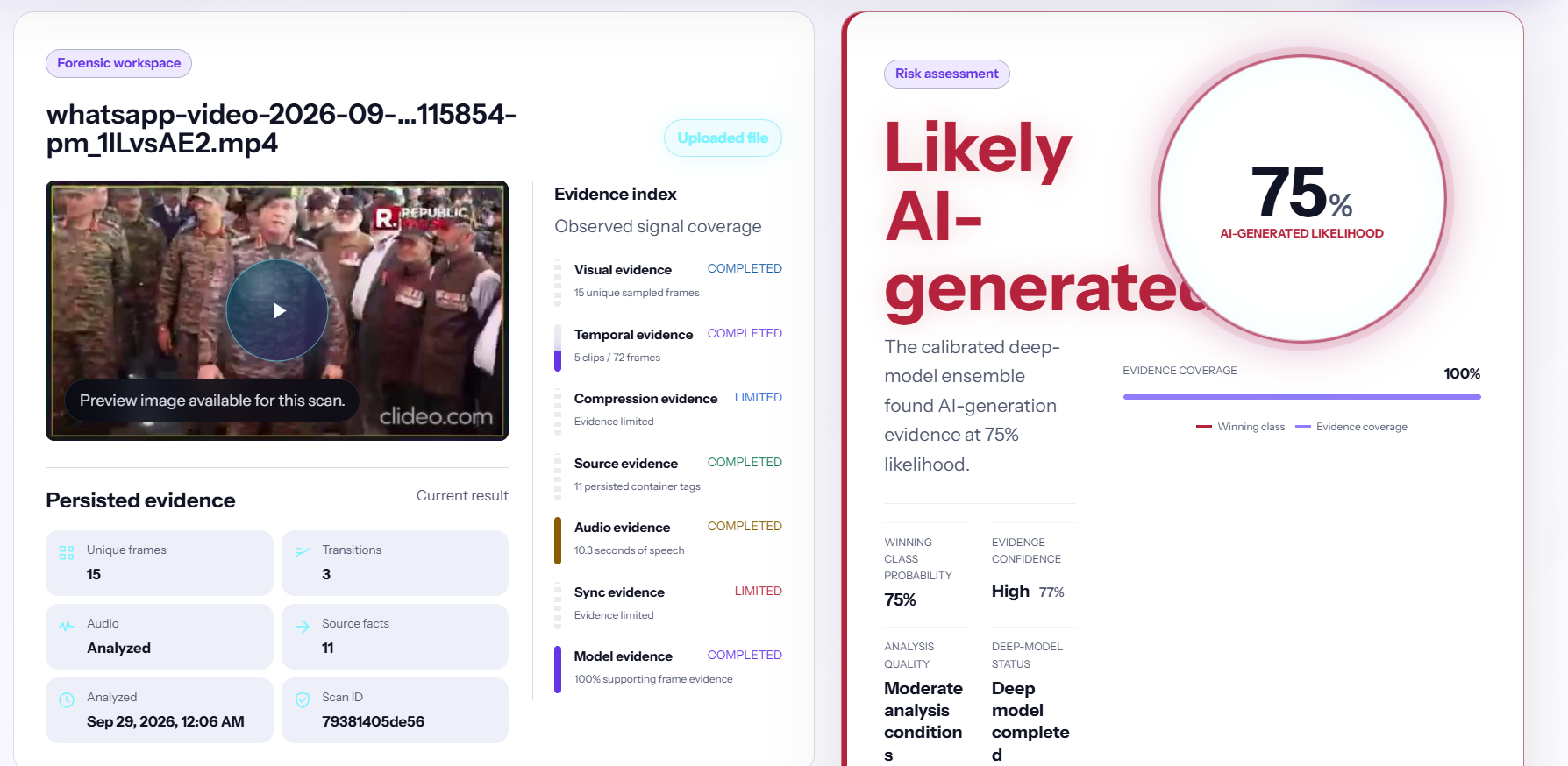
We scanned the video using the AI detection tool Detect Video AI. According to the results, the viral video is 75 per cent AI-generated.
At the end of our research, we also scanned the video using HumanMeter. According to the results, the viral video is 80 per cent AI-generated.

Conclusion:
The video being circulated on social media in the name of Indian Army Chief General Dhiraj Seth is misleading. The viral video purportedly shows him referring to an incident in which Major Rajendra Pratap Singh allegedly survived for 40 days by drinking cow urine during the 1965 India-Pakistan war and saying that Army personnel should keep the practice alive. However, the original video available does not contain any such statement by General Dhiraj Seth. The viral video has been digitally manipulated, with fabricated remarks attributed to him.
