

Navigating the Path to CyberPeace: Insights and Strategies
Featured #factCheck Blogs

Executive Summary
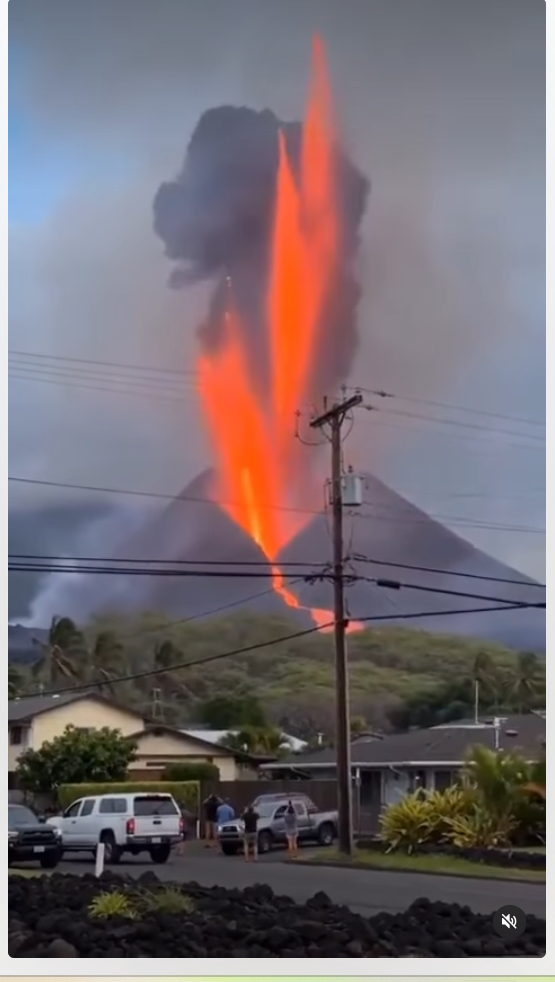
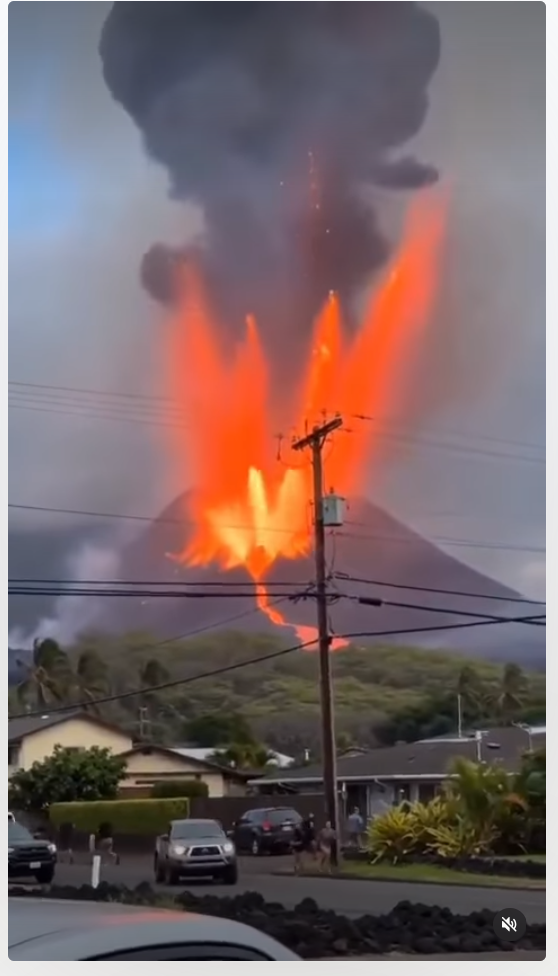
A volcano erupted at Indonesia’s Anak Krakatau on the night of September 4, 2026. A video is being shared on social media in connection with the eruption. The video shows lava rising high into the air following a volcanic eruption, with people seen fleeing the area. Some social media users are sharing the video claiming that it shows the eruption of Indonesia’s Anak Krakatau volcano. Research by CyberPeace found that the viral video is AI-generated. The video was created with the help of AI tools. However, four volcanoes, including Anak Krakatau, have erupted in Indonesia.
Claim
An Instagram user shared the viral video with the caption: “Indonesia’s Anak Krakatau volcano erupted Friday night. According to MAGMA Indonesia, lava fountains were seen rising from the volcano’s crater, while ash plumes reached a height of up to 400 metres. The volcano remains at Level III, with authorities enforcing a 3-kilometre exclusion zone around the crater.”
https://www.instagram.com/reels/DdBfQprThPA/
Fact Check
To investigate the viral video, we examined it closely and noticed several inconsistencies. At the beginning of the video, people can be seen standing calmly as the volcanic eruption takes place. Shortly afterward, the vehicles parked there suddenly begin moving. In one of the cars, no driver is visible. Meanwhile, the legs of a person running on the road disappear, and the person appears to merge into the background. These visual inconsistencies raised suspicions that the viral video had been created using AI tools.
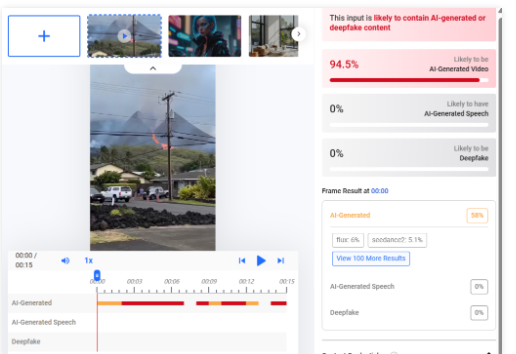
We checked the video using the AI detection tool Hive Moderation, which indicated that there was a more than 94 percent likelihood that the video was AI-generated.
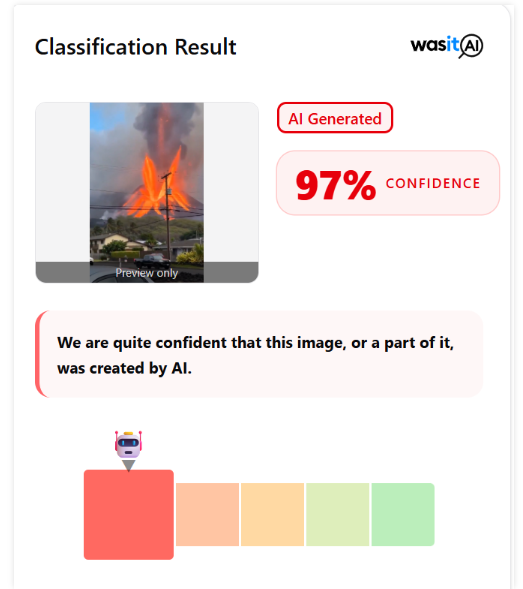
We checked the keyframes of the video using the AI detection tool Was It AI, which identified the video as 97 percent likely to be AI-generated.
Conclusion
The Anak Krakatau volcano in Indonesia erupted on the night of September 4, 2026. However, our research found that the video being shared in connection with the eruption was created using AI tools. Visual inconsistencies in the footage, along with the results of AI detection tools, indicate that the video is AI-generated and does not show genuine footage of the Anak Krakatau eruption. Therefore, the claim that the viral video shows the September 4 eruption of Indonesia’s Anak Krakatau volcano is false.

Executive Summary
A video is being shared on social media showing a female cricket player seemingly making an impressive catch in the air after rotating 360 degrees. The video is being shared with claims that the player pulled off the extraordinary catch in an incredible feat on the cricket field. Research by CyberPeace found the viral claim to be false. Our research revealed that the viral video was edited with the help of AI. The video uses actual broadcast footage from the 2024 Women’s T20 World Cup match between India and New Zealand, but the 360-degree catch shown in the video was not part of the actual match.
Claim:
A video of a female cricketer making an incredible 360-degree catch is being shared on social media as a real incident from a cricket match.
https://www.instagram.com/reels/DdEca3LNT00/

Fact Check
To verify the authenticity of the viral claim, we conducted a Google search using relevant keywords. However, we did not find any credible media reports confirming the claim.

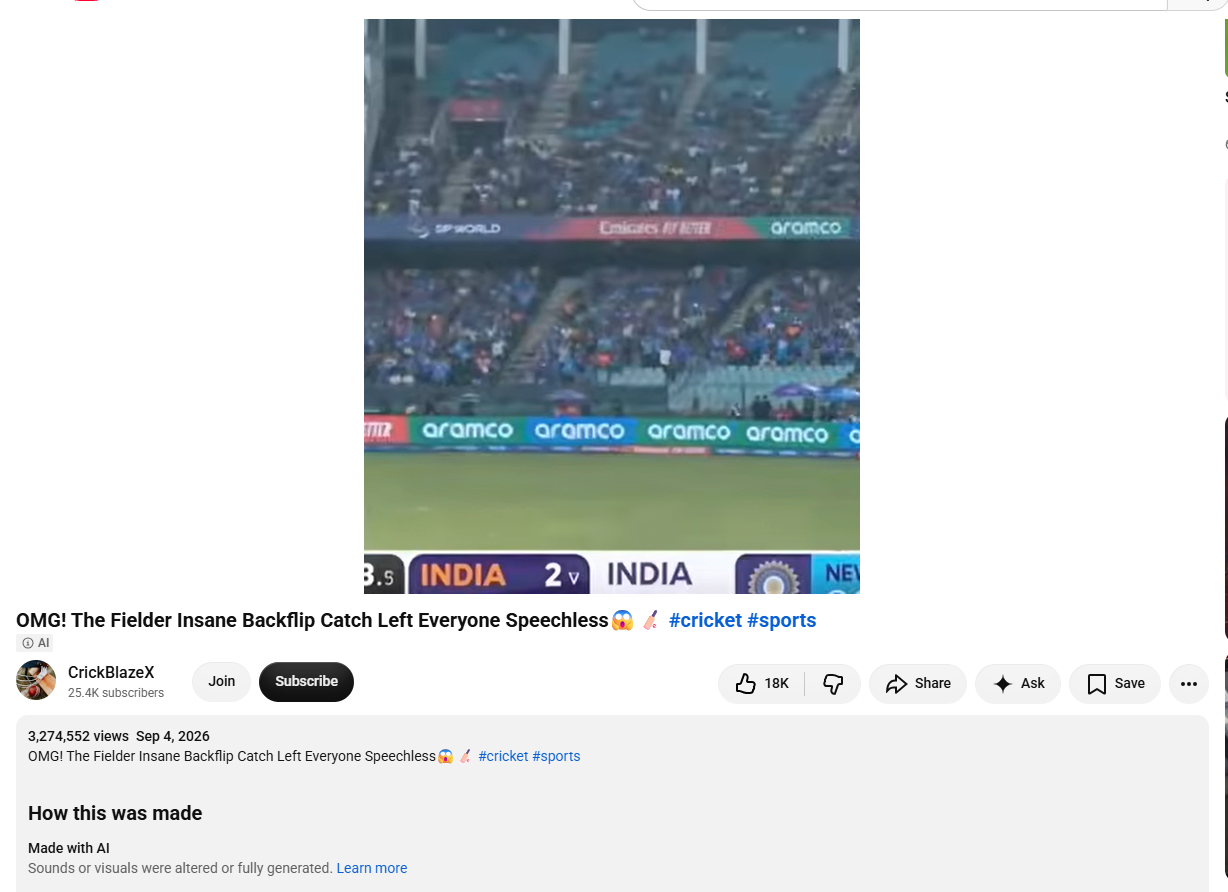
As part of the next step in our research, we conducted a reverse image search of the keyframes from the video. During the search, we found the same video on a YouTube channel, where it was identified as AI-generated.
As the next step, we scanned the viral video using the AI detection tool Hive Moderation. According to the tool’s results, there is a 70 percent probability that the video is AI-generated.

As part of the next step in our research, we scanned the viral video using an AI detection tool. According to the results, the viral video is AI-generated.

Conclusion
Our research found that the viral video was edited with the help of AI. The video uses actual broadcast footage from the 2024 Women’s T20 World Cup match between India and New Zealand. However, the 360-degree catch shown in the video was not part of the actual match.

Executive Summary
A post is being widely circulated on social media claiming that paper currency will be discontinued in the country from June 30 and replaced with new plastic notes. The claim is being shared along with an audio clip purportedly featuring Prime Minister Narendra Modi, warning people that paper notes will no longer be valid after June 30 and that new plastic currency will be introduced in the market.CyberPeace Research Wing research found the claim to be false. The viral post about discontinuation of paper currency from June 30 is baseless, and the audio attributed to the Prime Minister has been generated using artificial intelligence.
Claim:
An X (formerly Twitter) user shared the viral post claiming that paper currency will be completely withdrawn from circulation in India from June 30 and replaced with plastic notes. The post includes an audio clip allegedly featuring PM Modi.
Post link and archive link can be seen below:
https://www.facebook.com/reel/2172216560209848

Factcheck
To verify the claim, we conducted a keyword search online. During the research, we found a report published by NDTV on June 6, which stated that the Reserve Bank of India (RBI) is currently examining a proposal related to polymer-based (plastic) currency notes. The report clarified that the proposal is at a very preliminary stage and no final decision has been made. RBI Governor Sanjay Malhotra stated that the central bank is evaluating the pros and cons of polymer notes and will inform the public once any decision is taken. The report does not mention any discontinuation of existing paper currency.

We also checked official sources, including the Prime Minister’s social media handles and the Reserve Bank of India website, but found no announcement or notification regarding the discontinuation of paper currency from June 30.

Since the claim included an audio clip attributed to PM Modi, we analyzed it using AI voice detection tools. The Undetectable AI tool identified the voice with 99% probability as AI-generated.

Conclusion:
The research clearly shows that the claim about discontinuation of paper currency from June 30 is baseless. The audio attributed to Prime Minister Narendra Modi is also AI-generated and does not represent any official statement.

Executive Summary
A video is being widely shared on social media showing armed personnel attacking a helicopter. The video is being circulated with the claim that Iranian soldiers shot down a US military helicopter near the Strait of Hormuz amid rising tensions between the United States and Iran. CyberPeace Research Wing research found the claim to be false. The viral video is AI-generated and is being shared with misleading context.
Claim:
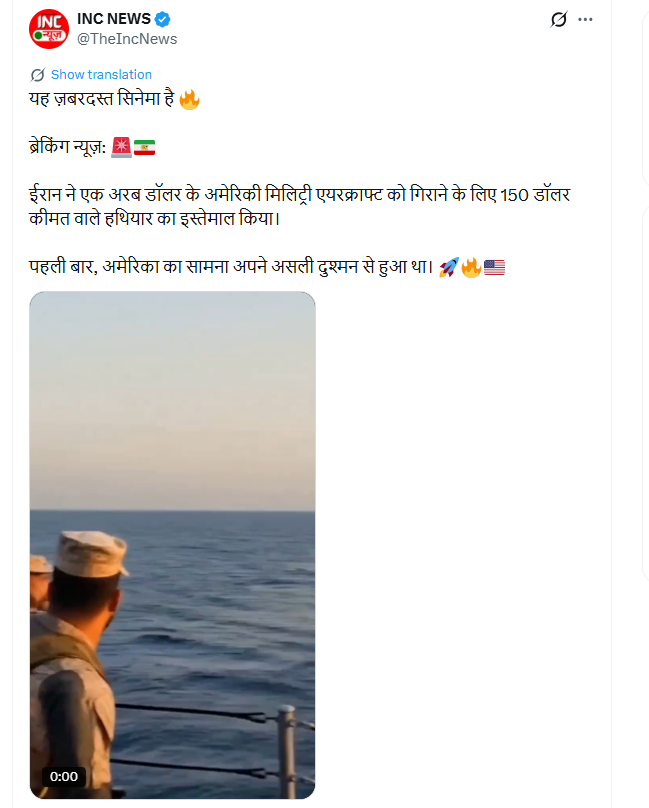
An X (formerly Twitter) user shared the video on June 10, 2026, with the caption: “This is great cinema. Breaking News: Iran used a $150 weapon to bring down a $1 billion US military aircraft. For the first time, America has met its real enemy.”
Post link and archive link can be seen below:
https://x.com/TheIncNews/status/2064758088012607544?s=20
https://archive.ph/LUDUz
Fact-Check
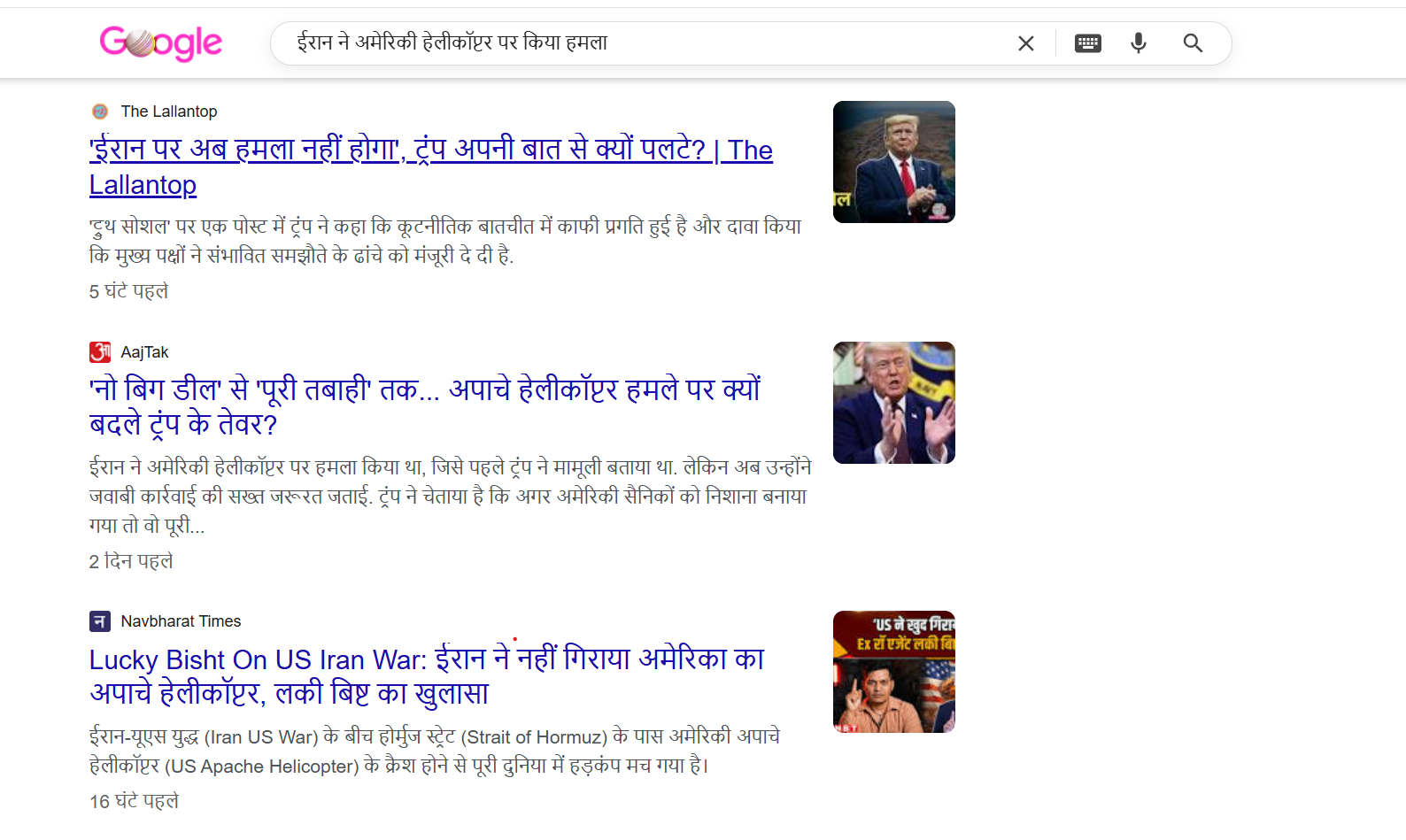
To verify the claim, we conducted a keyword search on Google. However, no credible media reports were found supporting this claim.
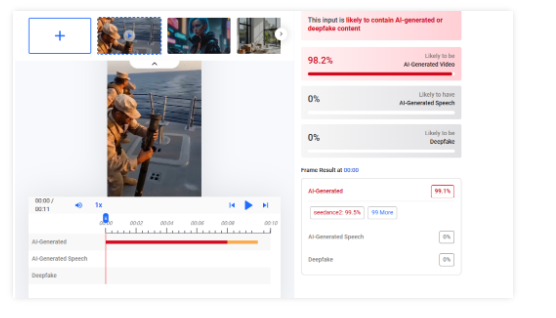
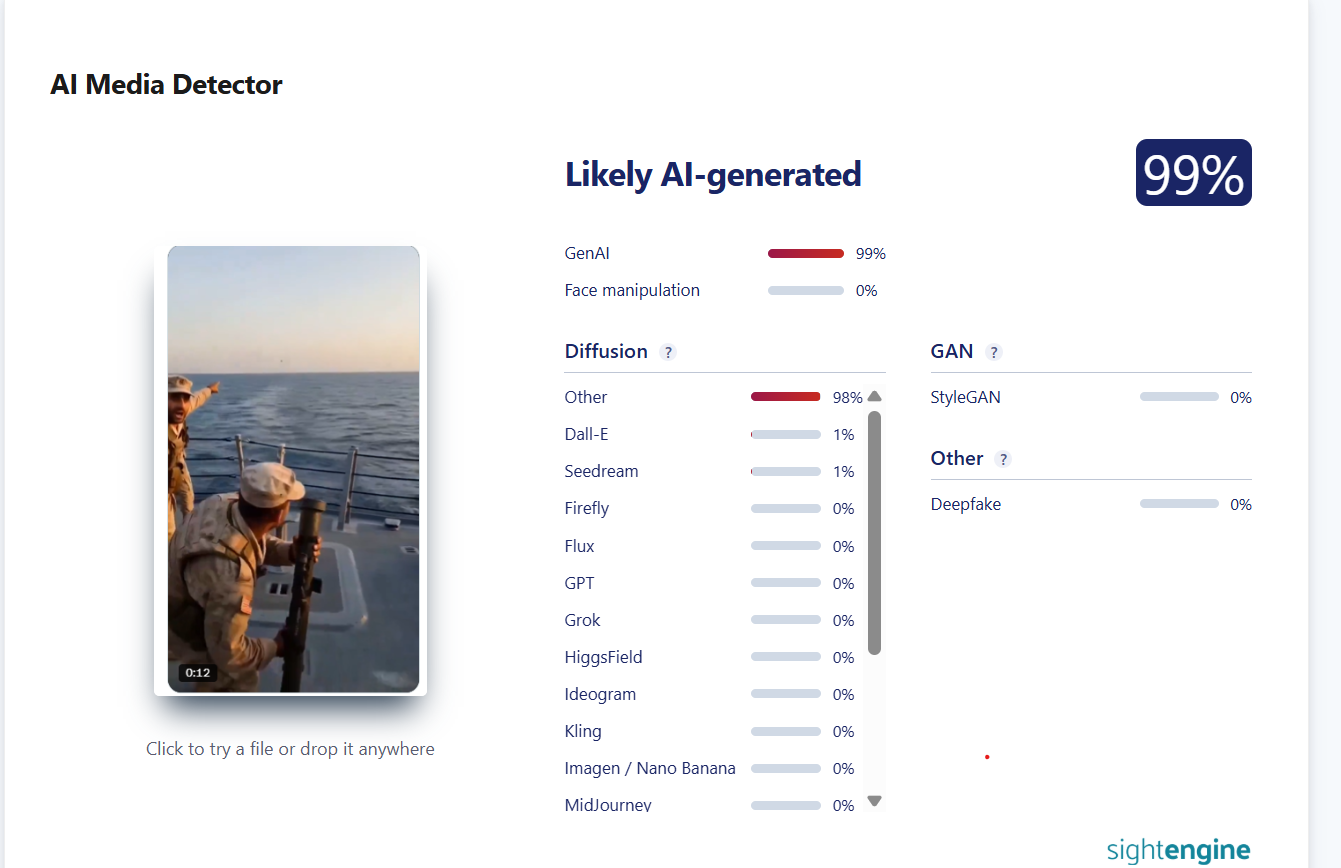
On closely examining the video, we suspected it to be AI-generated. We then analyzed it using the AI detection tool HIVE MODERATION. The results indicated that the video is 98% likely to be AI-generated.
In the next step, we further analyzed the video using another AI detection tool, SIGHTENGINE. The results showed a 99% probability of the video being AI-generated.
Conclusion:
Our research confirms that the viral video is AI-generated and does not depict any real-world incident. The content is being circulated with a misleading and false narrative, falsely linking it to ongoing geopolitical tensions, despite there being no credible evidence or verified reports supporting such a claim.

Executive Summary
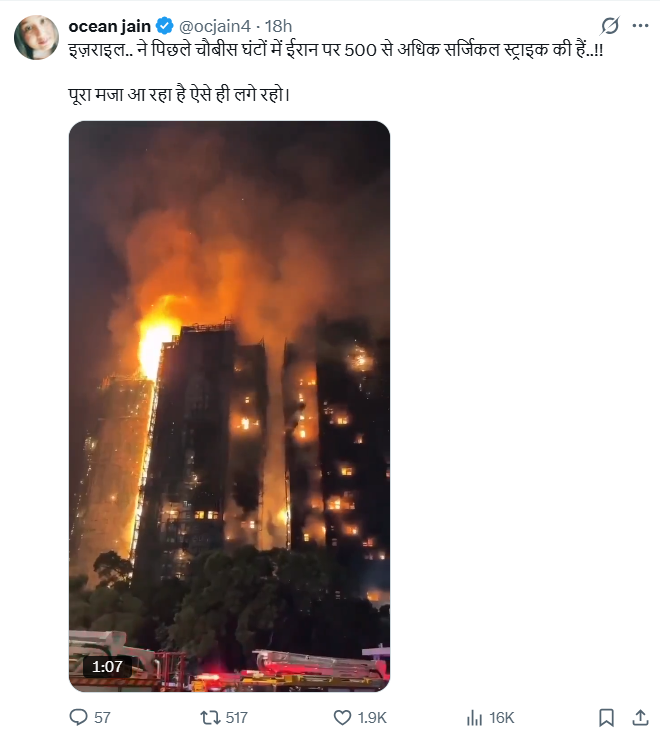
A video is being widely shared on social media with the claim that it shows the aftermath of a recent Israeli attack on Iran. The footage shows multiple residential high-rise buildings engulfed in flames, with thick plumes of smoke rising into the sky. Users sharing the video claim that Israel carried out more than 500 airstrikes on Iran. CyberPeace Research Wingresearch found the claim to be misleading. The viral video is not related to any Israeli attack on Iran. It actually shows a massive fire that broke out in a residential complex in Hong Kong in November 2025.
Claim:
An X user shared the viral video and wrote, “Israel has carried out more than 500 surgical strikes on Iran in the last 24 hours. Enjoying it thoroughly. Keep it up.”
Post link, archive link and screenshot can be seen below:
https://x.com/ocjain4/status/2064715707997413618?s=20
Fact Check:
To verify the authenticity of the viral video, we extracted keyframes and conducted a Google Lens search. During the research, we found the same footage on Reuters’ website, where it had been published on November 26, 2025.
Report link and screenshot can be seen below:
https://www.reuters.com/video/watch/idRW511126112025RP1/

According to Reuters, the video shows a massive fire that engulfed multiple high-rise residential buildings in Hong Kong’s northern Tai Po district. The blaze claimed the lives of at least four people. Thick smoke could be seen billowing from the buildings as firefighters and emergency response teams worked to bring the fire under control.
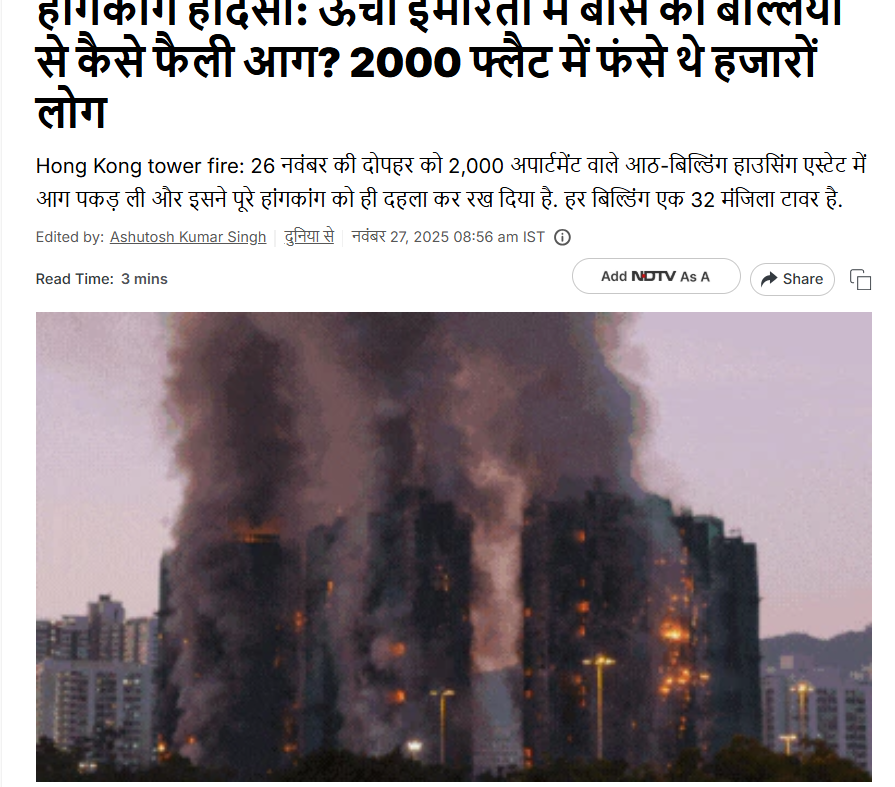
After establishing the source of the video, we conducted a keyword search on Google and found a report published by NDTV on November 27, 2025, which also covered the incident.
Report link and screenshot can be seen below:
Conclusion:
Our research found that the viral video is not related to any Israeli attack on Iran. The footage actually shows a massive fire that broke out in residential buildings in Hong Kong in November 2025. Chinese President Xi Jinping had expressed condolences to the victims, including a firefighter who lost his life while on duty.
Executive Summary
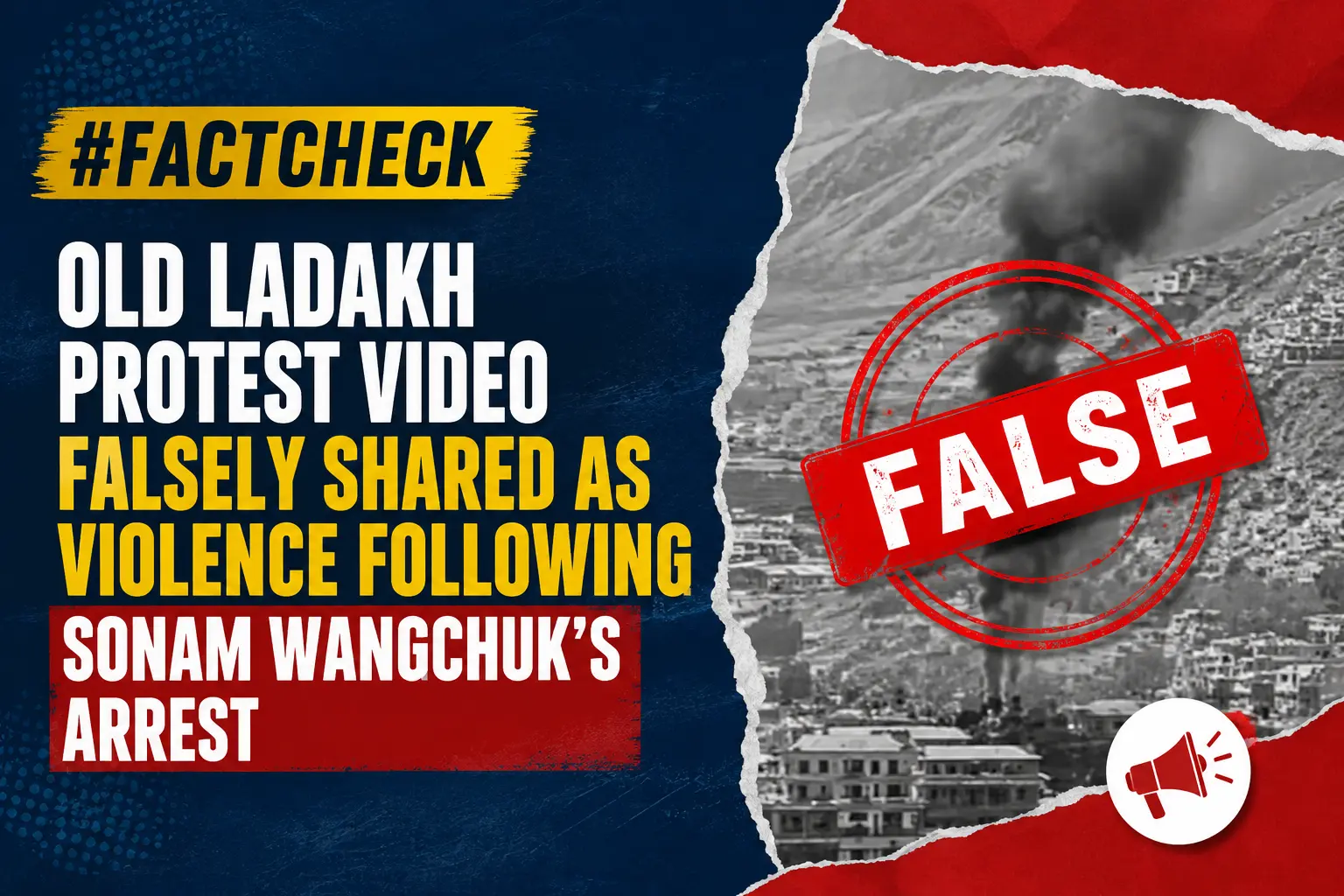
Last September, protests were held in Ladakh over several demands, including full statehood, extension of Sixth Schedule protections, separate Lok Sabha seats for Leh and Kargil, and reservation in jobs. During that period, some demonstrations turned violent. Since then, talks between stakeholders and the government have continued regarding these demands. Amid this backdrop, Pakistani propaganda handles on social media are sharing a video of a protest and claiming that violent demonstrations have erupted in Ladakh following the arrest of education reformer Sonam Wangchuk. CyberPeace Research Wing research found the claim to be misleading. The claim regarding Sonam Wangchuk’s arrest is false, while the viral video is actually from protests that took place in September last year.
Claim:
Sharing the video, a user wrote: “Massive protests in Ladakh. Violent demonstrations have erupted after reports of the arrest of Ladakh’s revolutionary leader Sonam Wangchuk. The people of Ladakh seek justice and freedom from the Indian Army, which is attacking civilians.”
https://x.com/ZardSi/status/2064204063248695393?s=20
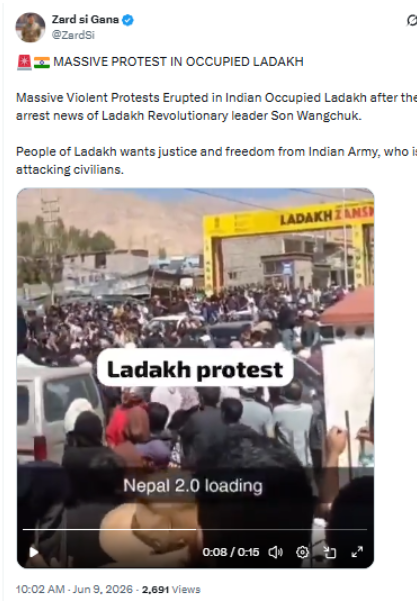
Fact Check:
Our research found the claim to be misleading. The viral video is from protests held in September last year, and the claim that Sonam Wangchuk has been arrested is also false. We first converted the video into keyframes and conducted a reverse image search using Google Lens. This led us to several videos and news reports covering the same incident. The viral footage was found in a news report uploaded on September 24, 2025, by Asianet News English on YouTube.
https://www.youtube.com/@asianetnewsenglish
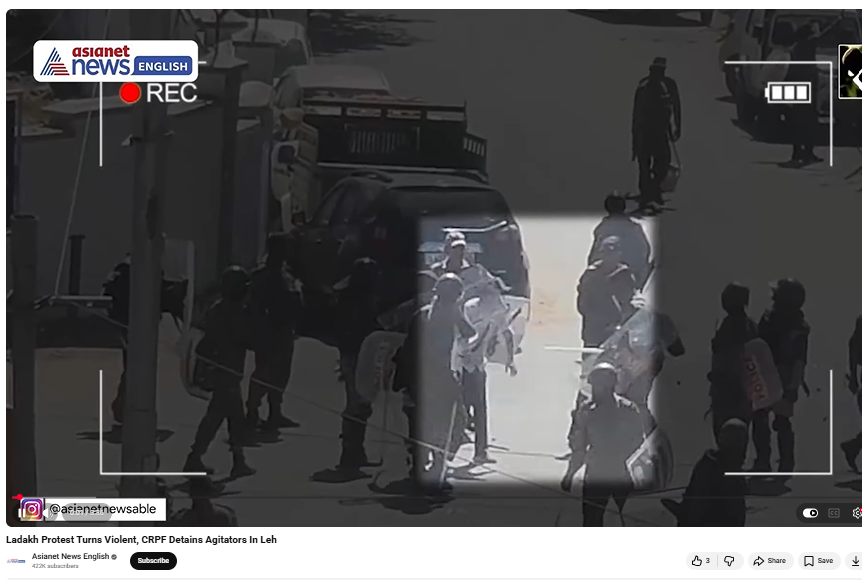
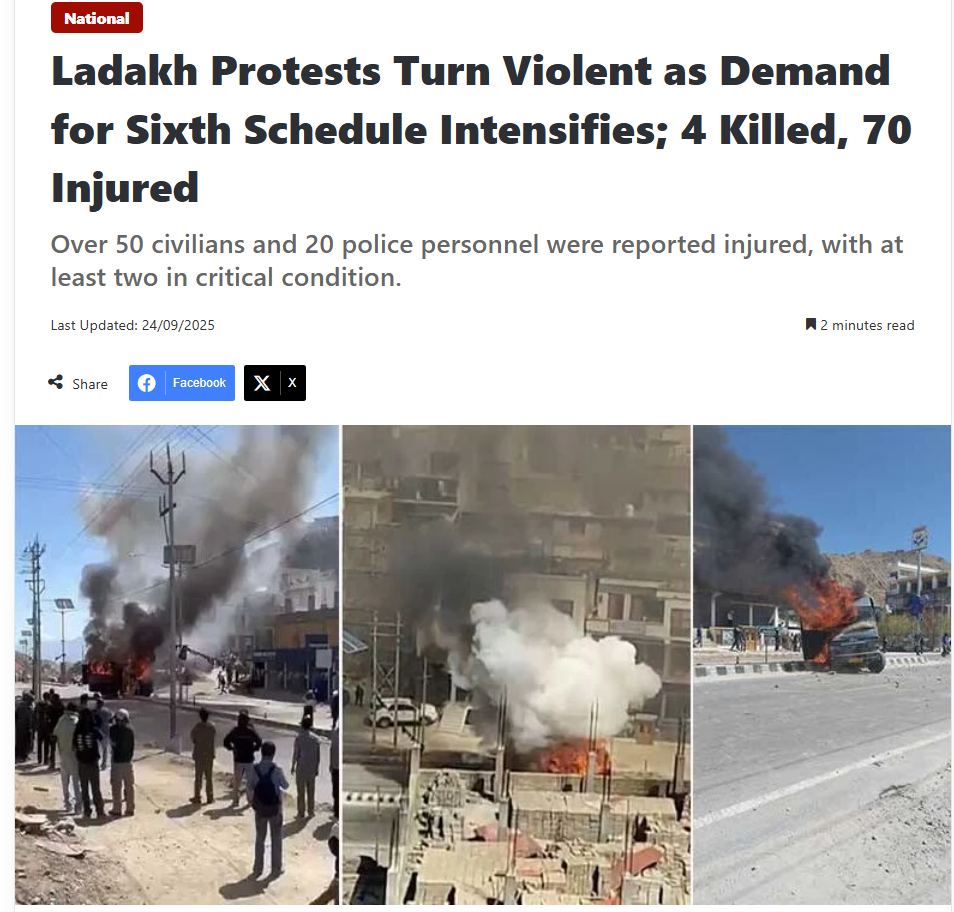
According to the information provided with the video, large-scale protests took place in Leh in support of demands for Sixth Schedule status and full statehood for Ladakh. The movement turned violent following clashes with police, and protesters allegedly set fire to a BJP office in Leh. CRPF personnel and local police later detained several protesters, bringing the situation under control. We also found a report published by Arunachal24, which stated that at least four people were killed and more than 70 injured in violent clashes between protesters demanding statehood and constitutional safeguards for Ladakh and security forces. The report further mentioned that protesters set fire to a local BJP office and a CRPF vehicle, following which authorities imposed a strict curfew across Leh.
Our team also found that the claim about Sonam Wangchuk’s arrest is entirely false. Wangchuk remains active on social media and had posted an update on June 10, indicating that he had not been detained.

Conclusion:
The fact-check clearly shows that the viral claim is misleading. There is no evidence that Sonam Wangchuk has been arrested. The viral video is not recent and actually shows protests that took place in Ladakh in September 2025.

Executive Summary
Following recent escalations between Iran and Israel, where both countries reportedly exchanged missile strikes over the weekend, a video is now circulating on social media claiming to show the latest attacks between the two nations. However, CyberPeace Research Wing research found that the viral video is not related to the recent developments. The footage is actually from a March incident involving reported US-Israeli strikes in Tehran’s Jannat Abad area.
Claim
An X (formerly Twitter) user shared the viral video with the caption:“Israel, ignoring Trump’s advice, has carried out a major retaliatory strike on Tehran, Karaj, Tabriz, and Kermanshah.”
https://x.com/ocjain4/status/2063844698138239357?s=20
The video is being widely shared with claims that it shows recent Iran–Israel missile exchanges following Sunday’s reported attacks.
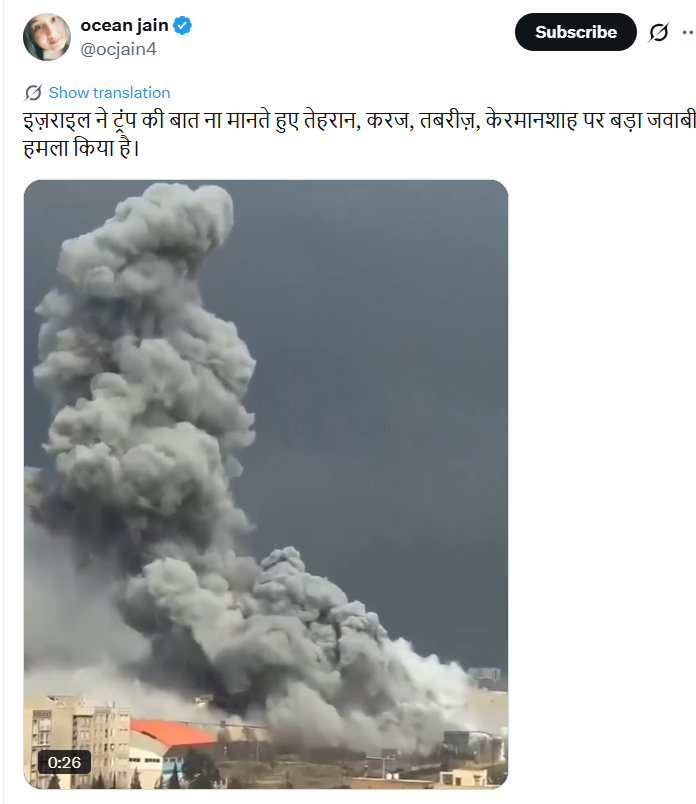
Fact Check
To verify the claim, we extracted keyframes from the viral video and conducted a reverse image search. The research led us to a post from BBC Persian journalist Ghoncheh Habibiazad’s X account dated 3 March. The video was shared with a caption describing it as showing a strike in Tehran attributed to US-Israeli action.
https://x.com/GhonchehAzad/status/2028632595156598874?s=20
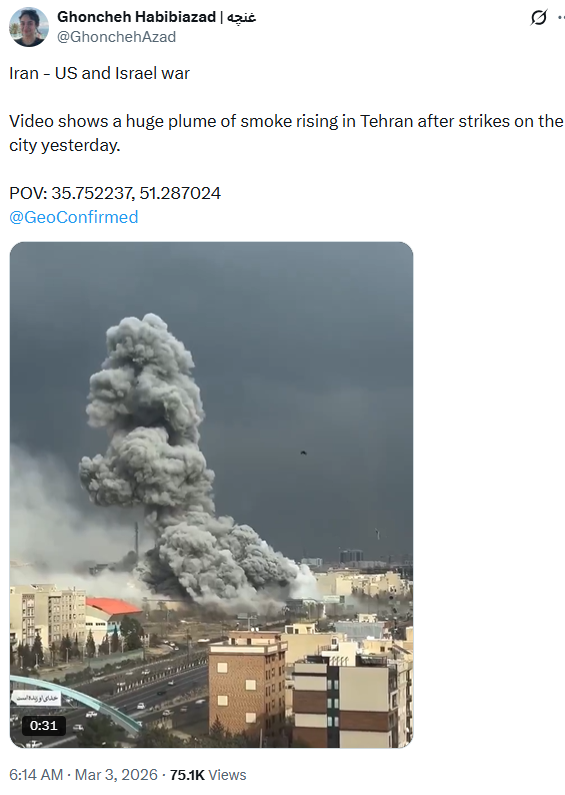
Further verification found the same footage published by Sky News and uploaded on Al Arabiya’s YouTube channel on 3 March 2026. The accompanying descriptions referred to smoke rising from Tehran’s District 5 and near the Hemmat Expressway following the strike.
https://news.sky.com/video/smoke-seen-rising-after-strike-in-tehran-13514731
https://www.youtube.com/shorts/AceFmYiBkuA
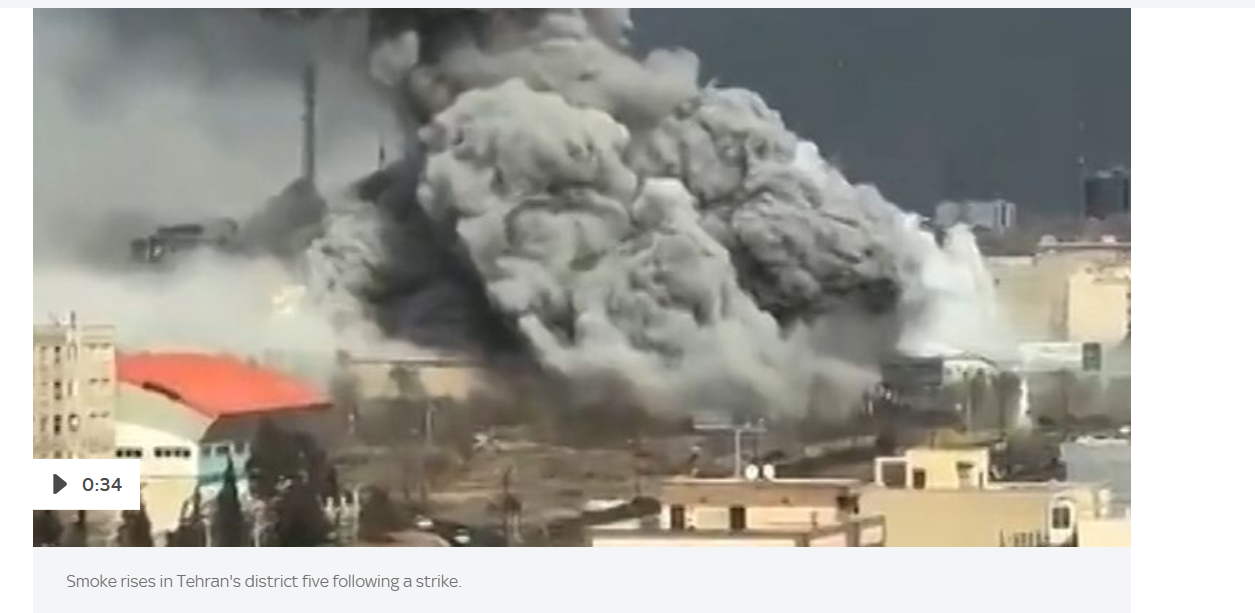
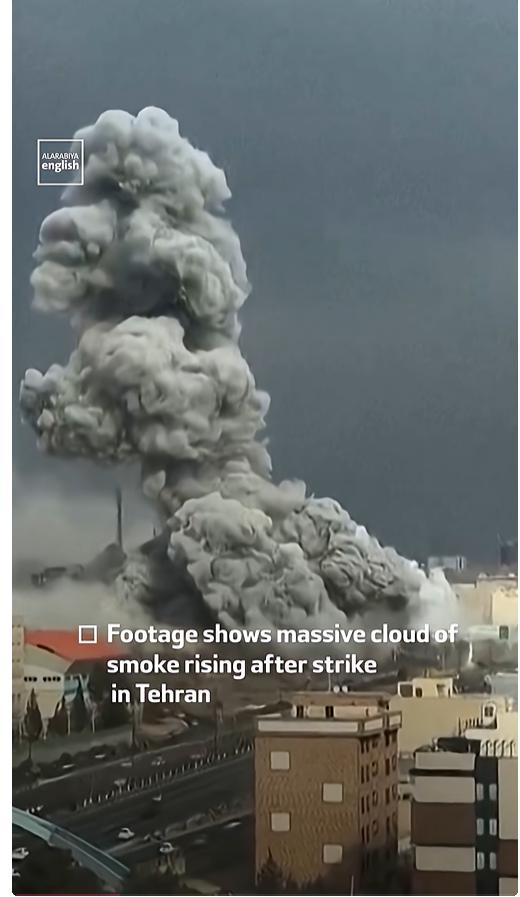
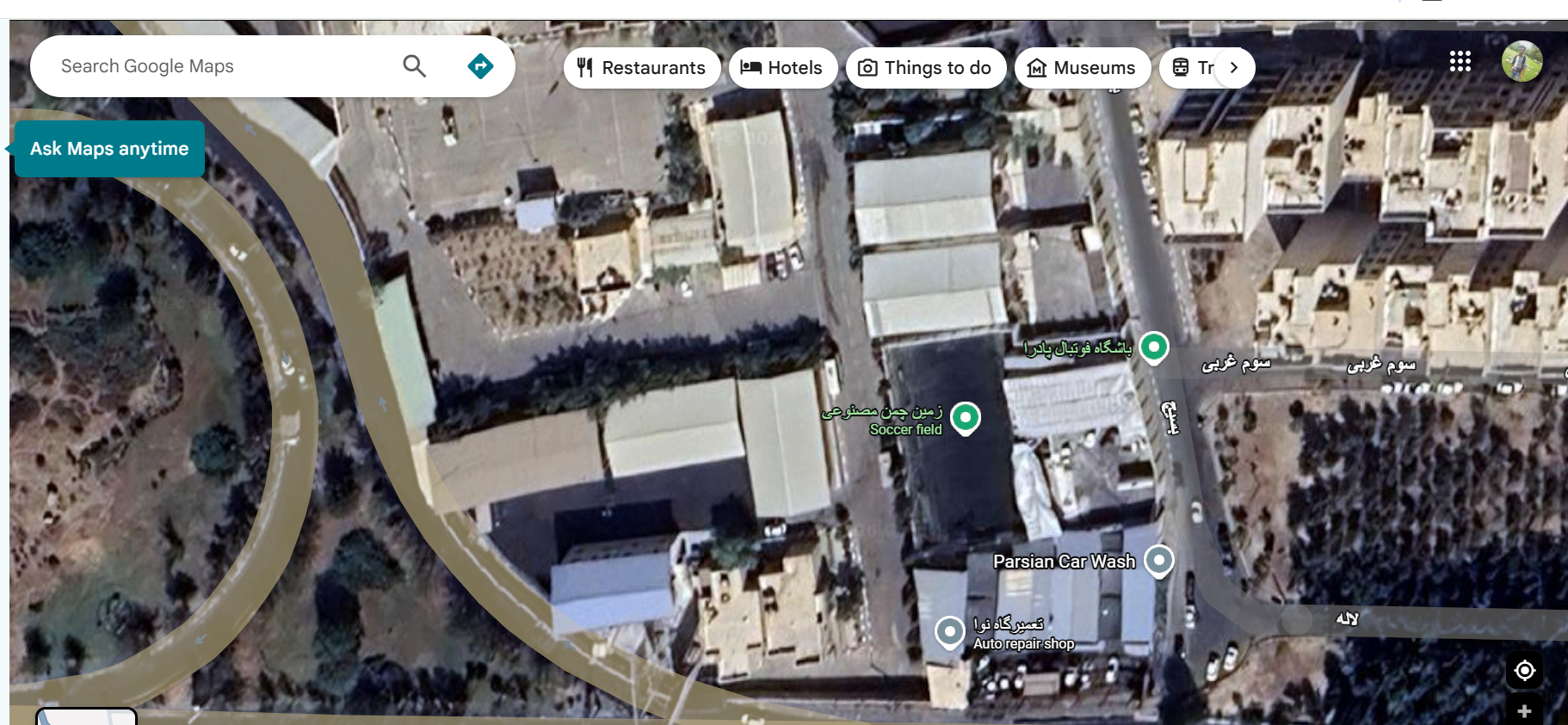
Additionally, a comparison using Google Satellite View confirmed that the location seen in the viral video matches the same area shown in the earlier March footage shared by BBC-affiliated reporting.
Conclusion
Our research confirms that the viral video has no connection to the recent Iran–Israel missile exchanges. The footage is from a March incident showing reported strikes in Tehran’s Jannat Abad area, and is being misleadingly shared as a recent escalation between the two countries.

Executive Summary
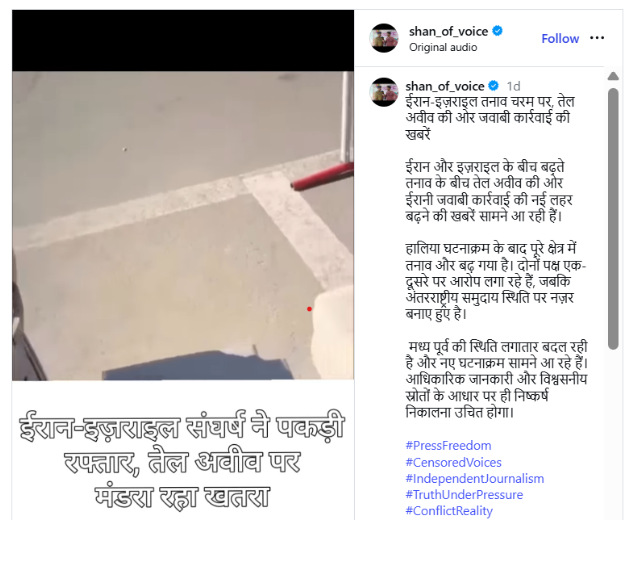
Amid renewed military tensions between Iran and Israel in West Asia, a video is widely circulating on social media showing a multi-storey building being struck, followed by a massive explosion and fire. Several users are sharing this clip with the claim that it shows a recent Iranian attack on Tel Aviv, Israel. However, CyberPeace Research Wing research found that the claim is misleading. The viral video has no connection to the current Iran–Israel conflict. It is actually from a Russian drone strike in Ukraine that took place in September 2025, and is now being falsely linked to the ongoing tensions in West Asia.
Claim
An Instagram user shared the viral video with the caption:“Iran–Israel tensions at peak, reports of retaliatory action towards Tel Aviv… New wave of Iranian response towards Tel Aviv amid escalating tensions between Iran and Israel. The situation in the region continues to intensify as both sides accuse each other, while the international community closely monitors developments. The Middle East situation is rapidly evolving and updates are emerging. It is important to rely only on official information and credible sources.”
https://www.instagram.com/shan_of_voice/reel/DZWRp8vqiM8
https://archive.ph/s26qV
Fact Check
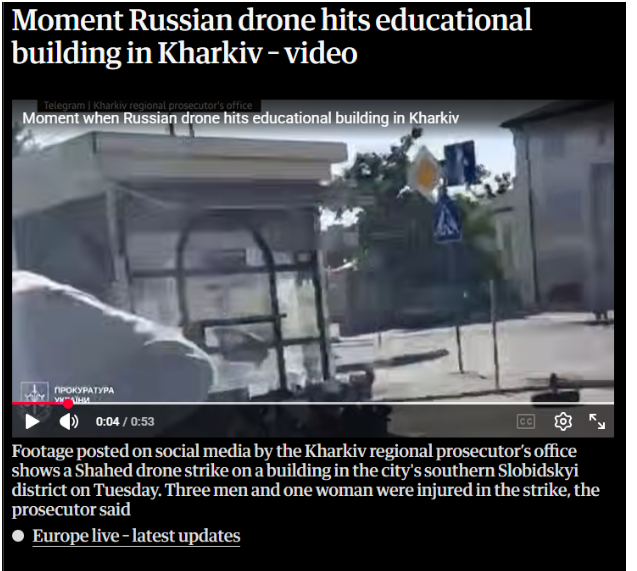
To verify the authenticity of the video, we extracted keyframes and conducted a Google Lens reverse image search. The same footage was found in a report published by The Guardian on 16 September 2025.
According to the report, the video shows a Russian drone strike on a building in Kharkiv, Ukraine, in which three men and one woman were injured.
Further verification through keyword search led us to the same footage on the official YouTube channel of Associated Press, published on 17 September 2025.
https://www.youtube.com/watch?v=cAke3aAhPxs

The Associated Press also confirmed that the video shows a Russian drone strike on a building in Kharkiv, Ukraine.
Conclusion
Our research found that the viral video has no connection to the ongoing Iran–Israel tensions or any attack on Tel Aviv. The footage is from a Russian drone strike in Kharkiv, Ukraine (September 2025), and is being misleadingly shared in the context of the West Asia conflict.

Executive Summary
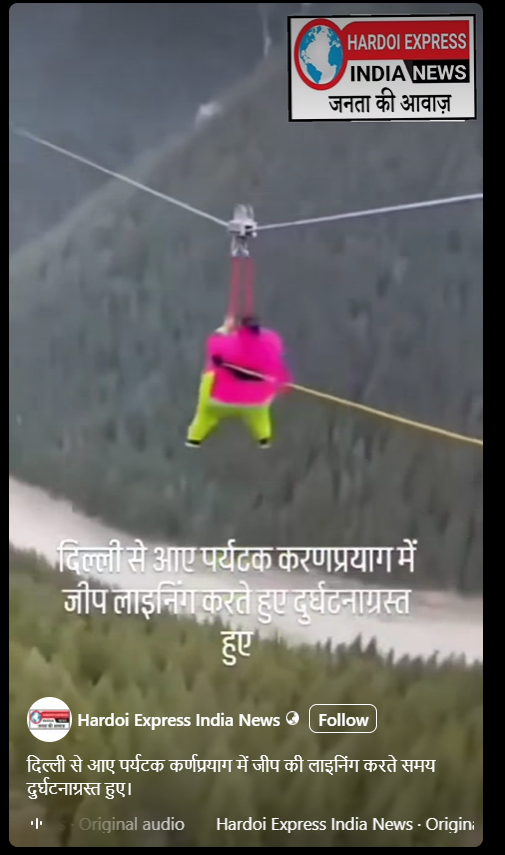
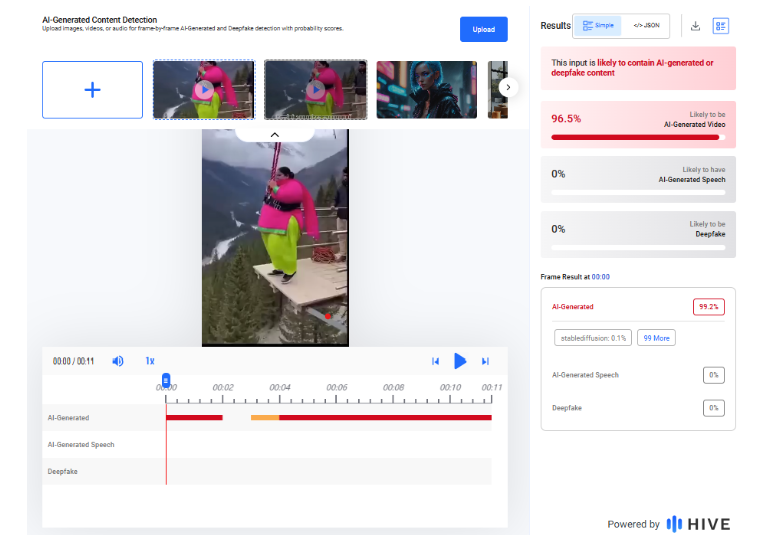
A video is being shared on social media claiming that a female tourist from Delhi fell into a deep gorge during ziplining in Karnaprayag. In the viral video, a woman dressed in bright pink and yellow clothes is seen ziplining amidst high mountains, when suddenly the zipline wire breaks and she falls from a significant height into a deep gorge. Social media users are sharing this video, presenting it as a real incident. Research by the CyberPeace Research Wing revealed that the claim of a Delhi woman tourist's death during a zipline accident in Karnaprayag is baseless. The viral video is AI-generated.
Claim
According to the claim, this accident took place in Karnaprayag, Uttarakhand, where a female tourist from Delhi became a victim of this horrific mishap. Several social media users are claiming that the woman died in this accident.
https://www.facebook.com/reel/26108544868822432
Fact Check
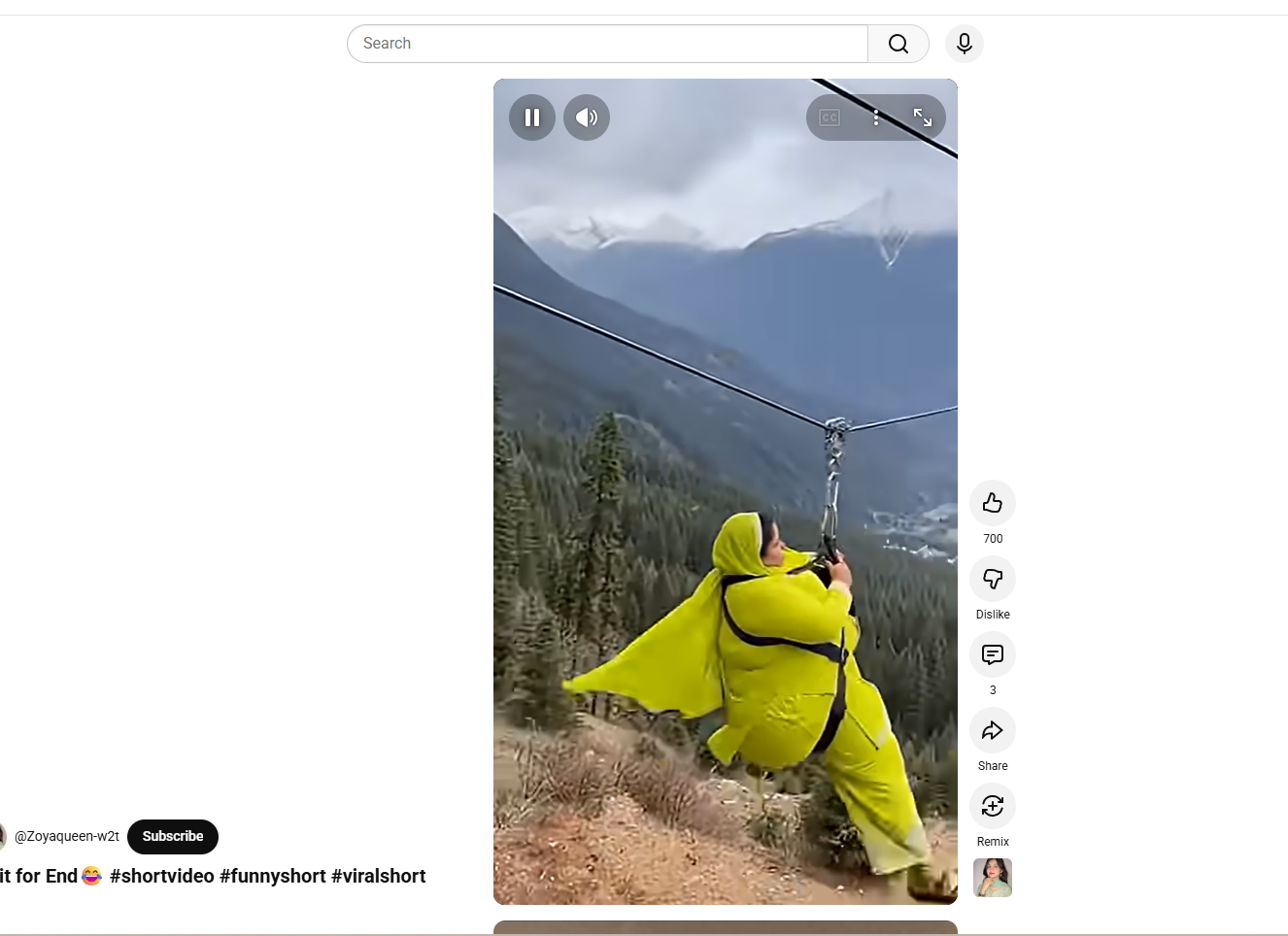
To investigate the video viral as a zipline accident in Karnaprayag, we conducted a reverse search of its keyframes. During this, we found the video uploaded as a Short on a Pakistani YouTube channel, @Zoyaqueen-w2t, on June 2, 2026. Hashtags like '#funnyshorts' were used in the caption of this video. Scanning this account revealed that several other fictional videos related to similar zipline accidents have also been uploaded here. Apart from this, the video was also shared with funny hashtags in some social media posts from May 2026.
https://www.youtube.com/shorts/Gzha_J7Fqv0
Following this, searching with relevant keywords yielded no credible media reports regarding any such zipline accident in Karnaprayag, Uttarakhand, in recent times. Subsequently, we scanned the viral video of the alleged zipline accident using the AI detection tool 'Hive Moderation'. During the analysis, the tool classified the video as highly likely to be AI-generated, with a score of 99.2%.
Conclusion
From the evidence gathered in our research , it is clear that the claim regarding the death of a female tourist from Delhi during a zipline accident in Karnaprayag is baseless. The viral video is not of a real incident, but is AI-generated.
Executive Summary
A video is being widely circulated on social media by Pakistani users as propaganda against the Indian Army. In the video, a man can be seen being beaten by a group of women in the middle of a road. Based on the viral video, it is being claimed that in Phuket, Thailand, Lieutenant General Rajiv Kiran Sahni, DG EME of the Indian Army, was thrashed by "ladyboys" after he allegedly harassed them and refused to pay the full amount.
Research by the CyberPeace Research Wing found the viral claim to be misleading and baseless. The viral video has no connection with Lieutenant General Rajiv Kiran Sahni (DG EME) of the Indian Army. According to credible media reports obtained during the research, this incident took place in Pattaya, Thailand, in December 2025, where a dispute over payment allegedly broke out between an Indian tourist named Raj Jasuja and some transgender women (ladyboys). Subsequently, the tourist was assaulted.
Claim:
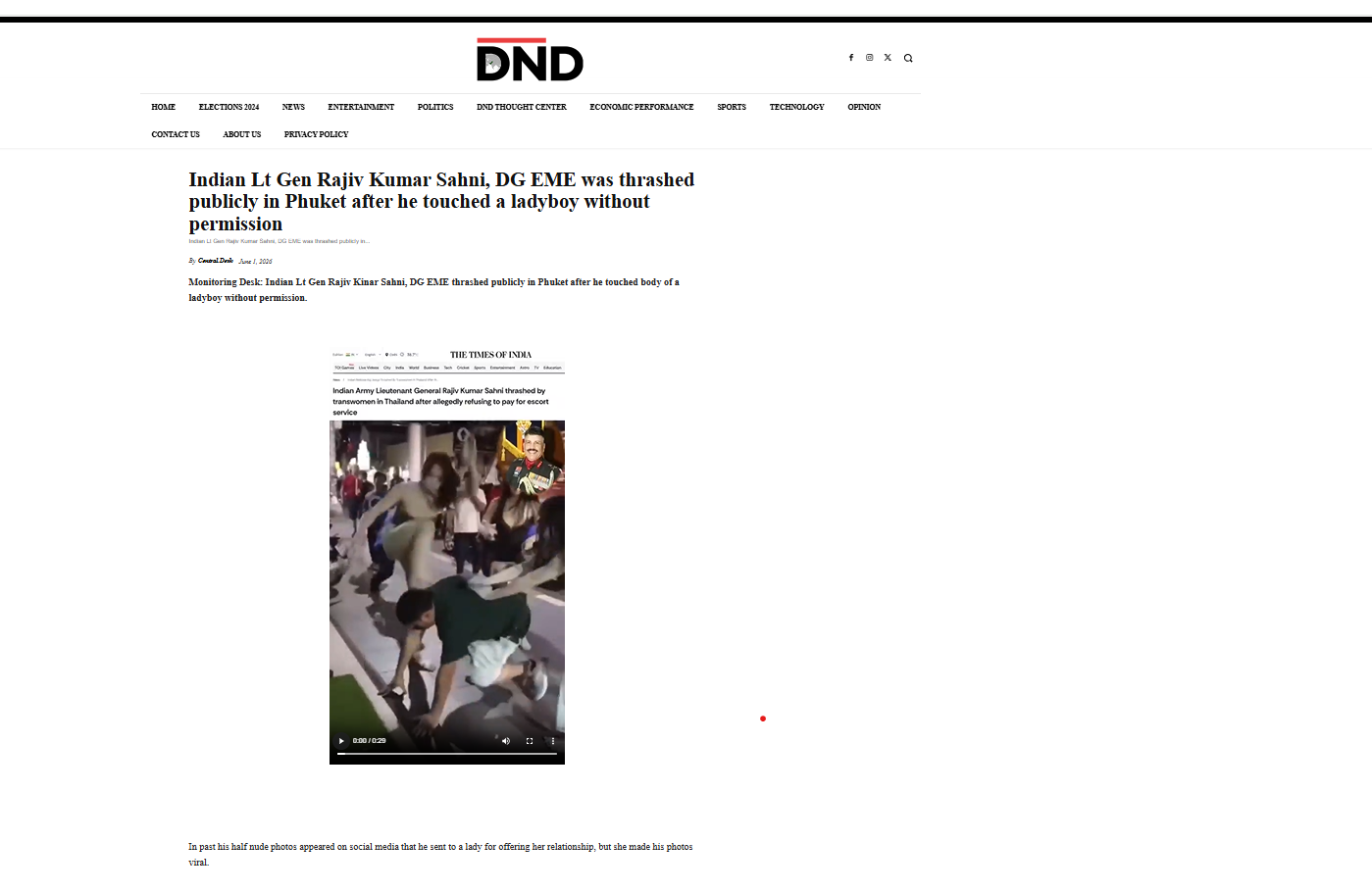
A Pakistani website shared the viral video claiming that Indian Army Lieutenant General Rajiv Kiran Sahni (DG EME) was publicly thrashed in Phuket, Thailand, by ladyboys after he harassed them and refused to pay the full amount.
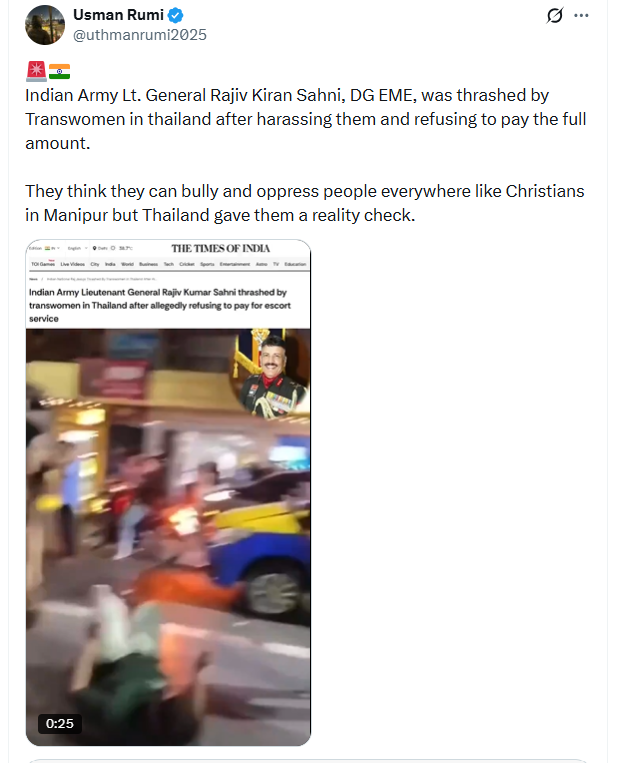
Meanwhile, on the social site X (formerly Twitter), a user shared the viral video and wrote, “Indian Army Lt Gen Rajiv Kiran Sahni, DG EME, thrashed by Thai ladyboys in Phuket after harassing them and refusing to pay full amount. They think they can bully and oppress people everywhere like Christians in Manipur, but Thailand showed them the reality.”
https://x.com/uthmanrumi2025/status/2061554209036898369
Fact Check:
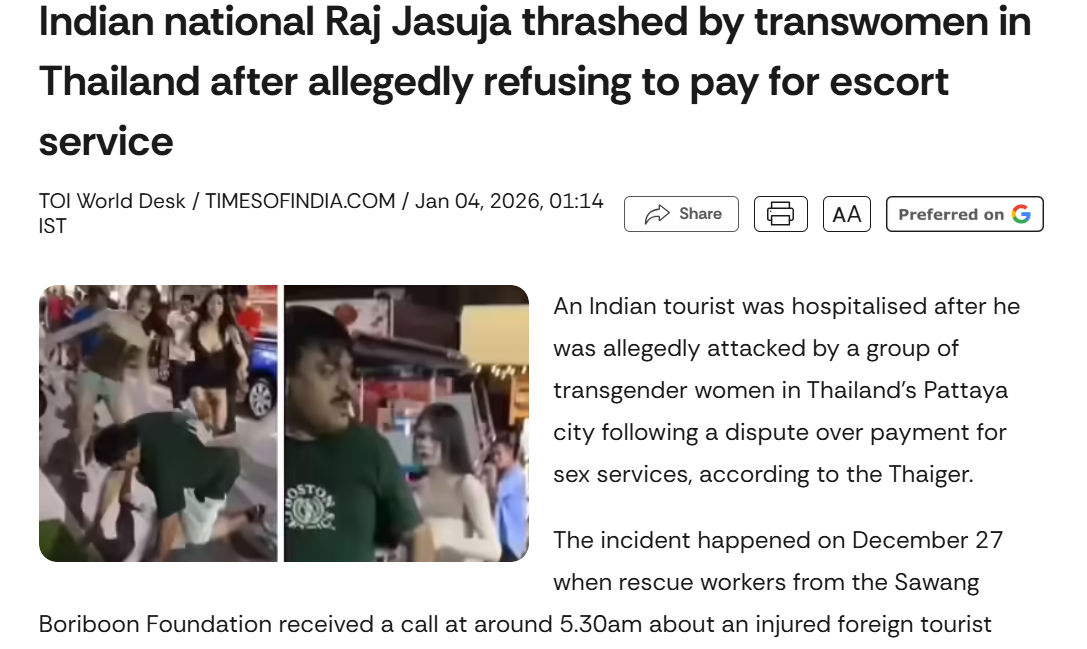
To investigate the claim made with the viral video, we conducted a reverse search of the video's keyframes. During this process, we found a report by The Times of India. The report, published on January 4, 2026, stated that “According to 'The Thaiger', an Indian tourist was hospitalized in Pattaya, Thailand. It is alleged that a group of transgender women attacked him following a dispute over payment for escort services. The incident occurred on December 27, when rescue workers from the Sawang Boriboon Foundation received a call around 5:30 AM regarding an injured foreign tourist near the beachside entrance of Walking Street. According to the rescue workers who found the victim, he was identified as 52-year-old Indian national Raj Jasuja. Injury marks were clearly visible on his face and the back of his head. He was given first aid before being taken to the hospital for further treatment. A 19-year-old Thai witness, Pongpol Boonchid, told police and rescue workers that the fight began when Raj was seen arguing with a transgender sex worker near the entry gate of Walking Street. The row escalated as both began chasing and hitting each other. According to the witness, the transgender woman then called several of her friends, who arrived and collectively attacked the Indian tourist. It is believed the fight started over money, as the tourist reportedly did not pay the full amount agreed upon for the services. Raj has not made any public statement regarding the incident.”
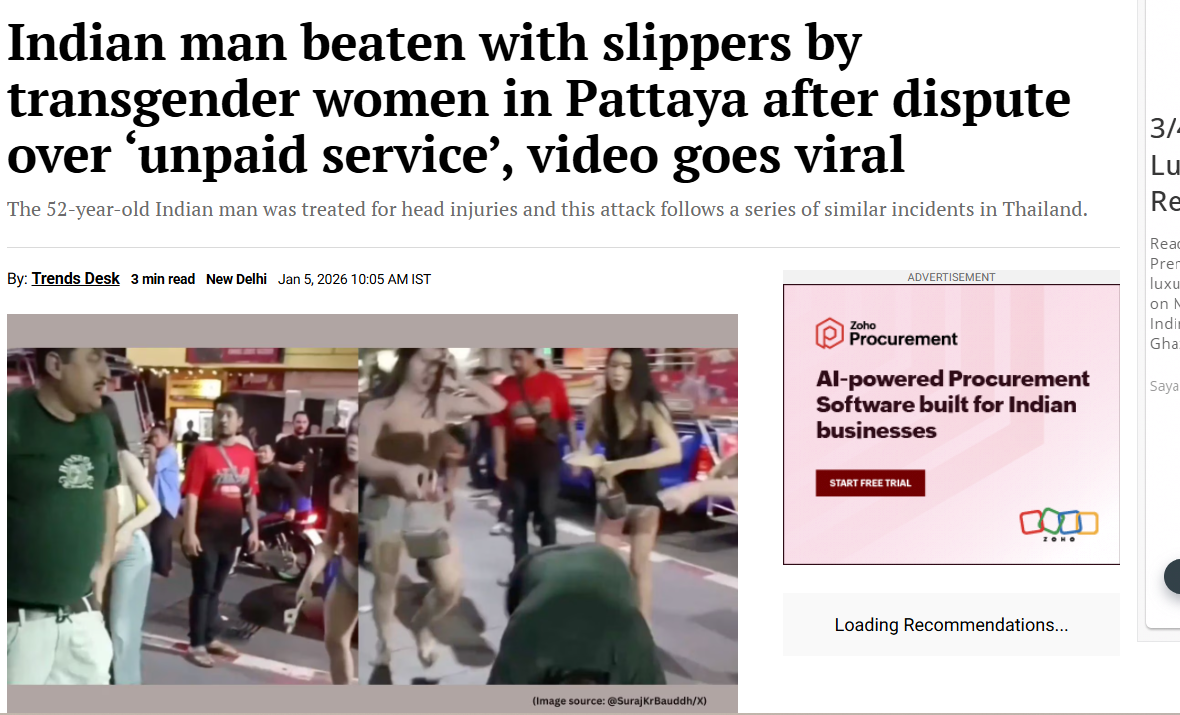
Furthermore, another report by The Indian Express, published on January 5, 2026, stated regarding the incident: “A group of transgender women allegedly beat up an Indian tourist in Pattaya, Thailand, according to a local media report. The dispute reportedly arose over non-payment of fees for sex services. In a viral video from December 27, three transgender women are seen hitting the 52-year-old man with slippers. The situation worsened when the man refused to pay the requested amount and tried to leave the spot in a car. The transgender women accused the man of not paying. Subsequently, he was allegedly kicked and punched, after which emergency responders intervened. According to a report by 'The Thaiger', the man suffered injuries to his face and the back of his head. He was given first aid on the spot and later taken to Pattamaku Hospital for further treatment. A Thai eyewitness told rescue workers that he saw the man arguing with a transgender sex worker near the entrance of the famous 'Walking Street' area. The witness stated that the argument turned into a physical altercation, with both parties reportedly chasing and hitting each other, after which others joined in, turning it into a group attack. According to the report, the witness further claimed the dispute occurred because the Indian tourist allegedly did not pay the full amount fixed for sexual services. Thai police said they would ask the man to file a formal complaint once he fully recovers.”
Conclusion:
Our research found the viral claim to be misleading and baseless. The viral video has no connection with Lieutenant General Rajiv Kiran Sahni (DG EME) of the Indian Army. According to credible media reports, the incident occurred in Pattaya, Thailand, where in December 2025, an Indian tourist named Raj Jasuja had a dispute over payment with some transgender women (ladyboys), leading to the assault.

Executive Summary
A purported video of Lieutenant General Devendra Sharma is being shared on social media, falsely portraying him as saying that “five aviators who participated in Operation Sindoor are missing from our training list. CyberPeace Research Wingresearch found that the viral video is completely fabricated and generated using artificial intelligence. The Ministry of Defence has also dismissed the clip as an AI-generated deepfake. The investigation found that Lieutenant General Devendra Sharma, Commander of the Army Training Command, never made any such statement. The viral clip has been manipulated by inserting fake audio into footage from his original speech to spread a misleading narrative.
Claim
A user on social media platform X shared the viral video with the caption:“Fifty-nine officers were listed at the Combat Army Aviation Training School, but five officers are missing. They were involved in Operation Sindoor as pilots of four Rafale jets and one Su-30 aircraft…”
Fact Check
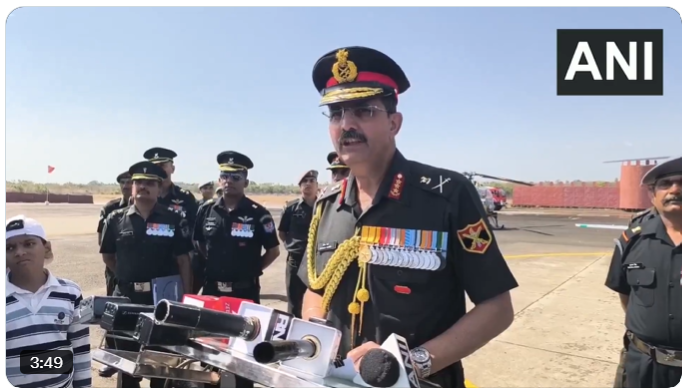
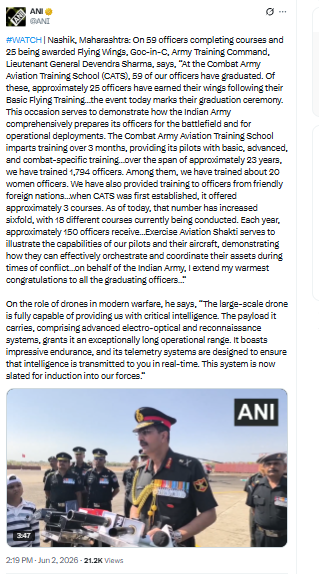
To verify the claim, we extracted several keyframes from the viral video and conducted a reverse-image search. During the investigation, we found the original video on ANI’s official X account. In the authentic footage, Lt Gen Sharma is seen speaking at a routine event at a training institution. His remarks focused on regular training-related matters, and he made no reference to missing pilots, Operation Sindoor, or any alleged losses.
https://x.com/ANI/status/2061731994971881667
In the next stage of the investigation, we found a post by the Ministry of Defence, Government of India, which also identified the viral clip as a deepfake.
https://www.facebook.com/watch/?v=1697698548109000
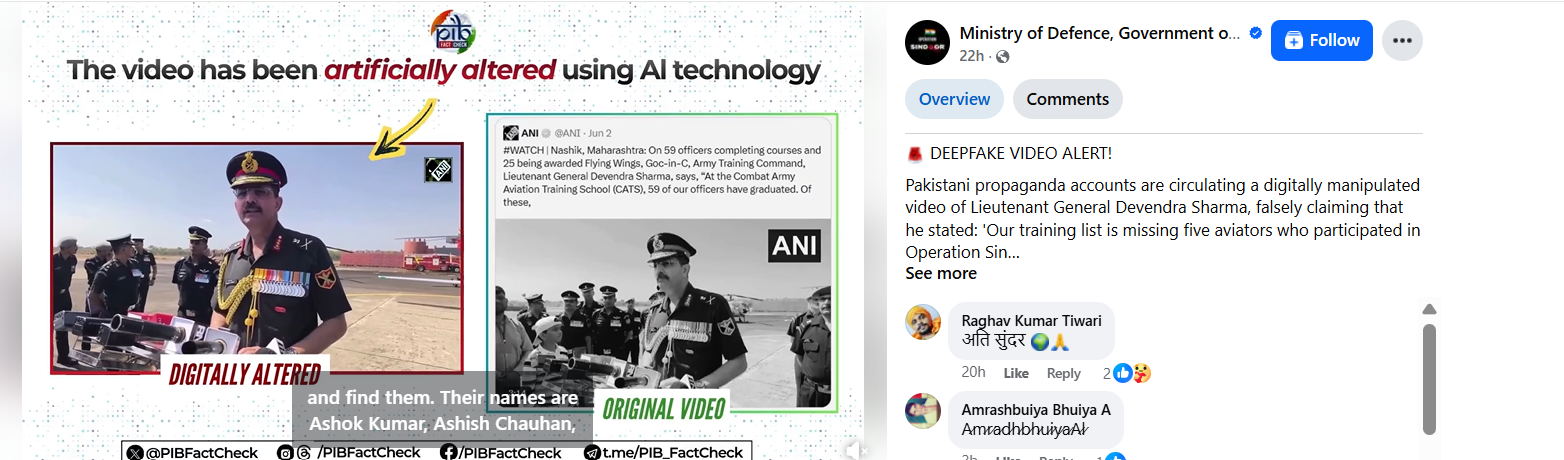
The ministry clarified that the video had been manipulated using AI-generated audio and did not reflect any genuine statement made by Lt Gen Devendra Sharma.
Conclusion
The viral video is a fabricated AI-generated deepfake. Lieutenant General Devendra Sharma never made the statement attributed to him about five missing aviators linked to Operation Sindoor. The original video was altered by inserting fake audio into authentic footage. The manipulated clip is being circulated online to spread misinformation and create confusion regarding the Indian Armed Forces.
Executive Summary
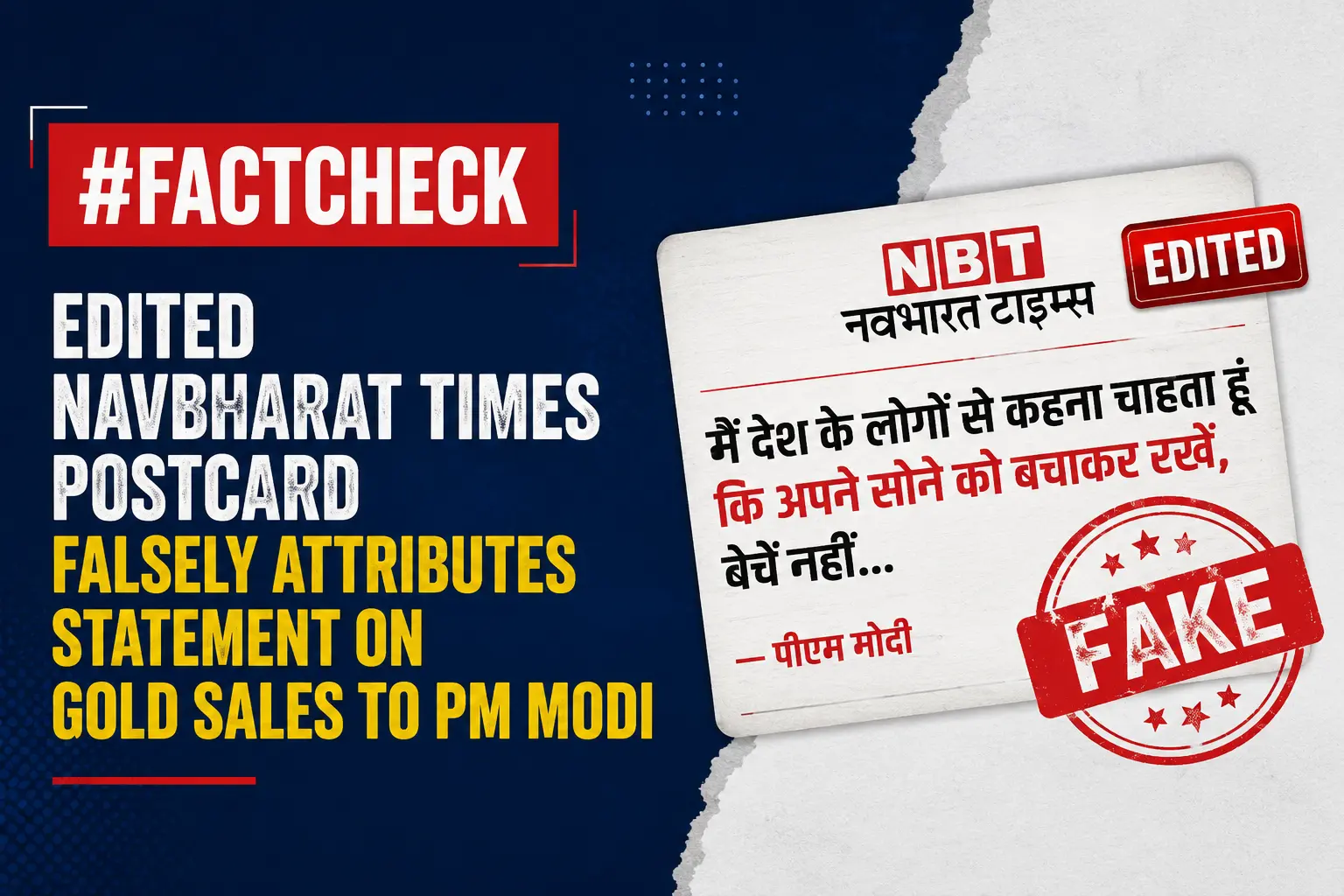
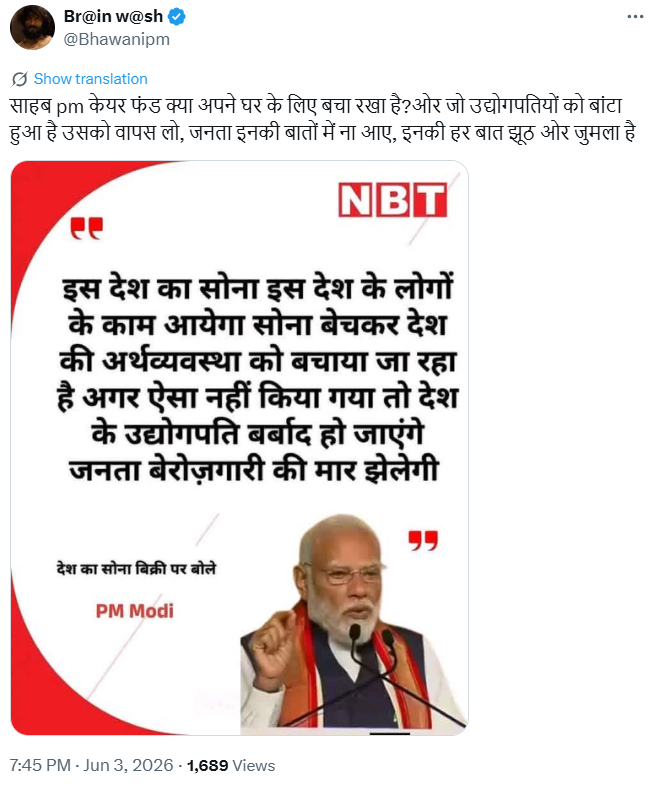
A postcard carrying the logo of Navbharat Times and featuring Prime Minister Narendra Modi is being widely shared on social media. The postcard quotes Modi as allegedly saying, “The gold of this country will be used for the people of this country. Gold is being sold to save the economy. If this is not done, the country's industrialists will be ruined and people will suffer from unemployment.”Based on this postcard, users are claiming that Prime Minister Modi justified the sale of the country's gold reserves by saying it was necessary to protect the economy and prevent industrialists from facing losses. However, CyberPeace Research Wing research found that Prime Minister Modi never made such a statement. The viral Navbharat Times postcard has been digitally edited.
Claim
An X user with the handle “Brainwash” shared the postcard and wrote: “Sir, have you kept the PM CARES Fund for your own household? Take back the money distributed to industrialists. People should not fall for these claims. Everything they say is false and mere rhetoric.”
https://x.com/Bhawanipm/status/2062259463084785666
Fact Check
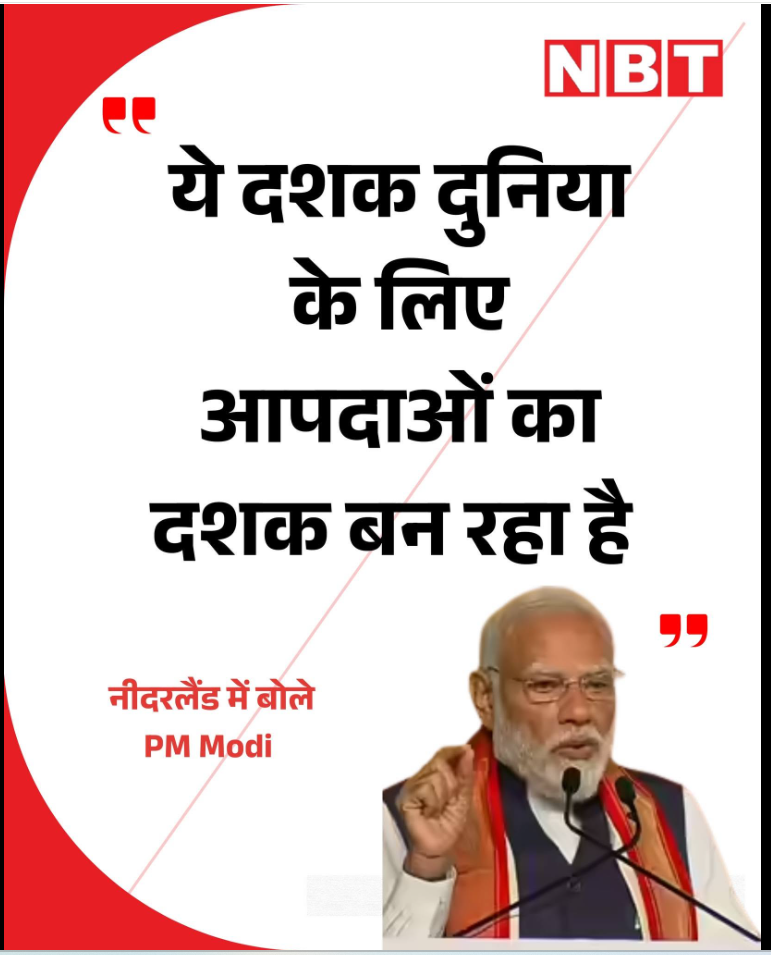
To verify the claim, we conducted keyword searches related to the purported statement. However, we found no credible reports, speeches, interviews, or official records in which Prime Minister Modi made such remarks about selling the country's gold reserves. We then examined the viral postcard and searched the social media handles of Navbharat Times for the original post. During this process, we found a similar postcard published on the Facebook page of Navbharat Times Uttar Pradesh on May 16, 2026. The design, layout, and image matched the viral postcard. However, the original post carried a completely different quote attributed to Prime Minister Modi.
The original postcard quoted Modi as saying: “This decade is becoming a decade of disasters for the world.”
https://www.facebook.com/photo/?fbid=1505172121619709&set=a.685493923587537
Conclusion
Prime Minister Narendra Modi has not made any statement claiming that the country's gold is being sold to save the economy or to protect industrialists from losses. The viral Navbharat Times postcard has been digitally edited, and the quote attributed to Modi is fabricated.

Executive Summary
A video of US Secretary of State Marco Rubio is rapidly going viral on social media, in which he can allegedly be heard making a statement regarding the 2025 India-Pakistan conflict. Along with the video, it is being claimed that the US played a crucial role in ending the conflict between the two countries, but India was the first to initiate a ceasefire with Pakistan. Users are sharing this video believing it to be true.
Research by the CyberPeace Research Wing revealed that the video has been digitally manipulated. Rubio did state that the United States played a role in ending the conflict, but he never said that India was the first to request a ceasefire from Pakistan. This alleged statement was not part of the original video and was added later to alter the clip.
Claim
A user on a Facebook page shared the viral video and wrote, "Marco Rubio's statement has clearly brought out the truth, weakening India's claim. During 'Maarka-e-Haq', after suffering heavy losses, India was the first party to request a ceasefire from Pakistan. This highlights the gap between India's public claims and the ground reality, where the military..." The post link, archive link, and screenshot can be seen below. https://www.facebook.com/reel/1015648544746728
https://www.facebook.com/reel/1015648544746728

Fact Check
We investigated the viral video using the InVid tool and extracted several of its keyframes. These keyframes were then subjected to a reverse image search via Google Lens. The investigation revealed that the exact same video had been shared on social media previously, showing the same background and setting. The post link and screenshot can be seen below.
https://www.facebook.com/reel/1015648544746728
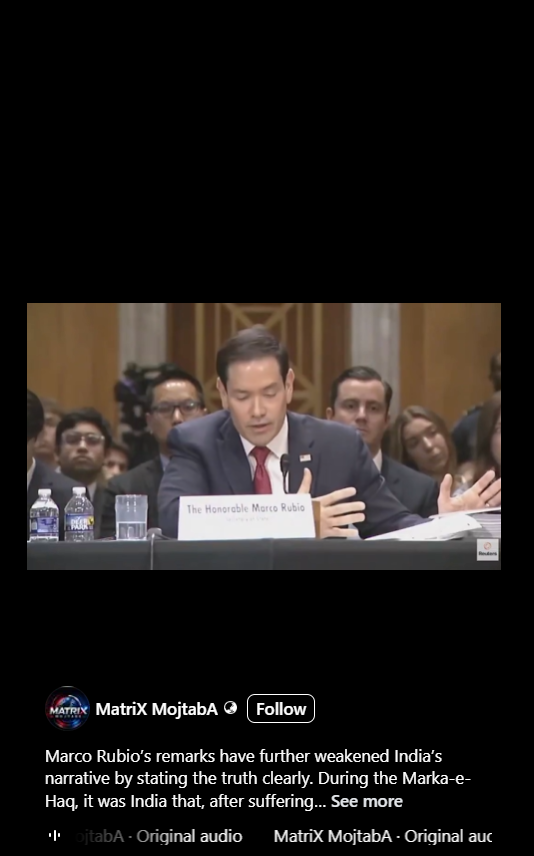
In the next step of our investigation, we found a video published on Reuters' official YouTube channel on June 2, 2026, whose background matches the viral video. However, nowhere in this original video is Marco Rubio heard saying that India was the first to request a ceasefire from Pakistan. The post link and screenshot can be seen below.
https://www.youtube.com/watch?v=qSpp5IYO6Cs

At the 2-hour 8-minute 55-second mark of the Reuters video, Rubio only states that the US played a role in ending the India-Pakistan conflict. Following this, he discusses the Thailand-Cambodia conflict. This makes it clear that the alleged statement in the viral video was digitally added or edited in, and is not part of the original footage.
Taking the investigation further, we scanned the suspicious audio portion of the viral video using the AI detection tool 'Resemble AI'. According to the analysis results, clear signs of audio manipulation were detected.

Conclusion:
Our investigation revealed that the video has been digitally manipulated. Rubio did state that the United States played a role in ending the conflict, but he never said that India was the first to request a ceasefire from Pakistan. This alleged statement was not part of the original video and was altered by adding it later.

Executive Summary
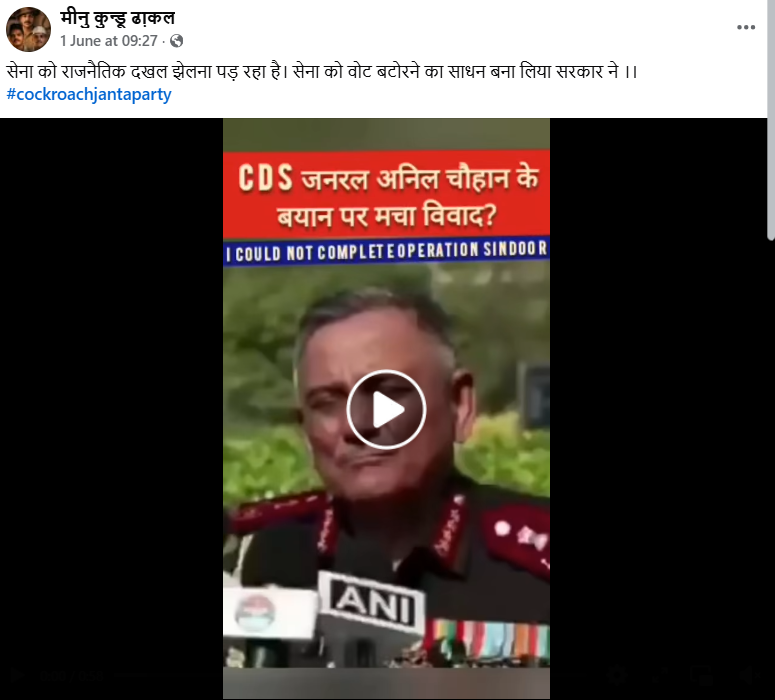
A video purportedly showing former Chief of Defence Staff (CDS) General Anil Chauhan criticizing the government over “Operation Sindoor” is being widely shared on social media. In the viral clip, Chauhan is allegedly heard saying that the Indian military was unable to complete the operation due to political interference and that, unlike Pakistan’s military, India’s armed forces did not receive adequate political support. Users claim that he made these remarks while announcing his resignation.
CyberPeace Research Wing research found the claim to be false. The viral video is a deepfake created by manipulating an original video of General Chauhan’s farewell ceremony at the end of his tenure. In the authentic footage, the former CDS expressed satisfaction with his tenure and thanked the three armed services for their support. The altered clip appears to have been shared with the intention of spreading misinformation. Similar AI-manipulated videos targeting senior Indian military officials have surfaced on social media in the past.
Claim
On June 1, 2026, Facebook user “Meenu Kundu Dhakal” shared the viral video with the caption: “The army is facing political interference. The government has turned the armed forces into a tool for gathering votes.”
https://www.facebook.com/100092961600658/posts/1669160500794363/
https://perma.cc/SE6J-5JC6
Fact Check
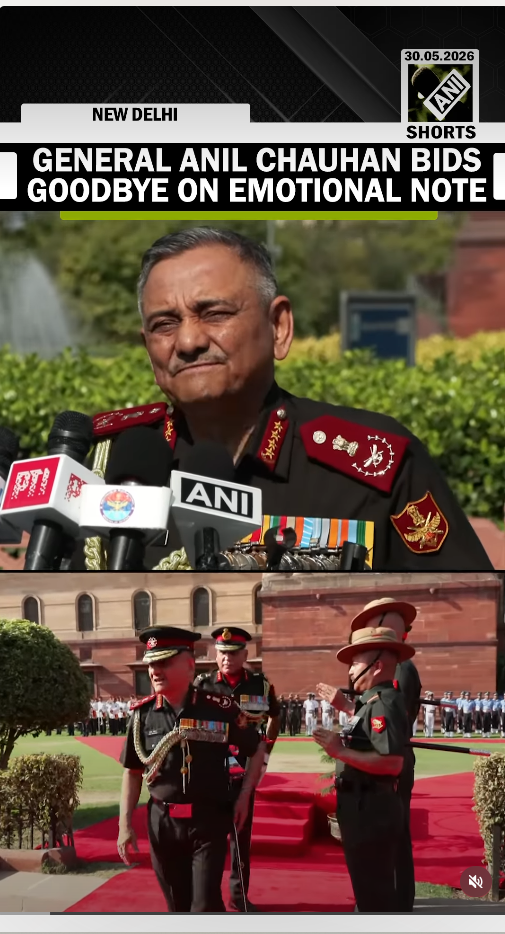
To verify the claim, we extracted keyframes from the viral video and conducted reverse-image searches. The original video was found on the official Instagram account of ANI, where it was posted on May 30, 2026. In the authentic footage, General Chauhan says:“I thank the three services and Headquarters IDS for it. With the conclusion of the guard of honour, I bid farewell to my colleagues in uniform, comrades in arms forever. I just laid the wreath at the War Memorial for the last time in uniform, as a humble tribute to those who laid down their lives in the line of duty. After the wreath-laying, I was welcomed by friends, relatives, and well-wishers. This is symbolic of my transition from uniform to civilian life. I had a very satisfying and excellent tenure. Thank you. Jai Hind.”
https://www.instagram.com/reels/DY8-5sqgF1B/
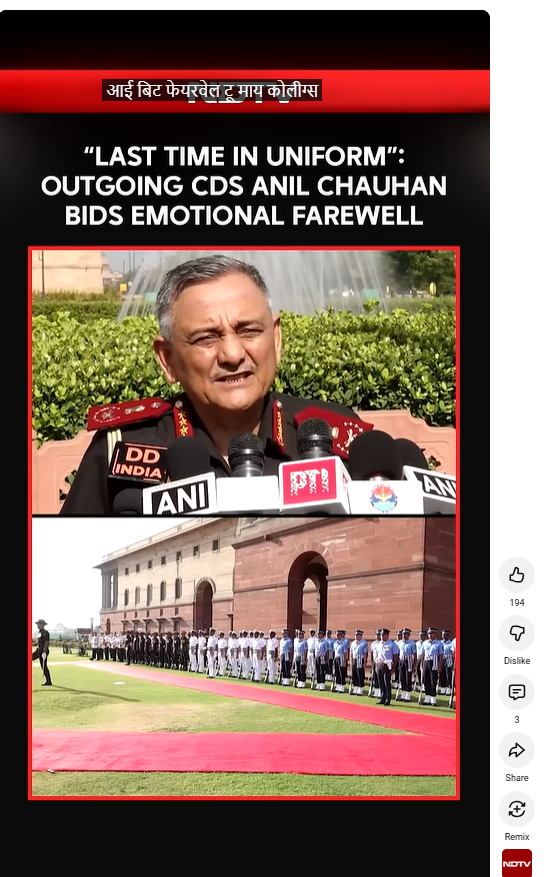
The same footage was also found on multiple news platforms covering General Chauhan’s farewell ceremony upon completion of his tenure. None of the reports mentioned any criticism of the government or comments regarding political interference in military affairs.
https://www.youtube.com/shorts/J-Fi8F32huo
To assess whether the viral clip had been manipulated, we analyzed the audio using AI-detection tools. The tool “Hiya” indicated a 51 percent likelihood that the audio was AI-generated.

Another detection tool, “Undetectable,” found indicators suggesting a 44 percent probability of AI-generated audio content.

Conclusion
The viral video claiming to show former CDS General Anil Chauhan criticizing the government’s handling of “Operation Sindoor” is a deepfake. The original video was recorded during his farewell ceremony at the conclusion of his tenure. In the authentic footage, General Chauhan described his tenure as “very satisfying and excellent” and thanked the armed forces for their support. The viral clip has been digitally manipulated and is being shared to spread misinformation.
