
#FactCheck - Suryakumar Yadav–Salman Ali Agha Handshake Row: Viral Image Found AI-Generated
Executive Summary
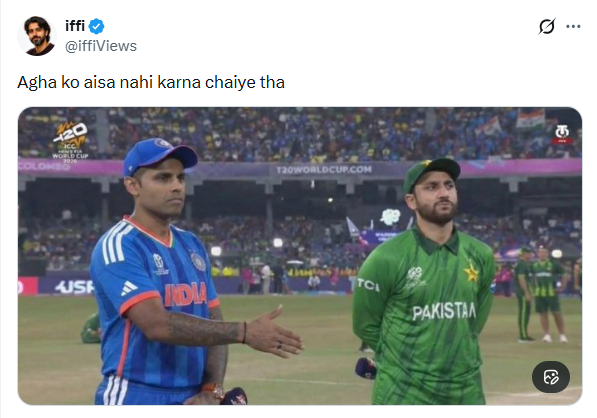
An image circulating on social media claims to show Suryakumar Yadav, captain of the Indian cricket team, extending his hand to greet Pakistan’s skipper Salman Ali Agha, who allegedly refused the gesture during the India–Pakistan T20 World Cup match held on February 15. Users shared the image as evidence of a real incident from the high-profile clash. However, a research by CyberPeace found that the image is AI-generated and was falsely circulated to mislead viewers.
Claim
On February 15, an X account named “@iffiViews,” reportedly operated from Pakistan, shared the image claiming it was taken during the India–Pakistan T20 World Cup match at the R. Premadasa Stadium in Colombo. The viral image appeared to show Yadav attempting to shake hands with Agha, who seemed to decline the gesture. The post quickly gained significant traction online, attracting around one million views at the time of reporting. Here is the link and archive link to the post, along with a screenshot.
- https://x.com/iffiViews/status/2023024665770484206?s=20
- https://archive.ph/xvtBs
Fact Check:
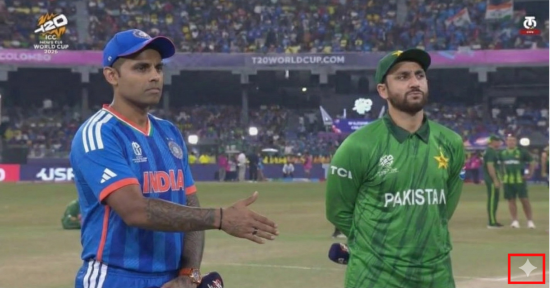
To verify the authenticity of the image, researchers closely examined the visual and identified a watermark associated with an AI image-generation tool. This raised strong indications that the image was digitally created and did not depict an actual event.
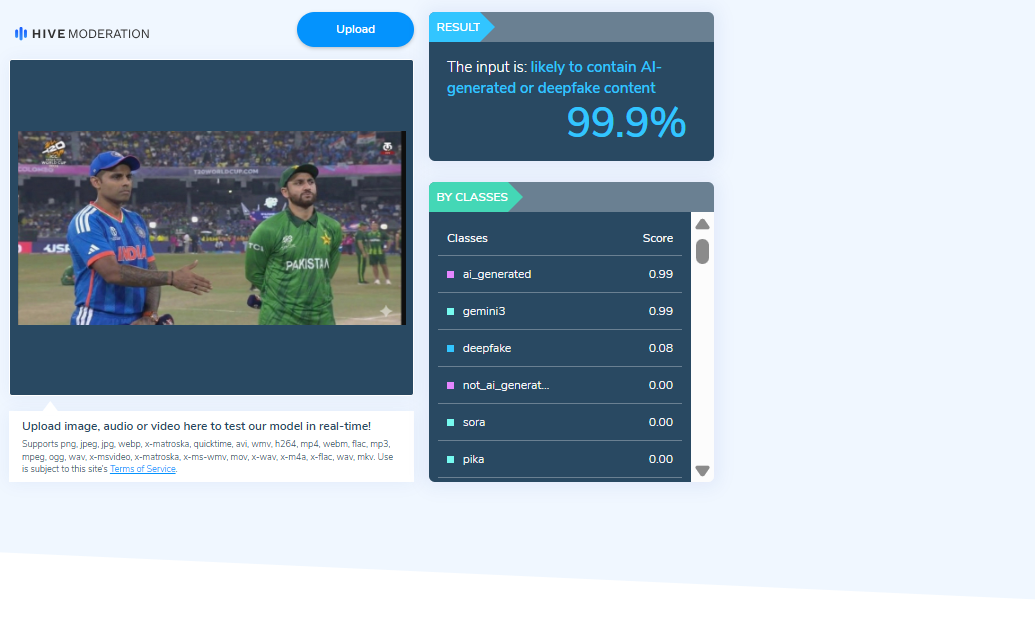
The image was further analysed using an AI detection tool, which indicated a 99.9 percent probability that the content was artificially generated or manipulated.
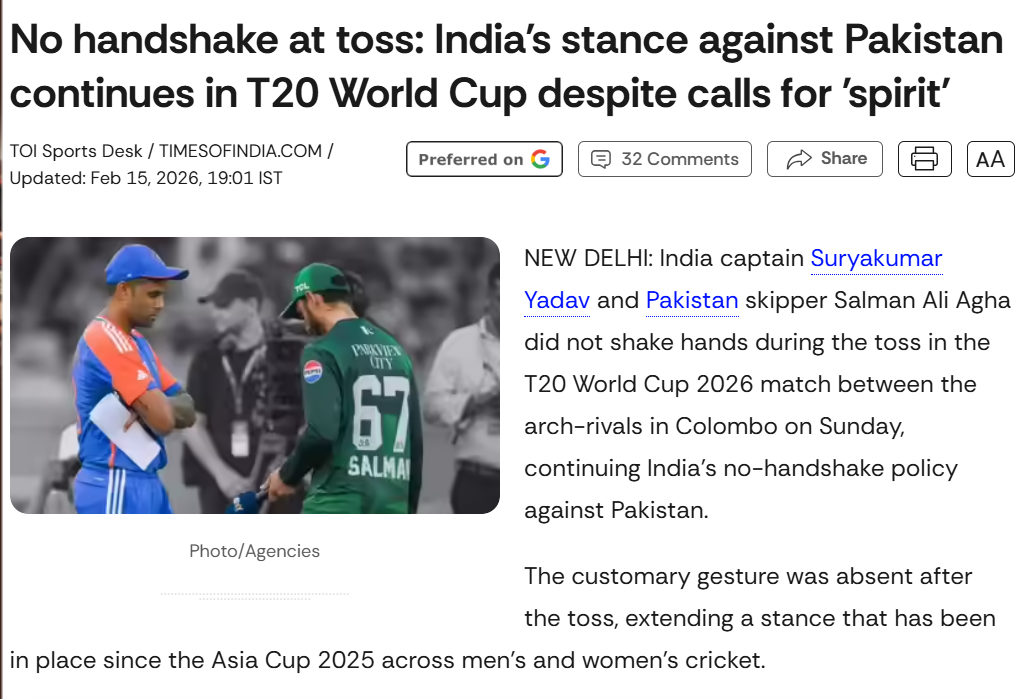
Researchers also conducted keyword searches to check whether the two captains had exchanged a handshake during the match. The search revealed media reports confirming that the traditional handshake between players has been discontinued since the Asia Cup 2025 in both men’s and women’s cricket. A report published by The Times of India on February 15 confirmed that no such customary exchange took place during the match between the two teams in Colombo.
Conclusion
The viral image claiming to show Suryakumar Yadav attempting to shake hands with Salman Ali Agha is not authentic. The visual is AI-generated and has been shared online with misleading claims.

Related Blogs

Introduction
Google.org is committed to stepping ahead to enhance Internet safety and responsible online behaviour. ‘Google for INDIA 2023’, an innovative conclave, took place on 19th October 2023. Google.org has embarked on its vision for a safer Internet and combating misinformation, financial frauds and other threats that come from bad actors. Alphabet Big Tech is committed to leading this charter and engaging with all stakeholders, including government agencies. Google.org has partnered with CyberPeace Foundation to foster a safer online environment and empower users on informed decisions on the Internet. CyberPeace will run a nationwide awareness and capacity-building Initiative equipping more than 40 Million Indian netizens with fact-checking techniques, tools, SoPs, and guidance for responsible and safe online behaviour. The campaign will be deployed in 15 Indian regional languages as a comprehensive learning outcome for the whole nation. Together, Google.org and CyberPeace Foundation aim to make the Internet safer for everyone and work in a direction to ensure that progress for everyone is built on a strong foundation of trusted information available on the Internet and pursuing the true spirit of “Technology for Good”.
Google.org and CyberPeace together for enhanced online safety
A new $4 million grant to CyberPeace Foundation will support a nationwide awareness-building program and comprehensive multilingual digital resource hub with content available in up to 15 Indian languages to empower nearly 40 million underserved people across the country in building resilience against misinformation and practice responsible online behaviour. Together, Google.org and CyberPeace are on their way to creating a strong pathway of trusted Internet and a safer digital environment. The said campaign will be undertaken for a duration of 3 years, and the following key components will run at the core of the same:
- CyberPeace Corps Volunteers: This will be a pan India volunteer engagement initiative to create a community of 9 million CyberPeace Ambassadors/First Responders/Volunteers to fight misinformation and promote responsible online behaviour going far into the rural, marginalised and most vulnerable strata of society.
- Digital Resource Hub: In pursuance of the campaign, CyberPeace is developing a cutting-edge platform offering a wealth of resources on media literacy, responsible content creation, and cyber hygiene translated into 15 Indian regional languages for a widespread impact on the ground.
- Public Sensitisation: CyberPeace will be conducting an organic series of online and offline events focusing on empowering netizens to discern fact from fiction. These sensitisation drives will be taken on by start master trainers from different regions of India to ensure all states and UTs are impacted.
- CyberPeace Quick Reaction Team: A specialised team of tech enthusiasts that will work closely with platforms to rapidly address new-age cyber threats and misinformation campaigns in real-time and establish best practices and SoPs for the diverse elements in the industries.
- Engaging Multimedia Content: With CyberPeace’s immense expertise in E-Course and digital content, the campaign will produce a range of multilingual multimedia resources, including informative videos, posters, games, contests, infographics, and more.
- Fact-check unit: Fact-check units will play a crucial role in monitoring, identifying, and doing fact analysis of the suspected information and overall busting the growing incidents of misinformation. Fake news or misinformation has negative consequences on society at large. The fact-check units play a significant role in controlling the widespread of misinformation.
Fight Against Misinformation
Misinformation is rampant all across the world and requires attention. With the increasing penetration of social media and the internet, this remains a global issue. Google.org has taken up the initiative to address this issue in India and, in collaboration with CyberPeace Foundation taken a proactive step to multiple avenues for mass-scale awareness and upskilling campaigns have been piloted to make an impact on the ground with the vision of upskilling over 40 Million people in the country and building resilience against misinformation and practicing responsible online behavior.
Maj Vineet Kumar, Founder of CyberPeace, said,
"In an era in which digital is deeply intertwined with our lives, knowing how to discern, act on, and share the credible from the wealth of information available online is critical to our well-being, and of our families and communities. Through this initiative, we’re committing to help Internet users across India become informed, empowered and responsible netizens leading through conversations and actions. Whether it’s in fact-checking information before sharing it, or refraining from sharing unverified news, we all play an important role in building a web that is a safe and inclusive space for everyone, and we are extremely grateful to Google.org for propelling us forward in this mission with their grant support.”
Annie Lewin, Senior Director of Global Advocacy and Head of Asia Pacific, Google.org said:
“We have a longstanding commitment to supporting changemakers using technology to solve humanity's biggest challenges. And, the innovation and zeal of Indian nonprofit organisations has inspired us to deepen our commitment in India. With the new grant to CyberPeace Foundation, we are proud to support solutions that speak directly to Google’s DNA, helping first-time internet users chart their path in a digital world with confidence. Such solutions give us pride and hope that each step, built on a strong foundation of trusted information, will translate into progress for all.”
Conclusion
Google.org has partnered with government agencies and other Indian organisations with the vision of future-proof India for digital public infrastructure and staying a step ahead for Internet safety, keeping the citizens safe online. Google.org is taking its largest step yet towards online safety in India. There is widespread misinformative content and information in the digital media space or on the internet. This proactive initiative of Google.org in collaboration with CyberPeace is a commendable step to prevent the spread of misinformation and empower users to act responsibly while sharing any information and making informed decisions while using the Internet, hence creating a safe digital environment for everyone.
References:
- https://www.youtube.com/live/-b4lTVjOsXY?feature=shared
- https://blog.google/intl/en-in/products/google-for-india-2023-product-announcements/
- https://blog.google/intl/en-in/partnering-indias-success-in-a-new-digital-paradigm/
- https://telecom.economictimes.indiatimes.com/news/internet/google-to-debut-credit-in-india-announces-a-slew-of-ai-powered-launches/104547623
- https://theprint.in/economy/google-for-india-2023-tech-giant-says-it-removed-2-million-violative-videos-in-q2-2023/1810201/

Introduction
The recent inauguration of the Google Safety Engineering Centre (GSEC) in Hyderabad on 18th June, 2025, marks a pivotal moment not just for India, but for the entire Asia-Pacific region’s digital future. As only the fourth such centre in the world after Munich, Dublin, and Málaga, its presence signals a shift in how AI safety, cybersecurity, and digital trust are being decentralised, leading to a more globalised and inclusive tech ecosystem. India’s digitisation over the years has grown at a rapid scale, introducing millions of first-time internet users, who, depending on their awareness, are susceptible to online scams, phishing, deepfakes, and AI-driven fraud. The establishment of GSEC is not just about launching a facility but a step towards addressing AI readiness, user protection, and ecosystem resilience.
Building a Safer Digital Future in the Global South
The GSEC is set to operationalise the Google Safety Charter, designed around three core pillars: empowering users by protecting them from online fraud, strengthening government cybersecurity and enterprise, and advancing responsible AI in the platform design and execution. This represents a shift from the standard reactive safety responses to proactive, AI-driven risk mitigation. The goal is to make safety tools not only effective, but tailored to threats unique to the Global South, from multilingual phishing to financial fraud via unofficial lending apps. This centre is expected to stimulate regional cybersecurity ecosystems by creating jobs, fostering public-private partnerships, and enabling collaboration across academia, law enforcement, civil society, and startups. In doing so, it positions Asia-Pacific not as a consumer of the standard Western safety solutions but as an active contributor to the next generation of digital safeguards and customised solutions.
Previous piloted solutions by Google include DigiKavach, a real-time fraud detection framework, and tools like spam protection in mobile operating systems and app vetting mechanisms. What GSEC might aid with is the scaling and integration of these efforts into systems-level responses, where threat detection, safety warnings, and reporting mechanisms, etc., would ensure seamless coordination and response across platforms. This reimagines safety as a core design principle in India’s digital public infrastructure rather than focusing on attack-based response.
CyberPeace Insights
The launch aligns with events such as the AI Readiness Methodology Conference recently held in New Delhi, which brought together researchers, policymakers, and industry leaders to discuss ethical, secure, and inclusive AI implementation. As the world grapples with how to deal with AI technologies ranging from generative content to algorithmic decisions, centres like GSEC can play a critical role in defining the safeguards and governance structures that can support rapid innovation without compromising public trust and safety. The region’s experiences and innovations in AI governance must shape global norms, and the role of Tech firms in doing so is significant. Apart from this, efforts with respect to creating digital infrastructure and safety centres addressing their protection resonate with India’s vision of becoming a global leader in AI.
References
- https://www.thehindu.com/news/cities/Hyderabad/google-safety-engineering-centre-india-inaugurated-in-hyderabad/article69708279.ece
- https://www.businesstoday.in/technology/news/story/google-launches-safety-charter-to-secure-indias-ai-future-flags-online-fraud-and-cyber-threats-480718-2025-06-17?utm_source=recengine&utm_medium=web&referral=yes&utm_content=footerstrip-1&t_source=recengine&t_medium=web&t_content=footerstrip-1&t_psl=False
- https://blog.google/intl/en-in/partnering-indias-success-in-a-new-digital-paradigm/
- https://blog.google/intl/en-in/company-news/googles-safety-charter-for-indias-ai-led-transformation/
- https://economictimes.indiatimes.com/magazines/panache/google-rolls-out-hyderabad-hub-for-online-safety-launches-first-indian-google-safety-engineering-centre/articleshow/121928037.cms?from=mdr
.webp)
Executive Summary:
A video circulating on social media claims that people in Balochistan, Pakistan, hoisted the Indian national flag and declared independence from Pakistan. The claim has gone viral, sparking strong reactions and spreading misinformation about the geopolitical scenario in South Asia. Our research reveals that the video is misrepresented and actually shows a celebration in Surat, Gujarat, India.

Claim:
A viral video shows people hoisting the Indian flag and allegedly declaring independence from Pakistan in Balochistan. The claim implies that Baloch nationals are revolting against Pakistan and aligning with India.

Fact Check:
After researching the viral video, it became clear that the claim was misleading. We took key screenshots from the video and performed a reverse image search to trace its origin. This search led us to one of the social media posts from the past, which clearly shows the event taking place in Surat, Gujarat, not Balochistan.

In the original clip, a music band is performing in the middle of a crowd, with people holding Indian flags and enjoying the event. The environment, language on signboards, and festive atmosphere all confirm that this is an Indian Independence Day celebration. From a different angle, another photo we found further proves our claim.

However, some individuals with the intention of spreading false information shared this video out of context, claiming it showed people in Balochistan raising the Indian flag and declaring independence from Pakistan. The video was taken out of context and shared with a fake narrative, turning a local celebration into a political stunt. This is a classic example of misinformation designed to mislead and stir public emotions.
To add further clarity, The Indian Express published a report on May 15 titled ‘Slogans hailing Indian Army ring out in Surat as Tiranga Yatra held’. According to the article, “A highlight of the event was music bands of Saifee Scout Surat, which belongs to the Dawoodi Bohra community, seen leading the yatra from Bhagal crossroads.” This confirms that the video was from an event in Surat, completely unrelated to Balochistan, and was falsely portrayed by some to spread misleading claims online.

Conclusion:
The claim that people in Balochistan hoisted the Indian national flag and declared independence from Pakistan is false and misleading. The video used to support this narrative is actually from Surat, Gujarat, India, during “The Tiranga Yatra”. Social media users are urged to verify the authenticity and source of content before sharing, to avoid spreading misinformation that may escalate geopolitical tensions.
- Claim: Mass uprising in Balochistan as citizens reject Pakistan and honor India.
- Claimed On: Social Media
- Fact Check: False and Misleading
