
#FactCheck -Scripted Video of Pre-Wedding Roka at Metro Station Misleads Users
Executive Summary
A video is going viral on social media showing a woman performing a pre-wedding ritual called “Roka” for a couple at a metro station. Many users are sharing the clip believing it to be a real incident. CyberPeace found in its research that the viral claim is false. The video is actually scripted.
Claim:
An Instagram user posted the video on February 7, 2026, with the caption, “A mother performed her son’s Roka with his girlfriend at a metro station.”

Fact Check:
To verify the claim, we conducted a reverse image search using Google Lens on screenshots from the viral video. We found the same video was first uploaded on February 5, 2026, by an Instagram account named “chalte_phirte098.” The profile belongs to digital content creator Aarav Mavi, who regularly posts relationship and breakup-related videos.

Although the viral clip does not include any disclaimer stating that it is scripted, an older video posted by the creator on December 16, 2025, clarifies that his content is based on real-life stories shared by people but is filmed using professional actors. Several similar staged videos are also available on his profile on Instagram.

Conclusion:
Our research clearly shows that the viral video claiming to show a pre-wedding Roka ceremony at a metro station is not real. It was created by a content creator for entertainment purposes. Therefore, the claim circulating on social media is misleading.

Related Blogs

Introduction
In a major policy shift aimed at synchronizing India's fight against cyber-enabled financial crimes, the government has taken a landmark step by bringing the Indian Cyber Crime Coordination Centre (I4C) under the ambit of the Prevention of Money Laundering Act (PMLA). In the notification released in the official gazette on 25th April, 2025, the Department of Revenue, Ministry of Finance, included the Indian Cyber Crime Coordination Centre (I4C) under Section 66 of the Prevention of Money Laundering Act, 2002 (hereinafter referred to as “PMLA”). The step comes as a significant attempt to resolve the asynchronous approach of different agencies (Enforcement Directorate (ED), State Police, CBI, CERT-In, RBI) set up under the government responsible for preventing and often possessing key information regarding cyber crimes and financial crimes. As it is correctly put, "When criminals sprint and the administration strolls, the finish line is lost.”
The gazetted notification dated 25th April, 2025, read as follows:
“In exercise of the powers conferred by clause (ii) of sub-section (1) of section 66 of the Prevention of Money-laundering Act, 2002 (15 of 2003), the Central Government, on being satisfied that it is necessary in the public interest to do so, hereby makes the following further amendment in the notification of the Government of India, in the Ministry of Finance, Department of Revenue, published in the Gazette of India, Extraordinary, Part II, section 3, sub-section (i) vide number G.S.R. 381(E), dated the 27th June, 2006, namely:- In the said notification, after serial number (26) and the entry relating thereto, the following serial number and entry shall be inserted, namely:— “(27) Indian Cyber Crime Coordination Centre (I4C).”.
Outrunning Crime: Strengthening Enforcement through Rapid Coordination
The usage of cyberspace to commit sophisticated financial crimes and white-collar crimes is a one criminal parallel passover that no one was looking forward to. The disenchanted reality of today’s world is that the internet is used for as much bad as it is for good. The internet has now entered the financial domain, facilitating various financial crimes. Money laundering is a financial crime that includes all processes or activities that are in connection with the concealment, possession, acquisition, or use of proceeds of crime and projecting it as untainted money. In the offence of money laundering, there is an intricate web and trail of financial transactions that are hard to track, as they are, and with the advent of the internet, the transactions are often digital, and the absence of crucial information hampers the evidentiary chain. With this new step, the Enforcement Directorate (ED) will now make headway into the investigation with the information exchange under PMLA from and to I4C, removing the obstacles that existed before this notification.
Impact
The decision of the finance ministry has to be seen in terms of all that is happening around the globe, with the rapid increase in sophisticated financial crimes. By formally empowering the I4C to share and receive information with the Enforcement Directorate under PMLA, the government acknowledges the blurred lines between conventional financial crime and cybercrime. It strengthens India’s financial surveillance, where money laundering and cyber fraud are increasingly two sides of the same coin. The assessment of the impact can be made from the following facilitations enabled by the decision:
- Quicker internet detection of money laundering
- Money trail tracking in real time across online platforms
- Rapid freeze of cryptocurrency wallets or assets obtained fraudulently
Another important aspect of this decision is that it serves as a signal that India is finally equipping itself and treating cyber-enabled financial crimes with the gravitas that is the need of the hour. This decision creates a two-way intelligence flow between cybercrime detection units and financial enforcement agencies.
Conclusion
To counter the fragmented approach in handling cyber-enabled white-collar crimes and money laundering, the Indian government has fortified its legal and enforcement framework by extending PMLA’s reach to the Indian Cyber Crime Coordination Centre (I4C). All the decisions and the brainstorming that led up to this notification are crucial at this point in time for the cybercrime framework that India needs to be on par with other countries. Although India has come a long way in designing a robust cybercrime intelligence structure, as long as it excludes and works in isolation, it will be ineffective. So, the current decision in discussion should only be the beginning of a more comprehensive policy evolution. The government must further integrate and devise a separate mechanism to track “digital footprints” and incorporate a real-time red flag mechanism in digital transactions suspected to be linked to laundering or fraud.

Executive Summary:
Assembly elections are underway in several Indian states, including West Bengal, Assam, Kerala, Tamil Nadu, and Puducherry. While voting has already taken place in Assam, Kerala, and Puducherry, polling is still pending in West Bengal. In view of the elections, central security forces have been deployed across West Bengal. Amid this, a video showing a group of people pelting stones at a security vehicle is being widely shared on social media. Some users claim that the incident took place in West Bengal and allege that Muslims attacked an army vehicle. However, research by CyberPeace found the claim to be false. The viral video is from Pakistan and has no connection to West Bengal.
Claim
A social media user shared the video on April 5, 2026, claiming that an army vehicle was attacked in West Bengal.
Post links:

Fact Check
To verify the claim, we extracted keyframes from the viral video and conducted a reverse image search using Google Lens. This led us to a video posted on a Facebook page on October 13, 2025. The caption of that post indicated that the video was from Lahore, showing clashes between members of Tehreek-e-Labbaik and the police.

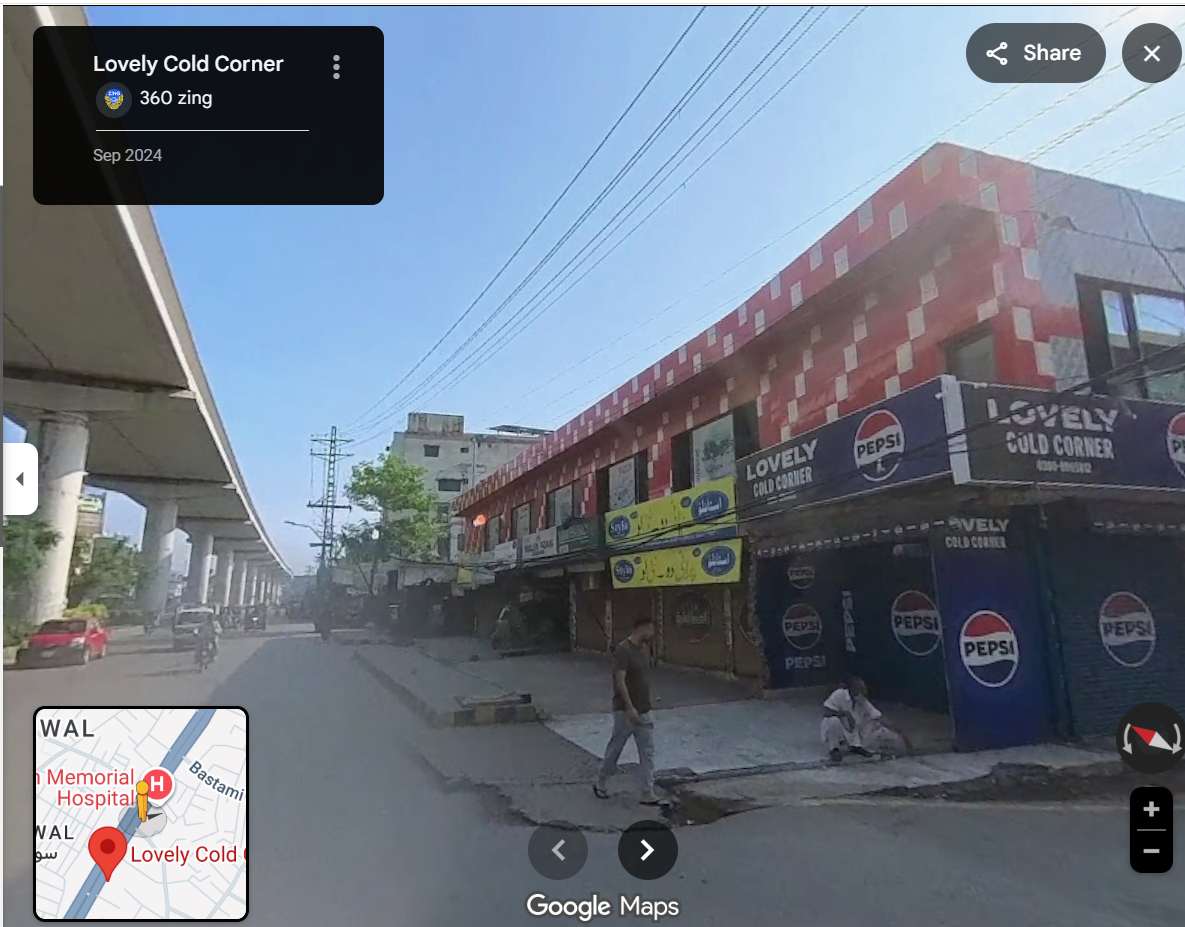
Further clues in the video also pointed to Pakistan. A shop sign reading “Lovely Drink Corner” is visible in the footage. A Google search confirmed that this establishment is located in Lahore, Pakistan.
Conclusion
The viral claim is misleading. Although central forces have been deployed in West Bengal for the ongoing elections, the video showing stone-pelting on a security vehicle is not from the state. It is an old video from Lahore, Pakistan, and is being falsely shared with a communal angle to mislead users.

Pretext
On 20th October 2022, the Competition Commission of India (CCI) imposed a penalty of Rs. 1,337.76 crores on Google for abusing its dominant position in multiple markets in the Android Mobile device ecosystem, apart from issuing cease and desist orders. The CCI also directed Google to modify its conduct within a defined timeline. Smart mobile devices need an operating system (OS) to run applications (apps) and programs. Android is one such mobile operating system that Google acquired in 2005. In the instant matter, the CCI examined various practices of Google w.r.t. licensing of this Android mobile operating system and various proprietary mobile applications of Google (e.g., Play Store, Google Search, Google Chrome, YouTube, etc.).
The Issue
Google was found to be misusing its dominant position in the tech market, and the same was the reason behind the penalty. Google argued about the competitive constraints being faced from Apple. In relation to understanding the extent of competition between Google’s Android ecosystem and Apple’s iOS ecosystem, the CCI noted the differences in the two business models, which affect the underlying incentives of business decisions. Apple’s business is primarily based on a vertically integrated smart device ecosystem that focuses on the sale of high-end smart devices with state-of-the-art software components. In contrast, Google’s business was found to be driven by the ultimate intent of increasing users on its platforms so that they interact with its revenue-earning service, i.e., online searches, which directly affects the sale of online advertising services by Google. It was seen that google had created a dominant position among the android phone manufacturers as they were made to have a set of google apps preinstalled in the device to increase the user’s dependency on google services. The CCI felt that Google had created a dominant position to which they replied that the same operations are done by Apple as well, to which the commission responded that apple is a phone and app manufacturer and they have Apple-owned apps in Apple devices only, but Google here in had made a pseudo mandate for android manufactures to have the google apps pre-installed which is, in turn, a possible way of disrupting the market equilibrium and violative of market practices. The CCI imposed a penalty of Rs. 1,337.76 for abusing its dominant position in multiple markets in India, CCI delineated the following five relevant markets in the present matter –
- The market for licensable OS for smart mobile devices in India
- The market for app store for Android smart mobile OS in India
- The market for general web search services in India
- The market for non-OS specific mobile web browsers in India
- The market for online video hosting platforms (OVHP) in India.
Supreme Courts Opinion
In October 2022, the Competition Commission of India (CCI) ruled that Google, owned by Alphabet Inc, exploited its dominant position in Android and told it to remove restrictions on device makers, including those related to the pre-installation of apps and ensuring exclusivity of its search. Google lost a challenge in the Supreme Court to block the directives, as the learned court refused to put a stay on the imposed penalty, further giving seven days to comply. The Supreme Court has said a lower tribunal—where Google first challenged the Android directives—can continue to hear the company’s appeal and must rule by March 31.
Counterpoint Research estimates that about 97% of 600 million smartphones in India run on Android. Apple has just a 3% share. Hoping to block the implementation of the CCI directives, Google challenged the CCI order in the Supreme Court by warning it could stall the growth of the Android ecosystem. It also said it would be forced to alter arrangements with more than 1,100 device manufacturers and thousands of app developers if the directives kick in. Google has been concerned about India’s decision as the steps are seen as more sweeping than those imposed in the European Commission’s 2018 ruling. There it was fined for putting in place what the Commission called unlawful restrictions on Android mobile device makers. Google is still challenging the record $4.3 billion fine in that case. In Europe, Google made changes later, including letting Android device users pick their default search engine, and said device makers would be able to license the Google mobile application suite separately from the Google Search App or the Chrome browser.
Conclusion
As the world goes deeper into cyberspace, the big tech companies have more control over the industry and the markets, but the same should not turn into anarchy in the global markets. The Tech giants need to be made aware that compliance is the utmost duty for all companies, and enforcement of the law of the land will be maintained no matter what. Earlier India lacked policies and legislation to govern cyberspace, but in the recent proactive stance by the govt, a lot of new bills have been tabled, one of them being the Intermediary Rules 2021, which has laid down the obligations nand duties of the companies by setting up an intermediary in the country. Such bills coupled with such crucial judgments on tech giants will act as a test and barrier for other tech companies who try to flaunt the rules and avoid compliance.
