
#FactCheck -AI-Manipulated Video Falsely Claims ₹50 Crore Deal Involving Bhupen Bora
Executive Summary
A purported news clip circulating on social media claims that the Bharatiya Janata Party (BJP) purchased Bhupen Bora, a leader of the Indian National Congress, for ₹50 crore as part of a political deal in Assam. The viral clip further alleges that the transaction took place under the leadership of Assam Chief Minister Himanta Biswa Sarma and included an agreement to induct several Congress leaders into the BJP.
However, research by CyberPeace found the viral claim to be false and revealed that the original news video had been manipulated using AI and shared with misleading claims.
Claim
On February 18, 2026, a user shared the viral video on Facebook, claiming that the Assam BJP had bought a Congress leader who had lost the last three elections for ₹50 crore, and that the alleged deal led by Himanta Biswa Sarma had drawn public criticism.

Fact Check:
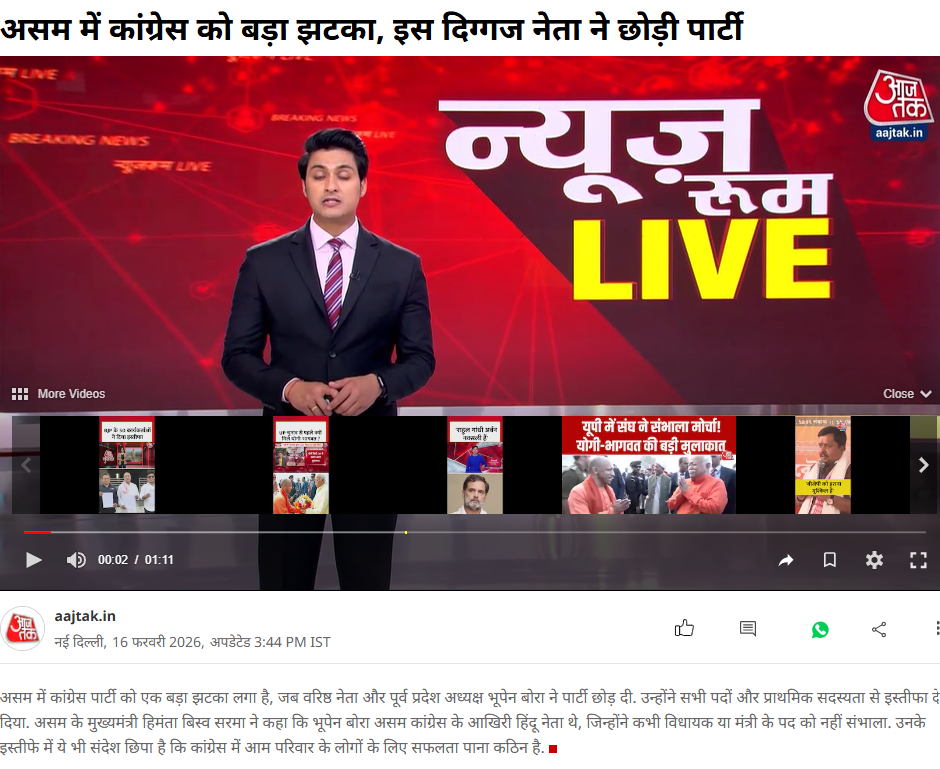
To verify the authenticity of the claim, we extracted key frames from the viral video and conducted a reverse image search using Google Lens. During the research, we found the original version of the video published on the website of Aaj Tak on February 16, 2026. In the original report, the anchor is only seen reporting on Bhupen Bora’s resignation from the party. The report does not mention any alleged financial transaction or political deal, contrary to the claims made in the viral clip.
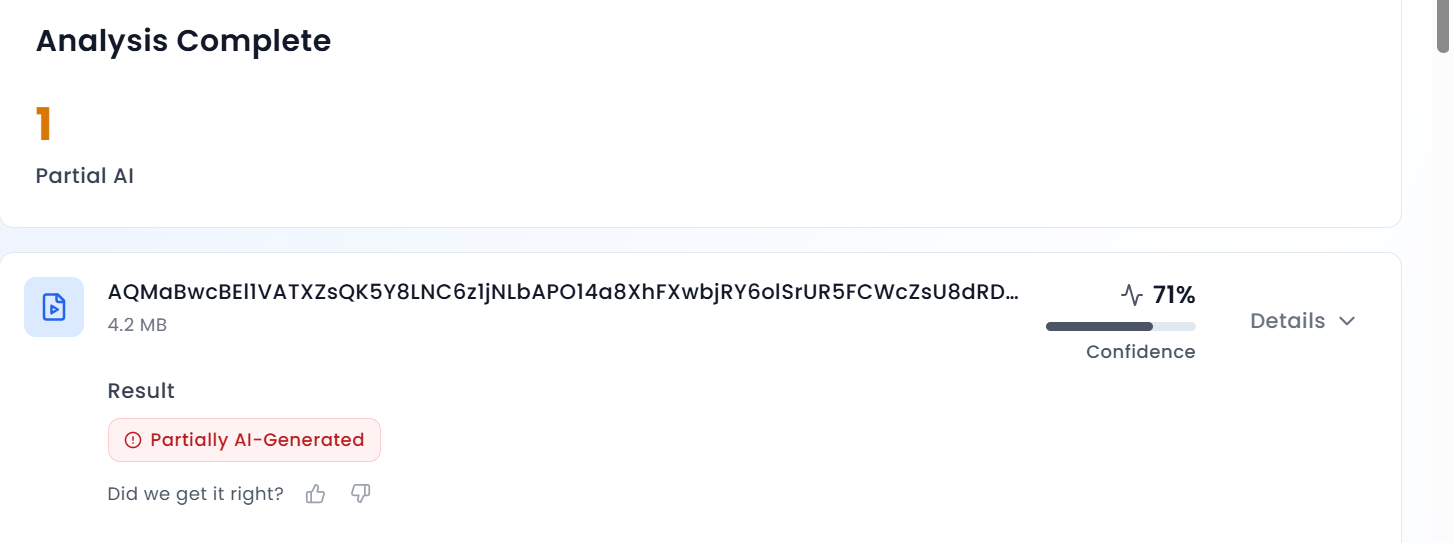
In the next stage of the research, the viral video was analysed using the AI detection tool AURGIN AI, which identified the video as AI-generated.
Conclusion
Our research found that users had manipulated the original news broadcast using AI and shared it with misleading claims. The viral clip does not show any real financial deal between Bhupen Bora and the Assam Chief Minister.

Related Blogs

Introduction
As digital platforms rapidly become repositories of information related to health, YouTube has emerged as a trusted source people look to for answers. To counter rampant health misinformation online, the platform launched YouTube Health, a program aiming to make “high-quality health information available to all” by collaborating with health experts and content creators. While this is an effort in the right direction, the program needs to be tailored to the specificities of the Indian context if it aims to transform healthcare communication in the long run.
The Indian Digital Health Context
India’s growing internet penetration and lack of accessible healthcare infrastructure, especially in rural areas, facilitates a reliance on digital platforms for health information. However, these, especially social media, are rife with misinformation. Supplemented by varying literacy levels, access disparities, and lack of digital awareness, health misinformation can lead to serious negative health outcomes. The report ‘Health Misinformation Vectors in India’ by DataLEADS suggests a growing reluctance surrounding conventional medicine, with people looking for affordable and accessible natural remedies instead. Social media helps facilitate this shift. However, media-sharing platforms such as WhatsApp, YouTube, and Facebook host a large chunk of health misinformation. The report identifies that cancer, reproductive health, vaccines, and lifestyle diseases are four key areas susceptible to misinformation in India.
YouTube’s Efforts in Promoting Credible Health Content
YouTube Health aims to provide evidence-based health information with “digestible, compelling, and emotionally supportive health videos,” from leading experts to everyone irrespective of who they are or where they live. So far, it executes this vision through:
- Content Curation: The platform has health source information panels and content shelves highlighting videos regarding 140+ medical conditions from authority sources like All India Institute of Medical Sciences (AIIMS), National Institute of Mental Health and Neurosciences (NIMHANS), Max Healthcare etc., whenever users search for health-related topics.
- Localization Strategies: The platform offers multilingual health content in regional languages such as Hindi, Tamil, Telugu, Marathi, Kannada, Malayalam, Punjabi, and Bengali, apart from English. This is to help health information reach viewers across most of the country.
- Verification of professionals: Healthcare professionals and organisations can apply to YouTube’s health feature for their videos to be authenticated as an authority health source on the platform and for their videos to show up on the ‘Health Sources’ shelf.
Challenges
- Limited Reach: India has a diverse linguistic ecosystem. While health information is made available in over 8 languages, the number is not enough to reach everyone in the country. Efforts to reach more people in vernacular languages need to be ramped up. Further, while there were around 50 billion views of health content on YouTube in 2023, it is difficult to measure the on-ground outcomes of those views.
- Lack of Digital Literacy: Misinformation on digital platforms cannot be entirely curtailed owing to the way algorithms are designed to enhance user engagement. However, uploading authoritative health information as a solution may not be enough, if users lack awareness about misinformation and the need to critically evaluate and trust only credible sources. In India, this critical awareness remains largely underdeveloped.
Conclusion
Considering that India has over 450 million users, by far the highest number of users in any country in the world, the platform has recognized that it can play a transformative role in the country’s digital health ecosystem. To accomplish its mission “to combat the societal threat of medical misinformation,” YouTube will have to continue to take several proactive measures. There is scope for strengthening collaborations with Indian public health agencies and trusted public figures, national and regional, to provide credible health information to all. The approach will have to be tailored to India’s vast linguistic diversity, by encouraging capacity-building for vernacular creators to produce credible content. Finally, multiple stakeholders will need to come together to promote digital literacy through education campaigns about identifying trustworthy sources.
Sources
- https://indianexpress.com/article/technology/tech-news-technology/youtube-health-dr-garth-graham-interview-9746673/
- https://economictimes.indiatimes.com/news/india/cancer-misinformation-extremely-prevalent-in-india-trust-in-science-medicine-crucial-report/articleshow/115931783.cms?from=mdr
- https://health.youtube/our-mission/
- https://health.youtube/features-application/
- https://backlinko.com/youtube-users

Introduction
Embark on a groundbreaking exploration of the Darkweb Metaverse, a revolutionary fusion of the enigmatic dark web with the immersive realm of the metaverse. Unveiling a decentralised platform championing freedom of speech, the Darkverse promises unparalleled diversity of expression. However, as we delve into this digital frontier, we must tread cautiously, acknowledging the security risks and societal challenges that accompany the metaverse's emergence.
The Dark Metaverse is a unique combination of the mysterious dark web and the immersive digital world known as the metaverse. Imagine a place where users may participate in decentralised social networking, communicate anonymously, and freely express a range of viewpoints. It aims to provide an alternative to traditional online platforms, emphasizing privacy and freedom of speech. Nevertheless, it also brings new kinds of criminality and security issues, so it's important to approach this digital frontier cautiously.
In the vast expanse of the digital cosmos, there exists a realm that remains shrouded in mystery to the casual netizen—the dark web. It is a place where the surface web, the familiar territory of Google searches and social media feeds, constitutes a mere 5 per cent of the information iceberg floating in an ocean of data. Beneath this surface lies the deep web and the dark web, comprising the remaining 95 per cent, a staggering figure that beckons the brave and curious to explore its abysmal depths.
Imagine, a platform that not only ventures into these depths but intertwines them with the emerging concept of the metaverse—a digital realm that defeats the limitations of the physical world. This is the vision of the Darkweb Metaverse, the world’s premier endeavour to harness the enigmatic depths of the dark web and fuse it into the immersive experience of the metaverse.
As per Internet User Statistics 2024, There are over 5.3 billion Internet users in the world, meaning over 65% of the world’s population has access to the Internet. The Internet is used for various services. News, entertainment, and communication to name a few. The citizens of developed countries depend on the World Wide Web for a multitude of daily tasks such as academic research, online shopping, E-banking, accessing news and even ordering food online hence the Internet has become an integral part of our daily lives.
Surface Web
This layer of the internet is used by the general public on a daily basis. The contents of this layer are accessed by standard web browsers namely Google Chrome, and Mozilla Firefox to name a few. The contents of this layer of the internet are indexed by these search engines.
Deep Web
This is the second layer of the internet; its contents are not indexed by search engines. The content that is unavailable on the surface web is considered to be a part of the deep web. The deep web comprises a collection of various types of confidential information. Several Schools, Universities, Institutes, Government Offices and Departments, Multinational Companies (MNCs), and Private Companies store their database information and website-oriented server information such as online profile and accounts usernames or IDs and passwords or log in credentials and companies' premium subscription data and monetary transactional records in the Intra-net which is part of the deep web.
Dark Web
It is the least explored part of the internet which is considered to be a hub of various bizarre activities. The contents of the dark web are not indexed by search engines and specific software is required to access this layer of the internet namely TOR (The Onion Router) browser which cloaks to identify its users making them anonymous. The websites of the dark web are identified from .onion TLD (Top Level Domain). Due to anonymity provided in this layer, various criminal activities take place over there including Drugs trading, Arms trading, and Illegal PayPal account details to websites offering child pornography.
The Darkverse
The Darkweb Metaverse is not a mere novelty; it is a revolutionary step forward, a decentralised social networking platform that stands in stark contrast to centralised counterparts like YouTube or Twitter. Here, the spectre of censorship is banished, and the freedom of speech reigns supreme.
The architectonic prowess behind the Darkweb Metaverse is formidable. The development team is a coalition of former infrastructure maestros from Theta Network and virtuosos of metaverse design, bolstered by backend engineers from Gensokishi Metaverse. At the helm is a CEO whose tenure at the apex of large Japanese companies has endowed him with a profound understanding of the landscape, setting a solid foundation for the platform's future triumphs.
Financially, the dark web has been a flourishing underworld, with revenues ranging from $1.5 billion to $3.1 billion between 2020 and 2022. Darkverse, with its emphasis on user-friendliness and safety, is poised to capture a significant portion of this user base. The platform serves as a truly decentralised amalgamation of the Dark Web, Metaverse, and Social Networking Services (SNS), with a mission to provide an unassailable bastion for freedom of speech and expression.
The Darkweb Metaverse is not merely a sanctuary for anonymity and privacy; it is a crucible for the diversity of expression. In a world where centralised platforms can muzzle voices, Darkverse stands as a bulwark against such suppression, fostering a community where a kaleidoscope of opinions and information thrives. The ease of use is unparalleled—a one-time portal that obviates the need for third-party software to access the dark web, protecting users from the myriad risks that typically accompany such ventures.
Moreover, the platform's ability to verify the authenticity of information is a game-changer. In an era laced with misinformation, especially surrounding contentious issues like war, Darkverse offers a sign of truth where the source of information can be scrutinised for its accuracy.
Integrating Technologies
The metaverse will be an immersive iteration of the internet, decked with interactive features of emerging technologies such as artificial intelligence, virtual and augmented reality, 3D graphics, 5G, holograms, NFTs, blockchain and haptic sensors. Each building block, while innovative, carries its own set of risks—vulnerabilities and design flaws that could pose a serious threat to the integrated meta world.
The dark web's very nature of interaction through avatars makes it a perfect candidate for a metaverse iteration. Here, in this anonymous world, commercial and personal engagements occur without the desire to unveil real identities. The metaverse's DNA is well-suited to the dark web, presenting a formidable security challenge as it is likely to evolve more rapidly than its real-world counterpart.
While Meta (formerly Facebook) is a prominent entity developing the metaverse, other key players include NVIDIA, Epic Games, Microsoft, Apple, Decentraland, Roblox Corporation, Unity Software, Snapchat, and Amazon. These companies are integral to constructing the vast network of real-time 3D virtual worlds where users maintain their identities and payment histories.
Yet, with innovation comes risk. The metaverse will necessitate police stations, not as a dystopian oversight but as a means to address the inherent challenges of a new digital society. In India, for instance, the integration of law enforcement within the metaverse could revolutionize the public's interaction with the police, potentially increasing the reporting of crimes.
The Perils within the Darkverse
The metaverse will also be a fertile ground for crimes of a new dimension—identity theft, digital asset hijacking, and the influence of metaverse interactions on real-world decisions. With a significant portion of social media profiles potentially being fraudulent, the metaverse amplifies these challenges, necessitating robust identity access management.
The integration of NFTs into the metaverse ecosystem is not without its security concerns, as token breaches and hacks remain a persistent threat. The metaverse's parallel economy will test the developers' ability to engender trust, a Herculean task that will challenge the boundaries of national economies.
Moreover, the metaverse will be a crucible for social engineering-based attacks, where the real-time and immersive nature of interactions could make individuals particularly vulnerable to deception and manipulation. The potential for early-stage fraud, such as the hyping and selling of virtual assets at unrealistic prices, is a stark reality.
The metaverse also presents numerous risks, particularly for children and adolescents who may struggle to distinguish between virtual and real worlds. The implications of such immersive experiences are intense, with the potential to influence behaviour in hazardous ways.
Security risks extend to the technologies supporting the metaverse, such as virtual and augmented reality. The exploitation of biometric data, the bridging of virtual and real worlds, and the tendency for polarisation and societal isolation are all issues requiring immediate attention.
A Way Forward
As we stand on the cusp of this new digital frontier, it is evident that the metaverse, despite its reliance on blockchain, is not immune to the privacy and security breaches that have plagued conventional IT infrastructure. Data security, Identity theft, network security, and ransomware attacks are just a few of the challenges on the way.
In this quest into the unknown, the Darkweb Metaverse radiates with the promise of freedom and the thrill of discovery. Yet, as we navigate these shadowy depths, we must remain vigilant, for the very technologies that empower us also rear the seeds of our grim vulnerabilities. The metaverse is not just a new chapter in the story of the internet—it is a whole narrative, one that we must write with caution and care.
References
- https://spores.medium.com/the-worlds-first-platform-to-deploy-the-dark-web-in-the-metaverse-releap-ido-on-spores-launchpad-a36387b184de
- https://www.makeuseof.com/how-hackers-sell-trade-data-in-metaverse/
- https://www.demandsage.com/internet-user-statistics/#:~:text=There%20are%20over%205.3%20billion,has%20access%20to%20the%20Internet.

The United Nations in December 2019 passed a resolution that established an open-ended ad hoc committee. This committee was tasked to develop a ‘comprehensive international convention on countering the use of ICTs for criminal purposes’. The UN Convention on Cybercrime is an initiative of the UN member states to foster the principles of international cooperation and establish legal frameworks to provide mechanisms for combating cybercrime. The negotiations for the convention had started in early 2022. It became the first binding international criminal justice treaty to have been negotiated in over 20 years upon its adoption by the UN General Assembly.
This convention addresses the limitations of the Budapest Convention on Cybercrime by encircling a broader range of issues and perspectives from the member states. The UN Convention against Cybercrime will open for signature at a formal ceremony hosted in Hanoi, Viet Nam, in 2025. The convention will finally enter into force 90 days after being ratified by the 40th signatory.
Objectives and Features of the Convention
- The UN Convention against Cybercrime addresses various aspects of cybercrime. These include prevention, investigation, prosecution and international cooperation.
- The convention aims to establish common standards for criminalising cyber offences. These include offences like hacking, identity theft, online fraud, distribution of illegal content, etc. It outlines procedural and technical measures for law enforcement agencies for effective investigation and prosecution while ensuring due process and privacy protection.
- Emphasising the importance of cross-border collaboration among member states, the convention provides mechanisms for mutual legal assistance, extradition and sharing of information and expertise. The convention aims to enhance the capacity of developing countries to combat cybercrime through technical assistance, training, and resources.
- It seeks to balance security measures with the protection of fundamental rights. The convention highlights the importance of safeguarding human rights and privacy in cybercrime investigations and enforcement.
- The Convention emphasises the importance of prevention through awareness campaigns, education, and the promotion of a culture of cybersecurity. It encourages collaborations through public-private partnerships to enhance cybersecurity measures and raise awareness, such as protecting vulnerable groups like children, from cyber threats and exploitation.
Key Provisions of the UN Cybercrime Convention
Some key provisions of the Convention are as follows:
- The convention differentiates cyber-dependent crimes like hacking from cyber-enabled crimes like online fraud. It defines digital evidence and establishes standards for its collection, preservation, and admissibility in legal proceedings.
- It defines offences against confidentiality, integrity, and availability of computer data and includes unauthorised access, interference with data, and system sabotage. Further, content-related offences include provisions against distributing illegal content, such as CSAM and hate speech. It criminalises offences like identity theft, online fraud and intellectual property violations.
- LEAs are provided with tools for electronic surveillance, data interception, and access to stored data, subject to judicial oversight. It outlines the mechanisms for cross-border investigations, extradition, and mutual legal assistance.
- The establishment of a central body to coordinate international efforts, share intelligence, and provide technical assistance includes the involvement of experts from various fields to advise on emerging threats, legal developments, and best practices.
Comparisons with the Budapest Convention
The Budapest Convention was adopted by the Committee of Ministers of the Council of Europe at the 109th Session on 8 November 2001. This Convention was the first international treaty that addressed internet and computer crimes. A comparison between the two Conventions is as follows:
- The global participation in the UNCC is inclusive of all UN member states whereas the latter had primarily European with some non-European signatories.
- The scope of the UNCC is broader and covers a wide range of cyber threats and cybercrimes, whereas the Budapest convention is focused on specific offences like hacking and fraud.
- UNCC strongly focuses on privacy and human rights protections and the Budapest Convention had limited focus on human rights.
- UNCC has extensive provisions for assistance to developing countries and this is in contrast to the Budapest Convention which did not focus much on capacity building.
Future Outlook
The development of the UNCC was a complex process. The diverse views on key issues have been noted and balancing different legal systems, cultural perspectives and policy priorities has been a challenge. The rapid technology evolution that is taking place requires the Convention to be adaptable to effectively address emerging cyber threats. Striking a balance remains a critical concern. The Convention aims to provide a blended approach to tackling cybercrime by addressing the needs of countries, both developed and developing.
Conclusion
The resolution containing the UN Convention against Cybercrime is a step in global cooperation to combat cybercrime. It was adopted without a vote by the 193-member General Assembly and is expected to enter into force 90 days after ratification by the 40th signatory. The negotiations and consultations are finalised for the Convention and it is open for adoption and ratification by member states. It seeks to provide a comprehensive legal framework that addresses the challenges posed by cyber threats while respecting human rights and promoting international collaboration.
References
- https://consultation.dpmc.govt.nz/un-cybercrime-convention/principlesandobjectives/supporting_documents/Background.pdf
- https://news.un.org/en/story/2024/12/1158521
- https://www.interpol.int/en/News-and-Events/News/2024/INTERPOL-welcomes-adoption-of-UN-convention-against-cybercrime#:~:text=The%20UN%20convention%20establishes%20a,and%20grooming%3B%20and%20money%20laundering
- https://www.cnbctv18.com/technology/united-nations-adopts-landmark-global-treaty-to-combat-cybercrime-19529854.htm
