

Navigating the Path to CyberPeace: Insights and Strategies
Featured #factCheck Blogs

Executive Summary
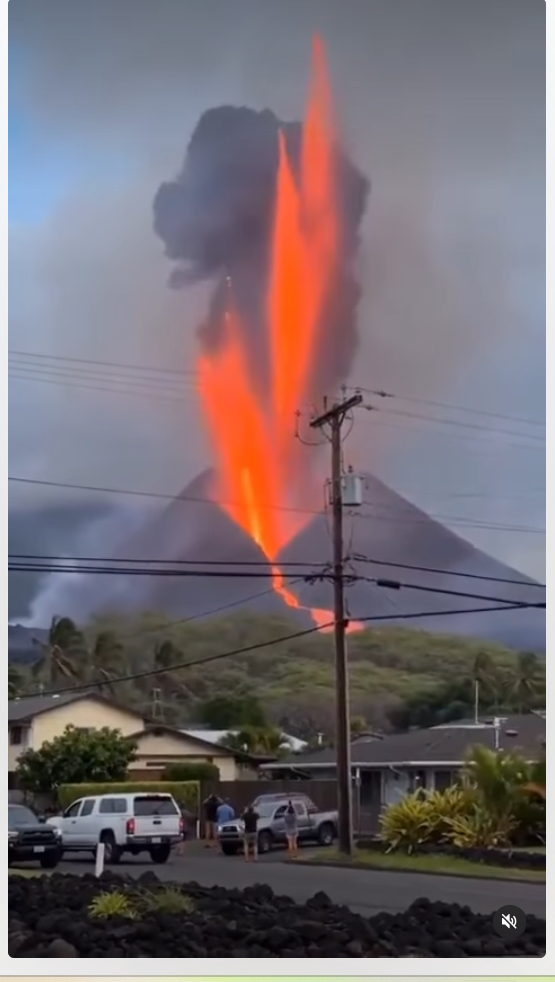
A volcano erupted at Indonesia’s Anak Krakatau on the night of September 4, 2026. A video is being shared on social media in connection with the eruption. The video shows lava rising high into the air following a volcanic eruption, with people seen fleeing the area. Some social media users are sharing the video claiming that it shows the eruption of Indonesia’s Anak Krakatau volcano. Research by CyberPeace found that the viral video is AI-generated. The video was created with the help of AI tools. However, four volcanoes, including Anak Krakatau, have erupted in Indonesia.
Claim
An Instagram user shared the viral video with the caption: “Indonesia’s Anak Krakatau volcano erupted Friday night. According to MAGMA Indonesia, lava fountains were seen rising from the volcano’s crater, while ash plumes reached a height of up to 400 metres. The volcano remains at Level III, with authorities enforcing a 3-kilometre exclusion zone around the crater.”
https://www.instagram.com/reels/DdBfQprThPA/
Fact Check
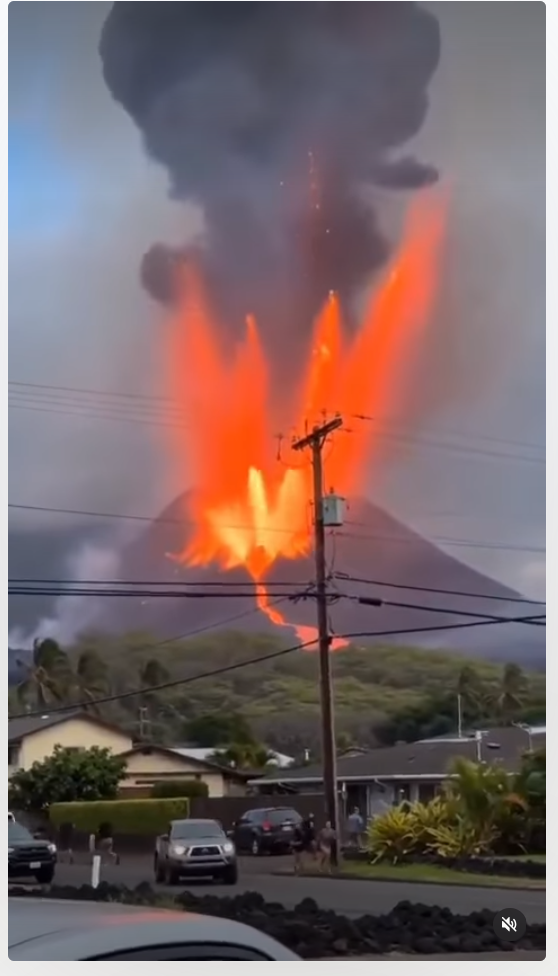
To investigate the viral video, we examined it closely and noticed several inconsistencies. At the beginning of the video, people can be seen standing calmly as the volcanic eruption takes place. Shortly afterward, the vehicles parked there suddenly begin moving. In one of the cars, no driver is visible. Meanwhile, the legs of a person running on the road disappear, and the person appears to merge into the background. These visual inconsistencies raised suspicions that the viral video had been created using AI tools.
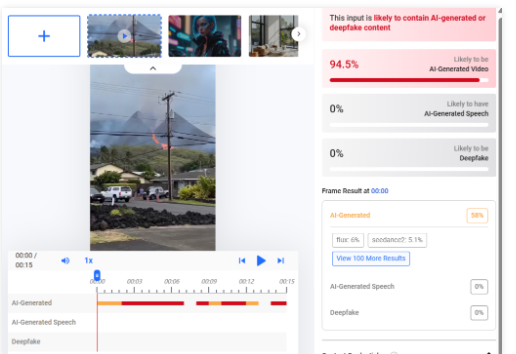
We checked the video using the AI detection tool Hive Moderation, which indicated that there was a more than 94 percent likelihood that the video was AI-generated.
We checked the keyframes of the video using the AI detection tool Was It AI, which identified the video as 97 percent likely to be AI-generated.

Conclusion
The Anak Krakatau volcano in Indonesia erupted on the night of September 4, 2026. However, our research found that the video being shared in connection with the eruption was created using AI tools. Visual inconsistencies in the footage, along with the results of AI detection tools, indicate that the video is AI-generated and does not show genuine footage of the Anak Krakatau eruption. Therefore, the claim that the viral video shows the September 4 eruption of Indonesia’s Anak Krakatau volcano is false.

Executive Summary
A video is being shared on social media showing a female cricket player seemingly making an impressive catch in the air after rotating 360 degrees. The video is being shared with claims that the player pulled off the extraordinary catch in an incredible feat on the cricket field. Research by CyberPeace found the viral claim to be false. Our research revealed that the viral video was edited with the help of AI. The video uses actual broadcast footage from the 2024 Women’s T20 World Cup match between India and New Zealand, but the 360-degree catch shown in the video was not part of the actual match.
Claim:
A video of a female cricketer making an incredible 360-degree catch is being shared on social media as a real incident from a cricket match.
https://www.instagram.com/reels/DdEca3LNT00/

Fact Check
To verify the authenticity of the viral claim, we conducted a Google search using relevant keywords. However, we did not find any credible media reports confirming the claim.

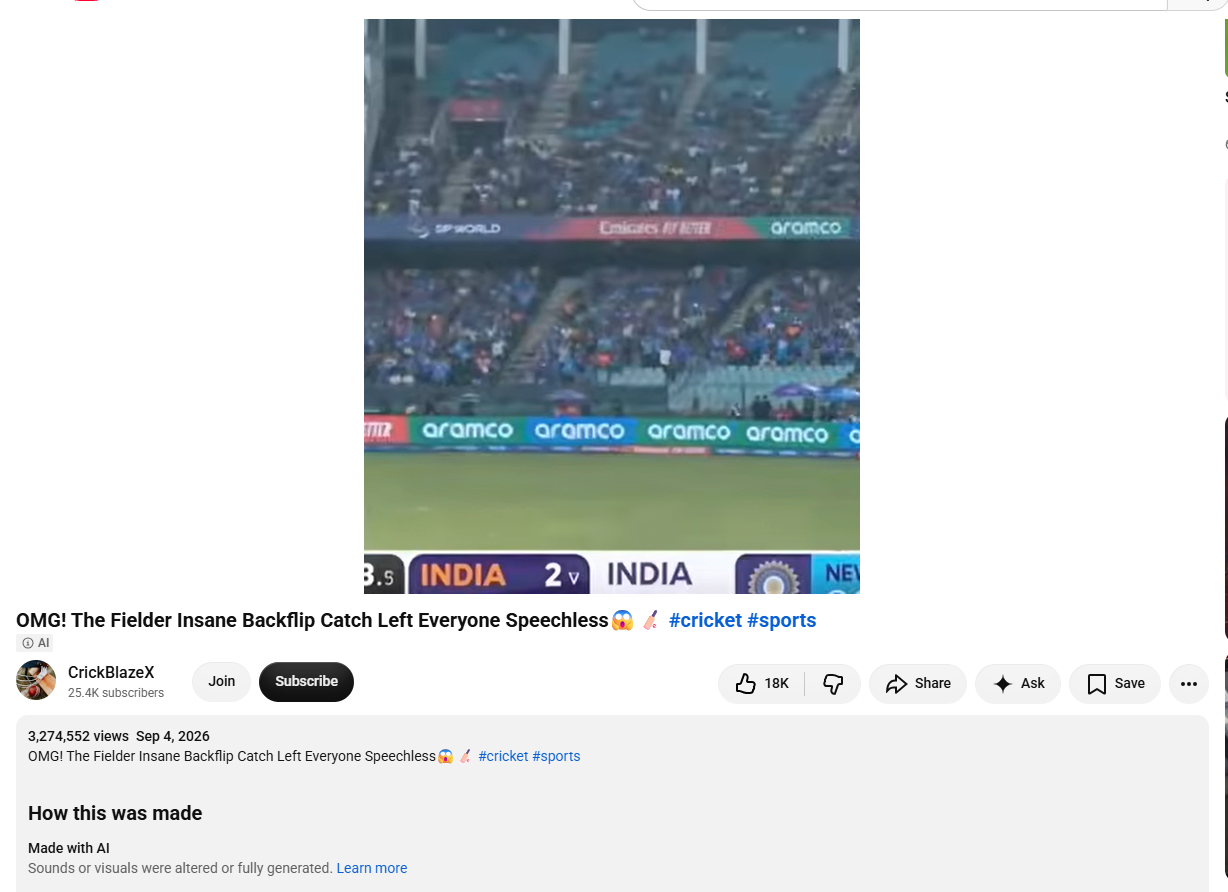
As part of the next step in our research, we conducted a reverse image search of the keyframes from the video. During the search, we found the same video on a YouTube channel, where it was identified as AI-generated.
As the next step, we scanned the viral video using the AI detection tool Hive Moderation. According to the tool’s results, there is a 70 percent probability that the video is AI-generated.

As part of the next step in our research, we scanned the viral video using an AI detection tool. According to the results, the viral video is AI-generated.

Conclusion
Our research found that the viral video was edited with the help of AI. The video uses actual broadcast footage from the 2024 Women’s T20 World Cup match between India and New Zealand. However, the 360-degree catch shown in the video was not part of the actual match.

Executive Summary
A social media post is being widely circulated claiming that Delhi Police personnel Amit died during the Cockroach Janata Party (CJP) ‘Sansad Chalo’ protest held on July 20, 2026. The post attempts to link his death to violence that allegedly took place during the demonstration. CyberPeace Research Wing’s research found the claim to be false. The research revealed that the death of Head Constable Amit was not related to the CJP protest held on July 20. He died on July 15 after being hit by a speeding vehicle while on duty at Singhu Border. An old accident has been falsely linked to the recent protest through a misleading claim.
Claim:
A Facebook user shared a post on July 23, 2026, claiming that a police personnel was martyred during the alleged protest carried out by “student goons and their supporters from Congress and Kejriwal’s party” on July 20. The user further claimed that the protest was responsible for the death of a police personnel and questioned criticism over alleged police action against protesters.
The post’s link, archive link and screenshot are provided below:
https://www.facebook.com/photo?fbid=3562630610568369&set=a.100838436747621
https://ghostarchive.org/archive/m8QM8

Fact Check:
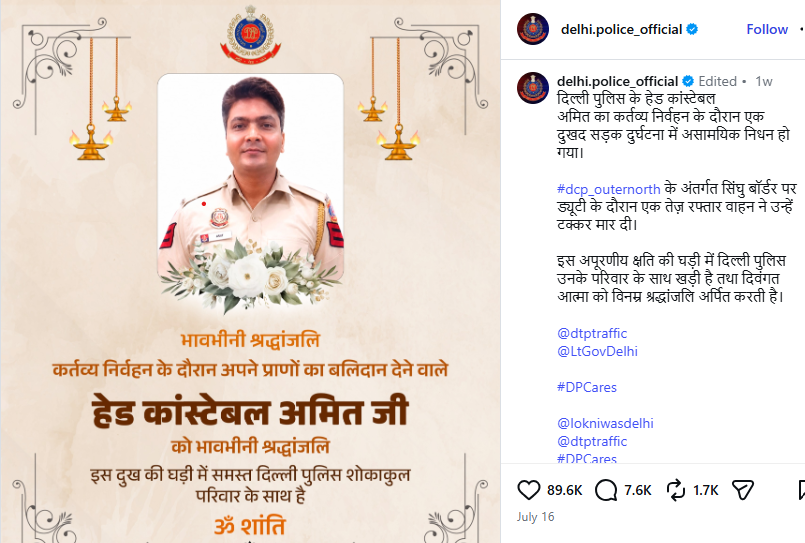
To verify the authenticity of the viral claim, the Desk first examined the official social media accounts of Delhi Police. During the research, the Desk found a post shared on Delhi Police’s official Instagram account on July 16, 2026, which contained the same image being circulated in the viral post.
https://www.instagram.com/p/Da19BQxEmQv/?igsh=cnN1bXZhaHg5OWRs
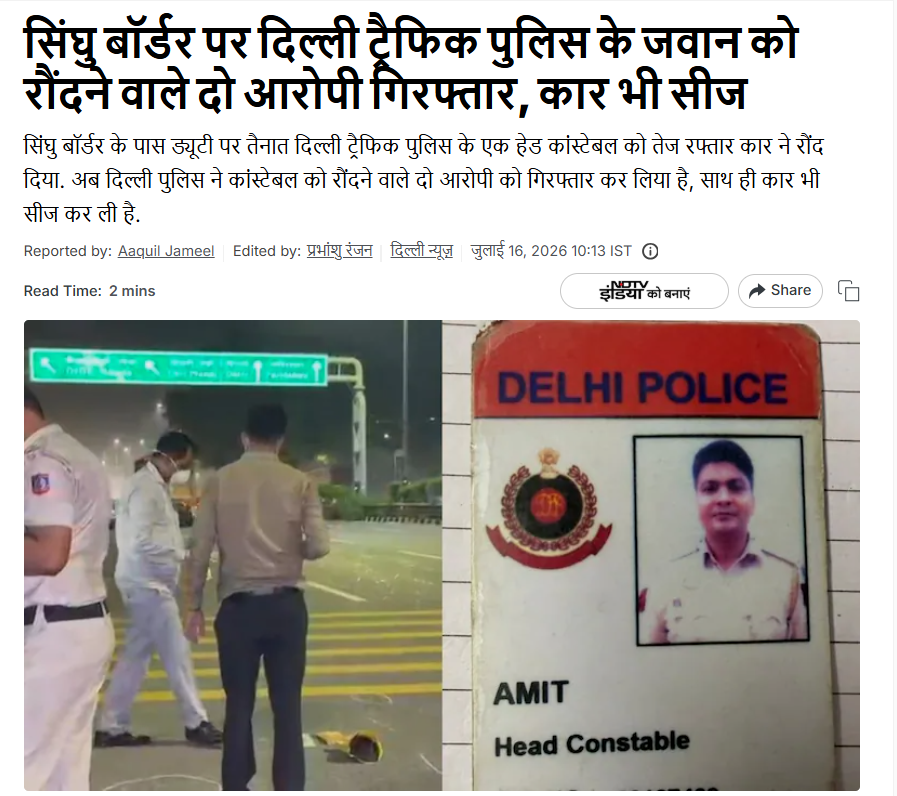
In the next stage of the research, the Desk found an NDTV report published on July 16, 2026. According to the report, Delhi Police had arrested two accused in connection with the death of Head Constable Amit. The arrested individuals were identified as Kuldeep alias Karan and Neeraj. The report stated that police had also seized the vehicle bearing registration number DL11CG2268, which was involved in the accident. An FIR was registered at Alipur Police Station and further research was underway.
Further research led the Desk to a related post on the Facebook page of Delhi Samachar TV. According to the post, the hit-and-run case involving Head Constable Amit, who was hit while performing duty at Singhu Border (NH-44), was solved by Delhi Police within hours. The police team arrested two accused and recovered the vehicle used in the incident.
The post’s link and screenshot are provided below:
https://www.facebook.com/reel/1006635078843860

Conclusion:
The research established that the death of Delhi Police Head Constable Amit was not connected to the CJP ‘Sansad Chalo’ protest held on July 20, 2026. Amit died on July 15 after being hit by a speeding vehicle while on duty at Singhu Border. The old accident is being falsely linked to the recent protest with a misleading claim.

Executive Summary
A video from the Parliament complex is being widely shared on social media with the claim that Bharatiya Janata Party (BJP) MP Kangana Ranaut has come out in support of the ongoing Cockroach Janata Party (CJP)-led protest at Delhi’s Jantar Mantar. The viral post claims that Ranaut can be seen raising slogans in support of the protesters. CyberPeace Research Wing’s research found the claim to be misleading. The viral footage is not related to the ongoing CJP protest. It dates back to April 2026, when BJP women MPs staged a demonstration outside Parliament after the 131st Constitutional Amendment Bill failed to pass. The old video is now being falsely linked to the current protest.
Claim:
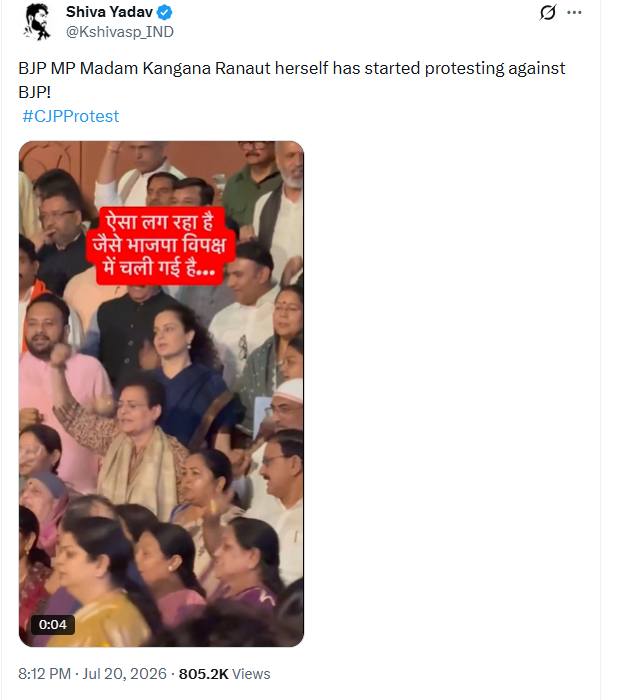
On July 20, 2026, an X (formerly Twitter) user shared the viral video claiming that “BJP MP Kangana Ranaut has now started protesting against her own party.”
The post link, archive link and screenshot are provided below.
https://x.com/Kshivasp_IND/status/2079215438664233391
Fact Check:
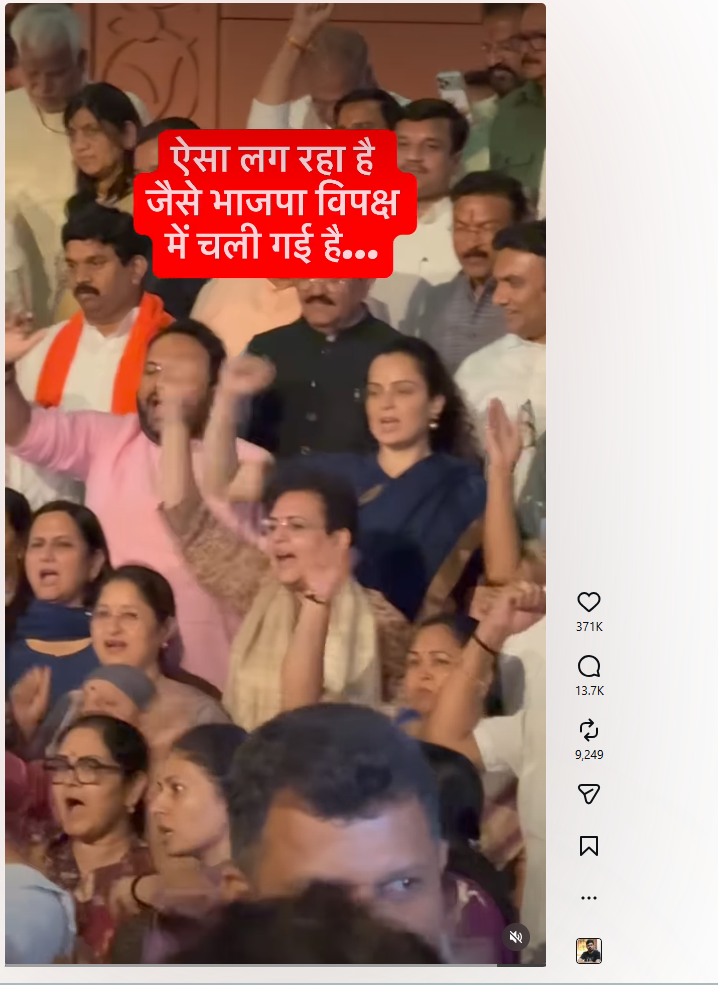
To verify the claim, the Desk extracted keyframes from the viral video and conducted a reverse image search using Google Lens. This led to the same video uploaded on the Instagram account ashutoshjourno on April 17, 2026. The caption accompanying the post read, “Aaj Makar Dwar ka nazara alag tha” (The scene at Makar Dwar was different today).
https://www.instagram.com/reels/DXPQoIAiQ3L/
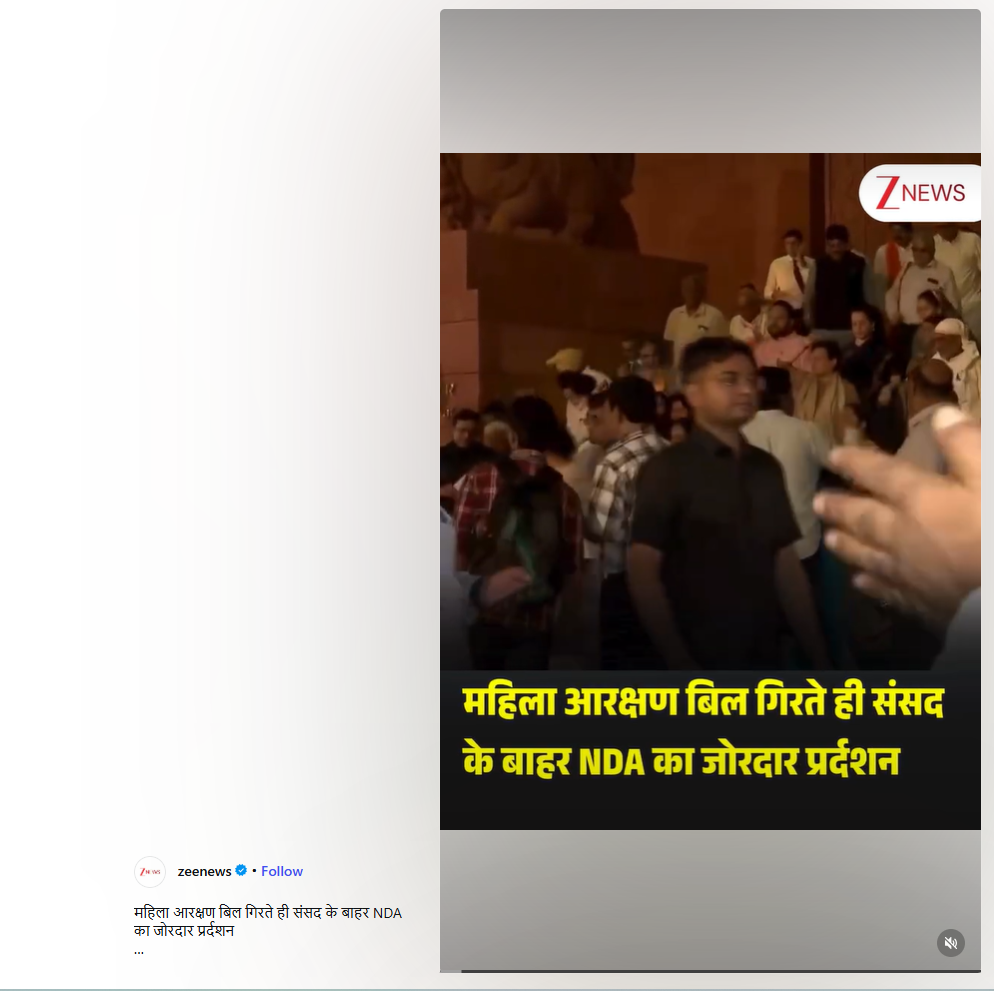
In the next stage of the research, the Desk carried out a keyword search based on the clues obtained from the Instagram post. This led to a Zee News report published on April 17, 2026, which reported that NDA MPs staged a protest outside Parliament after the 131st Constitutional Amendment Bill failed to pass. The visuals in the report matched those seen in the viral video.
https://www.instagram.com/reels/DXPL4tOky5P/
Conclusion:
CyberPeace Research Wing’s research found the viral claim to be misleading. The video is unrelated to the ongoing CJP protest at Jantar Mantar. It was recorded in April 2026, when BJP women MPs protested outside Parliament following the failure of the 131st Constitutional Amendment Bill to pass. The old footage is now being falsely shared as a recent video of Kangana Ranaut supporting the CJP protest.

Executive Summary
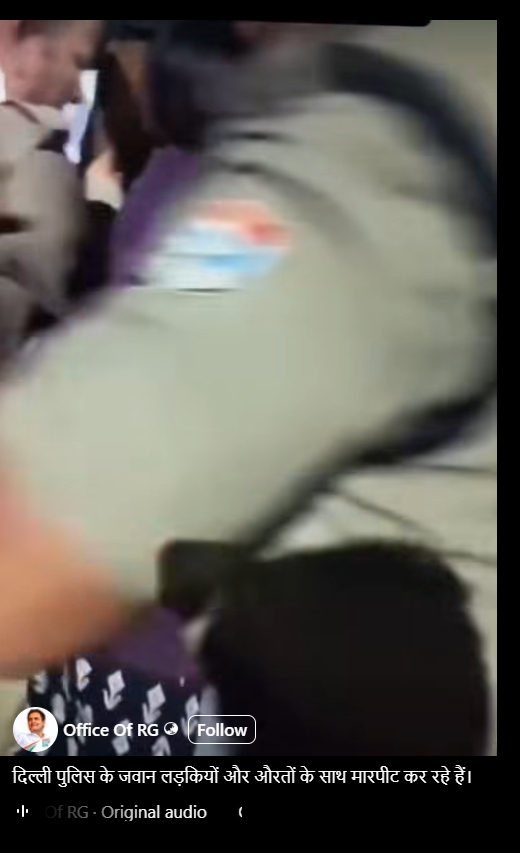
A video showing a scuffle between a group of women and police personnel is being widely shared on social media with the claim that it shows Delhi Police assaulting women protesters at Jantar Mantar. CyberPeace Research Wing ’s research found the claim to be misleading. The viral video is not from Jantar Mantar in Delhi but from an unrelated incident in Dehradun, Uttarakhand. The old footage is being falsely circulated as a recent video from the ongoing protests.
Claim:
A Facebook user shared the viral video claiming that Delhi Police personnel were assaulting women and girls during the protest at Jantar Mantar.
The post link, archive link and screenshot are provided below.
https://www.facebook.com/reel/2864826433884333
Fact Check:
To verify the claim, we extracted keyframes from the viral video and conducted a reverse image search using Google Lens. This led us to the same video uploaded on the Instagram account iamvikasbaliyan on October 15, 2025.
https://www.instagram.com/reels/DP0H_SSE625/
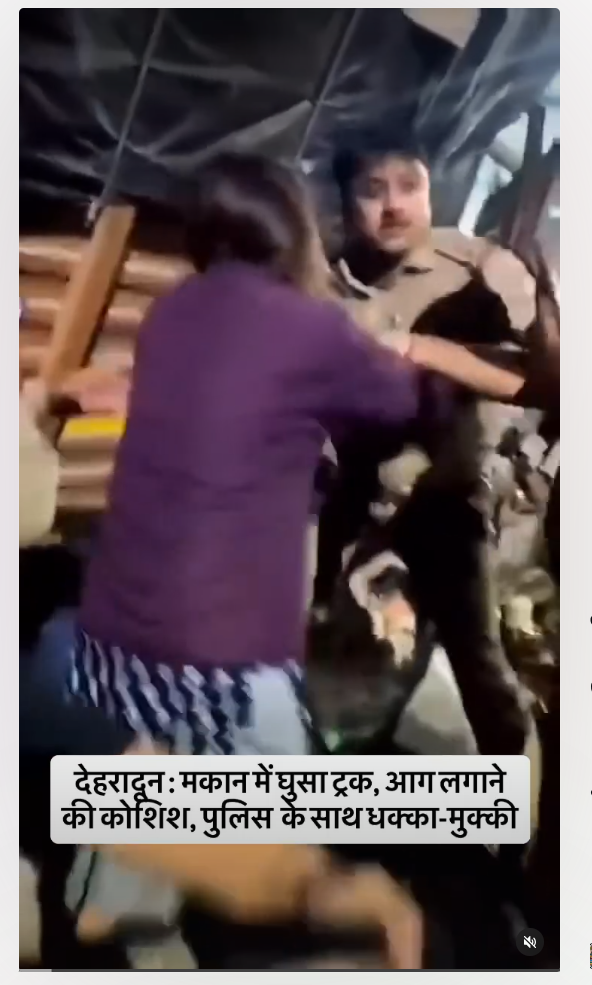
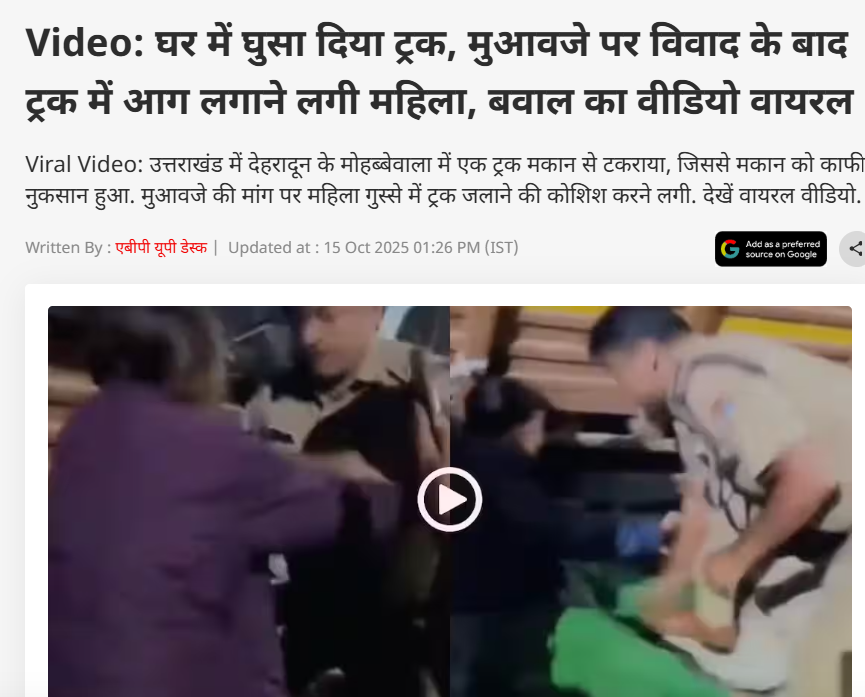
According to the information shared with the post, the incident took place in Mohabbewala, Dehradun, Uttarakhand, after a truck crashed into a house, damaging the property. The homeowner allegedly demanded compensation and, when the issue remained unresolved, attempted to set the truck on fire. When police personnel intervened to stop her, a scuffle broke out between the woman and the police. The viral video captures this incident. In the next stage of the research, we found an ABP News report published on October 15, 2025, carrying the same visuals as the viral video. The report also identified the incident as having occurred in Mohabbewala, Dehradun.
Conclusion:
CyberPeace Research Wing ’s research found the viral claim to be misleading. The video does not show Delhi Police assaulting women protesters at Jantar Mantar. It is an old video from Dehradun, Uttarakhand, showing an unrelated incident that has been falsely linked to the ongoing protests in Delhi.

Executive Summary
A video is being widely shared on social media with the claim that a person attempted to set a Thar vehicle on fire during the ongoing protest at Jantar Mantar. CyberPeace Research Wing’s research found that the viral video is not from Jantar Mantar, Delhi. The footage is from Gaya, Bihar, where some people allegedly attempted to set a vehicle on fire after a collision involving a Thar and other vehicles on July 16.
Claim:
A 23-second video is being shared on Facebook claiming to show a person attempting to set a Thar vehicle on fire during the ongoing NEET paper leak protest at Jantar Mantar in Delhi. In the video, a man can be seen trying to ignite the vehicle, while police personnel intervene and stop him. However, the crowd continues to attempt to set the vehicle on fire.
https://www.facebook.com/reel/1575765261002644

Fact Check:
To verify the claim, we extracted keyframes from the viral video and conducted a reverse image search. During the research, we found the same video uploaded on the News18 YouTube channel on July 18, 2026. The caption accompanying the video identified the incident as being from Bihar.
https://www.youtube.com/shorts/fzAPajxyi3A
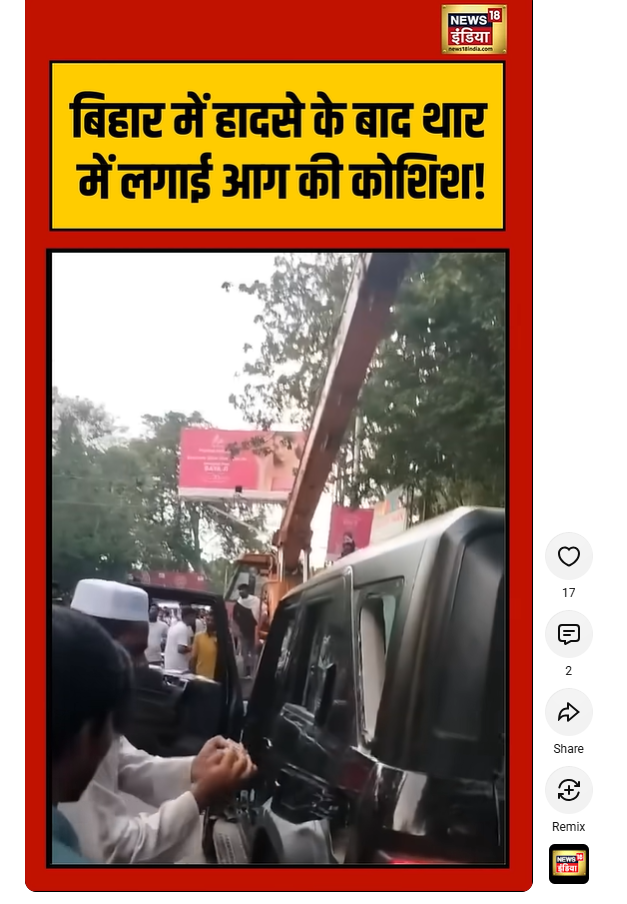
Further, a keyword search led us to a report published by Dainik Bhaskar on July 16, 2026. The report contained visuals matching the viral video, along with the statement of the person seen in the viral footage.

According to the report, the incident took place in Gaya, Bihar, after a collision between a Thar vehicle and other vehicles. Following the accident, some people gathered at the spot and allegedly attempted to set the vehicle on fire.
Conclusion:
CyberPeace Research Wing’s fact check found the viral claim to be misleading. The video does not show an incident from the ongoing Jantar Mantar protest in Delhi. The footage is from Gaya, Bihar, where a Thar vehicle was involved in a collision with other vehicles on July 16, following which some people attempted to set the vehicle on fire.

Executive Summary:
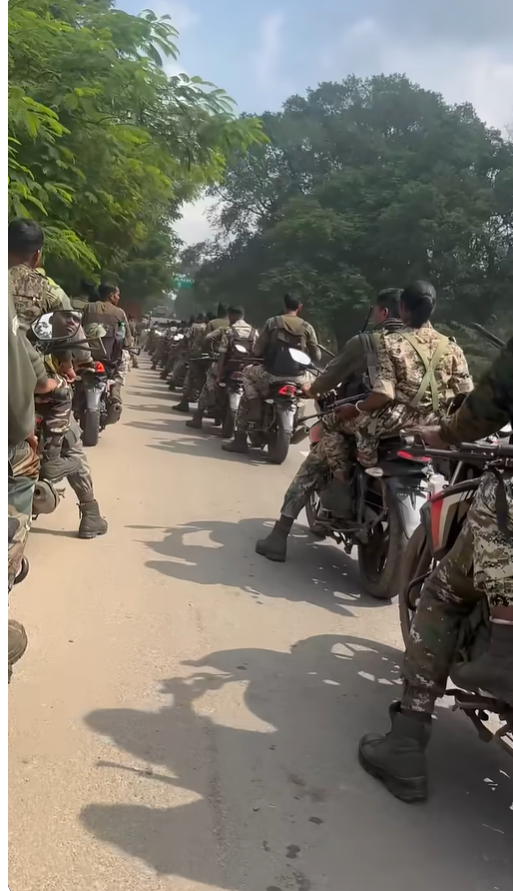
A video showing a convoy of soldiers travelling on motorcycles is being widely shared on social media with the claim that the personnel were heading towards Delhi’s Jantar Mantar to support the ongoing protest led by the Cockroach Janata Party (CJP). CyberPeace Research Wing’s research found the claim to be false. The viral video is not related to the CJP protest at Jantar Mantar. The footage predates the ongoing demonstration and is being circulated with a misleading claim.
Claim:
A social media user shared the viral video claiming that soldiers were travelling towards Delhi’s Jantar Mantar to support the youth participating in the CJP protest over issues related to the country’s education system. The post claimed that the soldiers were joining the protest to raise their voice on issues concerning the nation, youth, and their future.
https://x.com/RoflGandhee/status/2079986496556204066?s=20
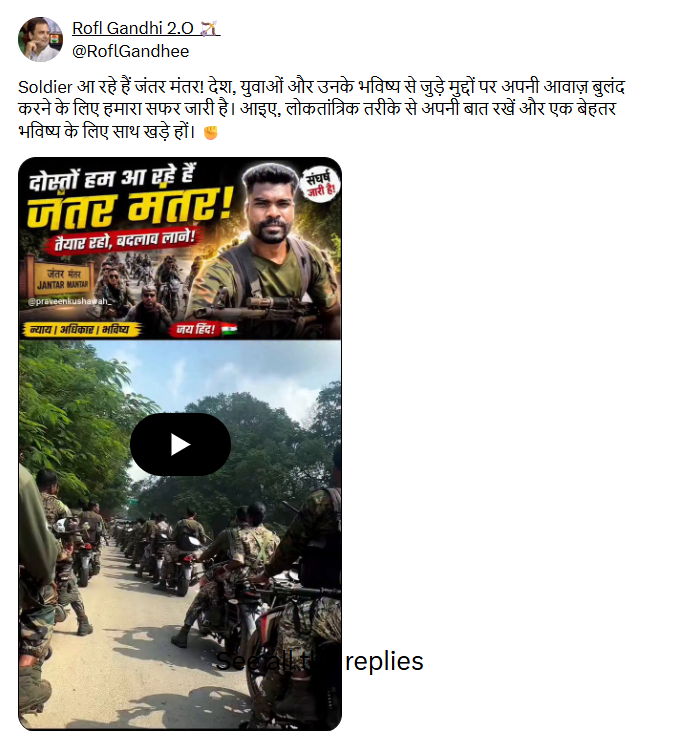
A reverse image search using Google Lens led the Desk to a video uploaded on a YouTube channel named Commando Journey. Upon comparison, the Desk found that the YouTube video contained the same visuals as the viral video under research. Further verification of the video details revealed that the footage predates the ongoing Cockroach Janata Party (CJP) protest at Jantar Mantar. The protest, which began in June 2026, has been demanding the resignation of Union Education Minister Dharmendra Pradhan over alleged irregularities in examinations. The video was uploaded on the YouTube channel in February 2026, several months before the CJP protest began, confirming that it has been falsely linked to the recent demonstration.
https://www.youtube.com/shorts/cMvai580gdo

As part of the next phase of the research, the Desk reviewed several other videos uploaded on the same YouTube channel. During the analysis, the Desk identified multiple videos featuring visuals matching those seen in the viral clip. However, these videos were also uploaded before the CJP protest in Delhi, with one of the videos dating back to October 2025.
https://www.youtube.com/shorts/7eDc9TqOpzM
Conclusion
While the Desk could not independently verify the exact origin and context of the video, the research established that the footage predates the CJP protest and has been falsely linked to the demonstration. Based on the findings, the Desk concluded that the video shared on social media does not show soldiers travelling to Delhi’s Jantar Mantar to support the Cockroach Janata Party (CJP) protest. The footage is unrelated to the ongoing protest and has been circulated with a misleading claim.

Executive Summary
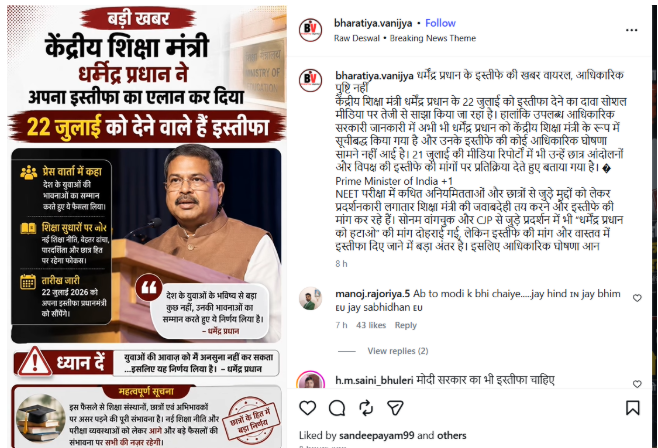
A news graphic is being widely shared on social media claiming that Union Education Minister Dharmendra Pradhan will resign on July 22. The graphic quotes him as saying, "Respecting the sentiments of the country's youth, I have taken this decision." CyberPeace Research Wing ’s research found the claim to be false. The probe revealed that no official announcement has been made regarding Dharmendra Pradhan’s resignation as Union Education Minister. However, demands for his resignation have intensified from opposition parties and student groups over alleged irregularities in NEET and other examinations, leading to protests in Delhi and other places. The research also found that the viral news graphic circulating on social media was likely created using Artificial Intelligence (AI).
Claim:
A social media user on Instagram shared the viral news graphic on July 21, 2026, claiming that Union Education Minister Dharmendra Pradhan is set to resign on July 22. The post also claimed that Pradhan said during a press conference, "Respecting the sentiments of the country's youth, I have taken this decision."
https://www.instagram.com/reel/DbEMoRtgLfT/?igsh=c3g3dzZxZ2U3YW01
Fact Check:
To verify the authenticity of the viral claim, we conducted a Google search using relevant keywords. However, we did not find any credible media reports confirming that Union Education Minister Dharmendra Pradhan is resigning on July 22.Further, we examined the official X (formerly Twitter) account of Union Education Minister Dharmendra Pradhan. No official announcement or post related to his resignation was found on his account.
https://x.com/dpradhanbjp?lang=en

Upon examining the viral news graphic, we noticed several indicators suggesting that it could be AI-generated. To verify this, we analysed the graphic using the AI detection tool AI or Not. The tool’s analysis indicated a 94% probability that the graphic was generated using AI.
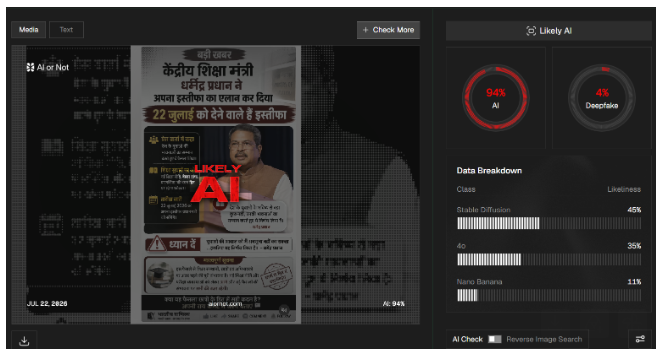
We also scanned the viral graphic through another AI detection tool, WasIt AI. According to the tool’s results, the probability of the graphic being AI-generated was found to be 87%.

Conclusion:
CyberPeace Research Wing ’s fact check found the viral claim to be false. No official announcement has been made regarding Union Education Minister Dharmendra Pradhan’s resignation, and reports claiming that he will resign on July 22 are incorrect. The research further revealed that the viral news graphic circulating on social media was created using Artificial Intelligence (AI).

Executive Summary
A video showing police personnel allegedly snatching and tearing a Palestine flag from a woman protester is being widely shared on social media. Users are claiming that the video was recorded during the ongoing CJP-led protest at Jantar Mantar demanding the resignation of the Union Education Minister over the NEET paper leak. CyberPeace Research Wing ’s research found that the viral claim is misleading. The video is not related to the ongoing CJP-led protest at Jantar Mantar over the NEET paper leak. The footage dates back to 2023 and is being falsely linked to a recent protest.
Claim:
A social media user shared the viral video claiming that a woman protester arrived at the NEET paper leak protest carrying a Palestine flag.
https://x.com/SilentFrameM/status/2079138742795939907

Fact Check:
A reverse image search of keyframes from the viral video led us to a YouTube video uploaded by Indian Observer on October 30, 2023, featuring the same visuals. The video description identified the footage as being from a pro-Palestine demonstration held at Jantar Mantar in solidarity with Palestinians.
https://www.youtube.com/shorts/_JhJyZ-Djyw

We also found an October 2023 report by Free Press Journal carrying the same visuals. According to the report, several students and civil society members had gathered at Jantar Mantar to protest Israel’s military actions in the Gaza Strip and express solidarity with Palestine. During the protest, Delhi Police briefly detained more than 50 demonstrators. As the detainees were being escorted away, a woman carrying a paper Palestine flag was seen confronting police personnel, who allegedly snatched and tore the flag.

Conclusion:
CyberPeace Research Wing ’s fact check found the viral claim to be misleading. The video is not from the ongoing CJP-led NEET paper leak protest at Jantar Mantar. The footage is from a pro-Palestine demonstration held in October 2023 and has been falsely shared as a recent video from the ongoing protests.

Executive Summary
A video is being widely shared on social media with the claim that protesters during the Cockroach Janta Party (CJP) protest in Delhi pelted stones at India’s first hydrogen train. The viral video shows a train parked at a railway station being attacked with stones amid chaos and heavy commotion. Social media users are claiming that the incident took place at a Delhi railway station, where protesters targeted the country’s new hydrogen train during the CJP march towards Jantar Mantar and damaged public property. CyberPeace Research Wing’s research found the claim to be false. The viral video is not related to the CJP protest or India’s first hydrogen train. The video is from Bihar, where candidates appearing for a Bihar Police Prohibition Department examination had protested over train delays, leading to clashes and stone-pelting.
Claim:
A social media post claimed:“New Delhi: During the march towards Jantar Mantar, a video of stone-pelting on a hydrogen train parked at a railway station is going viral. Some people can be seen throwing stones at the train. Damaging public property is a punishable offence. Further action will be taken based on official information from authorities.”
https://www.facebook.com/reel/1573292581055475

Fact Check:
To verify the authenticity of the viral claim, we extracted keyframes from the video and conducted a reverse image search using Google Lens. During the research, we found the same video clip uploaded on the Facebook page News Bihar on June 14, 2026. According to the post’s caption, the incident took place at Danapur–Patliputra railway station in Patna, Bihar, where thousands of candidates appearing for the Bihar Police Prohibition Department examination became agitated due to train delays. The protest escalated after candidates blocked railway tracks, leading to a confrontation between police personnel and students, including stone-pelting.
https://www.facebook.com/reel/2476273089511309

During further research, we found a video uploaded by Republic World’s YouTube channel on June 14, 2026, which also contained visuals matching the viral clip. The report stated that students in Bihar staged an aggressive protest after trains were delayed. During the protest, clashes broke out between police and students, and authorities used mild force to control the situation.
https://www.youtube.com/shorts/AlamDZzPKLA

During our research, we also found a reply from the official X account of Northern Railway on a similar viral post. In its response, Northern Railway clarified that the train visible in the viral video was not a hydrogen train. The railway authority stated that the video was old and confirmed that hydrogen train services are operating safely and as per their scheduled timetable.

Conclusion:
CyberPeace Research Wing’s research found that the claim linking the viral video to stone-pelting on India’s first hydrogen train during the CJP protest is false. The viral video is from Bihar, where candidates appearing for the Bihar Police Prohibition Department examination protested over train delays, resulting in clashes and stone-pelting at a railway station. The video has been falsely linked to the CJP protest and hydrogen train.

Executive Summary
A video is being shared on social media with the claim that it shows drone attacks on border posts and an oil platform in Kuwait, during which a worker was injured. The video begins with flames and thick smoke rising from what appears to be a compound-like area. A high metal fence and concrete barriers can be seen in front of the premises. On the left side of the video, flags resembling the national flag of Kuwait are visible. The video then shows a structure resembling an offshore oil platform located in the middle of the sea, from where smoke and flames can be seen emerging. In the final part, some personnel wearing military uniforms are seen standing near military vehicles, with a communication tower visible in the background. The video is being circulated with the claim that Kuwait’s border checkpoints and an oil platform were targeted in drone attacks. CyberPeace Research Wing’s research found the viral claim to be false. Our research revealed that Kuwait had reported drone attacks on three northern border land centres and an offshore drilling platform linked to Kuwait Oil Company, in which one employee was reportedly injured. However, the video being circulated on social media is not related to those incidents. The video has been created using artificial intelligence (AI) and is being shared with a false claim.
Claim:
An Instagram user shared the viral video on July 18, 2026, claiming that it showed drone attacks on border posts and an oil platform in Kuwait. The link, archive link and screenshot of the post are provided below.
https://www.instagram.com/reel/Da5di-cTw46/

Fact Check:
To verify the authenticity of the viral claim, we conducted a Google search using relevant keywords. During our research, we did not find any credible news reports or authentic sources linking the viral video to the reported drone attacks in Kuwait.
https://x.com/KuwaitArmyGHQ/status/2076345395802710160?s=20

However, we found a statement issued by the Kuwait Army on its official X (formerly Twitter) account on July 12, 2026. According to Statement No. 70, three northern border land centres in Kuwait and an offshore drilling platform associated with Kuwait Oil Company were targeted in drone attacks. The statement also mentioned that one employee was injured in the incident. The Kuwait Army’s X post link and screenshot are provided below.

We further examined the video using another AI detection tool, DetectVideo AI, which suggested that the video had a 62% probability of being AI-generated.

For additional verification, we scanned the video through AI or Not. The tool indicated that the video was 90% likely to be AI-generated.

At the final stage of our research, we analysed the video using Sightengine, which also suggested that the video was 99% likely to be AI-generated.

Conclusion:
CyberPeace Research Wing’s research found that the viral video is not real footage of drone attacks in Kuwait. The AI-generated video is being falsely linked to the reported drone attacks on three northern border land centres and an offshore drilling platform associated with Kuwait Oil Company. The claim being made with the video is therefore false and misleading.

Executive Summary
A video showing flames and thick smoke rising over a densely populated city at night is being widely circulated on social media. The video is being shared with the claim that it shows the actual visuals of explosions and destruction caused by an attack on Iran. CyberPeace Research Wing ’s research found the viral claim to be false. Our research revealed that the video is not real footage but an AI-generated video, which is being circulated with a false claim.
Claim
A user on social media platform Instagram shared the viral video on July 17, 2026, claiming that it shows the real visuals of an attack on Iran and the massive explosions caused by it.
https://www.instagram.com/reel/Da1_gaXyyoP/?utm_source=ig_web_copy_link&igsh=NTc4MTIwNjQ2YQ==

Fact Check
To verify the authenticity of the viral claim, we extracted multiple keyframes from the video and conducted a reverse image search using Google Lens. During the research, we did not find any credible news report, verified video, or authentic source confirming that the footage was related to any attack on Iran. To further examine the authenticity of the video, we analysed it using multiple AI detection tools. First, we scanned the video using Hive Moderation. The tool’s analysis indicated that the video had a 94.9% probability of being AI-generated, suggesting that the footage may have been created using Artificial Intelligence.
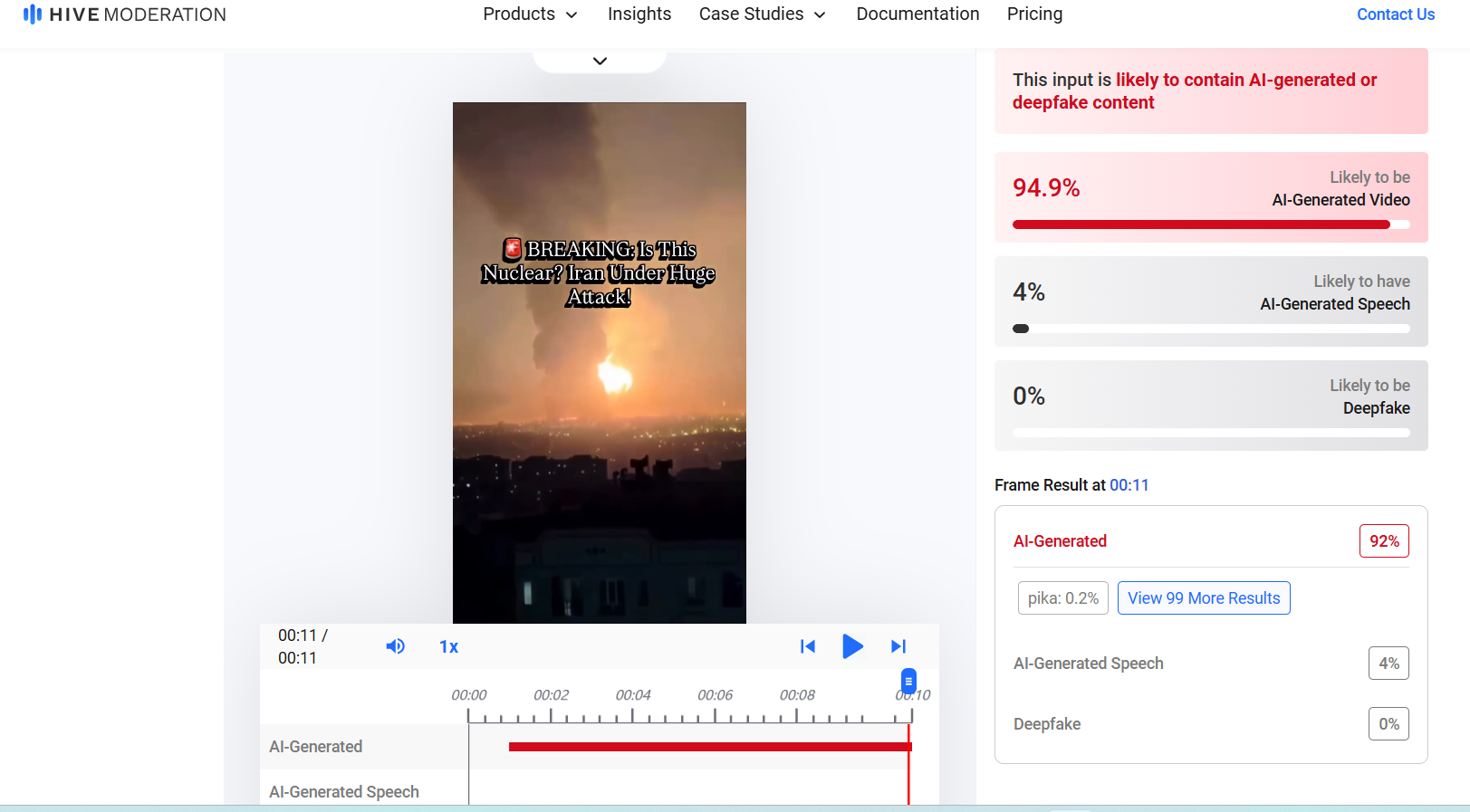
For additional verification, we analysed the video using DetectVideo AI. The tool also indicated that the video was likely AI-generated, with an estimated 80% probability.

We further checked the video using another AI detection tool, AI or Not, which suggested that the footage had a 64% probability of being AI-generated.

At the final stage of verification, we used WasIt.AI, which also indicated that the video was likely AI-generated, with an 88% probability.

Conclusion
CyberPeace Research Wing ’s research found that the viral video does not show real footage of an attack on Iran.The video was created using Artificial Intelligence (AI) and is being falsely shared as authentic visuals of explosions and destruction caused by an attack on Iran. Users are advised to verify such sensational claims before sharing them online.

Executive Summary
A video of Tamil Nadu Chief Minister Thalapathy Vijay is being widely circulated on social media with the claim that he reached Jantar Mantar in New Delhi and participated in an ongoing protest. CyberPeace Research Wing’s research found the viral claim to be misleading. During the research, we found an official clarification issued by the Delhi Police, which clearly refuted the claim and stated that the video was being shared with a false context.
Claim
A user on social media platform Instagram shared the viral video claiming that Thalapathy Vijay had reached Delhi’s Jantar Mantar and joined a protest there.
https://www.instagram.com/reels/Da-tsmSpC-V/
https://archive.ph/submit/?url
https://www.instagram.com/reels/Da-tsmSpC-V/

Fact Check
To verify the claim, we extracted multiple keyframes from the viral video and conducted a reverse image search using Google Lens. During the research, we found a similar image posted on Instagram on May 5, 2026, which contained visuals matching the viral video. The post did not mention any connection with a protest at Delhi’s Jantar Mantar.
https://www.instagram.com/p/DX8cmt6oqP9/

Further research revealed that the first major on-ground protest of the Cockroach Janta Party (CJP) was organised at Jantar Mantar on June 6, 2026. This confirms that the viral video, which is being linked to the CJP protest, is being shared with an incorrect context.

During further verification, we found a report published by BBC Tamil on May 4, 2026, which carried visuals similar to the viral video. https://www.bbc.com/tamil/articles/c202nd32v5ro

According to the BBC report, TVK (Tamilaga Vettri Kazhagam) leader Vijay won from the Perambur and Tiruchirappalli East assembly constituencies during the Tamil Nadu Assembly elections. The visuals in the viral video are related to Vijay’s political activities in Tamil Nadu and are not from Delhi’s Jantar Mantar. Additionally, the Delhi Police issued an official clarification stating that the claim linking the video to Jantar Mantar was false.
https://x.com/DCPNewDelhi/status/2078932755023577234?s=20

Conclusion
CyberPeace Research Wing’s research found that the viral video of Thalapathy Vijay is not from a protest at Delhi’s Jantar Mantar. The video is being circulated with a false and misleading claim. The Delhi Police has also officially denied the claim. Users are advised not to share such misleading content without verification.

Executive Summary
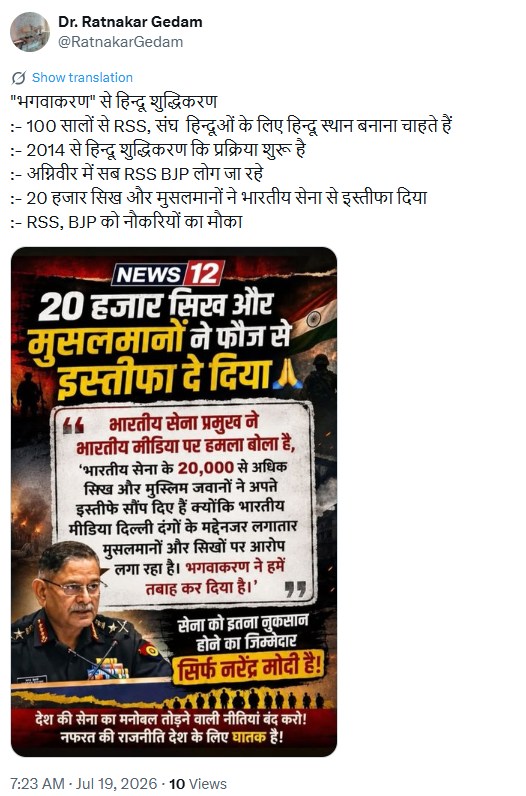
A claim is being widely circulated on social media alleging that more than 20,000 Sikh and Muslim personnel have resigned from the Indian Army.The viral graphic further attributes a statement to Chief of Army Staff General Upendra Dwivedi, claiming that the resignations were triggered by Indian media allegedly blaming Muslims and Sikhs for the Delhi riots. The graphic also includes the alleged remark that “Bhagwakaran (saffronisation) has destroyed us.” Several social media users are sharing the claim as genuine. CyberPeace Rresearch Wing ’s research found the viral claim to be false. Our research revealed that there is no credible evidence to support the allegation that more than 20,000 Sikh and Muslim soldiers resigned from the Indian Army. We found no official statement from the Indian Army or the Ministry of Defence confirming such resignations. Additionally, the statement attributed to Chief of Army Staff General Upendra Dwivedi has been fabricated and does not appear in his original speech. The viral claim is therefore misleading and based on false information.
Claim
An X user shared the viral graphic with the caption, “Under the guise of ‘Bhagwakaran’ (saffronisation), RSS has wanted a Hindu Rashtra for 100 years. Since 2014, the process of ‘Hindu purification’ has begun. Agniveer recruitment is being filled with RSS-BJP supporters. Twenty thousand Sikh and Muslim soldiers have resigned from the Indian Army, creating job opportunities for RSS and BJP supporters.”
Post Link:
https://x.com/RatnakarGedam/status/2078659496801661426?s=20
https://archive.ph/submit/?url
Fact Check
To verify the claim, we conducted keyword-based searches on Google using terms related to the alleged resignation of 20,000 Sikh and Muslim soldiers from the Indian Army. Our search found no credible news reports supporting the claim. We also found no official statement from the Indian Army or the Ministry of Defence confirming that such resignations had taken place. During the research , we located the original video of General Upendra Dwivedi, published by the news agency IANS. In the video, the Army Chief is addressing the Delhi Defence Dialogue, where he discusses modern warfare, emerging military technologies, future security challenges, and land warfare strategy.
His remarks are entirely focused on defence preparedness, technological advancements, and strategic military issues. At no point does he mention the resignation of 20,000 Sikh or Muslim soldiers, the Delhi riots, or any of the claims circulating on social media.
https://x.com/ians_india/status/1988566879053693282?s=20

The viral quote attributed to General Dwivedi does not appear anywhere in his speech and has been fabricated.
Conclusion
Our research found that the claim alleging 20,000 Sikh and Muslim soldiers resigned from the Indian Army is false.There is no credible evidence that such mass resignations took place, and General Upendra Dwivedi never made the statement attributed to him in the viral posts. The claim is based on a fabricated quote and is being circulated to mislead the public.
