

Navigating the Path to CyberPeace: Insights and Strategies
Featured #factCheck Blogs

Executive Summary
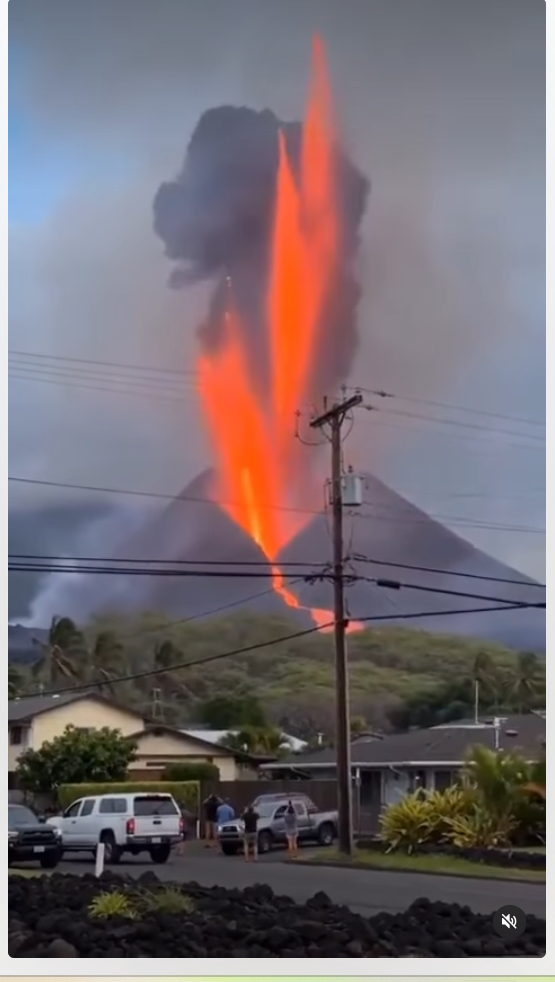
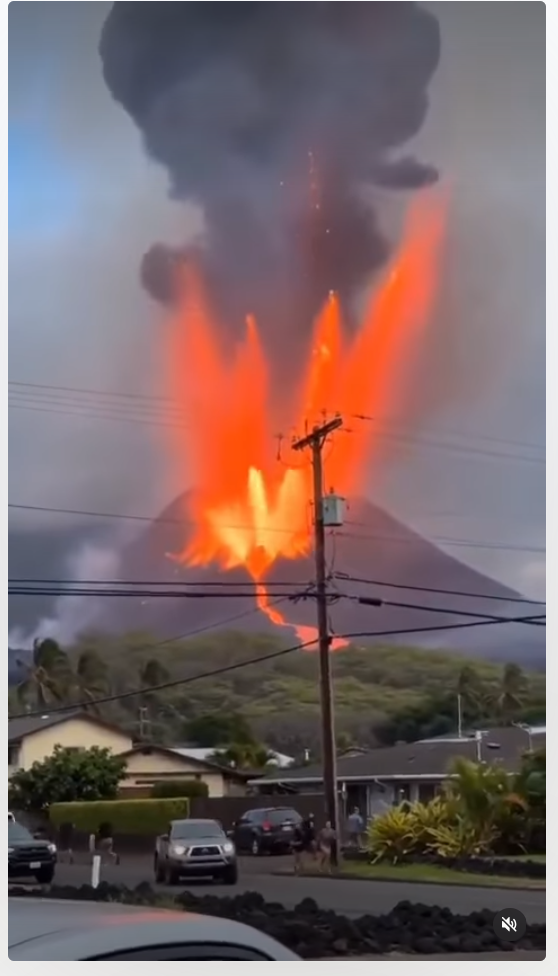
A volcano erupted at Indonesia’s Anak Krakatau on the night of September 4, 2026. A video is being shared on social media in connection with the eruption. The video shows lava rising high into the air following a volcanic eruption, with people seen fleeing the area. Some social media users are sharing the video claiming that it shows the eruption of Indonesia’s Anak Krakatau volcano. Research by CyberPeace found that the viral video is AI-generated. The video was created with the help of AI tools. However, four volcanoes, including Anak Krakatau, have erupted in Indonesia.
Claim
An Instagram user shared the viral video with the caption: “Indonesia’s Anak Krakatau volcano erupted Friday night. According to MAGMA Indonesia, lava fountains were seen rising from the volcano’s crater, while ash plumes reached a height of up to 400 metres. The volcano remains at Level III, with authorities enforcing a 3-kilometre exclusion zone around the crater.”
https://www.instagram.com/reels/DdBfQprThPA/
Fact Check
To investigate the viral video, we examined it closely and noticed several inconsistencies. At the beginning of the video, people can be seen standing calmly as the volcanic eruption takes place. Shortly afterward, the vehicles parked there suddenly begin moving. In one of the cars, no driver is visible. Meanwhile, the legs of a person running on the road disappear, and the person appears to merge into the background. These visual inconsistencies raised suspicions that the viral video had been created using AI tools.
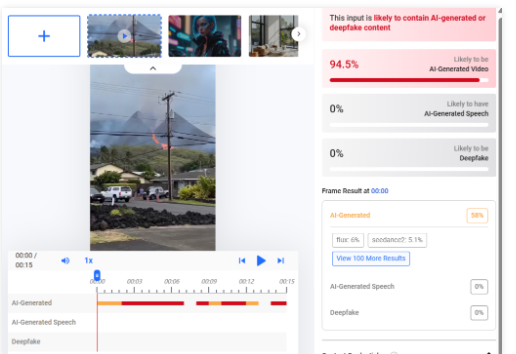
We checked the video using the AI detection tool Hive Moderation, which indicated that there was a more than 94 percent likelihood that the video was AI-generated.
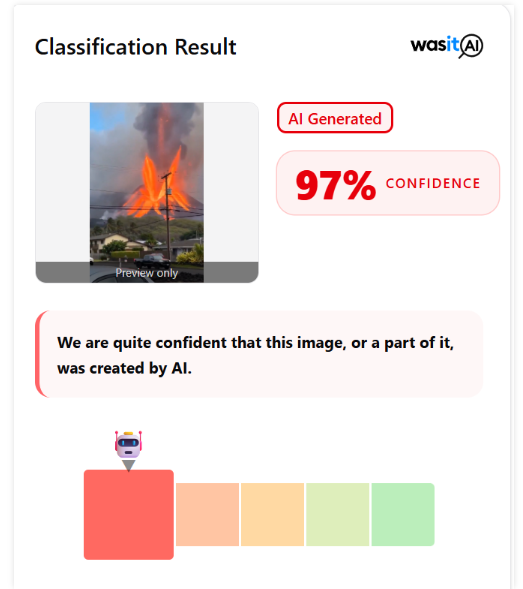
We checked the keyframes of the video using the AI detection tool Was It AI, which identified the video as 97 percent likely to be AI-generated.
Conclusion
The Anak Krakatau volcano in Indonesia erupted on the night of September 4, 2026. However, our research found that the video being shared in connection with the eruption was created using AI tools. Visual inconsistencies in the footage, along with the results of AI detection tools, indicate that the video is AI-generated and does not show genuine footage of the Anak Krakatau eruption. Therefore, the claim that the viral video shows the September 4 eruption of Indonesia’s Anak Krakatau volcano is false.

Executive Summary
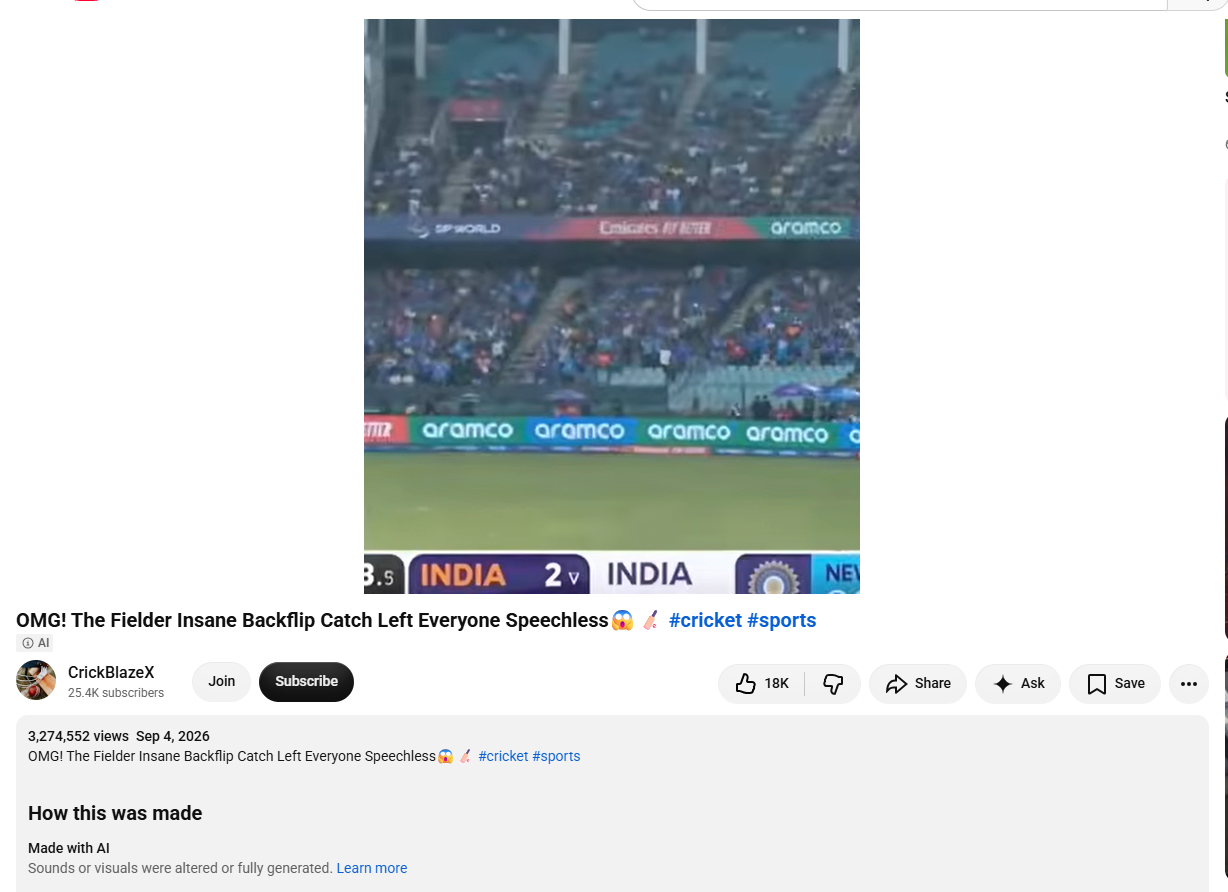
A video is being shared on social media showing a female cricket player seemingly making an impressive catch in the air after rotating 360 degrees. The video is being shared with claims that the player pulled off the extraordinary catch in an incredible feat on the cricket field. Research by CyberPeace found the viral claim to be false. Our research revealed that the viral video was edited with the help of AI. The video uses actual broadcast footage from the 2024 Women’s T20 World Cup match between India and New Zealand, but the 360-degree catch shown in the video was not part of the actual match.
Claim:
A video of a female cricketer making an incredible 360-degree catch is being shared on social media as a real incident from a cricket match.
https://www.instagram.com/reels/DdEca3LNT00/

Fact Check
To verify the authenticity of the viral claim, we conducted a Google search using relevant keywords. However, we did not find any credible media reports confirming the claim.

As part of the next step in our research, we conducted a reverse image search of the keyframes from the video. During the search, we found the same video on a YouTube channel, where it was identified as AI-generated.
As the next step, we scanned the viral video using the AI detection tool Hive Moderation. According to the tool’s results, there is a 70 percent probability that the video is AI-generated.

As part of the next step in our research, we scanned the viral video using an AI detection tool. According to the results, the viral video is AI-generated.

Conclusion
Our research found that the viral video was edited with the help of AI. The video uses actual broadcast footage from the 2024 Women’s T20 World Cup match between India and New Zealand. However, the 360-degree catch shown in the video was not part of the actual match.
Executive Summary
A photograph circulating widely on social media has been falsely linked to the reported hantavirus outbreak on a cruise ship in May 2026. The image is being shared with claims that it shows a cameraman filming evacuation operations without wearing personal protective equipment (PPE), suggesting that the global health scare was staged. However, the claim is misleading. The viral image has no connection to the hantavirus outbreak or any real evacuation related to the incident. research found that the photograph actually originates from a Spanish military exercise conducted a year earlier.
Claim
A post on X dated May 13, 2026, shared the image with the caption, “Don’t be fooled! The #Hantavirus HOAX,” alleging that the evacuations were staged events filmed from a movie set. The image shows several individuals in full personal protective equipment (PPE) carrying a patient on a biocontainment stretcher across a dock in front of a large vessel. A cameraman, dressed in plain clothes, is seen descending a ramp connected to the ship while apparently recording the scene.

Fact Check
The image went viral across X, Threads and Instagram in multiple languages, with users claiming the hantavirus outbreak was a “hoax” or that evacuation operations were staged. These posts emerged as authorities were monitoring passengers aboard the Dutch-flagged MV Hondius and others potentially exposed to the virus following reports of an outbreak during its Atlantic voyage.

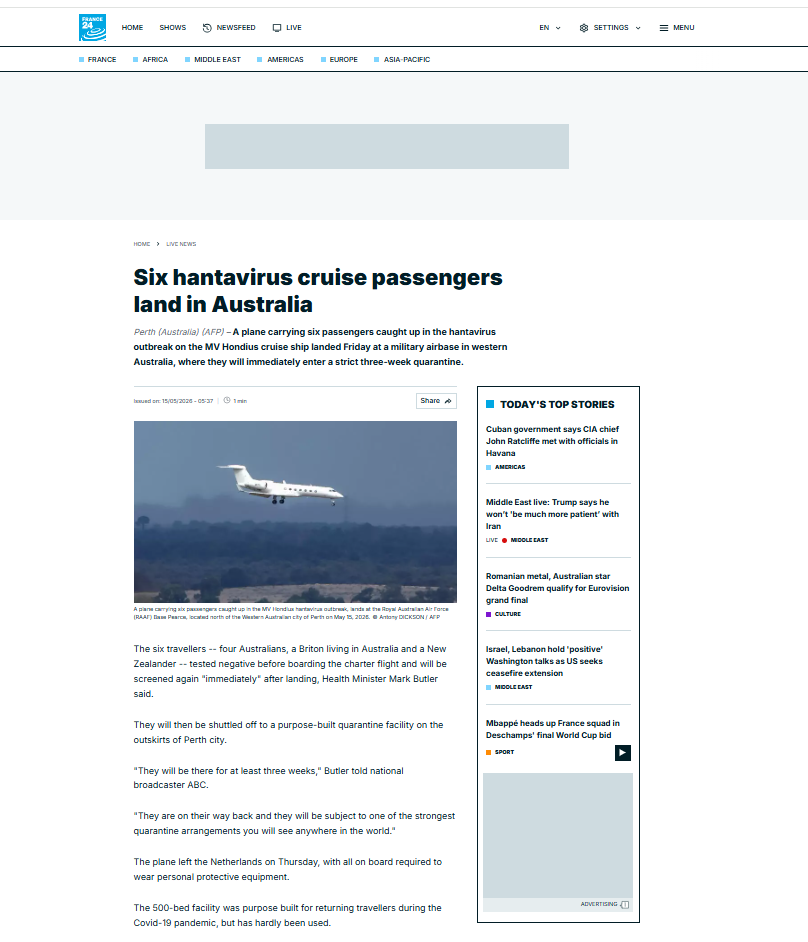
Health officials have repeatedly stressed that the overall public health risk from the Andes strain of hantavirus remains low. It is a rare rodent-borne virus and the only variant known to transmit between humans.

Reverse image search traced the photograph to the official website of the Port of Almería in Spain, where it was published in a May 7, 2025 article documenting an international maritime exercise involving the Spanish Navy and the health ministry.
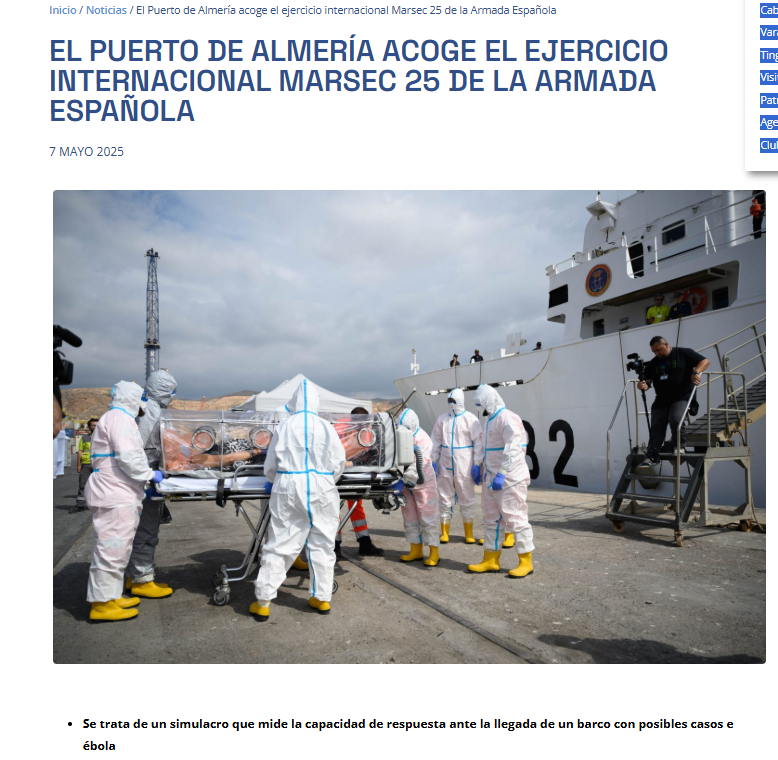
The exercise simulated the arrival of a vessel carrying suspected Ebola cases. Ebola is a rare but highly lethal disease that can cause fever, bleeding and organ failure.
Conclusion
The viral claim is false. The photograph has no connection to the reported hantavirus outbreak. It is from a Spanish military exercise conducted in 2025 and is being falsely shared out of context.

Executive Summary
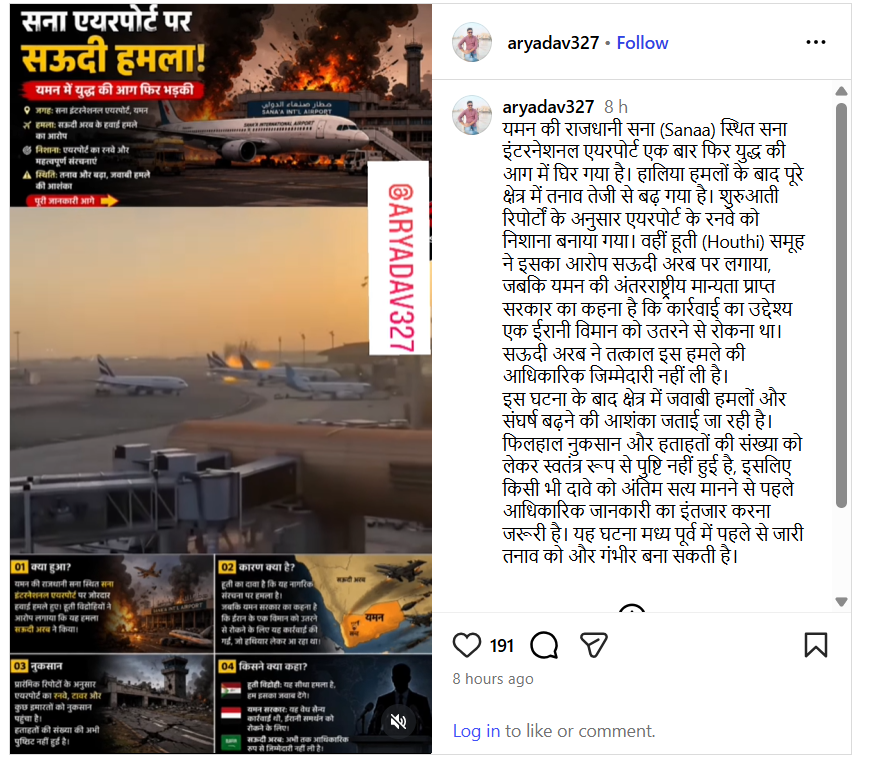
A video is being widely shared on social media claiming to show a Saudi Arabian F-15 fighter jet carrying out an airstrike on Sanaa International Airport in Yemen's capital. The footage shows several aircraft parked at what appears to be an airport before explosions erupt, followed by flames, thick smoke and people running in panic. The CyberPeace Research Wing found that the viral claim is false. Our research revealed that the circulating video is AI-generated and does not depict the actual airstrike. While it is true that Saudi Arabia carried out an airstrike at Sanaa International Airport, the viral footage is unrelated to that incident and is being shared with a misleading claim.
Claim
An Instagram post shared on July 15, 2026, claims that Saudi Arabia's F-15 fighter jets bombed Sanaa International Airport in Yemen. The post can be viewed here:
https://www.instagram.com/reel/DayBwufzn2N/?utm_source=ig_web_button_share_sheet
Fact Check
To verify the claim, we searched using relevant keywords but found no credible news reports or authentic footage matching the viral video. However, we found verified footage of the actual Saudi airstrike on The New York Post's YouTube channel. A comparison showed that the genuine footage is entirely different from the viral clip in terms of visuals, sequence and overall content.
https://www.instagram.com/reel/DawHCM_s_fn/?utm_source=ig_web_button_share_sheet

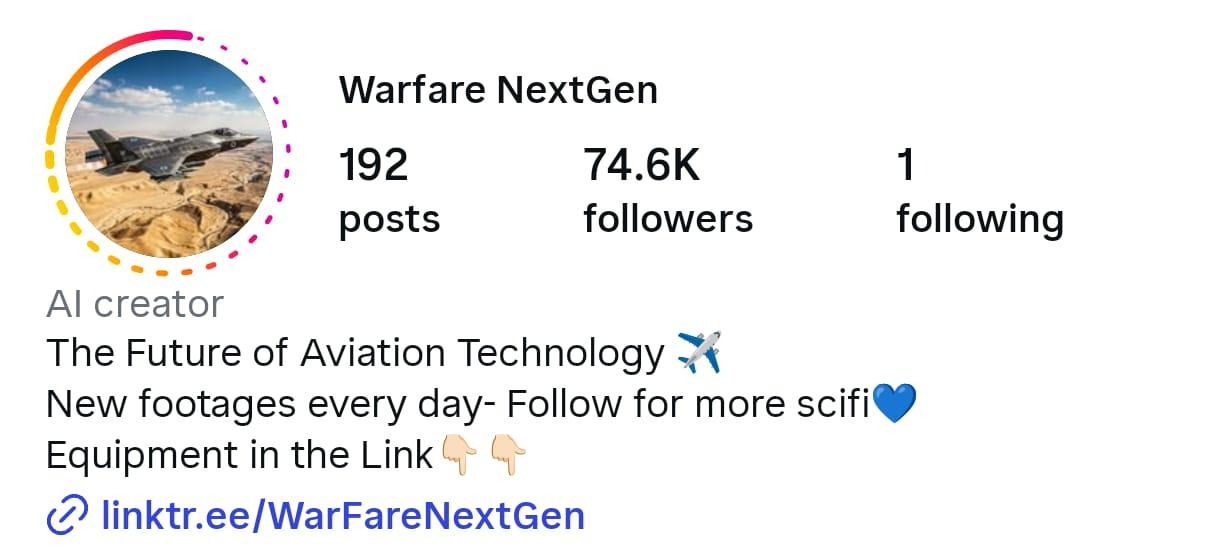
During our research, we also found the same viral video on an Instagram account named "warfarenextgen", which regularly publishes AI-generated war-related videos
We further examined the video using multiple AI detection tools: Hive Moderation assessed the video as 99.9% likely to be AI-generated.

DetectVideo AI found a 76% probability that the video was AI-generated.

Sightengine also concluded that the video was approximately 99% likely to be AI-generated.

Conclusion
Our research found that Saudi Arabia did carry out an airstrike on Sanaa International Airport to prevent an Iranian aircraft carrying a Houthi delegation from landing. However, the viral video does not show that attack. It is an AI-generated video that is being falsely circulated as footage of the real incident, making the viral claim misleading.

Executive Summary
During the Gau Raksha Yatra of Shankaracharya Swami Avimukteshwaranand Saraswati, bees reportedly attacked a discourse event in Rohania area of Varanasi, Uttar Pradesh. Following the incident, a picture has gone viral on social media showing bees attacking Swami Avimukteshwaranand Saraswati. Several users are sharing the image as genuine while targeting the Shankaracharya online. CyberPeace Research Wing investigated the viral image and found it to be fake. Our research revealed that the picture was created using Artificial Intelligence (AI). While it is true that a bee attack occurred during Swami Avimukteshwaranand Saraswati’s discourse program, the viral image itself is fabricated.
Claim
A Facebook user named “Sanjay Chaudhary” shared the viral image on May 15, 2026, with the caption: “Prakritik kop ka bhajan bana Shukracharya Umashankar alias Avimukteshwaranand… This Kaalnemi was delivering false sermons in Rohania, Varanasi in the name of religion… The bees from a nearby hive did not like it and collectively attacked, creating chaos. Even insects and nature no longer like the opposition’s politics disguised as Sanatan Dharma. Calling Yogi Ji Aurangzeb, Akbar and butcher is not acceptable even to nature and insects.”
Post link and archive link are given below:
- https://www.facebook.com/sanjaychaudhary073/posts/pfbid02kgts8igKDwgctz3MamECMGoGfQR5aWPTdsDgLeux3pD9jwP7ADfgNpoPfHvMb9Zul
- https://perma.cc/E6SE-BAXZ

Fact-Check
To verify the viral claim, we used Google Open Search tools and found reports related to the incident on the YouTube channel of News18 UP Uttarakhand. A report published on May 13, 2026 stated that bees attacked the discourse event during Swami Avimukteshwaranand’s Gau Raksha Yatra in Rohania, Varanasi. The incident created panic at the venue, forcing the Swami to end his discourse midway. The channel also uploaded a YouTube Shorts video related to the incident.

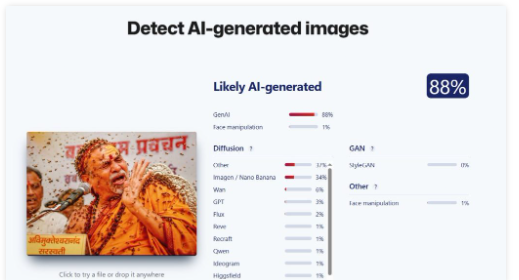
As part of the research, we further analyzed the viral image using AI detection tools. First, we used the tool “Sight Engine,” which indicated an 88 percent probability that the image was AI-generated.
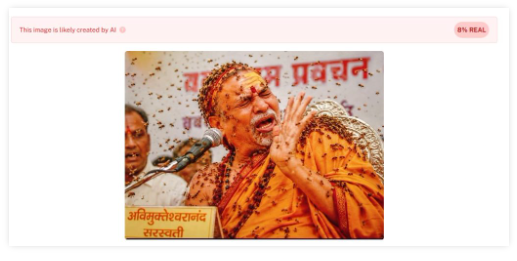
We then examined the image using another AI detection tool called “Undetectable,” which also suggested that the photo was likely created using AI.
Conclusion
Our research found that the viral image is AI-generated. The picture was created using artificial intelligence tools. While bees did attack during Swami Avimukteshwaranand Saraswati’s Gau Raksha Yatra on May 13, 2026, the viral image circulating on social media is fictional and not real.
Executive Summary
A video is being widely shared on social media amid claims that the BJP has formed a government in West Bengal. The video shows several people being taken away in a bus while their family members are seen crying and grieving nearby. Users sharing the clip claim that the scene is from West Bengal, where the BJP government has allegedly started sending back Bangladeshis who were living illegally in the state.
Research by CyberPeace Research Wing found the viral claim to be misleading. The research revealed that the viral video has no connection with West Bengal. The video is actually from Assam’s Barpeta district, where in 2024, a Foreigners Tribunal declared 28 people as non-citizens. Following the order, authorities shifted them to a transit camp. The viral clip is from that incident. An old and unrelated video is now being falsely shared as a recent incident from West Bengal.
Claim
On May 14, 2026, a Facebook user shared the viral video and wrote, “How sad… Opposition voters are now being packed off to the Bangladesh border from Bengal and Assam. How will they ever win now? Really terrible what is happening to these poor people.” The post link, archive link, and screenshot are provided below.
- https://www.facebook.com/rajendra.kasliwal1/posts/973081982000168/
- https://archive.ph/y7Y4D

Another user also shared the same viral video on social media with a similar claim. The post link, archive link, and screenshot are given below.

Fact Check
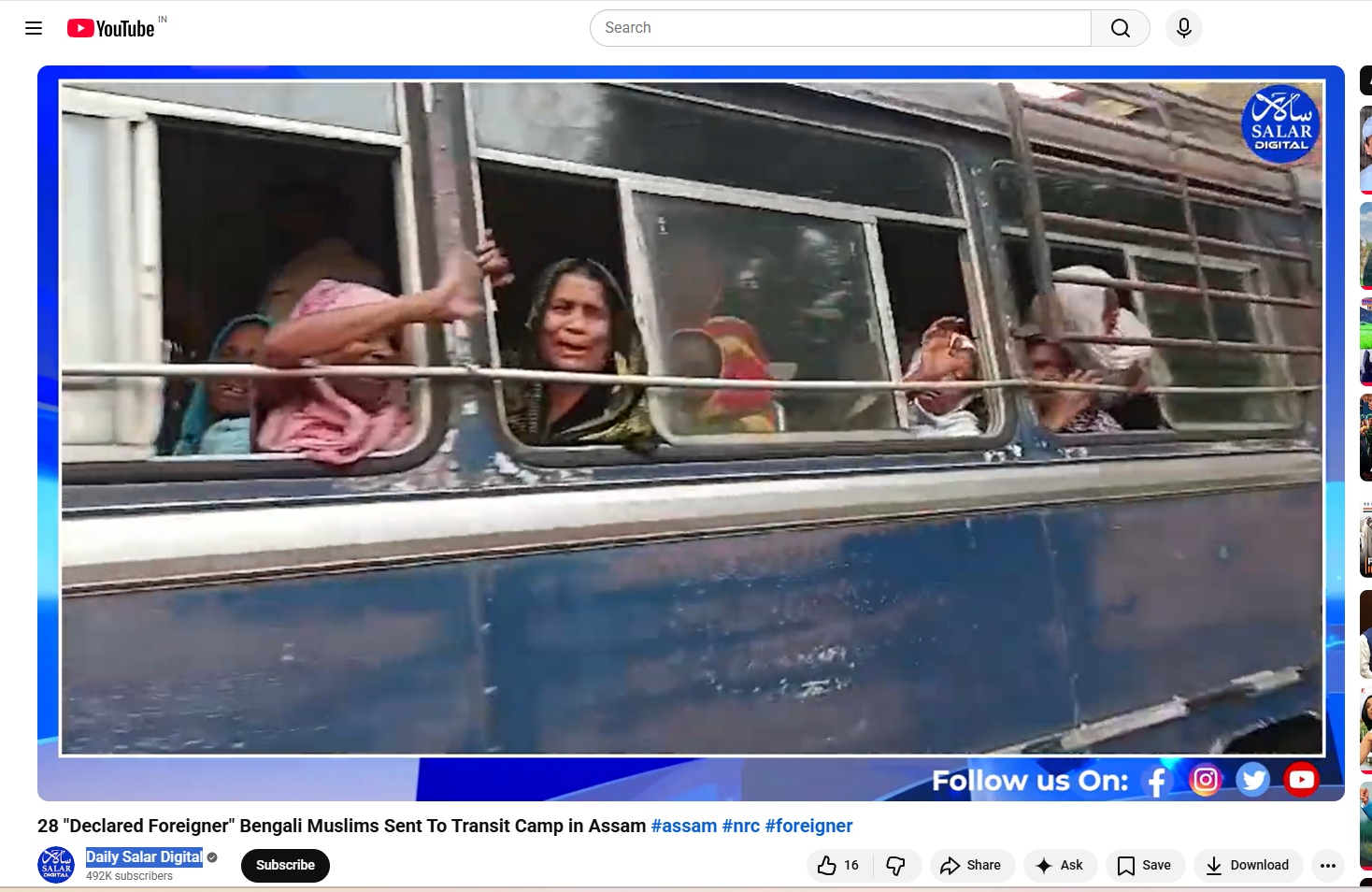
To verify the authenticity of the viral video, we extracted several key frames and performed a reverse image search. During the research, we found the same video uploaded on a YouTube channel named Daily Salar Digital on September 5, 2024. The link to the post and its screenshot are given below.
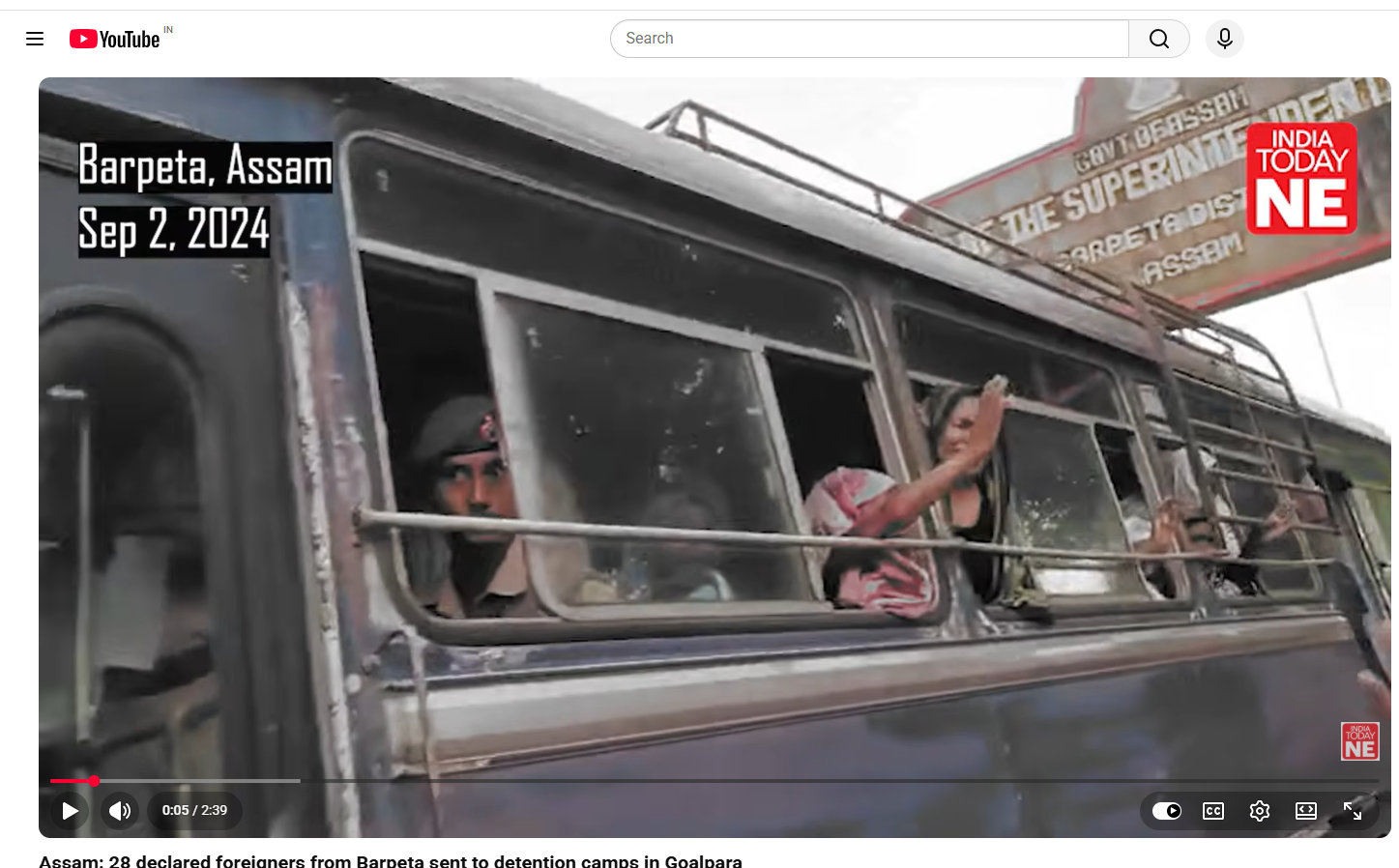
Further research led us to a report published by IndiaTodayNE on September 3, 2024, carrying a similar description of the incident. The post link and screenshot are provided below.
Conclusion
Our research found that the viral video has no connection with West Bengal. The clip is from Assam’s Barpeta district, where in 2024, 28 people were declared non-citizens by a Foreigners Tribunal and later shifted to a transit camp by authorities. The video being shared online is from that incident. An old and unrelated video is being falsely circulated as a recent development from West Bengal.

Executive Summary
A video is going viral on social media claiming that a salon has been opened inside a State Bank of India (SBI) ATM in Bihar. The video is also being used by some users to take political jibes at the central and state governments led by the Bharatiya Janata Party (BJP). However, the CyberPeace Research Wing’s research has found that this claim is misleading. The location shown in the viral video was earlier an SBI ATM, which had been shut down around six months ago. After the bank discontinued its operations at the site, the ATM machine and other equipment were removed. However, the external structure of the ATM cabin and the SBI signage were not removed at that time. After the premises were vacated, the property owner rented out the space to a salon operator. Since the SBI board and branding were still visible on the structure, the video created confusion and went viral with misleading claims.
Following the circulation of the video, the bank later removed its signage from the location and also cleared all remaining SBI branding from the structure. Our research also found that the bank had removed the ATM machine and equipment months earlier, but the cabin structure and SBI board were left behind. After that, the space was rented out for commercial use as a salon. In this context, it would be incorrect to claim that a salon was opened inside an active SBI ATM.
Claim
A Facebook user ‘Soumitra Roy’ shared a video on 11 May 2026 claiming:
“Someone has opened a barber shop inside an SBI ATM in Bihar. The BJP’s double-engine government has developed Bihar so much that loan EMIs can now be deducted directly inside ATMs. This is Modi’s masterstroke.”
- https://www.facebook.com/reel/980962511535926
- https://perma.cc/WTY2-WEQQ

Fact Check
To verify the viral claim, a keyword search based on the video was conducted. Several media reports were found, which clarified the full context of the incident. A report uploaded on the YouTube channel ‘Live Cities’ on 12 May 2026 stated that a salon was running at a former ATM location in Danapur, Bihar. The bank had already vacated the premises about six months earlier, but its signage had not been removed. The report also includes an interview with the property owner, who confirmed that the bank had removed its ATM machine and equipment six months ago and later the space was rented out to a salon operator.

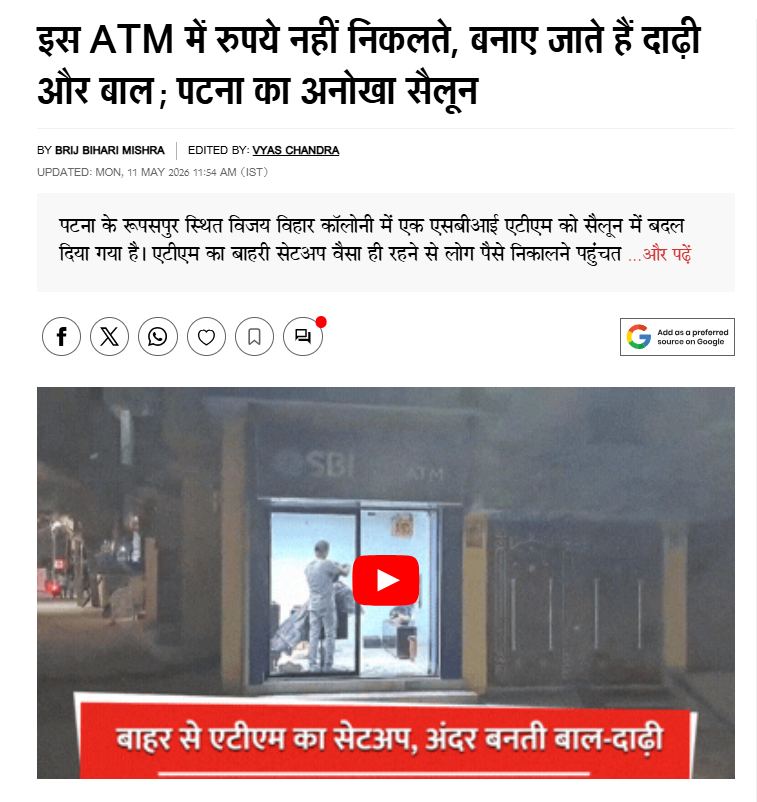
The viral video was also found on the Jagran website in a news report dated 11 May 2026. The report states that an SBI ATM previously existed at the location. The bank had removed the ATM machine due to operational reasons but left behind the external structure and signage. Later, the space was rented out to a salon operator, who began running his business from the same setup.
Conclusion
Our research found that the viral post is misleading. It is incorrect to claim that a salon was opened inside an SBI ATM. The truth is that the bank had shut down the ATM at this location around six months ago and removed all machines and equipment. After that, the premises were rented out to a salon operator, which led to confusion due to the presence of old SBI signage.
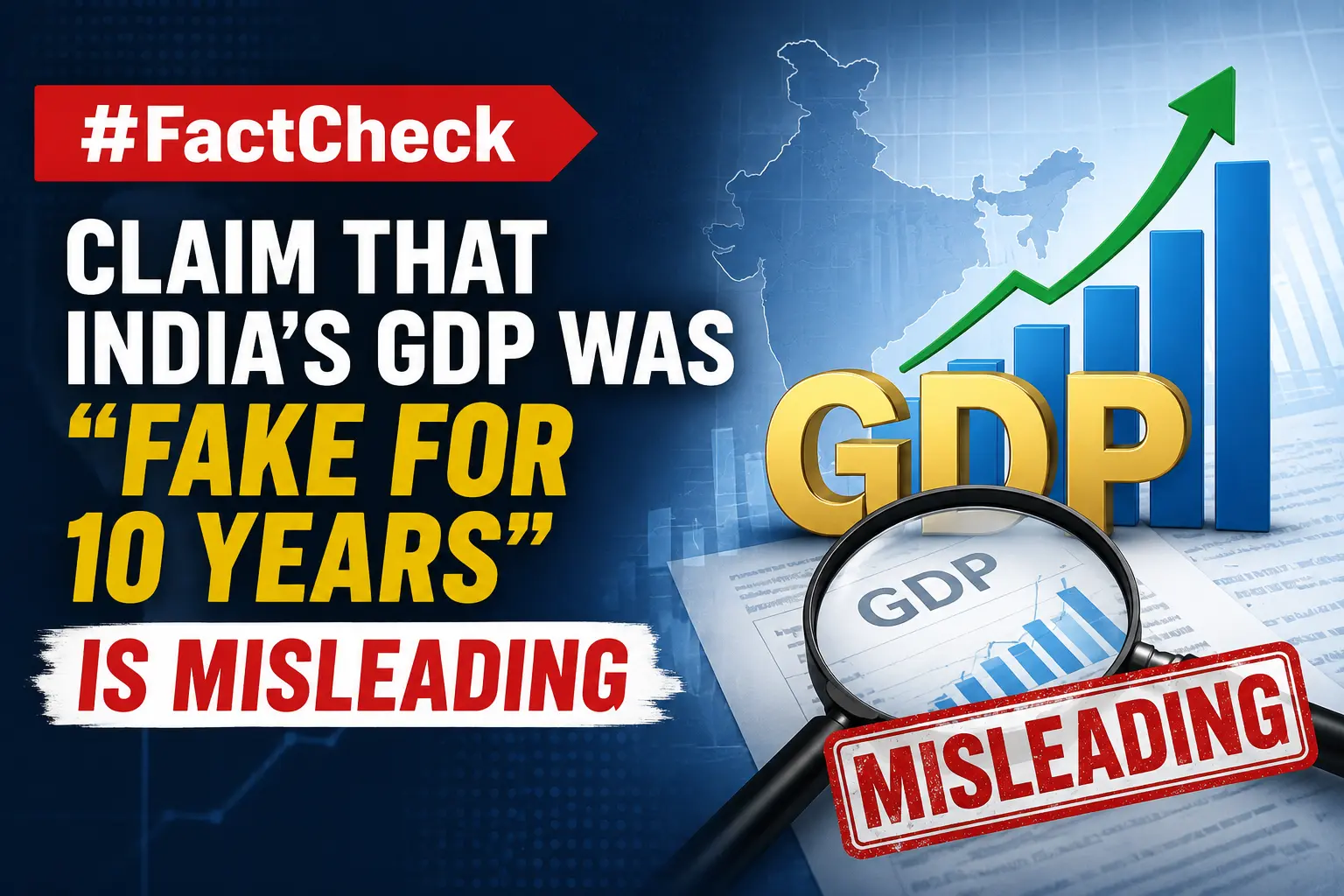
Executive Summary
A viral graphic post on social media claims that India’s GDP (Gross Domestic Product) was “fake for 10 years.” The post also states that the real economic growth was around 4%, while official figures reported it at 6%. It further cites a former Chief Economic Adviser (Ex-CEA) and presents the claim as a “revelation.”
Research by CyberPeace Research Wing found this claim to be misleading. No official government document, nor India’s Ministry of Statistics and Programme Implementation (MoSPI), the Reserve Bank of India (RBI), or any recognised international institution has stated that India’s GDP was “fake.”
Claim
On the social media platform Instagram, a user shared a post claiming that the Chief Economic Adviser said India’s GDP (Gross Domestic Product) was “fake for 10 years.” The link to the post and its archive link are given below, along with a screenshot.
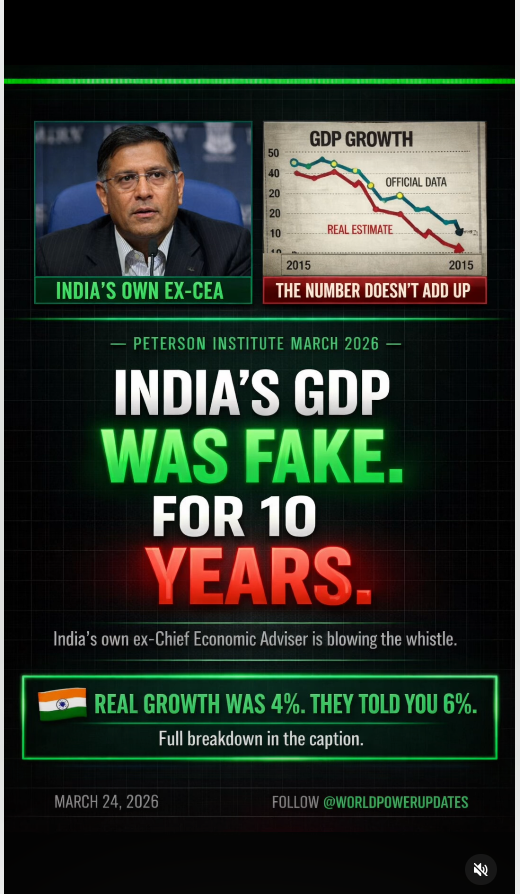
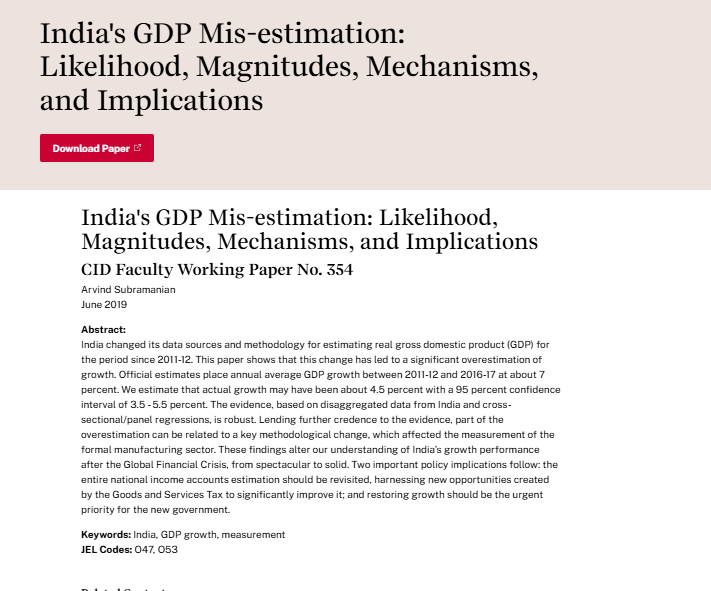
The viral post refers to a 2019 research paper linked to former Chief Economic Adviser (Ex-CEA) Arvind Subramanian. In this study, he raised questions about India’s GDP growth estimation and suggested that during 2011–12 to 2016–17, the actual growth could have been around 4.5%, while the official estimate was close to 7%.
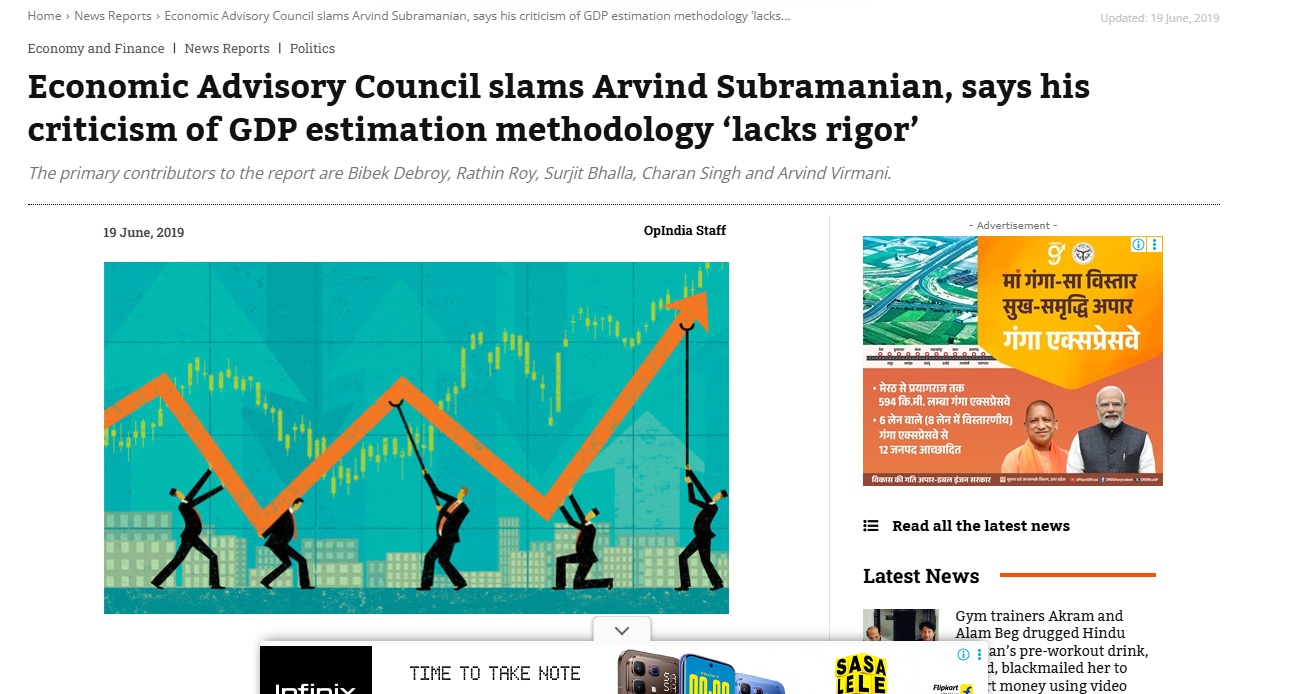
However, the study does not conclude anywhere that India’s GDP was “fake” or entirely incorrect. It only presents an alternative estimation based on different assumptions and methods, which has also been challenged by other economists and government agencies.
- https://www.hks.harvard.edu/centers/cid/publications/faculty-working-papers/india-gdp-overestimate?utm_source
- https://www.hks.harvard.edu/centers/cid/publications/faculty-working-papers/india-gdp-overestimate?utm_source
Conclusion:
The claim circulating on social media is misleading. The former Chief Economic Adviser provided an academic view on GDP estimation, but there is no evidence or official confirmation that India’s GDP was “fake for 10 years.” The data released by the Government of India was not validated by the figures circulated on social media.
Executive Summary
A viral image circulating on social media claims that Tamil Nadu Chief Minister C. Joseph Vijay touched the feet of Congress leader Rahul Gandhi during his swearing-in ceremony, while Congress and several other parties extended support to his government. The image is being widely shared with captions suggesting it captures a real political moment. However, CyberPeace Research Wing research has found the claim to be false. The image is AI-generated and does not depict any real event.
Claim
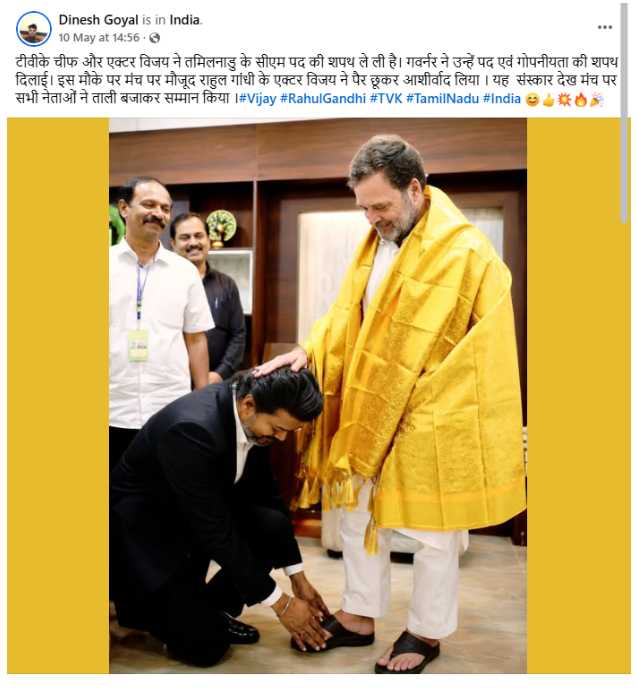
A Facebook user shared the viral image on May 10, 2026, claiming that TVK chief and actor Vijay had taken oath as the Chief Minister of Tamil Nadu. The post further claimed that during the ceremony, Vijay touched Rahul Gandhi’s feet to seek blessings, and the gesture was applauded by leaders present on stage. The post, along with archived links and screenshots, is being circulated as authentic evidence of the alleged incident.
- https://www.facebook.com/100057774695228/posts/1389222123013598/?rdid=FEzRYpVvSIieeUbj#
- https://archive.ph/kv4e1
Fact Check
A keyword-based search on Google did not return any credible news reports supporting the claim or confirming such an event. A closer visual examination of the image raised strong suspicions of AI manipulation, prompting verification through AI detection tools. When the image was analyzed using the SIGHTENGINE detection tool, the results indicated that the image is 99% likely to be AI-generated.

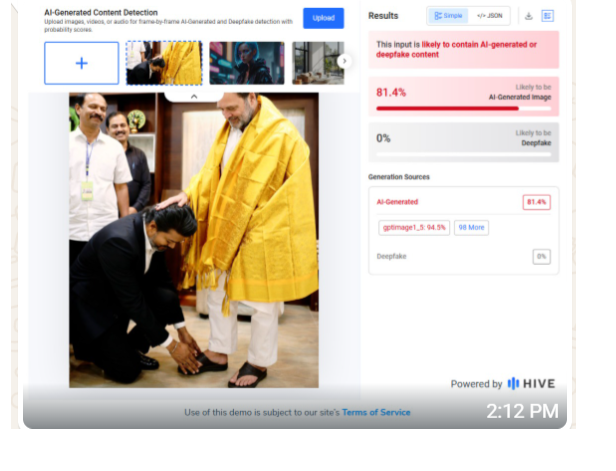
Further verification using another AI detection platform, HIVE MODERATION, also flagged the image as synthetic, showing an 81% probability of being AI-generated.
Conclusion
The research clearly shows that the viral image is not real. It has been generated using artificial intelligence and is being falsely shared as a real political event.
.webp)
Executive Summary
A video showing a monkey allegedly saving the life of a sleeping child is rapidly going viral on social media. In the clip, a monkey can be seen picking up a child sleeping on a mat under a tree and moving the child away moments before a heavy tree branch falls at the same spot. Social media users are sharing the video as a “miracle of nature” and praising the emotional sensitivity and instincts of animals. However, research conducted by CyberPeace Research Wing found that the viral video is not real and was created using artificial intelligence tools.
Claim
The caption accompanying the viral post states:“In a shocking incident, a monkey was seen stepping in to save an innocent child sleeping under a tree from imminent danger. People nearby were stunned by the scene. It is being claimed that the monkey sensed the danger around the child and tried to protect him. The unusual incident has now gone viral on social media, with many saying that emotions and compassion are not limited to humans, animals can also understand feelings.”
The video has been widely shared across social media platforms
- https://www.instagram.com/reels/DYMvhRPTcCA/
- https://archive.ph/https://www.instagram.com/reels/DYMvhRPTcCA/

Fact Check
To verify the authenticity of the video, we extracted keyframes from the clip and conducted a reverse image search. During the research, we found the same video uploaded on May 8, 2026, on an Instagram page named Instagram user “mojilo_vandro.” The caption of the original upload did not provide any factual context and presented the video in a dramatic, miracle-like manner.

We further examined the Instagram account and found that it regularly posts several AI-generated videos featuring monkeys performing heroic or emotional acts. Importantly, the account owner has also identified themselves as an “AI video creator” in the bio section.
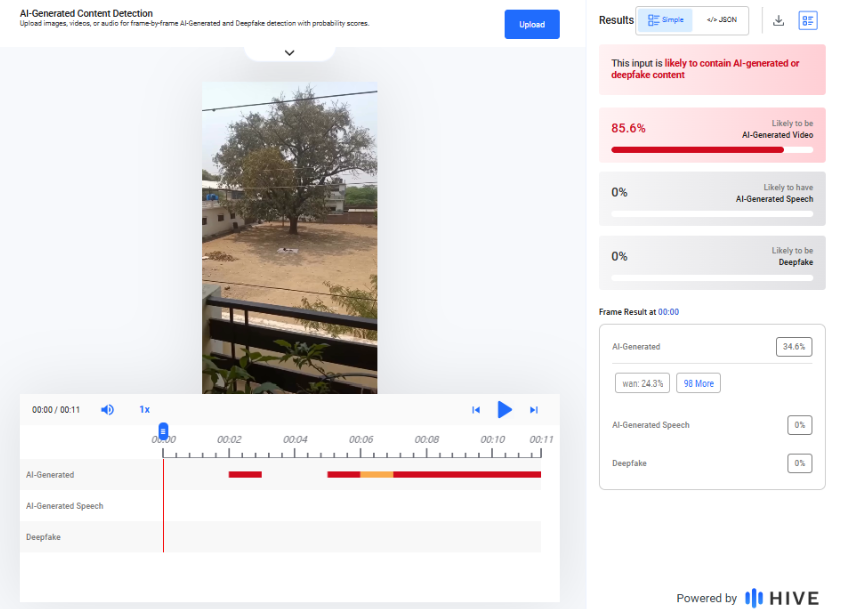
To further analyze the clip, we tested it using the AI detection tool Hive Moderation. The tool’s analysis classified the viral video as 85.6% likely to be AI-generated. We also checked the clip using another AI detection platform, Deepfake-o-meter. Its AVSRDD (2025) detection model flagged the video as potentially AI-generated with a 100% confidence score.

Conclusion
The evidence gathered during our research clearly shows that the viral video claiming to show a monkey saving a sleeping child from a falling tree branch is not authentic. The clip was created using AI-generated visual techniques and does not depict a real incident.
Executive Summary
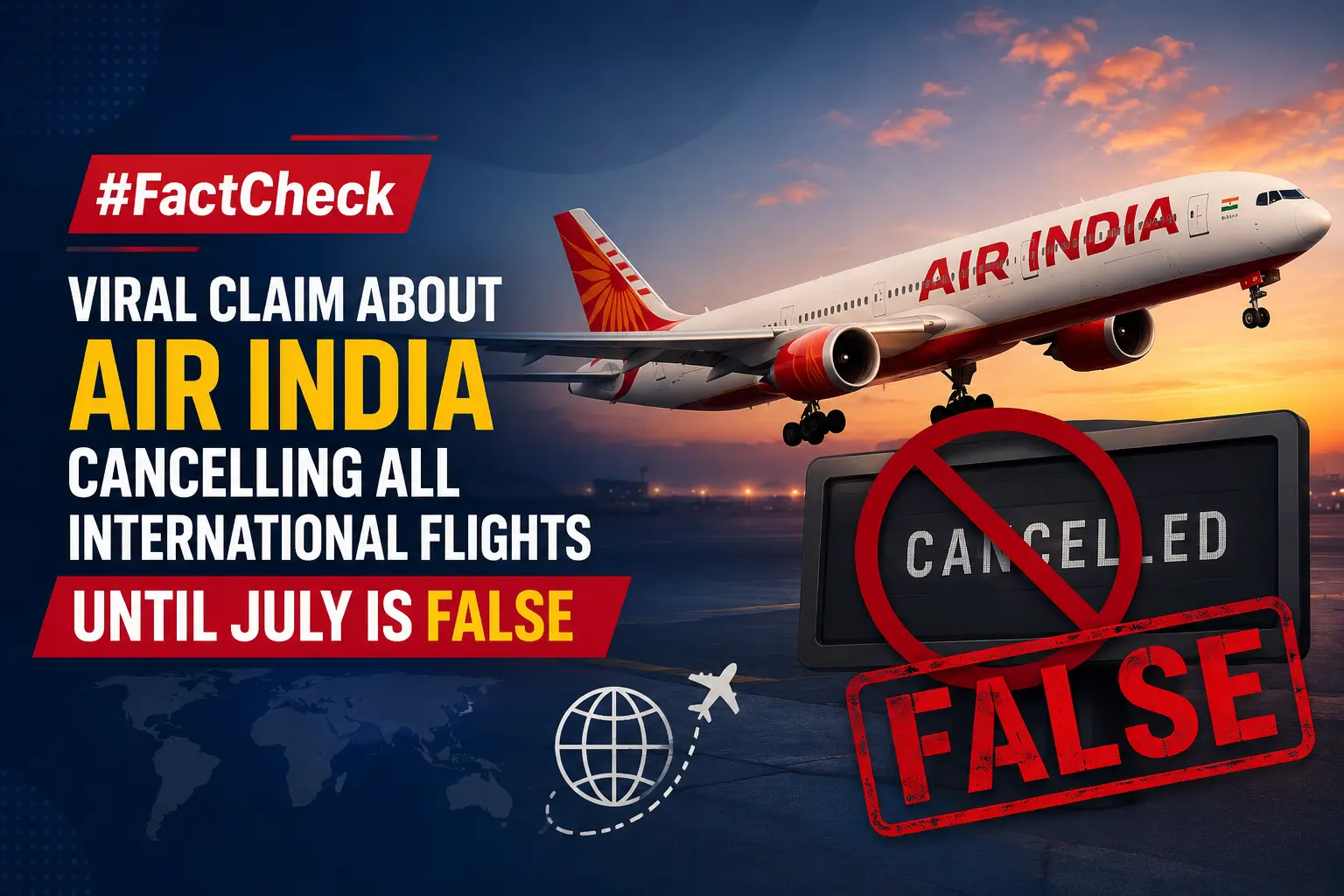
A video circulating on social media falsely claims that Air India has cancelled all of its international flights until July due to a fuel shortage. However, research conducted by CyberPeace Research Wing found the claim to be misleading and false. Our research revealed that Air India has made no announcement regarding the cancellation of all international flights. In reality, the airline has only made temporary reductions and adjustments on select international routes due to increasing operational pressure and the impact on profitability.
Claim
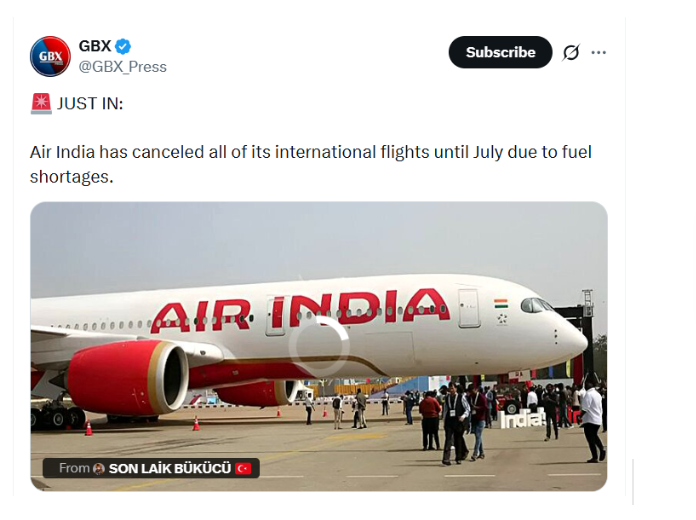
An X (formerly Twitter) user shared the viral video on May 3, 2026, claiming: “Due to a fuel shortage, Air India has cancelled all its international flights until July.”he post quickly gained attention and was widely shared on social media platforms.
Fact Check
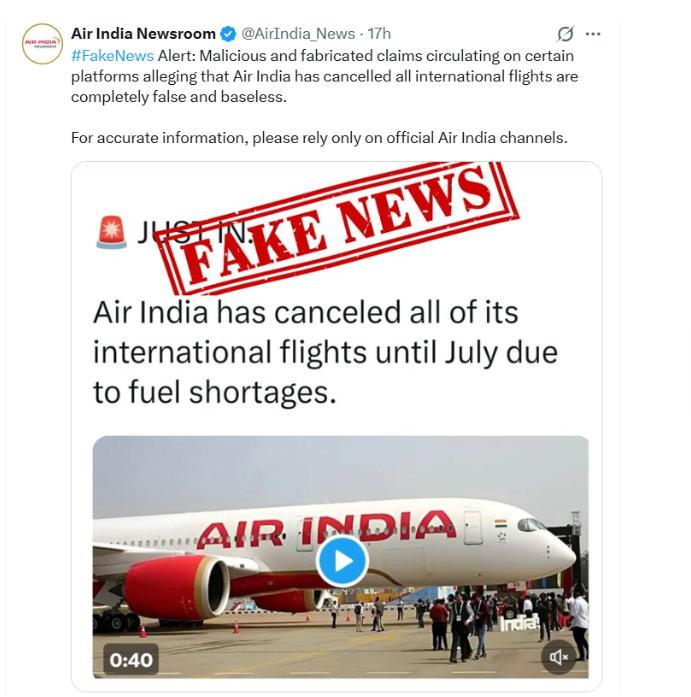
To verify the claim, we examined the official social media accounts of Air India. During the research, we found a post on X in which the airline itself described the viral claim as fake and misleading.
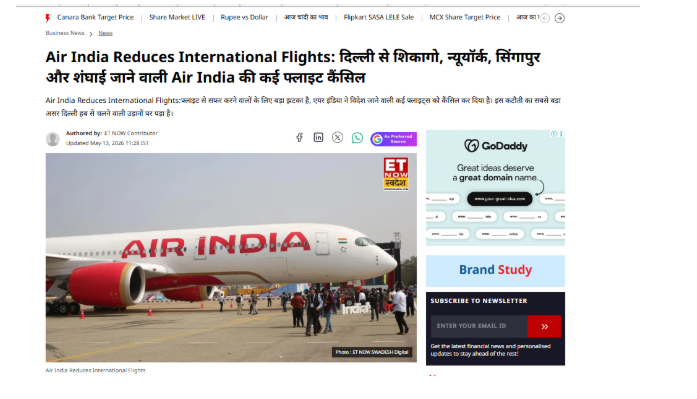
Taking the research further, we searched using relevant keywords and found a report published by ETNOW Swadesh on May 13, 2026. According to the report, Air India has not cancelled all international flights. Instead, due to mounting operational costs and pressure on profitability, the airline has temporarily reduced or modified services on a few select international routes.
Conclusion
Our research found that Air India has not announced the cancellation of all international flights until July. The viral claim circulating on social media is false and misleading. The airline has only implemented temporary adjustments and reductions on certain international routes, not a complete suspension of global operations.

Executive Summary
A purported front page of The Hindu dated June 6, 1967, is being widely circulated on social media with the claim that then Prime Minister Indira Gandhi had urged Indians not to buy gold in any form and to follow “national discipline” by restricting gold consumption. The viral claim suggests that the appeal was part of the government’s efforts to conserve foreign exchange reserves, which were allegedly under severe pressure at the time. However, research conducted by CyberPeace Research Wing found the claim to be false. Our research revealed that the front page being circulated online is not authentic and has been digitally edited.
Claim
An X (formerly Twitter) user shared the viral newspaper clipping on May 12, 2026, and wrote:“In 1967, during a severe foreign exchange crisis, Indira Gandhi appealed to Indians not to buy gold.From ‘skip one meal’ to ‘don’t buy gold,’ Congress-era governance normalized shortages, restrictions, and sacrifice, while ordinary citizens paid the price for failed economic policies.”

Research
To verify the claim, we examined the official social media accounts of The Hindu. During the research, we found a post published on the publication’s official X account on May 12, 2026, clarifying that the viral image claiming to be the June 6, 1967 front page of The Hindu was digitally altered and not part of its official archives. The newspaper also urged readers to verify information carefully before sharing it online.

We also found an X post by B Kolappan, a journalist with The Hindu, who shared the original front page of the newspaper dated June 6, 1967, further exposing the viral image as fake.
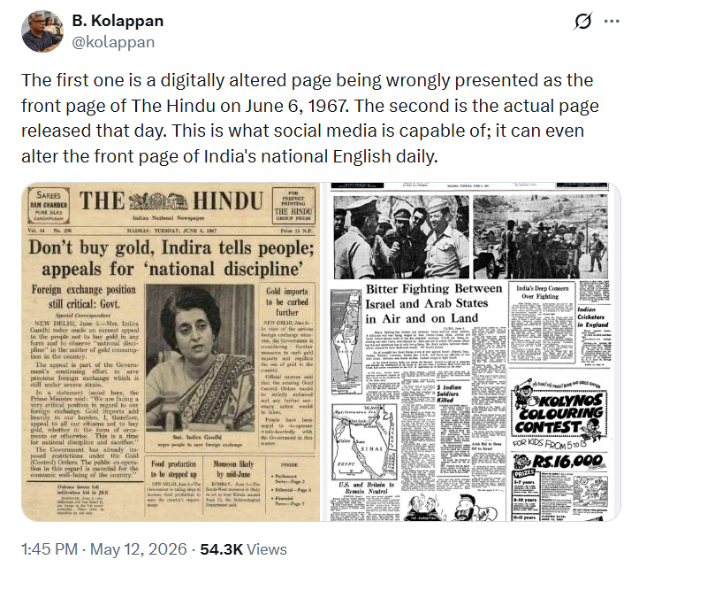
For context, Prime Minister Narendra Modi, while addressing a public gathering on May 10, 2026, spoke about the possible economic impact of the ongoing conflict in the Middle East and advised people to avoid buying gold for a year, even during weddings or family functions. The viral claim appears to have resurfaced in this backdrop.

Conclusion
Our research found that the alleged 1967 front page of The Hindu circulating on social media is digitally edited and fake. There is no evidence that the viral newspaper page is authentic or part of The Hindu’s archival records.

Executive Summary
A video featuring former Indian cricketer Sachin Tendulkar is being widely circulated on social media with the date “12-5-2026” displayed on the screen. In the viral clip, Tendulkar appears to promote an investment scheme, allegedly saying that people investing in the scheme today could earn Rs 80 lakh by the end of the day. Throughout the video, he is seen speaking about investment opportunities and financial returns. However, research conducted by CyberPeace Research Wing found that the video is AI-generated and misleading. The original footage was actually from an event marking the centenary celebrations of Sri Sathya Sai Baba.
Claim
A Facebook user shared the viral video on May 12, 2026, claiming that Sachin Tendulkar was endorsing a high-return investment scheme. The post quickly gained traction on social media platforms.
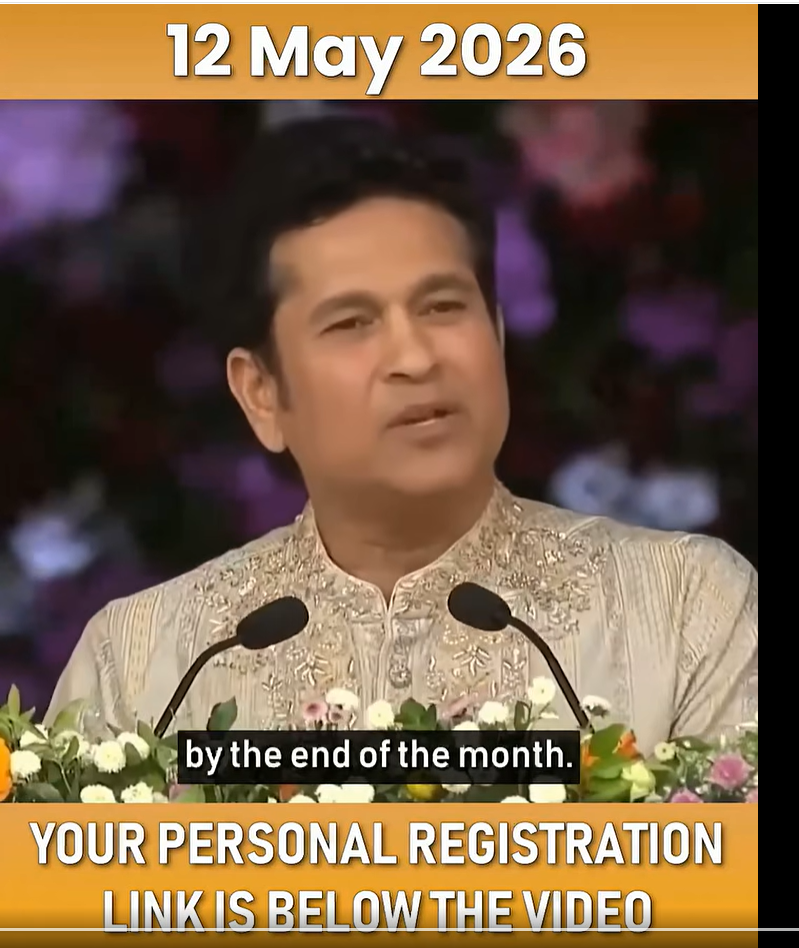
Fact Check
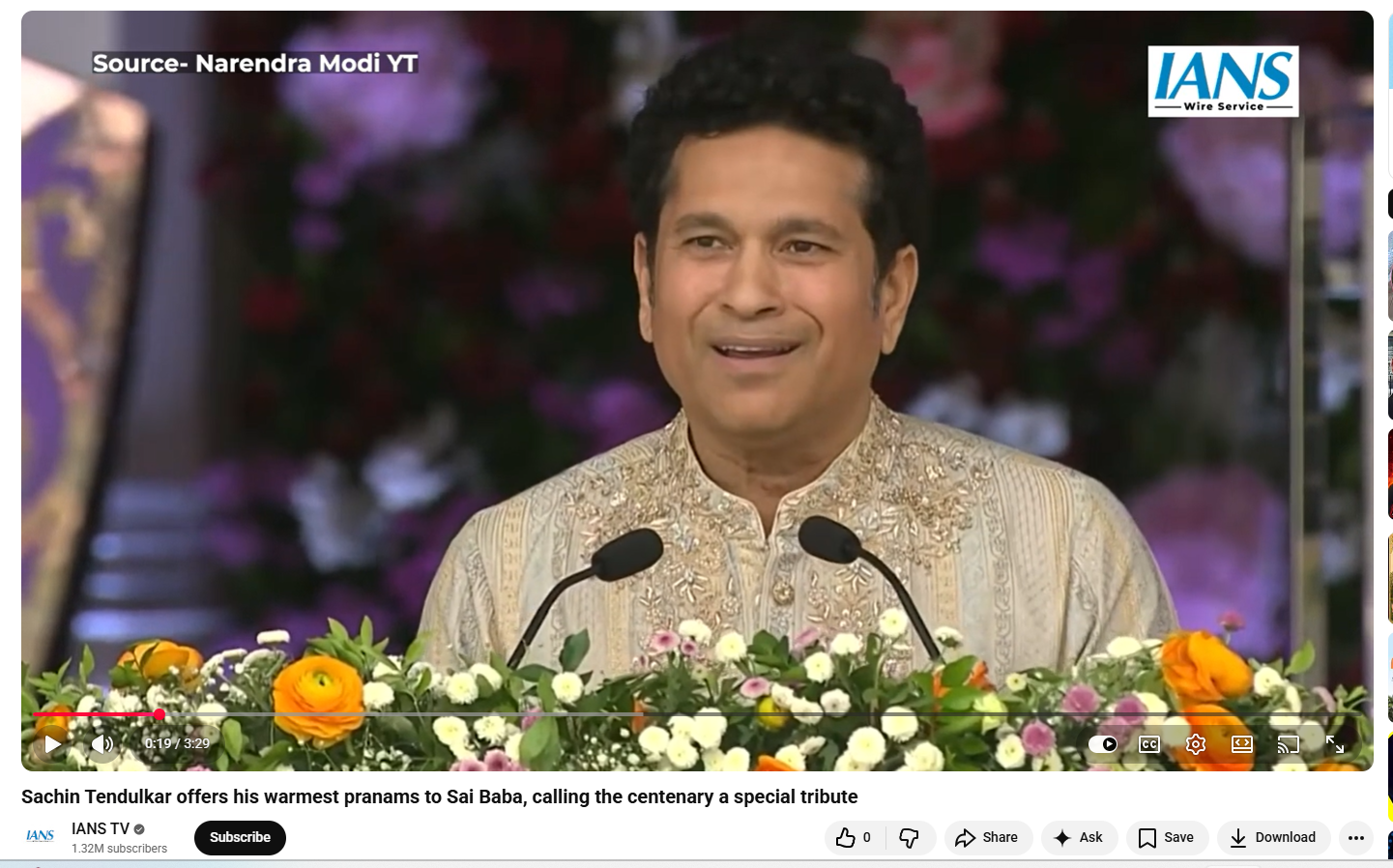
To verify the claim, we searched the internet using relevant keywords but found no credible media reports suggesting that Tendulkar had endorsed any such investment scheme. As part of our research, we extracted key frames from the viral clip and conducted a reverse image search. During the search, we found the original video uploaded on November 19, 2025, on the YouTube channel of IANS. According to the video description, Tendulkar was attending an event organized to mark the centenary year celebrations of Sri Sathya Sai Baba.
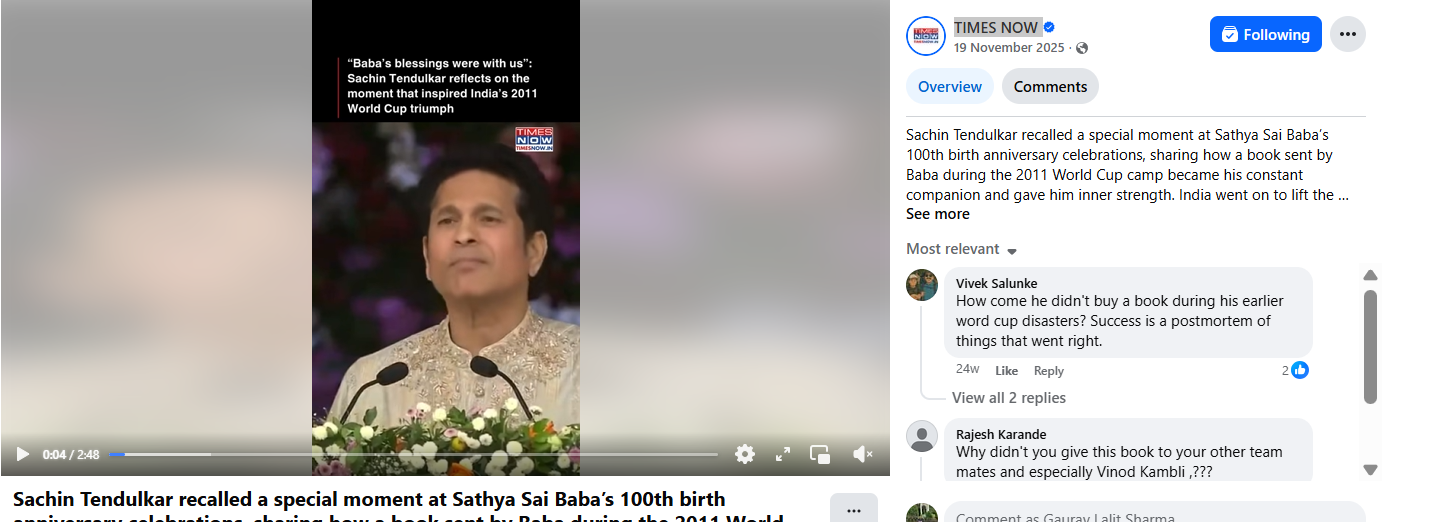
We further found a similar version of the same video uploaded on November 19, 2025, on the official Facebook page of Times Now, confirming that the footage was unrelated to any investment or financial scheme.
Conclusion
Our research found that the viral video has been manipulated using AI-generated audio or editing techniques to falsely portray Sachin Tendulkar promoting an investment scheme. The original video was from a public event related to Sri Sathya Sai Baba’s centenary celebrations and had no connection to any financial investment platform.
.webp)
Executive Summary
Ahead of the final phase of the West Bengal Assembly elections, a claim regarding Uttar Pradesh cadre IPS officer Ajay Pal Sharma began circulating widely on social media. Users claimed that Sharma was being sent to West Bengal on deputation for a period of five years. However, research conducted by CyberPeace Research Wing found the claim to be false. Sources close to the IPS officer confirmed that no such deputation order has been issued so far and that Ajay Pal Sharma is currently posted as Additional Commissioner in Prayagraj, Uttar Pradesh. Ajay Pal Sharma had earlier been deployed as a police observer during the West Bengal elections. During that period, a video of him warning Trinamool Congress candidate Jahangir Khan from the Falta constituency had gone viral on social media.
Claim
Several users on Facebook and X claimed that Ajay Pal Sharma had been transferred to West Bengal for five years under an administrative arrangement involving experienced officers from different states. One Facebook user wrote:“This decision has been taken under an administrative arrangement through which experienced officers are deployed in different states.”
- https://www.facebook.com/photo.php?fbid=818902764628152&set=a.296761956842238&type=3
- https://perma.cc/FD8Q-CF7L?type=standard

Fact Check
Our research found that the deputation claim is false. Ajay Pal Sharma is currently serving as Additional Commissioner in Prayagraj, a position he has held since 2025. Further scrutiny revealed that the claim appears to have originated from a parody account on X. On May 4, around 6 PM, the account @abdullah_0mar posted the claim regarding Sharma’s alleged five-year deputation to Bengal. However, in the comments section, the user later clarified that the post was intended as satire.

We also reviewed several news reports regarding Ajay Pal Sharma’s role during the West Bengal elections. Reports confirmed that the Election Commission had deployed him as a police observer in South 24 Parganas district during the polls. However, none of the reports mentioned any five-year transfer or deputation to West Bengal.

Conclusion
The viral claim is false. No official order has been issued regarding IPS officer Ajay Pal Sharma’s deputation to West Bengal for five years. Sources close to the officer confirmed that he continues to serve as Additional Commissioner in Prayagraj, Uttar Pradesh. Sharma had only been deputed as a police observer during the West Bengal Assembly elections, during which a video of him warning TMC candidate Jahangir Khan went viral online.
