
#FactCheck-India Passport Ranking Claim Comparing 2014 and 2026 Rankings Is Misleading
Executive Summary
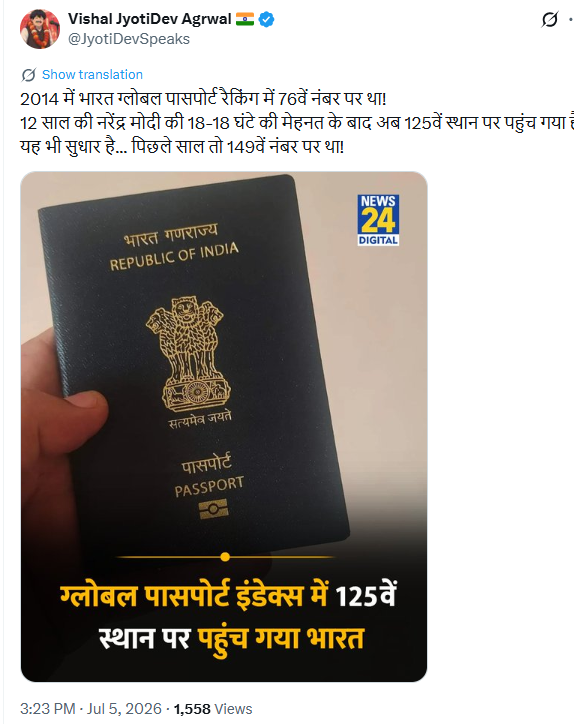
A claim is going viral on social media stating that India’s passport ranking has declined from the 76th position in 2014 to the 125th position this year. CyberPeace Research Wing’s research found the claim to be misleading. The two rankings mentioned in the viral claim were issued by different agencies. The 76th rank in 2014 was given by the Henley Passport Index, while the 125th rank this year was assigned by the Global Passport Index.
Claim
The viral claim states that India’s passport ranking, which was 76th in 2014, has fallen to the 125th position this year. The claim was shared on X (formerly Twitter) with a Hindi caption.
https://x.com/JyotiDevSpeaks/status/2073706900437508468
FactCheck
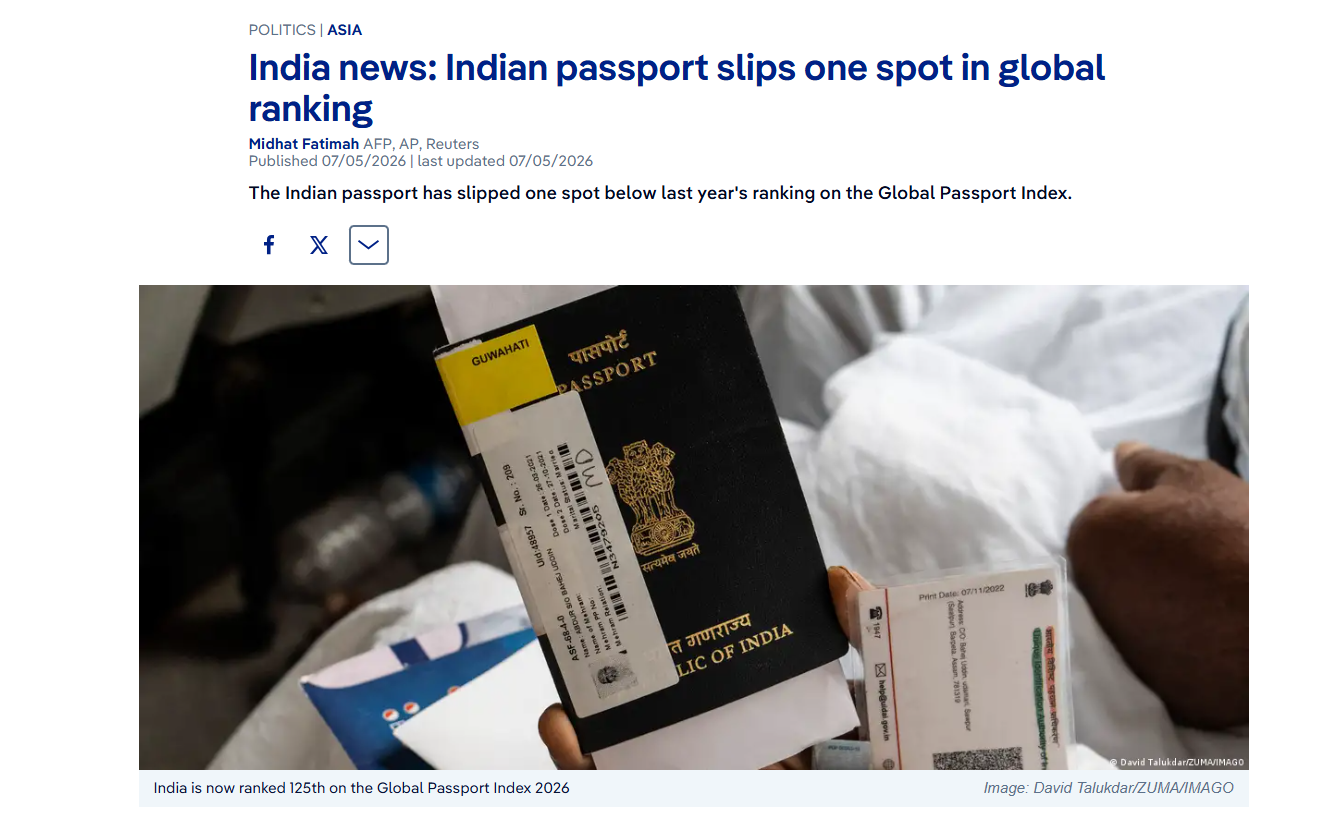
To verify the claim, we first searched relevant news reports and found that India’s passport has been ranked 125th in the latest Global Passport Index.
https://www.dw.com/en/india-news-indian-passport-slips-one-spot-in-global-ranking/live-77836287
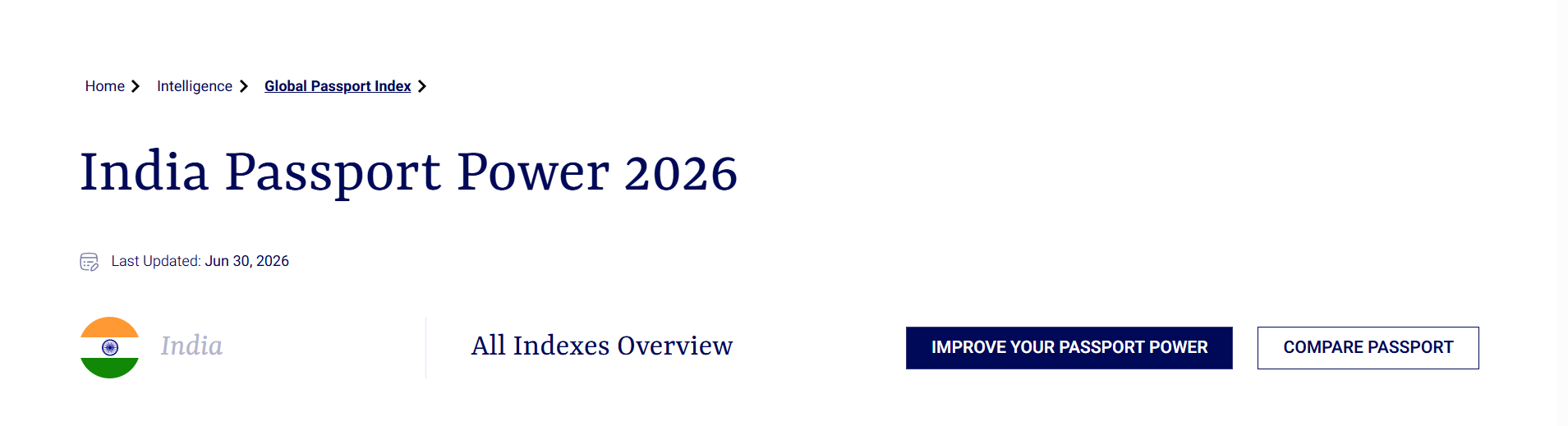
We then checked the official website of Global Citizen Solutions, the organization that publishes the Global Passport Index. The data available on the website confirms that India’s passport has been placed at the 125th position in the latest ranking.
https://www.globalcitizensolutions.com/passport-index/india/
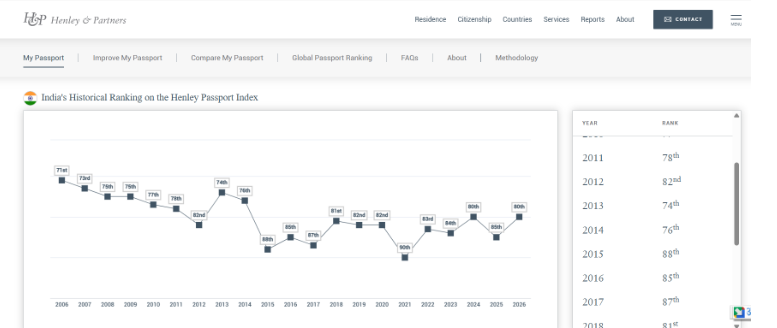
Further, we investigated which organization had ranked the Indian passport 76th in 2014. The search revealed that the ranking was issued by the Henley Passport Index, published by Henley & Partners. According to the information available on the Henley Global website, India’s passport was ranked 76th in 2014, while it stands at the 80th position in the 2026 Henley Passport Index. The rankings assigned to the Indian passport from 2006 to 2026 can be seen in the image below.
https://www.henleyglobal.com/passport-index
Conclusion
Our research found that the claim stating India’s passport ranking declined from 76th position to 125th position is misleading. The two rankings cited in the viral claim were issued by different organizations and cannot be compared directly. The 2014 ranking came from the Henley Passport Index, while the 125th position refers to the Global Passport Index.

Related Blogs

Introduction
So it's that time of year when you feel bright and excited to start the year with new resolutions; your goals could be anything from going to the gym to learning new skills and being productive this year, but with cybercrime on the rise, you must also be smart and take your New Year Cyber Resolutions seriously. Yes, you heard it right: it's a new year, a new you, but the same hackers with advanced dangers. It's time to make a cyber resolution this year to be secure, smart, and follow the best cyber safety tips for 2K25 and beyond.
Best Cyber Security Tips For You
So while taking your cyber resolutions this 2k25, remember that hackers have resolutions too; so you have to make yours better! CyberPeace has curated a list of great tips and cyber hygiene practices you must practice in 2025:
- Be Aware Of Your Digital Rights: Netizens should be aware of their rights in the digital space. It's important to know where to report issues, how to raise concerns with platforms, and what rights are available to you under applicable IT and Data Protection laws. And as we often say, sharing is caring, so make sure to discuss and share your knowledge of digital rights with your family, peers, and circle. Not only will this help raise awareness, but you’ll also learn from their experiences, collectively empowering yourselves. After all, a well-informed online community is a happy one.
- Awareness Is Your First Line Of Defence: Awareness serves as the first line of defence, especially in light of the lessons learned from 2024, where new forms of cybercrimes have emerged with serious consequences. Scams like digital arrests, romance frauds, lottery scams, and investment scams have become more prevalent. As we move into 2025, remember that sophisticated cyber scams require equally advanced strategies to stay protected. As cybercrimes evolve and become more complex, it's crucial to stay updated with specific strategies and hygiene tips to defend yourself. Build your first line of defence by being aware of these growing scams, and say goodbye to the manipulative tactics used by cyber crooks.
- Customise Social Media Media Profile And Privacy Settings: With the rising misuse of advanced technologies such as deepfake, it’s crucial to share access to your profile only with people you trust and know. Customize your social media profile settings based on your convenience, such as who can add you, who can see your uploaded pictures and stories, and who can comment on your posts. Tailor these settings to suit your needs and preferences, ensuring a safer digital environment for yourself.
- Be Cautious: Choose wisely, just because an online deal seems exciting doesn’t mean it’s legitimate. A single click could have devastating consequences. Not every link leads to a secure website; it could be a malware or phishing attempt. Be cautious and follow basic cyber hygiene tips, such as only visiting websites with a padlock symbol, a secure connection, and the 'HTTPS' status in the URL.
- Don’t Let Fake News Fake You Out: Online misinformation and disinformation have sparked serious concern due to their widespread proliferation. That’s why it’s crucial to 'Spot The Lies Before They Spot You.' Exercise due care and caution when consuming, sharing, or forwarding any online information. Always verify it from trusted sources, recognize the red flags of misleading claims, and contribute to creating a truthful online information landscape.
- Turn the Tables on Cybercriminals: It is crucial to know the proper reporting channels for cybercrimes, including specific reporting methods based on the type of issue. For example, ‘unsolicited commercial communications’ can be reported on the Chakshu portal by the government. Unauthorized electronic transactions can be reported to the RBI toll-free number at 14440, while women can report incidents to the National Commission for Women. If you encounter issues on a platform, you can reach out to the platform's grievance officer. All types of cybercrimes can be reported through the National Cyber Crime Reporting Portal (cybercrime.gov.in) and the helpline at 1930. It’s essential to be aware of the right authorities and reporting mechanisms, so if something goes wrong in your digital experience, you can take action, turn the tables on cybercrooks, and stay informed about official grievances and reporting channels.
- Log Out, Chill Out: The increased use of technology can have far-reaching consequences that are often overlooked, such as procrastination, stress, anxiety, and eye strain (also known as digital eye strain or computer vision syndrome). Sometimes, it’s essential to switch off the digital curtains. This is where a ‘Digital Detox’ comes in, offering a chance to recharge and reset. We’re all aware of how our devices and phones influence our daily lives, shaping our behaviours, decisions, and lifestyles from morning until night, even impacting our sleep. Taking time to unplug can provide a much-needed psychological and physical boost. Practicing a digital detox at regular suitable intervals, such as twice a month, can help restore balance, reduce stress, and improve overall well-being.
Final Words & the Idea of ‘Tech for Good’
Remember that we are in the technological era, and these technologies are created for our ease and convenience. There are certain challenges that bad actors pose, but to counter this, the change starts from you. Remember that technology, while having its risks, also brings tremendous benefits to society. We encourage you to take a step and encourage the responsible and ethical use of the technology. The vision for ‘Tech for Good’ will have to be expanded to a larger picture. Do not engage in a behaviour that you would not ordinarily do in an offline environment, the online environment is also the same and has far-reaching effects. Use technology for good, and follow and encourage ethical and responsible behaviour in online communities. The emphasis should be on using technology in a safer environment for everyone and combatting dishonest practices.
The effective strategies for preventing cybercrime and dishonest practices requires cooperation , efforts by citizens, government agencies, and technology businesses. We intend to employ technology's good aspects to build a digital environment that values security, honesty, and moral behaviour while promoting innovation and connectedness. In 2025, together we can make a cyber safe resilient society.
Executive Summary
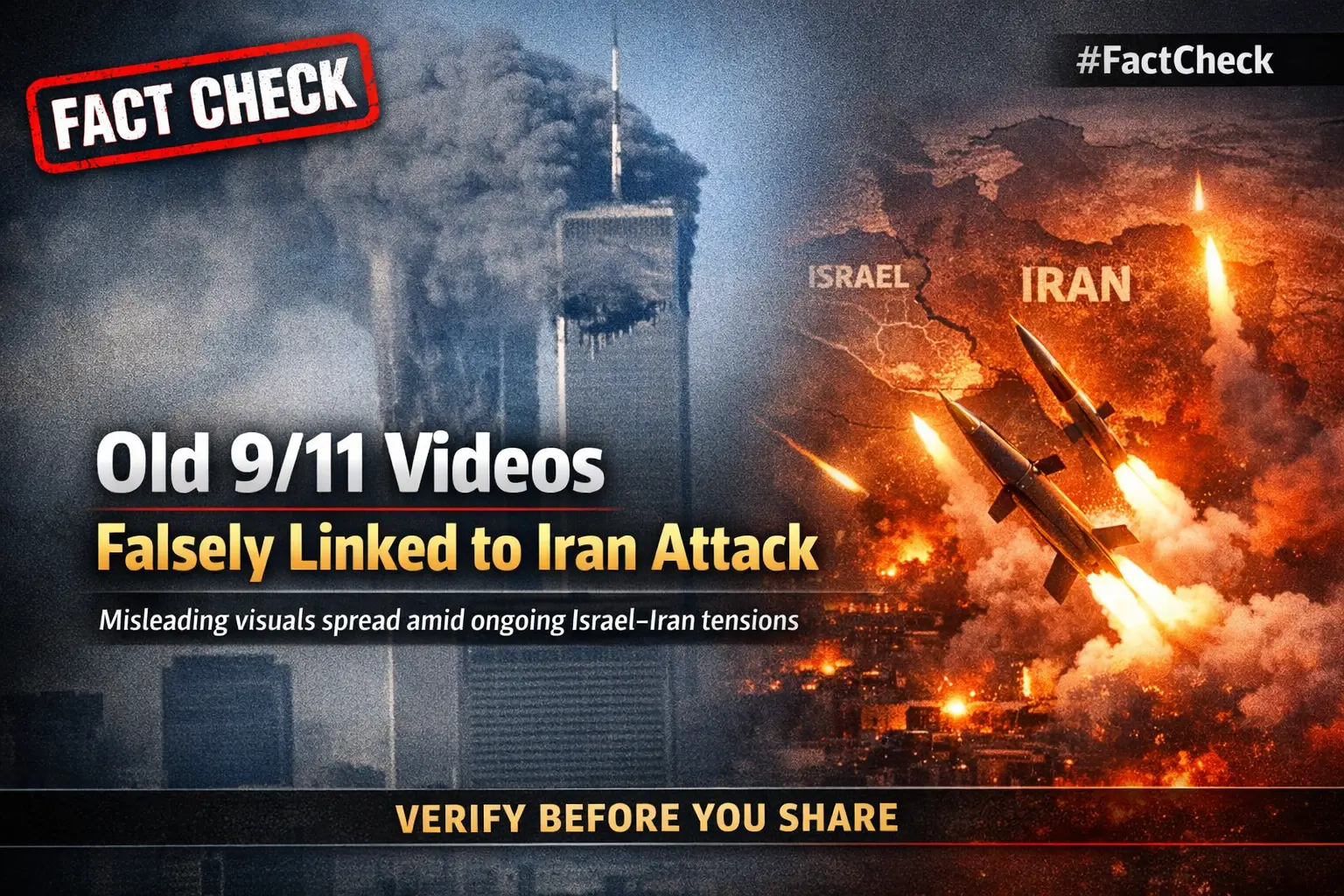
Amid the ongoing war between the United States–Israel alliance and Iran since February 28, 2026, two videos are going viral across social media platforms. The clips show people running in panic, with visuals suggesting a large-scale attack. Users are sharing these videos with the claim that they depict Iran’s recent strikes on Israel. However, a research by the CyberPeace has found both claims to be false. The viral posts are misleading, as the videos are actually from the 9/11 terrorist attacks on the World Trade Center in New York, United States. They have no connection to the current conflict involving Iran or Israel.
Claim
A Facebook page titled ‘Bihar Ko Nihar’ shared one of the videos on March 25, 2026, with the caption: “Iran has launched its most powerful attack on Israel so far. Thousands of soldiers are reported dead, triggering massive protests within the country, and Israel appears completely helpless.” Similarly, another video is being circulated with the false claim that Iran has launched a missile attack on the United States.
The above claims are being widely shared by multiple users across different social media platforms. Archived versions of these posts are also available.
- https://www.facebook.com/reel/4317571078525937
- https://www.facebook.com/reel/1485000739860984
- https://perma.cc/E98R-A4CT

Fact Check
To verify the authenticity of the videos, keyframes were extracted and analyzed using Google Lens. The first viral clip was traced back to a YouTube video uploaded on September 11, 2007, by a channel named ‘Jumperwtc’, which clearly identifies the footage as being from the World Trade Center attacks in the United States. This confirms that the viral video is a segment from that older footage.

For the second video, reverse image searches led to a report published on CBS8.com on September 10, 2021, where the same visuals were found. Further reesearch revealed that the footage also appears in a video uploaded on September 11, 2021, by the YouTube channel ‘CBS 8 San Diego’. The viral segment can be seen around the 1:11 timestamp in that video.

Conclusion
Both viral videos being shared as recent attacks by Iran on Israel or the United States are actually old clips from the 9/11 attacks on the World Trade Center in New York. The claims are false, and the videos are unrelated to the ongoing conflict in West Asia.
Executive Summary
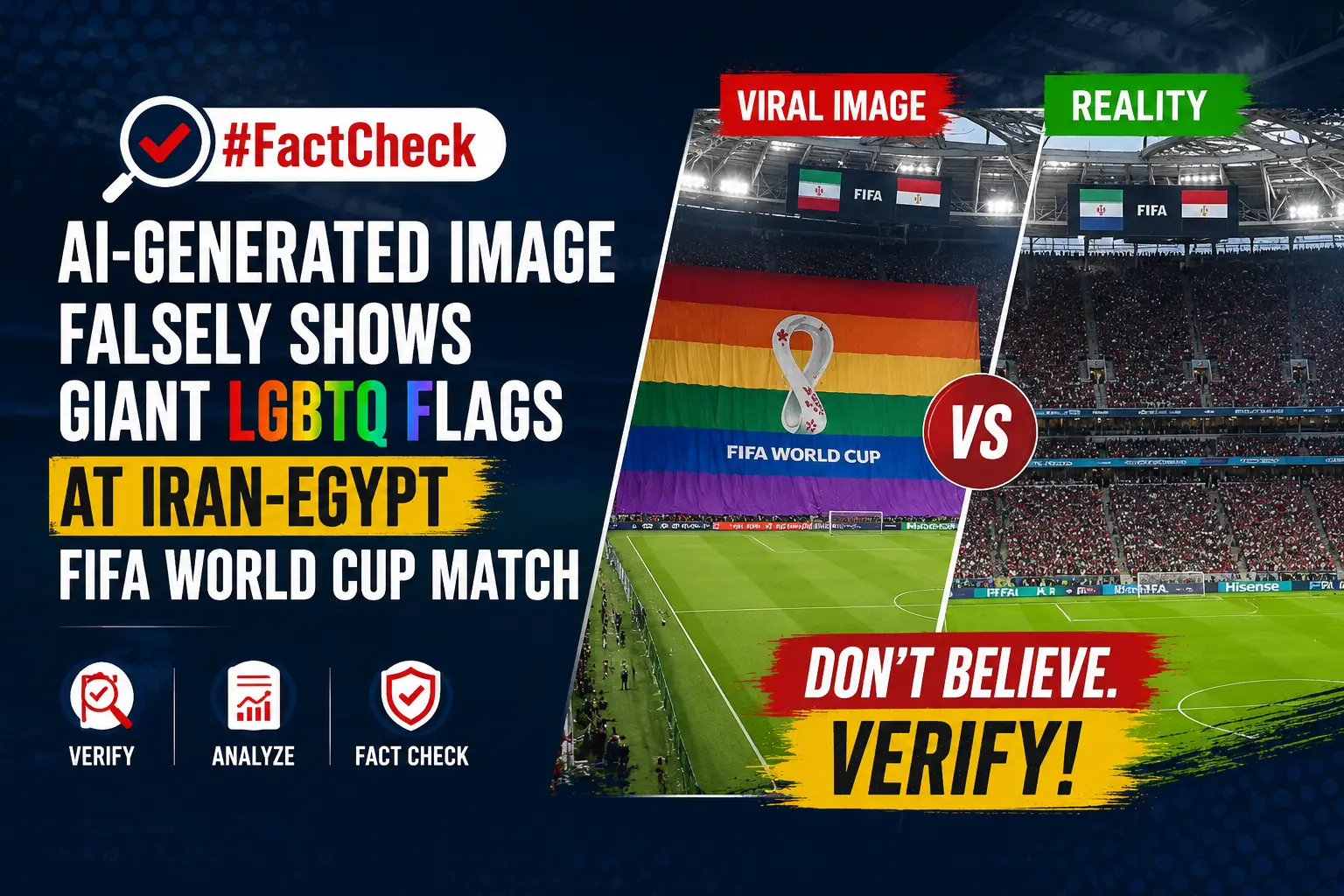
An image is being widely shared on social media claiming that during the 2026 FIFA World Cup match between Iran and Egypt in Seattle, Washington, the stadium hosted a “Pride Match,” with massive LGBTQ rainbow flags spread across the pitch before kickoff. Users claim the image shows FIFA allowing rainbow flags inside the stadium during the match. CyberPeace Research Wing's research found the claim to be misleading. There is no evidence that FIFA or the official organizers displayed giant rainbow flags across the pitch during the pre-match ceremony. The viral image has been digitally altered and does not depict an actual scene from the event.
Claim
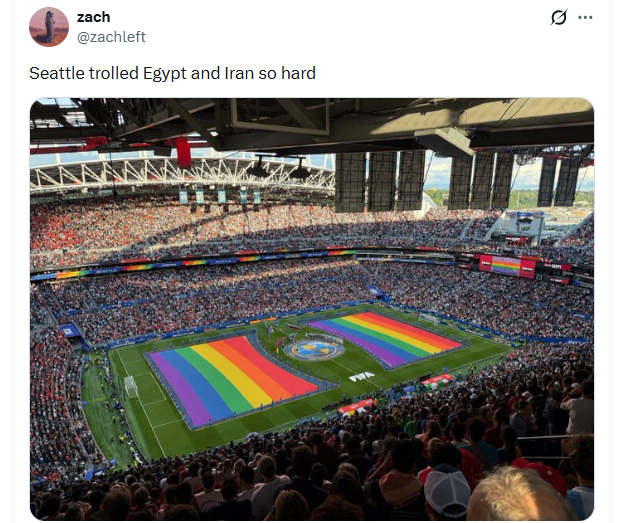
On June 27, 2026, an X (formerly Twitter) user shared the image with the caption, “Seattle trolled Egypt and Iran so hard.” Similar posts were also circulated on Facebook and other social media platforms in Spanish and Arabic. https://perma.cc/9QUF-Y7LG ,https://x.com/zachleft/status/2070727350288068687/
FactCheck
The image began circulating after the June 26 FIFA World Cup match between Iran and Egypt ended in a 1-1 draw. Iran (Team Melli) had a stoppage-time goal disallowed, leaving the team short of qualifying for the tournament’s 32-team knockout stage, while Egypt advanced alongside Belgium from the top of Group G. https://www.abs-cbn.com/sports/othersports/2026/6/29/iran-team-to-fly-home-monday-following-world-cup-exit-1334

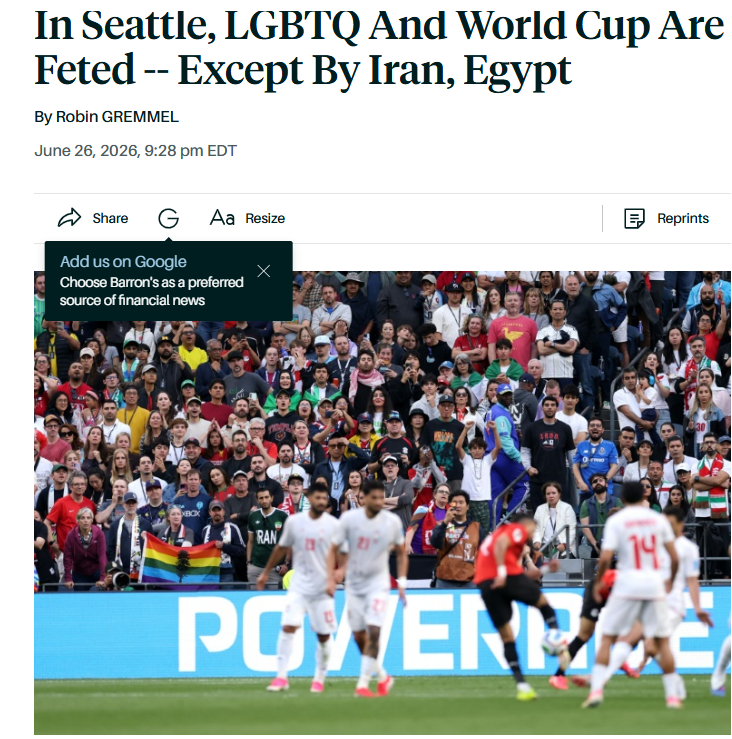
Further research found that Egyptian and Iranian officials had objected to pro-LGBTQ celebrations surrounding the fixture. Seattle authorities had designated the match as part of the city's Pride celebrations well before the World Cup draw determined which teams would play there. Under Iranian Islamic law, homosexuality is illegal and can be punishable by death. In Egypt, same-sex relations are often prosecuted under broadly worded laws relating to "debauchery" or "immorality. https://www.barrons.com/news/in-seattle-lgbtq-and-world-cup-are-feted-except-by-iran-egypt-f6d970dc.
We also examined the viral image using OpenAI’s image verification tool, which detected the presence of SynthID—an invisible watermark embedded by Google in AI-generated content. This indicates that the image was created or modified using AI tools.

In addition, we reviewed the live broadcasts of the match by Fox Sports and Universo. Both broadcasts showed only the national flags of Iran and Egypt displayed on the pitch before kickoff. No giant rainbow flags appeared during the pre-match ceremony.

Conclusion
Our research found the viral claim to be misleading. There is no evidence that FIFA or the official organizers displayed massive rainbow flags across the pitch during the Iran vs Egypt World Cup match. The viral image is digitally altered, contains indicators of AI generation, and does not represent an actual moment from the event.
