
#FactCheck-Viral Video of 'Melted' Traffic Signal in Europe Shared with False Heatwave Claim
Executive Summary
A video showing a completely melted traffic signal is going viral on social media. Users sharing the clip claim that an unprecedented and historic heatwave in European countries like Italy, Spain, France, and Germany has become so severe that modern infrastructure—including traffic lights—is literally melting under the sun However, factual research by the CyberPeace Research Wing reveals that this claim is false. The traffic signal did not melt due to weather conditions; it was damaged by a nearby car fire in Italy.
The Claim
On June 30, 2026, an Instagram user named 'khabribhaiyaa' shared the video with a caption stating:"Many European countries are currently in the grip of an unprecedented and historic heatwave. Temperatures in countries like Italy and Germany have neared 40 degree forcing authorities to issue red alerts. The situation is so bad that modern infrastructure is buckling under this deadly heat. Images and reports from the streets are shocking; traffic lights are melting and dripping due to the extreme heat. Not only this, but paved roads and highways are warping due to excessive temperatures, bringing traffic to a standstill. Additionally, railway tracks and other critical infrastructure are suffering heavy damage."
https://www.instagram.com/reels/DaMpGhjG7h4
https://perma.cc/STD7-75S9?type=standard
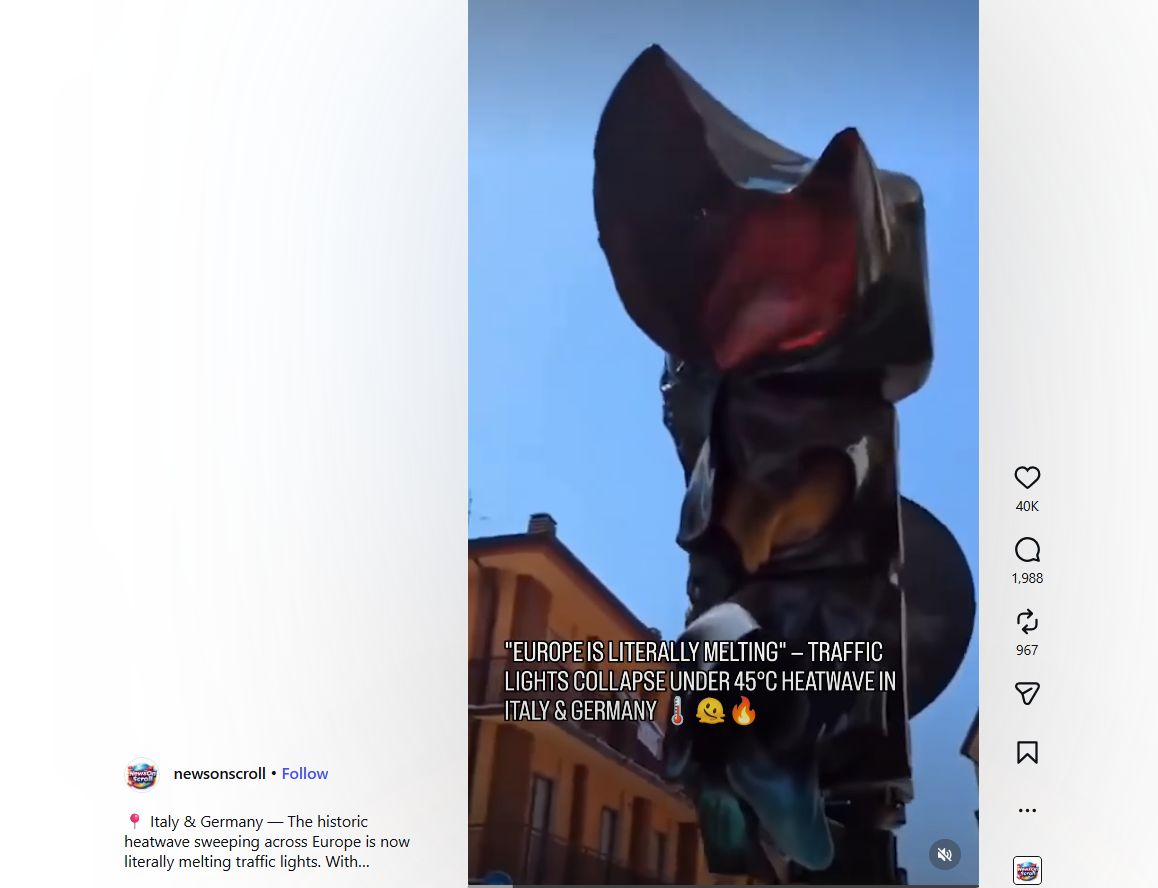

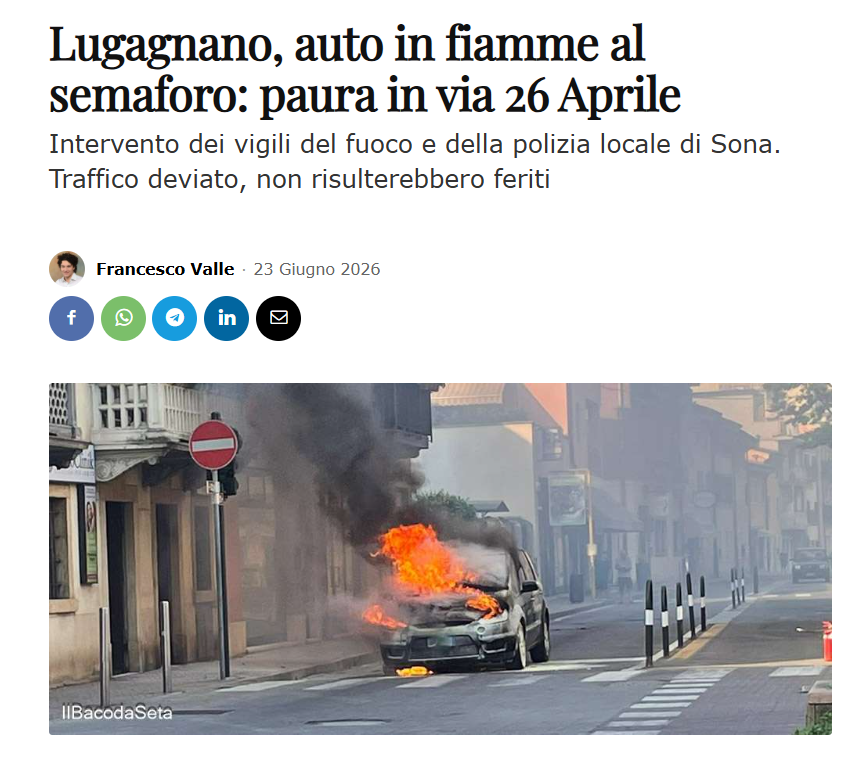
To verify the viral claim, we extracted keyframes from the video and ran a Google Lens search. This led us to a report published on June 28, 2026, by the Italian website 'ilbacodaseta'. The building structure visible in the background of the website's featured photo directly matched the backdrop of the viral video.
https://www.ilbacodaseta.org/lugagnano-auto-in-fiamme-al-semaforo-paura-in-via-26-aprile/#google_vignette
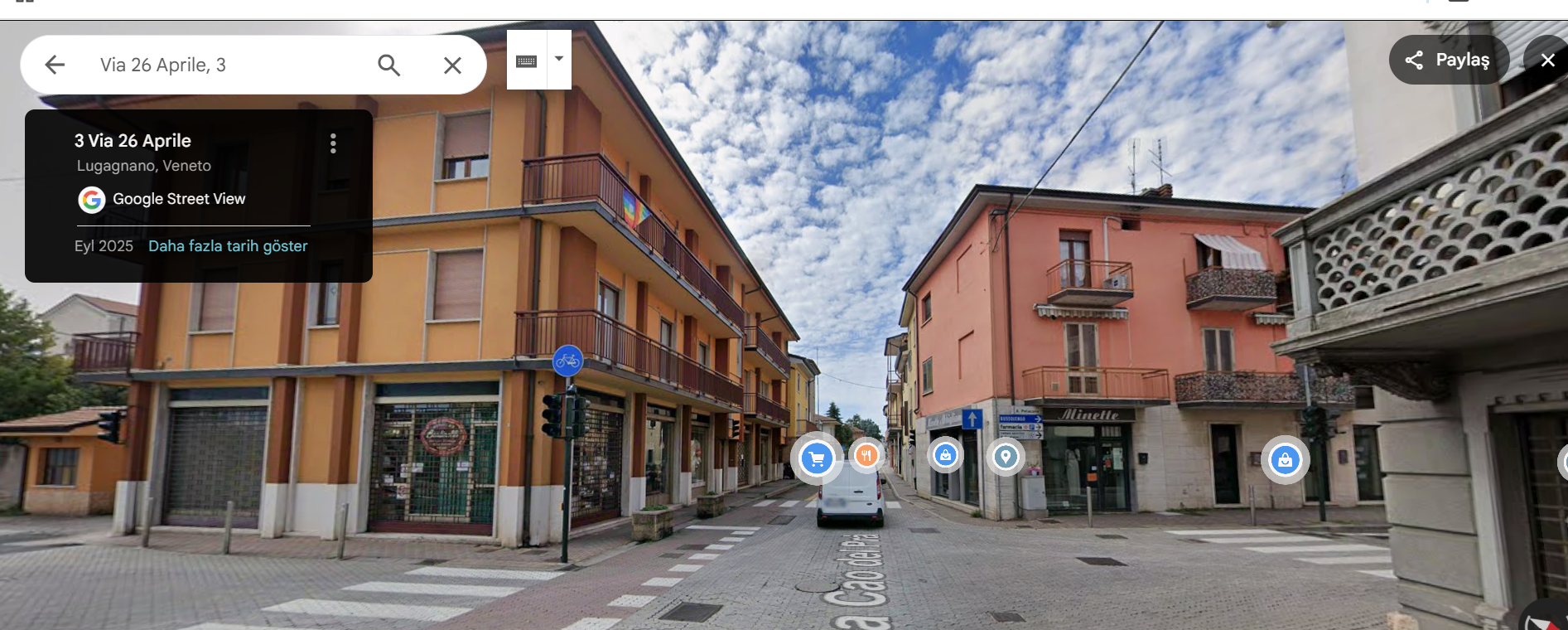
Furthermore, we cross-referenced the spot on Google Maps, confirming that the location perfectly matches the visuals seen in the viral clip.
A report by 'tgverona' regarding the same car accident was also shared on Facebook by wrestling referee Johnny Puttini, further verifying that the damage was the result of an accidental fire, not atmospheric heatwaves.

Conclusion
The claim that European heatwaves are melting traffic lights is False. The viral video shows a traffic signal in Lugagnano, Italy, that melted in June 2026 due to a car fire right beneath it. It has nothing to do with the summer temperature or climate conditions.

Related Blogs
Executive Summary
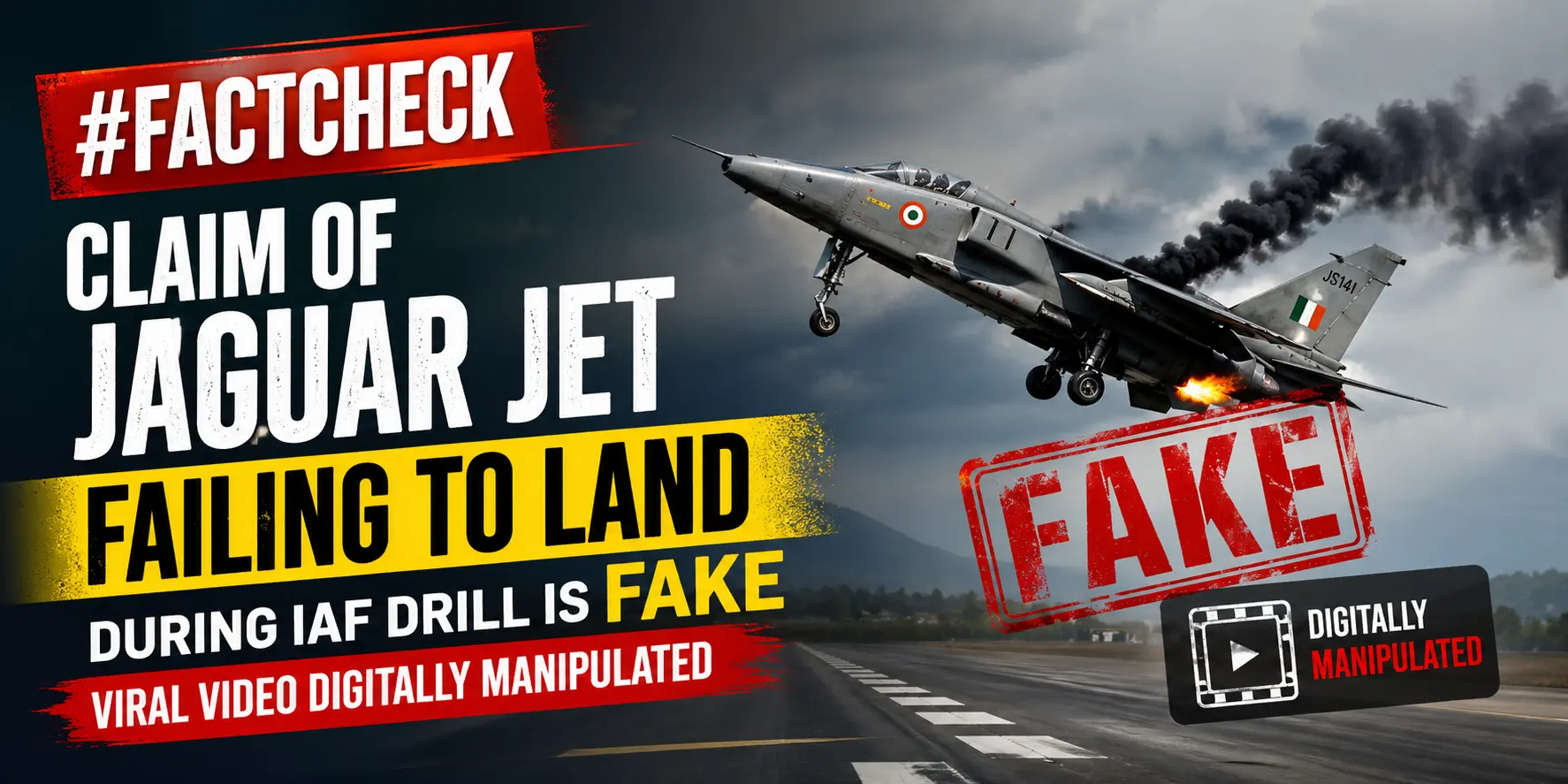
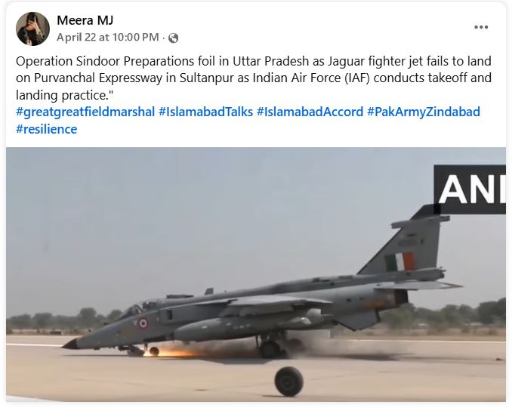
A video circulating on social media claims that a Jaguar fighter jet of the Indian Air Force (IAF) failed to land during a takeoff and landing exercise held on April 22, 2026, at the Purvanchal Expressway in Uttar Pradesh. The claim suggests that the incident disrupted preparations for “Operation Sindoor.” However, an research by the CyberPeace Research Wing has found the claim to be false.
Claim
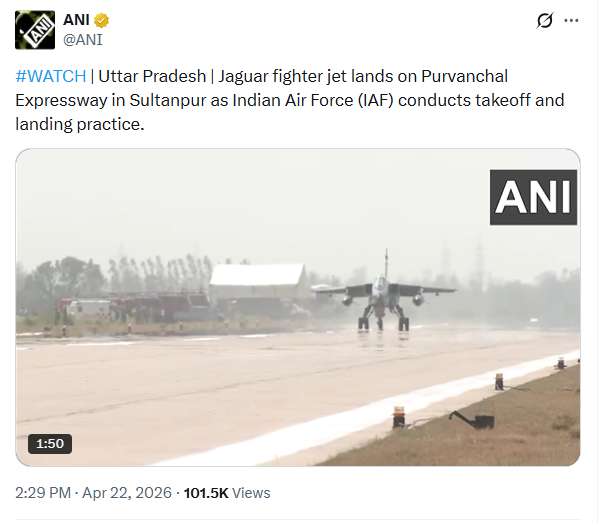
The video was shared by a Facebook user, ‘Meera MJ,’ alleging that the Jaguar aircraft could not land during the exercise conducted near Sultanpur. To verify the authenticity of the video, multiple keyframes were extracted and analyzed using reverse image search tools. This led to the original footage shared by ANI on its official X (formerly Twitter) handle on April 22, 2026. The authentic video of the air show does not show any such incident of a failed landing.
Fact Check
A detailed review of ANI’s social media posts also revealed no evidence supporting the viral claim. This strongly indicates that the circulating clip has been digitally manipulated by altering the original footage.
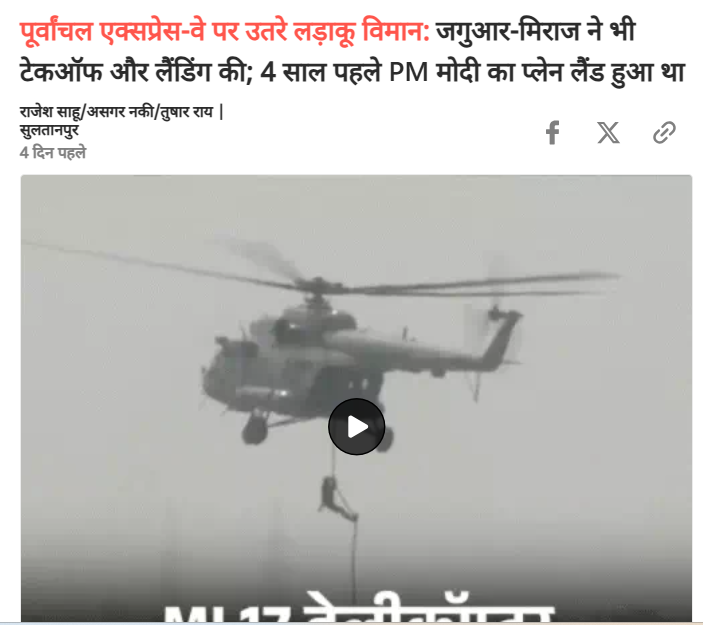
Further corroboration came from a report published by Bhaskar.com, which extensively covered the air show. According to the report, the event featured successful operations by multiple aircraft, including the C-295 transport aircraft landing on the expressway airstrip, followed by Jaguar jets taking off. Sukhoi and Mirage fighter jets also performed takeoff and landing drills, while M17 helicopters carried out commando mock operations. Additionally, the M32 Bhishma aircraft conducted ‘touch and go’
Conclusion:
The viral claim that a Jaguar fighter jet failed to land during the Indian Air Force drill is baseless. The video being circulated is digitally manipulated and does not reflect any real incident.

Introduction
As digital platforms rapidly become repositories of information related to health, YouTube has emerged as a trusted source people look to for answers. To counter rampant health misinformation online, the platform launched YouTube Health, a program aiming to make “high-quality health information available to all” by collaborating with health experts and content creators. While this is an effort in the right direction, the program needs to be tailored to the specificities of the Indian context if it aims to transform healthcare communication in the long run.
The Indian Digital Health Context
India’s growing internet penetration and lack of accessible healthcare infrastructure, especially in rural areas, facilitates a reliance on digital platforms for health information. However, these, especially social media, are rife with misinformation. Supplemented by varying literacy levels, access disparities, and lack of digital awareness, health misinformation can lead to serious negative health outcomes. The report ‘Health Misinformation Vectors in India’ by DataLEADS suggests a growing reluctance surrounding conventional medicine, with people looking for affordable and accessible natural remedies instead. Social media helps facilitate this shift. However, media-sharing platforms such as WhatsApp, YouTube, and Facebook host a large chunk of health misinformation. The report identifies that cancer, reproductive health, vaccines, and lifestyle diseases are four key areas susceptible to misinformation in India.
YouTube’s Efforts in Promoting Credible Health Content
YouTube Health aims to provide evidence-based health information with “digestible, compelling, and emotionally supportive health videos,” from leading experts to everyone irrespective of who they are or where they live. So far, it executes this vision through:
- Content Curation: The platform has health source information panels and content shelves highlighting videos regarding 140+ medical conditions from authority sources like All India Institute of Medical Sciences (AIIMS), National Institute of Mental Health and Neurosciences (NIMHANS), Max Healthcare etc., whenever users search for health-related topics.
- Localization Strategies: The platform offers multilingual health content in regional languages such as Hindi, Tamil, Telugu, Marathi, Kannada, Malayalam, Punjabi, and Bengali, apart from English. This is to help health information reach viewers across most of the country.
- Verification of professionals: Healthcare professionals and organisations can apply to YouTube’s health feature for their videos to be authenticated as an authority health source on the platform and for their videos to show up on the ‘Health Sources’ shelf.
Challenges
- Limited Reach: India has a diverse linguistic ecosystem. While health information is made available in over 8 languages, the number is not enough to reach everyone in the country. Efforts to reach more people in vernacular languages need to be ramped up. Further, while there were around 50 billion views of health content on YouTube in 2023, it is difficult to measure the on-ground outcomes of those views.
- Lack of Digital Literacy: Misinformation on digital platforms cannot be entirely curtailed owing to the way algorithms are designed to enhance user engagement. However, uploading authoritative health information as a solution may not be enough, if users lack awareness about misinformation and the need to critically evaluate and trust only credible sources. In India, this critical awareness remains largely underdeveloped.
Conclusion
Considering that India has over 450 million users, by far the highest number of users in any country in the world, the platform has recognized that it can play a transformative role in the country’s digital health ecosystem. To accomplish its mission “to combat the societal threat of medical misinformation,” YouTube will have to continue to take several proactive measures. There is scope for strengthening collaborations with Indian public health agencies and trusted public figures, national and regional, to provide credible health information to all. The approach will have to be tailored to India’s vast linguistic diversity, by encouraging capacity-building for vernacular creators to produce credible content. Finally, multiple stakeholders will need to come together to promote digital literacy through education campaigns about identifying trustworthy sources.
Sources
- https://indianexpress.com/article/technology/tech-news-technology/youtube-health-dr-garth-graham-interview-9746673/
- https://economictimes.indiatimes.com/news/india/cancer-misinformation-extremely-prevalent-in-india-trust-in-science-medicine-crucial-report/articleshow/115931783.cms?from=mdr
- https://health.youtube/our-mission/
- https://health.youtube/features-application/
- https://backlinko.com/youtube-users

Executive Summary
A video of Indian cricketer Rohit Sharma is being widely shared on social media, purportedly showing him saying, “If you want me to play in the next World Cup and you are with me, then share and like this video.” However, CyberPeace Research Wing found the viral claim to be false. Our research found that the viral video is not authentic but AI-generated and is being circulated with a misleading claim.
Claim:
A Facebook user shared the viral video on September 28 with the caption, “If you want me to play in the next World Cup and you are with me, then share and like this video.” The post link, archived link and screenshot are provided below.
https://www.facebook.com/reel/27349791221308658

Fact check
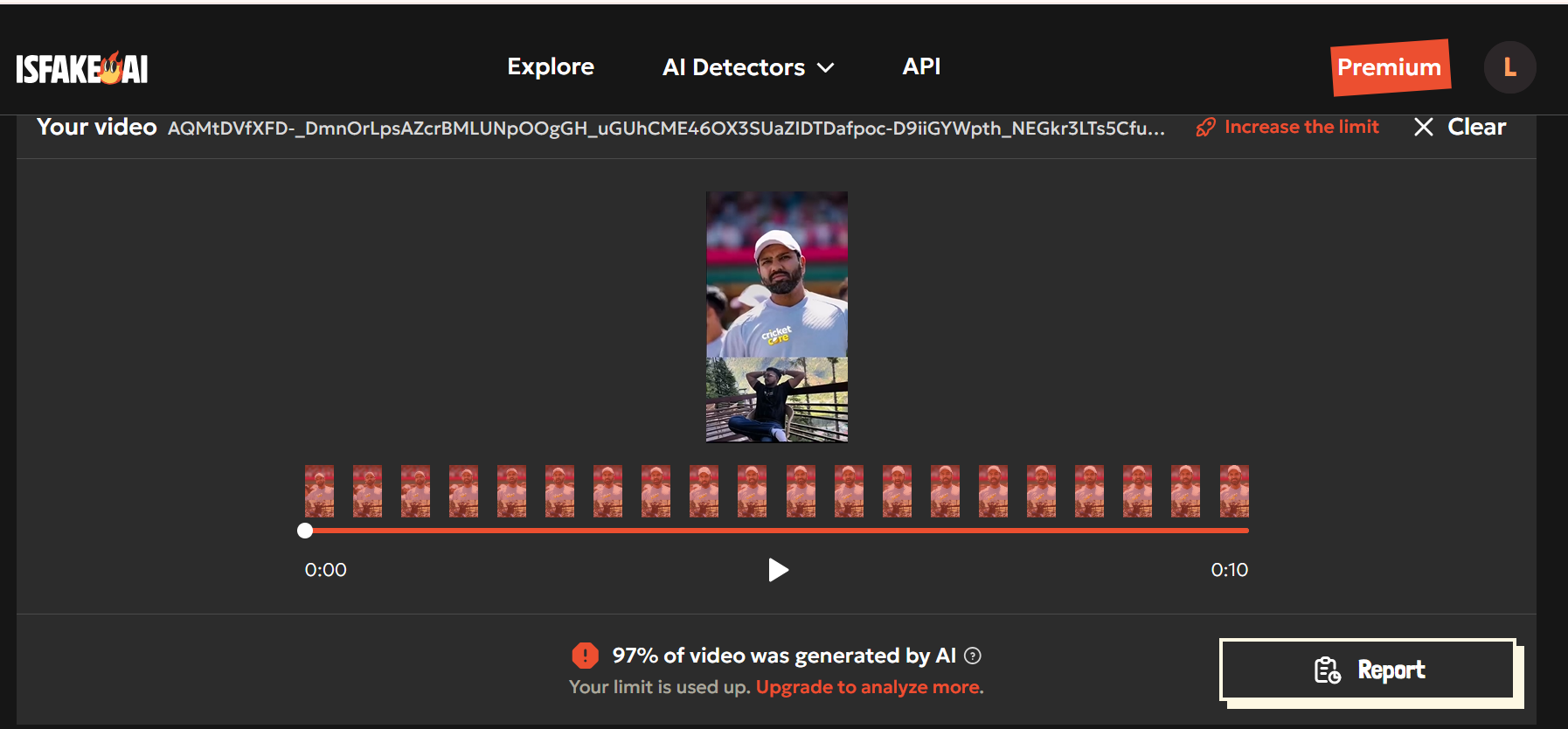
To verify the viral claim, we conducted a Google search using relevant keywords. During the search, we did not find any credible media reports corroborating the claim. As part of our research, we scanned the viral video using the AI detection tool ISFAKEAI. According to the tool’s results, the video was 97 per cent AI-generated.
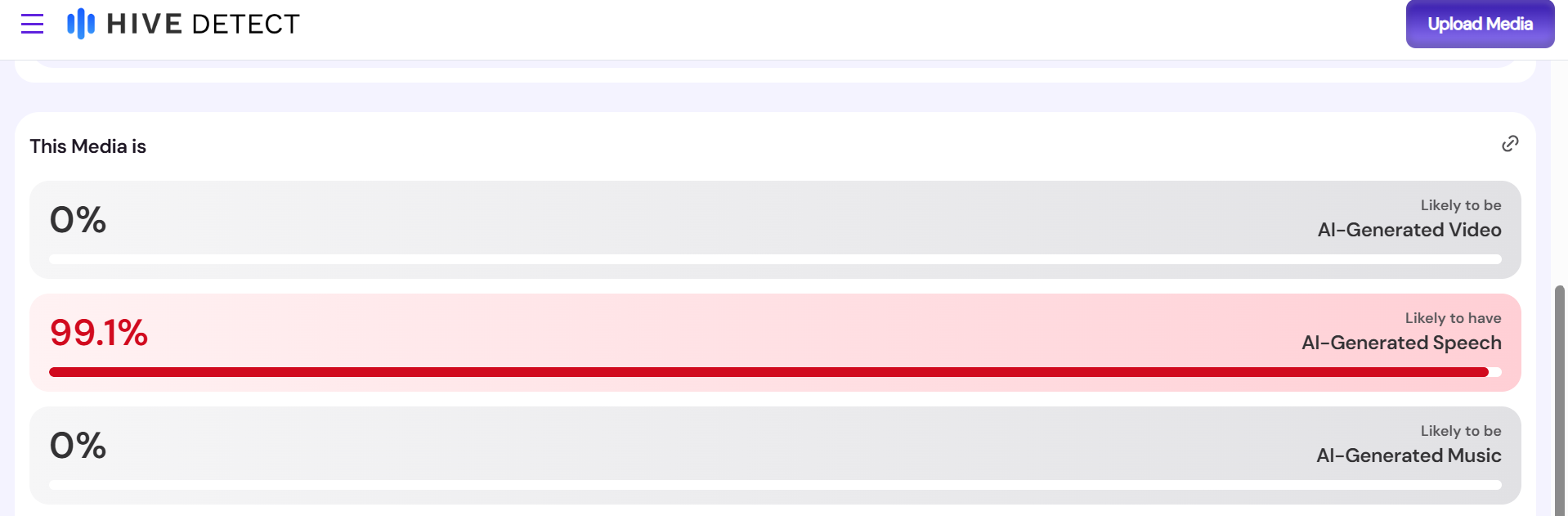
We further analysed the video using Hive Detect, which found that the speech in the viral video was 99 per cent AI-generated.
Conclusion:
Our research found that the viral video is not authentic but AI-generated. The video is being circulated on social media with a misleading claim that it shows an aeroplane being affected by the alleged ‘Arnab’ cyclone in Ahmedabad.
