
#FactCheck-AI-Manipulated Video Falsely Attributes Statement on Operation Sindoor to Foreign Secretary Vikram Misri
Executive Summary
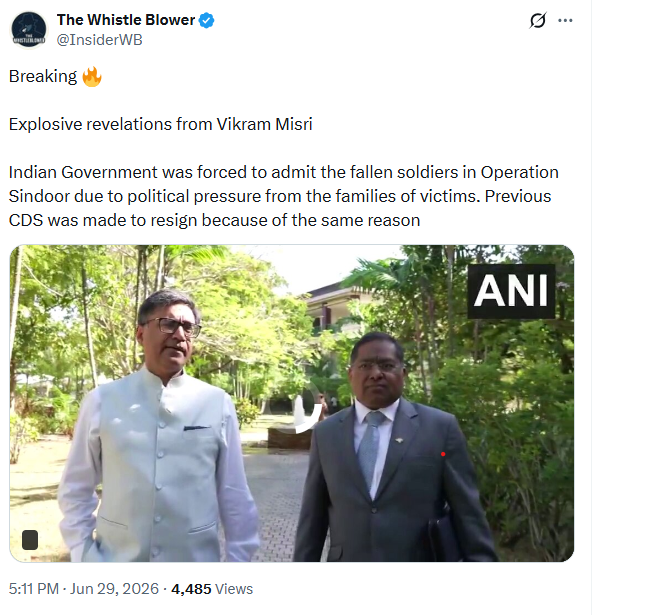
A video of Foreign Secretary Vikram Misri speaking to a reporter is being circulated on social media with the claim that he said the Indian government was forced to publicly acknowledge the soldiers killed during Operation Sindoor due to political pressure from the families of the deceased. Research conducted by the CyberPeace Research Wing found that the viral video had been manipulated using artificial intelligence (AI). Vikram Misri's voice was artificially cloned, meaning the audio heard in the clip is not genuine but has been generated and altered using AI technology.
Claim
The video was shared on X (formerly Twitter) with the following caption: "Breaking. Explosive revelations from Vikram Misri. Indian Government was forced to admit the fallen soldiers in Operation Sindoor due to political pressure from the families of victims. Previous CDS was made to resign because of the same reason."
https://x.com/InsiderWB/status/2071642756125008031
Fact Check
We conducted a reverse image search using Google Lens, which led us to a video uploaded on The Tribune's verified YouTube channel that matched the viral clip. In the original video, Vikram Misri clarified that the Government of India neither officially participated in, supported, nor was involved in any event related to India-Pakistan dialogue. He further stated that the government had taken no cognisance of such private events and that the retired dignitaries and diplomats present were expressing their personal views, not speaking on behalf of the Government of India.
https://www.youtube.com/watch?v=wCrv0Vcgp28

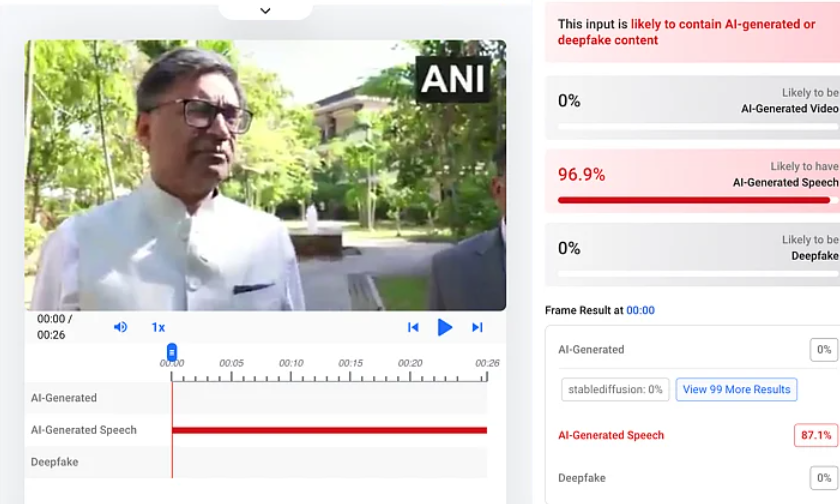
Since we found no evidence that Vikram Misri had ever made the statements attributed to him in the viral clip, we analysed the video using Hive Moderation's AI-generated content detection tool. The analysis indicated that the viral video is 96 per cent AI-generated.
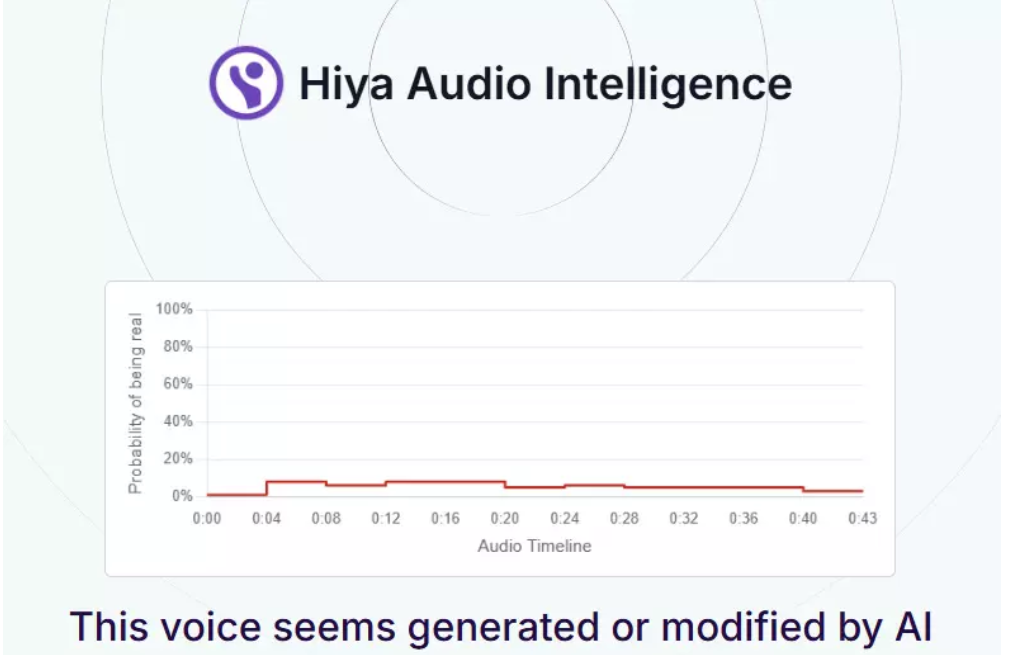
To further verify the claim, we analysed the audio using Hiya Audio Intelligence. The tool concluded that the voice in the viral video appears to have been generated or modified using artificial intelligence.
Conclusion
The viral video is misleading. Our research found that the video of Foreign Secretary Vikram Misri had been manipulated using artificial intelligence. He never made any statement claiming that the Indian government disclosed the names of soldiers killed during Operation Sindoor due to pressure from their families. Therefore, the viral claim is false.

Related Blogs

Executive Summary:
BrazenBamboo’s DEEPDATA malware represents a new wave of advanced cyber espionage tools, exploiting a zero-day vulnerability in Fortinet FortiClient to extract VPN credentials and sensitive data through fileless malware techniques and secure C2 communications. With its modular design, DEEPDATA targets browsers, messaging apps, and password stores, while leveraging reflective DLL injection and encrypted DNS to evade detection. Cross-platform compatibility with tools like DEEPPOST and LightSpy highlights a coordinated development effort, enhancing its espionage capabilities. To mitigate such threats, organizations must enforce network segmentation, deploy advanced monitoring tools, patch vulnerabilities promptly, and implement robust endpoint protection. Vendors are urged to adopt security-by-design practices and incentivize vulnerability reporting, as vigilance and proactive planning are critical to combating this sophisticated threat landscape.
Introduction
The increased use of zero-day vulnerabilities by more complex threat actors reinforces the importance of more developed countermeasures. One of the threat actors identified is BrazenBamboo uses a zero-day vulnerability in Fortinet FortiClient for Windows through the DEEPDATA advanced malware framework. This research explores technical details about DEEPDATA, the tricks used in its operations, and its other effects.
Technical Findings
1. Vulnerability Exploitation Mechanism
The vulnerability in Fortinet’s FortiClient lies in its failure to securely handle sensitive information in memory. DEEPDATA capitalises on this flaw via a specialised plugin, which:
- Accesses the VPN client’s process memory.
- Extracts unencrypted VPN credentials from memory, bypassing typical security protections.
- Transfers credentials to a remote C2 server via encrypted communication channels.
2. Modular Architecture
DEEPDATA exhibits a highly modular design, with its core components comprising:
- Loader Module (data.dll): Decrypts and executes other payloads.
- Orchestrator Module (frame.dll): Manages the execution of multiple plugins.
- FortiClient Plugin: Specifically designed to target Fortinet’s VPN client.
Each plugin operates independently, allowing flexibility in attack strategies depending on the target system.
3. Command-and-Control (C2) Communication
DEEPDATA establishes secure channels to its C2 infrastructure using WebSocket and HTTPS protocols, enabling stealthy exfiltration of harvested data. Technical analysis of network traffic revealed:
- Dynamic IP switching for C2 servers to evade detection.
- Use of Domain Fronting, hiding C2 communication within legitimate HTTPS traffic.
- Time-based communication intervals to minimise anomalies in network behavior.
4. Advanced Credential Harvesting Techniques
Beyond VPN credentials, DEEPDATA is capable of:
- Dumping password stores from popular browsers, such as Chrome, Firefox, and Edge.
- Extracting application-level credentials from messaging apps like WhatsApp, Telegram, and Skype.
- Intercepting credentials stored in local databases used by apps like KeePass and Microsoft Outlook.
5. Persistence Mechanisms
To maintain long-term access, DEEPDATA employs sophisticated persistence techniques:
- Registry-based persistence: Modifies Windows registry keys to reload itself upon system reboot.
- DLL Hijacking: Substitutes legitimate DLLs with malicious ones to execute during normal application operations.
- Scheduled Tasks and Services: Configures scheduled tasks to periodically execute the malware, ensuring continuous operation even if detected and partially removed.
Additional Tools in BrazenBamboo’s Arsenal
1. DEEPPOST
A complementary tool used for data exfiltration, DEEPPOST facilitates the transfer of sensitive files, including system logs, captured credentials, and recorded user activities, to remote endpoints.
2. LightSpy Variants
- The Windows variant includes a lightweight installer that downloads orchestrators and plugins, expanding espionage capabilities across platforms.
- Shellcode-based execution ensures that LightSpy’s payload operates entirely in memory, minimising artifacts on the disk.
3. Cross-Platform Overlaps
BrazenBamboo’s shared codebase across DEEPDATA, DEEPPOST, and LightSpy points to a centralised development effort, possibly linked to a Digital Quartermaster framework. This shared ecosystem enhances their ability to operate efficiently across macOS, iOS, and Windows systems.
Notable Attack Techniques
1. Memory Injection and Data Extraction
Using Reflective DLL Injection, DEEPDATA injects itself into legitimate processes, avoiding detection by traditional antivirus solutions.
- Memory Scraping: Captures credentials and sensitive information in real-time.
- Volatile Data Extraction: Extracts transient data that only exists in memory during specific application states.
2. Fileless Malware Techniques
DEEPDATA leverages fileless infection methods, where its payload operates exclusively in memory, leaving minimal traces on the system. This complicates post-incident forensic investigations.
3. Network Layer Evasion
By utilising encrypted DNS queries and certificate pinning, DEEPDATA ensures that network-level defenses like intrusion detection systems (IDS) and firewalls are ineffective in blocking its communications.
Recommendations
1. For Organisations
- Apply Network Segmentation: Isolate VPN servers from critical assets.
- Enhance Monitoring Tools: Deploy behavioral analysis tools that detect anomalous processes and memory scraping activities.
- Regularly Update and Patch Software: Although Fortinet has yet to patch this vulnerability, organisations must remain vigilant and apply fixes as soon as they are released.
2. For Security Teams
- Harden Endpoint Protections: Implement tools like Memory Integrity Protection to prevent unauthorised memory access.
- Use Network Sandboxing: Monitor and analyse outgoing network traffic for unusual behaviors.
- Threat Hunting: Proactively search for indicators of compromise (IOCs) such as unauthorised DLLs (data.dll, frame.dll) or C2 communications over non-standard intervals.
3. For Vendors
- Implement Security by Design: Adopt advanced memory protection mechanisms to prevent credential leakage.
- Bug Bounty Programs: Encourage researchers to report vulnerabilities, accelerating patch development.
Conclusion
DEEPDATA is a form of cyber espionage and represents the next generation of tools that are more advanced and tunned for stealth, modularity and persistence. While Brazen Bamboo is in the process of fine-tuning its strategies, the organisations and vendors have to be more careful and be ready to respond to these tricks. The continuous updating, the ability to detect the threats and a proper plan on how to deal with incidents are crucial in combating the attacks.
References:

Introduction
In the era of digitalisation, social media has become an essential part of our lives, with people spending a lot of time updating every moment of their lives on these platforms. Social media networks such as WhatsApp, Facebook, and YouTube have emerged as significant sources of Information. However, the proliferation of misinformation is alarming since misinformation can have grave consequences for individuals, organisations, and society as a whole. Misinformation can spread rapidly via social media, leaving a higher impact on larger audiences. Bad actors can exploit algorithms for their benefit or some other agenda, using tactics such as clickbait headlines, emotionally charged language, and manipulated algorithms to increase false information.
Impact
The impact of misinformation on our lives is devastating, affecting individuals, communities, and society as a whole. False or misleading health information can have serious consequences, such as believing in unproven remedies or misinformation about some vaccines can cause serious illness, disability, or even death. Any misinformation related to any financial scheme or investment can lead to false or poor financial decisions that could lead to bankruptcy and loss of long-term savings.
In a democratic nation, misinformation plays a vital role in forming a political opinion, and the misinformation spread on social media during elections can affect voter behaviour, damage trust, and may cause political instability.
Mitigating strategies
The best way to minimise or stop the spreading of misinformation requires a multi-faceted approach. These strategies include promoting media literacy with critical thinking, verifying information before sharing, holding social media platforms accountable, regulating misinformation, supporting critical research, and fostering healthy means of communication to build a resilient society.
To put an end to the cycle of misinformation and move towards a better future, we must create plans to combat the spread of false information. This will require coordinated actions from individuals, communities, tech companies, and institutions to promote a culture of information accuracy and responsible behaviour.
The widespread spread of false information on social media platforms presents serious problems for people, groups, and society as a whole. It becomes clear that battling false information necessitates a thorough and multifaceted strategy as we go deeper into comprehending the nuances of this problem.
Encouraging consumers to develop media literacy and critical thinking abilities is essential to preventing the spread of false information. Being educated is essential for equipping people to distinguish between reliable sources and false information. Giving individuals the skills to assess information critically will enable them to choose the content they share and consume with knowledge. Public awareness campaigns should be used to promote and include initiatives that aim to improve media literacy in school curriculum.
Ways to Stop Misinformation
As we have seen, misinformation can cause serious implications; the best way to minimise or stop the spreading of misinformation requires a multifaceted approach; here are some strategies to combat misinformation.
- Promote Media Literacy with Critical Thinking: Educate individuals about how to critically evaluate information, fact check, and recognise common tactics used to spread misinformation, the users must use their critical thinking before forming any opinion or perspective and sharing the content.
- Verify Information: we must encourage people to verify the information before sharing, especially if it seems sensational or controversial, and encourage the consumption of news or any information from a reputable source of news that follows ethical journalistic standards.
- Accountability: Advocate for social media networks' openness and responsibility in the fight against misinformation. Encourage platforms to put in place procedures to detect and delete fraudulent content while boosting credible sources.
- Regulate Misinformation: Looking at the current situation, it is important to advocate for policies and regulations that address the spread of misinformation while safeguarding freedom of expression. Transparency in online communication by identifying the source of information and disclosing any conflict of interest.
- Support Critical Research: Invest in research and study on the sources, impacts, and remedies to misinformation. Support collaborative initiatives by social scientists, psychologists, journalists, and technology to create evidence-based techniques for countering misinformation.
Conclusion
To prevent the cycle of misinformation and move towards responsible use of the Internet, we must create strategies to combat the spread of false information. This will require coordinated actions from individuals, communities, tech companies, and institutions to promote a culture of information accuracy and responsible behaviour.

Introduction
Misinformation is, to its basic meaning, incorrect or misleading information, it may or may not include specific malicious intent and includes inaccurate, incomplete, misleading, or false information and selective or half-truths. The main challenges in dealing with misinformation are defining and distinguishing misinformation from legitimate content. This complexity arises due to the rapid evolution and propagation which information undergoes on the digital platforms. Additionally, balancing the fundamental right of freedom of speech and expression with content regulation by state actors poses a significant challenge. It requires careful consideration to avoid censorship while effectively combating harmful misinformation.
Acknowledging the severe consequences of misinformation and the critical need to combat misinformation, Bharatiya Nyaya Sanhita (BNS), 2023 has implemented key measures to address misinformation in India. These new provisions introduced under the new criminal laws in India penalise the deliberate creation, distribution, or publication of inaccurate information. Previously missing from the IPC, these sections offer an additional legal resource to counter the proliferation of falsehoods, complementing existing laws targeting the same issue.
Section 353 of the BNS on Statements Conducing to Public Mischief criminalises making, publishing, or circulating statements, false information, rumours, or reports, including through electronic means, with the intent or likelihood of causing various harmful outcomes.
This section thus brings misinformation into its ambit, since misinformation has been traditionally used to induce public fear or alarm that may lead to offences against the State or public tranquillity or inciting one class or community to commit offences against another. The section also penalizes the promotion of enmity, hatred, or ill will among different religious, racial, linguistic, or regional groups.
BNS also prescribes punishment of imprisonment for up to three years, a fine, or both for offences under section 353. Interestingly, a longer imprisonment of up to 5 years along with a fine has been prescribed to curb such offences in places of worship or during religious ceremonies. The only exception that may be availed under this section is granted to unsuspecting individuals who, believing the misinformation to be true, spread misinformation without any ill intent. However, this exception may not be as effective in curbing misinformation, since at the outset, the offence is hard to trace and has multiple pockets for individuals to seek protection without any mechanism to verify their intent.
The BNS also aims to regulate misinformation through Section 197(1)(d) on Imputations, assertions prejudicial to national integration. Under this provision, anyone who makes or publishes false or misleading information, whether it is in the form of spoken words, written, by signs, in visible representations, or through electronic communication, therefore, results in jeopardising the sovereignty, unity, integrity, or security of India is liable to face punishment in the form of imprisonment for up to three years, a fine, or both and if it occurs in a place of worship or during religious ceremonies, the quantum of punishment is increased to imprisonment for up to five years and may include a fine. Additionally, Section 212 (a) & (b) provides against furnishing false information. If a person who is legally obligated to provide information to a public servant, knowingly or reasonably believes that the information is false, and still furnishes it, they now face a punishment of six months imprisonment or a fine up to five thousand rupees or both. However, if the false information pertains to the commission or prevention of an offence, or the apprehension of an offender, the punishment increases to imprisonment for up to two years, a fine, or both.
Enforcement Mechanisms: CyberPeace Policy Wing Outlook
To ensure the effective enforcement of these provisions, coordination between the key stakeholders, i.e., the law enforcement agencies, digital platforms, and judicial oversight is essential. Law enforcement agencies must utilize technology such as data analytics and digital forensics for tracking and identifying the origins of false information. This technological capability is crucial for pinpointing the sources and preventing the further spread of misinformation. Simultaneously, digital platforms associated with misinformation content are required to implement robust monitoring and reporting mechanisms to detect and address the generated misleading content proactively. A supporting oversight by judicial bodies plays a critical role in ensuring that enforcement actions are conducted fairly and in line with legal standards. It helps maintain a balance between addressing misinformation and upholding fundamental rights such as freedom of speech. The success of the BNS in addressing these challenges will depend on the effective integration of these mechanisms and ongoing adaptation to the evolving digital landscape.
Resources:
- Bharatiya Nyaya Sanhita, 2023 https://www.mha.gov.in/sites/default/files/250883_english_01042024.pdf
- https://www.foxmandal.in/changes-brought-forth-by-the-bharatiya-nyaya-sanhita-2023/
- https://economictimes.indiatimes.com/news/india/spreading-fake-news-could-land-people-in-jail-for-three-years-under-new-bharatiya-nyaya-sanhita-bill/articleshow/102669105.cms?from=mdr
