
#FactCheck-AI-Generated Image Falsely Shows Giant LGBTQ Flags at Iran-Egypt FIFA World Cup Match
Executive Summary
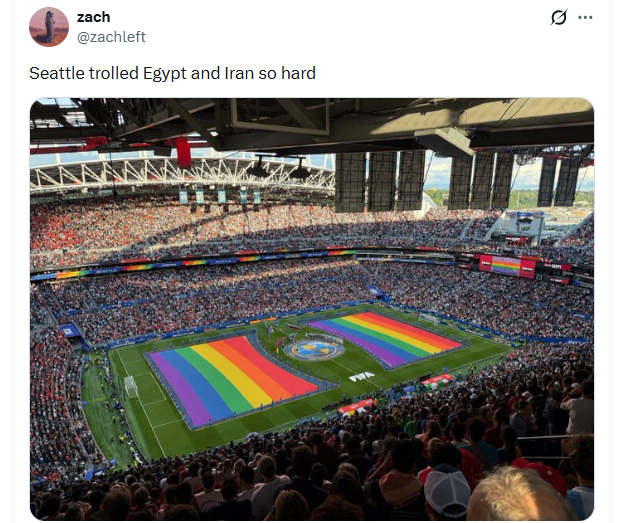
An image is being widely shared on social media claiming that during the 2026 FIFA World Cup match between Iran and Egypt in Seattle, Washington, the stadium hosted a “Pride Match,” with massive LGBTQ rainbow flags spread across the pitch before kickoff. Users claim the image shows FIFA allowing rainbow flags inside the stadium during the match. CyberPeace Research Wing's research found the claim to be misleading. There is no evidence that FIFA or the official organizers displayed giant rainbow flags across the pitch during the pre-match ceremony. The viral image has been digitally altered and does not depict an actual scene from the event.
Claim
On June 27, 2026, an X (formerly Twitter) user shared the image with the caption, “Seattle trolled Egypt and Iran so hard.” Similar posts were also circulated on Facebook and other social media platforms in Spanish and Arabic. https://perma.cc/9QUF-Y7LG ,https://x.com/zachleft/status/2070727350288068687/
FactCheck
The image began circulating after the June 26 FIFA World Cup match between Iran and Egypt ended in a 1-1 draw. Iran (Team Melli) had a stoppage-time goal disallowed, leaving the team short of qualifying for the tournament’s 32-team knockout stage, while Egypt advanced alongside Belgium from the top of Group G. https://www.abs-cbn.com/sports/othersports/2026/6/29/iran-team-to-fly-home-monday-following-world-cup-exit-1334

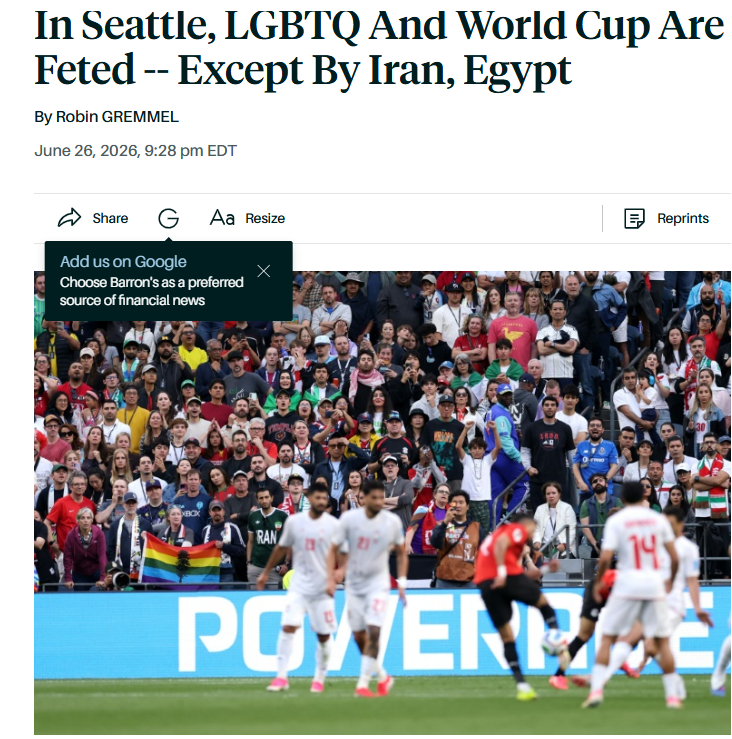
Further research found that Egyptian and Iranian officials had objected to pro-LGBTQ celebrations surrounding the fixture. Seattle authorities had designated the match as part of the city's Pride celebrations well before the World Cup draw determined which teams would play there. Under Iranian Islamic law, homosexuality is illegal and can be punishable by death. In Egypt, same-sex relations are often prosecuted under broadly worded laws relating to "debauchery" or "immorality. https://www.barrons.com/news/in-seattle-lgbtq-and-world-cup-are-feted-except-by-iran-egypt-f6d970dc.
We also examined the viral image using OpenAI’s image verification tool, which detected the presence of SynthID—an invisible watermark embedded by Google in AI-generated content. This indicates that the image was created or modified using AI tools.

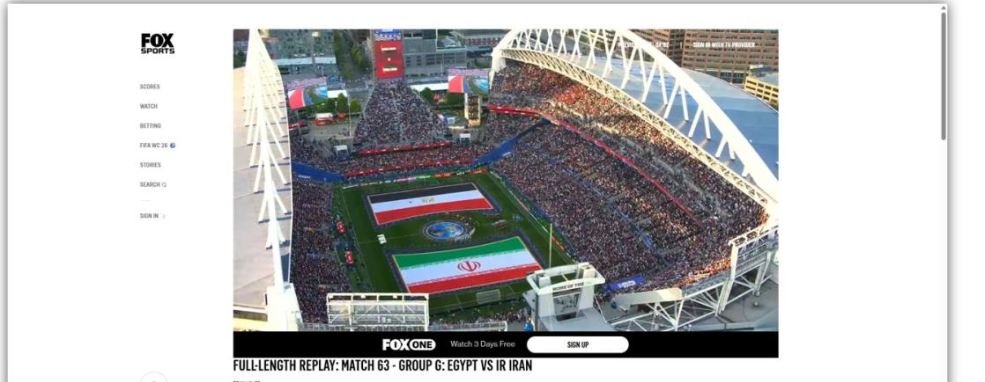
In addition, we reviewed the live broadcasts of the match by Fox Sports and Universo. Both broadcasts showed only the national flags of Iran and Egypt displayed on the pitch before kickoff. No giant rainbow flags appeared during the pre-match ceremony.
Conclusion
Our research found the viral claim to be misleading. There is no evidence that FIFA or the official organizers displayed massive rainbow flags across the pitch during the Iran vs Egypt World Cup match. The viral image is digitally altered, contains indicators of AI generation, and does not represent an actual moment from the event.

Related Blogs

Executive Summary
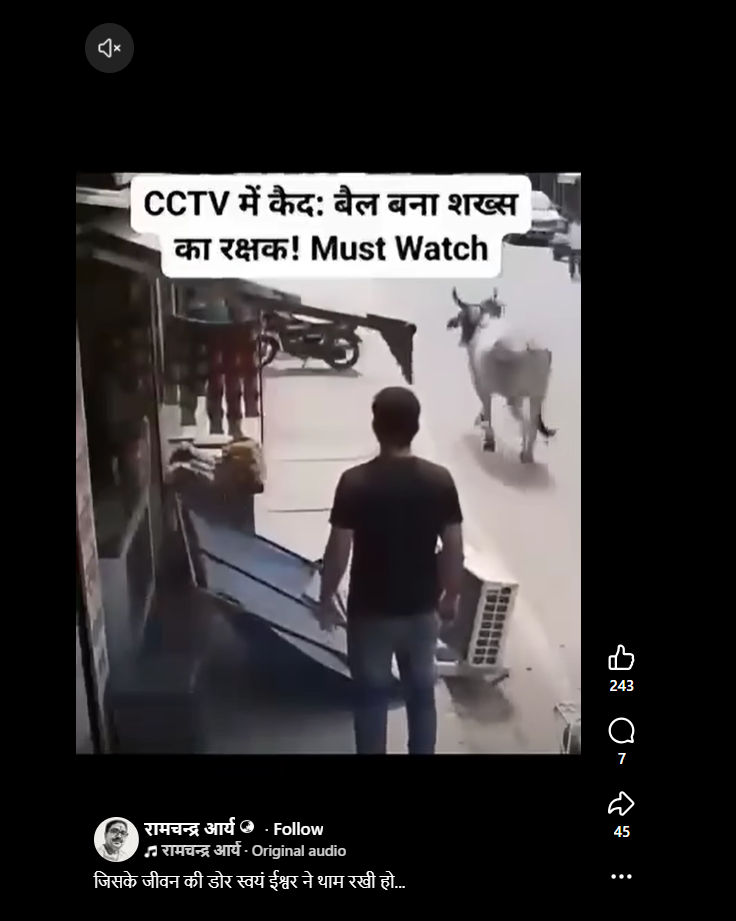
A video circulating on social media shows a bull pushing a young man who appears to be engrossed in looking at his mobile phone. Users sharing the video claim that the CCTV footage captured an incident in which the bull pushed the man and saved him from a mishap. CyberPeace Research found the viral claim to be false. Our research found that the viral video is AI-generated and is being shared with a misleading claim.
Claim
A Facebook user shared the viral video with the caption, “The one whose life is being protected by God Himself.” The post link, archive link and screenshot are provided below.
https://www.facebook.com/reel/2568861153629568
Fact-check
To verify the viral claim, we conducted a Google Lens search using keyframes from the video. During the search, we found the same video on the Facebook page of user ‘Powarstar Sumit Pathak’. The video, uploaded on October 4, 2026, carries an ‘AI content’ label.
https://www.facebook.com/reel/1473526454600527
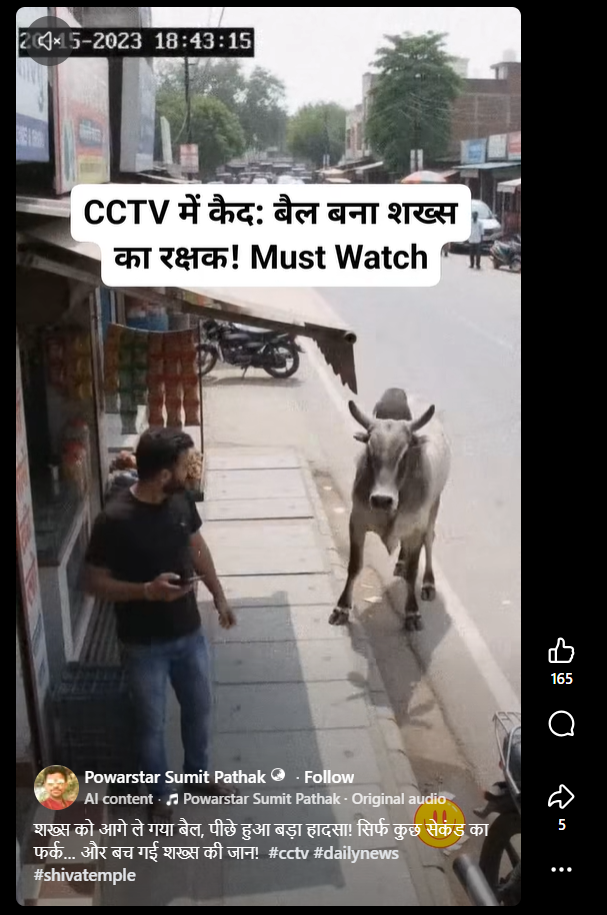
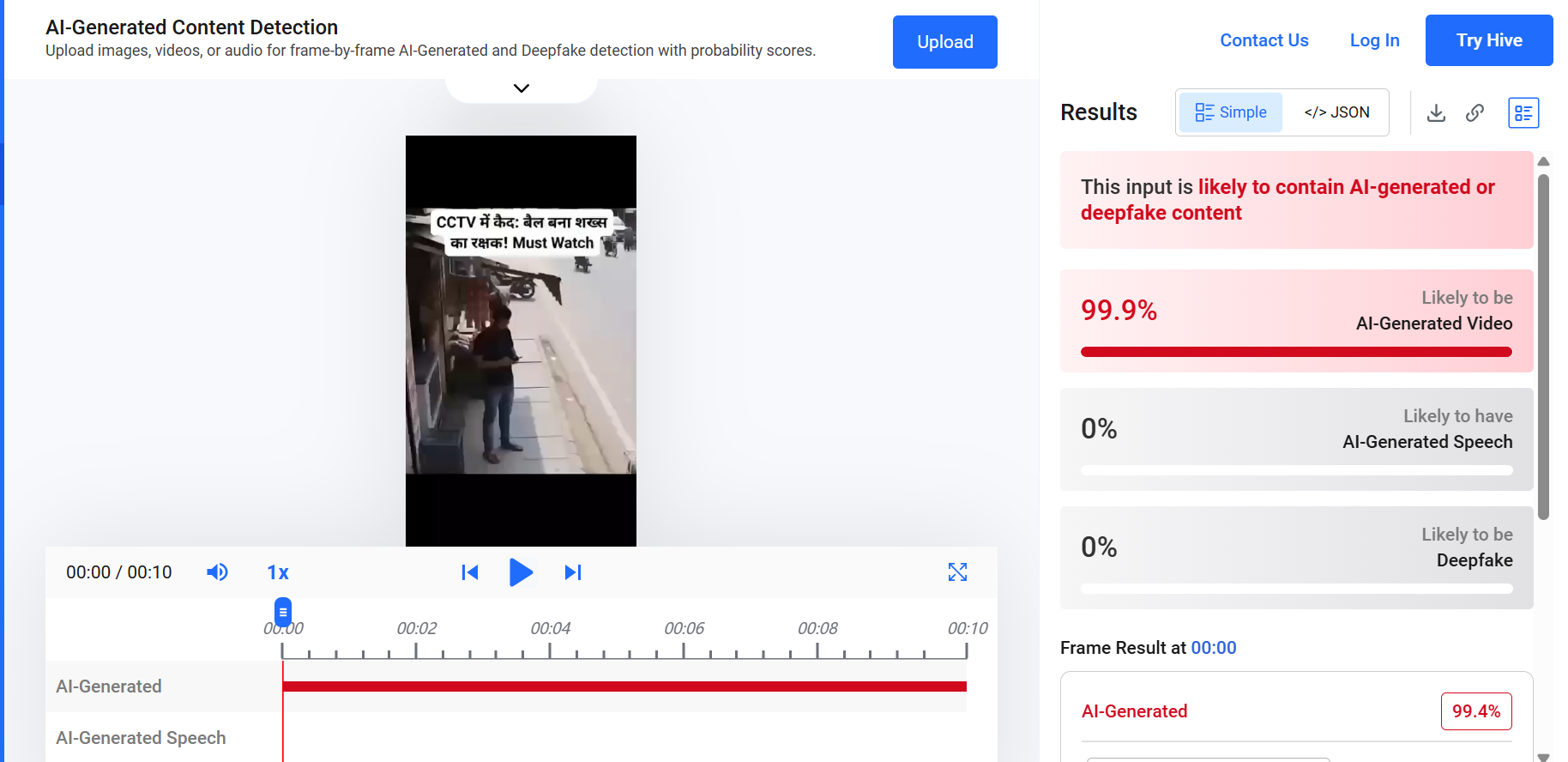
As part of our further research, we scanned the viral video using the AI detection tool Hive Moderation. The results indicated that the video is 99% likely to be AI-generated.
Conclusion
Our research found that the viral video is AI-generated and is being shared with a misleading claim. The video does not show an actual incident involving a bull saving a young man, as claimed in social media posts. The viral claim is therefore false.

Introduction
Children today are growing up amidst technology, and the internet has become an important part of their lives. The internet provides a wealth of recreational and educational options and learning environments to children, but it also presents extensively unseen difficulties, particularly in the context of deepfakes and misinformation. AI is capable of performing complex tasks in a fast time. However, misuse of AI technologies led to increasing cyber crimes. The growing nature of cyber threats can have a negative impact on children wellbeing and safety while using the Internet.
India's Digital Environment
India has one of the world's fastest-growing internet user bases, and young netizens here are getting online every passing day. The internet has now become an inseparable part of their everyday lives, be it social media or online courses. But the speed at which the digital world is evolving has raised many privacy and safety concerns increasing the chance of exposure to potentially dangerous content.
Misinformation: The raising Concern
Today, the internet is filled with various types of misinformation, and youngsters are especially vulnerable to its adverse effects. With the diversity in the language and culture in India, the spread of misinformation can have a vast negative impact on society. In particular, misinformation in education has the power to divulge young brains and create hindrances in their cognitive development.
To address this issue, it is important that parents, academia, government, industry and civil society start working together to promote digital literacy initiatives that educate children to critically analyse online material which can ease navigation in the digital realm.
DeepFakes: The Deceptive Mirage:
Deepfakes, or digitally altered videos and/or images made with the use of artificial intelligence, pose a huge internet threat. The possible ramifications of deepfake technology are concerning in India, since there is a high level of dependence on the media. Deepfakes can have far-reaching repercussions, from altering political narratives to disseminating misleading information.
Addressing the deepfake problem demands a multifaceted strategy. Media literacy programs should be integrated into the educational curriculum to assist youngsters in distinguishing between legitimate and distorted content. Furthermore, strict laws as well as technology developments are required to detect and limit the negative impact of deepfakes.
Safeguarding Children in Cyberspace
● Parental Guidance and Open Communication: Open communication and parental guidance are essential for protecting children's internet safety. It's a necessity to have open discussions about the possible consequences and appropriate internet use. Understanding the platforms and material children are consuming online, parents should actively participate in their children's online activities.
● Educational Initiatives: Comprehensive programs for digital literacy must be implemented in educational settings. Critical thinking abilities, internet etiquette, and knowledge of the risks associated with deepfakes and misinformation should all be included in these programs. Fostering a secure online environment requires giving young netizens the tools they need to question and examine digital content.
● Policies and Rules: Admitting the threats or risks posed by misuse of advanced technologies such as AI and deepfake, the Indian government is on its way to coming up with dedicated legislation to tackle the issues arising from misuse of deepfake technology by the bad actors. The government has recently come up with an advisory to social media intermediaries to identify misinformation and deepfakes and to make sure of the compliance of Information Technology (IT) Rules 2021. It is the legal obligation of online platforms to prevent the spread of misinformation and exercise due diligence or reasonable efforts are made to identify misinformation and deepfakes. Legal frameworks need to be equipped to handle the challenges posed by AI. Accountability in AI is a complex issue that requires comprehensive legal reforms. In light of various cases reported about the misuse of deepfakes and spreading such deepfake content on social media, It is advocated that there is a need to adopt and enforce strong laws to address the challenges posed by misinformation and deepfakes. Working with technological companies to implement advanced content detection tools and ensuring that law enforcement takes swift action against those who misuse technology will act as a deterrent among cyber crooks.
● Digital parenting: It is important for parents to keep up with the latest trends and digital technologies. Digital parenting includes understanding privacy settings, monitoring online activity, and using parental control tools to create a safe online environment for children.
Conclusion
As India continues to move forward digitally, protecting children in cyberspace has become a shared responsibility. By promoting digital literacy, encouraging open communication and enforcing strong laws, we can create a safer online environment for younger generations. Knowledge, understanding, and active efforts to combat misinformation and deeply entrenched myths are the keys to unlocking the safety net in the online age. Social media Intermediaries or platforms must ensure compliance under IT Rules 2021, IT Act, 2000 and the newly enacted Digital Personal Data Protection Act, 2023. It is the shared responsibility of the government, parents & teachers, users and organisations to establish safe online space for children.
References:

Executive Summary
Amid rising tensions involving Iran, Israel and the United States following reports in early April 2026 that Iran had shot down an American fighter aircraft, a picture is going viral on social media claiming to show Iranian soldiers standing beside the wreckage of a destroyed helicopter while holding the Iranian flag. Research by CyberPeace Research Wing found that the viral claim is false. The image has been created using artificial intelligence and does not depict any real incident. The picture was generated using Google AI tools and is being misleadingly circulated online with different claims.
Claim
A Facebook page named “official salman 09” shared the image on May 1, 2026, along with a lengthy caption describing the scene as a symbol of Iran’s battlefield success. The post portrayed the image as evidence of a helicopter being brought down during ongoing tensions in the Middle East and suggested that the photo reflected strength, morale and victory in war.
- https://www.facebook.com/permalink.phpstory_fbid=pfbid02TAac6JwZha2UU4T8QiCGq4ENmsnNSwvigaz3vKxr9UWLbhghNsnMMpZdQ3dUuQ1rl&id=100092392280139
- https://archive.ph/

Fact Check
To verify the authenticity of the image, we first conducted a reverse image search using Google Lens. The image did not appear in any credible news reports or authentic media coverage. Instead, it was found circulating mainly on social media platforms, raising suspicion about its authenticity. We then analyzed the image using Google’s SynthID detector. The analysis confirmed the presence of a SynthID watermark with a “very high confidence” score, indicating that the image had been generated using Google AI tools. SynthID is Google’s watermarking technology used to identify AI-generated content created through its models.

Further verification using another AI-detection platform, Hive Moderation, also indicated a high probability that the image had been generated using AI. The tool identified Gemini as the likely source and assessed the image as overwhelmingly AI-generated.

Conclusion
Our research confirms that the viral image is AI-generated and unrelated to any real-world event. The picture showing soldiers holding the Iranian flag near helicopter wreckage was created using Google AI tools and is being falsely shared on social media to spread misleading claims.
