

Navigating the Path to CyberPeace: Insights and Strategies
Featured #factCheck Blogs

Executive Summary
A video is being shared on social media showing a female cricket player seemingly making an impressive catch in the air after rotating 360 degrees. The video is being shared with claims that the player pulled off the extraordinary catch in an incredible feat on the cricket field. Research by CyberPeace found the viral claim to be false. Our research revealed that the viral video was edited with the help of AI. The video uses actual broadcast footage from the 2024 Women’s T20 World Cup match between India and New Zealand, but the 360-degree catch shown in the video was not part of the actual match.
Claim:
A video of a female cricketer making an incredible 360-degree catch is being shared on social media as a real incident from a cricket match.
https://www.instagram.com/reels/DdEca3LNT00/

Fact Check
To verify the authenticity of the viral claim, we conducted a Google search using relevant keywords. However, we did not find any credible media reports confirming the claim.

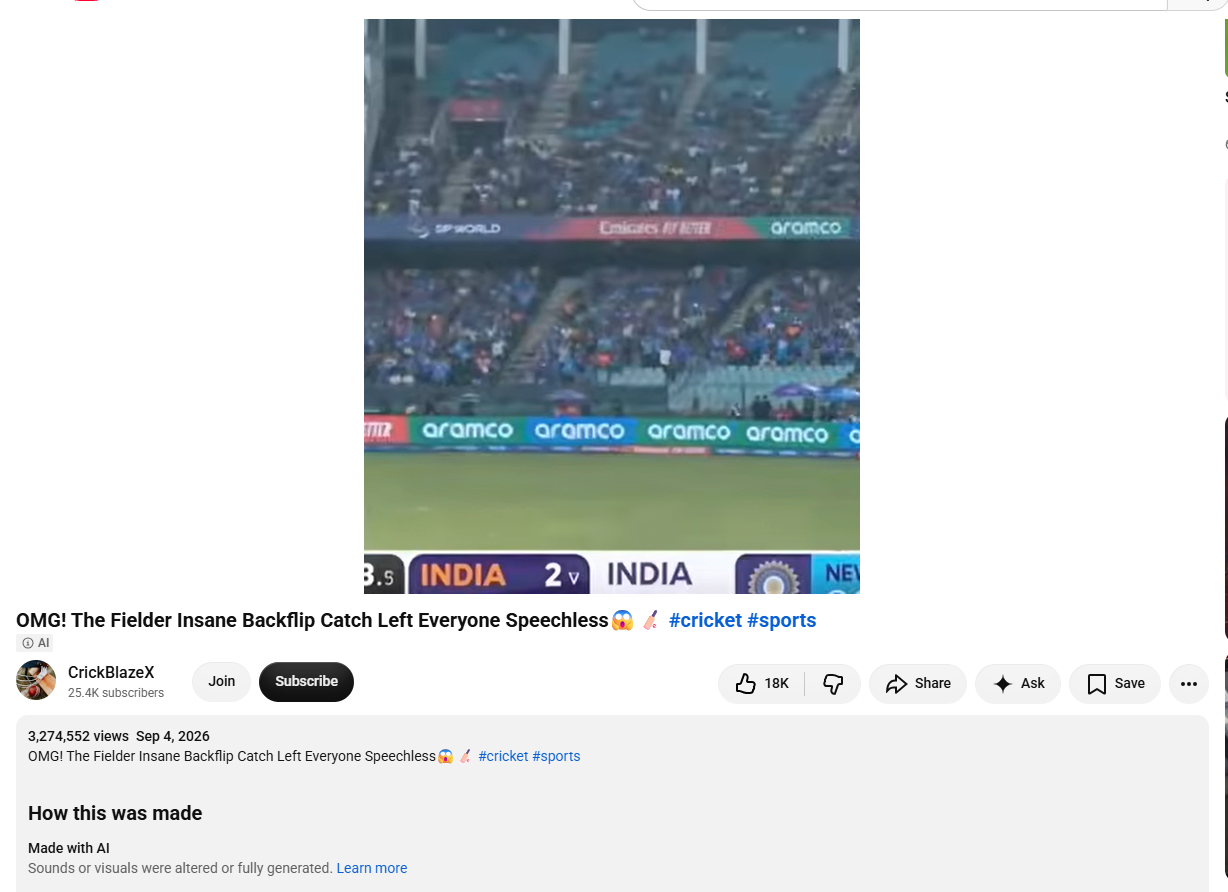
As part of the next step in our research, we conducted a reverse image search of the keyframes from the video. During the search, we found the same video on a YouTube channel, where it was identified as AI-generated.
As the next step, we scanned the viral video using the AI detection tool Hive Moderation. According to the tool’s results, there is a 70 percent probability that the video is AI-generated.

As part of the next step in our research, we scanned the viral video using an AI detection tool. According to the results, the viral video is AI-generated.

Conclusion
Our research found that the viral video was edited with the help of AI. The video uses actual broadcast footage from the 2024 Women’s T20 World Cup match between India and New Zealand. However, the 360-degree catch shown in the video was not part of the actual match.

Executive Summary:
A video is being shared on social media showing two women wearing burqas arguing with a man riding a motorcycle on a road and later slapping him. Social media users are sharing the video as being from India, claiming that Muslim women are being targeted in public places. The video is being widely circulated across various social media platforms with this claim. However, research by the CyberPeace Research Wing found that the viral video does not show an incident of Muslim women being targeted in India. The video is actually from the shooting of a short film in Pakistan.
Claim:
A Facebook user shared the viral video claiming, “Muslim girls are now being targeted while walking on the streets in our country. Seeing a Muslim girl, a love-struck man threw his mobile number in front of her while walking past. The viral video clearly shows what the boy did, and the girl's reaction is worth watching. Such acts are harming social harmony in our country.”
The archived link and screenshot of the post are provided below.
https://www.facebook.com/reel/1087774553785531

FactCheck
To verify the authenticity of the viral claim, we conducted a reverse image search of the keyframes from the video. During the search, we found the same video on a Pakistani Instagram account, @livinglegendsbiography, where it was posted on May 25, 2026. The caption of the post clearly stated that the video was part of a drama shoot featuring Heera Faisal and Rabia Faisal. The video itself also contains indications that it was staged. After the man is slapped, both women wearing burqas and the motorcycle rider can be seen laughing. This further confirms that the video is not from a real incident but was part of a scripted drama shoot. The link to the post and a screenshot are provided below.
https://www.instagram.com/reels/DYwXNp4I-eE/

Continuing our research, we also found the trailer of the short film ‘Ghairat’ posted on Rabia Faisal’s Instagram account on July 5, 2026. The trailer features several scenes that closely resemble those seen in the viral video. According to the information provided in the post, the short film was released on July 20, 2026. This further confirms that the viral video is not from a real incident, but was part of the shooting of the short film. The link to the post and a screenshot are provided below.

Conclusion:
The evidence gathered during our research makes it clear that the video circulating on social media does not show a real incident of Muslim women being targeted in public places in India. During the research, we found the same video on a Pakistani Instagram account, where it was identified as part of a drama shoot featuring Heera Faisal and Rabia Faisal. We also found the trailer of the short film ‘Ghairat’ on Rabia Faisal’s account, which contains scenes resembling those seen in the viral video. Based on the available evidence, it is clear that the viral video was recorded during the shooting of a short film in Pakistan. Therefore, the claim that the video shows an incident of Muslim women being targeted in India is false.

Executive Summary
A video is going viral on social media with the claim that ₹500 Indian currency notes were found inside a bag during the floods in Nepal. A research by CyberPeace’s research wing found that the video is not from the recent floods in Nepal, but from Vrindavan in Uttar Pradesh. The video was uploaded on July 14 by an Instagram creator on their account. The 30-second video shows people travelling in a boat finding a bag floating in the water, from which several ₹500 currency notes are pulled out.
Claim:
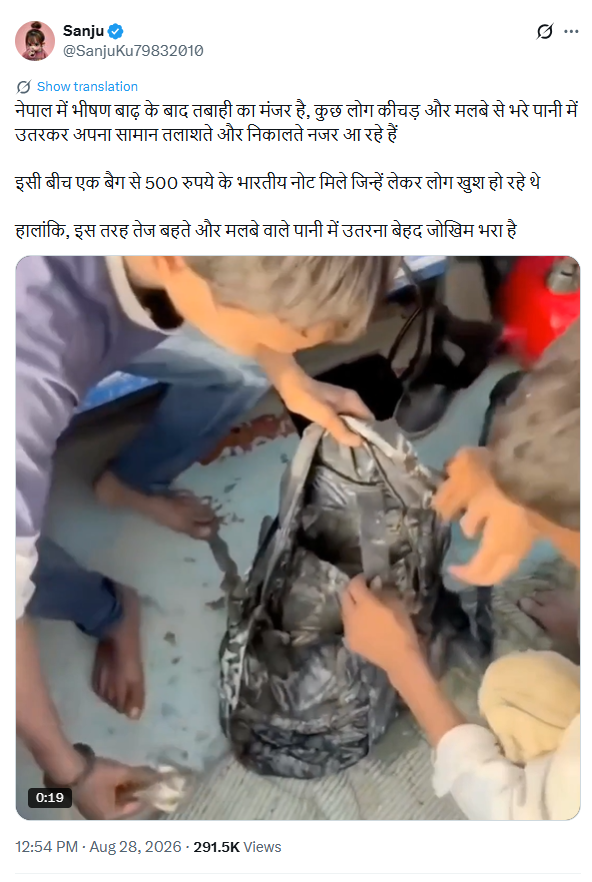
The video has been shared on X with a caption claiming that Nepal is witnessing widespread destruction following severe floods, with people seen wading through muddy, debris-filled water to search for and recover their belongings. The caption further claims that people found a bag containing ₹500 Indian currency notes and were seen rejoicing over the discovery. It also cautions that entering fast-flowing, debris-filled floodwater is extremely dangerous.
https://x.com/SanjuKu79832010/status/2093238274206887946
Fact Check:
To verify the viral video claiming that a bag containing ₹500 Indian currency notes was found during the floods in Nepal, we conducted a reverse image search using keyframes from the footage. The search led us to a video uploaded on the Instagram account ‘parshuram_676’ on July 14, 2024.
https://www.instagram.com/p/Daw7aYJAjoc/
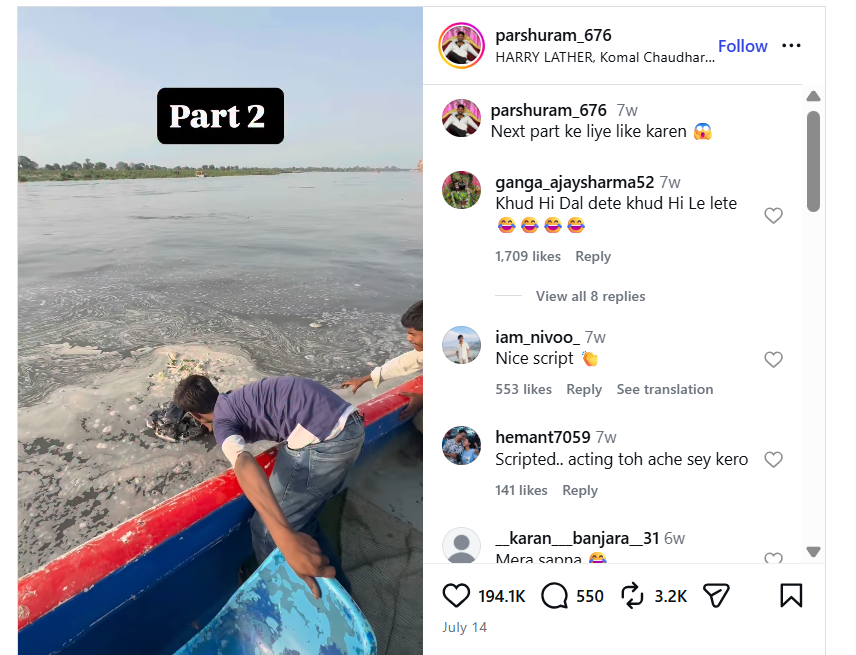
Additionally, we found the same boat seen in the viral video in several other videos uploaded on the same Instagram account.

Not only that, we also found several videos with visuals similar to those in the viral video uploaded on the same video creator’s Facebook account. The information provided on the Facebook account also lists Vrindavan, Uttar Pradesh, as the location.
https://www.facebook.com/profile.php?id=61567184794045

Conclusion:
The evidence gathered during our research clearly establishes that the video being circulated with the claim that ₹500 Indian currency notes were found inside a bag during the floods in Nepal was actually filmed by a video creator in Vrindavan, Uttar Pradesh.

Executive Summary:
A video is being widely circulated on social media in connection with the relief and rescue operations following the devastating floods in Nepal. The video shows security personnel rescuing a girl trapped under debris and later giving her soup. The video is being shared with the claim that security personnel rescued a girl who had been buried under mud three days after the disaster in Timure village of Nepal’s Rasuwa district. A research by CyberPeace Research Wing found the viral claim to be false. Our research revealed that the viral video does not depict a real incident but is AI-generated.
Claim:
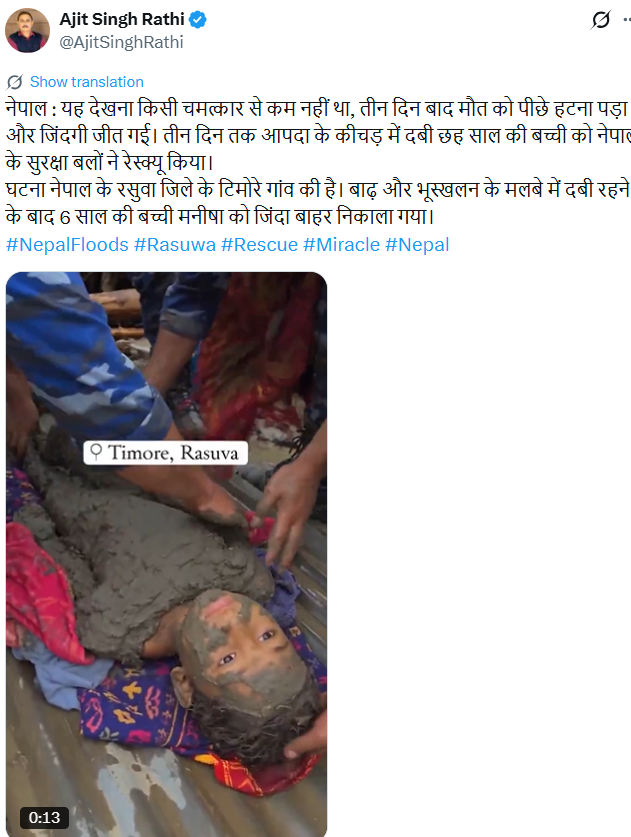
A user on social media platform X (formerly Twitter) shared the viral video with the caption: “Nepal: It was nothing short of a miracle to witness this. After three days, death had to retreat and life emerged victorious. A six-year-old girl, who had been buried under the disaster debris for three days, was rescued by Nepal’s security forces. The incident took place in Timure village of Nepal’s Rasuwa district. Six-year-old Manisha was pulled out alive after being buried under debris caused by floods and landslides.”
https://x.com/AjitSinghRathi/status/2094306889001742826?s=20
Fact Check:
A close examination of the viral video revealed several inconsistencies, raising suspicions that the video was AI-generated. We then scanned the viral video using the AI detection tool Hive Moderation. According to the results, there is a 77 per cent likelihood that the viral video is AI-generated.
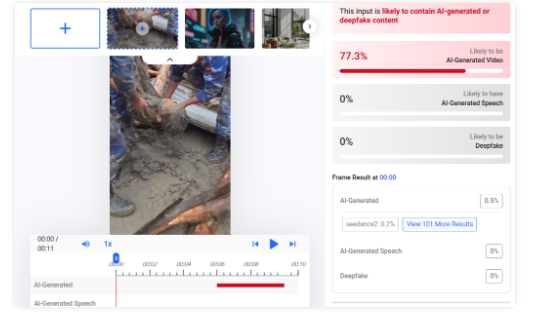
As part of our research, we scanned the video using the AI detection tool Wasitai. According to the results, the viral video is AI-generated.

Conclusion:
Our research found the viral claim to be false. Our findings revealed that the viral video does not depict a real incident but is AI-generated.
Executive Summary
A video is rapidly going viral on social media, with the claim that transgender women assaulted an Indian Army officer in Thailand. The post further claims that the officer had failed to pay the agreed amount, following which the incident took place. A research by CyberPeace’s research wing found that the viral video is fake. In fact, the video shows an incident that took place in Pattaya, Thailand, in December 2025. The 52-year-old Indian national, Raj Jasuja, was allegedly assaulted by a group of transgender women following a dispute over payment for sexual services. Therefore, the claim made in the post is false.
Claim:
A video shared on social media claims that transgender women assaulted an Indian Army general in Thailand.
https://x.com/navyhato/status/2094322001490116659
https://archive.ph/Scfgd

Fact Check:
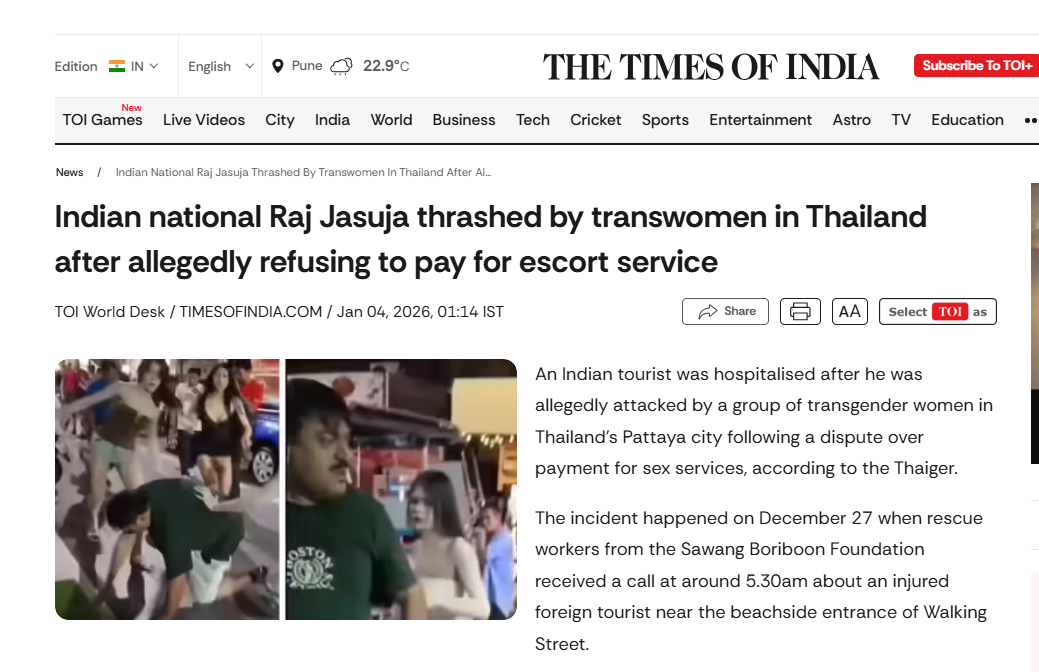
To verify the claim, we conducted a Google search using relevant keywords but found no credible media reports confirming that Indian Army Lieutenant General Rajiv Kumar Sahni was involved in the incident. During the subsequent research, we compared the viral screenshot with the original report published by The Times of India. The comparison revealed that the original headline, “Indian national Raj Jasuja thrashed by transwomen in Thailand after allegedly refusing to pay for escort service,” had been digitally altered to read, “Indian Army Lieutenant General Rajiv Kumar Sahni thrashed by transwomen in Thailand after allegedly refusing to pay for escort service.” Further, both the viral screenshot and the original report display the same breadcrumb trail — “News / Indian National Raj Jasuja Thrashed By Transwomen In T…”. This provides further evidence that the headline in the viral screenshot was digitally manipulated.
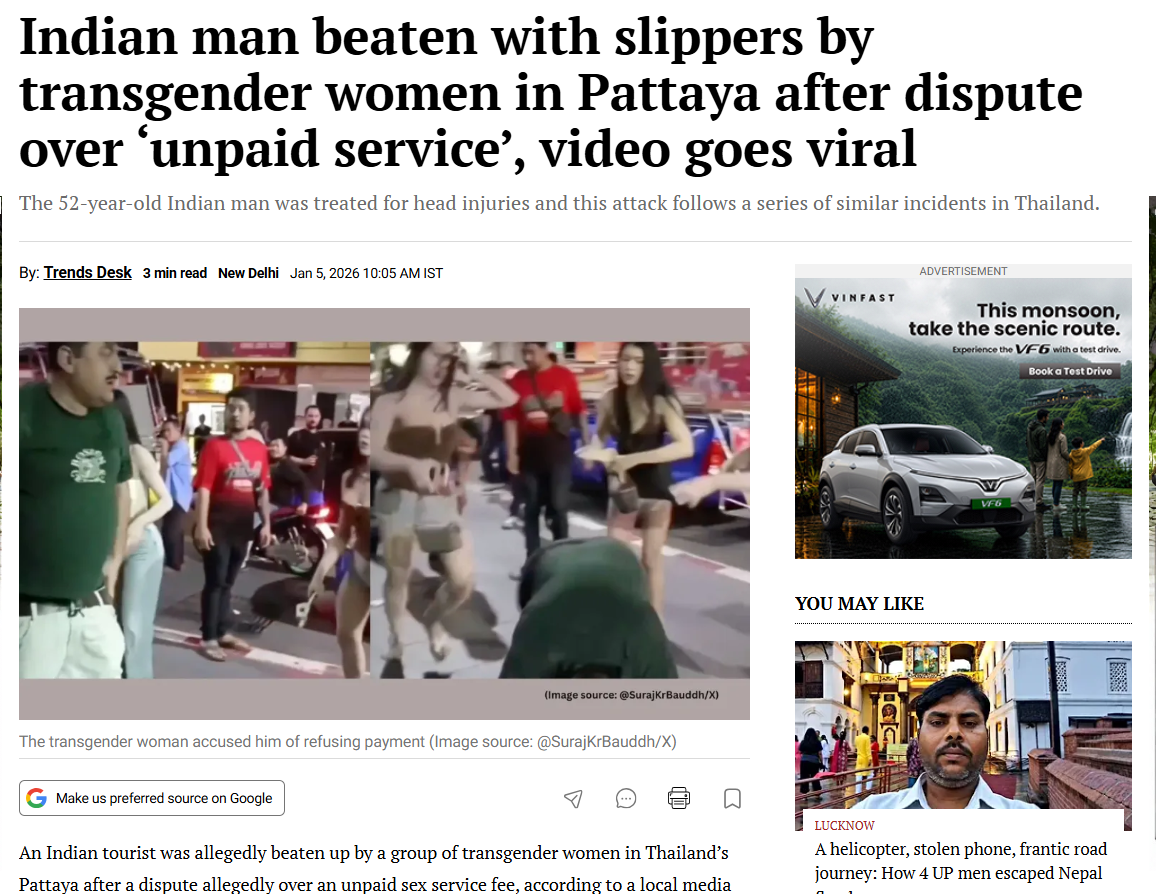
After establishing the context of the viral claim, we conducted a Google search using relevant keywords. During the search, we found a report published on The Indian Express website on January 5, 2026, which featured the same visuals as those seen in the viral video. According to the report, a 52-year-old Indian tourist was allegedly assaulted by a group of transgender women in Pattaya, Thailand. The incident reportedly stemmed from a dispute over an unpaid fee for sexual services. The viral video, recorded on December 27, shows three transgender women allegedly assaulting the man with slippers. According to the report, the dispute escalated after the man allegedly refused to pay the amount demanded and attempted to leave the spot in a car. One of the transgender women reportedly accused him of refusing to make the payment. He was subsequently kicked and beaten before emergency responders intervened.
In the next step of our research, we found another report published on the India Today website on January 5, 2026. The report featured the same visuals as those seen in the viral video. According to the report, the incident took place on the morning of December 27, 2025, in the Walking Street area of Pattaya, Thailand.

Conclusion:
Our research found that the claim that Indian Army Lieutenant General Rajiv Kumar Sahni was assaulted in Thailand is false. The viral video actually shows an incident that took place in Pattaya, Thailand, in December 2025, in which 52-year-old Indian national Raj Jasuja was allegedly assaulted by a group of transgender women following a dispute over payment for sexual services. The viral post falsely links the incident to an Indian Army officer, thereby misrepresenting the identity of the person involved.
Executive Summary
A Pakistani propaganda account on social media has claimed that Russian President Vladimir Putin ignored Indian Prime Minister Narendra Modi and stood alongside the Pakistani Prime Minister. Research by CyberPeace’s research wing found that PM Modi and President Putin held a bilateral meeting on the sidelines of the SCO Summit in Bishkek, Kyrgyzstan. During the meeting, the two leaders exchanged warm greetings and discussed several issues, including the India-Russia strategic partnership.
Claim:
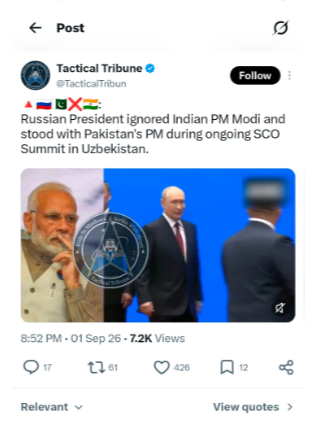
A social media post claims that Russian President Vladimir Putin ignored Prime Minister Narendra Modi and stood alongside the Pakistani Prime Minister.
https://x.com/TacticalTribun/status/2094808040973172786
Fact Check:
To verify the truth behind the viral claim, we searched Google using relevant keywords related to Prime Minister Narendra Modi’s official visit to Kyrgyzstan. During the search, we found a video posted on ANI’s X handle on September 1, 2026. According to the video, Prime Minister Narendra Modi met Chinese President Xi Jinping and Russian President Vladimir Putin in Bishkek during the 26th Shanghai Cooperation Organisation (SCO) Summit.
https://x.com/ANI/status/2094675518897692896

In the next step of our research, we scanned Prime Minister Narendra Modi’s X account, where we found a post dated August 31, 2026. In the post, PM Modi wrote, “Had extensive discussions with President Putin. Discussed the full range of the India-Russia Special and Privileged Strategic Partnership. It is gladdening to see significant progress across various sectors in recent years. Focus areas for the India-Russia friendship remain energy, innovation, space, fertilisers and people-to-people linkages.”
https://x.com/narendramodi/status/2094433881714032725?s=20

At the end of our research, we found a report published on the Aaj Tak website on September 1, 2026. According to the report, Prime Minister Narendra Modi was in Bishkek, the capital of Kyrgyzstan, where he attended the Shanghai Cooperation Organisation (SCO) Summit. Several leaders of the organisation, including Chinese President Xi Jinping, Russian President Vladimir Putin and Pakistani Prime Minister Shehbaz Sharif, also attended the summit. During the summit, a moment was captured in which PM Modi warmly greeted Chinese President Xi Jinping and Russian President Vladimir Putin together, while Shehbaz Sharif was seen quietly walking past them.

Conclusion:
Our research established that the claim that Russian President Vladimir Putin ignored Prime Minister Narendra Modi and gave preference to the Pakistani Prime Minister is misleading. The viral post presents video footage from different occasions out of context. In reality, Prime Minister Narendra Modi and President Putin held a bilateral meeting, during which the two leaders discussed several key issues, including the India-Russia strategic partnership.

Executive Summary
A video is being shared on social media showing a little girl crying while holding onto a pole amid muddy water covering a road. The video is being shared with the claim that it shows the situation during the recent floods in Nepal. A research by CyberPeace’s Research Wing found the viral claim to be false. Our research revealed that the viral video is AI-generated and is being shared with a misleading claim.
Claim:
A user on the social media platform Instagram shared the viral video with the caption: “The situation in Nepal looks extremely frightening after the floods. Floodwater has covered the area, and the frightened face of a little girl amid the water is moving everyone emotionally. Seeing the innocent girl’s condition in this difficult situation has raised concerns among people.”
https://www.instagram.com/reels/DctRY9OF0Th/

Fact Check
A reverse image search of keyframes from the viral video on Google did not yield any credible media reports related to the video. Upon closely examining the viral video, we suspected that it might be AI-generated. We subsequently scanned the video using the AI detection tool Hive Moderation. According to the results, the video has a 99 percent probability of being AI-generated.

As part of the next step of ourresearch, we scanned the viral video using another AI detection tool, Sightengine. According to the results, the video has a 99 percent probability of being AI-generated.

Conclusion
Our research found that the viral video is AI-generated and is being shared with a misleading claim.

Executive Summary
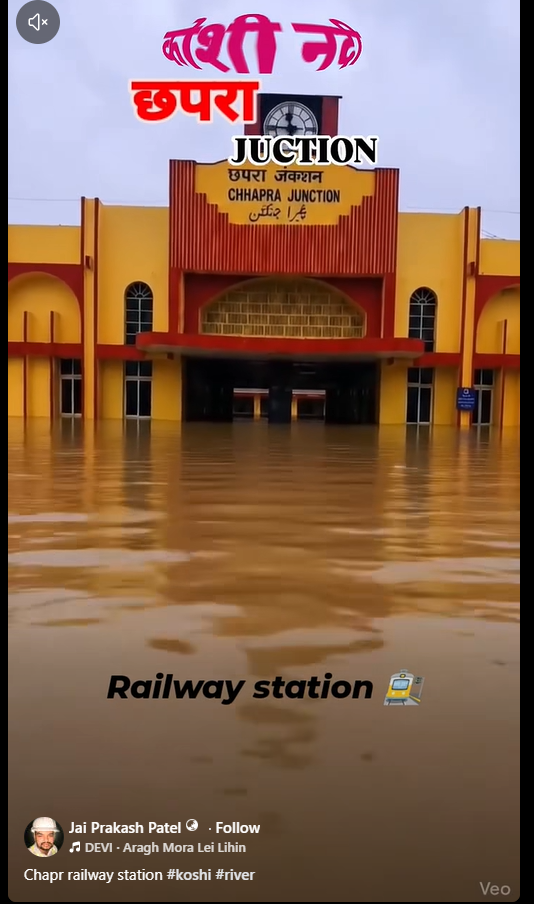
A video is being shared on social media showing a railway station completely submerged in water. The video is being shared with the claim that it shows Chapra Railway Station in Bihar, where severe waterlogging occurred following heavy rainfall. The water level in the video appears so high that even the platforms are not visible. A research done by the Research Wing of the CyberPeace found the viral claim to be false. Our research revealed that the viral video is AI-generated and is being shared on social media with a misleading claim.
Claim:
A user on the social media platform Facebook shared the viral video on August 31, 2026, claiming that Chapra Railway Station had been inundated. The link to the post, archived link, and screenshots are provided below.
https://www.facebook.com/reel/1393870102719178
Fact Check
To debunk the viral claim, we searched Google using relevant keywords. However, we could not find any credible media reports confirming the claim. As the next step in our research, we also checked the status of trains arriving at and departing from Chapra Railway Station. We reasoned that if the station had actually been submerged to the extent shown in the video, rail operations would likely have been disrupted and some trains might have been cancelled. However, our research found no information about any train operating from Chapra being cancelled.

Upon closely examining the viral video, we suspected that it might be AI-generated. We subsequently scanned the video using the AI detection tool Hive Moderation. According to the tool’s results, the viral video was found to be 99 percent AI-generated.

As part of the next step of our research, we scanned the viral video using another AI detection tool, Wasitai AI. According to the tool’s results, the viral video is AI-generated.

Conclusion
Our research found that the viral video is AI-generated and is being shared on social media with a misleading claim.

Executive Summary:
A video is being shared on social media with the claim that a man cut off the electricity supply to his girlfriend’s village after getting angry with her. A research by CyberPeace’s research wing found that the video is actually from Baksa district in Assam, where a lineman named Anwar was repairing an electric line.
Claim:
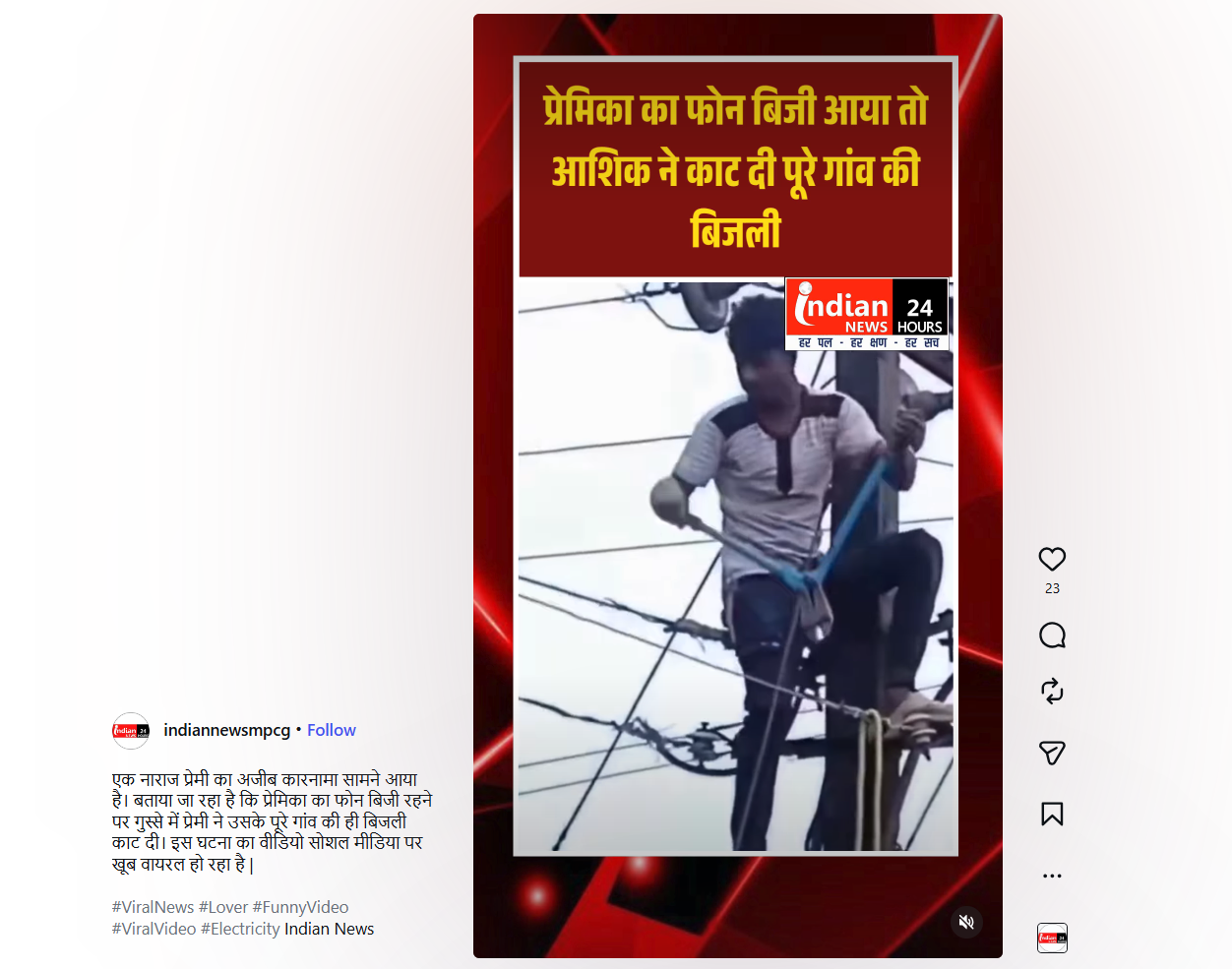
The viral video is 10 seconds long and shows a man climbing an electricity pole and cutting an electric wire. The video is being shared on social media with the claim that the man cut off the electricity supply to his girlfriend’s entire village after her phone line was busy.
https://www.instagram.com/reels/Dcamn0aGBJ-/
Fact Check:
To investigate the viral claim that a man cut off the electricity supply to his girlfriend’s village after getting angry with her, we conducted a reverse image search using keyframes from the video. During the search, we found the original video uploaded on the YouTube account named ‘Technical Work’ on July 17, 2025. According to the video description, the video is related to electrical work.
https://www.youtube.com/shorts/iHtG5xwHtKI

Additionally, we found several videos related to electrical work uploaded on the same YouTube account. We also found a Facebook page associated with this YouTube account.

Conclusion
The evidence gathered during our research makes it clear that the viral claim that a man cut off the electricity supply to his girlfriend’s village after getting angry with her is completely false. In reality, the video shows electricity workers repairing a power line in Assam.

Executive Summary
Amid the floods in Nepal, several videos are being shared on social media, claiming to show the current situation in the country. A research done by the Research Wing of the CyberPeace found that the video showing elephants is from an incident that occurred before the floods in Nepal, while the video showing the street is likely AI-generated.
Claim 1
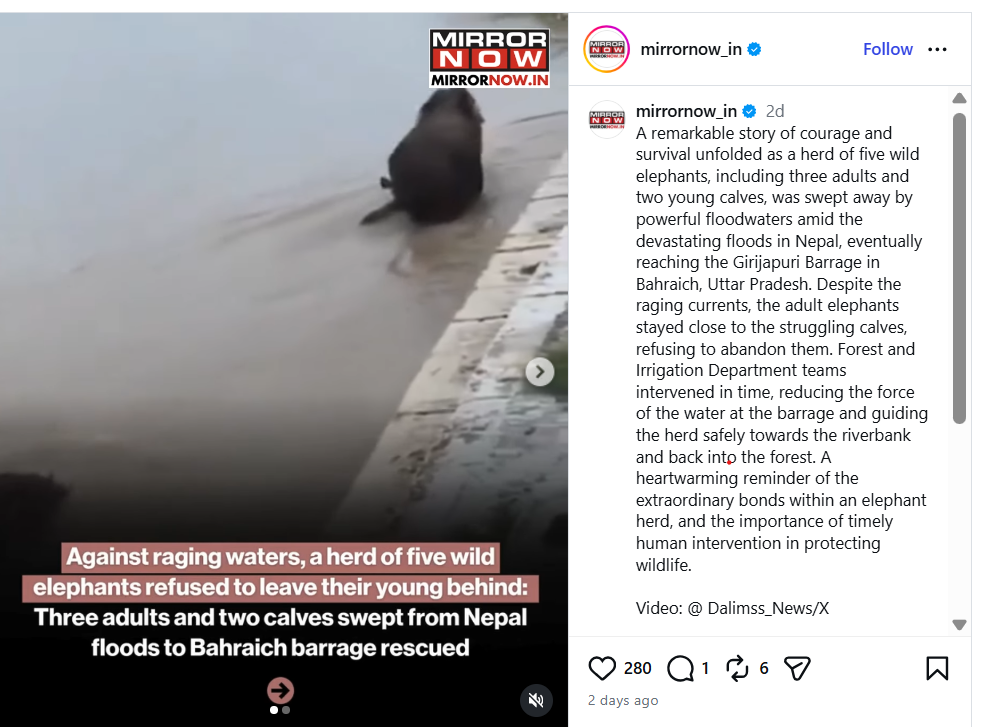
Videos claiming to show a street being swept away by flash floods in Nepal and a herd of elephants being carried away by the floods and reaching Uttar Pradesh are going viral on social media.
https://www.instagram.com/p/DcimGaiiCa7/
Claim 2
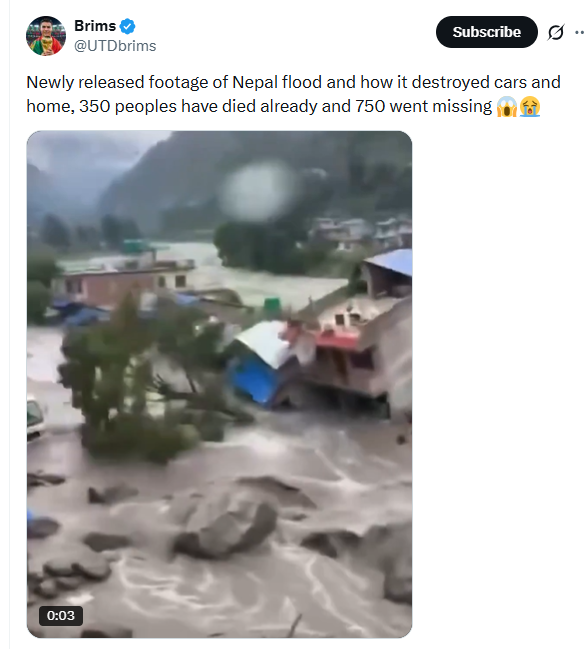
A newly surfaced video purportedly shows the devastation caused by floods in Nepal, with cars and homes being destroyed. It is being claimed that 350 people have died and 750 are missing so far
https://x.com/UTDbrims/status/2092829398462341484?s=48
Fact Check 1
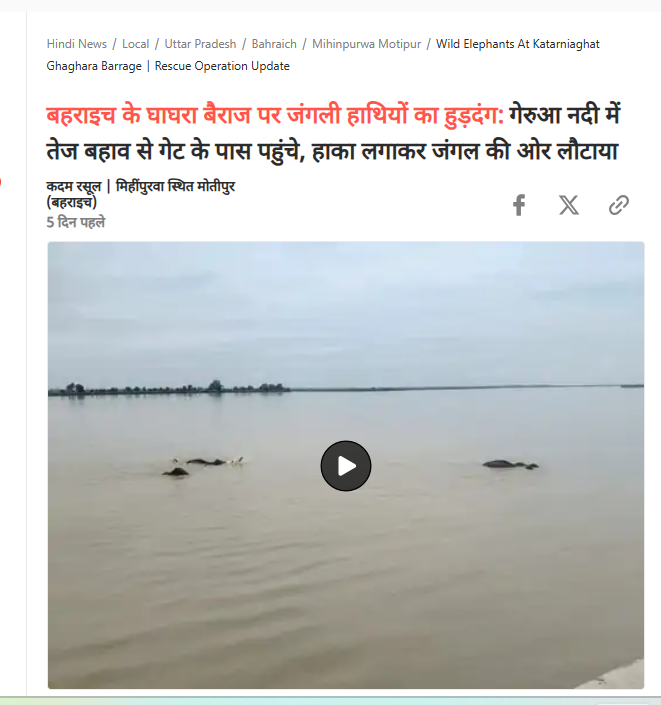
The first video claims to show a herd of wild elephants that was swept away by the floods in Nepal and reached Uttar Pradesh. We conducted a reverse image search of the first video using Google Lens and found a report by Hindi news publication Dainik Bhaskar, which shared a video featuring visuals similar to those in the viral clip. According to the report, a herd of wild elephants coming from the Gerua River reached the gates of the Chaudhary Charan Singh Ghaghra Barrage in Bahraich district, Uttar Pradesh, due to the strong current of the river. The report also quoted the Forest Range Officer as saying that the area is adjacent to an elephant corridor, which is why elephants frequently move through the region.
Fact Check 2
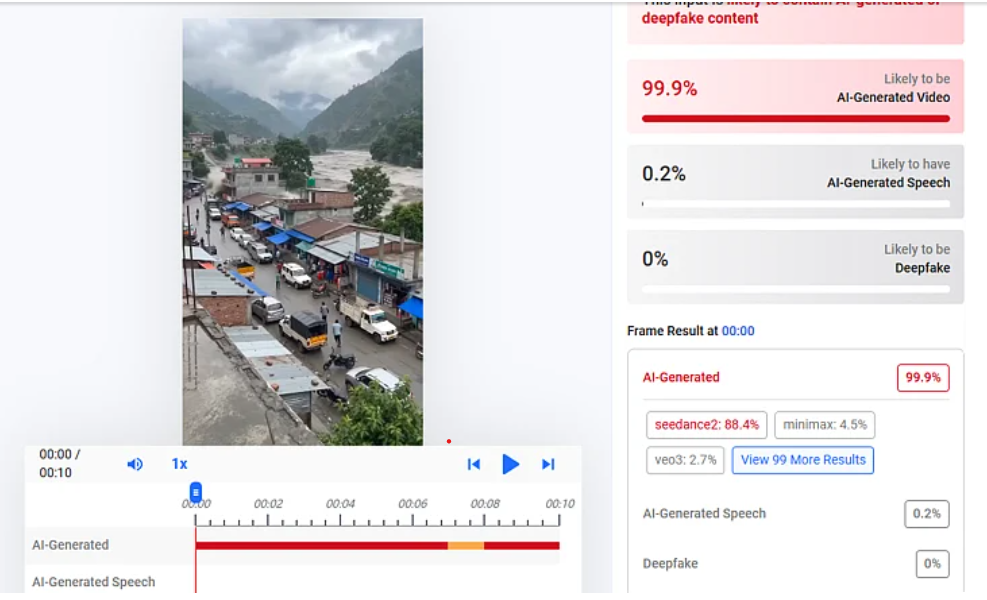
The second video shows a street being completely swept away by floodwaters. We conducted a reverse image search of the video using Google Lens but could not find any credible source that had shared the footage. Following this, we ran the video through the AI detection tool Hive Moderation, which flagged it as 99 percent likely to be AI-generated.
Conclusion
Our research found that the viral videos being shared as scenes of devastation caused by the recent floods in Nepal are misleading. The video showing a herd of elephants is from a separate incident in Bahraich, Uttar Pradesh, and predates the Nepal floods. Meanwhile, the video showing a street being swept away could not be traced to any credible source and was flagged as 99 percent likely to be AI-generated by Hive Moderation.
Executive Summary
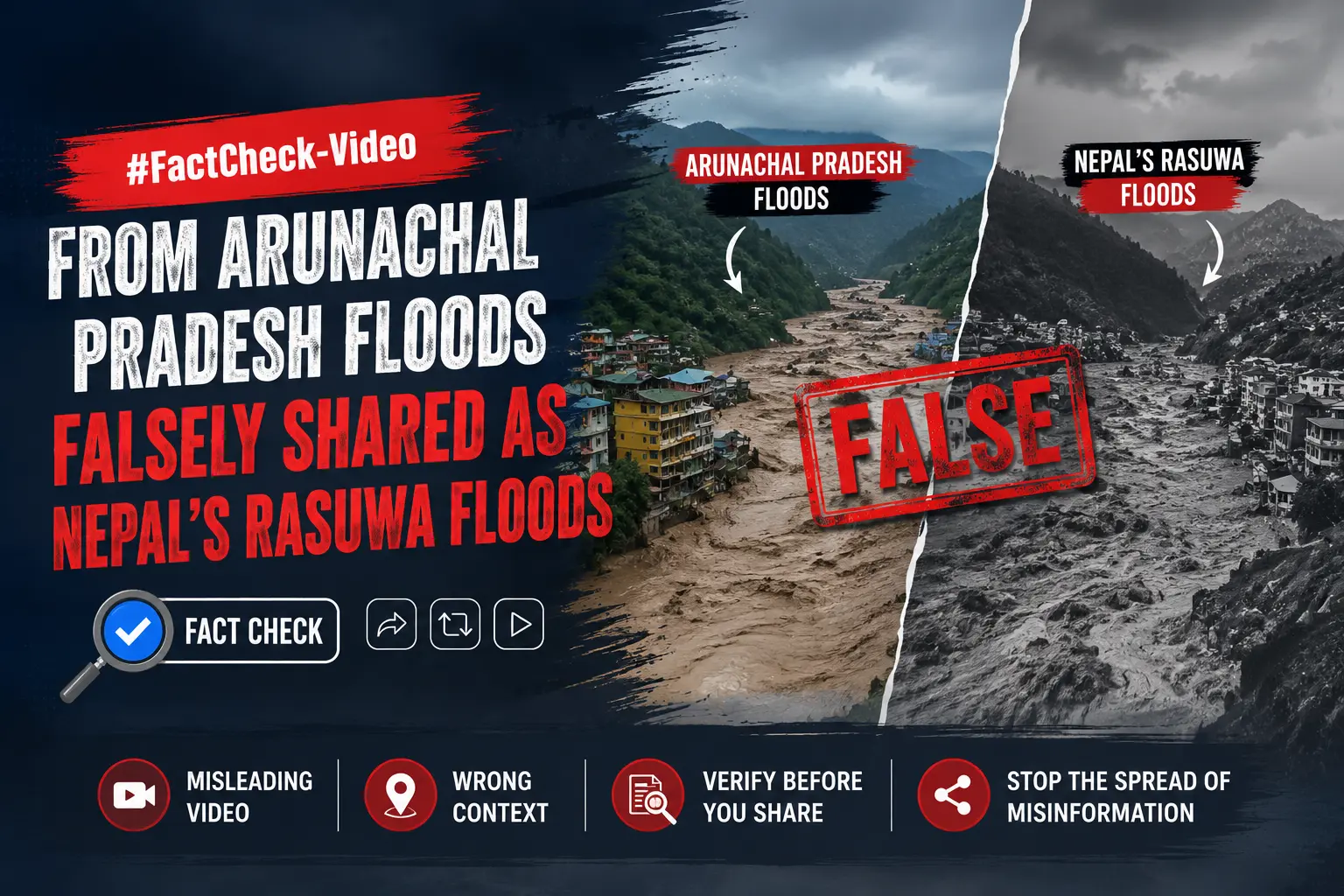
A video showing several houses being swept away by floodwaters is being shared on social media, claiming that it shows flooding in the Rasuwa area of Nepal. Research done by the CyberPeace research wing found that the video is not from Nepal, but is from the floods that occurred in Keyi Panyor district of Arunachal Pradesh in June.
Claim
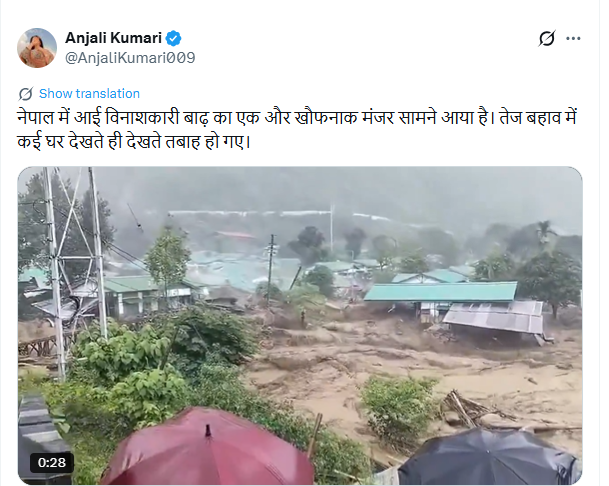
The video was shared on X with the caption: “Another horrifying scene from the devastating floods in Nepal has emerged. Several houses were destroyed within moments by the strong current.”
https://x.com/anjalikumari009/status/2093257147094335652
FactCheck
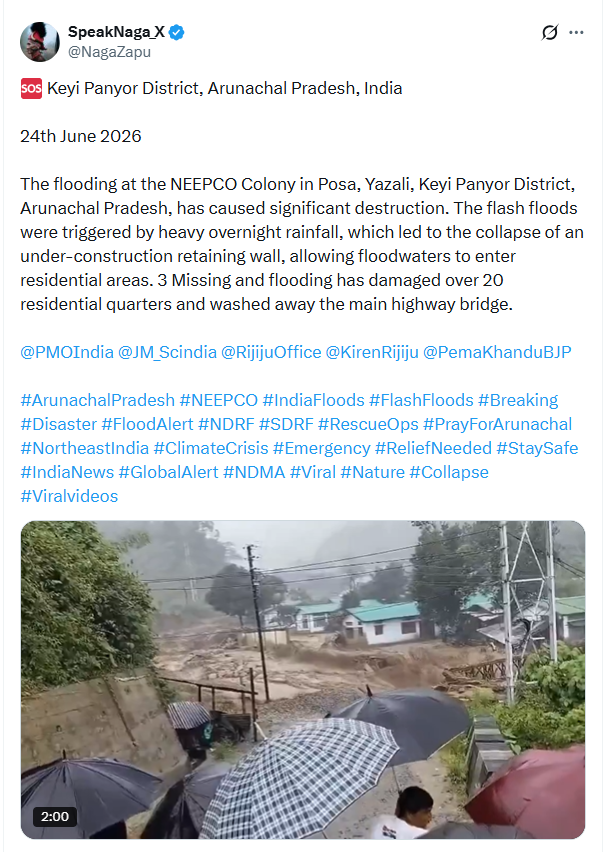
During our research of the video being shared as footage of floods in Nepal’s Rasuwa area, we conducted a reverse image search using keyframes and found a longer version of the video posted on an X account on June 24, 2026. The caption accompanying the video identified it as footage of a flash flood and the resulting devastation in Nipko Colony, Possa, in Arunachal Pradesh’s Keyi Panyor district, on June 24.
https://x.com/NagaZapu/status/2069747140608331962
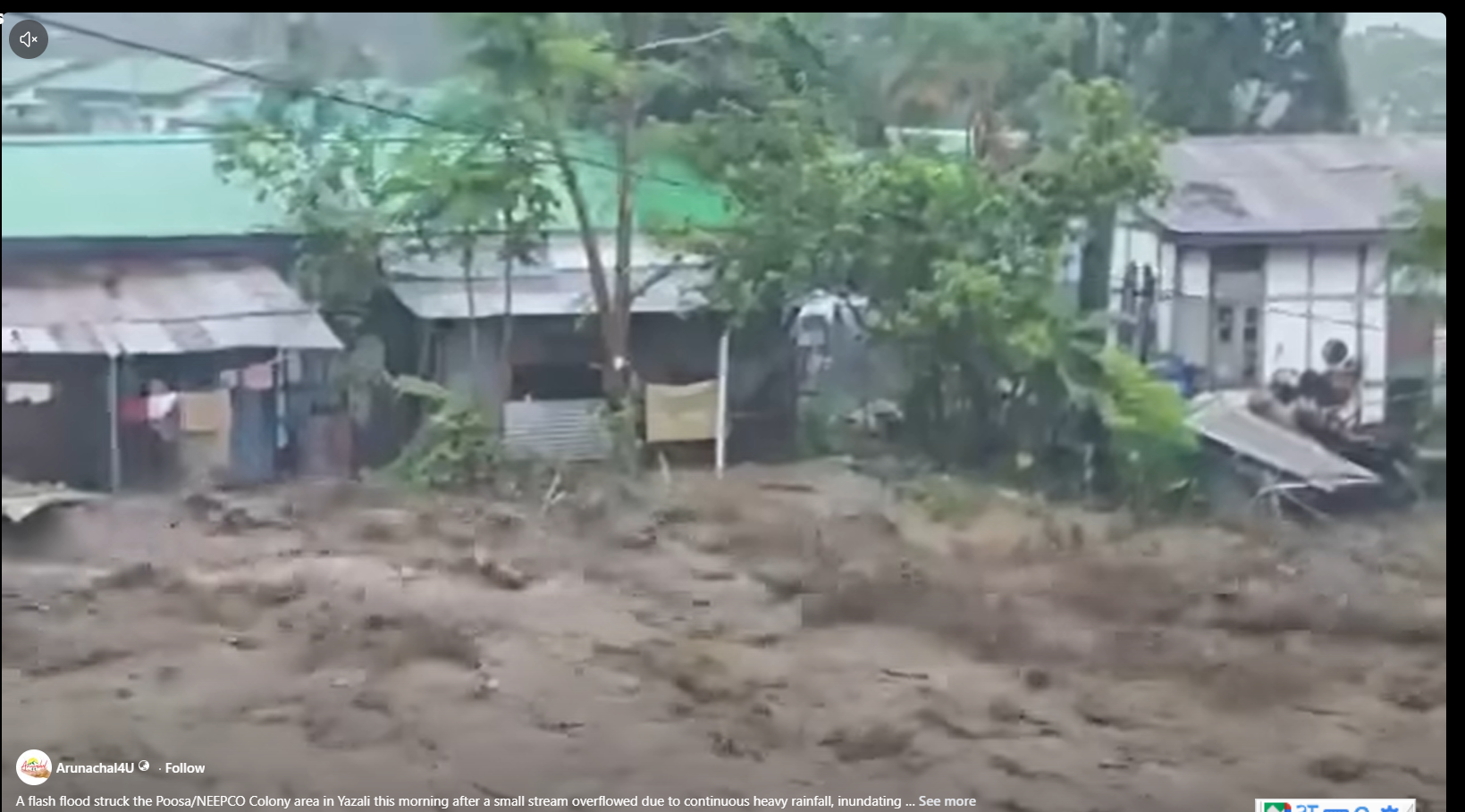
During the research, we also found videos of the flooding in Nipko Colony uploaded on several social media accounts from Arunachal Pradesh on June 24. These posts contained visuals matching those seen in the viral video.
https://www.facebook.com/reel/977442025167230
Additionally, we found a video report uploaded on June 24, 2026, on the Facebook account of a media outlet from Arunachal Pradesh. The report featured footage of the flooding in Nipko Colony. In the audio accompanying the video, the person recording the footage can also be heard describing the devastation caused by the floods.
https://www.facebook.com/reel/1571580381035813
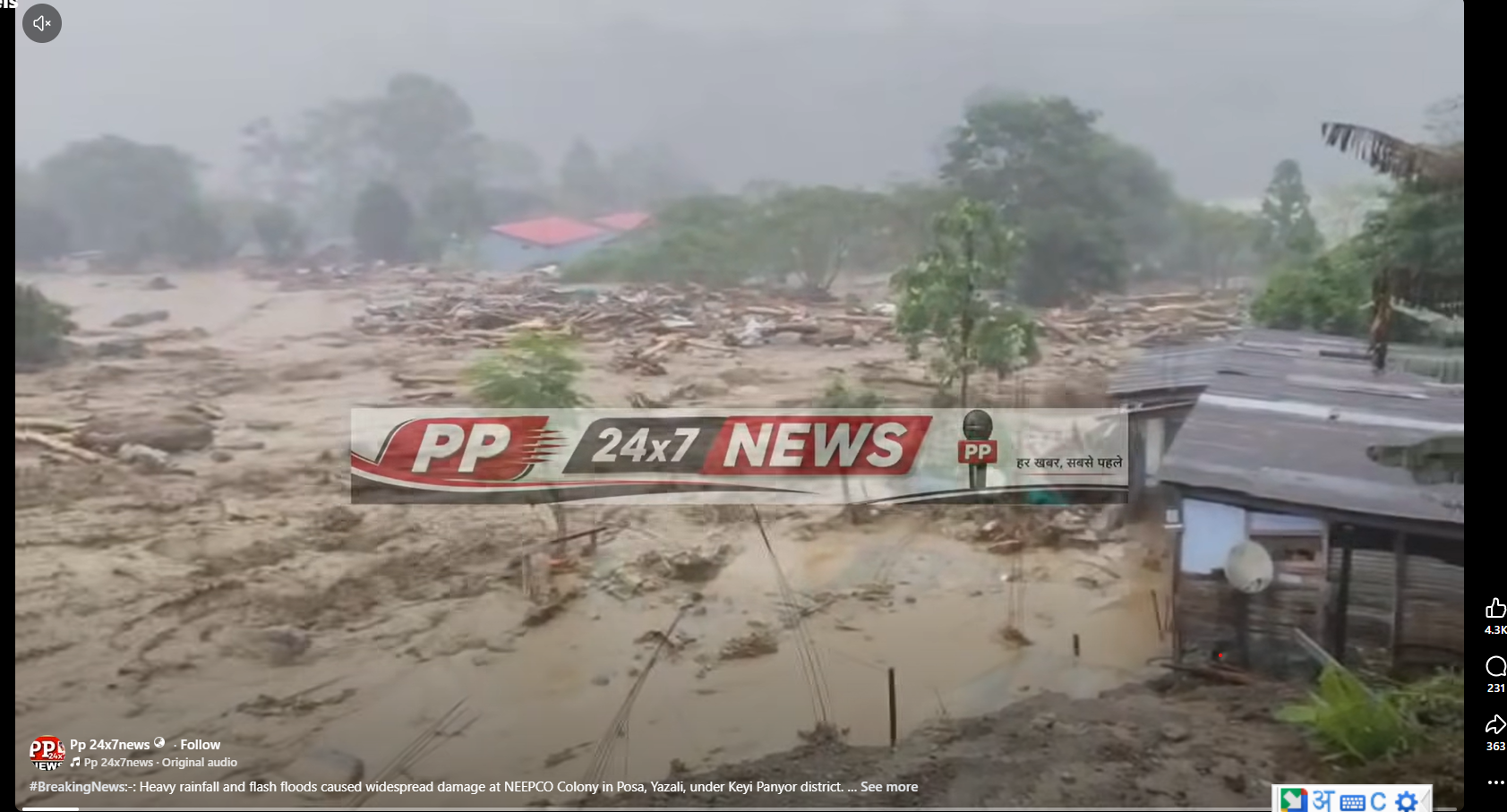
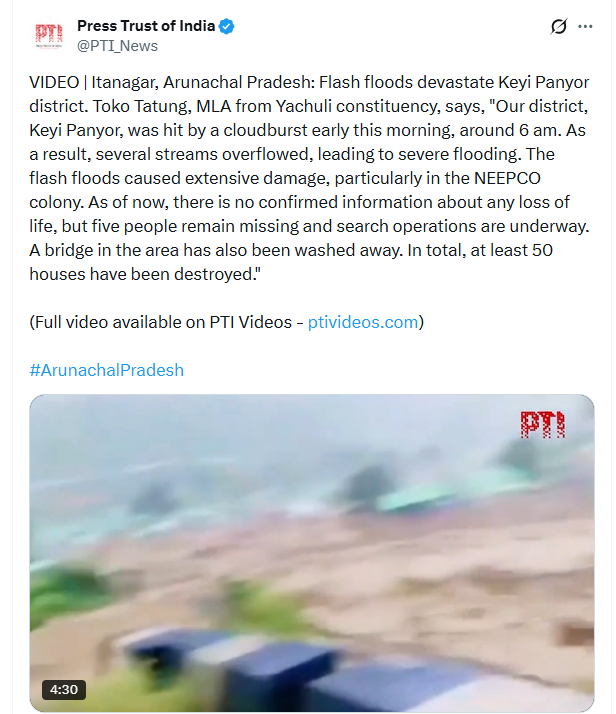
Additionally, we found visuals matching those in the viral video in a 4-minute-35-second video posted on the Press Trust of India’s X account on June 24, 2026. According to media reports, around three people were killed in the floods in Nipko Colony, while approximately 18 houses were swept away.
https://x.com/PTI_News/status/2069747746525835341
Conclusion
The evidence gathered during our research clearly establishes that the video being shared as footage of the floods in Nepal’s Rasuwa area is actually from the floods that struck Keyi Panyor district in Arunachal Pradesh on June 24.
Executive Summary
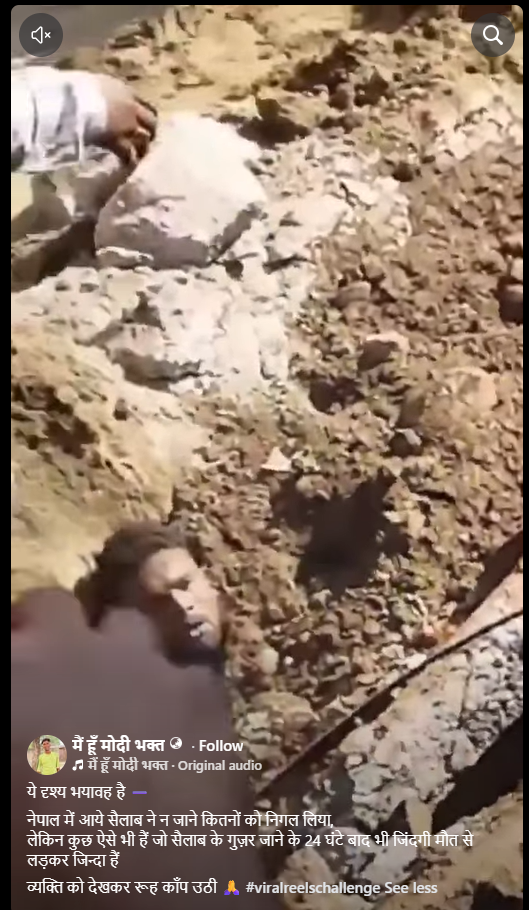
A video is being shared on social media showing several people attempting to rescue a young man trapped under a pile of soil and debris. The video is being shared as footage of the recent floods in Nepal. A research done by the Research Wing of the CyberPeace found the viral claim to be misleading. The research revealed that the video dates back to March 2026 and has no connection with the floods in Nepal. The video is actually from an incident in Prayagraj, Uttar Pradesh, and is being falsely shared as recent footage of the devastation caused by the floods in Nepal.
Claim:
On Facebook, a user shared the viral video with the caption: “These scenes are horrifying. The floods in Nepal have claimed countless lives, but there are also people who are still fighting for their lives even 24 hours after the floodwaters have receded. Seeing this person sends chills down the spine.” The archived post link and screenshot are provided below.
https://www.facebook.com/reel/1104511315422755
FactCheck
To verify the authenticity of the viral claim, we first extracted keyframes from the video and conducted a reverse image search using Google Lens. During the search, we found the same video uploaded on the YouTube account ‘Prayagraj Live 24’ on March 24, 2026.
According to the video description, the footage shows the relief and rescue operation carried out following an accident at a cold storage facility in Phaphamau, Prayagraj. The report link and screenshot are provided below.
https://www.youtube.com/shorts/D6ADJzxZUGQ
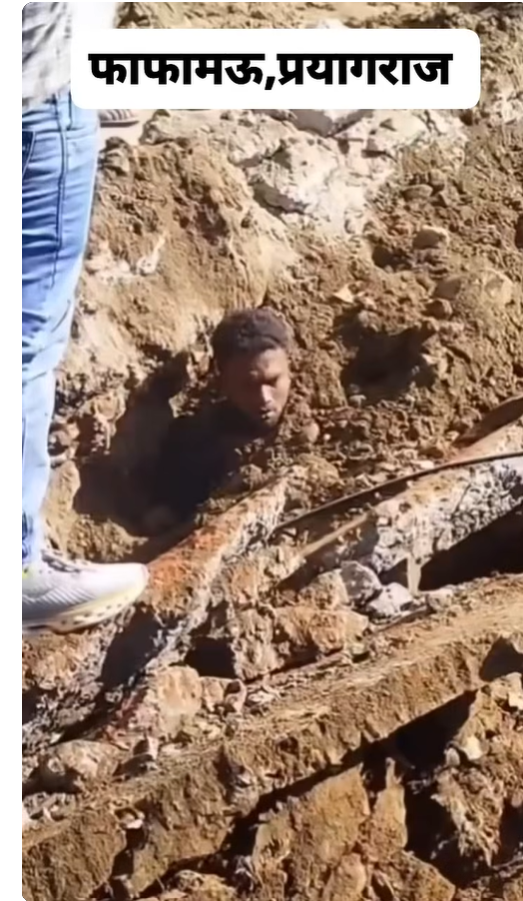
Based on the clue obtained from YouTube, we conducted a Google search using relevant keywords. During the search, we found a report published on the Dainik Bhaskar website on March 24, 2026, which featured the same visuals seen in the viral video. The report link and screenshot are provided below.

According to a report by Dainik Bhaskar, a major accident occurred at Adarsh Cold Storage in the Phaphamau police station area of Prayagraj on March 23, 2026. At around 1:30 pm, an ammonia gas chamber used for cooling at the cold storage exploded, causing the building’s walls and roof to collapse. Several workers were trapped under the debris in the accident.
Conclusion
Our research found that the viral video dates back to March 2026 and has no connection with the floods in Nepal. The video is actually from an incident in Prayagraj, Uttar Pradesh, and is being falsely shared on social media as recent footage of the devastation caused by the floods in Nepal.

Executive Summary
A video is being widely shared on social media, purportedly showing a person drawing water from a drain and using it to cook biryani. The video is being shared as being from India. Some users sharing the video are also advising people to take care of their stomach and intestinal health while eating and drinking outside. A research done by the Research Wing of the CyberPeace found that the viral video is not authentic but AI-generated and is being shared with a misleading claim.
Claim:
A user on the social media platform Facebook shared the viral video with the caption: “A person in India is cooking biryani using water from a drain.” The post link, archive link and screenshot are provided below.
https://x.com/NikolaTesla2010/status/2094021398113226802?s=20

Fact Check:
Upon closely examining the viral video, we noticed the Google Gemini logo clearly visible in the bottom-right corner. This raised suspicions that the video could be AI-generated.

As part of our research, we ran the video through the AI detection tool Hive Moderation. According to the results, the viral video is 99 percent likely to be AI-generated.

As part of our research, we scanned the video using WasIt AI. According to the results, the viral video is AI-generated.

Conclusion
The evidence gathered during our research establishes that the viral video claiming to show a person cooking biryani using water from a drain in India is misleading. The Google Gemini logo is clearly visible in the video, while AI detection tools Hive Moderation and WasIt AI also identified the footage as AI-generated. Therefore, the video does not depict a genuine incident.

Executive Summary
Nepal witnessed severe devastation after floods struck the country on August 26, 2026. Amid this, a video showing a bridge being swept away by floodwaters is being widely shared on social media. Some users are sharing the video claiming that it shows scenes of destruction caused by the floods in Nepal.A research done by the Research Wing of the CyberPeace found that the video being shared with the claim of flood devastation in Nepal is AI-generated. However, it is true that the floods in Nepal have claimed hundreds of lives.
Claim
A user on X shared the video with the caption: “Scenes of devastation in Nepal after the disaster.”
https://www.instagram.com/reels/Dch-EmYNUwz/
https://perma.cc/5VY5-ZFCN?type=standard

Fact Check
We closely examined the video showing the bridge being swept away. A person can be seen standing on top of a truck, which appears unnatural in such a situation. Moreover, even as the bridge collapses, the people on it do not appear to fall directly into the water. These observations led us to suspect that the video was likely AI-generated.
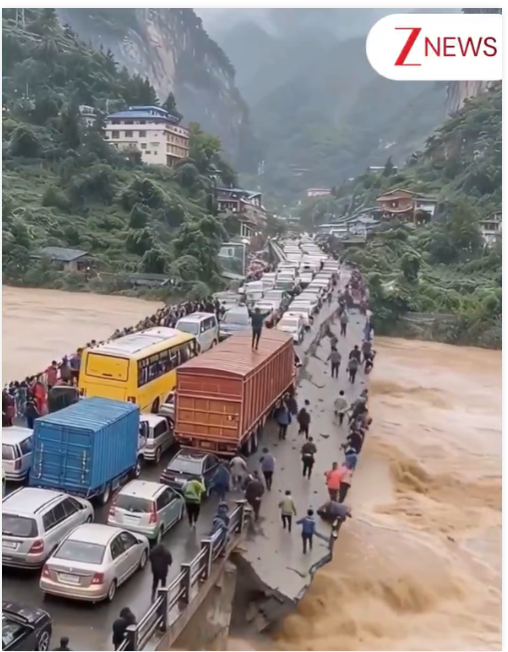
We scanned the viral video using the AI detection tool ‘WasItAI’, which identified it as 99 percent AI-generated.

Meanwhile, another AI detection tool, Sightengine, also identified the video as 99 percent AI-generated.

Conclusion:
A video being shared with the claim that it shows devastation caused by floods in Nepal is actually from the shooting of an Indonesian TV serial, while another viral video is AI-generated.
