
#FactCheck:AI-Generated War Video Falsely Linked to Israel-Iran Tensions Goes Viral
Executive Summary
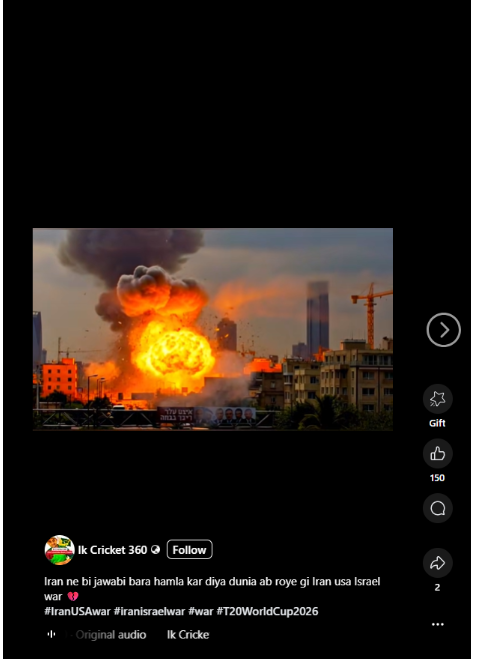
A video is being widely shared on social media linking it to the ongoing tensions between Israel and Iran. The clip shows multiple fighter jets flying across the sky, while massive flames appear to be rising from tall buildings below. The visuals are dramatic and alarming, creating the impression of a large-scale military strike. Users sharing the video claim that after Israel carried out an attack, Iran launched a retaliatory strike on Israel, and that the viral footage captures the aftermath of this counterattack. However, research conducted by the CyberPeace found the claim to be misleading. Our research revealed that the viral video is not authentic but AI-generated.
Claim
On the social media platform Facebook, a user shared the viral video with the caption: “Iran has also carried out a retaliatory attack on Israel.”
(Post link and archive link provided above.)
Factcheck
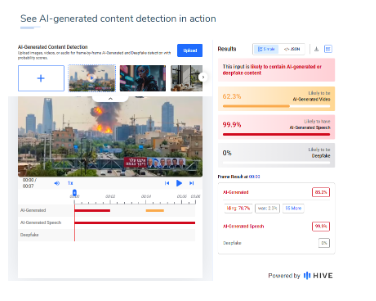
Upon closely examining the video, we noticed several irregularities in the visuals and motion patterns, which raised suspicion that the footage may have been generated using artificial intelligence. To verify this, we analyzed the video using the AI detection tool developed by Hive Moderation. According to the analysis report, there is a 62 percent likelihood that the viral video is AI-generated.
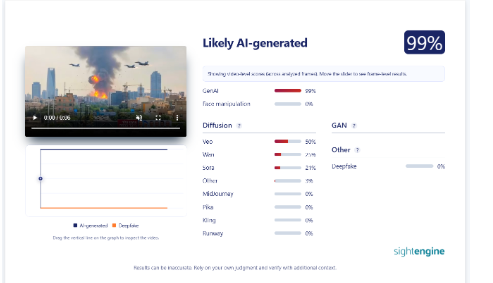
As part of further verification, we also scanned the video using Sightengine. The results indicated an even stronger probability, suggesting that the video is 99 percent AI-generated.
Conclusion
Our research confirms that the viral video does not depict a real military attack. It is AI-generated content being falsely shared in the context of Israel-Iran tensions.

Related Blogs

Executive Summary
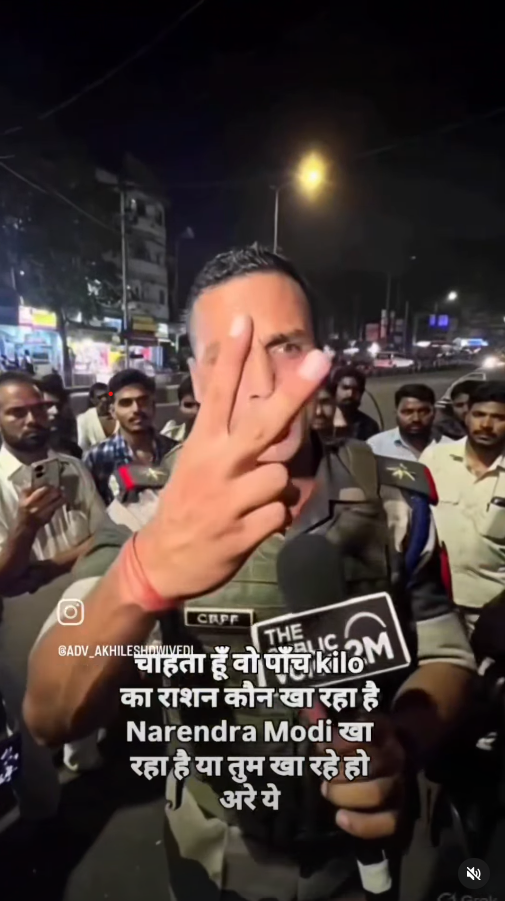
A video is being widely shared on social media showing a purported CRPF trooper accusing Prime Minister Narendra Modi and his government of corruption. In the video, the individual is also seen urging people to vote the BJP government out of power. CyberPeace Research Wing research found that the video was created using artificial intelligence (AI). There is no evidence that any CRPF personnel made such statements.
Claim
An Instagram user shared the viral video, claiming that a CRPF trooper was criticizing Prime Minister Narendra Modi and his government over corruption allegations. The post link, archived link, and screenshot are provided below. https://www.instagram.com/reels/DZ_dbj_SNTf/ , https://www.awesomescreenshot.com/video/53998219?key=46c661b505ba61d19e7d9be97a17c273
FactCheck
A closer examination of the video revealed several inconsistencies. The name tag on the uniform displayed only “CRPF,” which does not match the standard naming format used on official CRPF uniforms. Additionally, several faces visible in the background appeared blurred and distorted, which are common indicators of AI-generated content. We also noticed a visible Grok watermark in the bottom-right corner of the viral clip, suggesting that the video may have been generated or modified using artificial intelligence. Further analysis was conducted using Hive Moderation’s AI detection tool, which indicated the presence of AI-generated or deepfake elements in the video.
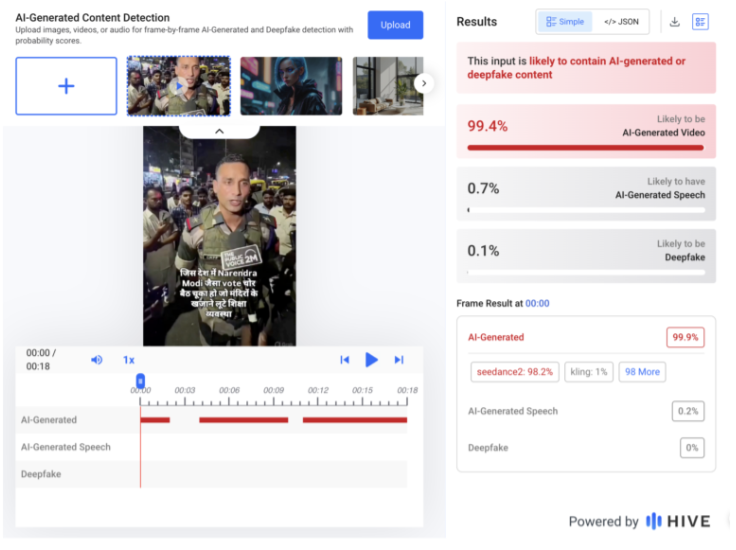
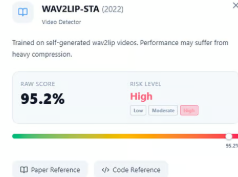
To further verify the authenticity of the clip, we analyzed it using Deepfake-O-Meter. The tool indicated a probability of more than 95 percent that the video was generated using artificial intelligence.
Conclusion
The viral video purportedly showing a CRPF trooper criticizing Prime Minister Narendra Modi and the BJP government is AI-generated. Multiple indicators, AI detection tools, and the clarification issued by the government’s PIB Fact Check confirm that the video is not authentic.

Executive Summary
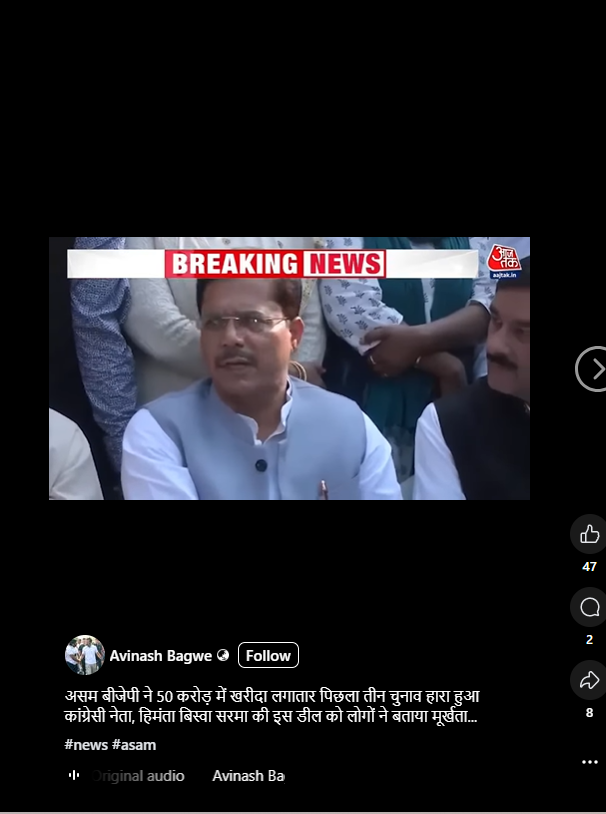
A purported news clip circulating on social media claims that the Bharatiya Janata Party (BJP) purchased Bhupen Bora, a leader of the Indian National Congress, for ₹50 crore as part of a political deal in Assam. The viral clip further alleges that the transaction took place under the leadership of Assam Chief Minister Himanta Biswa Sarma and included an agreement to induct several Congress leaders into the BJP.
However, research by CyberPeace found the viral claim to be false and revealed that the original news video had been manipulated using AI and shared with misleading claims.
Claim
On February 18, 2026, a user shared the viral video on Facebook, claiming that the Assam BJP had bought a Congress leader who had lost the last three elections for ₹50 crore, and that the alleged deal led by Himanta Biswa Sarma had drawn public criticism.
Fact Check:
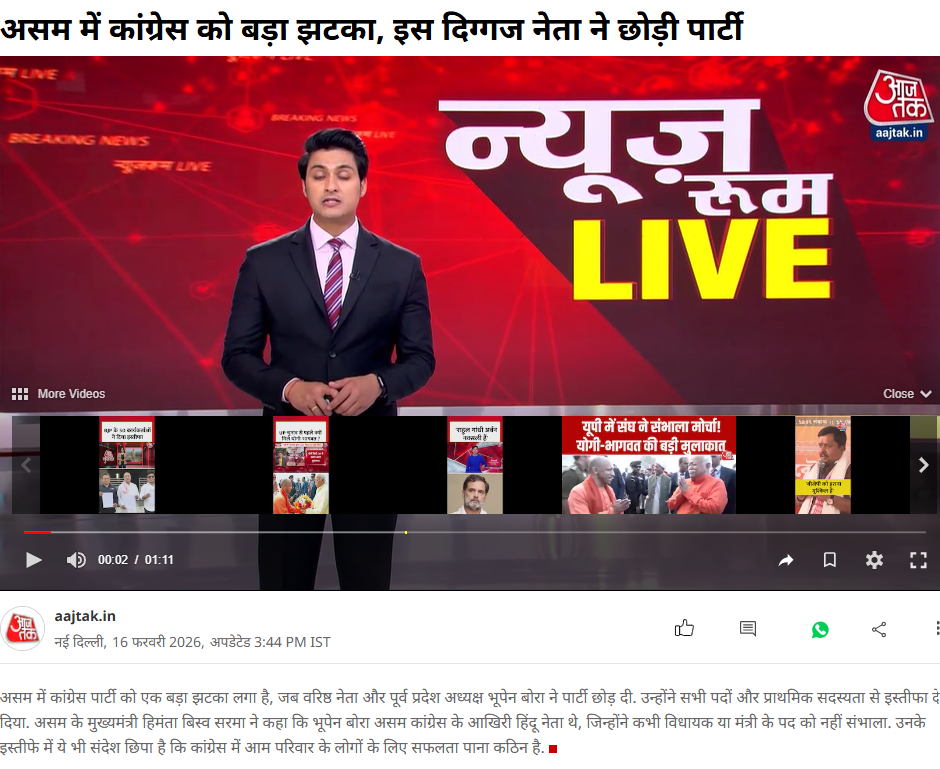
To verify the authenticity of the claim, we extracted key frames from the viral video and conducted a reverse image search using Google Lens. During the research, we found the original version of the video published on the website of Aaj Tak on February 16, 2026. In the original report, the anchor is only seen reporting on Bhupen Bora’s resignation from the party. The report does not mention any alleged financial transaction or political deal, contrary to the claims made in the viral clip.
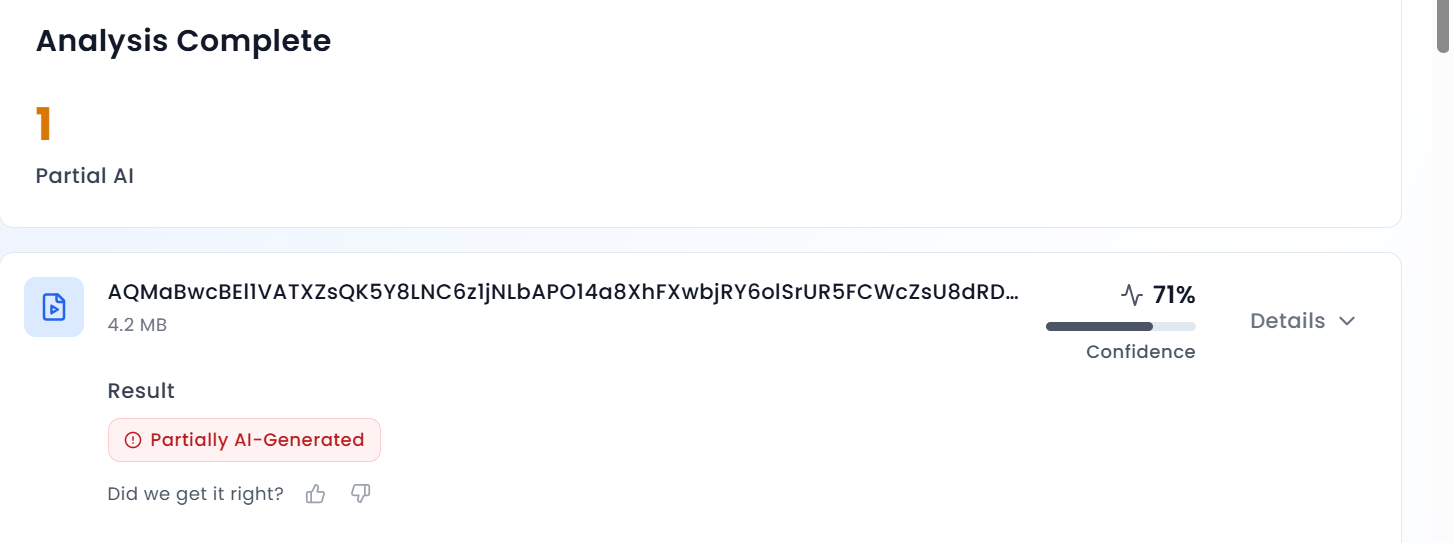
In the next stage of the research, the viral video was analysed using the AI detection tool AURGIN AI, which identified the video as AI-generated.
Conclusion
Our research found that users had manipulated the original news broadcast using AI and shared it with misleading claims. The viral clip does not show any real financial deal between Bhupen Bora and the Assam Chief Minister.

Introduction
Two videos are being widely circulated on social media with the claim that Chinese troops have entered Arunachal Pradesh, India. The first video shows a large group of soldiers marching in formation, while the second shows armed personnel disembarking from military trucks. Social media users claim that the footage shows Chinese soldiers advancing into Indian territory. CyberPeace Research Wing’s research found the claim to be false. The two viral videos are unrelated to India and actually show Thai Army personnel during military training exercises. Both the Government of India and the Indian Army have also dismissed the claim of any recent Chinese intrusion into Indian territory.
Claim
An Instagram user, "mtkv.ideo," shared the viral videos on July 7, 2026, with the caption,"Chinese army has entered 60 km inside India."
https://www.instagram.com/reels/DaehrgExzUl/

Fact Check
To verify the claim, we extracted several keyframes from the viral videos and conducted a reverse image search using Google Lens.
During the research, we found one of the videos posted on June 16, 2026, on the Facebook page "Liangpha Kha Khaeng."
https://www.facebook.com/reel/992963226961409
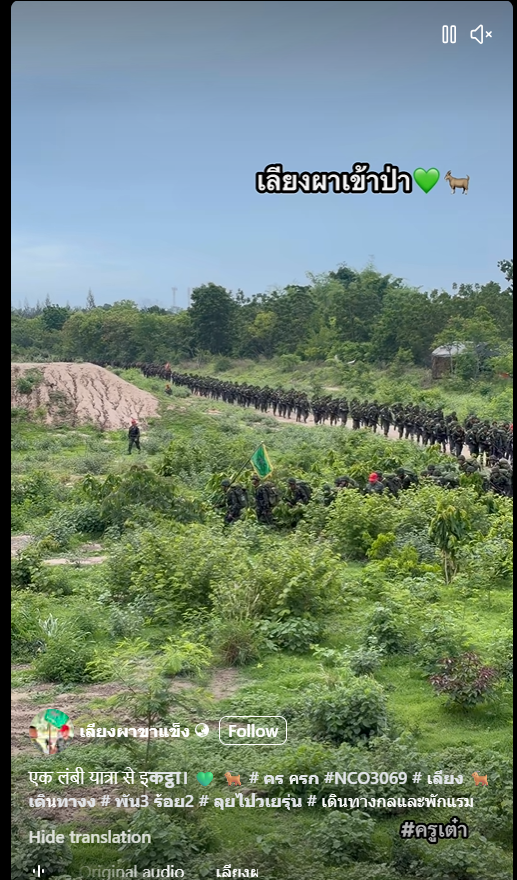
According to the information provided with the post, the video shows a training exercise of Non-Commissioned Officers (NCOs) from the 3rd Battalion, 2nd Regiment of the Royal Thai Army. The page also contains several other posts featuring Thai military drills and training activities. We further reviewed the Facebook page and found multiple training videos featuring the same flag carried by soldiers in the viral footage, confirming that the personnel shown belong to the Thai Army, not the Chinese military.
https://www.facebook.com/profile.php?id=61588894033585&locale=hi_IN

We also found a report published by The Times of India, quoting Union Minister Kiren Rijiju, who dismissed claims of any Chinese intrusion into Arunachal Pradesh. Rijiju clarified that no intrusion had taken place, adding that occasional movement across undemarcated areas occurs because the boundary has not been fully delineated. https://timesofindia.indiatimes.com/india/no-intrusion-transgression-in-absence-of-demarcation-kiran-rijiju/articleshow/132101410.cms

Conclusion
Our research found that the viral claim is false. The videos being shared as evidence of Chinese troops entering Arunachal Pradesh actually show Royal Thai Army personnel participating in military training exercises in Thailand. There is no evidence that the footage is related to India or that it depicts any recent Chinese military intrusion into Indian territory. Government officials have also rejected the viral claim.
