
#FactCheck - Viral Video of Salman Khan and Govinda Falsely Linked to Mithun Chakraborty’s Death
Executive Summary:
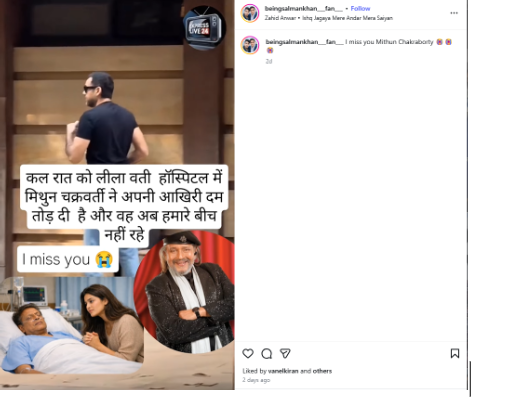
A video is being circulated on social media claiming that veteran actor Mithun Chakraborty has passed away. The viral clip shows actors Salman Khan and Govinda leaving in their respective cars. Social media users are sharing this footage while claiming that the actors were seen after the alleged demise of Mithun Chakraborty. However, research by the CyberPeace found the claim to be false. Our research revealed that Mithun Chakraborty is completely healthy and the claim about his death is misleading.
Claim
On March 6, 2026, an Instagram user shared the viral video claiming that actor Mithun Chakraborty had passed away.
Fact Check:
To verify the claim, we searched relevant keywords on Google. During this search, we did not find any credible media report confirming the death of Mithun Chakraborty.
We further checked the social media accounts of Mithun Chakraborty’s son Mahaakshay Chakraborty, but found no information related to the viral claim. This indicated that the posts circulating on social media about the actor’s death were false. To trace the origin of the viral footage, we extracted key frames from the video showing Salman Khan and Govinda and conducted a reverse image search using Google Lens. During the search, we found the clip featuring Salman Khan on the Facebook page of Times Now, posted on November 11, 2025.

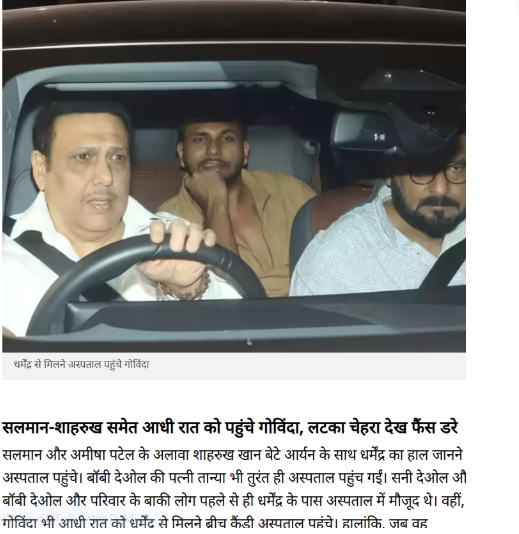
According to the report, Salman Khan and Shah Rukh Khan were seen leaving Breach Candy Hospital in Mumbai, where veteran actor Dharmendra had been admitted on November 10 after his health suddenly deteriorated. The clip featuring Govinda was also found on the website of Navbharat Times, published on November 11, 2025. According to the report, Govinda had arrived late at night at Breach Candy Hospital to visit Dharmendra after he was hospitalized due to health issues.
Conclusion
Our research found that the viral claim is false. Actor Mithun Chakraborty is alive and healthy. The video circulating on social media actually shows Salman Khan and Govinda visiting Breach Candy Hospital in November 2025 when actor Dharmendra was admitted, and it has been wrongly linked to Mithun Chakraborty’s death.

Related Blogs

Introduction
In todays time, we can access any information in seconds and from the comfort of our homes or offices. The internet and its applications have been substantial in creating an ease of access to information, but the biggest question which still remains unanswered is Which information is legit and which one is fake? As netizens, we must be critical of what information we access and how.
Influence of Bad actors
The bad actors are one of the biggest threats to our cyberspace as they make the online world full of fear and activities which directly impact the users financial or emotional status by exploitaing their vulnerabilities and attacking them using social engineering. One such issue is website spoofing. In website spoofing, the bad actors try and create a website similar to the original website of any reputed brand. The similarity is so uncanny that the first time or occasional website users find it very difficult to find the difference between the two websites. This is basically an attempt to access sensitive information, such as personal and financial information, and in some cases, to spread malware into the users system to facilitate other forms of cybercrimes. Such websites will have very lucrative offers or deals, making it easier for people to fall prey to such phoney websites In turn, the bad actors can gain sensitive information right from the users without even calling or messaging them.
The Incident
A Noida based senior citizen couple was aggreved by using their dishwasher, and to get it fixed, they looked for the customer care number on their web browser. The couple came across a customer care number- 1800258821 for IFB, a electronics company. As they dialed the number and got in touch with the fake customer care representative, who, upon hearing the couple’s issue, directed them to a supposedly senior official of the company. The senior official spoke to the lady, despite of the call dropping few times, he was admant on staying in touch with the lady, once he had established the trust factor, he asked the lady to download an app which he potrayed to be an app to register complaints and carry out quick actions. The fake senior offical asked the lady to share her location and also asked her to grant few access permissions to the application along with a four digit OTP which looked harmless. He further asked the kady to make a transaction of Rs 10 as part of the complaint processing fee. Till this moment, the couple was under the impression that their complaimt had been registred and the issue with their dishwasher would be rectified soon.
The couple later at night recieved a message from their bank, informing them that Rs 2.25 lakh had been debited from their joint bank account, the following morning, they saw yet another text message informing them of a debit of Rs 5.99 lakh again from their account. The couple immediatly understood that they had become victims to cyber fraud. The couple immediatly launched a complaint on the cyber fraud helpline 1930 and their respective bank. A FIR has been registerd in the Noida Cyber Cell.
How can senior citizens prevent such frauds?
Senior citizens can be particularly vulnerable to cyber frauds due to their lack of familiarity with technology and potential cognitive decline. Here are some safeguards that can help protect them from cyber frauds:
- Educate seniors on common cyber frauds: It’s important to educate seniors about the most common types of cyber frauds, such as phishing, smishing, vishing, and scams targeting seniors.
- Use strong passwords: Encourage seniors to use strong and unique passwords for their online accounts and to change them regularly.
- Beware of suspicious emails and messages: Teach seniors to be wary of suspicious emails and messages that ask for personal or financial information, even if they appear to be from legitimate sources.
- Verify before clicking: Encourage seniors to verify the legitimacy of links before clicking on them, especially in emails or messages.
- Keep software updated: Ensure seniors keep their software, including antivirus and operating system, up to date.
- Avoid public Wi-Fi: Discourage seniors from using public Wi-Fi for sensitive transactions, such as online banking or shopping.
- Check financial statements: Encourage seniors to regularly check their bank and credit card statements for any suspicious transactions.
- Secure devices: Help seniors secure their devices with antivirus and anti-malware software and ensure that their devices are password protected.
- Use trusted sources: Encourage seniors to use trusted sources when making online purchases or providing personal information online.
- Seek help: Advise seniors to seek help if they suspect they have fallen victim to a cyber fraud. They should contact their bank, credit card company or report the fraud to relevant authorities. Calling 1930 should be the first and primary step.
Conclusion
The cyberspace is new space for people of all generations, the older population is a little more vulnerble in this space as they have not used gadgets or internet for most f theur lives, and now they are dependent upon the devices and application for their convinience, but they still do not understand the technology and its dark side. As netizens, we are responsible for safeguarding the youth and the older population to create a wholesome, safe, secured and sustainable cyberecosystem. Its time to put the youth’s understanding of tech and the life experience of the older poplaution in synergy to create SoPs and best practices for erradicating such cyber frauds from our cyberspace. CyberPeace Foundation has created a CyberPeace Helpline number for victims where they will be given timely assitance for resolving their issues; the victims can reach out the helpline on +91 95700 00066 and thay can also mail their issues on helpline@cyberpeace.net.

Introduction
The European Union has fined the meta $ 1.3 billion for infringing the EU privacy laws by transferring the personal data of Facebook users to the United States. The EU fined Meta’s business in Ireland. As per the European Union, transferring Personal data to the US is a breach of the General data protection Regulation or European Union law on data protection and privacy.
GDPR Compliance
The terms of GDPR promise to gather users’ personal information legally and under strict conditions. And those who collect and manage personal data must protect users’ personal data from exploitation. The GDPR restricts an organisation’s capacity to transfer personal data outside the EU if the transfer is solely based on that body’s evaluation of the sufficiency of the personal data’s protection. Transfers should only be made where European authorities have determined that a third country, a territory within that third country, or an international organisation provides acceptable protection for data protection.
Violation by Meta
The punishment, announced by Ireland’s Data Protection Commission, might be one of the most significant in the five years since the European Union passed the landmark General Data Protection Regulation. According to regulators, Facebook failed to comply with a 2020 judgment by the European Union’s top court that Facebook data transferred over the Atlantic was not sufficiently safeguarded from American espionage agencies. However, whether Meta will ever need to encrypt Facebook users’ data in Europe is still being determined. Meta announced it would appeal the ruling, launching a potentially legal procedure.
Simultaneously, European Union and American officials are negotiating a new data-sharing pact that would provide legal protections for Meta and scores of other companies to continue moving information between the US and Europe. This pact could overturn much of the European Union’s Monday ruling.
Article 46(1) GDPR Has been violated by the meta, And as per the Irish privacy.
What is required by the GDPR before transferring personal information across national boundaries?

Personal data transfers to countries outside the European Economic Area are generally permitted if these nations are regarded to provide a sufficient degree of data protection. According to Article 45 of the GDPR, the European Commission evaluates the degree of personal data protection in third countries.
The European Union judgment demonstrates how government rules are upending the borderless way data has traditionally migrated. Companies are increasingly being pressed to store data within the country where it is acquired rather than allowing it to transfer freely to data centres around the world as a result of data-protection requirements, national security laws, and other regulations.
The US internet giant had previously warned that if forced to stop using SCCs (standard contractual clauses) without a proper alternative data transfer agreement in place, it would be compelled to shut down services such as Facebook and Instagram in Europe.
What will happen next for Facebook in Europe?
The ruling includes a six-month transition period before it must halt data flows, meaning the service will continue to operate in the meantime. (More specifically, Meta has been given a five-month transition period to freeze any future transfer of personal data to the United States and a six-month deadline to terminate the unlawful processing and/or storage of European user data it has previously transferred without a legitimate legal basis. Meta has also stated that it will appeal and appears to seek a stay of execution while it pursues its legal arguments in court.
Conclusion
The GDPR places restrictions on transferring personal data outside the European Union to third-party nations or international bodies to ensure that the GDPR’s level of protection for individuals is not jeopardised. But the meta violated the European Union’s privacy laws by the user’s personal information to the US. Under the compliance of GDPR, transferring and sending personal information to users intentionally is an offence. and presently, the personal data of Facebook users has been breached by the Meta, as they shared the information with the US.
Executive Summary
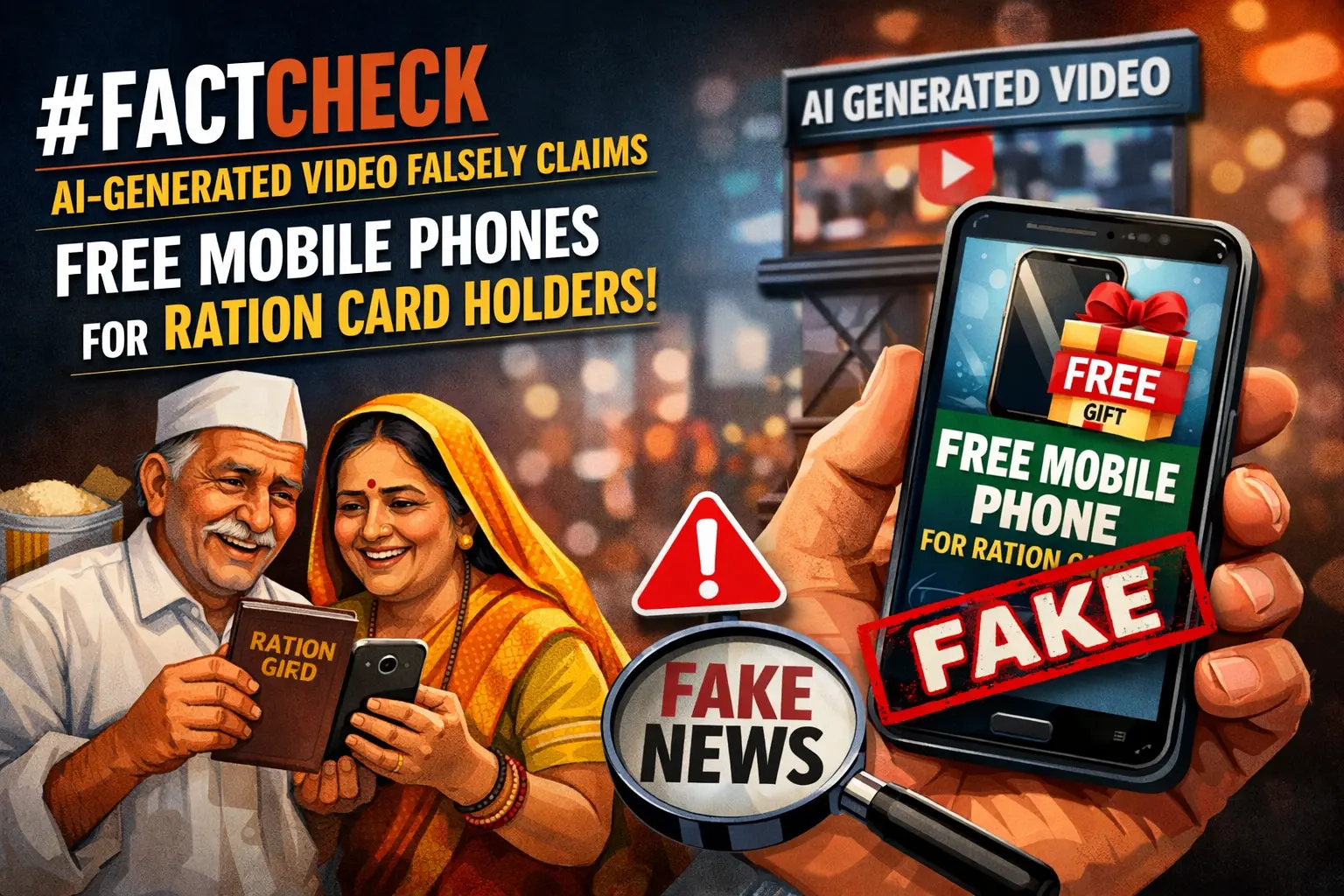
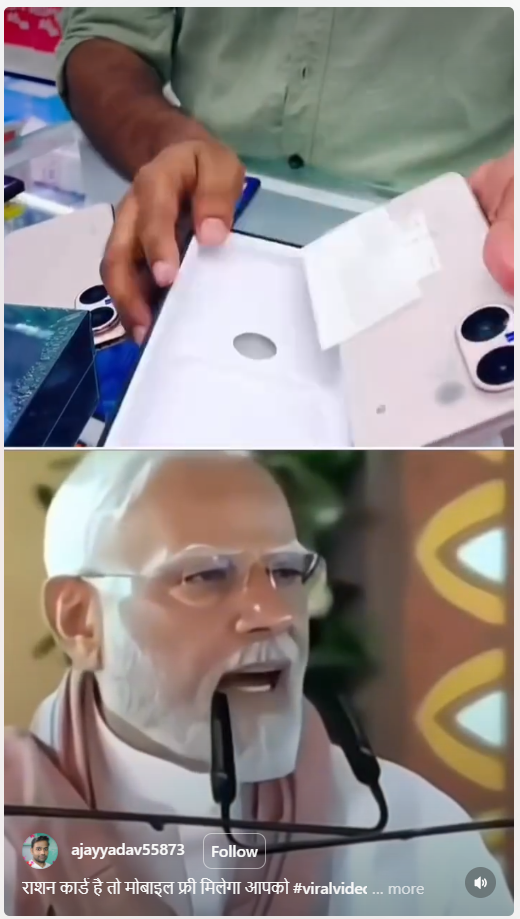
A video of Prime Minister Narendra Modi is being widely shared on social media, in which he appears to announce that all ration card holders will receive free mobile phones, provided no member of their family is a government employee. However, research by the CyberPeace has found this claim to be false. Our research reveals that the viral video is AI-generated and does not reflect any real announcement.
Claim:
An Instagram user shared the viral video with the caption, “If you have a ration card, you will get a free mobile phone.”
- Post link: https://www.instagram.com/reels/DWqDKWxy6lJ/
- Archived link: https://archive.ph/wip/dmpIf
Fact Check
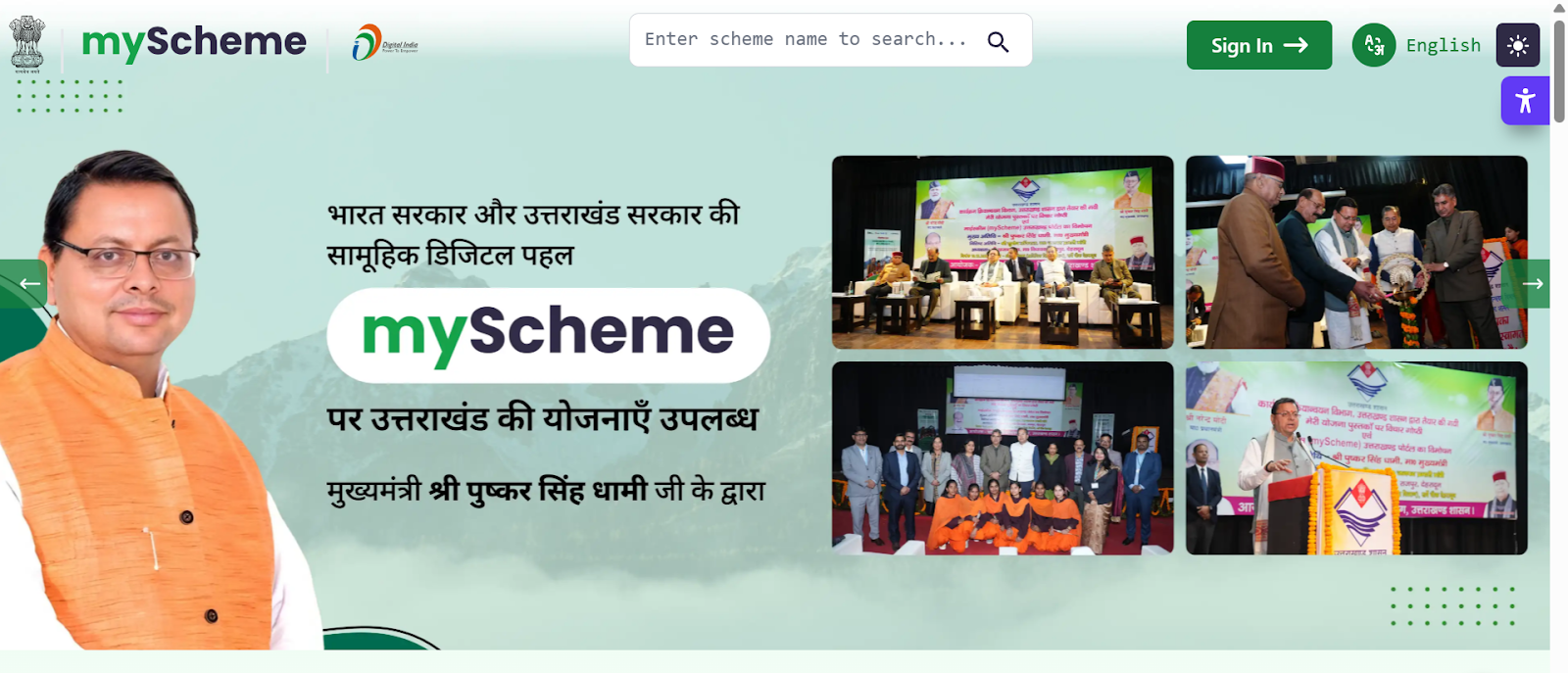
To verify the claim, we first conducted a keyword-based search on Google. However, we did not find any credible media reports supporting such an announcement, raising doubts about the authenticity of the video. We then checked the official government welfare schemes portal, myscheme.gov.in, which provides verified information about central government schemes. No such scheme offering free mobile phones to ration card holders was found on the platform.
Conclusion
Our research confirms that the viral video is fake and AI-generated. There is no official announcement or credible report suggesting that ration card holders will receive free mobile phones under any government scheme. The video has been digitally manipulated using artificial intelligence and is being circulated with a misleading claim. This serves as another example of how AI-generated content can be used to spread misinformation.
