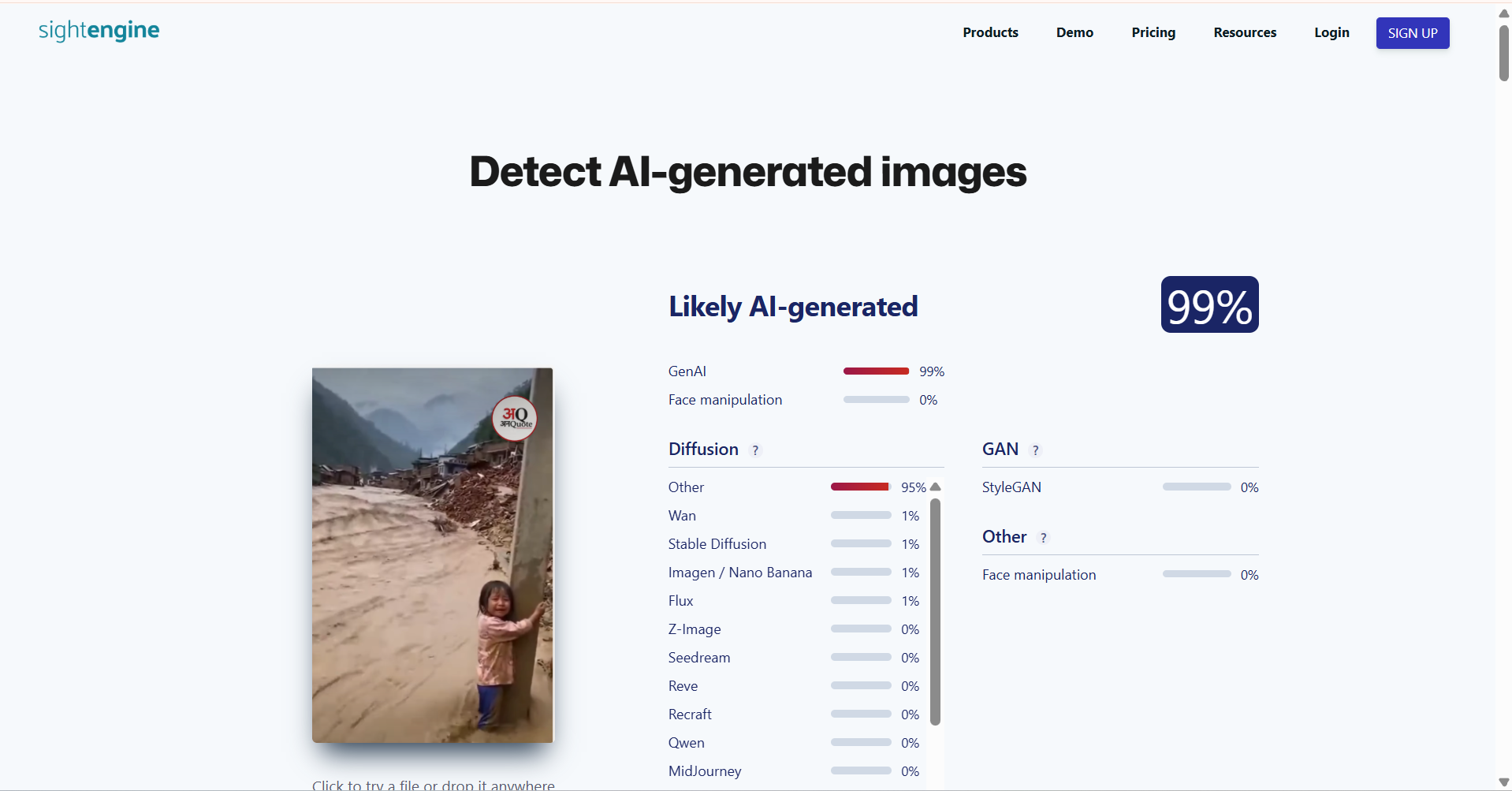
#Fact Check: Viral Smoke Video Is Not From Israel-Iran Conflict, But Mexico Casino Fire
Executive Summary
Amid heightened tensions following Israel and US actions against Iran, a video is being widely shared on social media. The footage shows thick black smoke rising into the sky from a location, suggesting a major explosion or attack. However, research conducted by the CyberPeace found the viral claim to be misleading. Our research revealed that the video is not recent and has no connection to the current Israel-Iran tensions. In fact, the footage is nearly a year old and shows a fire at a casino in Mexico, now being shared out of context.
Claim
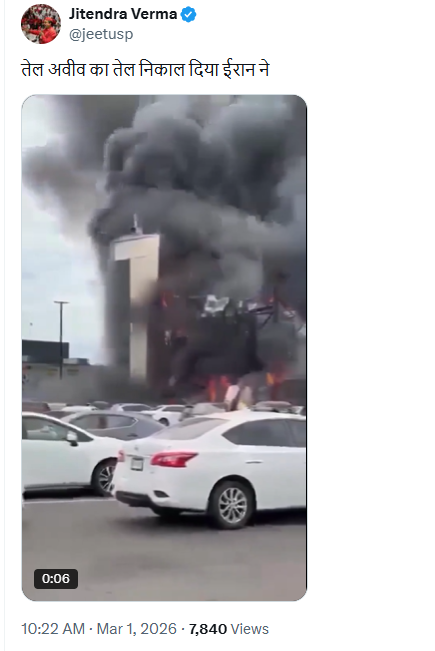
Users circulating the video claim that it shows an attack on Tel Aviv, Israel. On March 1, 2026, a user on X shared the clip with the caption, “Iran has drained the oil out of Tel Aviv,” implying a devastating retaliatory strike. (Post and archive links provided above.)
Fact Check:
To verify the authenticity of the video, we extracted key frames and performed a reverse image search using Google Lens. During the search, we found the same visuals in a Spanish media report published on January 16, 2025. This confirmed that the video predates the ongoing geopolitical developments.
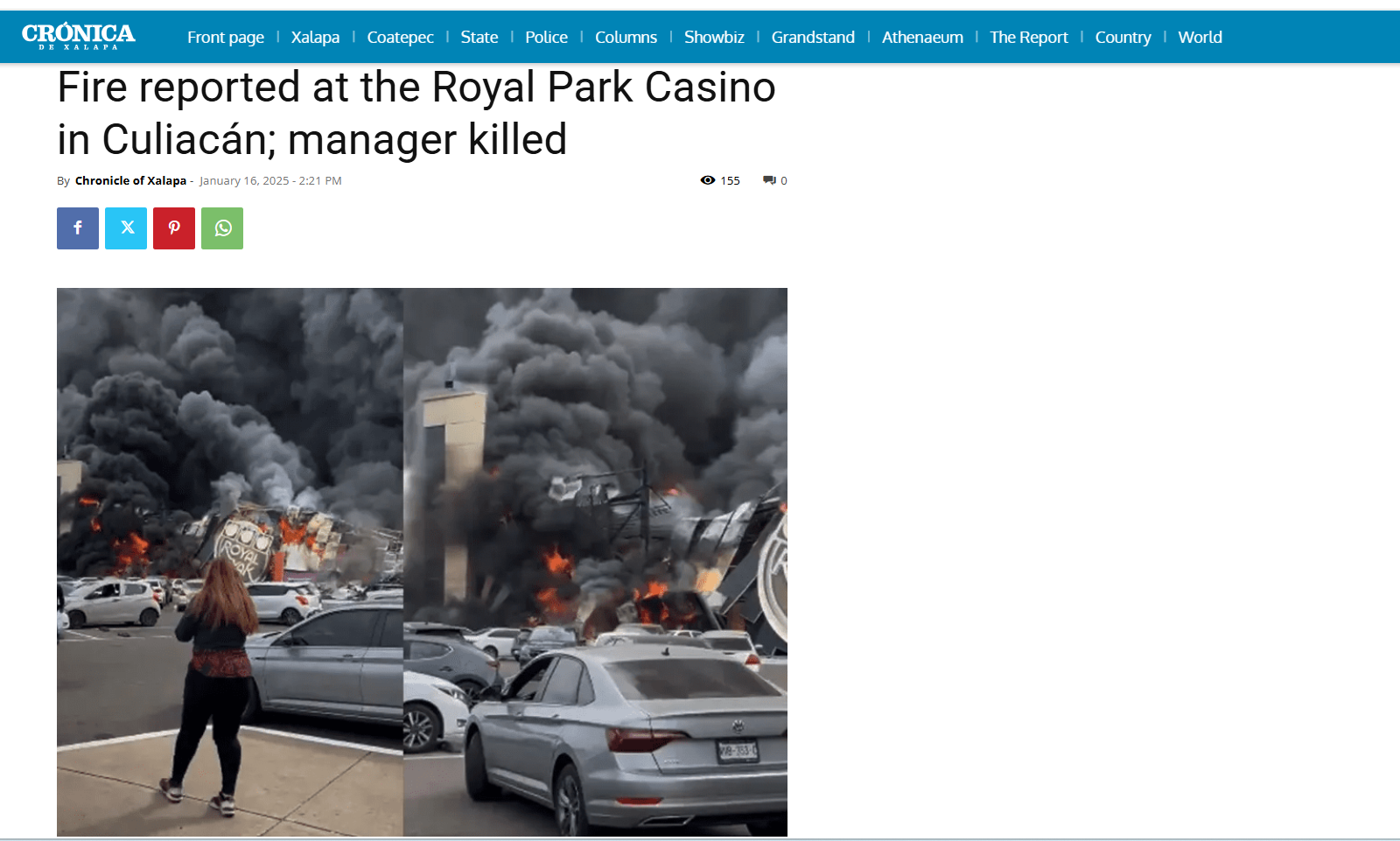
According to the report, the footage shows a fire at the Royal Park Casino located inside the Cinépolis plaza in Culiacán, Mexico. Local outlet Meganoticias Culiacán reported on X that the casino was “completely burned down.” The structure reportedly collapsed following the blaze, and emergency responders confirmed that several people were injured. Further keyword searches led us to the same footage on the official YouTube channel of Milenio, uploaded on January 17, 2025. The report clearly states that the fire occurred at the Royal Yacht Casino in Mexico and is unrelated to any recent military developments.

Conclusion
Evidence gathered during our research clearly establishes that the viral video is not related to any missile attack by Iran on Israel. The claim is false. The footage is from a fire incident at a casino in Mexico and is being misleadingly shared in the context of current international tensions, potentially creating unnecessary panic and confusion.
Related Blogs

Introduction
The unprecedented cyber espionage attempt on the Indian Air Force has shocked the military fraternity in the age of the internet where innovation is vital to national security. The attackers have shown a high degree of expertise in their techniques, using a variant of the infamous Go Stealer and current military acquisition pronouncements as a cover to obtain sensitive information belonging to the Indian Air Force. In this recent cyber espionage revelation, the Indian Air Force faces a sophisticated attack leveraging the infamous Go Stealer malware. The timing, coinciding with the Su-30 MKI fighter jets' procurement announcement, raises serious questions about possible national security espionage actions.
A sophisticated attack using the Go Stealer malware exploits defense procurement details, notably the approval of 12 Su-30 MKI fighter jets. Attackers employ a cunningly named ZIP file, "SU-30_Aircraft_Procurement," distributed through an anonymous platform, Oshi, taking advantage of heightened tension surrounding defense procurement.
Advanced Go Stealer Variant:
The malware, coded in Go language, introduces enhancements, including expanded browser targeting and a unique data exfiltration method using Slack, showcasing a higher level of sophistication.
Strategic Targeting of Indian Air Force Professionals:
The attack strategically focuses on extracting login credentials and cookies from specific browsers, revealing the threat actor's intent to gather precise and sensitive information.
Timing Raises Espionage Concerns:
The cyber attack coincides with the Indian Government's Su-30 MKI fighter jets procurement announcement, raising suspicions of targeted attacks or espionage activities.
The Deceitful ZIP ArchiveSU-30 Aircraft Acquisition
The cyberattack materialised as a sequence of painstakingly planned actions. Using the cleverly disguised ZIP file "SU-30_Aircraft_Procurement," the perpetrators took benefit of the authorisation of 12 Su-30 MKI fighter jets by the Indian Defense Ministry in September 2023. Distributed via the anonymous file storage network Oshi, the fraudulent file most certainly made its way around via spam emails or other forms of correspondence.
The Spread of Infection and Go Stealer Payload:
The infiltration procedure progressed through a ZIP file to an ISO file, then to a.lnk file, which finally resulted in the Go Stealer payload being released. This Go Stealer version, written in the programming language Go, adds sophisticated capabilities, such as a wider range of browsing focussed on and a cutting-edge technique for collecting information using the popular chat app Slack.
Superior Characteristics of the Go Stealer Version
Different from its GitHub equivalent, this Go Stealer version exhibits a higher degree of complexity. It creates a log file in the machine owned by the victim when it is executed and makes use of GoLang utilities like GoReSym for in-depth investigation. The malware focuses on cookies and usernames and passwords from web browsers, with a particular emphasis on Edge, Brave, and Google Chrome.
This kind is unique in that it is more sophisticated. Its deployment's cyber enemies have honed its strengths, increasing its potency and detection resistance. Using GoLang tools like GoReSym for comprehensive evaluation demonstrates the threat actors' careful planning and calculated technique.
Go Stealer: Evolution of Threat
The Go Stealer first appeared as a free software project on GitHub and quickly became well-known for its capacity to stealthily obtain private data from consumers who aren't paying attention. Its effectiveness and stealthy design rapidly attracted the attention of cyber attackers looking for a sophisticated tool for clandestine data exfiltration. It was written in the Go programming language.
Several cutting-edge characteristics distinguish the Go Stealer from other conventional data thieves. From the beginning, it showed a strong emphasis on browser focusing on, seeking to obtain passwords and login information from particular websites including Edge, Brave, and Google Chrome.The malware's initial iteration was nurtured on the GitHub database, which has the Go Stealer initial edition. Threat actors have improved and altered the code to serve their evil goals, even if the basic structure is freely accessible.
The Go Stealer version that has been discovered as the cause of the current internet spying by the Indian Air Force is not limited to its GitHub roots. It adds features that make it more dangerous, like a wider range of browsers that may be targeted and a brand-new way to exfiltrate data via Slack, a popular messaging app.
Secret Communications and Information Expulsion
This variation is distinguished by its deliberate usage of the Slack API for secret chats. Slack was chosen because it is widely used in company networks and allows harmful activity to blend in with normal business traffic. The purpose of the function "main_Vulpx" is specifically to upload compromised information to the attacker's Slack route, allowing for covert data theft and communication.
The Time and Strategic Objective
There are worries about targeted assaults or espionage activities due to the precise moment of the cyberattack, which coincides with the Indian government's declaration of its acquisition of Su-30 MKI fighter fighters. The deliberate emphasis on gathering cookies and login passwords from web browsers highlights the threat actor's goal of obtaining accurate and private data from Indian Air Force personnel.
Using Caution: Preventing Possible Cyber Espionage
- Alertness Against Misleading Techniques: Current events highlight the necessity of being on the lookout for files that appear harmless but actually have dangerous intent. The Su-30 Acquisition ZIP file is a stark illustration of how these kinds of data might be included in larger-scale cyberespionage campaigns.
- Potentially Wider Impact: Cybercriminals frequently plan coordinated operations to target not just individuals but potentially many users and government officials. Compromised files increase the likelihood of a serious cyber-attack by opening the door for larger attack vectors.
- Important Position in National Security: Recognize the crucial role people play in the backdrop of national security in the age of digitalisation. Organised assaults carry the risk of jeopardising vital systems and compromising private data.
- Establish Strict Download Guidelines: Implement a strict rule requiring file downloads to only come from reputable and confirmed providers. Be sceptical, particularly when you come across unusual files, and make sure the sender is legitimate before downloading any attachments.
- Literacy among Government Employees: Acknowledge that government employees are prime targets as they have possession of private data. Enable people by providing them with extensive cybersecurity training and awareness that will increase their cognition and fortitude.
Conclusion
Indian Air Force cyber surveillance attack highlights how sophisticated online dangers have become in the digital era. Threat actors' deliberate and focused approach is demonstrated by the deceptive usage of a ZIP archive that is camouflaged and paired with a sophisticated instance of the Go Stealer virus. An additional level of complication is introduced by integrating Slack for covert communication. Increased awareness, strict installation guidelines, and thorough cybersecurity education for government employees are necessary to reduce these threats. In the digital age, protecting national security necessitates ongoing adaptation as well as safeguards toward ever-more potent and cunning cyber threats.
References
- https://www.overtoperator.com/p/indianairforcemalwaretargetpotential
- https://cyberunfolded.in/blog/indian-air-force-targeted-in-sophisticated-cyber-attack-with-su-30-procurement-zip-file#go-stealer-a-closer-look-at-its-malicious-history
- https://thecyberexpress.com/cyberattack-on-the-indian-air-force/https://therecord.media/indian-air-force-infostealing-malware

Introduction
With the rise of AI deepfakes and manipulated media, it has become difficult for the average internet user to know what they can trust online. Synthetic media can have serious consequences, from virally spreading election disinformation or medical misinformation to serious consequences like revenge porn and financial fraud. Recently, a Pune man lost ₹43 lakh when he invested money based on a deepfake video of Infosys founder Narayana Murthy. In another case, that of Babydoll Archi, a woman from Assam had her likeness deepfaked by an ex-boyfriend to create revenge porn.
Image or video manipulation used to leave observable traces. Online sources may advise examining the edges of objects in the image, checking for inconsistent patterns, lighting differences, observing the lip movements of the speaker in a video or counting the number of fingers on a person’s hand. Unfortunately, as the technology improves, such folk advice might not always help users identify synthetic and manipulated media.
The Coalition for Content Provenance and Authenticity (C2PA)
One interesting project in the area of trust-building under these circumstances has been the Coalition for Content Provenance and Authenticity (C2PA). Started in 2019 by Adobe and Microsoft, C2PA is a collaboration between major players in AI, social media, journalism, and photography, among others. It set out to create a standard for publishers of digital media to prove the authenticity of digital media and track changes as they occur.
When photos and videos are captured, they generally store metadata like the date and time of capture, the location, the device it was taken on, etc. C2PA developed a standard for sharing and checking the validity of this metadata, and adding additional layers of metadata whenever a new user makes any edits. This creates a digital record of any and all changes made. Additionally, the original media is bundled with this metadata. This makes it easy to verify the source of the image and check if the edits change the meaning or impact of the media. This standard allows different validation software, content publishers and content creation tools to be interoperable in terms of maintaining and displaying proof of authenticity.

The standard is intended to be used on an opt-in basis and can be likened to a nutrition label for digital media. Importantly, it does not limit the creativity of fledgling photo editors or generative AI enthusiasts; it simply provides consumers with more information about the media they come across.
Could C2PA be Useful in an Indian Context?
The World Economic Forum’s Global Risk Report 2024, identifies India as a significant hotspot for misinformation. The recent AI Regulation report by MeitY indicates an interest in tools for watermarking AI-based synthetic content for ease of detecting and tracking harmful outcomes. Perhaps C2PA can be useful in this regard as it takes a holistic approach to tracking media manipulation, even in cases where AI is not the medium.
Currently, 26 India-based organisations like the Times of India or Truefy AI have signed up to the Content Authenticity Initiative (CAI), a community that contributes to the development and adoption of tools and standards like C2PA. However, people are increasingly using social media sites like WhatsApp and Instagram as sources of information, both of which are owned by Meta and have not yet implemented the standard in their products.
India also has low digital literacy rates and low resistance to misinformation. Part of the challenge would be showing people how to read this nutrition label, to empower people to make better decisions online. As such, C2PA is just one part of an online trust-building strategy. It is crucial that education around digital literacy and policy around organisational adoption of the standard are also part of the strategy.
The standard is also not foolproof. Current iterations may still struggle when presented with screenshots of digital media and other non-technical digital manipulation. Linking media to their creator may also put journalists and whistleblowers at risk. Actual use in context will show us more about how to improve future versions of digital provenance tools, though these improvements are not guarantees of a safer internet.
The largest advantage of C2PA adoption would be the democratisation of fact-checking infrastructure. Since media is shared at a significantly faster rate than it can be verified by professionals, putting the verification tools in the hands of people makes the process a lot more scalable. It empowers citizen journalists and leaves a public trail for any media consumer to look into.
Conclusion
From basic colour filters to make a scene more engaging, to removing a crowd from a social media post, to editing together videos of a politician to make it sound like they are singing a song, we are so accustomed to seeing the media we consume be altered in some way. The C2PA is just one way to bring transparency to how media is altered. It is not a one-stop solution, but it is a viable starting point for creating a fairer and democratic internet and increasing trust online. While there are risks to its adoption, it is promising to see that organisations across different sectors are collaborating on this project to be more transparent about the media we consume.
References
- https://c2pa.org/
- https://contentauthenticity.org/
- https://indianexpress.com/article/technology/tech-news-technology/kate-middleton-9-signs-edited-photo-9211799/
- https://photography.tutsplus.com/articles/fakes-frauds-and-forgeries-how-to-detect-image-manipulation--cms-22230
- https://www.media.mit.edu/projects/detect-fakes/overview/
- https://www.youtube.com/watch?v=qO0WvudbO04&pp=0gcJCbAJAYcqIYzv
- https://www3.weforum.org/docs/WEF_The_Global_Risks_Report_2024.pdf
- https://indianexpress.com/article/technology/tech-news-technology/ai-law-may-not-prescribe-penal-consequences-for-violations-9457780/
- https://thesecretariat.in/article/meity-s-ai-regulation-report-ambitious-but-no-concrete-solutions
- https://www.ndtv.com/lifestyle/assam-what-babydoll-archi-viral-fame-says-about-india-porn-problem-8878689
- https://www.meity.gov.in/static/uploads/2024/02/9f6e99572739a3024c9cdaec53a0a0ef.pdf

Executive Summary:
Old footage of Indian Cricketer Virat Kohli celebrating Ganesh Chaturthi in September 2023 was being promoted as footage of Virat Kohli at the Ram Mandir Inauguration. A video of cricketer Virat Kohli attending a Ganesh Chaturthi celebration last year has surfaced, with the false claim that it shows him at the Ram Mandir consecration ceremony in Ayodhya on January 22. The Hindi newspaper Dainik Bhaskar and Gujarati newspaper Divya Bhaskar also displayed the now-viral video in their respective editions on January 23, 2024, escalating the false claim. After thorough Investigation, it was found that the Video was old and it was Ganesh Chaturthi Festival where the cricketer attended.
Claims:
Many social media posts, including those from news outlets such as Dainik Bhaskar and Gujarati News Paper Divya Bhaskar, show him attending the Ram Mandir consecration ceremony in Ayodhya on January 22, where after investigation it was found that the Video was of Virat Kohli attending Ganesh Chaturthi in September, 2023.


The caption of Dainik Bhaskar E-Paper reads, “ क्रिकेटर विराट कोहली भी नजर आए ”
Fact Check:
CyberPeace Research Team did a reverse Image Search of the Video where several results with the Same Black outfit was shared earlier, from where a Bollywood Entertainment Instagram Profile named Bollywood Society shared the same Video in its Page, the caption reads, “Virat Kohli snapped for Ganapaati Darshan” the post was made on 20 September, 2023.

Taking an indication from this we did some keyword search with the Information we have, and it was found in an article by Free Press Journal, Summarizing the article we got to know that Virat Kohli paid a visit to the residence of Shiv Sena leader Rahul Kanal to seek the blessings of Lord Ganpati. The Viral Video and the claim made by the news outlet is false and Misleading.
Conclusion:
The recent Claim made by the Viral Videos and News Outlet is an Old Footage of Virat Kohli attending Ganesh Chaturthi the Video back to the year 2023 but not of the recent auspicious day of Ram Mandir Pran Pratishtha. To be noted that, we also confirmed that Virat Kohli hadn’t attended the Program; there was no confirmation that Virat Kohli attended on 22 January at Ayodhya. Hence, we found this claim to be fake.
- Claim: Virat Kohli attending the Ram Mandir consecration ceremony in Ayodhya on January 22
- Claimed on: Youtube, X
- Fact Check: Fake