

#FactCheck

Executive Summary
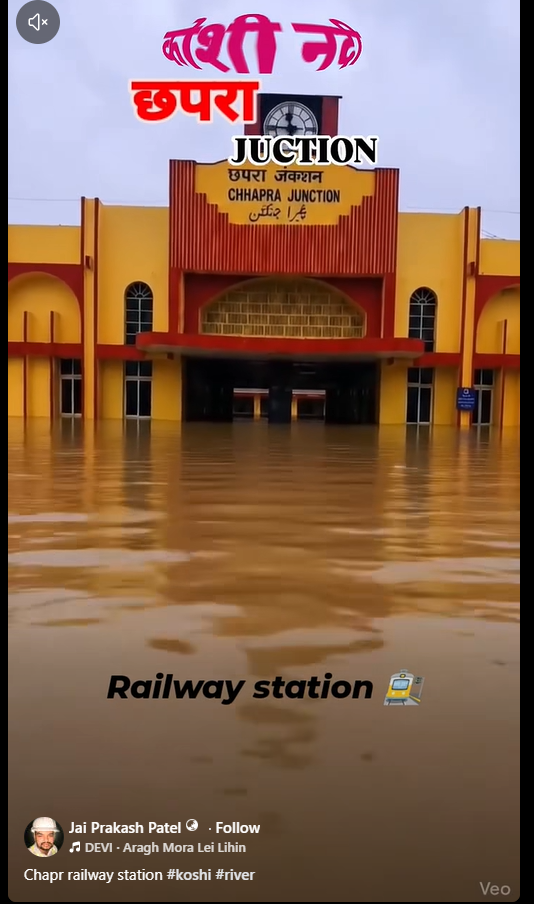
A video is being shared on social media showing a railway station completely submerged in water. The video is being shared with the claim that it shows Chapra Railway Station in Bihar, where severe waterlogging occurred following heavy rainfall. The water level in the video appears so high that even the platforms are not visible. A research done by the Research Wing of the CyberPeace found the viral claim to be false. Our research revealed that the viral video is AI-generated and is being shared on social media with a misleading claim.
Claim:
A user on the social media platform Facebook shared the viral video on August 31, 2026, claiming that Chapra Railway Station had been inundated. The link to the post, archived link, and screenshots are provided below.
https://www.facebook.com/reel/1393870102719178
Fact Check
To debunk the viral claim, we searched Google using relevant keywords. However, we could not find any credible media reports confirming the claim. As the next step in our research, we also checked the status of trains arriving at and departing from Chapra Railway Station. We reasoned that if the station had actually been submerged to the extent shown in the video, rail operations would likely have been disrupted and some trains might have been cancelled. However, our research found no information about any train operating from Chapra being cancelled.

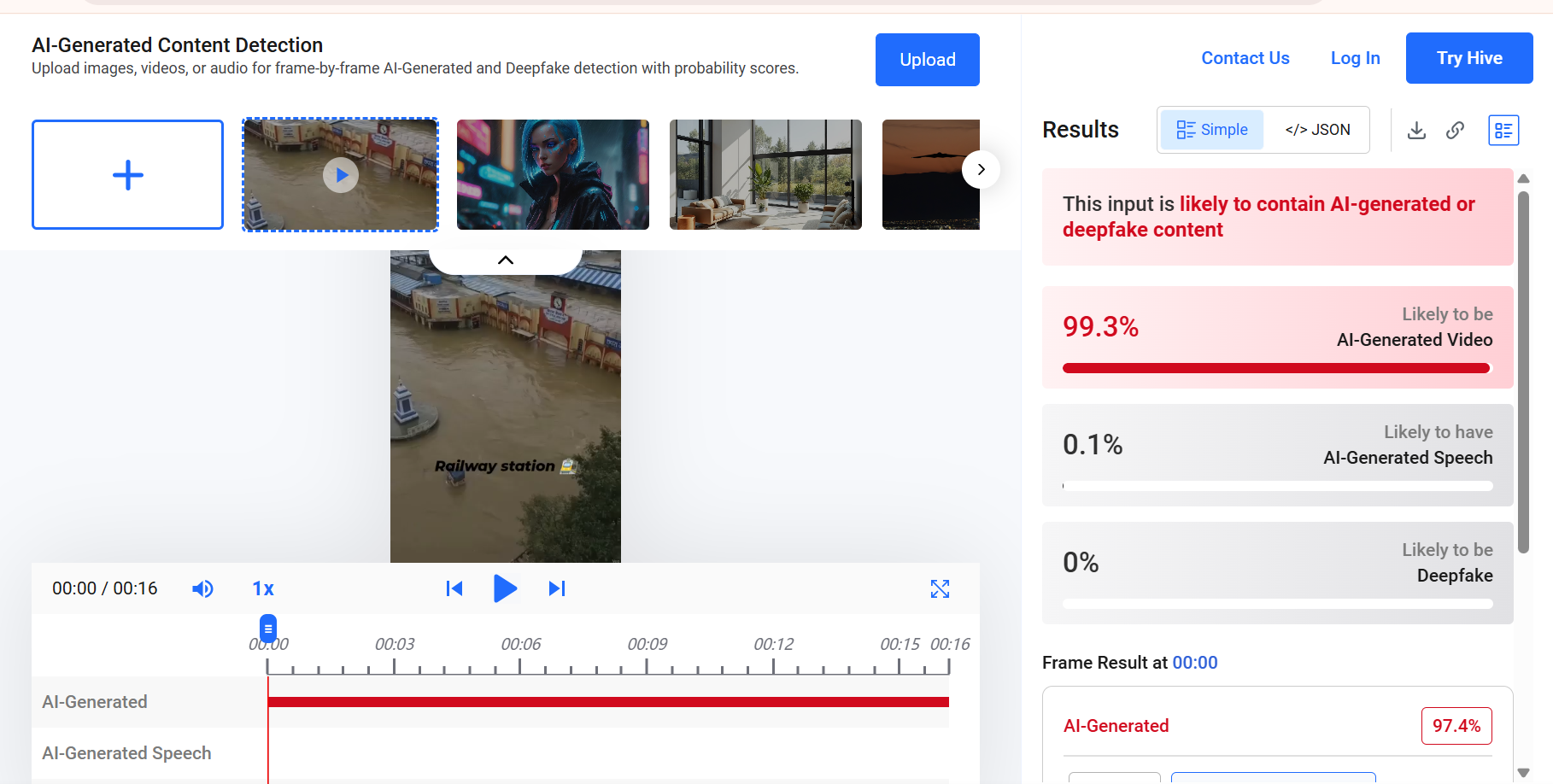
Upon closely examining the viral video, we suspected that it might be AI-generated. We subsequently scanned the video using the AI detection tool Hive Moderation. According to the tool’s results, the viral video was found to be 99 percent AI-generated.
As part of the next step of our research, we scanned the viral video using another AI detection tool, Wasitai AI. According to the tool’s results, the viral video is AI-generated.

Conclusion
Our research found that the viral video is AI-generated and is being shared on social media with a misleading claim.

Executive Summary:
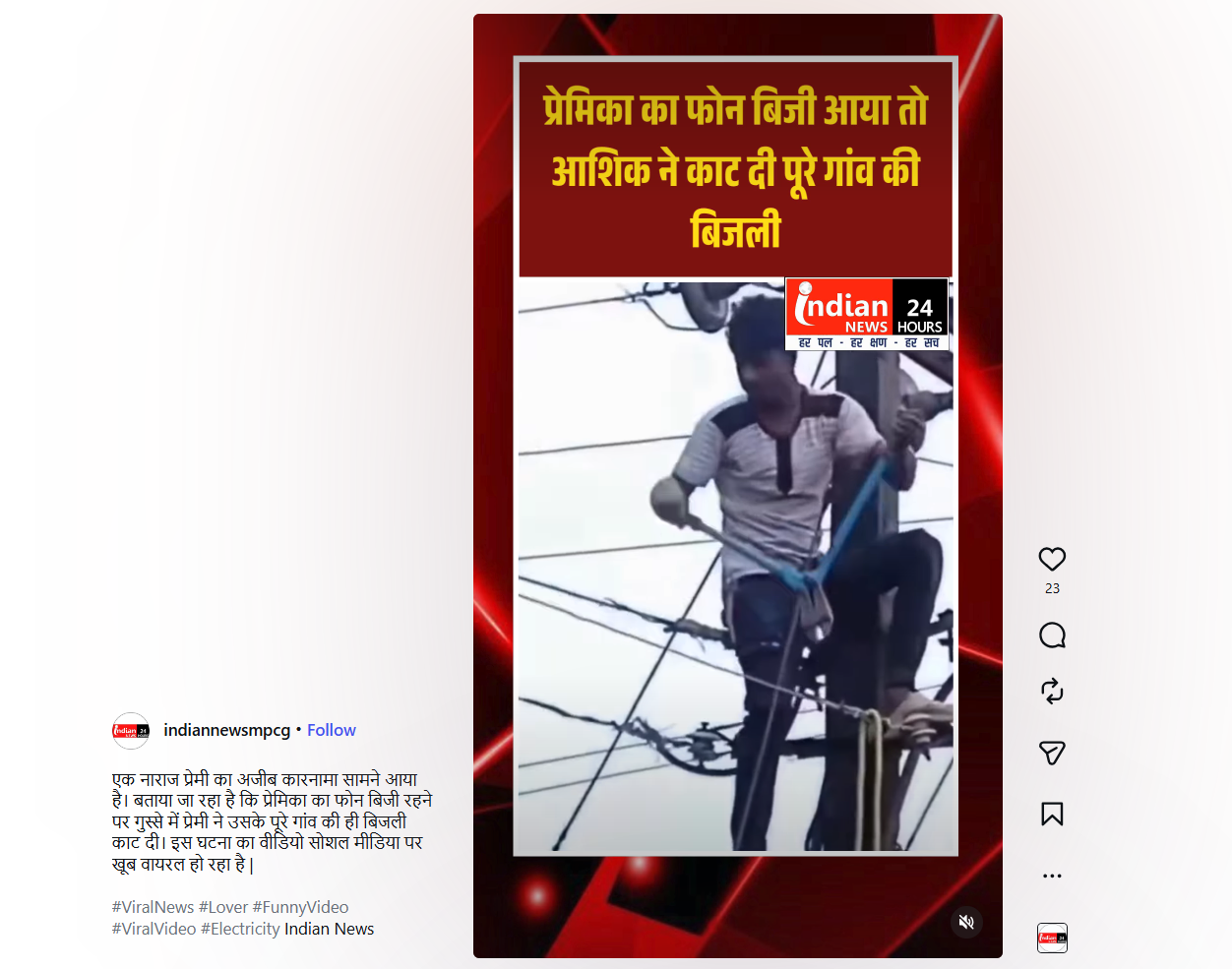
A video is being shared on social media with the claim that a man cut off the electricity supply to his girlfriend’s village after getting angry with her. A research by CyberPeace’s research wing found that the video is actually from Baksa district in Assam, where a lineman named Anwar was repairing an electric line.
Claim:
The viral video is 10 seconds long and shows a man climbing an electricity pole and cutting an electric wire. The video is being shared on social media with the claim that the man cut off the electricity supply to his girlfriend’s entire village after her phone line was busy.
https://www.instagram.com/reels/Dcamn0aGBJ-/
Fact Check:
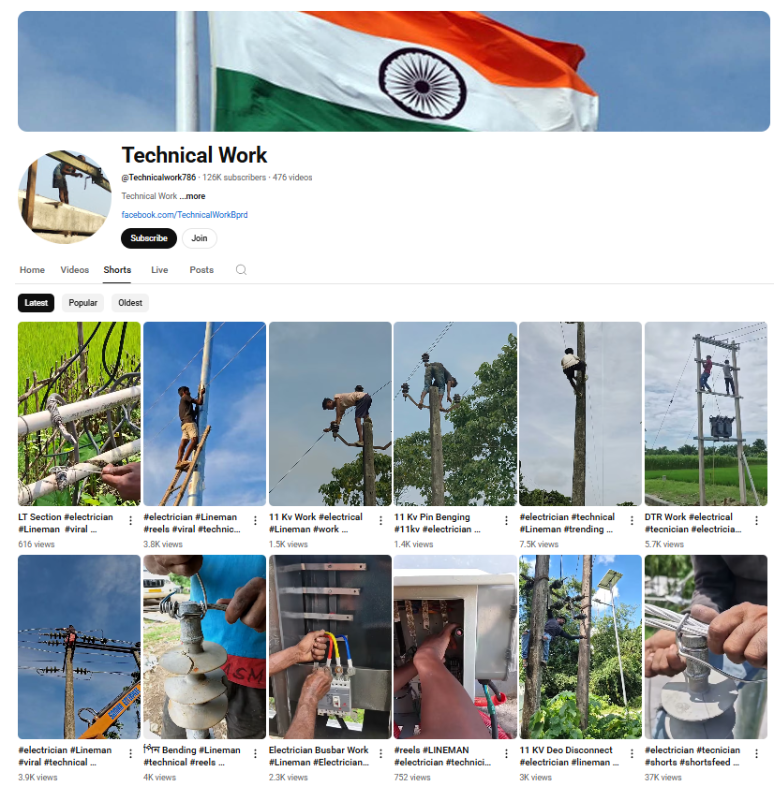
To investigate the viral claim that a man cut off the electricity supply to his girlfriend’s village after getting angry with her, we conducted a reverse image search using keyframes from the video. During the search, we found the original video uploaded on the YouTube account named ‘Technical Work’ on July 17, 2025. According to the video description, the video is related to electrical work.
https://www.youtube.com/shorts/iHtG5xwHtKI

Additionally, we found several videos related to electrical work uploaded on the same YouTube account. We also found a Facebook page associated with this YouTube account.
Conclusion
The evidence gathered during our research makes it clear that the viral claim that a man cut off the electricity supply to his girlfriend’s village after getting angry with her is completely false. In reality, the video shows electricity workers repairing a power line in Assam.

Executive Summary
Amid the floods in Nepal, several videos are being shared on social media, claiming to show the current situation in the country. A research done by the Research Wing of the CyberPeace found that the video showing elephants is from an incident that occurred before the floods in Nepal, while the video showing the street is likely AI-generated.
Claim 1
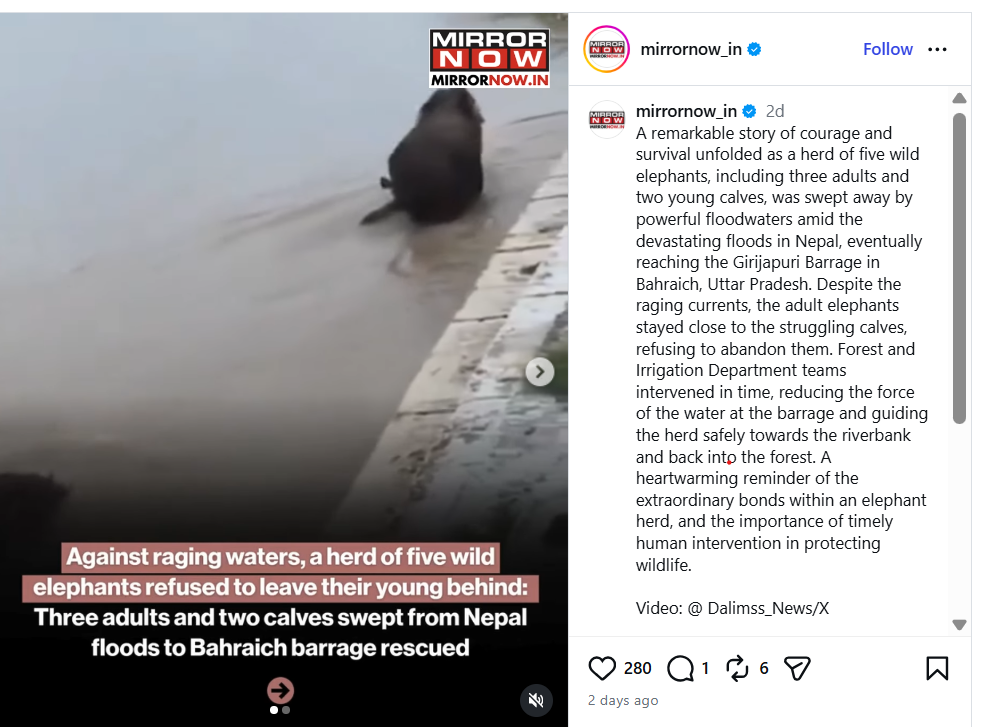
Videos claiming to show a street being swept away by flash floods in Nepal and a herd of elephants being carried away by the floods and reaching Uttar Pradesh are going viral on social media.
https://www.instagram.com/p/DcimGaiiCa7/
Claim 2
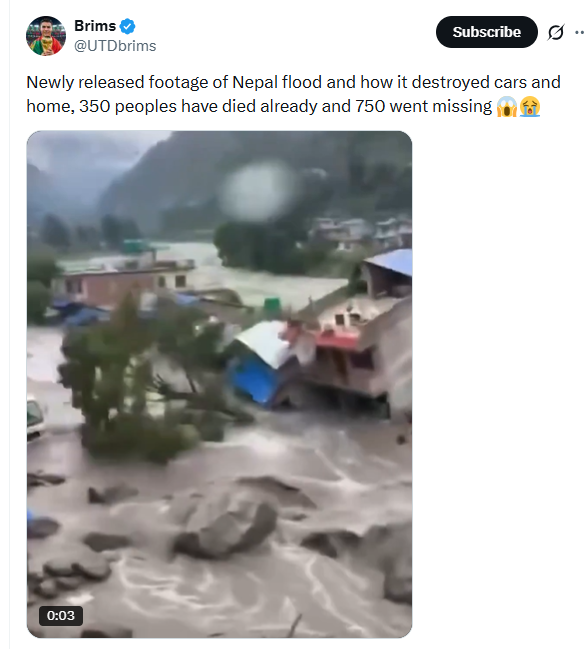
A newly surfaced video purportedly shows the devastation caused by floods in Nepal, with cars and homes being destroyed. It is being claimed that 350 people have died and 750 are missing so far
https://x.com/UTDbrims/status/2092829398462341484?s=48
Fact Check 1
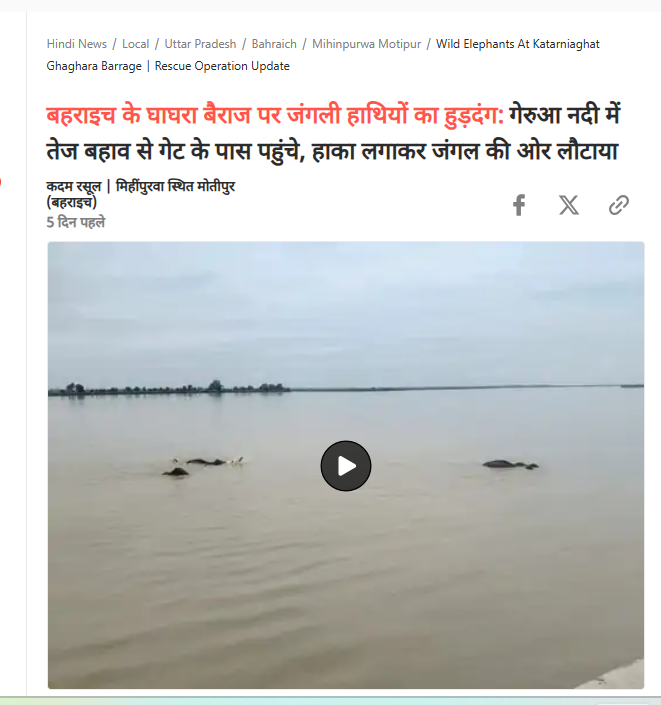
The first video claims to show a herd of wild elephants that was swept away by the floods in Nepal and reached Uttar Pradesh. We conducted a reverse image search of the first video using Google Lens and found a report by Hindi news publication Dainik Bhaskar, which shared a video featuring visuals similar to those in the viral clip. According to the report, a herd of wild elephants coming from the Gerua River reached the gates of the Chaudhary Charan Singh Ghaghra Barrage in Bahraich district, Uttar Pradesh, due to the strong current of the river. The report also quoted the Forest Range Officer as saying that the area is adjacent to an elephant corridor, which is why elephants frequently move through the region.
Fact Check 2
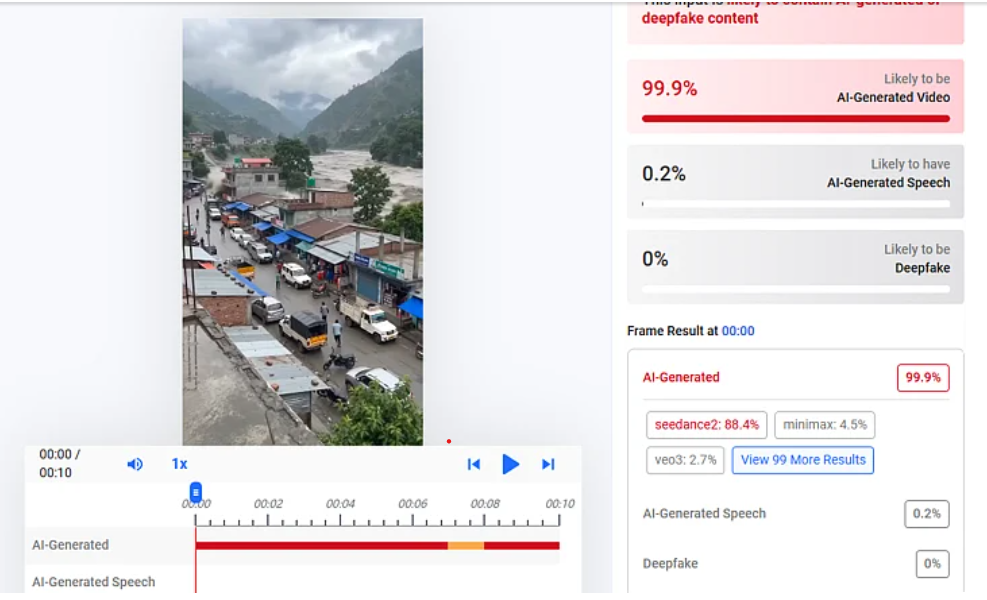
The second video shows a street being completely swept away by floodwaters. We conducted a reverse image search of the video using Google Lens but could not find any credible source that had shared the footage. Following this, we ran the video through the AI detection tool Hive Moderation, which flagged it as 99 percent likely to be AI-generated.
Conclusion
Our research found that the viral videos being shared as scenes of devastation caused by the recent floods in Nepal are misleading. The video showing a herd of elephants is from a separate incident in Bahraich, Uttar Pradesh, and predates the Nepal floods. Meanwhile, the video showing a street being swept away could not be traced to any credible source and was flagged as 99 percent likely to be AI-generated by Hive Moderation.
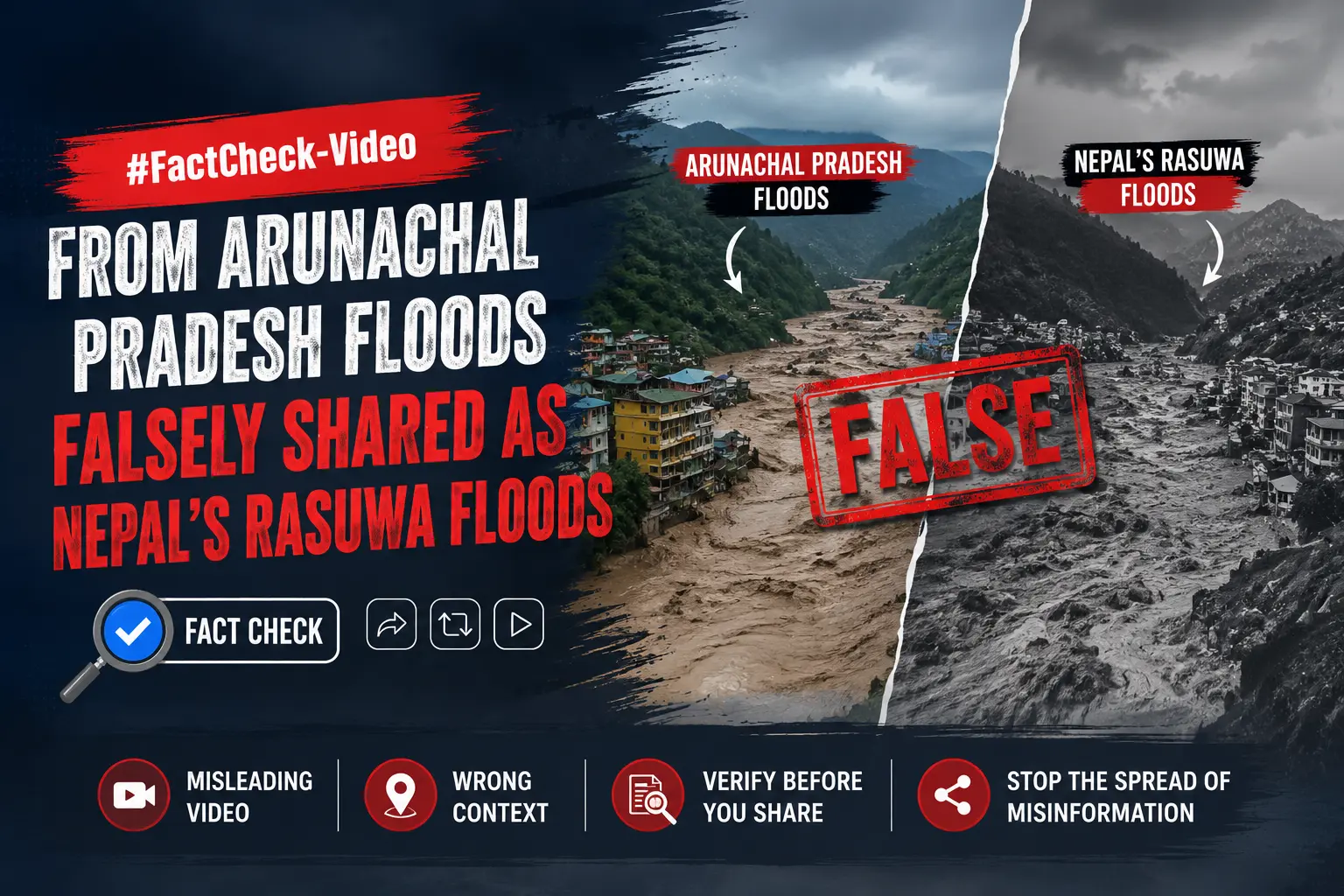
Executive Summary
A video showing several houses being swept away by floodwaters is being shared on social media, claiming that it shows flooding in the Rasuwa area of Nepal. Research done by the CyberPeace research wing found that the video is not from Nepal, but is from the floods that occurred in Keyi Panyor district of Arunachal Pradesh in June.
Claim
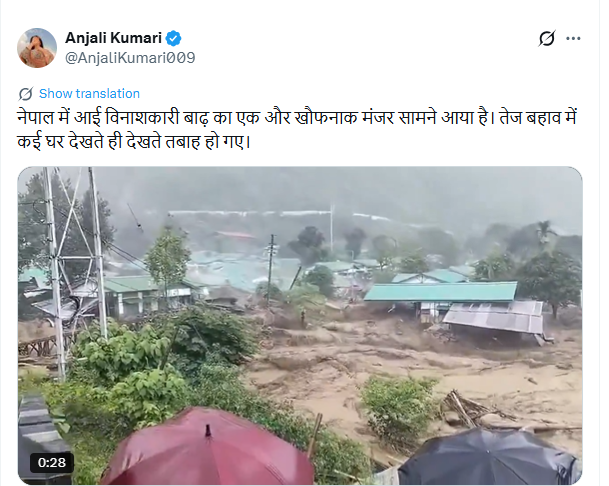
The video was shared on X with the caption: “Another horrifying scene from the devastating floods in Nepal has emerged. Several houses were destroyed within moments by the strong current.”
https://x.com/anjalikumari009/status/2093257147094335652
FactCheck
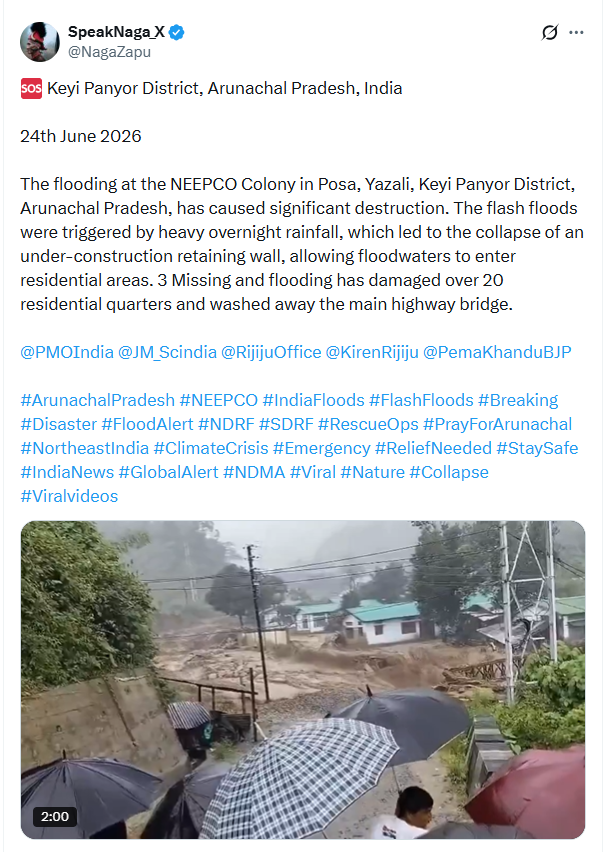
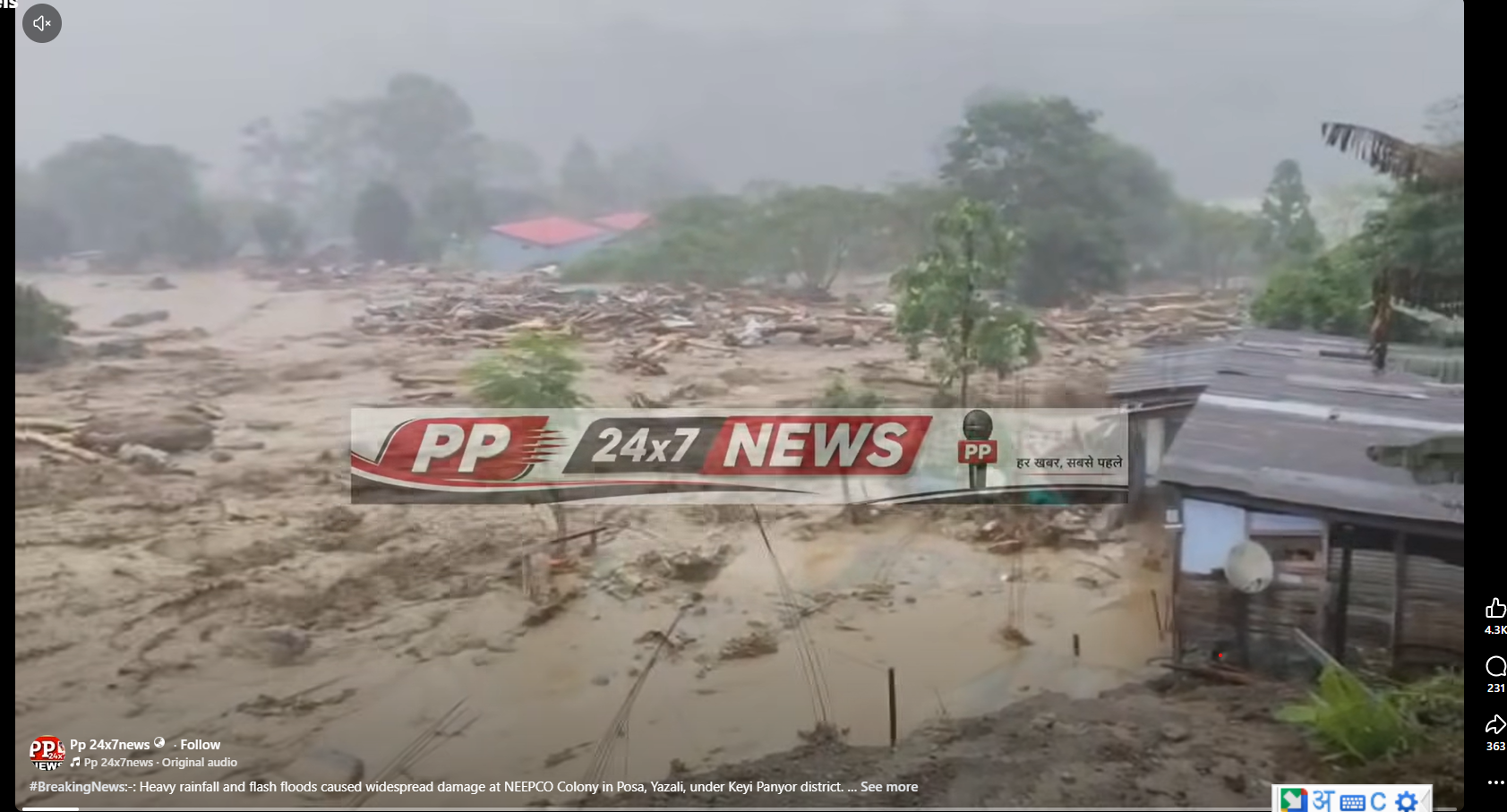
During our research of the video being shared as footage of floods in Nepal’s Rasuwa area, we conducted a reverse image search using keyframes and found a longer version of the video posted on an X account on June 24, 2026. The caption accompanying the video identified it as footage of a flash flood and the resulting devastation in Nipko Colony, Possa, in Arunachal Pradesh’s Keyi Panyor district, on June 24.
https://x.com/NagaZapu/status/2069747140608331962
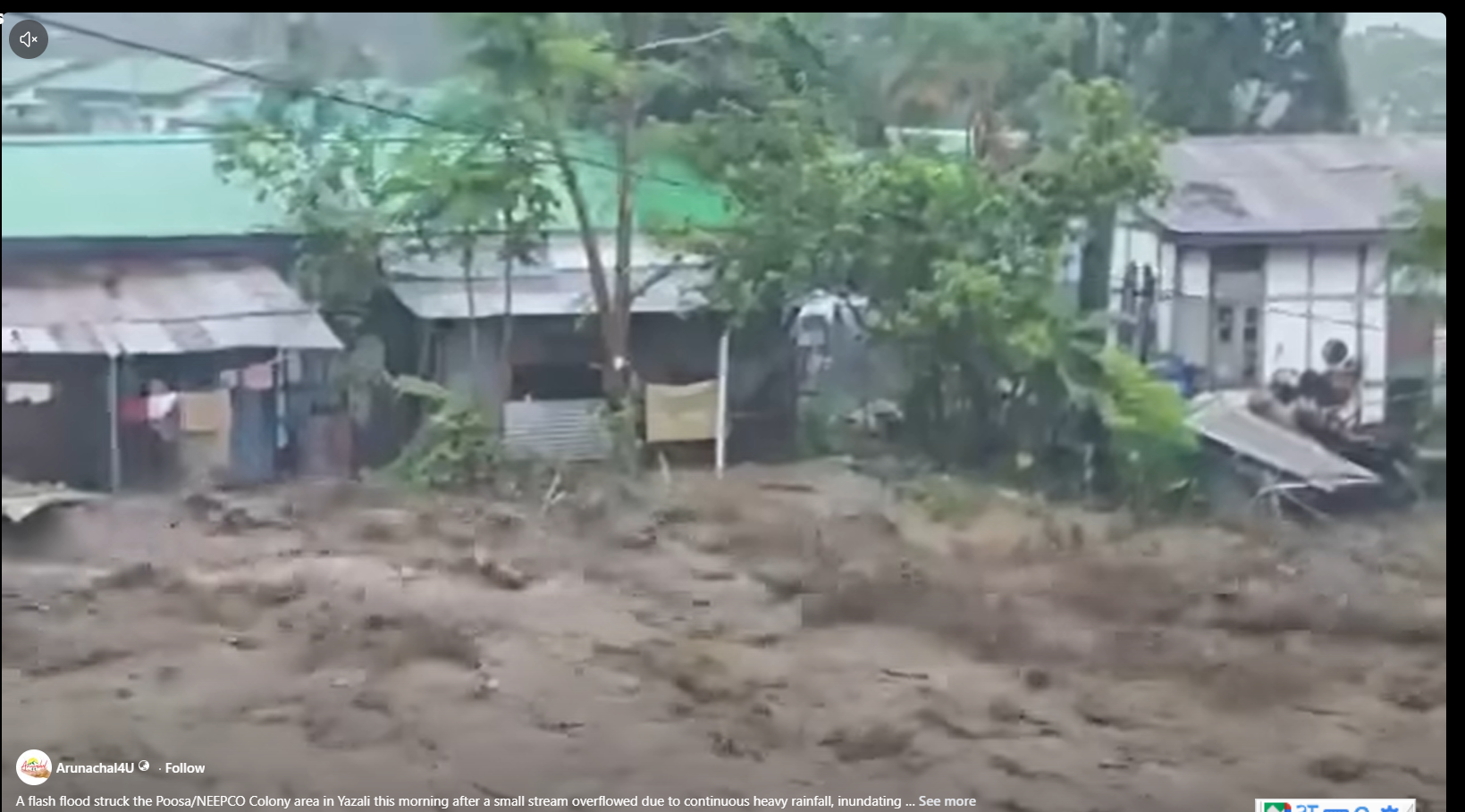
During the research, we also found videos of the flooding in Nipko Colony uploaded on several social media accounts from Arunachal Pradesh on June 24. These posts contained visuals matching those seen in the viral video.
https://www.facebook.com/reel/977442025167230
Additionally, we found a video report uploaded on June 24, 2026, on the Facebook account of a media outlet from Arunachal Pradesh. The report featured footage of the flooding in Nipko Colony. In the audio accompanying the video, the person recording the footage can also be heard describing the devastation caused by the floods.
https://www.facebook.com/reel/1571580381035813
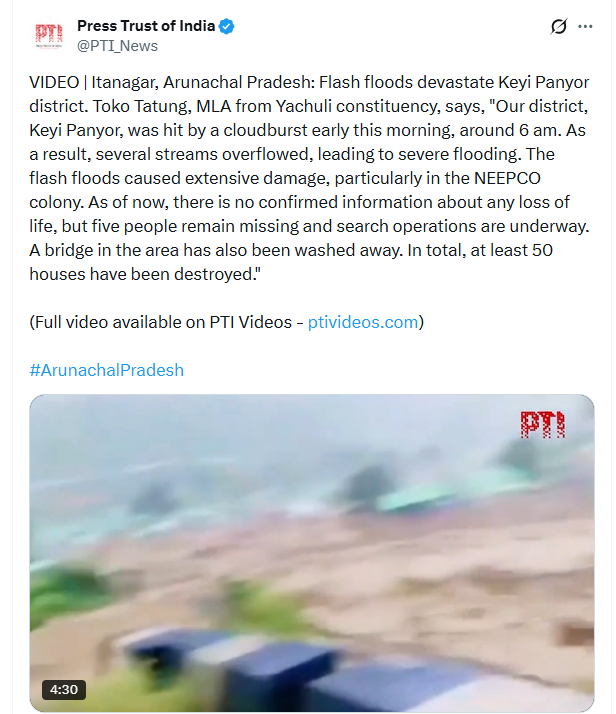
Additionally, we found visuals matching those in the viral video in a 4-minute-35-second video posted on the Press Trust of India’s X account on June 24, 2026. According to media reports, around three people were killed in the floods in Nipko Colony, while approximately 18 houses were swept away.
https://x.com/PTI_News/status/2069747746525835341
Conclusion
The evidence gathered during our research clearly establishes that the video being shared as footage of the floods in Nepal’s Rasuwa area is actually from the floods that struck Keyi Panyor district in Arunachal Pradesh on June 24.
Executive Summary
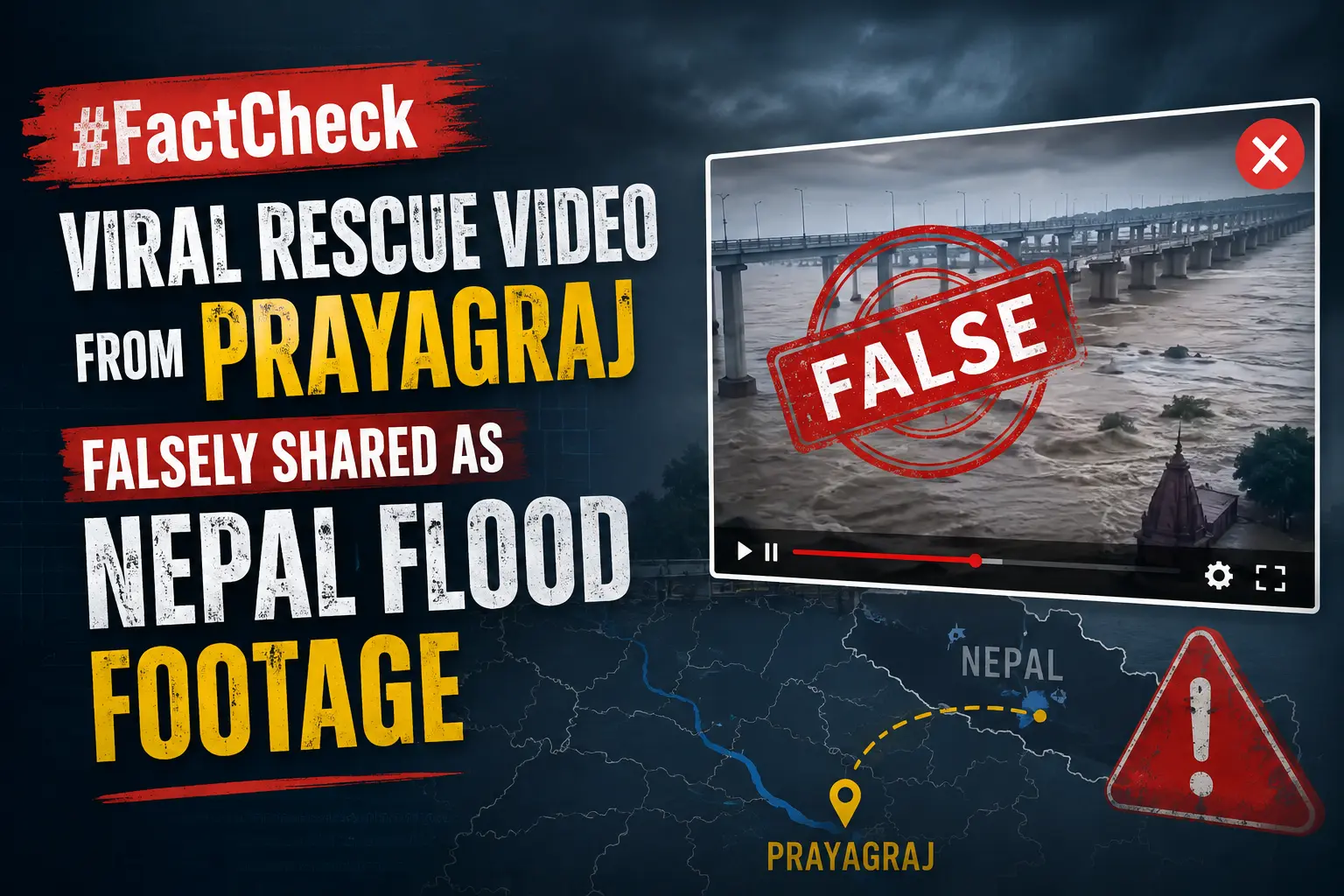
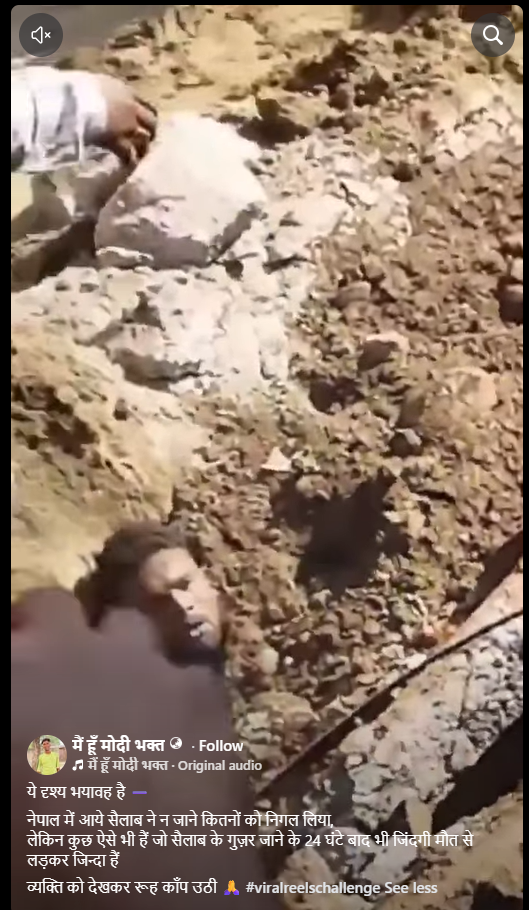
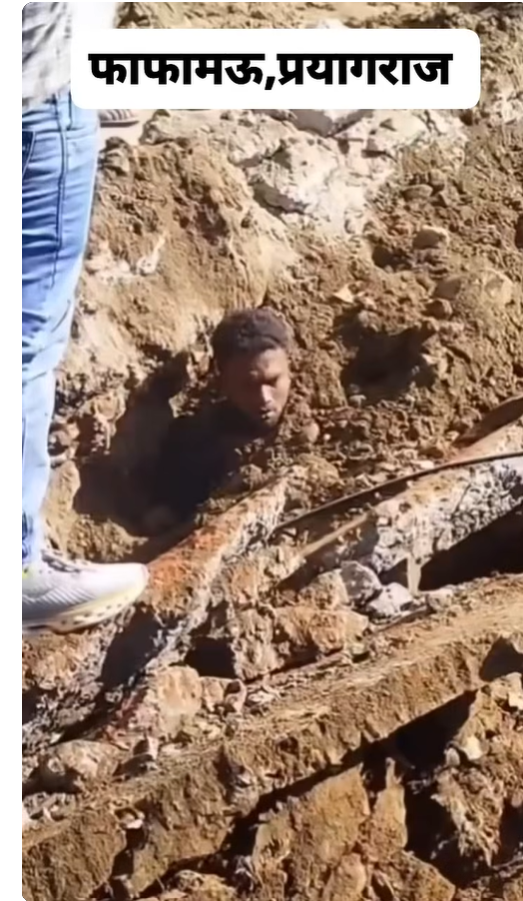
A video is being shared on social media showing several people attempting to rescue a young man trapped under a pile of soil and debris. The video is being shared as footage of the recent floods in Nepal. A research done by the Research Wing of the CyberPeace found the viral claim to be misleading. The research revealed that the video dates back to March 2026 and has no connection with the floods in Nepal. The video is actually from an incident in Prayagraj, Uttar Pradesh, and is being falsely shared as recent footage of the devastation caused by the floods in Nepal.
Claim:
On Facebook, a user shared the viral video with the caption: “These scenes are horrifying. The floods in Nepal have claimed countless lives, but there are also people who are still fighting for their lives even 24 hours after the floodwaters have receded. Seeing this person sends chills down the spine.” The archived post link and screenshot are provided below.
https://www.facebook.com/reel/1104511315422755
FactCheck
To verify the authenticity of the viral claim, we first extracted keyframes from the video and conducted a reverse image search using Google Lens. During the search, we found the same video uploaded on the YouTube account ‘Prayagraj Live 24’ on March 24, 2026.
According to the video description, the footage shows the relief and rescue operation carried out following an accident at a cold storage facility in Phaphamau, Prayagraj. The report link and screenshot are provided below.
https://www.youtube.com/shorts/D6ADJzxZUGQ
Based on the clue obtained from YouTube, we conducted a Google search using relevant keywords. During the search, we found a report published on the Dainik Bhaskar website on March 24, 2026, which featured the same visuals seen in the viral video. The report link and screenshot are provided below.
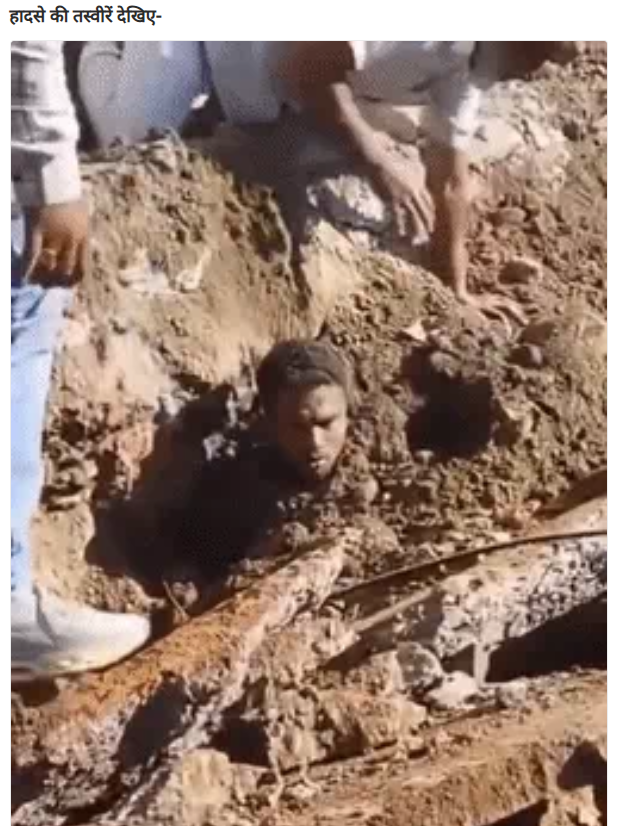
According to a report by Dainik Bhaskar, a major accident occurred at Adarsh Cold Storage in the Phaphamau police station area of Prayagraj on March 23, 2026. At around 1:30 pm, an ammonia gas chamber used for cooling at the cold storage exploded, causing the building’s walls and roof to collapse. Several workers were trapped under the debris in the accident.
Conclusion
Our research found that the viral video dates back to March 2026 and has no connection with the floods in Nepal. The video is actually from an incident in Prayagraj, Uttar Pradesh, and is being falsely shared on social media as recent footage of the devastation caused by the floods in Nepal.

Executive Summary
A video is being widely shared on social media, purportedly showing a person drawing water from a drain and using it to cook biryani. The video is being shared as being from India. Some users sharing the video are also advising people to take care of their stomach and intestinal health while eating and drinking outside. A research done by the Research Wing of the CyberPeace found that the viral video is not authentic but AI-generated and is being shared with a misleading claim.
Claim:
A user on the social media platform Facebook shared the viral video with the caption: “A person in India is cooking biryani using water from a drain.” The post link, archive link and screenshot are provided below.
https://x.com/NikolaTesla2010/status/2094021398113226802?s=20

Fact Check:
Upon closely examining the viral video, we noticed the Google Gemini logo clearly visible in the bottom-right corner. This raised suspicions that the video could be AI-generated.
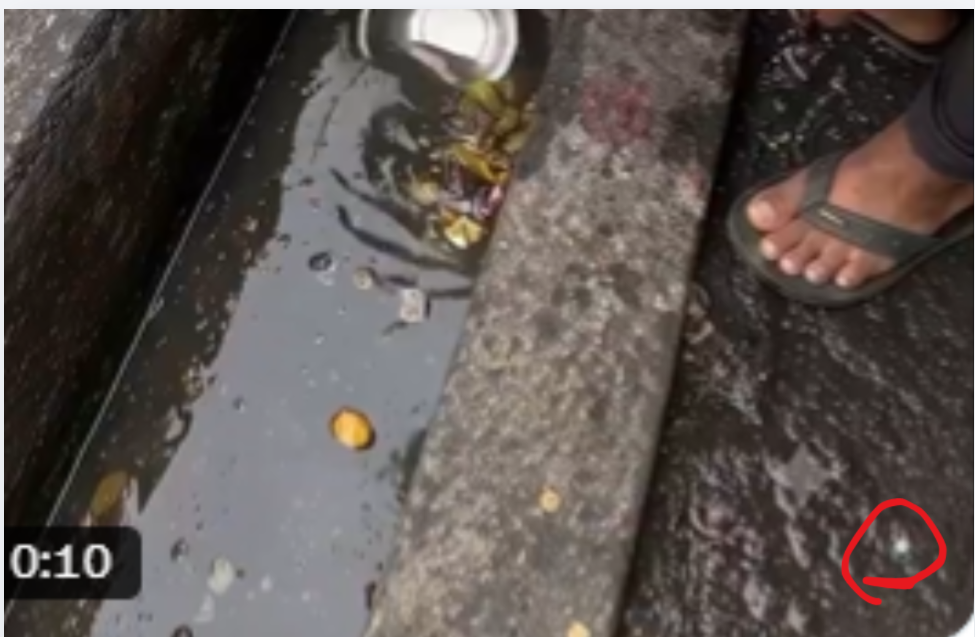
As part of our research, we ran the video through the AI detection tool Hive Moderation. According to the results, the viral video is 99 percent likely to be AI-generated.

As part of our research, we scanned the video using WasIt AI. According to the results, the viral video is AI-generated.

Conclusion
The evidence gathered during our research establishes that the viral video claiming to show a person cooking biryani using water from a drain in India is misleading. The Google Gemini logo is clearly visible in the video, while AI detection tools Hive Moderation and WasIt AI also identified the footage as AI-generated. Therefore, the video does not depict a genuine incident.

Executive Summary
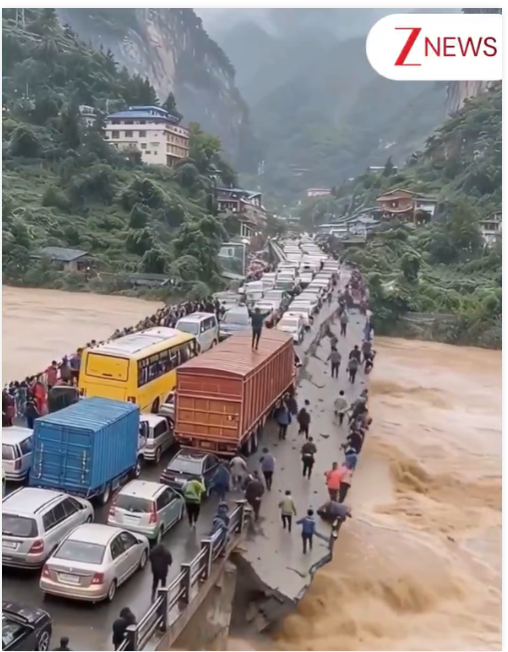
Nepal witnessed severe devastation after floods struck the country on August 26, 2026. Amid this, a video showing a bridge being swept away by floodwaters is being widely shared on social media. Some users are sharing the video claiming that it shows scenes of destruction caused by the floods in Nepal.A research done by the Research Wing of the CyberPeace found that the video being shared with the claim of flood devastation in Nepal is AI-generated. However, it is true that the floods in Nepal have claimed hundreds of lives.
Claim
A user on X shared the video with the caption: “Scenes of devastation in Nepal after the disaster.”
https://www.instagram.com/reels/Dch-EmYNUwz/
https://perma.cc/5VY5-ZFCN?type=standard
Fact Check
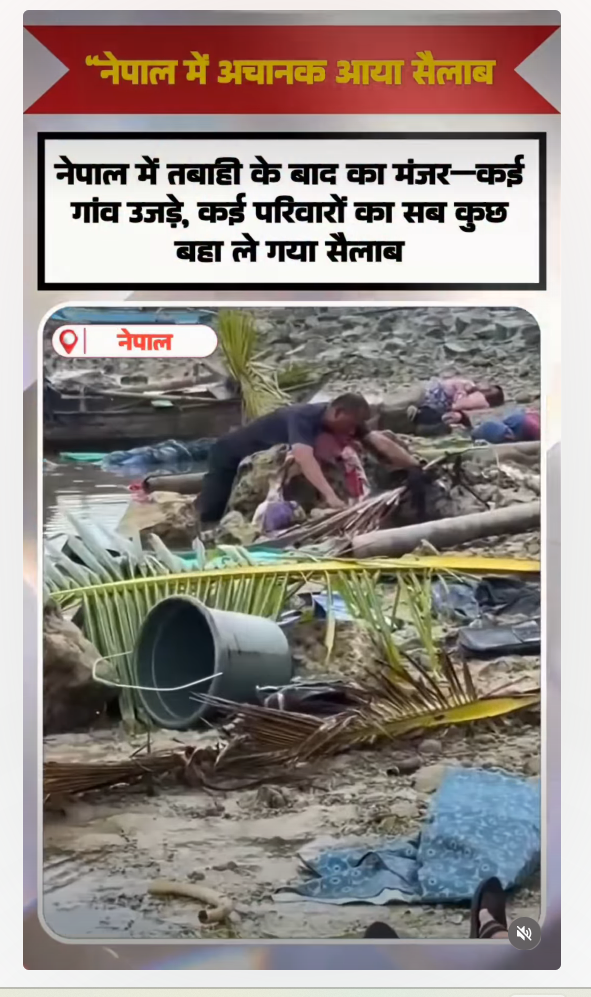
We closely examined the video showing the bridge being swept away. A person can be seen standing on top of a truck, which appears unnatural in such a situation. Moreover, even as the bridge collapses, the people on it do not appear to fall directly into the water. These observations led us to suspect that the video was likely AI-generated.
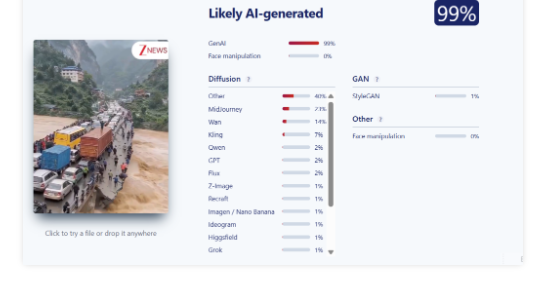
We scanned the viral video using the AI detection tool ‘WasItAI’, which identified it as 99 percent AI-generated.

Meanwhile, another AI detection tool, Sightengine, also identified the video as 99 percent AI-generated.
Conclusion:
A video being shared with the claim that it shows devastation caused by floods in Nepal is actually from the shooting of an Indonesian TV serial, while another viral video is AI-generated.

Executive Summary
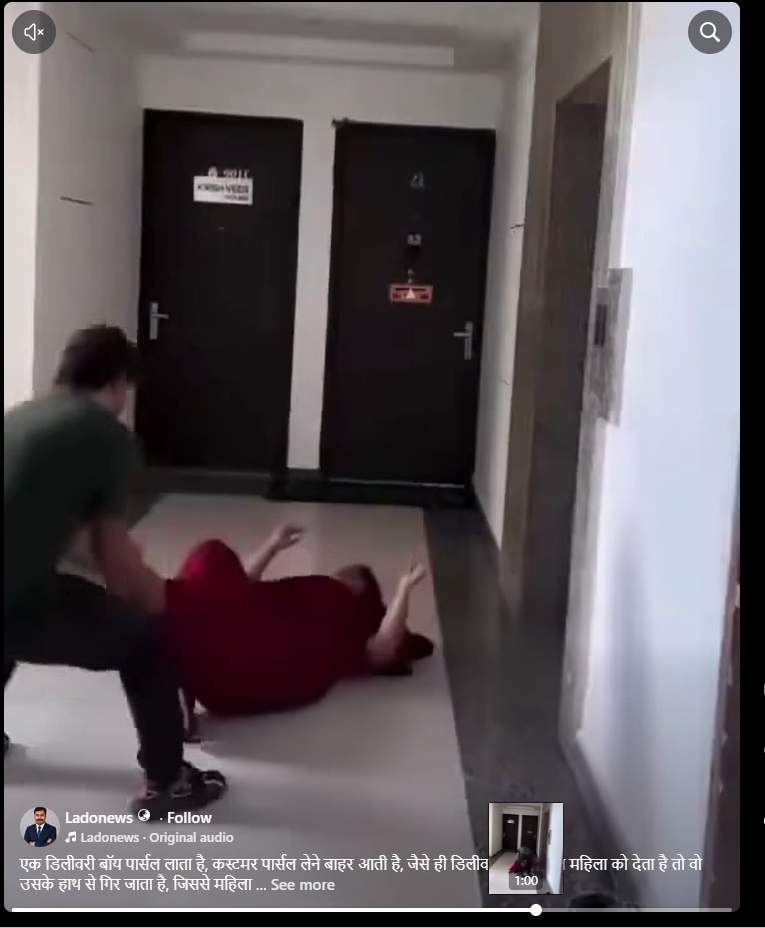
A video is being widely shared on social media claiming to show a delivery boy assaulting a woman. In the viral clip, a man approaches a woman to deliver some items. An argument soon breaks out between the two, followed by pushing and shoving that escalates into a physical fight. The purported delivery boy is then seen knocking the woman to the ground and allegedly beating her. Research by CyberPeace Research Wing found that the viral video is scripted.
Claim:
“A delivery boy brings a parcel, and the customer comes outside to collect it. As soon as the delivery boy hands the parcel to the woman, it falls from her hands, following which the female customer starts assaulting the delivery boy. In anger, the delivery boy also begins hitting the woman and knocks her to the ground, brutally beating her with kicks and slaps. Although the woman was at fault, the delivery boy should not have reacted so violently.”
https://www.facebook.com/reel/2826948067671726
Fact Check
To verify the viral video claiming to show a delivery boy assaulting a woman, we conducted a reverse image search using keyframes from the clip. During the search, we found the same video posted on the Facebook account of a user named Vipin Chauhan on August 21, 2026. The viral clip appears in the 2-minute-33-second-long video. The caption accompanying the video states that it is a pre-planned (scripted) video.
https://www.facebook.com/reel/1551896343642588

During the research, we also found the same video on the same user's Instagram account, where it was described as scripted.
https://www.instagram.com/reels/DcTAF_ZsUnv/

Upon reviewing the Instagram user's account, we found several other videos featuring men and women engaged in physical altercations. The captions of all these videos clearly state that they are scripted.

Conclusion
The evidence gathered during our research clearly establishes that the video being shared with the claim that a delivery boy assaulted a woman is scripted and does not depict a genuine incident. The same video was found on the social media accounts of the creator, where it was explicitly described as scripted. We also found several other similar videos on the user's account, all of which were identified as pre-planned or scripted content.

Executive Summary
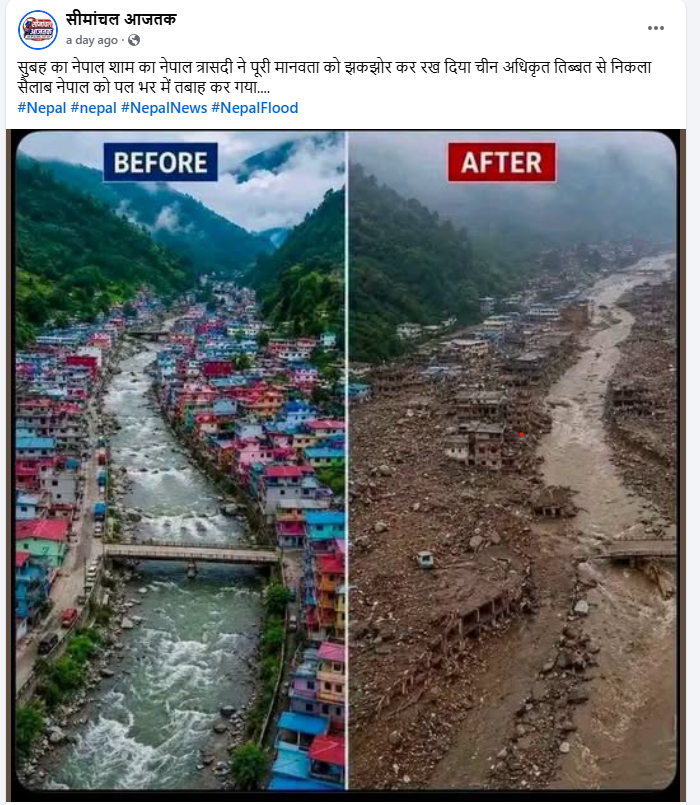
A collage made by combining two images is going viral on social media. It is being shared as being related to the recent devastating floods in Nepal. One image in the collage shows a beautiful town before the floods, while the other depicts the destruction caused by the flooding. A research done by the Research Wing of the CyberPeace found the viral claim to be false. The research revealed that the viral image collage circulating on social media is AI-generated and is being falsely shared as visuals of the recent floods in Nepal.
Claim:
A user on social media platform Facebook shared the viral collage with the caption: “Nepal in the morning, Nepal in the evening. The tragedy has shaken all of humanity. The flood originating from China-occupied Tibet devastated Nepal in an instant.”
The link to the post, its archived version, and a screenshot are provided below.
https://www.facebook.com/photo/?fbid=1630488505774559&set=a.467756888714399
Fact Check
To verify the authenticity of the viral images, the desk first conducted a reverse image search. However, the search did not lead us to any credible media reports or original sources featuring these images. We then closely examined the images. The analysis revealed several anomalies in the structure of the buildings, the vehicles visible on the road, and other elements in the images, further strengthening the suspicion that they were AI-generated. We then scanned the viral image using the AI detection tool Hive Moderation. The tool’s analysis indicated a 99 percent likelihood that the image was AI-generated.
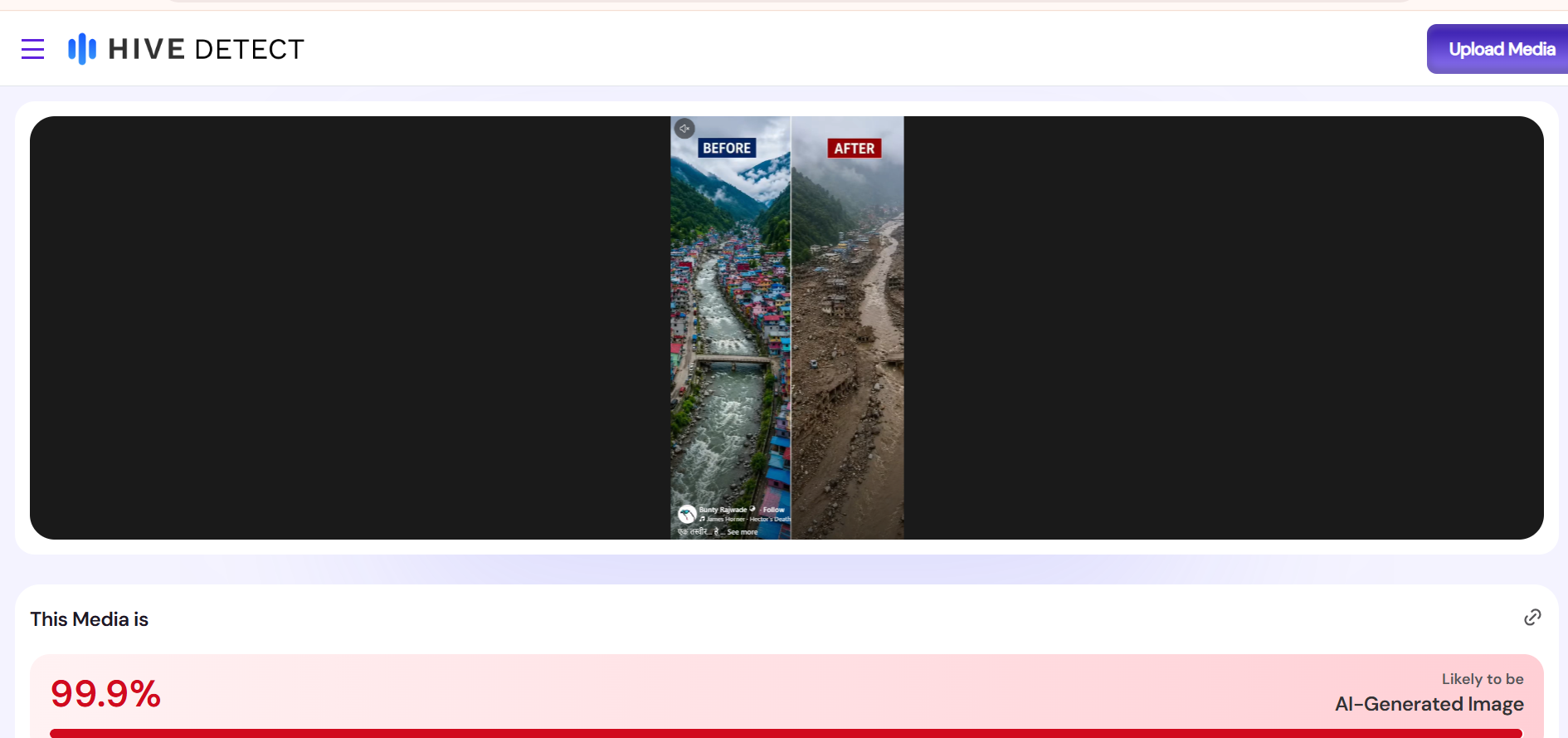
We then scanned the viral image using the AI detection tool Sightengine as well. The tool’s analysis indicated a 99 percent likelihood that the image was AI-generated.

Conclusion
Our research found that the viral collage of images being shared on social media is AI-generated and is being falsely linked to the recent floods in Nepal.
Executive Summary
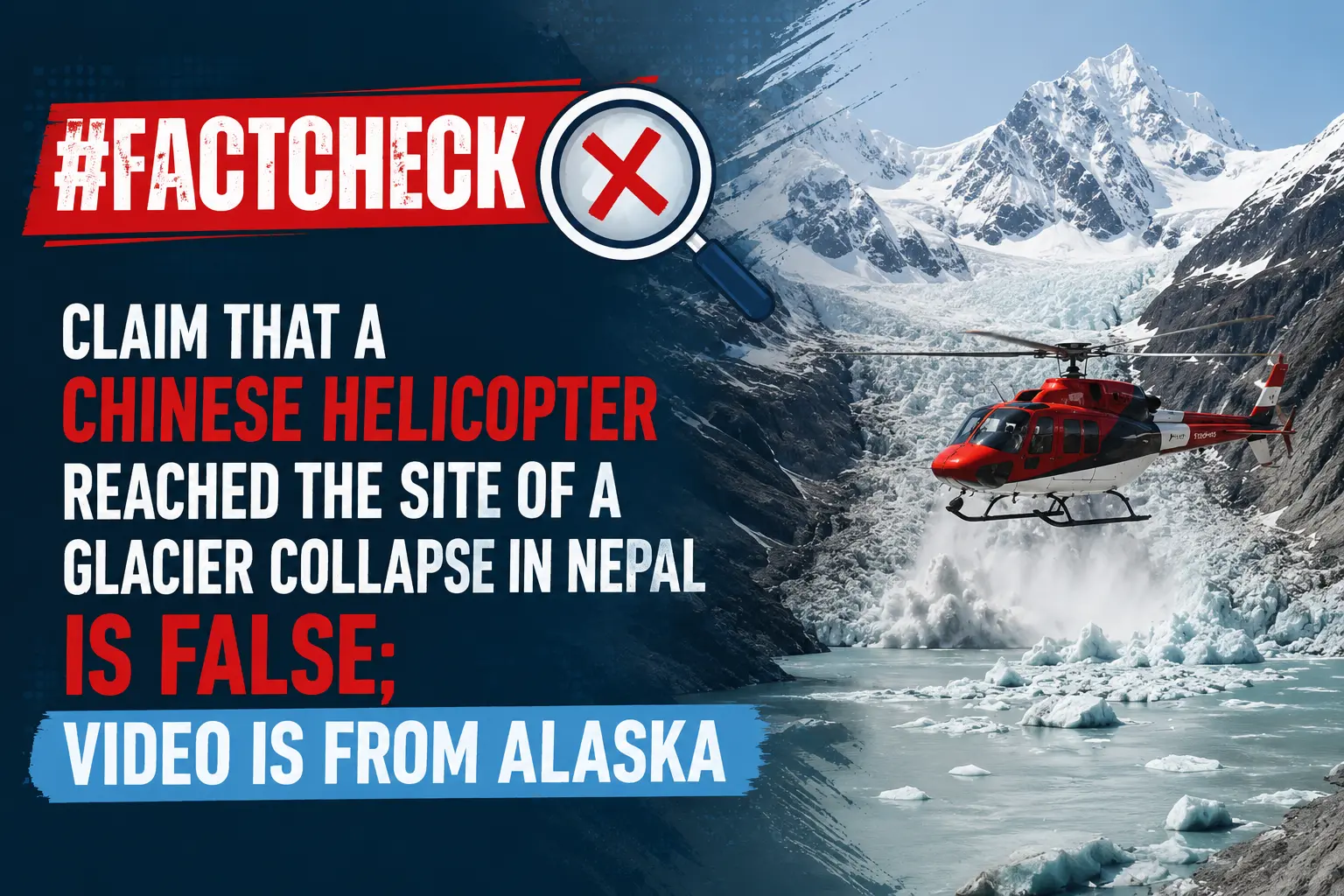
A video purportedly showing a glacier breaking apart while being filmed from a helicopter is being shared on social media with the claim that a Chinese helicopter has reached the site where a glacier broke apart, triggering floods in Nepal. A research by the Research Wing of the CyberPeace found that the video is actually from Alaska, USA. It was uploaded on Instagram and YouTube by an American pilot, Leigh Kotes, before the recent floods in Nepal, and is unrelated to the incident.
Claim
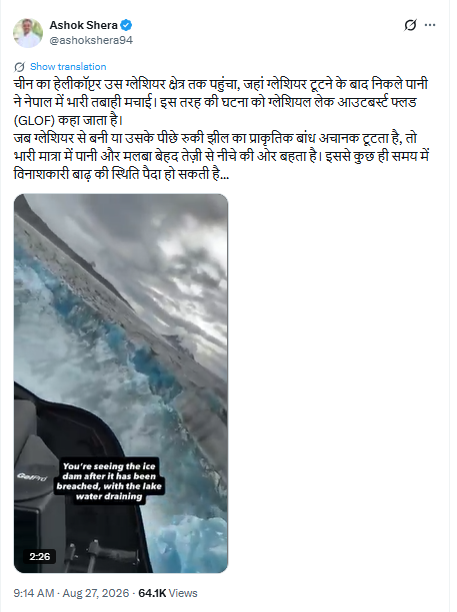
The video is being shared on X with a caption claiming: “A Chinese helicopter reached the glacier region where water released after the glacier broke apart caused massive destruction in Nepal. Such an event is known as a Glacial Lake Outburst Flood (GLOF).”
https://x.com/ashokshera94/status/2092820484811538681
Fact Check
To verify the viral video claiming that a Chinese helicopter reached the site of the glacier break after the floods in Nepal, we conducted a reverse image search using keyframes from the clip. During the search, we found a video featuring the same visuals uploaded on a YouTube account named “Heli Pilot Leigh” on January 16, 2025. The location mentioned with the video identified it as Alaska, USA.
https://www.youtube.com/shorts/floh1LkZT7o
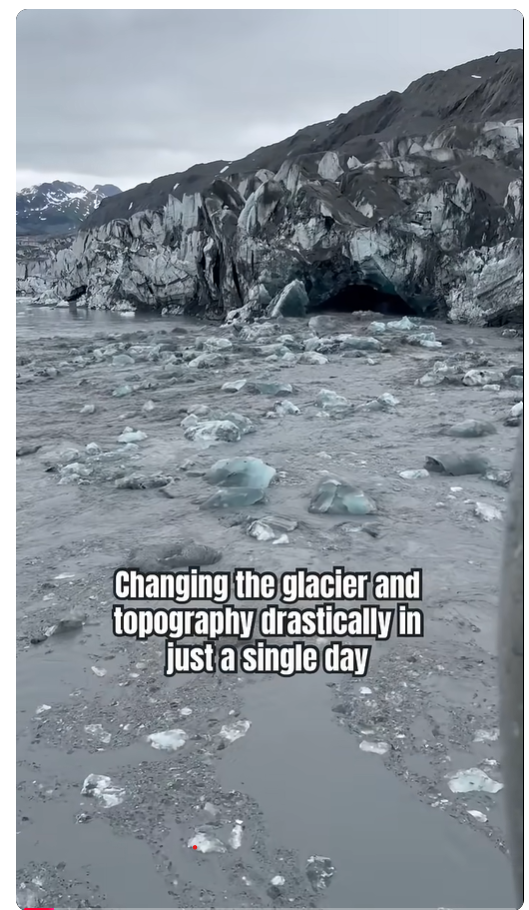
We also found several videos featuring scenes similar to those in the viral video on Ligh Kotes’ YouTube account. Among them, a nearly two-minute-long video uploaded on January 16, 2025, also contains visuals similar to those seen in the viral clip. Recorded from a helicopter, the video shows Ligh extending her mobile phone outside the helicopter to capture footage of water rushing out at high speed following the breaking of a glacier. https://www.youtube.com/watch?v=5vQP5HlyMMY
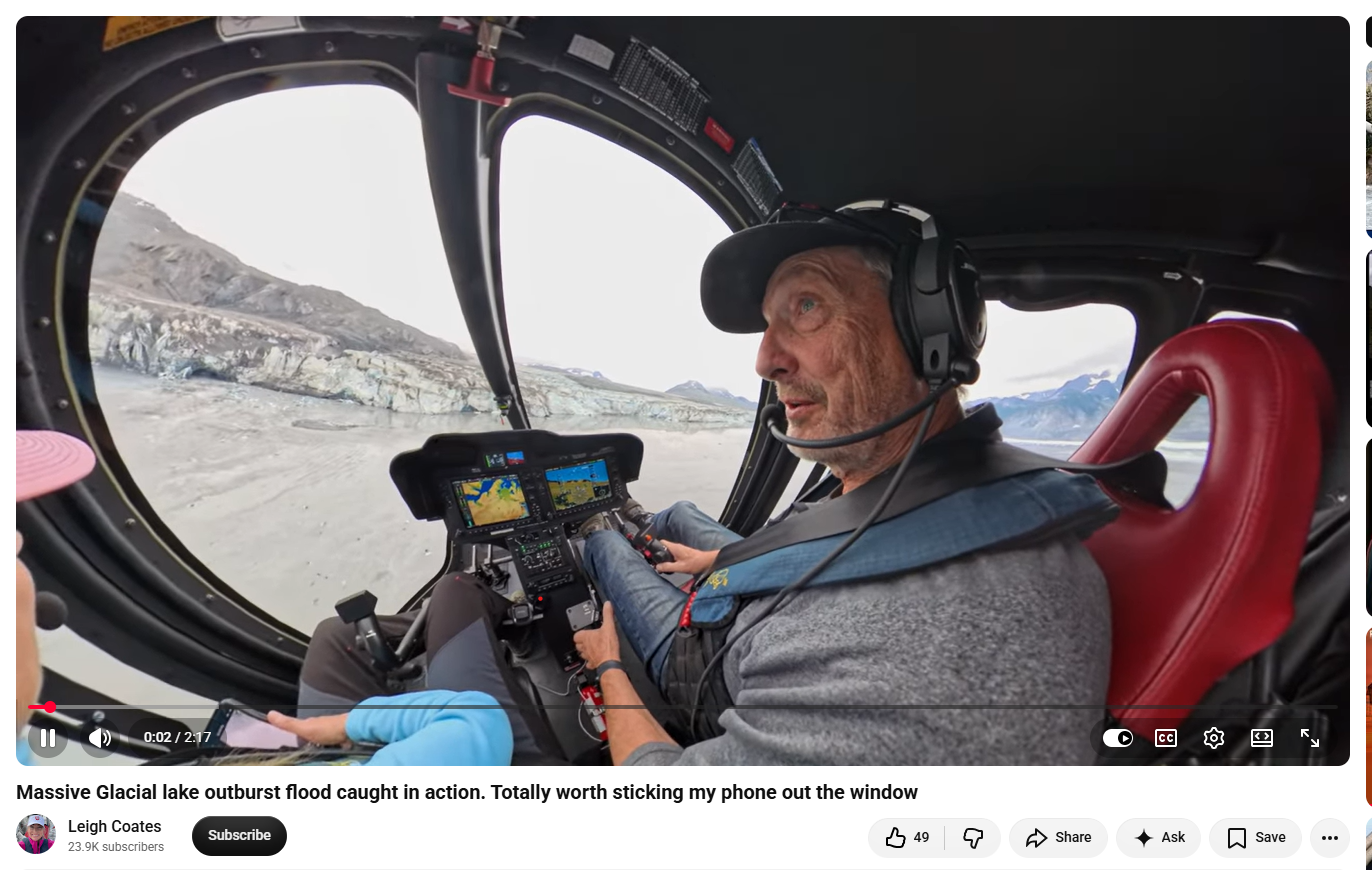
Additionally, our research found that the Columbia Glacier featured in Ligh’s video is located near Valdez, Alaska.
https://www.alaska.org/detail/columbia-glacier

Conclusion
The evidence gathered during our research makes it clear that the viral video, which is being shared with the claim that a Chinese helicopter reached the site of a glacier collapse following floods in Nepal, is actually from the Columbia Glacier in Alaska, USA. The video was recorded by an American pilot, Ligh Kotes.
Executive Summary
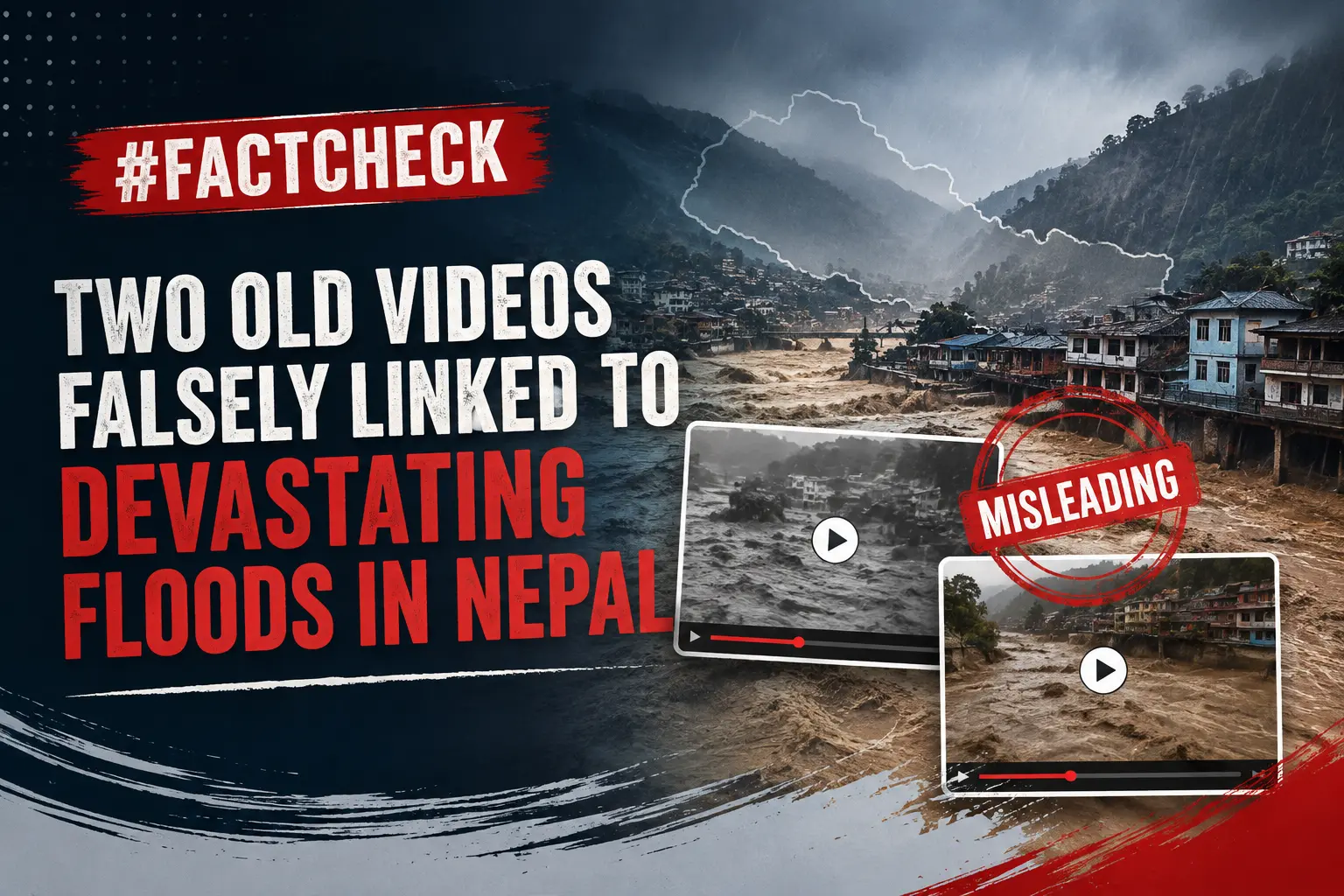
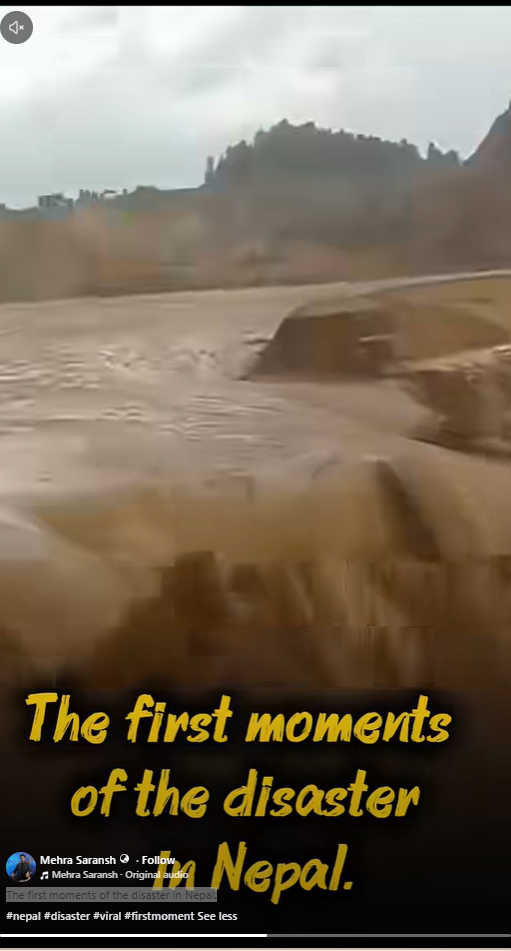
Following the flash floods that struck the Nepal-Tibet border on Wednesday morning, 289 bodies have so far been recovered, while around 1,500 people remain missing. A large number of foreign nationals, along with Nepali citizens, are also among those reported missing. Meanwhile, a video showing a massive landslide is being widely circulated on social media. The viral clip is actually a compilation of two separate videos. The first shows a landslide rapidly turning into a torrent of muddy floodwater, while the second shows a two-storey house on a riverbank being swept away by rising floodwaters. A research done by the Research Wing of the CyberPeace found that both videos are old and unrelated to Nepal. The first video is from Myanmar, while the second was recorded in the United States.
Claim:
A user on social media platform Facebook shared the video, claiming that it shows the initial scenes of the devastating floods and landslides that struck Nepal.
https://www.facebook.com/reel/1572666177989617
Fact Check:
To verify the first video, we conducted a reverse image search of its keyframes. During the search, we found a longer version of the same footage, which was shared on an Instagram account on June 30. This confirmed that the viral clip is unrelated to the recent floods in Nepal.
https://www.instagram.com/reels/DaLtKtjzTtq/
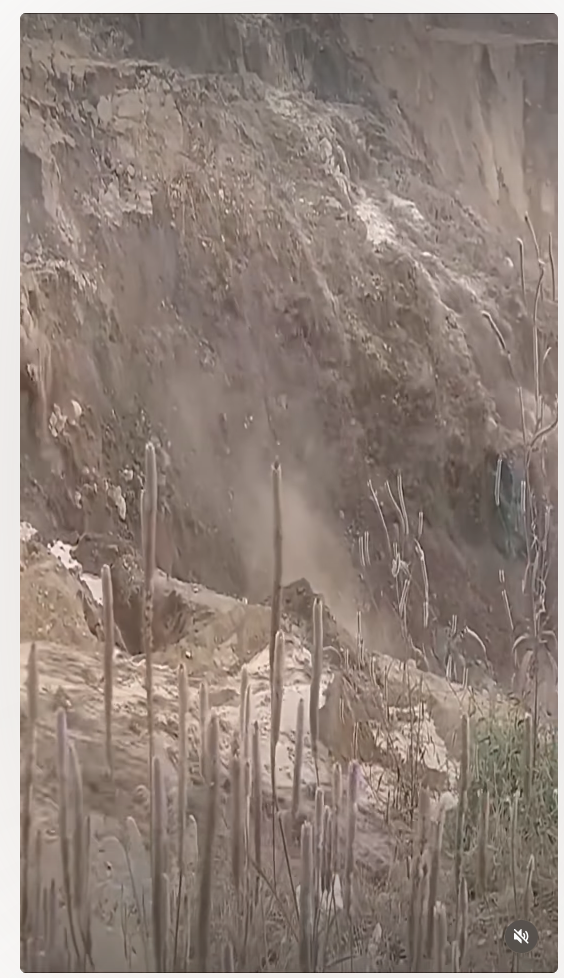
During the research, we also found the full version of the video on a YouTube channel, where it was uploaded on January 28, 2024. Although the video caption did not clearly specify the location of the incident, it mentioned Myanmar several times. This confirms that the viral video is old footage from Myanmar and not related to the recent disaster in Nepal.
https://www.youtube.com/watch?v=_z2_IEqOBNg&t=3s
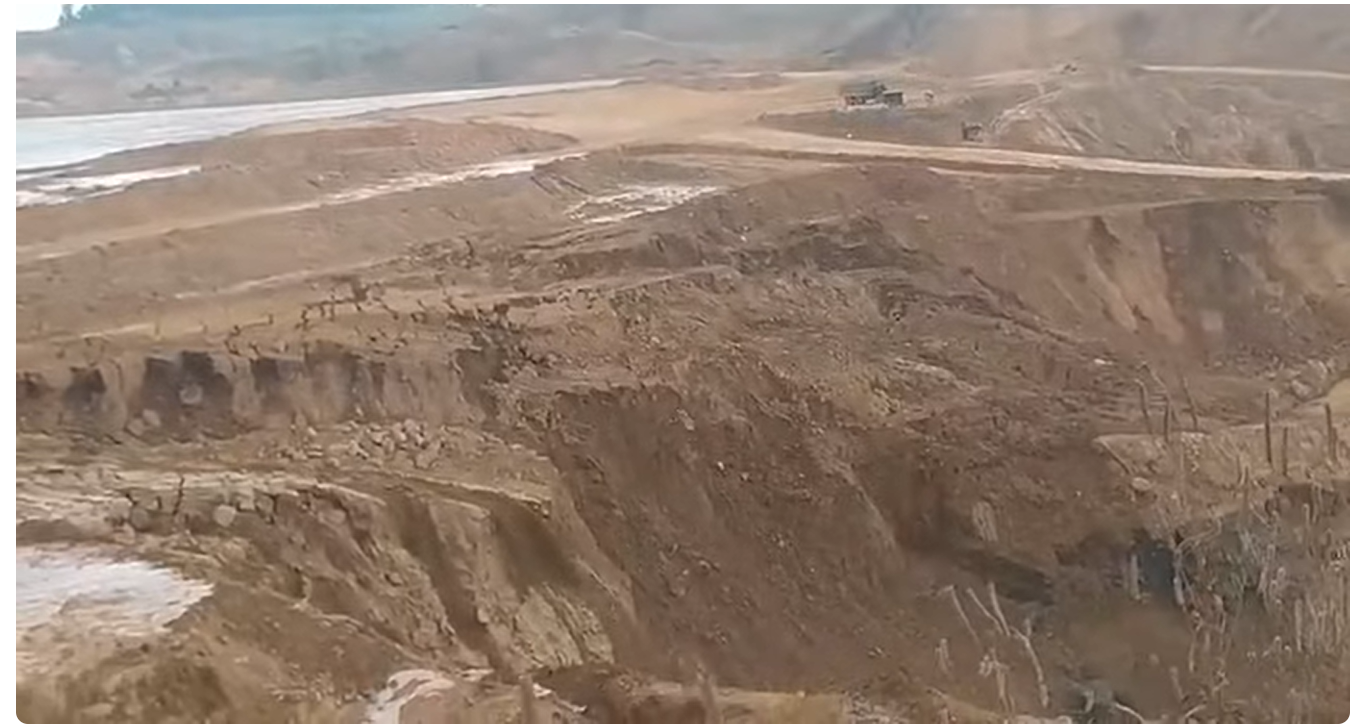
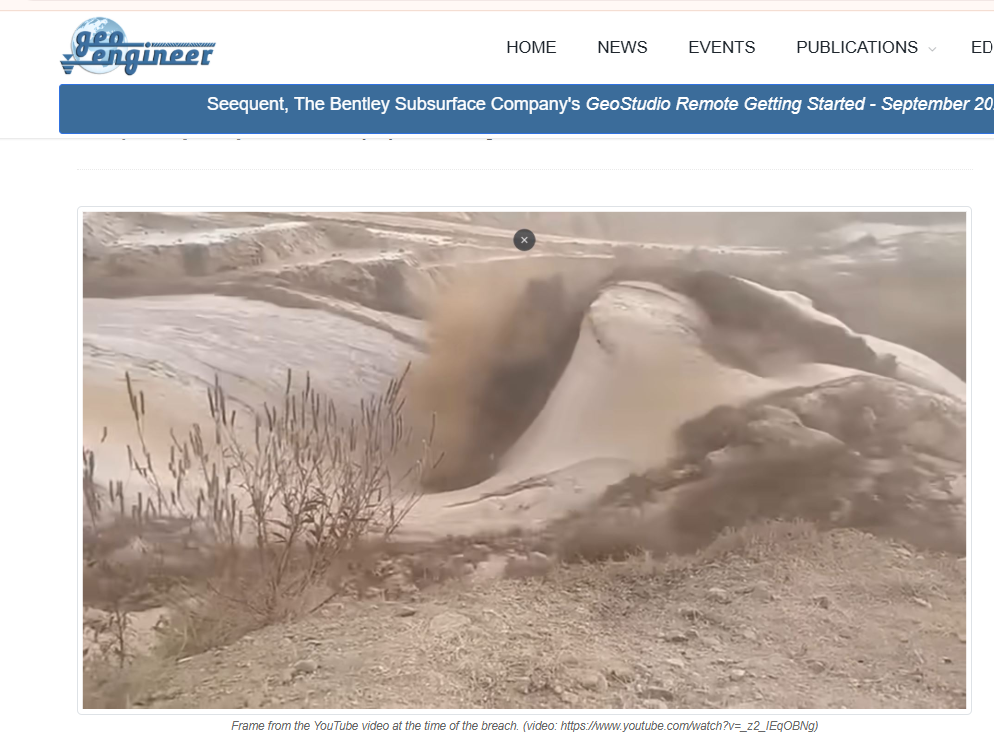
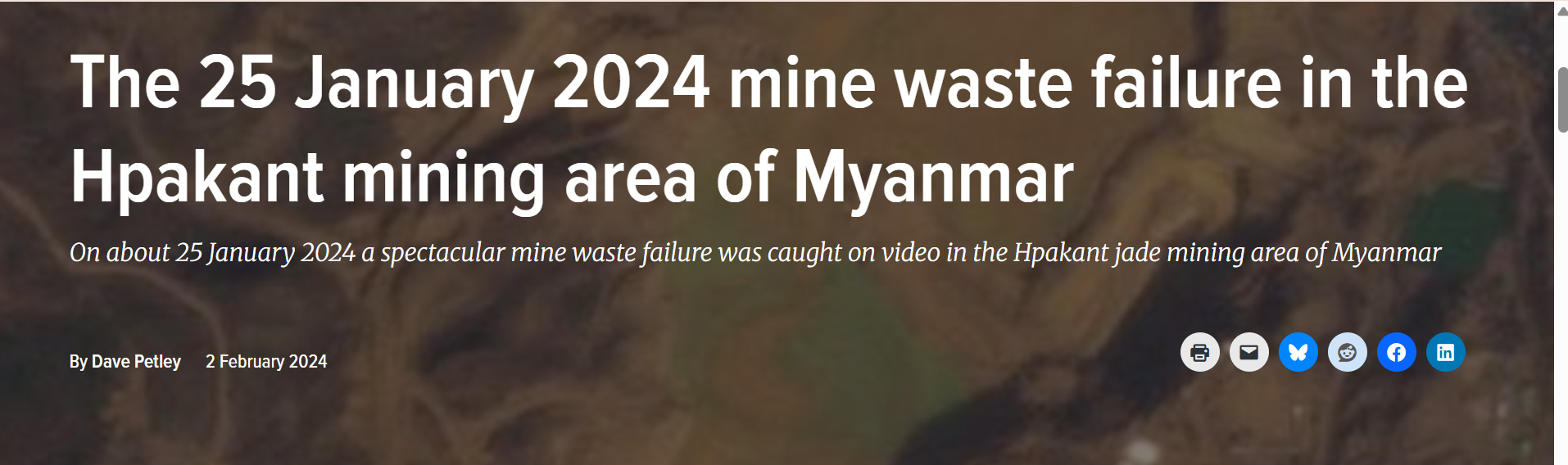
We found another report, published on January 25, 2024, that carried screenshots from the viral footage. It stated that the incident took place between January 24 and 25, 2024, in Myanmar’s Hpakant mining area. Further verification led us to a report published by EOS.org, the digital science news outlet of the American Geophysical Union. The report examined the incident by comparing Planet Labs satellite imagery captured before and after the event, providing further evidence about the location of the incident.
https://www.geoengineer.org/news/mine-waste-dam-failure-in-myanmar-caught-on-video
https://eos.org/thelandslideblog/myanmar-1
Second Clip
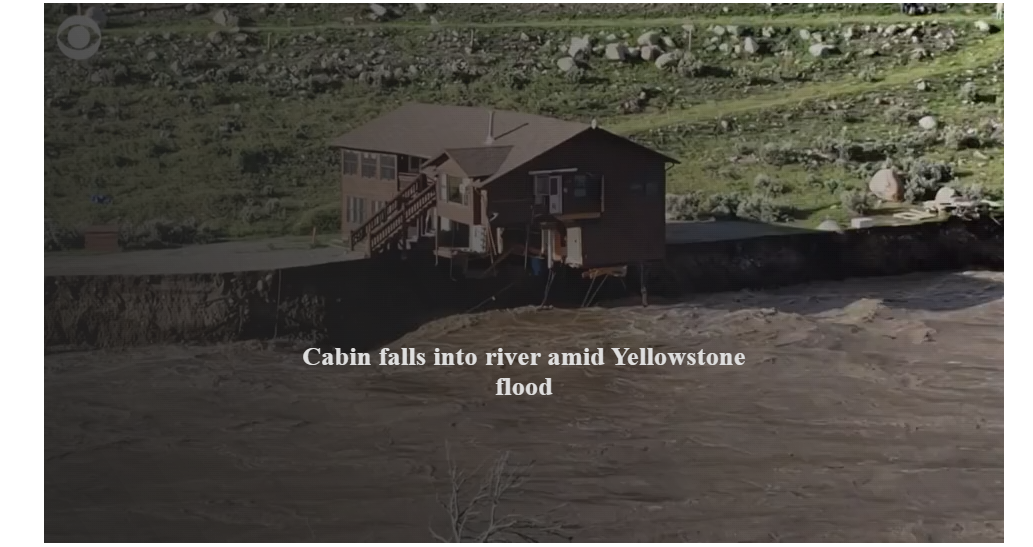
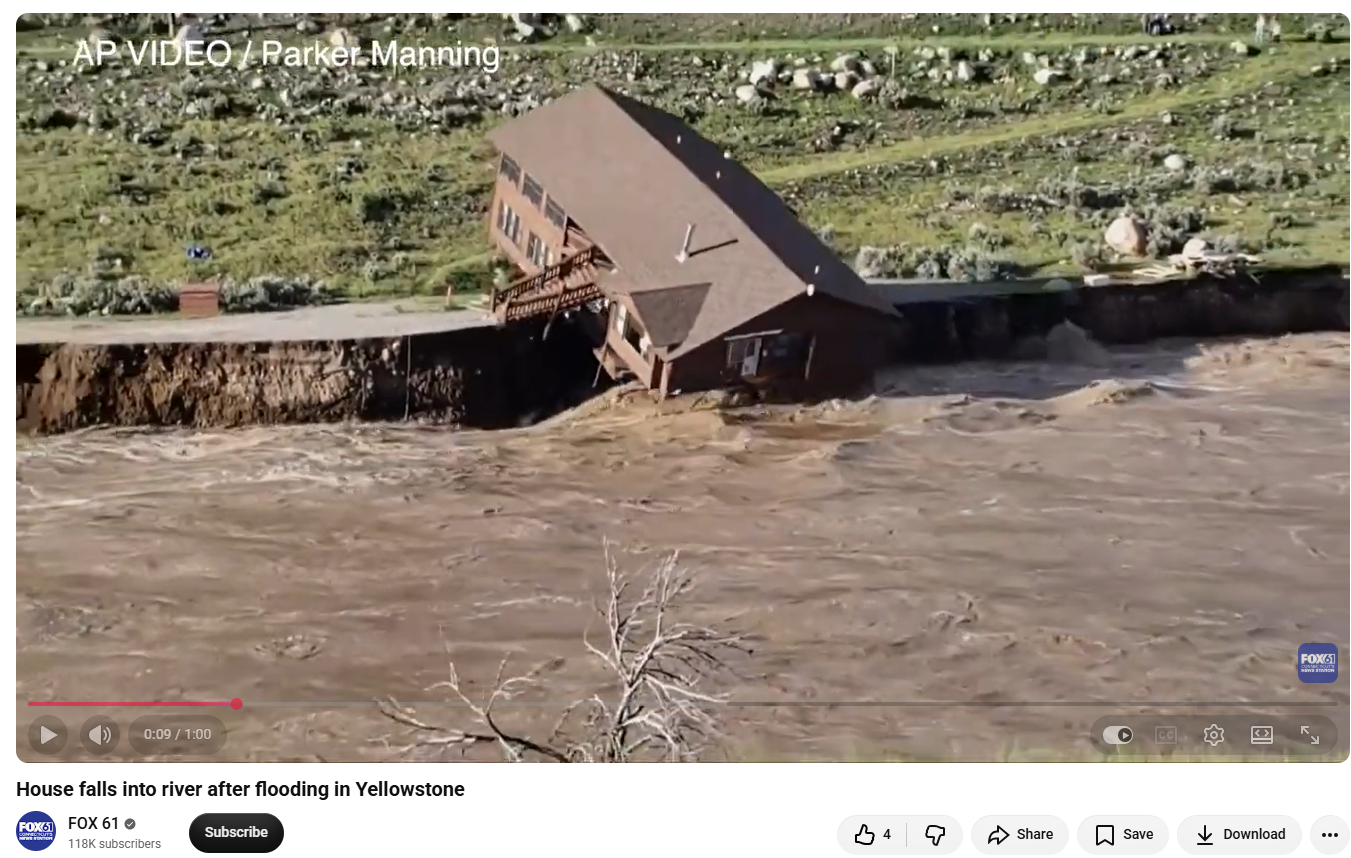
For the second clip, a reverse image search of its keyframes led us to a CBC report dated June 14, 2022, which carried a photograph of the same two-storey house seen in the viral footage. The report identified the location as Gardiner, Montana, USA, where the Yellowstone River experienced severe flooding and a rapid rise in water levels. It also stated that the house belonged to Parker Manning, who recorded the footage himself while vacationing with his family at a spot roughly half a mile upstream from the house.
https://www.cbsnews.com/news/yellowstone-flooding-video-house-collapses-river/
We also found a post related to the viral video on FOX 61, where the footage was shared with a generic caption. The link to the post and a screenshot are provided below.
Conclusion
Our research found that both videos are old and unrelated to Nepal. The first video is from Myanmar, while the second is from the United States.

Executive Summary
A video of former Chief of Defence Staff (CDS) General Anil Chauhan is going viral on social media. The video is being shared with the claim that, referring to the losses suffered by India during Operation Sindoor, he said, “Even if we lose four aircraft or 40 aircraft, India will still remain a larger economy. What matters is your ability to recover from the losses. Whatever losses we suffered, we can recover much faster than Pakistan.” A research done by the Research Wing of the CyberPeace examined the claims made in the video and compared them with General Anil Chauhan’s original remarks at the event.The research found that the viral video’s audio has been digitally manipulated. The alleged statement heard in the viral clip does not appear in the original footage.
Claim:
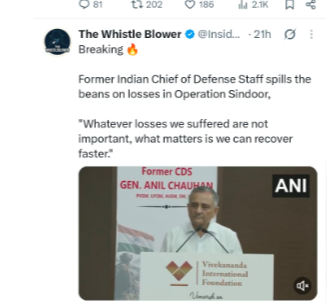
A Pakistani user on social media platform X shared the viral video with the caption: “BREAKING: Former Indian Chief of Defence Staff revealed details about the losses suffered during Operation Sindoor, saying, ‘Whatever losses we suffered are not important. What matters is that we can recover quickly.’”
The link to the post and a screenshot are provided below.
https://x.com/InsiderWB/status/2092559622225940952
Fact Check
Upon closely examining the viral video, we noticed the ANI logo. We then conducted a reverse image search of keyframes from the viral clip. During the search, we found the original video published by ANI, in which General Chauhan discusses the relationship between political objectives and military strategy.
https://x.com/ANI/status/2092217553355743409

He said, “Politics and war are inseparable.” He further explained that a nation’s political interests are paramount, while the armed forces are one of several instruments used to safeguard those interests. General Chauhan also discussed the role of military leadership in presenting various options to the political leadership, as well as the importance of peacetime preparedness and training. He also spoke about training, contingency planning, and the need to balance military risks with political objectives. Notably, the statement attributed to him in the viral video,“Whatever losses we suffered are not important. What matters is that we can recover quickly” — does not appear anywhere in the original video. Additionally, the audio used in the viral video was also analysed using Resemble AI. The tool’s analysis identified the audio as AI-generated, indicating that the audio in the viral clip had been manipulated.

Conclusion
The research found that General Chauhan’s voice in the viral video has been digitally manipulated. The alleged statement heard in the viral clip does not appear in the original video.
