
#FactCheck-Two Old Videos Falsely Linked to Devastating Floods in Nepal
Executive Summary
Following the flash floods that struck the Nepal-Tibet border on Wednesday morning, 289 bodies have so far been recovered, while around 1,500 people remain missing. A large number of foreign nationals, along with Nepali citizens, are also among those reported missing. Meanwhile, a video showing a massive landslide is being widely circulated on social media. The viral clip is actually a compilation of two separate videos. The first shows a landslide rapidly turning into a torrent of muddy floodwater, while the second shows a two-storey house on a riverbank being swept away by rising floodwaters. A research done by the Research Wing of the CyberPeace found that both videos are old and unrelated to Nepal. The first video is from Myanmar, while the second was recorded in the United States.
Claim:
A user on social media platform Facebook shared the video, claiming that it shows the initial scenes of the devastating floods and landslides that struck Nepal.
https://www.facebook.com/reel/1572666177989617

Fact Check:
To verify the first video, we conducted a reverse image search of its keyframes. During the search, we found a longer version of the same footage, which was shared on an Instagram account on June 30. This confirmed that the viral clip is unrelated to the recent floods in Nepal.
https://www.instagram.com/reels/DaLtKtjzTtq/
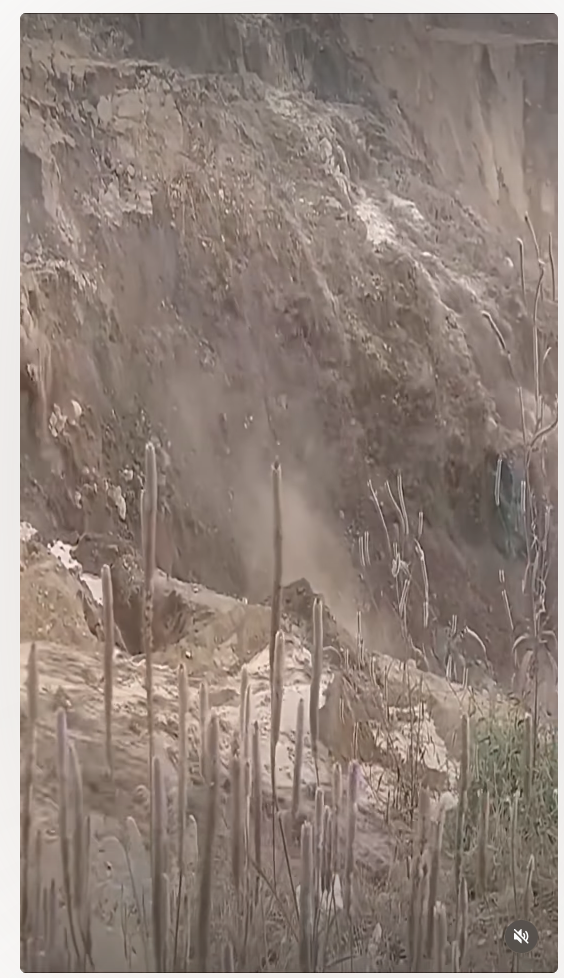
During the research, we also found the full version of the video on a YouTube channel, where it was uploaded on January 28, 2024. Although the video caption did not clearly specify the location of the incident, it mentioned Myanmar several times. This confirms that the viral video is old footage from Myanmar and not related to the recent disaster in Nepal.
https://www.youtube.com/watch?v=_z2_IEqOBNg&t=3s
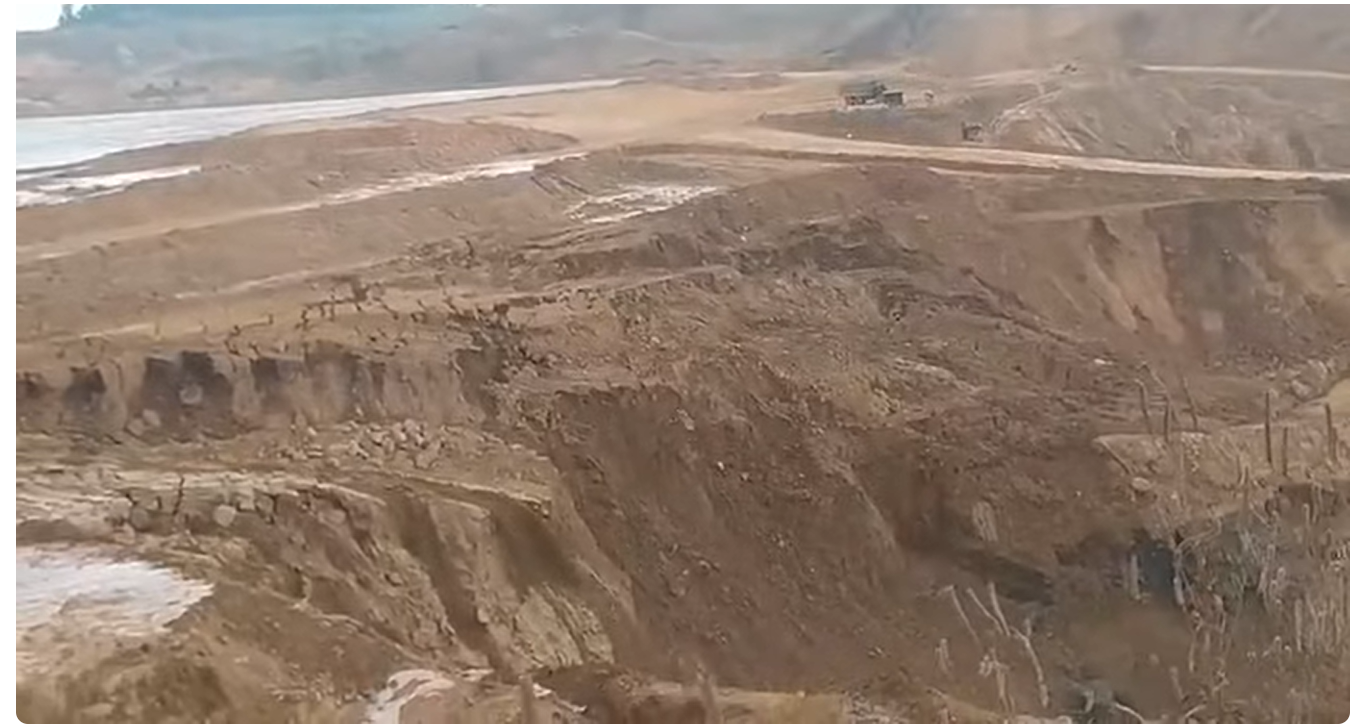
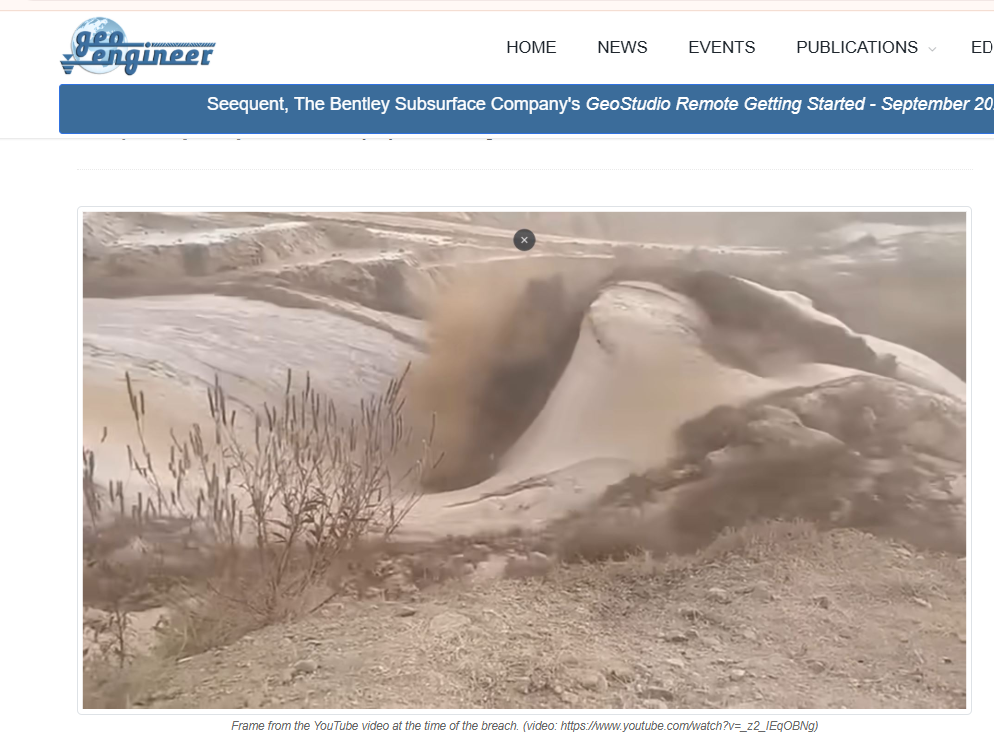
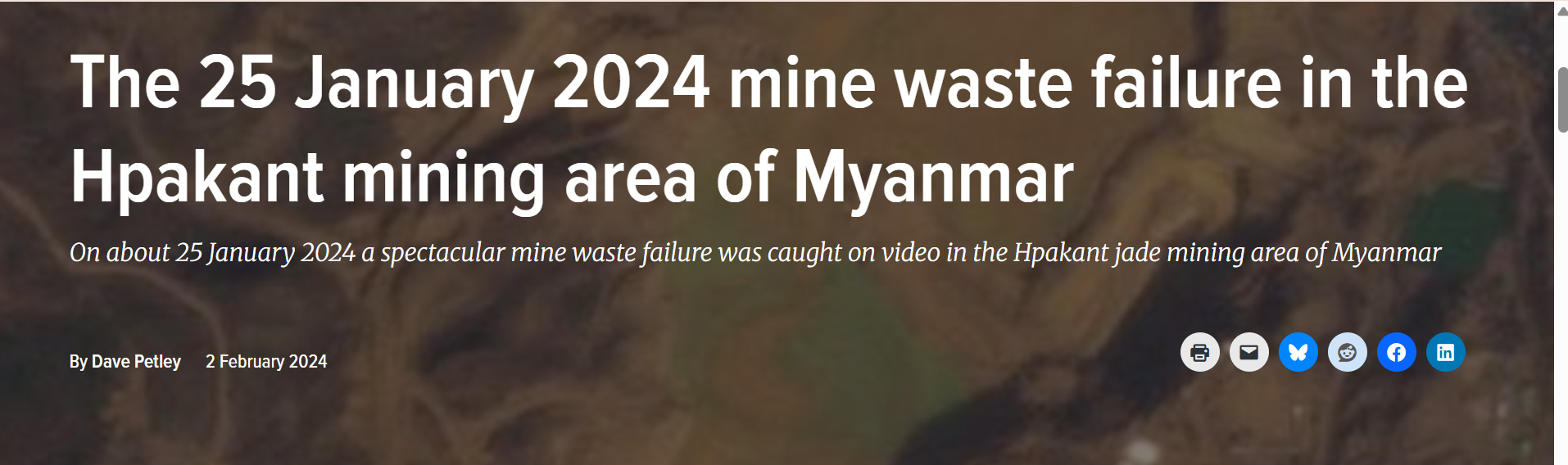
We found another report, published on January 25, 2024, that carried screenshots from the viral footage. It stated that the incident took place between January 24 and 25, 2024, in Myanmar’s Hpakant mining area. Further verification led us to a report published by EOS.org, the digital science news outlet of the American Geophysical Union. The report examined the incident by comparing Planet Labs satellite imagery captured before and after the event, providing further evidence about the location of the incident.
https://www.geoengineer.org/news/mine-waste-dam-failure-in-myanmar-caught-on-video
https://eos.org/thelandslideblog/myanmar-1
Second Clip
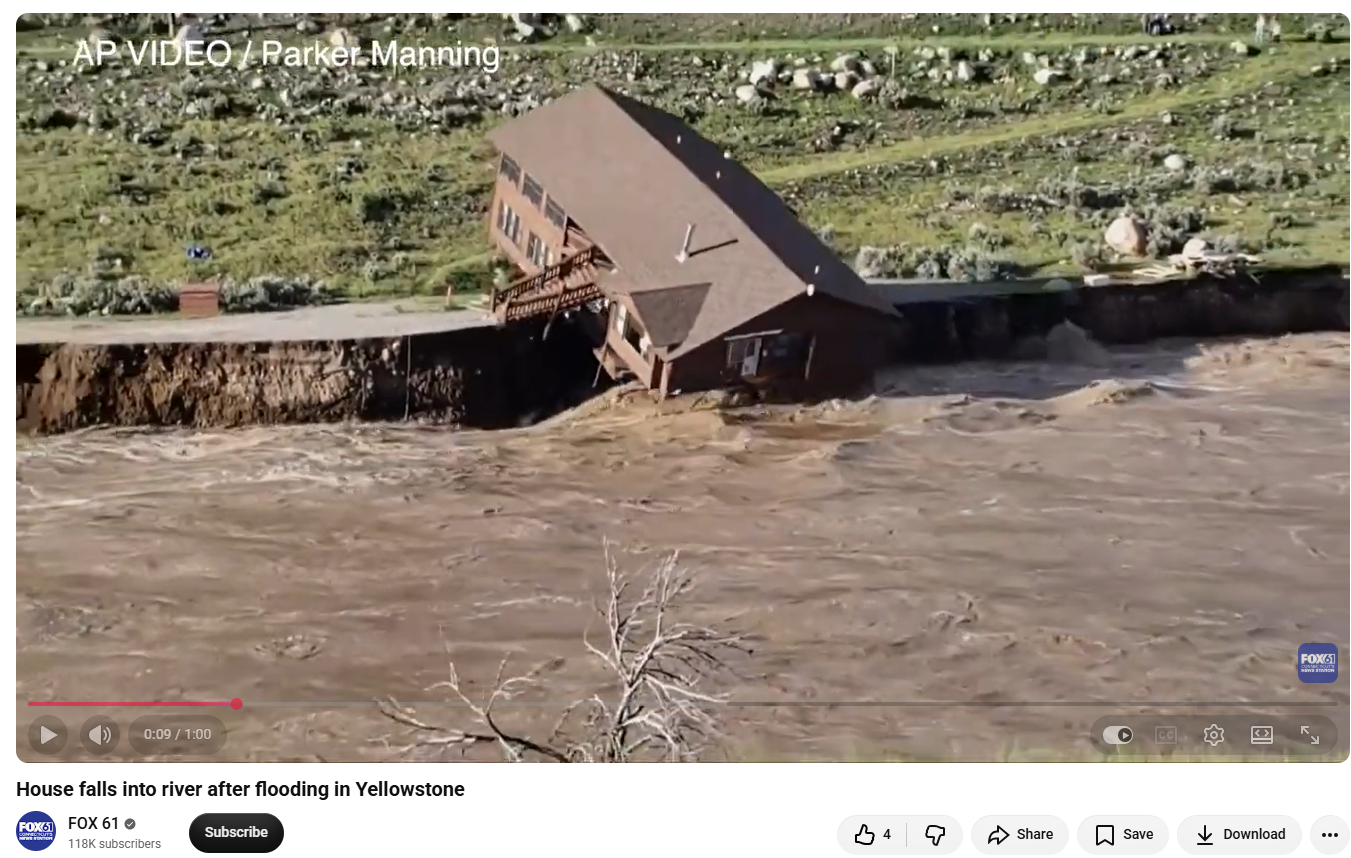
For the second clip, a reverse image search of its keyframes led us to a CBC report dated June 14, 2022, which carried a photograph of the same two-storey house seen in the viral footage. The report identified the location as Gardiner, Montana, USA, where the Yellowstone River experienced severe flooding and a rapid rise in water levels. It also stated that the house belonged to Parker Manning, who recorded the footage himself while vacationing with his family at a spot roughly half a mile upstream from the house.
https://www.cbsnews.com/news/yellowstone-flooding-video-house-collapses-river/

We also found a post related to the viral video on FOX 61, where the footage was shared with a generic caption. The link to the post and a screenshot are provided below.
Conclusion
Our research found that both videos are old and unrelated to Nepal. The first video is from Myanmar, while the second is from the United States.

Related Blogs

Executive Summary
A dramatic video showing several people jumping from the upper floors of a building into what appears to be thick snow has been circulating on social media, with users claiming that it captures a real incident in Russia during heavy snowfall. In the footage, individuals can be seen leaping one after another from a multi-storey structure onto a snow-covered surface below, eliciting reactions ranging from amusement to concern. The claim accompanying the video suggests that it depicts a reckless real-life episode in a snow-hit region of Russia.
A thorough analysis by CyberPeace confirmed that the video is not a real-world recording but an AI-generated creation. The footage exhibits multiple signs of synthetic media, including unnatural human movements, inconsistent physics, blurred or distorted edges, and a glossy, computer-rendered appearance. In some frames, a partial watermark from an AI video generation tool is visible. Further verification using the Hive Moderation AI-detection platform indicated that 98.7% of the video is AI-generated, confirming that the clip is entirely digitally created and does not depict any actual incident in Russia.
Claim:
The video was shared on social media by an X (formerly Twitter) user ‘Report Minds’ on January 25, claiming it showed a real-life event in Russia. The post caption read: "People jumping off from a building during serious snow in Russia. This is funny, how they jumped from a storey building. Those kids shouldn't be trying this. It's dangerous." Here is the link to the post, and below is a screenshot.

Fact Check:
The Desk used the InVid tool to extract keyframes from the viral video and conducted a reverse image search, which revealed multiple instances of the same video shared by other users with similar claims. Upon close visual examination, several anomalies were observed, including unnatural human movements, blurred and distorted sections, a glossy, digitally-rendered appearance, and a partially concealed logo of the AI video generation tool ‘Sora AI’ visible in certain frames. Screenshots highlighting these inconsistencies were captured during the research .
- https://x.com/DailyLoud/status/2015107152772297086?s=20
- https://x.com/75secondes/status/2015134928745164848?s=20


The video was analyzed on Hive Moderation, an AI-detection platform, which confirmed that 98.7% of the content is AI-generated.

The viral video showing people jumping off a building into snow, claimed to depict a real incident in Russia, is entirely AI-generated. Social media users who shared it presented the digitally created footage as if it were real, making the claim false and misleading.
Introduction
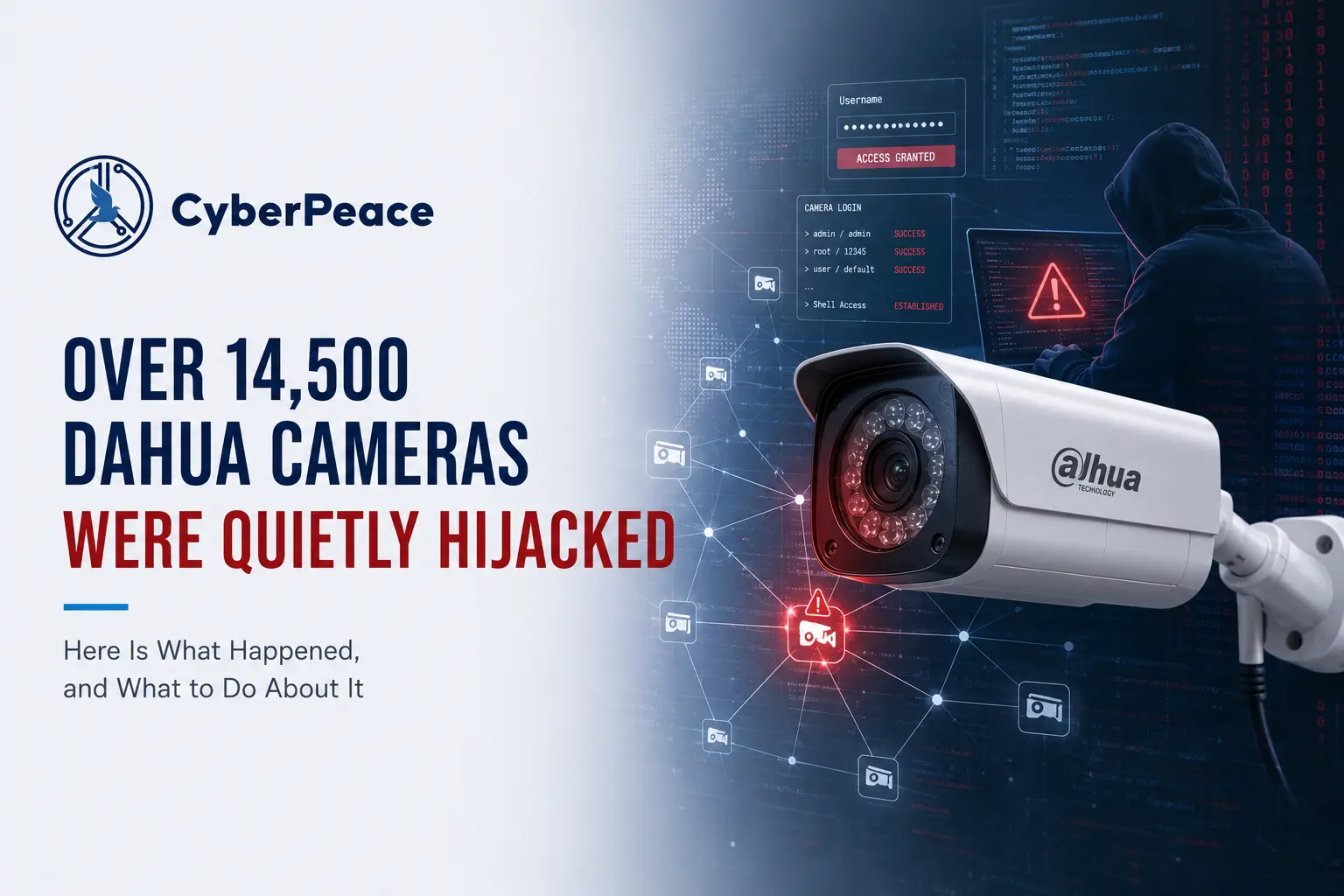
Not every major breach begins with a sophisticated new exploit. Sometimes it begins with a device nobody remembered to update, and this one began exactly that way, at scale. Security researchers have disclosed a campaign that compromised more than 14,530 internet connected cameras made by Dahua Technology, (one of the world's largest surveillance equipment manufacturers), using a mix of stolen credentials, two long known authentication flaws, and a peer to peer relay technique that let attackers reach devices tucked behind home and office routers. The operation, tracked by researchers at Hunt.io, has been named Operation CameraSwarm. It ran between June 17 and July 22, 2026, and was reconstructed almost entirely from an exposed 407 megabyte working directory the attackers themselves left accessible, containing over 2,600 files, campaign logs, shell history, and tooling. Confirmed compromises were concentrated in Ukraine and Russia, and researchers described the operators/attackers as Russian speaking based on language artifacts found in the recovered material, suggesting the campaign was most plausibly built around surveillance or access relevant to the ongoing conflict between the two countries, though no formal attribution to a named threat actor or state entity has been established or claimed. What makes this worth understanding in detail is not just the scale, though 14,500 compromised cameras is a serious number, but how mundane the actual break in methods were. None of this depended on the attackers discovering some brand new, unknown flaw, the kind of vulnerability security researchers call a ‘zero day’. It depended on something far more ordinary: thousands of devices running years-old software that had never been patched, combined with cheap automated tools that could try weak passwords and known exploits at scale.
What is Dahua, and why does this matter
Dahua Technology, founded in Hangzhou in 2001, is a publicly traded, partially state owned Chinese company and the world's second largest video surveillance manufacturer by revenue, trailing only fellow Chinese firm Hikvision. Its cameras, digital video recorders, and network video recorders are sold in roughly 180 countries through more than 2,100 partners, and the company has shipped tens of millions of devices into homes, retail stores, offices, and public infrastructure worldwide. That scale is precisely what makes any systemic vulnerability in Dahua's product line consequential well beyond a single country or sector.
How the attackers actually got in
Hunt.io attributed the compromises to three distinct attack paths. The largest, by far, was straightforward credential attacks, essentially automated login guessing using weak, default, or previously leaked passwords, which researchers traced to 12,324 unique IP addresses across more than 13,000 recorded campaign attempts. The second path exploited two authentication bypass flaws, catalogued as CVE-2021-33044 and CVE-2021-33045, both rated a severe 9.8 out of 10 on the current CVSS severity scale used by the US National Vulnerability Database. These are not new vulnerabilities. They were publicly disclosed back in 2021, and Dahua issued fixed firmware for them years ago, yet both remain listed today on the US Cybersecurity and Infrastructure Security Agency's Known Exploited Vulnerabilities catalog, a designation reserved specifically for flaws still being actively exploited in the wild despite available patches. The third and most technically interesting path involved a peer to peer, or P2P, relay mechanism built into Dahua's own Easy4IP cloud infrastructure, a system designed to let users remotely access their camera without manually configuring network settings. Security firm ITRES Labs, which documented this exposure separately in 2025, found that on firmware released before mid-2024, simply knowing a device's serial number was enough to establish a connection route through Dahua's relay servers before the camera's own login check ever kicked in, a design gap that let attackers reach devices even when they sat behind network address translation, the technical barrier that normally shields home devices from direct internet exposure. Hunt.io's recovered operator logs claimed an extraordinary 89.4 percent of live serial numbers tested returned an open channel without any authentication at all, though it is worth noting that figure comes solely from the attackers' own recovered data and has not been independently verified by Dahua, ITRES Labs, or any public incident response body as of this writing. Beyond the initial break in, the campaign also planted 1,923 cameras with a persistent account, essentially a backdoor login the operators could return to later, and researchers found evidence suggesting parts of the toolkit may have been built specifically to hand off access to a third party, though no confirmed link to a named threat actor or state sponsor has been established.
Why cameras remain such a persistent target
Internet connected cameras occupy an unusual position in the broader device ecosystem. Unlike a laptop or phone, they are rarely patched by an end user paying regular attention, they are often installed once and forgotten, and many owners never change the default credentials shipped from the factory. A compromised camera also offers an attacker something more than a foothold, live or recorded video feeds of homes, businesses, and sometimes sensitive facilities, which carries value well beyond the kind of access a compromised laptop typically provides.
CyberPeace Advisory | What device owners should do now
For anyone running Dahua surveillance equipment, or any internet connected camera system, several concrete steps meaningfully reduce exposure.
For Dahua device owners specifically:
Two steps address the exact mechanisms this campaign exploited.
- First, check the device's firmware version against Dahua's official download portal and apply the latest available update immediately, since the fixes for both 2021 authentication bypass vulnerabilities have existed for years and simply have not been applied on thousands of devices.
- Second, disable the P2P or Easy4IP remote access feature entirely unless it is actively required, since this is the exact mechanism the third attack path, the serial number based relay, relied on to reach cameras without any login check at all.
For any internet connected camera system, including in India:
The remaining precautions apply regardless of manufacturer, and are worth following on any brand of camera, DVR, or NVR connected to the internet.
- Replace default or weak passwords with strong, unique credentials on every camera and recorder, and remove any unused or unrecognised accounts, since the persistent account technique this campaign used depends entirely on unnoticed access surviving unchecked.
- Place surveillance devices on a segmented network separate from computers and phones, so that a compromised camera cannot become a stepping stone into more sensitive systems.
- Periodically audit which devices on a home or office network are internet facing at all, since many cameras end up exposed simply because remote access was left switched on by default and nobody thought to check.
- And where a device offers the option, disable any built in peer to peer or cloud relay convenience feature unless genuinely needed, since the underlying design pattern this campaign exploited, a remote access shortcut that runs before proper authentication.Is not unique to Dahua and has shown up across other camera brands in the past.
The view from India
This disclosure lands at a particularly relevant moment for India, which enforced sweeping new restrictions on Chinese origin CCTV equipment earlier this year. Since April 1, 2026, internet connected surveillance cameras sold in India have been required to carry Standardisation Testing and Quality Certification under Essential Requirements norms first introduced by the Ministry of Electronics and Information Technology in April 2024, It's a country-of-origin requirement under the Essential Requirements norms (introduced by India's Ministry of Electronics and Information Technology in April 2024), manufacturers must disclose the origin of key components like the System-on-Chip (SoC), and devices using Chinese-origin chipsets are reportedly not being granted approval by certifying authorities. Since Dahua's cameras, like Hikvision's and TP-Link's, generally rely on Chinese-made chipsets, the practical effect is that their products haven't received STQC certification, which functions as a blanket exclusion without the government needing to name any single company in the rule text itself. The stated rationale for that policy, concerns over hidden backdoor access, transmission of data to foreign servers, and deployment near sensitive locations, reads almost like a preview of exactly the kind of exposure Operation CameraSwarm has now documented in the wild. It is worth being precise here: the restriction applies to new sales, not existing installations, and CameraSwarm's confirmed victims were concentrated in Ukraine and Russia rather than India. But the underlying lesson travels well beyond any one country's borders. A camera manufactured with a convenience feature that bypasses its own login check, sitting unpatched for years despite a fix being publicly available, is a vulnerability that does not respect national boundaries, and India's decision to tighten certification requirements before an incident of this scale surfaced looks, in hindsight, considerably more prudent than reactive.
References
- The Hacker News, "Hackers Compromised 14,500+ Dahua Devices Using Credential Attacks, Auth Bypasses, and P2P." August 19, 2026. https://thehackernews.com/2026/08/hackers-compromised-14500-dahua-devices.html
- Hunt.io, "Operation CameraSwarm: Dahua Cameras Compromised." https://hunt.io/blog/operation-cameraswarm-dahua-cameras-compromised
- ITRES Labs, "Dahua Beyond CVE-2025-31702: P2P Relay Exposure." October 29, 2025. https://labs.itresit.es/2025/10/29/dahua-beyond-cve-2025-31702-p2p-relay-exposure?
- Dahua Security, "DHCC-SA-202106-001: Security Advisory - Identity Authentication Bypass Vulnerability Found in Some Dahua Products." https://www.dahuasecurity.com/about-dahua/trust-center/dahua-psirt/dhcc-sa-202106-001%3Asecurity-advisory---identity-authentication-bypass-vulnerability-found-in-some-dahua-products
- National Vulnerability Database, "CVE-2021-33044 Detail." https://nvd.nist.gov/vuln/detail/CVE-2021-33044
- CISA, "Known Exploited Vulnerabilities Catalog." https://www.cisa.gov/known-exploited-vulnerabilities-catalog
- Business Standard, "India to ban Chinese CCTV from Apr 1 as security concerns reshape market." https://www.business-standard.com/industry/news/india-ban-chinese-cctv-government-security-concerns-hikvision-dahua-market-126033000316_1.html
- PTC News, "India CCTV ban 2026: Hikvision, Dahua face STQC block as new security rules begin." https://www.ptcnews.tv/amp/nation/india-cctv-ban-hikvision-dahua-stqc-rules-2026-4422961
- Uyghur Human Rights Project, "Surveillance Tech Series: Dahua's Links to Human Rights Abuses in East Turkistan." https://uhrp.org/report/dahuas-links-to-human-rights-abuses-in-east-turkistan/

Introduction:
Cybercriminals can hack your phone using or exploiting some public charging stations such as at airports, Malls, hotel rooms, etc. When you plug in your phone or laptop devices into a power charger using USB, you may be plugging into a hacker. Juice jacking poses a security threat at public charging stations at airports, shopping malls and other public places that provide free charging stations for mobile, tablet, and laptop devices.
Cybercriminals can either hack into the public charging spot or download malware or viruses through the USB port into your system. When you plug your phone, laptop, tablet or other such devices for charging at public charging stations, it can download malware to your phone and other such devices, and then hackers can access your personal information or passwords, It is really a problem since hackers can even get access to your bank account for unauthorised transactions by accessing your passwords and personal information.
Hence it is important to think twice before using public charging spots, as it might lead to serious consequences such as malware, data leak and hacking. Hacking can gain unauthorised access to your personal information by installing malware in your device and they might monitor your device by installing monitor software or spyware to your device. This scam is referred to as juice jacking.
FBI issued an advisory warning about using public charging stations:
The Federal Bureau of Investigation (FBI), In May 2023, advised users to avoid using free charging stations in airports, hotels, or shopping centres. The warning comes as threat actors have figured out ways to inject malware into devices attached to publicly installed USB ports.
Updated Security measures:
We all must have seen public charging points such as airports, shopping malls, metro, and other public places that provide charging stations for mobile devices. But it can be a threat to your stored data on your device. During the charging process, your data can be transferred which can ultimately lead to a data breach. Hence utmost care should be taken to protect your information and data. iPhones and other devices have security measures in place, When you plug your phone into a charging power source, a pop-up appears to ask permission to allow or disallow the transfer of Data. There is also a default setting in the phones where data transfer is disabled. In the latest models, when you plug your device into a new port or a computer, a pop-up appears asking whether the device is trusted or not.
Two major risks involved in the threat of Juice jacking:
- Malware installation: – Malware apps can be used by bad actors to clone your phone data to their device, Your personal data is transferred leading to a data breach. Some types of malware include Trojans, adware, spyware, crypto-miners, etc. Once this malware is injected into your device, It is easy for cybercriminals to extort a ransom to restore the information they have unauthorized access to.
- Data Theft: It is important to give emphasis to the question of whether your data is protected at public charging stations? When we use a USB cable and connect to a public charging station port, cyber-criminals by injecting malware into the charging port system, can inject the malware into your device or your data can be transferred to the bad actors. USB cords can be exploited by cybercriminals to commit malicious activities.
Best practices:
- Avoid using public charging stations: Using public charging stations is not safe. It is very possible for a cybercriminal to load malware into a charging station with a USB cord. Hence It is advisable not to use public charging spots, try to make sure you charge your phone, and laptop devices in your car, at home or office so it will help you to avoid public charging stations.
- Alternative method of charging: You can carry a power bank along with you to avoid the use of public charging stations.
- Lock your phone: Lock your phone once connected to the charging port. Locking your device once connected to the charging station will prevent it from being able to sync or transfer data.
- Software update: It is important to enable and use your device’s software security measures. Mobile devices have certain technical protections against such vulnerabilities and security threats.
- Review Settings: Disable your device’s option to automatically transfer data when a charging cable is connected. This is the default on iOS devices. Android users should disable this option in the Settings app. If your device displays a prompt asking you to “trust this computer,” it means you are connected to another device, not simply a power outlet. Deny the permission, as trusting the computer will enable data transfers to and from your device. So when you plug your device into a USB port and a prompt appears asking permission to "share data" or “trust this computer” or “charge only,” always select “charge only.”
Conclusion:
Cybercriminals or bad actors exploit public charging stations. There have been incidents where malware was planted in the system by the use of a USB cord, During the charging process, the USB cord opens a path into your device that a cybercriminal can exploit, which means the devices can exchange data. That's called juice jacking. Hence avoid using public charging stations, our safety is in our hands and it is significantly important to give priority to best practices and stay protected in the evolving digital landscape.
References:
- https://www.cbsnews.com/philadelphia/news/fbi-issue-warning-about-juice-jacking-when-using-free-cell-phone-charging-kiosks/
- https://www.comparitech.com/blog/information-security/juice-jacking/#:~:text=Avoid%20public%20charging%20stations,guaranteed%20success%20with%20this%20method
- https://www.fcc.gov/juice-jacking-tips-to-avoid-it
