
#FactCheck-Viral Rescue Video From Prayagraj Falsely Shared as Nepal Flood Footage
Executive Summary
A video is being shared on social media showing several people attempting to rescue a young man trapped under a pile of soil and debris. The video is being shared as footage of the recent floods in Nepal. A research done by the Research Wing of the CyberPeace found the viral claim to be misleading. The research revealed that the video dates back to March 2026 and has no connection with the floods in Nepal. The video is actually from an incident in Prayagraj, Uttar Pradesh, and is being falsely shared as recent footage of the devastation caused by the floods in Nepal.
Claim:
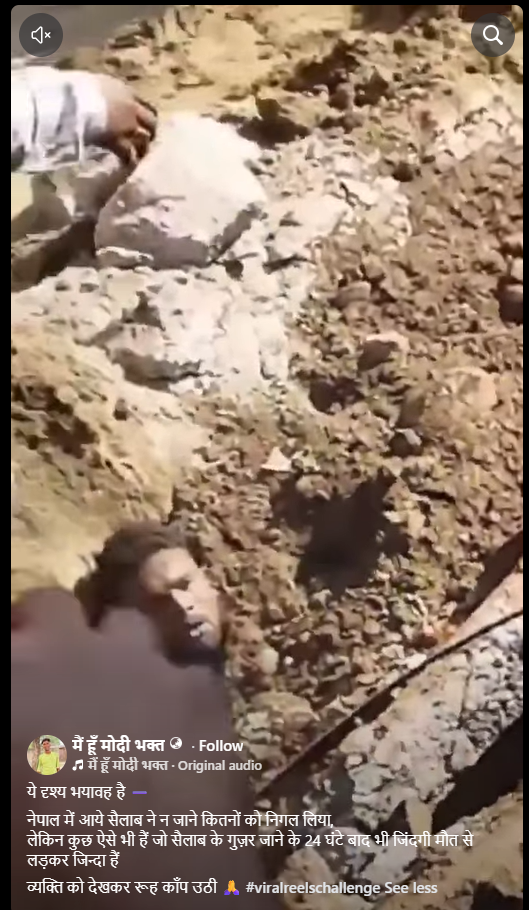
On Facebook, a user shared the viral video with the caption: “These scenes are horrifying. The floods in Nepal have claimed countless lives, but there are also people who are still fighting for their lives even 24 hours after the floodwaters have receded. Seeing this person sends chills down the spine.” The archived post link and screenshot are provided below.
https://www.facebook.com/reel/1104511315422755
FactCheck
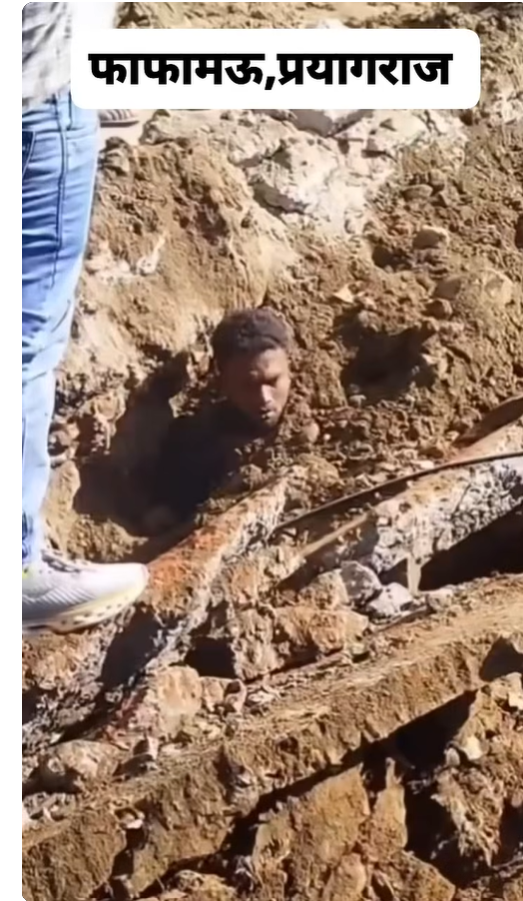
To verify the authenticity of the viral claim, we first extracted keyframes from the video and conducted a reverse image search using Google Lens. During the search, we found the same video uploaded on the YouTube account ‘Prayagraj Live 24’ on March 24, 2026.
According to the video description, the footage shows the relief and rescue operation carried out following an accident at a cold storage facility in Phaphamau, Prayagraj. The report link and screenshot are provided below.
https://www.youtube.com/shorts/D6ADJzxZUGQ
Based on the clue obtained from YouTube, we conducted a Google search using relevant keywords. During the search, we found a report published on the Dainik Bhaskar website on March 24, 2026, which featured the same visuals seen in the viral video. The report link and screenshot are provided below.
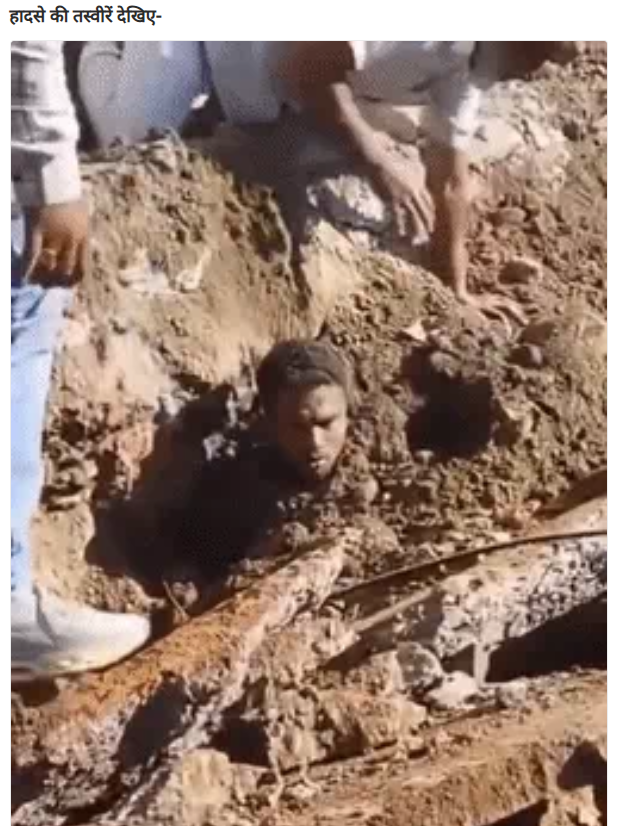
According to a report by Dainik Bhaskar, a major accident occurred at Adarsh Cold Storage in the Phaphamau police station area of Prayagraj on March 23, 2026. At around 1:30 pm, an ammonia gas chamber used for cooling at the cold storage exploded, causing the building’s walls and roof to collapse. Several workers were trapped under the debris in the accident.
Conclusion
Our research found that the viral video dates back to March 2026 and has no connection with the floods in Nepal. The video is actually from an incident in Prayagraj, Uttar Pradesh, and is being falsely shared on social media as recent footage of the devastation caused by the floods in Nepal.

Related Blogs
Executive Summary:
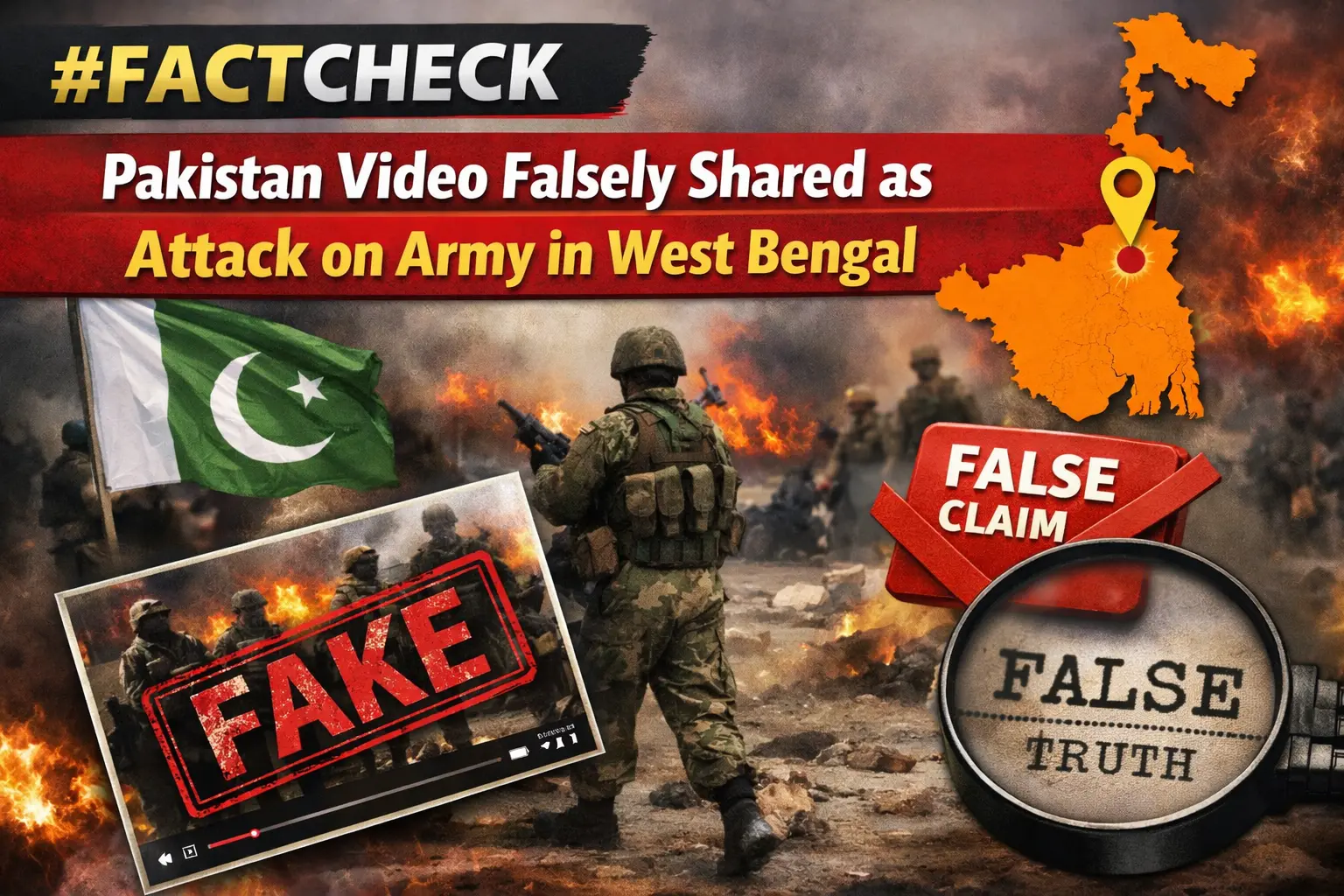
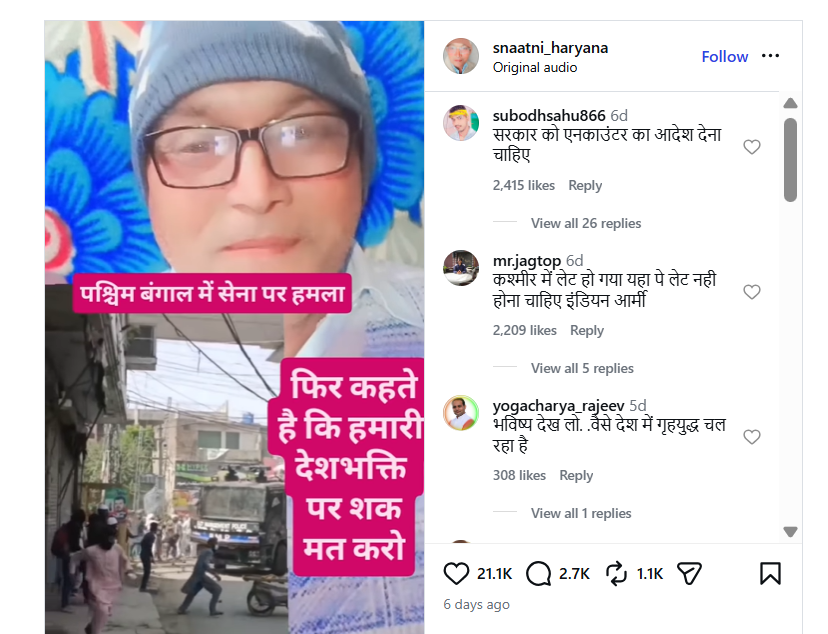
Assembly elections are underway in several Indian states, including West Bengal, Assam, Kerala, Tamil Nadu, and Puducherry. While voting has already taken place in Assam, Kerala, and Puducherry, polling is still pending in West Bengal. In view of the elections, central security forces have been deployed across West Bengal. Amid this, a video showing a group of people pelting stones at a security vehicle is being widely shared on social media. Some users claim that the incident took place in West Bengal and allege that Muslims attacked an army vehicle. However, research by CyberPeace found the claim to be false. The viral video is from Pakistan and has no connection to West Bengal.
Claim
A social media user shared the video on April 5, 2026, claiming that an army vehicle was attacked in West Bengal.
Post links:
Fact Check
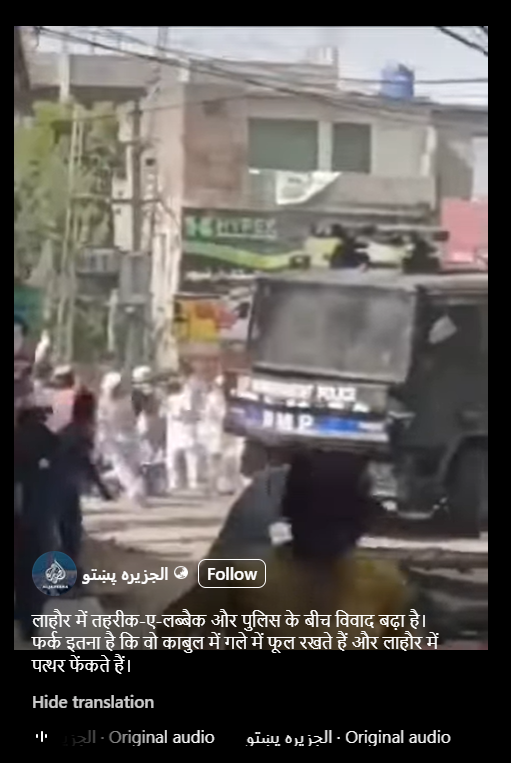
To verify the claim, we extracted keyframes from the viral video and conducted a reverse image search using Google Lens. This led us to a video posted on a Facebook page on October 13, 2025. The caption of that post indicated that the video was from Lahore, showing clashes between members of Tehreek-e-Labbaik and the police.
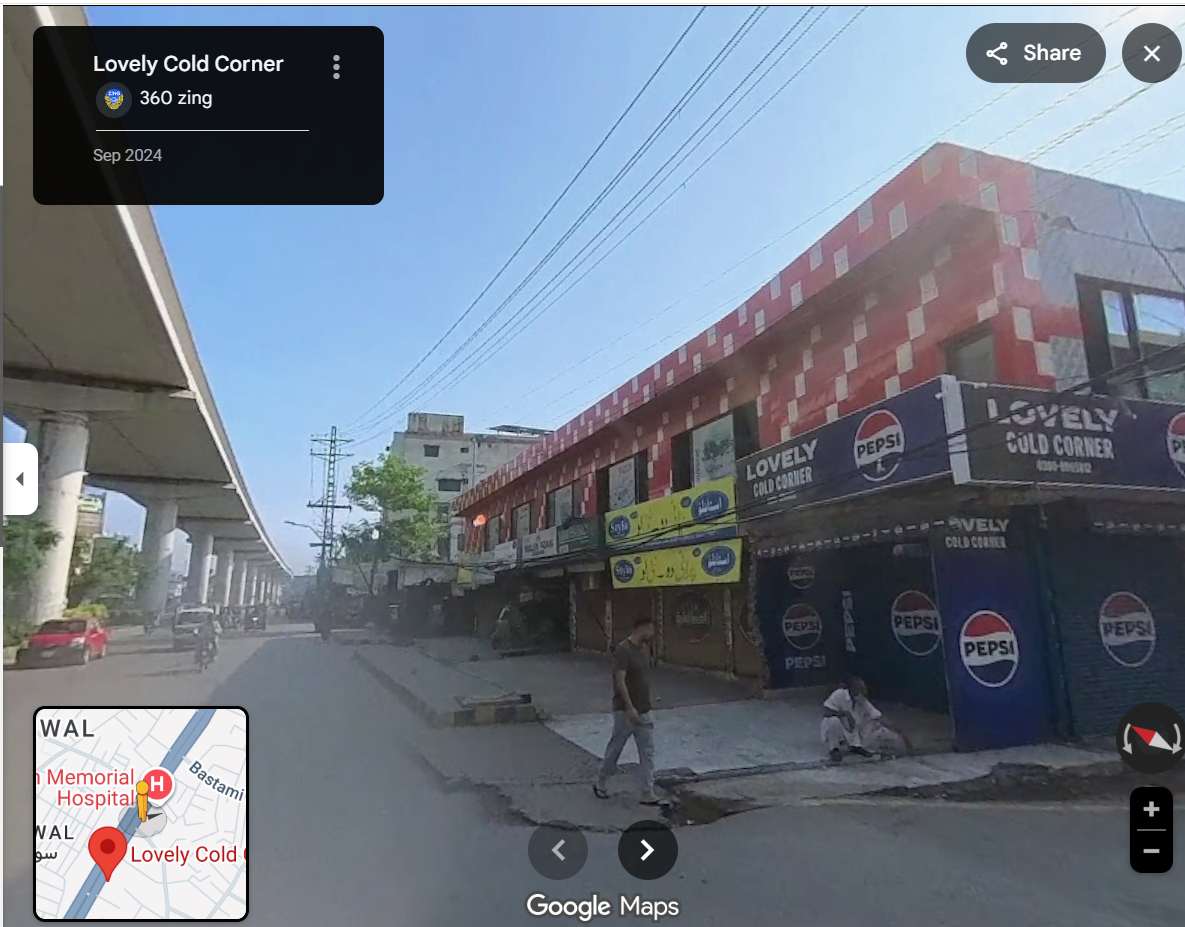
Further clues in the video also pointed to Pakistan. A shop sign reading “Lovely Drink Corner” is visible in the footage. A Google search confirmed that this establishment is located in Lahore, Pakistan.
Conclusion
The viral claim is misleading. Although central forces have been deployed in West Bengal for the ongoing elections, the video showing stone-pelting on a security vehicle is not from the state. It is an old video from Lahore, Pakistan, and is being falsely shared with a communal angle to mislead users.
.webp)
Executive Summary
This report analyses a recently launched social engineering attack that took advantage of Microsoft Teams and AnyDesk to deliver DarkGate malware, a MaaS tool. This way, through Microsoft Teams and by tricking users into installing AnyDesk, attackers received unauthorized remote access to deploy DarkGate that offers such features as credential theft, keylogging, and fileless persistence. The attack was executed using obfuscated AutoIt scripts for the delivery of malware which shows how threat actors are changing their modus operandi. The case brings into focus the need to put into practice preventive security measures for instance endpoint protection, staff awareness, limited utilization of off-ice-connection tools, and compartmentalization to safely work with the new and increased risks that contemporary cyber threats present.
Introduction
Hackers find new technologies and application that are reputable for spreading campaigns. The latest use of Microsoft Teams and AnyDesk platforms for launching the DarkGate malware is a perfect example of how hackers continue to use social engineering and technical vulnerabilities to penetrate the defenses of organizations. This paper focuses on the details of the technical aspect of the attack, the consequences of the attack together with preventive measures to counter the threat.
Technical Findings
1. Attack Initiation: Exploiting Microsoft Teams
The attackers leveraged Microsoft Teams as a trusted communication platform to deceive victims, exploiting its legitimacy and widespread adoption. Key technical details include:
- Spoofed Caller Identity: The attackers used impersonation techniques to masquerade as representatives of trusted external suppliers.
- Session Hijacking Risks: Exploiting Microsoft Teams session vulnerabilities, attackers aimed to escalate their privileges and deploy malicious payloads.
- Bypassing Email Filters: The initial email bombardment was designed to overwhelm spam filters and ensure that malicious communication reached the victim’s inbox.
2. Remote Access Exploitation: AnyDesk
After convincing victims to install AnyDesk, the attackers exploited the software’s functionality to achieve unauthorized remote access. Technical observations include:
- Command and Control (C2) Integration: Once installed, AnyDesk was configured to establish persistent communication with the attacker’s C2 servers, enabling remote control.
- Privilege Escalation: Attackers exploited misconfigurations in AnyDesk to gain administrative privileges, allowing them to disable antivirus software and deploy payloads.
- Data Exfiltration Potential: With full remote access, attackers could silently exfiltrate data or install additional malware without detection.
3. Malware Deployment: DarkGate Delivery via AutoIt Script
The deployment of DarkGate malware utilized AutoIt scripting, a programming language commonly used for automating Windows-based tasks. Technical details include:
- Payload Obfuscation: The AutoIt script was heavily obfuscated to evade signature-based antivirus detection.
- Process Injection: The script employed process injection techniques to embed DarkGate into legitimate processes, such as explorer.exe or svchost.exe, to avoid detection.
- Dynamic Command Loading: The malware dynamically fetched additional commands from its C2 server, allowing real-time adaptation to the victim’s environment.
4. DarkGate Malware Capabilities
DarkGate, now available as a Malware-as-a-Service (MaaS) offering, provides attackers with advanced features. Technical insights include:
- Credential Dumping: DarkGate used the Mimikatz module to extract credentials from memory and secure storage locations.
- Keylogging Mechanism: Keystrokes were logged and transmitted in real-time to the attacker’s server, enabling credential theft and activity monitoring.
- Fileless Persistence: Utilizing Windows Management Instrumentation (WMI) and registry modifications, the malware ensured persistence without leaving traditional file traces.
- Network Surveillance: The malware monitored network activity to identify high-value targets for lateral movement within the compromised environment.
5. Attack Indicators
Trend Micro researchers identified several indicators of compromise (IoCs) associated with the DarkGate campaign:
- Suspicious Domains: example-remotesupport[.]com and similar domains used for C2 communication.
- Malicious File Hashes:some text
- AutoIt Script: 5a3f8d0bd6c91234a9cd8321a1b4892d
- DarkGate Payload: 6f72cde4b7f3e9c1ac81e56c3f9f1d7a
- Behavioral Anomalies:some text
- Unusual outbound traffic to non-standard ports.
- Unauthorized registry modifications under HKCU\Software\Microsoft\Windows\CurrentVersion\Run.
Broader Cyber Threat Landscape
In parallel with this campaign, other phishing and malware delivery tactics have been observed, including:
- Cloud Exploitation: Abuse of platforms like Cloudflare Pages to host phishing sites mimicking Microsoft 365 login pages.
- Quishing Campaigns: Phishing emails with QR codes that redirect users to fake login pages.
- File Attachment Exploits: Malicious HTML attachments embedding JavaScript to steal credentials.
- Mobile Malware: Distribution of malicious Android apps capable of financial data theft.
Implications of the DarkGate Campaign
This attack highlights the sophistication of threat actors in leveraging legitimate tools for malicious purposes. Key risks include:
- Advanced Threat Evasion: The use of obfuscation and process injection complicates detection by traditional antivirus solutions.
- Cross-Platform Risk: DarkGate’s modular design enables its functionality across diverse environments, posing risks to Windows, macOS, and Linux systems.
- Organizational Exposure: The compromise of a single endpoint can serve as a gateway for further network exploitation, endangering sensitive organizational data.
Recommendations for Mitigation
- Enable Advanced Threat Detection: Deploy endpoint detection and response (EDR) solutions to identify anomalous behavior like process injection and dynamic command loading.
- Restrict Remote Access Tools: Limit the use of tools like AnyDesk to approved use cases and enforce strict monitoring.
- Use Email Filtering and Monitoring: Implement AI-driven email filtering systems to detect and block email bombardment campaigns.
- Enhance Endpoint Security: Regularly update and patch operating systems and applications to mitigate vulnerabilities.
- Educate Employees: Conduct training sessions to help employees recognize and avoid phishing and social engineering tactics.
- Implement Network Segmentation: Limit the spread of malware within an organization by segmenting high-value assets.
Conclusion
Using Microsoft Teams and AnyDesk to spread DarkGate malware shows the continuous growth of the hackers’ level. The campaign highlights how organizations have to start implementing adequate levels of security preparedness to threats, including, Threat Identification, Training employees, and Rights to Access.
The DarkGate malware is a perfect example of how these attacks have developed into MaaS offerings, meaning that the barrier to launch highly complex attacks is only decreasing, which proves once again why a layered defense approach is crucial. Both awareness and flexibility are still the key issues in addressing the constantly evolving threat in cyberspace.
Reference:
Introduction
The use of AI in content production, especially images and videos, is changing the foundations of evidence. AI-generated videos and images can mirror a person’s facial features, voice, or actions with a level of fidelity to which the average individual may not be able to distinguish real from fake. The ability to provide creative solutions is indeed a beneficial aspect of this technology. However, its misuse has been rapidly escalating over recent years. This creates threats to privacy and dignity, and facilitates the creation of dis/misinformation. Its real-world consequences are the manipulation of elections, national security threats, and the erosion of trust in society.
Why India Needs Deepfake Regulation
Deepfake regulation is urgently needed in India, evidenced by the recent Rashmika Mandanna incident, where a hoax deepfake of an actress created a scandal throughout the country. This was the first time that an individual's image was superimposed on the body of another woman in a viral deepfake video that fooled many viewers and created outrage among those who were deceived by the video. The incident even led to law enforcement agencies issuing warnings to the public about the dangers of manipulated media.
This was not an isolated incident; many influencers, actors, leaders and common people have fallen victim to deepfake pornography, deepfake speech scams, defraudations, and other malicious uses of deepfake technology. The rapid proliferation of deepfake technology is outpacing any efforts by lawmakers to regulate its widespread use. In this regard, a Private Member’s Bill was introduced in the Lok Sabha in its Winter Session. This proposal was presented to the Lok Sabha as an individual MP's Private Member's Bill. Even though these have had a low rate of success in being passed into law historically, they do provide an opportunity for the government to take notice of and respond to emerging issues. In fact, Private Member's Bills have been the catalyst for government action on many important matters and have also provided an avenue for parliamentary discussion and future policy creation. The introduction of this Bill demonstrates the importance of addressing the public concern surrounding digital impersonation and demonstrates that the Parliament acknowledges digital deepfakes to be a significant concern and, therefore, in need of a legislative framework to combat them.
Key Features Proposed by the New Deepfake Regulation Bill
The proposed legislation aims to create a strong legal structure around the creation, distribution and use of deepfake content in India. Its five core proposals are:
1. Prior Consent Requirement: individuals must give their written approval before producing or distributing deepfake media, including digital representations of themselves, as well as their faces, images, likenesses and voices. This aims to protect women, celebrities, minors, and everyday citizens against the use of their identities with the intent to harm them or their reputations or to harass them through the production of deepfakes.
2. Penalties for Malicious Deepfakes: Serious criminal consequences should be placed for creating or sharing deepfake media, particularly when it is intended to cause harm (defame, harass, impersonate, deceive or manipulate another person). The Bill also addresses financially fraudulent use of deepfakes, political misinformation, interfering with elections and other types of explicit AI-generated media.
3. Establishment of a Deepfake Task Force: To look at the potential impact of deepfakes on national security, elections and public order, as well as on public safety and privacy. This group will work with academic institutions, AI research labs and technology companies to create advanced tools for the detection of deepfakes and establish best practices for the safe and responsible use of generative AI.
4. Creation of a Deepfake Detection and Awareness Fund: To assist with the development of tools for detecting deepfakes, increasing the capacity of law enforcement agencies to investigate cybercrime, promoting public awareness of deepfakes through national campaigns, and funding research on artificial intelligence safety and misinformation.
How Other Countries Are Handling Deepfakes
1. United States
Many States in the United States, including California and Texas, have enacted laws to prohibit the use of politically deceptive deepfakes during elections. Additionally, the Federal Government is currently developing regulations requiring that AI-generated content be clearly labelled. Social Media Platforms are also being encouraged to implement a requirement for users to disclose deepfakes.
2. United Kingdom
In the United Kingdom, it is illegal to create or distribute intimate deepfake images without consent; violators face jail time. The Online Safety Act emphasises the accountability of digital media providers by requiring them to identify, eliminate, and avert harmful synthetic content, which makes their role in curating safe environments all the more important.
3. European Union:
The EU has enacted the EU AI Act, which governs the use of deepfakes by requiring an explicit label to be affixed to any AI-generated content. The absence of a label would subject an offending party to potentially severe regulatory consequences; therefore, any platform wishing to do business in the EU should evaluate the risks associated with deepfakes and adhere strictly to the EU's guidelines for transparency regarding manipulated media.
4. China:
China has among the most rigorous regulations regarding deepfakes anywhere on the planet. All AI-manipulated media will have to be marked with a visible watermark, users will have to authenticate their identities prior to being allowed to use advanced AI tools, and online platforms have a legal requirement to take proactive measures to identify and remove synthetic materials from circulation.
Conclusion
Deepfake technology has the potential to be one of the greatest (and most dangerous) innovations of AI technology. There is much to learn from incidents such as that involving Rashmika Mandanna, as well as the proliferation of deepfake technology that abuses globally, demonstrating how easily truth can be altered in the digital realm. The new Private Member's Bill created by India seeks to provide for a comprehensive framework to address these abuses based on prior consent, penalties that actually work, technical preparedness, and public education/awareness. With other nations of the world moving towards increased regulation of AI technology, proposals such as this provide a direction for India to become a leader in the field of responsible digital governance.
References
- https://www.ndtv.com/india-news/lok-sabha-introduces-bill-to-regulate-deepfake-content-with-consent-rules-9761943
- https://m.economictimes.com/news/india/shiv-sena-mp-introduces-private-members-bill-to-regulate-deepfakes/articleshow/125802794.cms
- https://www.bbc.com/news/world-asia-india-67305557
- https://www.akingump.com/en/insights/blogs/ag-data-dive/california-deepfake-laws-first-in-country-to-take-effect
- https://codes.findlaw.com/tx/penal-code/penal-sect-21-165/
- https://www.mishcon.com/news/when-ai-impersonates-taking-action-against-deepfakes-in-the-uk#:~:text=As%20of%2031%20January%202024,of%20intimate%20deepfakes%20without%20consent.
- https://www.politico.eu/article/eu-tech-ai-deepfakes-labeling-rules-images-elections-iti-c2pa/
- https://www.reuters.com/article/technology/china-seeks-to-root-out-fake-news-and-deepfakes-with-new-online-content-rules-idUSKBN1Y30VT/
