#FactCheck-AI-Generated Video Falsely Shared as Person Cooking Biryani With Drain Water in India
Executive Summary
A video is being widely shared on social media, purportedly showing a person drawing water from a drain and using it to cook biryani. The video is being shared as being from India. Some users sharing the video are also advising people to take care of their stomach and intestinal health while eating and drinking outside. A research done by the Research Wing of the CyberPeace found that the viral video is not authentic but AI-generated and is being shared with a misleading claim.
Claim:
A user on the social media platform Facebook shared the viral video with the caption: “A person in India is cooking biryani using water from a drain.” The post link, archive link and screenshot are provided below.
https://x.com/NikolaTesla2010/status/2094021398113226802?s=20

Fact Check:
Upon closely examining the viral video, we noticed the Google Gemini logo clearly visible in the bottom-right corner. This raised suspicions that the video could be AI-generated.

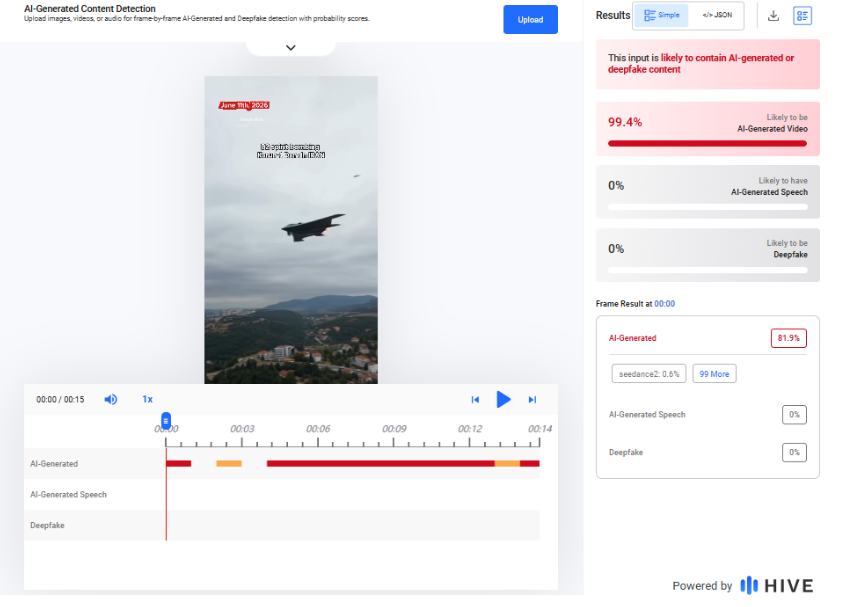
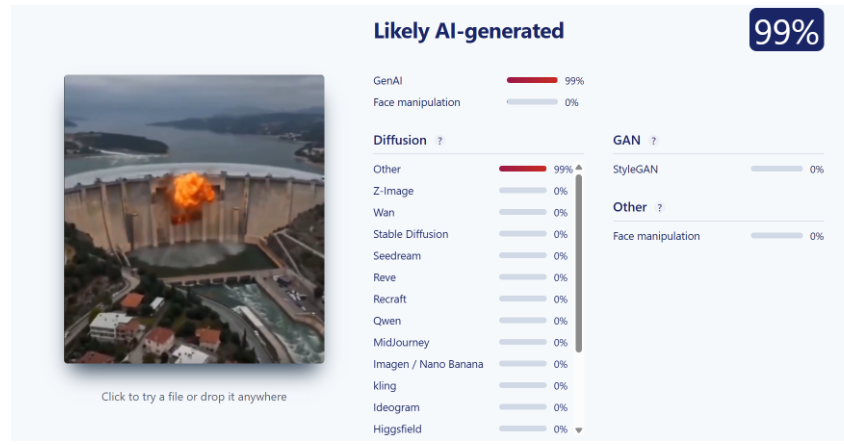
As part of our research, we ran the video through the AI detection tool Hive Moderation. According to the results, the viral video is 99 percent likely to be AI-generated.

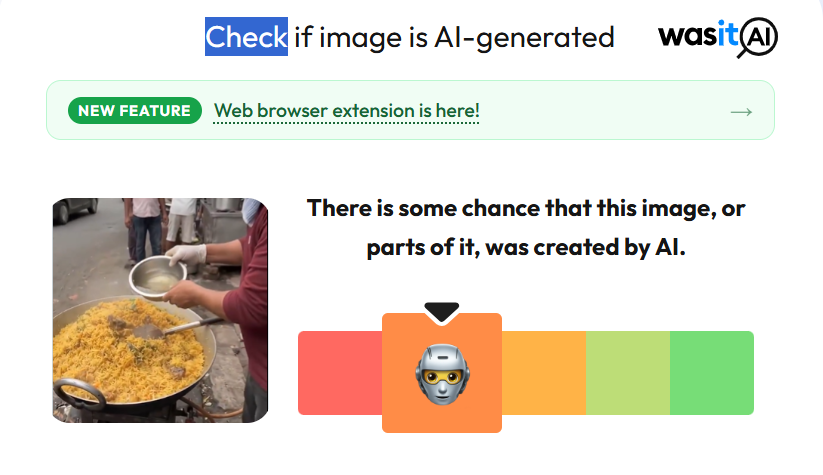
As part of our research, we scanned the video using WasIt AI. According to the results, the viral video is AI-generated.
Conclusion
The evidence gathered during our research establishes that the viral video claiming to show a person cooking biryani using water from a drain in India is misleading. The Google Gemini logo is clearly visible in the video, while AI detection tools Hive Moderation and WasIt AI also identified the footage as AI-generated. Therefore, the video does not depict a genuine incident.
Related Blogs

.webp)
On 6 June 2025, the EU Council officially adopted the revised Cybersecurity Blueprint, marking a significant evolution from the 2017 guidance. This framework, formalised through Council Recommendation COM(2025) 66 final, responds to a transformed threat environment and reflects new legal milestones like the NIS2 Directive (Network and Information Security Directive) and the Cyber Solidarity Act.
From Fragmented Response to Cohesive Strategy
Between 2017 and now, EU member states have built various systems to manage cyber incidents. Still, real-world events and exercises highlighted critical gaps - uncoordinated escalation procedures, inconsistent terminology, and siloed information flows. The updated Blueprint addresses these issues by focusing on a harmonised operational architecture for the EU. It defines a clear crisis lifecycle with five stages: Detection, Analysis, Escalation, Response, and Recovery. Each stage is supported by common communication protocols, decision-making processes, and defined roles. Consistency is key; standardised terminology along with a broad scope of application that eases cross-border collaboration and empowers coherent response efforts.
Legal Foundations: NIS2, ENISA & EU‑CyCLONe
Several core pillars of EU cybersecurity directly underpin the Blueprint:
- ENISA – The European Union Agency for Cybersecurity continues to play a central role. It supports CSIRTs' Network operations, leads EU‑CyCLONe ( European cyber crisis liaison organisation network) coordination, conducts simulation exercises, and gives training on incident management
- NIS2 Directive, particularly Article 16, is a follow-up of NIS. NIS2 mandates operators of critical infrastructure and essential services to implement appropriate security measures and report incidents to the relevant authorities. Compared to NIS, NIS2 expands its EU-wide security requirements and scope of covered organisations and sectors to improve the security of supply chains, simplify reporting obligations, and enforce more stringent measures and sanctions throughout Europe. It also formally legitimises the EU‑CyCLONe network, which is the crisis liaison mechanism bridging technical teams from member states.
These modern tools, integrated with legal backing, ensure the Blueprint isn’t just theoretical; it’s operationally enforceable.
What’s Inside the Blueprint?
The 2025 Blueprint enhances several critical areas:
- Clear Escalation Triggers - It spells out when a national cyber incident merits EU-level attention, especially those affecting critical infrastructure across borders. Civilian Military Exchange. The Blueprint encourages structured information sharing with defence institutions and NATO, recognising that cyber incidents often have geopolitical implications
- Recovery & Lessons Learned – A dedicated chapter ensures systematic post-incident reviews and shared learning among member states.
Adaptive & Resilient by Design
Rather than a static document, the Blueprint is engineered to evolve:
- Regular Exercises: Built into the framework are simulation drills that are known as Blueprint Operational Level Exercises—to test leadership response and cross-border coordination via EU‑CyCLONe
- Dynamic Reviews: The system promotes continuous iteration- this includes revising protocols, learning from real incidents, and refining role definitions.
This iterative, learning-oriented architecture aims to ensure the Blueprint remains robust amid rapidly evolving threats, including AI-boosted hacks and hybrid cyber campaigns.
Global Implications & Lessons for Others
The EU’s Cybersecurity Blueprint sets a global benchmark in cyber resilience and crisis governance:
- Blueprint for Global Coordination: The EU’s method of defined crisis stages, empowered liaison bodies (like EU‑CyCLONe), and continuous exercise can inspire other regional blocs or national governments to build their own crisis mechanisms.
- Public–Private Synergy: The Blueprint’s insistence on cooperation between governments and private-sector operators of essential services (e.g., energy, telecom, health) provides a model for forging robust ecosystems.
- Learning & Sharing at Scale: Its requirement for post-crisis lessons and peer exchange can fuel a worldwide knowledge network, cultivating resilience across jurisdictions.
Conclusion
The 2025 EU Cybersecurity Blueprint is more than an upgrade; it’s a strategic shift toward operational readiness, legal coherence, and collaborative resilience. Anchored in NIS2 and ENISA, and supported by EU‑CyCLONe, it replaces fragmented guidance with a well-defined, adaptive model. Its adoption signals a transformative moment in global cyber governance as for nations building crisis frameworks, the Blueprint offers a tested, comprehensive template: define clear stages, equip liaison networks, mandate drills, integrate lessons, and legislate coordination. In an era where cyber threats transcend borders, this proves to be an important development that can offer guidance and set a precedent.
For India, the EU Cybersecurity Blueprint offers a valuable reference point as we strengthen our own frameworks through initiatives like the DPDP Act, the upcoming Digital India Act and CERT-In’s evolving mandates. It reinforces the importance of coordinated response systems, cross-sector drills, and legal clarity. As cyber threats grow more complex, such global models can complement our national efforts and enhance regional cooperation.
References
- https://industrialcyber.co/expert/the-eus-cybersecurity-blueprint-and-the-future-of-cyber-crisis-management/
- https://www.consilium.europa.eu/en/press/press-releases/2025/06/06/eu-adopts-blueprint-to-better-manage-european-cyber-crises-and-incidents/
- https://www.enisa.europa.eu/topics/eu-incident-response-and-cyber-crisis-management
- https://www.enisa.europa.eu/news/new-cyber-blueprint-to-scale-up-the-eu-cybersecurity-crisis-management
- https://www.isc2.org/Insights/2025/01/EU-Cyber-Solidarity-Act
- https://www.enisa.europa.eu/topics/eu-incident-response-and-cyber-crisis-management/eu-cyclone
- https://nis2directive.eu/what-is-nis2/

Introduction
The Department of Telecommunications (DoT) has launched the 'Digital Intelligence Platform (DIP)'and the 'Chakshu' facility on the Sanchar Saathi portal to combat cybercrimes and financial frauds. Union telecom, IT and railways minister Ashwini Vaishnaw announced the initiatives, stating that the government has been working to counter cyber frauds at national, organizational, and individual levels. The Sanchar Saathi portal has successfully tackled such attacks, and the two new portals will further enhance the capacity to check any kind of cyber security threat.
The Digital Intelligence Platform is a secure and integrated platform for real-time intelligence sharing, information exchange, and coordination among stakeholders, including telecom operators, law enforcement agencies, banks, financial institutions, social media platforms, and identity document issuing authorities. It also contains information regarding cases detected as misuse of telecom resources.
The 'Chakshu' facility allows citizens to report suspected fraud communication received over call, SMS, or WhatsApp with the intention of defrauding, such as KYC expiry, bank account/payment wallet/SIM/gas connection/electricity connection, sextortion, impersonations a government official/relative for sending money, and disconnection of all mobile numbers by the Department of Telecommunications.
The launch of these proactive initiatives or steps represents another significant stride by the Ministry of Communications and the Department of Telecommunications in combating cybersecurity threats to citizens' digital assets.
In this age of technology, there is a reason to be concerned about the threats posed by cybercrooks to individuals and organizations. The risk of using digital means for communication, e-commerce, and critical infrastructure has increased significantly. It is important to have proper measures in place to prevent cybercrime and destructive behavior. The Department of Telecommunication has unveiled "Chakshu," a digital intelligence portal aimed at combating cybercrimes. This platform seeks to enhance the country's cyber defense capabilities by providing enforcement agencies with effective tools and actionable intelligence for countering cybercrimes, including financial frauds.
Digital Intelligence Platform (DIP)
Digital Intelligence Platform (DIP) developed by the Department of Telecommunications is a secure and integrated platform for real-time intelligence sharing, information exchange and coordination among the stakeholders i.e. Telecom Service Providers(TSPs), law enforcement agencies (LEAs), banks and financial institutions(FIs), social media platforms, identity document issuing authorities etc. The portal also contains information regarding the cases detected as misuse of telecom resources. The shared information could be useful to the stakeholders in their respective domains. It also works as a backend repository for the citizen-initiated requests on the Sanchar Saathi portal for action by the stakeholders. The DIP is accessible to the stakeholders through secure connectivity, and the relevant information is shared based on their respective roles. However, the platform is not accessible to citizens.
What is Chakshu?
Chakshu, which means “eye” in Hindi, is a new feature on the Sanchar Saathi portal. This citizen-friendly platform allows you to report suspicious communication you receive via calls, SMS, or WhatsApp. “Chakshu” is a new advanced tool to safeguard against modern-day cybercriminal activities. Chakshu is a sophisticated design that uses the latest technologies for assembling and analyzing digital information and provides law enforcement agencies with useful data on what should be done next. Below are some of its attributes.
Here are some examples of what you can report:
- Fraudulent messages claiming your KYC (Know Your Customer)details need to be updated.
- Fraudulent requests to update your bank account, payment wallet, or SIM card details.
- Phishing attempts impersonating government officials or relatives asking for money.
- Fraudulent threats of disconnection of your sim connections.
How Chakshu Aims to crackdown Cybercrime and Financial Frauds
Chakshu is a new tool on the Sanchar Saathi platform that invites individuals to report suspected fraudulent communications received by phone, SMS, or WhatsApp. These fraudulent activities may include attempts to deceive individuals through schemes such as KYC expiry or update requests for bank accounts, payment wallets, SIM cards, gas connections, and electricity connections, sextortion, impersonation of government officials or relatives for financial gain, or false claims of mobile number disconnection by the Department of Telecommunications.
The tool is well-designed and equipped to help the investigators with actionable intelligence and insights, enabling LEAs to conduct targeted investigations on financial frauds and cyber-crimes; the tool helps in gathering a comprehensive data analysis and evidence collection capability by mapping out the connection between individuals, organizations and illicit activities, it, therefore, allows the law enforcement agencies in dismantling criminal activities and help the law enforcement agencies.
Chakshu’s Impact
India has launched Chakshu, a digital intelligence tool that strengthens the country's cybersecurity policy. Chakshu employs modern technology and real-time data analysis to enhance India's cyber defenses. Law enforcement can detect and neutralize possible threats by taking proactive approach to threat analysis and prevention before they become significant crises. Chakshu also improves the resilience of critical infrastructure and digital ecosystems, safeguarding them against cyber-attacks. Overall, Chakshu plays an important role in India's cybersecurity posture and the protection of national interests in the digital era.
Where can Chaksu be accessed?
Chakshu can be accessed through the government's Sanchar Saathi web portal:https://sancharsaathi.gov.in
Conclusion
The launch of the Digital Intelligence Platform and Chakshu facility is a step forward in safeguarding citizens from cybercrimes and financial fraud. These initiatives use advanced technology and stakeholder collaboration to empower law enforcement agencies. The Department of Telecommunications' proactive approach demonstrates the government's commitment to cybersecurity defenses and protecting digital assets, ensuring a safer digital environment for citizens and critical infrastructure.
References
- https://telecom.economictimes.indiatimes.com/news/policy/dot-launches-digital-intelligence-portal-chakshu-facility-to-curb-cybercrimes-financial-frauds/108220814
- https://bankingfrontiers.com/digital-intelligence-platform-launched-to-curb-cybercrime-financial-fraud/
- https://www.business-standard.com/india-news/calcutta-hc-justice-abhijit-gangopadhyay-sends-his-resignation-to-prez-cji-124030500367_1.html
- https://www.the420.in/dip-chakshu-government-launches-powerful-weapons-against-cybercrime/
- https://pib.gov.in/PressReleaseIframePage.aspx?PRID=2011383

Introduction
In today’s digital world, data has emerged as the new currency that influences global politics, markets, and societies. Companies, governments, and tech behemoths aim to control data because it accords them influence and power. However, a fundamental challenge brought about by this increased reliance on data is how to strike a balance between privacy protection and innovation and utility.
In recognition of these dangers, more than 200 Nobel laureates, scientists, and world leaders have recently signed the Global Call for AI Red Lines. Governments are urged by this initiative to create legally binding international regulations on artificial intelligence by 2026. Its goal is to stop AI from going beyond moral and security bounds, particularly in areas like political manipulation, mass surveillance, cyberattacks, and dangers to democratic institutions.
One way to address the threat to privacy is through pseudonymization, which makes it possible to use data valuable for research and innovation by substituting personal identifiers for artificial ones. Pseudonymization thus directly advances the AI Red Lines initiative's mission of facilitating technological advancement while lowering the risks of data misuse and privacy violations.
The Red Lines of AI: Why do they matter?
The Global Call for AI Red Lines initiative represents a collective attempt to impose precaution before catastrophe, which was done with the objective of recognising the Red Lines in the use of AI tools. Thus, anything that unites the risks of using AI is due to the absence of global safeguards. Some of these Red Lines can be understood as;
- Cybersecurity breaches in the form of exposure of financial and personal data due to AI-driven hacking and surveillance.
- Occurrence of privacy invasions due to endless tracking.
- Generative AI can also help to create realistic fake content, undermining the trust of public discourses, leading to misinformation.
- Algorithmic amplification of polarising content can also threaten civic stability, leading to a demographic disruption.
Legal Frameworks and Regulatory Landscape
The regulations of Artificial Intelligence stand fragmented across jurisdictions, leaving significant loopholes aside. Some of the frameworks already provide partial guidance. The European Union’s Artificial Intelligence Act 2024 bans “unacceptable” AI practices, whereas the US-China Agreement also ensures that nuclear weapons remain under human, not machine-controlled. The UN General Assembly has adopted resolutions urging safe and ethical AI usage, with a binding and elusive global treaty.
On the front of data protection, the General Data Protection Regulations (GDPR) of EU offers a clear definition of Pseudonymisation under Article 4(5). It also describes a process where personal data is altered in a way that it cannot be attributed to an individual without additional information, which must be stored securely and separately. Importantly, pseudonymised data still qualifies as “personal data” under GDPR. However, India’s Digital Personal Data Protection Act (DPDP) 2023 adopts a similar stance. It does not explicitly define pseudonymisation in broad terms, such as “personal data” by including potentially reversible identifiers. According to Section 8(4) of the Act, companies are meant to adopt appropriate technical or organisational measures. International bodies and conventions like the OECD Principles on AI or the Council of Europe Convention 108+ emphasize accountability, transparency, and data minimisation. Collectively, these instruments point towards pseudonymization as a best practice, though interpretations of its scope differ.
Strategies for Corporate Implementation
For a company, pseudonymisation is not just about compliance, it is also a practical solution that offers measurable benefits. By pseudonymising data, businesses can get benefits, such as;
- Enhancing Privacy protection by masking identifiers like names or IDs by reducing the impact of data breaches.
- Preserving Data Utility, unlike having a full anonymisation, pseudonymisation also retains patterns that are essential for analytical innovation.
- Facilitating data sharing can allow organizations to collaborate with their partners and researchers while maintaining proper trust.
According to these benefits, competitive advantages get translated to clauses where customers find it more likely to trust organizations that prioritise data protection, while pseudonymisation further enables the firms to engage in cross-border collaboration without violating local data laws.
Balancing Privacy Rights and Data Utility
Balancing is a central dilemma; on one side lies the case of necessity over data utility, where companies, researchers and governments rely on large datasets to enhance the scale of AI innovation. On the other hand lies the question of the right to privacy, which is a non-negotiable principle protected under the international human rights law.
Pseudonymisation offers a practical compromise by enabling the use of sensitive data while reducing the privacy risks. Taking examples of different domains, such as healthcare, it allows the researchers to work with patient information without exposing identities, whereas in finance, it supports fraud detection without revealing the customer details.
Conclusion
The rapid rise of artificial intelligence has led to the outpacing of regulations, raising urgent questions related to safety, fairness and accountability. The global call for recognising the AI red lines is a bold step that looks in the direction of setting universal boundaries. Yet, alongside the remaining global treaties, practical safeguards are also needed. Pseudonymisation exemplifies such a safeguard, which is legally recognised under the GDPR and increasingly relevant in India’s DPDP Act. It balances the twin imperatives of privacy, protection, and data utility. For organizations, adopting pseudonymisation is not only about ensuring regulatory compliance, rather, it is also about building trust, ensuring resilience, and aligning with the broader ethical responsibilities in this digital age. As the future of AI is debatable, the guiding principles also need to be clear. By embedding techniques for preserving privacy, like pseudonymisation, into AI systems, we can take a significant step towards developing a sustainable, ethical and innovation-driven digital ecosystem.
References
https://www.techaheadcorp.com/blog/shadow-ai-the-risks-of-unregulated-ai-usage-in-enterprises/
https://planetmainframe.com/2024/11/the-risks-of-unregulated-ai-what-to-know/
https://cepr.org/voxeu/columns/dangers-unregulated-artificial-intelligence
https://www.forbes.com/sites/bernardmarr/2023/06/02/the-15-biggest-risks-of-artificial-intelligence/