
#FactCheck: Old Video of Subodh Uniyal’s Clash With Locals During Uttarakhand Municipal Elections Falsely Linked to Daler Mehndi Row
Executive Summary
Following a public altercation on stage between Uttarakhand Cabinet Minister Subodh Uniyal and singer Daler Mehndi on October 18, a video has gone viral on social media showing a woman arguing loudly with Uniyal. Sharing the video, several users claim that Uniyal has faced the consequences of his actions.
CyberPeace Research found that the video dates back to June 2026, when some people accused Uniyal of illegally entering a polling booth during municipal elections.
Claim
Text overlaid on the video reads, “The BJP minister who insulted Daler Mehndi has finally faced the consequences of his actions!” The caption states, “Whether it is nature's justice or the reckoning for one's deeds, everyone's time comes! BJP minister Subodh Uniyal, who reprimanded Daler Mehndi on stage in front of everyone, clashed with women at a polling booth. The minister who insulted an artist has now had to face opposition from women!”
https://www.facebook.com/reel/1095658483207750

Fact Check
To verify the viral claim, we searched Google using relevant keywords. However, we did not find any credible media reports confirming the claim.
As the next step in our research, we conducted a reverse image search of the video's keyframes. During this search, we found a news report on the India TV website that featured the viral video. The report was published on January 10, 2026.
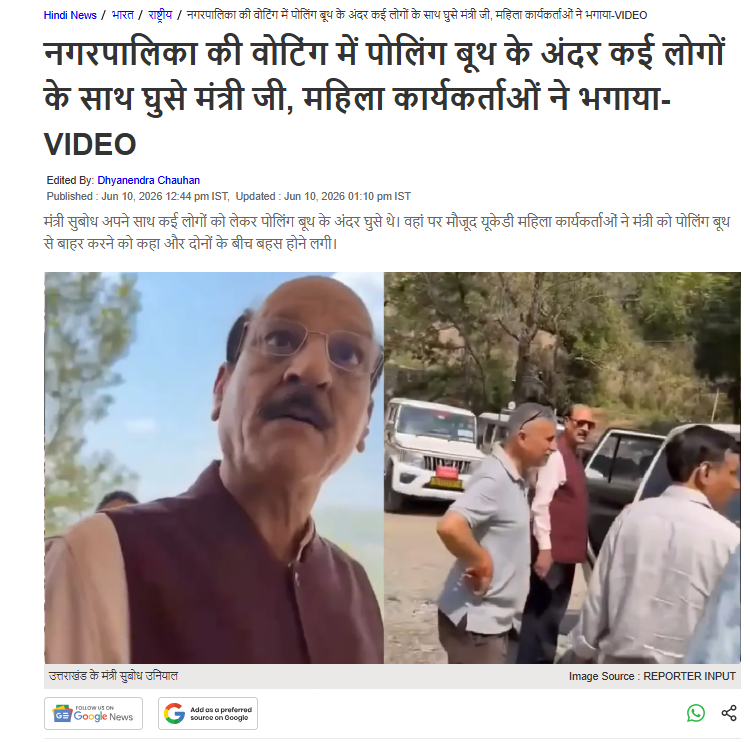
According to the India TV report, a controversy erupted over Cabinet Minister and local MLA Subodh Uniyal's entry into a polling booth during the Narendra Nagar municipal elections in Uttarakhand. It was alleged that Uniyal entered the polling booth in violation of the Model Code of Conduct. UKD leader Pramila Rawat and senior leader Dinesh Master opposed his entry. A heated argument also broke out between the minister and local residents during the protest, and a video of the incident went viral on social media.This establishes that the viral video is not recent but dates back to an earlier incident.
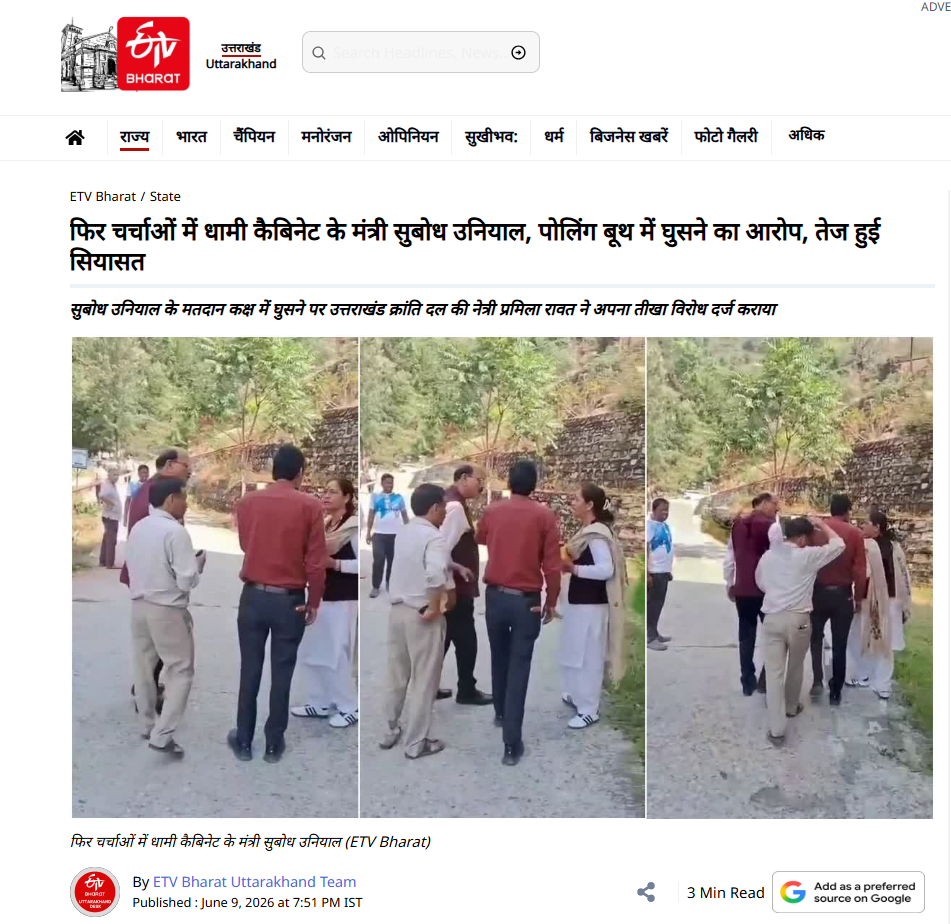
As the next step in our research, we also found a report published by ETV Bharat on June 9, 2026, which covered the incident in its original context.
https://www.etvbharat.com/hi/state/narendra-nagar-municipal-council-election-cabinet-minister-subodh-uniyal-polling-booth-uts26060906445
Conclusion
Our research found that the video dates back to June 2026, when some people accused Uniyal of illegally entering a polling booth during the municipal elections.

Related Blogs
Introduction
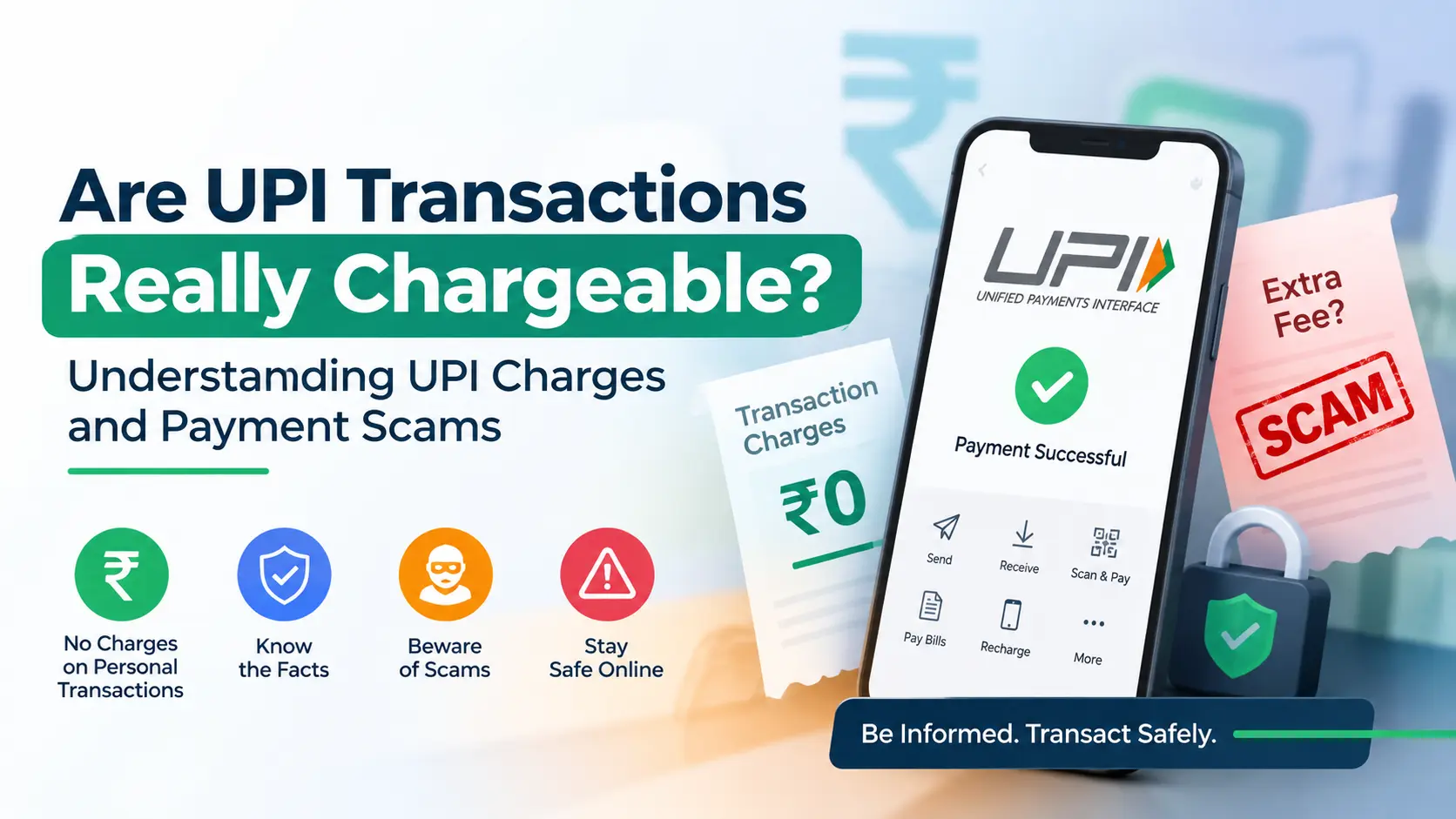
For most of us, UPI is part of daily routine: scan a QR code for chai, send money to family, split a bill, or pay a shopkeeper in seconds. That convenience is exactly why a message saying “UPI charges are coming” can cause confusion. Scammers can use that uncertainty through fake calls, WhatsApp messages, payment links, or edited screenshots. This blog keeps the topic simple: what MDR means, which UPI payments remain free, how scammers misuse the word “fee”, and what a reader should do when a payment request does not look right.
News in Focus: Why the “UPI Charge” Headline Needs Context
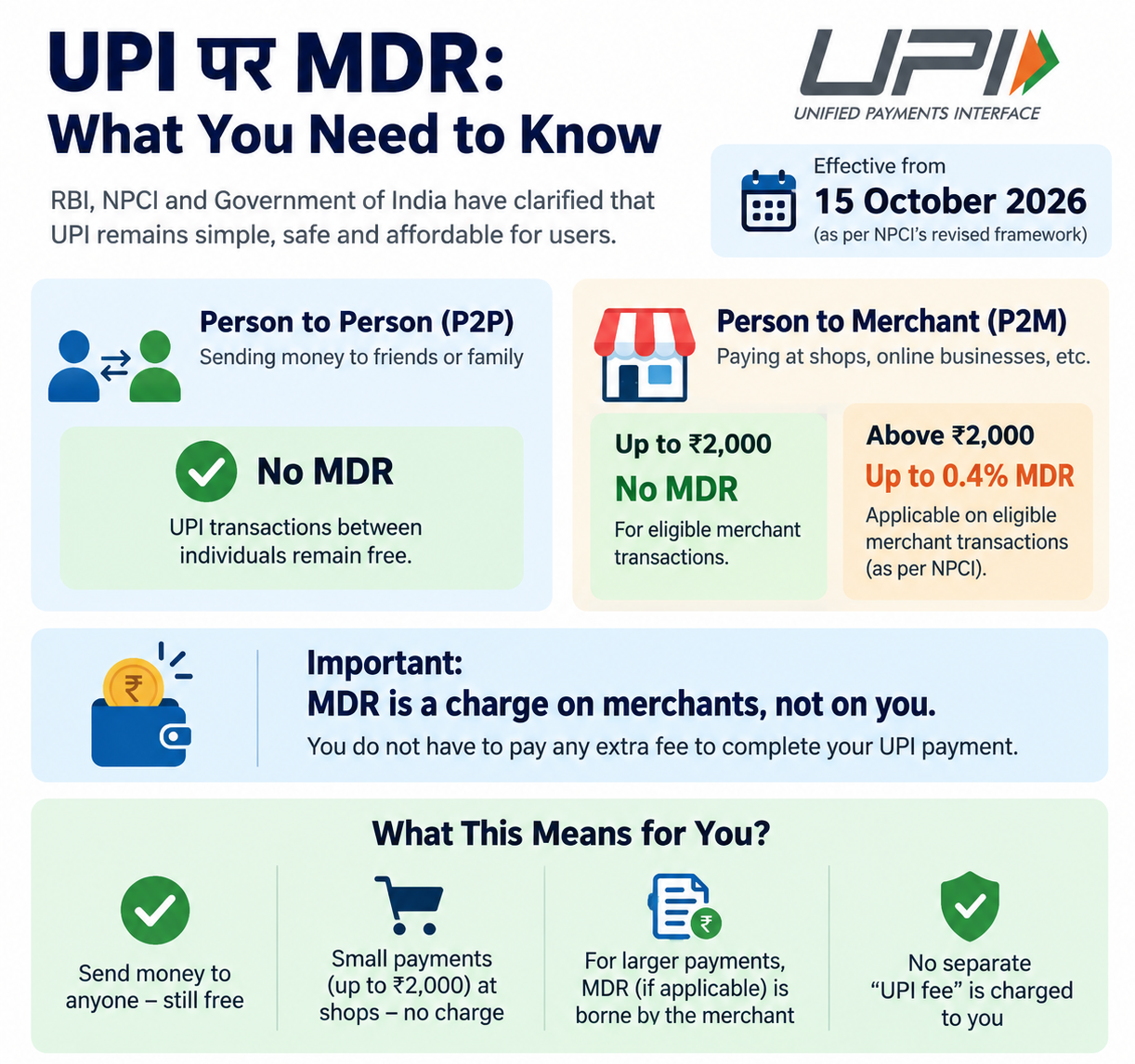
On 15 September 2026, the Ministry of Finance clarified the revised UPI framework. From 15 October 2026, a 0.4% MDR will apply to specified P2M transactions above ₹2,000, subject to the published conditions and caps. P2P transfers remain free, payments to merchants up to ₹2,000 remain free, and the government states that MDR is an ecosystem charge, not a customer fee. Banks are to ensure it is not passed on to customers. [1]
So, What Does This Mean for an Everyday User?
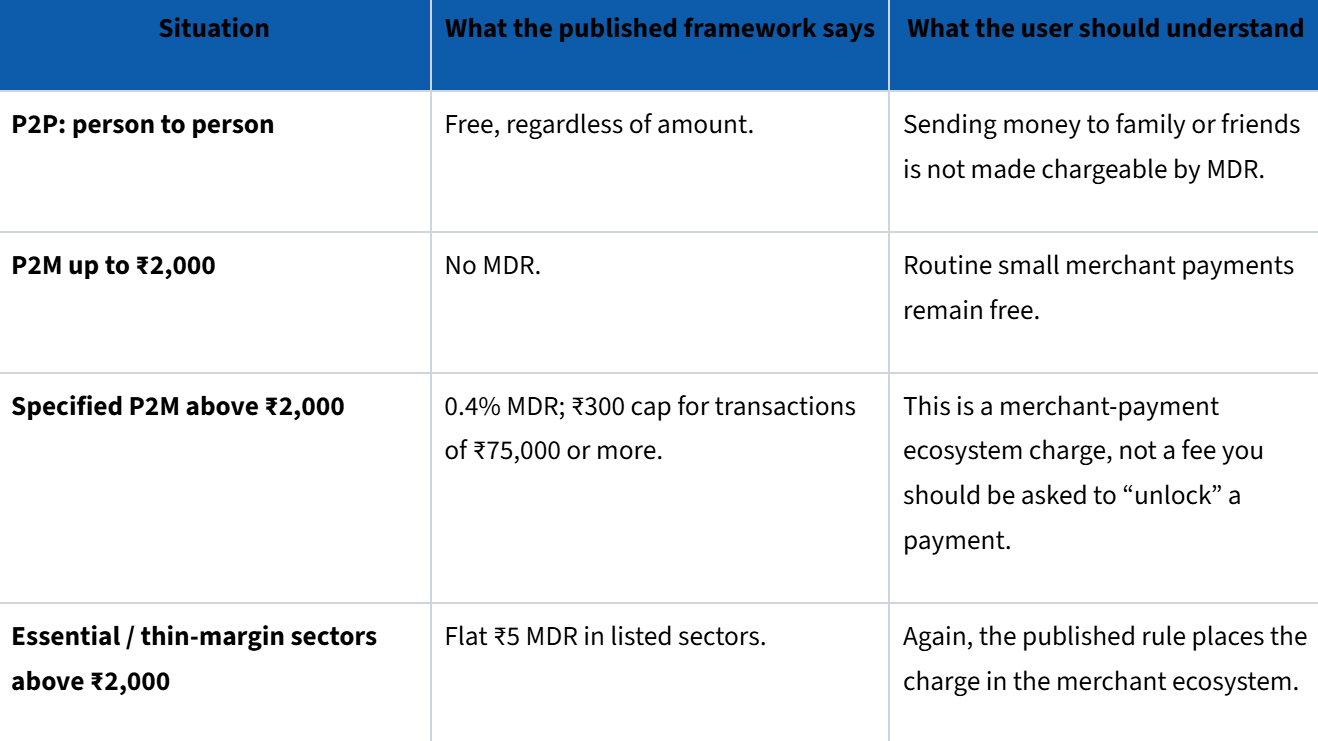
The important distinction is between a legitimate MDR rule and a scammer’s request for money. A message saying “pay ₹99 to release your UPI transaction” is not made genuine by mentioning NPCI, a bank, a government notice, or a news report.
A Related Cyber-Fraud Headline: Do Not Mix Two Different Issues
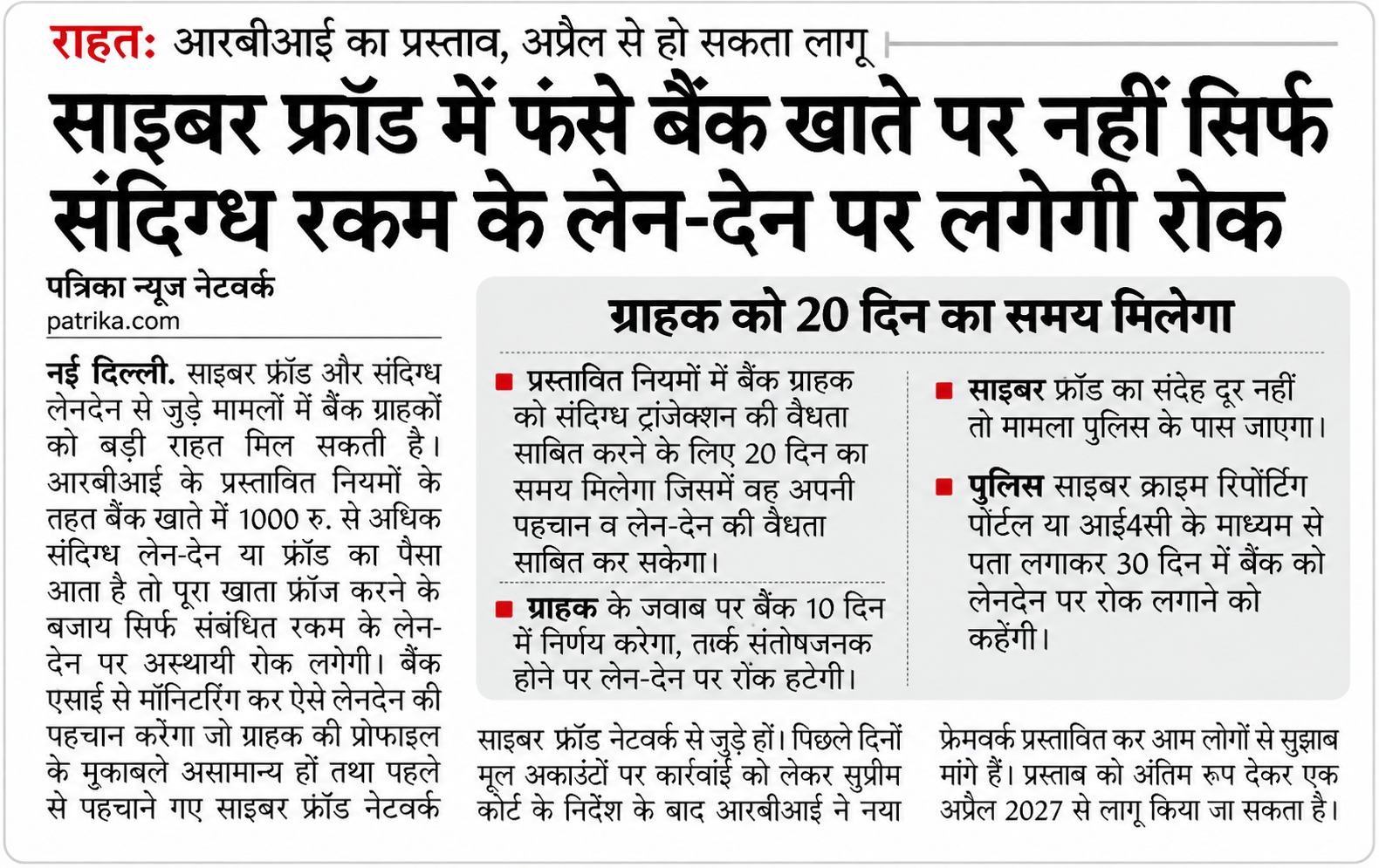
The supplied newspaper clipping discusses a separate cyber-fraud issue involving suspicious transactions and bank accounts linked to cybercrime. It is useful context, but it should not be read as proof that ordinary UPI users must pay a special “verification” or “release” fee. Separating the two issues helps prevent panic and misinformation.
Where Scammers Use the Confusion
“Pay a small fee to receive money”
A simple red flag is the demand for an upfront fee: “Your refund is ready, pay a processing fee first.” NPCI warns that scanning a QR code and entering a UPI PIN is for making a payment, not for receiving money or cashback. [2]
Fake payment success screens
Another common trick targets merchants: a fraudster shows a convincing “Payment Successful” screenshot and collects goods before the seller checks the account. In August 2026, Delhi Police reported a case involving allegedly fake or manipulated Paytm/UPI screenshots, followed by an attempt to gain access to victims’ mobile phones. [3] In September, police in Jharsuguda and Basti reported similar fake-confirmation cases; the Basti case involved a fabricated SBI YONO screenshot. [4][5]
“Your UPI is blocked because of new charges”
Scammers also borrow the language of genuine policy announcements. The caller creates urgency, claims your account is restricted, and asks you to install an app, share an OTP, approve a collect request, or transfer a small amount “for verification”. A real headline does not make an unexpected payment request genuine.
The Five-Second UPI Safety Check
Puse Before You Pay
WHO is asking? WHAT exactly are they asking you to do? WHERE did the payment request appear? WHEN did the request arrive? WHY would you need to pay to receive money? Verify the transaction in your own bank or UPI app. Merchants should not rely on a screenshot shown by a customer. Customers should not treat a QR code, collect request, or incoming message as proof that they are “receiving” money. Read the final authorisation screen before entering the UPI PIN. NPCI says users should never share the PIN and that bank customer support will not ask for it. [6]
If You Think You Have Been Scammed
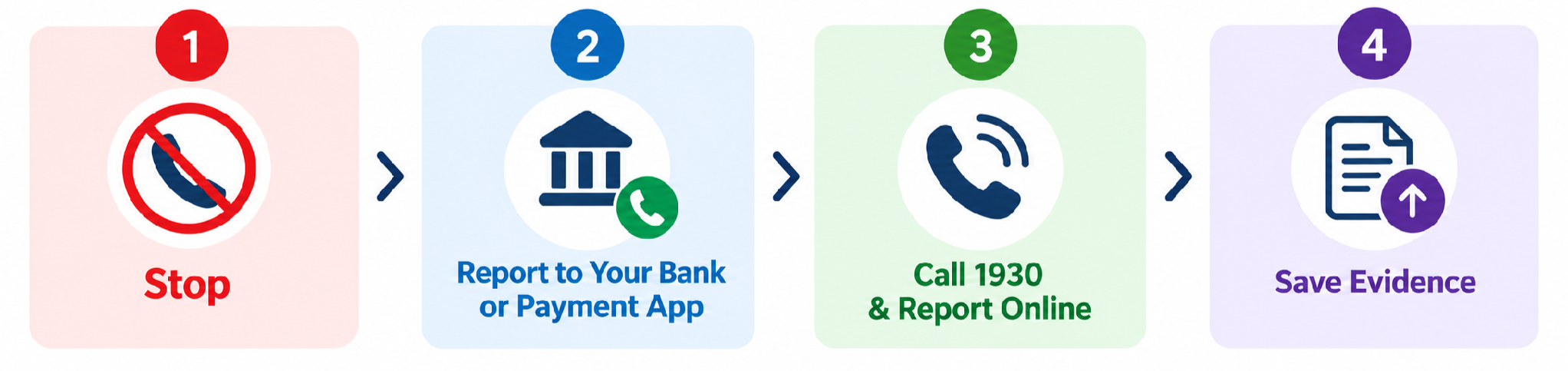
- Stop engaging with the suspected caller, account, or chat. Do not send another payment to “fix” the first one.
- Contact your bank or the relevant payment app using an official support channel and report the transaction.
- For financial cyber fraud in India, call 1930 as soon as possible and report the incident through the National Cyber Crime Reporting Portal. The official portal identifies 1930 as the helpline for immediate reporting of financial cyber fraud. [7]
- Keep the transaction ID, screenshots, phone numbers, messages, and dates. Do not delete useful evidence.
Conclusion
The safest way to understand the UPI charge discussion is to slow the headline down. Yes, a revised MDR framework has been announced for certain merchant transactions above ₹2,000 from 15 October 2026. But that does not make a P2P transfer subject to a “release fee”, and it does not make an unsolicited ₹49, ₹99, or ₹199 demand legitimate. Check the transaction type, confirm where the charge sits, verify the payment in your own app or bank account, and never disclose your UPI PIN. Digital safety is not about fearing every payment; it is about recognising when someone asks you to leave the normal payment process.
Remember
UPI convenience should never require blind trust. Verify the sender, verify the screen, verify the transaction.
References
[1] Press Information Bureau, Ministry of Finance, “UPI Continues to Remain Free for Peer to Peer Transactions and 96% of Merchant Transactions,” 15 September 2026. https://www.pib.gov.in/PressReleseDetailm.aspx?PRID=2310586
[2] National Payments Corporation of India (NPCI), “Fraud Awareness,” current guidance on fake cashback links, QR codes and UPI PIN safety. https://www.npci.org.in/fraud-awareness
[3] Hindustan Times / PTI, “Delhi Police arrest man in ₹30.81 lakh cyber fraud involving fake UPI payments,” 26 August 2026. https://www.hindustantimes.com/cities/delhi-news/delhi-police-arrest-man-in-rs-30-81-lakh-cyber-fraud-involving-fake-upi-payments-101787734051785.html
[4] The Times of India, “Two held for fake UPI payment fraud in Jharsuguda,” 11 September 2026. https://timesofindia.indiatimes.com/city/bhubaneswar/two-held-for-fake-upi-payment-fraud-in-jharsuguda/articleshow/134072823.cms
[5] The Times of India, “Basti: 2 held for fake UPI payment scam,” 13 September 2026. https://timesofindia.indiatimes.com/articleshow/134154561.cms
[6] NPCI, “UPI - Frequently Asked Questions,” UPI PIN and transaction-confirmation guidance. https://www.npci.org.in/what-we-do/upi/faqs
[7] Government of India, National Cyber Crime Reporting Portal, financial cyber fraud reporting guidance and helpline 1930. https://www.cybercrime.gov.in/
[8] Moneycontrol, “Don't trust the screenshot: How to spot a fake UPI payment,” 6 August 2026. https://www.moneycontrol.com/news/business/personal-finance/don-t-trust-the-screenshot-how-to-spot-a-fake-upi-payment-13996275.html
Image note: Both visuals were supplied by the requester. Figure 1 was cross-checked against the Ministry of Finance/PIB clarification cited in Reference [1].

Introduction
Cyber-attacks are another threat in this digital world, not exclusive to a single country, that could significantly disrupt global movements, commerce, and international relations all of which experienced first-hand when a cyber-attack occurred at Heathrow, the busiest airport in Europe, which threw their electronic check-in and baggage systems into a state of chaos. Not only were there chaos and delays at Heathrow, airports across Europe including Brussels, Berlin, and Dublin experienced delay and had to conduct manual check-ins for some flights further indicating just how interconnected the world of aviation is in today's world. Though Heathrow assured passengers that the "vast majority of flights" would operate, hundreds were delayed or postponed for hours as those passengers stood in a queue while nearly every European airport's flying schedule was also negatively impacted.
The Anatomy of the Attack
The attack specifically targeted Muse software by Collins Aerospace, a software built to allow various airlines to share check-in desks and boarding gates. The disruption initially perceived to be technical issues soon turned into a logistical nightmare, with airlines relying on Muse having to engage in horror-movie-worthy manual steps hand-tagging luggage, verifying boarding passes over the phone, and manually boarding passengers. While British Airways managed to revert to a backup system, most other carriers across Heathrow and partner airports elsewhere in Europe had to resort to improvised manual solutions.
The trauma was largely borne by the passengers. Stories emerged about travelers stranded on the tarmac, old folks left barely able to walk without assistance, and even families missing important connections. It served to remind everyone that the aviation world, with its schedules interlocked tightly across borders, can see even a localized system failure snowball into a continental-level crisis.
Cybersecurity Meets Aviation Infrastructure
In the last two decades, aviation has become one of the more digitally dependent industries in the world. From booking systems and baggage handling issues to navigation and air traffic control, digital systems are the invisible scaffold on which flight operations are supported. Though this digitalization has increased the scale of operations and enhanced efficiency, it must have also created many avenues for cyber threats. Cyber attackers increasingly realize that to target aviation is not just about money but about leverage. Just interfering with the check-in system of a major hub like Heathrow is more than just financial disruption; it causes panic and hits the headlines, making it much more attractive for criminal gangs and state-sponsored threat actors.
The Heathrow incident is like the worldwide IT crash in July 2024-thwarting activities of flights caused by a botched Crowdstrike update. Both prove the brittleness of digital dependencies in aviation, where one failure point triggering uncontrollable ripple effects spanning multiple countries. Unlike conventional cyber incidents contained within corporate networks, cyber-attacks in aviation spill on to the public sphere in real time, disturbing millions of lives.
Response and Coordination
Heathrow Airport first added extra employees to assist with manual check-in and told passengers to check flight statuses before traveling. The UK's National Cyber Security Centre (NCSC) collaborated with Collins Aerospace, the Department for Transport, and law enforcement agencies to investigate the extent and source of the breach. Meanwhile, the European Commission published a statement that they are "closely following the development" of the cyber incident while assuring passengers that no evidence of a "widespread or serious" breach has been observed.
According to passengers, the reality was quite different. Massive passenger queues, bewildering announcements, and departure time confirmations cultivated an atmosphere of chaos. The wrenching dissonance between the reassurances from official channel and Kirby needs to be resolved about what really happens in passenger experiences. During such incidents, technical restoration and communication flow are strategies for retaining public trust in incidents.
Attribution and the Shadow of Ransomware
As with many cyber-attacks, questions on its attribution arose quite promptly. Rumours of hackers allegedly working for the Kremlin escaped into the air quite possibly inside seconds of the realization, Cybersecurity experts justifiably advise against making conclusions hastily. Extortion ransomware gangs stand the last chance to hold the culprits, whereas state actors cannot be ruled out, especially considering Russian military activity under European airspace. Meanwhile, Collins Aerospace has refused to comment on the attack, its precise nature, or where it originated, emphasizing an inherent difficulty in cyberattribution.
What is clear is the way these attacks bestow criminal leverage and dollars. In previous ransomware attacks against critical infrastructure, cybercriminal gangs have extorted millions of dollars from their victims. In aviation terms, the stakes grow exponentially, not only in terms of money but national security and diplomatic relations as well as human safety.
Broader Implications for Aviation Cybersecurity
This incident brings to consideration several core resilience issues within aviation systems. Traditionally, the airports and airlines had placed premium on physical security, but today, the equally important concept of digital resilience has come into being. Systems such as Muse, which bind multiple airlines into shared infrastructure, offer efficiency but, at the same time, also concentrate that risk. A cyber disruption in one place will cascade across dozens of carriers and multiple airports, thereby amplifying the scale of that disruption.
The case also brings forth redundancy and contingency planning as an urgent concern. While BA systems were able to stand on backups, most other airlines could not claim that advantage. It is about time that digital redundancies, be it in the form of parallel systems or isolated backups or even AI-driven incident response frameworks, are built into aviation as standard practice and soon.
On the policy plane, this incident draws attention to the necessity for international collaboration. Aviation is therefore transnational, and cyber incidents standing on this domain cannot possibly be handled by national agencies only. Eurocontrol, the European Commission, and cross-border cybersecurity task forces must spearhead this initiative to ensure aviation-wide resilience.
Human Stories Amid a Digital Crisis
Beyond technical jargon and policy response, the human stories had perhaps the greatest impact coming from Heathrow. Passengers spoke of hours spent queuing, heading to funerals, and being hungry and exhausted as they waited for their flights. For many, the cyber-attack was no mere headline; instead, it was ¬ a living reality of disruption.
These stories reflect the fact that cybersecurity is no hunger strike; it touches people's lives. In critical sectors such as aviation, one hour of disruption means missed connections for passengers, lost revenue for airlines, and inculcates immense emotional stress. Crisis management must therefore entail technical recovery and passenger care, communication, and support on the ground.
Conclusion
The cybersecurity crisis of Heathrow and other European airports emphasizes the threat of cyber disruption on the modern legitimacy of aviation. The use of increased connectivity for airport processes means that any cyber disruption present, no matter how small, can affect scheduling issues regionally or on other continents, even threatening lives. The occurrences confirm a few things: a resilient solution should provide redundancy not efficiency; international networking and collaboration is paramount; and communicating with the traveling public is just as important (if not more) as the technical recovery process.
As governments, airlines, and technology providers analyse the disruption, the question is longer if aviation can withstand cyber threats, but to what extent it will be prepared to defend itself against those attacks. The Heathrow crisis is a reminder that the stake of cybersecurity is not just about a data breach or outright stealing of money but also about stealing the very systems that keep global mobility in motion. Now, the aviation industry is tested to make this disruption an opportunity to fortify the digital defences and start preparing for the next inevitable production.
References
- https://www.bbc.com/news/articles/c3drpgv33pxo
- https://www.theguardian.com/business/2025/sep/21/delays-continue-at-heathrow-brussels-and-berlin-airports-after-alleged-cyber-attack
- https://www.reuters.com/business/aerospace-defense/eu-agency-says-third-party-ransomware-behind-airport-disruptions-2025-09-22/
Executive Summary
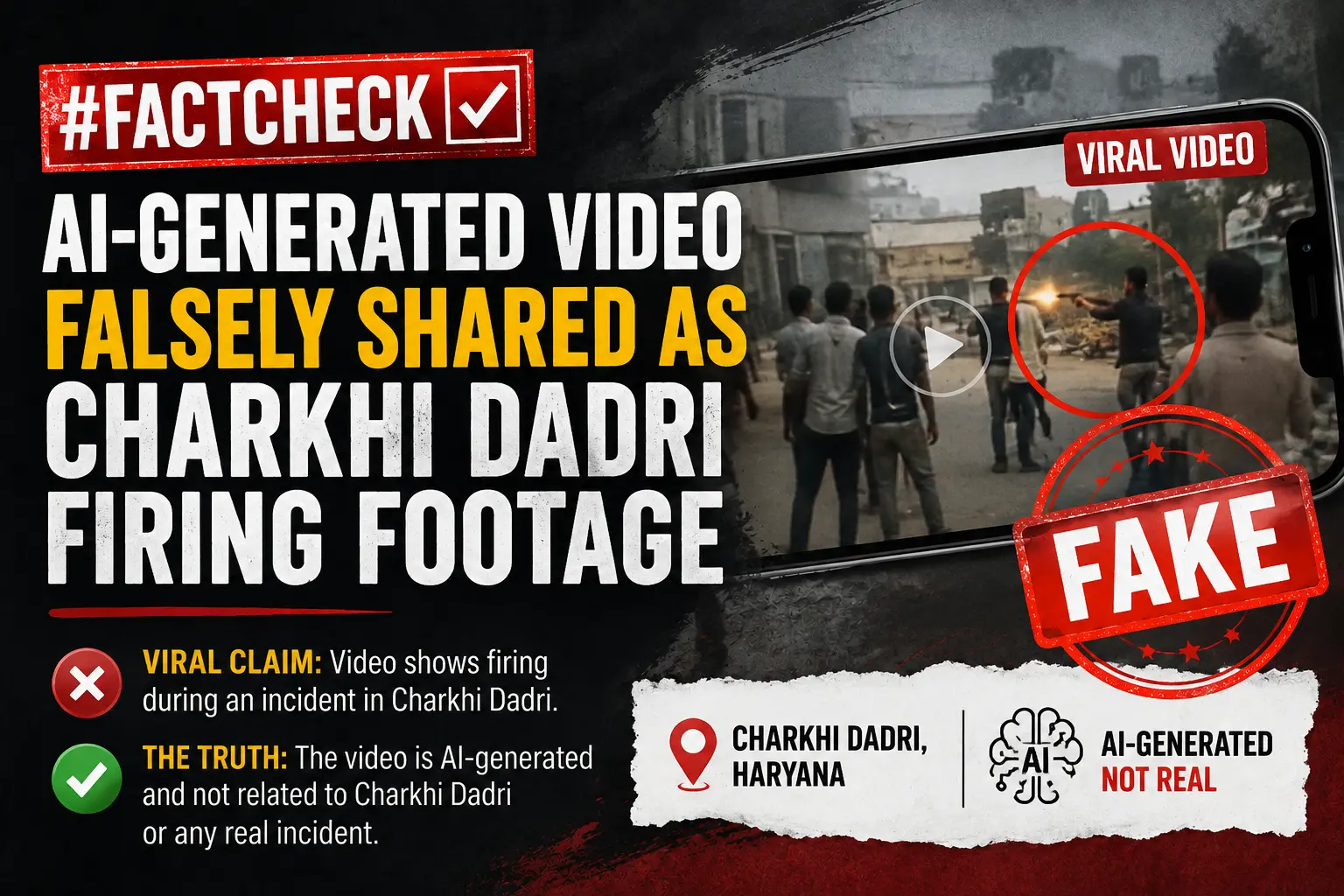
A video showing a black Scorpio being sprayed with bullets is being widely shared on social media.The video is being circulated with the claim that it shows the real footage of the firing incident in Haryana’s Charkhi Dadri on August 6, when around 30 rounds were allegedly fired at a Scorpio outside the City Police Station. The CyberPeace Research Wing found the claim to be false. The research established that the viral video is AI-generated and is being shared with a misleading claim.
Claim
A Facebook user shared the viral video with a caption stating, "Gunshots ring out in Haryana… panic grips the area! A firing incident reportedly took place in Charkhi Dadri, Haryana, during an alleged dispute between two groups on Thursday. According to reports, six people were injured, with two said to be in critical condition. Police are investigating the matter. What steps should be taken to prevent such incidents in your city?"
https://www.facebook.com/reel/991406893937983

FactCheck
To verify the claim, we extracted keyframes from the viral clip and conducted a reverse image search. During the search, we found an older post containing the same video on an Instagram account named ‘sxchin_jaat’. The video was uploaded on May 12, well before the Charkhi Dadri firing incident of August 6.
The earlier upload establishes that the viral clip is unrelated to the firing incident in Charkhi Dadri.
https://www.instagram.com/reels/DYOOXiASH4h/
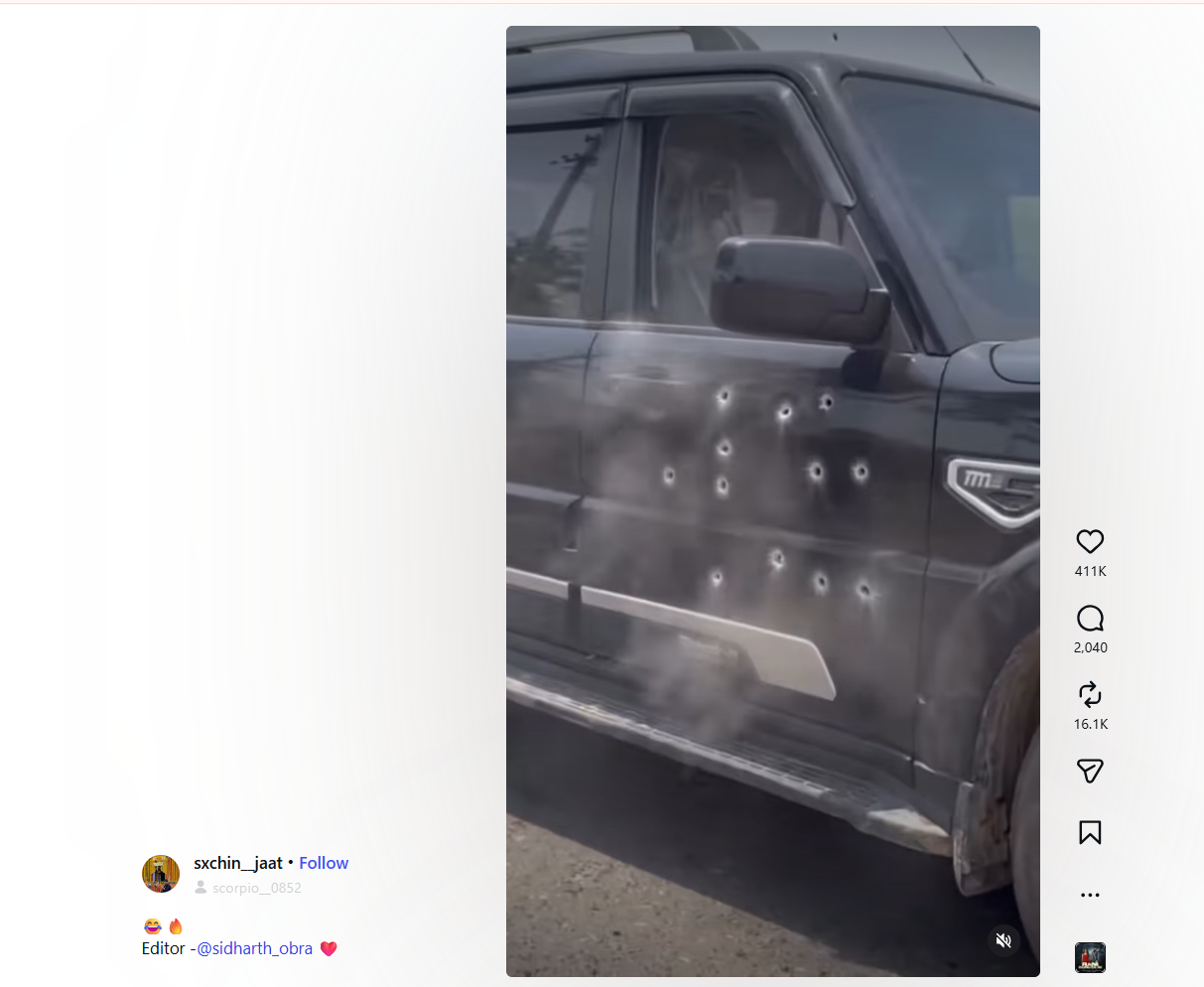
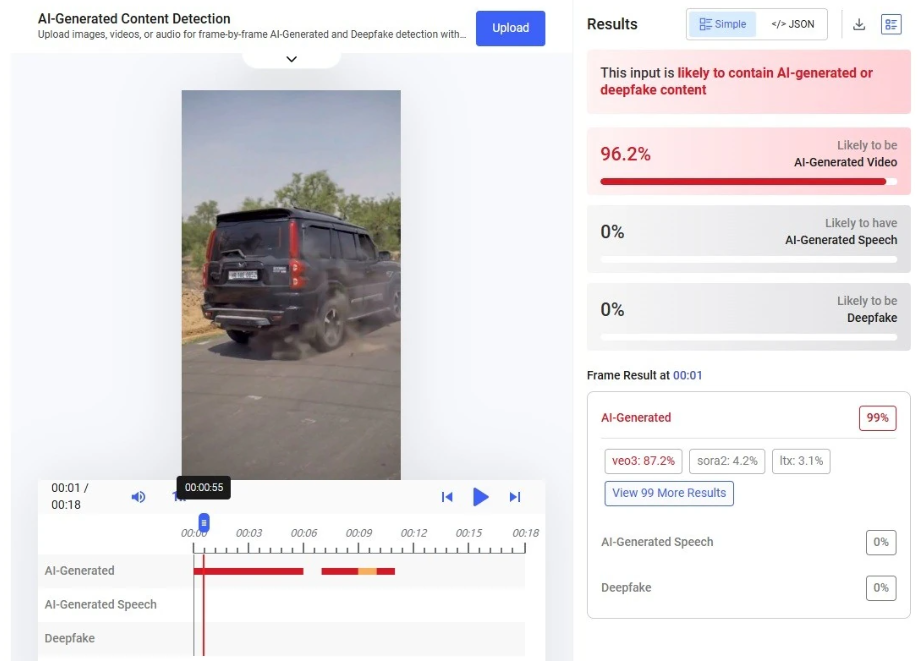
We then examined the viral video closely and noticed visual characteristics that raised suspicions that it could be AI-generated. The video was subsequently analysed using Hive Moderation, which indicated a 96 per cent probability of AI-generated content.
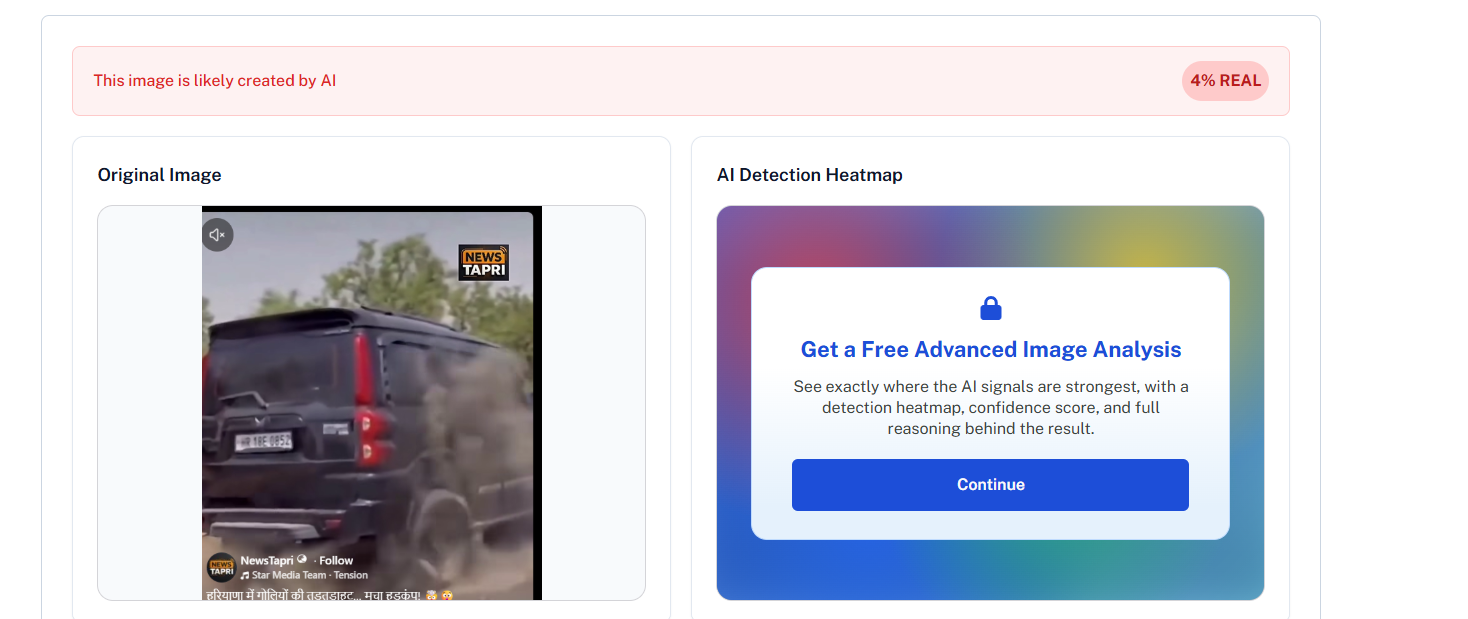
As part of the next stage of verification, we analysed the video using another AI detection tool, Undetectable AI. The tool also identified the viral video as AI-generated.
Conclusion
The viral claim is false. The video being shared as authentic footage of the August 6 firing incident in Charkhi Dadri is not genuine. The clip was posted online as early as May 12 and AI detection tools also identified it as AI-generated. The video is therefore being circulated with a misleading claim linking it to the Charkhi Dadri firing incident.
