
#FactCheck: AI-Generated Video Falsely Shared as French Police’s ‘Pig Squad’ to Tackle Protesters
Executive Summary
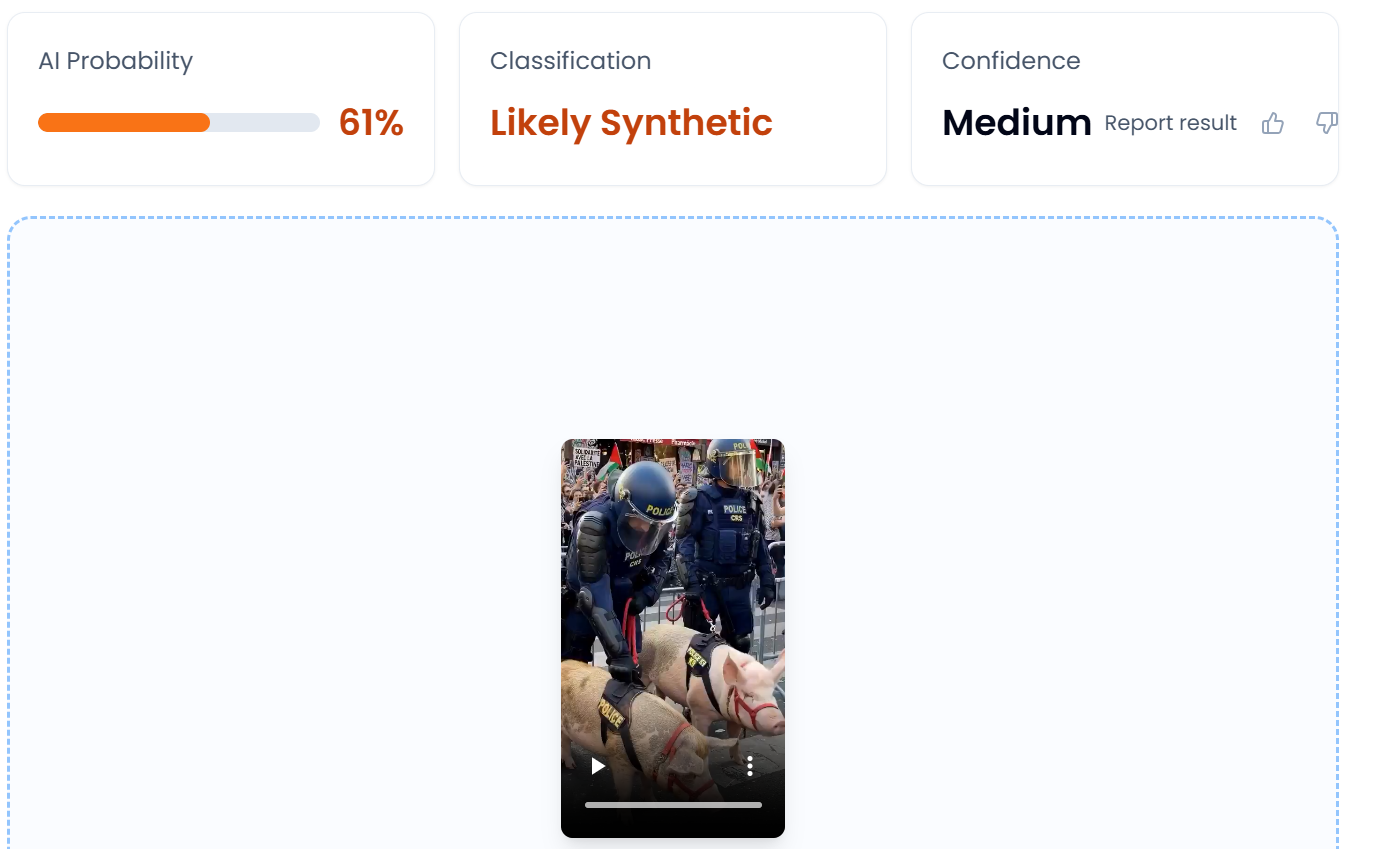
A video is being shared on social media with the claim that French police have formed a “Pig Squad” to deal with protesters. In the video, police personnel can be seen holding several pigs in their hands, with straps bearing the word “Police” visible on them. Social media users are sharing the video claiming that the French police have adopted a new method to deal with protesters. CyberPeace Research found that the viral video is not authentic but AI-generated and is being shared with a misleading claim.
Claim
A user shared the video with the caption: “French police are ready for the ‘protest’ in ‘Paris’ tomorrow! We have heard of a dog squad, but this is the first time I’m seeing a ‘pig squad’!”
https://x.com/Kumar1975Rajesh/status/2113566258247651403

Fact Check
Upon closely examining the video, we noticed several inconsistencies. For instance, the word “Police” written on the officers’ helmets keeps changing as the video plays. In addition, some posters can be seen in the background behind the police personnel, but the text on them keeps changing and is often unclear. Such inconsistencies are commonly seen in AI-generated content.
As part of our research, we scanned the video using the AI detection tool Undetectable AI. According to the results, the viral video is AI-generated.
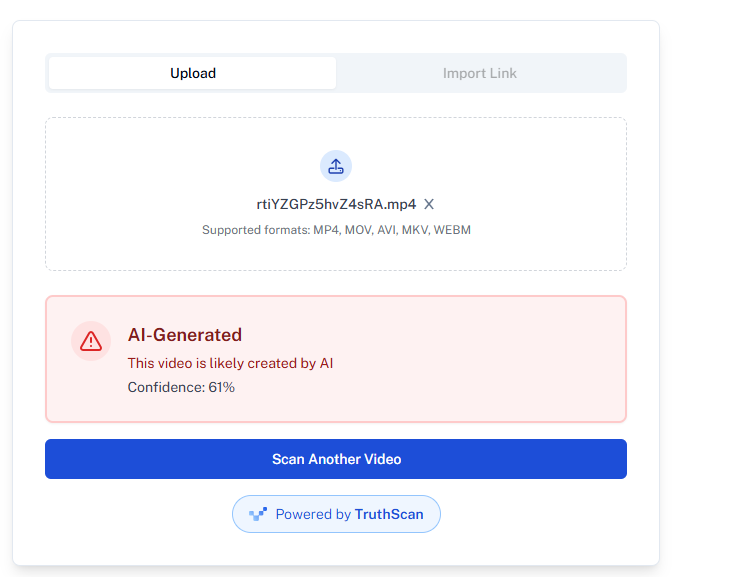
As part of our research, we scanned the viral video using an AI detection tool. According to the results, the viral video is 61 per cent likely to be AI-generated.
Conclusion
Our research found that the viral video is not authentic but AI-generated and is being shared with a misleading claim.

Related Blogs

Introduction
In today’s digital world, where everything is related to data, the more data you own, the more control and compliance you have over the market, which is why companies are looking for ways to use data to improve their business. But at the same time, they have to make sure they are protecting people’s privacy. It is very tricky to strike a balance between both of them. Imagine you are trying to bake a cake where you need to use all the ingredients to make it taste great, but you also have to make sure no one can tell what’s in it. That’s kind of what companies are dealing with when it comes to data. Here, ‘Pseudonymisation’ emerges as a critical technical and legal mechanism that offers a middle ground between data anonymisation and unrestricted data processing.
Legal Framework and Regulatory Landscape
Pseudonymisation, as defined by the General Data Protection Regulation (GDPR) in Article 4(5), refers to “the processing of personal data in such a manner that the personal data can no longer be attributed to a specific data subject without the use of additional information, provided that such additional information is kept separately and is subject to technical and organisational measures to ensure that the personal data are not attributed to an identified or identifiable natural person”. This technique represents a paradigm shift in data protection strategy, enabling organisations to preserve data utility while significantly reducing privacy risks. The growing importance of this balance is evident in the proliferation of data protection laws worldwide, from GDPR in Europe to India’s Digital Personal Data Protection Act (DPDP) of 2023.
Its legal treatment varies across jurisdictions, but a convergent approach is emerging that recognises its value as a data protection safeguard while maintaining that the pseudonymised data remains personal data. Article 25(1) of GDPR recognises it as “an appropriate technical and organisational measure” and emphasises its role in reducing risks to data subjects. It protects personal data by reducing the risk of identifying individuals during data processing. The European Data Protection Board’s (EDPB) 2025 Guidelines on Pseudonymisation provide detailed guidance emphasising the importance of defining the “pseudonymisation domain”. It defines who is prevented from attributing data to specific individuals and ensures that the technical and organised measures are in place to block unauthorised linkage of pseudonymised data to the original data subjects. In India, while the DPDP Act does not explicitly define pseudonymisation, legal scholars argue that such data would still fall under the definition of personal data, as it remains potentially identifiable. The Act defines personal data defined in section 2(t) broadly as “any data about an individual who is identifiable by or in relation to such data,” suggesting that the pseudonymised information, being reversible, would continue to require compliance with data protection obligations.
Further, the DPDP Act, 2023 also includes principles of data minimisation and purpose limitation. Section 8(4) says that a “Data Fiduciary shall implement appropriate technical and organisational measures to ensure effective observance of the provisions of this Act and the Rules made under it.” The concept of Pseudonymization fits here because it is a recognised technical safeguard, which means companies can use pseudonymization as one of the methods or part of their compliance toolkit under Section 8(4) of the DPDP Act. However, its use should be assessed on a case to case basis, since ‘encryption’ is also considered one of the strongest methods for protecting personal data. The suitability of pseudonymization depends on the nature of the processing activity, the type of data involved, and the level of risk that needs to be mitigated. In practice, organisations may use pseudonymization in combination with other safeguards to strengthen overall compliance and security.
The European Court of Justice’s recent jurisprudence has introduced nuanced considerations about when pseudonymised data might not constitute personal data for certain entities. In cases where only the original controller possesses the means to re-identify individuals, third parties processing such data may not be subject to the full scope of data protection obligations, provided they cannot reasonably identify the data subjects. The “means reasonably likely” assessment represents a significant development in understanding the boundaries of data protection law.
Corporate Implementation Strategies
Companies find that pseudonymisation is not just about following rules, but it also brings real benefits. By using this technique, businesses can keep their data more secure and reduce the damage in the event of a breach. Customers feel more confident knowing that their information is protected, which builds trust. Additionally, companies can utilise this data for their research or other important purposes without compromising user privacy.
Key Benefits of Pseudonymisation:
- Enhanced Privacy Protection: It hides personal details like names or IDs with fake ones (with artificial values or codes), making it harder for accidental privacy breaches.
- Preserved Data Utility: Unlike completely anonymous data, pseudonymised data keeps its usefulness by maintaining important patterns and relationships within datasets.
- Facilitate Data Sharing: It’s easier to share pseudonymised data with partners or researchers because it protects privacy while still being useful.
However, using pseudonymisation is not as easy as companies have to deal with tricky technical issues like choosing the right methods, such as encryption or tokenisation and managing security keys safely. They have to implement strong policies to stop anyone from figuring out who the data belongs to. This can get expensive and complicated, especially when dealing with a large amount of data, and it often requires expert help and regular upkeep.
Balancing Privacy Rights and Data Utility
The primary challenge in pseudonymisation is striking the right balance between protecting individuals' privacy and maintaining the utility of the data. To get this right, companies need to consider several factors, such as why they are using the data, the potential hacker's level of skill, and the type of data being used.
Conclusion
Pseudonymisation offers a practical middle ground between full anonymisation and restricted data use, enabling organisations to harness the value of data while protecting individual privacy. Legally, it is recognised as a safeguard but still treated as personal data, requiring compliance under frameworks like GDPR and India’s DPDP Act. For companies, it is not only regulatory adherence but also ensuring that it builds trust and enhances data security. However, its effectiveness depends on robust technical methods, governance, and vigilance. Striking the right balance between privacy and data utility is crucial for sustainable, ethical, and innovation-driven data practices.
References:
- https://gdpr-info.eu/art-4-gdpr/
- https://www.meity.gov.in/static/uploads/2024/06/2bf1f0e9f04e6fb4f8fef35e82c42aa5.pdf
- https://gdpr-info.eu/art-25-gdpr/
- https://www.edpb.europa.eu/system/files/2025-01/edpb_guidelines_202501_pseudonymisation_en.pdf
- https://curia.europa.eu/juris/document/document.jsf?text=&docid=303863&pageIndex=0&doclang=EN&mode=req&dir=&occ=first&part=1&cid=16466915
- https://curia.europa.eu/juris/document/document.jsf?text=&docid=303863&pageIndex=0&doclang=EN&mode=req&dir=&occ=first&part=1&cid=16466915
Executive Summary
A video is being shared on social media with the claim that actor Shah Rukh Khan reprimanded Saudi Arabia over the death sentence awarded to Baljinder Singh.In the viral video, Shah Rukh Khan is purportedly heard saying, “Our simple and innocent brother Baljinder Singh, a resident of Sujanpur in Punjab’s Pathankot district, has been sentenced to death in Saudi Arabia after being falsely implicated in a drug case as part of a deep conspiracy. But stay strong, my brother.
Nothing will happen to you. I will definitely save you. Your brother is alive, and I swear that I will not let you die alone on that dreaded noose. Instead, I will put all my strength on the line and risk my life to pull you out of that hellish prison and bring you safely back to the soil of Punjab and the land of India.”
CyberPeace Research Wing’s research found the claim to be false. Our research found that the audio used in the viral video is AI-generated.
Claim:
A video is being shared on social media with the claim that actor Shah Rukh Khan reprimanded Saudi Arabia over the death sentence awarded to Baljinder Singh.
https://www.facebook.com/reel/1491107586179716

Fact Check
To verify the claim that Shah Rukh Khan reprimanded Saudi Arabia over the death sentence awarded to Baljinder Singh, we first conducted a Google search using relevant keywords. During the search, we did not find any information related to the viral claim in any credible media report.A reverse image search of the keyframes from the video led us to a video uploaded on The University of Edinburgh’s YouTube account on October 16, 2015, which contains the same segment seen in the viral clip. Notably, the background in the original video is identical to that seen in the viral clip.
In the original video, Shah Rukh Khan can be seen speaking about “life lessons”. During the event, he was conferred an honorary doctorate by the University of Edinburgh. In his address, he shared several unique lessons about life through some of his popular film characters. Shah Rukh Khan spoke about the importance of embracing one’s individuality, while combining humour with self-reflection. He also spoke about facing one’s fears and maintaining self-confidence amid challenges. Sharing anecdotes from his journey in films, Shah Rukh Khan explained how different characters had taught him to look at life from new perspectives.However, he makes no mention of Baljinder Singh anywhere in the video.
https://www.youtube.com/watch?v=VnnXAiTOLbo

We then checked the viral video using Hive Detect, an AI detection tool. The tool’s analysis indicated that the voice of Shah Rukh Khan in the video was AI-generated, with a 97.2 per cent probability.
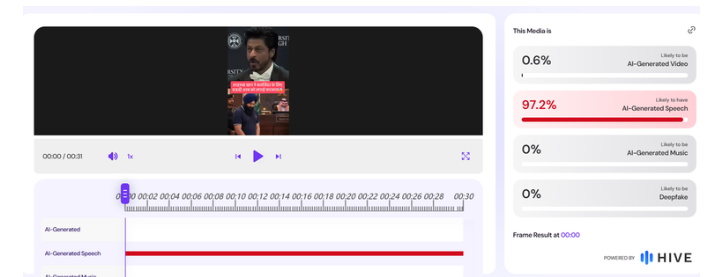
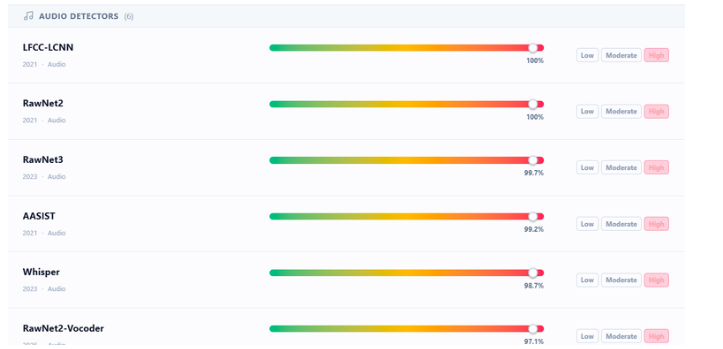
Additionally, six detectors on another AI detection tool, Deepfake-O-Meter, identified Shah Rukh Khan’s voice in the video as highly likely to be AI-generated.
Conclusion
The evidence gathered during our research makes it clear that the claim that Shah Rukh Khan reprimanded Saudi Arabia over the death sentence awarded to Baljinder Singh is false. The audio of Shah Rukh Khan in the viral video is AI-generated.
Executive Summary:
Following India’s heavy defeat to South Africa in the T20 World Cup 2026, the team has been facing intense trolling on social media. Amid this backdrop, a video of Indian cricket team head coach Gautam Gambhir has gone viral. In the clip, Gambhir can be heard saying,“Even people who have nothing to do with cricket have made comments. An IPL owner also wrote about split coaching. It’s surprising. People must stay in their own domain. If we don’t interfere in someone else’s domain, they have no right to interfere in ours.”The video is being shared with the claim that Gambhir made these remarks recently in response to trolling after India’s loss to South Africa in the T20 World Cup 2026. However, research by the CyberPeace found the claim to be misleading. The viral video is not related to the T20 World Cup 2026. It is from December 2025 and pertains to India’s Test series defeat against South Africa. An old video is being circulated with a misleading context.
Claim
An Instagram user, ‘rns_news200’, shared the viral video on February 23, 2026, claiming that after the loss to South Africa, head coach Gautam Gambhir issued a stern warning to Indian fans. The caption stated that Suryakumar Yadav was heavily trolled on social media after the match, and Gambhir responded strongly, saying players should not be unfairly targeted and the team deserves support, especially during difficult times.

Fact Check
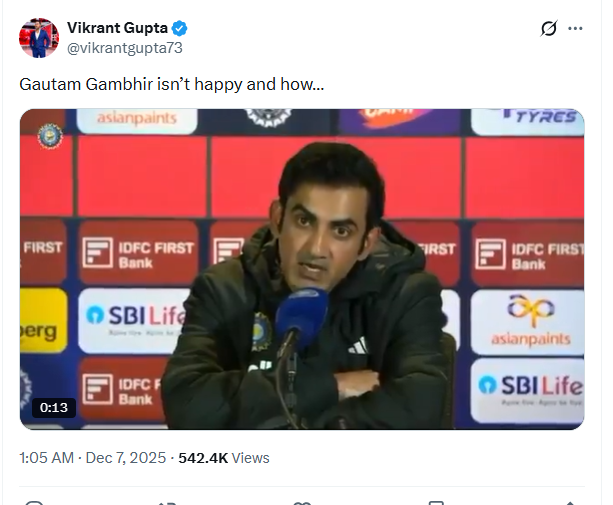
To verify the claim, we conducted a keyword search on Google. We found the same video on the official X (formerly Twitter) account of sports journalist Vikrant Gupta. The video was posted on December 7, 2025. According to the caption, Gambhir was expressing dissatisfaction following India’s performance.
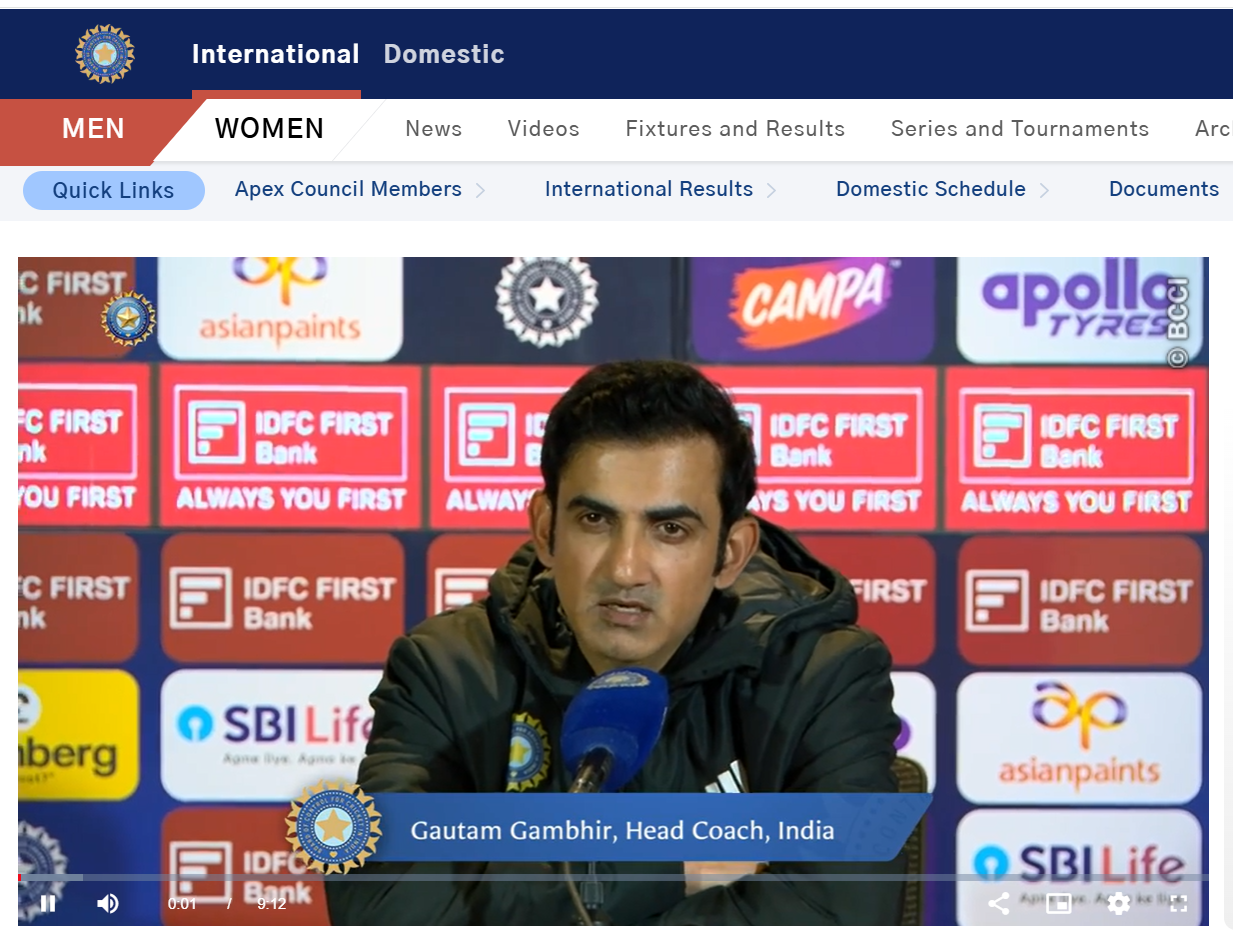
We also found the longer version of the video on the official website of the Board of Control for Cricket in India (BCCI), where it was published on December 6, 2025. In the full video, Gambhir is clearly seen speaking about India’s defeat to South Africa in a Test match. The specific segment that went viral appears around the 1 minute 58 second mark.
Conclusion
Our research found that the viral claim about Gautam Gambhir’s video being linked to trolling after the T20 World Cup 2026 is misleading. The clip is from December 2025 and relates to India’s Test series defeat against South Africa — not the T20 World Cup 2026.An old video is being reshared with a false and misleading context.
