
#FactCheck-Video Falsely Shared as Nepal Expelling Bangladeshis; Actually Shows Anti-Encroachment Drive in Dhaka
Executive Summary
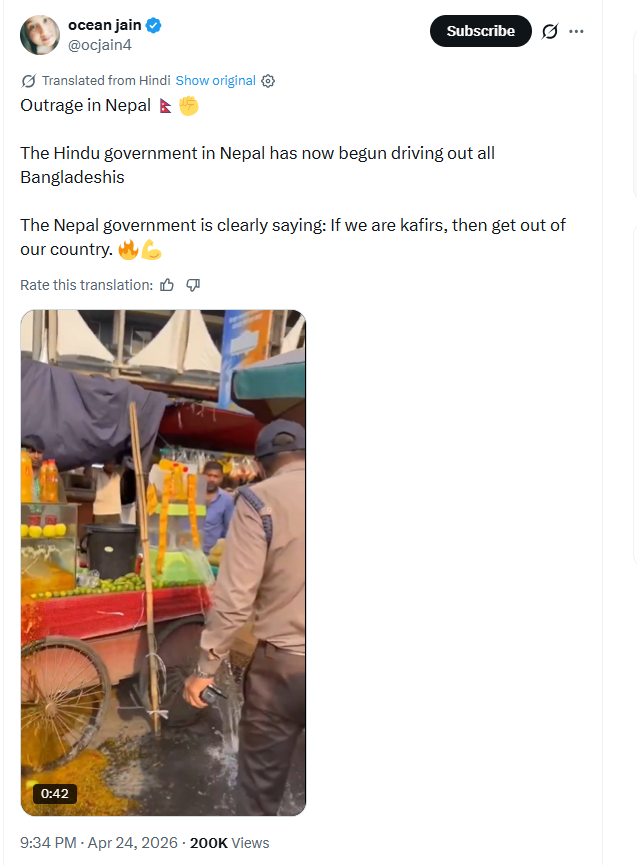
A video showing uniformed personnel removing street vendors and damaging roadside stalls is being circulated on social media with the false claim that the Nepal government has started expelling Bangladeshis from the country. The viral clip is around 49 seconds long and shows authorities clearing vendors from a public area. Nepali audio can also be heard in the background, which appears to have added to the misleading narrative.
However, an research by the CyberPeace Research Wing found that the claim is false. The video is not from Nepal, but from Bangladesh’s capital Dhaka, where authorities were carrying out an anti-encroachment operation near the National Stadium.
Claim:
The video was shared on X with a caption claiming that a Hindu-led government in Nepal had begun driving Bangladeshis out of the country.
Fact Check:
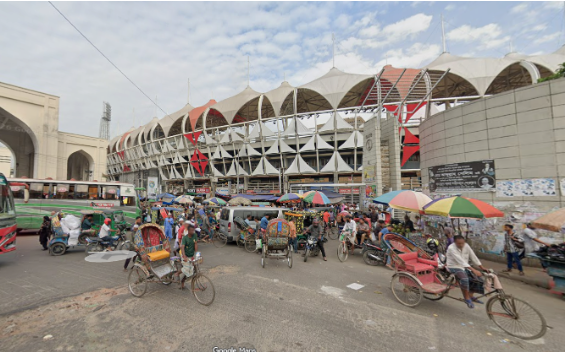
A close examination of the video revealed several signs contradicting the claim. Text written in Bengali can be seen at multiple places in the footage. The caps worn by uniformed personnel also appear to display “Bangladesh Police.” Investigators also noticed a stadium-like structure in the background. Comparing the visuals with street-view imagery available on Google Maps led to a match near the National Stadium area in Dhaka, Bangladesh.

Further verification found a video uploaded on March 18, 2025, by a Bangladeshi news portal on YouTube containing scenes matching the viral clip. The caption described it as footage from an anti-encroachment drive in the Gulistan area of Dhaka.

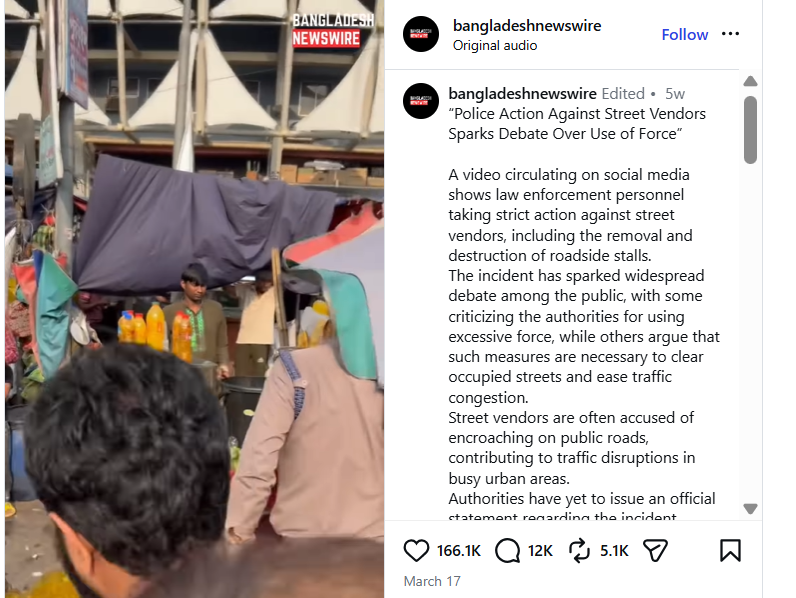
A similar version of the video was also found on a Bangladeshi Instagram account uploaded on March 17, where it was again described as police action against illegal encroachments. The video credit was attributed to a person named Zahir Rehan.
While the exact date of the original footage could not be independently confirmed, available evidence clearly links the video to Bangladesh and not Nepal.
Conclusion:
The viral claim that Nepal has begun expelling Bangladeshis is false. The video actually shows an anti-encroachment drive carried out by authorities in Dhaka, Bangladesh.

Related Blogs

Executive Summary
A video of former Chief of Defence Staff (CDS) General Anil Chauhan is going viral on social media. The video is being shared with the claim that, referring to the losses suffered by India during Operation Sindoor, he said, “Even if we lose four aircraft or 40 aircraft, India will still remain a larger economy. What matters is your ability to recover from the losses. Whatever losses we suffered, we can recover much faster than Pakistan.” A research done by the Research Wing of the CyberPeace examined the claims made in the video and compared them with General Anil Chauhan’s original remarks at the event.The research found that the viral video’s audio has been digitally manipulated. The alleged statement heard in the viral clip does not appear in the original footage.
Claim:
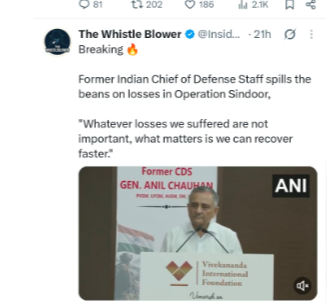
A Pakistani user on social media platform X shared the viral video with the caption: “BREAKING: Former Indian Chief of Defence Staff revealed details about the losses suffered during Operation Sindoor, saying, ‘Whatever losses we suffered are not important. What matters is that we can recover quickly.’”
The link to the post and a screenshot are provided below.
https://x.com/InsiderWB/status/2092559622225940952
Fact Check
Upon closely examining the viral video, we noticed the ANI logo. We then conducted a reverse image search of keyframes from the viral clip. During the search, we found the original video published by ANI, in which General Chauhan discusses the relationship between political objectives and military strategy.
https://x.com/ANI/status/2092217553355743409
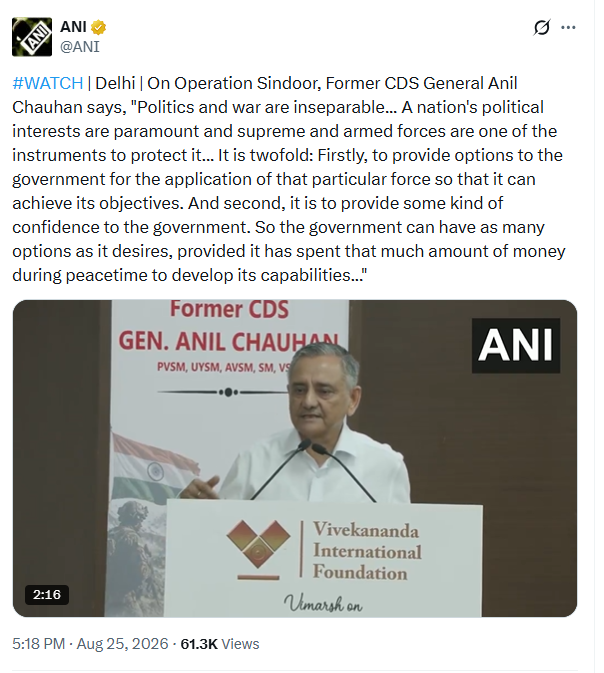
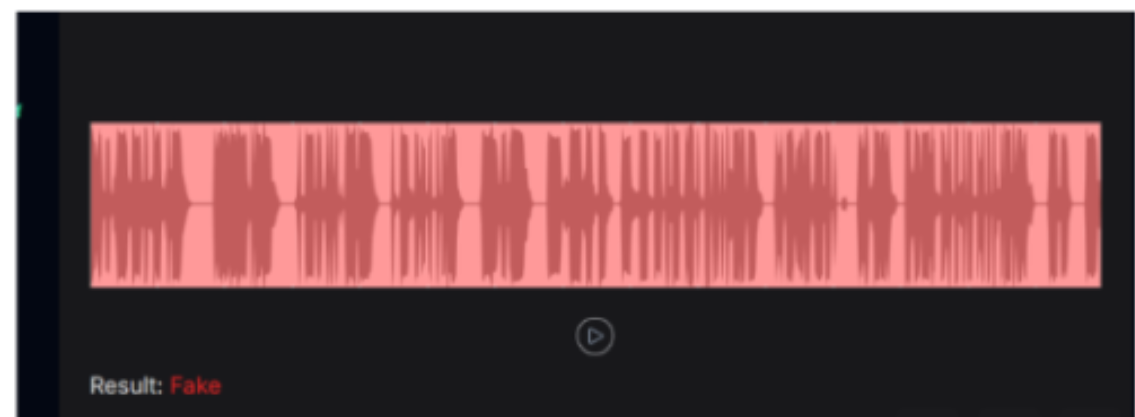
He said, “Politics and war are inseparable.” He further explained that a nation’s political interests are paramount, while the armed forces are one of several instruments used to safeguard those interests. General Chauhan also discussed the role of military leadership in presenting various options to the political leadership, as well as the importance of peacetime preparedness and training. He also spoke about training, contingency planning, and the need to balance military risks with political objectives. Notably, the statement attributed to him in the viral video,“Whatever losses we suffered are not important. What matters is that we can recover quickly” — does not appear anywhere in the original video. Additionally, the audio used in the viral video was also analysed using Resemble AI. The tool’s analysis identified the audio as AI-generated, indicating that the audio in the viral clip had been manipulated.
Conclusion
The research found that General Chauhan’s voice in the viral video has been digitally manipulated. The alleged statement heard in the viral clip does not appear in the original video.

Executive Summary:
A viral video showing flames and thick smoke from large fuel tanks has been shared widely on social media. Many claimed it showed a recent Russian missile attack on a fuel depot in Ukraine. However, our research found that the video is not related to the Russia-Ukraine conflict. It actually shows a fire that happened at Al Hamriyah Port in Sharjah, United Arab Emirates, on May 31, 2025. The confusion was likely caused by a lack of context and misleading captions.

Claim:
The circulating claim suggests that Russia deliberately bombed Ukraine's fuel reserves and the viral video shows evidence of the bombing. The posts claim the fuel depot was destroyed purposefully during military operations, implying an increase in violence. This narrative is intended to generate feelings and reinforce fears related to war.

Fact Check:
After doing a reverse image search of the key frames of the viral video, we found that the video is actually from Al Hamriyah Port, UAE, not from the Russia-Ukraine conflict. During further research we found the same visuals were also published by regional news outlets in the UAE, including Gulf News and Khaleej Times, which reported on a massive fire at Al Hamriyah Port on 31 May 2025.
As per the news report, a fire broke out at a fuel storage facility in Al Hamriyah Port, UAE. Fortunately, no casualties were reported. Fire Management Services responded promptly and successfully brought the situation under control.


Conclusion:
The belief that the viral video is evidence of a Russian strike in Ukraine is misleading and incorrect. The video is actually of a fire at a commercial port in the UAE. When you share misleading footage like that, you distort reality and incite fear based on lies. It is simply a reminder that not all viral media is what it appears to be, and every viewer should take the time to check and verify the content source and context before accepting or reposting. In this instance, the original claim is untrue and misleading.
- Claim: Fresh attack in Ukraine! Russian military strikes again!
- Claimed On: Social Media
- Fact Check: False and Misleading
.webp)
Introduction
Search engines have become indispensable in our daily lives, allowing us to find information instantly by entering keywords or phrases. Using the prompt "search Google or type a URL" reflects just how seamless this journey to knowledge has become. With millions of searches conducted every second, and Google handling over 6.3 million searches per minute as of 2023 (Statista), one critical question arises: do search engines prioritise results based on user preferences and past behaviours, or are they truly unbiased?
Understanding AI Bias in Search Algorithms
AI bias is also known as machine learning bias or algorithm bias. It refers to the occurrence of biased results due to human biases that deviate from the original training data or AI algorithm which leads to distortion of outputs and creation of potentially harmful outcomes. The sources of this bias are algorithmic bias, data bias and interpretation bias which emerge from user history, geographical data, and even broader societal biases in training data.
Common biases include excluding certain groups of people from opportunities because of AI bias. In healthcare, underrepresenting data of women or minority groups can skew predictive AI algorithms. While AI helps streamline the automation of resume scanning during a search to help identify ideal candidates, the information requested and answers screened out can result in biased outcomes due to a biased dataset or any other bias in the input data.
Case in Point: Google’s "Helpful" Results and Its Impact
Google optimises results by analysing user interactions to determine satisfaction with specific types of content. This data-driven approach forms ‘filter bubbles’ by repeatedly displaying content that aligns with a user’s preferences, regardless of factual accuracy. While this can create a more personalised experience, it risks confining users to a limited view, excluding diverse perspectives or alternative viewpoints.
The personal and societal impacts of such biases are significant. At an individual level, filter bubbles can influence decision-making, perceptions, and even mental health. On a societal level, these biases can reinforce stereotypes, polarise opinions, and shape collective narratives. There is also a growing concern that these biases may promote misinformation or limit users’ exposure to diverse perspectives, all stemming from the inherent bias in search algorithms.
Policy Challenges and Regulatory Measures
Regulating emerging technologies like AI, especially in search engine algorithms, presents significant challenges due to their intricate, proprietary nature. Traditional regulatory frameworks struggle to keep up with them as existing laws were not designed to address the nuances of algorithm-driven platforms. Regulatory bodies are pushing for transparency and accountability in AI-powered search algorithms to counter biases and ensure fairness globally. For example, the EU’s Artificial Intelligence Act aims to establish a regulatory framework that will categorise AI systems based on risk and enforces strict standards for transparency, accountability, and fairness, especially for high-risk AI applications, which may include search engines. India has proposed the Digital India Act in 2023 which will define and regulate High-risk AI.
Efforts include ethical guidelines emphasising fairness, accountability, and transparency in information prioritisation. However, a complex regulatory landscape could hinder market entrants, highlighting the need for adaptable, balanced frameworks that protect user interests without stifling innovation.
CyberPeace Insights
In a world where search engines are gateways to knowledge, ensuring unbiased, accurate, and diverse information access is crucial. True objectivity remains elusive as AI-driven algorithms tend to personalise results based on user preferences and past behaviour, often creating a biased view of the web. Filter bubbles, which reinforce individual perspectives, can obscure factual accuracy and limit exposure to diverse viewpoints. Addressing this bias requires efforts from both users and companies. Users should diversify sources and verify information, while companies should enhance transparency and regularly audit algorithms for biases. Together, these actions can promote a more equitable, accurate, and unbiased search experience for all users.
References
- https://www.bbc.com/future/article/20241101-how-online-photos-and-videos-alter-the-way-you-think
- https://www.bbc.com/future/article/20241031-how-google-tells-you-what-you-want-to-hear
- https://www.ibm.com/topics/ai-bias#:~:text=In%20healthcare%2C%20underrepresenting%20data%20of,can%20skew%20predictive%20AI%20algorithms
