
#FactCheck-Protest Video from Nagrota Falsely Linked to Opposition Against Indian Army
Executive Summary
A video is being widely circulated on social media by Pakistani propaganda-linked users, showing a group of people protesting on a road. It is being claimed that protesters in Jammu & Kashmir stopped Indian Army personnel from entering Nagrota, indicating growing public opposition against the forces. Research by CyberPeace Research Wing found that the claim is misleading. The viral video is unrelated to any protest against the Indian Army.
Claim
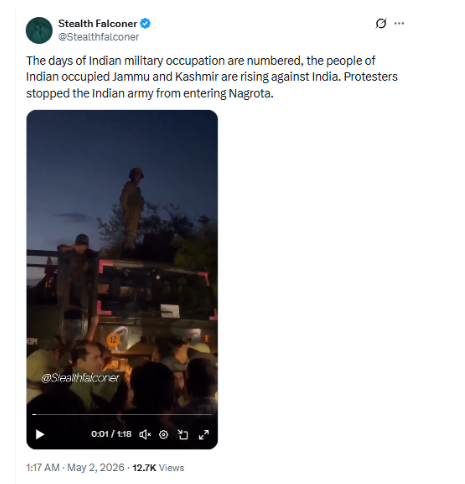
A user posted the video on X, claiming: “The days of Indian military occupation are numbered; people of Jammu & Kashmir have risen against India. Protesters stopped the Indian Army from entering Nagrota.”
- https://x.com/Stealthfalconer/status/2050301106623045758?s=20
Fact Check
During the research, the CyberPeace Research Wing team found no evidence of any such incident where civilians blocked or opposed the Indian Army in Nagrota. Further probe led to a post by an X user “Defence News Of INDIA,” which contained the full version of the viral video. The accompanying information clarified that the protest took place in Dansal’s Badsu Panchayat area of Nagrota and was led by BJP MLA Devayani Rana.
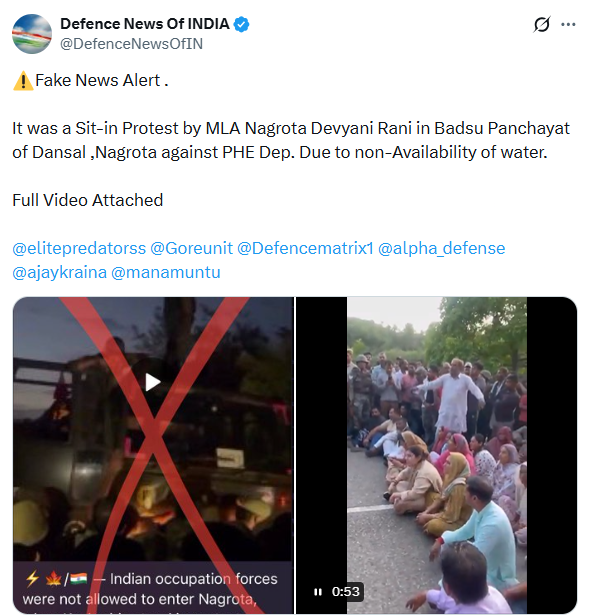
The protest was organized against the Public Health Engineering (PHE) Department over severe water shortage issues in the region. Locals, along with the MLA, staged a sit-in to highlight the lack of water supply.
We also found multiple media reports, including from KBC News – Kashmir and Jammu Links News, confirming that Devayani Rana led a road blockade protest in her constituency over water scarcity and accused the Jal Shakti Department of negligence and administrative failure. Additionally, videos of the same protest were available on social media platforms, including live streams shared from Devayani Rana’s official pages.

Conclusion
Our research confirms that the viral claim is false and misleading. The video does not show any protest against the Indian Army. It is actually from a demonstration led by Devayani Rana and local residents over water shortage issues in Nagrota.

Related Blogs
Executive Summary
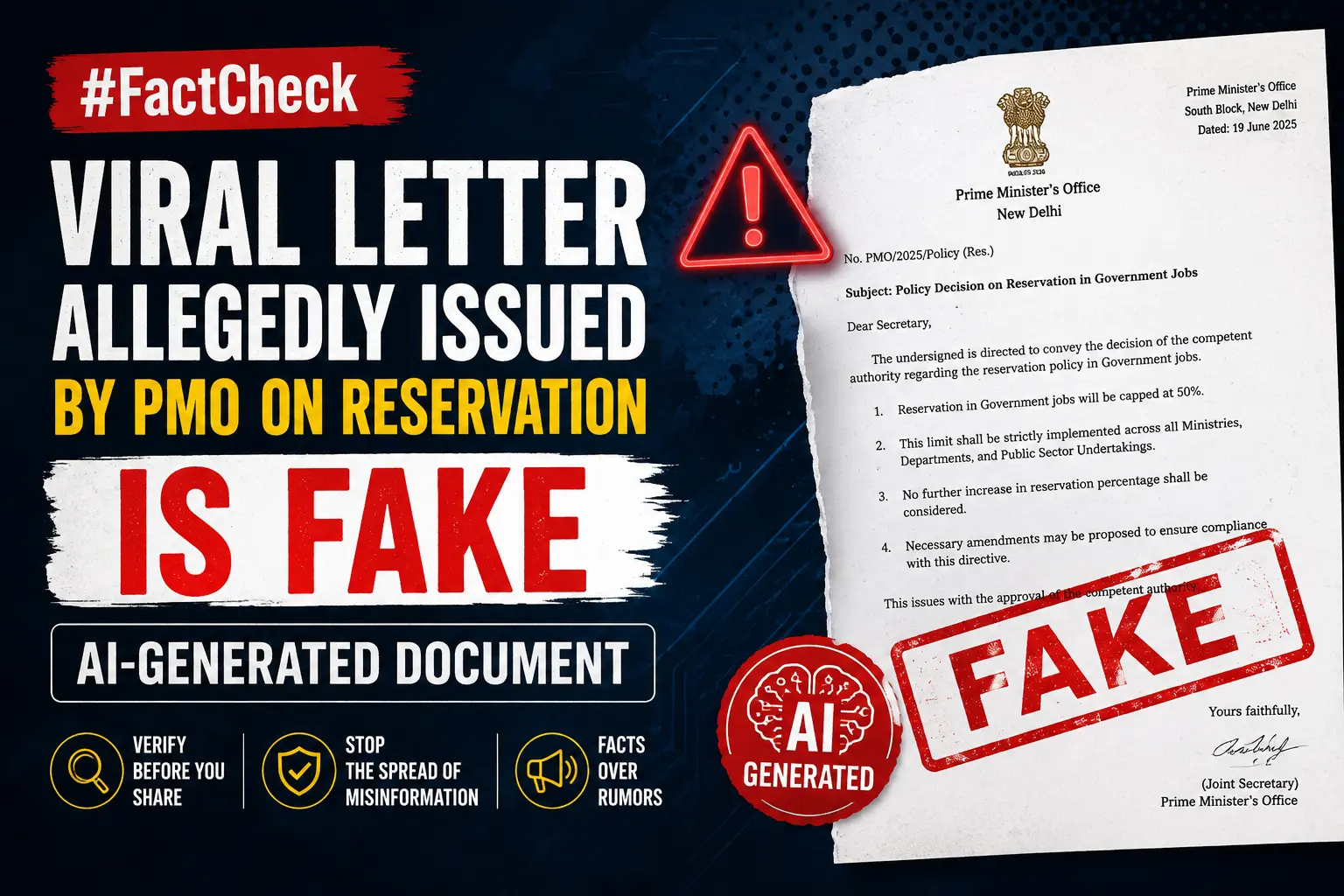
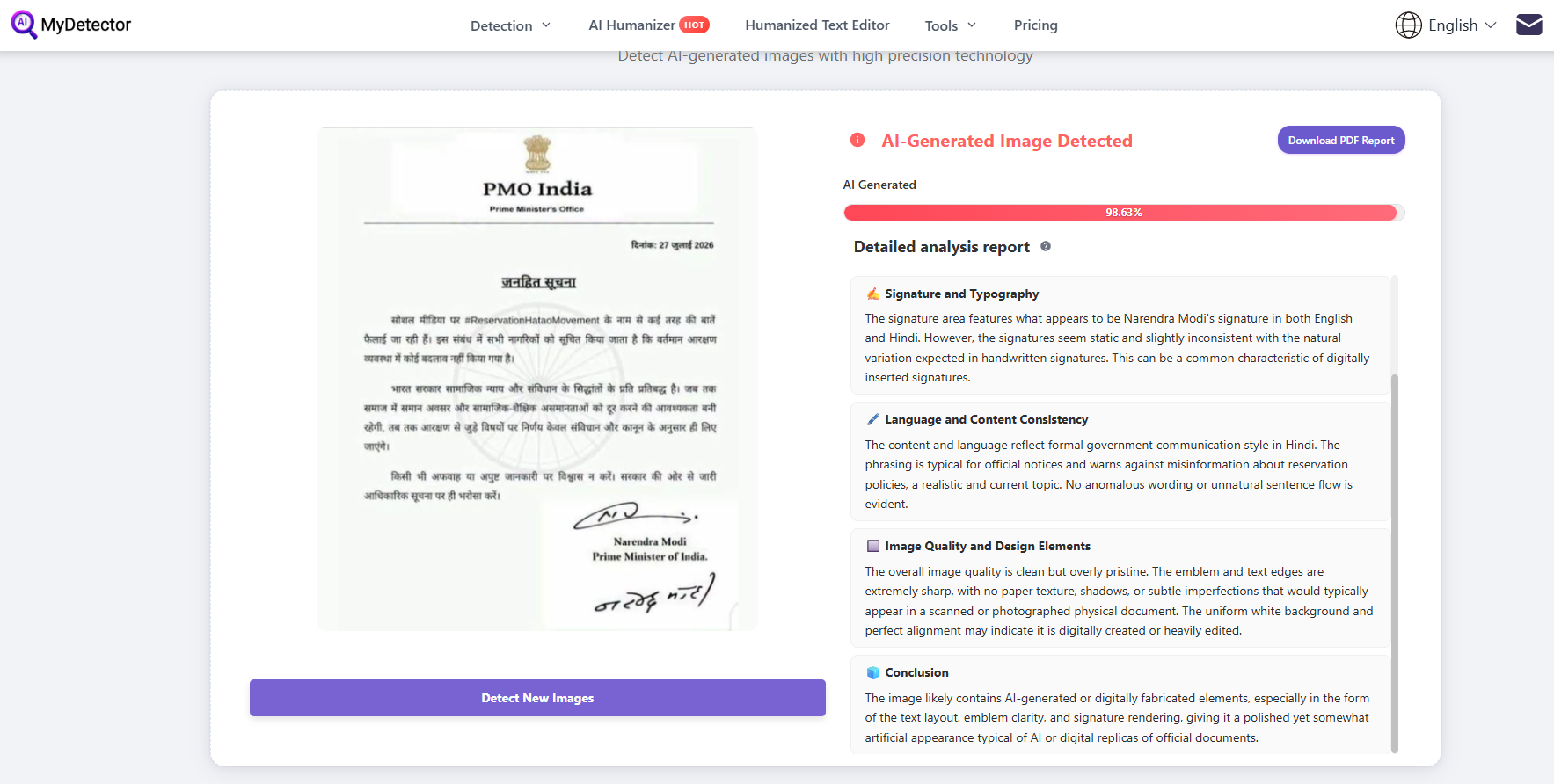
A purported letter issued in the name of the Prime Minister’s Office (PMO) is being widely shared on social media. The letter claims that the government has not made any changes to the reservation system regarding the “Remove Reservation Movement” and appeals to people not to pay attention to rumours. The viral letter is dated July 27, 2026, and also carries what appear to be Prime Minister Narendra Modi’s signatures in both Hindi and English.
CyberPeace Research Wing’s research found the viral claim to be false. The research revealed that the Prime Minister’s Office (PMO) has neither issued any official statement regarding reservation nor released any such letter. No credible media reports related to the alleged letter were found. The research further revealed that the purported reservation-related letter circulating on social media was a fake document created with the help of AI.
Claim:
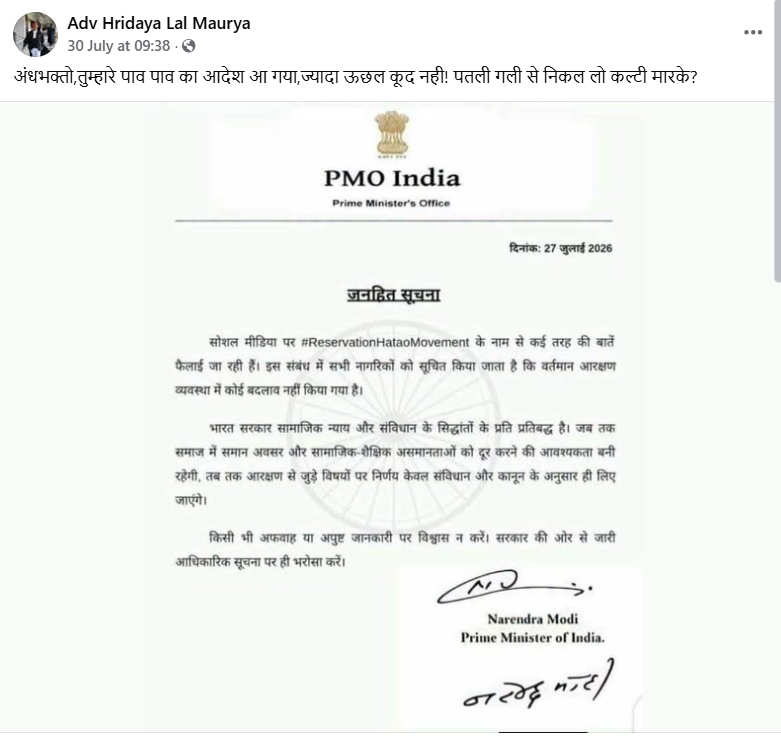
A Facebook user shared the alleged letter issued in the name of the Prime Minister’s Office on July 30, 2026, claiming that the government has not made any changes to the reservation system in connection with the “Remove Reservation Movement” and appealed to citizens not to believe rumours. The viral letter bears the date July 27, 2026, and displays signatures of Prime Minister Narendra Modi in both Hindi and English. The archived link and screenshot of the post are provided below:
https://www.facebook.com/share/p/1b9nD5k3As/
Factcheck
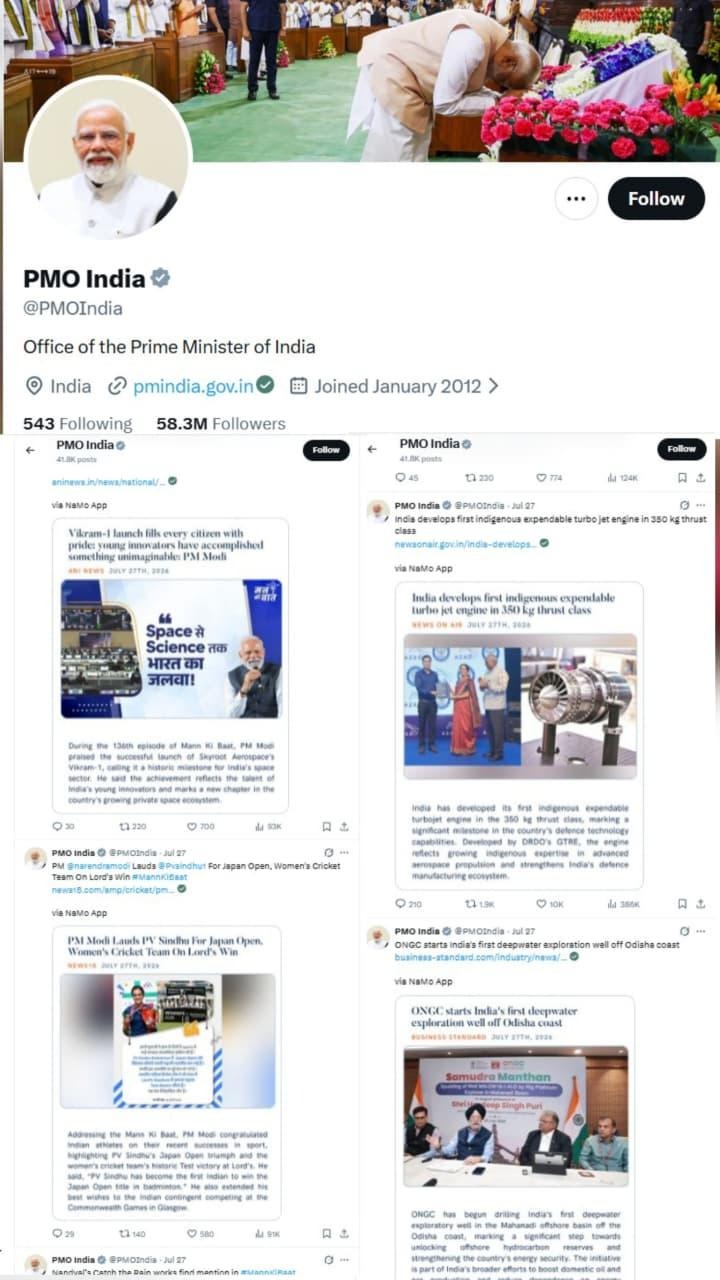
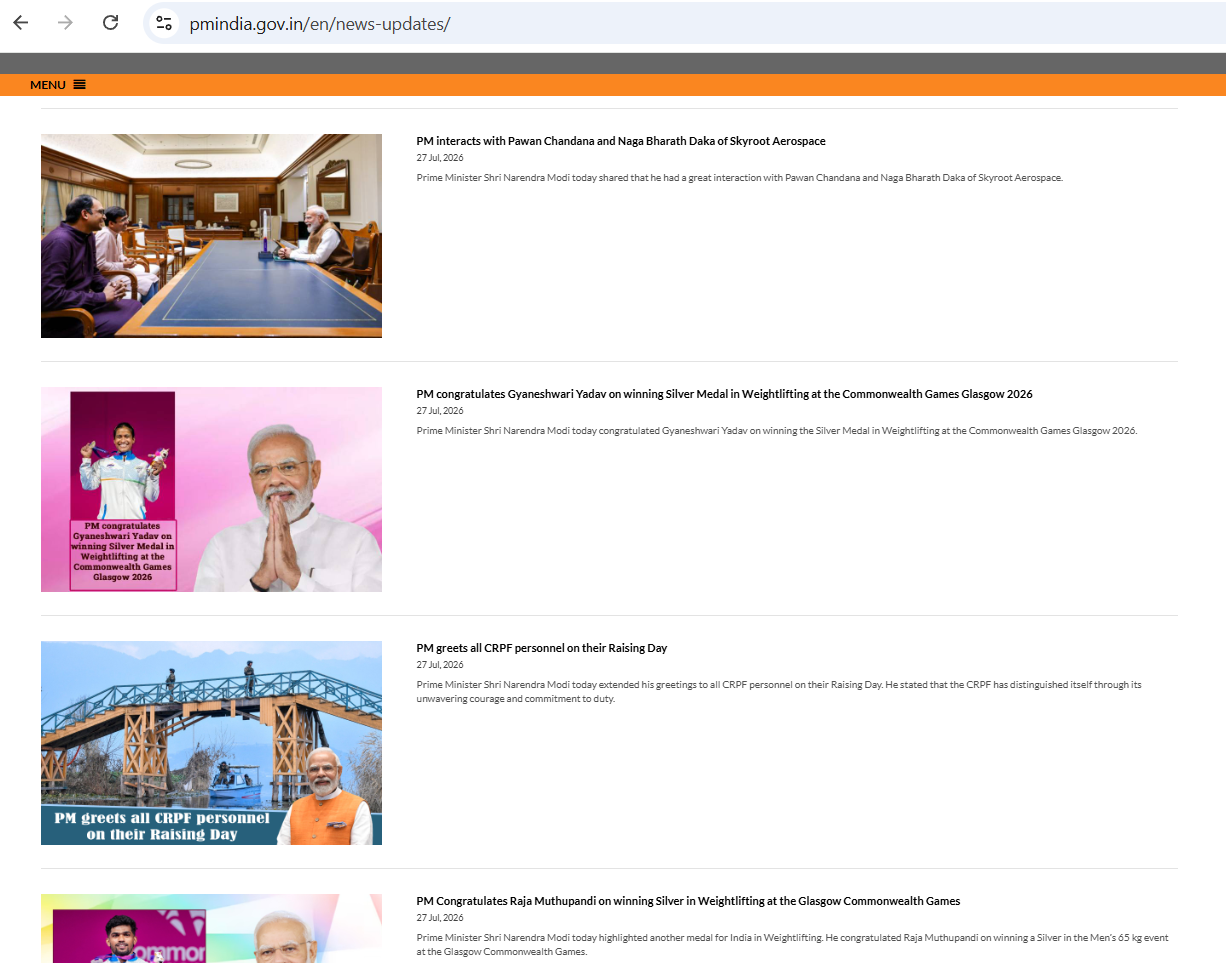
To verify the authenticity of the viral claim, we conducted a Google search using relevant keywords. However, no credible media reports related to the alleged letter were found. During the next stage of the research, we scanned the official X account (formerly Twitter) of PMO India. We did not find any such letter posted on July 27 or around that date. Continuing the research, we checked the official website of PMO India. No such letter was found in the news updates section or anywhere else on the website that could confirm the viral claim.
Further, we reviewed the press releases issued by the Prime Minister’s Office on July 27 available on the official website of the Press Information Bureau (PIB). We found no press release or official communication related to reservation or matching the viral letter.
https://www.pmindia.gov.in/en/
As part of the research, we scanned the viral letter using the AI detection tool Image Detector. The results indicated that the document was 93 percent likely to be AI-generated.

We also analysed the viral letter using another AI detection tool, My Detector. The results showed a 98 percent probability that the letter was created using AI.
Conclusion:
Our research found no official evidence confirming that the Prime Minister’s Office issued the viral letter. The purported PMO letter regarding reservation was found to be fake and AI-generated.

Introduction
The digital expanse of the metaverse has recently come under scrutiny following a gruesome incident. In a digital realm crafted for connection and exploration, a 16-year-old girl’s avatar falls victim to an agonising assault that kindled the fire of ethno-legal and societal discourse. The incident is a stark reminder that the cyberverse, offering endless possibilities and experiences, also has glaring challenges that require serious consideration. The incident involves a sixteen-year-old teen girl being raped through her digital avatar by a few members of Metaverse.
This incident has sparked a critical question of genuine psychological trauma inflicted by virtual experiences. The incident with a 16-year-old girl highlights the strong emotional repercussions caused by illicit virtual actions. While the physical realm remains unharmed, the digital assault can leave permanent scars on the psyche of the girl. This issue raises a critical question about the ethical implications of virtual interactions and the responsibilities of service providers to protect users' well-being on their platforms.
The Judicial Quagmire
The digital nature of these assaults gives impetus to complex jurisdictions which are profound in cyber offences. We are still novices in navigating the digital labyrinth where avatars have the ability to transcend borders with just a click of a mouse. The current legal structure is not equipped to tackle virtual crimes, calling for urgent reforms in critical legal structure. The Policymakers and legal Professionals must define virtual offenses first with clear and defined jurisdictional boundaries ensuring justice isn’t hampered due to geographical restrictions.
Meta’s Accountability
Meta, a platform where this gruesome incident occurred, finds itself at the crossroads of ethical dilemma. The company implemented plenty of safeguards that proved futile in preventing such harrowing acts. The incident has raised several questions about the broader role and responsibilities of tech juggernauts. Some of the questions demanding immediate answers as how a company can strike a balance between innovation and the protection of its users.
The Tightrope of Ethics
Metaverse is the epitome of innovation, yet this harrowing incident highlights a fundamental ethical contention. The real challenge is to harness the power of virtual reality while addressing the risks of digital hostilities. Society is still facing this conundrum, stakeholders must work in tandem to formulate robust and effective legal structures to protect the rights and well-being of users. This also includes balancing technological development and ethical challenges which require collective effort.
Reflections of Society
Beyond legal and ethical considerations, this act calls for wider societal reflections. It emphasises the pressing need for a cultural shift fostering empathy, digital civility and respect. As we tread deeper into the virtual realm, we must strive to cultivate ethos upholding dignity in both the digital and real world. This shift is only possible through awareness campaigns, educational initiatives and strong community engagement to foster a culture of respect and responsibility.
Safer and Ethical Way Forward
A multidimensional approach is essential to address the complicated challenges cyber violence poses. Several measures can pave the way for safer cyberspace for netizens.
- Legislative Reforms - There’s an urgent need to revamp legislative frameworks to mitigate and effectively address the complexities of these new and emerging virtual offences. The tech companies must collaborate with the government on formulating best practices and help develop standard security measures prioritising user protection.
- Public Awareness and Engagement - Initiating public awareness campaigns to educate users on crucial issues such as cyber resilience, ethics, digital detox and responsible online behaviour play a critical role in making netizens vigilant to avoid cyber hostilities and help fellow netizens in distress. Civil society organisations and think tanks such as CyberPeace Foundation are the pioneers of cyber safety campaigns in the country, working in tandem with governments across the globe to curb the evil of cyber hostilities.
- Interdisciplinary Research: The policymakers should delve deeper into the ethical, psychological and societal ramifications of digital interactions. The multidisciplinary approach in research is crucial for formulating policy based on evidence.
Conclusion
The digital Gang Rape is a wake-up call, demanding the bold measure to confront the intricate legal, societal and ethical pitfalls of the metaverse. As we navigate digital labyrinth, our collective decisions will help shape the metaverse's future. By nurturing the culture of empathy, responsibility and innovation, we can forge a path honouring the dignity of netizens, upholding ethical principles and fostering a vibrant and safe cyberverse. In this significant movement, ethical vigilance, diligence and active collaboration are indispensable.
References:
- https://www.thehindu.com/sci-tech/technology/virtual-gang-rape-reported-in-the-metaverse-probe-underway/article67705164.ece
- https://thesouthfirst.com/news/teen-uk-girl-virtually-gang-raped-in-metaverse-are-indian-laws-equipped-to-handle-similar-cases/
Executive Summary
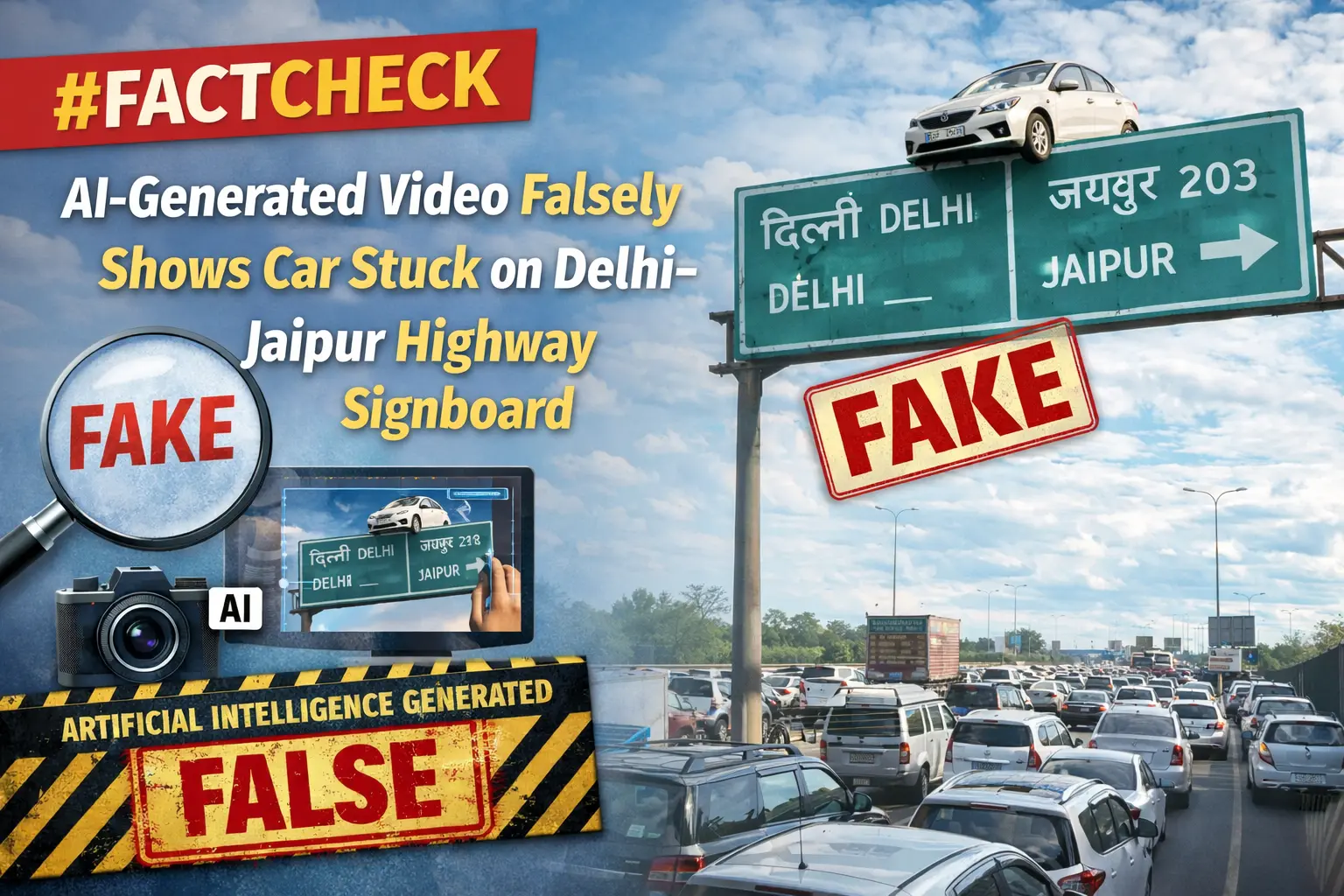
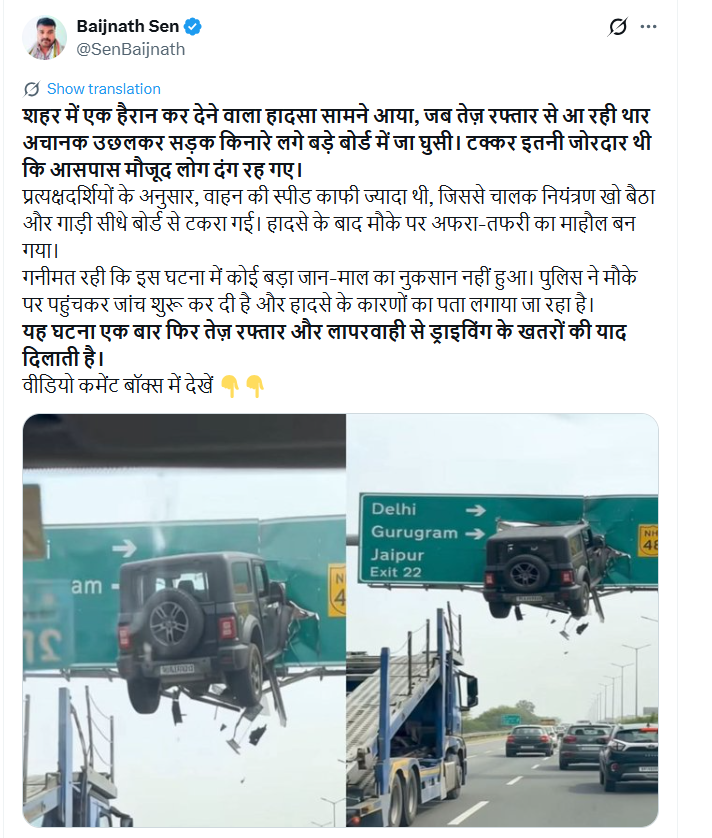
A shocking video showing a car hanging from a highway signboard is going viral on social media. The clip allegedly shows a black Mahindra Thar stuck on an overhead direction signboard on the Delhi–Jaipur Highway (NH-48). Social media users are widely sharing the video, claiming it shows a real road accident. However, a research by CyberPeace found the viral claim to be false. Our findings reveal that the circulating video is not real but AI-generated.
Claim
Social media users are sharing the clip as footage of an actual road accident. A viral post on X (formerly Twitter) claims that the incident took place on the Delhi–Jaipur Highway, showing a black Mahindra & Mahindra Thar lodged in a highway signboard.
- https://x.com/SenBaijnath/status/2024098520006029504
- https://archive.ph/cmr5e
Fact Check
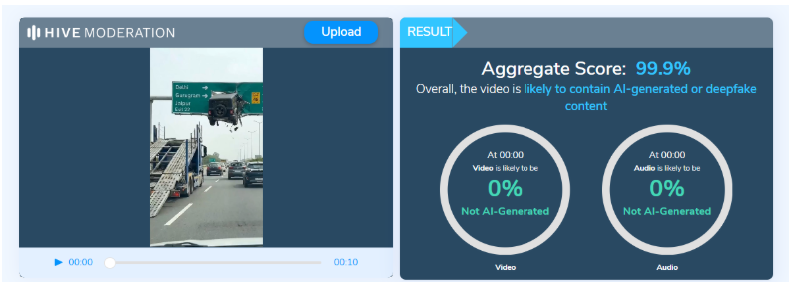
On closely examining the viral video, several inconsistencies were observed that are commonly associated with AI-generated content. For instance, it appears highly improbable for a heavy vehicle to get stuck precisely at the center of a signboard at such a height. Despite the scale of the alleged incident, traffic on the highway below continues moving normally without any disruption. Additionally, the text visible on the right side of the signboard appears distorted and unusually written. To further verify the authenticity of the video, we analysed it using the AI detection tool Hive Moderation, which indicated a 99.9% probability that the video was AI-generated.
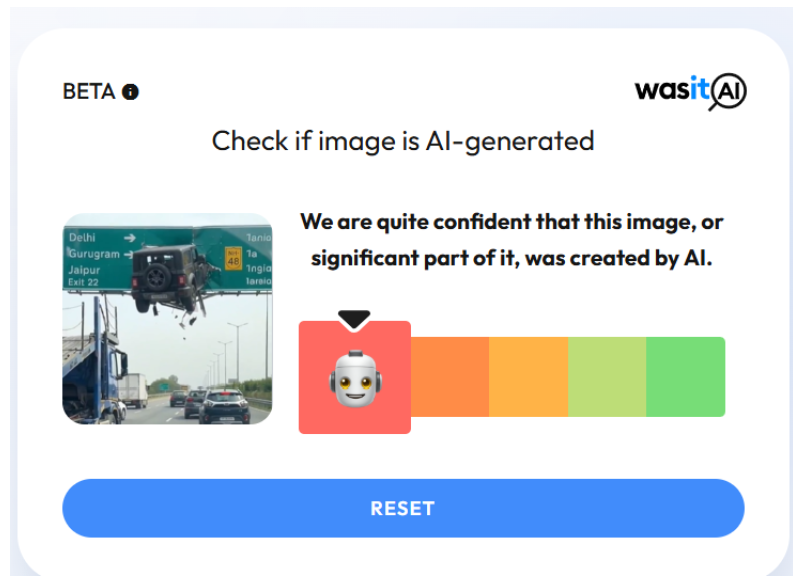
Another AI image detection tool, WasitAI, also found that the visuals in the viral clip were largely AI-generated.
Conclusion
Based on our research and available evidence, it is clear that the viral video showing a Mahindra Thar hanging from a highway signboard is not real but AI-generated.
