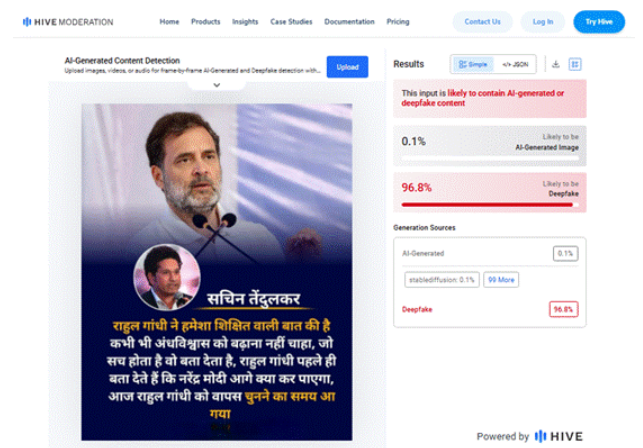
#FactCheck-AI-Altered Video Falsely Claims Indian Army Air Defence Officer Resigned Over ‘Operation Sindoor’
Executive Summary
A video of a soldier is being widely circulated on social media with the claim that an Indian Army Air Defence officer named Anurag Thakur resigned, alleging that soldiers martyred during “Operation Sindoor” were ignored by the government. However, research by the CyberPeace Research Wing found the claim to be false. The viral video has been manipulated with AI-generated audio and is being shared with a misleading narrative.
Claim:
Instagram users shared the clip claiming: “Indian Army Air Defence officer Anurag Thakur has resigned. He said the Government of India did not even acknowledge the deaths of soldiers.”

Fact Check:
The research began with keyword searches related to the alleged resignation of an “Indian Army Air Defence JCO Anurag Thakur.” No credible or reputed media report was found supporting such a claim. A reverse image search of a frame from the viral video led to the original footage posted by news agency ANI on its official X account on March 22, 2026. The original video runs for 1 minute and 42 seconds A comparison of both videos showed that in the viral clip, the soldier appears to be speaking in English, whereas in ANI’s authentic video, the same soldier is speaking in Hindi while addressing the media.

In the original video, shared by ANI from Bhuj, Gujarat, the JCO explained that on the morning of May 7, 2025, they learned that Indian armed forces had destroyed enemy terror launch pads, marking the beginning of “Operation Sindoor.” He said he motivated his unit and they were prepared to respond. He further stated that on May 8, an enemy drone heading toward a vital location was detected and shot down using minimal ammunition. Two more drones were sent the following day and were also neutralised. He added that “Operation Sindoor” demonstrated the capability of the Indian Army and Air Defence units.
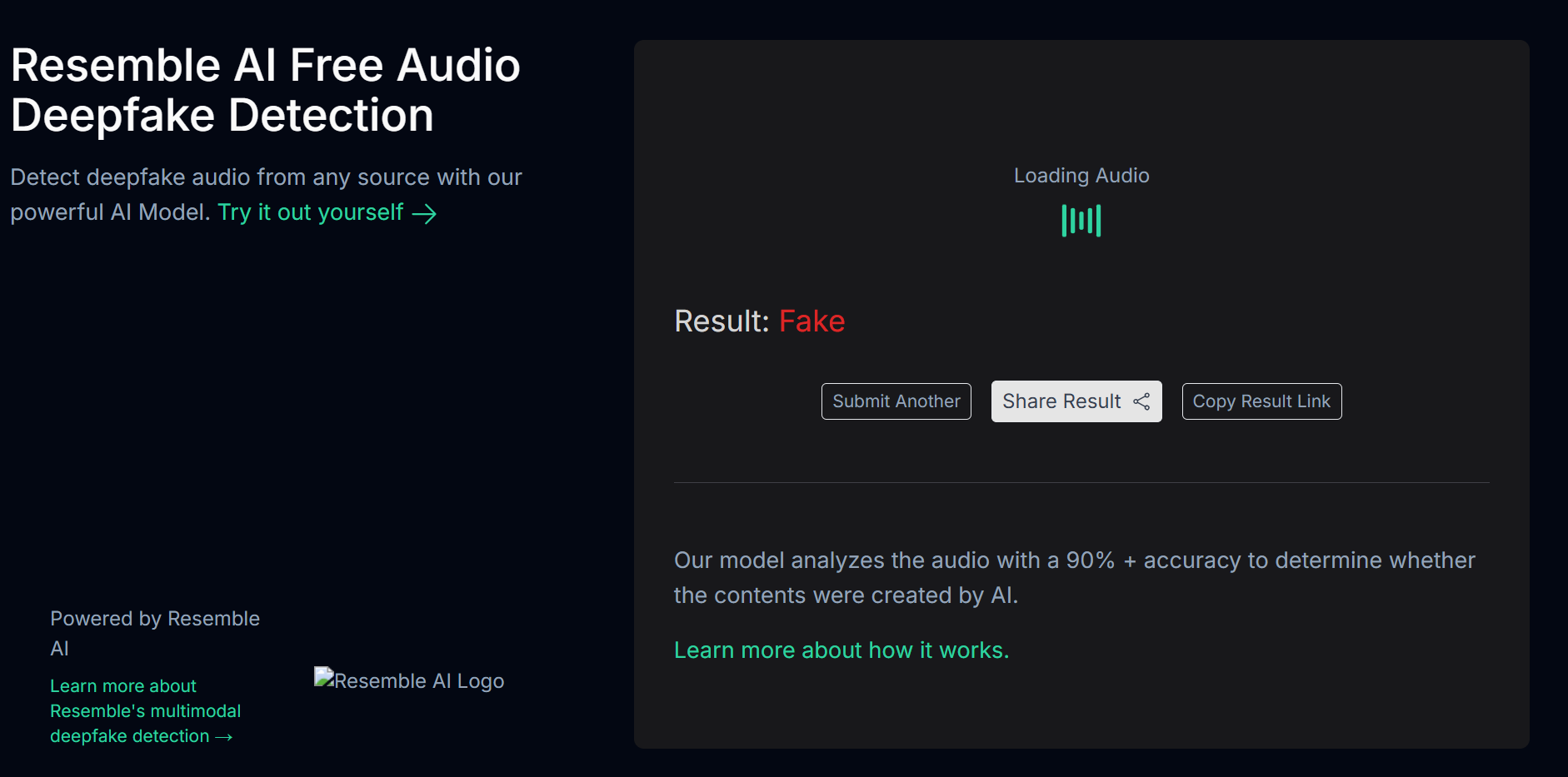
ANI had also summarised the same remarks in English in its post, which further confirmed that the viral version had been tampered with. For additional verification, the audio from the viral clip was examined using AI-based detection tools. Hiya Deepfake Voice Detector flagged it as likely fake, while Resemble AI also identified the audio as manipulated.
Conclusion:
The viral video claiming that an Indian Army Air Defence JCO resigned over ignored martyrs of “Operation Sindoor” is false. The original footage has been altered and artificial AI-generated audio was added to create a misleading narrative.
Related Blogs

Introduction
Global cybersecurity spending is expected to breach USD 210 billion in 2025, a ~10% increase from 2024 (Gartner). This is a result of an evolving and increasingly critical threat landscape enabled by factors such as the proliferation of IoT devices, the adoption of cloud networks, and the increasing size of the internet itself. Yet, breaches, misuse, and resistance persist. In 2025, global attack pressure rose ~21% Y-o-Y ( Q2 averages) (CheckPoint) and confirmed breaches climbed ~15%( Verizon DBIR). This means that rising investment in cybersecurity may not be yielding proportionate reductions in risk. But while mechanisms to strengthen technical defences and regulatory frameworks are constantly evolving, the social element of trust and how to embed it into cybersecurity systems remain largely overlooked.
Human Error and Digital Trust (Individual Trust)
Human error is consistently recognised as the weakest link in cybersecurity. While campaigns focusing on phishing prevention, urging password updates and using two-factor authentication (2FA) exist, relying solely on awareness measures to address human error in cyberspace is like putting a Band-Aid on a bullet wound. Rather, it needs to be examined through the lens of digital trust. As Chui (2022) notes, digital trust rests on security, dependability, integrity, and authenticity. These factors determine whether users comply with cybersecurity protocols. When people view rules as opaque, inconvenient, or imposed without accountability, they are more likely to cut corners, which creates vulnerabilities. Therefore, building digital trust means shifting from blaming people to design: embedding transparency, usability, and shared responsibility towards a culture of cybersecurity so that users are incentivised to make secure choices.
Organisational Trust and Insider Threats (Institutional Trust)
At the organisational level, compliance with cybersecurity protocols is significantly tied to whether employees trust employers/platforms to safeguard their data and treat them with integrity. Insider threats, stemming from both malicious and non-malicious actors, account for nearly 60% of all corporate breaches (Verizon DBIR 2024). A lack of trust in leadership may cause employees to feel disengaged or even act maliciously. Further, a 2022 study by Harvard Business Review finds that adhering to cybersecurity protocols adds to employee workload. When they are perceived as hindering productivity, employees are more likely to intentionally violate these protocols. The stress of working under surveillance systems that feel cumbersome or unreasonable, especially when working remotely, also reduces employee trust and, hence, compliance.
Trust, Inequality, and Vulnerability (Structural Trust)
Cyberspace encompasses a social system of its own since it involves patterned interactions and relationships between human beings. It also reproduces the social structures and resultant vulnerabilities of the physical world. As a result, different sections of society place varying levels of trust in digital systems. Women, rural, and marginalised groups often distrust existing digital security provisions more, and with reason. They are targeted disproportionately by cyber attackers, and yet are underprotected by systems, since these are designed prioritising urban/ male/ elite users. This leads to citizens adopting workarounds like password sharing for “safety” and disengaging from cyber safety discourse, as they find existing systems inaccessible or irrelevant to their realities. Cybersecurity governance that ignores these divides deepens exclusion and mistrust.
Laws and Compliances (Regulatory Trust)
Cybersecurity governance is operationalised in the form of laws, rules, and guidelines. However, these may often backfire due to inadequate design, reducing overall trust in governance mechanisms. For example, CERT-In’s mandate to report breaches within six hours of “noticing” it has been criticised as the steep timeframe being insufficient to generate an effective breach analysis report. Further, the multiplicity of regulatory frameworks in cross-border interactions can be costly and lead to compliance fatigue for organisations. Such factors can undermine organisational and user trust in the regulation’s ability to protect them from cyber attacks, fuelling a check-box-ticking culture for cybersecurity.
Conclusion
Cybersecurity is addressed primarily through code, firewall, and compliance today. But evidence suggests that technological and regulatory fixes, while essential, are insufficient to guarantee secure behaviour and resilient systems. Without trust in institutions, technologies, laws or each other, cybersecurity governance will remain a cat-and-mouse game. Building a trust-based architecture requires mechanisms to improve accountability, reliability, and transparency. It requires participatory designs of security systems and the recognition of unequal vulnerabilities. Thus, unless cybersecurity governance acknowledges that cyberspace is deeply social, investment may not be able to prevent the harms it seeks to curb.
References
- https://www.gartner.com/en/newsroom/press-releases/2025-07-29
- https://blog.checkpoint.com/research/global-cyber-attacks-surge-21-in-q2-2025
- https://www.verizon.com/business/resources/reports/2024-dbir-executive-summary.pdf
- https://www.verizon.com/business/resources/reports/2025-dbir-executive-summary.pdf
- https://insights2techinfo.com/wp-content/uploads/2023/08/Building-Digital-Trust-Challenges-and-Strategies-in-Cybersecurity.pdf
- https://www.coe.int/en/web/cyberviolence/cyberviolence-against-women
- https://www.upguard.com/blog/indias-6-hour-data-breach-reporting-rule

Introduction
How Generative Artificial Intelligence, or GenAI, is changing the employee workday is no longer limited to writing emails or debugging code, but now also includes analysing contracts, generating reports, and much more. The use of AI tools in everyday work has become commonplace, but the speed at which companies have adopted these technologies has created a new kind of risk. Unlike threats that come from an outside attacker, Shadow AI is created inside an organisation by a legitimate employee who uses unapproved AI tools to make their work more efficient and productive. In many cases, the employee is unaware of the potential security, data privacy, and compliance risks involved in using such tools to perform their job duties.
What Is Shadow AI?
Shadow AI is when individuals use AI tools at work that aren’t provided by the company, like tools or other software programs, without the knowledge or permission of the employer. Examples of shadow AI include:
- Using personal ChatGPT or other chatbot accounts to complete tasks at the office
- Uploading business-related documents to online AI technologies for analysis or summarisation.
- Copying proprietary source code into an online AI model for debugging
- Installing browser extensions and add-ons that are not approved by IT or Security personnel.
How Shadow AI Is Harmful
1. Uncontrolled Data Exposure
When employees access or input information into their user-created AI, it becomes outside the controls of the company, such as both employee personal information and any third-party personal information, private company information (such as source code or contracts), and company internal strategies. After a user enters data into their user-created AIs, the company loses all ability to monitor how that data is stored, processed, or maintained. A data leak situation exists without a malicious cyberattack. The biggest risk of a data leak is not maliciousness but rather the loss of control and governance over sensitive data.
2. Regulatory and Legal Non-Compliance
Data protection laws like GDPR, India’s Digital Personal Data Protection (DPDP) Act, HIPAA, and other relevant sectoral laws require businesses to process data in accordance with the law, to minimise the amount of data they use, and to be accountable for their actions. Shadow AI often results in the unlawful use of personal data due to a lack of a legal basis for the processing, unauthorised cross-border data transfers, and not having appropriate contractual protections in place with their AI service providers. Regulators do not see the convenience of employees as an excuse for not complying with the law, and therefore, the organisation is ultimately responsible for any violations that occur.
3. Loss of Intellectual Property
Employees frequently use AI tools to speed up tasks involving proprietary information—debugging code, reviewing contracts, or summarising internal research. When done using unapproved AI platforms, this can expose trade secrets and intellectual property, eroding competitive advantage and creating long-term business risk.
Real-Life Example: Samsung’s ChatGPT Data Leak
In 2023, a case study exemplifying the Shadow AI risk occurred when Samsung Electronics placed a temporary ban on employee access to ChatGPT and other AI tools after reports from engineers revealed they were using ChatGPT to create debugging processes for internal source code and to summarise meeting notes. Consequently, confidential source code related to semiconductors was inadvertently uploaded onto a public AI platform. While there were no known incursions into the company’s system due to this incident, Samsung faced a significant challenge: once sensitive information is input into a public AI tool, it exists on external servers that are outside of the company’s purview or control.
As a result of this incident, Samsung restricted employee use of ChatGPT on corporate devices, issued a series of internal communications prohibiting the sharing of corporate data with public AI tools, and increased the urgency of their discussions regarding the adoption of secure, enterprise-level AI (artificial intelligence) solutions.
What Organisations Are Doing Today
Many organisations respond to Shadow AI risk by:
- Blocking access at the network level
- Circulating warning emails or policies
While these actions may reduce immediate exposure, they fail to address the root cause: employees still need AI to perform their jobs efficiently. As a result, bans often push AI usage underground, increasing Shadow AI rather than eliminating it.
Why Blocking AI Does Not Work—Governance Does
History has demonstrated that prohibition does not work - we see this when trying to block access to cloud storage, instant messaging and collaboration tools. Employees are forced to use personal devices and/or accounts when their employers block AI, which means employers do not have real-time visibility into how their employees are using these technologies, and creates friction with the security and compliance team as they try to enforce the types of tools their employees can use. Prohibiting AI adoption will not stop it from being adopted; it will just create a challenge for employers regarding how safe and responsible it is. The challenge for effective organisations is therefore to shift from denial and develop governance-first AI strategies aimed at controlling data usage, protection and security, rather than merely restricting access to a list of specific tools.
Shadow AI: A Silent Legal Liability Under the GDPR
Shadow AI isn't a problem for the Information Technology Department; it is a failure of Governance, Compliance and Law. By using AI tools that have not been approved as a result, the organisation processes personal data without a lawful basis (Article 6 of the General Data Protection Regulation (GDPR)), repurposes data for use beyond its original intent and in breach of the Purpose Limitation (Article 5(1)(b)), and routinely exceeds necessity and in breach of Data Minimisation (Article 5(1)(c)). The outcome of these actions is the use of tools that involve International Data Transfers Without Authorisation and are therefore in breach of Chapter V, and violate Article 32 because there are no enforceable safeguards in place. Most significantly, the failure to demonstrate Oversight, Logging and Control under Articles 5(2) and 24 constitutes a failure in Accountability. Therefore, from a Regulatory perspective, Shadow AI is not accidental and is not defensible.
The Right Solution: Secure and Governed AI Adoption
1. Provide Approved AI Tools
Employers have an obligation to supply business-approved AI technology for helping workers to be productive while maintaining maximum protections, like storing data separately and not using employees' data for training a model; defining how long data is kept, and the rules around deleting that data. When employees are provided with verified and secure AI options that align with their work processes, they will rely significantly less on Shadow AI.
2. Enforce Zero-Trust Data Access
The governance of AI systems must follow the principles of "zero trust," granting access to data only through the principle of "least privilege," which means that data access will only be allowed by the system user, and providing continuous verification of user-identity and context; this supports and helps establish context-aware controls to monitor and track all user activities, which will be especially important as agent-like AI systems become increasingly autonomous and are capable of operating at machine-speed where even small errors in configuration, will result in rapid and large expose to data.
3. Apply DLP and Audit Logging
It is important to have robust data loss prevention measures in place to protect sensitive data that is sent outside an organisation. The first end user or machine that accesses the data should be detailed in a comprehensive audit log that indicates when and how the data is accessed. In combination with other controls, these measures create accountability, comply with regulations, and assist with appropriately detecting and responding to incidents.
4. Maintain Visibility Across AI, Cloud, and SaaS
Security teams need unified visibility across AI tools, personal cloud applications, and SaaS platforms. Risks move across systems, and controls must follow the data wherever it flows.
Conclusion
This new threat exposes an organisation to the risk of data loss through leaks, regulatory fines, liability for the loss of intellectual property, and reputational damage, all of which can occur without any intent to cause harm. The way forward is not to block AI, but to adopt a clear framework built on governance, visibility, and secure enablement. This approach allows organisations to use AI with confidence, while ensuring trust, accountability, and effective oversight to protect data and support AI in reaching its full transformative potential. AI use is encouraged, but it must be done responsibly, ethically, and securely.
References
- https://bronson.ai/resources/shadow-ai/
- https://www.varonis.com/blog/shadow-ai
- https://www.waymakeros.com/learn/gdpr-hipaa-shadow-ai-compliance-nightmare
- https://www.forbes.com/sites/siladityaray/2023/05/02/samsung-bans-chatgpt-and-other-chatbots-for-employees-after-sensitive-code-leak/
- https://www.usatoday.com/story/special/contributor-content/2025/05/23/shadow-ai-the-hidden-risk-in-todays-workplace/83822081007
.webp)
Introduction
AI-generated fake videos are proliferating on the Internet indeed becoming more common by the day. There is a use of sophisticated AI algorithms that help manipulate or generate multimedia content such as videos, audio, and images. As a result, it has become increasingly difficult to differentiate between genuine, altered, or fake content, and these AI-manipulated videos look realistic. A recent study has shown that 98% of deepfake-generated videos have adult content featuring young girls, women, and children, with India ranking 6th among the nations that suffer from misuse of deepfake technology. This practice has dangerous consequences and could harm an individual's reputation, and criminals could use this technology to create a false narrative about a candidate or a political party during elections.
The working of deepfake videos is based on algorithms that refine the fake content, and the generators are built and trained in such a way as to get the desired output. The process is repeated several times, allowing the generator to improve the content until it seems realistic, making it more flawless. Deepfake videos are created by specific approaches some of them are: -
- Lip syncing: This is the most common technique used in deepfake. Here, the voice recordings of the video, make it appear as to what was originally said by the person appearing in the video.
- Audio deepfake: For Audio-generated deepfake, a generative adversarial network (GAN) is used to colon a person’s voice, based on the vocal patterns and refine it till the desired output is generated.
- Deepfake has become so serious that the technology could be used by bad actors or by cyber-terrorist squads to set their Geo-political agendas. Looking at the present situation in the past few the number of cases has just doubled, targeting children, women and popular faces.
- Greater Risk: in the last few years the cases of deep fake have risen. by the end of the year 2022, the number of cases has risen to 96% against women and children according to a survey.
- Every 60 seconds, a deepfake pornographic video is created, now quicker and more affordable than ever, it takes less than 25 minutes and costs using just one clean face image.
- The connection to deepfakes is that people can become targets of "revenge porn" without the publisher having sexually explicit photographs or films of the victim. They may be made using any number of random pictures or images collected from the internet to obtain the same result. This means that almost everyone who has taken a selfie or shared a photograph of oneself online faces the possibility of a deepfake being constructed in their image.
Deepfake-related security concerns
As deepfakes proliferate, more people are realising that they can be used not only to create non-consensual porn but also as part of disinformation and fake news campaigns with the potential to sway elections and rekindle frozen or low-intensity conflicts.
Deepfakes have three security implications: at the international level, strategic deepfakes have the potential to destroy precarious peace; at the national level, deepfakes may be used to unduly influence elections, and the political process, or discredit opposition, which is a national security concern, and at the personal level, the scope for using Women suffer disproportionately from exposure to sexually explicit content as compared to males, and they are more frequently threatened.
Policy Consideration
Looking at the present situation where the cases of deepfake are on the rise against women and children, the policymakers need to be aware that deepfakes are utilized for a variety of valid objectives, including artistic and satirical works, which policymakers should be aware of. Therefore, simply banning deepfakes is not a way consistent with fundamental liberties. One conceivable legislative option is to require a content warning or disclaimer. Deepfake is an advanced technology and misuse of deepfake technology is a crime.
What are the existing rules to combat deepfakes?
It's worth noting that both the IT Act of 2000 and the IT Rules of 2021 require social media intermediaries to remove deep-fake videos or images as soon as feasible. Failure to follow these guidelines can result in up to three years in jail and a Rs 1 lakh fine. Rule 3(1)(b)(vii) requires social media intermediaries to guarantee that its users do not host content that impersonates another person, and Rule 3(2)(b) requires such content to be withdrawn within 24 hours of receiving a complaint. Furthermore, the government has stipulated that any post must be removed within 36 hours of being published online. Recently government has also issued an advisory to social media intermediaries to identify misinformation and deepfakes.
Conclusion
It is important to foster ethical and responsible consumption of technology. This can only be achieved by creating standards for both the creators and users, educating individuals about content limits, and providing information. Internet-based platforms should also devise techniques to deter the uploading of inappropriate information. We can reduce the negative and misleading impacts of deepfakes by collaborating and ensuring technology can be used in a better manner.
References
- https://timesofindia.indiatimes.com/life-style/parenting/moments/how-social-media-scandals-like-deepfake-impact-minors-and-students-mental-health/articleshow/105168380.cms?from=mdr
- https://www.aa.com.tr/en/science-technology/deepfake-technology-putting-children-at-risk-say-experts/2980880
- https://wiisglobal.org/deepfakes-as-a-security-issue-why-gender-matters/