
#FactCheck -Fake Viral Poster Falsely Attributes Political Endorsement of Rahul Gandhi to Sachin Tendulkar
Executive Summary
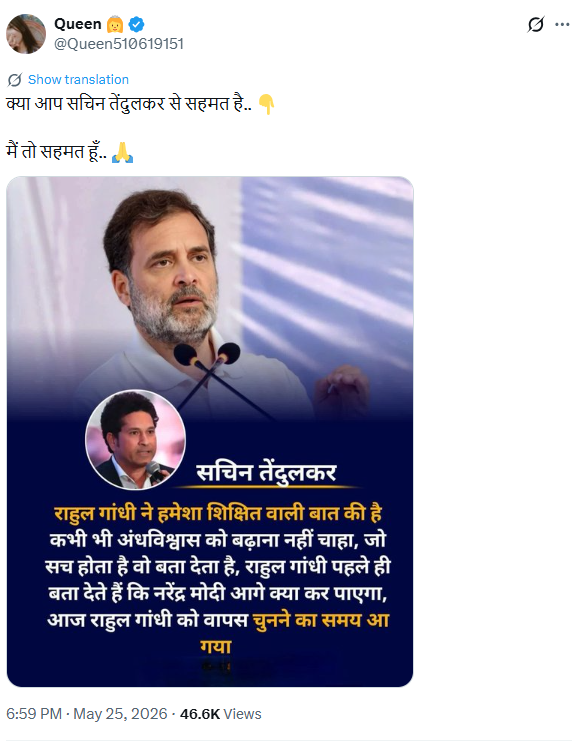
A post claiming that former Indian cricketer Sachin Tendulkar praised Congress leader Rahul Gandhi and urged people to elect him as Prime Minister is being widely circulated on social media.The viral poster falsely attributes a political statement to Sachin Tendulkar, suggesting that he has endorsed Rahul Gandhi for the post of Prime Minister. However, CyberPeace Research Wing research found the claim to be fake. Sachin Tendulkar has not made any such appeal or statement supporting Rahul Gandhi for Prime Minister.
Claim
On X (formerly Twitter), a verified user “Queen” shared a viral poster claiming:“Sachin Tendulkar has always supported education and never promoted superstition. Rahul Gandhi always predicts what Narendra Modi will do next. It is time to choose Rahul Gandhi again.”
Fact Check
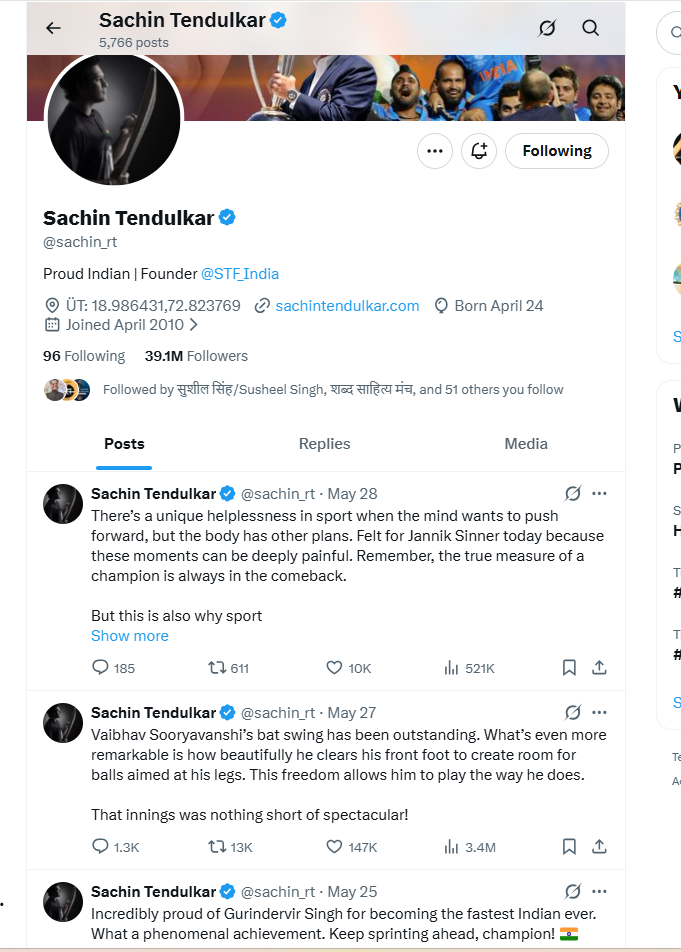
To verify the claim, we first searched for any news reports, interviews, or credible references linking Sachin Tendulkar to such a political statement. However, we found no evidence in any reliable media source or public record suggesting that he made any such remark about Rahul Gandhi or the Prime Ministership. We also reviewed Sachin Tendulkar’s official social media accounts, but found no post, video, or statement endorsing any political leader in this manner.
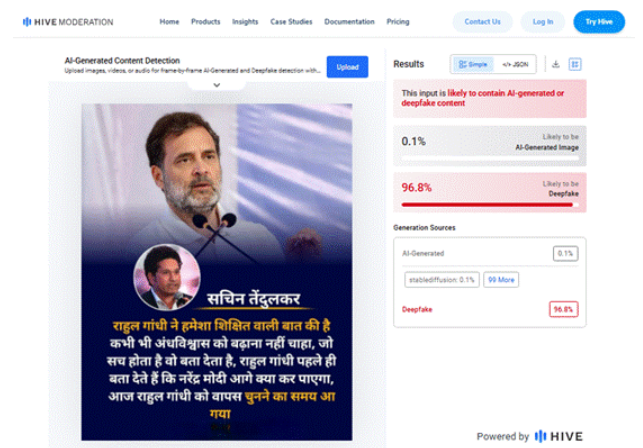
Finally, the viral poster was analysed using the AI detection tool Hive Moderation. The analysis indicated a 96.8% probability that the poster was digitally created or manipulated, suggesting possible AI-generated or edited content.
Conclusion
CyberPeace Research Wing research found the claim to be fake. Sachin Tendulkar has not made any appeal to elect Rahul Gandhi as Prime Minister. The viral poster appears to be digitally fabricated and is being shared to spread misinformation.

Related Blogs

Introduction
The United Nations (UN) has unveiled a set of principles, known as the 'Global Principles for Information Integrity', to combat the spread of online misinformation, disinformation, and hate speech. These guidelines aim to address the widespread harm caused by false information on digital platforms. The UN's Global Principles are based on five core principles: social trust and resilience, independent, free, and pluralistic media, healthy incentives, transparency and research, and public empowerment. The UN chief emphasized that the threats to information integrity are not new but are now spreading at unprecedented speeds due to digital platforms and artificial intelligence technologies.
These principles aim to enhance global cooperation in order to create a safer online environment. It was further highlighted that the spread of misinformation, disinformation, hate speech, and other risks in the information environment poses threats to democracy, human rights, climate action, and public health. This impact is intensified by the emergence of rapidly advancing Artificial Intelligence Technology (AI tech) that poses a growing threat to vulnerable groups in information environments.
The Highlights of Key Principles
- Societal Trust and Resilience: Trust in information sources and the ability and resilience to handle disruptions are critical for maintaining information integrity. Both are at risk from state and non-state actors exploiting the information ecosystem.
- Healthy Incentives: Current business models reliant on targeted advertising threaten information integrity. The complex, opaque nature of digital advertising benefits large tech companies and it requires reforms to ensure transparency and accountability.
- Public Empowerment: People require the capability to manage their online interactions, the availability of varied and trustworthy information, and the capacity to make informed decisions. Media and digital literacy are crucial, particularly for marginalized populations.
- Independent, Free, and Pluralistic Media: A free press supports democracy by fostering informed discourse, holding power accountable, and safeguarding human rights. Journalists must operate safely and freely, with access to diverse news sources.
- Transparency and research: Technology companies must be transparent about how information is propagated and how personal data is used. Research and privacy-preserving data access should be encouraged to address information integrity gaps while protecting those investigating and reporting on these issues.
Stakeholders Called for Action
Stakeholders, including technology companies, AI actors, advertisers, media, researchers, civil society organizations, state and political actors, and the UN, have been called to take action under the UN Global Principles for Information Integrity. These principles should be used to build and participate in broad cross-sector coalitions that bring together diverse expertise from civil society, academia, media, government, and the international private sector, focussing on capacity-building and meaningful youth engagement through dedicated advisory groups. Additionally, collaboration is required to develop multi-stakeholder action plans at regional, national, and local levels, engaging communities in grassroots initiatives and ensuring that youth are fully and meaningfully involved in the process.
Implementation and Monitoring
To effectively implement the UN Global Principles at large requires developing a multi-stakeholder action plan at various levels such as at the regional, national, and local levels. These plans should be informed and created by advice and counsel from an extensive range of communities including any of the grassroots initiatives having a deep understanding of regional challenges and their specific needs. Monitoring and evaluation are also regarded as essential components of the implementation process. Regular assessments of the progress, combined with the flexibility to adapt strategies as needed, will help ensure that the principles are effectively translated into practice.
Challenges and Considerations
Implementing these Global Principles of the UN will have certain challenges. The complexities that the digital landscape faces with the rapid pace of technological revamp, and alterations in the diversity of cultural and political contexts all present significant hurdles. Furthermore, the efforts to combat misinformation must be balanced with protecting fundamental rights, including the right to freedom of expression and privacy. Addressing these challenges to counter informational integrity will require continuous and ongoing collaboration with constant dialogue among stakeholders towards a commitment to innovation and continuous learning. It is also important to recognise and address the power imbalance within the information ecosystem, ensuring that all voices are heard and that any person, specifically, the marginalised communities is not cast aside.
Conclusion
The UN Global Principles for Online Misinformation and Information Integrity provide a comprehensive framework for addressing the critical challenges that are present while facing information integrity today. Advocating and promoting societal trust, healthy incentives, public empowerment, independent media, and transparency, these principles offer a passage towards a more resilient and trustworthy digital environment. The future success of these principles depends upon the collaborative efforts of all stakeholders, working together to safeguard the integrity of information for everyone.
References
- https://www.business-standard.com/world-news/un-unveils-global-principles-to-combat-online-misinformation-hate-speech-124062500317_1.html
- https://www.un.org/sustainabledevelopment/blog/2024/06/global-principles-information-integrity-launch/
- https://www.un.org/sites/un2.un.org/files/un-global-principles-for-information-integrity-en.pdf
- https://www.un.org/en/content/common-agenda-report/assets/pdf/Common_Agenda_Report_English.pdf

Executive Summary
A video is being widely shared on social media with the claim that Baloch people celebrated by dancing after Pakistan’s crushing defeat to India in the T20 World Cup. However, research by the CyberPeace found the claim to be misleading. The video is actually from a Lohri celebration held on January 23 at Government College University in Lahore, and is unrelated to any cricket match. India defeated Pakistan by 61 runs in the T20 World Cup 2026 match held in Colombo last Sunday. India scored 175 runs for the loss of seven wickets in 20 overs, while Pakistan were bowled out for 114 runs in 18 overs.
Claim
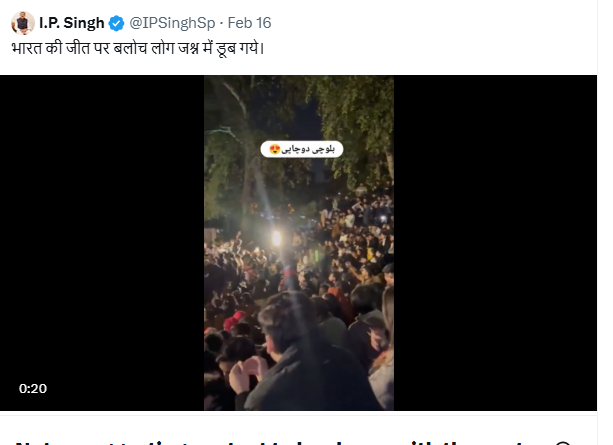
The 30-second video was shared on X with the caption, “Baloch people celebrate India’s victory.” The footage shows a group of men dressed in traditional attire dancing around a fire, while a large crowd gathers around and applauds.
Fact Check
To verify the authenticity of the viral claim, key frames from the video were extracted and subjected to reverse image search. The search led to an Instagram post uploaded on January 26, 2026, by an account associated with Government College University Lahore. The caption described the performance as a Balochistan cultural dance held at the university’s amphitheatre.
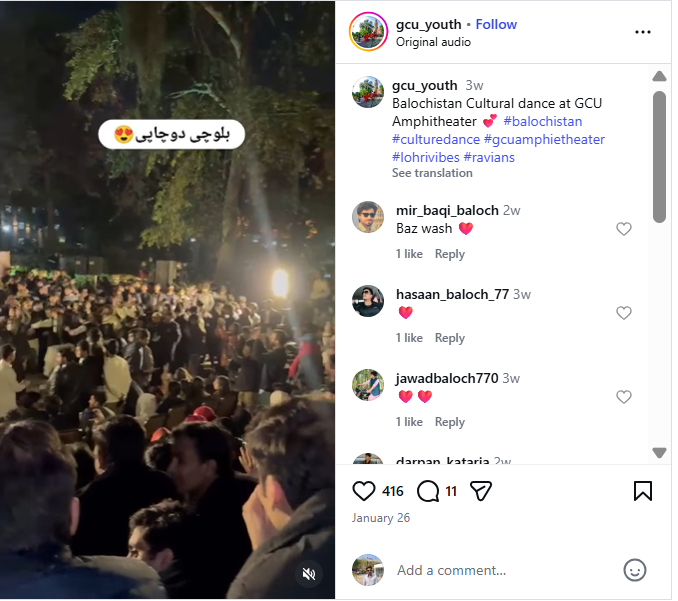
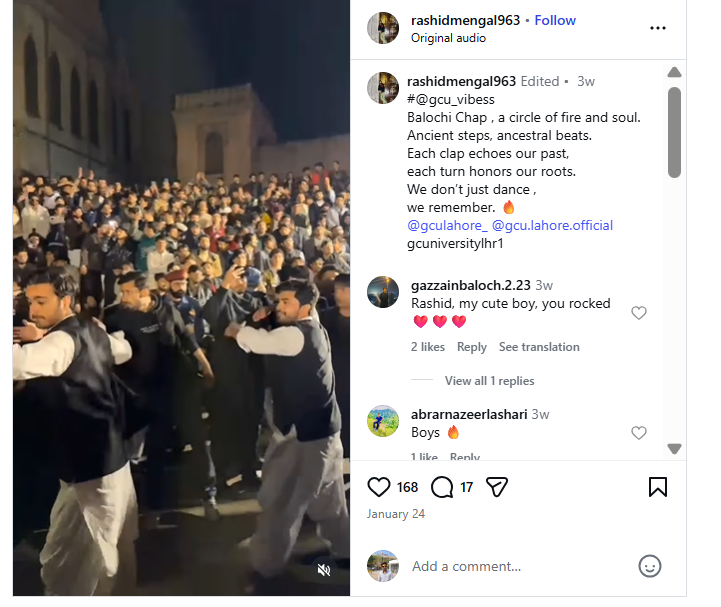
Further research also uncovered another video of the same event, recorded from a different angle and uploaded on January 24, 2026, on Instagram. The caption again confirmed that the event took place at Government College University Lahore.
Conclusion
The evidence confirms that the viral video does not show Baloch people celebrating Pakistan’s defeat in the T20 World Cup. Instead, it depicts a cultural dance performance during a Lohri celebration at Government College University Lahore, and has been shared with a misleading claim.

Introduction
The 2025 Delhi Legislative Assembly election is just around the corner, scheduled for February 5, 2025, with all 70 constituencies heading to the polls. The eagerly awaited results will be announced on February 8, bringing excitement as the people of Delhi prepare to see their chosen leader take the helm as Chief Minister. As the election season unfolds, social media becomes a buzzing hub of activity, with information spreading rapidly across platforms. However, this period also sees a surge in online mis/disinformation, making elections a hotspot for misleading content. It is crucial for citizens to exercise caution and remain vigilant against false or deceptive online posts, videos, or content. Empowering voters to distinguish facts from fiction and recognize the warning signs of misinformation is essential to ensure informed decision-making. By staying alert and well-informed, we can collectively safeguard the integrity of the democratic process.
Risks of Mis/Disinformation
According to the 2024 survey report titled ‘Truth Be Told’ by ‘The 23 Watts’, 90% of Delhi’s youth (Gen Z) report witnessing a spike in fake news during elections, and 91% believe it influences voting patterns. Furthermore, the research highlights that 14% of Delhi’s youth tend to share sensational news without fact-checking, relying solely on conjecture.
Recent Measures by ECI
Recently the Election Commission of India (EC) has issued a fresh advisory to political parties to ensure responsible use of AI-generated content in their campaigns. The EC has issued guidelines to curb the potential use of "deepfakes" and AI-generated distorted content by political parties and their representatives to disturb the level playing field. EC has mandated the labelling of all AI-generated content used in election campaigns to enhance transparency, combat misinformation, ensuring a fair electoral process in the face of rapidly advancing AI technologies.
Best Practices to Avoid Electoral Mis/Disinformation
- Seek Information from Official Sources: Voters should rely on authenticated sources for information. These include reading official manifestos, following verified advisory notifications from the Election Commission, and avoiding unverified claims or rumours.
- Consume News Responsibly: Voters must familiarize themselves with dependable news channels and make use of reputable fact-checking organizations that uphold the integrity of news content. It is crucial to refrain from randomly sharing or forwarding any news post, video, or message without verifying its authenticity. Consume responsibly, fact-check thoroughly, and share cautiously.
- Role of Fact-Checking: Cross-checking and verifying information from credible sources are indispensable practices. Reliable and trustworthy fact-checking tools are vital for assessing the authenticity of information in the digital space. Voters are encouraged to use these tools to validate information from authenticated sources and adopt a habit of verification on their own. This approach fosters a culture of critical thinking, empowering citizens to counter deceptive deepfakes and malicious misinformation effectively. It also helps create a more informed and resilient electorate.
- Be Aware of Electoral Deepfakes: In the era of artificial intelligence, synthetic media presents significant challenges. Just as videos can be manipulated, voices can also be cloned. It is essential to remain vigilant against the misuse of deepfake audio and video content by malicious actors. Recognize the warning signs, such as inconsistencies or unnatural details, and stay alert to misleading multimedia content. Proactively question and verify such material to avoid falling prey to deception.
References
- https://www.financialexpress.com/business/brandwagon-90-ofnbsp-delhi-youth-witness-spike-in-fake-news-during-elections-91-believe-it-influences-voting-patterns-revealed-the-23-watts-report-3483166/
- https://timesofindia.indiatimes.com/india/election-commission-urges-parties-to-disclose-ai-generated-campaign-content-in-interest-of-transparency/articleshow/117306865.cms
- https://www.thehindu.com/news/national/election-commission-issues-advisory-on-use-of-ai-in-poll-campaigning/article69103888.ece
- https://indiaai.gov.in/article/election-commission-of-india-embraces-ai-ethics-in-campaigning-advisory-on-labelling-ai-generated-content
