
#FactCheck-AI-Generated Video Falsely Shows CRPF Trooper Criticizing PM Modi and BJP Government
Executive Summary
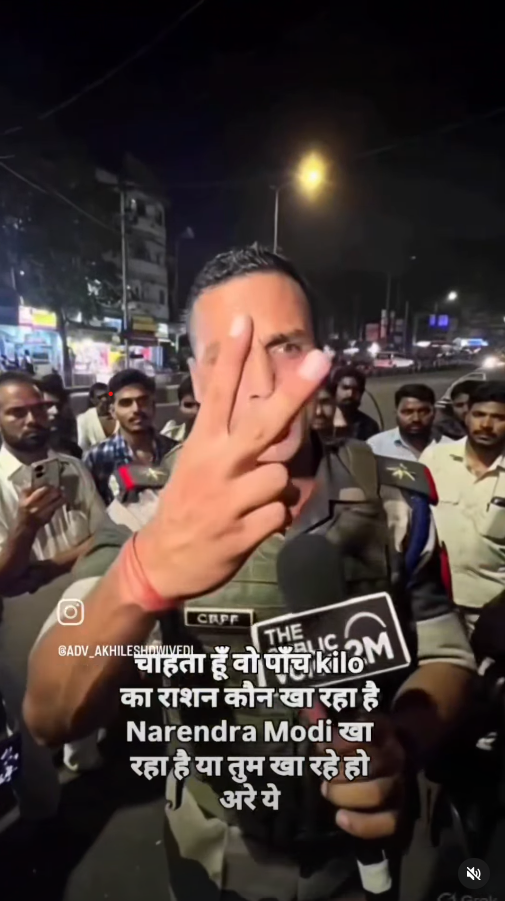
A video is being widely shared on social media showing a purported CRPF trooper accusing Prime Minister Narendra Modi and his government of corruption. In the video, the individual is also seen urging people to vote the BJP government out of power. CyberPeace Research Wing research found that the video was created using artificial intelligence (AI). There is no evidence that any CRPF personnel made such statements.
Claim
An Instagram user shared the viral video, claiming that a CRPF trooper was criticizing Prime Minister Narendra Modi and his government over corruption allegations. The post link, archived link, and screenshot are provided below. https://www.instagram.com/reels/DZ_dbj_SNTf/ , https://www.awesomescreenshot.com/video/53998219?key=46c661b505ba61d19e7d9be97a17c273
FactCheck
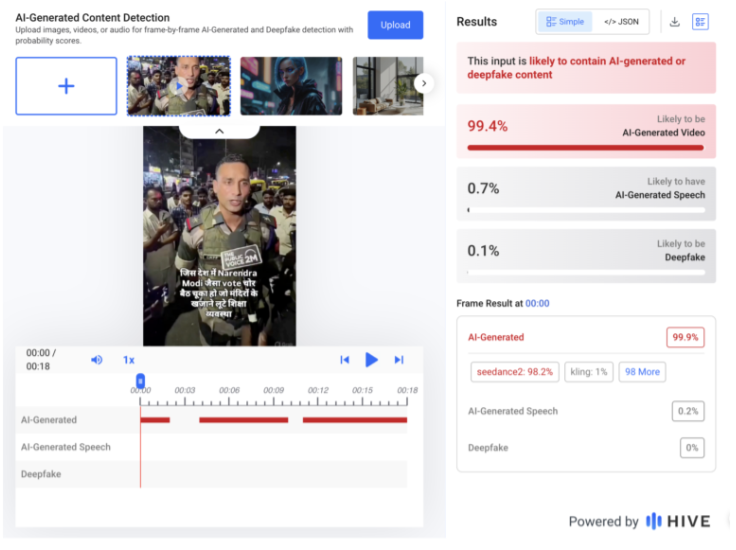
A closer examination of the video revealed several inconsistencies. The name tag on the uniform displayed only “CRPF,” which does not match the standard naming format used on official CRPF uniforms. Additionally, several faces visible in the background appeared blurred and distorted, which are common indicators of AI-generated content. We also noticed a visible Grok watermark in the bottom-right corner of the viral clip, suggesting that the video may have been generated or modified using artificial intelligence. Further analysis was conducted using Hive Moderation’s AI detection tool, which indicated the presence of AI-generated or deepfake elements in the video.
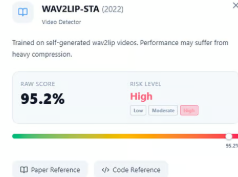
To further verify the authenticity of the clip, we analyzed it using Deepfake-O-Meter. The tool indicated a probability of more than 95 percent that the video was generated using artificial intelligence.
Conclusion
The viral video purportedly showing a CRPF trooper criticizing Prime Minister Narendra Modi and the BJP government is AI-generated. Multiple indicators, AI detection tools, and the clarification issued by the government’s PIB Fact Check confirm that the video is not authentic.

Related Blogs

Executive Summary:
A social media video claims that India's Udhampur Air Force Station was destroyed by Pakistan's JF-17 fighter jets. According to official sources, the Udhampur base is still fully operational, and our research proves that the video was produced by artificial intelligence. The growing problem of AI-driven disinformation in the digital age is highlighted by this incident.

Claim:
A viral video alleges that Pakistan's JF-17 fighter jets successfully destroyed the Udhampur Air Force Base in India. The footage shows aircraft engulfed in flames, accompanied by narration claiming the base's destruction during recent cross-border hostilities.

Fact Check :
The Udhampur Air Force Station was destroyed by Pakistani JF-17 fighter jets, according to a recent viral video that has been shown to be completely untrue. The audio and visuals in the video have been conclusively identified as AI-generated based on a thorough analysis using AI detection tools such as Hive Moderation. The footage was found to contain synthetic elements by Hive Moderation, confirming that the images were altered to deceive viewers. Further undermining the untrue claims in the video is the Press Information Bureau (PIB) of India, which has clearly declared that the Udhampur Airbase is still fully operational and has not been the scene of any such attack.

Our analysis of recent disinformation campaigns highlights the growing concern that AI-generated content is being weaponized to spread misinformation and incite panic, which is highlighted by the purposeful misattribution of the video to a military attack.
Conclusion:
It is untrue that the Udhampur Air Force Station was destroyed by Pakistan's JF-17 fighter jets. This claim is supported by an AI-generated video that presents irrelevant footage incorrectly. The Udhampur base is still intact and fully functional, according to official sources. This incident emphasizes how crucial it is to confirm information from reliable sources, particularly during periods of elevated geopolitical tension.
- Claim: Recent video footage shows destruction caused by Pakistani jets at the Udhampur Airbase.
- Claimed On: Social Media
- Fact Check: False and Misleading

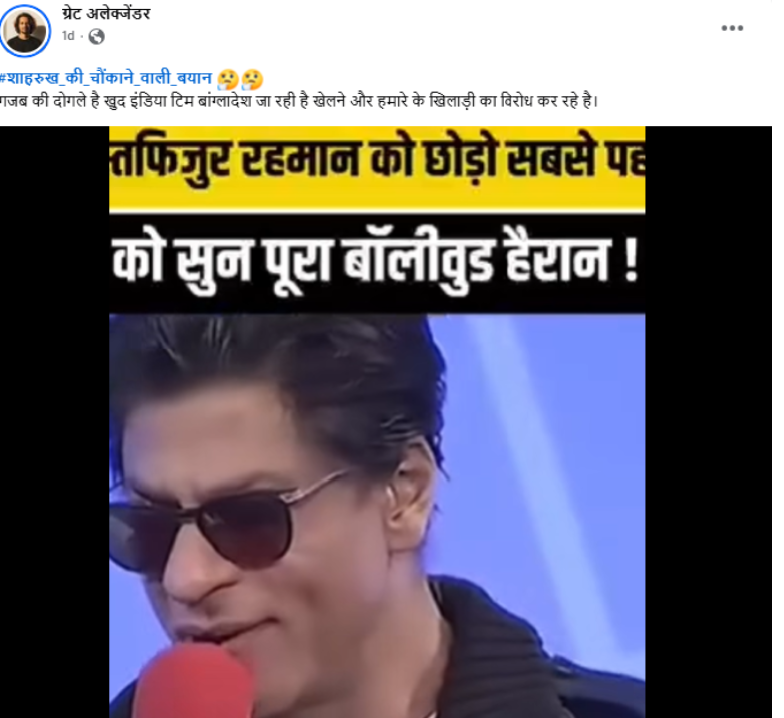
A video of Bollywood actor and Kolkata Knight Riders (KKR) owner Shah Rukh Khan is going viral on social media. The video claims that Shah Rukh Khan is reacting to opposition against Bangladeshi bowler Mustafizur Rahman playing for KKR and is allegedly calling industrialist Gautam Adani a “traitor,” while appealing to stop Hindu–Muslim politics.
Research by the CyberPeace Foundation found that the voice heard in the video is not Shah Rukh Khan’s but is AI-generated. Shah Rukh Khan has not made any official statement regarding Mustafizur Rahman’s removal from KKR. The claim made in the video concerning industrialist Gautam Adani is also completely misleading and baseless.
Claim
In the viral video, Shah Rukh Khan is allegedly heard saying: “People barking about Mustafizur Rahman playing for KKR should stop it. Adani is earning money by betraying the country by supplying electricity from India to Bangladesh. Leave Hindu–Muslim politics and raise your voice against traitors like Adani for the welfare of the country. Mustafizur Rahman will continue to play for the team.”
The post link, archive link, and screenshots can be seen below:
- Archive link: https://archive.is/XsQXp
- Facebook reel link: https://www.facebook.com/reel/1220246633365097
Research
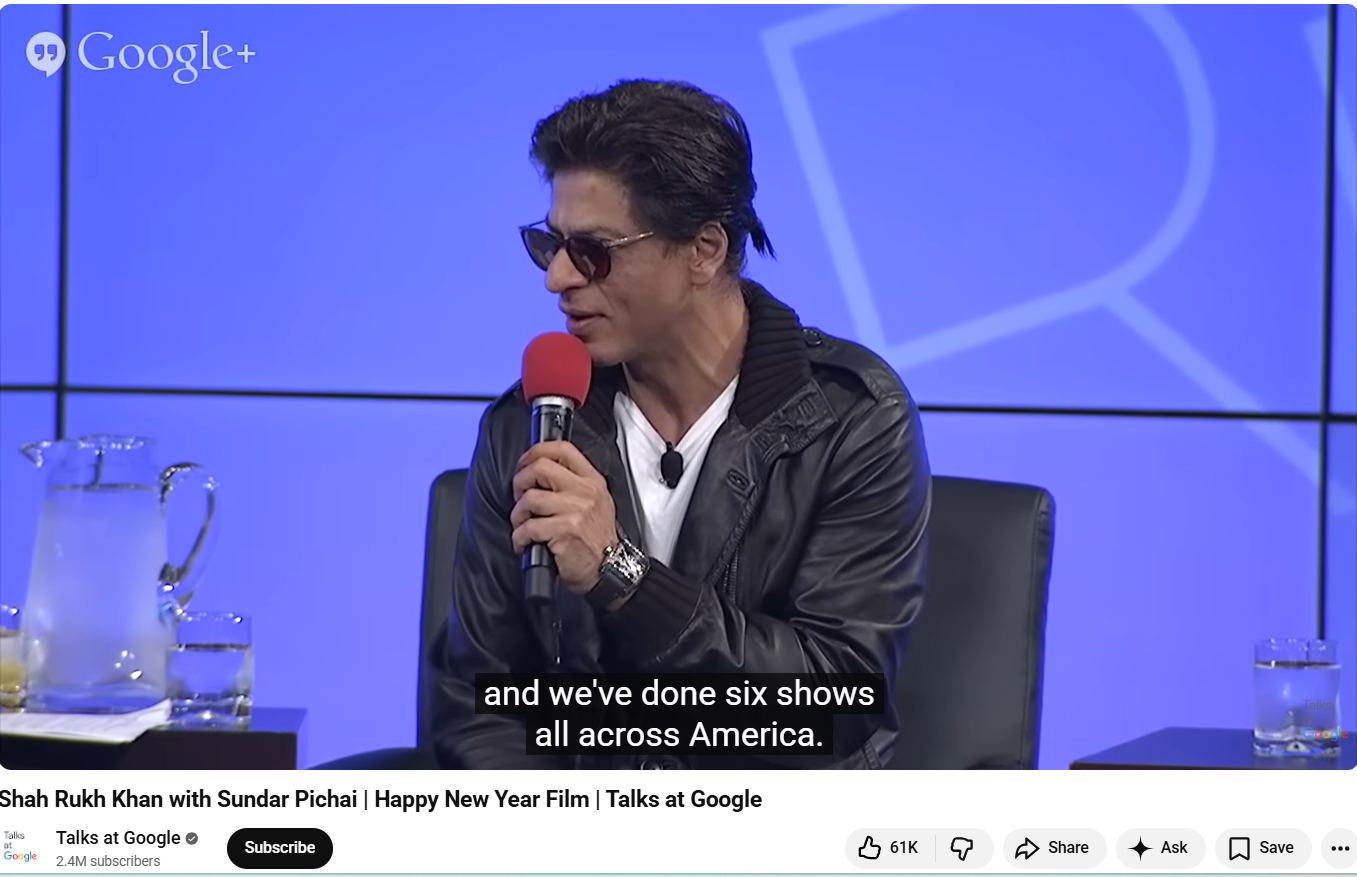
We examined the key frames of Shah Rukh Khan’s viral video using Google Lens. During this process, we found the original video on the official YouTube channel Talks at Google, which was uploaded on 2 October 2014.
In this video, Shah Rukh Khan is seen wearing the same outfit as in the viral clip. He is seen responding to questions from Google CEO Sundar Pichai. The YouTube video description mentions that Shah Rukh Khan participated in a fireside chat held at the Googleplex, where he answered Pichai’s questions and also promoted his upcoming film “Happy New Year.”
The link to the video is given : https://www.youtube.com/watch?v=H_8UBv5bZo0
Upon closely analyzing the viral video of Shah Rukh Khan, we noticed a clear mismatch between his voice and lip movements (lip sync). Such inconsistencies usually appear when the original video or its audio has been tampered with.
We then examined the audio present in the video using the AI detection tool Aurigin. According to the tool’s results, the audio in the viral video was found to be approximately 99 percent AI-generated.
Conclusion
Our research confirmed that the voice heard in the video is not Shah Rukh Khan’s but is AI-generated. Shah Rukh Khan has not made any official comment regarding Mustafizur Rahman’s removal from KKR. Additionally, the claims made in the video about industrialist Gautam Adani are completely misleading and baseless.

India’s online gaming industry has grown at lightning speed, drawing millions of users across age groups. From casual games and e-sports to fantasy leagues and online poker, digital entertainment has become both a social and economic phenomenon. But with this growth came rising concerns of addiction, financial loss, misleading ads, and even criminal misuse of gaming platforms for illegal betting. To address these concerns, the Government of India introduced the Promotion and Regulation of Online Gaming Act and draft Rules in October 2025. While the Act represents a crucial step toward accountability and user protection, it also raises difficult questions about freedom, innovation, and investor confidence.
The Current Legal Framework
The 2025 Act, along with corresponding changes in the Information Technology and GST laws, aims to create a safer and more transparent gaming environment.
1. Ban on real-money games:
Any online game where money is involved, whether it’s entry fees, bets, or prizes, is now banned, regardless of whether it is based on skill or chance. As a result, previously permitted formats such as fantasy sports, rummy, and poker once defended as “games of skill” now fall within the category of banned activities.
2. Promotion of e-sports and social gaming
Not all gaming is banned. Casual games, e-sports, and social games that don’t involve money are fully allowed. The government is encouraging these as part of India’s growing digital economy.
3. Advertising and financial restrictions: Banks, payment gateways, and advertisers cannot facilitate or promote real-money games. Any platform offering deposits or prize pools can be blocked.
4. Central regulatory authority: The law establishes a national body to classify games, monitor compliance, and address complaints. It has the power to order the locking of violative content and websites.
Why Regulation Was Needed
The push for regulation came after a surge in online betting scams, debt-related suicides, and disputes about whether certain apps were skill-based or chance-based. State governments had taken conflicting positions, some banning, others licensing such games. Meanwhile, offshore gaming apps operated freely in India’s grey market.
The 2025 Act thus attempts to impose uniformity, protect minors, and bring moral and fiscal discipline to a rapidly expanding digital frontier. Its underlying philosophy resembles that of the Digital Personal Data Protection Act, encouraging responsible use of technology rather than an unregulated free-for-all.
Key Challenges and Gaps
(a) Clarity of Definitions
The Act bans all real-money games, ignoring the difference between skill-based games and chance-based games. This could lead to legal challenges under Article 19(1)(g), which protects the right to do business. Games like rummy or fantasy cricket, which need real skill, arguably shouldn’t be banned outright
(b) Weak Consumer and Child Protection
Although age verification and KYC are mandated, compliance at the user-end remains uncertain. India needs a Responsible Gaming Code covering:
- Spending limits and cooling-off periods;
- Self-exclusion options;
- Transparent disclosure of odds; and
- Algorithmic fairness audits.
These measures can help mitigate addiction and prevent exploitation of minors.
(c) Federal Conflicts
“Betting and gambling” fall within the State List under India’s Constitution, yet the 2025 Act seeks national uniformity. States like Tamil Nadu and Karnataka already have independent bans. Without harmonisation, legal disputes between state and central authorities could multiply. A cooperative federal framework allowing states to adopt central norms voluntarily could offer flexibility without fragmentation.
(d) Regulatory Transparency
The gaming regulator has a lot of power, like deciding which games are allowed and blocking websites. But it’s not clear who chooses its members or how people can challenge its decisions. Including court oversight, public input, and regular reporting would make the regulator fairer and more reliable.
What’s Next for India’s Online Gaming
India’s online gaming scene is at a turning point. Banning all money-based games might reduce risks, but it also slows innovation and limits opportunities. A better approach could be to license skill-based or low-risk games with proper KYC and audits, set up a Responsible Gaming Charter with input from government, industry, and civil society, and create rules for offshore platforms targeting Indian players. Player data should be protected under the Digital Personal Data Protection Act, 2023, and the law should be reviewed every few years to keep up with new tech like the metaverse, NFTs, and AI-powered games.
Conclusion
CyberPeace has already provided its detailed feedback to MEITy as on 30th October, 2025 hopes the finalised rules are released soon with the acknowledgment of the challenges discussed. The Promotion and Regulation of Online Gaming Act, 2025, marks an important turning point since this is India’s first serious attempt to bring order to a chaotic digital arena. The goal is to keep players safe, stop crime, and hold platforms accountable. But the tricky part is moving away from blanket bans. We need rules that let new ideas grow, respect people’s rights, and keep players safe. With a few smart changes and fair enforcement, India could have a gaming industry that’s safe, responsible, and ready to compete globally.
References
- https://ssrana.in/articles/indias-online-gaming-bill-2025-regulation-prohibition-and-the-future-of-digital-play/
- https://www.google.com/amp/s/m.economictimes.com/news/economy/policy/new-online-gaming-law-takes-effect-money-games-banned-from-today/amp_articleshow/124255401.cms
- https://www.google.com/amp/s/timesofindia.indiatimes.com/technology/tech-news/government-proposes-to-make-violation-of-online-money-game-rules-non-bailable-draft-rules-ban-/amp_articleshow/124277740.cms
- https://www.egf.org.in/
- https://www.pib.gov.in/PressNoteDetails.aspx?NoteId=155075&ModuleId=3
