
#FactCheck: War Thunder Game Footage Falsely Shared as Video of IAF MiG-29 Crash
Executive Summary
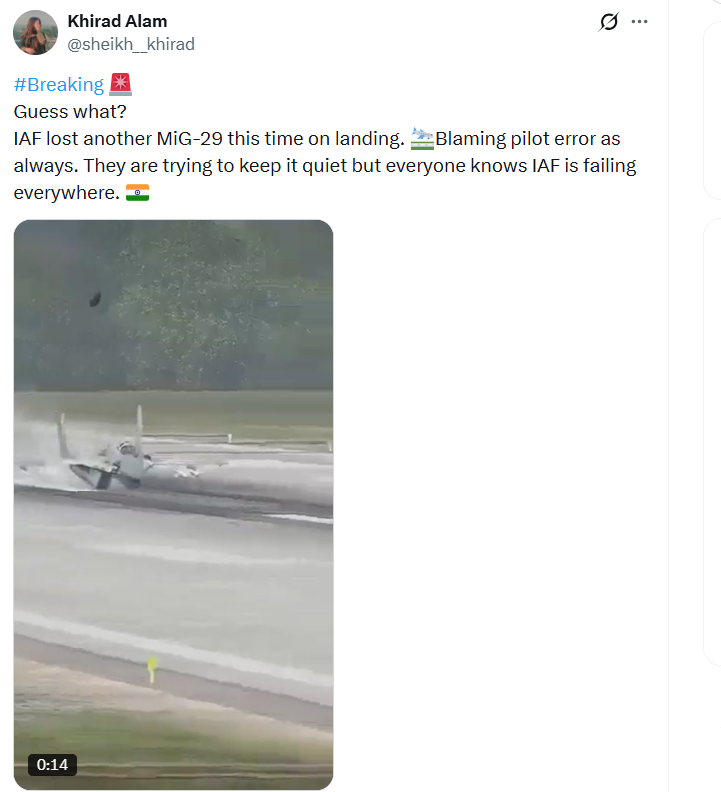
A video is being shared on social media with the claim that an Indian Air Force (IAF) MiG-29 fighter jet crashed while landing due to the pilot’s negligence. The claim further alleges that no casualties were reported in the incident and that the IAF is concealing the incident because it is losing fighter jets at a high rate. The video is being widely shared on social media.
CyberPeace Research found the claim to be false. Our Research revealed that the video is not footage of an actual IAF MiG-29 crash, but gameplay footage from the video game War Thunder, which is being shared with a false and misleading claim.
Claim:
An Indian Air Force MiG-29 fighter jet crashed while landing, with pilot error being blamed for the incident. The post further claims that the IAF is trying to conceal the incident.
https://x.com/sheikh__khirad/status/2100447634599342114?s=20
Fact Check
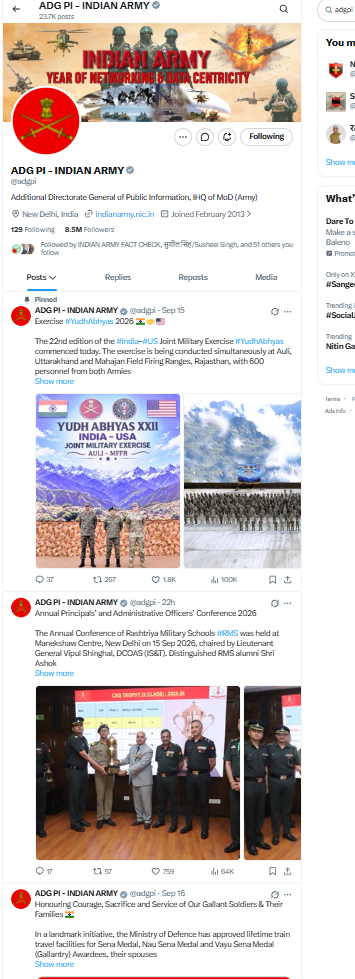
To verify the claim, we conducted a Google search using relevant keywords. However, we did not find any credible media report supporting the claim. We also checked the official X account of the Indian Army, but found no post confirming the claim.
https://x.com/adgpi
As part of our further research, we conducted a reverse image search of keyframes from the video. During the search, we found a YouTube channel where similar visuals had been uploaded.
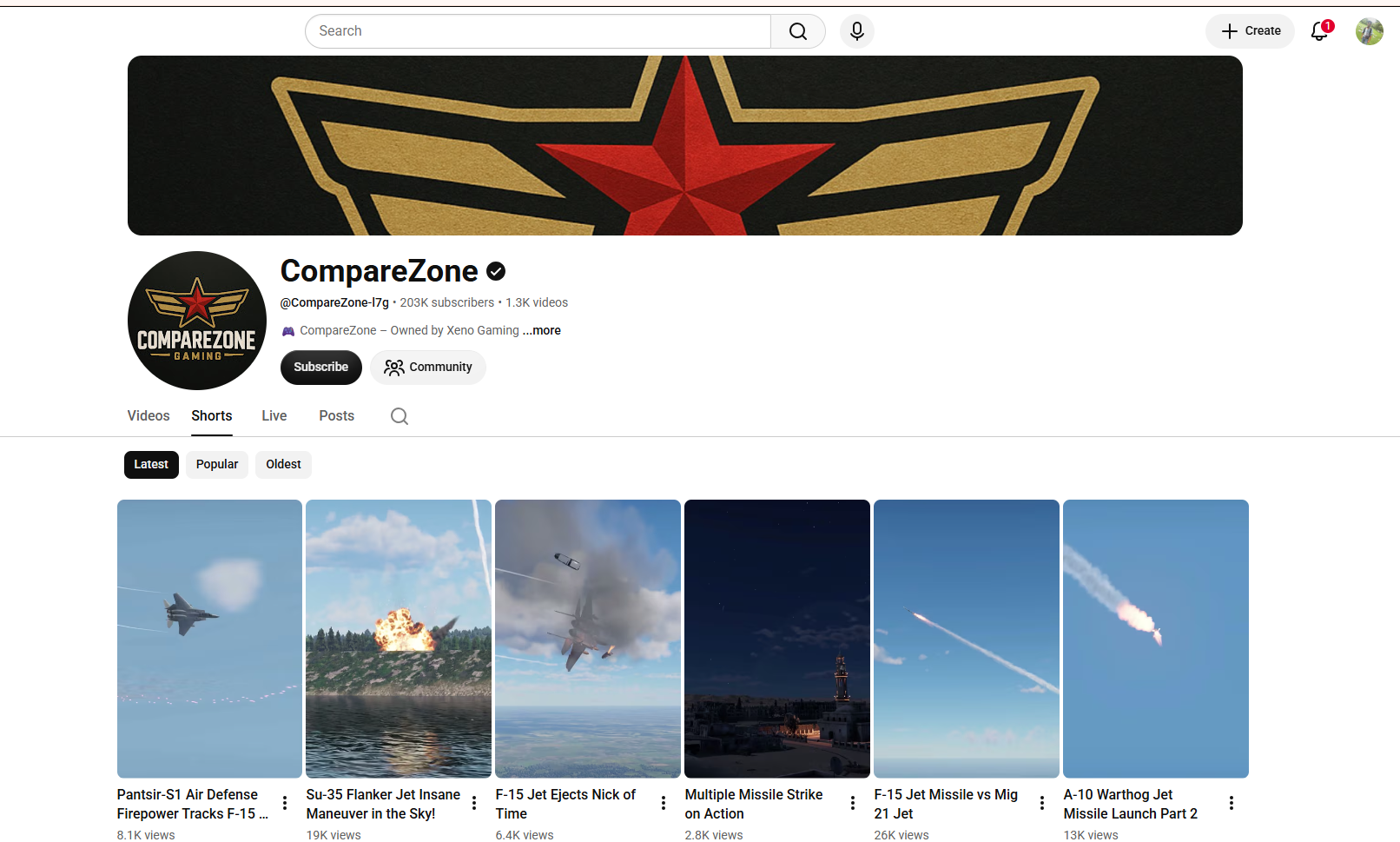
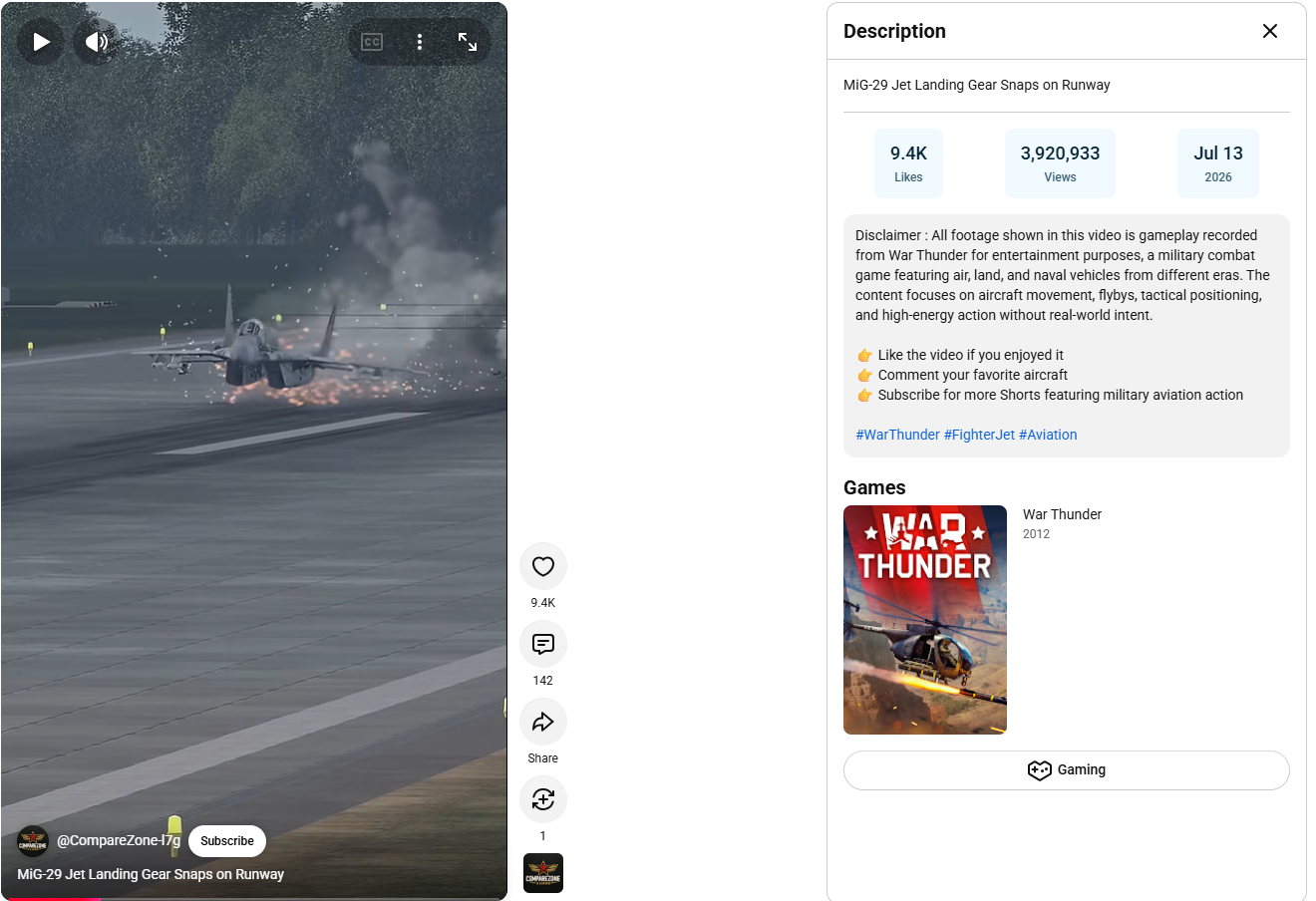
We found that the channel regularly posts gaming-related content. At the end of our research, we found the original version of the viral video on the YouTube channel. It was published on July 13, 2026. The video description also clearly states that the footage is gaming content and not a real-life incident.
https://www.youtube.com/shorts/dVu0eMztePo
Conclusion
Our research found that the video being shared with the claim that an IAF MiG-29 fighter jet crashed during landing does not depict a real incident. The video is actually gameplay footage from the video game War Thunder.Therefore, gaming footage is being falsely presented on social media as footage of an Indian Air Force MiG-29 crashing during landing. The incident shown in the video is not real.

Related Blogs

Introduction
The US national cybersecurity strategy was released at the beginning of March this year. The aim of the cybersecurity strategy is to build a more defensive and resilient digital mechanism through general investments in the cybersecurity infrastructure. It is important to invest in a resilient future, And the increasing digital diplomacy and private-sector partnerships, regulation of crucial industries, and holding software companies accountable if their products enable hackers in.
What is the cybersecurity strategy
The US National cybersecurity strategy is the plan which organisations pursue to fight against cyberattacks and cyber threats, and also they plan a risk assessment plan for the future in a resilient way. Through the cybersecurity strategy, there will be appropriate defences against cyber threats.
US National Cybersecurity Strategy-
the national cybersecurity strategy mainly depends on five pillars-
- Critical infrastructure- The national cybersecurity strategy intends to defend important infrastructure from cyberattacks, for example, hospitals and clean energy installations. This pillar mainly focuses on the security and resilience of critical systems and services that are critical.
- Disrupt & Threat Assessment- This strategy pillar seeks to address and eliminate cyber attackers who endanger national security and public safety.
- Shape the market forces in resilient and security has driven-
- Invest in resilient future approaches.
- Forging international partnerships to pursue shared goals.
Need for a National cybersecurity strategy in India –
India is becoming more reliant on technology for day-to-day purposes, communication and banking aspects. And as per the computer emergency response team (CERT-In), in 2022, ransomware attacks increased by 50% in India. Cybercrimes against individuals are also rapidly on the rise. To build a safe cyberspace, India also required a national cybersecurity strategy in the country to develop trust and confidence in IT systems.
Learnings for India-
India has a cybersecurity strategy just now but India can also implement its cybersecurity strategy as the US just released. For the threats assessments and for more resilient future outcomes, there is a need to eliminate cybercrimes and cyber threats in India.
Shortcomings of the US National Cybersecurity Strategy-
- The implementation of the United States National Cybersecurity Strategy has Some problems and things that could be improved in it. Here are some as follows:
- Significant difficulties: The cybersecurity strategy proved to be difficult for government entities. The provided guidelines do not fulfil the complexity and growing cyber threats.
- Insufficient to resolve desirable points: the implementation is not able to resolve some, of the aspects of national cybersecurity strategies, for example, the defined goals and resource allocation, which have been determined to be addressed by the national cybersecurity strategy and implementation plan.
- Lack of Specifying the Objectives: the guidelines shall track the cybersecurity progress, and the implementation shall define the specific objectives.
- Implementation Alone is insufficient: cyber-attacks and cybercrimes are increasing daily, and to meet this danger, the US cybersecurity strategy shall not depend on the implementation. However, the legislation will help to involve public-private collaboration, and technological advancement is required.
- The strategy calls for critical infrastructure owners and software companies to meet minimum security standards and be held liable for flaws in their products, but the implementation and enforcement of these standards and liability measures must be clearly defined.
Conclusion
There is a legitimate need for a national cybersecurity strategy to fight against the future consequences of the cyber pandemic. To plan proper strategies and defences. It is crucial to avail techniques under the cybersecurity strategy. And India is increasingly depending on technology, and cybercrimes are also increasing among individuals. Healthcare sectors and as well on educational sectors, so to resolve these complexities, there is a need for proper implementations.
.webp)
Introduction
The rise of artificial intelligence has transformed how individuals search for information, buy and compare products online. Unlike the traditional search engines like Google that presents the user with a set of links and directs users to websites, AI-powered systems provide synthesised answers and recommendations which means we don't have to click through every link to find what we are looking for, we simply have to ask an LLM and it provides recommendations based on our needs expressed through prompt. This development has raised important legal and commercial questions, one such question was addressed in the judgement of Indiamart Inter Mesh Limited v. Open AI Inc. and Others (2026 SCC OnLine Cal 5738) decided by HMJ Ravi Krishan Kapur of Calcutta High court on 20 May 2026. If an AI platform becomes a primary source of information, can a business demand inclusion in its responses? Is it a legal injury if the LLM omits a business? More fundamentally, how do the existing laws classify technologies that not only process information, but also generate new content? These were the questions that came before Calcutta High Court. Although the dispute arose from Indiamart’s complaint regarding visibility on ChatGPT search, the judgement explored beyond the disagreement between two private entities.
The Dispute
IndiaMart is one of India’s largest electronic business-to-business marketplaces since 1996, serving millions of buyers and sellers across India. They also have registered trademarks and their entire business depends on visibility on the internet considering the digitalisation of the market. Open AI launched ChatGPT search in October 2024, which is a feature that supplements AI responses with links to relevant web sources. Indiamart alleged that ChatGPT was not displaying links to their online platform in the same way that it displayed links to other competing services or individual sellers. A major grievance raised by Indiamart was that ChatGPT allegedly bypassed IndiaMart market listings by directing users to sellers’ individual websites while continuing to provide platform level links for other competing platforms. Hence, they contended that this practice diverted users away from their platform and negatively affected their business interests. The company argued that such exclusion amounted to discriminatory treatment and resulted in economic harm, diluted its trademarks and amounted to disparagement. They alleged that it violated their rights under article 14, 19, 21 under the constitution and rights under IT Act and IT Rules also. When IndiaMart sought an explanation from OpenAI, the company stated that its decision was influenced by the inclusion of IndiaMart in the United States Trade Representative (USTR) Review of Notorious Markets for Counterfeiting and Piracy 2024, a U.S. government report that identifies online and physical marketplaces alleged to facilitate intellectual property infringements. IndiaMart challenged this justification, arguing that the USTR report has no statutory or binding force in India. It further alleged selective discrimination, pointing out that several other platforms featured on the same USTR list including DHGate, Pinduoduo, Shopee, and Taobao continued to remain accessible through ChatGPT-generated responses. Consequently, IndiaMart approached the Calcutta High Court seeking interim relief directing ChatGPT to display and provide access to IndiaMart links in its responses.
ARGUMENTS BEFORE THE COURT
IndiaMart's contentions: They argued that ChatGPT, because its search feature, performs the role of an "intermediary" within the meaning of Section 2(1)(w) of the IT Act and is therefore required to comply with the obligations imposed under the Information Technology (Intermediary Guidelines and Digital Media Ethics Code) Rules, 2021. Relying on Rule 3(1)(n), IndiaMart argued that an intermediary cannot engage in discriminatory treatment of platforms or selectively restrict access to information. IndiaMart further maintained that users have a right to access information relating to its platform and that the omission of IndiaMart links from ChatGPT's responses violated this interest. They alleged violation of Articles 14, 19, and 21 of the Constitution, along with the broader principle of a user's "right to know", to argue that OpenAI owed an obligation to display IndiaMart listings in response to relevant queries. In addition, IndiaMart alleged that the exclusion of its links caused commercial harm, diluted its trademarks, amounted to disparagement, and constituted an unfair trade practice that adversely affected its business and reputation.
OpenAI's contentions: OpenAI asserted that IndiaMart had no legally enforceable ‘Right to visibility’ on ChatGPT. They argued that neither contract, statute, nor constitutional law imposed any obligation on OpenAI to display, prioritise, or recommend IndiaMart links in response to user queries. In the absence of any recognised legal right, there could be no actionable injury and therefore no valid cause of action. OpenAI also challenged the classification of ChatGPT as an "intermediary" under the Information Technology Act, 2000. According to OpenAI, ChatGPT does not merely host, transmit, or facilitate access to third-party content but also generates responses through its large language model (LLM) and therefore functions more closely as an "originator" than an intermediary. Consequently, the obligations applicable to intermediaries under the Information Technology (Intermediary Guidelines and Digital Media Ethics Code) Rules, 2021, including those relied upon by IndiaMart, were inapplicable. With respect to the USTR Notorious Markets List, OpenAI submitted that its reliance on the report formed part of its internal risk-management and business policies. Such decisions, it argued, were matters of private commercial judgment and not ordinarily subject to judicial review. OpenAI further pointed out that IndiaMart had also previously blocked ChatGPT from accessing and crawling its website that weakened the company's demand for greater visibility within ChatGPT-generated responses.
Court’s decision: The court rejected Indiamart's claim that they were entitled to be displayed in ChatGPT searches. The court emphasised the autonomy of private businesses, the court held that the right to carry on trade and business is "inviolable" and that no law can compel one private entity to operate their platform for the benefit of another, which is based on foundational economic philosophy of laissez faire. Unless there is a contractual, statutory or constitutional obligation, a platform has no duty to the other platform to promote or advance their economic interest. Applying this principle, the court found no such duty or “vested legal right” that entitled IndiaMart’s visibility on ChatGPT. The court reasoned that even if users possess the ‘right to know’, Indiamart could not convert that interest into an enforceable claim under article 19(1)(g) or other legal provision. The court looked at the dispute as one arising from commercial disadvantage rather than violation of any legally protected right. Although the reduced visibility may have had economic consequences, economic harm does not by itself create a cause of action.
The court also took into consideration whether ChatGPT should be classified as an intermediary under Section 2(1)(w) of the Information Technology Act, 2000 or as an originator under Section 2(1)(za). This was an important distinction, because the intermediaries can claim safe harbour protection under section 79 of the IT act, but the originators cannot. The court expressed a preliminary view that ChatGPT is generative capabilities, place it closer to an originator than an intermediary because, unlike conventional search engines, which identify and rank existing information, Generative AI systems, analyse the data and produce new output based on algorithms, which is in response to the user’s prompt. The Court also referenced the NITI Aayog National Strategy for Artificial Intelligence (pages 7 to 12) to support its observations that ChatGPT does not merely store, host or transmit information, it can produce essays, research material, code, creative writing, and other forms of content that did not previously exist in that exact form, hence extending beyond the conventional understanding of an intermediary. The court also recognised that it is a vexed issue and remains unsettled because AI systems operate in response to users instructions and do not function independently, which is why the court refrained from providing a definitive classification and acknowledged that the question may ultimately require legislative clarification as well.
In addition to this, the Court took the view that the IndiaMart’s grievances did not amount to an Intellectual property dispute, as they found no trademark infringement or dilution because any reference to the "IndiaMart" mark was merely descriptive and did not constitute commercial use "in the course of trade" under Section 29(4) of the Trade Marks Act. IndiaMart also hadn’t demonstrated any false or misleading use of its trademark.
Similarly, the Court found that claims of disparagement, trade libel, and injurious falsehood were unsustainable because such claims require the publication of a false statement that harms reputation and since ChatGPT had not published any derogatory statement about IndiaMart, the mere omission of links could not amount to disparagement or libel. The Court relied on Tech Plus Media v. Jyoti Janda, that allegations of unfairness or copyright infringement must be supported by specific pleadings and evidence.
Beyond the immediate dispute, the judgment shed light on the growing difficulty of applying legal categories created for an earlier internet era to generative AI systems. The Information Technology Act was enacted at a time when internet regulation focused primarily on websites, service providers, and electronic communications and therefore existing classifications may not adequately address the hybrid nature of contemporary AI technologies. The Court acknowledged OpenAI's concern that granting IndiaMart's request could trigger floodgates of litigation on similar claims from businesses dissatisfied with AI-generated visibility, however, it clarified that such concerns cannot outweigh genuine legal claims or fundamental rights. The Court suggested that legislative intervention may eventually be necessary.
Conclusion
This judgement not only addressed the visibility issue in AI generated responses, but also whether visibility itself can become a legally protected interest in AI-driven searches? As more and more users rely on AI generated output for their preference rather than traditional search engine output, the power to decide what information is displayed and what is not will eventually become economically significant. The Calcutta High Court through this judgement declined to create any such right through judicial interventions and also highlighted that the existing legal framework is not adequately equipped to address the novel challenges posed by generative AI.
(This blog is based on the judgment in Indiamart Inter Mesh Limited v. Open AI Inc. and Others, 2026 SCC OnLine Cal 5738, decided on May 20, 2026 by the Calcutta High Court, and related reporting by LiveLaw and SCC Times.)
References
- https://www.livelaw.in/high-court/calcutta-high-court/no-right-to-visibility-exists-on-private-ai-platforms-calcutta-high-court-refuses-to-direct-chatgpt-to-display-indiamart-links-536891
- https://www.scconline.com/blog/post/2026/06/03/chatgpt-intermediary-originator-it-act-calcutta-high-court/
- https://indiankanoon.org/doc/198449710/

Executive Summary
Amid rising tensions in the Middle East following attacks on Iran by the United States and Israel, a video is being shared on social media claiming that it shows a recent attack at Dubai International Airport. Research by the CyberPeace found the viral claim to be false. Our research revealed that the viral video is not real but has been created using artificial intelligence technology.
Claim:
An Instagram user shared the viral video on March 1, 2026, claiming it shows an attack at Dubai Airport. The link to the post, the archive link, and a screenshot are provided below.

Fact Check:
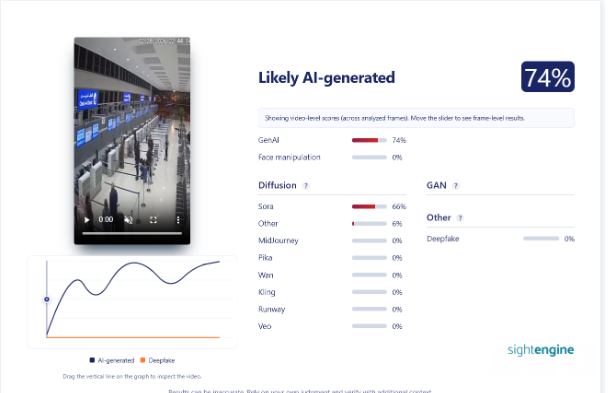
To verify the viral claim, we searched Google using relevant keywords. However, we did not find any credible media report confirming the claim.On closely examining the viral video, we noticed several unusual visuals and technical inconsistencies, raising suspicion that it might be AI-generated. To verify this, we scanned the video using the AI detection tool Sightengine. According to the results, around 74 percent of the video shows the likelihood of being AI-generated.
Conclusion:
Our research found that the viral video is not real but has been created using artificial intelligence technology.
