
#FactCheck - Viral Claim About Nitish Kumar’s Resignation Over UGC Protests Is Misleading
Executive Summary
A news video is being widely circulated on social media with the claim that Bihar Chief Minister Nitish Kumar has resigned from his post in protest against the ongoing UGC-related controversy. Several users are sharing the clip while alleging that Kumar stepped down after opposing the issue. However, CyberPeace research has found the claim to be false. The researchrevealed that the video being shared is from 2022 and has no connection whatsoever with the UGC or any recent protests related to it. An old video has been misleadingly linked to a current issue to spread misinformation on social media.
Claim:
An Instagram user shared a video on January 26 claiming that Bihar Chief Minister Nitish Kumar had resigned. The post further alleged that the news was first aired on Republic channel and that Kumar had submitted his resignation to then-Governor Phagu Chauhan. The link to the post, its archived version, and screenshots can be seen below. (Links as provided)

Fact Check:
To verify the claim, CyberPeace first conducted a keyword-based search on Google. No credible or established media organisation reported any such resignation, clearly indicating that the viral claim lacked authenticity.
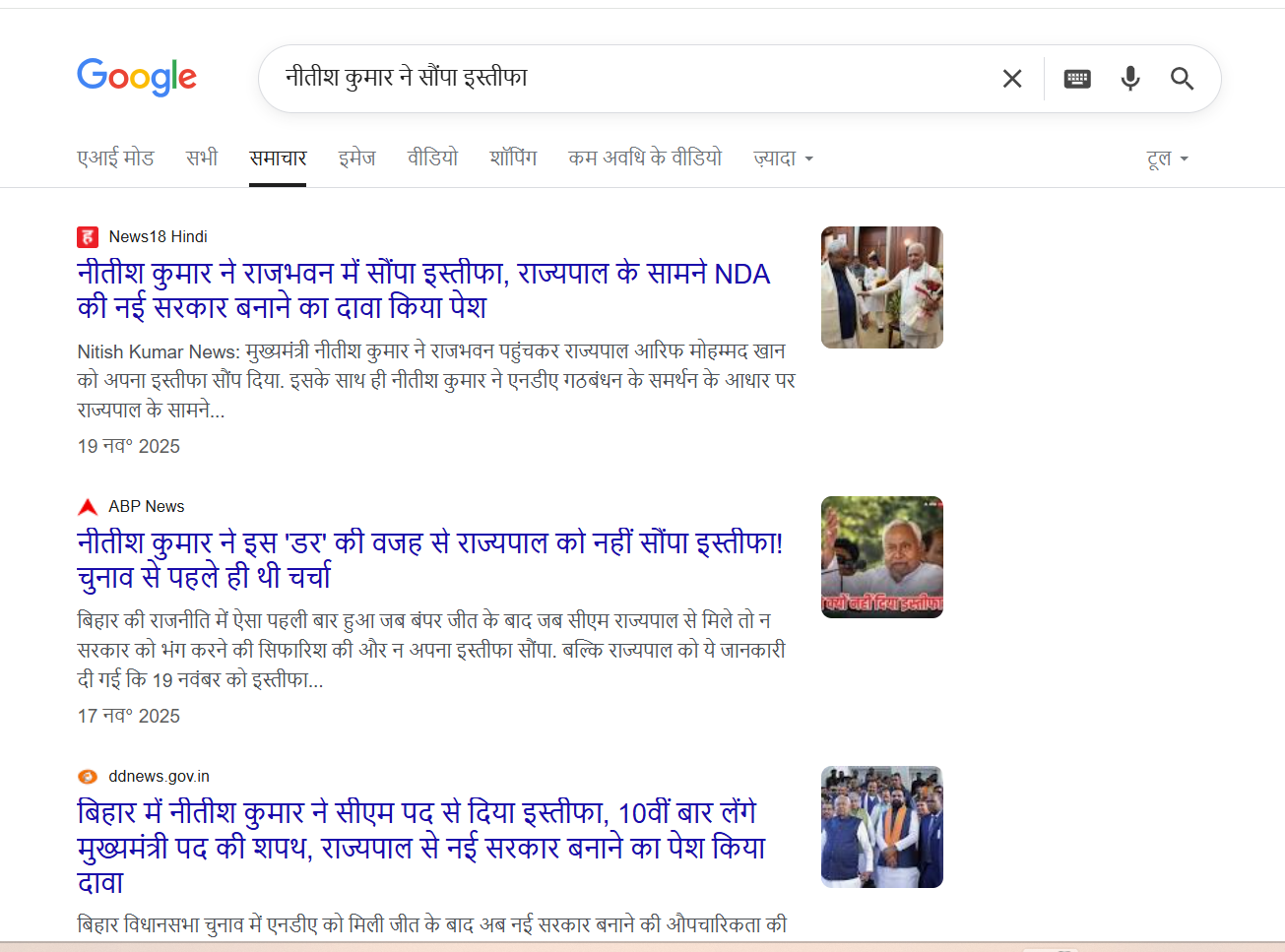
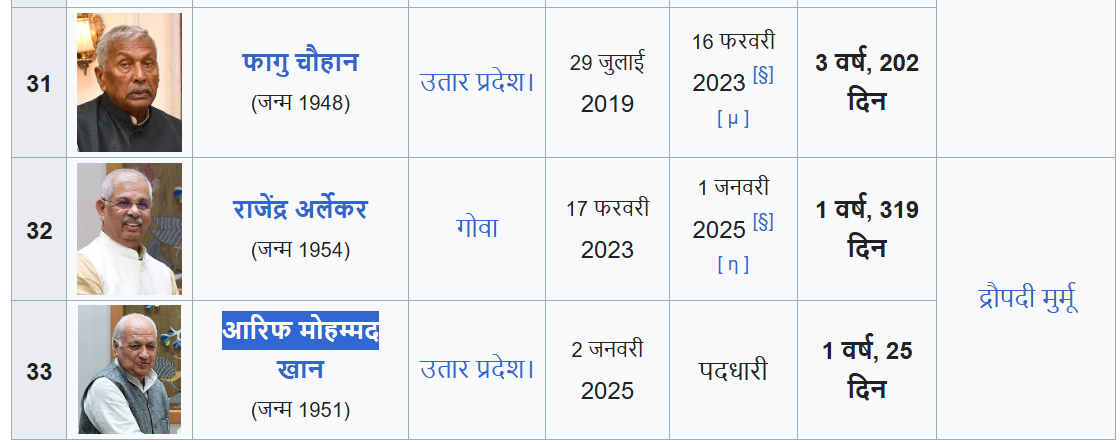
Further, the voiceover in the viral video states that Nitish Kumar handed over his resignation to Governor Phagu Chauhan. However, Phagu Chauhan ceased to be the Governor of Bihar in February 2023. The current Governor of Bihar is Arif Mohammad Khan, making the claim in the video factually incorrect and misleading.
In the next step, keyframes from the viral video were extracted and reverse-searched using Google Lens. This led to the official YouTube channel of Republic Bharat, where the full version of the same video was found. The video was uploaded on August 9, 2022. This clearly establishes that the clip circulating on social media is not recent and is being shared out of context.

Conclusion
CyberPeace’s research confirms that the viral video claiming Nitish Kumar resigned over the UGC issue is false. The video dates back to 2022 and has no link to the current UGC controversy. An old political video has been deliberately circulated with a misleading narrative to create confusion on social media.

Related Blogs

Introduction
In the wake of the Spy Loan scandal, more than a dozen malicious loan apps were downloaded on Android phones from the Google Play Store, However, the number is significantly higher because they are also available on third-party marketplaces and questionable websites.
Unmasking the Scam
When a user borrows money, these predatory lending applications capture large quantities of information from their smartphone, which is then used to blackmail and force them into returning the total with hefty interest levels. While the loan amount is disbursed to users, these predatory loan apps request sensitive information by granting access to the camera, contacts, messages, logs, images, Wi-Fi network details, calendar information, and other personal information. These are then sent to loan shark servers.
The researchers have disclosed facts about the applications used by loan sharks to mislead consumers, as well as the numerous techniques used to circumvent some of the limitations imposed on the Play Store. Malware is often created with appealing user interfaces and promotes simple and rapid access to cash with high-interest payback conditions. The revelation of the Spy Loan scandal has triggered an immediate response from law enforcement agencies worldwide. There is an urgency to protect millions of users from becoming victims of malicious loan apps, it has become extremely important for law enforcement to unmask the culprits and dismantle the cyber-criminal network.
Aap’s banned: here is the list of the apps banned by Google Play Store :
- AA Kredit: इंस्टेंट लोन ऐप (com.aa.kredit.android)
- Amor Cash: Préstamos Sin Buró (com.amorcash.credito.prestamo)
- Oro Préstamo – Efectivo rápido (com.app.lo.go)
- Cashwow (com.cashwow.cow.eg)
- CrediBus Préstamos de crédito (com.dinero.profin.prestamo.credito.credit.credibus.loan.efectivo.cash)
- ยืมด้วยความมั่นใจ – ยืมด่วน (com.flashloan.wsft)
- PréstamosCrédito – GuayabaCash (com.guayaba.cash.okredito.mx.tala)
- Préstamos De Crédito-YumiCash (com.loan.cash.credit.tala.prestmo.fast.branch.mextamo)
- Go Crédito – de confianza (com.mlo.xango)
- Instantáneo Préstamo (com.mmp.optima)
- Cartera grande (com.mxolp.postloan)
- Rápido Crédito (com.okey.prestamo)
- Finupp Lending (com.shuiyiwenhua.gl)
- 4S Cash (com.swefjjghs.weejteop)
- TrueNaira – Online Loan (com.truenaira.cashloan.moneycredit)
- EasyCash (king.credit.ng)
- สินเชื่อปลอดภัย – สะดวก (com.sc.safe.credit)
Risks with several dimensions
SpyLoan's loan application violates Google's Financial Services policy by unilaterally shortening the repayment period for personal loans to a few days or any other arbitrary time frame. Additionally, the company threatens users with public embarrassment and exposure if they do not comply with such unreasonable demands.
Furthermore, the privacy rules presented by SpyLoan are misleading. While ostensibly reasonable justifications are provided for obtaining certain permissions, they are very intrusive practices. For instance, camera permission is ostensibly required for picture data uploads for Know Your Customer (KYC) purposes, and access to the user's calendar is ostensibly required to plan payment dates and reminders. However, both of these permissions are dangerous and can potentially infringe on users' privacy.
Prosecution Strategies and Legal Framework
The law enforcement agencies and legal authorities initiated prosecution strategies against the individuals who are involved in the Spy Loan Scandal, this multifaced approach involves international agreements and the exploration of innovative legal avenues. Agencies need to collaborate with International agencies to work on specific cyber-crime, leveraging the legal frameworks against digital fraud furthermore, the cross-border nature of the spy loan operation requires a strong legal framework to exchange information, extradition requests, and the pursuit of legal actions across multiple jurisdictions.
Legal Protections for Victims: Seeking Compensation and Restitution
As the legal battle unfolds in the aftermath of the Spy loan scam the focus shifts towards the victims, who suffer financial loss from such fraudulent apps. Beyond prosecuting culprits, the pursuit of justice should involve legal safeguards for victims. Existing consumer protection laws serve as a crucial shield for Spy Loan victims. These laws are designed to safeguard the rights of individuals against unfair practices.
Challenges in legal representation
As the legal hunt for justice in the Spy Loan scam progresses, it encounters challenges that demand careful navigation and strategic solutions. One of the primary obstacles in the legal pursuit of the Spy loan app lies in the jurisdictional complexities. Within the national borders, it’s quite challenging to define the jurisdiction that holds the authority, and a unified approach in prosecuting the offenders in various regions with the efforts of various government agencies.
Concealing the digital identities
One of the major challenges faced is the anonymity afforded by the digital realm poses a challenge in identifying and catching the perpetrators of the scam, the scammers conceal their identity and make it difficult for law enforcement agencies to attribute to actions against the individuals, this challenge can be overcome by joint effort by international agencies and using the advance digital forensics and use of edge cutting technology to unmask these scammers.
Technological challenges
The nature of cyber threats and crime patterns are changing day by day as technology advances this has become a challenge for legal authorities, the scammers explore vulnerabilities, making it essential, for law enforcement agencies to be a step ahead, which requires continuous training of cybercrime and cyber security.
Shaping the policies to prevent future fraud
As the scam unfolds, it has become really important to empower users by creating more and more awareness campaigns. The developers of the apps need to have a transparent approach to users.
Conclusion
It is really important to shape the policies to prevent future cyber frauds with a multifaced approach. Proposals for legislative amendments, international collaboration, accountability measures, technology protections, and public awareness programs all contribute to the creation of a legal framework that is proactive, flexible, and robust to cybercriminals' shifting techniques. The legal system is at the forefront of this effort, playing a critical role in developing regulations that will protect the digital landscape for years to come.
Safeguarding against spyware threats like SpyLoan requires vigilance and adherence to best practices. Users should exclusively download apps from official sources, meticulously verify the authenticity of offerings, scrutinize reviews, and carefully assess permissions before installation.
References

Introduction
Criminal justice in India is majorly governed by three laws which are – Indian Penal Code, Criminal Procedure Code and Indian Evidence Act. The centre, on 11th August 2023’ Friday, proposes a new bill in parliament Friday, which is replacing the country’s major criminal laws, i.e. Indian Penal Code, Criminal Procedure Code and Indian Evidence Act.
The following three bills are being proposed to replace major criminal laws in the country:
- The Bharatiya Nyaya Sanhita Bill, 2023 to replace Indian Penal Code 1860.
- The Bharatiya Nagrik Suraksha Sanhita Bill, 2023, to replace The Code Of Criminal Procedure, 1973.
- The Bharatiya Sakshya Bill, 2023, to replace The Indian Evidence Act 1872.
Cyber law-oriented view of the new shift in criminal lawNotable changes:Bharatiya Nyaya Sanhita Bill, 2023 Indian Penal Code 1860.
Way ahead for digitalisation
The new laws aim to enhance the utilisation of digital services in court systems, it facilitates online registration of FIR, Online filing of the charge sheet, serving summons in electronic mode, trial and proceedings in electronic mode etc. The new bills also allow the virtual appearance of witnesses, accused, experts, and victims in some instances. This shift will lead to the adoption of technology in courts and all courts to be computerised in the upcoming time.
Enhanced recognition of electronic records
With the change in lifestyle in terms of the digital sphere, significance is given to recognising electronic records as equal to paper records.
Conclusion
The criminal laws of the country play a significant role in establishing law & order and providing justice. The criminal laws of India were the old laws existing under British rule. There have been several amendments to criminal laws to deal with the growing crimes and new aspects. However, there was a need for well-established criminal laws which are in accordance with the present era. The step of the legislature by centralising all criminal laws in their new form and introducing three bills is a good approach which will ultimately strengthen the criminal justice system in India, and it will also facilitate the use of technology in the court system.

Introduction
A Reuters investigation has uncovered an elephant in the room regarding Meta Platforms' internal measures to address online fraud and illicit advertising. The confidential documents that Reuters reviewed disclosed that Meta was planning to generate approximately 10% of its 2024 revenue, i.e., USD 16 billion, from ads related to scams and prohibited goods. The findings point out a disturbing paradox: on the one hand, Meta is a vocal advocate for digital safety and platform integrity, while on the other hand, the internal logs of the company indicate the existence of a very large area allowing the shunning of fraudulent advertisement activities that exploit users throughout the world.
The Scale of the Problem
Internal Meta projections show that its platforms, Facebook, Instagram, and WhatsApp, are displaying a staggering 15 billion scam ads per day combined. The advertisements include deceitful e-commerce promotions, fake investment schemes, counterfeit medical products, and unlicensed gambling platforms.
Meta has developed sophisticated detection tools, but even then, the system does not catch the advertisers until they are 95% certain to be fraudsters. By having at least that threshold for removing an ad, the company is unlikely to lose much money. As a result, instead of turning the fraud adjacent advertisers down, it charges them higher ad rates, which is the strategy they call “penalty bids” internally.
Internal Acknowledgements & Business Dependence
Internal documents that date between 2021 and 2025 reveal that the financial, safety, and lobbying divisions of Meta were cognizant of the enormity of revenues generated from scams. One of the 2025 strategic papers even describes this revenue source as "violating revenue," which implies that it includes ads that are against Meta's policies regarding scams, gambling, sexual services, and misleading healthcare products.
The company's top executives consider the cost-benefit scenario of stricter enforcement. According to a 2024 internal projection, Meta's half-yearly earnings from high-risk scam ads were estimated at USD 3.5 billion, whereas regulatory fines for such violations would not exceed USD 1 billion, thus making it a tolerable trade-off from a commercial viewpoint. At the same time, the company intends to scale down scam ad revenue gradually, thus from 10.1% in 2024 to 7.3% by 2025, and 6% by 2026; however, the documents also reveal a planned slowdown in enforcement to avoid "abrupt reductions" that could affect business forecasts.
Algorithmic Amplification of Scams
One of the most alarming situations is the fact that Meta's own advertising algorithms amplify scam content. It has been reported that users who click on fraudulent ads are more likely to see other similar ads, as the platform's personalisation engine assumes user "interest."
This scenario creates a self-reinforcing feedback loop where the user engagement with scam content dictates the amount of such content being displayed. Thus, a digital environment is created which encourages deceptive engagement and consequently, user trust is eroded and systemic risk is amplified.
An internal presentation in May 2025 was said to put a number on how deeply the platform's ad ecosystem was intertwined with the global fraud economy, estimating that one-third of the scams that succeeded in the U.S. were due to advertising on Meta's platforms.
Regulatory & Legal Implications
The disclosures arrived at the same time as the US and UK governments started to closely check the company's activities more than ever before.
- The U.S. Securities and Exchange Commission (SEC) is said to be looking into whether Meta has had any part in the promotion of fraudulent financial ads.
- The UK’s Financial Conduct Authority (FCA) found that Meta’s platforms were the main sources of scams related to online payments and claimed that the amount of money lost was more than all the other social platforms combined in 2023.
Meta’s spokesperson, Andy Stone, at first denied the accusations, stating that the figures mentioned in the leak were “rough and overly-inclusive”; nevertheless, he conceded that the company’s consistent efforts toward enforcement had negatively impacted revenue and would continue to do so.
Operational Challenges & Policy Gaps
The internal documents also reveal the weaknesses in Meta's day-to-day operations when it comes to the implementation of its own policies.
- Because of the large number of employees laid off in 2023, the whole department that dealt with advertiser-brand impersonation was said to have been dissolved.
- Scam ads were categorised as a "low severity" issue, which was more of a "bad user experience" than a critical security risk.
- At the end of 2023, users were submitting around 100,000 legitimate scam reports per week, of which Meta dismissed or rejected 96%.
Human Impact: When Fraud Becomes Personal
The financial and ethical issues have tangible human consequences. The Reuters investigation documented multiple cases of individuals defrauded through hijacked Meta accounts.
One striking example involves a Canadian Air Force recruiter, whose hacked Facebook account was used to promote fake cryptocurrency schemes. Despite over a hundred user reports, Meta failed to act for weeks, during which several victims, including military colleagues, lost tens of thousands of dollars.
The case underscores not just platform negligence, but also the difficulty of law enforcement collaboration. Canadian authorities confirmed that funds traced to Nigerian accounts could not be recovered due to jurisdictional barriers, a recurring issue in transnational cyber fraud.
Ethical and Cybersecurity Implications
The research has questioned extremely important things at least from the perspective of cyber policy:
- Platform Accountability: Meta, by its practice, is giving more importance to the monetary aspect rather than the truth, and in this way, it is going against the principles of responsible digital governance.
- Transparency in Ad Ecosystems: The lack of transparency in digital advertising systems makes it very easy for dishonest actors to use automated processes with very little supervision.
- Algorithmic Responsibility: The use of algorithms that impact the visibility of misleading content and targeting can be considered the direct involvement of the algorithms in the fraud.
- Regulatory Harmonisation: The presence of different and disconnected enforcement frameworks across jurisdictions is a drawback to the efforts in dealing with cross-border cybercrime.
- Public Trust: Users’ trust in the digital world is mainly dependent on the safety level they see and the accountability of the companies.
Conclusion
Meta’s records show a very unpleasant mix of profit, laxity, and failure in the policy area concerning scam-related ads. The platform’s readiness to accept and even profit from fraudulent players, though admitting the damage they cause, calls for an immediate global rethinking of advertising ethics, regulatory enforcement, and algorithmic transparency.
With the expansion of its AI-driven operations and advertising networks, protecting the users of Meta must evolve from being just a public relations goal to being a core business necessity, thus requiring verifiable accountability measures, independent audits, and regulatory oversight. It is an undeniable fact that there are billions of users who count on Meta’s platforms for their right to digital safety, which is why this right must be respected and enforced rather than becoming optional.
References
- https://www.reuters.com/investigations/meta-is-earning-fortune-deluge-fraudulent-ads-documents-show-2025-11-06/?utm_source=chatgpt.com
- https://www.indiatoday.in/technology/news/story/leaked-docs-claim-meta-made-16-billion-from-scam-ads-even-after-deleting-134-million-of-them-2815183-2025-11-07
