
#FactCheck-Viral Video Falsely Claims ‘Civil War-Like Situation’ in Lucknow; Actually Shows Slum Fire
Executive Summary
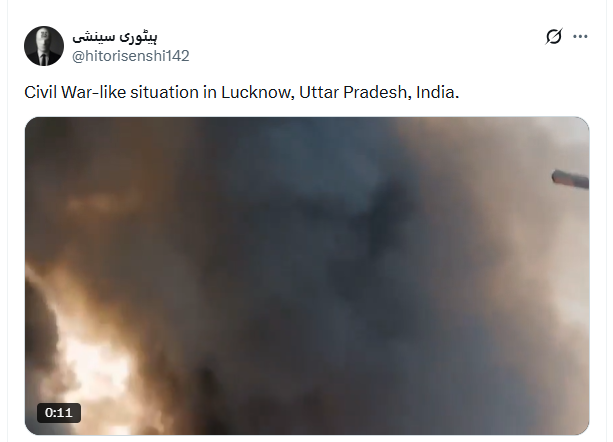
A video showing a massive blaze is going viral on social media with the claim that it captures an “attack” in Lucknow, Uttar Pradesh, suggesting that the city is witnessing a civil war-like situation. However, a fact-check by the CyberPeace Research Wing has found the claim to be false and misleading.
Claim
The viral post was shared by an X (formerly Twitter) user ‘@hitorisenshi142’ on April 15, 2026, with an English caption alleging unrest and violence in Lucknow.
To verify the claim, keyframes from the video were extracted and subjected to a reverse image search. This led to a report published by News18 on April 16, 2026, which featured visuals matching the viral clip.
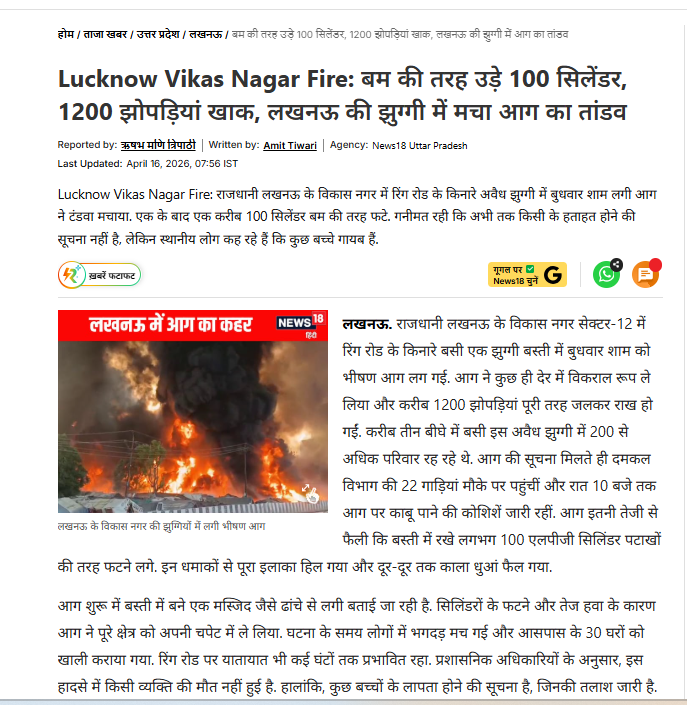
According to the report, the video actually shows a devastating fire that broke out in a slum settlement near Ring Road in Sector-12 of Vikas Nagar, Lucknow. The fire rapidly escalated, engulfing around 1,200 huts and leaving over 200 families affected in the nearly three-bigha area. Firefighting operations were extensive, with 22 fire tenders deployed to control the blaze. The situation was further aggravated as nearly 100 LPG cylinders stored in the huts exploded one after another, intensifying the fire and sending thick black smoke across the area.
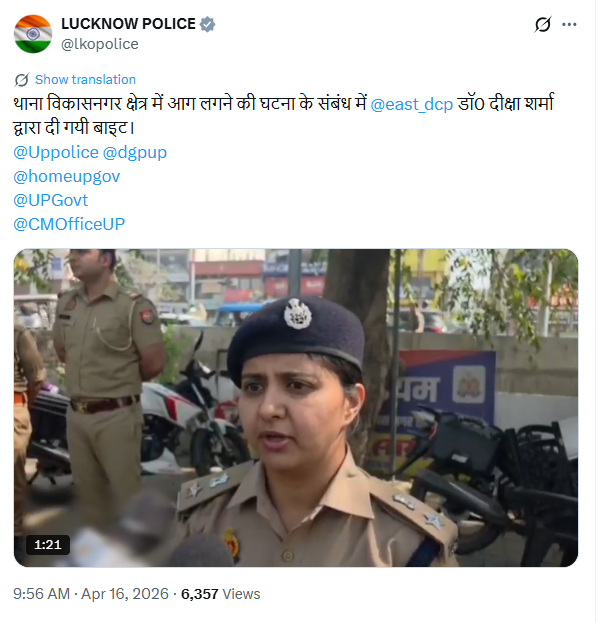
Further confirmation came from the official X account of Lucknow Police, which shared an update on April 16, 2026. The police clarified that the incident was a fire outbreak in the Vikas Nagar area and that the situation had been brought under control.
- https://x.com/lkopolice/status/2044633511584567415?s=20
Conclusion:
The viral claim suggesting that the video depicts an attack or civil war-like situation in Lucknow is false. The footage is from a fire incident in a slum area and is being circulated with misleading context to spread misinformation.

Related Blogs
.webp)
The 2020s mark the emergence of deepfakes in general media discourse. The rise in deepfake technology is defined by a very simple yet concerning fact: it is now possible to create perfect imitations of anyone using AI tools that can create audio in any person's voice and generate realistic images and videos of almost anyone doing pretty much anything. The proliferation of deepfake content in the media poses great challenges to the functioning of democracies. especially as such materials can deprive the public of the accurate information it needs to make informed decisions in elections. Deepfakes are created using AI, which combines different technologies to produce synthetic content.
Understanding Deepfakes
Deepfakes are synthetically generated content created using artificial intelligence (AI). This technology works on an advanced algorithm that creates hyper-realistic videos by using a person’s face, voice or likeness utilising techniques such as machine learning. The utilisation and progression of deepfake technology holds vast potential, both benign and malicious.
An example is when the NGO Malaria No More which had used deepfake technology in 2019 to sync David Beckham’s lip movements with different voices in nine languages, amplified its anti-malaria message.
Deepfakes have a dark side too. They have been used to spread false information, manipulate public opinion, and damage reputations. They can harm mental health and have significant social impacts. The ease of creating deepfakes makes it difficult to verify media authenticity, eroding trust in journalism and creating confusion about what is true and what is not. Their potential to cause harm has made it necessary to consider legal and regulatory approaches.
India’s Legal Landscape Surrounding Deepfakes
India presently lacks a specific law dealing with deepfakes, but the existing legal provisions offer some safeguards against mischief caused.
- Deepfakes created with the intent of spreading misinformation or damaging someone’s reputation can be prosecuted under the Bharatiya Nyaya Sanhita of 2023. It deals with the consequences of such acts under Section 356, governing defamation law.
- The Information Technology Act of 2000, the primary law that regulates Indian cyberspace. Any unauthorised disclosure of personal information which is used to create deepfakes for harassment or voyeurism is a violation of the act.
- The unauthorised use of a person's likeness in a deepfake can become a violation of their intellectual property rights and lead to copyright infringement.
- India’s privacy law, the Digital Personal Data Protection Act, regulates and limits the misuse of personal data. It has the potential to address deepfakes by ensuring that individuals’ likenesses are not used without their consent in digital contexts.
India, at present, needs legislation that can specifically address the challenges deepfakes pose. The proposed legislation, aptly titled, ‘the Digital India Act’ aims to tackle various digital issues, including the misuse of deepfake technology and the spread of misinformation. Additionally, states like Maharashtra have proposed laws targeting deepfakes used for defamation or fraud, highlighting growing concerns about their impact on the digital landscape.
Policy Approaches to Regulation of Deepfakes
- Criminalising and penalising the making, creation and distribution of harmful deepfakes as illegal will act as a deterrent.
- There should be a process that mandates the disclosures for synthetic media. This would be to inform viewers that the content has been created using AI.
- Encouraging tech companies to implement stricter policies on deepfake content moderation can enhance accountability and reduce harmful misinformation.
- The public’s understanding of deepfakes should be promoted. Especially, via awareness campaigns that will empower citizens to critically evaluate digital content and make informed decisions.
Deepfake, Global Overview
There has been an increase in the momentum to regulate deepfakes globally. In October 2023, US President Biden signed an executive order on AI risks instructing the US Commerce Department to form labelling standards for AI-generated content. California and Texas have passed laws against the dangerous distribution of deepfake images that affect electoral contexts and Virginia has targeted a law on the non-consensual distribution of deepfake pornography.
China promulgated regulations requiring explicit marking of doctored content. The European Union has tightened its Code of Practice on Disinformation by requiring social media to flag deepfakes, otherwise they risk facing hefty fines and proposed transparency mandates under the EU AI Act. These measures highlight a global recognition of the risks that deepfakes pose and the need for a robust regulatory framework.
Conclusion
With deepfakes being a significant source of risk to trust and democratic processes, a multi-pronged approach to regulation is in order. From enshrining measures against deepfake technology in specific laws and penalising the same, mandating transparency and enabling public awareness, the legislators have a challenge ahead of them. National and international efforts have highlighted the urgent need for a comprehensive framework to enable measures to curb the misuse and also promote responsible innovation. Cooperation during these trying times will be important to shield truth and integrity in the digital age.
References
- https://digitalcommons.usf.edu/cgi/viewcontent.cgi?article=2245&context=jss
- https://www.thehindu.com/news/national/regulating-deepfakes-generative-ai-in-india-explained/article67591640.ece
- https://www.brennancenter.org/our-work/research-reports/regulating-ai-deepfakes-and-synthetic-media-political-arena
- https://www.responsible.ai/a-look-at-global-deepfake-regulation-approaches/
- https://thesecretariat.in/article/wake-up-call-for-law-making-on-deepfakes-and-misinformation
Executive Summary
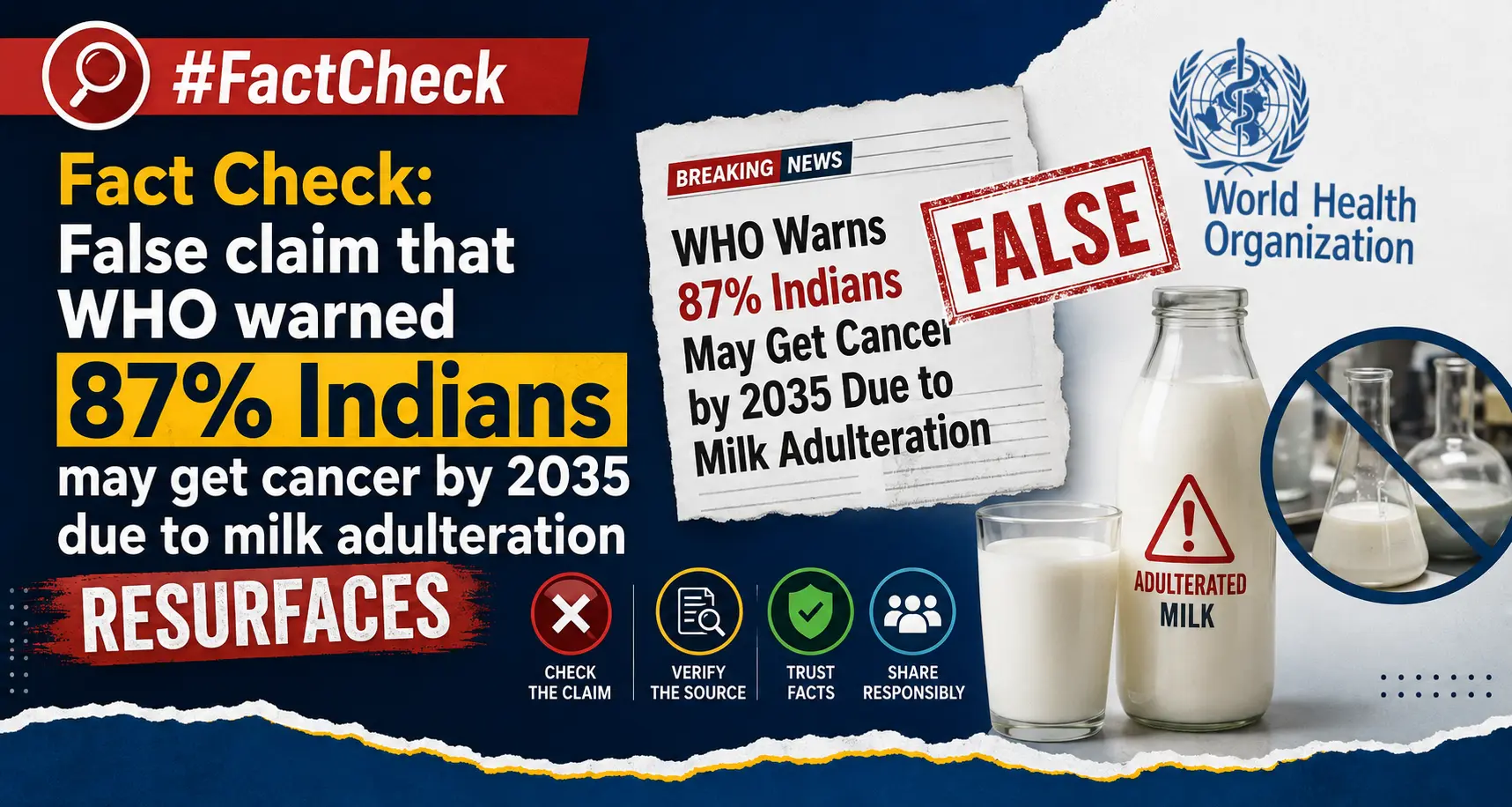
A post is going viral across various social media platforms claiming that the World Health Organization (WHO) has issued a warning over the issue of adulteration in food products. According to the claim, WHO has warned that milk adulteration is continuously increasing in India and if it continues, 87 percent of Indians will suffer from cancer by 2035. CyberPeace Research Wing’s research found that the viral claim has been circulating on social media for several years. Earlier, the same claim was shared with the year changed to 2025, stating that 87 percent of Indians would suffer from cancer by that year. Now, the year has been changed from 2025 to 2035 and the claim is being circulated again. WHO has repeatedly denied this claim and termed it fake news.
Claim:
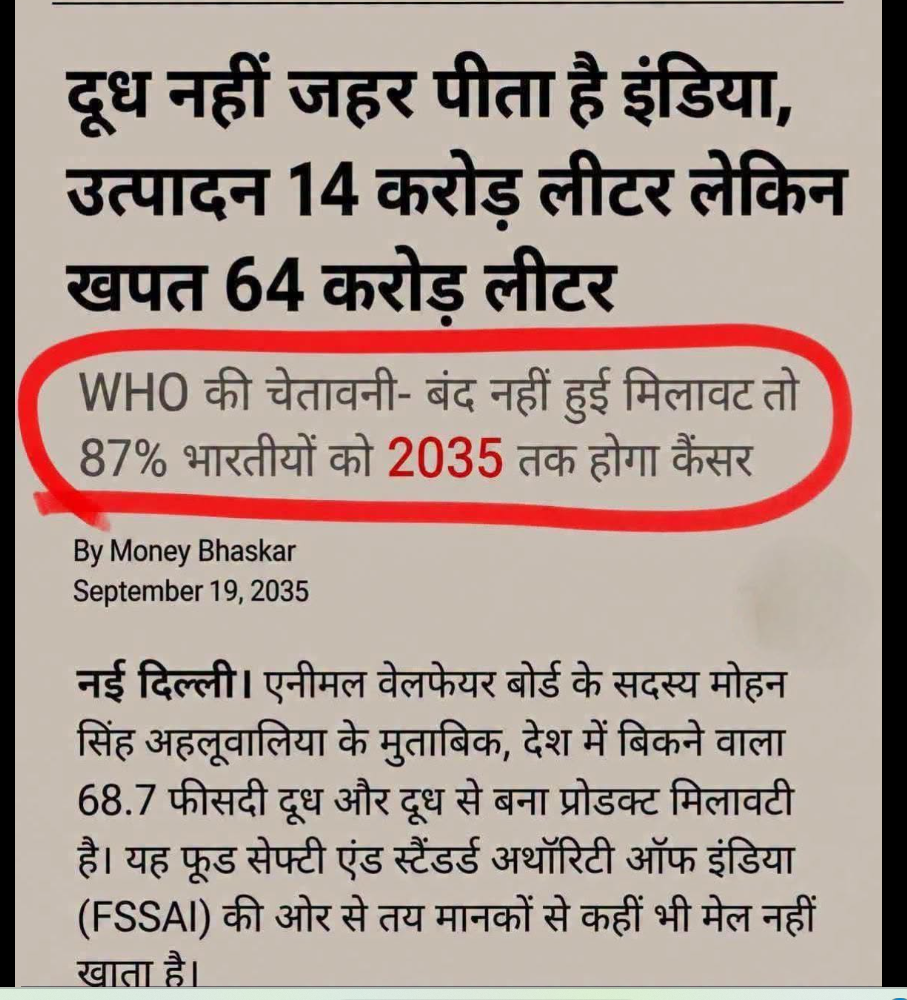
A Facebook user named ‘Vikalp Kuchamancity’ shared the viral post on August 3, 2026, with a caption claiming, “India produces 14 crore litres of milk, but consumption is 64 crore litres. Where does this extra milk come from? WHO has warned that if adulteration is not stopped, 87 percent of Indians may suffer from cancer by 2035.”
https://www.facebook.com/photo/?fbid=968660469565357&set=a.109816988783047
Fact Check:
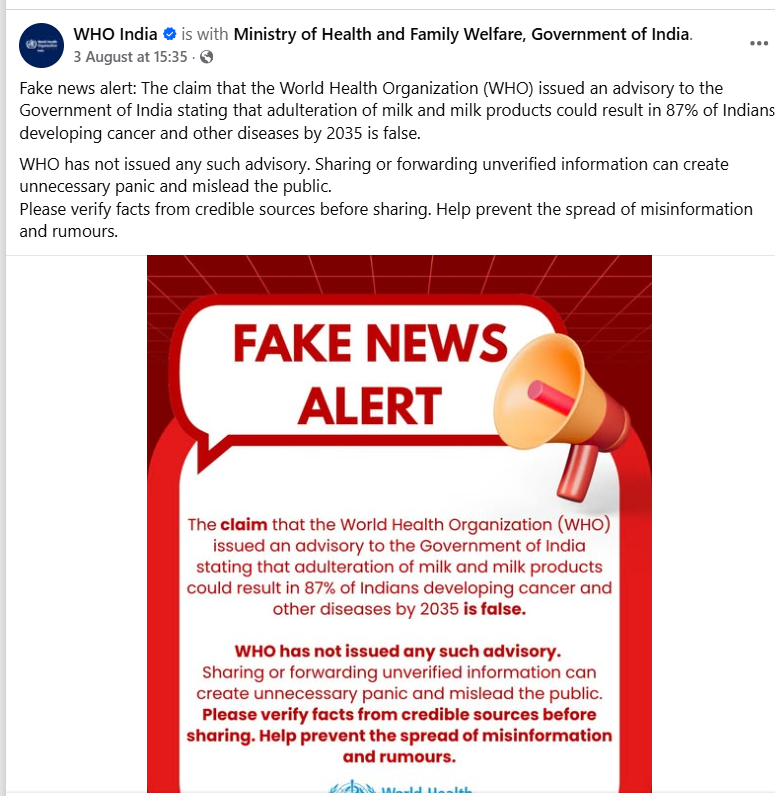
While examining the viral post, we noticed that the report displayed in the image carries the date September 19, 2035, even though the current year is 2026. This raised initial doubts about the authenticity of the claim.To investigate further, we conducted a Google search using relevant keywords. During the search, we found a post from the official Facebook page of WHO India, shared on August 3, 2026. The post denied the viral claim and stated that it is false that WHO issued any advisory to the Indian government warning that adulteration in milk and dairy products could lead to cancer and other diseases among 87 percent of Indians by 2035. WHO clarified that no such advisory has been issued.
WHO India Facebook link:
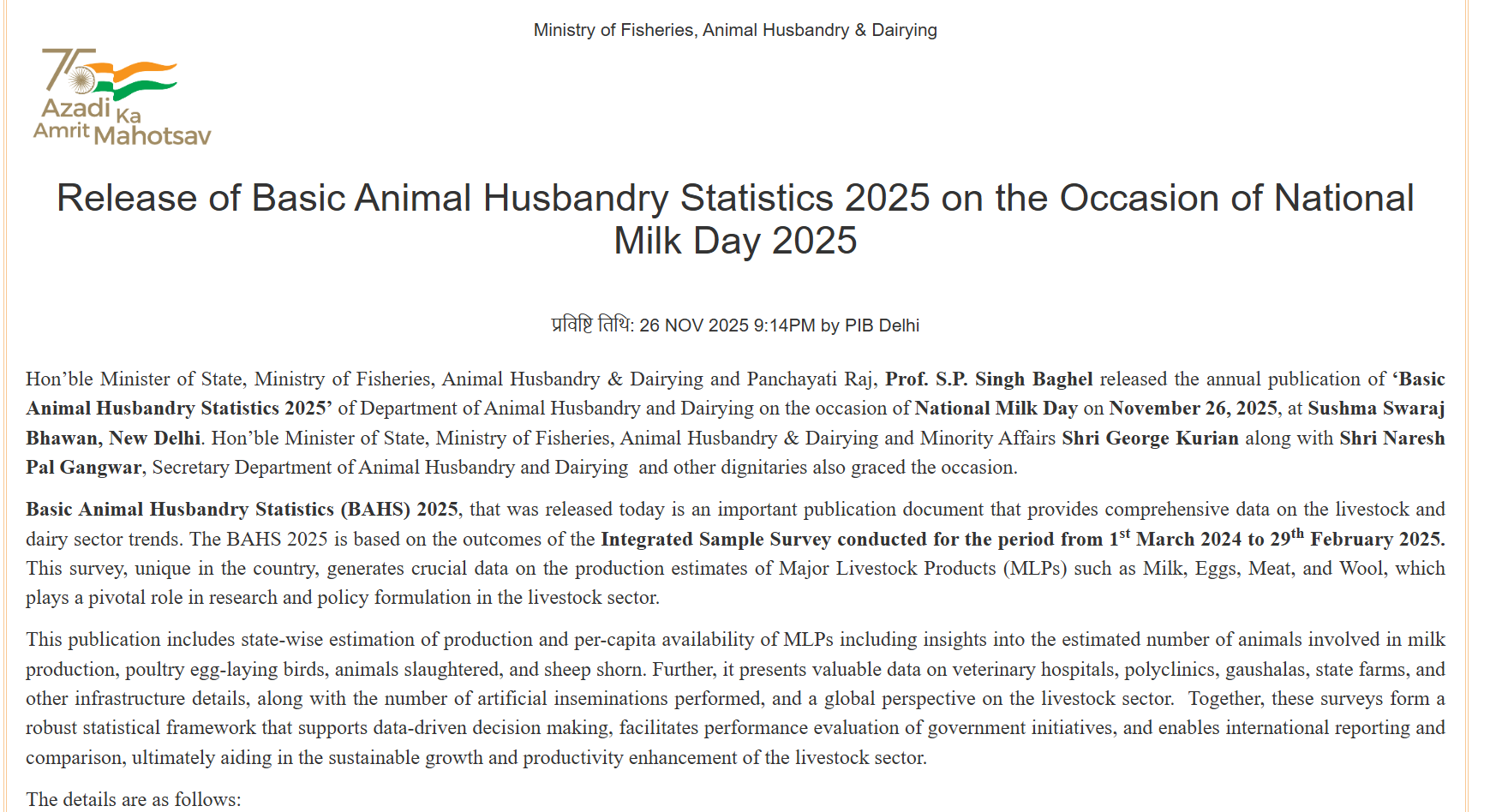
According to data mentioned in a press release issued by the Government of India on November 26, 2025, the country’s total milk production was estimated at 247.87 million tonnes in 2024-25, compared to 239.30 million tonnes in 2023-24. The per capita availability of milk increased from 319 grams per day in 2014-15 to 485 grams per day in 2024-25. The top five milk-producing states are Uttar Pradesh (15.66%), Rajasthan (14.82%), Madhya Pradesh (9.12%), Gujarat (7.78%), and Maharashtra (6.71%). Together, these states contribute 54.09% of India’s total milk production.
https://www.pib.gov.in/PressReleasePage.aspx?PRID=2195049®=3&lang=2
Conclusion:
The research confirmed that there is no evidence of any WHO warning stating that 87 percent of Indians could develop cancer by 2035 due to milk adulteration. WHO has clarified that it has not issued any such advisory. The viral claim is a recycled false claim that has been repeatedly circulated with changed dates.

Executive Summary
After Donald Trump said that US Navy ships would soon begin escorting tankers through the Strait of Hormuz, several old images resurfaced on social media with claims that they show American sailors recently captured by Iran amid the ongoing Middle East tensions. Research by CyberPeace found that the viral posts are misleading. The images being circulated are nearly a decade old and have no connection to the ongoing situation in the Middle East.
Claim:
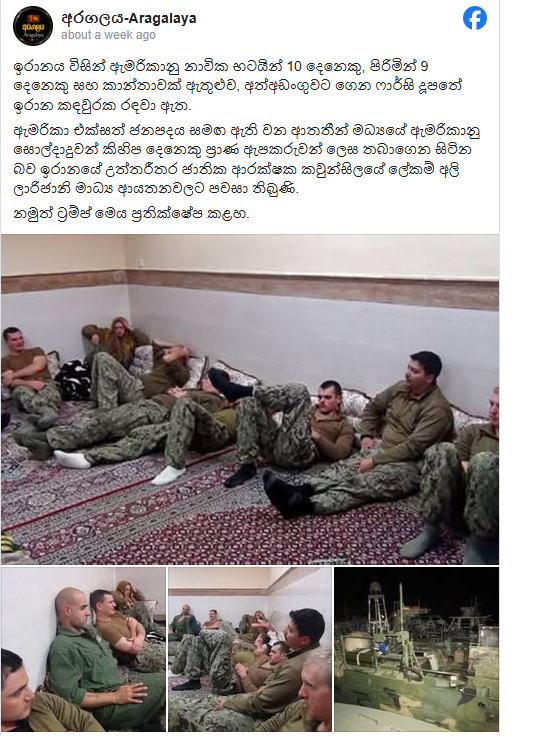
Posts circulating on Facebook alleged that Iran had captured 10 US Navy personnel — nine men and one woman — and detained them at a military base on Farsi Island. The caption further claimed that the incident was reported by Iranian official Ali Larijani and denied by Donald Trump.
https://www.facebook.com/photo/?fbid=1381610870661566&set=pcb.1381611363994850
Fact Check
A reverse image search revealed that the viral images are not recent. They were published as early as January 13, 2016, by ABC News in a report titled “Iran Releases 10 Navy Sailors Held After Drifting Into Iranian Waters.”
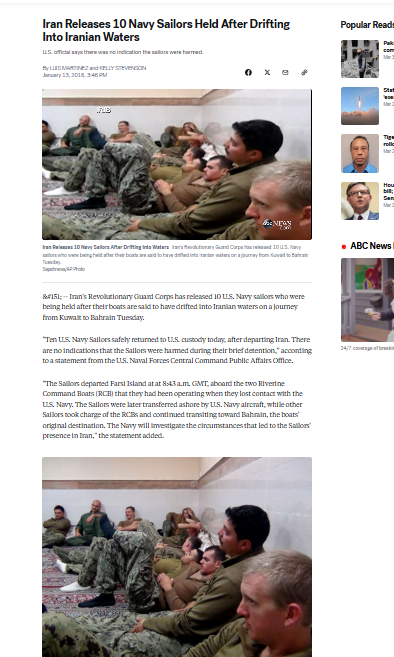
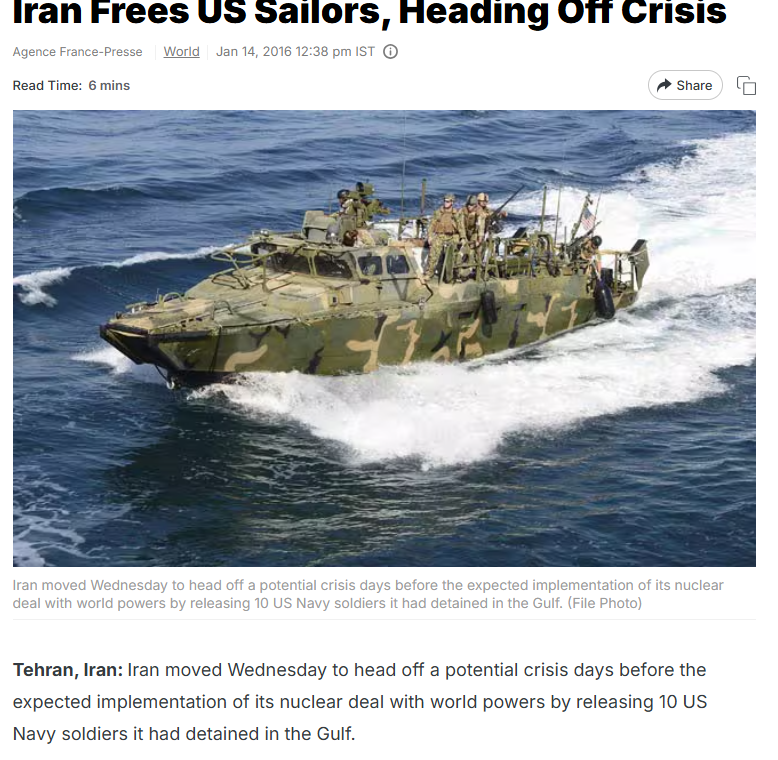
Further checks showed that the same images were distributed by AFP, with credits to Sepah News, the media wing of Iran’s Revolutionary Guards.
Context
The images relate to a 2016 incident in which two US Navy patrol boats accidentally entered Iranian waters. The crew was detained and taken to Farsi Island. Iran later released the sailors after determining that the intrusion was unintentional and that there was no hostile intent.
Conclusion
The viral posts are misleading. The images being shared are nearly a decade old and unrelated to the ongoing situation in the Middle East.
