
#FactCheck-Viral Post Falsely Claims White House Dinner Shooter Was Muslim and Killed
Executive Summary
A social media post about the shooting incident during a dinner event for journalists covering the White House is going viral with the claim that the attacker was a Muslim man who was shot dead by security personnel. The accompanying video shows panic inside a hall and alert security officials responding to the situation. wHowever, research by the CyberPeace Research Wing found that the claim is false and misleading. The video is being shared with incorrect information about the identity and fate of the suspect.
Claim:
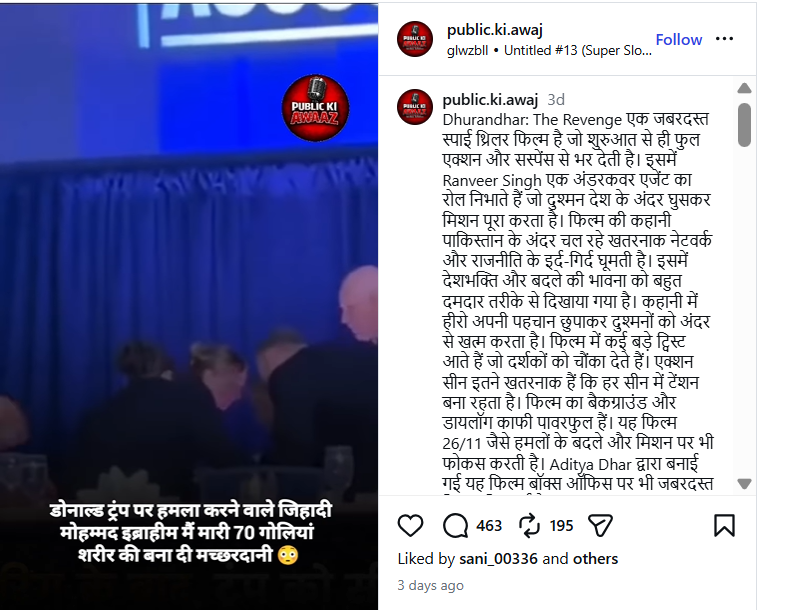
An Instagram user shared the video on April 26, 2026, claiming that the attacker who targeted Donald Trump was a “jihadi” named Mohammad Ibrahim and that he was killed after being shot multiple times.
Fact Check:
To verify the claim, relevant keyword searches were conducted online.
A report published by BBC on April 28, 2026, stated that the suspect accused of attempting to assassinate President Donald Trump during the Washington dinner event was identified as Cole Thomas Allen. The report said Allen lived with his parents in Los Angeles and was produced in court on April 28.
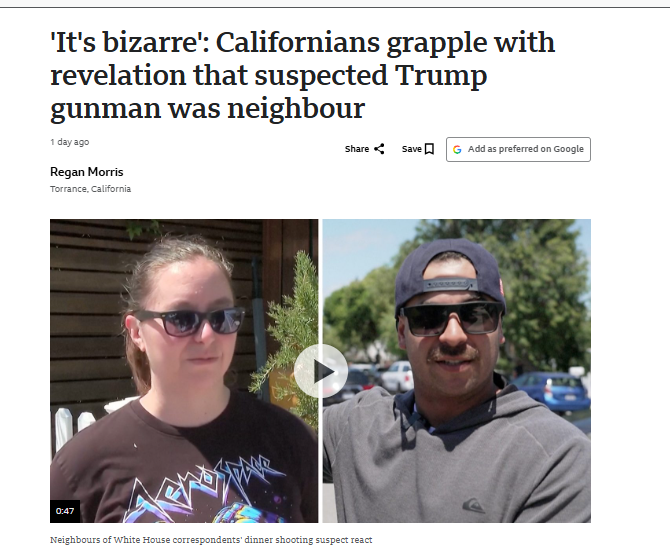
According to court documents cited in the report, Allen rushed past a security checkpoint carrying a semi-automatic handgun, a pump-action shotgun, and three knives. Authorities said one Secret Service agent was injured during the incident before Allen was subdued and taken into custody. A separate report published by NBC News on April 26, 2026, also identified the accused as Cole Thomas Allen and included visuals from the incident, showing the suspect after his arrest.

Conclusion:
The claim that the White House dinner party attacker was a Muslim man named Mohammad Ibrahim is false. The accused has been identified as Cole Thomas Allen, and he was arrested after the incident. Claims that he was killed are also incorrect.

Related Blogs

Executive Summary
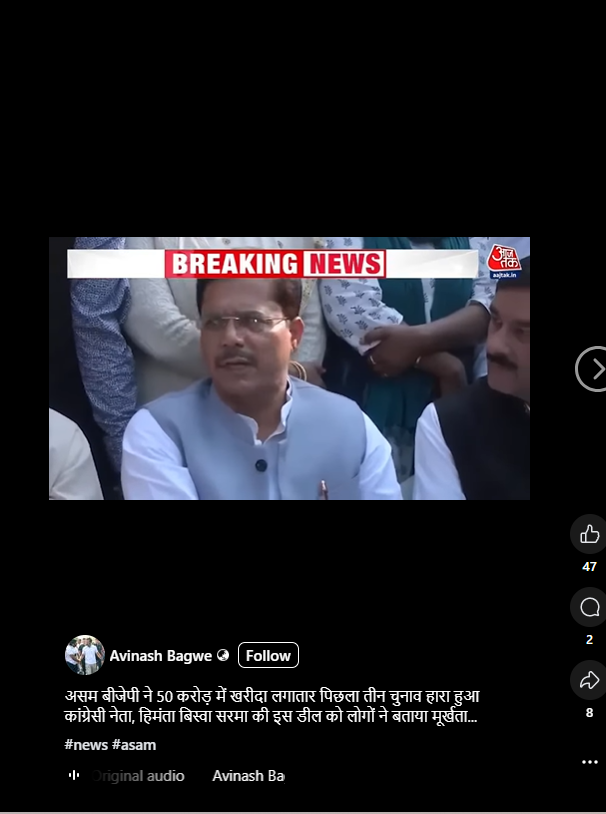
A purported news clip circulating on social media claims that the Bharatiya Janata Party (BJP) purchased Bhupen Bora, a leader of the Indian National Congress, for ₹50 crore as part of a political deal in Assam. The viral clip further alleges that the transaction took place under the leadership of Assam Chief Minister Himanta Biswa Sarma and included an agreement to induct several Congress leaders into the BJP.
However, research by CyberPeace found the viral claim to be false and revealed that the original news video had been manipulated using AI and shared with misleading claims.
Claim
On February 18, 2026, a user shared the viral video on Facebook, claiming that the Assam BJP had bought a Congress leader who had lost the last three elections for ₹50 crore, and that the alleged deal led by Himanta Biswa Sarma had drawn public criticism.
Fact Check:
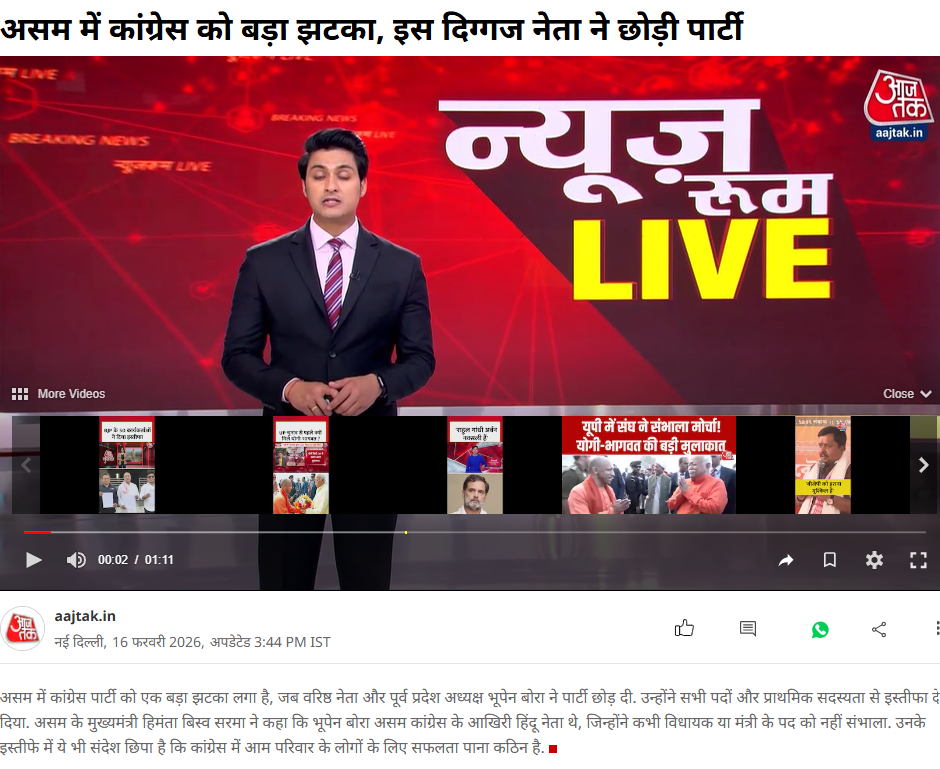
To verify the authenticity of the claim, we extracted key frames from the viral video and conducted a reverse image search using Google Lens. During the research, we found the original version of the video published on the website of Aaj Tak on February 16, 2026. In the original report, the anchor is only seen reporting on Bhupen Bora’s resignation from the party. The report does not mention any alleged financial transaction or political deal, contrary to the claims made in the viral clip.
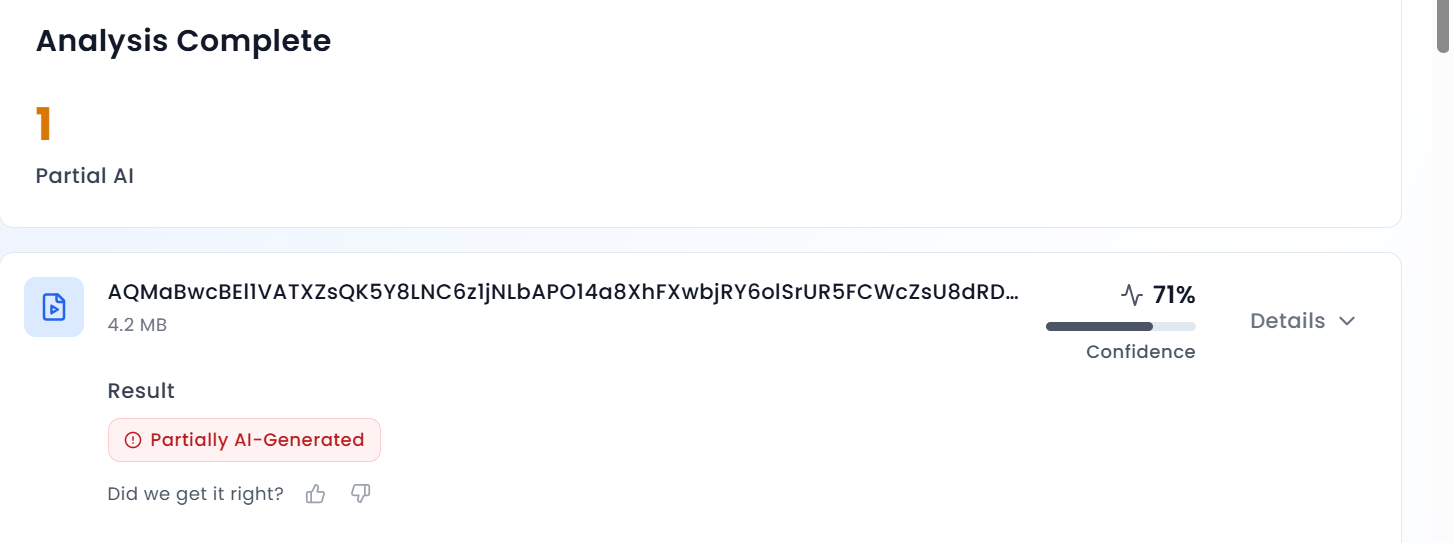
In the next stage of the research, the viral video was analysed using the AI detection tool AURGIN AI, which identified the video as AI-generated.
Conclusion
Our research found that users had manipulated the original news broadcast using AI and shared it with misleading claims. The viral clip does not show any real financial deal between Bhupen Bora and the Assam Chief Minister.

Executive Summary
A video showing a massive fire with thick black smoke is being widely shared on social media with the claim that it depicts a recent Israeli attack on Iran. CyberPeace Research Wing research found that the claim is false. The viral video is not related to Iran or any Israel-Iran conflict. It actually shows a gas pipeline fire in Kizilyurt city of Russia’s Dagestan region.
Claim:
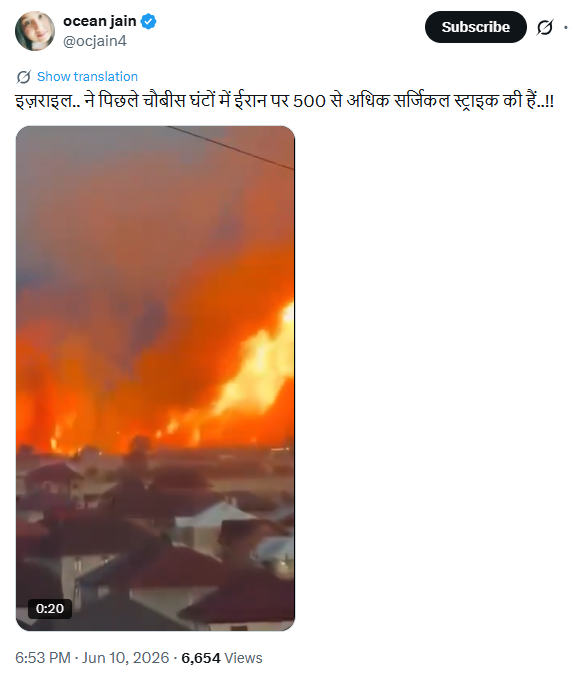
A video circulating on X shows a large fire breaking out at a location with thick black smoke rising. The clip is being shared with a caption claiming, “Israel has carried out more than 500 surgical strikes on Iran in the last 24 hours.” Post link: https://x.com/ocjain4/status/2064700017361985702, https://x.com/ocjain4/status/2064700017361985702
Fact Check:
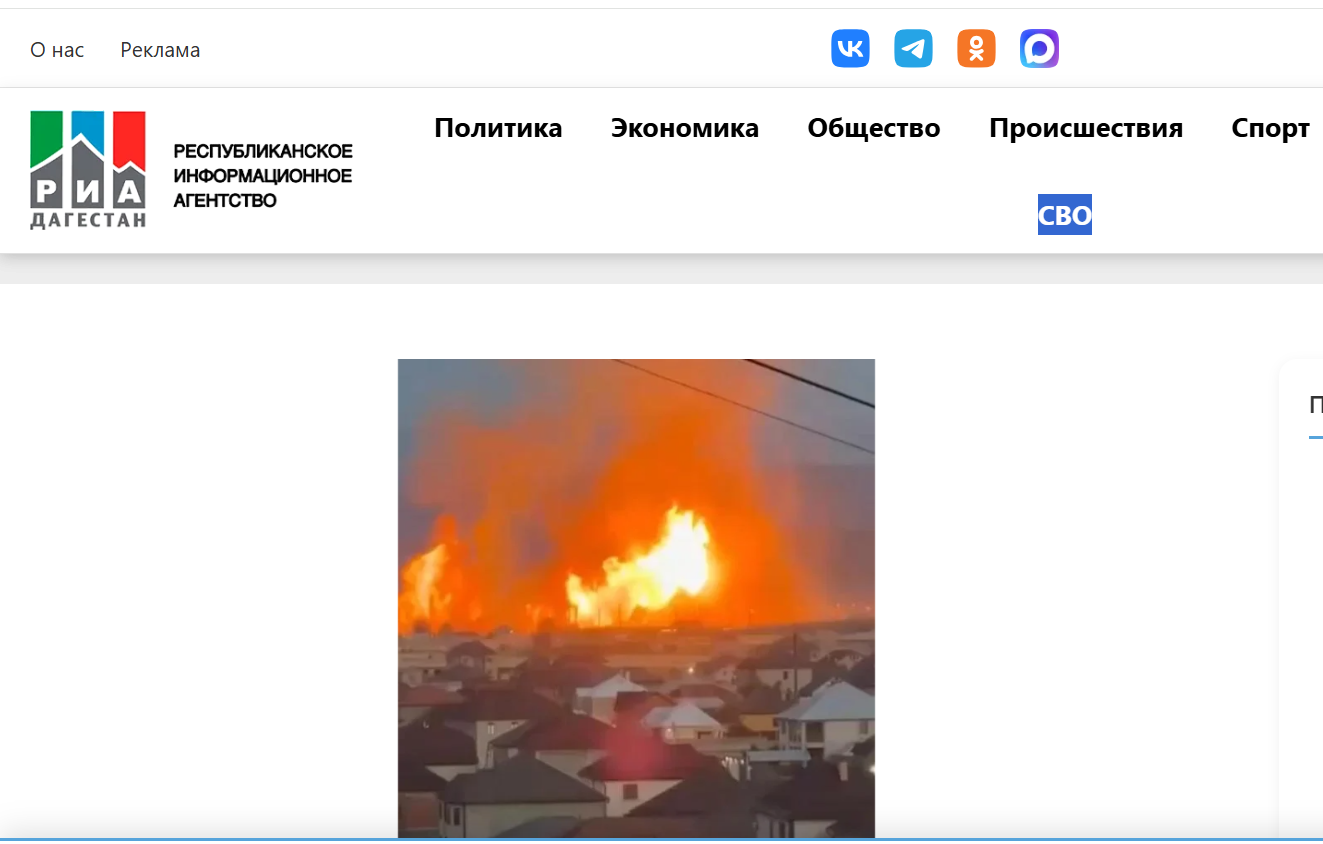
A reverse image search using keyframes from the viral video led to visuals published in a report on a Dagestan-based media outlet dated June 9. The report stated that the Russian Emergency Situations Ministry’s Dagestan department received reports of three explosions at a methane gas station.
https://riadagestan.ru/news/incidents/v_dagestane_vzorvalas_azs
Further research found that several Russian media outlets also published the same visuals on June 9, describing them as a pipeline explosion and fire in Kizilyurt, Dagestan

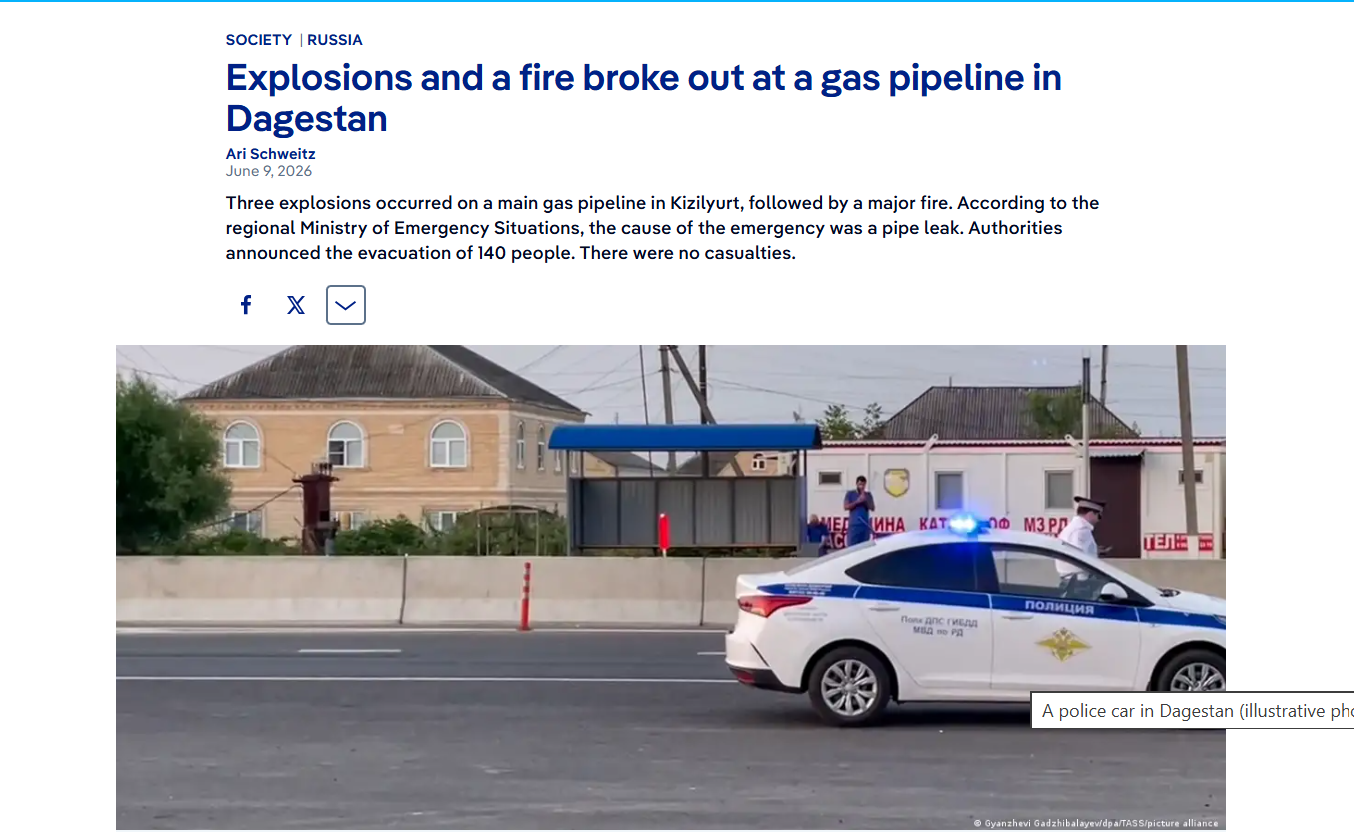
We also found a report published by DW on June 9, 2026, which stated that three explosions occurred on the Mozdok–Kazimagomed gas pipeline in Kizilyurt, Dagestan, resulting in a massive fire with flames rising up to 15 meters. According to local authorities, no casualties or injuries were reported..
https://www.dw.com/ru/na-gazoprovode-v-dagestane-progremeli-tri-vzryva-voznik-pozar/a-77481599
Conclusion:
The research clearly shows that the viral video is unrelated to the Israel-Iran conflict. It actually depicts a gas pipeline fire in Russia’s Dagestan region, which has been falsely shared as a recent Israeli strike on Iran.
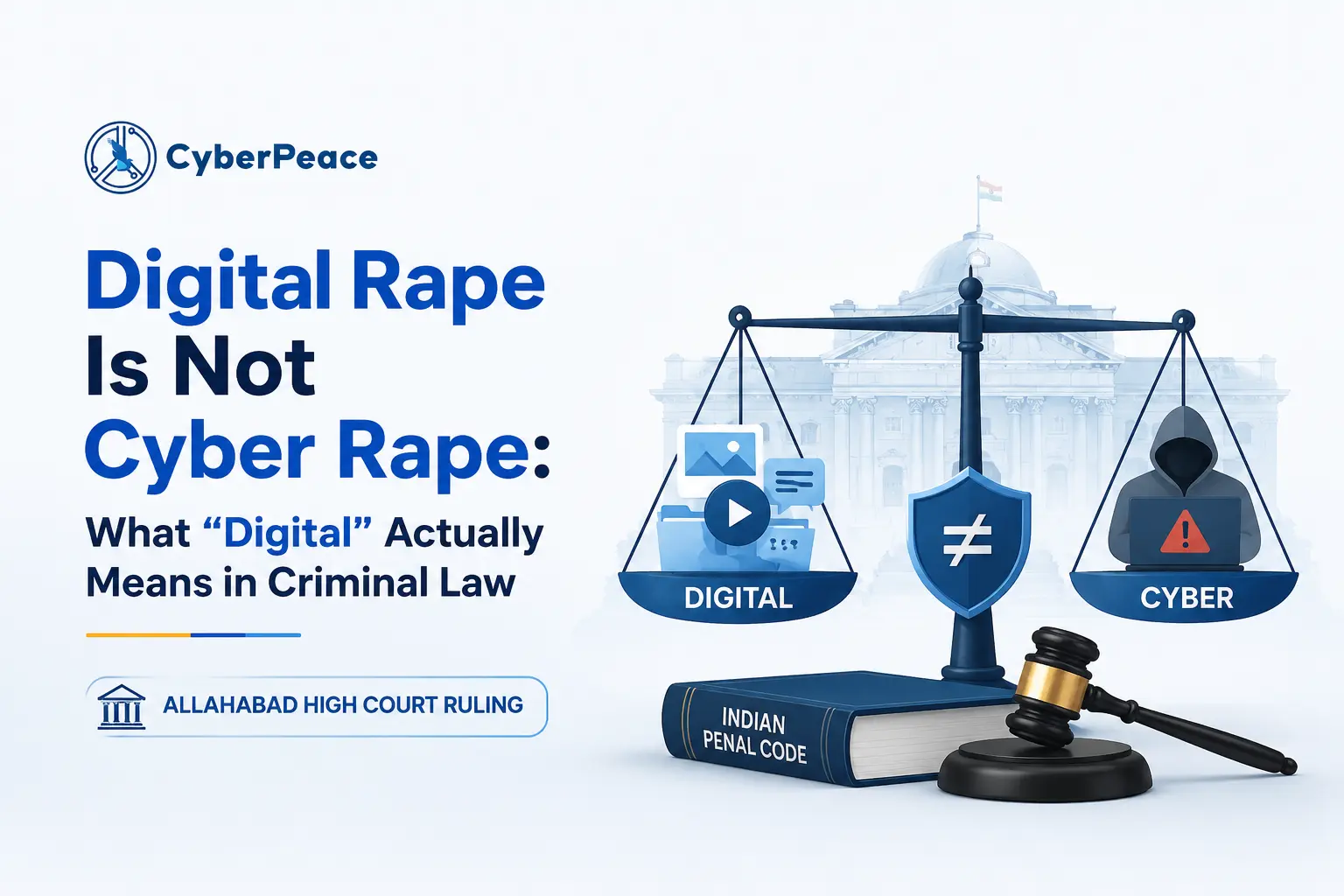
A word rooted in medical terminology keeps getting mistaken for a word rooted in technology, and that confusion is not just semantic. On 6 August 2026, it sat at the heart of a case where police in Uttar Pradesh reportedly treated the absence of WhatsApp chats, call recordings, and social media material as grounds to disbelieve a sexual assault complaint altogether, before the Allahabad High Court intervened. For an organisation working at the intersection of digital literacy and public safety, this case is less a story about a legal term and more a case study in how assumptions about digital evidence, when left unchecked, can become a barrier to justice rather than a tool for it. "Digital" here refers to a finger, not a device, and the gap between what police expected and what the law actually required is exactly where this case becomes instructive. Digital rape has nothing to do with the internet. Digit simply means finger, and the word describes non-consensual penetration by a finger, thumb, toe, or similar body part or object. That basic clarification matters because the same investigating officers who were expected to know the law also appear to have leaned on a mistaken evidentiary standard, one where a complaint without a digital trail was treated as a complaint without merit. The judgment that followed says as much about how the criminal justice system treats sexual assault complaints, and how it treats digital evidence, as it does about legal terminology.
The case, in brief
The matter is Arpit Gupta v. State of U.P. and 2 others, 2026 LiveLaw (AB) 571, neutral citation 2026:AHC:168404-DB, decided by a Division Bench of Justice Chandra Dhari Singh and Justice Tarun Saxena. Arpit Gupta, the owner of a Noida based real estate firm, Parit Associates (OPC) Private Limited, approached the High Court under Article 226 of the Constitution seeking to quash an FIR registered against him at Wave City police station, Ghaziabad, alleging rape, sexual harassment, and criminal intimidation. The complainant, a former employee of Gupta's company, alleged sustained workplace sexual harassment culminating in an act legally categorised as digital penetration, along with subsequent threats and intimidation. She resigned in April 2026. What followed procedurally is where the case becomes significant: Gupta filed a separate extortion complaint against her, she was arrested and later released on bail, and only after that sequence did she attempt to formally report the sexual assault, a report the police initially declined to register.
What followed complicates the picture considerably, and is central to why the case reached the High Court at all. On 14 April 2026, Gupta filed his own FIR against the complainant alleging extortion, claiming she had demanded 10 crore rupees from him. She was arrested in connection with that case and secured bail on 21 May 2026. After her release, she attempted to register her own complaint of sexual assault, but police at Wave City station declined to register an FIR. A written complaint dated 7 July 2026 addressed directly to the Commissioner of Police, Ghaziabad, also produced no result. The police investigating officer's report, dated 16 July 2026, went further still, terming her allegations false and characterising the sexual assault complaint as a retaliatory counter-blast to Gupta's extortion case, citing in particular the absence of supporting electronic material such as WhatsApp chats, call recordings, or social media evidence. Only after she approached a Magistrate under Section 173(4) of the Bharatiya Nagarik Suraksha Sanhita, 2023, did the FIR finally get registered, by Magisterial order dated 20 July 2026.
The legal terminology: what "digital rape" actually means under BNS
Section 63 of the Bharatiya Nyaya Sanhita, 2023, which replaced Section 375 of the erstwhile Indian Penal Code, defines rape. Clause (b) of Section 63 extends that definition to cover non-penile penetrative acts, specifically insertion, to any extent, of any object or body part other than the penis into specified parts of a woman's body, done without her consent or against her will, subject to the circumstances of absent consent set out in the section. Digital penetration, meaning penetration by finger or thumb, falls squarely within this clause. There is no standalone offence in the BNS titled "digital rape"; the term is a widely used medico-legal shorthand, not a separate statutory category, and the offence itself is prosecuted and punished as rape under Section 64 BNS, which prescribes the punishment provisions. In this particular case, the FIR reportedly also invoked Sections 74, 75(2), and 76 BNS, provisions dealing with assault or use of criminal force with intent to outrage modesty, sexual harassment by a person in a position of authority, and related offences, alongside Section 351(3) BNS concerning criminal intimidation.
CyberPeace View
This is where the case circles back to the concern raised at the outset. The most instructive part of this judgment for the wider public may not be the definition of digital rape at all, but the police's original insistence on WhatsApp chats and call recordings before treating the complaint as credible. That reflex, a growing habit of associating the credibility of any complaint with the existence of a corresponding digital trail, reflects a wider and increasingly common misunderstanding about how evidence actually works in criminal law. Not every offence leaves an electronic footprint, and sexual assault, by its nature, frequently occurs without any accompanying digital record at all. Treating the absence of a chat log or a recording as evidence of falsehood inverts the legal presumption entirely, and risks turning digital literacy gaps within law enforcement into a structural barrier for genuine complainants who have no messages to produce because none were ever exchanged. As India's criminal justice system increasingly interacts with digital evidence, this case is a useful reminder that digital forensics should supplement an investigation, never gatekeep its starting point.
There is a genuinely technology rooted counterpart to this terminology confusion worth flagging, and it sits at the opposite end of the spectrum from where this case began. While "digital rape" has nothing to do with computers, "virtual rape" very much does, and it is an emerging harm India's legal framework is still catching up to. In January 2024, British police opened what was reported as the first investigation of its kind after a minor's avatar was allegedly gang assaulted by other avatars on Meta's metaverse platform, and similar incidents, avatars groped or sexually harassed within minutes of entering platforms like Horizon Worlds, have been documented repeatedly since, including a widely reported case involving psychotherapist Nina Jane Patel as far back as 2021. These incidents involve no physical contact whatsoever, yet researchers and legal scholars studying virtual reality note that immersive VR environments are specifically engineered to create a sense of embodiment, where the brain processes an avatar's violation as something closer to a real bodily experience than a typical online interaction, producing genuine trauma responses in victims. India's legal position here remains only partially settled. The POCSO Act's coverage of non-contact sexual abuse of minors likely extends to avatar based assaults on children, but adult victims of virtual sexual violence in India currently have no clearly dedicated statutory provision, leaving prosecutors to stretch existing harassment and outraging modesty provisions, originally drafted for a physical world, onto a form of harm the legislature has not yet explicitly addressed. As metaverse and VR platforms grow their user base in India, that gap is one worth closing before, rather than after, a case forces the question, much as this one forced the question of how police ought to treat digital evidence.
Conclusion
Two lessons run through this judgment. First, that the law's protection of bodily autonomy extends well beyond narrow, traditional definitions of penetration, a principle Section 63(b) BNS makes explicit. Second, that a complainant reporting a cognizable offence cannot be made to investigate her own case before the police will even open a file. FIR registration is not conviction, and conviction requires investigation, evidence, and trial to follow. What this case asks of the system is simpler than any of that: register the complaint, then do the work of finding out what happened.
References
- https://www.barandbench.com/news/digital-rape-allahabad-hc-orders-inquiry-against-senior-ghaziabad-police-officers-for-not-filing-fir
- https://www.livelaw.in/high-court/allahabad-high-court/allahabad-hc-police-cant-refuse-fir-sexual-complaint-non-production-evidence-545374
