
#FactCheck: Viral 360-Degree Catch Video Is AI-Generated, Not From a Real Match
Executive Summary
A video is being shared on social media showing a female cricket player seemingly making an impressive catch in the air after rotating 360 degrees. The video is being shared with claims that the player pulled off the extraordinary catch in an incredible feat on the cricket field. Research by CyberPeace found the viral claim to be false. Our research revealed that the viral video was edited with the help of AI. The video uses actual broadcast footage from the 2024 Women’s T20 World Cup match between India and New Zealand, but the 360-degree catch shown in the video was not part of the actual match.
Claim:
A video of a female cricketer making an incredible 360-degree catch is being shared on social media as a real incident from a cricket match.
https://www.instagram.com/reels/DdEca3LNT00/

Fact Check
To verify the authenticity of the viral claim, we conducted a Google search using relevant keywords. However, we did not find any credible media reports confirming the claim.

As part of the next step in our research, we conducted a reverse image search of the keyframes from the video. During the search, we found the same video on a YouTube channel, where it was identified as AI-generated.
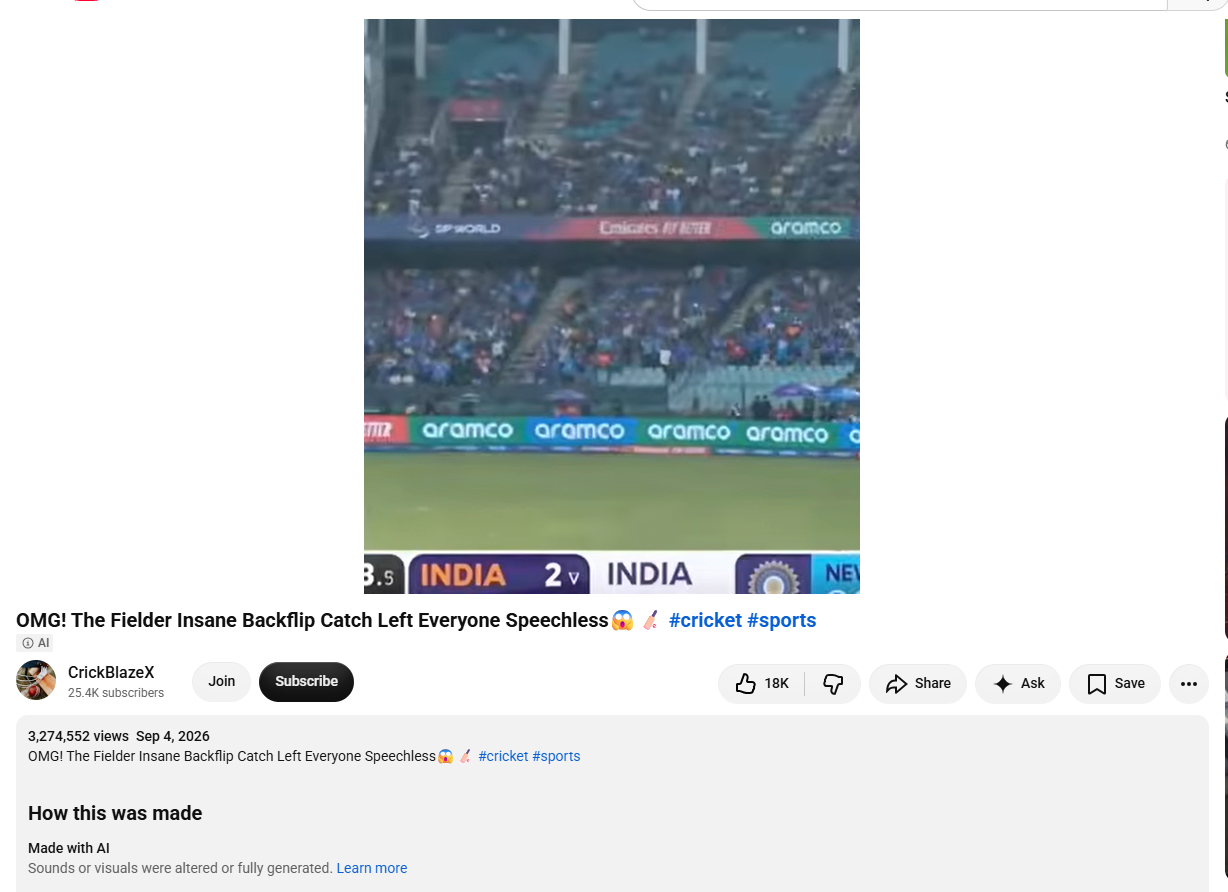
As the next step, we scanned the viral video using the AI detection tool Hive Moderation. According to the tool’s results, there is a 70 percent probability that the video is AI-generated.

As part of the next step in our research, we scanned the viral video using an AI detection tool. According to the results, the viral video is AI-generated.

Conclusion
Our research found that the viral video was edited with the help of AI. The video uses actual broadcast footage from the 2024 Women’s T20 World Cup match between India and New Zealand. However, the 360-degree catch shown in the video was not part of the actual match.

Related Blogs

Executive Summary
A video is being widely shared on social media with the claim that it shows the aftermath of a recent Israeli attack on Iran. The footage shows multiple residential high-rise buildings engulfed in flames, with thick plumes of smoke rising into the sky. Users sharing the video claim that Israel carried out more than 500 airstrikes on Iran. CyberPeace Research Wingresearch found the claim to be misleading. The viral video is not related to any Israeli attack on Iran. It actually shows a massive fire that broke out in a residential complex in Hong Kong in November 2025.
Claim:
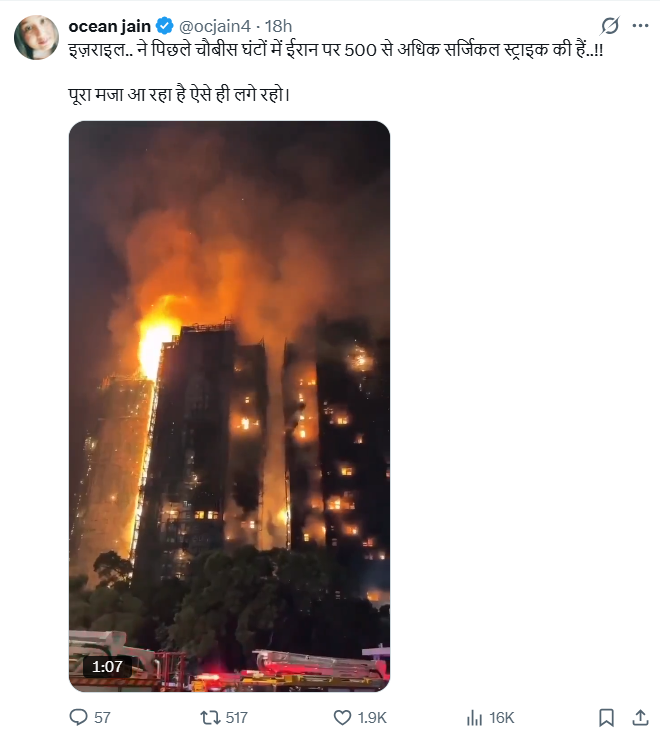
An X user shared the viral video and wrote, “Israel has carried out more than 500 surgical strikes on Iran in the last 24 hours. Enjoying it thoroughly. Keep it up.”
Post link, archive link and screenshot can be seen below:
https://x.com/ocjain4/status/2064715707997413618?s=20
Fact Check:
To verify the authenticity of the viral video, we extracted keyframes and conducted a Google Lens search. During the research, we found the same footage on Reuters’ website, where it had been published on November 26, 2025.
Report link and screenshot can be seen below:
https://www.reuters.com/video/watch/idRW511126112025RP1/

According to Reuters, the video shows a massive fire that engulfed multiple high-rise residential buildings in Hong Kong’s northern Tai Po district. The blaze claimed the lives of at least four people. Thick smoke could be seen billowing from the buildings as firefighters and emergency response teams worked to bring the fire under control.
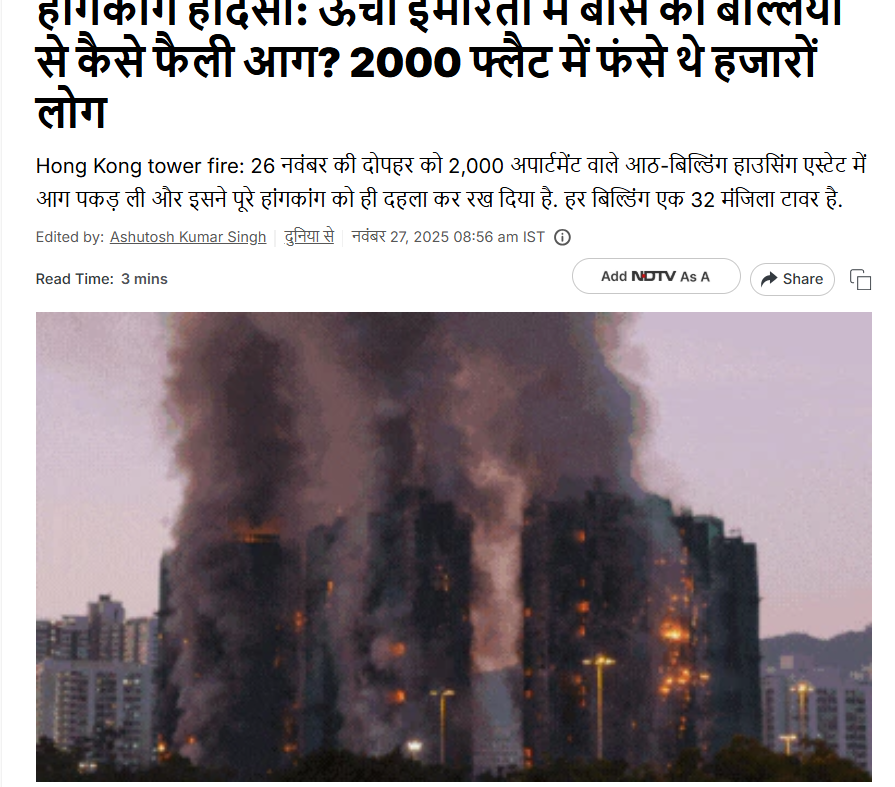
After establishing the source of the video, we conducted a keyword search on Google and found a report published by NDTV on November 27, 2025, which also covered the incident.
Report link and screenshot can be seen below:
Conclusion:
Our research found that the viral video is not related to any Israeli attack on Iran. The footage actually shows a massive fire that broke out in residential buildings in Hong Kong in November 2025. Chinese President Xi Jinping had expressed condolences to the victims, including a firefighter who lost his life while on duty.
.webp)
Introduction
Misinformation is a major issue in the AI age, exacerbated by the broad adoption of AI technologies. The misuse of deepfakes, bots, and content-generating algorithms have made it simpler for bad actors to propagate misinformation on a large scale. These technologies are capable of creating manipulative audio/video content, propagate political propaganda, defame individuals, or incite societal unrest. AI-powered bots may flood internet platforms with false information, swaying public opinion in subtle ways. The spread of misinformation endangers democracy, public health, and social order. It has the potential to affect voter sentiments, erode faith in the election process, and even spark violence. Addressing misinformation includes expanding digital literacy, strengthening platform detection capabilities, incorporating regulatory checks, and removing incorrect information.
AI's Role in Misinformation Creation
AI's growth in its capabilities to generate content have grown exponentially in recent years. Legitimate uses or purposes of AI many-a-times take a backseat and result in the exploitation of content that already exists on the internet. One of the main examples of misinformation flooding the internet is when AI-powered bots flood social media platforms with fake news at a scale and speed that makes it impossible for humans to track and figure out whether the same is true or false.
The netizens in India are greatly influenced by viral content on social media. AI-generated misinformation can have particularly negative consequences. Being literate in the traditional sense of the word does not automatically guarantee one the ability to parse through the nuances of social media content authenticity and impact. Literacy, be it social media literacy or internet literacy, is under attack and one of the main contributors to this is the rampant rise of AI-generated misinformation. Some of the most common examples of misinformation that can be found are related to elections, public health, and communal issues. These issues have one common factor that connects them, which is that they evoke strong emotions in people and as such can go viral very quickly and influence social behaviour, to the extent that they may lead to social unrest, political instability and even violence. Such developments lead to public mistrust in the authorities and institutions, which is dangerous in any economy, but even more so in a country like India which is home to a very large population comprising a diverse range of identity groups.
Misinformation and Gen AI
Generative AI (GAI) is a powerful tool that allows individuals to create massive amounts of realistic-seeming content, including imitating real people's voices and creating photos and videos that are indistinguishable from reality. Advanced deepfake technology blurs the line between authentic and fake. However, when used smartly, GAI is also capable of providing a greater number of content consumers with trustworthy information, counteracting misinformation.
Generative AI (GAI) is a technology that has entered the realm of autonomous content production and language creation, which is linked to the issue of misinformation. It is often difficult to determine if content originates from humans or machines and if we can trust what we read, see, or hear. This has led to media users becoming more confused about their relationship with media platforms and content and highlighted the need for a change in traditional journalistic principles.
We have seen a number of different examples of GAI in action in recent times, from fully AI-generated fake news websites to fake Joe Biden robocalls telling the Democrats in the U.S. not to vote. The consequences of such content and the impact it could have on life as we know it are almost too vast to even comprehend at present. If our ability to identify reality is quickly fading, how will we make critical decisions or navigate the digital landscape safely? As such, the safe and ethical use and applications of this technology needs to be a top global priority.
Challenges for Policymakers
AI's ability to generate anonymous content makes it difficult to hold perpetrators accountable due to the massive amount of data generated. The decentralised nature of the internet further complicates regulation efforts, as misinformation can spread across multiple platforms and jurisdictions. Balancing the need to protect the freedom of speech and expression with the need to combat misinformation is a challenge. Over-regulation could stifle legitimate discourse, while under-regulation could allow misinformation to propagate unchecked. India's multilingual population adds more layers to already-complex issue, as AI-generated misinformation is tailored to different languages and cultural contexts, making it harder to detect and counter. Therefore, developing strategies catering to the multilingual population is necessary.
Potential Solutions
To effectively combat AI-generated misinformation in India, an approach that is multi-faceted and multi-dimensional is essential. Some potential solutions are as follows:
- Developing a framework that is specific in its application to address AI-generated content. It should include stricter penalties for the originator and spreader and dissemination of fake content in proportionality to its consequences. The framework should establish clear and concise guidelines for social media platforms to ensure that proactive measures are taken to detect and remove AI-generated misinformation.
- Investing in tools that are driven by AI for customised detection and flagging of misinformation in real time. This can help in identifying deepfakes, manipulated images, and other forms of AI-generated content.
- The primary aim should be to encourage different collaborations between tech companies, cyber security orgnisations, academic institutions and government agencies to develop solutions for combating misinformation.
- Digital literacy programs will empower individuals by training them to evaluate online content. Educational programs in schools and communities teach critical thinking and media literacy skills, enabling individuals to better discern between real and fake content.
Conclusion
AI-generated misinformation presents a significant threat to India, and it is safe to say that the risks posed are at scale with the rapid rate at which the nation is developing technologically. As the country moves towards greater digital literacy and unprecedented mobile technology adoption, one must be cognizant of the fact that even a single piece of misinformation can quickly and deeply reach and influence a large portion of the population. Indian policymakers need to rise to the challenge of AI-generated misinformation and counteract it by developing comprehensive strategies that not only focus on regulation and technological innovation but also encourage public education. AI technologies are misused by bad actors to create hyper-realistic fake content including deepfakes and fabricated news stories, which can be extremely hard to distinguish from the truth. The battle against misinformation is complex and ongoing, but by developing and deploying the right policies, tools, digital defense frameworks and other mechanisms, we can navigate these challenges and safeguard the online information landscape.
References:
- https://economictimes.indiatimes.com/news/how-to/how-ai-powered-tools-deepfakes-pose-a-misinformation-challenge-for-internet-users/articleshow/98770592.cms?from=mdr
- https://www.dw.com/en/india-ai-driven-political-messaging-raises-ethical-dilemma/a-69172400
- https://pure.rug.nl/ws/portalfiles/portal/975865684/proceedings.pdf#page=62
Executive Summary
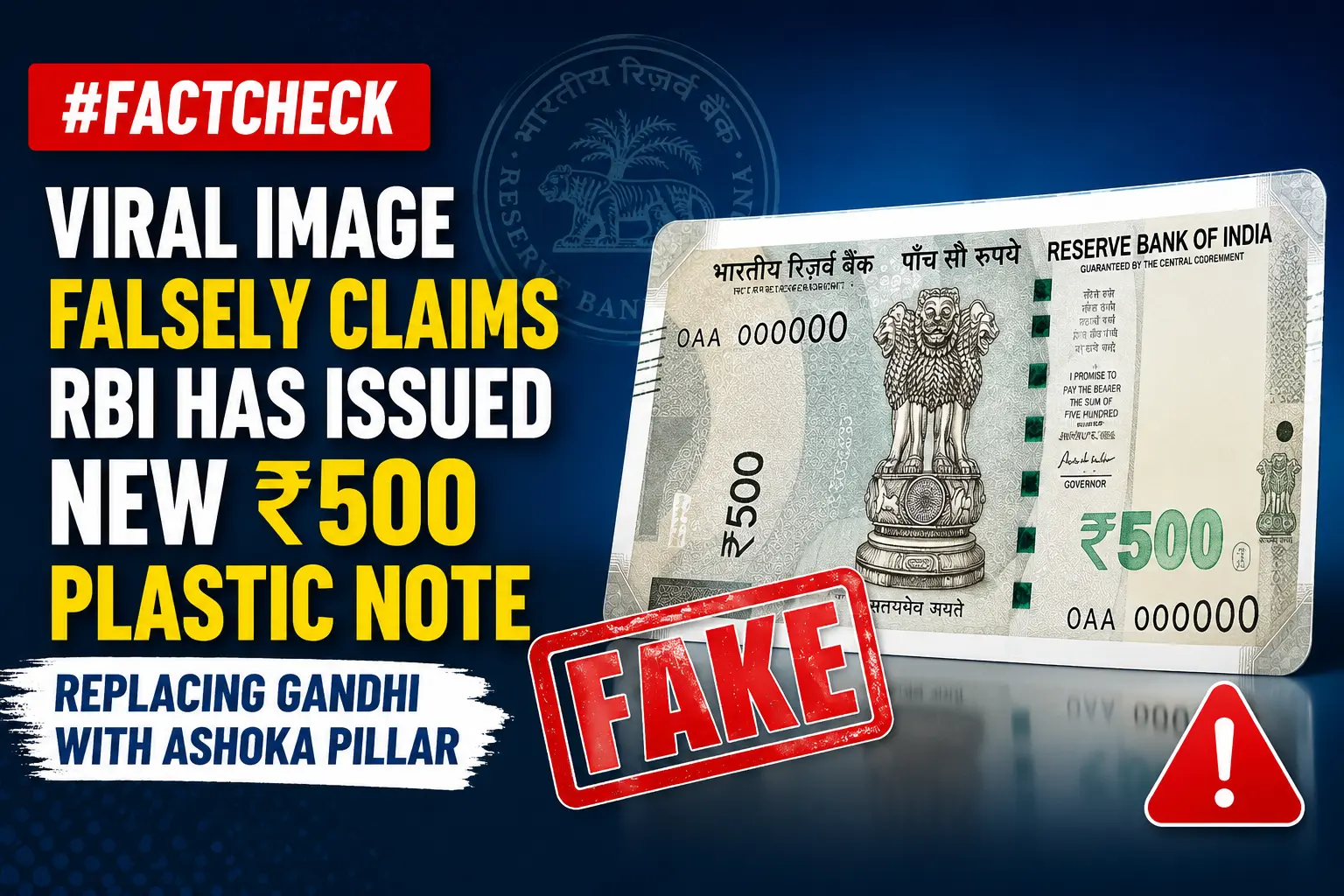
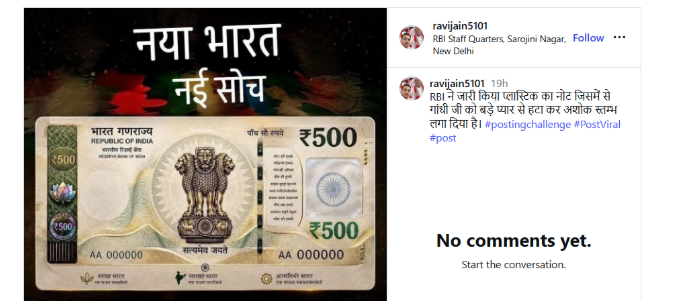
An image of a purported new ₹500 plastic banknote is being widely shared on social media. Users claim that the Reserve Bank of India (RBI) has issued the new note and replaced Mahatma Gandhi’s portrait with the Ashoka Pillar.The CyberPeace Research Wing research found the claim to be misleading. The probe revealed that RBI has not issued any new ₹500 plastic banknote. Furthermore, no official announcement or decision has been made regarding the removal of Mahatma Gandhi’s portrait from Indian currency and its replacement with the Ashoka Pillar.
Claim
An Instagram user shared the viral image with the claim: “RBI has issued a ₹500 plastic note in which Mahatma Gandhi’s image has been removed and replaced with the Ashoka Pillar.” The claim has been widely circulated on social media, with many users sharing the image as genuine. The post link, archived version, and screenshot can be seen below.
Fact Check
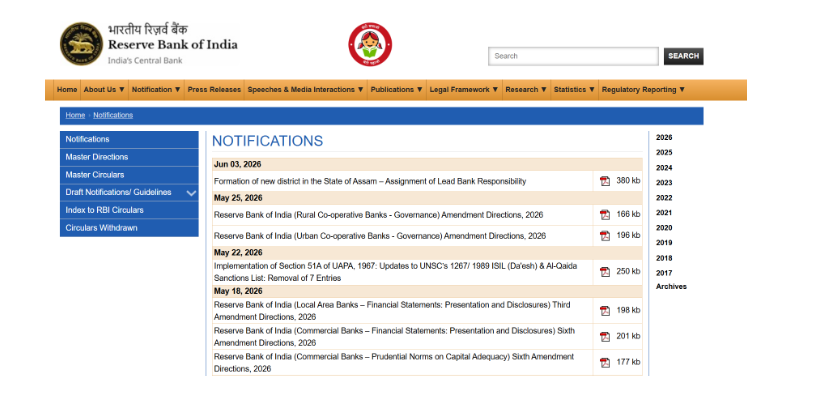
To verify the claim, we conducted a keyword search on Google. However, we found no credible media reports suggesting that RBI had issued a new ₹500 plastic note featuring the Ashoka Pillar in place of Mahatma Gandhi. We then searched the official RBI website for any notification or announcement related to the claim. Our search yielded no official communication supporting the viral claim.
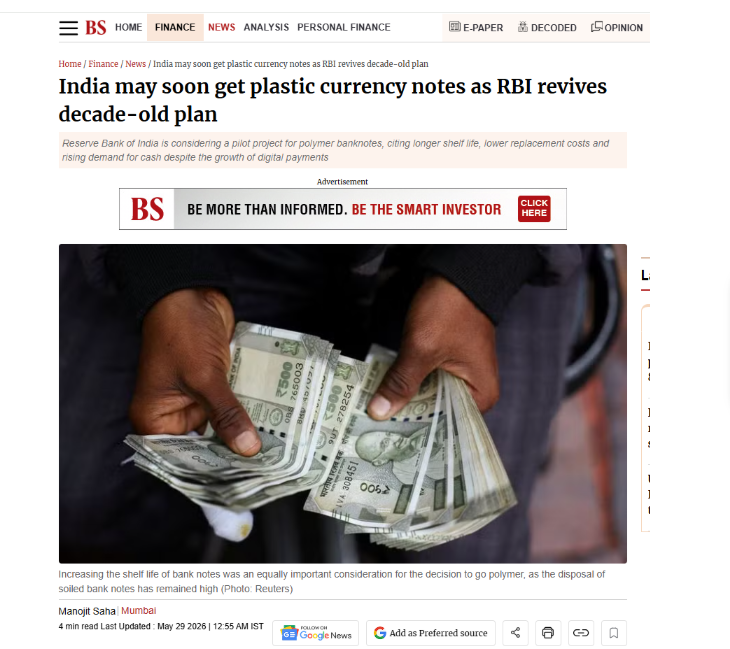
During the research, we also came across a report published by Business Standard. According to the report, the Reserve Bank of India is exploring the possibility of introducing polymer (plastic) currency notes in the future. The report states that RBI is studying and discussing the proposal in view of the growing global adoption of polymer notes and their greater durability. However, the report does not state that RBI has already issued a new ₹500 plastic note. Nor does it mention any decision to remove Mahatma Gandhi’s portrait from existing currency notes and replace it with the Ashoka Pillar.
- https://www.business-standard.com/finance/news/rbi-set-to-unveil-polymer-rupee-notes-amid-rising-currency-demand-126052801725_1.html
Conclusion
The research found that the viral claim is misleading. RBI has not issued any new ₹500 plastic banknote, and there has been no official announcement or decision to replace Mahatma Gandhi’s portrait on Indian currency with the Ashoka Pillar.
