
#FactCheck: Old Moscow fire video falsely shared as Houthi attack on Saudi Arabia’s Riyadh airport
Executive Summary
A video is being shared on social media with the claim that it shows a recent Houthi attack on King Khalid International Airport in Riyadh, the capital of Saudi Arabia. The video shows people running inside a building amid chaos, followed by a loud explosion that appears to shatter glass. The post claims that the visuals show the Riyadh airport during a Houthi missile attack. However, CyberPeace Research Wing’s research found that the video is actually from Russia.
Claim:
A social media post is being shared with the claim that the video shows a Houthi attack on Riyadh Airport in Saudi Arabia.
https://www.facebook.com/reel/1491107586179716
https://ghostarchive.org/archive/O9X4A

Fact Check
To verify the truth behind the video being shared with the claim that it shows a Houthi attack on an airport in Riyadh, Saudi Arabia, we conducted a reverse image search of its keyframes. During the search, we found a video uploaded on June 19, 2026, by the Kazakh YouTube account @AzattyqAsia, which contains the same visuals seen in the viral video. According to the report, the video shows Russia’s Sadovod Market, where a massive fire broke out following a drone attack.
https://www.youtube.com/shorts/D2-m4l5Obc8
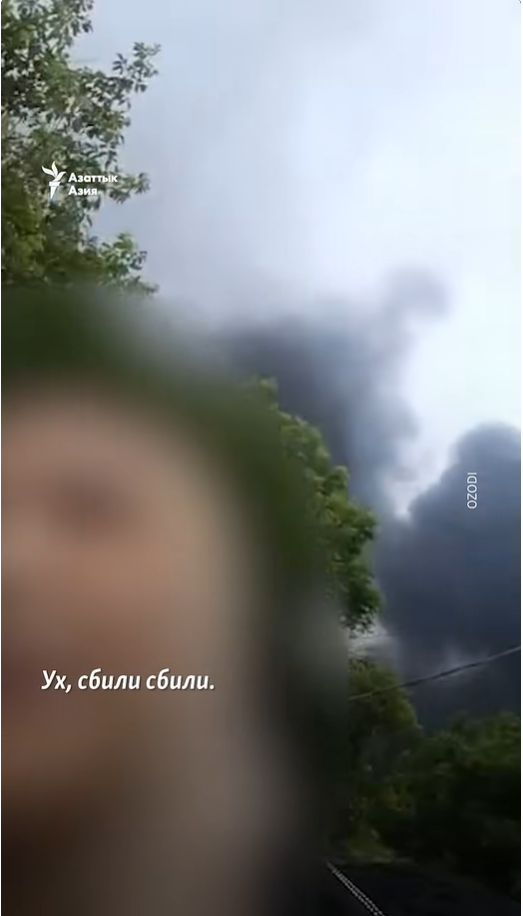
Additionally, we found another video shot from a different angle on the Facebook account Yenisafak.com/ru, uploaded on June 18, 2026. The video contains the same visuals seen in the viral clip. The post states that the video was filmed at Moscow’s Sadovod Market, where a massive fire broke out at a complex following a drone attack.
https://www.facebook.com/reel/980820447900927

Conclusion
The evidence gathered during our research makes it clear that the viral video does not show a Houthi attack on an airport in Saudi Arabia, but is actually from Moscow, the capital of Russia.

Related Blogs
Introduction
On August 8, 2026, Hyderabad Police Commissioner V.C. Sajjanar posted an unusual warning on X: colourful posters offering a "handsome guy" to join you for coffee or a movie at 50% off: it was not a quirky dating startup but a calculated cyber fraud. Within hours, the "Rent Boyfriend" alert had gone viral, pulling back the curtain on a scam that blends India's growing loneliness economy, classic confidence tricks, and AI-generated imagery. Here is what's actually happening, why it works, and how to protect yourself.
A Trend Growing Fast: In India and Worldwide
Paid-companionship culture itself isn't new. "Rent a friend" services began in Japan and later China, where apps let people hire a company for a movie, a walk, or a family event without romantic or sexual expectations. The idea reached India as early as 2018, when Mumbai's "Rent A Guy" app began recruiting men for casual outings; by 2022, similar pages like "Toy Boy" and "Hire a Friend" had spread to Bengaluru, and Valentine's Day 2025 saw ₹389 "rent a boyfriend" posters plastered across the city. Fraudsters have now hijacked this recognisable, socially normalised idea and weaponised it: the Hyderabad ads promised specific packages, ₹499 for a coffee date, ₹1,249 for a movie, ₹1,999 for a wedding, and ₹4,499 for ten hours collected via QR codes and wallets, then vanished. The underlying numbers show why this template is so attractive to criminals. Complaints filed on India's National Cyber Crime Reporting Portal jumped from roughly 4.5 lakh in 2021 to about 2.3 million by 2026, and the country now logs an estimated 4,000-plus cybercrime complaints a day. Globally, romance and "confidence fraud" are some of the costliest online crimes: the FBI's Internet Crime Complaint Center recorded 23,159 romance-fraud complaints in 2025 worth $929.3 million, which is a 38% jump over 2024, while the UK logged over £102 million in losses and Australia and Canada reported tens of millions more. Crucially, IC3's 2025 report flagged AI as an accelerant for the first time, attributing roughly $19 million in romance-scam losses directly to AI-generated profiles, images and chat exactly the "AI-generated photographs" Hyderabad Police say the Rent Boyfriend network used.
Case Studies
The Rent Boyfriend network is one data point in a wider, well-documented pattern in India:
- Hyderabad, August 2026: Fraudsters ran Instagram, Telegram and Facebook pages using stock or AI-generated photos of "attractive men", collected advance payments and security deposits, and then blocked victims, the case that prompted this advisory.
- Jaipur, 2026: A honey-trap and extortion ring allegedly used AI-manipulated videos and images to blackmail a businessman out of nearly ₹90 lakh, with police examining how far synthetic media was used to fabricate compromising content.
- Mumbai: A gang was arrested for cheating a woman out of ₹16.18 lakh in gold and cash after promising to "reunite" her with a lost partner, a variant that exploits the same emotional vulnerability through a different pretext.
- Gujarat, 2025: A social media influencer with over 10 lakh followers was arrested for allegedly honey-trapping and blackmailing a builder, illustrating how organised such rackets have become.
These sit alongside a global backdrop where FBI data shows confidence and romance fraud disproportionately drains people over 60 (63% of US losses in 2025) even as India's version increasingly targets young women and students, a sign the tactic is being localised for different demographics rather than disappearing.
Why It Works: The Psychology of Loneliness and Grooming
Researchers who study romance-fraud victims consistently find that loneliness, a tendency toward idealised romantic beliefs, and a need for social connection are the strongest predictors of victimisation. Scammers exploit this through a well-rehearsed grooming arc: rapid, excessive flattery ("love bombing") to create instant intimacy; mirroring the target's interests and values to seem like a perfect match; gently discouraging outside opinions so doubts don't surface; and only then introducing a financial ask, framed as something small and reasonable — a booking fee or a security deposit precisely because it feels low-stakes compared to a direct cash demand. The "package" pricing in the Rent Boyfriend ads (₹499 for coffee, scaling up to ₹4,499) mimics legitimate e-commerce, which lowers a target's guard further. Once payment is made and blocked, many victims feel too embarrassed to report it — a shame response researchers and police repeatedly flag as the biggest reason such scams are under-reported.
Red Flags and What To Do?
Red flags to watch for:
- Companionship or dating offers with attractive stock/AI-style photos and steep "discounts"
- Contact only through DMs, with no verifiable business identity, address or reviews.
- Requests for advance payment, "security deposits", or booking fees via UPI/QR code before any service is delivered.
- Reluctance to do a video call or a video call that looks slightly off (a common AI/deepfake tell).
- Pressure to move fast, share personal photos, or keep the interaction secret from friends and family.
Precautions:
- Never send money to confirm a booking with an unverified individual or page.
- Avoid sharing personal photographs, phone numbers, addresses or financial details with strangers online.
- Don't meet anyone in person whom you've only interacted with through such ads.
- Parents should stay engaged with what their children see and who they talk to on social media.
If you suspect a scam or have lost money: Don't panic and don't pay more to "fix" it. Stop all contact, save screenshots and payment records, and call the 1930 cybercrime helpline or file a complaint at cybercrime.gov.in immediately — reporting within the first "golden hour" significantly improves the chance of freezing transferred funds before they're withdrawn.
The Government, Platform and Legal Angle
India already has legal tools for this, though enforcement lags the pace of the fraud. Cheating by personation online is punishable under Section 66D of the IT Act, 2000 (up to three years' imprisonment plus fine), often paired with Section 66C on identity theft; the Bharatiya Nyaya Sanhita's cheating provisions (replacing IPC Sections 420/419) apply where money is dishonestly induced. Under the IT (Intermediary Guidelines) Rules, 2021, platforms like Instagram, Facebook and Telegram must appoint a grievance officer, acknowledge complaints within 24 hours, and take down unlawful content within 36 hours of a court or government notification obligation. Hyderabad's cybercrime wing can invoke to force the removal of these ad networks. Larger "significant social media intermediaries" carry added duties around traceability and proactive monitoring.
The gap is upstream: platforms currently do little to verify who is running a commercial-sounding page before it reaches thousands of users, and AI-generated "profile" images are not systematically flagged. A stronger response would combine faster platform-side KYC for pages soliciting payment, proactive detection of AI-generated advertising imagery, and continued expansion of the 1930 golden-hour fund-freezing mechanism paired with public advisories like Hyderabad's, which remain one of the fastest ways to blunt a scam before it scales.
Conclusion
Loneliness is not something anyone should be ashamed of, but it is exactly what these networks are built to exploit. No genuine companionship service needs an advance QR payment before you've even met the person.
Sources
- Deccan Herald — Hyderabad Police Commissioner cautions young women over 'rent boyfriend' offers
- Republic World — 'Rent Boyfriend' Offers On Social Media?
- Newsdrum — What is 'Rent Boyfriend' trap?
- IndiaSpend — How India's Cyber Crime Incidence Is Rising
- FBI IC3 2025 Annual Report Brochure

Executive Summary:
In the digital world, people are becoming targets more and more of online scams, which rely on deception. One of the ways the social media is being used for the elections in recent time, is the "BJP - Election Bonus" offer that promises a cash prize of Rs. 5000 or more, through some easy questionnaire. This article provides the details of this swindle and reveals its deceptive tricks as well as gives a set of recommendations on how to protect yourself from such online fraud, especially during the upcoming elections.
False Claim:
The "BJP - Election Bonus" campaign boasts that by taking a few clicks of the mouse, users will get a cash prize. This scheme is nothing but a fake association with the Bharatiya Janata Party (BJP)’s Government and Prime Minister Shri Narendra Modi and therefore, it uses the images and brands of both of them to give the scheme an impression of legitimacy. The imposters are taking advantage of the public's trust for the Government and the widespread desire for remuneration to ensnare the unaware victims, specifically before the upcoming Lok Sabha elections.

The Deceptive Scheme:
- Tempting Social Media Offer: The fraud begins with an attractive link on the social media platforms. The scammers say that the proposal is related to the Bharatiya Janata Party (BJP) with the caption of “The official party has prepared many gifts for their supporters.” accompanied by an image of the Prime Minister Shri Narendra Modi.
- Luring with Money: The offer promises to give Rs.5,000 or more. This is aimed at drawing in people specifically during election campaigns; and people’s desire for financial gain.
- Tricking with Questions: When the link is clicked, the person is brought to the page with the simple questions. The purpose of these questions is to make people feel safe and believe that they have been selected for an actual government’s program.
- The Open-the-Box Trap: Finally, the questions are answered and the last instruction is to open-the-box for the prize. However, this is just a tactic for them to make you curious about the reward.
- Fake Reward and Spreading the Scam: Upon opening the box, the recipient will be greeted with the text of Rs. 5000. However, this is not true; it is just a way to make them share the link on WhatsApp, helping the scammers to reach more victims.
The fraudsters use political party names and the Prime Minister's name to increase the plausibility of it, although there is no real connection. They employ the people's desire for monetary help, and also the time of the elections, making them susceptible to their tricks.
Analytical Breakdown:
- The campaign is a cleverly-created scheme to lure people by misusing the trust they have in the Government. By using BJP's branding and the Prime Minister's photo, fraudsters aim to make their misleading offer look credible. Fake reviews and cash reward are the two main components of the scheme that are intended to lure users into getting involved, and the end result of this is the path of deception.
- Through sharing the link over WhatsApp, users become unaware accomplices that are simply assisting the scammers to reach an even bigger audience and hence their popularity, especially with the elections around the corner.
- On top of this, the time of committing this fraud is very disturbing, as the election is just round the corner. Scammers do this in the context of the political turmoil and the spread of unconfirmed rumors and speculation about the upcoming elections in the same way they did earlier. The fraudsters are using this strategy to take advantage of the political affiliations by linking their scam to the Political party and their Leaderships.
- We have also cross-checked and as of now there is no well established and credible source or any official notification that has confirmed such an offer advertised by the Party.
- Domain Analysis: The campaign is hosted on a third party domain, which is different from the official website, thus creating doubts. Whois information reveals that the domain has been registered not long ago. The domain was registered on 29th march 2024, just a few days back.

- Domain Name: PSURVEY[.]CYOU
- Registry Domain ID: D443702580-CNIC
- Registrar WHOIS Server: whois.hkdns.hk
- Registrar URL: http://www.hkdns.hk
- Updated Date: 2024-03-29T16:18:00.0Z
- Creation Date: 2024-03-29T15:59:17.0Z (Recently Created)
- Registry Expiry Date: 2025-03-29T23:59:59.0Z
- Registrant State/Province: Anhui
- Registrant Country: CN (China)
- Name Server: NORMAN.NS.CLOUDFLARE.COM
- Name Server: PAM.NS.CLOUDFLARE.COM
Note: Cybercriminals used Cloudflare technology to mask the actual IP address of the fraudulent website.
CyberPeace Advisory and Best Practices:
- Be careful and watchful for any offers that seem too good to be true online, particularly during election periods. Exercise caution at a high level when you come across such offers, because they are usually accompanied by dishonest schemes.
- Carefully cross-check the authenticity of every campaign or offer you’re considering before interacting with it. Do not click on suspicious links and do not share private data that can be further used to run the scam.
- If you come across any such suspicious activity or if you feel you have been scammed, report it to the relevant authorities, such as the local police or the cybercrime section. Reporting is one of the most effective instruments to prevent the spread of these misleading schemes and it can support the course of the investigations.
- Educate yourselves and your families on the usual scammers’ tricks, including their election-related strategies. Prompt people to think critically and a good deal of skepticism when they meet online offers and promotions that evoke a possibility to obtain money or rewards easily.
- Ensure that you are always on a high level of alert as you explore the digital field, especially during elections. The authenticity of the information you encounter should always be verified before you act on it or pass it over to someone else.
- In case you have any doubt or worry regarding a certain e-commerce offer or campaign, don’t hesitate to ask for help from reliable sources such as Cybersecurity experts or Government agencies. A consultation with credible sources will assist you in coming up with informed decisions and guarding yourself against being navigated by these schemes.
Conclusion:
The "BJP - Election Bonus" campaign is a real case study of how Internet fraud is becoming more popular day by day, particularly before the elections. Through the awareness of the tactics employed by these scammers and their abuse of the community's trust in the Government and political figures, we can equip ourselves and our communities to avert becoming the victim of such fraudulent schemes. As a team, we can collectively strive for a digital environment free of threats and breaches of security, even in times of high political tension that accompany elections.
.webp)
What is Deepfake
Deepfakes have been, a fascinating but unsettling phenomenon that is now prominent in this digital age. These incredibly convincing films have drawn attention and blended in well with our high-tech surroundings. The lifelike but completely manufactured quality of deepfake videos has become an essential component of our digital environment as we traverse the broad reaches of our digital society. While these works have an undoubtedly captivating charm, they have important ramifications. Come along as we examine the deep effects that misuse of deepfakes can have on our globalized digital culture. After many actors now business tycoon Ratan Tata has become the latest victim of deepfake. Tata called out a post from a user that used a fake interview of him in a video recommending Investments.
Case Study
The nuisance of deep fake is sparing none from actors politicians to entrepreneurs everyone is getting caught in the Trap. Soon after the actresses Rashmika Mandana, Katrina Kaif, Kajol and other actresses fell prey to the rising scenario of deepfake, a new case from the industry emerged, which took Mr. Ratan Tata on storm. Business tycoon Ratan Tata has become the latest victim of deepfake. He took to his social media sharing an image of the interview that asked people to invest money in a project in a post on Instagram. Ratan Tata called out a post from a user that used a fake interview of him in a video recommending these Investments.
This nuisance that has been created because of the deepfake is sparing nobody from actors to politicians to entrepreneurs now everyone is getting caught in the trap the latest victim being Ratan Tata. Tech magnate Ratan Tata is the most recent victim of this deepfake phenomenon. The millionaire was seen in the video, which was posted by the Instagram user, giving his followers a once-in-a-million opportunity to "exaggerate investments risk-free."
In the stated video, Ratan Tata was seen giving everyone in India advice mentioning to the public regarding the opportunity to increase their money with no risk and a 100% guarantee. The caption of the video clip stated, "Go to the channel right now."
Tata annotated both the video and the screenshot of the caption with the word "FAKE."
Ongoing Deepfake Assaults in India
Deepfake videos continue to target celebrities, and Priyanka Chopra is also a recent victim of this unsettling trend. Priyanka's deepfake adopts a different strategy than other examples, including actresses like Rashmika Mandanna, Katrina Kaif, Kajol, and Alia Bhatt. Rather than editing her face in contentious situations, the misleading film keeps her looking the same but modifies her voice and replaces real interview quotes with made-up commercial phrases. The deceptive video shows Priyanka promoting a product and talking about her yearly salary, highlighting the worrying development of deepfake technology and its possible effects on prominent personalities.
Prevention and Detection
In order to effectively combat the growing threat posed by deepfake technology, people and institutions should place a high priority on developing critical thinking abilities, carefully examining visual and auditory cues for discrepancies, making use of tools like reverse image searches, keeping up with the latest developments in deepfake trends, and rigorously fact-check reputable media sources. Important actions to improve resistance against deepfake threats include putting in place strong security policies, integrating cutting-edge deepfake detection technologies, supporting the development of ethical AI, and encouraging candid communication and cooperation. We can all work together to effectively and mindfully manage the problems presented by deepfake technology by combining these tactics and making adjustments to the constantly changing terrain.
Conclusion
The current instance involving Ratan Tata serves as an example of how the emergence of counterfeit technology poses an imminent danger to our digital civilization. The fake video, which was posted to Instagram, showed the business tycoon giving financial advice and luring followers with low-risk investment options. Tata quickly called out the footage as "FAKE," highlighting the need for careful media consumption. The Tata incident serves as a reminder of the possible damage deepfakes can do to prominent people's reputations. The issue, in Ratan Tata's instance specifically, demands that public personalities be more mindful of the possible misuse of their virtual identities. We can all work together to strengthen our defenses against this sneaky phenomenon and maintain the trustworthiness of our internet-based culture in the face of ever-changing technological challenges by emphasizing preventive measures like strict safety regulations and the implementation of state-of-the-art deepfake detection technologies.
References
- https://economictimes.indiatimes.com/magazines/panache/ratan-tata-slams-deepfake-video-that-features-him-giving-risk-free-investment-advice/articleshow/105805223.cms
- https://www.ndtv.com/india-news/ratan-tata-flags-deepfake-video-of-his-interview-recommending-investments-4640515
- https://www.businesstoday.in/bt-tv/short-video/viralvideo-business-tycoon-ratan-tata-falls-victim-to-deepfake-408557-2023-12-07
- https://www.livemint.com/news/india/false-ratan-tata-calls-out-a-deepfake-video-of-him-giving-investment-advice-11701926766285.html
