
#FactCheck:Fake Poster Falsely Claims ₹699 Prize Offer on PM Modi’s Birthday
Executive Summary
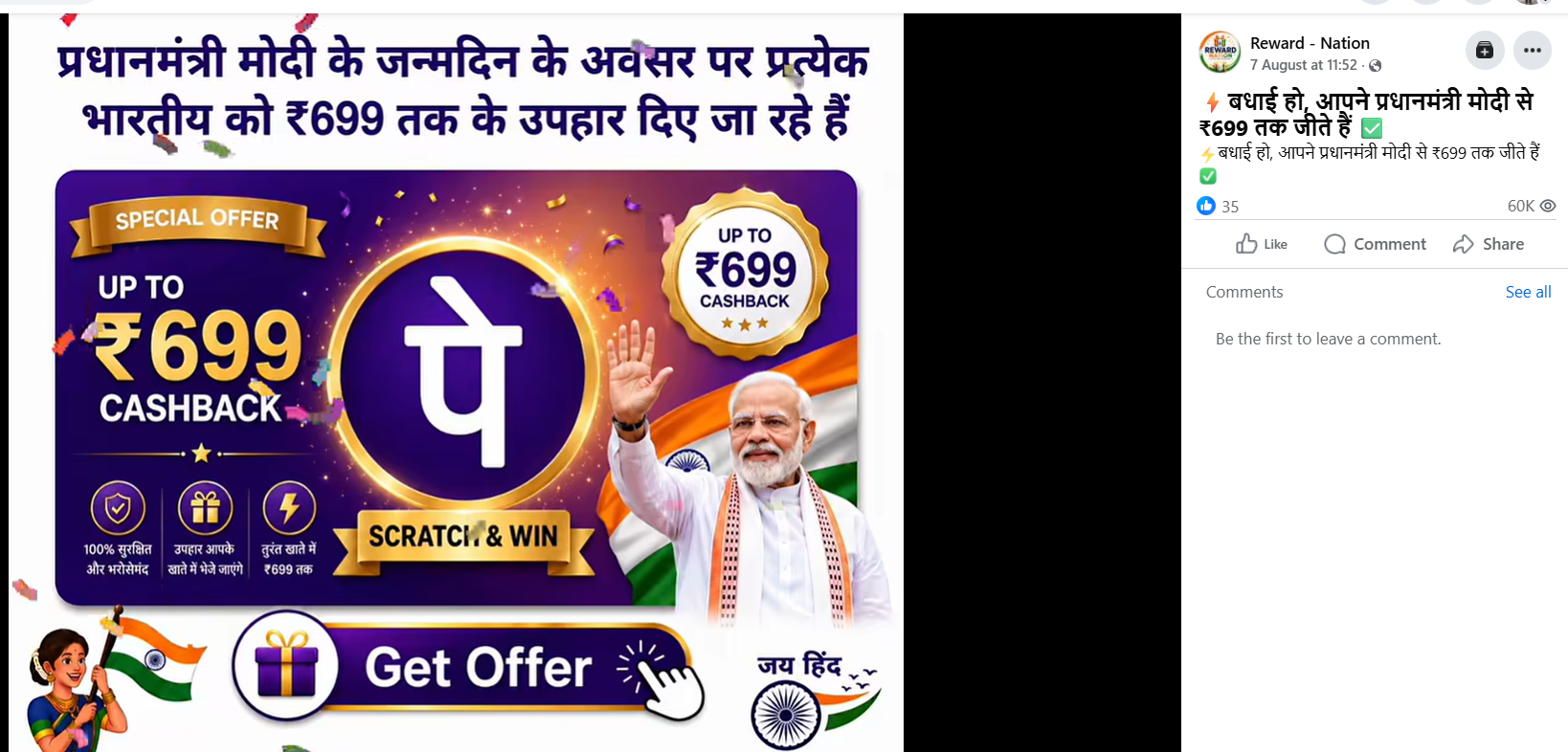
A poster is being shared on social media claiming that people have an opportunity to win up to ₹699 on Prime Minister Narendra Modi’s birthday. The poster carries a “GET OFFER” button and asks users to click on it.
The CyberPeace Research Wing found the claim to be false. The research found that the Government of India has made no such announcement offering ₹699 to people on Prime Minister Narendra Modi’s birthday. The viral post is misleading and fake.
Claim
A Facebook user shared the viral poster with the caption:“Congratulations, you have won up to ₹699 from Prime Minister Modi.”
https://www.facebook.com/100083035017578/videos/1533904658280321/
FactCheck
To verify the claim, we conducted a Google search using relevant keywords. However, we did not find any credible media report confirming that the Government of India had announced such an offer.
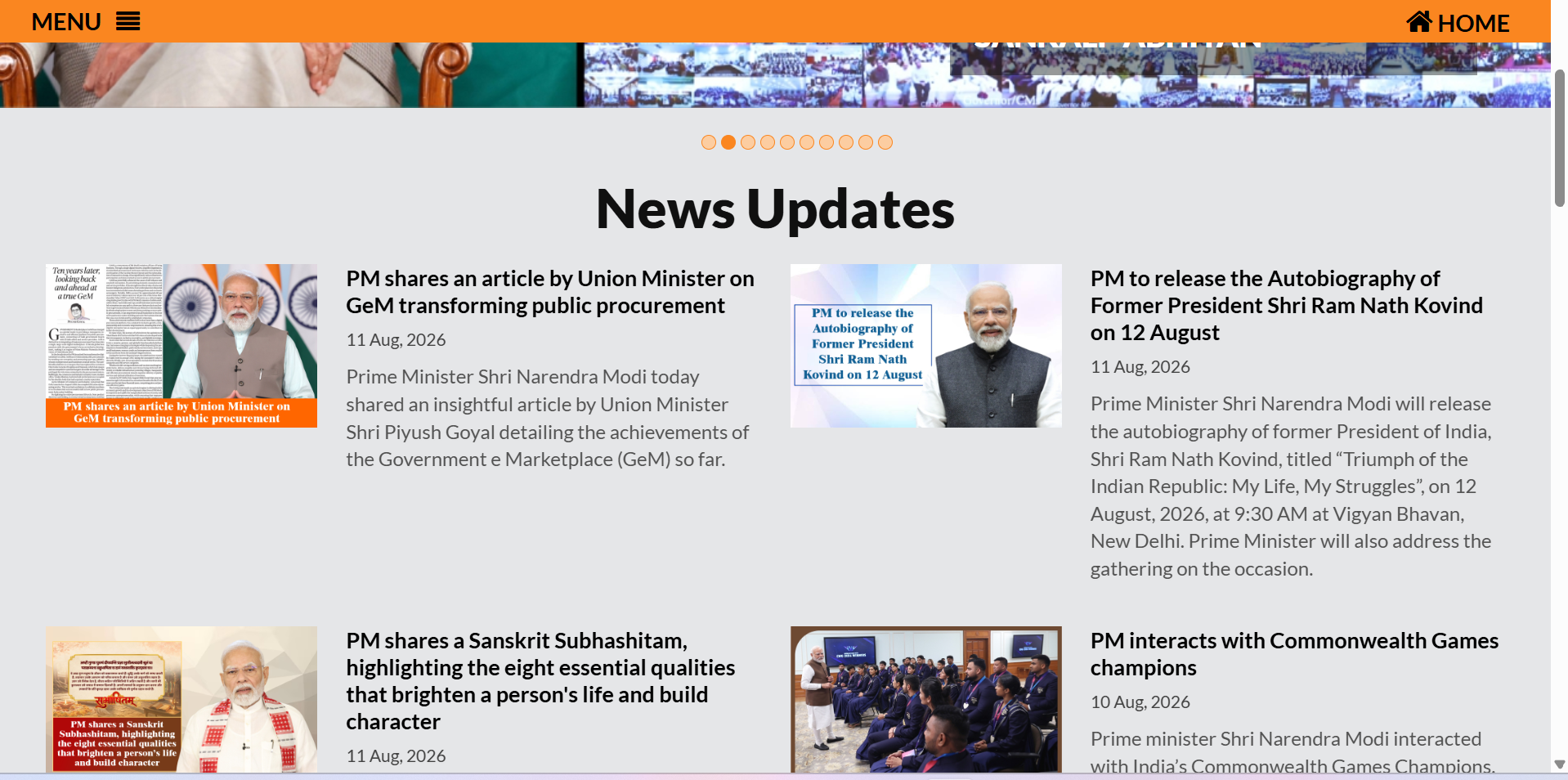
We then checked the official website of the Prime Minister’s Office (PMO) for any announcement related to the alleged ₹699 prize offer. No official notification or report supporting the claim was found.
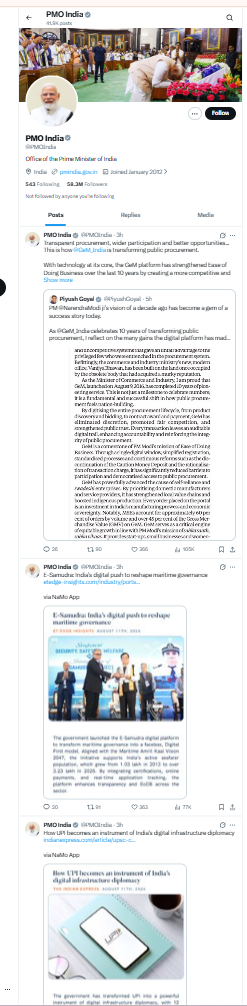
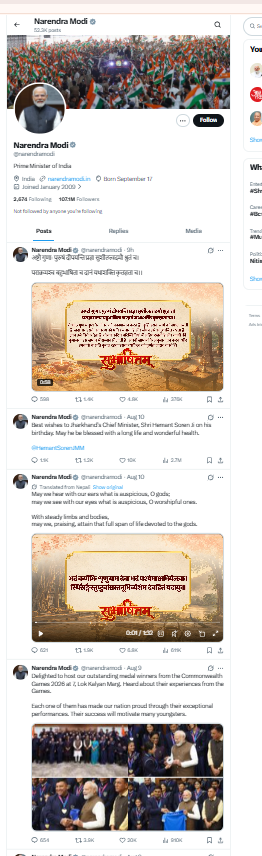
As part of the next stage of verification, we also checked the official X accounts of the PMO and Prime Minister Narendra Modi. We found no post or official announcement confirming the viral claim.
https://x.com/narendramodi
Conclusion
Our research found that the Government of India has not announced any ₹699 prize or offer on the occasion of Prime Minister Narendra Modi’s birthday. The viral poster is therefore fake and misleading. Users should avoid clicking on such suspicious “GET OFFER” links, as they may be designed to redirect users to fraudulent or deceptive websites.

Related Blogs
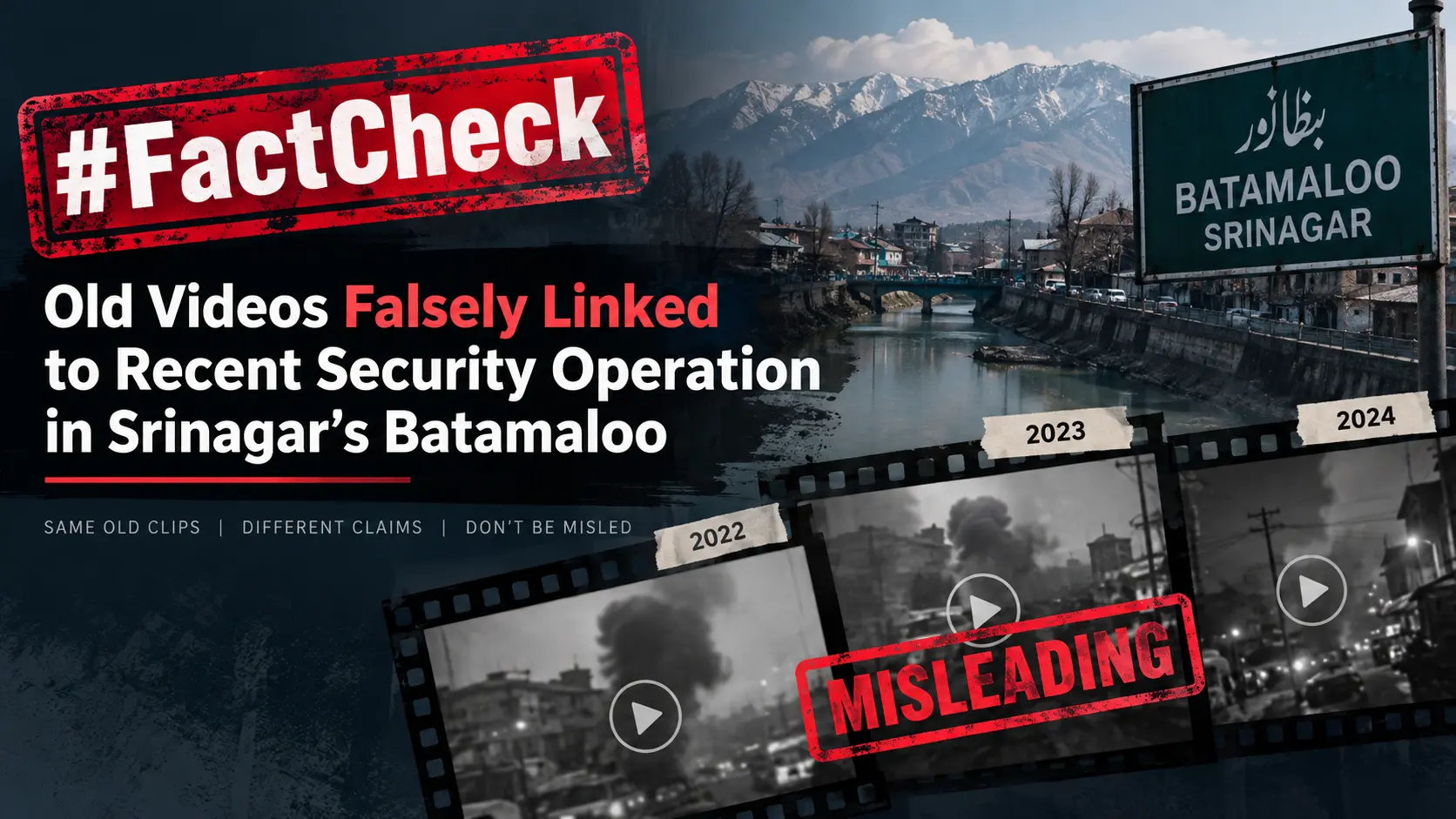
Executive Summary
A video is being shared on social media with the claim that Indian security forces faced resistance from local residents during a cordon-and-search operation in the Batamaloo area of Srinagar. Some Pakistani propaganda accounts are sharing the video in an attempt to link it to the recent security operation. Research by CyberPeace found that the viral video is old and unrelated to the recent security operation in the Batamaloo area of Srinagar. The research revealed that the video is actually from Bishnupur, Manipur. It is being falsely presented as footage from Jammu and Kashmir, with claims that local residents were strongly resisting security forces. Similarly, a second video is also being shared with a misleading claim linking it to the recent security operation. The video shows some militants greeting and congratulating one another. However, these visuals are also unrelated to the recent security operation in Batamaloo, Srinagar.
Claim:
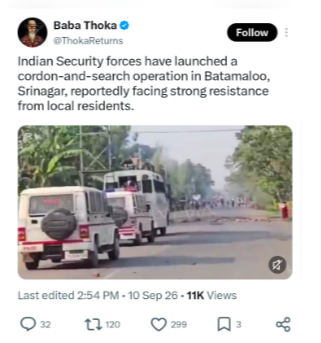
An X user shared the viral video with the caption: “Indian security forces have launched a cordon-and-search operation in the Batamaloo area of Srinagar. It is being reported that local residents are strongly resisting the operation.”
https://x.com/ThokaReturns/status/2097979588223930651
FactCheck
As part of our research, we also examined other sources and available reports related to the viral video. However, we did not find any credible report linking the incident shown in the viral video to the recent security operation in Batamaloo, Srinagar. To verify the viral claim, we conducted a reverse image search of the keyframes from the video. During the search, we found similar visuals on the DNA India website, which were published on November 16, 2017.
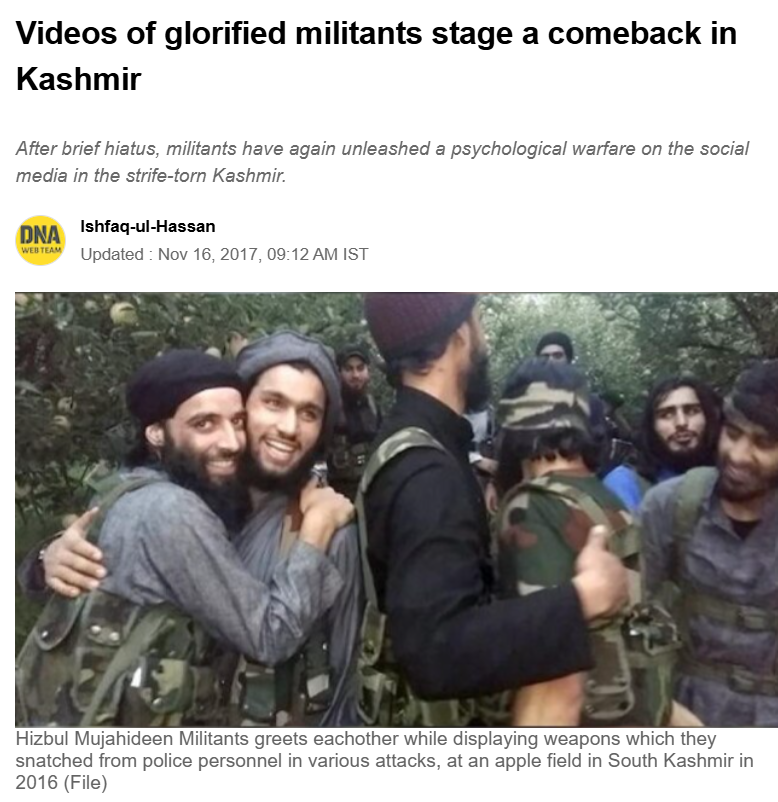
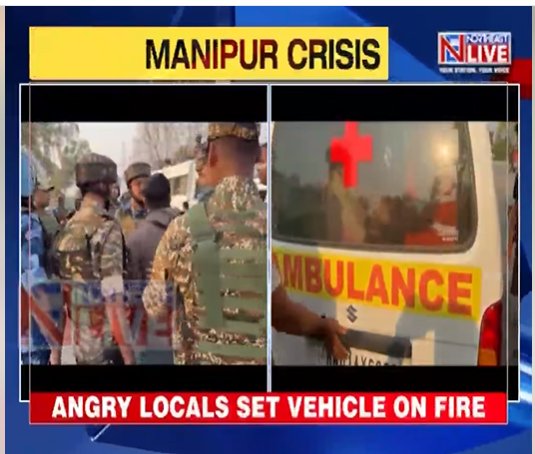
It is being claimed that the militants are congratulating one another and claiming territorial gains in several areas in response to the Indian Army’s security operation in Batamaloo. However, these claims could not be substantiated. According to the available evidence, the visuals are old and unrelated to the recent security operation. As part of the next step in our research, we found similar visuals on the Northeast Live Facebook page. According to the report, tension had escalated in Manipur’s Bishnupur district after an angry mob set a vehicle on fire on suspicion that the occupants were carrying arms and ammunition. The incident reportedly left 20 people injured.
The incident took place along Tidim Road in the Ningthoukhong and Thinungei areas of Bishnupur district, where locals were observing a bandh. During the protest, people became suspicious of two vehicles and stopped them to check them.
https://www.facebook.com/watch/?v=1446641790532433
Conclusion
No credible evidence was found to substantiate these claims. Our research found that the visuals shown in the videos are old and unrelated to the recent security operation in Batamaloo, Srinagar. Security forces had conducted a cordon-and-search operation in the Batamaloo area as part of routine counter-terrorism measures. However, no credible report or other concrete evidence was found linking the videos being shared on social media to this operation.
Executive Summary
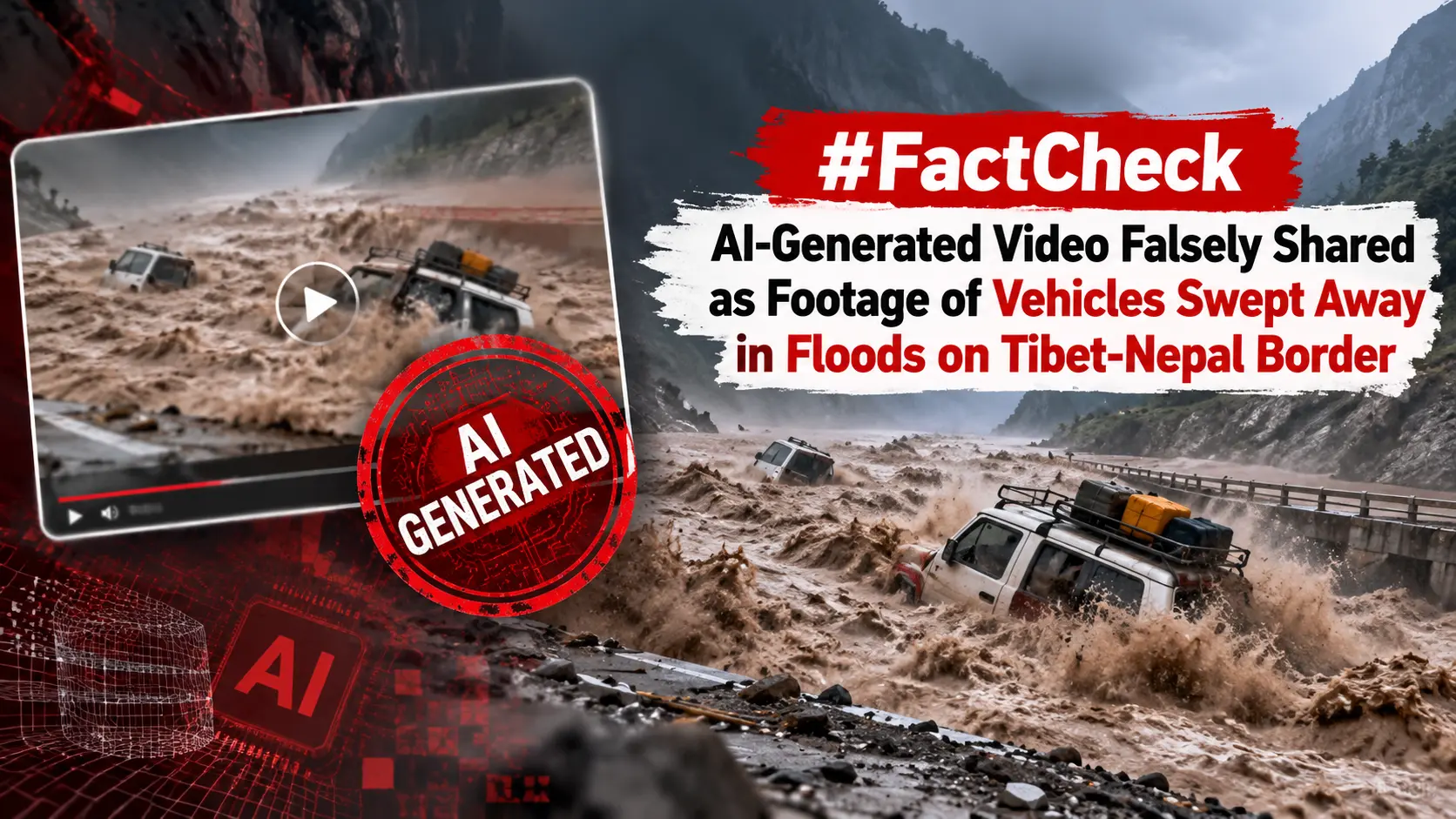
A video showing vehicles being swept away by floodwaters is going viral on social media. It is being claimed that the video shows flooding along the Nepal-Tibet border.However, CyberPeace Research found that the video is AI-generated.
Claim
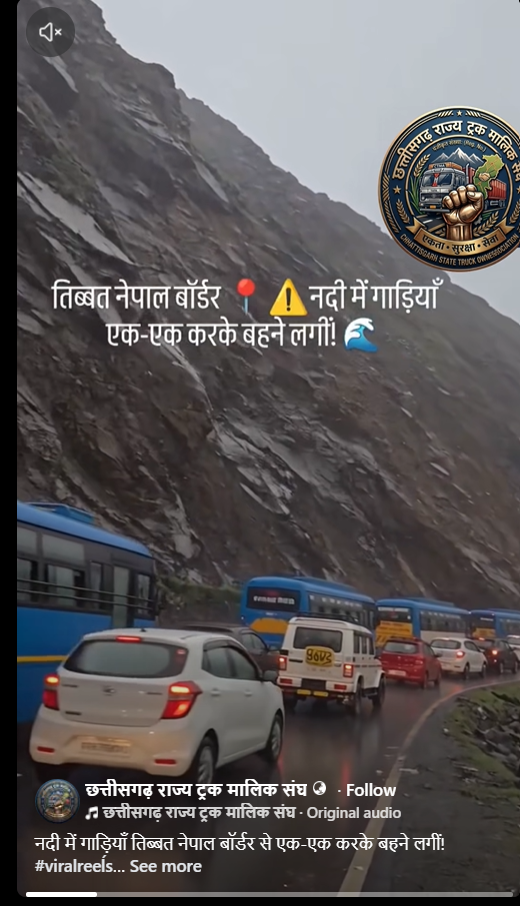
The video shows debris suddenly falling from a mountain while vehicles are moving along a road. During the incident, vehicles seen on the road near a fast-flowing river are swept away into the water one after another. The archive of the post can be viewed here.
https://www.facebook.com/reel/1796949138009288
Fact Check
To verify the viral video claiming to show vehicles being swept away by floods along the Tibet-Nepal border, we conducted a reverse image search of its keyframes. However, during our research, we did not find the video in any credible media report or authentic source that identified it as genuine footage of flooding along the Nepal-Tibet border. During our research, we closely examined the video and noticed several inconsistencies that raised questions about its authenticity. In cases where heavy vehicles are caught in or swept away by fast-flowing water, the force of the current, the vehicles losing balance and being submerged are generally visible. In contrast, the vehicles in the viral video appear to float almost in a straight direction through the water without any visible resistance, raising doubts about the authenticity of the footage.
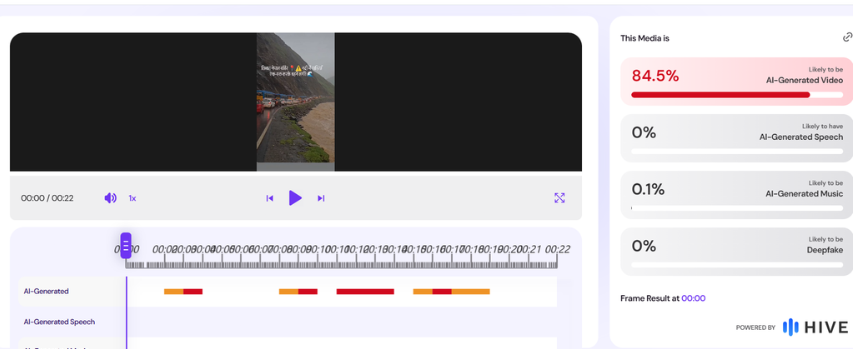
The video also shows several blue buses travelling on the road. On closer examination, the design and appearance of these buses appear to be almost identical. In addition, the letters and numbers visible on some vehicle number plates appear unusual, blurred and distorted. Such visual inconsistencies are commonly observed in AI-generated content. To further verify these findings, we scanned the viral video using the AI detection tool Hive Detect. The tool’s analysis identified the video as potentially AI-generated, with a score of 84.5 per cent.
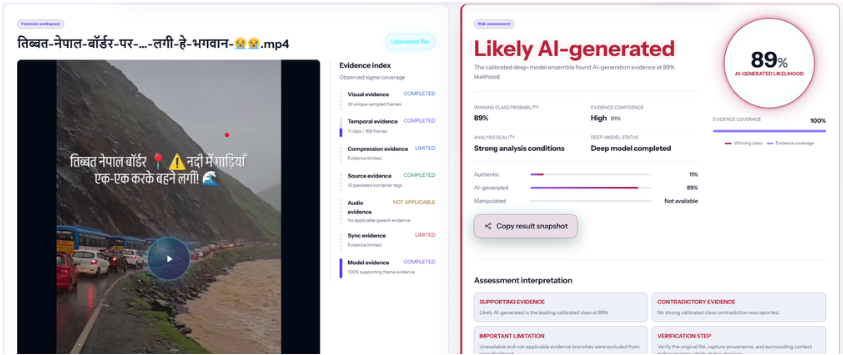
We also analysed the video using another AI detection platform, DetectVideo AI. The tool likewise identified the video as potentially AI-generated, with a score of 89 per cent.
Conclusion
The evidence gathered during our research makes it clear that the video being circulated with the claim that vehicles were swept away by floodwaters along the Tibet-Nepal border is AI-generated.
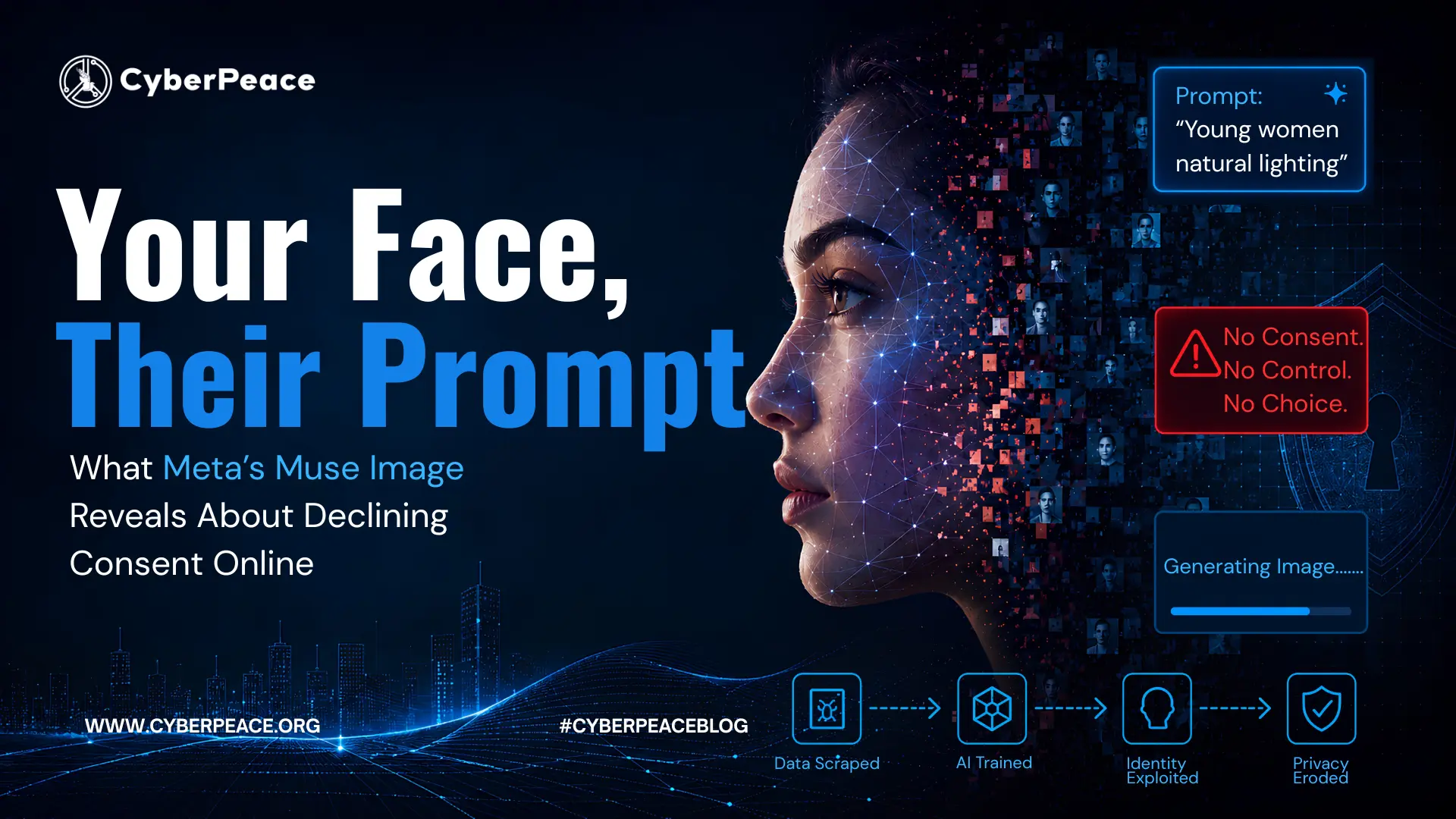
When your digital identity becomes raw material for someone else’s imagination, who really owns your face?
On July 7, 2026, Meta launched Muse Image, the first standalone image-generation model developed by Meta Superintelligence Labs under Alexandr Wang. Positioned as a competitor to OpenAI’s GPT Images 2.0 and Google’s Nano Banana 2, the launch highlights Meta’s growing ambitions in the generative AI race. Yet beneath the technical advancements lies a far more consequential question than what AI can create, but about who gets to decide what it creates with?
That ambition of generative AI comes with a cost, and one of Muse Image's most controversial design choices is its integration with Instagram, which allows public profiles to become creative references for AI-generated images. Users can tag public Instagram accounts in prompts and generate AI images inspired by that person’s publicly available content. Meta presents this as a new form of personalization and creativity. However, critics argue that the feature transforms years of personal photographs into a massive library of AI-ready human identities, where non-action automatically becomes permission. The concern is not just that AI can generate realistic images. The concern is that consent itself is being manipulated in a way.
The opt-out system most users never asked for
Muse Image operates through Meta AI’s integration with Instagram. A user can reference a public Instagram profile in a prompt, allowing the system to generate images influenced by that person’s existing content and likeness. Under the default arrangement, the person whose profile is being referenced may not necessarily approve the generation beforehand.
Meta does provide users with controls to restrict this functionality. The setting exists under Instagram’s “Sharing and reuse” options, where users can disable permissions related to the use of their posts and reels with Meta’s AI features. But the larger issue is the direction in which responsibility flows. Instead of requiring active permission before someone’s likeness becomes available for AI-generated content, the burden is placed on individuals to discover the feature, understand the implications, locate the setting, and disable it. In a digital environment where users already navigate endless privacy menus, cookie banners, and terms of service agreements, expecting meaningful awareness from billions of people becomes unrealistic. Consent that depends on finding the exit door is very different from consent that begins with a choice.
A guide for opting-out
One way of opting out is to have a private account. As verified, Meta does not encroach on private accounts as of now for image-generation.
But if you have a public account, here are the steps that can be followed to secure yourself from Meta’s Muse automatic consent:
On your profile, tap the menu bar which is on the top right (≡), you will enter into ‘setting and activity’, after that you will see an option of ‘sharing and refuse’ and then disable the options under it, namely- Allow people to reuse your content on Instagram and with AI features at Meta. Notably, the changes made will be only for your future content not the already existing content on your public profile.
Why “public” does not mean “available for anything”
The debate around Muse Image highlights a deeper misunderstanding at the center of modern digital platforms: the difference between visibility and reuse. When someone makes an Instagram account public, they are generally making a decision about the audience. They are allowing others to view their photos, discover their profile, or engage with their content. That decision was never traditionally understood as permission for their face, appearance, personal moments, or identity markers to become reusable components in AI-generated media. A photograph posted online has context. It represents a specific moment, purpose, relationship, or expression. Generative AI changes that equation because it separates identity from context. A person’s likeness can be extracted from its original context and placed into entirely new situations created by someone else. Muse Image does not just expand who can see your content. It expands what can be done with it. That distinction is what scales the problem for every public user on the app. The privacy implications become significantly larger because of Instagram’s global reach. With billions of users worldwide, even a small percentage of affected public accounts represents an enormous number of people. Many public profiles do not belong to celebrities, influencers, or creators who intentionally operate as public brands. They belong to students, professionals, small businesses, artists, photographers, and everyday users who simply chose visibility within a social network.
For years, platforms encouraged people to share more, build audiences, and maintain a public digital presence. Now, the meaning of that public presence is changing after the fact. The question becomes: should a decision made years ago to share photos socially automatically extend into permission for generative AI systems built years later?
There is also a catch while opting out. Changing these settings only protects your content from being used in future AI generations, it does not undo anything that has already happened. Any AI images previously created using your public profile will remain unaffected. Essentially, the opt-out works as a shield for what comes next, not a reset button for what has already been created.
A familiar pattern in the AI era
Muse Image reflects a broader pattern emerging across the technology industry. New AI capabilities are introduced at massive scale, participation becomes the default, and individual control arrives afterward through settings that many users may never find. The same debates that once surrounded targeted advertising, data collection, and algorithmic profiling are now moving into a far more personal territory, the human identity itself. Faces are not ordinary data points. Unlike a username, password, or preference setting, a person cannot simply replace their appearance once it has been widely replicated.
Technical solutions such as AI watermarking and content labels may help identify generated material, but they address authenticity after creation. They do not answer the question of whether the generation should have happened in the first place.
Innovation cannot replace consent
The technological progress behind Muse Image is significant. Better image generation, improved text rendering, and more personalized creative tools represent genuine advances in artificial intelligence. But capability alone cannot determine acceptability. The future of AI will not only depend on how realistic images become, how powerful models become, or how quickly companies can deploy new features. It will also depend on whether people feel they have meaningful control over their own digital identities. Muse Image is therefore more than another AI product launch. It represents a defining question for the next phase of the internet: Will our online presence remain something we control, or will it become something others can generate?
