
#FactCheck-Old Maharashtra Video of Dancing Policemen Falsely Linked to West Bengal Election Results
Executive Summary
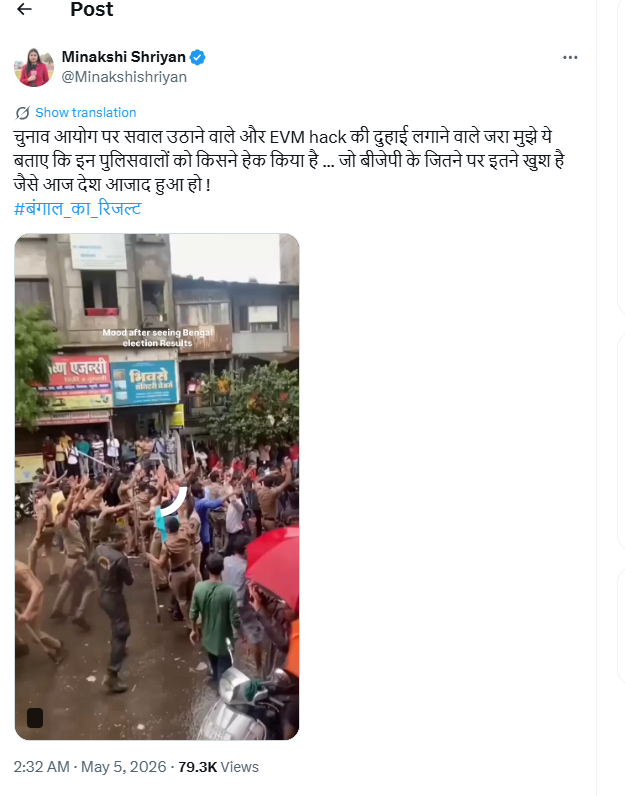
A video showing police personnel dancing on the streets along with civilians is going viral on social media. The clip is being shared with the claim that policemen in West Bengal were celebrating the defeat of Mamata Banerjee and the victory of the BJP.
Research by CyberPeace Research Wing found that the claim is misleading. The viral video is old and unrelated to the West Bengal elections.
Claim
An X user shared the video on April 26, 2026, alleging that police personnel were celebrating BJP’s victory. The post questioned those raising concerns over EVMs, suggesting that even police were openly rejoicing over the election outcome.
- https://x.com/Minakshishriyan/status/2051490074957930510
- https://archive.is/d81OT
Fact Check
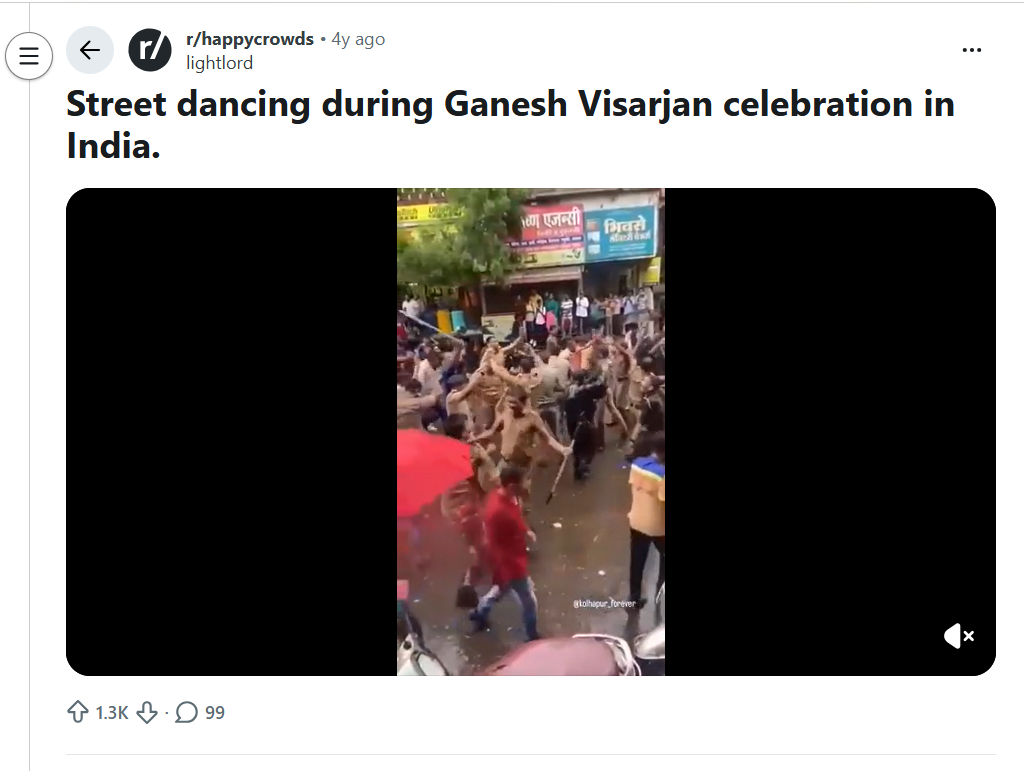
To verify the claim, we extracted keyframes from the viral video and conducted a reverse image search. This led us to a Reddit post dated September 13, 2022, where the same video was shared. The post described it as footage from Ganesh Visarjan celebrations in India, and several users in the comments identified the location as Maharashtra.
Further research led us to a YouTube channel “Yash Arate Vlogs,” which uploaded the same video on September 10, 2022. The description stated that the clip was recorded during Ganpati immersion celebrations in Kolhapur.
https://www.youtube.com/shorts/0_w5t-4rmTY
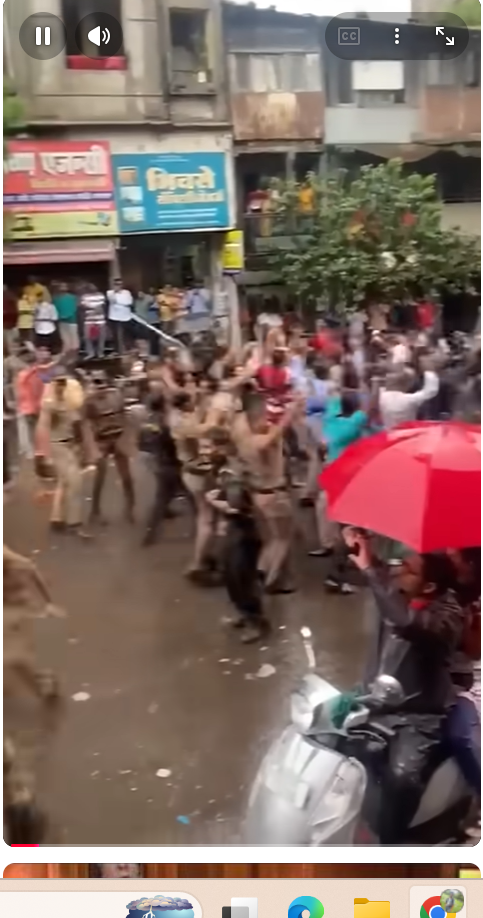
We also found media reports from September 2022 indicating that during Ganesh Visarjan in Kolhapur, loud music and festive atmosphere led even on-duty police personnel to briefly join the celebrations.

Conclusion
Our research confirms that the viral video does not show any post-election celebration in West Bengal. It is an old clip from Maharashtra, recorded during Ganesh Visarjan festivities, and is being falsely shared with a misleading political claim.

Related Blogs

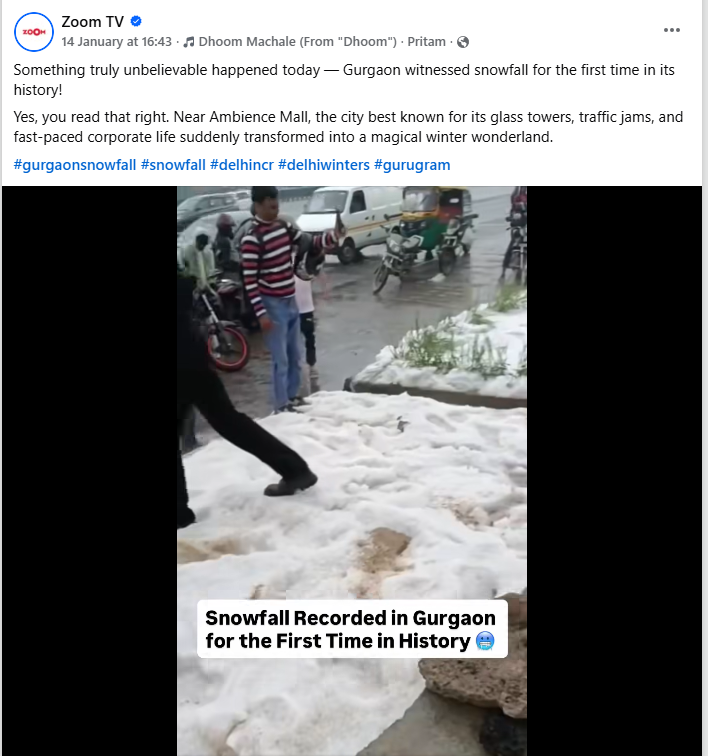
A video circulating widely on social media claims to show snowfall near Ambience Mall in Gurugram, Haryana. The clip is being shared alongside assertions that Gurugram witnessed snowfall for the first time in its history amid a severe cold wave in January 2026. However, an research by Cyber Peace Foundation has found the claim to be misleading. Our verification reveals that the viral video is not recent and has been available online since March 2023.
The Claim
On 14 January 2026, a Facebook user shared the video with the caption,“Something truly unbelievable happened today — Gurgaon witnessed snowfall for the first time in its history!”Through this post, the user implied that the visuals showed snowfall near Ambience Mall during the ongoing cold wave.link and screeshot
- https://www.instagram.com/reel/DTfS9X9DyBo/?utm_source=ig_embed&ig_rid=239ddaf7-ec53-4b1d-8f3b-a5e39540b3ee
- https://archive.ph/JVjHf
Fact Check:
To verify the claim, we conducted a detailed search using relevant keywords but found no credible media reports or official statements to support it. Although Gurugram’s temperature dropped to 0.6 degrees Celsius amid an IMD-issued cold wave warning, there is no evidence to suggest that the city experienced snowfall or hail. As of January 16, 2026, weather records and official sources confirm that no such weather event occurred in Gurugram.
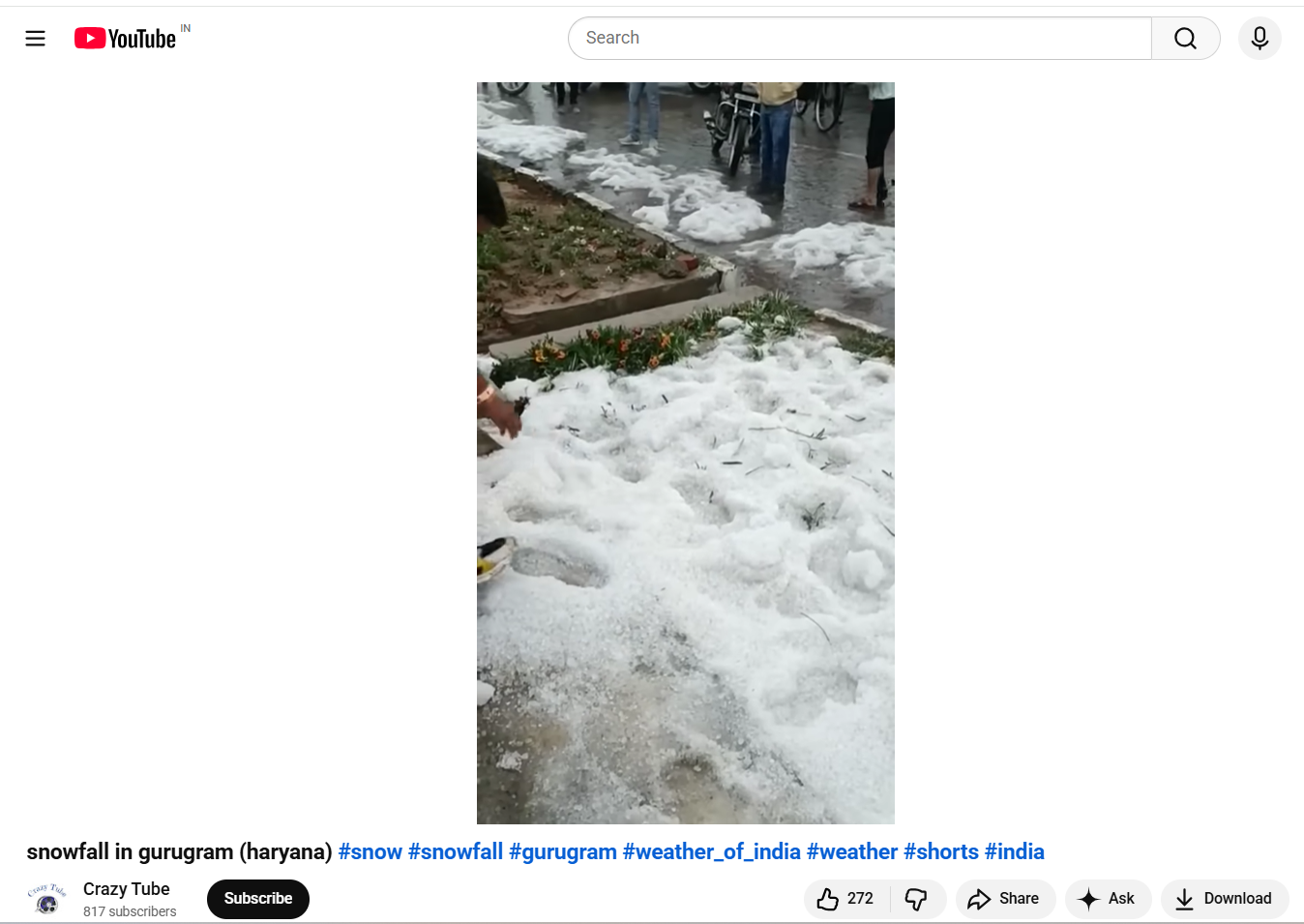
A reverse image search of keyframes extracted from the viral clip traced the same footage to a video uploaded on the YouTube channel Crazy Tube on March 21, 2023. This establishes that the video has been in circulation for nearly three years. In the original upload, the person filming clearly mentions that the visuals were recorded near a toll plaza, further indicating that the clip is unrelated to the recent weather conditions in Gurugram. Link and Screen Shot
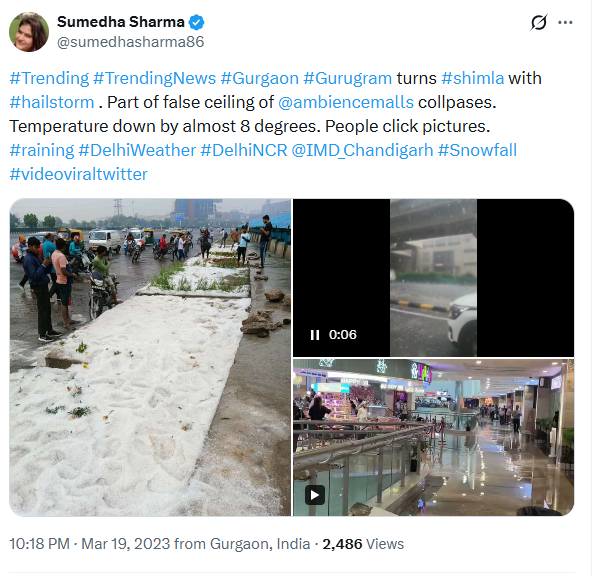
We also came across an X (formerly Twitter) post from March 19, 2023, which featured images similar to those seen in the viral video. The post described the visuals as being from a hailstorm in Gurugram, indicating that the content predates the current weather conditions and is unrelated to the recent cold wave.
Conclusion:
The video is old and predates January 2026, and has been on the internet at least since March 2023. While Gurugram recorded a low of 0.6 degrees Celsius amid an IMD cold wave warning, the city did not experience snowfall or hail as of 16 January 2026. News reports from March 2023 confirm heavy rain and hail in Delhi and adjoining areas, including parts of Gurugram, but there is no evidence of snowfall in January 2026. Hence, the claim made in the post is MISLEADING.
.webp)
Introduction
YouTube is testing a new feature called ‘Notes,’ which allows users to add community-sourced context to videos. The feature allows users to clarify if a video is a parody or if it is misrepresenting information. The feature builds on existing features to provide helpful content alongside videos. Currently under testing, the feature will be available to a limited number of eligible contributors who will be invited to write notes on videos. These notes will appear publicly under a video if they are found to be broadly helpful. Viewers will be able to rate notes into three categories: ‘Helpful,’ ‘Somewhat helpful,’ or ‘Unhelpful’. Based on the ratings, YouTube will determine which notes are published. The feature will first be rolled out on mobile devices in the U.S. in English. The Google-owned platform will look at ways to improve the feature over time, including whether it makes sense to expand it to other markets.
YouTube To Roll Out The New ‘Notes’ Feature
YouTube is testing an experimental feature that allows users to add notes to provide relevant, timely, and easy-to-understand context for videos. This initiative builds on previous products that display helpful information alongside videos, such as information panels and disclosure requirements when content is altered or synthetic. YouTube in its blog clarified that the pilot will be available on mobiles in the U.S. and in the English language, to start with. During this test phase, viewers, participants, and creators are invited to give feedback on the quality of the notes.
YouTube further stated in its blog that a limited number of eligible contributors will be invited via email or Creator Studio notifications to write notes so that they can test the feature and add value to the system before the organisation decides on next steps and whether or not to expand the feature. Eligibility criteria include having an active YouTube channel in good standing with Yotube’s Community Guidelines.
Viewers in the U.S. will start seeing notes on videos in the coming weeks and months. In this initial pilot, third-party evaluators will rate the helpfulness of notes, which will help train the platform’s systems. As the pilot moves forward, contributors themselves will rate notes as well.
Notes will appear publicly under a video if they are found to be broadly helpful. People will be asked whether they think a note is helpful, somewhat helpful, or unhelpful and the reasons for the same. For example, if a note is marked as ‘Helpful,’ the evaluator will have the opportunity to specify if it is so because it cites high-quality sources or is written clearly and neutrally. A bridging-based algorithm will be used to consider these ratings and determine what notes are published. YouTube is excited to explore new ways to make context-setting even more relevant, dynamic, and unique to the videos we are watching, at scale, across the huge variety of content on YouTube.
CyberPeace Analysis: How Can Notes Help Counter Misinformation
The potential effectiveness of countering misinformation on YouTube using the proposed ‘Notes’ feature is significant. Enabling contributors to include notes on videos can offer relevant and accurate context to clarify any misleading or false information in the video. These notes can aid in enhancing viewers' comprehension of the content and detecting misinformation. The participation from users to rate the added notes as helpful, somewhat helpful, and unhelpful adds a heightened layer of transparency and public participation in identifying the accuracy of the content.
As YouTube intends to gather feedback from its various stakeholders to improve the feature over time, one can look forward to improved policy and practical over time: the feedback mechanism will allow for continuous refinement of the feature, ensuring it effectively addresses misinformation. The platform employs algorithms to identify helpful notes that cater to a broad audience across different perspectives. This helps showcase accurate information and combat misinformation.
Furthermore, along with the Notes feature, YouTube should explore and implement prebunking and debunking strategies on the platform by promoting educational content and empowering users to discern between fact and any misleading information.
Conclusion
The new feature, currently in the testing phase, aims to counter misinformation by providing context, enabling user feedback, leveraging algorithms, promoting transparency, and continuously improving information quality. Considering the diverse audience on the platform and high volumes of daily content consumption, it is important for both the platform operators and users to engage with factual, verifiable information. The fallout of misinformation on such a popular platform can be immense, and so, any mechanism or feature that can help counter the same must be developed to its full potential. Apart from this new Notes feature, YouTube has also implemented certain measures in the past to counter misinformation, such as providing authenticated sources to counter any election misinformation during the recent 2024 elections in India. These efforts are a welcome contribution to our shared responsibility as netizens to create a trustworthy, factual and truly-informational digital ecosystem.
References:
- https://blog.youtube/news-and-events/new-ways-to-offer-viewers-more-context/
- https://www.thehindu.com/sci-tech/technology/internet/youtube-tests-feature-that-will-let-users-add-context-to-videos/article68302933.ece
Executive Summary:
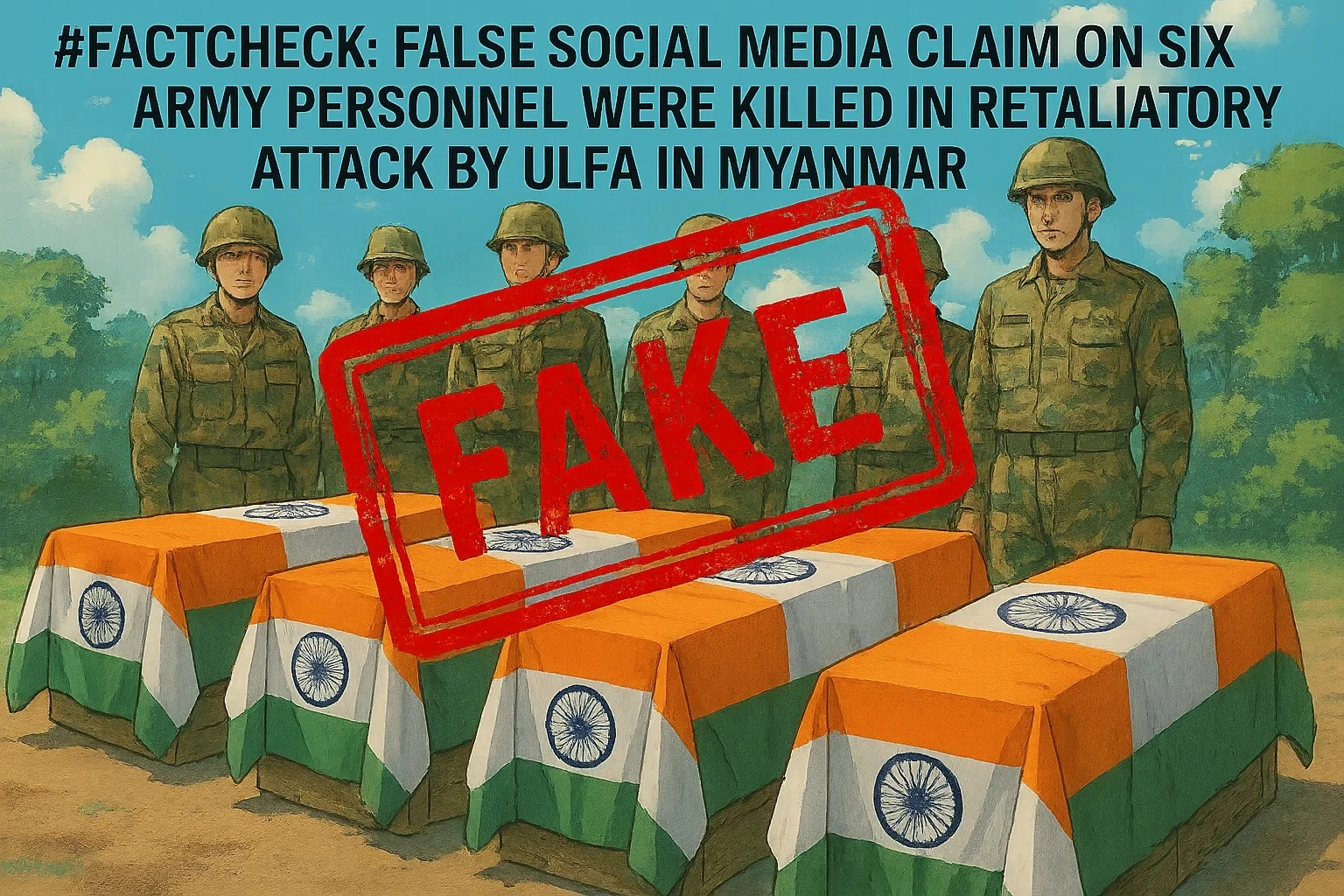
A widely circulated claim on social media indicates that six soldiers of the Assam Rifles were killed during a retaliatory attack carried out by a Myanmar-based breakaway faction of the United Liberation Front of Asom (Independent), or ULFA (I). The post included a photograph of coffins covered in Indian flags with reference to soldiers who were part of the incident where ULFA (I) killed six soldiers. The post was widely shared, however, the fact-check confirms that the photograph is old, not related, and there are no trustworthy reports to indicate that any such incident took place. This claim is therefore false and misleading.

Claim:
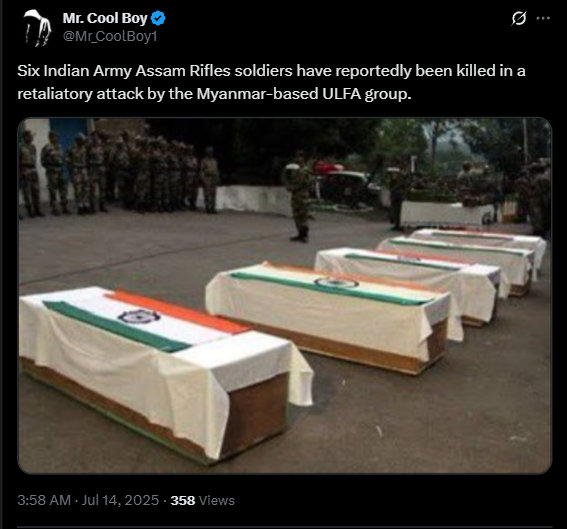
Social media users claimed that the banned militant outfit ULFA (I) killed six Assam Rifles personnel in retaliation for an alleged drone and missile strike by Indian forces on their camp in Myanmar with captions on it “Six Indian Army Assam Rifles soldiers have reportedly been killed in a retaliatory attack by the Myanmar-based ULFA group.”. The claim was accompanied by a viral post showing coffins of Indian soldiers, which added emotional weight and perceived authenticity to the narrative.
Fact Check:
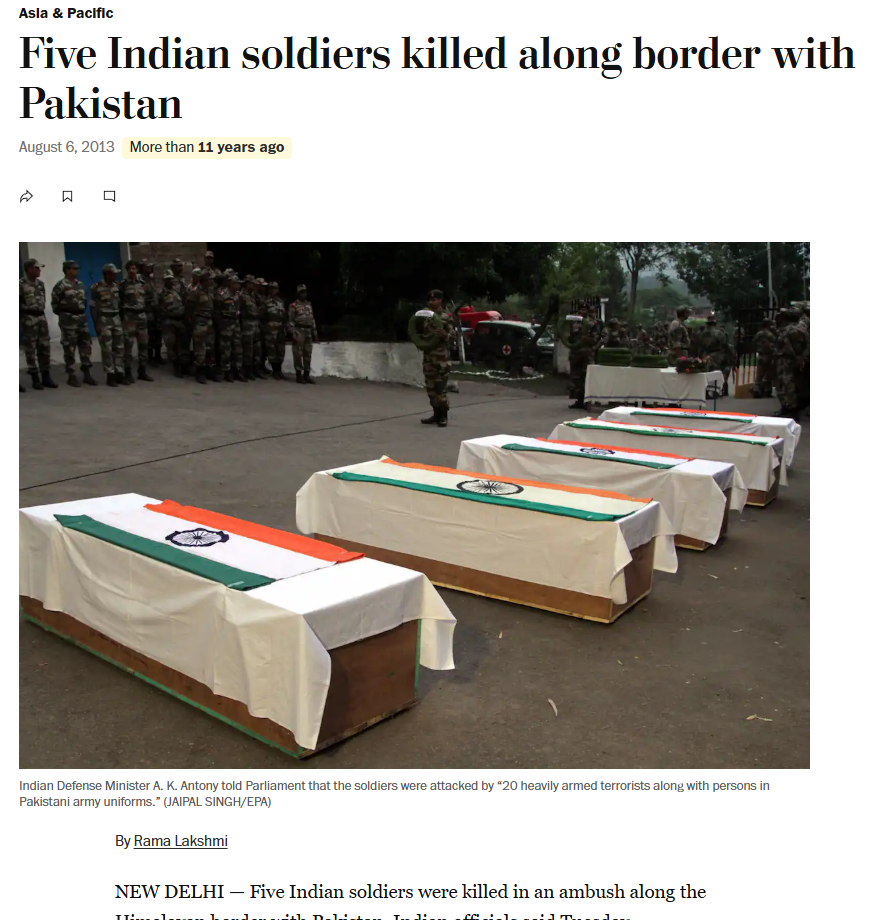
We began our research with a reverse image search of the image of coffins in Indian flags, which we saw was shared with the viral claim. We found the image can be traced to August 2013. We found the traces in The Washington Post, which confirms the fact that the viral snap is from the Past incident where five Indian Army soldiers were killed by Pakistani intruders in Poonch, Jammu, and Kashmir, on August 6, 2013.
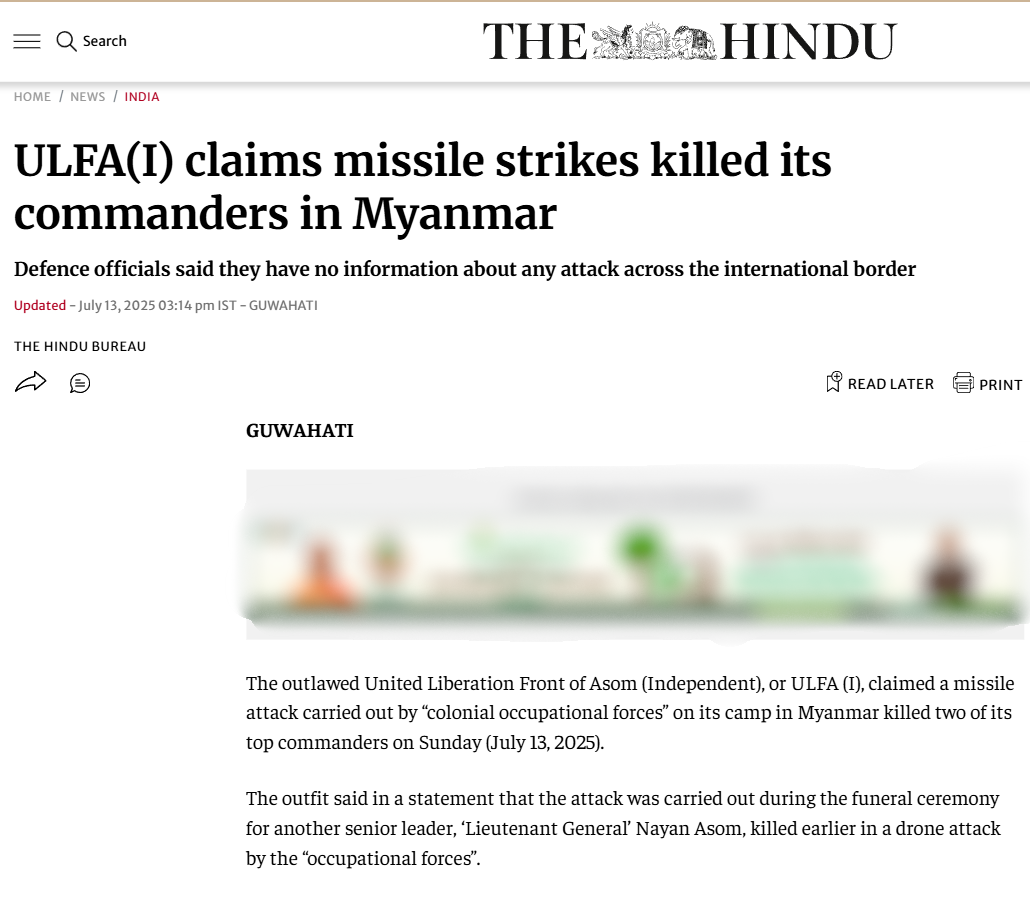
Also, The Hindu and India Today offered no confirmation of the death of six Assam Rifles personnel. However, ULFA (I) did issue a statement dated July 13, 2025, claiming that three of its leaders had been killed in a drone strike by Indian forces.
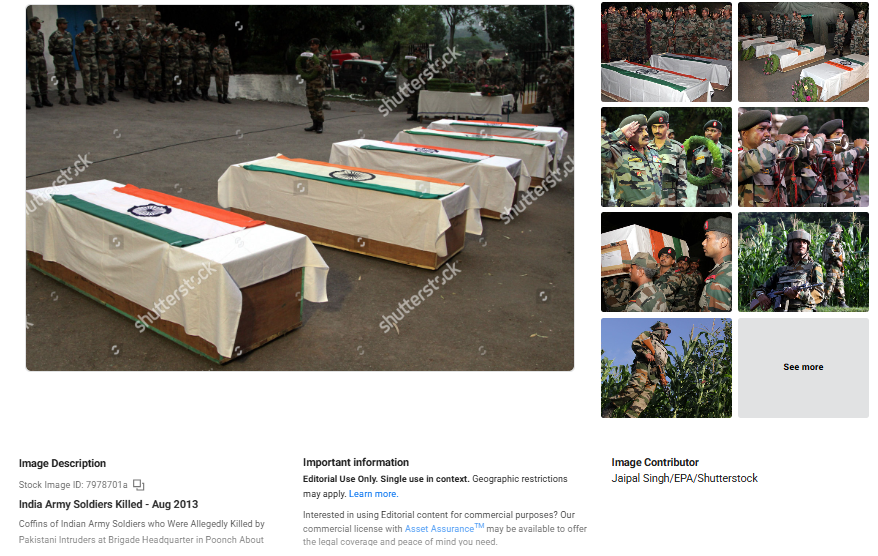
However, by using Shutterstock, it depicts that the coffin's image is old and not representative of any current actions by the United Liberation Front of Asom (ULFA).
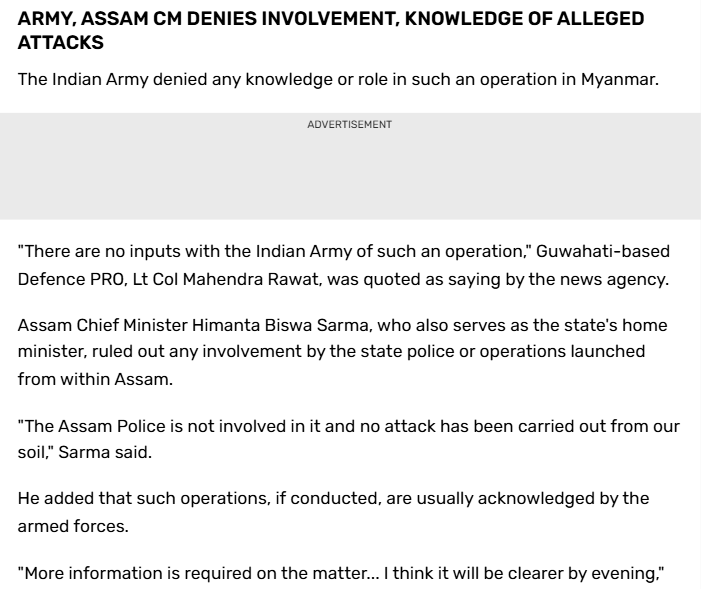
The Indian Army denied it, with Defence PRO Lt Col Mahendra Rawat telling reporters there were "no inputs" of such an operation. Assam Chief Minister Himanta Biswa Sarma also rejected that there was cross-border military action whatsoever. Therefore, the viral claim is false and misleading.
Conclusion:
The assertion that ULFA (I) killed six soldiers from the 6th Assam Rifles in a retaliation strike is incorrect. The viral image used in these posts is from 2013 in Jammu & Kashmir and has no relevance to the present. There have been no verified reports of any such killings, and both the Indian Army and the Assam government have categorically denied having conducted or knowing of any cross-border operation. This faulty narrative is circulating, and it looks like it is only inciting fear and misinformation therefore, please ignore it.
- Claim: Report confirms the death of six Assam Rifles personnel in an ULFA-led attack.
- Claimed On: Social Media
- Fact Check: False and Misleading
