
#FactCheck -AI-Generated Video Falsely Shows PM Modi Praising Christianity
Executive Summary:
A video of Prime Minister Narendra Modi is going viral across multiple social media platforms. In the clip, PM Modi is purportedly heard praising Christianity and stating that only Jesus Christ can lead people to heaven.Several users are sharing and commenting on the video, believing it to be genuine. The CyberPeace researched the viral claim and found it to be false. The circulating video has been created using artificial intelligence (AI).
Claim:
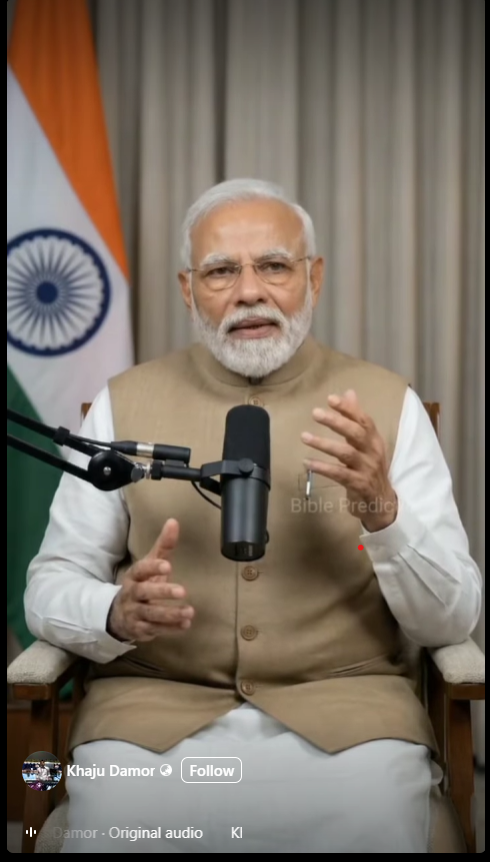
On January 29, 2026, a Facebook user named ‘Khaju Damor’ posted the viral video of PM Modi. The post gained traction, with many users sharing and commenting on it as if it were authentic. (Links and archived versions provided)
Fact Check:
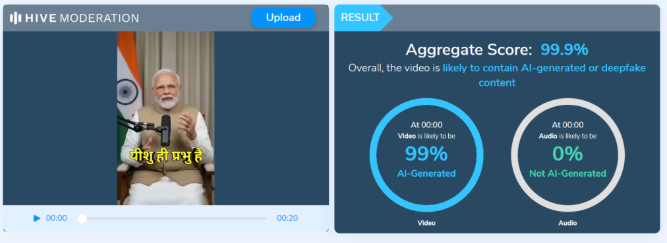
As part of our research , we first closely examined the viral video. Upon careful observation, several inconsistencies were noticed. The Prime Minister’s facial expressions and hand movements appeared unnatural. The lip-sync and overall visual presentation also raised suspicions about the clip being digitally manipulated. To verify this further, we analyzed the video using the AI detection tool Hive Moderation. The tool’s analysis indicated a 99% probability that the video was AI-generated.
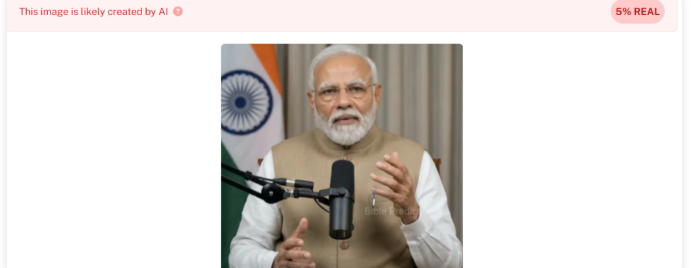
To independently confirm the findings, we also ran the clip through another detection platform, Undetectable.ai. Its analysis likewise indicated a very high likelihood that the video was created using artificial intelligence.
Conclusion:
Our research confirms that the viral video of Prime Minister Narendra Modi praising Christianity and making the alleged statement about heaven is fake. The clip has been generated using AI tools and does not depict a real statement made by the Prime Minister.

Related Blogs

Executive Summary
A video clip bearing the logo of News18 is being widely shared on social media with the claim that a serving Indian Army brigadier and his son were attacked in Delhi by an RSS-supporting mob for criticising the government over “Operation Sindoor.” The clip features an anchor allegedly explaining the motive behind the assault. However, research by the CyberPeace Research Wing found the claim to be false. The viral video has been digitally manipulated, with its audio altered to include misleading information.
Claim
An X user (@Mohammad776157) shared a video clip from Network18 on April 13, claiming that a serving Indian Army brigadier and his son were attacked in Delhi by an RSS-supporting mob for criticising the government over “Operation Sindoor.”
- https://x.com/Mohammad776157/status/2043691737609347166?s=20
- https://archive.ph/5EpbJ
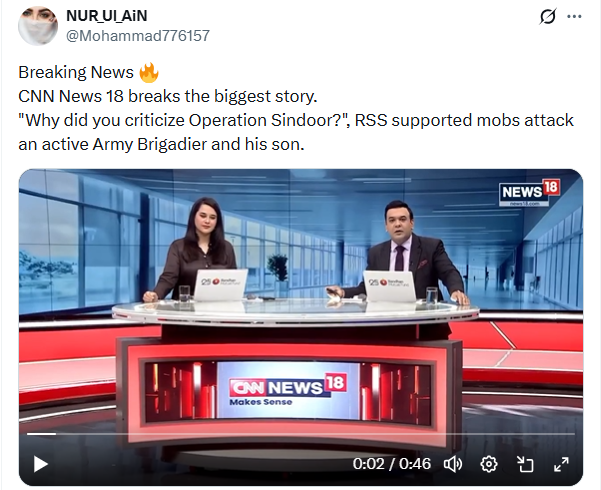
To verify the claim, we extracted multiple keyframes from the viral video using the InVid tool and conducted reverse image searches via Google Lens. The same clip was found circulating across several social media platforms with similar claims.
- https://www.facebook.com/reel/2397972117364665
- https://www.instagram.com/reels/DXE4FFdjcnq/
- https://archive.ph/hjG3b
- https://archive.ph/9IkTY
Fact Check
Since the video carried the News18 logo, we examined the outlet’s official social media handles. We found the original video on its X account, where the visuals matched the viral clip. However, a detailed analysis of the original footage showed that the anchor never stated that the brigadier and his son were attacked for criticising the government over “Operation Sindoor.”
In the authentic version, the anchor reported that the assault took place in Delhi’s Vasant Enclave after the brigadier objected to two individuals consuming alcohol inside a car parked outside his residence. This clearly indicates that the audio in the viral clip was tampered with to insert a false narrative.
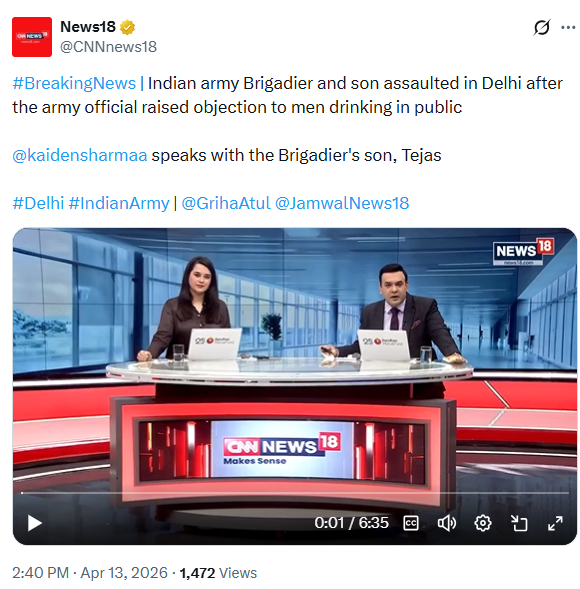
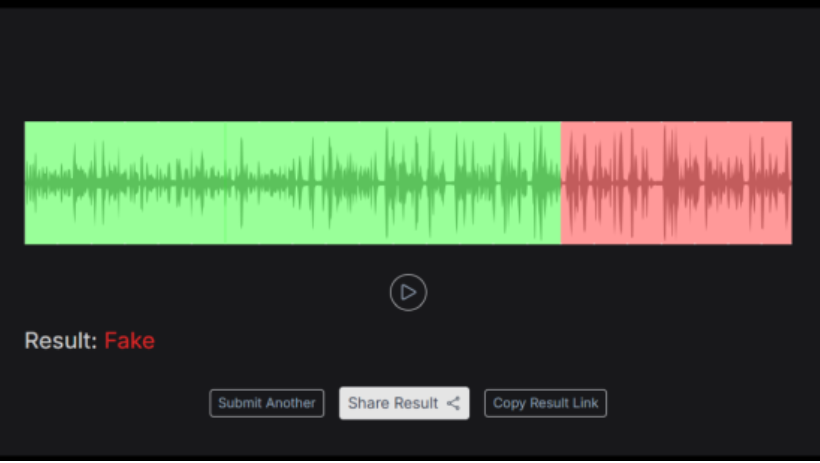
For further verification, we extracted the audio segment from the viral clip and analysed it using Resemble AI. The tool indicated that the portion describing the motive behind the attack had been digitally manipulated.
Conclusion
The viral claim is false. The video has been altered by modifying its audio to mislead viewers. In reality, the assault was not related to “Operation Sindoor” but occurred after the brigadier objected to public drinking near his residence.
.webp)
Executive Summary
A 20-second video showing skyscrapers submerged in water is being widely circulated on social media with the claim that it depicts the flood situation in Surat, Gujarat. The video is also being used by some users to criticize the Bharatiya Janata Party (BJP) government in Gujarat and Prime Minister Narendra Modi. Many social media users are sharing the clip as authentic footage of flooding in Surat. CyberPeace Research Wing’s research found the viral claim to be false. Our research revealed that the video is AI-generated and has no connection with Surat. While it is true that heavy rainfall caused flooding in parts of Surat and nearby districts in early July 2026, the viral video does not show any real scenes from the city.
Claim
Facebook user ‘Amresh Kumar’ shared the viral video on July 16, 2026, with the caption, “Thirty years of the Modi-BJP government. Drone footage of Gujarat Model – Surat city.”
https://www.facebook.com/reel/2440459239767277

Fact Check
To verify the claim, we first conducted a keyword search using terms related to flooding in Surat during July 2026. Our search confirmed that Surat experienced heavy rainfall during the first week of July, resulting in waterlogging and disruption in several low-lying areas. According to a report published by Bhaskar.com on July 8, 2026, intense rainfall led to flooding in several parts of Surat, and a few deaths due to electrocution were also reported.

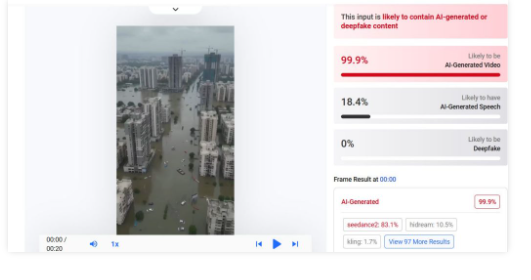
However, none of the credible reports or images from the actual flooding resembled the scenes shown in the viral video. To further investigate, we analysed the video using multiple AI detection tools.We first scanned the video using Hive Moderation, which indicated a 99.9% probability that the footage was generated using Artificial Intelligence.
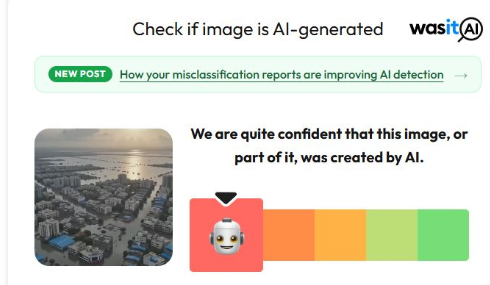
For additional verification, we examined the clip using another AI detection platform, WasItAI, which also concluded that the video had been created using AI. The analysis from multiple tools strongly suggests that the viral footage is digitally generated and does not represent a real event.
Conclusion
Our research found that the viral video being shared as drone footage of flooding in Surat is fake. Although Surat experienced heavy rainfall and flooding in early July 2026, the video circulating on social media is AI-generated and has no connection with the actual situation in the city. The clip is being falsely shared to spread misleading information.

Executive Summary:
A video is widely circulating on social media in which Israel’s Prime Minister Benjamin Netanyahu appears to praise India’s Prime Minister Narendra Modi. The viral clip is being shared with the claim that during a speech delivered on February 25, 2026, Netanyahu announced a special aid package for Afghanistan at the request of PM Modi. However, research by CyberPeace found the claim to be false. The research revealed that the circulating video was generated using artificial intelligence. The probe also confirmed that Netanyahu did not make any announcement related to Afghanistan or the Taliban during the speech.
Claim
On March 1, 2026, a social media user shared the viral video on Facebook claiming that Netanyahu praised PM Modi and announced a special assistance package for Afghanistan following India’s request. The links to the post and its archive are provided below, along with a screenshot.
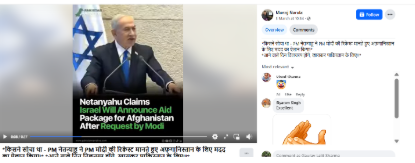
Fact Check:
To verify the claim, we first searched Google using relevant keywords. However, we did not find any credible media reports supporting the claim that Israel had announced such an aid package for Afghanistan. Next, we extracted key frames from the viral video and performed a reverse image search using Google Lens. During this process, we found the original video on the YouTube channel of VERTEX, which had been uploaded on February 25, 2026.
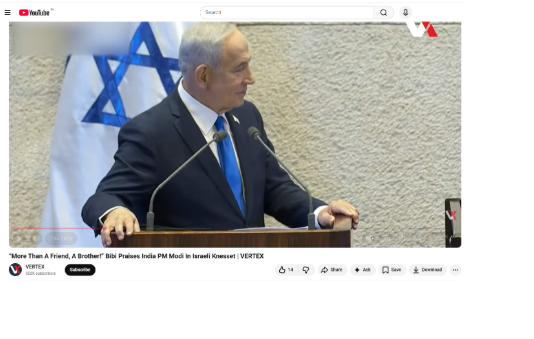
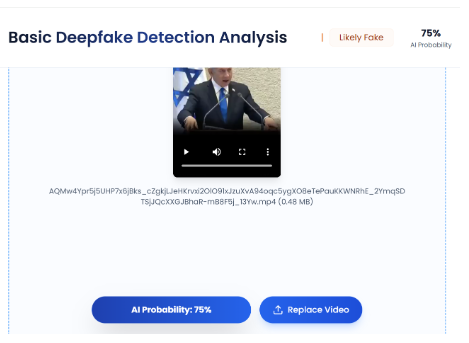
A detailed review of the original video revealed that the viral clip circulating on social media is not part of the original footage. This indicates that the circulating clip has been manipulated and shared with a misleading claim. In the original video, Netanyahu was addressing a special parliamentary session in Jerusalem, where he spoke about the growing trade, strategic cooperation, and strengthening diplomatic relations between India and Israel. He described the partnership between the two democracies as a significant and historic milestone in bilateral relations. Upon carefully listening to the viral clip, we noticed irregularities in the voice and tone, which raised suspicions that it might be AI-generated. We then analyzed the video using the AI detection tool TruthScan. The results indicated that the viral video has approximately a 75% probability of being AI-generated.
Conclusion
Our research found that the viral video was created using artificial intelligence. Moreover, Israel’s Prime Minister Benjamin Netanyahu did not make any announcement regarding Afghanistan or the Taliban during the speech being referenced. The claim circulating on social media is therefore false.
