
#FactCheck-Bangladesh Garment Workers’ Protest Video Falsely Linked to Delhi Police Firing
Executive Summary
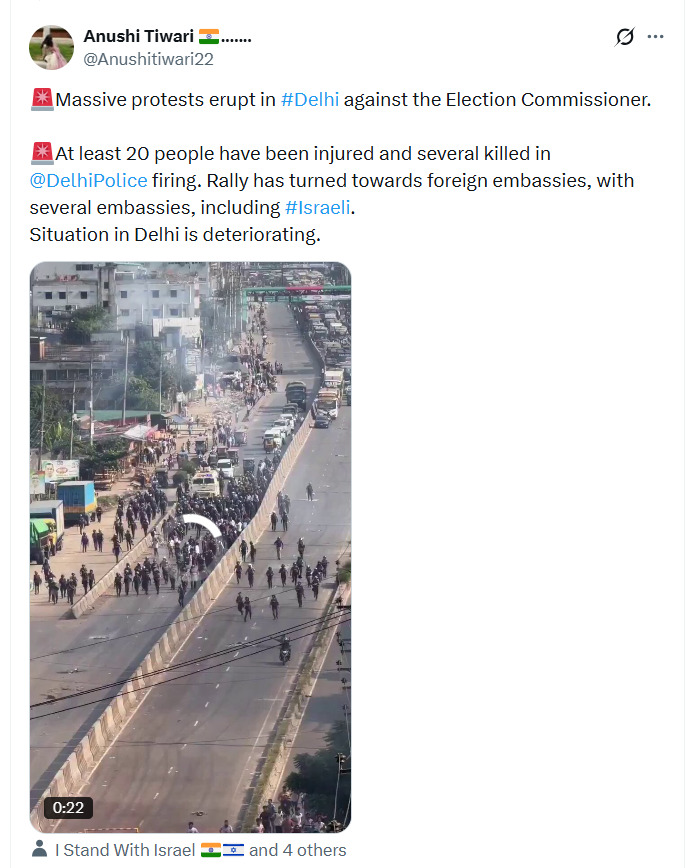
A video is being shared on social media with the claim that at least 20 people were injured and several others were killed in police firing during a protest against the Election Commissioner in Delhi. The post further claims that the protesters marched towards foreign embassies. CyberPeace Research found that the viral video is related to a protest by garment workers in Bangladesh. It has no connection to any incident involving Delhi Police or any protest against the Election Commissioner in Delhi.
Claim
A social media post claims that massive protests have erupted in Delhi against the Election Commissioner. It further alleges that at least 20 people were injured and several others killed in Delhi Police firing. The post also claims that protesters marched towards several foreign embassies, including the Israeli Embassy, and that the situation in Delhi is deteriorating.
https://x.com/Anushitiwari22/status/2117175390989107290
Fact Check
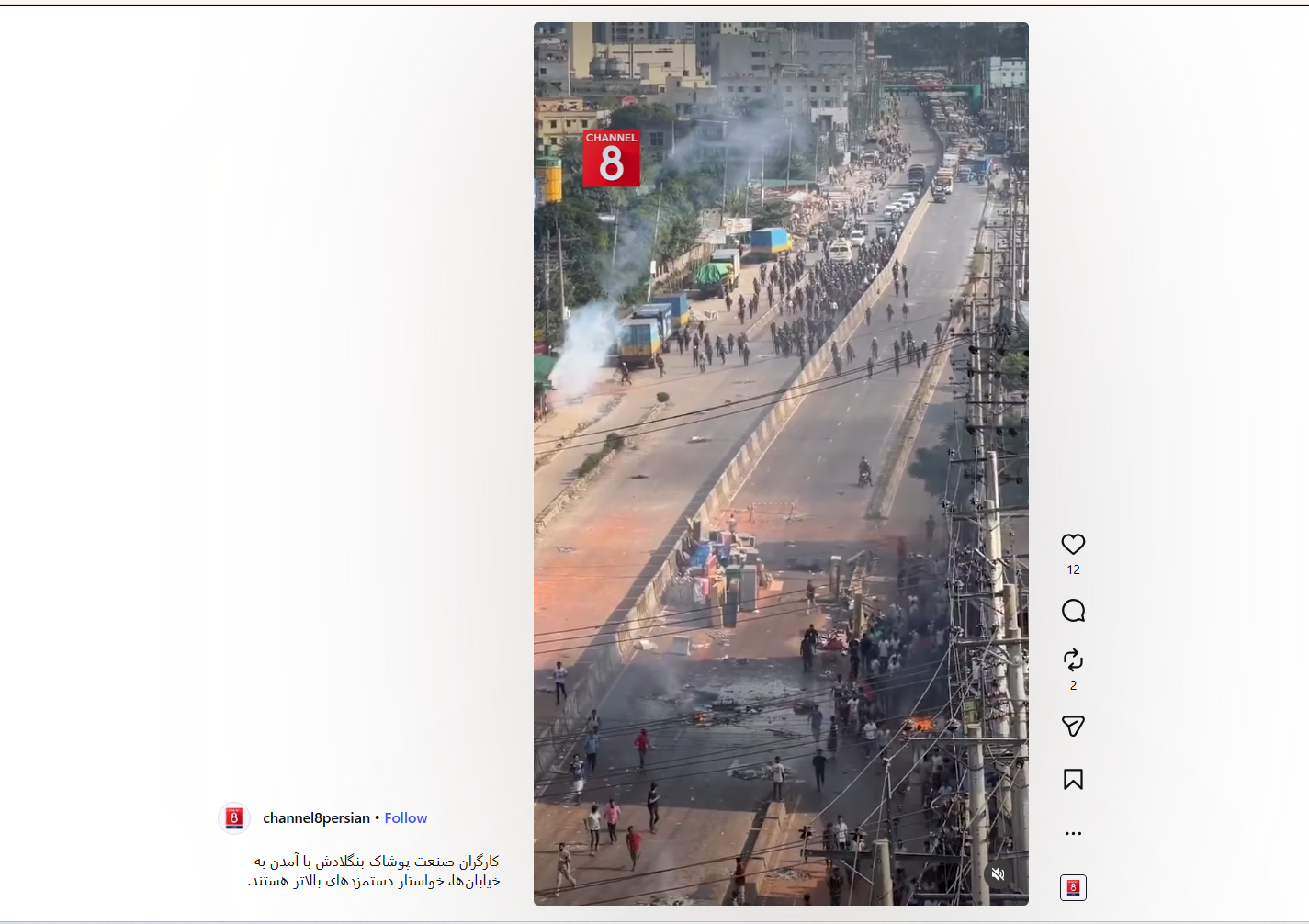
To verify the viral video, we extracted its keyframes and conducted a reverse image search. During the search, we found the video on an Instagram channel, where it was shared with the claim that garment workers in Bangladesh had taken to the streets demanding higher wages.
https://www.instagram.com/reels/DfPQefAic64/
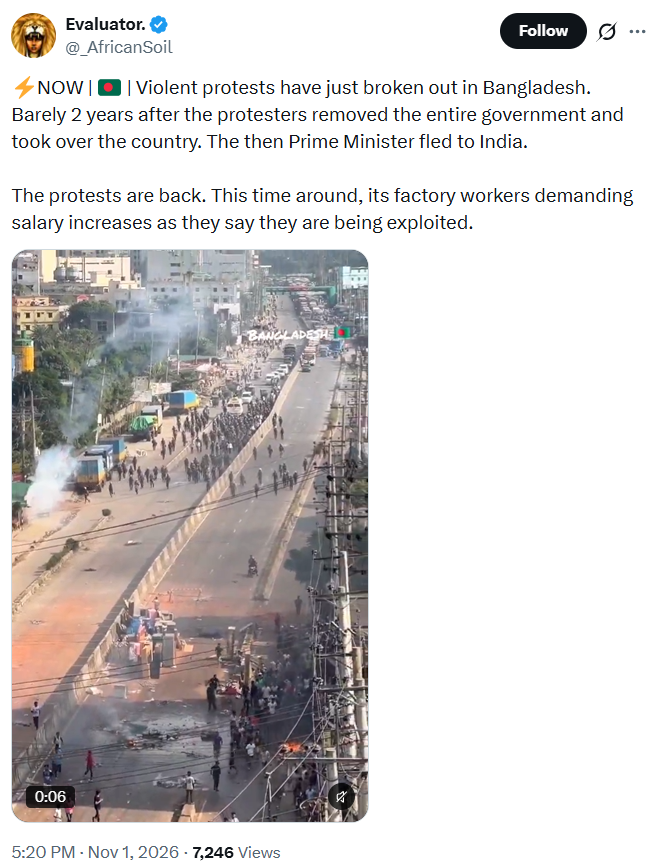
In the next step of our research, we found the video on an X account. The post claimed that violent protests had once again erupted in Bangladesh. According to the post, nearly two years ago, protesters had removed the then government from power and taken control of the country, following which the then prime minister had to leave the country and come to India.The post further claimed that factory workers had taken to the streets this time to demand higher wages. They alleged that they were being exploited
https://x.com/_AfricanSoil/status/2116860302440443948
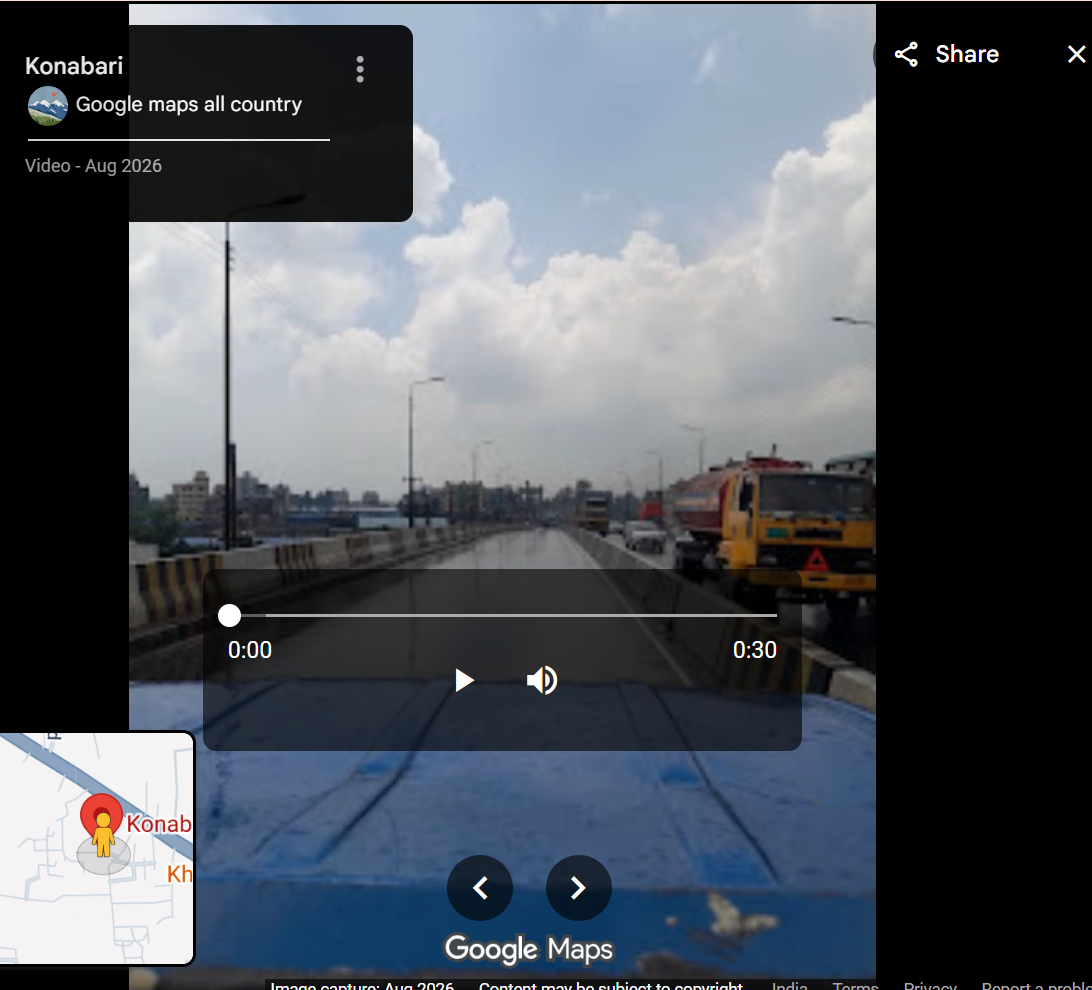
Taking our research forward, we examined the video using Google Street View and identified the location as Konabari, Gazipur. This established that the viral video is from Dhaka, Bangladesh, and not Delhi.
Conclusion
Our research found that the viral video is related to a protest by garment workers in Bangladesh. It has no connection to any incident of Delhi Police firing or any protest against the Election Commissioner in Delhi

Related Blogs

Executive Summary
The IT giant Apple has alerted customers to the impending threat of "mercenary spyware" assaults in 92 countries, including India. These highly skilled attacks, which are frequently linked to both private and state actors (such as the NSO Group’s Pegasus spyware), target specific individuals, including politicians, journalists, activists and diplomats. In sharp contrast to consumer-grade malware, these attacks are in a league unto themselves: highly-customized to fit the individual target and involving significant resources to create and use.
As the incidence of such attacks rises, it is important that all persons, businesses, and officials equip themselves with information about how such mercenary spyware programs work, what are the most-used methods, how these attacks can be prevented and what one must do if targeted. Individuals and organizations can begin protecting themselves against these attacks by enabling "Lockdown Mode" to provide an extra layer of security to their devices and by frequently changing passwords and by not visiting the suspicious URLs or attachments.
Introduction: Understanding Mercenary Spyware
Mercenary spyware is a special kind of spyware that is developed exclusively for law enforcement and government organizations. These kinds of spywares are not available in app stores, and are developed for attacking a particular individual and require a significant investment of resources and advanced technologies. Mercenary spyware hackers infiltrate systems by means of techniques such as phishing (by sending malicious links or attachments), pretexting (by manipulating the individuals to share personal information) or baiting (using tempting offers). They often intend to use Advanced Persistent Threats (APT) where the hackers remain undetected for a prolonged period of time to steal data by continuous stealthy infiltration of the target’s network. The other method to gain access is through zero-day vulnerabilities, which is the process of gaining access to mobile devices using vulnerabilities existing in software. A well-known example of mercenary spyware includes the infamous Pegasus by the NSO Group.
Actions: By Apple against Mercenary Spyware
Apple has introduced an advanced, optional protection feature in its newer product versions (including iOS 16, iPadOS 16, and macOS Ventura) to combat mercenary spyware attacks. These features have been provided to the users who are at risk of targeted cyber attacks.
Apple released a statement on the matter, sharing, “mercenary spyware attackers apply exceptional resources to target a very small number of specific individuals and their devices. Mercenary spyware attacks cost millions of dollars and often have a short shelf life, making them much harder to detect and prevent.”
When Apple's internal threat intelligence and investigations detect these highly-targeted attacks, they take immediate action to notify the affected users. The notification process involves:
- Displaying a "Threat Notification" at the top of the user's Apple ID page after they sign in.

- Sending an email and iMessage alert to the addresses and phone numbers associated with the user's Apple ID.
- Providing clear instructions on steps the user should take to protect their devices, including enabling "Lockdown Mode" for the strongest available security.
- Apple stresses that these threat notifications are "high-confidence alerts" - meaning they have strong evidence that the user has been deliberately targeted by mercenary spyware. As such, these alerts should be taken extremely seriously by recipients.
Modus Operandi of Mercenary Spyware
- Installing advanced surveillance equipment remotely and covertly.
- Using zero-click or one-click attacks to take advantage of device vulnerabilities.
- Gain access to a variety of data on the device, including location tracking, call logs, text messages, passwords, microphone, camera, and app information.
- Installation by utilizing many system vulnerabilities on devices running particular iOS and Android versions.
- Defense by patching vulnerabilities with security updates (e.g., CVE-2023-41991, CVE-2023-41992, CVE-2023-41993).
- Utilizing defensive DNS services, non-signature-based endpoint technologies, and frequent device reboots as mitigation techniques.
Prevention Measures: Safeguarding Your Devices
- Turn on security measures: Make use of the security features that the device maker has supplied, such as Apple's Lockdown Mode, which is intended to prevent viruses of all types from infecting Apple products, such as iPhones.
- Frequent software upgrades: Make sure the newest security and software updates are installed on your devices. This aids in patching holes that mercenary malware could exploit.
- Steer clear of misleading connections: Exercise caution while opening attachments or accessing links from unidentified sources. Installing mercenary spyware is possible via phishing links or attachments.
- Limit app permissions: Reassess and restrict app permissions to avoid unwanted access to private information.
- Use secure networks: To reduce the chance of data interception, connect to secure Wi-Fi networks and stay away from public or unprotected connections.
- Install security applications: To identify and stop any spyware attacks, think about installing reliable security programs from reliable sources.
- Be alert: If Apple or other device makers send you a threat notice, consider it carefully and take the advised security precautions.
- Two-factor authentication: To provide an extra degree of protection against unwanted access, enable two-factor authentication (2FA) on your Apple ID and other significant accounts.
- Consider additional security measures: For high-risk individuals, consider using additional security measures, such as encrypted communication apps and secure file storage services
Way Forward: Strengthening Digital Defenses, Strengthening Democracy
People, businesses and administrations must prioritize cyber security measures and keep up with emerging dangers as mercenary spyware attacks continue to develop and spread. To effectively address the growing threat of digital espionage, cooperation between government agencies, cybersecurity specialists, and technology businesses is essential.
In the Indian context, the update carries significant policy implications and must inspire a discussion on legal frameworks for government surveillance practices and cyber security protocols in the nation. As the public becomes more informed about such sophisticated cyber threats, we can expect a greater push for oversight mechanisms and regulatory protocols. The misuse of surveillance technology poses a significant threat to individuals and institutions alike. Policy reforms concerning surveillance tech must be tailored to address the specific concerns of the use of such methods by state actors vs. private players.
There is a pressing need for electoral reforms that help safeguard democratic processes in the current digital age. There has been a paradigm shift in how political activities are conducted in current times: the advent of the digital domain has seen parties and leaders pivot their campaigning efforts to favor the online audience as enthusiastically as they campaign offline. Given that this is an election year, quite possibly the most significant one in modern Indian history, digital outreach and online public engagement are expected to be at an all-time high. And so, it is imperative to protect the electoral process against cyber threats so that public trust in the legitimacy of India’s democratic is rewarded and the digital domain is an asset, and not a threat, to good governance.
Executive Summary
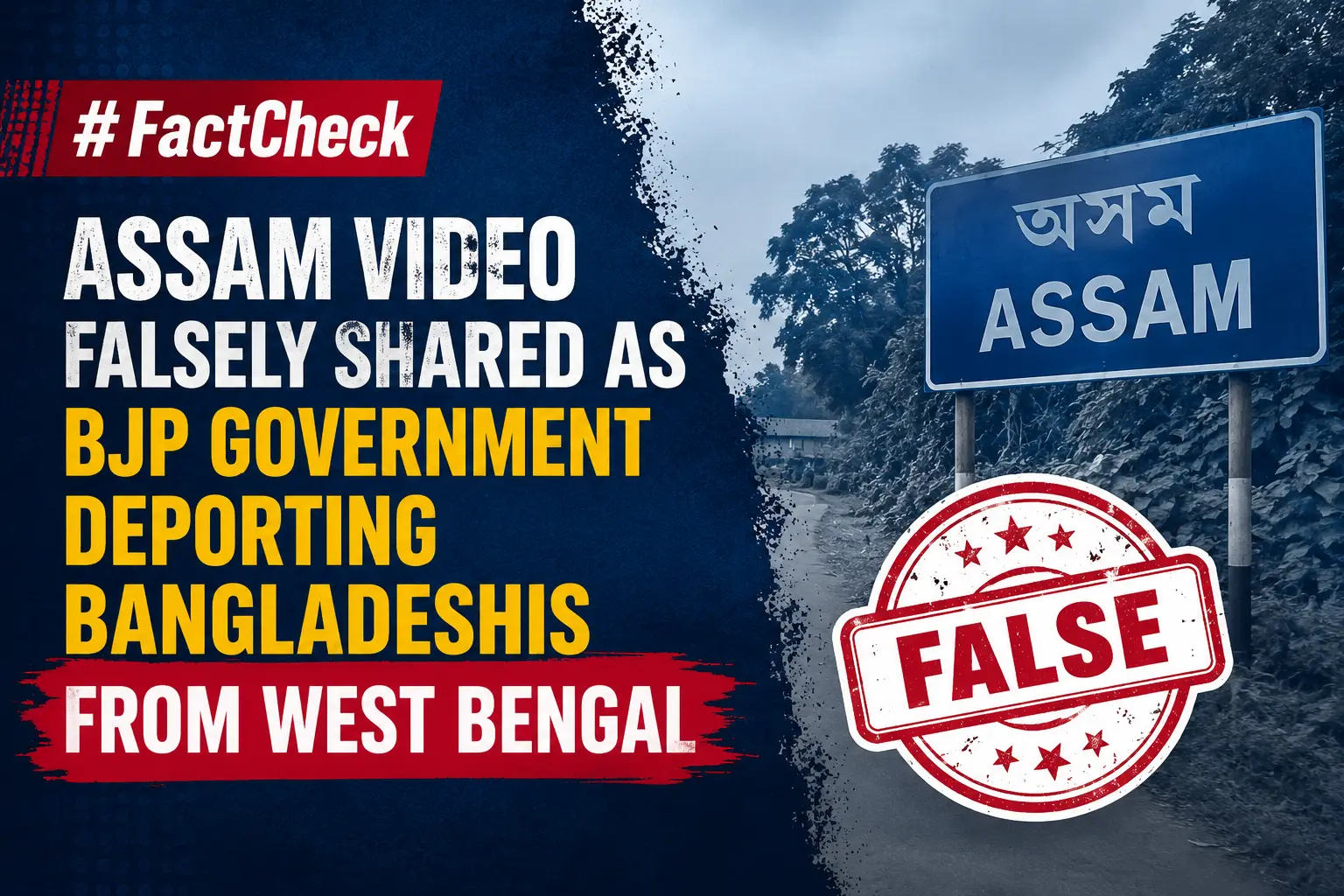
A video is being widely shared on social media amid claims that the BJP has formed a government in West Bengal. The video shows several people being taken away in a bus while their family members are seen crying and grieving nearby. Users sharing the clip claim that the scene is from West Bengal, where the BJP government has allegedly started sending back Bangladeshis who were living illegally in the state.
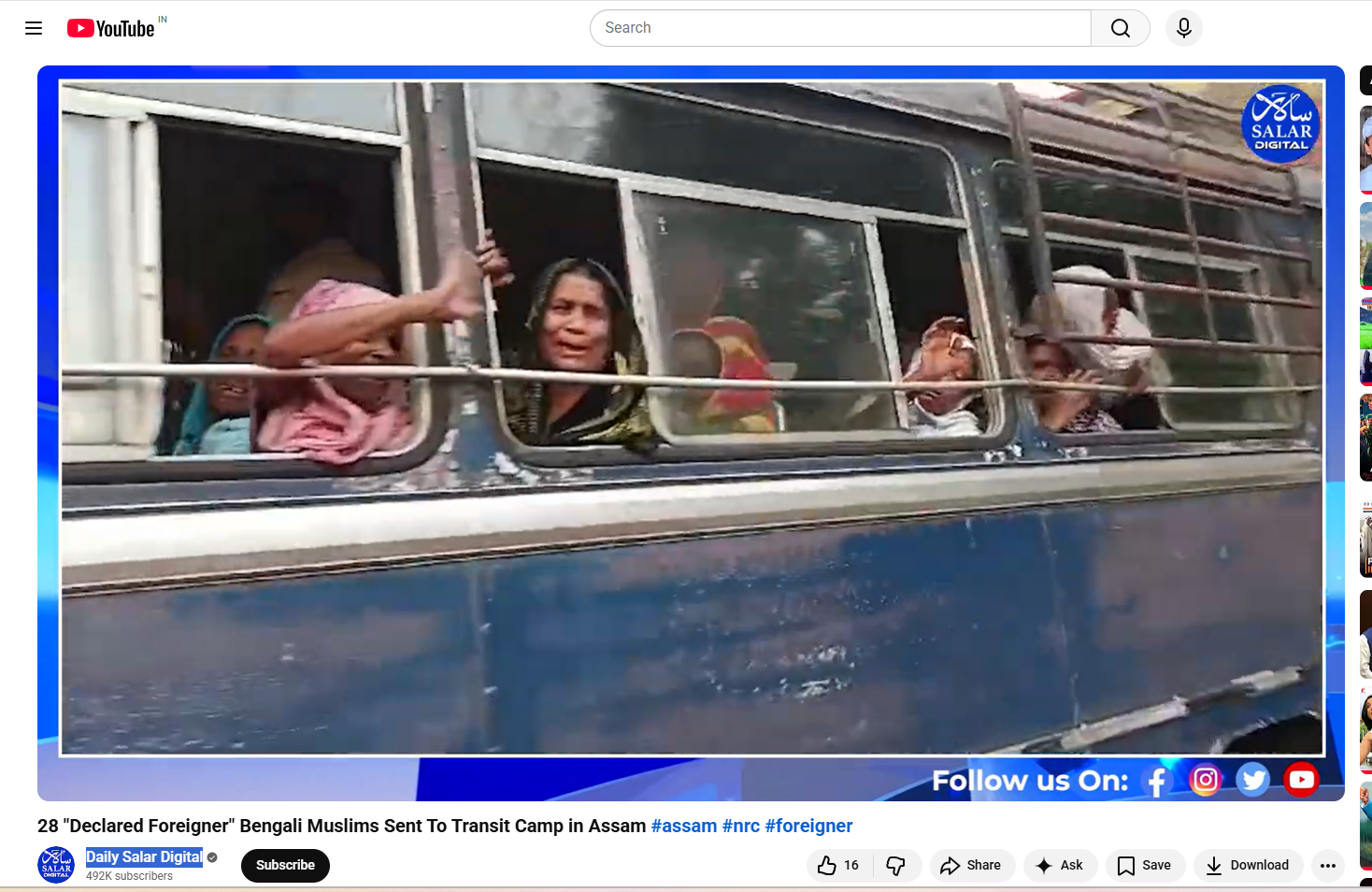
Research by CyberPeace Research Wing found the viral claim to be misleading. The research revealed that the viral video has no connection with West Bengal. The video is actually from Assam’s Barpeta district, where in 2024, a Foreigners Tribunal declared 28 people as non-citizens. Following the order, authorities shifted them to a transit camp. The viral clip is from that incident. An old and unrelated video is now being falsely shared as a recent incident from West Bengal.
Claim
On May 14, 2026, a Facebook user shared the viral video and wrote, “How sad… Opposition voters are now being packed off to the Bangladesh border from Bengal and Assam. How will they ever win now? Really terrible what is happening to these poor people.” The post link, archive link, and screenshot are provided below.
- https://www.facebook.com/rajendra.kasliwal1/posts/973081982000168/
- https://archive.ph/y7Y4D

Another user also shared the same viral video on social media with a similar claim. The post link, archive link, and screenshot are given below.

Fact Check
To verify the authenticity of the viral video, we extracted several key frames and performed a reverse image search. During the research, we found the same video uploaded on a YouTube channel named Daily Salar Digital on September 5, 2024. The link to the post and its screenshot are given below.
Further research led us to a report published by IndiaTodayNE on September 3, 2024, carrying a similar description of the incident. The post link and screenshot are provided below.

Conclusion
Our research found that the viral video has no connection with West Bengal. The clip is from Assam’s Barpeta district, where in 2024, 28 people were declared non-citizens by a Foreigners Tribunal and later shifted to a transit camp by authorities. The video being shared online is from that incident. An old and unrelated video is being falsely circulated as a recent development from West Bengal.
Executive Summary:
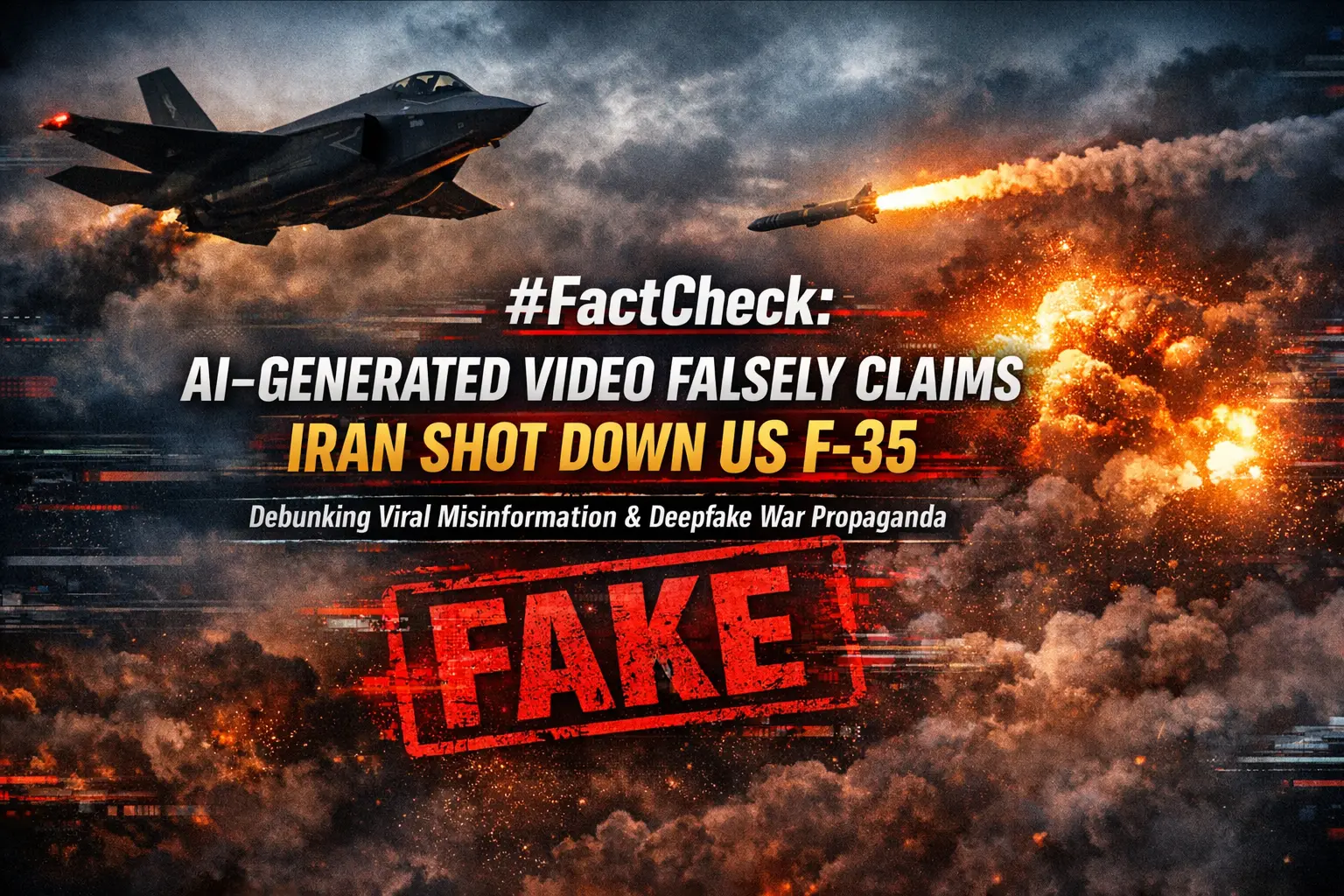
Amid the ongoing conflict involving the US-Israel and Iran, Tehran has claimed that it shot down a US F-35 fighter jet. In this context, a video is going viral on social media showing a crashed American fighter aircraft on the ground. It is being claimed that the footage shows Iran downing a US F-35 jet. However, an research by the CyberPeace found that the viral video is a deepfake and not real. The clip appears to have been created using Google AI tools.
Claim:
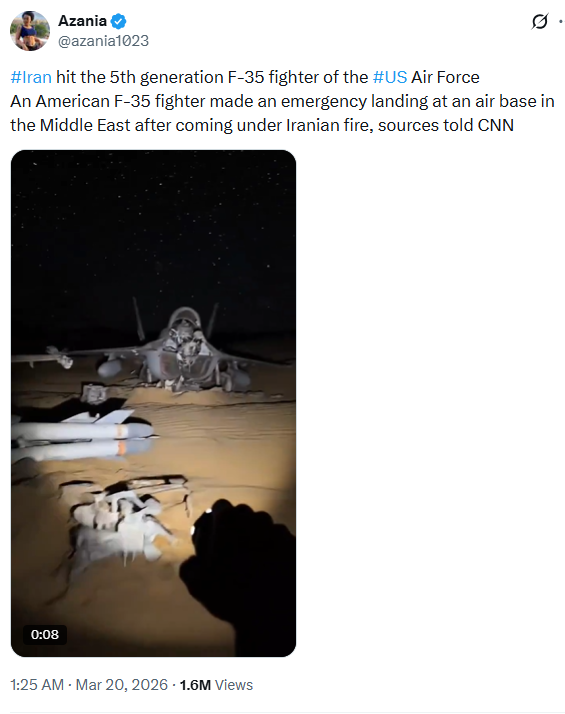
A social media user “Azania” shared the viral video on March 20, 2026, with the caption,“#Iran hit the 5th generation F-35 fighter of the #US Air Force… An American F-35 fighter made an emergency landing at an air base in the Middle East after coming under Iranian fire, sources told CNN.”
Fact Check:
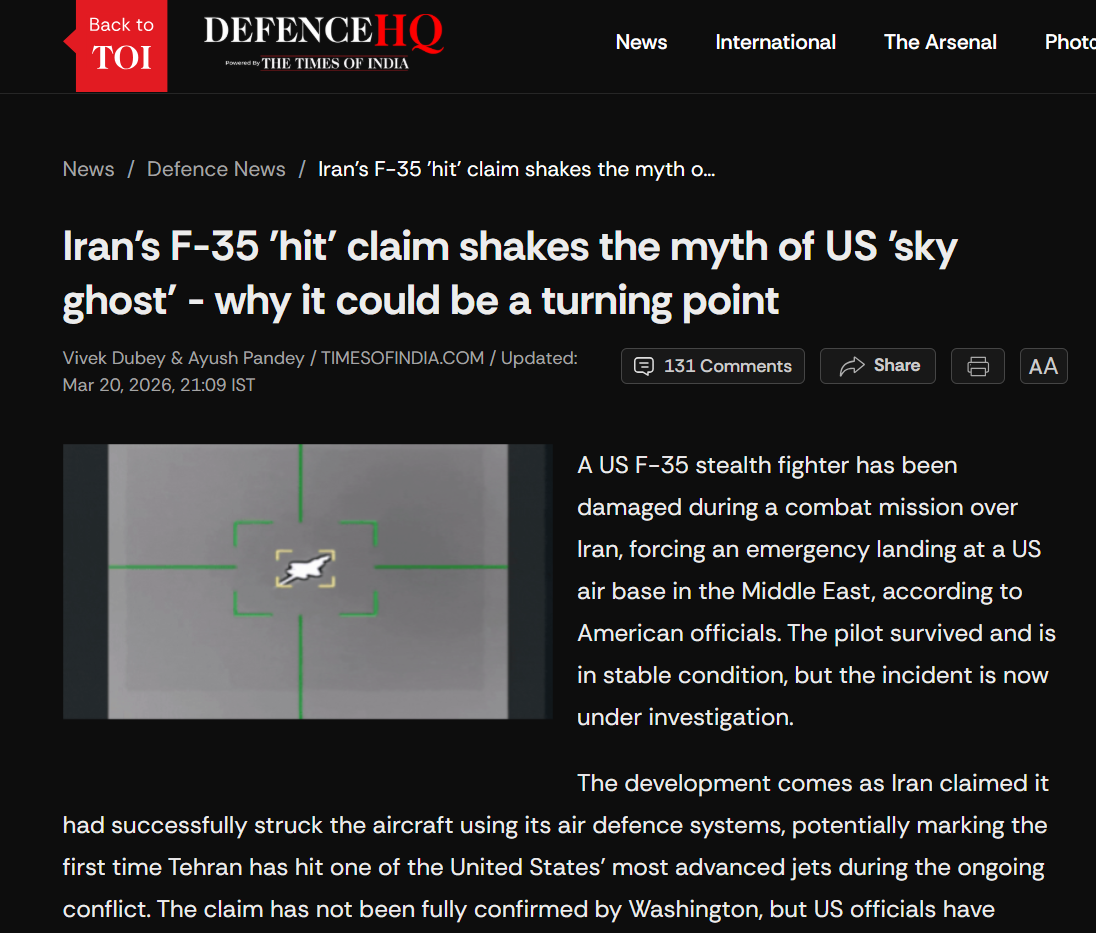
We began our research with a news search and found multiple reports stating that a US F-35 fighter jet was damaged during a combat mission over Iran. According to reports, Iran’s Islamic Revolutionary Guard Corps (IRGC) claimed to have damaged a US F-35 jet and also released a video. As per a CNN report, US officials confirmed that an American F-35 was damaged during a mission over Iran, forcing it to make an emergency landing at a US airbase in the Middle East. The pilot was safe and in stable condition, and the incident is currently under research .
A spokesperson for the US Central Command, Captain Tim Hawkins, also acknowledged that an F-35 made an emergency landing during the mission. However, the US has not officially confirmed that the damage was caused by an Iranian attack.Reports by Fox News and The Times of India also mention the emergency landing of the aircraft.
Upon closely examining the viral video, we noticed several inconsistencies indicating possible AI manipulation. We then analyzed the clip using Hive Moderation, which indicated nearly a 79 percent probability that the video is AI-generated. The analysis also suggests that it was likely created using Google’s AI video generation tools (Veo).
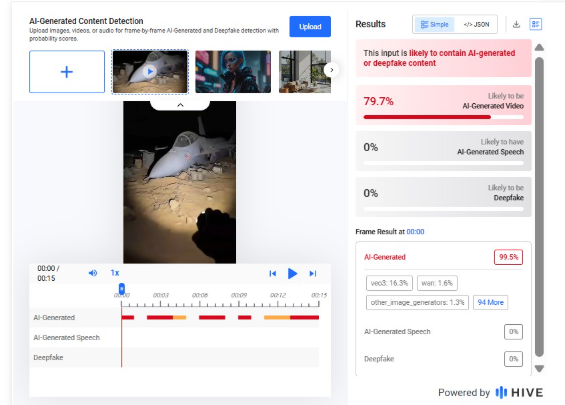
Conclusion:
The viral video claiming to show Iran shooting down a US F-35 fighter jet is AI-generated and not real. While Iran has claimed to have targeted a US F-35, and the US has confirmed an emergency landing during a mission, there is no official confirmation that the aircraft was shot down by Iran.
