
#FactCheck-Amarnath Yatra Video Falsely Shared as Chinese Incursion in Arunachal Pradesh
Executive Summary
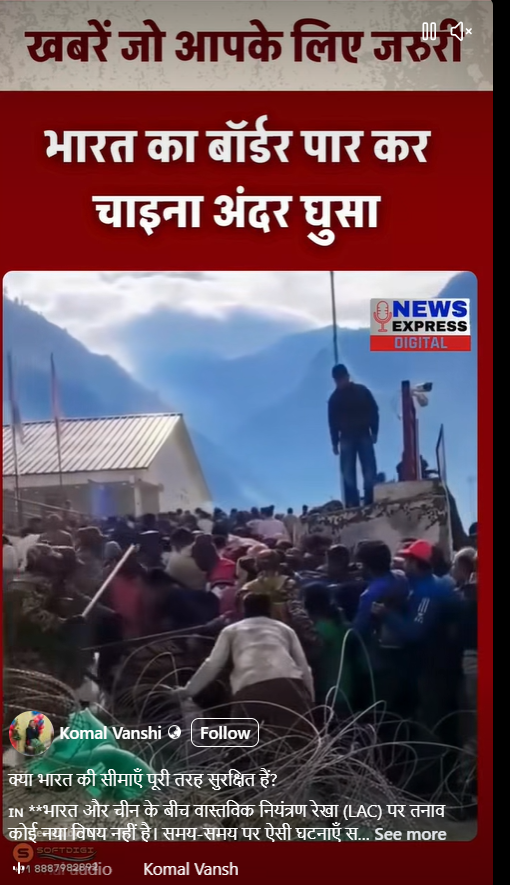
Several social media posts are claiming that Chinese troops have entered nearly 60 kilometres inside Arunachal Pradesh. Amid these claims, a video showing security personnel managing a large crowd is being widely circulated as footage from Arunachal Pradesh. Users are sharing the clip claiming it captures the situation following the alleged Chinese intrusion. CyberPeace Research Wing found the claim to be false. The viral video is not from Arunachal Pradesh. It actually shows Baltal Base Camp during the Amarnath Yatra in Jammu and Kashmir. The Government of India has also categorically denied reports of any recent Chinese intrusion into Indian territory.
Claim
A Facebook user, "Komal Vanshi," shared the video on July 8, 2026, claiming that Chinese People's Liberation Army (PLA) soldiers had entered deep inside Arunachal Pradesh and referring to alleged incidents along the Line of Actual Control (LAC). The post was accompanied by the viral video, suggesting it was related to the alleged intrusion.
https://www.facebook.com/reel/1585091393251089
Fact Check
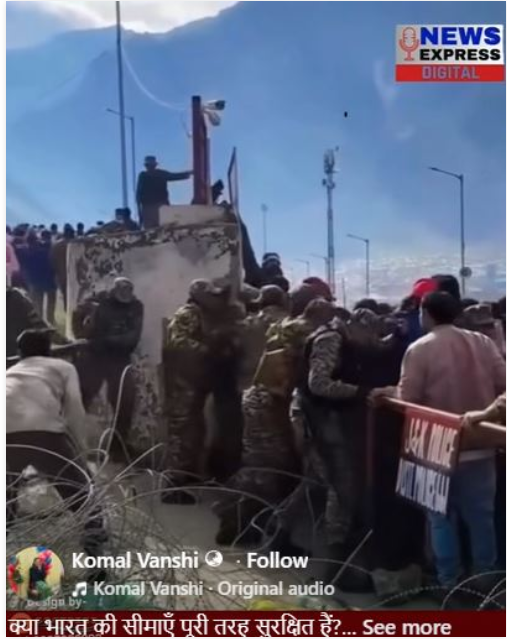
We first carefully examined the viral video. During the analysis, we noticed barricades bearing the words "Jammu & Kashmir Police." This clearly indicated that the footage could not have been recorded in Arunachal Pradesh.
In the next step, we extracted multiple keyframes from the video and conducted a reverse image search using Google Lens. Although the video was widely shared with the Arunachal Pradesh claim, our search led us to a YouTube Shorts video uploaded on July 7, 2026, identifying the location as Baltal, one of the main base camps for the annual Amarnath Yatra in Jammu and Kashmir.
https://www.youtube.com/watch?v=EEfP2RckyJM
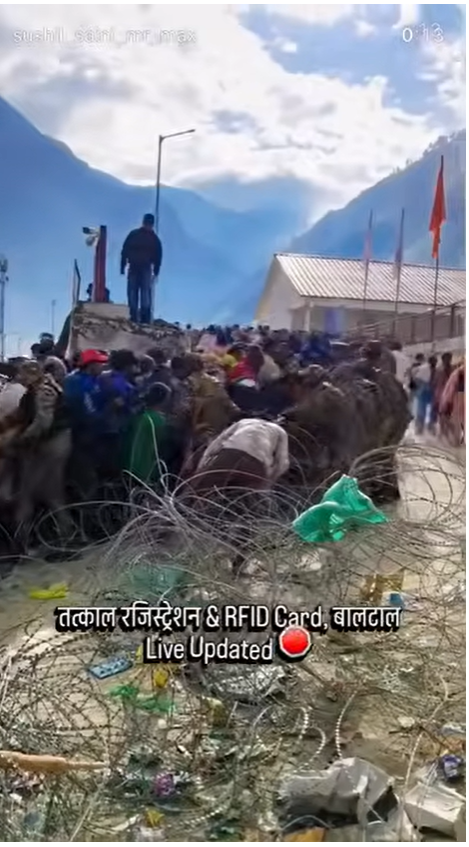
The visual details in the YouTube video matched the viral footage, confirming that it was filmed at Baltal Base Camp and had no connection with Arunachal Pradesh or any alleged Chinese military movement
Conclusion
CyberPeace Research Wing found that the viral claim is false. The video being circulated as evidence of a Chinese military incursion into Arunachal Pradesh actually shows crowd management arrangements at Baltal Base Camp during the Amarnath Yatra in Jammu and Kashmir. The footage has been falsely linked to an unrelated claim about Chinese troops entering Indian territory. There is no evidence that the video depicts any incident related to the India-China border.

Related Blogs

Executive Summary
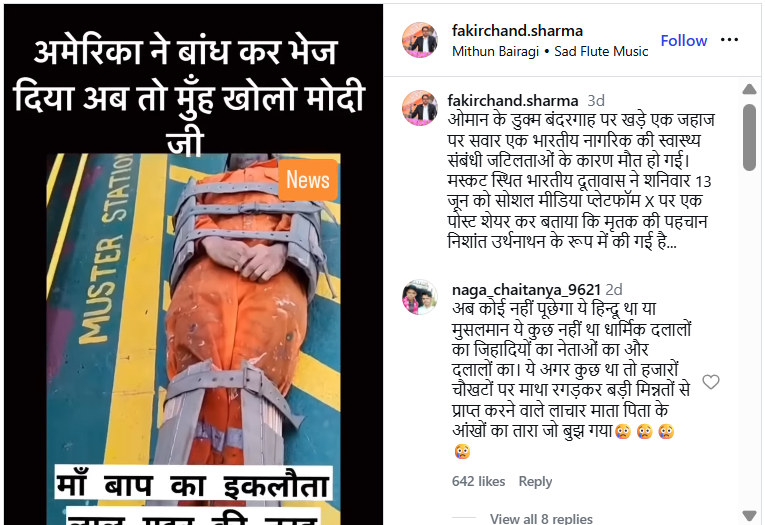
Amid reports of attacks on ships in the Gulf of Oman that led to the death of three Indian nationals, a video showing a person lying injured on a ship is being widely circulated on social media. The clip is being shared with the claim that the United States sent the body of a deceased Indian sailor to India in a “wrapped” condition. CyberPeace Research Wing research found the claim to be misleading. The viral video is unrelated to any recent incident involving Indian nationals and is, in fact, from a mock drill conducted on board a ship.
Claim:
An Instagram user ‘fakirchand.sharma’ shared the video on June 15, 2026, claiming that an Indian sailor, identified as Nishant Urthnathan, died due to health complications on a vessel anchored at Duqm port, Oman. The post further alleged that the United States returned the body in a “wrapped” condition, sparking outrage on social media. https://www.instagram.com/fakirchand.sharma/reel/DZlsxj9TIaS , https://perma.cc/C9SF-J8ZR
Fact Check:
A reverse image search of keyframes from the viral video led to an Instagram account ‘bipul_raja_vlogs’, where the same video was posted on June 10, 2026. The original caption clearly stated that the visuals were from a fire drill conducted on board a ship. https://www.instagram.com/p/DZbnZlGPAlL
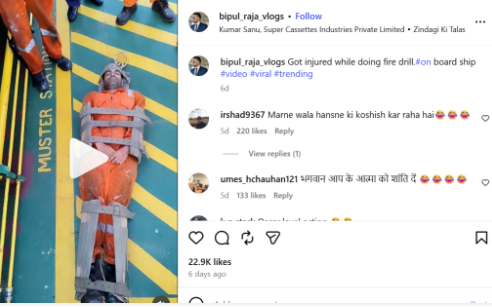
Further posts from the same account on June 15 and June 17, 2026, also show similar mock drill visuals and clarify that the content is being misused online. The account features multiple posts related to routine ship operations and training exercises. https://www.instagram.com/p/DZnEXOzCc2X
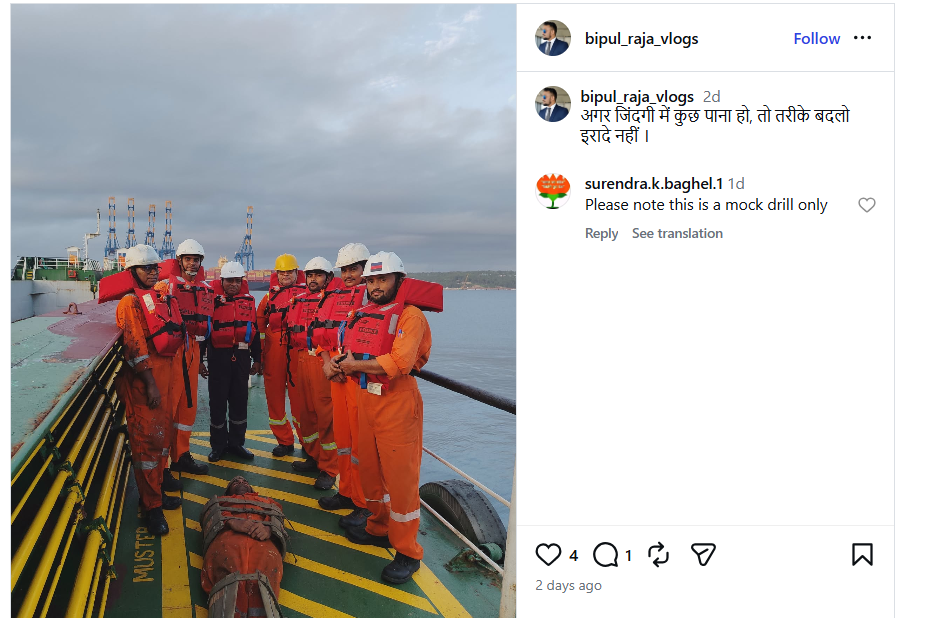
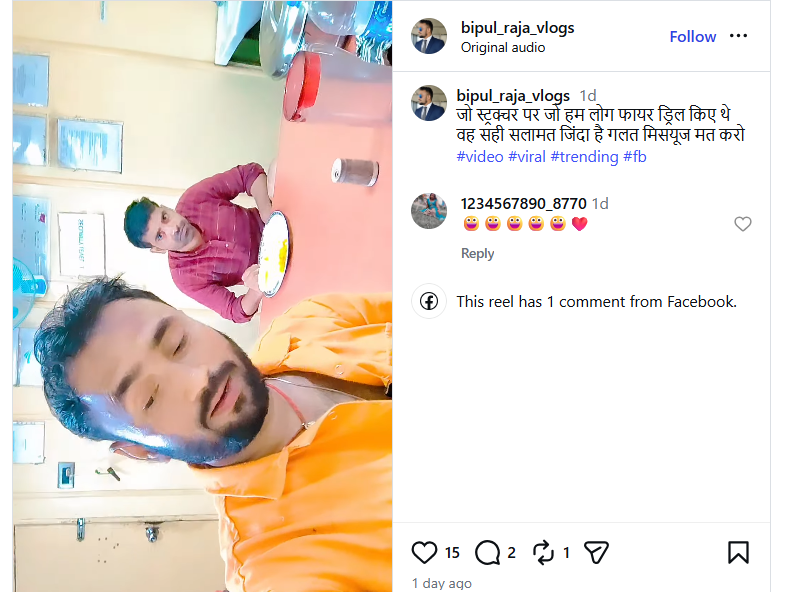
The profile also contains several other photos and videos of crew members working on the ship. We also checked the YouTube channel linked in this profile, “Sunnybabu,” where a mock drill video was uploaded on January 21, 2026. https://www.instagram.com/bipul_raja_vlogs

Conclusion:
The research confirms that the viral video is unrelated to the death of any Indian sailor in the Gulf of Oman. The clip actually shows a mock drill conducted on a ship and is being falsely shared with a misleading narrative.

In the Intricate mazes of the digital world, where the line between reality and illusion blurs, the quest for truth becomes a Sisyphean task. The recent firestorm of rumours surrounding global pop icon Dua Lipa's visit to Rajasthan, India, is a poignant example of this modern Dilemma. A single image, plucked from the continuum of time and stripped of context, became the fulcrum upon which a narrative of sexual harassment was precariously balanced. This incident, a mere droplet in the ocean of digital discourse, encapsulates the broader phenomenon of misinformation—a spectre that haunts the virtual halls of our interconnected existence.
Misinformation Incident
Amidst the ceaseless hum of social media, a claim surfaced with the tenacity of a weed in fertile soil: Dua Lipa, the three-time Grammy Award winner, had allegedly been subjected to sexual harassment during her sojourn in the historic city of Jodhpur. The evidence? A viral picture, its origins murky, accompanied by a caption that seemed to confirm the worst fears of her ardent followers. The digital populace quickly reacted, with many sharing the image, asserting the claim's veracity without pause for verification.
Unraveling the Fabric of Fake News: Fact-Checking Dua Lipa's India Experience
The narrative gained momentum through platforms of dubious credibility, such as the Twitter handle,' which, upon closer scrutiny by the Digital Forensics Research and Analytics Center, was revealed to be a purveyor of fake news. The very fabric of the claim began to unravel as the original photo was traced back to the official Facebook page of RVCJ Media, untainted by the allegations that had been so hastily ascribed to it. Moreover, the silence of Dua Lipa on the matter, rather than serving as a testament to the truth, inadvertently fueled the fires of speculation—a stark reminder of the paradox where the absence of denial is often misconstrued as an affirmation.
The pop star's words, shared on her Instagram account, painted a starkly different picture of her experience in India. She spoke not of fear and harassment, but of gratitude and joy, describing her trip as 'deeply meaningful' and expressing her luck to be 'within the magic' with her family. The juxtaposition of her heartfelt account with the sinister narrative constructed around her serves as a cautionary tale of the power of misinformation to distort and defile.
A Political Microcosm: Bye Elections of Telangana
Another incident is electoral misinformation, the political landscape of Telangana, India, bristled with anticipation as the Election Commission announced bye-elections for two Member of Legislative Council (MLC) seats. Here, too, the machinery of misinformation whirred into action, with political narratives being shaped and reshaped through the lens of partisan prisms. The electoral process, transparent in its intent, became susceptible to selective amplification, with certain facets magnified or distorted to fit entrenched political narratives. The bye-elections, thus, became a battleground not just for political supremacy but also for the integrity of information.
The Far-Reaching Claws of Misinformation: Fact Check
The misinformation regarding the experience of dua lipa upon India's visit and another incident of political Microcosm of Misinformation in Telangana are manifestations of a global challenge. Misinformation, adapts to the different contours of its environment, whether it be the gritty arena of politics or the glitzy realm of stardom. Its tentacles reach far and wide, with geopolitical implications that can destabilise regions, sow discord, and undermine the very pillars of democracy. The erosion of trust that misinformation engenders is perhaps its most insidious effect, as it chips away at the bedrock of societal cohesion and collective well-being.
Paradox of Technology
The same technological developments that have allowed the spread of misinformation also hold the keys to its containment. Artificial intelligence-powered fact-checking tools, blockchain-enabled transparency counter-measures, and comprehensive digital literacy campaigns stand as bulwarks against falsehoods. These tools, however, are not panaceas; they require the active engagement and critical thinking skills of each digital citizen to be truly effective.
Conclusion
As we stand at the cusp of the digital age, the way forward demands vigilance, collaboration, and innovation. Cultivating a digitally literate person, capable of discerning the nuances of digital content, is paramount. Governments, the tech industry, media companies, and civil society must join forces in a common front, leveraging their collective expertise in the battle against misinformation. Promoting algorithmic accountability and fostering diverse information ecosystems will also be crucial in mitigating the inadvertent amplification of falsehoods.
In the end, discerning truth in the digital age is a delicate process. It requires us to be attuned to the rhythm of reality, and wary of the seductive allure of unverified claims. As we navigate this digital realm, remember that the truth is not just a destination but a journey that demands our unwavering commitment to the pursuit of what is real and what is right.
References
- https://telanganatoday.com/eci-releases-schedule-for-bye-elections-to-two-mlc-seats-in-telangana
- https://www.oneindia.com/fact-check/was-pop-singer-dua-lipa-sexually-harassed-in-rajasthan-during-her-india-trip-heres-the-truth-3718833.html?story=3
- https://www.thequint.com/news/webqoof/edited-graphic-of-dua-lipa-being-sexually-harassed-in-jodhpur-falsely-shared-fact-check

Executive Summary
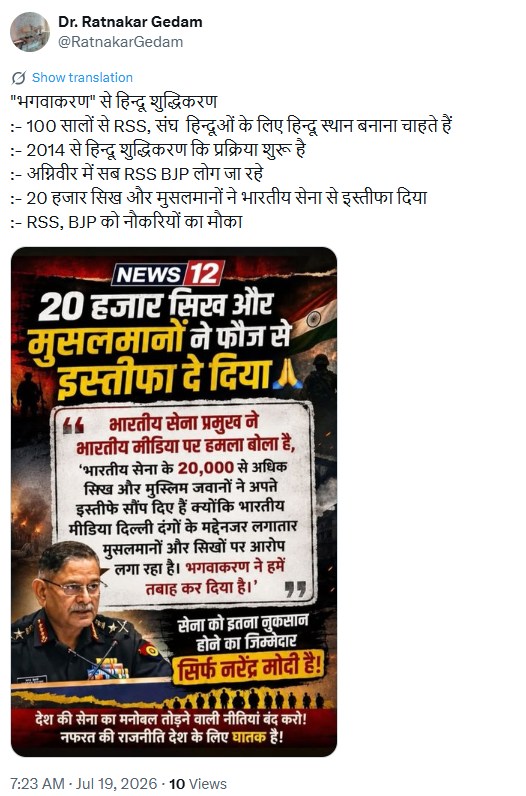
A claim is being widely circulated on social media alleging that more than 20,000 Sikh and Muslim personnel have resigned from the Indian Army.The viral graphic further attributes a statement to Chief of Army Staff General Upendra Dwivedi, claiming that the resignations were triggered by Indian media allegedly blaming Muslims and Sikhs for the Delhi riots. The graphic also includes the alleged remark that “Bhagwakaran (saffronisation) has destroyed us.” Several social media users are sharing the claim as genuine. CyberPeace Rresearch Wing ’s research found the viral claim to be false. Our research revealed that there is no credible evidence to support the allegation that more than 20,000 Sikh and Muslim soldiers resigned from the Indian Army. We found no official statement from the Indian Army or the Ministry of Defence confirming such resignations. Additionally, the statement attributed to Chief of Army Staff General Upendra Dwivedi has been fabricated and does not appear in his original speech. The viral claim is therefore misleading and based on false information.
Claim
An X user shared the viral graphic with the caption, “Under the guise of ‘Bhagwakaran’ (saffronisation), RSS has wanted a Hindu Rashtra for 100 years. Since 2014, the process of ‘Hindu purification’ has begun. Agniveer recruitment is being filled with RSS-BJP supporters. Twenty thousand Sikh and Muslim soldiers have resigned from the Indian Army, creating job opportunities for RSS and BJP supporters.”
Post Link:
https://x.com/RatnakarGedam/status/2078659496801661426?s=20
https://archive.ph/submit/?url
Fact Check
To verify the claim, we conducted keyword-based searches on Google using terms related to the alleged resignation of 20,000 Sikh and Muslim soldiers from the Indian Army. Our search found no credible news reports supporting the claim. We also found no official statement from the Indian Army or the Ministry of Defence confirming that such resignations had taken place. During the research , we located the original video of General Upendra Dwivedi, published by the news agency IANS. In the video, the Army Chief is addressing the Delhi Defence Dialogue, where he discusses modern warfare, emerging military technologies, future security challenges, and land warfare strategy.
His remarks are entirely focused on defence preparedness, technological advancements, and strategic military issues. At no point does he mention the resignation of 20,000 Sikh or Muslim soldiers, the Delhi riots, or any of the claims circulating on social media.
https://x.com/ians_india/status/1988566879053693282?s=20

The viral quote attributed to General Dwivedi does not appear anywhere in his speech and has been fabricated.
Conclusion
Our research found that the claim alleging 20,000 Sikh and Muslim soldiers resigned from the Indian Army is false.There is no credible evidence that such mass resignations took place, and General Upendra Dwivedi never made the statement attributed to him in the viral posts. The claim is based on a fabricated quote and is being circulated to mislead the public.
