
#FactCheck:AI-Generated Video of PM Modi Falsely Shared with Claim About Rising Sugar Prices
Executive Summary
A video of Prime Minister Narendra Modi is being widely shared on social media with the claim that he warned about rising sugar prices, stating that if the supply crisis worsens, sugar prices could reach ₹130 per kg. In the viral clip, PM Modi can allegedly be heard speaking about the increase in sugar prices. However, a research done by the research wing of the CyberPeace revealed that the claim made with the viral video is false. The research found that the viral video is AI-generated and has been edited to spread misleading information on social media.
Claim:
On August 22, 2026, a video was shared on the social media platform Facebook with the caption: “Can sugar prices reach ₹120-₹130? Know what the government report says and the main reasons behind it. What is your opinion?”
https://www.facebook.com/reel/4384024895144864

FactCheck
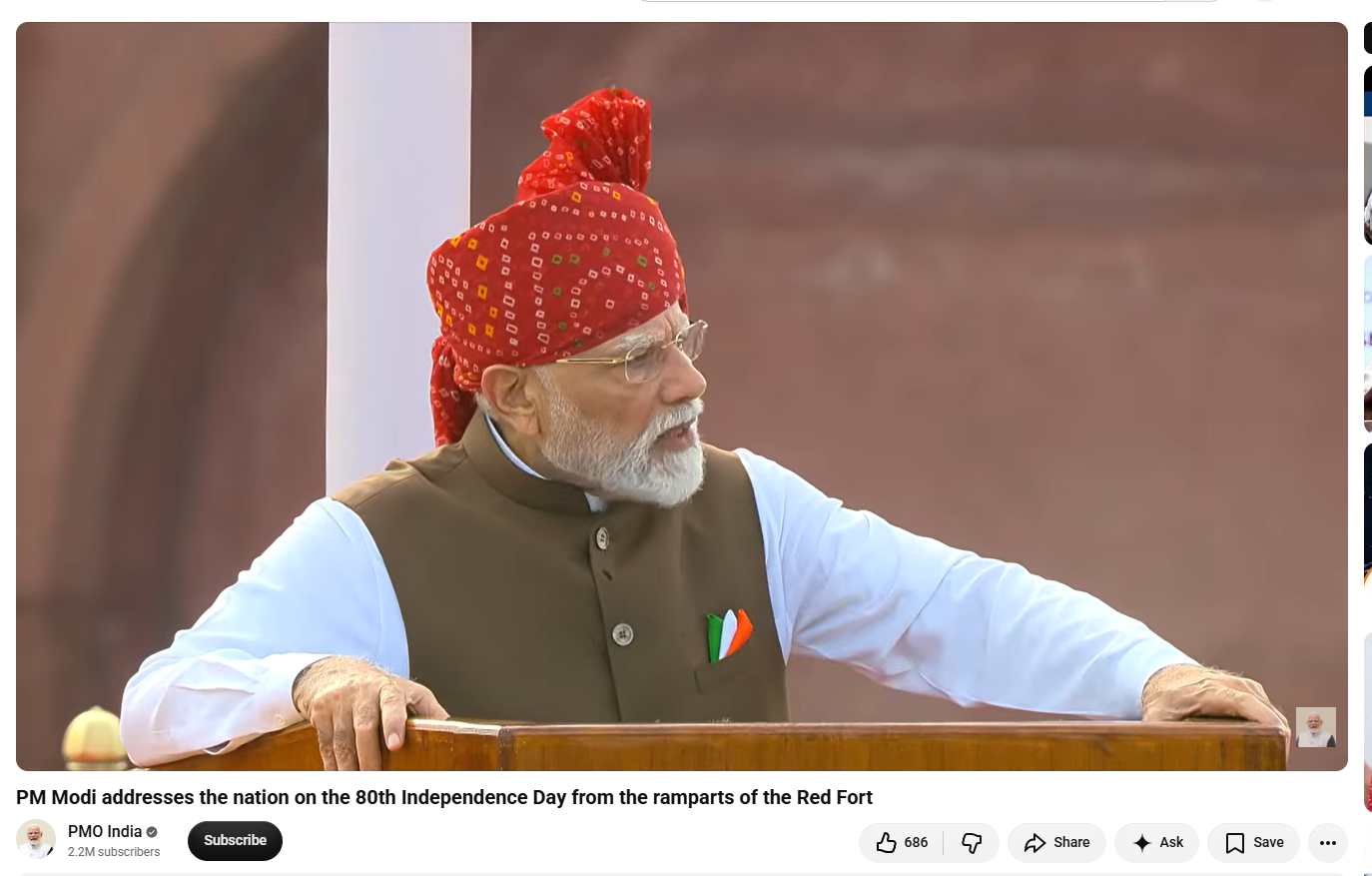
To verify the truth behind the viral claim, a keyword search was conducted on Google. No reliable news reports or official announcements were found confirming that PM Modi made any such statement regarding sugar prices. Keyframes extracted from the viral clip were subjected to a reverse image search using Google Lens. This led to the original video uploaded on the official YouTube channel of PMO India on August 15, 2026. In the nearly 1-hour and 39-minute long Independence Day address, PM Modi did not mention sugar prices anywhere during his speech.
https://www.youtube.com/watch?v=aDHjd3GUU7Y
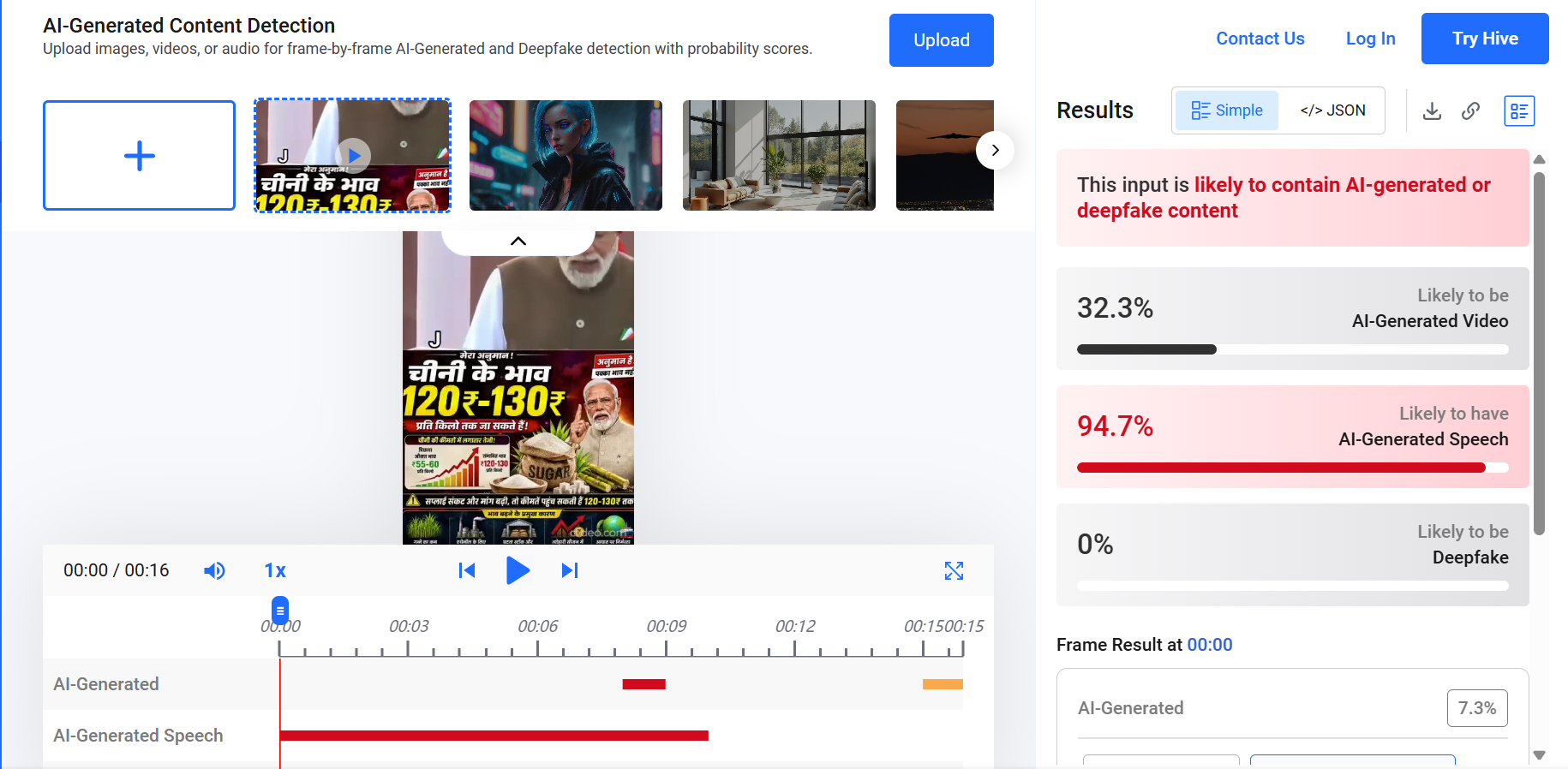
To further verify the authenticity of the video, it was scanned using the AI detection tool HIVE Moderation. The results indicated a 94% probability that PM Modi's speech in the video is AI-generated.
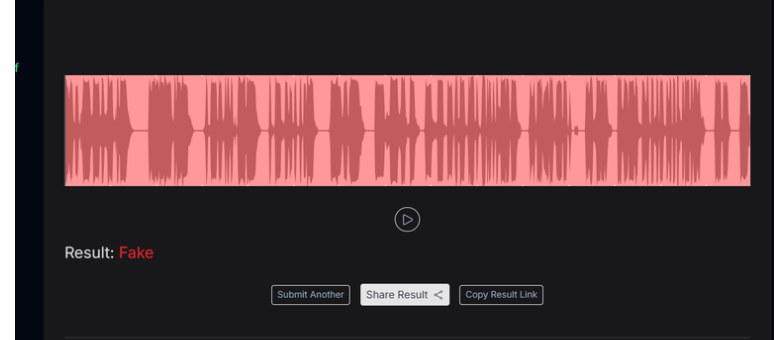
The audio of the viral video was analyzed using Resemble AI. The tool's analysis confirmed that the audio was AI-generated, indicating that the original voice track had been manipulated/cloned.
Conclusion:
Our research confirms that the claim associated with the viral video is false. The video has been created using AI tools and edited to mislead the public.

Related Blogs
Executive Summary:
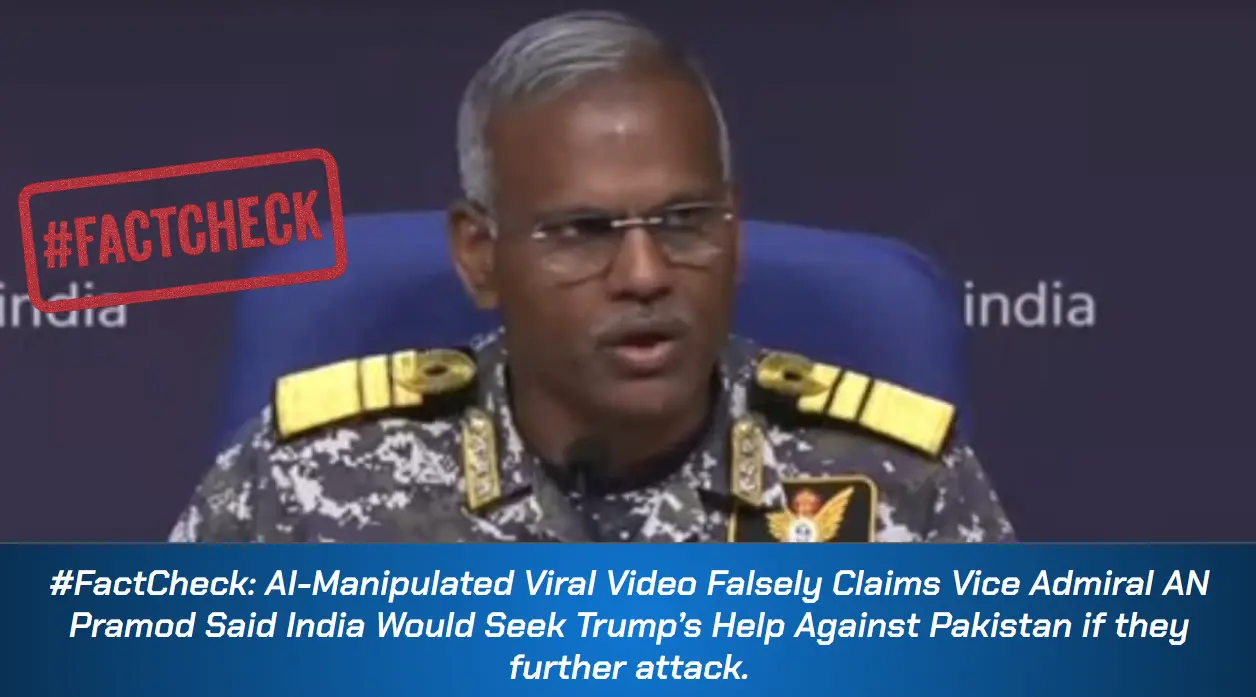
A viral video (archived link) circulating on social media claims that Vice Admiral AN Pramod stated India would seek assistance from the United States and President Trump if Pakistan launched an attack, portraying India as dependent rather than self-reliant. Research traced the extended footage to the Press Information Bureau’s official YouTube channel, published on 11 May 2025. In the authentic video, the Vice Admiral makes no such remark and instead concludes his statement with, “That’s all.” Further analysis using the AI Detection tool confirmed that the viral clip was digitally manipulated with AI-generated audio, misrepresenting his actual words.
Claim:
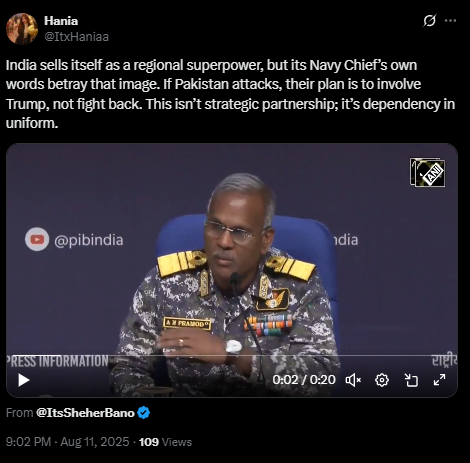
In the viral video an X user posted with the caption
”India sells itself as a regional superpower, but its Navy Chief’s own words betray that image. If Pakistan attacks, their plan is to involve Trump, not fight back. This isn’t strategic partnership; it’s dependency in uniform”.
In the video the Vice Admiral was heard saying
“We have worked out among three services, this time if Pakistan dares take any action, and Pakistan knows it, what we are going to do. We will complain against Pakistan to the United States of America and President Trump, like we did earlier in Operation Sindoor.”
Fact Check:
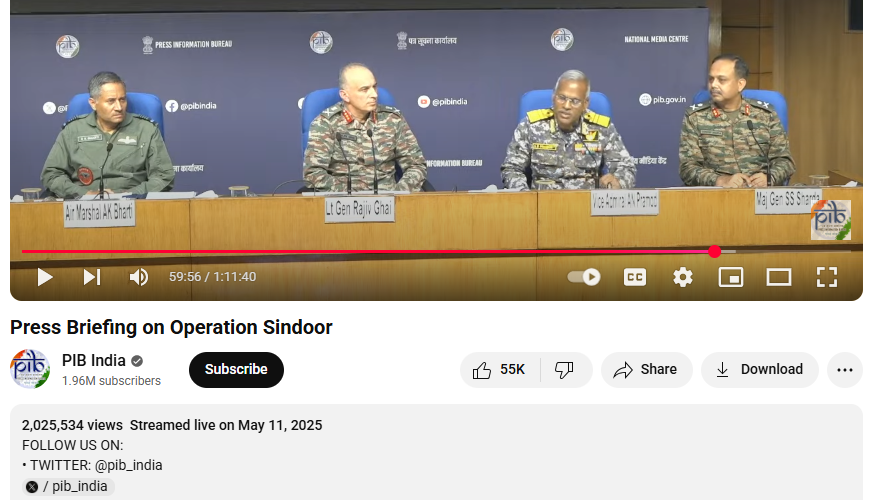
Upon conducting a reverse image search on key frames from the video, we located the full version of the video on the official YouTube channel of the Press Information Bureau (PIB), published on 11 May 2025. In this video, at the 59:57-minute mark, the Vice Admiral can be heard saying:
“This time if Pakistan dares take any action, and Pakistan knows it, what we are going to do. That’s all.”
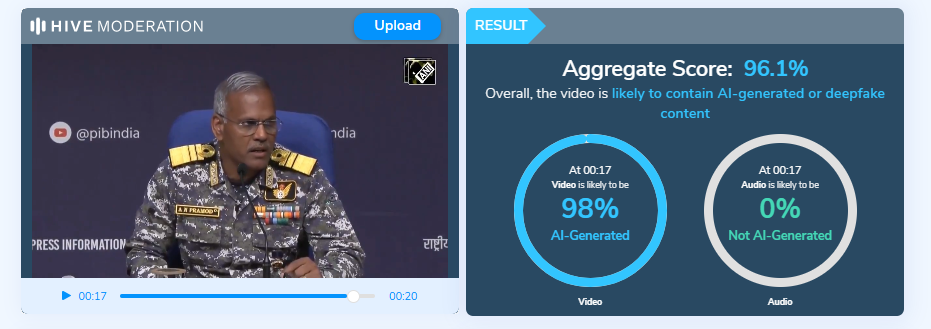
Further analysis was conducted using the Hive Moderation tool to examine the authenticity of the circulating clip. The results indicated that the video had been artificially generated, with clear signs of AI manipulation. This suggests that the content was not genuine but rather created with the intent to mislead viewers and spread misinformation.
Conclusion:
The viral video attributing remarks to Vice Admiral AN Pramod about India seeking U.S. and President Trump’s intervention against Pakistan is misleading. The extended speech, available on the Press Information Bureau’s official YouTube channel, contained no such statement. Instead of the alleged claim, the Vice Admiral concluded his comments by saying, “That’s all.” AI analysis using Hive Moderation further indicated that the viral clip had been artificially manipulated, with fabricated audio inserted to misrepresent his words. These findings confirm that the video is altered and does not reflect the Vice Admiral’s actual remarks.
Claim: Fake Viral Video Claiming Vice Admiral AN Pramod saying that next time if Pakistan Attack we will complain to US and Prez Trump.
Claimed On: Social Media
Fact Check: False and Misleading
Executive Summary
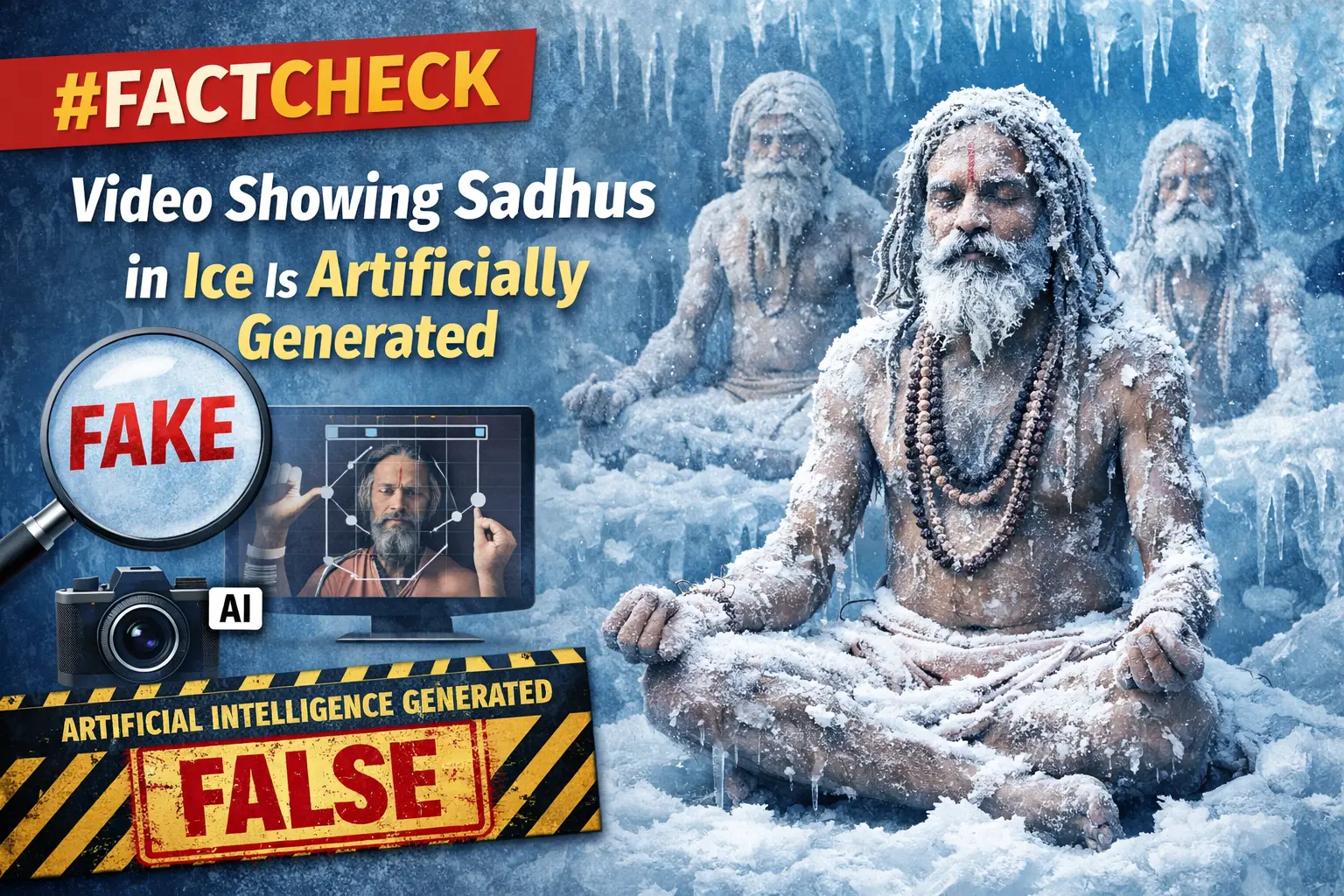
A video showing a group of Hindu ascetics (sadhus) allegedly performing intense penance while their bodies appear to be covered in ice is being widely shared on social media. Users are circulating the video as real and claiming that it represents an ancient tradition of Sanatan Dharma. CyberPeace research found the viral claim to be false.The research revealed that the video circulating on social media is not real but has been generated using artificial intelligence (AI).
Claim
On social media platform Facebook, a user shared the viral video on January 16, 2026. The video shows several ascetics engaged in penance, with their bodies seemingly covered in ice. Users shared the video while claiming that it depicts an authentic spiritual practice rooted in Sanatan Dharma.
Links to the post, archive link, and screenshots can be seen below.

Fact Check:
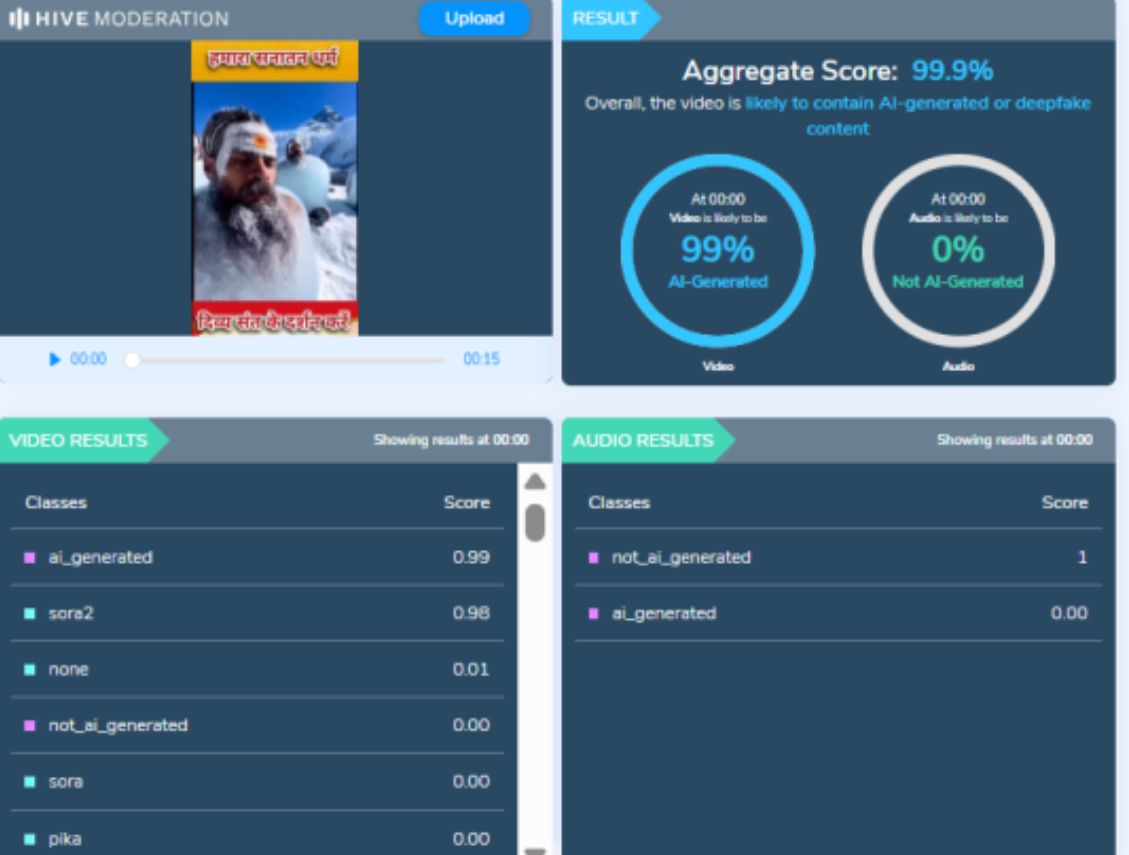
To verify the authenticity of the viral claim, CyberPeace searched relevant keywords on Google. However, no credible or reliable media reports supporting the claim were found. A close examination of the viral video raised suspicion that it may have been AI-generated. To verify this, the video was analysed using the AI detection tool Hive Moderation. According to the results, the video was found to be 99 percent AI-generated.
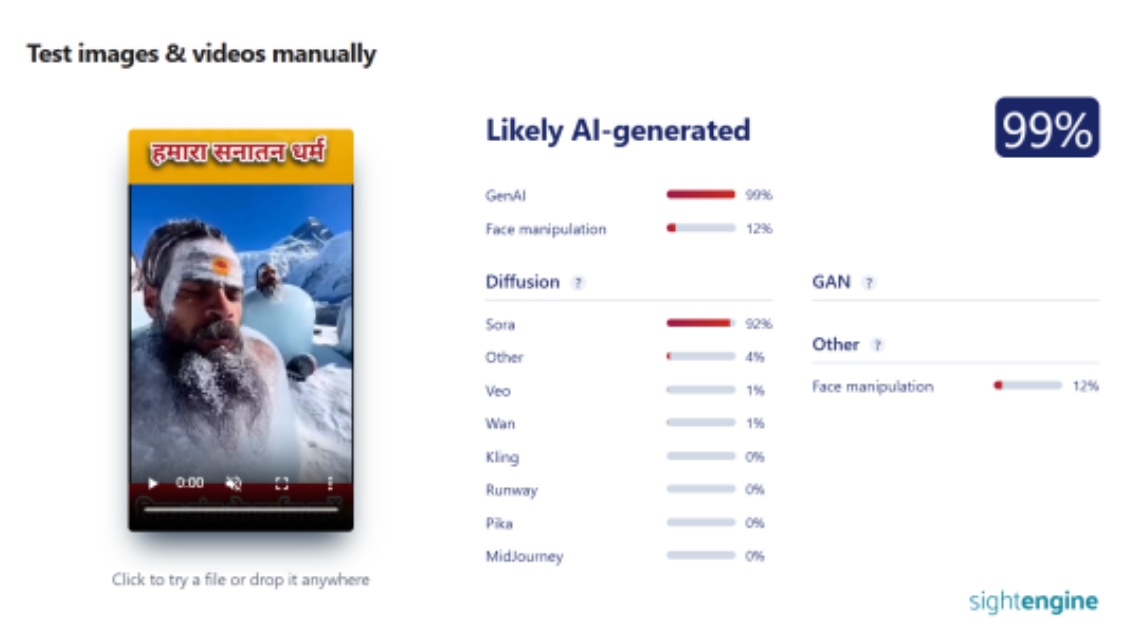
In the next step of the research, the same video was analysed using another AI detection tool, Sightengine. The results again indicated that the video was 99 percent AI-generated.
Conclusion
CyberPeace concludes that the video circulating on social media is not real. The viral video showing ascetics covered in ice was generated using artificial intelligence and does not depict an actual religious or spiritual practice.
.webp)
Introduction
The Senate bill introduced on 19 March 2024 in the United States would require online platforms to obtain consumer consent before using their data for Artificial Intelligence (AI) model training. If a company fails to obtain this consent, it would be considered a deceptive or unfair practice and result in enforcement action from the Federal Trade Commission (FTC) under the AI consumer opt-in, notification standards, and ethical norms for training (AI Consent) bill. The legislation aims to strengthen consumer protection and give Americans the power to determine how their data is used by online platforms.
The proposed bill also seeks to create standards for disclosures, including requiring platforms to provide instructions to consumers on how they can affirm or rescind their consent. The option to grant or revoke consent should be made available at any time through an accessible and easily navigable mechanism, and the selection to withhold or reverse consent must be at least as prominent as the option to accept while taking the same number of steps or fewer as the option to accept.
The AI Consent bill directs the FTC to implement regulations to improve transparency by requiring companies to disclose when the data of individuals will be used to train AI and receive consumer opt-in to this use. The bill also commissions an FTC report on the technical feasibility of de-identifying data, given the rapid advancements in AI technologies, evaluating potential measures companies could take to effectively de-identify user data.
The definition of ‘Artificial Intelligence System’ under the proposed bill
ARTIFICIALINTELLIGENCE SYSTEM- The term artificial intelligence system“ means a machine-based system that—
- Is capable of influencing the environment by producing an output, including predictions, recommendations or decisions, for a given set of objectives; and
- 2. Uses machine or human-based data and inputs to
(i) Perceive real or virtual environments;
(ii) Abstract these perceptions into models through analysis in an automated manner (such as by using machine learning) or manually; and
(iii) Use model inference to formulate options for outcomes.
Importance of the proposed AI Consent Bill USA
1. Consumer Data Protection: The AI Consent bill primarily upholds the privacy rights of an individual. Consent is necessitated from the consumer before data is used for AI Training; the bill aims to empower individuals with unhinged autonomy over the use of personal information. The scope of the bill aligns with the greater objective of data protection laws globally, stressing the criticality of privacy rights and autonomy.
2. Prohibition Measures: The proposed bill intends to prohibit covered entities from exploiting the data of consumers for training purposes without their consent. This prohibition extends to the sale of data, transfer to third parties and usage. Such measures aim to prevent data misuse and exploitation of personal information. The bill aims to ensure companies are leveraged by consumer information for the development of AI without a transparent process of consent.
3. Transparent Consent Procedures: The bill calls for clear and conspicuous disclosures to be provided by the companies for the intended use of consumer data for AI training. The entities must provide a comprehensive explanation of data processing and its implications for consumers. The transparency fostered by the proposed bill allows consumers to make sound decisions about their data and its management, hence nurturing a sense of accountability and trust in data-driven practices.
4. Regulatory Compliance: The bill's guidelines call for strict requirements for procuring the consent of an individual. The entities must follow a prescribed mechanism for content solicitation, making the process streamlined and accessible for consumers. Moreover, the acquisition of content must be independent, i.e. without terms of service and other contractual obligations. These provisions underscore the importance of active and informed consent in data processing activities, reinforcing the principles of data protection and privacy.
5. Enforcement and Oversight: To enforce compliance with the provisions of the bill, robust mechanisms for oversight and enforcement are established. Violations of the prescribed regulations are treated as unfair or deceptive acts under its provisions. Empowering regulatory bodies like the FTC to ensure adherence to data privacy standards. By holding covered entities accountable for compliance, the bill fosters a culture of accountability and responsibility in data handling practices, thereby enhancing consumer trust and confidence in the digital ecosystem.
Importance of Data Anonymization
Data Anonymization is the process of concealing or removing personal or private information from the data set to safeguard the privacy of the individual associated with it. Anonymised data is a sort of information sanitisation in which data anonymisation techniques encrypt or delete personally identifying information from datasets to protect data privacy of the subject. This reduces the danger of unintentional exposure during information transfer across borders and allows for easier assessment and analytics after anonymisation. When personal information is compromised, the organisation suffers not just a security breach but also a breach of confidence from the client or consumer. Such assaults can result in a wide range of privacy infractions, including breach of contract, discrimination, and identity theft.
The AI consent bill asks the FTC to study data de-identification methods. Data anonymisation is critical to improving privacy protection since it reduces the danger of re-identification and unauthorised access to personal information. Regulatory bodies can increase privacy safeguards and reduce privacy risks connected with data processing operations by investigating and perhaps implementing anonymisation procedures.
The AI consent bill emphasises de-identification methods, as well as the DPDP Act 2023 in India, while not specifically talking about data de-identification, but it emphasises the data minimisation principles, which highlights the potential future focus on data anonymisation processes or techniques in India.
Conclusion
The proposed AI Consent bill in the US represents a significant step towards enhancing consumer privacy rights and data protection in the context of AI development. Through its stringent prohibitions, transparent consent procedures, regulatory compliance measures, and robust enforcement mechanisms, the bill strives to strike a balance between fostering innovation in AI technologies while safeguarding the privacy and autonomy of individuals.
References:
- https://fedscoop.com/consumer-data-consent-training-ai-models-senate-bill/#:~:text=%E2%80%9CThe%20AI%20CONSENT%20Act%20gives,Welch%20said%20in%20a%20statement
- https://www.dataguidance.com/news/usa-bill-ai-consent-act-introduced-house#:~:text=USA%3A%20Bill%20for%20the%20AI%20Consent%20Act%20introduced%20to%20House%20of%20Representatives,-ConsentPrivacy%20Law&text=On%20March%2019%2C%202024%2C%20US,the%20U.S.%20House%20of%20Representatives
- https://datenrecht.ch/en/usa-ai-consent-act-vorgeschlagen/
- https://www.lujan.senate.gov/newsroom/press-releases/lujan-welch-introduce-billto-require-online-platforms-receive-consumers-consent-before-using-their-personal-data-to-train-ai-models/
