
#FactCheck-AI-Generated Video Falsely Shared as Delivery Boy Saving Child From Speeding Truck in Mumbai
Executive Summary
A video is being widely shared on social media showing a delivery boy risking his life by jumping in front of a speeding truck to save a small child. The dramatic footage has drawn widespread praise, with many users calling the delivery worker a "real hero," "Superman," and even "an angel." Several social media users have claimed that the incident took place in Mumbai, alleging that the delivery boy's quick thinking prevented a fatal accident. CyberPeace Research Wing ’s research found the viral claim to be false. Our research revealed that the video is not real but AI-generated, and is being circulated with a misleading claim.
Claim
An X (formerly Twitter) user shared the viral video on July 12, 2026, with the caption: "This cannot be called a human, but an angel. Such an incredible feat by a delivery boy from Mumbai is hard to believe. At first glance, it seemed like he had sacrificed his life to save the child, but in the next moment, he saved not only himself but also the child's life. Watch this incredible video."
https://x.com/virjust18/status/2076270467569320072

Fact Check
To verify the viral claim, we conducted a keyword search on Google. However, we found no credible media reports or authentic sources confirming that such an incident had occurred in Mumbai or anywhere else. During the research, we found the same video uploaded on the Instagram account 'ai_nature_of_beauty_01' on July 12, 2026. Although the post's caption did not provide any details about the incident, a review of the account revealed that it regularly uploads AI-generated videos featuring fictional and digitally created scenarios. This strongly indicates that the viral clip is not footage of an actual event but content created using Artificial Intelligence.
https://www.instagram.com/reels/Das5IJ9FFF5/

We further analysed the video using the AI detection tool Hive Moderation, which indicated a 96.1% probability that the footage was AI-generated. The analysis strongly suggests that the video was created using artificial intelligence rather than recorded in the real world.

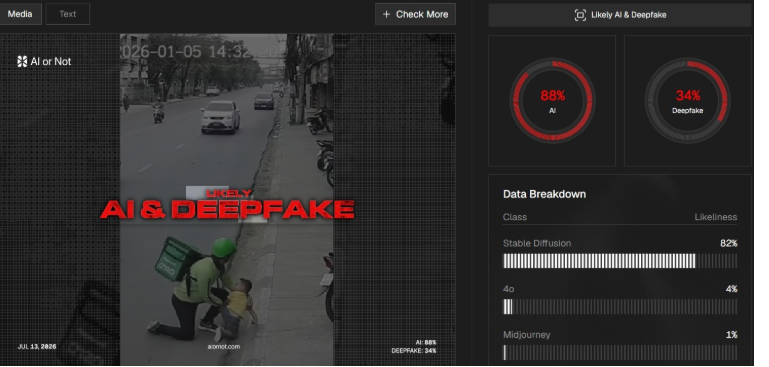
For additional verification, we also examined the video using another AI detection platform, AI or Not. The tool likewise identified the scenes in the viral clip as likely AI-generated, reinforcing our findings.
Conclusion
Our research found that the viral video does not depict a real rescue. It is AI-generated content that has been falsely circulated as footage of a delivery boy saving a child from a speeding truck in Mumbai. There is no credible evidence to support the claim that such an incident actually occurred.

Related Blogs

Executive Summary:
BrazenBamboo’s DEEPDATA malware represents a new wave of advanced cyber espionage tools, exploiting a zero-day vulnerability in Fortinet FortiClient to extract VPN credentials and sensitive data through fileless malware techniques and secure C2 communications. With its modular design, DEEPDATA targets browsers, messaging apps, and password stores, while leveraging reflective DLL injection and encrypted DNS to evade detection. Cross-platform compatibility with tools like DEEPPOST and LightSpy highlights a coordinated development effort, enhancing its espionage capabilities. To mitigate such threats, organizations must enforce network segmentation, deploy advanced monitoring tools, patch vulnerabilities promptly, and implement robust endpoint protection. Vendors are urged to adopt security-by-design practices and incentivize vulnerability reporting, as vigilance and proactive planning are critical to combating this sophisticated threat landscape.
Introduction
The increased use of zero-day vulnerabilities by more complex threat actors reinforces the importance of more developed countermeasures. One of the threat actors identified is BrazenBamboo uses a zero-day vulnerability in Fortinet FortiClient for Windows through the DEEPDATA advanced malware framework. This research explores technical details about DEEPDATA, the tricks used in its operations, and its other effects.
Technical Findings
1. Vulnerability Exploitation Mechanism
The vulnerability in Fortinet’s FortiClient lies in its failure to securely handle sensitive information in memory. DEEPDATA capitalises on this flaw via a specialised plugin, which:
- Accesses the VPN client’s process memory.
- Extracts unencrypted VPN credentials from memory, bypassing typical security protections.
- Transfers credentials to a remote C2 server via encrypted communication channels.
2. Modular Architecture
DEEPDATA exhibits a highly modular design, with its core components comprising:
- Loader Module (data.dll): Decrypts and executes other payloads.
- Orchestrator Module (frame.dll): Manages the execution of multiple plugins.
- FortiClient Plugin: Specifically designed to target Fortinet’s VPN client.
Each plugin operates independently, allowing flexibility in attack strategies depending on the target system.
3. Command-and-Control (C2) Communication
DEEPDATA establishes secure channels to its C2 infrastructure using WebSocket and HTTPS protocols, enabling stealthy exfiltration of harvested data. Technical analysis of network traffic revealed:
- Dynamic IP switching for C2 servers to evade detection.
- Use of Domain Fronting, hiding C2 communication within legitimate HTTPS traffic.
- Time-based communication intervals to minimise anomalies in network behavior.
4. Advanced Credential Harvesting Techniques
Beyond VPN credentials, DEEPDATA is capable of:
- Dumping password stores from popular browsers, such as Chrome, Firefox, and Edge.
- Extracting application-level credentials from messaging apps like WhatsApp, Telegram, and Skype.
- Intercepting credentials stored in local databases used by apps like KeePass and Microsoft Outlook.
5. Persistence Mechanisms
To maintain long-term access, DEEPDATA employs sophisticated persistence techniques:
- Registry-based persistence: Modifies Windows registry keys to reload itself upon system reboot.
- DLL Hijacking: Substitutes legitimate DLLs with malicious ones to execute during normal application operations.
- Scheduled Tasks and Services: Configures scheduled tasks to periodically execute the malware, ensuring continuous operation even if detected and partially removed.
Additional Tools in BrazenBamboo’s Arsenal
1. DEEPPOST
A complementary tool used for data exfiltration, DEEPPOST facilitates the transfer of sensitive files, including system logs, captured credentials, and recorded user activities, to remote endpoints.
2. LightSpy Variants
- The Windows variant includes a lightweight installer that downloads orchestrators and plugins, expanding espionage capabilities across platforms.
- Shellcode-based execution ensures that LightSpy’s payload operates entirely in memory, minimising artifacts on the disk.
3. Cross-Platform Overlaps
BrazenBamboo’s shared codebase across DEEPDATA, DEEPPOST, and LightSpy points to a centralised development effort, possibly linked to a Digital Quartermaster framework. This shared ecosystem enhances their ability to operate efficiently across macOS, iOS, and Windows systems.
Notable Attack Techniques
1. Memory Injection and Data Extraction
Using Reflective DLL Injection, DEEPDATA injects itself into legitimate processes, avoiding detection by traditional antivirus solutions.
- Memory Scraping: Captures credentials and sensitive information in real-time.
- Volatile Data Extraction: Extracts transient data that only exists in memory during specific application states.
2. Fileless Malware Techniques
DEEPDATA leverages fileless infection methods, where its payload operates exclusively in memory, leaving minimal traces on the system. This complicates post-incident forensic investigations.
3. Network Layer Evasion
By utilising encrypted DNS queries and certificate pinning, DEEPDATA ensures that network-level defenses like intrusion detection systems (IDS) and firewalls are ineffective in blocking its communications.
Recommendations
1. For Organisations
- Apply Network Segmentation: Isolate VPN servers from critical assets.
- Enhance Monitoring Tools: Deploy behavioral analysis tools that detect anomalous processes and memory scraping activities.
- Regularly Update and Patch Software: Although Fortinet has yet to patch this vulnerability, organisations must remain vigilant and apply fixes as soon as they are released.
2. For Security Teams
- Harden Endpoint Protections: Implement tools like Memory Integrity Protection to prevent unauthorised memory access.
- Use Network Sandboxing: Monitor and analyse outgoing network traffic for unusual behaviors.
- Threat Hunting: Proactively search for indicators of compromise (IOCs) such as unauthorised DLLs (data.dll, frame.dll) or C2 communications over non-standard intervals.
3. For Vendors
- Implement Security by Design: Adopt advanced memory protection mechanisms to prevent credential leakage.
- Bug Bounty Programs: Encourage researchers to report vulnerabilities, accelerating patch development.
Conclusion
DEEPDATA is a form of cyber espionage and represents the next generation of tools that are more advanced and tunned for stealth, modularity and persistence. While Brazen Bamboo is in the process of fine-tuning its strategies, the organisations and vendors have to be more careful and be ready to respond to these tricks. The continuous updating, the ability to detect the threats and a proper plan on how to deal with incidents are crucial in combating the attacks.
References:

Executive Summary
A purported news clip circulating on social media claims that the Bharatiya Janata Party (BJP) purchased Bhupen Bora, a leader of the Indian National Congress, for ₹50 crore as part of a political deal in Assam. The viral clip further alleges that the transaction took place under the leadership of Assam Chief Minister Himanta Biswa Sarma and included an agreement to induct several Congress leaders into the BJP.
However, research by CyberPeace found the viral claim to be false and revealed that the original news video had been manipulated using AI and shared with misleading claims.
Claim
On February 18, 2026, a user shared the viral video on Facebook, claiming that the Assam BJP had bought a Congress leader who had lost the last three elections for ₹50 crore, and that the alleged deal led by Himanta Biswa Sarma had drawn public criticism.

Fact Check:
To verify the authenticity of the claim, we extracted key frames from the viral video and conducted a reverse image search using Google Lens. During the research, we found the original version of the video published on the website of Aaj Tak on February 16, 2026. In the original report, the anchor is only seen reporting on Bhupen Bora’s resignation from the party. The report does not mention any alleged financial transaction or political deal, contrary to the claims made in the viral clip.

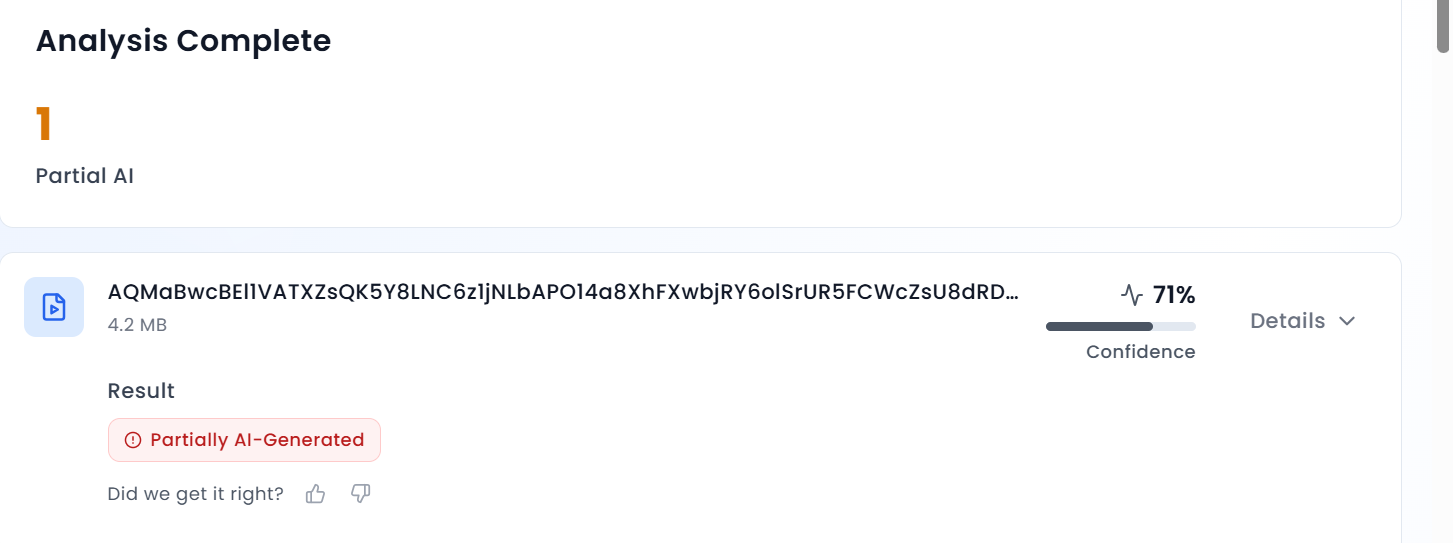
In the next stage of the research, the viral video was analysed using the AI detection tool AURGIN AI, which identified the video as AI-generated.
Conclusion
Our research found that users had manipulated the original news broadcast using AI and shared it with misleading claims. The viral clip does not show any real financial deal between Bhupen Bora and the Assam Chief Minister.
Introduction
The digital landscape of the nation has reached a critical point in its evolution. The rapid adoption of technologies such as cloud computing, mobile payment systems, artificial intelligence, and smart infrastructure has led to a high degree of integration between digital systems and governance, commercial activity, and everyday life. As dependence on these systems continues to grow, a wide range of cyber threats has emerged that are complex, multi-layered, and closely interconnected. By 2026, cyber security threats directed at India are expected to include an increasing number of targeted, well-organised, and strategic cyber attacks. These attacks are likely to focus on exploiting the trust placed in technology, institutions, automation, and the fast pace of technological change.
1. Social Engineering 2.0: Hyper-Personalised AI Phishing & Mobile Banking Malware
Cybercriminals have moved from generalised methods to hyper-targeted attacks through AI-based psychological manipulation. In addition to social media profiles, data breaches, and digital/tracking footprints, the latest types of cybercrimes expected in 2026 will involve AI-based analysis of this information to create and increase the use of hyper-targeted phishing emails.
Phishing emails are capable of impersonating banks, employers, and even family members, with all the same regionally or culturally relevant tone, language, and context as would be done if these persons were sending the emails in person.
With malicious applications disguised as legitimate service apps, cybercriminals have the ability to intercept and capture One-Time Passwords (OTPs), hijack user sessions, and steal money from user accounts in a matter of minutes.
These types of attempts or attacks are successful not only because of their technical sophistication, but because they take advantage of human trust at scale, giving them an almost limitless reach into the financial systems of people around the world through their computers and mobile devices.
2. Cloud and Supply Chain Vulnerabilities
As Indian organisations increasingly migrate to cloud infrastructure, cloud misconfigurations are emerging as a major cybersecurity risk. Weak identity controls, exposed storage, and improper access management can allow attackers to bypass traditional network defences. Alongside this, supply chain attacks are expected to intensify in 2026.
In supply chain attacks, cybercriminals compromise a trusted software vendor or service provider to infiltrate multiple downstream organisations. Even entities with strong internal security can be affected through third-party dependencies. For India’s startup ecosystem, government digital platforms, and IT service providers, this presents a systemic risk. Strengthening vendor risk management and visibility across digital supply chains will be essential.
3. Threats to IoT and Critical Infrastructure
By implementing smart cities, digital utilities, and connected public services, IoT has opened itself up to increased levels of operational technology (OT) through India’s initiative. However, there is currently a lack of adequate security in the form of strong authentication, encryption, and update methods available on many IoT devices. By the year 2026, attackers are going to be able to exploit these vulnerabilities much more than they already are.
Cyberattacks on critical infrastructure such as energy, transportation, healthcare, and telecom systems have far-reaching consequences that extend well beyond data loss; they directly affect the provision of essential services, can damage public safety, and raise concerns over national security. Effectively securing critical infrastructure needs to involve dedicated security solutions to deal with the specific needs of critical infrastructure, in contrast to conventional IT security.
4. Hidden File Vectors and Stealth Payload Delivery
SVG File Abuse in Stealth Attacks
Cybercriminals are continually searching for ways to bypass security filters, and hidden file vectors are emerging as a preferred tactic. One such method involves the abuse of SVG (Scalable Vector Graphics) files. Although commonly perceived as harmless image files, SVGs can contain embedded scripts capable of executing malicious actions.
By 2026, SVG-based attacks are expected to be used in phishing emails, cloud file sharing, and messaging platforms. Because these files often bypass traditional antivirus and email security systems, they provide an effective stealth delivery mechanism. Indian organisations will need to rethink assumptions about “safe” file formats and strengthen deep content inspection capabilities.
5. Quantum-Era Cyber Risks and “Harvest Now, Decrypt Later” Attacks
Although practical quantum computers are still emerging, quantum-era cyber risks are already a present-day concern. Adversaries are believed to be intercepting and storing encrypted data now with the intention of decrypting it in the future once quantum capabilities mature—a strategy known as “harvest now, decrypt later.” This poses serious long-term confidentiality risks.
Recognising this threat, the United States took early action during the Biden administration through National Security Memorandum 10, which directed federal agencies to prepare for the transition to quantum-resistant cryptography. For India, similar foresight is essential, as sensitive government communications, financial data, health records, and intellectual property could otherwise be exposed retrospectively. Preparing for quantum-safe cryptography will therefore become a strategic priority in the coming years.
6. AI Trust Manipulation and Model Exploitation
Poisoning the Well – Direct Attacks on AI Models
As artificial intelligence systems are increasingly used for decision-making—ranging from fraud detection and credit scoring to surveillance and cybersecurity—attackers are shifting focus from systems to models themselves. “Poisoning the well” refers to attacks that manipulate training data, feedback mechanisms, or input environments to distort AI outputs.
In the context of India's rapidly growing digital ecosystem, compromised AI models can result in biased decisions, false security alerts or denying legitimate services. The big problem with these types of attacks is they may occur without triggering conventional security measures. Transparency, integrity and continuous monitoring of AI systems will be key to creating and maintaining stakeholder confidence in the decision-making process of the automated systems.
Recommendations
Despite the increasing sophistication of malicious cyber actors, India is entering this phase with a growing level of preparedness and institutional capacity. The country has strengthened its cyber security posture through dedicated mechanisms and relevant agencies such as the Indian Cyber Crime Coordination Centre, which play a central role in coordination, threat response, and capacity building. At the same time, sustained collaboration among government bodies, non-governmental organisations, technology companies, and academic institutions has expanded cyber security awareness, skill development, and research. These collective efforts have improved detection capabilities, response readiness, and public resilience, placing India in a stronger position to manage emerging cyber threats and adapt to the evolving digital environment.
Conclusion
By 2026, complexity, intelligence, and strategic intent will increasingly define cyber threats to the digital ecosystem. Cyber criminals are expected to use advanced methods of attack, including artificial intelligence assisted social engineering and the exploitation of cloud supply chain risks. As these threats evolve, adversaries may also experiment with quantum computing techniques and the manipulation of AI models to create new ways of influencing and disrupting digital systems. In response, the focus of cybersecurity is shifting from merely preventing breaches to actively protecting and restoring digital trust. While technical controls remain essential, they must be complemented by strong cybersecurity governance, adherence to regulatory standards, and sustained user education. As India continues its digital transformation, this period presents a valuable opportunity to invest proactively in cybersecurity resilience, enabling the country to safeguard citizens, institutions, and national interests with confidence in an increasingly complex and dynamic digital future.
References
- https://www.seqrite.com/india-cyber-threat-report-2026/
- https://www.uscsinstitute.org/cybersecurity-insights/blog/ai-powered-phishing-detection-and-prevention-strategies-for-2026
- https://www.expresscomputer.in/guest-blogs/cloud-security-risks-that-should-guide-leadership-in-2026/130849/
- https://www.hakunamatatatech.com/our-resources/blog/top-iot-challenges
- https://csrc.nist.gov/csrc/media/Presentations/2024/u-s-government-s-transition-to-pqc/images-media/presman-govt-transition-pqc2024.pdf
- https://www.cyber.nj.gov/Home/Components/News/News/1721/214
