
#FactCheck - Viral Video of Burning Aircraft Falsely Linked to UAE, Found to Be AI-Generated
Executive Summary:
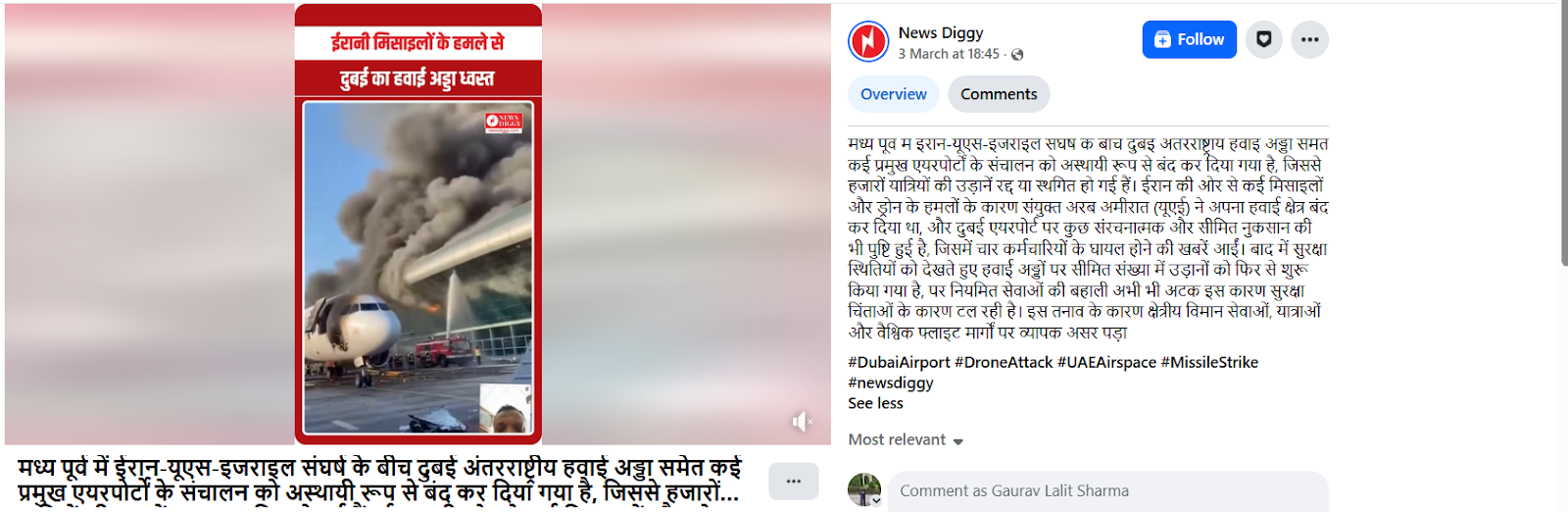
A video is being shared on social media showing an aircraft engulfed in massive flames on an airport runway. The video is being linked to the UAE. It is being claimed that a UAE airport was completely destroyed due to recent drone and missile attacks by Iran. Research by the CyberPeace found the viral claim to be false. Our research revealed that the viral video is not real, but AI-generated.
Claim:
On social media platform Facebook, a user shared the viral video on March 3, 2026, and wrote, “Amid the Iran-US-Israel conflict in the Middle East, operations at several major airports, including Dubai International Airport, have been temporarily suspended, causing thousands of flight cancellations and delays. Due to multiple missile and drone attacks from Iran, the United Arab Emirates (UAE) had shut its airspace, and limited structural damage at Dubai Airport was also confirmed, with reports of four staff members being injured. Later, considering the security situation, a limited number of flights were resumed, but full operations are still delayed due to ongoing safety concerns. This tension has significantly impacted regional aviation, travel, and global flight routes.”
Fact Check:
To verify the viral video, we searched relevant keywords on Google. However, we did not find any credible media report confirming the claim.However, we found a video report on the YouTube channel of CNN-News18 mentioning explosions near Dubai Airport after a suspected Iranian drone strike. But the visuals shown in that report are completely different from the viral video.

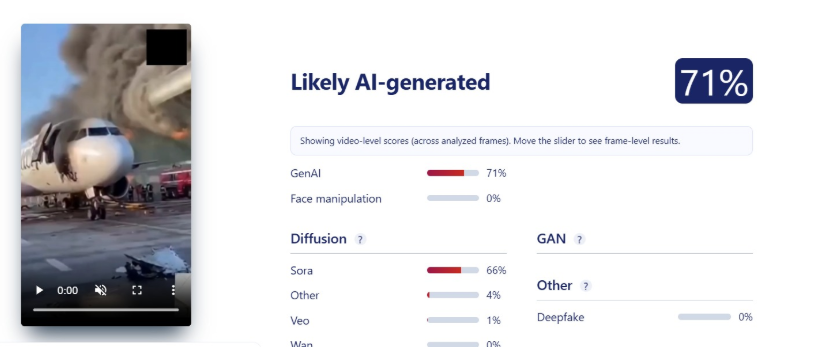
Upon closely examining the viral video, we noticed several inconsistencies, raising suspicion that it might be AI-generated. We then analyzed the video using the AI detection tool Sightengine. The results indicated that the video is 71 percent likely to be AI-generated.
Conclusion:
Our research found that the viral video is not real, but AI-generated.

Related Blogs

Introduction
Online dating platforms have become a common way for individuals to connect in today’s digital age. For many in the LGBTQ+ community, especially in environments where offline meeting spaces are limited, these platforms offer a way to find companionship and support. However, alongside these opportunities come serious risks. Users are increasingly being targeted by cybercrimes such as blackmail, sextortion, identity theft, and online harassment. These incidents often go unreported due to stigma and concerns about privacy. The impact of such crimes can be both emotional and financial, highlighting the need for greater awareness and digital safety.
Cybercrime On LGBTQ+ Dating Apps: A Threat Landscape
According to the NCRB 2022 report, there has been a 24.4% increase in cybercrimes. But unfortunately, the queer community-specific data is not available. Cybercrimes that target LGBTQ+ users in very organised and predatory. In several Indian cities, gangs actively monitor dating platforms to the point that potential victims, especially young queers and those who seem discreet about their identity, become targets. Once the contact is established, perpetrators use a standard operating process, building false trust, forcing private exchanges, and then gradually starting blackmail and financial exploitation. Many queer victims are blackmailed with threats of exposure to families or workplaces, often by fake police demanding bribes. Fear of stigma and insensitive policing discourages reporting. Cyber criminal gangs exploit these gaps on dating apps. Despite some arrests, under-reporting persists, and activists call for stronger platform safety.
Types of Cyber Crimes against Queer Community on Dating Apps
- Romance scam or “Lonely hearts scam”: Scammers build trust with false stories (military, doctors, NGO workers) and quickly express strong romantic interest. They later request money, claiming emergencies. They often try to create multiple accounts to avoid profile bans.
- Sugar daddy scam: In this type of scam, the fraudster offers money or allowance in exchange for things like chatting, sending photos, or other interactions. They usually offer a specific amount and want to use some uncommon payment gateways. After telling you they will send you a lot of money, they often make up a story like: “My last sugar baby cheated me, so now you must first send me a small amount to prove you are trustworthy.” This is just a trick to make you send them money first.
- Sextortion / Blackmail scam: Scammers record explicit chats or pretend to be underage, then threaten exposure unless you pay. Some target discreet users. Never send explicit content or pay blackmailers.
- Investment Scams: Scammers posing as traders or bankers convince victims to invest in fake opportunities. Some "flip" small amounts to build trust, then disappear with larger sums. Real investors won’t approach you on dating apps. Don’t share financial info or transfer money.
- Pay-Before-You-Meet scam: Scammer demands upfront payment (gift cards, gas money, membership fees) before meeting, then vanishes. Never pay anyone before meeting in person.
- Security app registration scam: Scammers ask you to register on fake "security apps" to steal your info, claiming it ensures your safety. Research apps before registering. Be wary of quick link requests.
- The Verification code scam: Scammers trick you into giving them SMS verification codes, allowing them to hijack your accounts. Never share verification codes with anyone.
- Third-party app links: Mass spam messages with suspicious links that steal info or infect devices. Don’t click suspicious links or “Google me” messages.
- Support message scam: Messages pretending to be from application support, offering prizes or fake shows to lure you to malicious sites.
Platform Accountability & Challenges
The issue of online dating platforms in India is characterised by weak grievance redressal, poor takedown of abusive profiles, and limited moderation practices. Most platforms appoint grievance officers or offer an in-app complaint portal, but complaints are often unanswered or receive only automated and AI-generated responses. This highlights the gap between policy and enforcement on the ground.
Abusive or fake profiles, often used for scams, hate crimes, and outing LGBTQ+ individuals, remain active long after being reported. In India, organised extortion gangs have exploited such profiles to lure, assault, rob, and blackmail queer men. Moderation teams often struggle with backlogs and lack the resources needed to handle even the most serious complaints.
Despite offering privacy settings and restricting profile visibility, moderation practices in India are still weak, leaving large segments of users vulnerable to impersonation, catfishing, and fraud. The concept of pseudonymisation can help protect vulnerable communities, but it is difficult to distinguish authentic users from malicious actors without robust, privacy-respecting verification systems.
Since many LGBTQ+ individuals prefer to maintain their confidentiality, while others are more vocal about their identities, in either case, the data shared by an individual with an online dating platform must be vigilantly protected. The Digital Personal Data Protection Act, 2023, mandates the protection of personal data. Section 8(4) provides: “A Data Fiduciary shall implement appropriate technical and organisational measures to ensure effective observance of the provisions of this Act and the rules made thereunder.” Accordingly, digital platforms collecting such data should adopt the necessary technical and organisational measures to comply with data protection laws.
Recommendations
The Supreme Court has been proactive in this regard, through decisions like Navtej Singh Johar v. Union of India, which decriminalised same-sex relationships. Justice K.S. Puttaswamy (Retd.) v. Union of India and Ors., acknowledged the right to privacy as a fundamental right, and, most recently, the 2025 affirmation of the right to digital access. However, to protect LGBTQ+ people online, more robust legal frameworks are still required.
There is a requirement for a dedicated commission or an empowered LGBTQ+ cell. Like the National Commission for Women (NCW), which works to safeguard the rights of women, a similar commission would address community-specific issues, including cybercrime, privacy violations, and discrimination on digital platforms. It may serve as an institutional link between the victim, the digital platforms, the government, and the police. Dating Platforms must enhance their security features and grievance mechanisms to safeguard the users.
Best Practices
Scammers use data sets and plans to target individuals seeking specific interests, such as love, sex, money, or association. Do not make financial transactions, such as signing up for third-party platforms or services. Scammers may attempt to create accounts for others, which can be used to access dating platforms and harm legitimate users. Users should be vigilant about sharing sensitive information, such as private images, contact information, or addresses, as scammers can use this information to threaten users. Stay smart, stay cyber safe.
References
- https://www.hindustantimes.com/htcity/cinema/16yearold-queer-child-pranshu-dies-by-suicide-due-to-bullying-did-we-fail-as-a-society-mental-health-expert-opines-101701172202794.html#google_vignette
- https://www.ijsr.net/archive/v11i6/SR22617213031.pdf
- https://help.grindr.com/hc/en-us/articles/1500009328241-Scam-awareness-guide
- http://meity.gov.in/static/uploads/2024/06/2bf1f0e9f04e6fb4f8fef35e82c42aa5.pdf
- https://mib.gov.in/sites/default/files/2024-02/IT%28Intermediary%20Guidelines%20and%20Digital%20Media%20Ethics%20Code%29%20Rules%2C%202021%20English.pdf

Introduction
The G7 nations, a group of the most powerful economies, have recently turned their attention to the critical issue of cybercrimes and (AI) Artificial Intelligence. G7 summit has provided an essential platform for discussing the threats and crimes occurring from AI and lack of cybersecurity. These nations have united to share their expertise, resources, diplomatic efforts and strategies to fight against cybercrimes. In this blog, we shall investigate the recent development and initiatives undertaken by G7 nations, exploring their joint efforts to combat cybercrime and navigate the evolving landscape of artificial intelligence. We shall also explore the new and emerging trends in cybersecurity, providing insights into ongoing challenges and innovative approaches adopted by the G7 nations and the wider international community.
G7 Nations and AI
Each of these nations have launched cooperative efforts and measures to combat cybercrime successfully. They intend to increase their collective capacities in detecting, preventing, and responding to cyber assaults by exchanging intelligence, best practices, and experience. G7 nations are attempting to develop a strong cybersecurity architecture capable of countering increasingly complex cyber-attacks through information-sharing platforms, collaborative training programs, and joint exercises.
The G7 Summit provided an important forum for in-depth debates on the role of artificial intelligence (AI) in cybersecurity. Recognising AI’s transformational potential, the G7 nations have participated in extensive discussions to investigate its advantages and address the related concerns, guaranteeing responsible research and use. The nation also recognises the ethical, legal, and security considerations of deploying AI cybersecurity.
Worldwide Rise of Ransomware
High-profile ransomware attacks have drawn global attention, emphasising the need to combat this expanding threat. These attacks have harmed organisations of all sizes and industries, leading to data breaches, operational outages, and, in some circumstances, the loss of sensitive information. The implications of such assaults go beyond financial loss, frequently resulting in reputational harm, legal penalties, and service delays that affect consumers, clients, and the public. The increase in high-profile ransomware incidents has garnered attention worldwide, Cybercriminals have adopted a multi-faceted approach to ransomware attacks, combining techniques such as phishing, exploit kits, and supply chain Using spear-phishing, exploit kits, and supply chain hacks to obtain unauthorised access to networks and spread the ransomware. This degree of expertise and flexibility presents a substantial challenge to organisations attempting to protect against such attacks.

Focusing On AI and Upcoming Threats
During the G7 summit, one of the key topics for discussion on the role of AI (Artificial Intelligence) in shaping the future, Leaders and policymakers discuss the benefits and dangers of AI adoption in cybersecurity. Recognising AI’s revolutionary capacity, they investigate its potential to improve defence capabilities, predict future threats, and secure vital infrastructure. Furthermore, the G7 countries emphasise the necessity of international collaboration in reaping the advantages of AI while reducing the hazards. They recognise that cyber dangers transcend national borders and must be combated together. Collaboration in areas such as exchanging threat intelligence, developing shared standards, and promoting best practices is emphasised to boost global cybersecurity defences. The G7 conference hopes to set a global agenda that encourages responsible AI research and deployment by emphasising the role of AI in cybersecurity. The summit’s sessions present a path for maximising AI’s promise while tackling the problems and dangers connected with its implementation.
As the G7 countries traverse the complicated convergence of AI and cybersecurity, their emphasis on collaboration, responsible practices, and innovation lays the groundwork for international collaboration in confronting growing cyber threats. The G7 countries aspire to establish robust and secure digital environments that defend essential infrastructure, protect individuals’ privacy, and encourage trust in the digital sphere by collaboratively leveraging the potential of AI.
Promoting Responsible Al development and usage
The G7 conference will focus on developing frameworks that encourage ethical AI development. This includes fostering openness, accountability, and justice in AI systems. The emphasis is on eliminating biases in data and algorithms and ensuring that AI technologies are inclusive and do not perpetuate or magnify existing societal imbalances.
Furthermore, the G7 nations recognise the necessity of privacy protection in the context of AI. Because AI systems frequently rely on massive volumes of personal data, summit speakers emphasise the importance of stringent data privacy legislation and protections. Discussions centre around finding the correct balance between using data for AI innovation, respecting individuals’ privacy rights, and protecting data security. In addition to responsible development, the G7 meeting emphasises the importance of responsible AI use. Leaders emphasise the importance of transparent and responsible AI governance frameworks, which may include regulatory measures and standards to ensure AI technology’s ethical and legal application. The goal is to defend individuals’ rights, limit the potential exploitation of AI, and retain public trust in AI-driven solutions.
The G7 nations support collaboration among governments, businesses, academia, and civil society to foster responsible AI development and use. They stress the significance of sharing best practices, exchanging information, and developing international standards to promote ethical AI concepts and responsible practices across boundaries. The G7 nations hope to build the global AI environment in a way that prioritises human values, protects individual rights, and develops trust in AI technology by fostering responsible AI development and usage. They work together to guarantee that AI is a force for a good while reducing risks and resolving social issues related to its implementation.
Challenges on the way
During the summit, the nations, while the G7 countries are committed to combating cybercrime and developing responsible AI development, they confront several hurdles in their efforts. Some of them are:
A Rapidly Changing Cyber Threat Environment: Cybercriminals’ strategies and methods are always developing, as is the nature of cyber threats. The G7 countries must keep up with new threats and ensure their cybersecurity safeguards remain effective and adaptable.
Cross-Border Coordination: Cybercrime knows no borders, and successful cybersecurity necessitates international collaboration. On the other hand, coordinating activities among nations with various legal structures, regulatory environments, and agendas can be difficult. Harmonising rules, exchanging information, and developing confidence across states are crucial for effective collaboration.
Talent Shortage and Skills Gap: The field of cybersecurity and AI knowledge necessitates highly qualified personnel. However, skilled individuals in these fields need more supply. The G7 nations must attract and nurture people, provide training programs, and support research and innovation to narrow the skills gap.
Keeping Up with Technological Advancements: Technology changes at a rapid rate, and cyber-attacks become more complex. The G7 nations must ensure that their laws, legislation, and cybersecurity plans stay relevant and adaptive to keep up with future technologies such as AI, quantum computing, and IoT, which may both empower and challenge cybersecurity efforts.
Conclusion
To combat cyber threats effectively, support responsible AI development, and establish a robust cybersecurity ecosystem, the G7 nations must constantly analyse and adjust their strategy. By aggressively tackling these concerns, the G7 nations can improve their collective cybersecurity capabilities and defend their citizens’ and global stakeholders’ digital infrastructure and interests.

Executive Summary
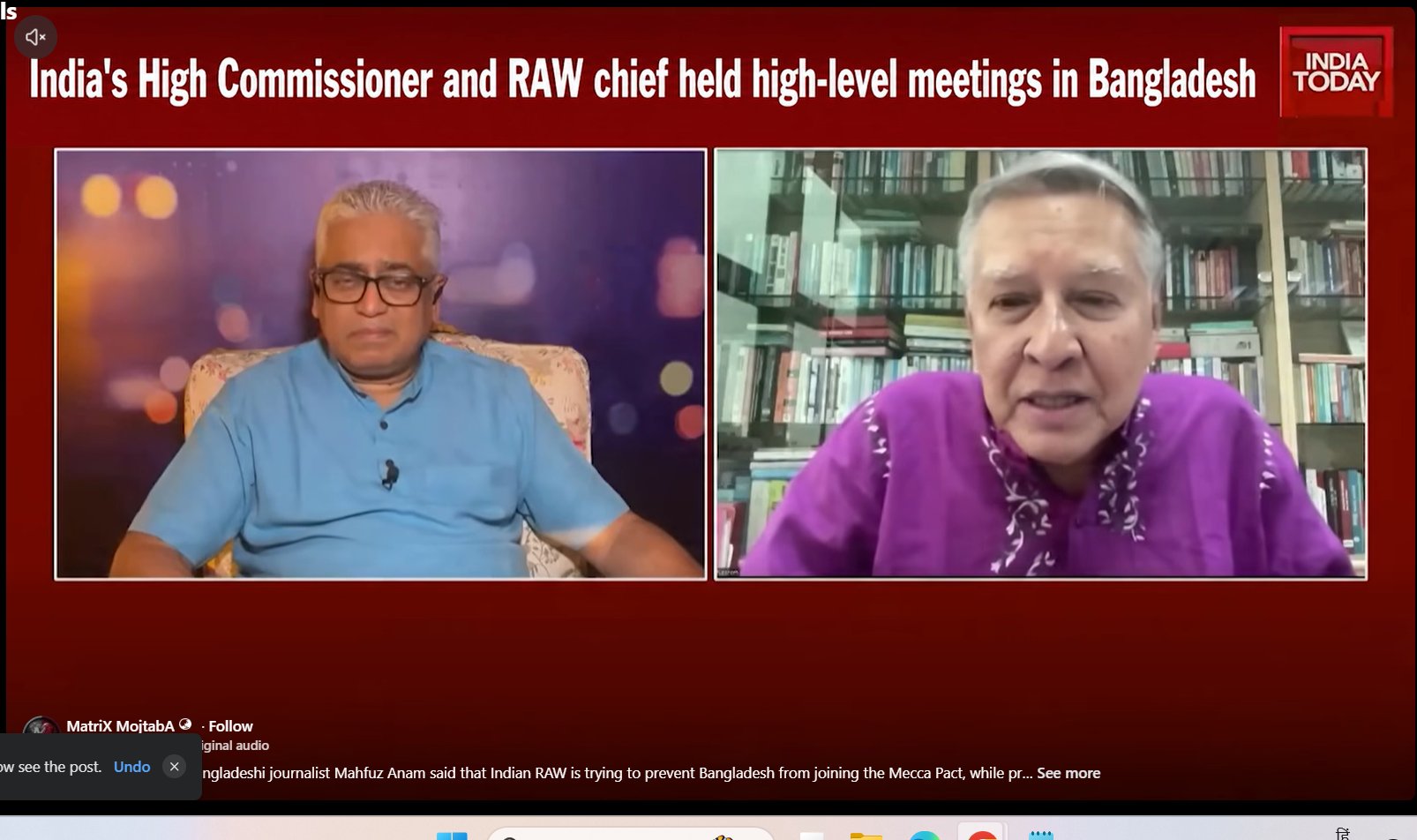
Several social media users shared an India Today news clipping showing an exclusive interaction between senior journalist Rajdeep Sardesai and Bangladeshi journalist Mahfuz Anam. In the purported conversation, Anam was heard claiming that India’s intelligence agency RAW was trying to prevent Bangladesh from joining the Mecca Pact. He was also allegedly heard saying that New Delhi was promoting an alternative defence pact with Bangladesh involving a Middle Eastern country and Israel. However, the CyberPeace Research Wing found that the viral video had been digitally manipulated using AI-generated audio. The original video, uploaded by India Today, showed Anam in conversation with Sardesai in 2024, discussing Bangladesh’s July uprising and the developments that followed.
Claim
A Facebook page, ‘MatriX MojtabA’, shared an India Today news clipping on August 12 showing senior journalist Rajdeep Sardesai interviewing Bangladeshi journalist Mahfuz Anam. In the purported conversation, Anam was heard saying that RAW was trying to prevent Bangladesh from joining the Mecca Pact. He was also allegedly heard claiming that New Delhi was promoting an alternative defence pact with Bangladesh involving a Middle Eastern country and Israel.
https://www.facebook.com/reel/1804199927691664/
Fact Check
Based on the clue that the viral clip was taken from an exclusive conversation between Mahfuz Anam and India Today, the Desk conducted a customised keyword search on Google. The search led to an extended version of the same interaction uploaded on India Today’s official YouTube channel. The Desk identified the original footage by comparing the background setting and the clothes worn by both Sardesai and Anam, which appeared identical in the viral and original clips. However, an analysis of the original video established that it was an old recording from August 2024. The video showed Anam and Sardesai discussing Bangladesh’s July 2024 uprising and the developments that followed. The Desk analysed the complete 14-minute-and-three-second video and found that Anam did not mention RAW or the Mecca Pact anywhere in the interaction. The Mecca Pact was signed by Pakistan, Saudi Arabia and Turkey on August 7, 2026. This established that the statement attributed to Anam in the viral video was not part of the original conversation and had been digitally manipulated.
https://www.youtube.com/watch?v=gEoyTkOZ8xE

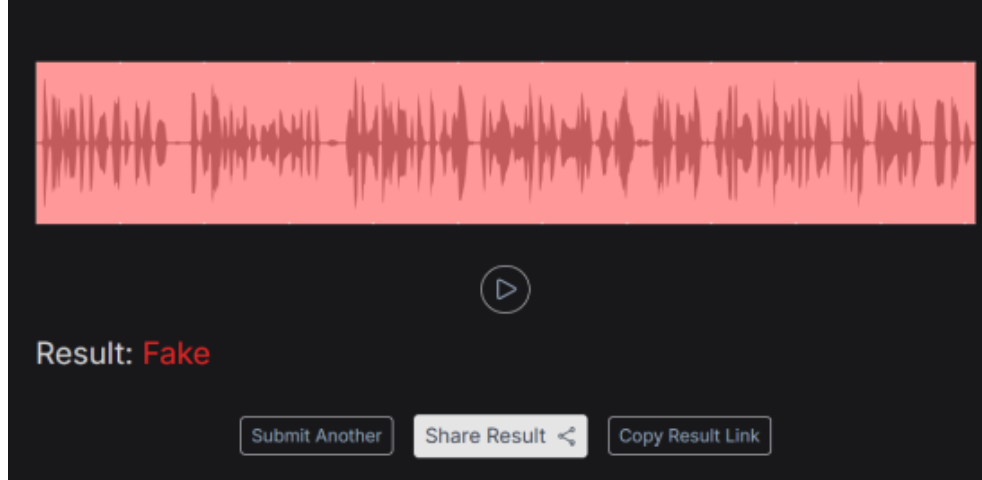
Further, after finding indications that the audio in the viral clip may have been AI-generated, the Desk extracted the audio from the video and analysed it using Resemble AI, an AI audio detection tool. The analysis indicated that the audio was AI-generated and did not contain Mahfuz Anam’s original statement.
Conclusion
The viral video showing Bangladeshi journalist Mahfuz Anam purportedly claiming that India’s RAW was trying to prevent Bangladesh from joining the Mecca Pact is digitally manipulated. The audio in the viral clip was replaced with AI-generated audio to attribute a false statement to Anam. The original India Today video, recorded in 2024, shows Anam speaking with Rajdeep Sardesai about Bangladesh’s July uprising and the developments that followed. He does not make any remarks about RAW, the Mecca Pact or an alternative defence pact involving India, a Middle Eastern country and Israel.
